
Market Overview
| Study Period | 2020 - 2031 |
|---|---|
| Forecast Data Period | 2026 - 2031 |
| Historical Data Period | 2020 - 2024 |
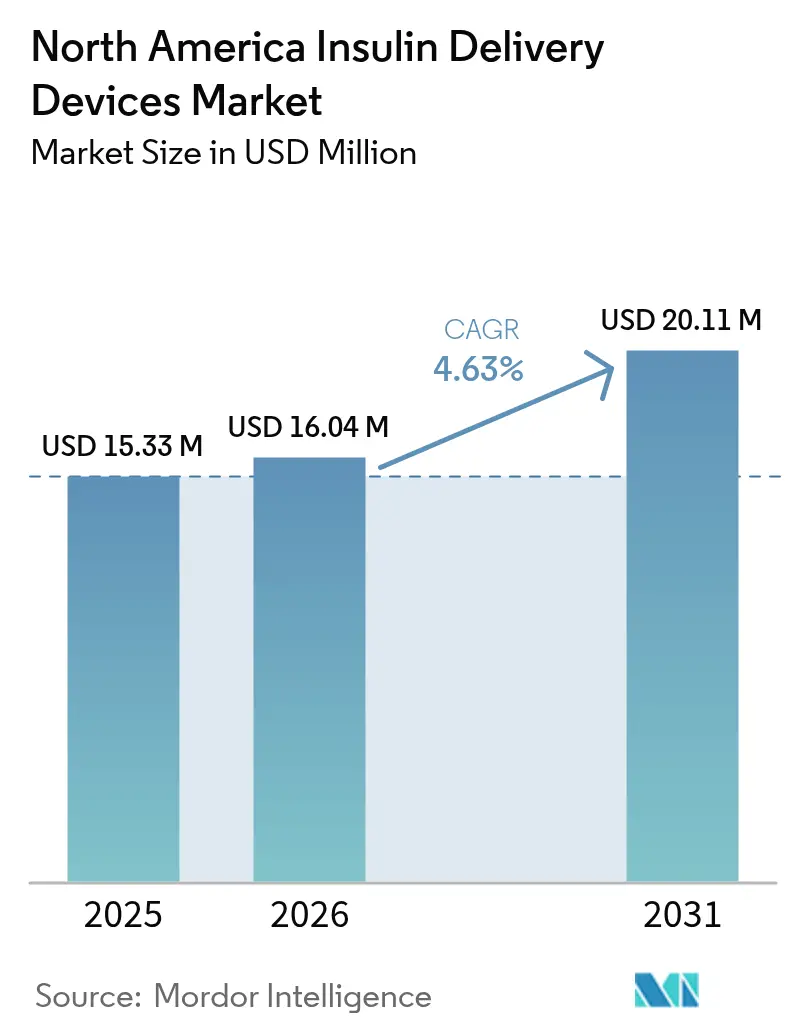
| Base Year Market Size (2025) | USD 15.33 Million |
| Market Size (2026) | USD 16.04 Million |
| Market Size (2031) | USD 20.11 Million |
| Growth Rate (2026 - 2031) | 4.63 % |
Major Players *Disclaimer: Major Players sorted in no particular order Image © Mordor Intelligence. Reuse requires attribution under CC BY 4.0. | |
North America Insulin Delivery Devices Market Analysis by Mordor Intelligence
The North America Insulin Delivery Devices market size is expected to grow from USD 15.33 million in 2025 to USD 16.04 million in 2026 and is forecast to reach USD 20.11 million by 2031 at 4.63% CAGR over 2026-2031.
The COVID-19 pandemic has substantially impacted the North America Insulin Delivery Devices Market. Type-1 diabetes patients are impacted more during COVID-19. People with diabetes are having a weak immune system so, with COVID-19, the immune system gets weaker very fast. People with diabetes will have more chances to get into serious complications rather than normal people. The manufacturers of Insulin delivery devices have taken care during COVID-19 to deliver insulin delivery devices to diabetes patients with the help of local governments. Novo Nordisk stated on their website that 'Since the start of COVID-19, our commitment to patients, our employees and the communities where we operate has remained unchanged, we continue to supply our medicines and devices to people living with diabetes and other serious chronic diseases, safeguard the health of our employees, and take actions to support doctors and nurses as they work to defeat COVID-19.' Doctors around the world suggested diabetes patients should check their diabetes levels more often to be careful and the intake of medicine has increased, which lead to an increase in the usage of insulin delivery devices.
In North America, till April 2022, the United States had the highest number of COVID cases with 82 million, the country also registered the highest death rate. According to the Diabetes Voice, close to 40,000 people who died were having diabetes. In the North American region diabetes patients were more concerned about stocking up the monitoring and managing devices due to this the market increased during these years.
Diabetes is associated with many health complications. Comparing the population with and without diabetes, those with diabetes have a 300% increased risk of being hospitalized and thus incur more healthcare expenses compared to non-diabetic people. Patients with Type 2 diabetes require many corrections throughout the day for maintaining nominal blood glucose levels, such as the administration of additional insulin or ingestion of additional carbohydrates. Furthermore, patients attempting to control their blood glucose levels tightly to prevent the long-term complications associated with fluctuations in blood glucose levels are at greater risk for overcorrection and the resultant hypoglycemia. Achieving nominal results can be very difficult without multiple daily injections of insulin or insulin pump therapy.
Therefore, owing to the aforementioned factors the studied market is anticipated to witness growth over the analysis period.
Note: Market size and forecast figures in this report are generated using Mordor Intelligence’s proprietary estimation framework, updated with the latest available data and insights as of 2026.
North America Insulin Delivery Devices Market Trends and Insights
Rising diabetes prevalence
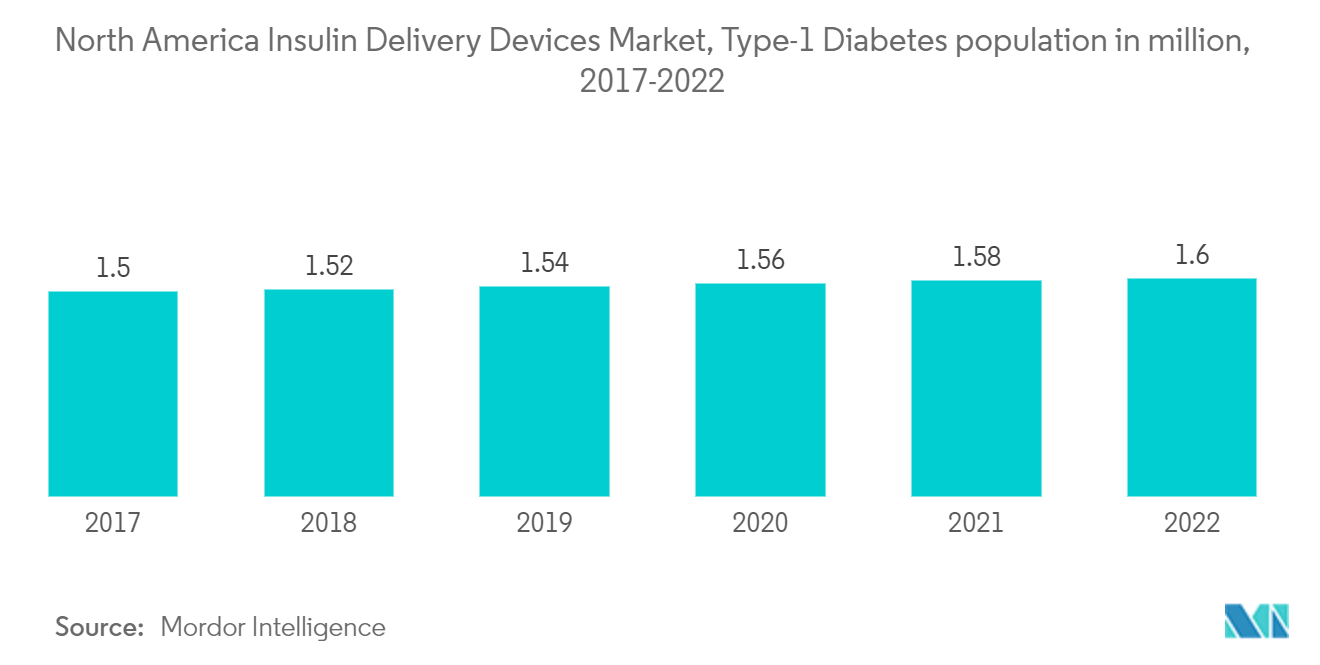
The diabetes population in the North American region is expected to rise by more than 1% over the forecast period.
The CDC National Diabetes Statistics Report 2022 estimated that more than 130 million adults are living with diabetes or prediabetes in the United States. Type-2 diabetes is more common, and diabetes is more consequential among communities of color; those who live in rural areas; and those with less education, lower incomes, and lower health literacy.
According to Diabetes Canada, 2022 figures showed the continued rising trend of diabetes rates in Canada with no signs of leveling or decreasing. Diabetes continues to affect more Canadians than ever before. The new diabetes figures show a steady, continued increase in diabetes in the country with 11.7 million Canadians living with diabetes or prediabetes. More than 5.7 million Canadians are living with diagnosed diabetes and people living with diabetes or prediabetes which if left unmanaged, can develop into type-2 diabetes.
According to the Division of Metabolism and Endocrinology Products in the FDA's Center for Drug Evaluation and Research, 'Patients want effective treatment options for diabetes that are as minimally intrusive on their lives as possible, and the FDA welcomes the advancement of new therapeutic options that can make it easier for patients to control their condition'. The frequency of insulin administration varies from patient to patient. Type-1 diabetic patients need to check their blood glucose levels at regular intervals, monitor their blood glucose levels, and adjust the insulin dosing accordingly.
Therefore, owing to the rising diabetes prevalence the market studied is anticipated to witness growth over the analysis period.


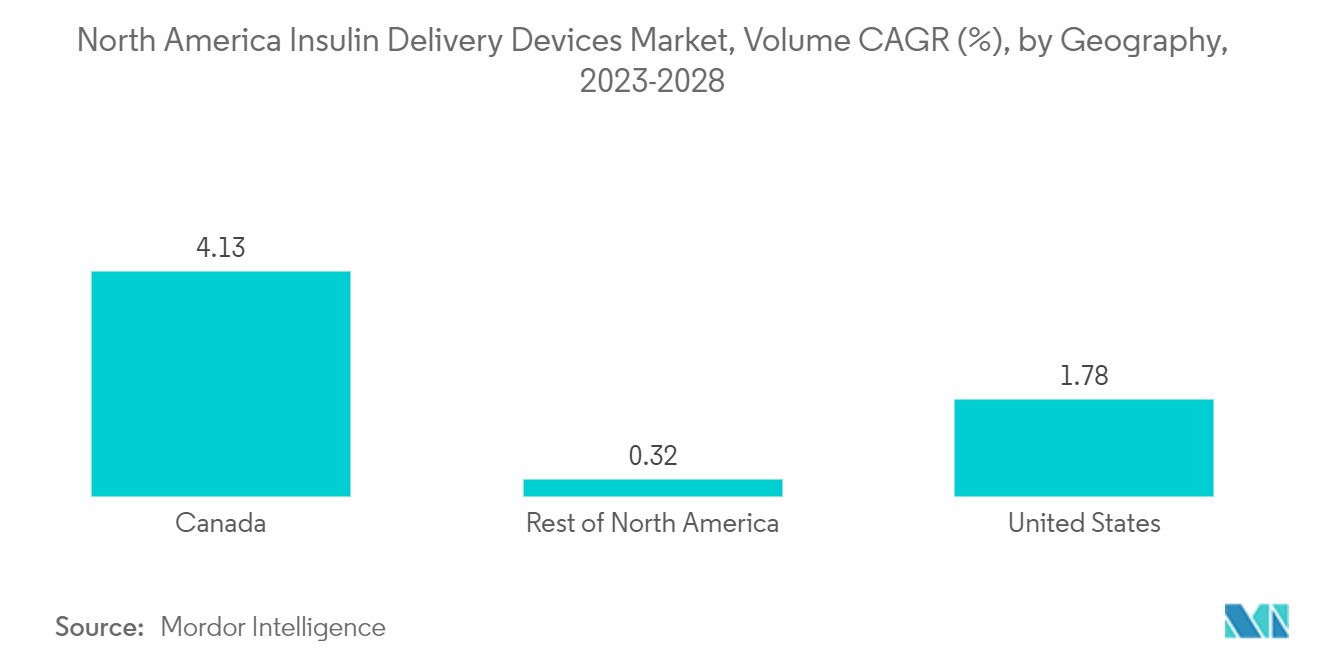
The United States holds the highest market share in the North America Insulin Delivery Devices Market in the current year
The United States holds the highest market share in the North American Insulin Delivery Devices Market in the current year and is expected to register a CAGR of about 5.2% over the forecast period.
An estimated 1.4 million Americans are diagnosed with diabetes every year, according to the American Diabetes Association. Diabetes is one of the leading causes of death in Canada and other North American countries. The growing incidence, prevalence, and progressive nature of the disease have encouraged treatment options for diabetic patients. The ADA also helps with costs for insulin and diabetes medication. Medicare drug plans cover insulin not used in an insulin pump and other drugs necessary to treat diabetes. In addition to providing prescription drug coverage, Medicare Part D plans may cover supplies necessary to inject insulin, including syringes, needles, alcohol swabs, and gauze.
The World Health Assembly Resolution 2022 recommended the integration of prevention and treatment of diabetes into primary health services, the development of pathways for a substantial increase in access to insulin, the promotion of convergence and harmonization of regulatory requirements for diabetes medicines and technologies, and improved diabetes monitoring and surveillance. Furthermore, it involves the WHO advising the Member States to ensure the uninterrupted treatment of people living with diabetes in humanitarian emergencies. This important milestone provides a global mandate for diabetes efforts for the next decade.
The roll-out of many new products, increasing international research collaborations in technological advancement, and increasing awareness about diabetes among people are expected to drive the market.
Competitive Landscape
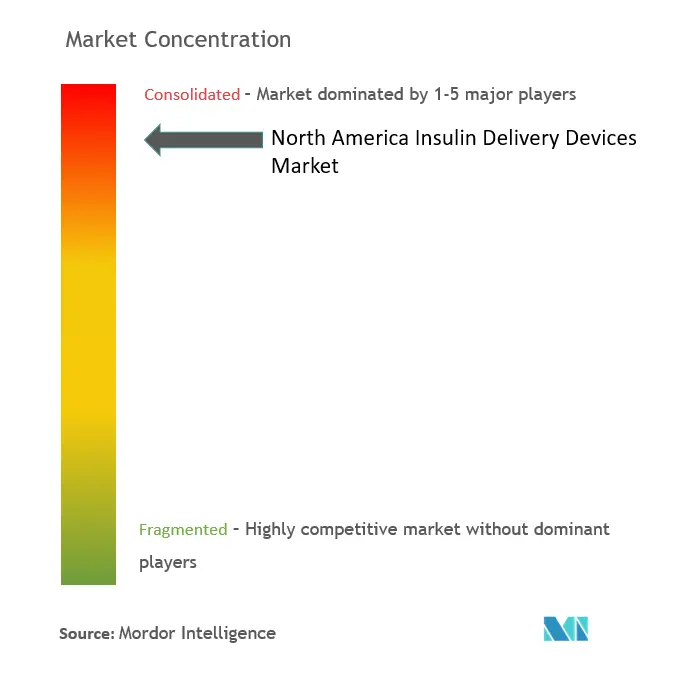
The North American insulin delivery devices market is moderately consolidated due to the presence of major players such as Novo Nordisk, Sanofi, Eli Lilly and Company, Medtronic, Insulet, Ypsomped, Becton Dickinson and Company, etc. operating globally and other regional players.
North America Insulin Delivery Devices Industry Leaders
Novo Nordisk
Medtronic
Sanofi
Eli Lilly and Company
Becton and Dickinson
- *Disclaimer: Major Players sorted in no particular order

Market Opportunities and Future Outlook
Regulatory clearances and label expansions that extend automated insulin delivery and connected insulin pen ecosystems into type 2 diabetes represent a major whitespace for insulin delivery devices in North America. Insulet received FDA clearance (August 2024) for Omnipod 5 in adults with type 2 diabetes and later secured FDA 510(k) clearance (December 2025) for Omnipod 5 algorithm enhancements, signaling a faster cadence of software-led differentiation for on-body delivery systems. Medtronic also broadened addressable demand through FDA actions that support expansion beyond type 1 diabetes, including type 2 labeling for MiniMed 780G (August 2025) and FDA 510(k) clearance for its MiniMed Go Smart MDI system (January 2026), linking smart pen therapy with CGM to compete for patients not using pumps.
Another opportunity area is the ongoing shift from stand-alone hardware toward interoperable, smartphone-centered diabetes ecosystems that combine insulin delivery, CGM, and software algorithms. MiniMed received FDA clearance (March 2026) for MiniMed Flex, a smartphone-controlled insulin pump design, while Diabeloop obtained FDA 510(k) clearance (January 2026) for its DBLG2 interoperable automated glycemic controller, highlighting continued openings for controller software, interoperability strategies, and simplified user experiences. With a large base of people living with diabetes and prediabetes in the United States (CDC National Diabetes Statistics Report 2022 cites more than 130 million adults with diabetes or prediabetes) and a sizeable diabetes and prediabetes population in Canada (Diabetes Canada 2022 reports 11.7 million), manufacturers and partners can pursue channel and workflow integration across Medicare-covered injection supplies, connected pen add-ons, and AID-capable pump platforms to reduce friction in adoption and scale usage across broader patient segments.
Recent Industry Developments
- March 2026: Novo Nordisk announced FDA approval of Awiqli (icodec-abae) 700 units/mL for adults with type 2 diabetes, with plans to launch it in the FlexTouch device in the United States in the second half of 2026. The approval links an ultra-long-acting insulin regimen with a familiar delivery format, raising the bar for convenience and potentially reshaping how pen-based insulin therapy is positioned versus pump therapy in insulin-requiring type 2 populations.
- December 2025: Medtronic began the U.S. commercial launch of the MiniMed 780G system integrated with the Instinct sensor made by Abbott. The rollout expands access to an integrated CGM-pump ecosystem and intensifies competition in automated insulin delivery by pairing Medtronic hardware with a named CGM partner sensor in the United States.
- January 2024: BIOCORP obtained FDA 510(k) clearance for SoloSmart, a smart cap designed for Sanofi’s SoloStar disposable insulin pen platform. The clearance supports broader adoption of connected pen workflows by enabling dose-event capture on disposable pens, strengthening the digital adherence and data layer around injection-based insulin delivery.


Research Methodology Framework and Report Scope
Market Definition and Coverage
We define the North America insulin delivery devices market as the value of devices used to administer insulin to patients, counted at the point of sale to healthcare providers and retail channels across the region.
Scope exclusions: We exclude insulin drugs and glucose monitoring products, and we also exclude broader diabetes care supplies that do not deliver insulin.
Segmentation Overview
- Type
- Insulin Pumps
- Insulin Pump Device
- Insulin Pump Reservoir
- Infusion Set
- Insulin Syringes
- Cartridges in Reusable Pens
- Disposable Pens
- Jet Injectors
- Insulin Pumps
- Geography
- Canada
- United States
- Rest of North America
Data Sources, Market Sizing, and Validation
Desk Research
Desk research was used to build the core boundaries and a clean fact base before any modeling started, so the final numbers do not rely on a single data series. Public sources helped us map diabetes prevalence, diagnosed population, and therapy patterns that influence device usage, followed by checks on device adoption and reimbursement environment.
Key public inputs were taken from sources such as the CDC (National Diabetes Statistics), the Public Health Agency of Canada, the International Diabetes Federation atlas, the FDA device and safety databases, and peer reviewed clinical journals that track insulin administration trends and outcomes. We also reviewed company filings and investor materials for product mix commentary, and we used paid subscriptions for company financials and intelligence, patents, and news and financials to verify timelines and product shifts. The sources listed here are illustrative only, since many other public and paid references were also consulted for data collection, validation, and clarification.
Primary Interviews and Surveys
Primary work focused on validating what the desk data cannot fully show, mainly pricing logic, channel splits, and how quickly users shift between delivery formats over time. We interviewed a mix of device manufacturers and distributors, diabetes educators, clinicians, and procurement and pharmacy channel stakeholders across the United States, Canada, and the rest of North America, and then used their inputs to test assumptions and resolve gaps before locking the final view.
Distribution of primary research fieldwork respondents
| Company type | Respondent position |
|---|---|
| Top tier: 39% | CXOs: 15% |
| Mid tier: 46% | Functional/Unit leaders: 32% |
| Smaller Players: 15% | Managers: 53% |
Market-Sizing & Forecasting
Sizing starts with a top down build where diabetes and insulin using population, therapy mix, and device adoption rates are used to reconstruct the addressable demand pool for insulin delivery in North America. From that base, device level volumes are formed using practical usage indicators such as injections per day, pump user penetration, replacement cycles, and refill or consumable patterns, which are then converted to value using price ranges observed across channels.
The totals are then corroborated with selective bottom up approximations, mainly sampled average selling price times estimated unit volumes by device category, and sanity checks using supplier and distributor commentary from interviews. In places where unit data is thin, we filled gaps by applying country level therapy shares and replacement assumptions, followed by checks against reported revenue direction and policy changes.
For forecasting, scenario analysis was used since pricing and adoption can shift quickly with reimbursement, technology upgrades, and patient preference. Inputs that carried the most weight included diabetes prevalence trends, insulin treated patient growth, adoption of pen formats versus pumps, replacement cycles, and pricing progression by device category, with each assumption stress tested through primary discussions.
Data Validation & Update Cycle
Validation was done in steps so that errors do not slip through as the model becomes more detailed. We compared outputs against independent signals, including diabetes epidemiology direction, device shipment and sales commentary, and pricing ranges seen in the market, and then investigated any sharp jumps that did not match real world behavior.
Before sign off, the model is reviewed by another analyst, and follow up calls are triggered when material variances appear between desk indicators and interview feedback. Reports are refreshed annually, and interim updates are made when large regulatory, reimbursement, or product events materially change adoption or pricing. Right before delivery, a final review pass is completed so clients receive the most current view possible.
Mordor Intelligence's North America Insulin Delivery Devices Market Estimate Compared With Other Published Estimates
Published market sizes for insulin delivery devices in North America often do not line up, and the gap is usually driven by what gets counted as a device, how pricing is treated, and which year is treated as the base.
The table shows a wide spread mainly because some sources merge insulin delivery devices with adjacent diabetes care items, and some also use faster adoption and price uplift assumptions without matching them to country level demand signals. The table also reflects how currency timing and whether the estimate is built from patient usage indicators versus broad revenue scaling can move the result noticeably, especially when pumps and pen formats are blended differently.
Benchmark comparison
| Source | Market Size | Gaps in Research Methodology |
|---|---|---|
| Mordor Intelligence | USD 0.02 B (2026) | |
| Trade Publisher A | USD 8.30 B (2024) | This estimate appears to include a broader diabetes device bundle and uses an earlier base year, which can pull in adjacent categories and create a much larger total than a delivery device only count. |
| Regional Consultancy B | USD 8.80 B (2024) | The published figure likely reflects a wider scope and a different value capture point, and it does not clearly separate device only revenue from related diabetes management products or channel markups. |
The table points to scope and value capture as the biggest gap drivers, and in Mordor Intelligence's model the count is limited to insulin delivery devices (pumps, syringes, pen components, and jet injectors) across the United States, Canada, and the rest of North America, with value built from usage and replacement indicators rather than a broad diabetes equipment total. With clear inputs and repeatable checks, we can explain why totals move and keep the final estimate traceable to real demand behavior.


Key Questions Answered in the Report
How big is the North America Insulin Delivery Devices Market?
The North America Insulin Delivery Devices Market size is expected to reach USD 16.04 million in 2026 and grow at a CAGR of 4.63% to reach USD 20.11 million by 2031.
What is the current North America Insulin Delivery Devices Market size?
In 2026, the North America Insulin Delivery Devices Market size is expected to reach USD 16.04 million.
Who are the key players in North America Insulin Delivery Devices Market?
Novo Nordisk, Medtronic, Sanofi, Eli Lilly and Company and Becton and Dickinson are the major companies operating in the North America Insulin Delivery Devices Market.
What years does this North America Insulin Delivery Devices Market cover, and what was the market size in 2025?
In 2025, the North America Insulin Delivery Devices Market size was estimated at USD 16.04 million. The report covers the North America Insulin Delivery Devices Market historical market size for years: 2019, 2020, 2021, 2022, 2023 and 2024. The report also forecasts the North America Insulin Delivery Devices Market size for years: 2026, 2027, 2028, 2029, 2030 and 2031.
Page last updated on:





