
Market Overview
| Study Period | 2020 - 2031 |
|---|---|
| Forecast Data Period | 2026 - 2031 |
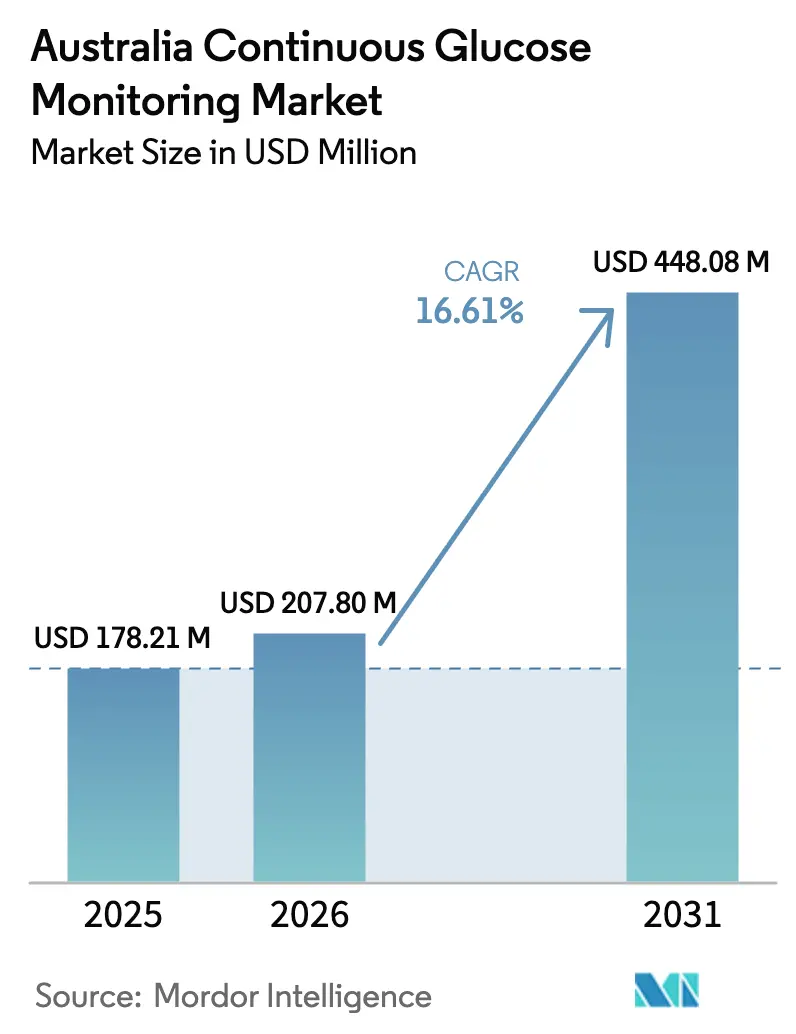
| Base Year Market Size (2025) | USD 178.21 Million |
| Market Size (2026) | USD 207.8 Million |
| Market Size (2031) | USD 448.08 Million |
| Growth Rate (2026 - 2031) | 16.61 % |
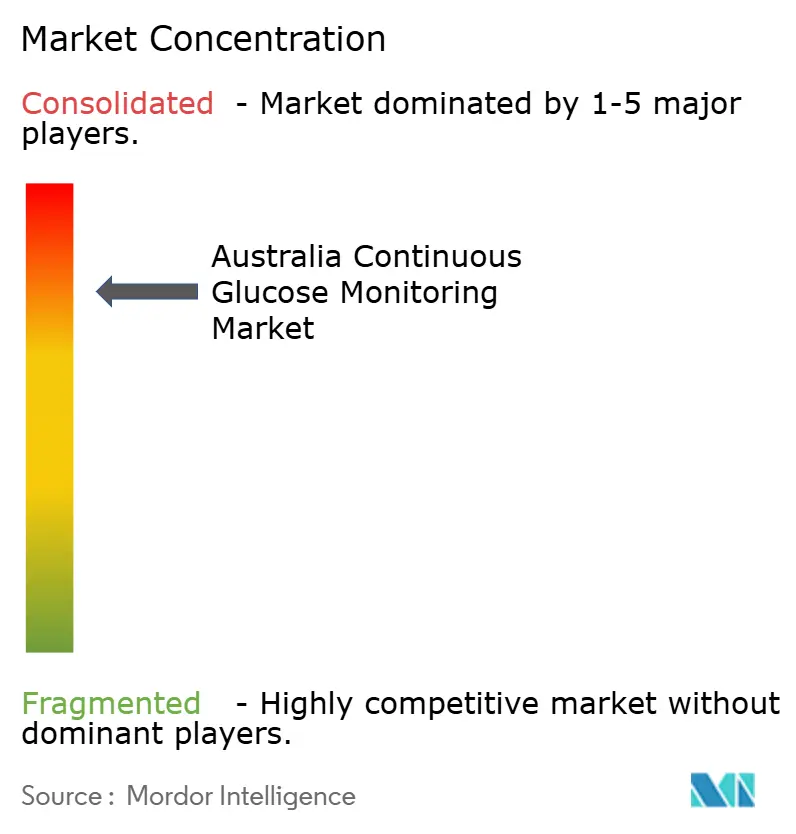
| Market Concentration | High |
Major Players *Disclaimer: Major Players sorted in no particular order Image © Mordor Intelligence. Reuse requires attribution under CC BY 4.0. | |
Australia Continuous Glucose Monitoring Market Analysis by Mordor Intelligence
Australia continuous glucose monitoring market size in 2026 is estimated at USD 207.8 million, growing from 2025 value of USD 178.21 million with 2031 projections showing USD 448.08 million, growing at 16.61% CAGR over 2026-2031. Consistent reimbursement expansion, factory-calibrated sensor innovation, and rising diabetes prevalence are accelerating adoption even faster than earlier forecasts. Larger adult cohorts that recently gained National Diabetes Services Scheme (NDSS) coverage are converting from finger-stick testing, while pediatric uptake remains brisk as caregivers prioritize remote monitoring[1]. Hospital demand is climbing as endocrinology departments standardize inpatient glycemic management on CGM, and hybrid closed-loop insulin systems are creating fresh hardware refresh cycles that lift durable sales. Intensifying competition among Abbott, Dexcom, and Medtronic is encouraging price discipline yet widening device choice, positioning the Australia continuous glucose monitoring market for sustained double-digit growth.
Key Report Takeaways
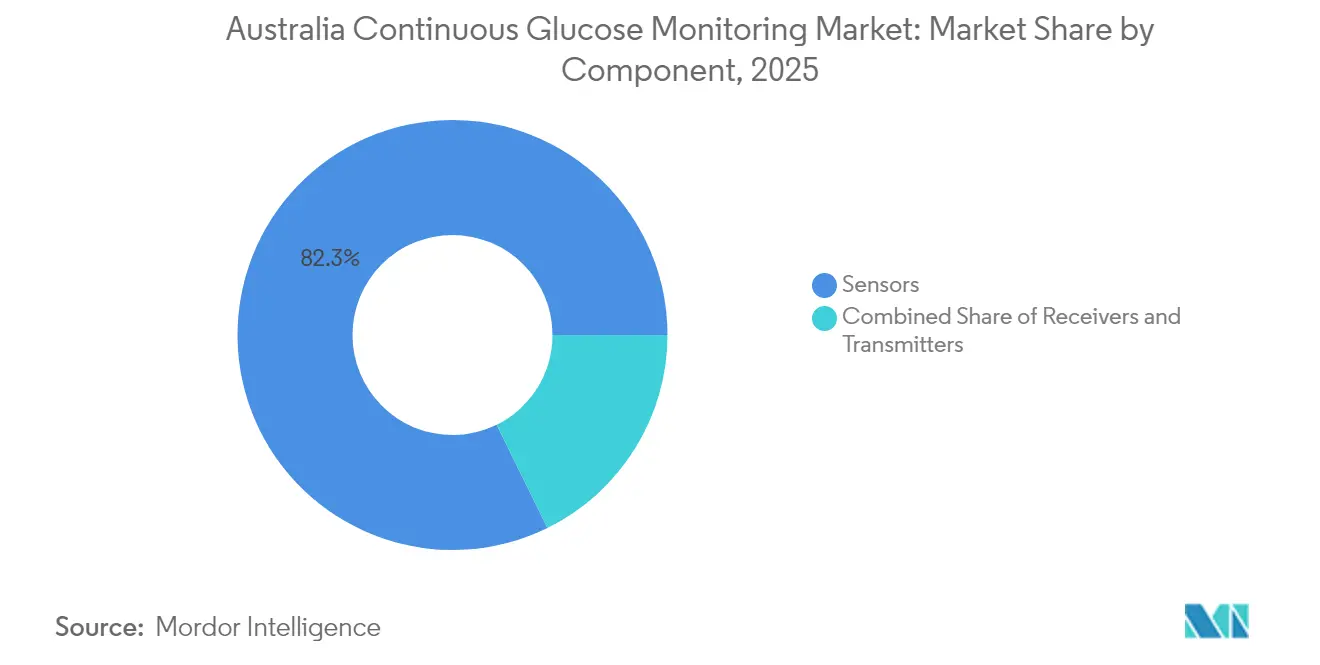
- By component, sensors captured 82.28% of the Australia continuous glucose monitoring market share in 2025, whereas durables are forecast to expand at a 17.05% CAGR to 2031.
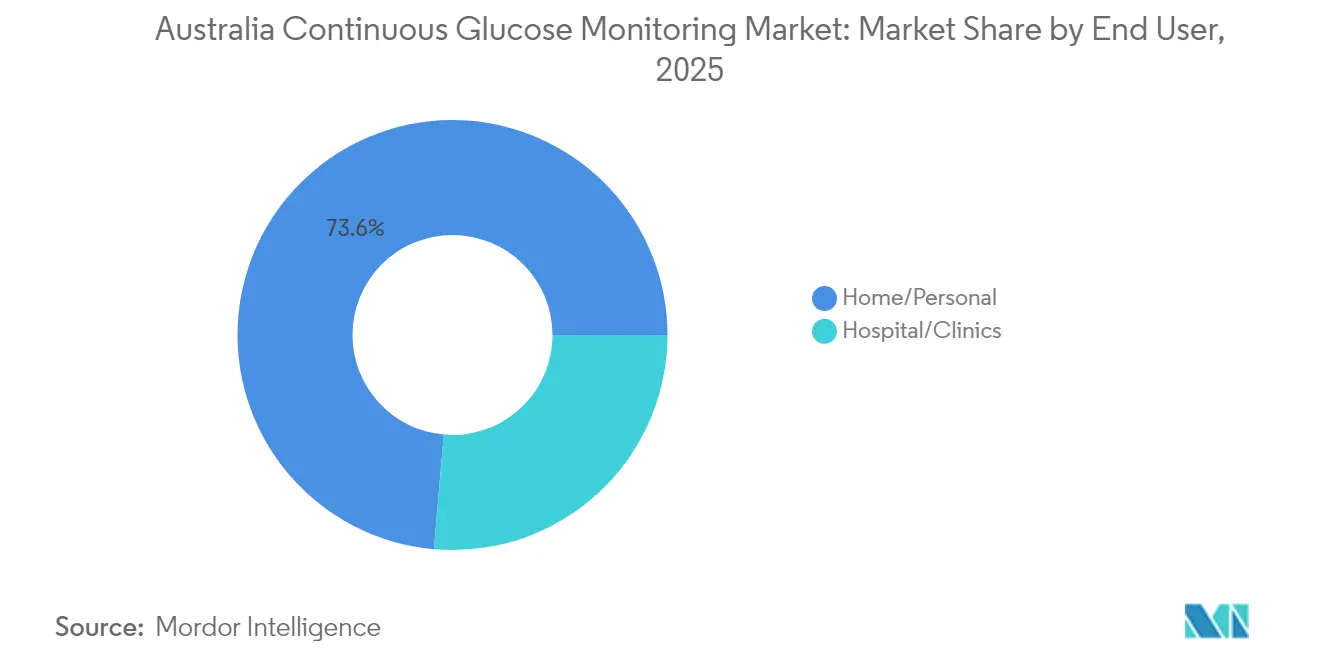
- By end user, home and personal use accounted for 73.62% share of the Australia continuous glucose monitoring market size in 2025, while hospital and clinic deployments are advancing at a 16.89% CAGR through 2031.
- By demography, adults held 64.38% of the installed base in 2025; the pediatric segment is growing fastest with a 16.73% CAGR between 2026 and 2031.
Note: Market size and forecast figures in this report are generated using Mordor Intelligence’s proprietary estimation framework, updated with the latest available data and insights as of 2026.
Australia Continuous Glucose Monitoring Market Trends and Insights
Drivers Impact Analysis*
| Driver | % Impact on CAGR Forecast | Geographic Relevance | Impact Timeline | |
|---|---|---|---|---|
| Rapidly Increasing Diabetes Prevalence | 3.5% | National, higher in urban and remote Indigenous areas | Long term (≥ 4 years) | |
| Advances in CGM Sensor Technology | 2.8% | National, early use in metropolitan teaching centers | Medium term (2–4 years) | |
| Expansion of NDSS Reimbursement Policies | 4.5% | National, staged by diabetes type | Short term (≤ 2 years) | |
| Integration with Hybrid Closed-Loop Systems | 2.2% | National, urban endocrinology and pediatric clinics | Medium term (2–4 years) | |
| Employer-Sponsored Diabetes Programmes In Mining and Corporate Sector | 1.2% | National, higher in urban areas | Short term (≤ 2 years) | |
| Indigenous-Health Screening Initiatives In Remote Areas | 0.8% | National, increasing in remote areas | Medium term (2–4 years) | |
| Source: Mordor Intelligence | ||||
Rapidly Increasing Diabetes Prevalence
Australia’s diagnosed diabetes population rose to 1.5 million adults in 2024, equal to 6.6% of residents, up from 5.1% a decade earlier. Type 2 diabetes represents 1.2 million of these cases, yet full NDSS CGM subsidies still apply only to 130,000 Type 1 patients, creating a gap that policy makers are addressing. Indigenous Australians face diabetes rates three times the national average, and the Waminda pilot showed that 18 of 25 Aboriginal women achieved glycemic improvement using CGM plus group visits, with 7 attaining remission[2]. Parliamentary committees are therefore recommending subsidy expansion to high-risk insulin-dependent Type 2 and gestational cohorts, a step that could double the eligible patient pool by 2027. Employers in mining and resources are also piloting on-site CGM programs that cut high-risk worker counts by more than half, indicating commercial willingness to fill coverage gaps.
Advances in CGM Sensor Technology
Factory-calibrated sensors with mean absolute relative difference (MARD) below 10% have become the country standard, removing the need for finger-stick confirmation. Abbott’s FreeStyle Libre 3 posts a 7.9% MARD, while Dexcom G7 records 8.2% overall and 8.6% in pediatric users, comfortably inside Therapeutic Goods Administration non-adjunctive dosing criteria. Wear time now extends to 14 days, halving annual sensor counts and supporting adherence. Real-time Bluetooth feeds to smartphones enable predictive alerts and caregiver sharing, features that drive uptake in children and older adults. Medtronic’s Simplera all-in-one disposable sensor, launched globally in 2024, promises easier insertion and lower cost once TGA approval is secured. These advances collectively keep Australia continuous glucose monitoring market growth on a steep trajectory.
Expansion of NDSS Reimbursement Policies
The NDSS expanded coverage in May 2024 to every Type 1 patient, eliminating prior age caps and unlocking roughly 80,000 adults who had self-funded or skipped CGM. Dexcom G7 gained listing in March 2025, followed by Abbott’s Libre 2 Plus in April 2025, increasing product choice and applying price pressure. A parliamentary inquiry has urged further extension to insulin-dependent Type 2, gestational, and pancreatogenic diabetes, potentially adding 200,000 users by 2027 if adopted. Pediatric experience shows that adoption can increase from 5% to 79% within two years once cost barriers are removed, indicating a similar surge in adult adoption is feasible. TGA accuracy standards filter entrants, ensuring that only four qualified platforms currently benefit from an NDSS listing, which sustains product quality but limits supply diversity.
Integration with Hybrid Closed-Loop Insulin Systems
Hybrid closed-loop platforms adjust basal insulin in real time, raising the performance bar for sensors and creating durable demand for compatible transmitters. Insulet’s tubeless Omnipod 5 gained Pharmaceutical Benefits Scheme subsidy in July 2024, targeting tech-savvy Type 1 adults who favor discretion. Medtronic’s MiniMed 780G and Tandem’s t:slim X2 with Control-IQ are widening footprints in urban centers as clinicians report 70–75% time-in-range versus 50–60% for conventional therapy. Despite only 9% of adults using automated delivery in 2024, falling hardware costs and broader reimbursement are expected to accelerate penetration. Each system relies on proprietary sensor-transmitter links, setting off refresh cycles that benefit device makers and underpin premium pricing.
Restraints Impact Analysis*
| Restraint | % Impact on CAGR Forecast | Geographic Relevance | Impact Timeline |
|---|---|---|---|
| High Device and Consumable Cost | -1.80% | National, greatest for unsubsidized Type 2 users | Short term (≤ 2 years) |
| Logistics Barriers to Serve Remote Regions | -1.20% | Remote Northern Territory, Western Australia, Far North QLD | Long term (≥ 4 years) |
| Data-Privacy Compliance Costs Under OAIC Regulations | -1.10% | National, greatest for unsubsidized Type 2 users | Short term (≤ 2 years) |
| Logistics Barriers to Serve Remote Regions | -0.80% | Remote Territory | Medium term (2–4 years) |
| Source: Mordor Intelligence | |||
High Device and Consumable Cost
Unsubsidized Australians face annual CGM bills of AUD 3,000–5,000 (USD 1,980–3,300), confining uptake among 1.2 million Type 2 patients to under 5%. Even with NDSS support, transmitters and app fees can top AUD 500 (USD 330) yearly, burdening pensioners and low-income households. Abbott, Dexcom, and Medtronic dominate supply, limiting price competition, while parallel-import rules block cheaper overseas sourcing. Some employers offset costs through wellness schemes, but coverage remains inconsistent. NDSS distribution tenders also force suppliers to maintain temperature-controlled networks across a vast continent, adding 15–20% to logistics expenses and constraining aggressive price cuts.
Logistics Barriers to Serve Remote Regions
Roughly 30% of Australia lies beyond next-day courier service, complicating cold-chain delivery for temperature-sensitive sensors. Shipments to Indigenous communities can take up to 10 days, risking accuracy loss from heat exposure. Limited mobile coverage hampers real-time data transmission, and digital-literacy gaps mean some users lack compatible smartphones. The NDSS tender now mandates 1800 technical helplines and end-to-end order tracking, but few carriers offer cost-effective depot coverage in remote areas. Scaling proven pilots such as Waminda requires trained community health workers and culturally tailored materials, which are still scarce outside major cities.
*Our forecasts treat driver/restraint impacts as directional, not additive. The impact forecasts reflect baseline growth, mix effects, and variable interactions.
Segment Analysis
By Component: Sensor Dominance Sustains Revenue Leadership
Sensors generated 82.28% of Australia continuous glucose monitoring market revenue in 2025, and the segment is projected to maintain a double-digit trajectory as NDSS eligibility expands and factory-calibrated 14-day wear becomes the norm. Abbott’s Libre 3 and Dexcom G7 both pair smaller footprints with rapid 30-minute warmup, encouraging upgrades that buoy average selling prices even as unit counts decline. Australia continuous glucose monitoring market size for sensors is forecast to climb to USD 365.9 million in 2031, implying a 16.02% CAGR alongside steady subsidy inflows.
Durables—transmitters and receivers—represented the remaining 17.72% in 2025, yet they are forecast to outpace sensors at 17.05% CAGR, reaching USD 82.18 million by 2031 as hybrid closed-loop systems create mandatory hardware refresh cycles. Transmitter evolution toward Bluetooth Low Energy now extends battery life to three months, while smartphone apps are cannibalizing standalone receivers, leaving a niche among seniors and remote users who lack smartphones. Medtronic’s Simplera could disrupt segment boundaries by integrating transmitter elements into the disposable sensor if TGA approval arrives in 2026, potentially reshaping Australia continuous glucose monitoring market share dynamics among incumbents.

By Demography: Pediatric Growth Outstrips Adult Base
Adults constituted 64.38% of the user base in 2025, largely because historical NDSS rules favored children under 21. Nevertheless, pediatric uptake is advancing at 16.73% through 2031, driven by caregiver demand for remote alerts and clinical evidence showing 0.5–0.8% HbA1c reductions and 40% fewer severe hypoglycemia events. Australia continuous glucose monitoring market size for pediatric patients is on track to reach USD 174.58 million by 2031, closing the gap with adult spending.
Adult adoption widened sharply after the 2024 subsidy extension, with smartphone-centric platforms such as Dexcom G7 and Libre 3 resonating among the 18–35 segment. Older adults remain partial to dedicated receivers due to lower smartphone use. Indigenous programs that pair CGM with culturally adapted coaching are demonstrating meaningful HbA1c cuts, hinting at further upside in both adult and pediatric Indigenous cohorts if reimbursements broaden.
By End User: Hospitals Accelerate from a Smaller Base
Home and personal settings produced 73.62% of revenue in 2025 as diabetes self-management dominated purchasing decisions. Australia continuous glucose monitoring market share for hospitals is, however, climbing off a low base, with 16.89% CAGR expected through 2031 as inpatient protocols mandate continuous monitoring for surgical candidates and steroid-treated patients. Royal Melbourne Hospital cut mean length of stay by 1.2 days after integrating CGM dashboards into electronic medical records, illustrating economic payback for institutions.
The home channel benefits from NDSS subsidies that reimburse personal devices but not hospital stock, yet clinics remain critical for onboarding and periodic retraining. Corporate wellness pilots among FIFO workforces represent an emerging hybrid category where employers finance devices but users manage them independently on site, adding nuance to end-user segmentation. As hybrid closed-loop pumps become mainstream, hospitals are expected to serve as initiation hubs even while long-term wear occurs at home, supporting parallel growth across both channels.
Geography Analysis
Eastern seaboard cities—Sydney, Melbourne, and Brisbane—house more than 50% of the nation’s 1.5 million diabetes cases and account for a similar share of CGM revenue thanks to dense endocrinology networks and same-day NDSS pharmacy fulfillment. Urban clinics report waiting lists of six to eight weeks for CGM starts, a backlog that underscores continuing demand momentum. Regional centers such as Newcastle, Wollongong, Geelong, and the Gold Coast leverage telehealth links to metropolitan specialists, sustaining mid-teen growth without proportional specialist headcount.
Remote and very remote areas, covering 30% of land but only 3% of residents, struggle with 5–10-day sensor delivery lags and patchy mobile coverage that compromise real-time alerts. Indigenous prevalence three times higher than the national norm magnifies the public-health imperative. Successful pilots like Waminda in Nowra are prompting state funding for scaled deployments in Alice Springs, Broome, and Cairns, although equipment transport and cultural-competency training remain bottlenecks
Regulatory Landscape
In Australia, continuous glucose monitoring (CGM) systems are regulated by the Therapeutic Goods Administration (TGA) as medical devices and must be included on the Australian Register of Therapeutic Goods (ARTG) prior to supply, with CGM listings visible on the ARTG (for example, ARTG entries such as 496627 and 464033). Recent regulatory emphasis also extends to software that is integral to device performance (Software as a Medical Device), which makes change management for CGM apps and algorithm updates a practical compliance consideration for suppliers, alongside device performance and labeling requirements.
On access and reimbursement, the National Diabetes Services Scheme (NDSS) is the core channel shaping demand through defined eligibility and distribution rules, including health-professional certification and fulfillment via NDSS Access Points (commonly community pharmacies) under established access-point procedures. In parallel, the TGA introduced the Therapeutic Goods (Restricted Representations - Diabetes Devices Permission 2026), setting updated conditions for advertising diabetes devices and influencing how CGM suppliers communicate claims to consumers while remaining within the restricted-representation framework.
Competitive Landscape
Abbott and Dexcom jointly hold more than 60% of Australia continuous glucose monitoring market share, leveraging NDSS listings, broad pharmacy footprints, and aggressive direct-to-consumer education. Abbott emphasizes pharmacy convenience and longer 14-day wear, whereas Dexcom stresses real-time alerts, predictive analytics, and a smaller on-body footprint. Medtronic maintains 15–18% share within the hybrid closed-loop niche through its MiniMed 780G ecosystem paired with Guardian 4 sensors, appealing to tech-oriented Type 1s who value full automation.
Dexcom’s budget-oriented ONE+ launch in 2024 widens the addressable self-funded Type 2 segment and pressures Abbott to diversify beyond Libre 2 Plus and Libre 3. Technology battles focus on sensor accuracy (MARD < 8%), warmup time, smartphone integration, and data-sharing functionality.
Regulatory hurdles remain steep: TGA mandates ISO 15197:2013 accuracy compliance and NDSS tenders require nationwide logistics and call-center support, favoring incumbents with cash to maintain temperature-controlled depots. Medtronic’s Simplera, if listed in 2026, could shift price dynamics by merging transmitter and sensor into a single disposable, challenging the consumables revenue model of competitors.
Australia Continuous Glucose Monitoring Industry Leaders
-
Abbott Laboratories
-
Dexcom Inc.
-
Medtronic plc
-
Ascensia Diabetes Care Holdings AG
-
F. Hoffmann-La Roche Ltd
- *Disclaimer: Major Players sorted in no particular order
Market Opportunities and Future Outlook
NDSS subsidy settings create a defined pathway to broaden CGM utilization within already-eligible cohorts and to improve conversion from finger-stick testing, because access is operationalized through authorized health-professional certification and community-pharmacy NDSS Access Points. The May 2024 NDSS expansion to all people with type 1 diabetes, followed by product listings such as Dexcom G7 (March 2025) and Abbott Libre 2 Plus (April 2025), has also increased on-subsidy choice and supports switching and upgrade cycles, rather than single-platform lock-in.
A second whitespace is affordability-led offerings and funding submissions aimed at insulin-dependent type 2 diabetes and other high-need groups, where self-funding remains a barrier. Market activity in 2026 reflects this: the Office of Health Technology Assessment consultation closed on 12 June 2026 for MSAC Application 1785 (resubmission) seeking NDSS funding for Dexcom ONE+ for people with insulin-dependent type 2 diabetes, while Abbott and AMSL resubmissions were scheduled for re-evaluation at the July 2026 MSAC meeting. Alongside funding pathways, manufacturers continue to refresh portfolios to reduce friction and improve performance, including Abbott introducing FreeStyle Libre 3 Plus in Australia in April 2026. Hospital protocol standardization and hybrid closed-loop pump ecosystems also sustain demand for compatible sensors and related durable hardware.
Recent Industry Developments
- July 2026: Abbott Australasia: Abbott Australasia reports that the Libre 2 sensor was delisted from the NDSS and users were auto-upgraded to Libre 2 Plus. The change influences device access and pricing, pushing a faster transition to the newer Libre generation.
- July 2026: Abbott Australasia/AMSL Diabetes: Abbott Australasia and AMSL Diabetes face a MSAC re evaluation for CGM funding, with the July 2026 MSAC meeting on the calendar. The funding review introduces near term uncertainty that could affect market uptake and payer dynamics.
- June 2026: Dexcom Inc.: Dexcom Inc reports a resubmission of NDSS funding application 1785 for ONE+ with consultation closing 12 June 2026. The NDSS funding pathway remains under consideration, potentially expanding access and increasing competitive pressure on incumbents.
Research Methodology Framework and Report Scope
Market Definition and Coverage
For this study, the market covers revenues generated in Australia from continuous glucose monitoring devices used to measure glucose levels on an ongoing basis, including the core device components sold through medical channels.
Scope exclusions: This sizing excludes insulin delivery devices, routine finger-stick consumables, and purely software-only diabetes apps that are not sold as part of a CGM device.
Segmentation Overview
- By Component
- Sensors
- Transmitters
- Receivers
- By End User
- Hospitals / Clinics
- Home / Personal
- By Demography
- Adult
- Pediatric
Data Sources, Market Sizing, and Validation
Desk Research
Desk research was used to build the basic demand context and to set practical assumptions that can be checked. We reviewed public health and diabetes indicators, reimbursement signals, and clinical practice guidance that influence how quickly CGM adoption expands across Australia.
Sources used typically include official publications and datasets such as the Australian Institute of Health and Welfare (AIHW), Australian Bureau of Statistics (ABS), the Australian Government Department of Health and Aged Care, Therapeutic Goods Administration (TGA) device registers, and National Diabetes Services Scheme (NDSS) program updates, along with peer-reviewed clinical journals. We also used company annual reports, investor presentations, and reputable news for product cycle timing and channel notes, plus selected paid subscriptions for company financials and intelligence and for patent databases where helpful. This list is illustrative and not exhaustive, and many other sources were also used to collect, validate, and clarify the final data and assumptions.
Primary Interviews and Surveys
Primary work was used to test what we saw in public sources and to fill gaps that are hard to observe, such as typical replacement cycles, practical pricing behavior by channel, and the pace at which eligibility and prescribing habits change. We spoke with a mix of manufacturers, distributors, diabetes care clinicians, and procurement or pharmacy stakeholders, so assumptions could be checked across the main states and across both public and private care settings.
Distribution of primary research fieldwork respondents
| Company type | Respondent position |
|---|---|
| Top tier: 37% | CXOs: 15% |
| Mid tier: 47% | Functional/Unit leaders: 27% |
| Smaller Players: 16% | Managers: 58% |
Market-Sizing & Forecasting
Sizing starts with a top-down demand pool build that ties Australia diabetes prevalence and treated population patterns to CGM-eligible cohorts, which are then adjusted using reimbursement access signals and observed adoption behavior. From there, the value is translated using component-level logic, mainly sensors and durables (receivers and transmitters), since purchasing frequency differs by component.
To keep the numbers realistic, we corroborated totals using selective bottom-up approximations, such as supplier and channel checks on shipment intensity, sampled average selling prices by component, and typical sensor consumption cadence. Inputs that influenced the model included diabetes population levels, NDSS coverage expansion and practical utilization, prescribing and training frictions, sensor wear duration and replacement frequency, and the timing of product refresh cycles that pull forward upgrades. For forecasting, scenario analysis was used to reflect different speeds of eligibility expansion and conversion from finger-stick routines, and then expert feedback was used to select the most probable path. Where bottom-up inputs were incomplete for smaller provinces or niche channels, gap handling relied on calibrated per-user consumption and conservative price progression before being rechecked with interview feedback.
Data Validation & Update Cycle
Model outputs were checked against independent signals, including implied CGM user counts, component mix sanity checks, and whether price and volume movement matched what stakeholders were seeing in market activity. Outliers were flagged, assumptions were revisited, and follow-up calls were triggered when a variance could not be explained by a clear market event.
Before sign-off, results go through multi-step analyst review so that formulas, unit consistency, and currency timing are verified. The report is refreshed annually, and interim updates are made when material changes occur, such as reimbursement eligibility shifts or major device launches. Right before delivery, we do a fresh pass on key inputs so clients receive the latest updated view.
Mordor Intelligence's Australia Continuous Glucose Monitoring Devices Market Size Compared Against Other Published Estimates
It is common to see published market sizes for CGM devices differ because the underlying scope and counting rules are not always aligned. The biggest drivers usually come from what is included as device revenue, the choice of base year, and how pricing and replacement behavior are treated when adoption is changing quickly.
In this market, gaps often show up when some estimates fold in adjacent diabetes monitoring items, assume a faster or slower NDSS-driven uptake curve, or apply a single average price without separating sensors from durables. Differences also appear when currency conversion timing is not stated, or when older base assumptions are carried forward even after eligibility and prescribing patterns shift, which is why the sensor-consumption and component-mix logic is kept explicit before the final number is signed off by Mordor Intelligence.
Benchmark comparison
| Source | Market Size | Gaps in Research Methodology |
|---|---|---|
| Mordor Intelligence | USD 207.80 M (2026) | |
| Trade Journal A | USD 141.96 M (2025) | Uses an earlier base year and appears to lean on a narrower counted revenue pool, with limited visibility on whether sensor replacement cadence and NDSS access expansion are fully reflected. |
| Regional Consultancy B | USD 473.23 M (2034) | Extends the horizon further out and likely assumes stronger long-run penetration and price progression, while the split between sensors and durables is not clearly surfaced, which can inflate totals in later years. |
Across the three figures, most of the spread is explained by base-year choice, how quickly adoption is assumed to move with reimbursement access, and whether component-level consumption is modeled instead of using one blended spend value. By keeping the demand pool, sensor usage, and durable refresh logic transparent, the estimate stays traceable to a repeatable set of steps that can be revalidated as conditions change.
Key Questions Answered in the Report
How fast is the Australia continuous glucose monitoring market expected to grow to 2031?
Value is projected to expand from USD 178.21 million in 2025 to USD 448.08 million by 2031, delivering a 16.61% CAGR.
Which component brings in the most revenue?
Sensors deliver 82.28% of current revenue because they are consumable items replaced every 14 days.
Why is pediatric adoption rising quicker than adult adoption?
Caregiver demand for real-time alerts and evidence of lower HbA1c and hypoglycemia drives a 16.73% pediatric CAGR versus 16.42% for adults.
What limits CGM penetration in remote Indigenous communities?
Delivery delays, temperature-controlled shipping, patchy mobile coverage, and limited digital literacy constrain uptake to below 2%.
Which hybrid closed-loop system is gaining reimbursed traction?
Insulet’s tubeless Omnipod 5, subsidized since July 2024, is popular among younger Type 1 adults seeking discreet wearables.