Market Overview
| Study Period | 2021 - 2031 |
|---|---|
| Forecast Data Period | 2026 - 2031 |
| Base Year Market Size (2025) | USD 667.61 Million |
| Market Size (2026) | USD 700.53 Million |
| Market Size (2031) | USD 891.88 Million |
| Growth Rate (2026 - 2031) | 4.93 % |
| Market Concentration | Medium |
Major Players
*Disclaimer: Major Players sorted in no particular order Image © Mordor Intelligence. Reuse requires attribution under CC BY 4.0. |
|
Asia-Pacific Whey Protein Ingredients Market Analysis by Mordor Intelligence
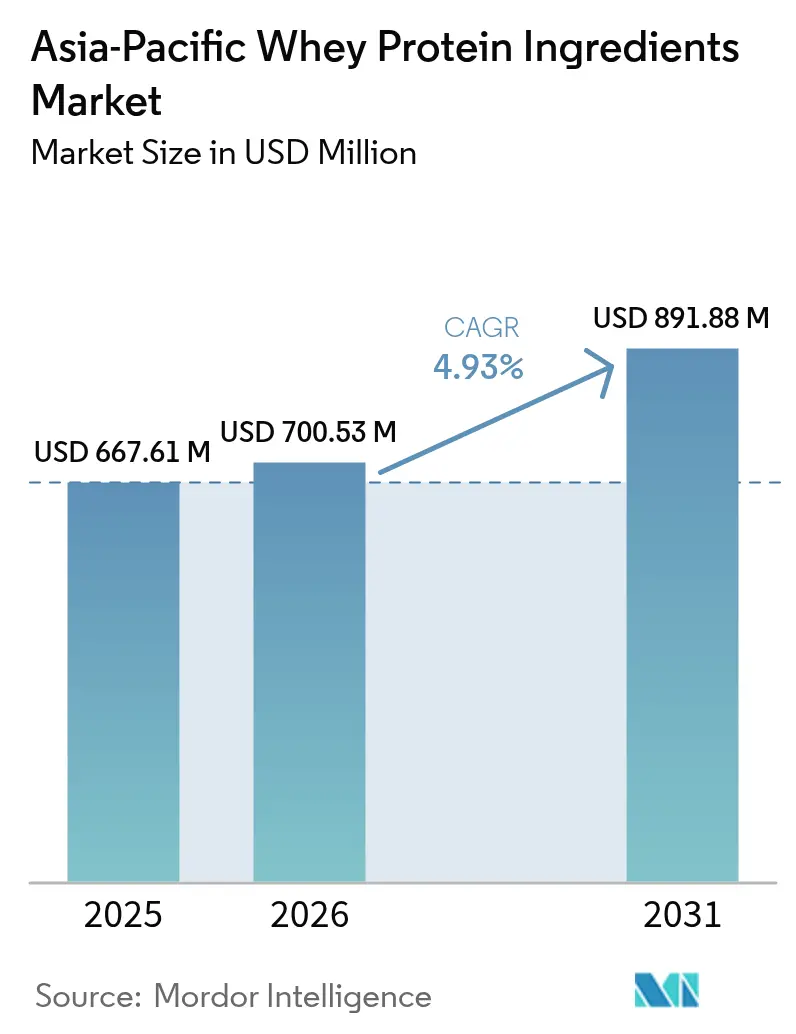
Asia-Pacific whey protein ingredients market size in 2026 is estimated at USD 700.53 million, growing from 2025 value of USD 667.61 million with 2031 projections showing USD 891.88 million, growing at 4.93% CAGR over 2026-2031. Evolving fitness cultures, widening disposable incomes, and supportive regulatory updates are steering demand for high-purity protein across sports nutrition, infant formula, and functional foods. Isolates remain the preferred form for clinical and athletic uses, yet hydrolyzed and textured whey variants are gaining traction as brands tackle lactose intolerance and allergenicity. Organic whey’s premium positioning is lifting value growth despite its small base, while technology-driven product differentiation heat-stable proteins, bioactive peptide fractions, and customized solubility profiles creates headroom for both cooperative processors and specialty suppliers. Competitive intensity persists as plant-based and precision-fermented proteins vie for share, although whey’s high leucine content and validated biological value sustain its advantage in rapid muscle recovery and medical nutrition
Key Report Takeaways
- By form, isolates dominated with 55.10% of the Asia-Pacific whey protein ingredients market share in 2025, while hydrolyzed and textured variants are forecast to deliver a 6.05% CAGR through 2031.
- By nature, conventional whey held 94.05% of the Asia-Pacific whey protein ingredients market size in 2025, yet organic offerings are projected to expand at a 6.02% CAGR during 2026-2031.
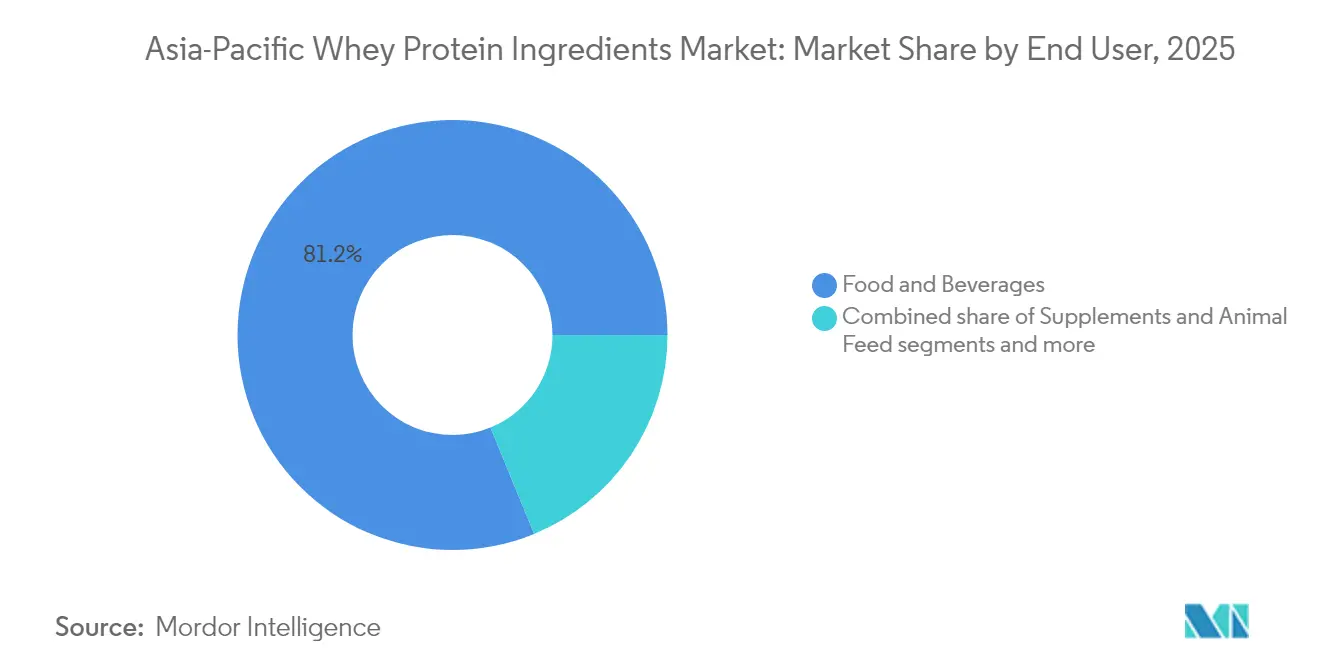
- By end user, food and beverages accounted for 81.20% revenue share in 2025, whereas personal care and cosmetics lead growth with a 5.78% CAGR forecast to 2031.
- By geography, China commanded 39.00% share in 2025, and India is poised for the fastest growth at a 5.62% CAGR over the outlook period.
Note: Market size and forecast figures in this report are generated using Mordor Intelligence’s proprietary estimation framework, updated with the latest available data and insights as of 2026.
Market Trends and Insights
Drivers Impact Analysis of Asia-Pacific Whey Protein Ingredients Market*
| Driver | (~) % Impact on CAGR Forecast | Geographic Relevance | Impact Timeline |
|---|---|---|---|
| Increasing demand from sports nutrition sector | +1.2% | China, India, South Korea, Japan, Australia | Medium term (2-4 years) |
| Rising health consciousness and awareness of whey protein benefits | +0.9% | Regional, with strong uptake in India, China, Southeast Asia | Long term (≥ 4 years) |
| Growth of the fitness culture and increasing gym memberships | +0.8% | India, China, Indonesia, Philippines, Vietnam | Medium term (2-4 years) |
| Rising demand for dietary supplements and protein-fortified products | +0.7% | Japan, South Korea, Australia, China | Short term (≤ 2 years) |
| Development of natural, organic, and clean-label whey protein products | +0.6% | Japan, Australia, South Korea, urban China | Long term (≥ 4 years) |
| Technological advancements in whey protein processing and extraction | +0.5% | Regional, led by Australia, Japan | Long term (≥ 4 years) |
| Source: Mordor Intelligence | |||


Increasing demand from sports nutrition sector
In the Asia-Pacific region, a surge in fitness awareness, gym memberships, and a keen interest in athletic performance have driven a rising demand for whey protein ingredients, particularly from the sports nutrition sector. Sports nutrition stands out as the predominant application for whey protein in Asia-Pacific. Consumers are increasingly gravitating towards protein-rich supplements, including whey powders, bars, and ready-to-drink beverages, to support muscle growth, recovery, and overall wellness. This growing trend is bolstered by the expansion of urban fitness club networks, the influence of marketing through fitness influencers and social media platforms, and a burgeoning middle class with higher disposable incomes. Notably, in major markets like China, India, and Australia, both amateur and professional athletes are increasingly adopting whey protein as their go-to ingredient for effective nutritional solutions. Additionally, the rising prevalence of health-conscious lifestyles and the increasing availability of innovative whey protein products tailored to diverse consumer needs further contribute to the market's growth.
Rising health consciousness and awareness of whey protein benefits
Rising health consciousness and growing awareness of the nutritional benefits of whey protein are key drivers of the Asia-Pacific whey protein ingredients market. Consumers across the region are increasingly prioritizing fitness, preventive healthcare, and balanced diets, leading to higher demand for high-quality protein sources. According to Glanbia’s 2024 consumer research, 42% of consumers worldwide now prioritize protein as the top ingredient, a trend especially strong among millennials and Gen Z in Asia [1]Source: Glanbia Nutritionals, "New Product Opportunities for Protein Drinks in Asia", glanbianutritionals.com, who view protein content as a direct indicator of a product’s overall healthiness. This heightened perception of protein’s value, combined with whey protein’s superior amino acid profile, rapid absorption, and proven role in muscle growth, weight management, and general wellness, is fueling its adoption across diverse consumer groups. The influence of social media fitness culture, rising disposable incomes, and the growing acceptance of Western dietary habits further amplify this shift, supporting sustained market expansion in the region.
Growth of the fitness culture and increasing gym memberships
The growth of fitness culture and the steady rise in gym memberships across the Asia-Pacific region are significant drivers of the whey protein ingredients market. As more consumers adopt active lifestyles and participate in structured exercise routines, demand for effective and convenient nutritional supplements especially high-quality proteins continues to accelerate. This trend is reflected in markets such as Australia, where the number of health and fitness centers increased from 5,869 in 2020 to 7,313 in 2024, according to the Australian Bureau of Statistics, highlighting the expanding fitness infrastructure in the region [2]Source: Australian Bureau of Statistics, "Number of health and fitness centers and gyms in operation in Australia", abs.gov.au. Urbanization, rising disposable incomes, and social media–driven fitness trends have encouraged individuals to prioritize strength training, weight management, and muscle recovery, further boosting the adoption of whey protein. Additionally, the proliferation of fitness chains, boutique studios, and growing home-workout communities continues to broaden the consumer base, supporting sustained demand for whey protein–enriched products.
Rising demand for dietary supplements and protein-fortified products
Rising demand for dietary supplements and protein-fortified products is a key driver of the Asia-Pacific whey protein ingredients market. Consumers across the region are increasingly seeking nutritional solutions to support immunity, muscle development, energy levels, and overall wellness, driving rapid growth in supplement and functional food categories. Japan and South Korea lead the region in per-capita supplement spending, with whey protein widely used in formulations aimed at sarcopenia prevention, weight management, and post-surgical recovery. This regional momentum is further reflected in the expanding sports nutrition segments, where South Korea’s sports protein bar category grew 20.1% in 2023, and China’s surged 28.9%, underscoring consumers’ willingness to pay premiums for convenience, taste innovation [3]Source: Glanbia Nutritionals, "Expansion of the Protein Drink Market in Asia", glanbianutritionals.com, and scientifically backed nutrition. As whey protein offers superior bioavailability and an ideal amino acid profile, it remains a preferred ingredient in ready-to-drink shakes, fortified snacks, functional dairy products, and meal replacements trends reinforced by the growth of e-commerce, personalized nutrition, and targeted marketing by global health and wellness brands.
Restraints Impact Analysis of Asia-Pacific Whey Protein Ingredients Market*
| Restraint | (~) % Impact on CAGR Forecast | Geographic Relevance | Impact Timeline |
|---|---|---|---|
| Fluctuating raw material (milk) and whey protein prices | -0.8% | Australia, China, India | Short term (≤ 2 years) |
| Concerns about lactose intolerance among consumers | -0.5% | China, Southeast Asia (Indonesia, Thailand, Vietnam) | Medium term (2-4 years) |
| Growing competition from plant-based protein alternatives | -0.6% | China, Japan, South Korea, Australia | Long term (≥ 4 years) |
| Spread of counterfeit and low-quality whey protein products | -0.4% | India, China, Indonesia, Philippines | Short term (≤ 2 years) |
| Source: Mordor Intelligence | |||
Fluctuating raw material (milk) and whey protein prices
Fluctuating raw material prices particularly milk and whey pose a significant restraint on the Asia-Pacific whey protein ingredients market. Since whey is a byproduct of cheese and dairy processing, its availability and cost are directly influenced by volatility in milk production, feed costs, climate conditions, and global dairy trade dynamics. These price swings create uncertainty for manufacturers, affecting production planning and overall profitability. Additionally, rising operational expenses, supply chain disruptions, and import dependencies in certain markets further intensify cost pressures. As a result, frequent price fluctuations can hinder product affordability, limit the adoption of whey protein among cost-sensitive consumers, and challenge the competitiveness of regional producers compared to alternative plant-based protein ingredients.
Concerns about lactose intolerance among consumers
Concerns about lactose intolerance among consumers act as a significant restraint on the Asia-Pacific whey protein ingredients market. The region has a high prevalence of lactose intolerance, particularly in East and Southeast Asian populations, making many consumers cautious about dairy-derived products, including whey protein. Although whey protein isolate contains minimal lactose, the lack of awareness about the differences between whey types often leads to hesitation or avoidance. This perception challenge limits market penetration, especially among first-time users and those seeking easily digestible protein sources. As a result, some consumers shift to lactose-free or plant-based protein alternatives, compelling manufacturers to invest in education campaigns, clearer labeling, and innovative low-lactose formulations to overcome this barrier and maintain competitiveness in the region.
*Our forecasts treat driver/restraint impacts as directional, not additive. The impact forecasts reflect baseline growth, mix effects, and variable interactions.
Asia-Pacific Whey Protein Ingredients Market Segment Analysis
By Form:
Isolates Lead, Hydrolyzed Variants SurgeThe whey protein isolate segment captured the largest market share in the Asia-Pacific whey protein ingredients market in 2025, commanding approximately 55.10% of the revenue. This dominance is attributed to the superior protein purity of isolates, typically exceeding 90%, along with minimal lactose content, which meets the stringent requirements of sports nutrition and clinical applications. Whey protein isolates offer excellent solubility and bioavailability, making them a preferred ingredient in products aimed at muscle recovery, weight management, and specialized dietary needs. Their purity and functionality have entrenched them in growing sectors such as sports supplements, infant formula, and medical nutrition products. The rising awareness among consumers about the benefits of high-protein diets and clean-label formulations further supports the demand for whey protein isolates, particularly in markets like China and India where health and fitness trends are prominent.
Hydrolyzed and textured whey protein variants represent the fastest-growing segments within the Asia-Pacific whey market, forecasted to grow at a CAGR of 6.05% between 2026 and 2031, outpacing the overall market growth rate of 4.93%. Advances in enzymatic hydrolysis and membrane filtration technologies are driving this growth by improving the taste profile, digestibility, and functional properties of these protein forms. Hydrolyzed whey protein, created by breaking down proteins into smaller peptides, is increasingly favored in infant nutrition and clinical formulations due to its enhanced absorption and hypoallergenic potential. Textured whey proteins, produced with specialized processing methods, offer fiber-like textures that are leveraged in meat analogs and functional food applications. The expanding market for plant-based and alternative protein products concurrently stimulates demand for specialty whey variants that can mimic textural and nutritional properties of animal-derived proteins.



By Nature:
Organic Niche Expands Amid Clean-Label MandatesThe conventional whey protein segment dominated the Asia-Pacific whey protein ingredients market in 2025, holding a substantial 94.05% share. This dominance is largely driven by the presence of large-scale dairy cooperatives that benefit from economies of scale and established processing infrastructure, enabling them to supply conventional whey protein efficiently and at competitive prices. These conventional variants are widely used in mass-market applications such as food and beverages, sports nutrition, and clinical nutrition, where price sensitivity is a key consideration. The well-developed supply chains and production capabilities of major players facilitate consistent product availability and quality. Furthermore, consumer familiarity and long-standing usage of conventional whey protein reinforce its market leadership.
In contrast, organic whey protein variants represent the fastest-growing segment, expanding at a compound annual growth rate (CAGR) of 6.02%, driven by increasing consumer interest in clean-label, natural, and sustainably sourced products. Premium brands and export-oriented manufacturers are actively pursuing organic certifications to cater to health-conscious consumers willing to pay a premium for perceived quality and environmental benefits. This segment appeals particularly to niche markets seeking non-GMO, hormone-free, and chemical-free protein ingredients. Organic whey protein is gaining traction in specialty foods, dietary supplements, and functional products, expanding beyond traditional markets. The growth is also supported by rising regulatory stringency on product transparency and sustainability, prompting manufacturers to innovate and invest in organic whey production.
By End User:
Food Dominates, Personal Care AcceleratesThe food and beverages segment held the largest market share in the Asia-Pacific whey protein ingredients market in 2025, accounting for approximately 81.20% of the total revenue. This dominance is driven by the extensive use of whey protein concentrates across various applications, including bakery products, beverages, dairy alternatives, ready-to-eat meals, and snacks. Whey concentrates are valued in this segment for their ability to enhance protein density, improve texture, and extend the shelf life of products, making them highly versatile ingredients for food manufacturers. Rising consumer demand for high-protein, nutritious food products combined with growing health awareness supports the sustained growth of this segment.
Conversely, the personal care and cosmetics segment is the fastest-growing end-user category, projected to expand at a compound annual growth rate (CAGR) of 5.78% from 2026 to 2031. Growth in this segment is fueled by the rising popularity of beauty-from-within trends, where consumers seek health and beauty benefits through nutritional supplements. Hydrolyzed whey peptides are increasingly incorporated into collagen supplements, face masks, and hair care formulations, leveraging their bioactive properties to promote skin elasticity, hydration, and hair strength. The expanding consumer focus on holistic wellness and natural ingredients boosts demand for such premium personal care products. Increasing urban affluence and the proliferation of beauty-conscious consumers in countries like Japan, South Korea, and China further drive this market.
Geography Analysis
China Whey Protein Ingredients Market
China holds a commanding 39.00% market share in the Asia-Pacific whey protein ingredients market as of 2025, largely anchored by robust demand for infant formula, expanding sports nutrition retail, and supportive government policies aimed at promoting dairy self-sufficiency. The country’s rapidly growing infant milk formula segment continuously propels whey protein usage, with both international and domestic brands innovating to capture market share through premium and science-backed products. Additionally, rising health awareness and a surge in fitness-related lifestyles have accelerated the adoption of whey protein-based sports nutrition supplements, creating new growth avenues in retail. Government initiatives to modernize and expand domestic dairy farming infrastructure further solidify China’s leadership by stabilizing raw milk supply and reducing dependence on imports.
India Whey Protein Ingredients Market
India emerges as the fastest-growing whey protein market in the region, expected to expand at a compound annual growth rate (CAGR) of 5.62% from 2026 to 2031. This growth is propelled by the entrance of domestic dairy cooperatives into value-added protein ingredient production, enhancing processing capacity and product innovation. Consumer demand for affordable yet nutritious sports nutrition products also fuels market expansion, reflecting growing fitness awareness and rising disposable income among India’s young and urban populations. India’s expanding dairy sector, supported by government schemes for farmer empowerment and milk production, creates a strong foundation for whey protein ingredient supply. Improvements in distribution infrastructure and increasing penetration of health foods and supplements further boost India’s competitive stance in regional whey protein markets.
Northeast Asia and Oceania Whey Protein Ingredients Market
Japan, South Korea, and Australia represent mature and high-value whey protein markets within Asia-Pacific, characterized by well-established penetration in sports nutrition and functional foods. However, growth in these markets is moderating due to demographic headwinds such as aging populations and shrinking youth segments, which dampen demand for sports supplements. Additionally, market saturation challenges manufacturers to innovate continuously to maintain customer engagement amid slower volume growth. Consumer preferences in these countries are shifting toward specialty and premium products emphasizing clean-label and functional benefits, which sustains niche growth. Despite slowing overall expansion, these mature markets remain influential in setting product trends and quality benchmarks that resonate throughout the wider Asia-Pacific whey protein industry.
Competitive Landscape
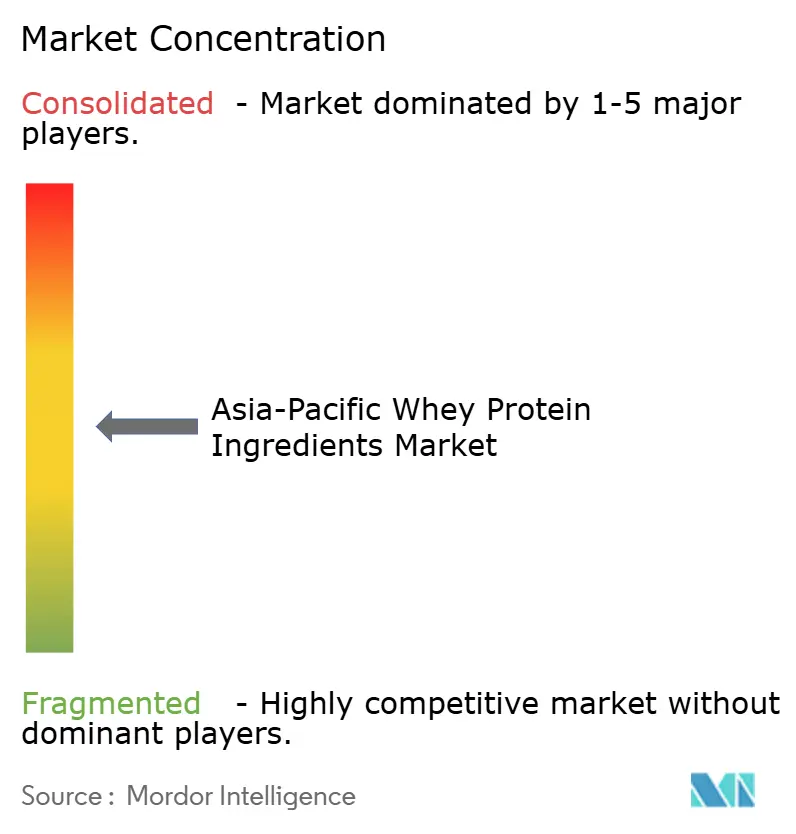
The Asia-Pacific whey protein ingredients market is characterized by moderate concentration, shaped by a diverse mix of global dairy cooperatives, regional ingredient specialists, and emerging domestic companies. This varied competitive landscape reflects the dynamic nature of the market, where multinational giants coexist alongside regional players who cater to local demand and unique consumer preferences. Compared to highly consolidated markets, this moderate concentration indicates both established leadership and significant opportunities for smaller or niche players to innovate and expand. As a result, the market competition encourages continuous advancements in product range, quality, and specialization tailored to evolving food, beverage, and nutritional applications.
Leading global dairy cooperatives such as Fonterra, Glanbia, and FrieslandCampina dominate significant portions of the Asia-Pacific whey protein ingredient market due to their vertically integrated supply chains. These companies control the entire production process from efficient milk procurement to advanced processing technologies like membrane filtration and spray drying, ensuring consistent product quality and scalability. Their integrated operations enable them to customize protein fractions such as whey protein concentrate, isolate, and hydrolysate according to customer specifications for diverse applications spanning sports nutrition, infant formula, and functional foods. In addition to product customization, their robust technical support and research capabilities strengthen customer relationships and differentiate them markedly from smaller traders or generic suppliers.
Emerging domestic players and regional ingredient specialists also hold a substantial role in the Asia-Pacific whey protein ingredients market, often focusing on country-specific consumer behaviors and regulatory environments. These companies typically compete by emphasizing cost efficiencies, local market knowledge, and agility in product innovation. While they may not match the scale or vertical integration of global majors, their ability to respond swiftly to regional trends such as growing demand for organic, clean-label, or plant-based alternatives—allows them to capture valuable niches. Some of these regional firms are investing in upgrading processing capacities and forming strategic partnerships to enhance their competitive standing.
Asia-Pacific Whey Protein Ingredients Industry Leaders
-
Fonterra Co-operative Group Limited
-
Glanbia PLC
-
Kerry Group PLC
-
FrieslandCampina N.V.
-
Arla Foods AMBA
- *Disclaimer: Major Players sorted in no particular order
Asia-Pacific Whey Protein Ingredients Market Companies Covered in this Report
- Arla Foods AMBA
- Fonterra Co-operative Group Limited
- Glanbia plc
- Groupe Lactalis
- FrieslandCampina N.V.
- Kerry Group plc
- Hilmar Cheese Company Inc.
- Morinaga Milk Industry Co. Ltd
- Olam International Ltd
- Freedom Foods Group Ltd
- Lacto Japan Co. Ltd
- Saputo Inc.
- Agropur Dairy Co-operative
- Milk Specialties Global
- Davisco Foods International
- Tatua Co-operative Dairy Co.
- Bel Group
- Valio Ltd
- Megmilk Snow Brand Co. Ltd

Recent Industry Developments in Asia-Pacific Whey Protein Ingredients Market
- May 2025: Arla Foods Ingredients has broadened its distribution alliance with the Brenntag Group, now encompassing Southeast Asia's top three food and nutrition markets. Under this expanded partnership, Brenntag will distribute Arla's diverse range of protein ingredients, notably whey proteins, across Vietnam, Thailand, and Indonesia. These ingredients will cater to various categories, spanning health foods, infant and sports nutrition, and will also provide functional solutions in dairy and bakery products.
- August 2024: Fonterra Co-operative Group expanded its Studholme facility in New Zealand to increase production capacity for functional proteins, including whey protein concentrates and isolates. The expansion supports growing demand from Asia-Pacific sports nutrition and infant formula manufacturers.
- May 2023: Westland Milk Products, under the ownership of Yili Group, broke ground on a NZD 70 million (around USD 43 million) lactoferrin facility in Hokitika, New Zealand. This high-value whey-derived protein, lactoferrin, finds its primary applications in infant formulas and immune-support supplements, with a keen focus on the Asia-Pacific markets.


Asia-Pacific Whey Protein Ingredients Market Report Scope
Concentrates, Hydrolyzed, Isolates are covered as segments by Form. Animal Feed, Food and Beverages, Personal Care and Cosmetics, Supplements are covered as segments by End User. Australia, China, India, Indonesia, Japan, Malaysia, New Zealand, South Korea, Thailand, Vietnam are covered as segments by Country.
Form
| Isolates |
| Concentrates |
| Hydrolyzed/Textured |
Nature
| Conventional |
| Organic |
End User
| Food and Beverages | Bakery |
| Beverages | |
| Breakfast Cereals | |
| Condiments / Sauces | |
| Dairy and Dairy-Alternative | |
| Meat / Poultry / Seafood Alternatives | |
| RTE / RTC Meals | |
| Snacks | |
| Animal Feed | |
| Supplements | Baby Food and Infant Formula |
| Elderly and Medical Nutrition | |
| Sport / Performance Nutrition | |
| Personal Care and Cosmetics |
Country
| Australia |
| China |
| India |
| Indonesia |
| Japan |
| Malaysia |
| Philippines |
| South Korea |
| Thailand |
| Vietnam |
| Rest of Asia-Pacific |
| Form | Isolates | |
| Concentrates | ||
| Hydrolyzed/Textured | ||
| Nature | Conventional | |
| Organic | ||
| End User | Food and Beverages | Bakery |
| Beverages | ||
| Breakfast Cereals | ||
| Condiments / Sauces | ||
| Dairy and Dairy-Alternative | ||
| Meat / Poultry / Seafood Alternatives | ||
| RTE / RTC Meals | ||
| Snacks | ||
| Animal Feed | ||
| Supplements | Baby Food and Infant Formula | |
| Elderly and Medical Nutrition | ||
| Sport / Performance Nutrition | ||
| Personal Care and Cosmetics | ||
| Country | Australia | |
| China | ||
| India | ||
| Indonesia | ||
| Japan | ||
| Malaysia | ||
| Philippines | ||
| South Korea | ||
| Thailand | ||
| Vietnam | ||
| Rest of Asia-Pacific | ||


Market Definition
- End User - The Protein Ingredients Market operates on a B2B basis. Food, Beverages, Supplements, Animal Feed, and Personal Care & Cosmetic manufacturers are considered to be end-consumers in the market studied. The scope excludes manufacturers buying liquid/dry whey to be used for application as a binding agent or thickener or other non-protein applications.
- Penetration Rate - Penetration Rate is defined as the percentage of Protein-Fortified End User Market Volume in the Overall End User Market Volume.
- Average Protein Content - Average protein content is the average protein content present per 100 g of product manufactured by all end-user companies considered under the scope of this report.
- End User Market Volume - End-user market volume is the consolidated volume of all types and forms of end-user products in the country or region.
| Keyword | Definition |
|---|---|
| Alpha-lactalbumin (α-Lactalbumin) | It is a protein that regulates the production of lactose in the milk of almost all mammalian species. |
| Amino acid | It is an organic compound that contains both amino and carboxylic acid functional groups, which are required for the synthesis of body protein and other important nitrogen-containing compounds, such as creatine, peptide hormones, and some neurotransmitters. |
| Blanching | It is the process of briefly heating vegetables with steam or boiling water. |
| BRC | British Retail Consortium |
| Bread improver | It is a flour-based blend of several components with specific functional properties designed to modify dough characteristics and give quality attributes to bread. |
| BSF | Black Soldier Fly |
| Caseinate | It is a substance produced by adding an alkali to acid casein, a derivative of casein. |
| Celiac disease | Celiac disease is an immune reaction to eating gluten, a protein found in wheat, barley, and rye. |
| Colostrum | It is a milky fluid that’s released by mammals that have recently given birth before breast milk production begins. |
| Concentrate | It is the least processed form of protein and has a protein content ranging from 40-90% by weight. |
| Dry protein basis | It refers to the percentage of "pure protein" present in a supplement after the water in it is completely removed through heat. |
| Dry whey | It is the product resulting from drying fresh whey which has been pasteurized and to which nothing has been added as a preservative. |
| Egg protein | It is a mixture of individual proteins, including ovalbumin, ovomucoid, ovoglobulin, conalbumin, vitellin, and vitellenin. |
| Emulsifier | It is a food additive that facilitates the blending of foods that are immiscible with one another, such as oil and water. |
| Enrichment | It is the process of addition of micronutrients that are lost during the processing of the product. |
| ERS | Economic Research Service of the USDA |
| Extrusion | It is the process of forcing soft mixed ingredients through an opening in a perforated plate or die designed to produce the required shape. The extruded food is then cut to a specific size by blades. |
| Fava | Also known as Faba, it is another word for yellow split beans. |
| FDA | Food and Drug Administration |
| Flaking | It is a process in which typically a cereal grain (like corn, wheat, or rice) is broken down into grits, cooked with flavors and syrups, and then pressed into flakes between cooled rollers. |
| Foaming agent | It is a food ingredient that makes it possible to form or maintain a uniform dispersion of a gaseous phase in a liquid or solid food. |
| Foodservice | It refers to the part of the food industry which includes businesses, institutions, and companies which prepare meals outside the home. It includes restaurants, school and hospital cafeterias, catering operations, and many other formats. |
| Fortification | It is the deliberate addition of micronutrients that are not found in them naturally or which are lost during processing, to improve a food product's nutritional value. |
| FSANZ | Food Standards Australia New Zealand |
| FSIS | Food Safety and Inspection Service |
| FSSAI | Food Safety and Standards Authority of India |
| Gelling agent | It is an ingredient that functions as a stabilizer and thickener to provide thickening without stiffness through the formation of gel. |
| GHG | Greenhouse Gas |
| Gluten | It is a family of proteins found in grains, including wheat, rye, spelt, and barley. |
| Hemp | It is a botanical class of Cannabis sativa cultivars grown specifically for industrial or medicinal use. |
| Hydrolysate | It is a form of protein manufactured by exposing the protein to enzymes that can partially break the bonds between the protein's amino acids and break down large, complicated proteins into smaller pieces. Its processing makes it easier and quicker to digest. |
| Hypoallergenic | It refers to a substance that causes fewer allergic reactions. |
| Isolate | It is the purest and most processed form of protein which has undergone separation to obtain a pure protein fraction. It typically contains ≥ 90% of protein by weight. |
| Keratin | It is a protein that helps form hair, nails, and the outer layer of skin. |
| Lactalbumin | It is the albumin contained in milk and obtained from whey. |
| Lactoferrin | It is an iron‑binding glycoprotein that is present in the milk of most mammals. |
| Lupin | It is the yellow legume seeds of the genus Lupinus. |
| Millenial | Also known as Generation Y or Gen Y, it refers to the people born from 1981 to 1996. |
| Monogastric | It refers to an animal with a single-compartmented stomach. Examples of monogastric include humans, poultry, pigs, horses, rabbits, dogs, and cats. Most monogastric are generally unable to digest much cellulose food materials such as grasses. |
| MPC | Milk protein concentrate |
| MPI | Milk protein isolate |
| MSPI | Methylated soy protein isolate |
| Mycoprotein | Mycoprotein is a form of single-cell protein, also known as fungal protein, derived from fungi for human consumption. |
| Nutricosmetics | It is a category of products and ingredients that act as nutritional supplements to care for skin, nails, and hair natural beauty. |
| Osteoporosis | It is a medical condition in which the bones become brittle and fragile from loss of tissue, typically as a result of hormonal changes, or deficiency of calcium or vitamin D. |
| PDCAAS | Protein digestibility-corrected amino acid score (PDCAAS) is a method of evaluating the quality of a protein based on both the amino acid requirements of humans and their ability to digest it. |
| Per-capita consumption of animal protein | It is the average amount of animal protein (such as milk, whey, gelatin, collagen, and egg proteins) that is readily available for consumption by each person in an actual population. |
| Per-capita consumption of plant protein | It is the average amount of plant protein (such as soy, wheat, pea, oat, and hemp proteins) that is readily available for consumption by each person in an actual population. |
| Quorn | It is a microbial protein manufactured using mycoprotein as an ingredient, in which the fungus culture is dried and mixed with egg albumen or potato protein, which acts as a binder, and then is adjusted in texture and pressed into various forms. |
| Ready-to-Cook (RTC) | It refers to food products that include all of the ingredients, where some preparation or cooking is required through a process that is given on the package. |
| Ready-to-Eat (RTE) | It refers to a food product prepared or cooked in advance, with no further cooking or preparation required before being eaten. |
| RTD | Ready-to-Drink |
| RTS | Ready-to-Serve |
| Saturated fat | It is a type of fat in which the fatty acid chains have all single bonds. It is generally considered unhealthy. |
| Sausage | It is a meat product made of finely chopped and seasoned meat, which may be fresh, smoked, or pickled and which is then usually stuffed into a casing. |
| Seitan | It is a plant-based meat substitute made out of wheat gluten. |
| Softgel | It is a gelatin-based capsule with a liquid fill. |
| SPC | Soy protein concentrate |
| SPI | Soy protein isolate |
| Spirulina | It is a biomass of cyanobacteria that can be consumed by humans and animals. |
| Stabilizer | It is an ingredient added to food products to help maintain or enhance their original texture, and physical and chemical characteristics. |
| Supplementation | It is the consumption or provision of concentrated sources of nutrients or other substances that are intended to supplement nutrients in the diet and is intended to correct nutritional deficiencies. |
| Texturant | It is a specific type of food ingredient that is used to control and alter the mouthfeel and texture of food and beverage products. |
| Thickener | It is an ingredient that is used to increase the viscosity of a liquid or dough and make it thicker, without substantially changing its other properties. |
| Trans fat | Also called trans-unsaturated fatty acids or trans fatty acids, it is a type of unsaturated fat that naturally occurs in small amounts in meat. |
| TSP | Textured soy protein |
| TVP | Textured vegetable protein |
| WPC | Whey protein concentrate |
| WPI | Whey protein isolate |


Research Methodology
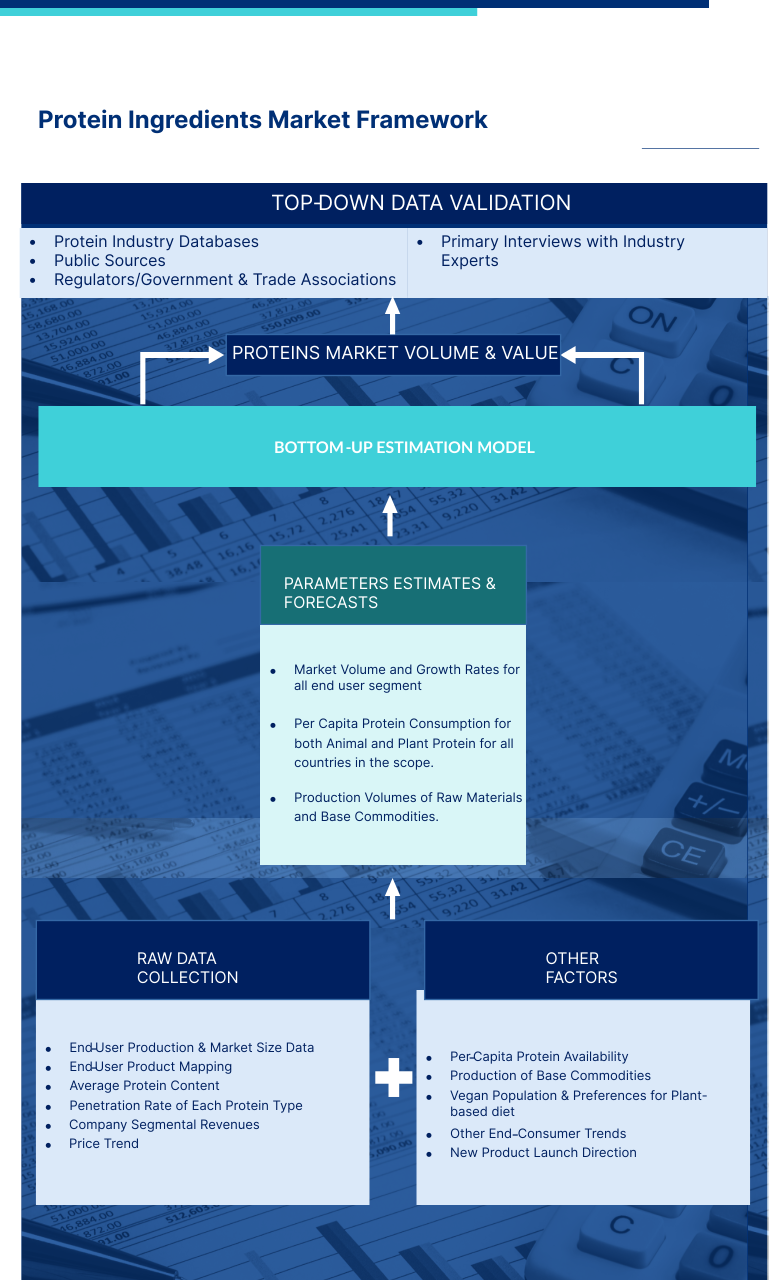
Mordor Intelligence follows a four-step methodology in all our reports.
- Step-1: Identify Key Variables: The quantifiable key variables (industry and extraneous) pertaining to the specific product segment and country are selected from a group of relevant variables & factors based on desk research & literature review; along with primary expert inputs. These variables are further confirmed through regression modeling (wherever required).
- Step-2: Build a Market Model: In order to build a robust forecasting methodology, the variables and factors identified in Step-1 are tested against available historical market numbers. Through an iterative process, the variables required for market forecast are set and the model is built on the basis of these variables.
- Step-3: Validate and Finalize: In this important step, all market numbers, variables and analyst calls are validated through an extensive network of primary research experts from the market studied. The respondents are selected across levels and functions to generate a holistic picture of the market studied.
- Step-4: Research Outputs: Syndicated Reports, Custom Consulting Assignments, Databases & Subscription Platforms