
| Study Period | 2020 - 2030 |
| Forecast Data Period | 2025 - 2030 |
| Historical Data Period | 2020 - 2023 |
| CAGR | 3.00% |
| Market Concentration | Medium |
Major Players *Disclaimer: Major Players sorted in no particular order |
Asia-Pacific Turbomachinery Control Systems Market Analysis by Mordor Intelligence
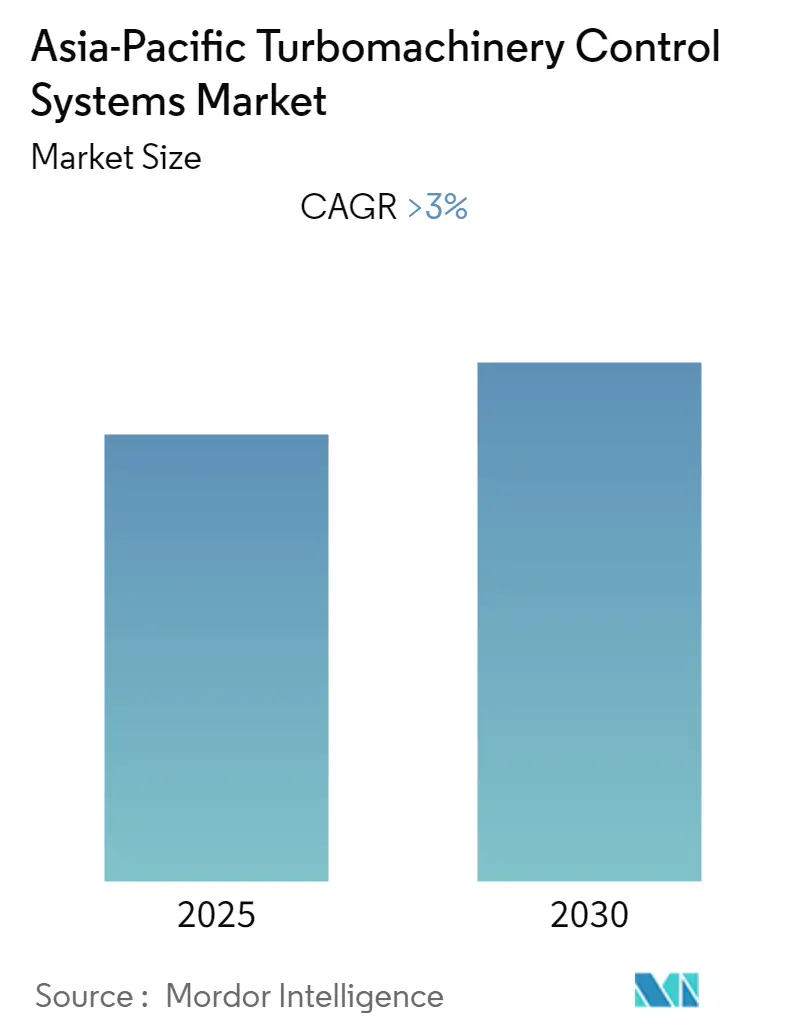
The Asia-Pacific Turbomachinery Control Systems Market is expected to register a CAGR of greater than 3% during the forecast period.
- The power generation industry is expected to hold the highest demand for turbomachinery control systems, followed by the oil & gas industry and other end-user industries.
- Increasing technology advancements and innovations enabling day-to-day operations are expected to offer lucrative opportunities to the market players in the future.
- With rapid industrialization, investments, and expansion, China is likely to be the largest market for turbomachinery control systems in the Asia-Pacific region during the forecast period.
Asia-Pacific Turbomachinery Control Systems Market Trends and Insights
Power Industry Segment to Dominate the Market
- In the power sector, turbomachinery control systems are used in equipment like turbines used for power generation and compressors to provide consistent pressure required for the operation of pneumatic valves and actuators in the power plant. In the traditional power generation systems (steam and gas), turbomachinery control systems play an integral part in enhancing the equipment's productivity and safety.
- The power demand is growing rapidly because of the surge in population and industrial expansion. Apart from that, the increasing disposable income in the developing countries has led to a rise in per capita power consumption that is likely to create massive demand for expansion of power infrastructure in the near future.
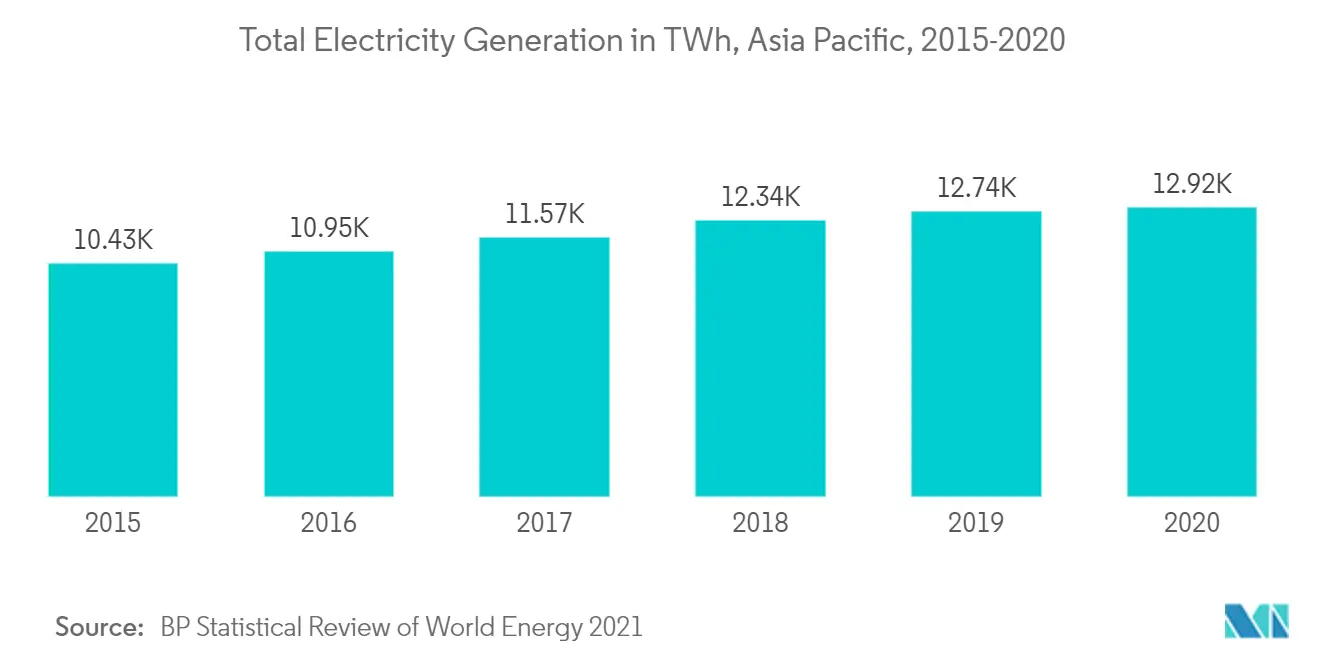
- According to BP Statistical Review of World Energy 2021, electricity generation, as of 2020, in the Asia-Pacific was approximately 12,919.3 TWh, representing an increase of roughly 56% compared to 2010. Coal was the main contributor to the region's power mix, generating about 7,386.4 TWh of electricity in 2020. Despite the improved focus on renewable energy, the electricity demand is majorly met by the conventional power generation mode, and the trend is expected to continue during the forecast period. Thus, the surge in demand for energy is likely to result in the significant development of conventional power plant projects, which is anticipated to increase demand for turbomachinery control systems during the forecast period.
- Moreover, the countries in the region are planning to shift toward low-carbon, natural gas-based power generation. For instance, in May 2021, the Australian government confirmed that it would invest AUD 600 million (USD 468 million) gas-fired power plant in New South Wales' Hunter Valley. Moreover, the Liddell coal-fired power station is set to be decommissioned in 2023. Such trends are expected to witness a substantial development of gas-based power plants in the coming years.
- Hence, owing to the above points, the power industry is likely going to be the fastest-growing and most prominent segment in the Asia-Pacific turbomachinery control systems market during the forecast period.
China to Dominate the Market
- Due to its rapid increase in energy demand and industrialization, China is likely to be the largest market for turbomachinery control systems in the Asia-Pacific region. The country has been instrumental in driving the manufacturing sector globally. China is the global leader in the steel, chemical, power, and cement industries and is among the top players in the petrochemical and refining industries.
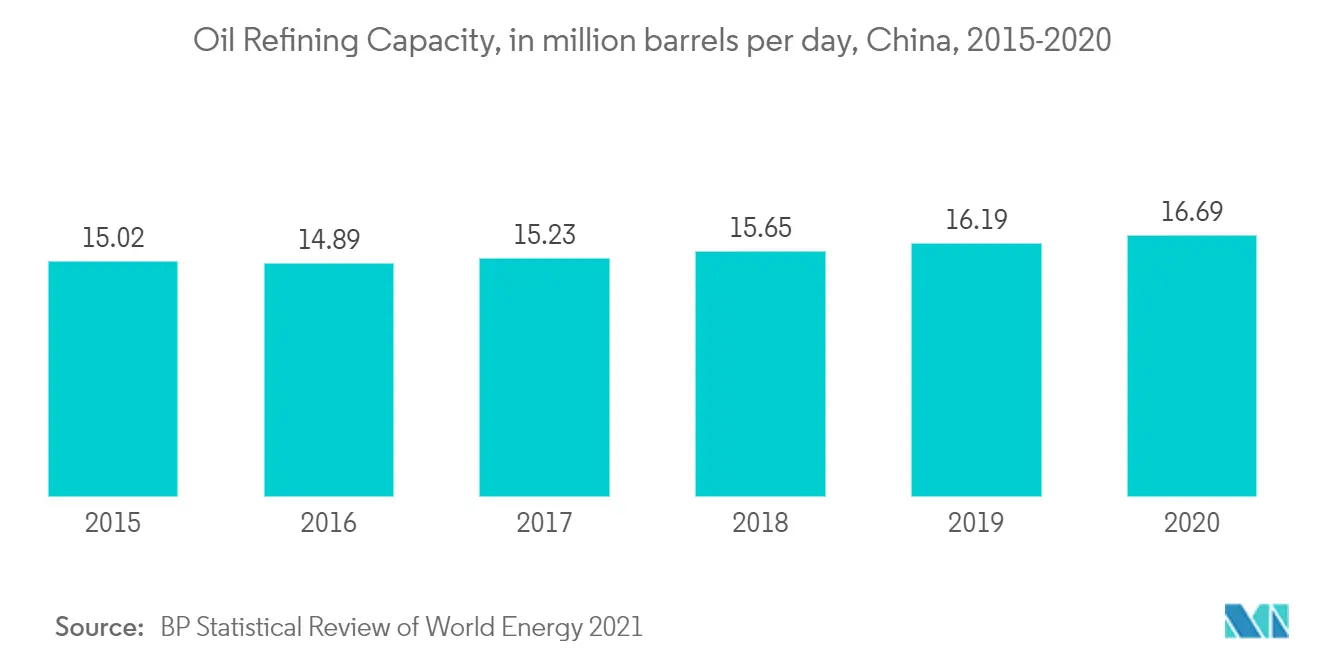
- In 2020, China's refinery capacity reached an all-time high of 16.69 million barrels per day (mb/d). As the oil demand growth shifted from fuel-driven to petrochemical feedstock-driven, China is transforming and upgrading the refinery industry.
- The refining sector is likely to propel the market's growth. In China, a total of nine upcoming refineries are expected to start operations between 2020 and 2024. Among these, five are planned refineries, and four are announced refineries. The Jieyang refinery is likely to be the major upcoming refinery in China, with a refining capacity of 400 mbd. It is expected to schedule operations in 2022.
- In June 2020, China approved a USD 20 billion mega petrochemical complex in the city of Yantai in Shandong province. The project includes a 400,000 barrel-per-day (BPD) refinery and a 3 million tonne-per-year ethylene plant. These projects are likely to create a substantial demand for turbomachinery control systems for the oil and gas sector in the country. In the downstream oil and gas sector, turbomachinery like compressors is used in fuel gas, feed gas, isomerization, hydrocracking, etc. The turbomachinery consists of a control system that provides comprehensive control solutions, including anti-surge, performance, and load sharing.
- Moreover, China's coal plant fleet expansion has slowed down in recent years; however, the country still has more coal plants under development than any other country. For instance, in August 2021, China's provincial governments approved 24 new coal power projects in the first half of 2021, adding a total of 5.2 gigawatts (GW) of capacity, including three approved large-scale projects coal-fired power plants.
- Hence, with the expansion of the refinery and petrochemical industries and the upcoming coal-fired plant, the country is expected to increase the demand for turbomachinery control systems.
Competitive Landscape
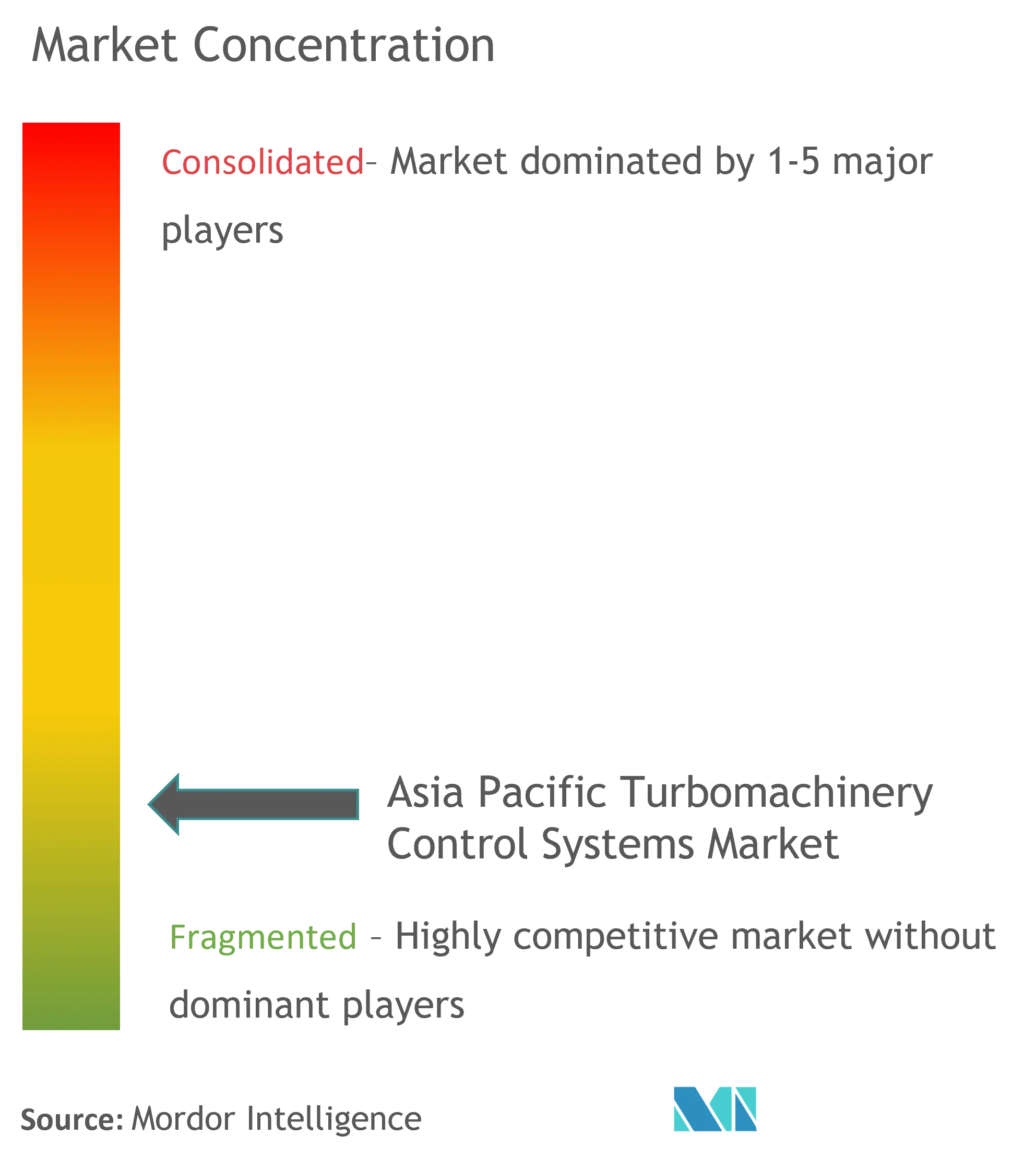
The Asia-Pacific turbomachinery control systems market is moderately fragmented. Some of the major players in the market include ABB Ltd, Emerson Electric Co., General Electric Company, Siemens Energy AG, and Yokogawa Electric Corporation.
Asia-Pacific Turbomachinery Control Systems Industry Leaders
-
ABB Ltd.
-
Emerson Electric Co.
-
Yokogawa Electric Corporation
-
General Electric Company
-
Siemens Energy AG
- *Disclaimer: Major Players sorted in no particular order
Recent Industry Developments
- In July 2021, Westinghouse announced a contract with Harbin Turbine Company Limited Automation Control Company to supply the turbine control and protection system to Changjiang Units 3 and 4, which used two 1000 MWe classes pressurized water reactors. Changjiang Units 3 and 4 are located in Hainan Province, China, and were approved by the Chinese government in September 2020. The first concrete pouring date of Unit 3 was in March 2021.
Asia-Pacific Turbomachinery Control Systems Market Report Scope
The Asia-Pacific turbomachinery control systems market report includes:
Application
| Turbine Controls |
| Compressor Controls |
End-user Industry
| Power |
| Oil and Gas |
| Chemical |
| Metals and Mining |
| Other End-user Industries |
Geography
| China |
| India |
| Malaysia |
| Australia |
| Rest of Asia-Pacific |
| Application | Turbine Controls |
| Compressor Controls | |
| End-user Industry | Power |
| Oil and Gas | |
| Chemical | |
| Metals and Mining | |
| Other End-user Industries | |
| Geography | China |
| India | |
| Malaysia | |
| Australia | |
| Rest of Asia-Pacific |
Key Questions Answered in the Report
What is the current Asia-Pacific Turbomachinery Control Systems Market size?
The Asia-Pacific Turbomachinery Control Systems Market is projected to register a CAGR of greater than 3% during the forecast period (2025-2030)
Who are the key players in Asia-Pacific Turbomachinery Control Systems Market?
ABB Ltd., Emerson Electric Co., Yokogawa Electric Corporation, General Electric Company and Siemens Energy AG are the major companies operating in the Asia-Pacific Turbomachinery Control Systems Market.
What years does this Asia-Pacific Turbomachinery Control Systems Market cover?
The report covers the Asia-Pacific Turbomachinery Control Systems Market historical market size for years: 2020, 2021, 2022, 2023 and 2024. The report also forecasts the Asia-Pacific Turbomachinery Control Systems Market size for years: 2025, 2026, 2027, 2028, 2029 and 2030.
Asia-Pacific Turbomachinery Control Systems Market Report
Statistics for the 2025 Asia-Pacific Turbomachinery Control Systems market share, size and revenue growth rate, created by Mordor Intelligence™ Industry Reports. Asia-Pacific Turbomachinery Control Systems analysis includes a market forecast outlook for 2025 to 2030 and historical overview. Get a sample of this industry analysis as a free report PDF download.