
Market Overview
| Study Period | 2021 - 2031 |
|---|---|
| Forecast Data Period | 2026 - 2031 |
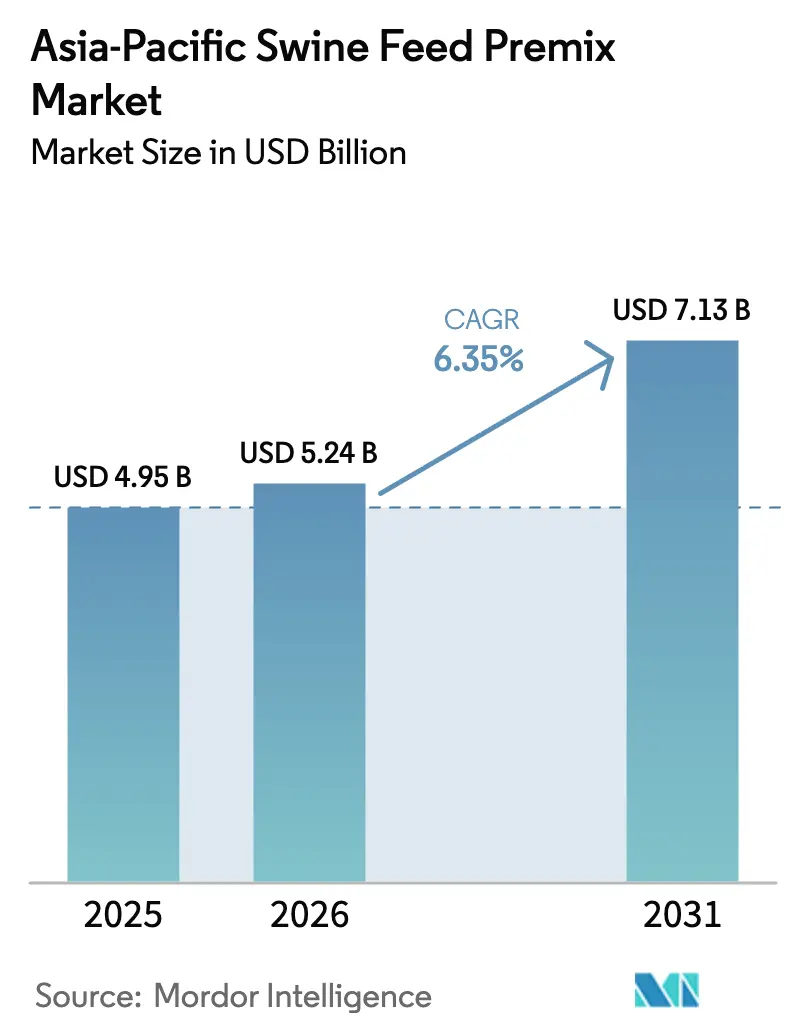
| Base Year Market Size (2025) | USD 4.95 Billion |
| Market Size (2026) | USD 5.24 Billion |
| Market Size (2031) | USD 7.13 Billion |
| Growth Rate (2026 - 2031) | 6.35 % |
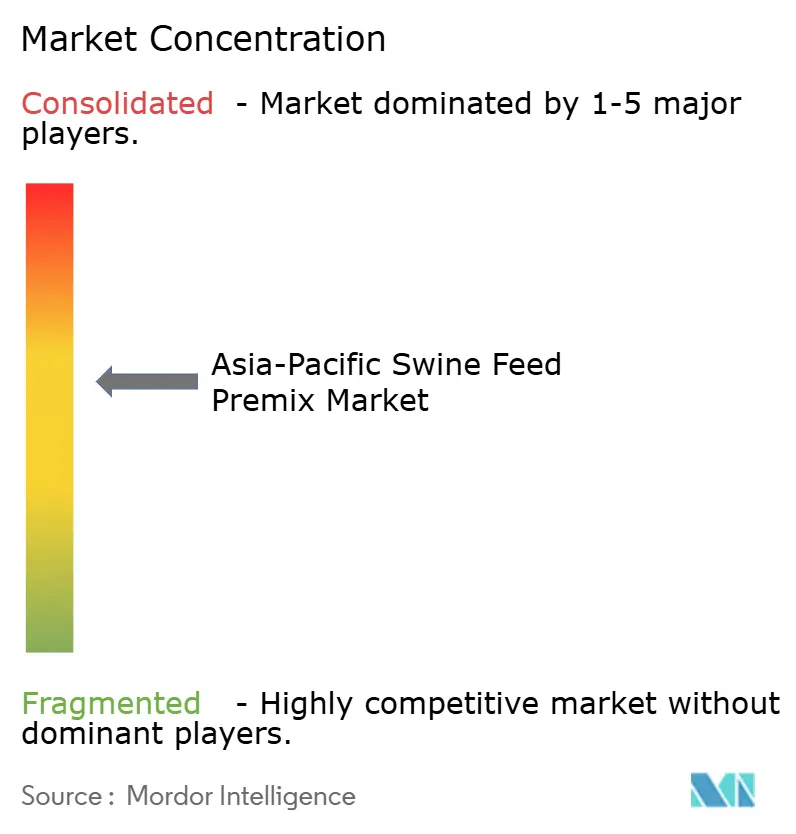
| Market Concentration | Medium |
Major Players *Disclaimer: Major Players sorted in no particular order Image © Mordor Intelligence. Reuse requires attribution under CC BY 4.0. | |
Asia-Pacific Swine Feed Premix Market Analysis by Mordor Intelligence
The Asia-Pacific swine feed premix market size is projected to expand from USD 4.95 billion in 2025 and USD 5.24 billion in 2026, to USD 7.13 billion by 2031, registering a CAGR of 6.35% between 2026 to 2031. Demand is rising as producers rebuild herds after African Swine Fever, comply with antibiotic-free regulations, and shift from backyard to commercial operations in China, Vietnam, and Thailand. Enzyme premixes that replace banned growth promoters, automated liquid-dosing installations, and clean-label pork programs are reinforcing adoption. Although the Asia-Pacific swine premix market experienced a 15% margin compression in early 2025 due to global shortages of vitamins A and E, capacity restorations at BASF SE and Zhejiang Medicine Co., Ltd., stabilized pricing by late 2025. This stabilization allowed the market to utilize precision nutrition software, supporting projected growth.
Key Report Takeaways
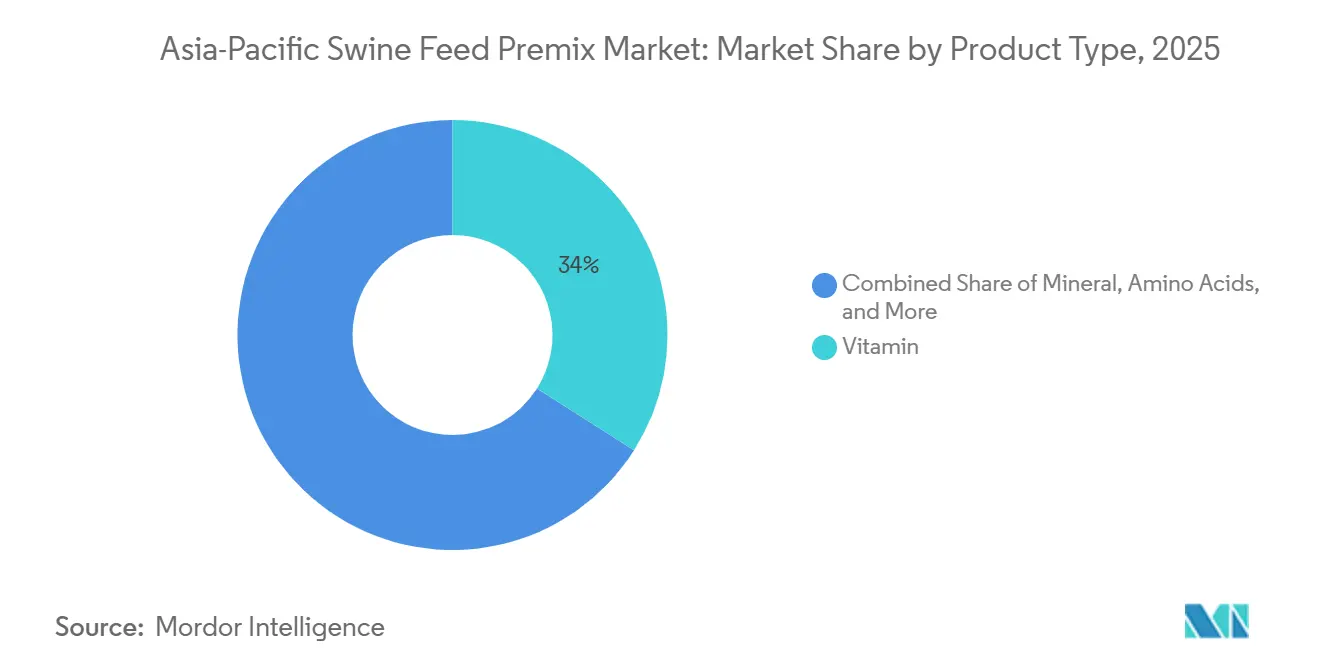
- By product type, vitamins led with 34% of the Asia-Pacific swine feed premix market share in 2025, and enzymes are projected to post the fastest 8.9% CAGR through 2031.
- By form, dry premixes accounted for 71.5% of the Asia Pacific swine feed premix market share in 2025, whereas liquid formats are advancing at a 7.6% CAGR, driven by rising automated dosing.
- By functionality, growth promotion accounted for 40.2% of the Asia Pacific swine feed premix market size in 2025, while immunity enhancement is forecast to expand at a 9.4% CAGR during 2026-2031.
- By ingredient source, natural formulations accounted for 58.8% of the Asia Pacific swine feed premix market size in 2025 demand and are growing at a 7.8% CAGR, outpacing synthetic alternatives.
- By purchaser type, commercial integrators accounted for 56.9% of the Asia Pacific swine feed market size in 2025, while cooperative feed mills are anticiapted to have the highest 8.2% CAGR through 2031.
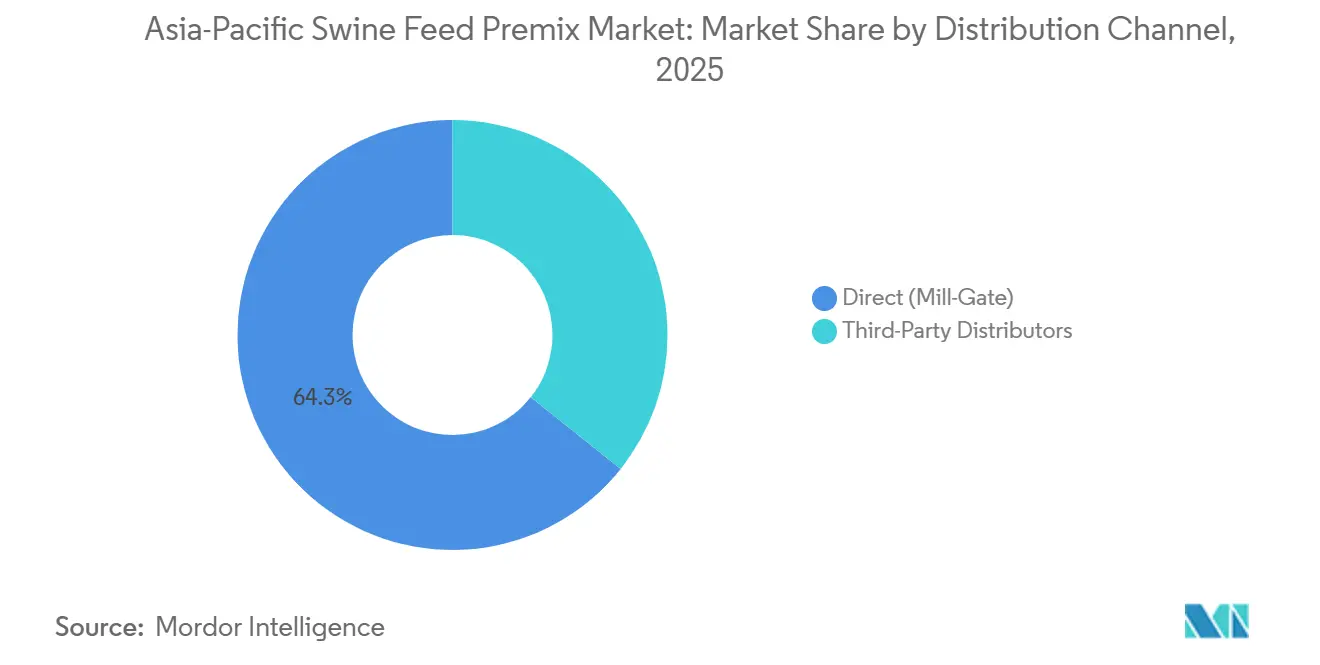
- By distribution channel, third-party distributors grew at an 8.5% CAGR, while direct (mill-gate) supply accounted for 64.3% of 2025 sales of the Asia-Pacific swine feed premix market.
- By geography, China led the Asia-Pacific swine feed premix market with 54.3% share in 2025, while Vietnam is projected to post the fastest 8.1% CAGR through 2031.
Note: Market size and forecast figures in this report are generated using Mordor Intelligence’s proprietary estimation framework, updated with the latest available data and insights as of January 2026.
Asia-Pacific Swine Feed Premix Market Trends and Insights
Drivers Impact Analysis*
| Driver | (~) % Impact on CAGR Forecast | Geographic Relevance | Impact Timeline |
|---|---|---|---|
| African Swine Fever (ASF)-driven biosecurity protocols elevating fortified premix demand | +1.2% | China, Vietnam, Philippines, Thailand, and Indonesia | Medium term (2–4 years) |
| Government mandates for antibiotic-free pork accelerating functional additives | +1.4% | China, Vietnam, and Thailand | Long term (≥ 4 years) |
| Rising pork consumption among emerging middle class expanding commercial feed penetration | +1.1% | India, Indonesia, and Philippines | Long term (≥ 4 years) |
| Expansion of integrator-owned mega-farms consolidating premix procurement | +0.9% | China, Vietnam, and Thailand | Medium term (2–4 years) |
| Adoption of precision-nutrition micro-dosing systems improving feed efficiency | +0.7% | China, Japan, South Korea, and Australia | Medium term (2–4 years) |
| Digitized on-farm dispensers reducing labor needs and dosing errors | +0.5% | Japan, South Korea, Australia, China, and Thailand | Short term (≤ 2 years) |
| Source: Mordor Intelligence | |||
African Swine Fever (ASF)-Driven Biosecurity Protocols Elevating Fortified Premix Demand
African Swine Fever devastated China's hog industry, cutting the sow herd and prompting a shift to industrialized biosecurity standards [1]. Integrators now raise vitamin A, D, E, zinc, and selenium inclusion rates to strengthen immunity in densely stocked facilities. Herd rebuilding in Dong Nai and Long An drove Vietnam's demand for high-protein premix and specialized feeds in 2025, raising compound feed production to 22.12 million metric tons. The Philippines required enhanced nutrition on farms in African Swine Fever (ASF)-affected areas in 2024, triggering immediate demand spikes. The modernization of livestock systems in Southeast Asia is anticipated to drive growth in the Asia-Pacific swine feed market, with specialized premix and additive segments leading the way, driven by a focus on biosecurity and feed efficiency through 2028.
Government Mandates for Antibiotic-Free Pork Accelerating Functional Additives
China banned antibiotic growth promoters in feed from July 2020, prompting increased use of enzymes, probiotics, and organic acids that boosted feed conversion by up to 5% for leading integrators. Following 2024 pilot programs in key livestock provinces, Vietnam plans to ban growth-promoting antibiotics by 2026, boosting demand for enzyme cocktails and probiotics as alternatives to Colistin and Zinc Bacitracin. Thailand’s export-oriented farms need Good Manufacturing Practice Plus certification that forbids antibiotic promoters, pushing natural growth-promoting premixes. Though compliance raised formulation costs by 8-10% in 2024-2025, integrators regained profitability through improved nutrient digestibility. The shift toward antibiotic-free feed is anticipated to boost the Asia-Pacific swine feed premix market, as producers in China and Southeast Asia focus on nutritional additives for gut health.
Rising Pork Consumption Among Emerging Middle Class Expanding Commercial Feed Penetration
India's per capita pork consumption is low at 0.24 kg, with nearly 50% of demand concentrated in the Northeast states of Assam, Nagaland, and Meghalaya, where meat availability rose significantly in the 2024-25 cycle [2]. Indonesia's pork consumption is projected to reach 0.40 kg per capita by 2026, supported by a USD 1.2 billion government plan to build 30 feed mills and secure the livestock supply chain. Metro Manila and Central Luzon together captured around 60% of incremental Philippine pork demand from 2020-2025, catalyzing a shift from backyard to commercial farming. Growing income enables farms to purchase standardized premixes rather than raw additives.
Digitized On-Farm Dispensers Reducing Labor Needs and Dosing Errors
In October 2025, CJ CheilJedang Corp. (CJ Corp.) sold its livestock and feed subsidiary, CJ Feed & Care, to Royal De Heus for 1.2 trillion won (USD 854 million) after modernizing its contract farm networks with digital farm management systems and IoT-enabled dispensers. This initiative resulted in a 20% reduction in labor and a 3% improvement in feed conversion, showcasing the effectiveness of its vertical integration model. Japan’s Zen-Noh cooperative tied blockchain-linked dispenser data to premium retail traceability claims. Adoption concentrates in markets where hourly wages exceed USD 15 [3]. The technology advancement further boosts regional growth through 2027, tapering as penetration saturates early-adopter farms.
Restraints Impact Analysis*
| Restraint | (~) % Impact on CAGR Forecast | Geographic Relevance | Impact Timeline |
|---|---|---|---|
| Volatile vitamin A and E prices compressing formulator margins | -0.8% | China, India, Southeast Asia | Short term (≤ 2 years) |
| Strict Chinese ban on antibiotic growth promoters raising formulation cost | -0.6% | China, Vietnam, Thailand | Medium term (2–4 years) |
| El Niño-driven grain shortfalls disrupting supply chains | -0.5% | Vietnam, Thailand, Philippines, Indonesia | Short term (≤ 2 years) |
| Consumer skepticism toward synthetic additives steering demand to natural | -0.3% | Japan, South Korea, Australia, Urban China | Long term (≥ 4 years) |
| Source: Mordor Intelligence | |||
Volatile Vitamin A and E Prices Compressing Formulator Margins
In July 2024, a fire at BASF SE's Ludwigshafen plant disrupted a significant portion of global precursor capacity, causing vitamin A prices to more than double by the end of the year. Supply levels returned to normal only after production resumed in April 2025. Concurrently, Zhejiang Medicine temporarily closed its Shaoxing site for environmental upgrades, leading to a 38% increase in vitamin E prices. By late 2025, multi-year low hog prices in China (below ¥11/kg) severely impacted margins, prompting swine feed premix manufacturers to delay additive purchases until 2026 while negotiating price reductions of up to 50% on vitamins. Similarly, Indian buyers postponed orders to mitigate volatility in raw material prices. Global additive prices are anticipated to stabilize fully by early 2027 as swine cycles return to normal patterns.
Strict Chinese Ban on Antibiotic Growth Promoters Raising Formulation Cost
In accordance with the Ministry of Agriculture and Rural Affairs (MARA)'s antibiotic-free mandate, Chinese feed producers have substituted colistin and zinc bacitracin with multi-enzyme and probiotic blends. This initially increased costs by 8–10%, but these were later mitigated by enhanced feed efficiency and improved animal health. Early adopters experienced a 2–3% reduction in daily gain during feed formulation refinement. Following the January 2026 ban on preventive antibiotics, Vietnamese livestock exporters have faced margin pressures due to investments in expensive probiotics and specialized feed required to meet residue-free standards for export markets such as Japan and South Korea. However, declining enzyme costs and advancements in formulation efficiency are anticipated to alleviate these challenges in the future.
*Our forecasts treat driver/restraint impacts as directional, not additive. The impact forecasts reflect baseline growth, mix effects, and variable interactions.
Segment Analysis
By Product Type: Enzymes Gain Momentum While Vitamins Remain Core
Vitamins secured 34% of the Asia-Pacific swine feed premix market share in 2025, as regulations mandate the use of fat-soluble vitamins for optimal growth and fertility. Enzymes, however, are projected to expand at an 8.9% CAGR through 2031, the fastest among product types, as phytase and xylanase blends recapture feed efficiency lost after antibiotic bans. Amino acids and minerals together meet a significant portion of the demand and remain indispensable for lean tissue deposition and immune support. Antibiotics accounted for a limited market share, limited to prescription therapy in China and Vietnam.
Minerals are further anticipated to follow the growth of Enzymes, owing to their natural positioning. Suppliers bundle enzymes with probiotics in single-dose sachets to ease handling and align with precision dosing systems. China’s GB 13078 hygiene code lengthens approval cycles for new actives, favoring multinational firms that operate advanced labs. These dynamics keep the Asia-Pacific swine feed premix market competitive and innovation-rich.

By Form: Dry Dominates but Liquid Surges in Automated Sites
Dry premixes occupied 71.5 % of the Asia Pacific swine feed premix market size during 2025, owing to the cooperative mills and family farms that rely on conventional batch mixers. In contrast, liquid products are forecast to post a 7.6% CAGR through 2031, benefiting from automated injection systems that reduce labor by 15-20% and tighten dosing to within 1% tolerance. The Asia-Pacific swine feed premix market for liquid formulations is experiencing rapid growth, driven by growing adoption among Japanese and South Korean integrators, who are leading rollouts, citing labor cost savings.
The adoption persists in India and Indonesia, where dispensers cost USD 50,000-80,000 per unit and require temperature-controlled storage. Leasing models are emerging to ease funding hurdles. Suppliers also use concentrated liquid additives that reduce freight weight by up to 40%, improving landed economics. As wage inflation spreads, the liquid share should rise across the Asia-Pacific swine feed premix industry.
By Functionality: Immunity Enhancement Accelerates Post-African Swine Fever (ASF)
Growth promotion retained 40.2% of the Asia Pacific swine feed premix market size in 2025, as producers still target rapid weight gain and efficient feed conversion. Immunity enhancement is projected to grow at a 9.4% CAGR through 2031, making it the fastest-growing functionality segment as African Swine Fever (ASF) recovery drives higher levels of vitamin C, E, selenium, and zinc. Feed conversion efficiency premixes held significant demand, leveraging phytase and xylanase to trim feed costs by 3-5%. Reproductive performance blends covered further hold a prominent share, addressing sow fertility and piglet viability.
China’s Ministry of Agriculture mandates fortified rations in African Swine Fever (ASF)-designated zones, boosting immunity-focused product lines. Vietnam’s imports of immunity premix rose 23 % year-on-year through September 2025 as integrators rebuilt sow numbers. Suppliers now offer micro-pack sachets that combine vitamins and trace minerals in targeted ratios. This design syncs with dispenser platforms and strengthens biosecurity compliance.
By Ingredient Source: Natural Formulations Outpace Synthetic Counterparts
Natural premixes accounted for 58.8% of the Asia Pacific swine feed premix market size in 2025, driven by retailer and consumer preferences for antibiotic-free and additive-light pork in markets such as Japan, South Korea, Australia, and urban China. The natural segment is advancing at a 7.8% CAGR through 2031, making it the fastest-growing segment in the Asia-Pacific swine feed premix market. Meanwhile, synthetic premixes continue to hold a significant share due to their ability to provide standardized potency at a lower cost, particularly in India, Indonesia, and the Philippines. Retailer programs are now heavily focused on natural-origin content, prompting integrators to incorporate plant-derived vitamins and chelated minerals into their formulations.
Fermentation-based vitamins from CJ CheilJedang Corp. (CJ Corp.) are narrowing the natural price premium to single digits. DSM-Firmenich AG commercialized algae-derived vitamin D in the Asia Pacific in 2025, further diversifying supply. These pull factors underpin long-run growth.
By Purchaser Type: Cooperative Feed Mills Emerge as Fastest-Growing Buyers
Commercial integrators commanded 56.9% of 2025 volume, leveraging direct mill-gate contracts that secure 8-12% price concessions and technical support bundles. Cooperative feed mills are projected to post the highest 8.2% CAGR through 2031 because smallholders in Indonesia, the Philippines, and India are consolidating into buying groups that match integrator purchasing power. Independent family farms retained a significant share, mainly in Thailand and Vietnam, where ownership fragmentation persists. Cooperatives now pool credit and logistics to buy fortified premixes at near-integrator prices.
Indonesia’s cooperative membership rose 18% over 2024-2025, elevating premix adoption by 14% among member farms. Philippine cooperatives receive state credit lines that underwrite inventory for 60 days, softening cash flow strain. Suppliers design discounted technical packages for cooperatives, cementing loyalty. As consolidation progresses, the Asia-Pacific swine feed premix industry will see a flatter buyer hierarchy.
By Distribution Channel: Third-Party Distributors Gain Where Infrastructure Lags
Direct mill-gate supply dominated with a 64.3% share in 2025 because large integrators own transport fleets or locate feed mills on-site. Third-party distributors are growing at an 8.5% CAGR through 2031, the fastest among channels, because they bridge logistics and credit gaps in India, Indonesia, and the Philippines. In 2025, India’s agricultural distributor network utilized a more than 50% increase in logistics supply and standard 30-60-day payment terms to boost premix adoption.
Third-party agents are increasingly combining technical advice with mobile app ordering, enhancing customer retention. Integrated players, however, continue to favor direct channels for biosecurity management and cost efficiency. Despite this, the Asia-Pacific swine feed premix market depends on distributors to access fragmented regions. This reliance is expected to continue until infrastructure developments, such as road and cold-chain projects, address existing structural challenges.
Geography Analysis
China accounted for 54.3% of the Asia-Pacific swine feed premix demand in 2025 as large-scale farms enhanced rations to improve resilience against African Swine Fever (ASF). Vietnam is projected to grow at the fastest rate, with an 8.1% CAGR through 2031, driven by foreign-funded mega-mills in Dong Nai and Long An that incorporate high-spec premixes. The adoption of precision nutrition software and automated liquid dosing systems is expanding rapidly in both countries, increasing the complexity of feed specifications. Together, China and Vietnam are projected to represent approximately two-thirds of the Asia-Pacific swine feed premix market during the forecast period.
Thailand, Indonesia, and the Philippines collectively hold a significant share of the Asia-Pacific swine feed premix market in terms of 2025 volume. Thailand benefits from export-oriented antibiotic-free certification programs that necessitate the use of natural premixes. Indonesia is projected to achieve a strong CAGR, reflecting increased pork consumption among Balinese and Papuan middle-class consumers. The Philippines is supported by urbanization and cooperative consolidation, which help standardize feed formulations.
Japan, South Korea, Australia, and New Zealand collectively hold a moderate share of the Asia-Pacific swine feed premix market and are projected to exhibit steady annual growth. These countries emphasize labor-saving dispenser technologies and traceability to cater to premium retail channels. India accounts for a smaller share, with growth driven by dietary changes in the northeastern region. Emerging markets such as Laos and Cambodia are anticipated to develop as road networks and cold-chain infrastructure improve. These diverse growth patterns are anticipated to further diversify the geographic revenue base of the Asia-Pacific swine feed premix market.
Regulatory Landscape
Regulatory pressure in the Asia-Pacific swine feed premix market is tightening around additive approvals, import controls, and antibiotic-use restrictions, with China and Vietnam setting much of the compliance bar for regional supply chains. China continues to oversee feed additives through the Ministry of Agriculture and Rural Affairs (MARA) catalog and usage norms, and in June 2026 MARA Announcement No. 1025 approved new feed additives and updated safety usage norms for vitamin D3 and astaxanthin, which keeps formal registration and formula consistency central for premix suppliers serving large integrators.
Cross-border access is also shaped by customs and facility registration requirements. In June 2026, the General Administration of Customs of China (GACC) moved to a transition toward a dynamic, risk-based catalog for overseas producer registration (Decree 280 replacing Decree 248), increasing documentation and audit readiness needs for exporters of feed ingredients and additives into China. Vietnam has been shifting administration toward digital workflows, including a move toward self-declaration on the competent ministry portal (notably for feed supplements), while buyers and regulators increase scrutiny of labeling and dossiers. This raises compliance requirements for imported premix components used in antibiotic-free programs.
Competitive Landscape
The Asia-Pacific swine feed premix market exhibited moderate concentration in 2025, with the top five companies, such as Charoen Pokphand Group Co., Ltd., Cargill, Incorporated, Guangdong Haid Group Co., Ltd., New Hope Liuhe Co., Ltd. (New Hope Group), and SHV Holdings N.V. (Nutreco), accounting for a significant share of the market value. Charoen Pokphand Group and Cargill emerged as the two largest suppliers, collectively accounting for slightly more than one-third of regional turnover. These companies leverage captive premix plants and extensive contract-farm networks. Their vertical integration ensures access to raw materials and reduces distributor margins, enabling aggressive pricing strategies combined with technical services. Both firms have invested in automated manufacturing lines equipped with liquid injection technology, significantly reducing labor costs and improving accuracy, further strengthening their operational advantage.
In the Asia-Pacific region, companies such as Beijing Dabeinong Technology Group Co., Ltd., Tongwei Co., Ltd., and Guangdong Haid Group Co., Ltd. utilize localized formulations and on-farm advisory teams to capture market share from multinational competitors. Bluestar Adisseo Company (Sinochem Holdings) operates a methionine complex in Nanjing, which helps stabilize its premix margins against fluctuations in amino acid prices.
From 2026 onward, competition in the Asia-Pacific swine feed premix market will revolve around sustainability scoring, carbon labeling, and premium natural formulations. Suppliers integrating precision software with ingredient production will achieve cost reductions and enhanced nutrient accuracy. Expansion into regions such as India’s northeast and Indonesia’s outer islands will depend on forming distributor alliances and utilizing micro-finance solutions. These developments will gradually elevate the industry toward higher value-added segments without leading to monopolistic conditions.
Asia-Pacific Swine Feed Premix Industry Leaders
-
Charoen Pokphand Group Co., Ltd.
-
Cargill, Incorporated
-
Guangdong Haid Group Co., Ltd.
-
New Hope Liuhe Co., Ltd. (New Hope Group)
-
SHV Holdings N.V. (Nutreco)
- *Disclaimer: Major Players sorted in no particular order
Market Opportunities and Future Outlook
The most immediate opportunity comes from regulatory-driven reformulation and faster commercialization pathways for compliant additives and functional premixes that replace antibiotic growth promoters. China has been updating approvals and catalog scope through MARA, including Announcement No. 983 (January 2026) covering 189 feed and feed additive product registrations or renewals across 98 companies and Announcement No. 1010 (April 2026) covering 233 registrations or renewals across 100 companies. This creates a wider pipeline for enzymes, probiotics, organic acids, and phytogenic solutions in premix bundles, while also increasing the value of local technical services, dossier management, and batch-level traceability for large-integrator requirements.
A second opportunity is scaling fermented, gut-health oriented solutions and the supporting infrastructure for precision nutrition adoption, particularly in China and Southeast Asia. China issued MARA Announcement No. 1027 in June 2026 on administrative provisions for fermented feed, alongside updates to the feed ingredient catalog (Announcement No. 1028), pointing to more formal governance for fermented-feed. At the same time, compliance and labeling enforcement creates openings for suppliers with stronger quality systems and diversified sourcing. In Vietnam, regulators moved to suspend new import permit processing for certain Chinese feed additives in July 2026 after inspections tied to vitamin premix labeling and documentation, which pushes buyers toward vendors that can support regulatory requirements with clearer specifications.
Recent Industry Developments
- April 2026: Guangdong Haid Group advanced Southeast Asia feed capacity with new projects in Vietnam and Laos that include swine feed capability. Localized production shortens lead times for premix-inclusive formulations and helps Haid serve integrator customers with tighter biosecurity and specification control across borders.
- November 2025: Charoen Pokphand Foods announced a USD 1 billion plan in the Philippines to develop nine agro-industrial complexes with feed production and swine processing elements through 2030. The program strengthens vertical integration and can lift premix throughput via standardized diets, higher-quality control, and larger commercial farm footprints.
- December 2024: Charoen Pokphand Foods achieved Global G.A.P. certification for livestock feed mills in Pak Thong Chai and Sriracha, Thailand. Certification-linked requirements reinforce demand for consistent, audit-ready premix inputs and accelerate adoption of natural and antibiotic-free additive systems aligned with export and premium retail channels.
Research Methodology Framework and Report Scope
Market Definition and Coverage
For this study, the market means the sales value of premixes used in swine feed formulations across Asia-Pacific, counted at the point premix is supplied into the feed value chain and used for commercial swine diets.
Scope exclusions: This sizing does not count complete compound feed, on-farm grain mixes without premix, or standalone feed ingredients sold outside a premix format.
Segmentation Overview
- By Product Type
- Vitamins
- Minerals
- Amino Acids
- Antibiotics
- Enzymes
- Other Types (Probiotics, Essential Oils)
- By Form
- Dry
- Liquid
- By Functionality
- Growth Promotion
- Immunity Enhancement
- Reproductive Performance
- Feed Conversion Efficiency
- By Ingredient Source
- Natural
- Synthetic
- By Purchaser Type
- Commercial Integrators
- Cooperative Feed Mills
- Independent Family Farms
- By Distribution Channel
- Direct (Mill-Gate)
- Third-Party Distributors
- By Geography
- China
- India
- Japan
- South Korea
- Vietnam
- Thailand
- Philippines
- Indonesia
- Australia
- New Zealand
- Rest of Asia-Pacific
Data Sources, Market Sizing, and Validation
Desk Research
Desk work started by mapping the swine herd, pork output, and feed manufacturing footprint across key Asia-Pacific countries, then linking those structures to how premixes are typically used in rations. For the demand skeleton, we used public sources such as FAOSTAT, national agriculture and livestock ministry materials, customs and trade statistics portals, and references from bodies including the OECD and the World Organisation for Animal Health.
To convert those activity indicators into a premix market in USD, we reviewed company annual reports, investor presentations, product catalogs, and credible press coverage to infer pricing direction and formulation shifts (for example, antibiotic reduction and a stronger emphasis on vitamins, amino acids, and functional additives). Where country-level numbers were thin or inconsistent, paid subscriptions that compile company financials, patent records, and shipment-level import-export signals were used to cross-check directionally. The sources listed here are illustrative only, and we also consulted other public documents and datasets to collect, validate, and clarify inputs.
Primary Interviews and Surveys
Primary work was used to stress-test premix penetration, typical inclusion rates, and pricing moves that are hard to read cleanly from public series. We spoke with premix suppliers, feed mills, integrators, distributors, and technical nutrition stakeholders across major Asia-Pacific swine production zones, so the assumptions could be adjusted to country realities before the model was finalized.
Distribution of primary research fieldwork respondents
| Company type | Respondent position |
|---|---|
| Top tier: 38% | CXOs: 17% |
| Mid tier: 45% | Functional/Unit leaders: 34% |
| Smaller Players: 17% | Managers: 49% |
Market-Sizing & Forecasting
The core sizing was built using a top-down approach where herd numbers, slaughter volumes, and industrial feed output help reconstruct the addressable feed base, which is then converted into premix demand using premix usage incidence and typical inclusion rates by production stage. To keep the result realistic, we also ran selective bottom-up approximations in parallel, mainly through supplier and channel checks and sampled price-to-volume math for major premix types, then adjusted when the two views did not line up.
Key inputs included the breeding herd and hog inventory trend after disease events, the share of commercial feed versus backyard mixing, feed additive and antibiotic restriction signals, premix inclusion rate differences between starter, grower, and finisher diets, and vitamin and amino acid price cycles that influence premix ASPs. Forecasting relied on scenario analysis supported by expert views, with a base case tied to expected pork demand, feed production growth, and the pace of modernization in feed manufacturing. When country-level data gaps appeared, we used conservative proxies, and later corrected the direction through interviews plus trade and pricing checks.
Data Validation & Update Cycle
Outputs were validated through multiple steps, starting with sanity checks against swine feed market direction, herd trend signals, and trade flow movements for key premix inputs. Any sharp year-to-year jumps were reviewed, and if the driver could not be explained by a known price swing, disease disruption, or policy change, we reopened the assumptions and checked again with industry contacts.
Before sign-off, the model and assumptions go through peer review so the calculation logic and country totals remain consistent. The report is refreshed annually, and interim updates are triggered when material events occur, such as major regulation changes or unusually large raw material price shocks. Right before delivery, a final pass is done to ensure the latest public indicators are reflected.
Mordor Intelligence's Asia Pacific Swine Feed Premix Market Size Compared Against Other Published Estimates
Published market sizes can look far apart even when they describe the same topic, since scope boundaries, counted value point, and pricing assumptions are not standardized. In this market, differences also come from whether estimates treat premix as a distinct product group or mix it into broader feed additives or complete feed value.
Feed output indicators, swine herd direction, and country-level premix usage checks are the evidence that keep Mordor Intelligence's 2025 total aligned to an addressable premix demand pool, rather than to wider feed spend that includes compound feed or unrelated additives. Gaps also show up when one publisher uses a different base year, applies an aggressive ASP uplift without linking it to vitamin and amino acid cycles, or does not refresh assumptions after policy shifts on antibiotic use and premix reformulation.
Benchmark comparison
| Source | Market Size | Gaps in Research Methodology |
|---|---|---|
| Mordor Intelligence | USD 4.95 B (2025) | |
| Global Consultancy A | USD 3.80 B (2026) | Uses a later start year and appears to center sizing on commercial farm procurement, which can undercount premix volumes sold through feed mills and distributor channels in several APAC countries. |
| Industry Publisher B | USD 0.22 B (2025) | Likely applies a narrower definition that captures only a small subset of premix types or selected countries, and the result is not consistent with feed output and premix inclusion rate signals for the full APAC swine base. |
The spread is mainly explained by what gets counted as premix and where value is captured in the chain, followed by timing differences in base year and price assumptions. By keeping the demand pool tied to measurable swine production and feed manufacturing indicators, then rechecking the conversion ratios with field feedback, the final number stays traceable and repeatable for users.
Key Questions Answered in the Report
What is the projected value of Asia-Pacific premix demand in 2025?
The Asia-Pacific swine feed premix market size is estimated at USD 4.95 billion in 2025.
Which country will expand the fastest by 2031?
Vietnam is forecast to grow at an 8.1% CAGR through 2031, driven by new foreign-funded mega-mills.
Which segment shows the highest growth rate?
Enzymes are leading with an 8.9% CAGR through 2031, as they replace banned antibiotic growth promoters.
Why are liquid premixes gaining importance?
Automated injection systems in large integrator facilities reduce labor and dosing errors, driving a 7.6% CAGR through 2031, for liquid formats.
How concentrated is supplier power in the region?
The top five companies account for a significant share of the 2025 Asia Pacific swine feed market size, giving the market a moderate concentration.