
Asia-Pacific Flexible Plastic Packaging Market Size and Share
| Study Period | 2019 - 2030 |
| Forecast Data Period | 2025 - 2030 |
| Historical Data Period | 2019 - 2023 |
| Market Volume (2025) | 16.35 Million tonnes |
| Market Volume (2030) | 19.30 Million tonnes |
| CAGR (2025 - 2030) | 3.37% |
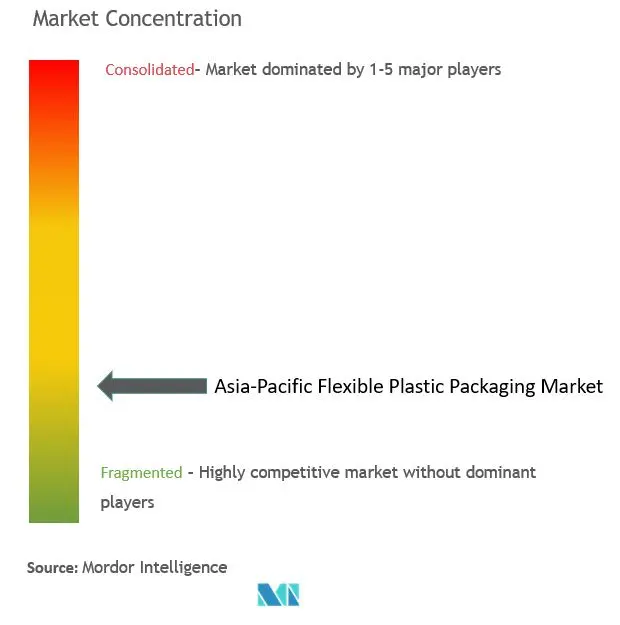
| Market Concentration | Low |
Major Players *Disclaimer: Major Players sorted in no particular order |
Asia-Pacific Flexible Plastic Packaging Market Analysis by Mordor Intelligence
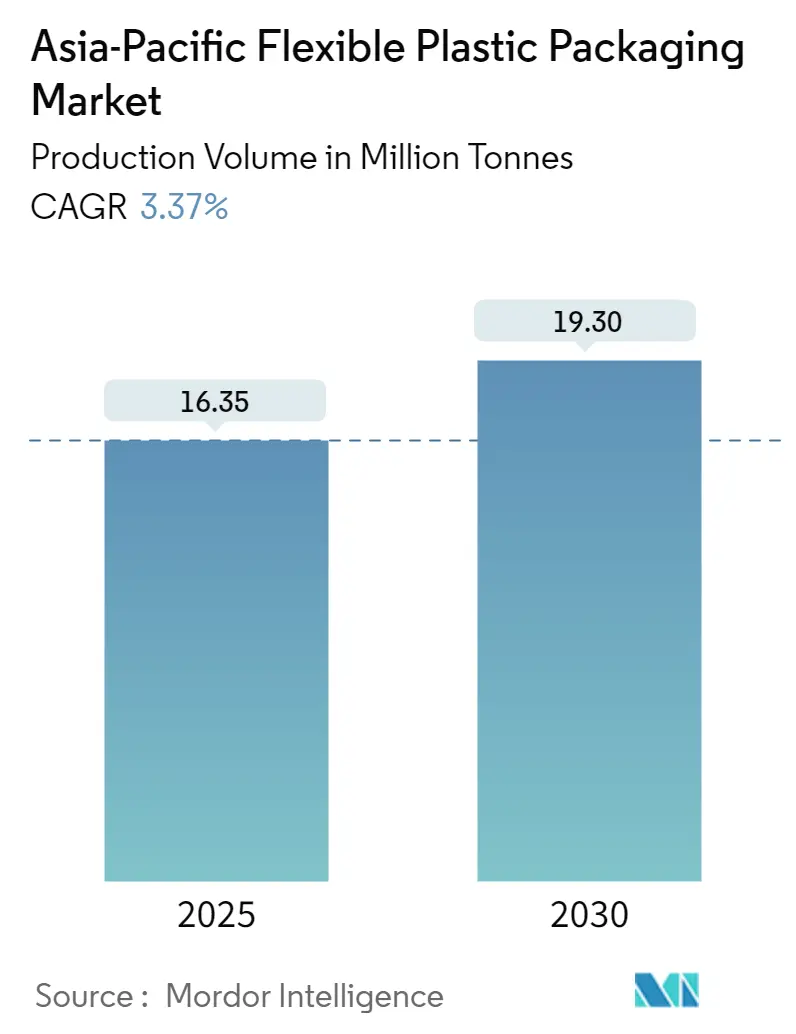
The Asia-Pacific Flexible Plastic Packaging Market size in terms of production volume is expected to grow from 16.35 million tonnes in 2025 to 19.30 million tonnes by 2030, at a CAGR of 3.37% during the forecast period (2025-2030).
The Asia-Pacific flexible plastic packaging market, a pivotal segment in the region's packaging industry, is witnessing dynamic growth. Flexible plastic packaging, encompassing plastic materials, is favored for its lightweight, durable, and cost-effective nature, catering to a diverse product range.
- This surge in demand for flexible plastic packaging in Asia-Pacific is primarily fueled by urbanization, evolving consumer habits, and a rising appetite for convenient and eco-conscious packaging. Notably, environmental sustainability has taken center stage. Heightened awareness of packaging's ecological footprint prompts the region's consumers and regulators to support sustainable solutions.
- Additionally, there's a tangible shift toward recyclable and biodegradable materials in the flexible packaging landscape. Manufacturers are channeling investments into R&D, striving to craft sustainable alternatives that match or exceed the performance of traditional flexible packaging.
- Countries, like China, dominate the flexible plastic packaging market, with a strong presence in food and beverages, cosmetics, and pharmaceuticals. According to a study by Asiapack Ltd, the Chinese packaging supply chain network has the most comprehensive coverage. This intricate yet efficient network ensures that products are manufactured, packaged, and shipped precisely.
- The market is poised for substantial growth, driven by escalating demand for packaged foods and increased private investments. Moreover, bolstered by robust domestic demand and a labor force that offers cost advantages, Asia-Pacific stands out as the premier market for flexible plastic packaging producers. These dynamics collectively set the stage for a promising future for the flexible packaging market.
- The market also faces challenges owing to plastic pollution across the region. According to a study by the South Pole, the rise in plastic pollution across Southeast Asia has spurred regional governments into action. They have rolled out comprehensive National Action Plans, setting ambitious goals to tackle plastic pollution at its source and downstream. These plans encompass strategies like plastic ban, taxes, and the bolstering of waste management infrastructure.
Understanding the full system requires moving beyond Asia boundaries into a wider international view. Mordor Intelligence captures the global flexible plastic packaging market scope in its worldwide coverage.
Asia-Pacific Flexible Plastic Packaging Market Trends and Insights
The Food Industry is Expected to Witness Growth in the Region
- With the changing lifestyles and new eating habits, the market is expected to grow as demand for convenience food increases. Due to consumers' busy lives, evolving dietary preferences, and expanding population, processed and ready-to-eat food consumption is rising, a significant growth driver for the food packaging sector.
- The primary market drivers include the growing need for biodegradable packaging, expanding processed food markets across the region, and a rise in package innovation. Factors including increased disposable income and population growth contribute to the industry's expansion. Due to their high barrier qualities, shelf lives, and consumer safety, products will be in greater demand as the population and per capita income rise.
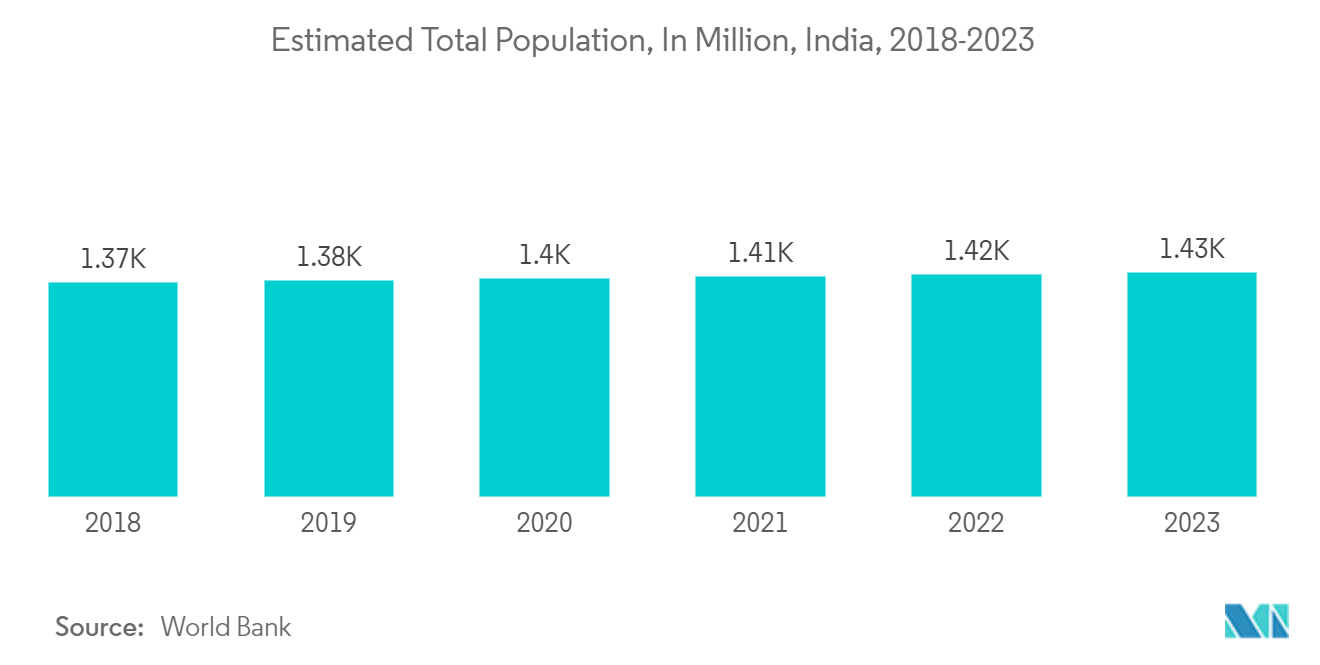
- Increasing demand for extended shelf life in packaged goods, driven by rising disposable incomes in countries like India and China, alongside a growing consumer awareness of fresh product consumption, is fueling the growth of the Asia-Pacific new food packaging market. According to the World Bank, the estimated population growth in India in 2022 was 1,417.17 million and was expected to reach 1,428.63 million in 2023. Such population growth is expected to drive the food packaging market.
- Moreover, the increasing urban population is one reason for the market's growth. According to the National Institute of Urban Affairs, the urban population is expected to reach 590 million by 2030. With an increase in urban population and disposable income, the fresh food and packaging market is anticipated to grow during the forecast period.
- The region's demand for flexible plastic packaging has increased due to the growing understanding of the advantages of recycling and bioplastics. Key market drivers will be abundant raw materials and the quickening pace of technical development in the flexible plastic packaging industry.
India is Anticipated to Grow Rapidly
- The market for flexible plastic packaging is predicted to grow due to increasing retail industry penetration and a growing population. India is the fifth-largest economy and the most populous nation. Well-established end-user industries (such as food, beverage, and pharmaceuticals), increasing investments, increasing health awareness, and rising life expectancy are expected to support flexible plastic packaging solutions in India.
- In January 2024, the quality control standards imposed on polyethylene (PE) shipments traded in India officially came into effect following several years of processing. The regulation under the Bureau of Indian Standards Act, 2016 (BIS) requires both local and overseas suppliers to undergo a stringent application process, including plant auditing, to obtain the BIS mark to be printed on the product's packaging. Participants in the Indian market anticipate the HDPE market here to rise sharply due to tighter availability. Many overseas suppliers still need the BIS certificate to sell their cargo in India.
- Plastivision India, organized by the All India Plastic Manufacturers' Association (AIPMA), the leading non-profit body dedicated to advancing the plastic industry, highlights a growing appetite for high-density polyethylene (HDPE). Production is set to surge to 4 million metric tons in 2023.
- Further, pharmaceutical companies operating in the country are expanding their business through innovations, collaborations, and others. The partnership between Pfizer and the National Institute of Pharmaceutical Education and Research (NIPER), Ahmedabad, is driven by the shared goal of fostering innovation and supporting early-stage healthcare startups in India. This collaboration, supported by the Department of Pharmaceuticals and Niti Aayog and anchored by Social Alpha, aims to provide a platform for emerging innovators to transform their ideas into market-ready solutions. Such partnerships catalyze innovation in flexible packaging within the Indian healthcare sector.
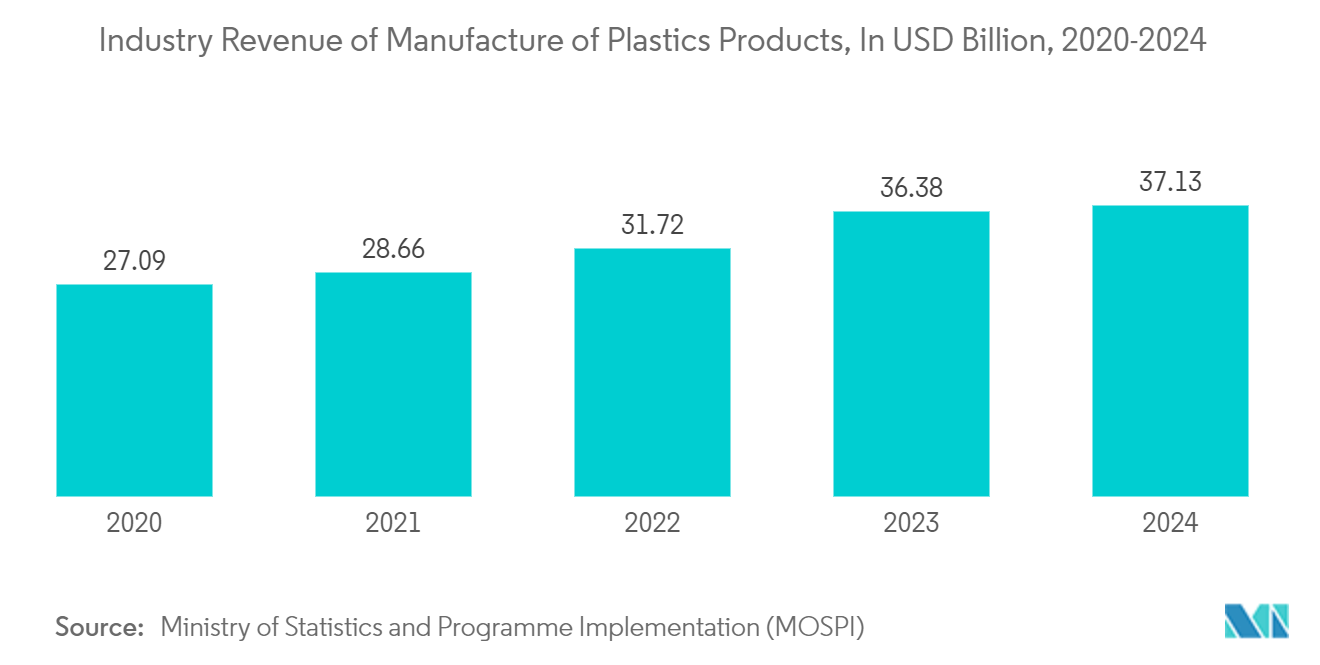
- Revenue from manufacturing plastic products is also increasing in India. According to the Ministry of Statistics and Programme Implementation (MOSPI), the manufacturing of plastic products is projected to reach USD 37.13 billion in 2020 from USD 27.09 billion in 2020. This would further encourage flexible plastic packaging in India.
Mordor Intelligence examines the flexible plastic packaging market across diverse other regional markets as well, including North America, South America, and Middle East and Africa, while also offering granular country-level perspectives for Japan, Thailand, Indonesia, India, China, and Vietnam and more.
Competitive Landscape
The Asia-Pacific flexible plastic packaging market is fragmented, with domestic and global players such as Uflex Limited, Sealed Air Corporation, Berry Global Inc., Constantia Flexibles GmbH, Amcor PLC, Mondi PLC, and Sonoco Products Company. Players operating in the region are focused on expanding their business through mergers, collaborations, acquisitions, product innovations, and other strategies.
- September 2023: Sealed Air Corporation (SEE), previously known as Sealed Air, a provider of cutting-edge packaging solutions, unveiled a strategic collaboration with Sparck Technologies. Sparck Technologies, renowned globally for its 3D automated packaging solutions, has appointed SEE as its sole distributor for the CVP (3D) Automated Packaging Solutions across Australia, New Zealand, Japan, and South Korea. This partnership empowers SEE's clientele with top-tier automated packaging technology, enabling them to streamline operations and bolster workplace safety.
- August 2023: Amcor, a prominent global player in responsible packaging solutions, announced its acquisition of Phoenix Flexibles. This strategic move is set to bolster Amcor's presence in the rapidly expanding Indian market. Phoenix Flexibles specializes in flexible packaging, and its sole manufacturing facility is in Gujarat, India. The company boasts around USD 20 million in annual revenue, primarily derived from food, home care, and personal care sales.
Asia-Pacific Flexible Plastic Packaging Industry Leaders
-
Amcor Plc
-
Berry Global, Inc.
-
Constantia Flexibles GmbH
-
Sonoco Products Company
-
Uflex Limited
- *Disclaimer: Major Players sorted in no particular order
Recent Industry Developments
- April 2024: UFlex Limited, India’s most extensive multinational flexible packaging and solutions company, announced a significant milestone in its journey of expansion and innovation. Starting March 31, 2024, the company successfully began commercializing poly-condensed polyester chips at its manufacturing facility in Panipat, India.
- August 2023: Dow, a leading materials science firm, teamed up with Mengniu, a prominent Chinese dairy company, to introduce an all-polyethylene (PE) yogurt pouch, emphasizing recyclability. This strategic move underscores both companies' dedication to fostering a circular economy in China. Mengniu successfully launched its inaugural, fully recyclable, all-PE yogurt pouch by harnessing Dow's materials science prowess and leveraging collaborative efforts across the value chain.
Asia-Pacific Flexible Plastic Packaging Market Report Scope
The study on the Asia-Pacific flexible plastic packaging market tracks demands in terms of revenue for flexible plastic packaging by material. It tracks the market size for respective end-user types. The estimates for the Asia-Pacific flexible plastic packaging market include costs associated with flexible plastic packaging manufacturing, from raw material procurement to reaching end-user industries. The estimates exclude the cost of the content that is or is to be packed inside the flexible plastic packaging. The scope of the flexible plastic packaging market is limited to B2B demand. Market numbers have been arrived at using bottom-up and top-down approaches for segmentation, and volume has also been considered.
The Asia-Pacific Flexible Plastic Packaging Market Report is Segmented by Material (Polyethene [PE], Bi-Oriented Polypropylene [BOPP], Cast Polypropylene [CPP], Polyvinyl Chloride [PVC], Ethylene Vinyl Alcohol [EVOH], and Other Material Types [Polycarbonate, PHA, PLA, Acrylic, and ABS]), Product Type (Pouches, Bags, Films and Wraps, and Other Product Types), End-User Industry (Food [Frozen Food, Dry Food, Meat, Poultry, and Sea Food, Candy & Confectionery, Pet Food, Dairy Products, Fresh Produce and Other Food (Seasonings & Spices, Spreadables, Sauces, Condiments, etc.)], Beverage, Medical and Pharmaceutical, Personal Care and Household Care, and Other End User Industry [Automotive, Chemical, Agriculture ]), and Country (China, India, Japan, Vietnam, Thailand, Indonesia, Australia and New Zealand, and Rest of Asia-Pacific).The report offers market forecasts and volume (tonnes) for all the above segments.
| Polyethene (PE) |
| Bi-oriented Polypropylene (BOPP) |
| Cast Polypropylene (CPP) |
| Polyvinyl Chloride (PVC) |
| Ethylene Vinyl Alcohol (EVOH) |
| Other Material Types (Polycarbonate, PHA, PLA, Acrylic, and ABS) |
| Pouches |
| Bags |
| Films and Wraps |
| Other Product Types (Blister Packs, Liners, etc) |
| Food | Candy & Confectionery |
| Frozen Foods | |
| Fresh Produce | |
| Dairy Products | |
| Dry Foods | |
| Meat, Poultry, And Seafood | |
| Pet Food | |
| Other Food Products (Seasonings & Spices, Spreadables, Sauces, Condiments, etc.) | |
| Beverage | |
| Medical and Pharmaceutical | |
| Personal Care and Household Care | |
| Other End user Industries ( Automotive, Chemical, Agriculture) |
| China |
| India |
| Japan |
| Vietnam |
| Thailand |
| Indonesia |
| Australia and New Zealand |
| By Material Type | Polyethene (PE) | |
| Bi-oriented Polypropylene (BOPP) | ||
| Cast Polypropylene (CPP) | ||
| Polyvinyl Chloride (PVC) | ||
| Ethylene Vinyl Alcohol (EVOH) | ||
| Other Material Types (Polycarbonate, PHA, PLA, Acrylic, and ABS) | ||
| By Product Type | Pouches | |
| Bags | ||
| Films and Wraps | ||
| Other Product Types (Blister Packs, Liners, etc) | ||
| By End-User Industry | Food | Candy & Confectionery |
| Frozen Foods | ||
| Fresh Produce | ||
| Dairy Products | ||
| Dry Foods | ||
| Meat, Poultry, And Seafood | ||
| Pet Food | ||
| Other Food Products (Seasonings & Spices, Spreadables, Sauces, Condiments, etc.) | ||
| Beverage | ||
| Medical and Pharmaceutical | ||
| Personal Care and Household Care | ||
| Other End user Industries ( Automotive, Chemical, Agriculture) | ||
| By Country*** | China | |
| India | ||
| Japan | ||
| Vietnam | ||
| Thailand | ||
| Indonesia | ||
| Australia and New Zealand | ||
Key Questions Answered in the Report
How big is the Asia-Pacific Flexible Plastic Packaging Market?
The Asia-Pacific Flexible Plastic Packaging Market size is expected to reach 16.35 million tonnes in 2025 and grow at a CAGR of 3.37% to reach 19.30 million tonnes by 2030.
What is the current Asia-Pacific Flexible Plastic Packaging Market size?
In 2025, the Asia-Pacific Flexible Plastic Packaging Market size is expected to reach 16.35 million tonnes.
Who are the key players in Asia-Pacific Flexible Plastic Packaging Market?
Amcor Plc, Berry Global, Inc., Constantia Flexibles GmbH, Sonoco Products Company and Uflex Limited are the major companies operating in the Asia-Pacific Flexible Plastic Packaging Market.
What years does this Asia-Pacific Flexible Plastic Packaging Market cover, and what was the market size in 2024?
In 2024, the Asia-Pacific Flexible Plastic Packaging Market size was estimated at 15.80 million tonnes. The report covers the Asia-Pacific Flexible Plastic Packaging Market historical market size for years: 2019, 2020, 2021, 2022, 2023 and 2024. The report also forecasts the Asia-Pacific Flexible Plastic Packaging Market size for years: 2025, 2026, 2027, 2028, 2029 and 2030.
Asia-Pacific Flexible Plastic Packaging Market Report
Statistics for the 2025 Asia-Pacific Flexible Plastic Packaging market share, size and revenue growth rate, created by Mordor Intelligence™ Industry Reports. Asia-Pacific Flexible Plastic Packaging analysis includes a market forecast outlook for 2025 to 2030 and historical overview. Get a sample of this industry analysis as a free report PDF download.