Asia-Pacific EV Battery Pack Market Size and Share
Market Overview
| Study Period | 2017 - 2029 |
|---|---|
| Forecast Data Period | 2025 - 2029 |
| Historical Data Period | 2017 - 2023 |
| Market Size (2025) | USD 66.69 Billion |
| Market Size (2029) | USD 86.53 Billion |
| Growth Rate (2025 - 2029) | 6.73 % |
| Market Concentration | High |
Major Players *Disclaimer: Major Players sorted in no particular order Image © Mordor Intelligence. Reuse requires attribution under CC BY 4.0. | |

Asia-Pacific EV Battery Pack Market Analysis by Mordor Intelligence
The Asia-Pacific EV Battery Pack Market size is estimated at 66.69 billion USD in 2025, and is expected to reach 86.53 billion USD by 2029, growing at a CAGR of 6.73% during the forecast period (2025-2029).
The Asia-Pacific EV battery pack industry is experiencing transformative growth, driven by robust technological advancements and strategic industry collaborations. China continues to dominate the regional landscape, accounting for over 90% of the APAC EV market in 2022, supported by its comprehensive manufacturing ecosystem and strong domestic demand. Major industry players are forging strategic partnerships to enhance production capabilities, as evidenced by Honda and GS Yuasa's landmark USD 3.21 billion joint venture announced in May 2023 to establish a 20 GWh lithium battery production facility in Japan, with operations scheduled to commence in 2027.
The industry is witnessing significant technological evolution in battery design and manufacturing processes. Prismatic batteries have emerged as the dominant form factor, capturing approximately 87% market share in 2022, owing to their cost-effectiveness, higher energy density, and simplified manufacturing process. This trend is complemented by continuous innovations in EV battery cell chemistry and cell design, with manufacturers focusing on improving energy density, charging speeds, and overall battery life while reducing production costs.
Corporate consolidation and strategic investments are reshaping the competitive landscape, with companies pursuing vertical integration and technological expertise acquisition. A notable example is Reliance New Energy Limited's USD 61 million investment in March 2023 to acquire LFP battery manufacturer Lithium Werks, demonstrating the industry's focus on securing critical electric vehicle battery pack technology and production capabilities. The market is also seeing increased competition among established players, with BYD securing a significant 20.93% of EV sales in the APAC region in 2022, highlighting the growing importance of integrated manufacturing capabilities.
The industry is experiencing a surge in product innovation and new model launches, particularly in emerging markets. For instance, in January 2023, Hyundai launched its Ioniq 5 in India, equipped with a 72-kWh battery offering a range of 488 km on a single charge, demonstrating the industry's commitment to introducing advanced automotive battery pack technology in developing markets. This trend is further supported by the growing adoption of plug-in hybrid electric vehicles (PHEVs), as evidenced by the 32% year-over-year growth in PHEV sales in China during 2022, indicating a diversifying market for battery technologies and applications.
Asia-Pacific EV Battery Pack Market Trends and Insights
A VARIETY OF AUTOMAKERS ARE PRESENT IN THE MARKET, MAJORLY DRIVEN BY TOYOTA, TESLA, AND WULING
- The APAC electric vehicle market is bustling with numerous competitors, but its momentum is chiefly steered by five dominant corporations, collectively grasping over 50% of the 2022 market share. Leading the charge is BYD, securing a remarkable 20.93% of EV sales in the region. Its potent financial standing, coupled with its advanced R&D infrastructure, has positioned BYD as a powerhouse. The company's competitive pricing, coupled with its vast sales and after-sales network, effectively appeals to new consumers.
- Following BYD, the Toyota Group clinches the second spot, with about 12.88% of the market. Its well-established reputation across the APAC region, bolstered by its extensive sales and service framework, instills trust among consumers, further cementing its footprint. Tesla claims the third position, seizing 8.27% of the market. Renowned for its avant-garde, tech-driven offerings, Tesla enjoys a seamless supply chain across nations, notably China and Australia.
- Wuling comes in fourth, holding approximately 7.10% of the market. Operating under its parent company, Liuzhou Wuling Automobile Industry Co. Ltd, Wuling has carved a niche in countries like China and Indonesia, catering to a diverse clientele with its varied EV lineup. Rounding out the top five is Honda, with a 3.85% market share. Other notable contenders in the APAC EV market encompass brands like Nissan, Chery, Changan, and Neta, among others.

IN 2022, WULING, TESLA, AND BYD WERE THE BIGGEST BATTERY PACK DEMAND GENERATORS IN APAC
- The electric vehicle landscape, encompassing cars, buses, and trucks, has witnessed a notable upswing across various Asian countries in the past few years. While the appetite for electric vehicles fluctuates across regions and nations, it is evident that SUVs have carved a niche in major markets like China, India, and Japan. As a direct reflection of Asia's growing preference for SUVs over traditional sedans, due to their enhanced utility and spaciousness, electric SUVs have seen a parallel surge across the Asia-Pacific belt.
- Recent times have spotlighted a burgeoning affinity for compact SUVs among the Asian populace. Tesla's Model Y stands out with its all-electric drivetrain, sterling 5-star NCAP safety rating, seven-seat capacity, commendable range, and other features, making it a sought-after option in pivotal APAC markets, notably China. BYD's Song DM, with its competitive pricing and efficient fuel dynamics, has resonated well with customers across several Asian territories.
- The year 2022 saw Tesla's Model 3 clinching accolades as one of the top sellers in the Asian domain, a testament to its purely electric mechanism, paired with an array of attractive functionalities. The dynamic APAC EV arena also presents a myriad of electric SUV and sedan alternatives from established global manufacturers. The year 2022 anticipated robust sales for vehicles like Toyota's Yaris Cross and BYD's Dolphin. Other players, such as the Toyota Corolla and Wuling's Hongguang MINIEV, also form a robust lineup in the APAC EV ecosystem.

OTHER KEY INDUSTRY TRENDS COVERED IN THE REPORT
- GOVERNMENT INITIATIVES AND COMMERCIAL VEHICLE ELECTRIFICATION ARE RAPIDLY DRIVING THE DEMAND AND SALES OF EVS IN ASIA-PACIFIC
- THE DEMAND FOR EVS IN ASIA-PACIFIC IS FUELED BY FALLING BATTERY PRICES
- INCREASING GOVERNMENT SUPPORT FOR ELECTRIC VEHICLES IN ASIA-PACIFIC CAUSED PRICES TO DROP
- DEMAND FOR ELECTRIC VEHICLES DRIVES INTERNATIONAL AUTOMAKERS TO LAUNCH NEW PRODUCTS, EXPANDING THE ASIA-PACIFIC EV BATTERY PACK MARKET
- RISING POPULARITY OF LFP BATTERIES IN ASIAN COUNTRIES IS AIDING THE MARKET
- THE LFP BATTERIES SEGMENT HEADS THE ASIA-PACIFIC ELECTRIC VEHICLE BATTERY DEMAND
- RISING ELECTRIC VEHICLE DEMAND AND ADVANCEMENTS IN BATTERY TECHNOLOGY DRIVE GROWTH IN THE ASIA-PACIFIC REGION
Segment Analysis: Body Type
Passenger Car Segment in Asia-Pacific EV Battery Pack Market
The passenger car segment dominates the Asia-Pacific EV battery pack market, commanding approximately 88% of the total market share in 2024. This substantial market position is driven by several factors, including heightened environmental consciousness, the pressing need to reduce carbon emissions, and the accelerated adoption of electric passenger vehicles across the region. Governments have championed the electric transition through enticing incentives and pro-EV policies, encompassing subsidies and tax reliefs, effectively nudging consumers toward EV adoption. The segment's growth is further supported by technological innovations in batteries, characterized by superior energy storage capabilities and evolving charging infrastructures, which have significantly mitigated range anxiety and enhanced the overall driving experience for electric passenger vehicle owners.


Bus Segment in Asia-Pacific EV Battery Pack Market
The bus segment is emerging as the fastest-growing segment in the Asia-Pacific EV battery pack market, projected to expand at a remarkable rate through 2024-2029. This exceptional growth trajectory is fueled by a heightened emphasis on eco-friendly public transport solutions and the imperative to curtail emissions in urban areas. Transit authorities across the region are implementing attractive policies and incentives, such as subsidies, grants, and specialized infrastructure development, to bolster the adoption of electric buses. Furthermore, breakthroughs in battery technology have significantly enhanced the performance of electric buses, improving their driving range and charging efficiency, thus making them increasingly viable for both urban commutes and long-distance travel applications.
Remaining Segments in Body Type
The Light Commercial Vehicle (LCV) and Medium & Heavy-Duty Truck (M&HDT) segments represent important niches in the Asia-Pacific EV battery pack market, each serving distinct commercial and industrial needs. The LCV segment is gaining traction, particularly in last-mile delivery and urban logistics applications, driven by increasing e-commerce activities and environmental regulations in metropolitan areas. Meanwhile, the M&HDT segment is witnessing growing adoption in the logistics and transportation sector, as fleet operators increasingly recognize the long-term cost benefits and environmental advantages of electric trucks. Both segments are benefiting from ongoing technological advancements in battery technology and supportive government policies aimed at reducing commercial vehicle emissions.
Segment Analysis: Propulsion Type
BEV Segment in Asia-Pacific EV Battery Pack Market
Battery Electric Vehicles (BEVs) have emerged as the dominant force in the Asia-Pacific EV battery pack market, commanding approximately 96% of the total market share in 2024. This overwhelming market dominance can be attributed to several factors, including the superior range capabilities of BEVs, their zero-emission operation, and lower maintenance costs compared to other propulsion types. The segment's growth is further bolstered by substantial government incentives and subsidies specifically targeted at pure electric vehicles across major markets like China, Japan, and South Korea. Additionally, the continuous advancement in battery technology, particularly in energy density and fast-charging capabilities, has significantly enhanced the appeal of BEVs to consumers. The segment is also experiencing the fastest growth trajectory in the market, driven by expanding charging infrastructure, decreasing battery costs, and increasing consumer acceptance of all-electric mobility solutions.
PHEV Segment in Asia-Pacific EV Battery Pack Market
The Plug-in Hybrid Electric Vehicle (PHEV) segment represents a smaller but significant portion of the Asia-Pacific EV battery pack market, offering a transitional solution for consumers who seek both electric and conventional driving capabilities. PHEVs continue to attract consumers who experience range anxiety or require the flexibility of dual powertrains, particularly in regions with developing charging infrastructure. The segment benefits from its ability to provide zero-emission driving for daily commutes while maintaining long-distance travel capability through its hybrid powertrain. Despite facing competition from pure electric vehicles, PHEVs maintain their relevance through continuous technological improvements in battery efficiency and electric-only range capabilities, making them an attractive option for specific consumer segments and use cases.
Segment Analysis: Battery Chemistry
LFP Segment in Asia-Pacific EV Battery Pack Market
Lithium Iron Phosphate (LFP) batteries have emerged as the dominant chemistry in the Asia-Pacific EV battery pack market, commanding approximately 73% of the total market share in 2024. This substantial market leadership is primarily attributed to LFP batteries' compelling combination of cost-effectiveness, enhanced safety features, and extended operational lifespan. The segment's prominence is particularly notable in China, which serves as both a major producer and consumer of LFP batteries. The technology's appeal is further strengthened by its superior thermal stability, reduced dependency on costly raw materials like cobalt, and its ability to maintain consistent performance across various operating conditions. Major automotive manufacturers across the region have increasingly adopted LFP chemistry for their electric vehicle models, particularly in mass-market segments where cost considerations play a crucial role in consumer decision-making.
NCA Segment in Asia-Pacific EV Battery Pack Market
The Nickel Cobalt Aluminum (NCA) battery chemistry segment is demonstrating remarkable growth potential in the Asia-Pacific EV battery pack market, with projections indicating an impressive growth trajectory of approximately 35% from 2024 to 2029. This accelerated growth is driven by NCA batteries' superior energy density capabilities and their ability to deliver extended driving ranges for electric vehicles. The segment's expansion is further supported by ongoing technological advancements in manufacturing processes, which are gradually addressing previous concerns regarding production costs and safety features. The increasing demand for high-performance electric vehicles, particularly in premium segments where range and power output are paramount considerations, continues to fuel the adoption of NCA chemistry. Manufacturers are investing heavily in research and development to enhance NCA battery performance while simultaneously working to optimize production costs and improve safety features.
Remaining Segments in Battery Chemistry
The Asia-Pacific EV battery pack market encompasses several other significant battery chemistries, including NCM (Nickel Cobalt Manganese) and NMC (Nickel Manganese Cobalt) variants. These chemistries offer distinct advantages in terms of energy density, cycle life, and thermal stability, catering to diverse requirements across different vehicle segments. NCM and NMC batteries have found particular success in applications requiring a balance between performance and cost-effectiveness. The ongoing development of these chemistries continues to expand their potential applications, with manufacturers focusing on optimizing their composition to achieve better performance metrics. These segments play a crucial role in providing automakers with diverse options to meet varying performance requirements and price points across their electric vehicle portfolios.
Segment Analysis: Battery Form
Prismatic Segment in Asia-Pacific EV Battery Pack Market
The prismatic battery segment maintains its dominant position in the Asia-Pacific EV battery pack market, commanding approximately 87% of the market share in 2024. This substantial market leadership is attributed to several key advantages that prismatic batteries offer, including their cost-effectiveness due to larger size and higher energy density, simplified manufacturing processes requiring fewer cells, and superior thermal management capabilities. The segment's prominence is particularly evident in major markets like China, where automotive manufacturers prefer prismatic cells for their electric vehicle models due to their optimal space utilization and reliable performance characteristics. The segment's growth is further supported by continuous technological advancements in prismatic cell design, enhanced safety features, and improved production efficiencies that help maintain competitive pricing in the market.
Pouch Segment in Asia-Pacific EV Battery Pack Market
The pouch battery segment is emerging as the fastest-growing segment in the Asia-Pacific EV battery pack market, projected to expand at a remarkable rate through 2024-2029. This accelerated growth is primarily driven by the increasing adoption of pouch cells in premium electric vehicles, particularly in South Korea, where manufacturers have shown a strong preference for this technology. The segment's expansion is supported by significant technological advancements in pouch cell design, which have led to improved energy density, enhanced safety features, and better thermal management capabilities. Manufacturers are increasingly investing in research and development to overcome traditional challenges associated with pouch cells, such as swelling issues and mechanical stress resistance, leading to more robust and reliable solutions for electric vehicle applications.
Remaining Segments in Battery Form
The cylindrical battery segment represents another significant component of the Asia-Pacific EV battery pack market, offering unique advantages in terms of manufacturing standardization and thermal management. Cylindrical cells are particularly valued for their robust mechanical stability and established manufacturing processes, making them a preferred choice for certain electric vehicle applications. The segment continues to evolve with improvements in energy density and cost optimization, supported by ongoing research and development efforts. While not as dominant as prismatic cells or as fast-growing as pouch cells, cylindrical batteries maintain their importance in the market, particularly in applications where their form factor and reliability characteristics are advantageous.
Segment Analysis: Method
Laser Segment in Asia-Pacific EV Battery Pack Market
The laser method has emerged as the dominant technology in the Asia-Pacific EV battery pack market, commanding approximately 51% of the market share in 2024. This method has gained significant traction due to its superior precision and reliability in battery pack assembly processes, particularly for high-current applications in electric vehicles. The laser bonding technique offers exceptional advantages in terms of connection quality and extended battery lifespan, making it particularly suitable for heavy-duty vehicle applications like electric trucks and buses. The segment is also experiencing robust growth, projected to expand at nearly 24% through 2024-2029, driven by the increasing adoption of high-performance battery technologies and the growing demand for electric vehicles across the region. The laser method's ability to effectively bond non-uniform surfaces and create high-quality connections has made it the preferred choice among manufacturers focusing on premium quality and durability in battery pack assembly production.
Wire Method Segment in Asia-Pacific EV Battery Pack Market
The wire method represents a traditional yet reliable approach in the EV battery pack market, offering cost-effective solutions for battery pack assembly. This conventional technique continues to maintain its relevance in the market due to its proven track record in providing solid connections, adjustable configurations for different wire types, and cutting-edge friction capabilities. The method is particularly favored in regions where cost optimization is a priority, offering manufacturers a balance between performance and economic efficiency. The wire method's implementation is supported by its straightforward production process, established expertise among manufacturers, and lower initial investment requirements compared to laser technology. Despite facing competition from newer technologies, the wire method remains an important alternative in the market, particularly for applications where cost considerations outweigh the need for advanced bonding techniques.
Segment Analysis: Component
Cathode Segment in Asia-Pacific EV Battery Pack Market
The cathode segment dominates the Asia-Pacific EV battery pack market, commanding approximately 69% of the total market value in 2024. This substantial market share can be attributed to cathodes being one of the most expensive ev battery components in battery manufacturing, constituting around 52% of the total battery cell component costs. The segment's prominence is driven by the increasing demand for high-performance batteries across various Asian countries, particularly China, Japan, and South Korea. The cathode materials' critical role in determining battery efficiency, range, and thermal safety has made it an indispensable component in EV battery manufacturing. Major automakers throughout the APAC region have intensified their reliance on cathodes, particularly in the production of various battery chemistries like LFP, NMC, and NCA, further solidifying its market position.
Separator Segment in Asia-Pacific EV Battery Pack Market
The separator segment is projected to exhibit the strongest growth trajectory in the Asia-Pacific EV battery pack market from 2024 to 2029. This growth is primarily driven by the increasing adoption of electric vehicles across various Asian countries and the corresponding surge in battery production. The separator's crucial role in battery safety and performance, coupled with ongoing technological advancements in separator materials and manufacturing processes, is expected to fuel this growth. Several manufacturers are expanding their production capabilities to meet the rising demand, with new facilities being established across the region. The segment's growth is further supported by innovations in separator technology, including enhanced thermal stability and improved ion conductivity, which are essential for next-generation EV batteries.
Remaining Segments in Component
The anode and electrolyte segments also play vital roles in the Asia-Pacific EV battery pack market. The anode segment, essential for determining battery capacity and charging speed, continues to evolve with innovations in materials and design. Manufacturers are exploring various anode materials, including silicon and advanced graphite formulations, to enhance battery performance. The electrolyte segment, crucial for ion transport between electrodes, is witnessing technological advancements in both liquid and solid-state formulations. These segments are experiencing steady growth driven by the increasing focus on improving battery efficiency, safety, and overall performance in electric vehicles.
Segment Analysis: Material Type
Natural Graphite Segment in Asia-Pacific EV Battery Pack Market
Natural graphite has emerged as a dominant material in the Asia-Pacific EV battery pack market, commanding approximately 32% of the market share in 2024. This substantial market position is attributed to its crucial role in anode production, where it serves as a primary component in lithium-ion batteries. The material's popularity stems from its superior electrical conductivity, stability, and cost-effectiveness compared to alternative materials. Major battery manufacturers across the region, particularly in China, Japan, and South Korea, have significantly increased their consumption of natural graphite to meet the escalating demand for EV batteries. The material's extensive adoption is further supported by its abundant availability in the region and well-established supply chains, particularly in China, which remains the world's largest producer and processor of natural graphite for battery applications.
Nickel Segment in Asia-Pacific EV Battery Pack Market
The nickel segment is experiencing remarkable growth in the Asia-Pacific EV battery pack market, projected to expand at approximately 41% CAGR from 2024 to 2029. This exceptional growth trajectory is driven by the increasing adoption of nickel-rich cathode chemistries in high-performance electric vehicles, particularly in premium and long-range models. The material's ability to enhance energy density and extend driving range has made it increasingly valuable to battery manufacturers and automakers alike. Several major battery producers in South Korea, Japan, and China are investing heavily in nickel-based battery technologies, recognizing their potential to meet the growing demand for higher-performance EVs. The segment's growth is further supported by technological advancements in nickel processing and integration, making it more efficient and cost-effective for large-scale battery production.
Remaining Segments in Material Type
The other significant materials in the Asia-Pacific EV battery pack market include cobalt, lithium, manganese, and various other supplementary materials. Cobalt continues to play a crucial role in providing stability and safety to battery chemistries, though manufacturers are actively working to reduce its content due to cost and supply chain considerations. Lithium remains fundamental to all battery chemistries, serving as the primary charge carrier in lithium-ion batteries. Manganese has gained attention as a more cost-effective alternative in certain battery formulations, offering a balance between performance and economics. The supplementary materials segment encompasses various components such as aluminum, copper, and other metals that are essential for battery construction and performance enhancement. Each of these materials contributes uniquely to the overall battery ecosystem, with their usage patterns evolving based on technological advancements and market demands.
Asia-Pacific EV Battery Pack Market Geography Segment Analysis
Asia-Pacific EV Battery Pack Market in China
China continues to dominate the Asia-Pacific EV battery pack landscape, commanding approximately 87% of the total market volume in 2024. The country's supremacy in the electric vehicle battery pack sector is built upon a robust foundation of domestic manufacturing capabilities, technological innovation, and comprehensive government support. China's battery ecosystem benefits from an integrated supply chain, encompassing everything from raw material processing to final battery assembly. The country's battery manufacturers have established strong partnerships with both domestic and international automakers, facilitating continuous technological advancement and economies of scale. The presence of major battery producers and their ongoing capacity expansions has created a self-sustaining ecosystem that reinforces China's market leadership. Additionally, the country's strategic focus on developing advanced battery technologies, including new chemistries and improved energy densities, helps maintain its competitive edge in the global market.
Asia-Pacific EV Battery Pack Market in India
India is emerging as the most dynamic market in the Asia-Pacific EV battery pack sector, with projections indicating an extraordinary growth rate of approximately 90% from 2024 to 2029. The country's EV battery market is undergoing a transformative phase, driven by ambitious government initiatives and increasing private sector participation. India's push towards electric mobility is supported by comprehensive policy frameworks that incentivize both battery manufacturing and EV adoption. The country is actively developing its battery manufacturing capabilities through various initiatives, including production-linked incentive schemes and the establishment of gigafactories. The focus on localizing the battery supply chain, combined with rising domestic demand for electric vehicles, is creating a favorable environment for market expansion. The country's emphasis on developing cost-effective battery solutions tailored to local conditions and requirements is expected to further accelerate market growth.
Asia-Pacific EV Battery Pack Market in Japan
Japan maintains its position as a significant player in the Asia-Pacific EV battery pack market, leveraging its technological prowess and strong automotive manufacturing heritage. The country's battery sector is characterized by its focus on high-quality manufacturing processes and advanced research capabilities. Japanese manufacturers are particularly noted for their emphasis on safety and reliability in battery production, setting high industry standards. The country's battery industry benefits from close collaboration between automotive manufacturers, battery producers, and research institutions, fostering continuous innovation in battery technology. Japan's strategic approach to battery development includes significant investments in next-generation battery technologies and sustainable manufacturing processes. The market is further strengthened by the country's robust intellectual property framework and established quality control systems.
Asia-Pacific EV Battery Pack Market in South Korea
South Korea has established itself as a crucial hub in the Asia-Pacific EV battery pack market, building on its strong electronics and automotive manufacturing capabilities. The country's battery sector is distinguished by its focus on technological innovation and high-performance battery solutions. South Korean manufacturers have gained recognition for their expertise in developing advanced battery chemistries and efficient production processes. The country's battery industry benefits from strong government support for research and development, as well as strategic partnerships with global automotive manufacturers. South Korean companies are actively expanding their production capabilities and investing in new technologies to maintain their competitive position. The market is characterized by a strong emphasis on quality control and safety standards, which has helped build trust with international customers.
Asia-Pacific EV Battery Pack Market in Other Countries
The remaining countries in the Asia-Pacific region, including Thailand, Indonesia, Vietnam, and other emerging markets, are showing increasing interest in developing their automotive battery pack capabilities. These markets are characterized by varying levels of market maturity and different approaches to EV adoption and battery manufacturing. While some countries focus on attracting foreign investment and technology transfer, others are developing indigenous capabilities in specific areas of the battery value chain. The development of these markets is supported by regional cooperation initiatives and growing awareness of environmental sustainability. These countries are increasingly implementing supportive policies and infrastructure development plans to facilitate the growth of their automotive energy storage sectors. The diversity of approaches and market conditions across these countries contributes to the overall dynamism of the Asia-Pacific EV battery pack market.
Competitive Landscape
Top Companies in Asia-Pacific EV Battery Pack Market
The Asia-Pacific electric vehicle battery pack market is dominated by major players, including CATL, BYD Company, FinDreams Battery, Farasis Energy, and SAIC Volkswagen Power Battery. These companies are actively pursuing product innovation through the development of advanced battery technologies, focusing on improved energy density, faster charging capabilities, and enhanced safety features. Operational agility is demonstrated through vertical integration strategies and the establishment of robust supply chain networks across the region. Strategic partnerships with automotive manufacturers and technology companies have become increasingly common, enabling knowledge sharing and market expansion. Companies are also investing heavily in research and development to create next-generation automotive battery system solutions while simultaneously expanding their production capacities through new manufacturing facilities across key markets like China, Japan, and South Korea.
Market Dominated by Local Asian Powerhouses
The Asia-Pacific EV battery pack market exhibits a relatively concentrated structure, with Chinese and South Korean manufacturers holding significant market positions. These companies leverage their strong domestic manufacturing capabilities, established relationships with local automakers, and government support to maintain their competitive advantage. The market is characterized by a mix of pure-play battery manufacturers and diversified conglomerates, with many players having roots in the electronics or automotive industries. Vertical integration has become increasingly common, with companies controlling everything from raw material procurement to final battery pack assembly.
The market has witnessed significant consolidation through strategic mergers and acquisitions, particularly as companies seek to acquire advanced technologies and expand their geographical presence. Joint ventures between established battery manufacturers and automotive companies have become increasingly prevalent, creating stronger entities capable of competing on a global scale. Local players have also been strengthening their positions through partnerships with international automotive manufacturers while simultaneously expanding their production capabilities to meet growing demand.
Innovation and Scale Drive Future Success
Success in the Asia-Pacific EV battery pack market increasingly depends on companies' ability to achieve economies of scale while maintaining technological leadership. Incumbent players must focus on continuous innovation in battery chemistry and design while simultaneously expanding their production capacity to meet growing demand from automakers. Building strong relationships with automotive manufacturers through long-term supply agreements and joint development projects has become crucial. Companies must also invest in sustainable practices and circular economy initiatives to address growing environmental concerns and regulatory requirements.
For emerging players looking to gain market share, specialization in specific EV battery cell technologies or market segments offers a viable path forward. Developing innovative solutions for specific applications or focusing on emerging markets with less competition can provide opportunities for growth. Success also depends on building robust supply chains and securing access to critical raw materials through strategic partnerships or vertical integration. Companies must additionally prepare for evolving regulatory landscapes, particularly regarding battery safety standards and environmental regulations, while maintaining flexibility to adapt to changing market conditions and customer preferences.
Asia-Pacific EV Battery Pack Industry Leaders
-
BYD Company Ltd.
-
Contemporary Amperex Technology Co. Ltd. (CATL)
-
Farasis Energy (Ganzhou) Co. Ltd.
-
FinDreams Battery Co. Ltd.
-
SAIC Volkswagen Power Battery Co. Ltd.
- *Disclaimer: Major Players sorted in no particular order

Recent Industry Developments
- June 2023: CATL announced that it launched Qiji Energy, a battery swap solution for heavy-duty trucks. The solution consists of Qiji Swapping Electric Blocks, Qiji Battery Swap Station, and Qiji Cloud Platform. Based on the CATL’s 3rd-generation LFP battery chemistry, Qiji Swapping Electric Blocks adopt the innovative NP (Non Propagation) technology and CTP (cell-to-pack) technology, striking a balance between safety and usage costs. Qiji Battery Swap Station enables one-stop swapping for different truck models and brands.
- January 2023: Volkswagen's energy and charging division is keeping all options open for the long-term structure of the business, including the possibility of an IPO for its charging and energy business.
- January 2023: Shinhan Securities Co., Ltd. has signed an MOU with SK On Co., Ltd. (SK On) on an investment alliance for a secondary battery ecosystem.
Asia-Pacific EV Battery Pack Market Report Scope
Bus, LCV, M&HDT, Passenger Car are covered as segments by Body Type. BEV, PHEV are covered as segments by Propulsion Type. LFP, NCA, NCM, NMC, Others are covered as segments by Battery Chemistry. 15 kWh to 40 kWh, 40 kWh to 80 kWh, Above 80 kWh, Less than 15 kWh are covered as segments by Capacity. Cylindrical, Pouch, Prismatic are covered as segments by Battery Form. Laser, Wire are covered as segments by Method. Anode, Cathode, Electrolyte, Separator are covered as segments by Component. Cobalt, Lithium, Manganese, Natural Graphite, Nickel are covered as segments by Material Type. China, India, Japan, South Korea, Thailand, Rest-of-Asia-Pacific are covered as segments by Country.| Bus |
| LCV |
| M&HDT |
| Passenger Car |
| BEV |
| PHEV |
| LFP |
| NCA |
| NCM |
| NMC |
| Others |
| 15 kWh to 40 kWh |
| 40 kWh to 80 kWh |
| Above 80 kWh |
| Less than 15 kWh |
| Cylindrical |
| Pouch |
| Prismatic |
| Laser |
| Wire |
| Anode |
| Cathode |
| Electrolyte |
| Separator |
| Cobalt |
| Lithium |
| Manganese |
| Natural Graphite |
| Nickel |
| Other Materials |
| China |
| India |
| Japan |
| South Korea |
| Thailand |
| Rest-of-Asia-Pacific |
| Body Type | Bus |
| LCV | |
| M&HDT | |
| Passenger Car | |
| Propulsion Type | BEV |
| PHEV | |
| Battery Chemistry | LFP |
| NCA | |
| NCM | |
| NMC | |
| Others | |
| Capacity | 15 kWh to 40 kWh |
| 40 kWh to 80 kWh | |
| Above 80 kWh | |
| Less than 15 kWh | |
| Battery Form | Cylindrical |
| Pouch | |
| Prismatic | |
| Method | Laser |
| Wire | |
| Component | Anode |
| Cathode | |
| Electrolyte | |
| Separator | |
| Material Type | Cobalt |
| Lithium | |
| Manganese | |
| Natural Graphite | |
| Nickel | |
| Other Materials | |
| Country | China |
| India | |
| Japan | |
| South Korea | |
| Thailand | |
| Rest-of-Asia-Pacific |
Market Definition
- Battery Chemistry - Various types of battery chemistry considred under this segment include LFP, NCA, NCM, NMC, Others.
- Battery Form - The types of battery forms offered under this segment include Cylindrical, Pouch and Prismatic.
- Body Type - Body types considered under this segment include, passenger cars, LCV (light commercial vehicle), M&HDT (medium & heavy duty trucks)and buses.
- Capacity - Various types of battery capacities inldude under theis segment are 15 kWH to 40 kWH, 40 kWh to 80 kWh, Above 80 kWh and Less than 15 kWh.
- Component - Various components covered under this segment include anode, cathode, electrolyte, separator.
- Material Type - Various material covered under this segment include cobalt, lithium, manganese, natural graphite, nickel, other material.
- Method - The types of method covered under this segment include laser and wire.
- Propulsion Type - Propulsion types considered under this segment include BEV (Battery electric vehicles), PHEV (plug-in hybrid electric vehicle).
- ToC Type - ToC 1
- Vehicle Type - Vehicle type considered under this segment include passenger vehicles, and commercial vehicles with various EV powertrains.
| Keyword | Definition |
|---|---|
| Electric vehicle (EV) | A vehicle which uses one or more electric motors for propulsion. Includes cars, buses, and trucks. This term includes all-electric vehicles or battery electric vehicles and plug-in hybrid electric vehicles. |
| PEV | A plug-in electric vehicle is an electric vehicle that can be externally charged and generally includes all electric vehicles as well as plug-electric vehicles as well as plug-in hybrids. |
| Battery-as-a-Service | A business model in which the battery of an EV can be rented from a service provider or swapped with another battery when it runs out of charge |
| Battery Cell | The basic unit of an electric vehicle's battery pack, typically a lithium-ion cell, that stores electrical energy. |
| Module | A subsection of an EV battery pack, consisting of several cells grouped together, often used to facilitate manufacturing and maintenance. |
| Battery Management System (BMS) | An electronic system that manages a rechargeable battery by protecting the battery from operating outside its safe operating area, monitoring its state, calculating secondary data, reporting data, controlling its environment, and balancing it. |
| Energy Density | A measure of how much energy a battery cell can store in a given volume, usually expressed in watt-hours per liter (Wh/L). |
| Power Density | The rate at which energy can be delivered by the battery, often measured in watts per kilogram (W/kg). |
| Cycle Life | The number of complete charge-discharge cycles a battery can perform before its capacity falls under a specified percentage of its original capacity. |
| State of Charge (SOC) | A measurement, expressed as a percentage, that represents the current level of charge in a battery compared to its capacity. |
| State of Health (SOH) | An indicator of the overall condition of a battery, reflecting its current performance compared to when it was new. |
| Thermal Management System | A system designed to maintain optimal operating temperatures for an EV's battery pack, often using cooling or heating methods. |
| Fast Charging | A method of charging an EV battery at a much faster rate than standard charging, typically requiring specialized charging equipment. |
| Regenerative Braking | A system in electric and hybrid vehicles that recovers energy normally lost during braking and stores it in the battery. |
Research Methodology
Mordor Intelligence follows a four-step methodology in all its reports.
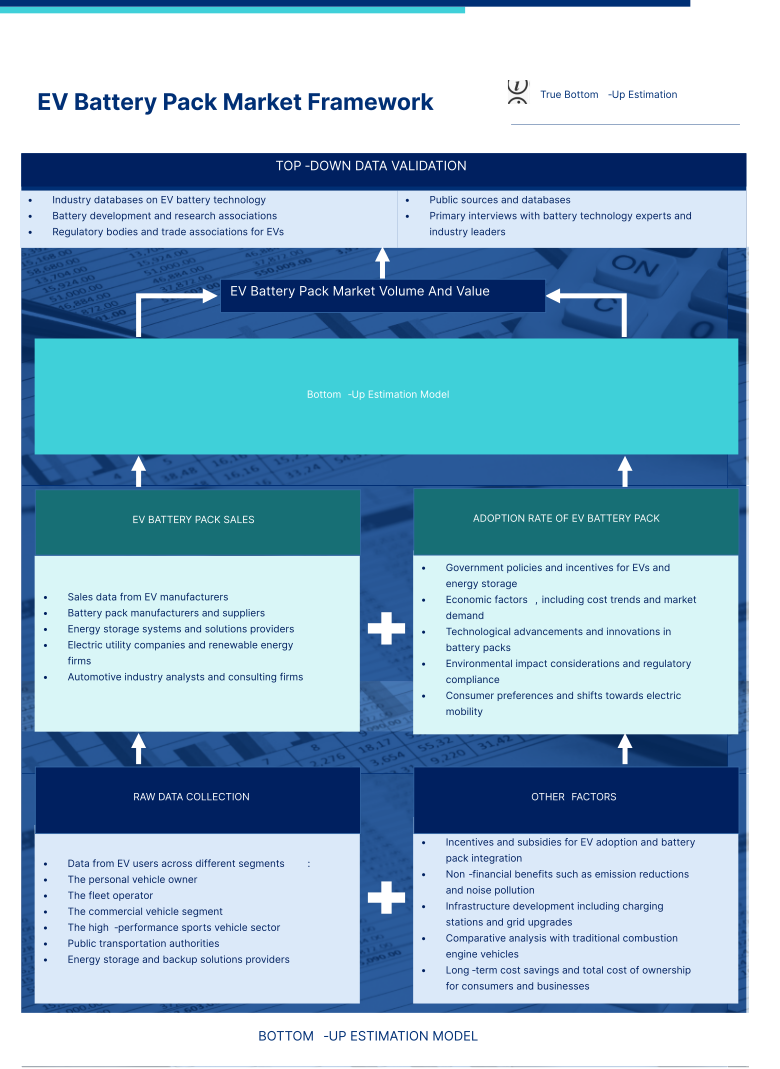
- Step-1: Identify Key Variables: To build a robust forecasting methodology, the variables and factors identified in Step-1 are tested against available historical market numbers. Through an iterative process, the variables required for market forecast are set and the model is built based on these variables.
- Step-2: Build a Market Model: Market-size estimations for the historical and forecast years have been provided in revenue and volume terms. Market revenue is calculated by multiplying the volume demand with volume-weighted average battery pack price (per kWh). Battery pack price estimation and forecast takes into account various factors affecting ASP, such as inflation rates, market demand shifts, production costs, technological developments, and consumer preferences, providing estimations for both historical data and future trends.
- Step-3: Validate and Finalize: In this important step, all market numbers, variables, and analyst calls are validated through an extensive network of primary research experts from the market studied. The respondents are selected across levels and functions to generate a holistic picture of the market studied.
- Step-4: Research Outputs: Syndicated Reports, Custom Consulting Assignments, Databases & Subscription Platforms