
Actinic Keratosis Market Size and Share
Market Overview
| Study Period | 2021 - 2032 |
|---|---|
| Market Size (2027) | USD 9.58 Billion |
| Market Size (2032) | USD 11.72 Billion |
| Growth Rate (2027 - 2032) | 4.12 % |
| Fastest Growing Market | Asia-Pacific |
| Largest Market | North America |
| Market Concentration | Medium |
Major Players
*Disclaimer: Major Players sorted in no particular order Image © Mordor Intelligence. Reuse requires attribution under CC BY 4.0. |
|
Actinic Keratosis Market Analysis by Mordor Intelligence
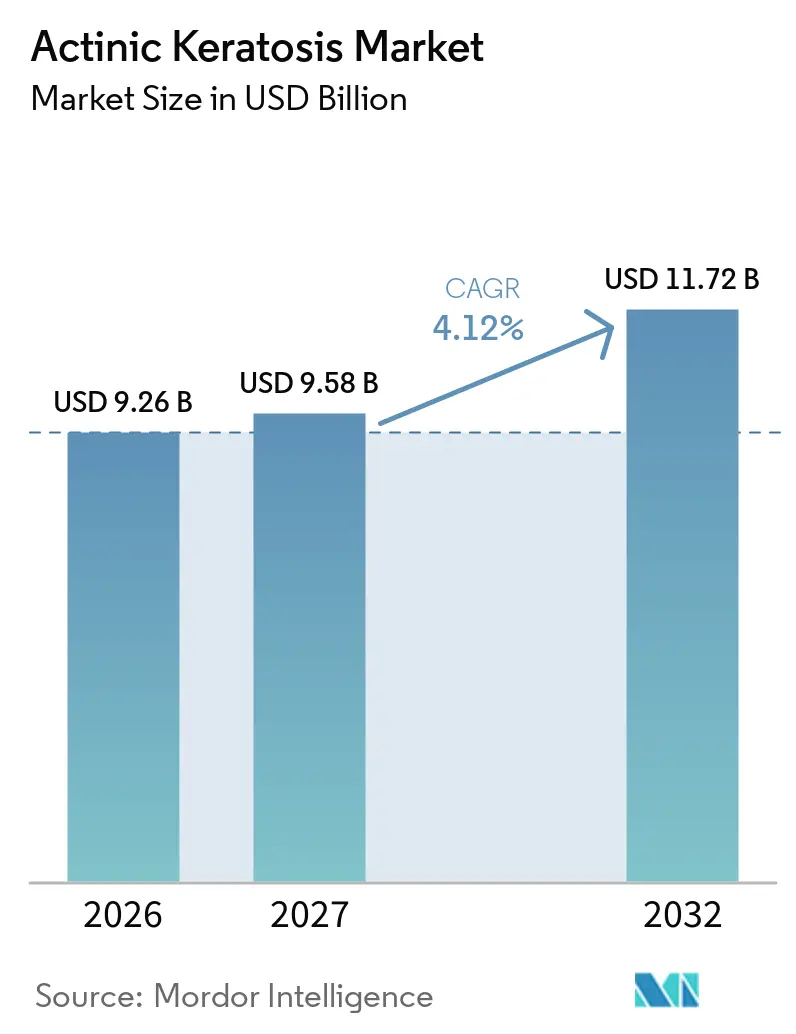
The Actinic Keratosis Market size is expected to grow from USD 9.26 billion in 2026 to USD 9.58 billion in 2027 and is forecast to reach USD 11.72 billion by 2032 at 4.12% CAGR over 2027-2032.
The actinic keratosis market is supported by a persistent disease burden in older populations with accumulated ultraviolet exposure. Field-directed care is gaining priority because it treats visible lesions and affected skin around them, rather than only isolated lesions. Updated clinical guidance in Germany and Spain has incorporated newer field therapies and earlier dermoscopic assessment into treatment pathways. The actinic keratosis market also benefits when diagnosis, prescribing, and treatment are available through connected dermatology services. Reimbursement differences and the cost of repeat treatment continue to limit access in several high-burden settings.
Key Report Takeaways
- By diagnosis & therapy, therapy held a 54.35% revenue share in 2026, while diagnosis is forecast to expand at a 5.26% CAGR through 2032.
- By patient age group, the younger than 40 years group held 42.43% revenue share in 2026, while the 40-60 years group is forecast to expand at a 6.13% CAGR through 2032.
- By lesion type, non-hyperkeratotic actinic keratosis held 45.26% revenue share in 2026, while hyperkeratotic actinic keratosis is expected to expand at a 5.86% CAGR through 2032.
- By geography, North America held a 44.15% revenue share in 2026, while Asia-Pacific is projected to expand at a 7.12% CAGR through 2032.
Note: Market numbers in this report are based on Mordor Intelligence's proprietary estimation framework, which combines nine months of actuals with Q4 projections for base year 2026.
Market Trends and Insights
Drivers Impact Analysis of Actinic Keratosis Market*
| Driver | (~) % Impact on CAGR Forecast | Geographic Relevance | Impact Timeline |
|---|---|---|---|
| Aging and Cumulative Ultraviolet Exposure | +1.3% | Global, concentrated in North America, Australia, and Western Europe | Long term (≥ 4 years) |
| Rising Diagnosis and Awareness of Precancerous Skin Lesions | +0.7% | North America and Europe, with spillover to Asia-Pacific | Medium term (2-4 years) |
| Expansion of Field-Directed and Short-Course Therapies | +0.8% | North America and core European Union markets, expanding to Asia-Pacific | Medium term (2-4 years) |
| Photodynamic Therapy and Device Innovation | +0.9% | North America, Europe, and Japan | Short term (≤ 2 years) |
| AI-Enabled Dermoscopy and Earlier Triage | +0.6% | North America, the European Union, and Asia-Pacific urban centers | Medium term (2-4 years) |
| Recurrence-Aware Longitudinal Skin Surveillance | +0.4% | North America, Australia, Germany, and the United Kingdom | Long term (≥ 4 years) |
| Source: Mordor Intelligence | |||
Aging and Cumulative Ultraviolet Exposure
Chronological age and cumulative ultraviolet exposure remain central risk factors for actinic keratosis, which supports long-term treatment demand. A 2025 study in the Shanghai area found that prevalence among older residents increased from 2.7% to 5.8% over the preceding decade. The study identified age, outdoor work, and low sun-protection awareness as key predictors.[1] The actinic keratosis market gains institutional support in Germany because occupational disease provisions recognize outdoor work-related risk within the S3 guideline framework. Australia has a particularly high intervention burden because skin cancer represented 80% of new cancer diagnoses, and more than 2 in 3 Australians were expected to receive a diagnosis during their lifetime. These conditions sustain demand for screening, lesion management, and repeated surveillance in populations with high sun exposure.
Photodynamic Therapy and Device Innovation
Photodynamic therapy is becoming a more important procedural option in the actinic keratosis market as device platforms and photosensitizer use develop. In May 2025, the FDA approved Sun Pharmaceutical’s next-generation LED BLU-U illuminator for use with Levulan Kerastick for lesions on the face, scalp, and upper extremities.[2] The LED platform replaced fluorescent tubes, reduced the device footprint, and aimed to improve treatment consistency. In February 2026, Biofrontera reported Phase 3 results for Ameluz photodynamic therapy on the extremities, neck, and trunk. The company reported 45.6% complete lesion clearance and stated that 86.3% of patients were willing to repeat the procedure. Smaller platforms can make in-office photodynamic therapy more practical for mid-sized dermatology clinics, which supports the expanding procedural role of those clinics.
AI-Enabled Dermoscopy and Earlier Triage
AI-supported dermoscopy can shorten the path from lesion recognition to specialist assessment in the actinic keratosis market. A 2026 Scientific Reports study found that a dermoscopically informed deep-learning model achieved 98.6% accuracy and 98.7% sensitivity when classifying actinic keratosis against cutaneous squamous cell carcinoma.[3] A separate 2025 study found that deep-learning assistance improved dermatologists' accuracy in distinguishing actinic keratosis from seborrheic keratosis by 14% to 27%. These tools can reduce unnecessary biopsy referrals and accelerate clinical decisions. Their use in imaging devices and primary-care telehealth platforms can move initial triage closer to the patient. Earlier triage broadens the group that reaches diagnosis and treatment, reinforcing growth in the diagnostic sub-segment.
Rising Diagnosis and Awareness of Precancerous Skin Lesions
Public awareness programs and updated clinical pathways are raising the visibility of precancerous skin lesions in the actinic keratosis market. A Danish study covering 109,787 histologically confirmed cases through 2023 found continued increases in cutaneous squamous cell carcinoma and carcinoma in situ incidence. The study found stabilization only among people under 50 years of age. This pattern indicates that preventive messages may be reaching younger groups while older patients retain substantial diagnostic needs. Spain’s 2025 Delphi consensus formalized tirbanibulin and 5-fluorouracil as first-line field-directed options and encouraged earlier dermoscopic triage. Such guidance can convert unmanaged lesions into active clinical care without changing the underlying exposure burden.
Restraints Impact Analysis of Actinic Keratosis Market*
| Restraint | (~) % Impact on CAGR Forecast | Geographic Relevance | Impact Timeline |
|---|---|---|---|
| Treatment-Induced Local Skin Reactions and Adherence Loss | -0.6% | Global, most acute in self-administered topical markets | Short term (≤ 2 years) |
| Fragmented Reimbursement and Unequal Treatment Access | -0.8% | Australia, emerging Asia, parts of Latin America, and Southern Europe | Long term (≥ 4 years) |
| Diagnostic Underrecognition in Darker Skin and Underserved Populations | -0.5% | Sub-Saharan Africa, South Asia, Latin America, and underserved United States communities | Long term (≥ 4 years) |
| Repeated-Treatment Economics and Clinic Capacity Bottlenecks | -0.9% | North America and Europe, most acute in public healthcare systems | Medium term (2-4 years) |
| Source: Mordor Intelligence | |||
Fragmented Reimbursement and Unequal Treatment Access
Reimbursement differences remain a structural constraint on the actinic keratosis market because clinical need does not always translate into funded treatment. In Australia, the Pharmaceutical Benefits Scheme supports ablative procedures for individual lesions, while field therapies can remain outside subsidized access pathways. This limits the use of topical field treatment among cost-sensitive providers and patients. Germany and France use different reimbursement routes for topical agents, which creates unequal access within Europe. When repeat courses are unaffordable, clinic activity can understate the real disease burden. Post-marketing evidence requirements from regulators can provide a route to broader coverage, but they also raise the evidence burden for manufacturers.
Treatment-Induced Local Skin Reactions and Adherence Loss
Local skin reactions can limit completion of topical treatment in the actinic keratosis market. Erythema, crusting, erosion, and burning are associated with agents such as 5-fluorouracil, imiquimod, and tirbanibulin. The Spanish Delphi consensus recognized work and lifestyle needs as treatment-selection factors, particularly for patients who require minimal downtime. Shorter treatment schedules can therefore affect adherence as well as clinical convenience. Recurrence can add to the difficulty because patients may face multiple treatment cycles over time. Payer decisions and prescribing choices increasingly depend on per-patient tolerability evidence, not only average trial outcomes.
*Our forecasts treat driver/restraint impacts as directional, not additive. The impact forecasts reflect baseline growth, mix effects, and variable interactions.
Actinic Keratosis Market Segment Analysis
By Diagnosis & Therapy:
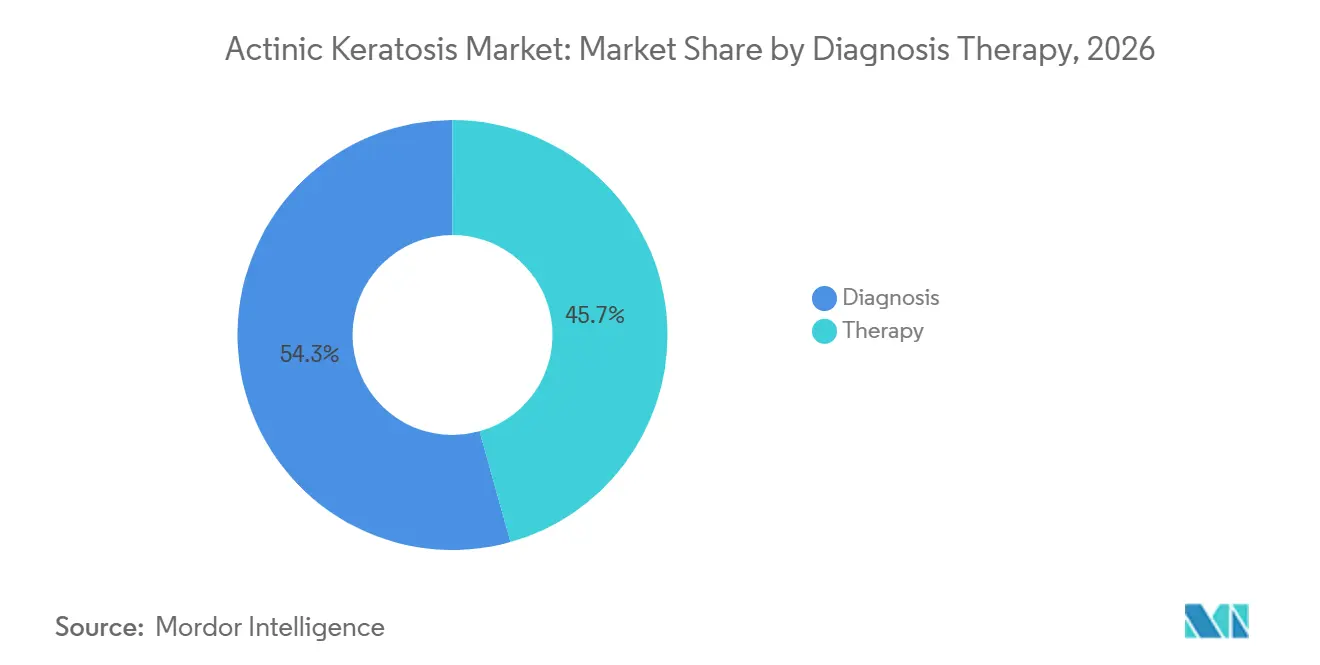
Diagnostic Tools Support Faster GrowthTherapy held 54.35% of the actinic keratosis market share within this segmentation in 2026. Topical agents, including 5-fluorouracil, imiquimod, tirbanibulin, and diclofenac, remain important because they can be self-administered and used across a treatment field. Combination care can pair cryotherapy for hyperkeratotic lesions with a field-directed topical medicine. This approach supports a higher level of care per patient when clinical findings favor treatment beyond isolated lesion removal.
Diagnosis is forecasted to grow at a 5.26% CAGR through 2032, making it the fastest-growing component of the combined category. Clinical examination and dermoscopy remain the core diagnostic workflow for the actinic keratosis market. Dermoscopy helps clinicians distinguish actinic keratosis from seborrheic keratosis and early squamous cell carcinoma. Slit-lamp examination retains a limited role for periocular lesions. High-frequency ultrasound and related approaches are gaining attention in specialist centers where lesion-depth assessment is needed.
By Patient Age Group:
Midlife Patients Drive Faster ExpansionThe younger than 40 years group held a 42.43% share in 2026, while the 40-60 years group is projected to grow at a 6.13% CAGR through 2032. The younger cohort includes immunocompromised people, fair-skinned patients with early ultraviolet damage, and people in outdoor occupations. The actinic keratosis market, therefore, reaches beyond older age groups, even though accumulated exposure remains central to disease risk. The 40-60 years group has increasingly sought proactive dermatology care as earlier ultraviolet exposure becomes clinically visible.
The over-60 group carries the highest disease burden per patient. In the Shanghai study, older age was strongly associated with prevalence, and outdoor work increased the risk. Cost sensitivity, polypharmacy, and reduced mobility can still limit treatment uptake for older patients. Health program integration can help address these barriers. The expanding role of telehealth among middle-aged patients also aligns with the growth of online dispensing.
By Lesion Type:
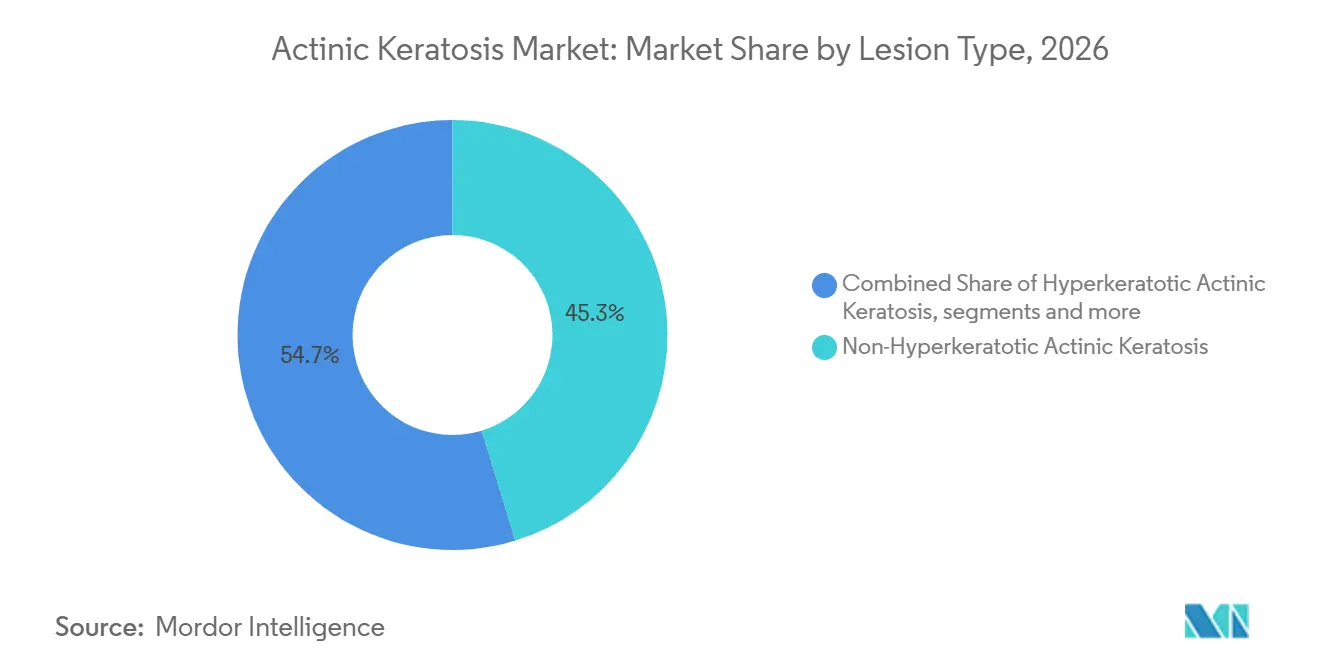
Non-Hyperkeratotic Actinic Keratosis Remains the Largest Segment While Hyperkeratotic Lesions Drive Future GrowthNon-hyperkeratotic actinic keratosis accounted for 45.26% of the actinic keratosis market share in 2026, reflecting its high prevalence and frequent identification during routine skin examinations. These lesions are often detected at earlier stages and are commonly managed using topical therapies, cryotherapy, photodynamic therapy, or combination treatment approaches. Growing awareness of skin cancer prevention and increased screening activity continue to support diagnosis and treatment demand within this segment. As field-directed therapies gain wider adoption, non-hyperkeratotic lesions are expected to remain a key focus of clinical management.
Hyperkeratotic actinic keratosis is projected to grow at a CAGR of 5.86% through 2032, making it the fastest-growing lesion type segment. Growth is being driven by increased recognition of lesions associated with greater clinical complexity and a potentially higher risk of progression to invasive squamous cell carcinoma. These thicker lesions frequently require more intensive treatment strategies, including procedural interventions, combination regimens, and close dermatological follow-up. As clinicians place greater emphasis on early identification of high-risk lesions, demand for therapies targeting hyperkeratotic actinic keratosis is expected to increase throughout the forecast period.

Geography Analysis
North America
North America held 48.31% of the actinic keratosis market share in 2026. The region benefits from high dermatologist density, a developed private insurance system, and an FDA framework that influences global labeling timelines. The United States has more than 58 million people affected by actinic keratosis, according to the Skin Cancer Foundation. Canada and Mexico are smaller markets, although Canada’s public system places more pressure on treatment costs. These factors help explain North America’s leadership in the actinic keratosis market during 2026.
Europe
Europe is the second-largest regional area, with Germany, France, the United Kingdom, Italy, and Spain as major contributors. Germany’s S3 guideline provides a detailed treatment framework, and Spain’s 2025 consensus refreshed prescribing and triage recommendations. Access remains uneven because reimbursement decisions differ across member states. The European Medicines Agency framework governs authorization across the European Union. The EU Clinical Trials Information System is the compliance pathway for newer trials, including Almirall’s Phase 4 actinic keratosis study. Scandinavia and Eastern Europe have room for lower-cost field-care protocols where specialist infrastructure is less developed.
Asia-Pacific, Middle East and Africa
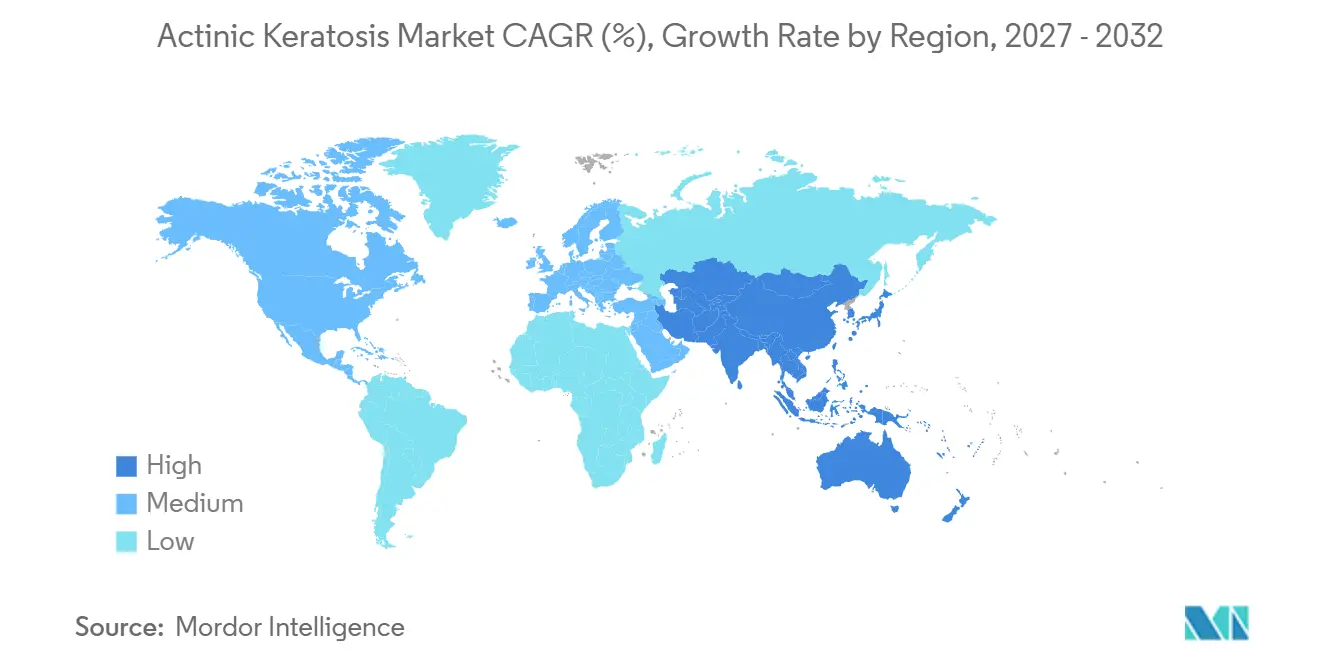
Asia-Pacific is projected to grow at a 7.12% CAGR through 2032, the fastest regional rate in the actinic keratosis market. China had 297 million people aged 60 and older at the end of 2024, or 21.1% of the population. Older populations can increase the need for diagnosis and treatment as cumulative ultraviolet exposure becomes more clinically significant. China’s broad medical insurance coverage has improved access to specialist dermatology services, while the NMPA has accelerated review of oncology-adjacent dermatology products. Japan combines population aging with established dermatology guidance. Australia has a high per-capita burden linked to year-round ultraviolet exposure, and South Korea has rapid dermoscopy adoption. South America, led by Brazil, and the Middle East and Africa remain smaller because specialist infrastructure is limited, although awareness activities and service investment support longer-term access.
Competitive Landscape
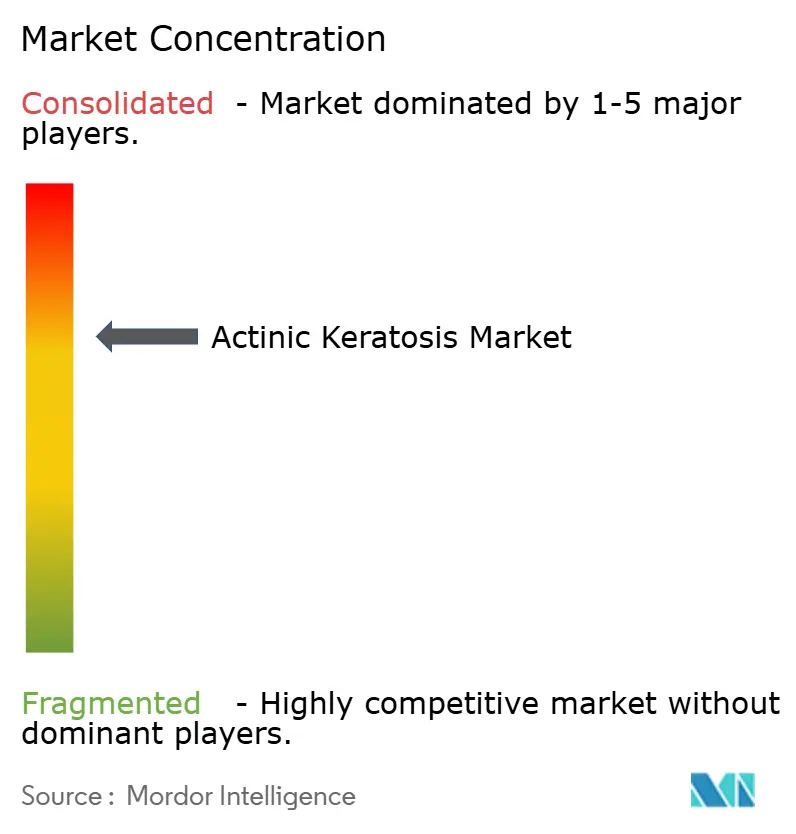
The actinic keratosis market is moderately consolidated among branded pharmaceutical suppliers and more fragmented among procedural device providers. Almirall, Galderma, Biofrontera, Sun Pharmaceutical, LEO Pharma, and Bausch Health hold commercially significant positions in drug treatment. Smaller companies compete across cryotherapy and laser systems. Almirall expanded the FDA-approved treatment area for Klisyri from 25 cm² to 100 cm² in June 2024. This action increased the labeled field that can be treated with the medicine. The company’s approach centers on moving tirbanibulin toward a broader field-therapy role.
Biofrontera is pursuing a different route by seeking a broader body-area label for Ameluz photodynamic therapy. Sun Pharmaceutical has also reinforced its procedural position with the FDA-approved LED BLU-U system. These moves show that companies are competing through label scope, device design, and treatment setting. Pricing competition remains layered because topical, photodynamic, and procedure-based care serve different clinical needs.
Darker skin phototypes and transplant recipients remain underserved groups in the actinic keratosis market. Underrecognition in darker skin can delay treatment, while immunosuppression among transplant recipients can require more intensive field management. Coegin Pharma AB and Torqur AG represent emerging pipeline activity around non-melanoma skin cancer and immune-mediated treatment approaches. Torqur dosed the first patient in a Phase 2 trial of bimiralisib for actinic keratosis in 2025, exploring an alternative to directly cytotoxic topical agents. New light devices must meet the FDA’s applicable regulatory requirements, including substantial-equivalence evidence where the 510(k) pathway applies. The overall competitive structure supports a moderate concentration profile rather than dominance by a single supplier.
Actinic Keratosis Industry Leaders
-
Sun Pharmaceutical Industries Limited
-
Biofrontera AG
-
Almirall, S.A.
-
Bausch Health Companies Inc.
-
LEO Pharma A/S
- *Disclaimer: Major Players sorted in no particular order
Actinic Keratosis Market Companies Covered in this Report
- Solventum Corporation
- Almirall
- Bausch Health
- Biofrontera
- Cipher Pharmaceuticals
- Coegin Pharma AB
- Cutera
- Galderma
- Hill Dermaceuticals, Inc.
- Leo Pharma
- Novartis
- Perrigo Company
- Pierre Fabre Pharmaceuticals, Inc.
- Rubedo Life Sciences, Inc.
- Sun Pharmaceuticals Industries
- Teva Pharmaceutical Industries
- Tolmar, Inc.
- Verrica Pharmaceuticals Inc.
- Viatris
- Vidac Pharma Holdings Plc
Recent Industry Developments in Actinic Keratosis Market
- March 2026: Almirall presented more than 15 scientific posters at the AAD 2026 Annual Meeting in Denver, including 3 tirbanibulin analyses covering repeat-course tolerability, lesion reduction endpoints, and pooled Phase 3 clearance data. The presentations aimed to establish tirbanibulin as a durable, repeat-cycle field therapy.
- February 2026: Biofrontera Inc. reported statistically significant positive top-line results from its Phase 3 trial of Ameluz PDT with the RhodoLED lamp for AK on the extremities, neck, and trunk, achieving 45.6% complete clearance in the full analysis set versus 16.7% for vehicle PDT (p < 0.0003). An sNDA submission to the FDA targeting label expansion from a 60 cm² face-and-scalp field to a 240 cm² full-body field is planned for Q3 2026, which would substantially broaden the addressable procedural market.
- May 2025: Sun Pharmaceutical Industries received FDA premarket approval (PMA) for the next-generation LED BLU-U Blue Light PDT Illuminator, replacing fluorescent tubes with LED panels, reducing device weight and footprint, and maintaining the same indication for AK of the face, scalp, and upper extremities in combination with aminolevulinic acid HCl 20% (Levulan Kerastick). The device approval directly supports Sun Pharma's commercial position in the US procedural AK segment.
Global Actinic Keratosis Market Report Scope
According to the report’s scope, the actinic keratosis market refers to the global healthcare segment focused on the diagnosis, treatment, and management of actinic keratosis, a common precancerous skin condition caused by prolonged ultraviolet (UV) exposure. It encompasses topical medications, procedural therapies, and combination approaches, delivered through dermatology clinics, hospitals, and ambulatory centers.
The actinic keratosis market is segmented into diagnosis & therapy, patient age group, lesion type, and geography. By diagnosis & therapy, the market is segmented into diagnosis and therapy. The diagnosis segment is further segmented into dermoscopy, slit‑lamp examination, and other diagnoses. The therapy segment is further segmented into topical medications, procedural treatments, and combination / sequential therapy. The topical medications segment is further bifurcated into 5-fluorouracil, imiquimod, tirbanibulin, diclofenac, ingenol mebutate, and other topicals. The procedural treatments segment is further bifurcated into cryotherapy, photodynamic therapy, laser resurfacing, chemical peels, curettage & electrodessication, and other procedures. By patient age group, the market is segmented into younger than 40 years, 40-60 years, and older than 60 years. By lesion type, the market is segmented into non-hyperkeratotic actinic keratosis, hyperkeratotic actinic keratosis, pigmented actinic keratosis, and multiple/field cancerization lesions. By geography, the market is segmented into North America, Europe, Asia-Pacific, the Middle East and Africa, and South America. The report also covers the estimated market sizes and trends for 17 countries across major regions globally. The report offers values (USD) for all the above segments.
Segmentation Overview
| Diagnosis | Dermoscopy | |
| Slit-lamp Examination | ||
| Other Diagnoses | ||
| Therapy | Topical Medications | 5-Fluorouracil |
| Imiquimod | ||
| Tirbanibulin | ||
| Diclofenac | ||
| Ingenol Mebutate | ||
| Other Topicals | ||
| Procedural Treatments | Cryotherapy | |
| Photodynamic Therapy | ||
| Laser Resurfacing | ||
| Chemical Peels | ||
| Curettage & Electrodessication | ||
| Other Procedures | ||
| Combination / Sequential Therapy | ||
| Younger than 40 Years |
| 40-60 Years |
| Older than 60 Years |
| Non-Hyperkeratotic Actinic Keratosis |
| Hyperkeratotic Actinic Keratosis |
| Pigmented Actinic Keratosis |
| Multiple/Field Cancerization Lesions |
| North America | United States |
| Canada | |
| Mexico | |
| Europe | Germany |
| United Kingdom | |
| France | |
| Italy | |
| Spain | |
| Rest of Europe | |
| Asia-Pacific | China |
| Japan | |
| India | |
| Australia | |
| South Korea | |
| Rest of Asia-Pacific | |
| Middle East and Africa | GCC |
| South Africa | |
| Rest of Middle East and Africa | |
| South America | Brazil |
| Argentina | |
| Rest of South America |
| By Diagnosis & Therapy | Diagnosis | Dermoscopy | |
| Slit-lamp Examination | |||
| Other Diagnoses | |||
| Therapy | Topical Medications | 5-Fluorouracil | |
| Imiquimod | |||
| Tirbanibulin | |||
| Diclofenac | |||
| Ingenol Mebutate | |||
| Other Topicals | |||
| Procedural Treatments | Cryotherapy | ||
| Photodynamic Therapy | |||
| Laser Resurfacing | |||
| Chemical Peels | |||
| Curettage & Electrodessication | |||
| Other Procedures | |||
| Combination / Sequential Therapy | |||
| By Patient Age Group | Younger than 40 Years | ||
| 40-60 Years | |||
| Older than 60 Years | |||
| By Lesion Type | Non-Hyperkeratotic Actinic Keratosis | ||
| Hyperkeratotic Actinic Keratosis | |||
| Pigmented Actinic Keratosis | |||
| Multiple/Field Cancerization Lesions | |||
| By Geography | North America | United States | |
| Canada | |||
| Mexico | |||
| Europe | Germany | ||
| United Kingdom | |||
| France | |||
| Italy | |||
| Spain | |||
| Rest of Europe | |||
| Asia-Pacific | China | ||
| Japan | |||
| India | |||
| Australia | |||
| South Korea | |||
| Rest of Asia-Pacific | |||
| Middle East and Africa | GCC | ||
| South Africa | |||
| Rest of Middle East and Africa | |||
| South America | Brazil | ||
| Argentina | |||
| Rest of South America | |||
Key Questions Answered in the Report
What is the projected value of the actinic keratosis market by 2032?
The actinic keratosis market is forecasted to reach USD 11.72 billion by 2032, growing at a 4.12% CAGR from USD 9.26 billion in 2026 to reach USD 9.58 billion in 2027.
Which actinic keratosis treatment category holds the largest share?
Therapy held 54.35% of the combined diagnosis and therapy category in 2026. Topical medicines, cryotherapy, and photodynamic therapy remain important because they suit different lesion patterns and treatment settings.
Why are dermatology clinics growing faster for actinic keratosis care?
Dermatology clinics are forecasted to grow at 6.75% CAGR because they can combine dermoscopy, field-therapy prescribing, and in-office photodynamic therapy.
Which region is growing fastest for actinic keratosis treatment?
Asia-Pacific is projected to grow at a 7.12% CAGR through 2032, supported by population aging and improving access to dermatology services.