
Achondroplasia Treatment Market Size and Share
Market Overview
| Study Period | 2021 - 2032 |
|---|---|
| Market Size (2027) | USD 0.62 Billion |
| Market Size (2032) | USD 2.18 Billion |
| Growth Rate (2027 - 2032) | 28.59 % |
| Fastest Growing Market | Asia-Pacific |
| Largest Market | North America |
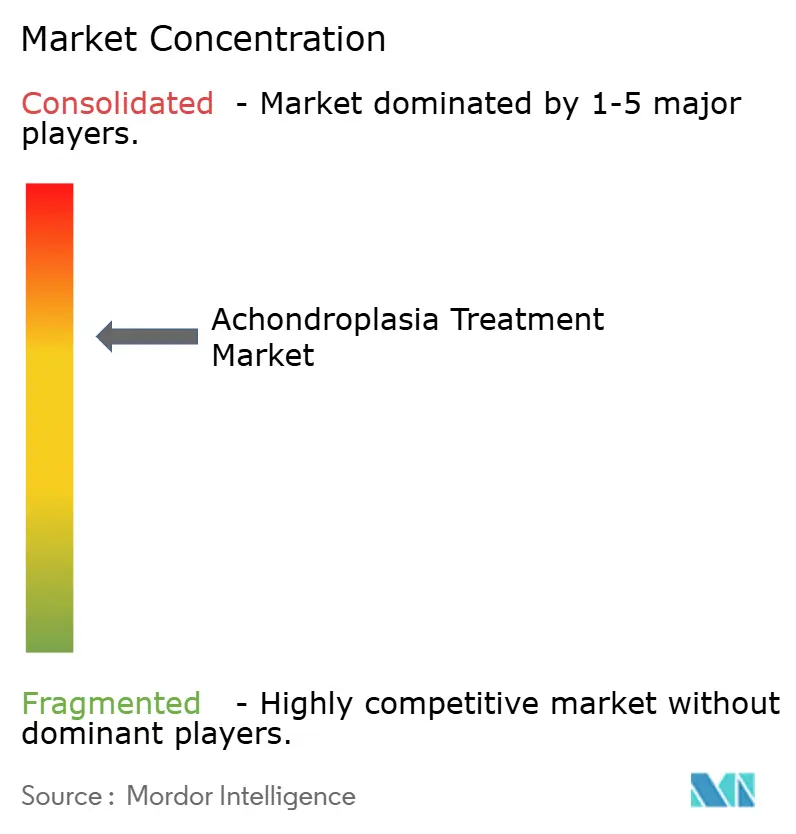
| Market Concentration | Medium |
Major Players *Disclaimer: Major Players sorted in no particular order Image © Mordor Intelligence. Reuse requires attribution under CC BY 4.0. | |
Achondroplasia Treatment Market Analysis by Mordor Intelligence
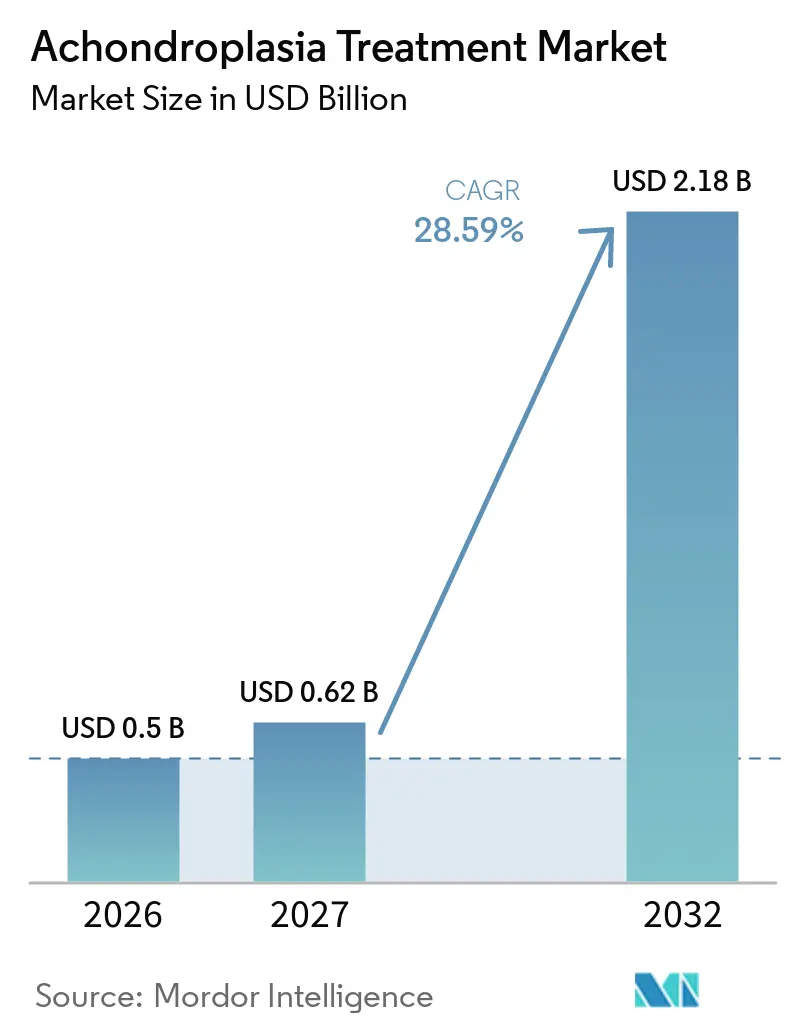
The Achondroplasia Treatment Market size is projected to be USD 0.5 billion in 2026, USD 0.62 billion in 2027, and reach USD 2.18 billion by 2032, growing at a CAGR of 28.59% from 2027 to 2032.
The achondroplasia treatment market entered a more competitive period in 2026 as targeted treatments moved from a single-product setting toward competing injectable and oral options. Dosing convenience, evidence on body proportions, and access to specialist care will shape prescribing decisions alongside growth outcomes. Payers are likely to examine clinical value more closely as additional high-cost treatments seek coverage for the same small patient population. National reimbursement choices will continue to determine how rapidly clinical demand translates into revenue, particularly outside the United States. The achondroplasia treatment market also has an opportunity to broaden treatment access when earlier diagnosis, referral pathways, and home-based support improve.
Key Report Takeaways
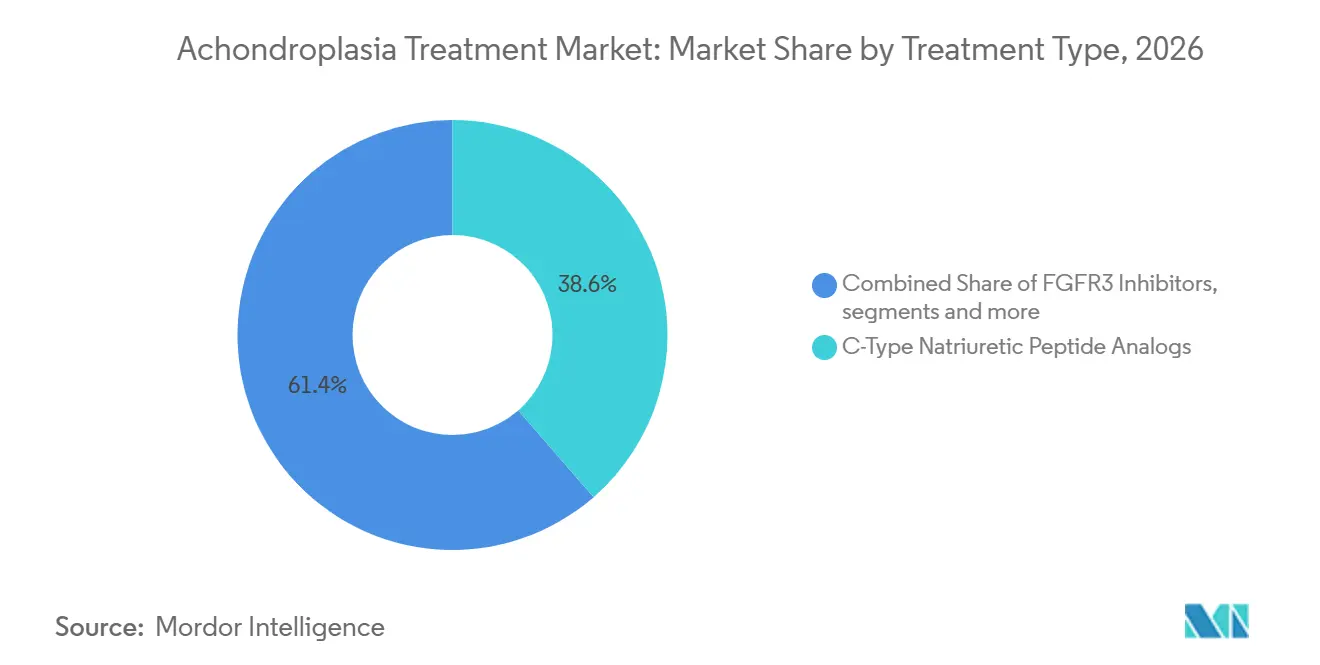
- By treatment type, C-type natriuretic peptide analogs held 38.63% of the achondroplasia treatment market share in 2026, while growth hormone therapy is projected to grow at a 29.25% CAGR through 2032.
- By patient age group, pediatric patients represented 53.34% of the market in 2026, whereas the adult patient segment is anticipated to expand at the fastest CAGR of 30.12% through 2032.
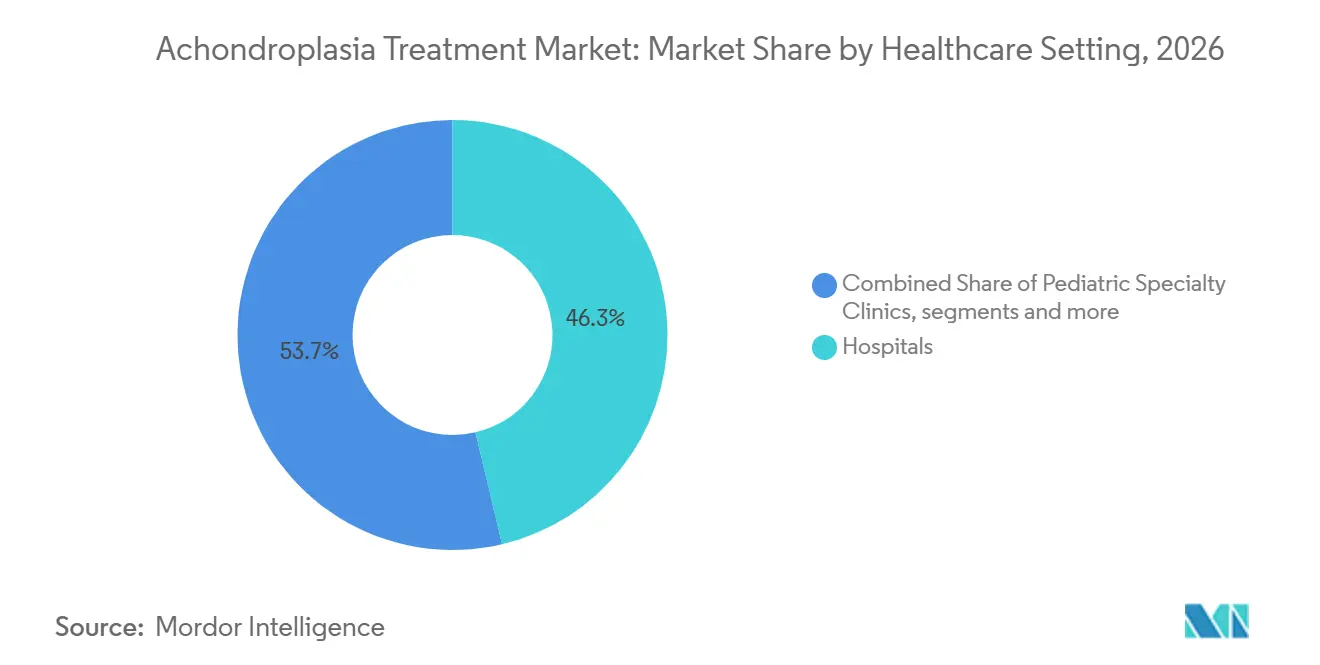
- By healthcare setting, hospitals held a 46.32% market share in 2026, while pediatric specialty clinics are expected to witness the highest growth at a CAGR of 29.73% during the forecast period.
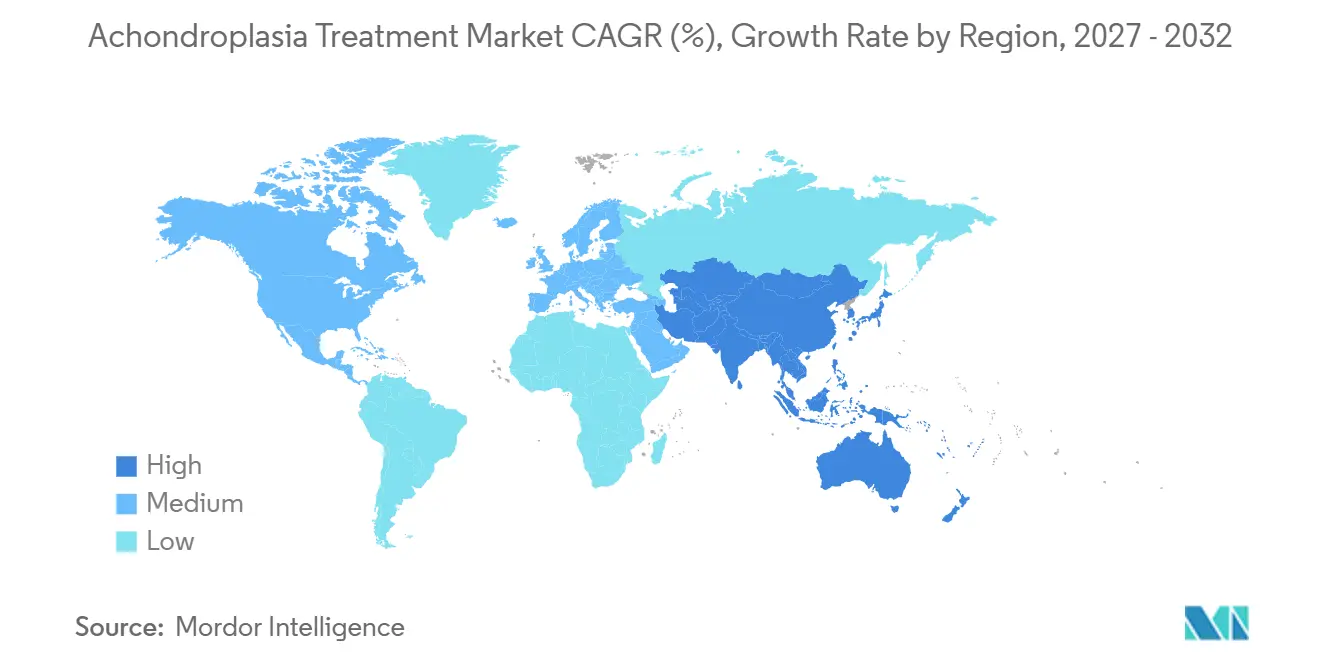
- By geography, North America held a 46.22% share in 2026, while Asia-Pacific is projected to grow at a 31.16% CAGR through 2032.
Note: Market numbers in this report are based on Mordor Intelligence's proprietary estimation framework, which combines nine months of actuals with Q4 projections for base year 2026.
Market Trends and Insights
Drivers Impact Analysis of Achondroplasia Treatment Market*
| Driver | (~) % Impact on CAGR Forecast | Geographic Relevance | Impact Timeline |
|---|---|---|---|
| Targeted Disease-Modifying Therapy Expansion | +8.3% | Global, led by North America and EU5 | Short term (≤ 2 years) |
| Earlier Diagnosis and Specialist Referral | +4.9% | North America and EU, growing in APAC | Medium term (2-4 years) |
| Multidisciplinary Achondroplasia Care | +3.8% | EU and North America | Medium term (2-4 years) |
| Long-Acting and Oral Delivery Innovation | +5.2% | Global | Short term (≤ 2 years) |
| Patient-Advocacy-Led Treatment Adoption | +3.1% | North America, EU, and Japan | Medium term (2-4 years) |
| Real-World Evidence for Reimbursement | +4.6% | EU5 and core APAC | Long term (≥ 4 years) |
| Source: Mordor Intelligence | |||
Expansion of Targeted Disease-Modifying Therapies
The achondroplasia treatment market now includes 2 FDA-approved targeted treatments, which give physicians a direct choice between treatment profiles. BioMarin guided 2026 vosoritide revenue to USD 975 million to USD 1.025 billion and filed for full approval in April 2026. The FDA action date is February 28, 2027, and a full approval could address payer concerns related to the earlier accelerated approval pathway. In the PROPEL 3 study, infigratinib produced an annualized height velocity of 5.96 cm per year, compared with 4.22 cm per year for placebo. The study also reported a 1.74 cm per year treatment difference and a statistically significant improvement in body proportionality in children under 8.[1] As new choices reach the achondroplasia treatment market, coverage discussions will need to weigh dosing, long-term evidence, and outcomes that matter to patients and families.
Earlier Genetic Diagnosis and Specialist Referral
Earlier molecular diagnosis can widen the period in which children enter appropriate specialist care and become eligible for treatment. Noninvasive prenatal testing for FGFR3 variants can be performed from 9 to 10 weeks of gestation, which can bring diagnosis forward from the usual second-trimester ultrasound stage.[2]A 2025 study found that practice commonly aligned with guidance on immediate specialist referral, but gaps remained in first-year assessment for cervicomedullary compression and respiratory concerns.[3] Improved sonographic phenotyping used with maternal plasma testing may increase the diagnostic specificity of referrals. These improvements can reduce delays in care and support earlier discussions of disease-modifying therapy. The achondroplasia treatment market will depend on specialist referral systems because diagnosis alone does not ensure access to an experienced prescribing team.
Long-Acting and Oral Delivery Innovation
Daily subcutaneous administration can place a practical burden on caregivers, so treatment frequency is becoming an important point of differentiation. Ascendis received FDA approval for once-weekly navepegritide in February 2026 for children aged 2 years and older with open epiphyses. Two-year ApproaCH data showed sustained growth-velocity benefits and improvements in lower-extremity alignment through week 104. Oral infigratinib reported 4% mild transient hyperphosphatemia and no reported FGFR1/2-related retinal or corneal adverse events in PROPEL 3. These data support the role of oral delivery in the achondroplasia treatment market, although longer-term use will remain important for clinicians and payers. Weekly injectable options also preserve a role for CNP analogs among families who value fewer injections without changing treatment class.
Real-World Evidence Supporting Reimbursement Decisions
Long-term evidence is central to reimbursement reviews in the achondroplasia treatment market, especially where health technology assessment bodies seek outcomes beyond short-term growth velocity. The CrescNet registry reported 2-year data from 165 vosoritide-treated children across 19 European centers, with real-world outcomes consistent with clinical trial findings. International guidance on vosoritide implementation and monitoring gives clinicians and payers a shared framework for treatment decisions. Companies with established patient registries can better respond to requests for evidence on complications, quality of life, and adult outcomes. This makes evidence collection a commercial requirement as well as a clinical activity.
Restraints Impact Analysis of Achondroplasia Treatment Market*
| Restraint | (~) % Impact on CAGR Forecast | Geographic Relevance | Impact Timeline |
|---|---|---|---|
| Lifetime Treatment Cost and Payer Budget Pressure | -4.1% | Global, most acute in EU5, Canada, and Nordic countries | Short term (≤ 2 years) |
| Small Diagnosed Population and Trial Recruitment Limits | -3.2% | Global | Medium term (2-4 years) |
| Daily Injection Burden and Adherence Sensitivity | -2.6% | Global | Short term (≤ 2 years) |
| Uneven Access to Expert Skeletal-Dysplasia Centers | -2.1% | APAC, Middle East and Africa, and South America | Long term (≥ 4 years) |
| Source: Mordor Intelligence | |||
High Lifetime Treatment Cost and Payer Budget Pressure
High treatment costs remain the clearest near-term constraint on the achondroplasia treatment market. Canada’s Drug Expert Committee voted 15-0 against reimbursement in its 2026 recommendation, citing uncertainty about long-term clinical benefits such as final adult height and complication reduction. Annual cost of CAD 346,988 for vosoritide, which concentrates budget concerns in a small patient population. Germany’s Federal Joint Committee also found insufficient evidence of added benefit for the 4-month-to-under-2-years subgroup in its February 2024 assessment. As more treatments enter reimbursement negotiations, payers may ask for clearer comparative evidence before expanding coverage. This pressure is particularly relevant where treatment begins early and could continue through skeletal maturity.
Small Diagnosed Population and Limited Trial Recruitment
Achondroplasia affects 1 in 25,000 live births globally, which limits recruitment pools for trials and long-term registries. PROPEL 3 enrolled 114 participants across international sites, which illustrates the time and coordination needed for adequately powered studies in this population. The small number of patients with open growth plates also narrows the number who are immediately eligible for growth-focused treatment. Molecular confirmation may be needed for some study protocols, adding another step for families and referral centers. The achondroplasia treatment market can therefore grow more slowly than clinical innovation alone might suggest. Limited access to specialist skeletal dysplasia centers adds to this issue in regions where diagnostic and monitoring services are uneven.
*Our forecasts treat driver/restraint impacts as directional, not additive. The impact forecasts reflect baseline growth, mix effects, and variable interactions.
Achondroplasia Treatment Market Segment Analysis
By Treatment Type:
CNP Analogs Lead Current Revenue as FGFR3 Inhibitors Build Future DemandC-type natriuretic peptide analogs held 38.63% of the achondroplasia treatment market share in 2026, supported by vosoritide’s established presence across 55 commercial markets. Navepegritide introduced a once-weekly CNP analog option in 2026, and its 2-year data added longer follow-up on growth and lower-extremity alignment. The treatment type remains important to the achondroplasia treatment market because it links established commercial infrastructure with newer product differentiation.
Growth hormone therapy is projected to record the fastest treatment-type CAGR at 29.25% through 2032. Japan has a distinct setting because growth hormone therapy received a specific approval for achondroplasia, unlike many other national systems. FGFR3 inhibitors are expected to seek a larger role from 2027 if oral infigratinib proceeds from its planned 2026 NDA submission to a U.S. launch. Surgical treatment and supportive care will remain necessary for spinal, neurologic, and limb-related complications even as pharmacologic options expand.

By Patient Age Group:
Pediatric Patients Continue to Dominate While Adult Care ExpandsPediatric patients accounted for 53.34% of the achondroplasia treatment market share in 2026, reflecting that achondroplasia is typically diagnosed early in life and most approved disease-modifying therapies target children during active growth periods. Pediatric patients remain the primary recipients of C-type natriuretic peptide analogs, growth hormone therapy, and ongoing multidisciplinary care. Early intervention is often associated with improved growth outcomes and management of skeletal complications, reinforcing the importance of treatment initiation during childhood.
The adult patient segment is projected to grow at a CAGR of 30.12% through 2032, making it the fastest-growing age group. Growth is expected to be driven by increasing recognition of lifelong disease burden, improved management of orthopedic and neurological complications, and the emergence of therapies that may address unmet needs beyond pediatric growth enhancement. As the treated patient pool ages, long-term monitoring and supportive care requirements are expected to contribute to market expansion among adults.
By Healthcare Setting:
Hospitals Lead Treatment Delivery While Pediatric Specialty Clinics Gain MomentumHospitals held 46.32% of the achondroplasia treatment market share in 2026, supported by their role in diagnosis, treatment initiation, genetic evaluation, and management of disease-related complications. Many patients receive care through multidisciplinary hospital-based teams comprising pediatric endocrinologists, geneticists, orthopedic surgeons, neurosurgeons, and pulmonologists. Hospitals also remain the primary settings for surgical interventions and administration of advanced therapies requiring specialized monitoring.
Pediatric specialty clinics are projected to grow at a CAGR of 29.73% through 2032, representing the fastest-growing healthcare setting segment. Their growth reflects increasing decentralization of routine disease management, greater availability of specialized pediatric services, and expanding long-term follow-up programs for children receiving targeted therapies. These clinics are expected to play an increasingly important role in growth monitoring, treatment adherence, caregiver education, and ongoing patient management, while maintaining referral pathways to tertiary hospitals for complex cases.
Geography Analysis
North America
North America held a 46.22% share of the achondroplasia treatment market size in 2026. The region benefits from FDA approvals, established commercial payer processes, and copay assistance that reduces direct costs for many commercially insured families. A February 2027 FDA action date for full vosoritide approval may reduce one source of payer uncertainty. Canada’s recommendation against reimbursement means regional access will remain weighted toward the United States.
Europe
Europe is the second-largest contributor to the achondroplasia treatment market. Vosoritide had European approval for patients aged 2 years and older in 2021, with an expansion to infants from 4 months in 2023. Germany’s 2024 benefit assessment did not confirm added benefit for the 4-month-to-under-2-years population. European coverage decisions continue to differ by country because cost-effectiveness and long-term evidence standards differ. Registry evidence from 19 centers can help support future reassessments across major European markets.
Asia-Pacific, Middle East, Africa, and South America
Asia-Pacific is projected to expand at a 31.16% CAGR through 2032, the fastest geographic rate in the achondroplasia treatment market. Japan combines national insurance coverage for vosoritide with a specific approval for growth hormone therapy, which creates a broader treatment setting than in many countries. Kyowa Kirin is developing infigratinib for Japanese patients, while Teijin Pharma received rare disease designation for TransCon CNP in June 2025. China offers a large potential patient base, but diagnostic infrastructure remains a major access constraint. South Korea, Australia, and India are smaller contributors, while the Middle East, Africa, and South America remain less penetrated. Patient advocacy and specialist capacity will be important for expanding treatment access in these regions.
Competitive Landscape
The achondroplasia treatment market is moving from a product category led by vosoritide toward a setting with several treatment approaches. Ascendis added a weekly CNP analog in 2026, which makes dosing frequency a direct competitive factor. BridgeBio is preparing an NDA for oral infigratinib after reporting Phase 3 data on growth velocity and body proportionality. BioMarin also has a clear strategic response through its development of a next-generation weekly CNP analog. These moves place convenience, clinical evidence, and reimbursement readiness at the center of competition in the achondroplasia treatment market.
CNP analog developers are competing through administration frequency, exposure duration, and potential combination use. FGFR3 inhibitor developers are competing through oral administration and the prospect of direct pathway modulation. Growth hormone companies remain relevant in Japan and could seek combination positions if clinical evidence supports additive use. No approved regimen currently combines a CNP analog with FGFR3 inhibition. This leaves room for future clinical protocols, but the achondroplasia treatment market has no established evidence base for such a combination. Early RNA-based and gene-therapy concepts remain pre-revenue during the forecast period.
BridgeBio holds FDA Breakthrough Therapy, Fast Track, Orphan Drug, and Rare Pediatric Disease designations for infigratinib. Those designations support a differentiated regulatory position, although market access will still depend on payer evidence. Ascendis used a weekly formulation to address the burden of daily injections. BridgeBio used the PROPEL 3 program to establish evidence around body proportionality as well as growth. The achondroplasia treatment market remains commercially concentrated around a small set of clinical-stage and commercial companies, but the product landscape is broadening.
Achondroplasia Treatment Industry Leaders
-
BioMarin Pharmaceutical Inc.
-
Ascendis Pharma A/S
-
BridgeBio Pharma, Inc.
-
RIBOMIC, Inc.
-
Pfizer Inc.
- *Disclaimer: Major Players sorted in no particular order
Achondroplasia Treatment Market Companies Covered in this Report
- Amgen
- Ascendis Pharma A/S
- Biomarin Pharmaceutical
- BridgeBio Pharma, Inc.
- Daiichi Sankyo
- Eli Lilly and Company
- Roche
- Ferring Pharmaceuticals
- Ipsen
- Kyowa Kirin
- LG Chem Life Sciences
- Merck
- Novartis
- Novo Nordisk
- Opko Health
- Pfizer
- QED Therapeutics, Inc.
- RIBOMIC, Inc.
- Sanofi
- Shionogi & Co., Ltd.
Recent Industry Developments in Achondroplasia Treatment Market
- July 2026: The FDA accepted BioMarin's supplemental NDA seeking conversion of vosoritide from accelerated to full traditional approval for children with achondroplasia, setting a PDUFA action date of February 28, 2027.
- February 2026: FDA Grants Accelerated Approval to Ascendis Pharma's YUVIWEL (navepegritide): The FDA approved the first once-weekly CNP analog for achondroplasia in children aged 2 and older with open epiphyses, granting Ascendis a Rare Pediatric Disease Priority Review Voucher (PRV); EMA Marketing Authorization Application review is ongoing with a Q4 2026 decision anticipated.
Global Achondroplasia Treatment Market Report Scope
According to the report’s scope, the achondroplasia treatment market represents the global healthcare segment focused on therapies, interventions, and supportive care for achondroplasia, the most common genetic skeletal dysplasia caused by FGFR3 mutations. It includes biologics, gene therapies, surgical procedures, and supportive pediatric care, with strong reliance on orphan drug incentives and rare disease infrastructure.
The achondroplasia treatment market is segmented into treatment type, patient age group, healthcare setting, and geography. By treatment type, the market is segmented into C-type natriuretic peptide analogs, FGFR3 inhibitors, growth hormone therapy, surgical treatments, supportive and complication-directed therapy, and gene and cell therapy concepts. By patient age group, the market is segmented into pediatric patients, adolescent patients, and adult patients. By healthcare setting, the market is segmented into hospitals, pediatric specialty clinics, academic & research centers, and ambulatory surgical centers. By geography, the market is segmented into North America, Europe, Asia-Pacific, the Middle East and Africa, and South America. The report also covers the estimated market sizes and trends for 17 countries across major regions globally. The report offers values (USD) for all the above segments.
Segmentation Overview
| C-Type Natriuretic Peptide Analogs |
| FGFR3 Inhibitors |
| Growth Hormone Therapy |
| Surgical Treatments |
| Supportive and Complication-Directed Therapy |
| Gene and Cell Therapy Concepts |
| Pediatric Patients |
| Adolescent Patients |
| Adult Patients |
| Hospitals |
| Pediatric Specialty Clinics |
| Academic & Research Centers |
| Ambulatory Surgical Centers |
| North America | United States |
| Canada | |
| Mexico | |
| Europe | Germany |
| United Kingdom | |
| France | |
| Italy | |
| Spain | |
| Rest of Europe | |
| Asia-Pacific | China |
| Japan | |
| India | |
| Australia | |
| South Korea | |
| Rest of Asia-Pacific | |
| Middle East and Africa | GCC |
| South Africa | |
| Rest of Middle East and Africa | |
| South America | Brazil |
| Argentina | |
| Rest of South America |
| By Treatment Type | C-Type Natriuretic Peptide Analogs | |
| FGFR3 Inhibitors | ||
| Growth Hormone Therapy | ||
| Surgical Treatments | ||
| Supportive and Complication-Directed Therapy | ||
| Gene and Cell Therapy Concepts | ||
| By Patient Age Group | Pediatric Patients | |
| Adolescent Patients | ||
| Adult Patients | ||
| By Healthcare Setting | Hospitals | |
| Pediatric Specialty Clinics | ||
| Academic & Research Centers | ||
| Ambulatory Surgical Centers | ||
| By Geography | North America | United States |
| Canada | ||
| Mexico | ||
| Europe | Germany | |
| United Kingdom | ||
| France | ||
| Italy | ||
| Spain | ||
| Rest of Europe | ||
| Asia-Pacific | China | |
| Japan | ||
| India | ||
| Australia | ||
| South Korea | ||
| Rest of Asia-Pacific | ||
| Middle East and Africa | GCC | |
| South Africa | ||
| Rest of Middle East and Africa | ||
| South America | Brazil | |
| Argentina | ||
| Rest of South America | ||
Key Questions Answered in the Report
What is driving demand for the achondroplasia treatment market?
Targeted therapies, earlier diagnosis, specialist referral, and more convenient dosing options are supporting demand. The market is forecasted to grow from USD 0.50 billion in 2026 to USD 0.62 billion in 2027, and to reach USD 2.18 billion by 2032, growing at a 28.59% CAGR from 2027 to 2032.
Which treatment type has the largest share?
C-type natriuretic peptide analogs held 38.63% share in 2026, supported by the established use of vosoritide and the 2026 arrival of weekly navepegritide.
Why is the adult patient segment gaining importance in achondroplasia treatment?
While pediatric patients accounted for the largest market share in 2026, the adult patient segment is expected to be the fastest growing, registering a 30.12% CAGR through 2032, driven by increasing recognition of long-term disease management needs and expanded treatment opportunities.
Which region is expected to grow the fastest?
Asia-Pacific is forecasted to expand at a 31.16% CAGR through 2032, supported by developments in Japan and broader opportunities across the region.