
Abetalipoproteinemia Management Market Size and Share
Market Overview
| Study Period | 2021 - 2032 |
|---|---|
| Market Size (2027) | USD 0.56 Billion |
| Market Size (2032) | USD 0.85 Billion |
| Growth Rate (2027 - 2032) | 8.78 % |
| Fastest Growing Market | Asia-Pacific |
| Largest Market | North America |
| Market Concentration | Medium |
Major Players *Disclaimer: Major Players sorted in no particular order Image © Mordor Intelligence. Reuse requires attribution under CC BY 4.0. | |
Abetalipoproteinemia Management Market Analysis by Mordor Intelligence
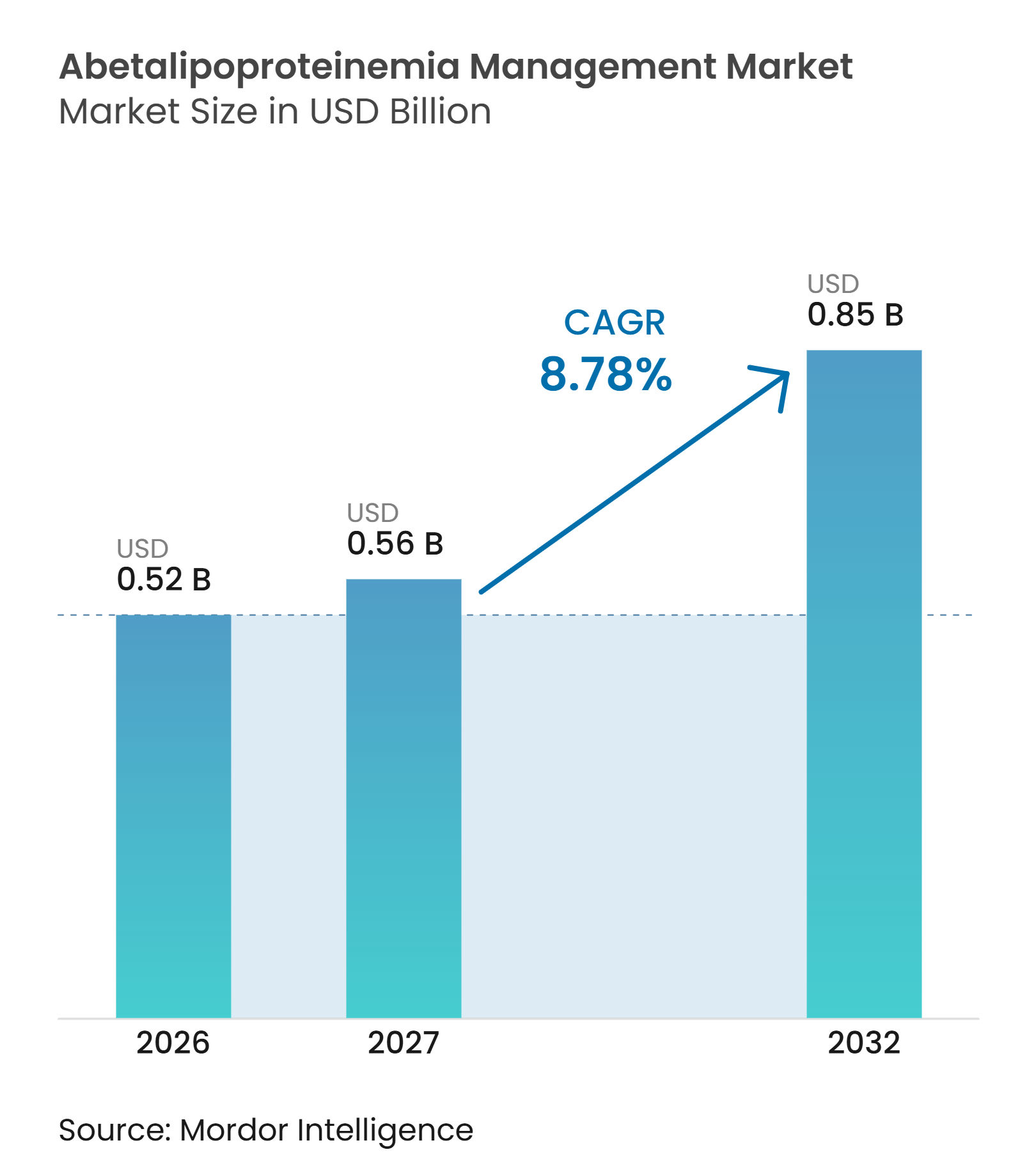
The Abetalipoproteinemia Management Market size is expected to grow from USD 0.52 billion in 2026 to USD 0.56 billion in 2027 and is forecast to reach USD 0.85 billion by 2032 at 8.78% CAGR over 2027-2032.
Abetalipoproteinemia is an inherited disorder caused by pathogenic variants in the MTTP gene, which prevents normal chylomicron and VLDL assembly and causes profound fat malabsorption. The Abetalipoproteinemia management market therefore centers on diagnostic confirmation, lifelong vitamin supplementation, nutritional support, and multidisciplinary monitoring rather than a disease-modifying medicine. This care model supports recurring demand because vitamin replacement and surveillance continue throughout a patient’s life. Earlier genetic identification can move care from crisis response toward preventive supplementation before retinal and neurological damage develops. The market opportunity depends on how effectively health systems identify patients, support adherence, and connect testing with long-term nutrition and specialist care.
Key Report Takeaways
- By management modality, fat-soluble vitamin supplementation held 61.45% of the Abetalipoproteinemia management market share in 2026, while molecular genetic testing is projected to grow at a 10.57% CAGR through 2032.
- By route of administration, injectable products accounted for 65.34% of the Abetalipoproteinemia management market size in 2026, while oral products are forecast to expand at an 11.23% CAGR through 2032.
- By patient population, pediatric patients held a 65.83% revenue share in 2026 and are projected to grow at a 10.19% CAGR through 2032.
- By end user, hospitals and clinics held 55.79% of revenue in 2026, while diagnostic laboratories are projected to grow at an 11.63% CAGR through 2032.
- By geography, North America held 37.89% of revenue in 2026, while Asia-Pacific is forecast to grow at a 10.45% CAGR through 2032.
Note: Market numbers in this report are based on Mordor Intelligence's proprietary estimation framework, which combines nine months of actuals with Q4 projections for base year 2026.
Market Trends and Insights
Drivers Impact Analysis of Abetalipoproteinemia Management Market*
| Driver | (~) % Impact on CAGR Forecast | Geographic Relevance | Impact Timeline |
|---|---|---|---|
| Earlier Recognition Through MTTP Genetic Testing | +1.8% | North America and Europe, with spillover to Asia-Pacific | Medium term (2-4 years) |
| Greater Uptake of Lifelong Fat-Soluble Vitamin Management | +2.1% | Global | Long term (≥ 4 years) |
| Expansion of Rare-Disease Diagnostic Infrastructure | +1.5% | Asia-Pacific, Europe, and North America | Medium term (2-4 years) |
| Government and Foundation Support for Ultra-Rare Disease Research | +1.0% | North America and Europe | Medium term (2-4 years) |
| Disease Registries Improving Patient Identification and Follow-Up | +0.8% | North America, Europe, and Asia-Pacific | Long term (≥ 4 years) |
| Improved Water-Miscible Vitamin and Medical-Nutrition Formulations | +1.2% | Global | Short term (≤ 2 years) |
| Source: Mordor Intelligence | |||
Earlier Recognition Through MTTP Genetic Testing
The Abetalipoproteinemia management market benefits when clinicians use genotype-led testing earlier in the diagnostic pathway. MTTP sequence analysis identified pathogenic variants in 59 of 60 confirmed cases, while targeted deletion and duplication analysis addressed the remaining cases. This approach can confirm disease in infants with fat malabsorption before a prolonged period of clinical uncertainty. GeneDx expanded its rare-disease genomics platform to nearly 1 million exomes and genomes in 2025[1]. Its partnership with Florida’s Sunshine Genetics Network supports whole-genome sequencing for 100,000 newborns under the Sunshine Genetics Act. Larger newborn sequencing programs could create the testing capacity and variant interpretation depth needed to identify MTTP variants earlier.
Greater Uptake of Lifelong Fat-Soluble Vitamin Management
Lifelong replacement of fat-soluble vitamins remains central to care in the Abetalipoproteinemia management market. Sustained vitamin E supplementation is important because untreated deficiency can lead to progressive neurological impairment and retinopathy. The Abetalipoproteinemia management market benefits from repeat prescriptions and long-term monitoring rather than a short treatment course. Fresenius Kabi introduced 5 enteral nutrition products in 2025, which expanded its pediatric and metabolic nutrition offering. Water-miscible vitamin E formulations can be useful where impaired fat absorption limits conventional oral uptake. Better absorption and lower pill burden can strengthen adherence, which is closely tied to long-term clinical stability.
Expansion of Rare-Disease Diagnostic Infrastructure
The Abetalipoproteinemia management market also grows as national diagnostic systems identify patients who would otherwise remain unrecognized. South Korea increased the eligible patient count in its Rare Disease Diagnostic Support Program from 410 to 800 in 2025. The program expanded covered diseases from 1,248 to 1,314 and added whole-genome sequencing capacity at 34 designated institutions. In Europe, ERDERA plans to scale reanalysis of rare-disease cases to more than 100,000 patients through long-read sequencing, RNA sequencing, and optical genome mapping. ERDERA also reported that pooled data reanalysis delivered 506 diagnoses from 6,447 unresolved cases in the Solve-RD program. For the Abetalipoproteinemia management market, wider diagnostic reach can expand the identified patient population, especially where specialist referral capacity has historically been limited.
Government and Foundation Support for Ultra-Rare Disease Research
Public research support improves the evidence base and infrastructure surrounding the Abetalipoproteinemia management market. The U.S. National Institutes of Health awarded USD 26 million in fiscal year 2025 for Cycle 5 of the Rare Diseases Clinical Research Network, supporting 21 research consortia focused on natural history, biomarkers, and clinical trial readiness. The ROAR Consortium at Baylor College of Medicine received USD 8.2 million over 5 years for research into rare organic acidemias. In the United Kingdom, the Rare Diseases Action Plan 2025 includes work on research coordination and diagnosis, including a rare-disease research platform with lipidomics and metabolomics capability. Disease registries can improve follow-up by organizing longitudinal clinical data. These resources can strengthen future testing, monitoring, and nutritional pathways in the Abetalipoproteinemia management market.
Restraints Impact Analysis of Abetalipoproteinemia Management Market*
| Restraint | (~) % Impact on CAGR Forecast | Geographic Relevance | Impact Timeline |
|---|---|---|---|
| Ultra-Rare Prevalence and Persistent Underdiagnosis | -1.5% | Global | Long term (≥ 4 years) |
| Absence of an Approved Disease-Modifying Therapy | -1.8% | Global | Long term (≥ 4 years) |
| High-Dose Vitamin Pill Burden and Long-Term Adherence Challenges | -0.7% | Global | Medium term (2-4 years) |
| Fragmented Specialist Care and Reimbursement Pathways | -0.6% | Outside North America and Europe | Long term (≥ 4 years) |
| Source: Mordor Intelligence | |||
Ultra-Rare Prevalence and Persistent Underdiagnosis
The very small patient population limits the volume opportunity for the Abetalipoproteinemia management market. The disorder affects fewer than 1 in 1 million people worldwide. Symptoms such as steatorrhea, low cholesterol, poor growth, and chronic diarrhea can overlap with more common nutritional or gastrointestinal conditions. A 2025 ophthalmology case report found that retinal evaluation led to diagnosis after multiple earlier genetic assessments did not identify the condition. In lower-resource systems, symptoms may be attributed to malnutrition or infectious diarrhea before genetic referral occurs. High-dose vitamin schedules can also be difficult to sustain, particularly when care is fragmented or reimbursement pathways are incomplete.
Absence of an Approved Disease-Modifying Therapy
No approved treatment corrects the MTTP dysfunction that causes abetalipoproteinemia. Available interventions manage downstream vitamin deficiency and nutritional consequences rather than restoring normal lipoprotein assembly. This leaves commercial spending concentrated in testing, supplementation, and surveillance rather than high-priced molecular treatment. RNA-targeted therapies have advanced in related hereditary lipid conditions, although they do not target MTTP dysfunction in abetalipoproteinemia. The absence of an MTTP-directed clinical program means that the Abetalipoproteinemia management market will remain focused on management and monitoring through the forecast period. The lack of a curative option also increases the importance of adherence and coordinated specialist follow-up.
*Our forecasts treat driver/restraint impacts as directional, not additive. The impact forecasts reflect baseline growth, mix effects, and variable interactions.
Abetalipoproteinemia Management Market Segment Analysis
By Management Modality:
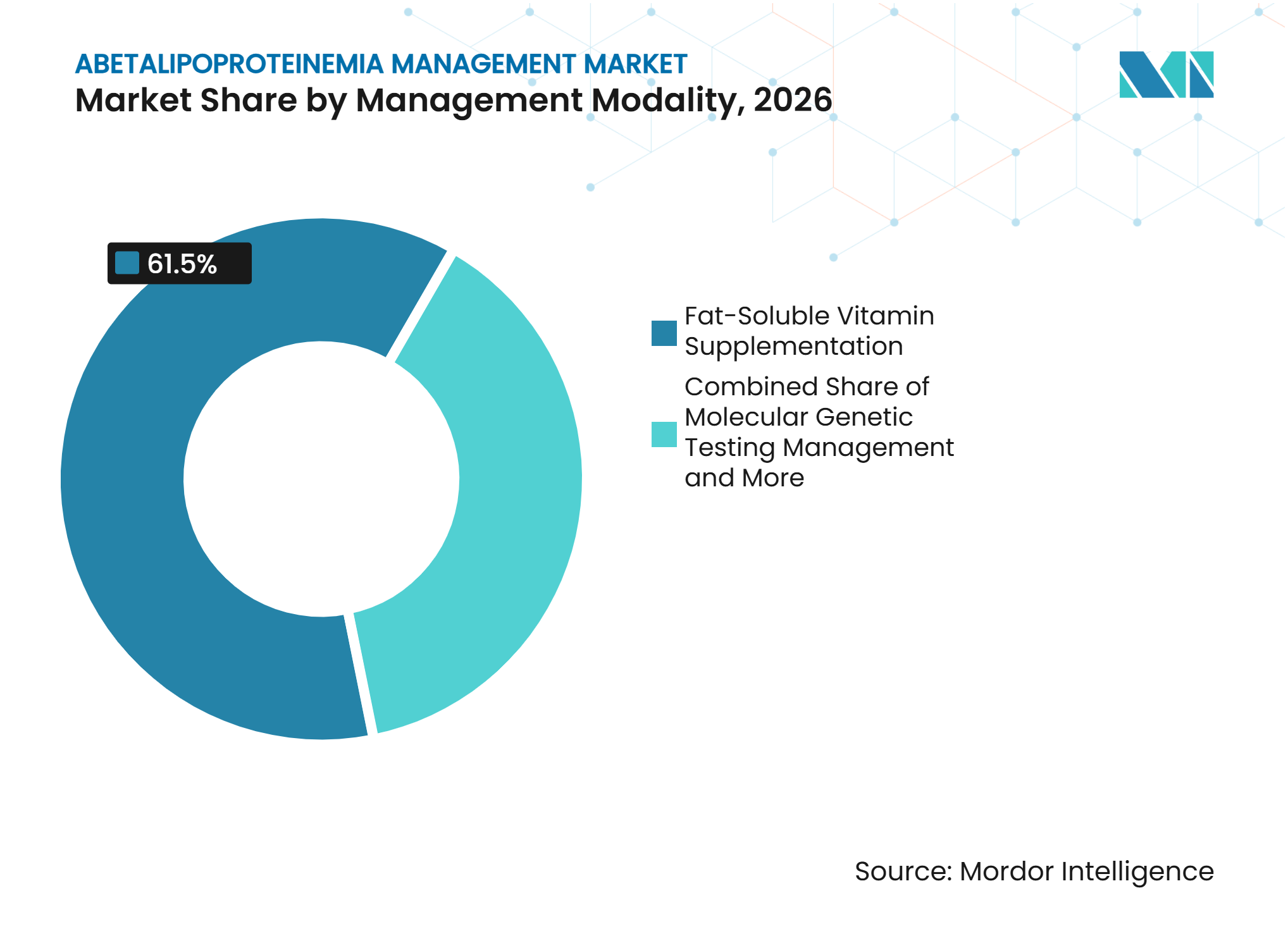
Supplementation Anchors Revenue While Genetic Testing ExpandsFat-soluble vitamin supplementation accounted for 61.45% of revenue in 2026, making it the leading modality in the Abetalipoproteinemia management market. Every confirmed patient requires high-dose, long-term replacement regardless of disease severity. Vitamin E forms the largest subcategory, followed by vitamin A and multivitamin combinations. Dietary and nutritional management is the second-largest modality, including low-fat meal plans, medium-chain triglyceride supplementation, and essential fatty acid support. These interventions aim to reduce intestinal fat accumulation and steatorrhea while maintaining nutritional status[2].
Molecular genetic testing management is projected to record a 10.57% CAGR through 2032. MTTP single-gene tests, lipidemia panels, exome testing, and genome testing support confirmation in children with unresolved fat malabsorption. GeneDx’s 2025 dataset contains nearly 1 million clinical exomes and genomes and more than 7 million phenotypic data points. Blood testing remains important across all modalities because very low or absent apolipoprotein B is a defining laboratory finding. Supportive care includes neurological rehabilitation, ophthalmology review, and liver monitoring, often delivered through academic medical centers.



By Route of Administration:
Oral Formulations Gain Ground Against Injectable CareInjectable products held 65.34% of the Abetalipoproteinemia management market size in 2026. Parenteral fat-soluble vitamin administration is used when gastrointestinal absorption is compromised or when oral adherence is inadequate. Oral treatment is forecast to grow at an 11.23% CAGR through 2032. Water-miscible formulations can improve oral availability in fat-malabsorption conditions. This approach is relevant because normal chylomicron assembly is impaired in abetalipoproteinemia.
The shift toward oral treatment can transfer more routine care from hospitals to home settings. It can reduce visits for administration and give families a more practical daily regimen. Inovera Bioscience described its Forvia formulation as a water-miscible source of vitamins A, D, E, and K for people with intestinal malabsorption. Intramuscular alpha-tocopherol remains relevant for selected patients when oral vitamin E replacement is insufficient. These choices support a care pathway that is tailored to clinical severity, absorption, and adherence.
By Patient Population:
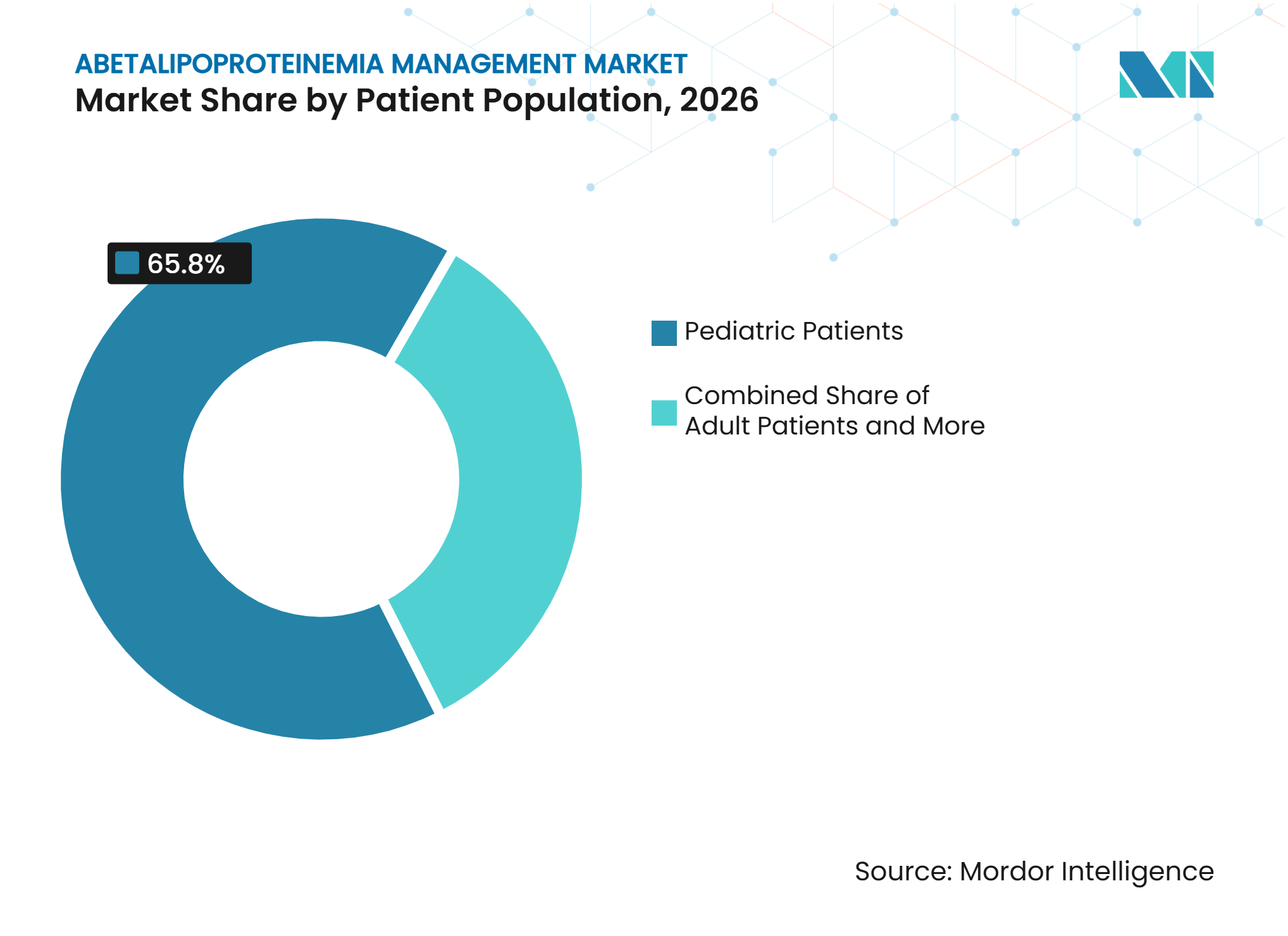
Pediatric Identification Sets the Direction of CarePediatric patients held 65.83% revenue share in 2026 and are projected to expand at a 10.19% CAGR through 2032. Symptoms commonly begin in infancy or early childhood and include failure to thrive, diarrhea, steatorrhea, and abdominal distension. Early identification allows vitamin and nutrition management to begin before irreversible complications develop. GeneDx is supporting Florida’s state-backed newborn genomic screening program, which targets whole-genome sequencing for 100,000 newborns. Future panel expansion could create an earlier entry point for the Abetalipoproteinemia management market by identifying patients with MTTP variants.
Adults form a secondary patient group that can include people diagnosed only after years of unrecognized disease. Late diagnosis may coincide with established neurological complications and a greater need for coordinated care. Geriatric patients remain a small cohort, but they may require long-term ophthalmology monitoring and neurological rehabilitation. Earlier pediatric diagnosis can prevent some later complications through continuous replacement and monitoring. The Abetalipoproteinemia management industry is therefore shaped by the ability to convert pediatric detection into continuous preventive care.

By End User:
Hospitals Lead While Diagnostic Laboratories ExpandHospitals and clinics held 55.79% of revenue in 2026 because abetalipoproteinemia affects multiple organ systems. Pediatric gastroenterologists, metabolic specialists, neurologists, and ophthalmologists often need to coordinate care. These specialties are commonly concentrated in tertiary settings. Hospitals also manage acute presentations and patients who need injectable replacement. Their role in the Abetalipoproteinemia management market includes coordinating testing, nutritional prescriptions, and periodic assessment.
Diagnostic laboratories are projected to grow at an 11.63% CAGR through 2032. Labcorp’s integration of Invitae expanded the combined genetic test catalog to more than 6,500 tests. Labcorp also reported that its Moon and Apollo tools had submitted more than 1.7 million classifications to ClinVar. These capabilities can shorten interpretation timelines for MTTP and related rare-disease testing. Home and community care remains small, but oral water-miscible regimens and remote nutritional monitoring can support its development.
Geography Analysis
North America
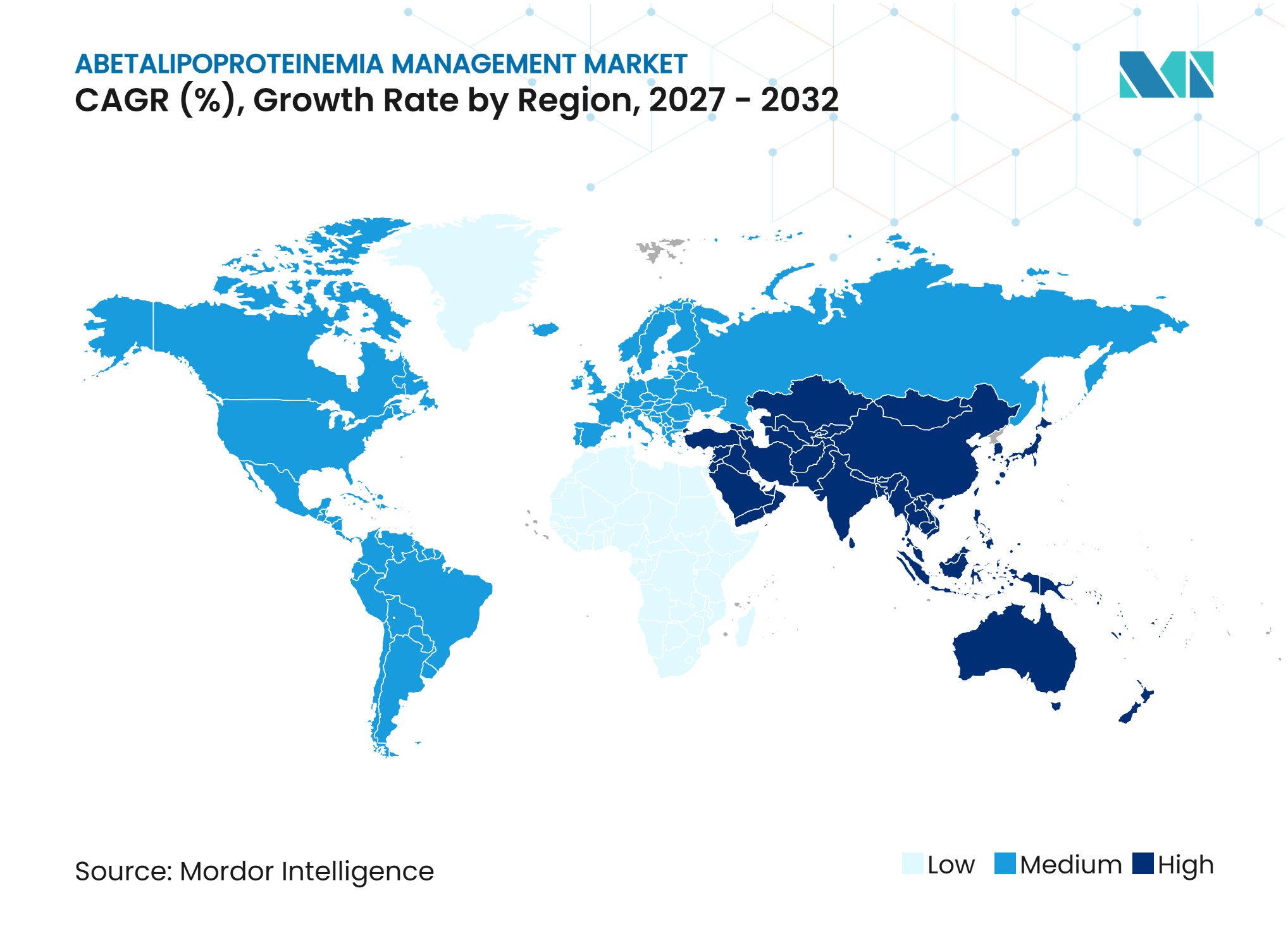
North America held 37.89% of the Abetalipoproteinemia management market share in 2026. The region combines specialized rare metabolic disease centers, established genetic testing reimbursement, and orphan disease infrastructure. GeneDx reported that its 2025 Infinity dataset included nearly 1 million exomes and genomes, more than 2.5 million genetic tests, and more than 7 million phenotypic data points. This resource can support interpretation of MTTP variants across more diverse patient groups. Florida’s planned genomic newborn screening program also shows how public and private diagnostic capacity can move rare-disease detection closer to birth.
Asia-Pacific
Asia-Pacific is forecast to expand at a 10.45% CAGR through 2032. South Korea expanded its Rare Disease Diagnostic Support Program in 2025 through broader eligibility, more covered diseases, and whole-genome sequencing at 34 institutions. China and India offer a larger pool of potential patients, but ultra-rare disease testing remains concentrated in major cities. Australia’s genomic medicine programs at children’s hospitals are also increasing the ability to identify rare metabolic conditions. Regional growth will depend on whether sequencing access extends beyond specialist centers and is linked to reimbursement and follow-up.
Europe, South America, and Middle East and Africa
Europe is the second-largest regional block in the Abetalipoproteinemia management market because it has structured care pathways and collaborative genomic research. NHS England’s Generation Study aims to sequence up to 100,000 newborns and screen for more than 200 rare conditions. In South America, the European Atherosclerosis Society held a 2025 advanced course for Latin American clinicians on rare lipid disorders, including conditions that are often underdiagnosed. In the Abetalipoproteinemia management market, the Middle East and Africa have a higher structural likelihood of recessive conditions in some consanguineous populations. Still, specialist metabolic services remain concentrated in large urban centers and require stronger referral links, laboratory access, and specialist capacity.
Competitive Landscape
Market Concentration
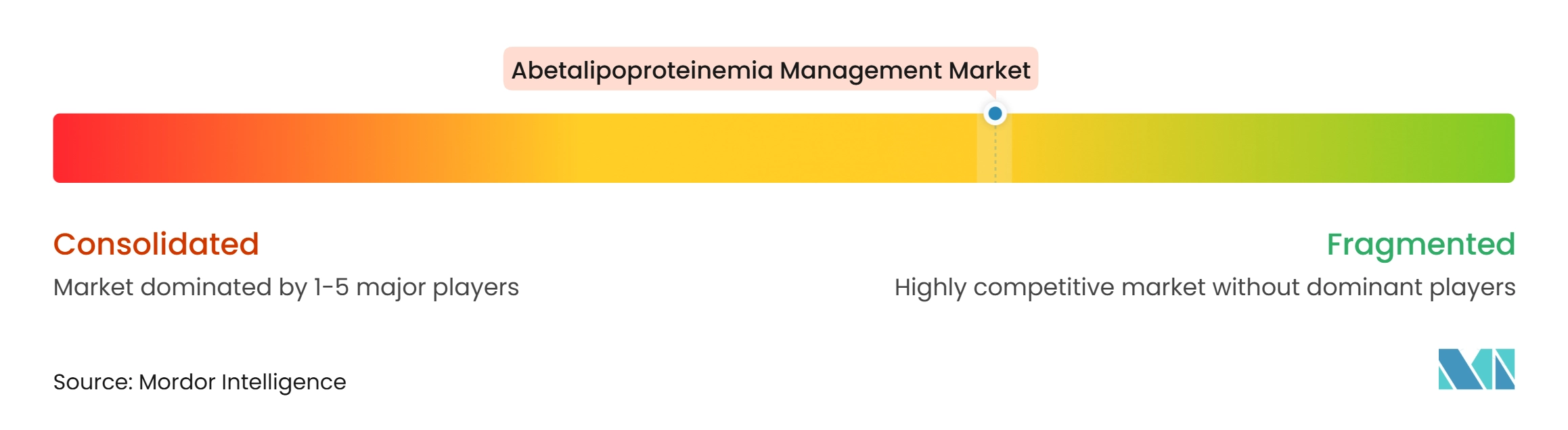
The Abetalipoproteinemia management market is moderately fragmented across molecular diagnostics, medical nutrition, and supportive care. GeneDx, Labcorp, and CENTOGENE are important in rare-disease diagnostics because their platforms combine sequencing with variant interpretation. CENTOGENE’s data resource includes patients from more than 120 countries, giving it a broad base for rare-disease analysis. Medical nutrition competition centers on bioavailability, taste, dosing convenience, and packaging.
CENTOGENE launched CentoGenome Ultra-Fast in February 2025, with whole-genome sequencing results available in 5 business days for critical care settings. GeneDx partnered with Florida State University and the Florida Sunshine Genetics Network in October 2025 to support state-backed newborn genomic screening. Labcorp expanded access to Invitae testing through Epic Aura in October 2025, which streamlined test ordering and results delivery for health systems using Epic. Fresenius Kabi expanded its enteral nutrition offering with 5 products in 2025. These actions show that speed of diagnosis, clinical access, and formulation quality are leading competitive levers in the Abetalipoproteinemia management market.
The Abetalipoproteinemia management market still lacks a fully integrated platform that connects genetic confirmation, nutritional prescribing, adherence monitoring, and surveillance of complications. That gap leaves room for coordinated service models that help families navigate long-term care in the Abetalipoproteinemia management market. ISO 15189 accreditation and College of American Pathologists certification are important quality requirements for laboratories competing for rare-disease testing work. Related rare lipid disorder programs show that RNA-targeted medicines can reach patients and commercial markets, but none currently addresses MTTP dysfunction. The Abetalipoproteinemia management industry remains defined by specialized providers rather than a small group of vertically integrated leaders.
Abetalipoproteinemia Management Industry Leaders
-
Abbott Laboratories
-
Danone S.A.
-
Fulgent Genetics, Inc.
-
Labcorp Holdings Inc.
-
Nestlé Health Science
- *Disclaimer: Major Players sorted in no particular order
Abetalipoproteinemia Management Market Companies Covered in this Report
- Abbott Laboratories
- Ambry Genetics
- Arrowhead Pharmaceuticals
- ARUP Laboratories
- Baxter
- Baylor Genetics
- Blueprint Genetics
- CENTOGENE N.V.
- Chiesi Farmaceutici
- Danone
- Eurofins
- Fresenius
- Fulgent Genetics, Inc.
- GeneDx, LLC
- Ionis Pharmaceuticals
- Labcorp Holdings Inc.
- Nestlé Health Science
- PreventionGenetics, LLC
- Recordati S.p.A.
Recent Industry Developments in Abetalipoproteinemia Management Market
- January 2026: Recordati S.p.A. announced a collaboration and license agreement with Moderna to develop and commercialize mRNA-3927, an investigational mRNA-based therapeutic for propionic acidemia. Under the agreement, Moderna leads development while Recordati leads global commercialization. mRNA-3927 would be the first disease-modifying treatment for propionic acidemia if approved, signaling Recordati’s strategic expansion within rare inborn errors of metabolism that share management parallels with abetalipoproteinemia.
- November 2025: GeneDx unveiled GeneDx Infinity™, the world’s largest publicly disclosed rare-disease genomic dataset, comprising nearly 1 million exomes and genomes, more than 2.5 million genetic tests, and over 7 million phenotypic data points. The launch establishes GeneDx’s ExomeDx™ and GenomeDx™ as data-rich rare-disease diagnostic products available for MTTP variant interpretation and rare lipid disorder diagnosis
Global Abetalipoproteinemia Management Market Report Scope
As per the report’s scope, abetalipoproteinemia management covers the diagnosis, nutritional treatment, vitamin supplementation, and long-term monitoring of abetalipoproteinemia, an inherited disorder associated with impaired lipoprotein formation and fat-soluble vitamin malabsorption.
The report covers management across molecular and blood testing, vitamin replacement, dietary support, complication monitoring, administration routes, patient populations, and care settings involved in diagnosing, prescribing, dispensing, and monitoring abetalipoproteinemia management.
The abetalipoproteinemia management market is segmented by management modality, route of administration, patient population, and end user. By management modality, the market is segmented into molecular genetic testing management, blood testing management, fat-soluble vitamin supplementation, dietary and nutritional management, supportive and complication management, and other management modalities. Molecular genetic testing management is further segmented into mttp single-gene sequencing, mttp deletion and duplication analysis, multigene lipidemia panels, and whole-exome and genome sequencing. Blood testing management is further segmented into lipid panel testing, apolipoprotein B testing, fat-soluble vitamin level testing, liver function testing, and hematology and coagulation monitoring.
Fat-soluble vitamin supplementation is further segmented into vitamin A supplementation, vitamin D supplementation, vitamin E supplementation, vitamin K supplementation, and multivitamin combinations. Dietary and nutritional management is further segmented into low-fat dietary management, essential fatty acid supplementation, medium-chain triglyceride management, and modular medical-nutrition formulas. Supportive and complication management is further segmented into nutritionist and dietitian services, neurological rehabilitation, ophthalmology monitoring, liver disease monitoring, and hematology and coagulation support. By route of administration, the market is segmented into oral, injectable, and other clinically applicable routes. By patient population, the market is segmented into pediatric patients, adult patients, and geriatric patients. By end user, the market is segmented into hospitals and clinics, diagnostics laboratories, specialty clinics, academic and research centers, and home-based and community care.
By geography, the market is segmented into North America, Europe, Asia-Pacific, the Middle East and Africa, and South America. The market report also covers estimated market sizes and trends for 17 countries across major regions worldwide. The report offers market size and forecasts in value (USD) for the above segments.
Segmentation Overview
| Molecular Genetic Testing Management | MTTP Single-Gene Sequencing |
| MTTP Deletion and Duplication Analysis | |
| Multigene Lipidemia Panels | |
| Whole-Exome and Genome Sequencing | |
| Blood Testing Management | Lipid Panel Testing |
| Apolipoprotein B Testing | |
| Fat-Soluble Vitamin Level Testing | |
| Liver Function Testing | |
| Hematology and Coagulation Monitoring | |
| Fat-Soluble Vitamin Supplementation | Vitamin A Supplementation |
| Vitamin D Supplementation | |
| Vitamin E Supplementation | |
| Vitamin K Supplementation | |
| Multivitamin Combinations | |
| Dietary and Nutritional Management | Low-Fat Dietary Management |
| Essential Fatty Acid Supplementation | |
| Medium-Chain Triglyceride Management | |
| Modular Medical-Nutrition Formulas | |
| Supportive and Complication Management | Nutritionist and Dietitian Services |
| Neurological Rehabilitation | |
| Ophthalmology Monitoring | |
| Liver Disease Monitoring | |
| Hematology and Coagulation Support | |
| Other Management Modalities |
| Oral |
| Injectable |
| Other Clinically Applicable Routes |
| Pediatric Patients |
| Adult Patients |
| Geriatric Patients |
| Hospitals and Clinics |
| Diagnostics Laboratories |
| Specialty Clinics |
| Academic and Research Centers |
| Home-Based and Community Care |
| North America | United States |
| Canada | |
| Mexico | |
| Europe | Germany |
| United Kingdom | |
| France | |
| Italy | |
| Spain | |
| Rest of Europe | |
| Asia-Pacific | China |
| Japan | |
| India | |
| Australia | |
| South Korea | |
| Rest of Asia-Pacific | |
| Middle East and Africa | GCC |
| South Africa | |
| Rest of Middle East and Africa | |
| South America | Brazil |
| Argentina | |
| Rest of South America |
| By Management Modality | Molecular Genetic Testing Management | MTTP Single-Gene Sequencing |
| MTTP Deletion and Duplication Analysis | ||
| Multigene Lipidemia Panels | ||
| Whole-Exome and Genome Sequencing | ||
| Blood Testing Management | Lipid Panel Testing | |
| Apolipoprotein B Testing | ||
| Fat-Soluble Vitamin Level Testing | ||
| Liver Function Testing | ||
| Hematology and Coagulation Monitoring | ||
| Fat-Soluble Vitamin Supplementation | Vitamin A Supplementation | |
| Vitamin D Supplementation | ||
| Vitamin E Supplementation | ||
| Vitamin K Supplementation | ||
| Multivitamin Combinations | ||
| Dietary and Nutritional Management | Low-Fat Dietary Management | |
| Essential Fatty Acid Supplementation | ||
| Medium-Chain Triglyceride Management | ||
| Modular Medical-Nutrition Formulas | ||
| Supportive and Complication Management | Nutritionist and Dietitian Services | |
| Neurological Rehabilitation | ||
| Ophthalmology Monitoring | ||
| Liver Disease Monitoring | ||
| Hematology and Coagulation Support | ||
| Other Management Modalities | ||
| By Route of Administration | Oral | |
| Injectable | ||
| Other Clinically Applicable Routes | ||
| By Patient Population | Pediatric Patients | |
| Adult Patients | ||
| Geriatric Patients | ||
| By End User | Hospitals and Clinics | |
| Diagnostics Laboratories | ||
| Specialty Clinics | ||
| Academic and Research Centers | ||
| Home-Based and Community Care | ||
| By Geography | North America | United States |
| Canada | ||
| Mexico | ||
| Europe | Germany | |
| United Kingdom | ||
| France | ||
| Italy | ||
| Spain | ||
| Rest of Europe | ||
| Asia-Pacific | China | |
| Japan | ||
| India | ||
| Australia | ||
| South Korea | ||
| Rest of Asia-Pacific | ||
| Middle East and Africa | GCC | |
| South Africa | ||
| Rest of Middle East and Africa | ||
| South America | Brazil | |
| Argentina | ||
| Rest of South America | ||
Key Questions Answered in the Report
What is driving growth in abetalipoproteinemia management?
Earlier MTTP testing, newborn genomic programs, broader rare-disease diagnostic capacity, and lifelong vitamin replacement support growth.
Which care modality accounts for the largest share?
Fat-soluble vitamin supplementation leads with 61.45% of revenue in 2026 because it is required throughout life for confirmed patients.
Why is molecular genetic testing growing rapidly?
Molecular genetic testing is forecast to grow at a 10.57% CAGR through 2032 as exome, genome, and targeted MTTP testing become more accessible.
Which administration route is growing fastest?
Oral treatment is forecast to grow at an 11.23% CAGR through 2032 as water-miscible formulations can support absorption in fat-malabsorption conditions.
Which region has the highest projected growth?
Asia-Pacific is projected to expand at a 10.45% CAGR through 2032, supported by new diagnostic capacity and greater rare-disease awareness.
Why are hospitals central to patient care?
Hospitals and clinics held 55.79% of revenue in 2026 because management often requires gastroenterology, neurology, ophthalmology, and nutrition support.