
Market Overview
| Study Period | 2021 - 2031 |
|---|---|
| Forecast Data Period | 2026 - 2031 |
| Historical Data Period | 2021 - 2024 |
| Market Size (2026) | USD 68.11 Million |
| Market Size (2031) | USD 82.53 Million |
| Growth Rate (2026 - 2031) | 3.92% CAGR |
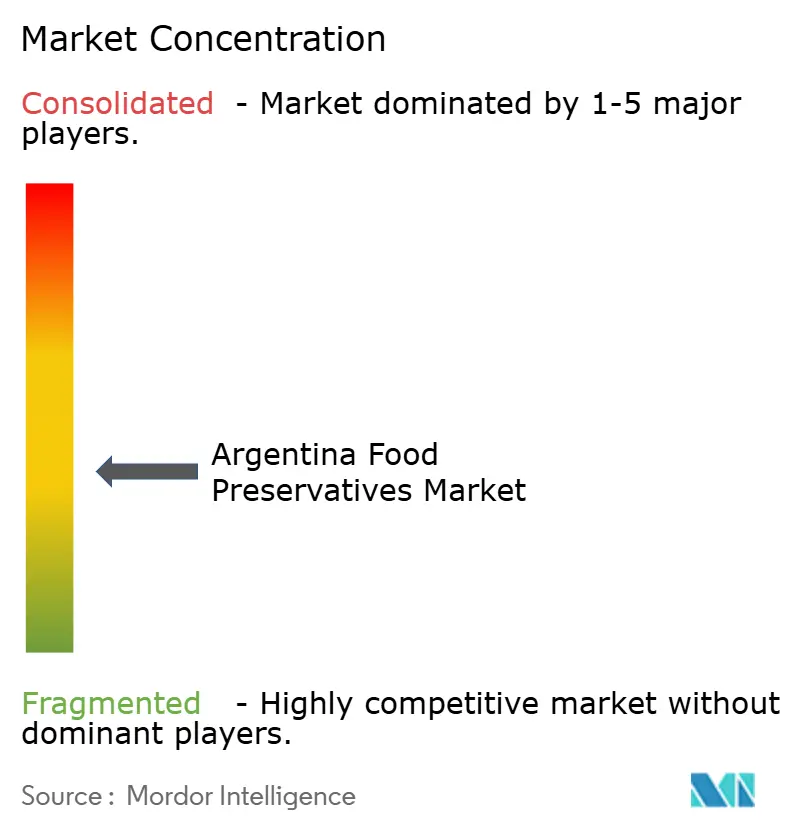
| Market Concentration | Medium |
Major Players
*Disclaimer: Major Players sorted in no particular order Image © Mordor Intelligence. Reuse requires attribution under CC BY 4.0. |
|
Argentina Food Preservatives Market Analysis by Mordor Intelligence
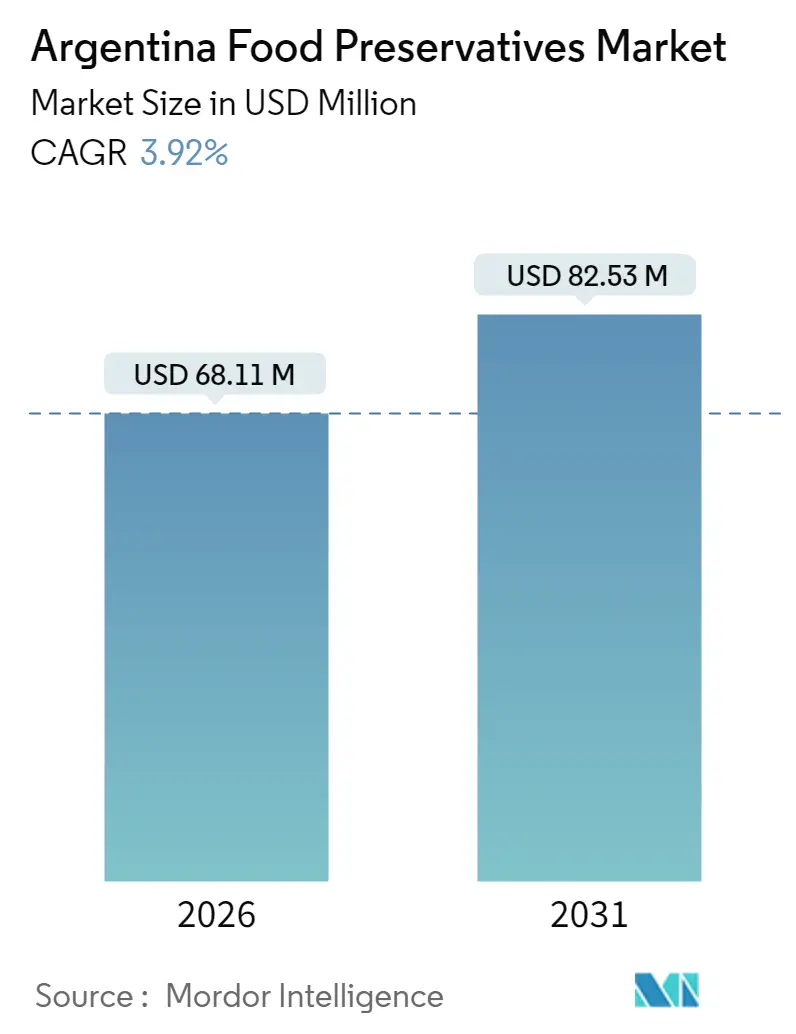
The Argentina food preservatives market was valued at USD 65.54 million in 2025 and estimated to grow from USD 68.11 million in 2026 to reach USD 82.53 million by 2031, at a CAGR of 3.92% during the forecast period (2026-2031).The market's growth is primarily driven by the increasing demand for processed and convenience foods, which require longer shelf lives to meet consumer needs. Rising urbanization, changing dietary patterns, and the growing working population in Argentina are further fueling the demand for packaged and ready-to-eat food products, thereby boosting the need for food preservatives. Additionally, heightened awareness regarding food safety and quality among consumers is encouraging manufacturers to adopt advanced preservation techniques and develop innovative preservative solutions. The market is also witnessing a shift toward natural and clean-label preservatives, driven by consumer preferences for healthier and minimally processed food options. Regulatory frameworks and stringent food safety standards in Argentina are influencing the adoption of preservatives that comply with safety and quality guidelines.
Key Report Takeaways
- By product type, synthetic preservatives led with 65.78% of the Argentina food preservatives market share in 2025, while natural alternatives post the fastest growth at a 6.05% CAGR through 2031.
- By function, antimicrobials commanded 51.85% revenue in 2025; antioxidants are forecast to grow at 5.34% CAGR to 2031.
- By form, dry/granular variants accounted for 58.76% of the Argentina food preservatives market size in 2025; liquid formulations are expanding at a 6.08% CAGR.
- By application, meat and poultry represented 30.74% of demand in 2025, whereas ready meals are projected to rise at a 6.01% CAGR through 2031.
Note: Market size and forecast figures in this report are generated using Mordor Intelligence’s proprietary estimation framework, updated with the latest available data and insights as of January 2026.
Argentina Food Preservatives Market Trends and Insights
Drivers Impact Analysis
| Driver | (~) % Impact on CAGR Forecast | Geographic Relevance | Impact Timeline |
|---|---|---|---|
| Consumer inclination towards clean-label ingredients | +0.8% | National, with early adoption in Buenos Aires and Córdoba | Medium term (2-4 years) |
| Demand for packaged foods fuels preservative consumption | +1.2% | National, concentrated in urban centers | Short term (≤ 2 years) |
| Increasing adoption of natural food preservatives | +0.9% | National, led by premium food manufacturers | Medium term (2-4 years) |
| Use of antimicrobials in animal-based packaged products | +0.7% | National, focused on meat processing regions | Short term (≤ 2 years) |
| Urbanization and changing lifestyle patterns | +0.6% | Buenos Aires, Córdoba, Rosario metropolitan areas | Long term (≥ 4 years) |
| Technological advancements in food preservation methods | +0.5% | National, with early adoption in industrial zones | Long term (≥ 4 years) |
| Source: Mordor Intelligence | |||
Consumer inclination towards clean-label ingredients
In Argentina, heightened health awareness and regulatory backing for natural alternatives are reshaping the landscape of food preservatives, serving as a significant driver for the market. Consumers are increasingly prioritizing transparency in ingredient labeling, pushing manufacturers to adopt clean-label practices. In December 2024, ANMAT approved Monk Fruit Extract as a natural sweetener, signaling its alignment with the clean-label trend and encouraging the use of natural preservatives. Furthermore, the agency's modifications to front-labeling mandate a clearer distinction between natural and added nutrients, compelling producers to innovate and meet these regulatory standards. Urban Argentine consumers, even amidst economic challenges, are showing a growing willingness to pay a premium for products boasting verified natural preservation methods.
Demand for packaged foods fuels preservative consumption
Urbanization and evolving work-life dynamics are fueling Argentina's surge in packaged food consumption. According to World Bank Data, Argentina's urbanization rate reached 93% in 2024 [1]Source: World Bank, "Urban population (% of total population)- Argentina", www.data.worldbank.org . As consumers lean towards smaller, more frequent purchases, there's a heightened demand for products with extended shelf lives. This is especially evident in ready meals and convenience foods, where preservatives are paramount. Meanwhile, private-label brands are carving out a larger slice of the nonperishable food market. This shift presents a golden opportunity for preservative suppliers, especially those offering cost-effective solutions that uphold quality standards. The e-commerce boom in Argentina further underscores this trend. Online food sales, with their need for longer distribution chains, emphasize the importance of product stability. Adding to the dynamics, According to the United States Department of Agriculture, the Argentine government has slashed export taxes on agricultural commodities, a move set to last until June 2025 [2]Source: United States Department of Agriculture, "Argentina: Argentina Slashes Export Taxes Amid Economic Pressures - Sparking Hope for Argentine Farmers", fas.usda.gov. This reduction is poised to decrease raw material costs for food processors, potentially widening their margins for premium preservation technologies.
Increasing adoption of natural food preservatives
In Argentina, a swift pivot towards natural preservation methods is underway, buoyed by regulatory shifts and tech advancements in extraction and formulation. Regulatory changes are encouraging the adoption of safer and more sustainable preservation techniques, while technological innovations are enhancing the efficiency and scalability of these methods. Research from CONICET highlights lactic acid bacteria strains' prowess as biopreservatives, effectively countering Listeria monocytogenes in ground beef. This development provides food manufacturers with a scientifically-backed and reliable alternative to synthetic antimicrobials, addressing both safety and consumer demand for natural solutions. Meanwhile, plant-based antioxidants are emerging as favored clean-label solutions, aligning with the growing consumer preference for transparency and natural ingredients in food products. Companies like 3A Biotech are zeroing in on natural preservative production tailored for the Argentine market, leveraging their expertise to meet the specific needs of local manufacturers.
Use of antimicrobials in animal-based packaged products
Argentina's meat processing industry is increasingly adopting sophisticated antimicrobial preservation systems, driven by export requirements and domestic food safety standards. The country's shift from beef to pork consumption, noted in industry reports, is creating new preservation challenges as pork products require different antimicrobial approaches compared to traditional beef processing. SENASA's Resolution 1039/2024 incorporating insect-derived products into food regulations reflects the agency's proactive approach to emerging protein sources, which will require specialized antimicrobial preservation methods. According to Frontiers, Ozone treatment technology is gaining acceptance as an environmentally friendly antimicrobial method for meat products, offering effective pathogen reduction without chemical residues [3]Source: Frontiers, "Ozone treatment of meat and meat products: a review", frontiersin.org. The integration of natural marinades with antimicrobial properties is becoming more sophisticated, with research showing effectiveness in preventing harmful compound formation while extending shelf life.
Restraints Impact Analysis
| Restraint | (~) % Impact on CAGR Forecast | Geographic Relevance | Impact Timeline |
|---|---|---|---|
| Stringent regulations constrain growth | -0.4% | National, with stricter enforcement in export-oriented facilities | Short term (≤ 2 years) |
| High production costs limit natural preservative growth | -0.3% | National, particularly affecting small-medium manufacturers | Medium term (2-4 years) |
| Rising health concerns drive shift away from chemical preservatives | -0.5% | National, concentrated in urban consumer markets | Medium term (2-4 years) |
| Limited research and development infrastructure | -0.2% | National, with gaps in provincial research capabilities | Long term (≥ 4 years) |
| Source: Mordor Intelligence | |||
Stringent regulations constrain growth in food preservative market
Argentina's regulatory landscape is evolving, presenting both opportunities and challenges for food preservative manufacturers. ANMAT and SENASA are tightening their oversight mechanisms. The National Food Control System mandates uniform procedures across all production facilities. Registration is compulsory in both the National Foodstuff Registry (RNPA) and the National Registry of Establishments (RNE). SENASA's Resolution 816 introduces enhanced inspection protocols, requiring thorough audits of production facilities and their traceability systems. This has led to heightened compliance costs for preservative manufacturers. Furthermore, SENASA holds the authority to suspend imports deemed health risks, adding a layer of uncertainty for international suppliers, especially those with innovative preservation technologies. While these regulations bolster food safety, they also pose challenges for smaller manufacturers, who may struggle with the extensive compliance documentation and testing protocols required.
High production costs limit natural preservative market growth
In Argentina, the production of natural preservatives faces significant challenges due to high raw material costs and the complexity of processing methods. These obstacles hinder market growth, even as consumer demand for natural and clean-label products continues to rise. Natural extraction methods, which are essential for producing these preservatives, require 3-5 times more energy compared to synthetic alternatives. This higher energy demand increases production costs, while yield rates remain inconsistent, largely influenced by the seasonal quality and availability of raw materials. Currency fluctuations further exacerbate the situation, as many technologies used in natural preservative production depend on imported equipment and specialized processing aids, making the production process more expensive and less predictable. Additionally, the absence of economies of scale in this sector places smaller manufacturers at a disadvantage. They struggle to compete on price with larger players and synthetic alternatives, which benefit from lower production costs. This pricing challenge significantly limits the penetration of natural preservatives in price-sensitive market segments, where synthetic options continue to dominate due to their cost efficiency.
Segment Analysis
By Product Type: Synthetic Dominance Faces Natural Disruption
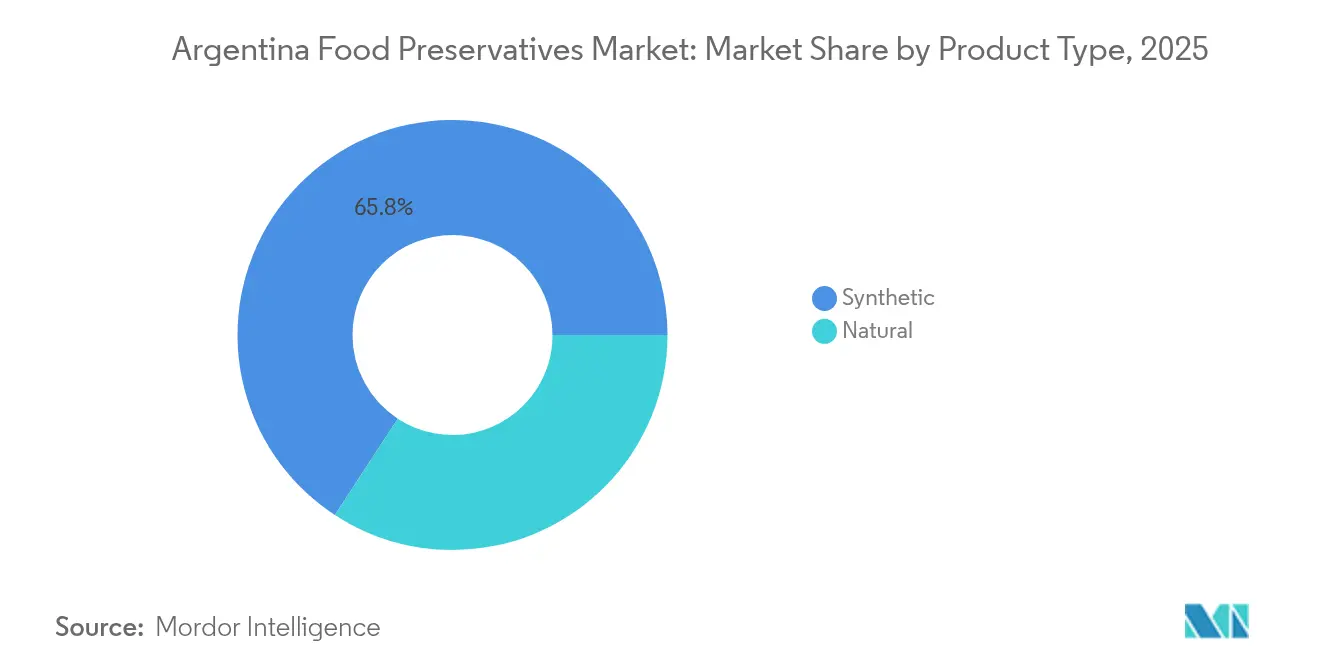
In 2025, synthetic preservatives dominate the market, holding a 65.78% market share. Their widespread adoption is attributed to their established cost advantages and proven efficacy in preserving food products. These preservatives are particularly favored in Argentina's price-sensitive food sector, where affordability and reliability are critical factors. Synthetic preservatives also benefit from extensive research and development, ensuring consistent performance and longer shelf life for food products, which further solidifies their position in the market.
On the other hand, natural preservatives are emerging as the fastest-growing segment, with a projected CAGR of 6.05% through 2031. This growth is driven by increasing regulatory support and a significant shift in consumer preferences toward clean-label and organic products. Consumers are becoming more health-conscious and are actively seeking food products with minimal artificial additives, which has boosted the demand for natural alternatives. Additionally, advancements in natural preservation technologies and the growing availability of plant-based and bio-derived preservatives are further propelling this segment's expansion in the market.
Note: Segment shares of all individual segments available upon report purchase
Get Detailed Market Forecasts at the Most Granular Levels
Download PDF
By Function: Antimicrobials Lead While Antioxidants Accelerate
In 2025, antimicrobials dominate the functional segment, accounting for 51.85%, underscoring their pivotal role in ensuring food safety and prolonging shelf life across Argentina's varied food processing industries. The widespread use of antimicrobials is driven by the need to prevent microbial contamination, which is a significant concern in the food processing sector. These preservatives are particularly crucial in meat, dairy, and bakery products, where spoilage risks are higher due to the perishable nature of the ingredients.
Antioxidants, witnessing a 5.34% CAGR growth through 2031, are propelled by heightened awareness of oxidative damage in processed foods and a consumer push for products boasting extended nutritional stability. These preservatives play a vital role in preventing rancidity and maintaining the sensory attributes of food products, such as flavor, color, and texture. The increasing preference for clean-label and natural food products has also led to a rise in the use of natural antioxidants, such as tocopherols and ascorbic acid, in the market.
By Form: Dry Formulations Dominate Despite Liquid Growth
Dry and granular preservatives dominated the market with a 58.76% market share in 2025. Their popularity stems from several advantages, including superior storage stability, which ensures a longer shelf life for products. Additionally, these preservatives offer lower transportation costs due to their lightweight and compact nature, making them cost-effective for manufacturers. Their compatibility with existing food processing systems further enhances their appeal, as they can be easily incorporated without requiring significant modifications to production lines.
Liquid formulations, however, are gaining traction and are projected to grow at a faster rate, with a 6.08% CAGR through 2031. This growth is primarily driven by their improved dispersion characteristics, which allow for uniform distribution in food products. Liquid preservatives also offer enhanced functionality in specific applications, such as beverages and dairy products, where their liquid form ensures better integration and effectiveness.
By Application: Meat Processing Leads While Ready Meals Surge
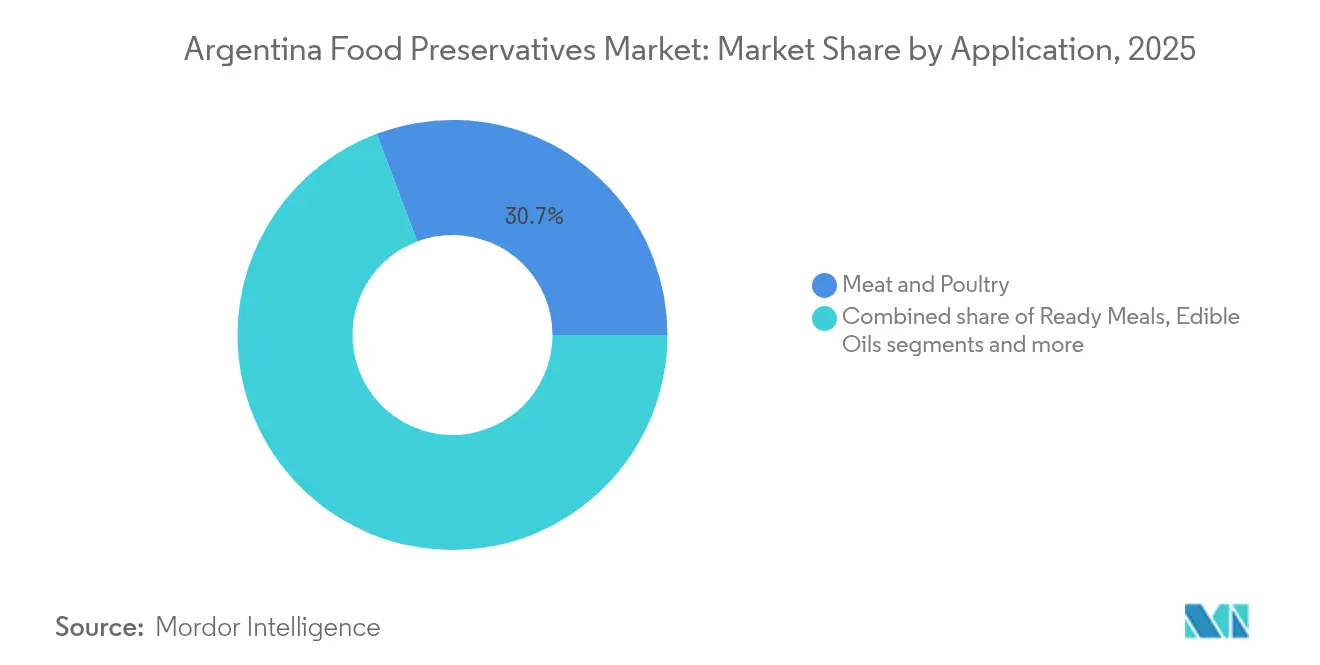
In 2025, meat and poultry processing accounts for 30.74% of application demand in the market. This significant share highlights Argentina's strong position in global protein markets, driven by its robust meat production and export capabilities. Preservation plays a critical role in this segment, ensuring product quality, extending shelf life, and maintaining safety standards. The demand for preservatives in meat and poultry processing is further fueled by the growing need to meet both domestic consumption and international export requirements, where stringent quality standards are enforced.
Ready meals represent the fastest-growing application segment in the market, with a projected CAGR of 6.01% through 2031. This growth is primarily attributed to increasing urbanization and shifting consumer preferences toward convenience foods. As more consumers adopt busy lifestyles, the demand for ready-to-eat and easy-to-prepare meals has surged, driving the need for effective preservation solutions to maintain freshness and extend shelf life. The segment's rapid expansion reflects the evolving food consumption patterns in Argentina, aligning with global trends favoring convenience and time-saving meal options.
Note: Segment shares of all individual segments available upon report purchase
Get Detailed Market Forecasts at the Most Granular Levels
Download PDF
Geography Analysis
The geography of Argentina's food preservatives market reveals distinct regional dynamics influenced by industrial concentration, agricultural production, and consumer demographics. The Buenos Aires metropolitan area stands out as the dominant region in terms of market demand. This dominance is attributed to its high concentration of food processing facilities and a large urban consumer base that drives the need for processed and preserved food products. The region's strategic location near major ports facilitates efficient import of raw materials and export of finished goods, further strengthening its position.
The provinces of Córdoba and Santa Fe form the second-largest consumption cluster within the market. These regions benefit from their well-established agricultural processing infrastructure, which supports the production of food products requiring preservatives. The growing urban populations in these provinces are increasingly demanding convenience foods with extended shelf life, further driving the adoption of food preservatives. The combination of agricultural strength and urbanization positions Córdoba and Santa Fe as significant contributors to the market's growth, complementing the dominance of Buenos Aires.
Emerging trends in the market highlight the importance of natural preservatives, particularly in the provinces of Mendoza and San Juan. These regions are gaining prominence due to their focus on natural preservation solutions, such as grape-derived antioxidants. This trend has been bolstered by Alvinesa's acquisition of local producer Dervinsa, which has enhanced the production and availability of natural preservatives in the area. Additionally, regional growth patterns reflect Argentina's economic recovery, with industrial zones adopting advanced preservation technologies at a faster pace than rural areas.
Competitive Landscape
The Argentine food preservatives market demonstrates moderate fragmentation and is characterized by the presence of both multinational corporations and specialized local players. Global companies such as Kerry Group plc, BASF SE, Ingredion Incorporated, and Archer Daniels Midland Company leverage their extensive Research and Development capabilities and diverse product portfolios to cater to multiple food sectors. These multinational players benefit from their ability to innovate and scale, offering a wide range of solutions that meet the evolving demands of the food industry. On the other hand, regional players focus on specialized offerings and capitalize on their in-depth understanding of local market dynamics.
The competitive landscape reveals a clear bifurcation in strategic approaches. Established players are actively expanding their natural preservative portfolios through acquisitions and internal development initiatives. These companies aim to strengthen their market position by addressing the increasing demand for sustainable and natural food preservation methods. Meanwhile, emerging biotechnology firms are targeting niche applications with novel preservation technologies.
A notable example of innovation in the market is Bioblends, a company that has developed gas-based bio-conservatives designed to extend food shelf life without the use of synthetic chemicals. This breakthrough highlights how technological advancements are driving the development of specialized preservation solutions. Such innovations not only address consumer demand for natural and sustainable products but also open up white-space opportunities for companies to differentiate themselves in the competitive landscape.
Argentina Food Preservatives Industry Leaders
-
Kerry Group plc
-
Cargill, Incorporated
-
BASF SE
-
Ingredion Incorporated
-
Archer Daniels Midland Company
- *Disclaimer: Major Players sorted in no particular order
Need More Details on Market Players and Competitors?
Download PDF
Recent Industry Developments
- November 2024: Tate & Lyle completed its USD 1.8 billion acquisition of CP Kelco, creating a leading global specialty food and beverage solutions business with enhanced capabilities in natural preservation technologies. This merger strengthens the company's position in Argentina's growing natural preservatives market.
- July 2024: Alvinesa Natural Ingredients acquired Argentine company Dervinsa and Chilean Industrias Vínicas, expanding its grape-derived preservative production capabilities. This acquisition aims to increase Alvinesa's revenue from EUR 100 million to over EUR150 million while securing year-round access to high-quality raw materials.
- January 2024: Kerry Group released its 2024 Global Taste Charts, highlighting health, wellness, and sustainability trends that are driving demand for natural preservation solutions in Argentina and other South American markets
Argentina Food Preservatives Market Report Scope
Food preservatives are substances added to food to slow down or prevent spoilage, maintain quality, and extend shelf life. The Argentina food preservatives market is segmented by type, function, form and application. Based on type, the market is segmented into synthetic and natural. Based on function, the market is segmented into antimicrobials and antioxidants. Based on form, the market is segmented into dry/granular and liquid. Based on application, the market is segmented into bakery & confectionery, meat & poultry, ready meals, sweet and savory snacks, sauces and dressings, edible oils and other applications. The report offers market size and values (in USD Million) for the above segments.
By Product Type
| Synthetic |
| Natural |
By Function
| Antimicrobial |
| Antioxidants |
By Form
| Dry/Granular |
| Liquid |
By Application
| Bakery and Confectionery |
| Meat and Poultry |
| Ready Meals |
| Sweet and Savory Snacks |
| Sauces and Dressings |
| Edible Oils |
| Other Applications |
| By Product Type | Synthetic |
| Natural | |
| By Function | Antimicrobial |
| Antioxidants | |
| By Form | Dry/Granular |
| Liquid | |
| By Application | Bakery and Confectionery |
| Meat and Poultry | |
| Ready Meals | |
| Sweet and Savory Snacks | |
| Sauces and Dressings | |
| Edible Oils | |
| Other Applications |
Need A Different Region or Segment?
Customize Now
Key Questions Answered in the Report
What is the current size of the Argentina food preservatives market?
The market stands at USD 68.11 million in 2026 and is projected to grow to USD 82.53 million by 2031, reflecting a 3.92% CAGR.
Which preservative type dominates sales in Argentina?
Synthetic preservatives currently account for 65.78% of total revenue, though natural alternatives record the fastest growth.
Which application segment is expanding most rapidly?
Ready meals show the highest forecast growth at a 6.01% CAGR as urban households increasingly favor convenience foods.
How will new regulations affect preservative suppliers?
Decree 35/2025 and ANMAT’s labeling reforms accelerate approvals for natural ingredients while tightening documentation standards, rewarding companies with strong regulatory capabilities.


