
Flexible Epoxy Resin Market Size and Share
Market Overview
| Study Period | 2021 - 2031 |
|---|---|
| Market Size (2026) | USD 0.81 Billion |
| Market Size (2031) | USD 1.03 Billion |
| Growth Rate (2026 - 2031) | 4.88% CAGR |
| Fastest Growing Market | Middle East and Africa |
| Largest Market | Asia Pacific |
| Market Concentration | Medium |
Major Players *Disclaimer: Major Players sorted in no particular order Image © Mordor Intelligence. Reuse requires attribution under CC BY 4.0. | |
Flexible Epoxy Resin Market Analysis by Mordor Intelligence
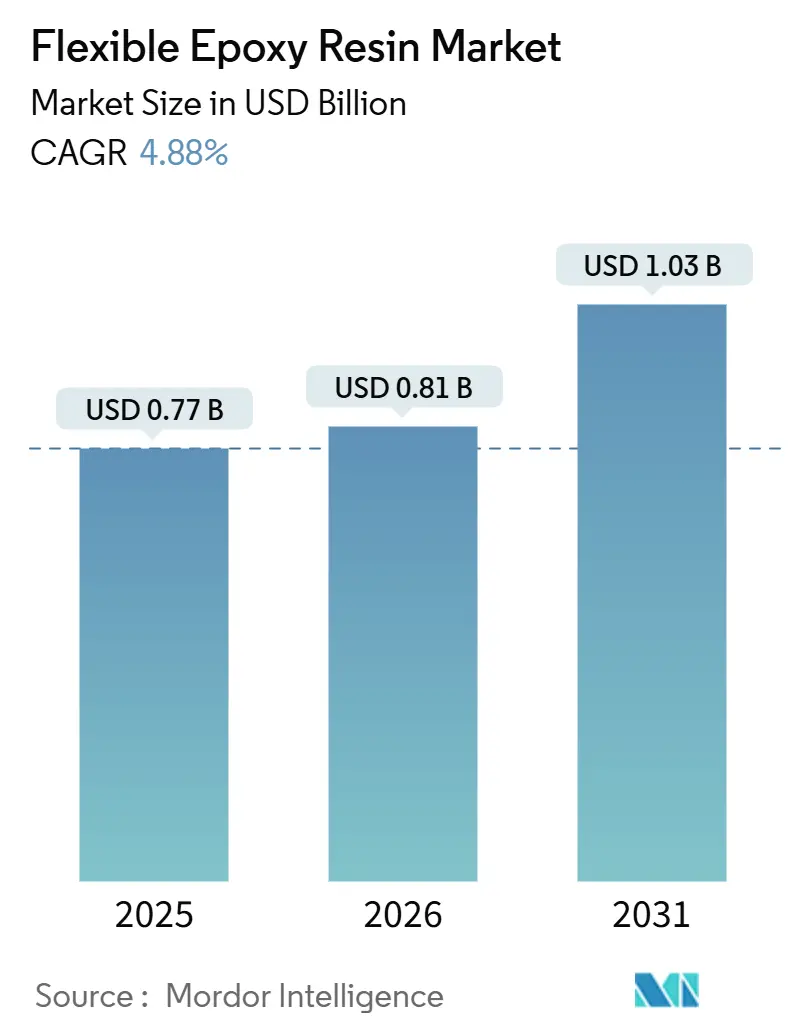
The Flexible Epoxy Resin Market size is projected to expand from USD 0.77 billion in 2025 and USD 0.81 billion in 2026 to USD 1.03 billion by 2031, registering a CAGR of 4.88% between 2026 to 2031. Once centered on commodity construction adhesives, the industry is now pivoting towards high-value applications. These encompass electric-vehicle power electronics, wind-turbine blade repairs, and flexible printed circuits designed for wearables. While rubber-modified grades continue to dominate structural composites, there is a marked rise in the use of urethane-modified chemistries, particularly for electronics encapsulation. The Asia-Pacific region, strengthened by its vibrant electronics and construction sectors, stands as the primary demand hub. Yet, the Middle-East and Africa are experiencing the swiftest growth, spurred by Saudi Arabia's ambitious infrastructure initiatives and the groundbreaking NEOM project. Despite this growth, industry profitability is challenged by the volatile pricing of epichlorohydrin and intensified regulatory scrutiny on bisphenol-A diglycidyl ether. In this evolving landscape, vertically integrated firms and bio-based innovators find themselves at an advantage, adeptly securing feedstock and navigating compliance hurdles.
Key Report Takeaways
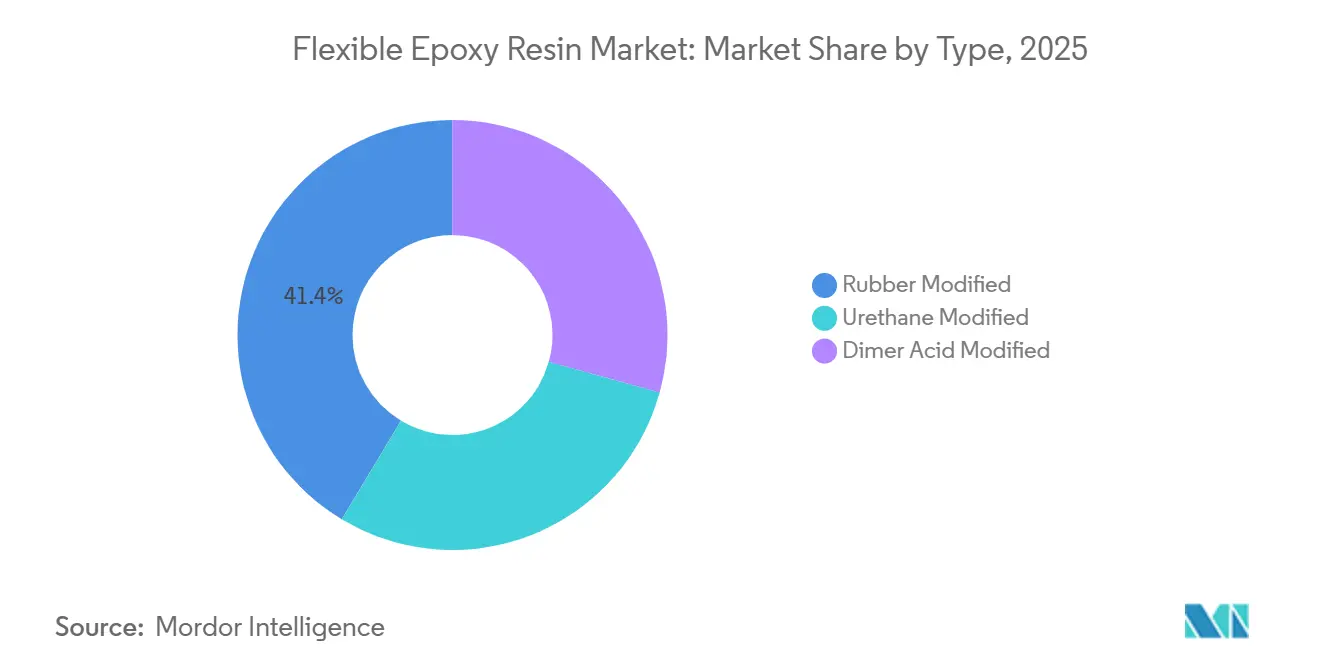
- By type, rubber-modified formulations led with 41.38% of the flexible epoxy resin market share in 2025. Urethane-modified grades are forecast to grow at a 6.24% CAGR (2026-2031), the fastest among all chemistries.
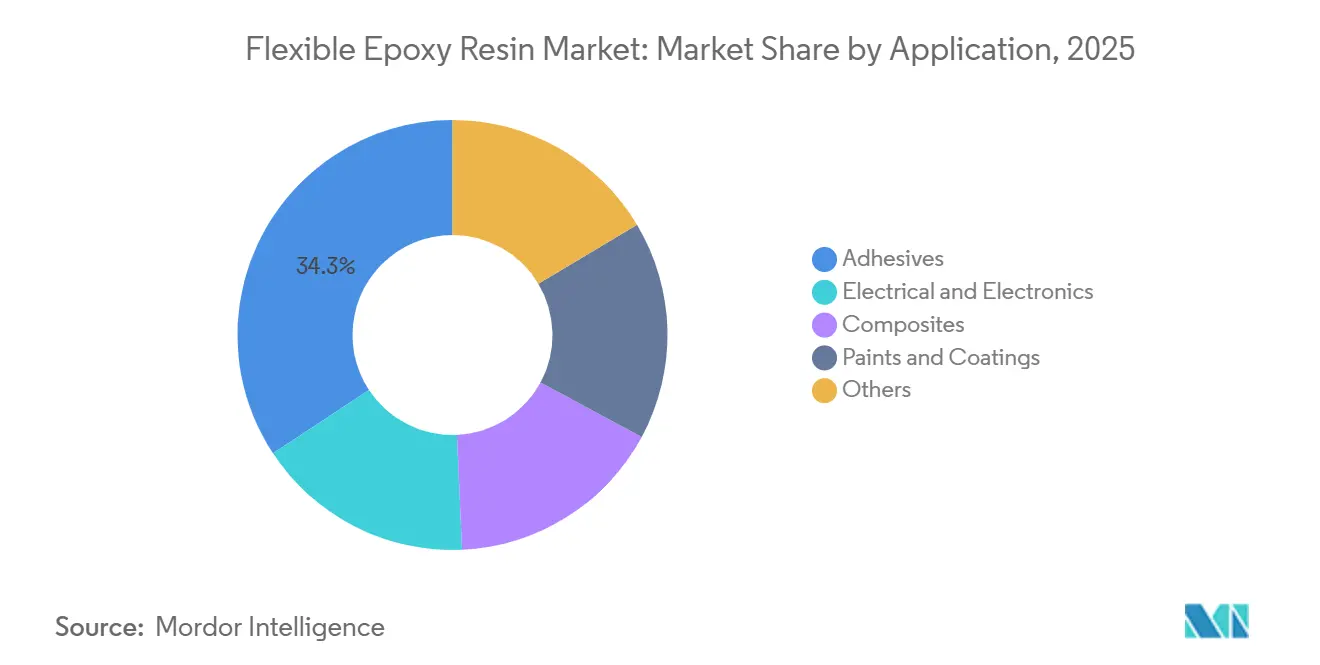
- By application, adhesives accounted for a 34.27% share of the flexible epoxy resin market size in 2025. Electrical and electronics is projected to post the highest CAGR at 6.31% between 2026-2031.
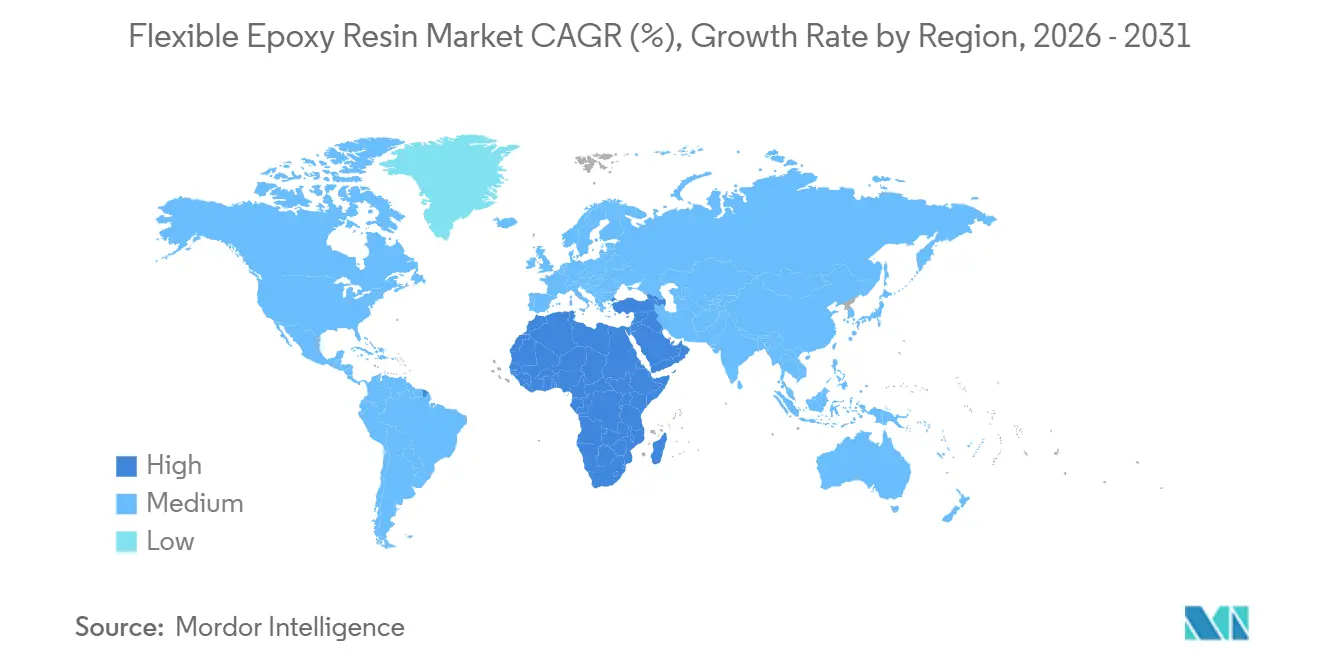
- By geography, the Asia-Pacific region represented 47.36% of the flexible epoxy resin market size in 2025, while the Middle-East and Africa accounted for the fastest 5.94% CAGR (2026-2031).
Note: Market size and forecast figures in this report are generated using Mordor Intelligence’s proprietary estimation framework, updated with the latest available data and insights as of January 2026.
Global Flexible Epoxy Resin Market Trends and Insights
Drivers Impact Analysis
| Drivers | (~) % Impact on CAGR Forecast | Geographic Relevance | Impact Timeline |
|---|---|---|---|
| Surging construction and infrastructure spending | +1.2% | APAC core (China, India), Middle-East (Saudi Arabia, UAE), North America | Medium term (2-4 years) |
| Electrification of consumer electronics and Electric Vehicle power-electronics | +1.5% | Global, with concentration in APAC (China, Japan, South Korea) and North America | Short term (≤ 2 years) |
| Rapid expansion of wind-energy blade production and repair | +0.9% | Europe (Germany, UK), North America (United States, Canada), APAC (China, India) | Long term (≥ 4 years) |
| Rising demand for corrosion-resistant industrial coatings | +0.8% | Middle-East and Africa (Saudi Arabia, UAE, South Africa), APAC coastal regions | Medium term (2-4 years) |
| Adoption of flexible epoxies in wearable and IoT flexible PCBs | +0.6% | Global, early adoption in North America and APAC (Japan, South Korea) | Long term (≥ 4 years) |
| Source: Mordor Intelligence | |||
Surging Construction and Infrastructure Spending
Infrastructure budgets across Asia-Pacific, the Middle-East, and North America are driving a steady demand for flexible epoxy adhesives and coatings. In 2024, China made a significant budget allocation for rail lines and metro extensions, highlighting the need for vibration-damping epoxy joints. Concurrently, India's National Infrastructure Pipeline set its sights on roads and urban transit, with substantial funding slated for 2025. This initiative spurred demand for anti-corrosion epoxy coatings, particularly for rebar in coastal flyovers. Over the past five years, the United States has channeled significant investments into bridge rehabilitation, favoring crack-injection epoxies that halve closure times. Saudi Arabia's Vision 2030 development project, with NEOM at its forefront, underscored the importance of low-VOC flexible epoxy coatings, ensuring durability against the desert's harsh heat. Yet, despite the robust demand driven by these projects, it is essential to recognize that financing delays and currency fluctuations could extend adhesive procurement timelines by up to a year.
Electrification of Consumer Electronics and Electric-Vehicle Power Electronics
Thousands of multilayer ceramic capacitors in every battery electric vehicle (BEV) now benefit from flexible epoxy terminations. This number notably surpasses that found in traditional combustion engine models. These terminations ensure solder-joint durability across a temperature range of -40 to +150 degrees Celsius. The global production of battery electric vehicles has increased significantly in recent years, with forecasts indicating this trend will continue. As a result, there has been a corresponding rise in the use of potting and encapsulants. In consumer electronics, foldable phones and health wearables are increasingly utilizing urethane-modified epoxies. These specialized epoxies, known for their high elongation, are designed to pass rigorous bend tests. In a noteworthy industry development, firms from Japan and South Korea are channeling substantial investments into advanced packaging, targeting completion by the end of the decade. A pivotal component for these cutting-edge packages is the low-modulus epoxy underfills. These trends in electronics are driving the segment's projected 6.31% CAGR during the forecast period of 2026–2031.
Rapid Expansion of Wind-Energy Blade Production and Repair
Many turbines worldwide, installed prior to 2016, are now operating past their original warranties. As the blade leading-edge erosion diminishes annual energy yields, there has been a notable increase in on-site repairs, primarily utilizing flexible epoxy injection resins. Currently, the demand for certified technicians is high, ensuring safe repairs at hub heights reaching 100 meters. With the installation of new turbines, the consumption of epoxy resin for blades has increased significantly. In response to the European Union's mandate for recyclable blades, there is a growing adoption of Recyclamine chemistries, which enable a significant recovery of carbon fibers once a blade reaches the end of its life[1]Siemens Gamesa, “Recyclable Wind Turbine Blade,” siemensgamesa.com.
Rising Demand for Corrosion-Resistant Industrial Coatings
In the Middle-East, challenges such as salinity, UV exposure, and temperature fluctuations (ranging from 10°C to 55°C) confront oil and gas operations, marine terminals, and desalination facilities. To extend the service life of its extensive Jafurah pipeline, Saudi Aramco applied flexible epoxy coatings. By the forecast period 2026–2031, the GCC had significantly increased its desalination capacity, with flexible linings becoming standard in brine discharge piping to prevent chloride-induced cracking. In a significant overhaul of its coastal rail, South Africa’s Transnet selected coal-tar-free epoxy coatings. Additionally, amendments by the IMO to limit solvent emissions have led shipyards to increasingly adopt water-borne flexible epoxies.
Restraints Impact Analysis
| Restraints | (~) % Impact on CAGR Forecast | Geographic Relevance | Impact Timeline |
|---|---|---|---|
| Volatile prices of epichlorohydrin and bis-A raw materials | -0.9% | Global, acute in Europe and North America reliant on imports | Short term (≤ 2 years) |
| Occupational toxicity and REACH/EPA compliance costs | -0.6% | Europe (REACH), North America (EPA, California Prop 65) | Medium term (2-4 years) |
| Scope-3 emissions scrutiny across epoxy value chains | -0.4% | Europe and North America, emerging in APAC multinational supply chains | Long term (≥ 4 years) |
| Source: Mordor Intelligence | |||
Volatile Prices of Epichlorohydrin and Bis-A Raw Materials
In recent years, Chinese producers expanded their capacity significantly, leading to notable fluctuations in spot prices for epichlorohydrin and bisphenol-A. These two chemicals constitute a major portion of production costs. As a result, Western formulators, tied to annual contracts, grappled with pricing instability. A spike in propylene feedstocks drove European epichlorohydrin prices up sharply, reducing gross margins. Smaller converters, lacking hedging strategies or backward integration, faced the risk of quarterly losses if they could not adjust prices in their adhesive supply agreements.
Occupational Toxicity and REACH/EPA Compliance Costs
In 2024, the European Chemicals Agency added bisphenol-A diglycidyl ether to its REACH authorization list. This decision requires manufacturers to either demonstrate adequate worker protections or identify substitutes by 2027. Each producer faces compliance-related investments. Meanwhile, the U.S. Environmental Protection Agency (EPA) reduced the allowable epichlorohydrin exposure limit from 5 ppm to 2 ppm, necessitating capital retrofits for facilities[2]U.S. Environmental Protection Agency, “Epichlorohydrin Exposure Limit Proposal,” epa.gov. In 2025, insurance premiums increased, coinciding with a rise in dermatitis claims. Additionally, California retailers reported that many of their DIY shoppers avoided products with Proposition 65 warnings, leading to the loss of an annual market outlet.
Segment Analysis
By Type: Rubber-Modified Dominance Anchors Structural Applications
In 2025, rubber-modified grades, leveraging two-phase morphologies, accounted for 41.38% of the revenue, enhancing fracture toughness. This enhancement proved vital for applications in wind blades and industrial adhesives. The market for rubber-modified flexible epoxy resins is projected to grow in tandem with the overall CAGR during the forecast period of 2026–2031, driven by demand from the construction and composite sectors. Urethane-modified chemistries are expected to expand at a 6.24% CAGR (2026-2031), fueled by their role in electronics encapsulation. Here, attributes such as high elongation and a glass-transition temperature below freezing are essential for safeguarding solder joints. Echoing this trend, a 2024 product launch marked a notable reduction in modulus, highlighting a pivot toward materials adept for lower-stress die attachment. On a different note, dimer-acid products, with a small share, focus on specialized marine coatings, emphasizing hydrophobicity and bio-content.
The market's segmentation thrives on a nuanced interplay of cost-performance dynamics. Structural adhesive users lean toward rubber-modified grades. Conversely, chipmakers opt for urethane at a premium, acutely aware of potential warranty liabilities from field failures. Dominant players in the flexible epoxy resin market skillfully navigate this terrain, championing urethane applications in automotive electronics while preserving rubber shares for the construction sector. Cashew-based dimer-acid resins have carved out a space in offshore wind foundations. However, this niche anticipates sluggish growth, eyeing a possible uplift from hastened material substitutions spurred by carbon pricing.
Note: Segment shares of all individual segments available upon report purchase
By Application: Adhesives Lead, Electronics Accelerates
In 2025, adhesives accounted for 34.27% of total revenue. However, the electronics sector is projected to grow at a 6.31% CAGR (2026-2031), outpacing the broader market. By 2031, flexible epoxy resins in electrical and electronics applications could represent a quarter of the total market value. This growth is primarily driven by the annual demand for potting compounds, especially for battery-electric vehicle inverters. While infrastructure adhesives dominate in share, their price sensitivity limits potential profit margins. On the other hand, automotive structural bonding achieves a reduction in body weight but remains dependent on the cyclical nature of vehicle assemblies.
Clients in the electronics sector invest in encapsulants, which are crucial for preventing delamination during multiple thermal cycles. Foldable phones require coverlays for flexible printed circuits that must stretch significantly and withstand lamination temperatures ranging from 150 °F to 180 °F. The demand for composites, particularly in wind blades, is projected to grow steadily. This growth is largely attributed to the increasing concern over composite waste, which has led to a surge in the demand for recyclable epoxies. Trends in anti-corrosion coatings closely align with capital expenditures in the oil and gas industry. For example, in response to stricter MARPOL solvent caps, GCC pipelines and marine vessels are increasingly adopting low-VOC flexible epoxies.
Note: Segment shares of all individual segments available upon report purchase
Geography Analysis
In 2025, the Asia-Pacific region held a commanding 47.36% share of the revenue, but growth has since moderated. This slowdown is attributed to a cooling construction cycle in China and a maturing electronics output. Domestic players, such as KUKDO and Nan Ya, are supplying printed-circuit assemblers at landed costs lower than those of their competitors, which strengthens the region's dominance. However, India's infrastructure projects have occasionally stalled due to monsoon impacts and financing challenges, tempering short-term expectations. Meanwhile, investments in semiconductors from Japan and South Korea are driving annual resin demand, counterbalancing a plateau in smartphone assembly. The ASEAN nations are progressing, but inconsistencies in logistics and policy are slowing their capacity expansions.
North America, a significant consumer in 2025, is projected to experience steady growth during the forecast period of 2026–2031. Federal bridge programs are increasingly favoring crack-injection epoxies, which notably minimize downtime. Olin's strategic domestic expansion of epichlorohydrin aims to reduce reliance on Chinese imports. In 2025, as battery electric vehicle production increased, so did the demand for encapsulants. While this demand remains modest compared to the more established construction sector, initiatives such as Canada's rail electrification and Mexico's nearshored electronics lines are providing notable growth opportunities.
Europe, while accounting for a significant share of 2025 sales, has faced challenges such as high energy costs and stringent REACH filings. However, the continent is leading sustainable chemistry initiatives. Europe is advocating for recyclable wind blades and incentivizing bio-based formulations through the Carbon Border Adjustment Mechanism. Starting in 2025, both Germany and the United Kingdom have mandated recyclable composites, accelerating the adoption of Swancor’s EzCiclo. Meanwhile, France and Italy are prioritizing rail upgrades with low-VOC interior coatings. While Russia's activity remains subdued, Germany and the United Kingdom are at the forefront of these developments.
The Middle-East and Africa are experiencing the fastest growth, boasting a 5.94% CAGR during the forecast period of 2026–2031. Projects such as Saudi Aramco’s Jafurah pipeline and the NEOM smart city are opting for flexible epoxies, highlighting their resistance to thermal shock and sand abrasion. GCC desalination plants and the façades of Dubai's high-rises are utilizing water-borne epoxies, which are recognized for their energy-efficient curing. In South Africa, coastal rail rehabilitation is employing coal-tar-free coatings but is facing procurement delays due to fiscal constraints. South America, driven by metro projects in Brazil and shale developments in Argentina, is on a steady growth path. However, challenges such as tariff fluctuations and currency swings are increasing feedstock costs.
Competitive Landscape
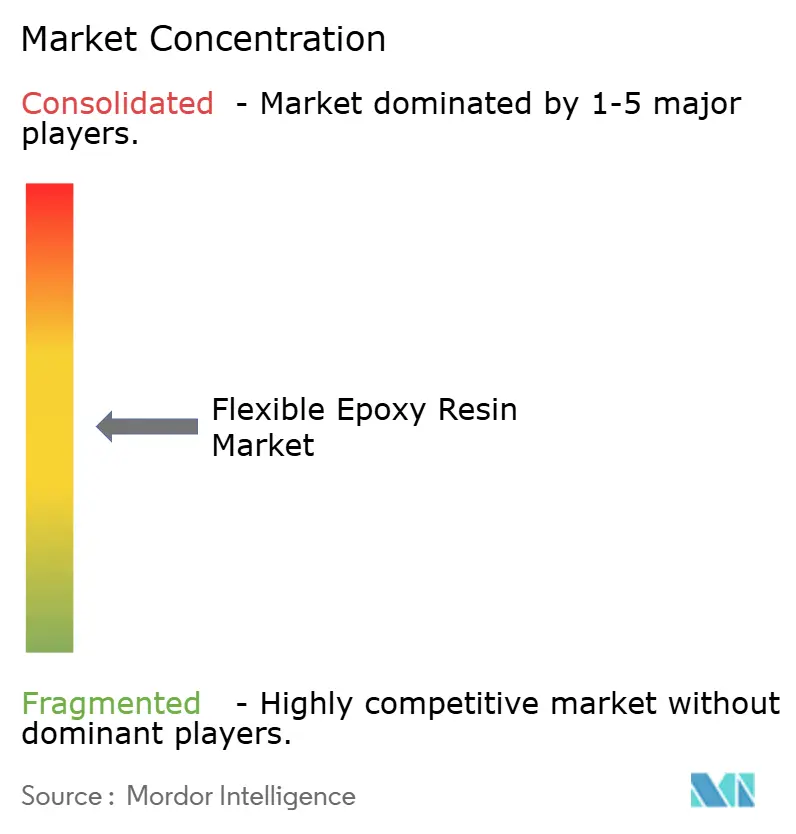
The flexible epoxy resin market is moderately consolidated. Major suppliers, with their diverse portfolio of grades differing in cure speeds and viscosities, cultivated strong customer loyalty. The premium-priced bio-based offerings constituted a mere fraction of the total volume, facing market pushback. Patent filings from 2024–2025 indicated major players delving into vitrimer chemistries for better recyclability, low-temperature cure systems for composite over-molding, and hydrolysis stability enhancements for tropical climates. These advancements sought to boost performance without altering the base resin. In a significant industry shift, Chinese producers escalated their epichlorohydrin production, causing feedstock volatility that tightened margins for Western contracts. The industry's primary focus revolved around securing feedstock, managing regulatory compliance costs, and providing unique services to mitigate the challenges of commoditization.
Flexible Epoxy Resin Industry Leaders
Hexion
Huntsman Corporation
Olin Corporation
KUKDO Chemical (Kunshan) Co., Ltd.
Aditya Birla Chemicals
- *Disclaimer: Major Players sorted in no particular order
Recent Industry Developments
- March 2025: Westlake Corporation announced that Westlake Epoxy plans to launch several new products at the European Coatings Show (ECS) 2025 in Germany. The company will introduce the EpoVIVE portfolio of epoxy resins with a lower carbon footprint.
- June 2024: Aditya Birla Chemicals announced plans for a new advanced materials/epoxy manufacturing and research and development campus on a 35‑acre Gulf Coast site (initial capex up to USD 50 million, timing aimed for 2027).
Global Flexible Epoxy Resin Market Report Scope
Flexible epoxy resins are modified, high-performance thermosetting polymers designed to provide superior elasticity, impact resistance, and crack resistance compared to rigid epoxies, while maintaining strong adhesion. These resins are essential for applications requiring durability under stress, such as in automotive composites, electronics encapsulation, flexible adhesives, and protective coatings. They are often modified with urethane, rubber, or dimer acids to enhance flexibility.
The market is segmented by type, application, and geography. By type, the market is segmented into urethane modified, rubber modified, and dimer acid modified. By application, the market is segmented into electrical and electronics, adhesives, composites, paints and coatings, and others. The report also covers the market size and forecasts for the market in 16 countries across major regions. For each segment, the market sizing and forecasts are done based on value (USD).
| Urethane Modified |
| Rubber Modified |
| Dimer Acid Modified |
| Electrical and Electronics |
| Adhesives |
| Composites |
| Paints and Coatings |
| Others |
| Asia-Pacific | China |
| India | |
| Japan | |
| South Korea | |
| ASEAN Countries | |
| Rest of Asia-Pacific | |
| North America | United States |
| Canada | |
| Mexico | |
| Europe | Germany |
| United Kingdom | |
| Italy | |
| France | |
| Russia | |
| Rest of Europe | |
| South America | Brazil |
| Argentina | |
| Rest of South America | |
| Middle-East and Africa | Saudi Arabia |
| South Africa | |
| Rest of Middle-East and Africa |
| By Type | Urethane Modified | |
| Rubber Modified | ||
| Dimer Acid Modified | ||
| By Application | Electrical and Electronics | |
| Adhesives | ||
| Composites | ||
| Paints and Coatings | ||
| Others | ||
| By Geography | Asia-Pacific | China |
| India | ||
| Japan | ||
| South Korea | ||
| ASEAN Countries | ||
| Rest of Asia-Pacific | ||
| North America | United States | |
| Canada | ||
| Mexico | ||
| Europe | Germany | |
| United Kingdom | ||
| Italy | ||
| France | ||
| Russia | ||
| Rest of Europe | ||
| South America | Brazil | |
| Argentina | ||
| Rest of South America | ||
| Middle-East and Africa | Saudi Arabia | |
| South Africa | ||
| Rest of Middle-East and Africa | ||
Key Questions Answered in the Report
What is the current global demand for the flexible epoxy resin market and its expected growth by 2031?
Demand is forecast to rise from USD 0.81 billion in 2026 to USD 1.03 billion by 2031, reflecting a 4.88% CAGR.
How large will flexible epoxy resin demand in electronics become by 2031?
Electrical and electronics applications are on track to reach about one-quarter of total value as the segment advances at a 6.31% CAGR through 2031, outpacing overall growth.
Why do urethane-modified flexible epoxies command premiums?
They deliver elongation beyond 100% and low glass-transition temperatures that protect solder joints in flexible circuits and power modules, justifying higher prices.
What is driving the Middle-East and Africa’s leading growth rate?
Saudi Arabia’s USD 1.3 trillion Vision 2030 program and corrosion-resistant coatings for energy infrastructure push regional demand at a 5.94% CAGR (2026-2031).
How are recyclability concerns influencing wind-turbine blade resins?
Europe now mandates recyclable blades, spurring the adoption of chemistries like Recyclamine that allow 85% carbon-fiber recovery and will increasingly steer resin selection.


