
Air Care Market Size and Share
Market Overview
| Study Period | 2021 - 2031 |
|---|---|
| Market Size (2026) | USD 20.72 Billion |
| Market Size (2031) | USD 27.90 Billion |
| Growth Rate (2026 - 2031) | 6.14% CAGR |
| Fastest Growing Market | Asia Pacific |
| Largest Market | North America |
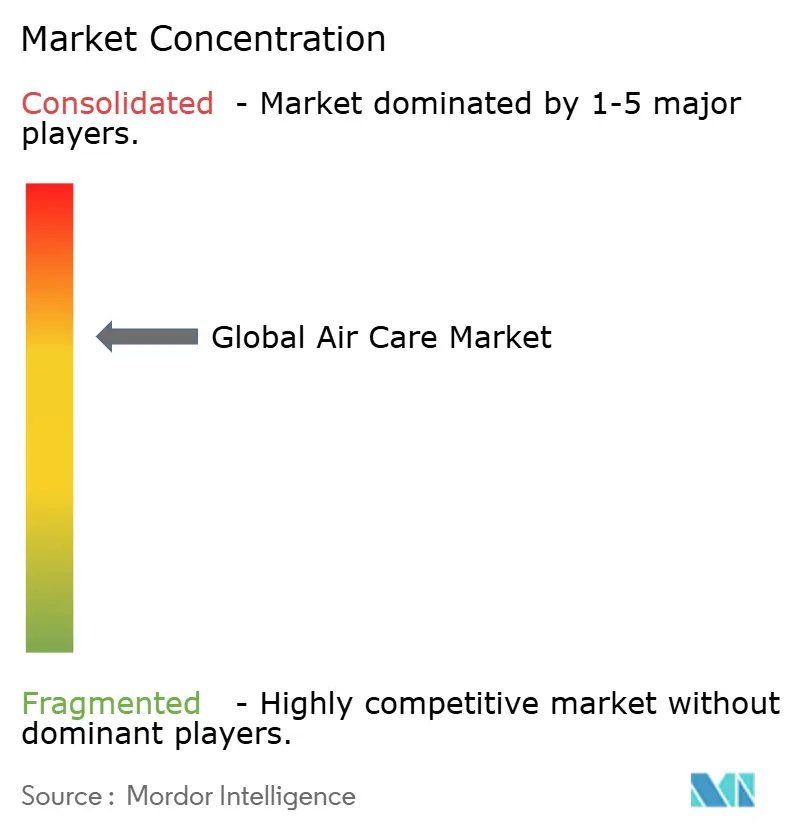
| Market Concentration | Medium |
Major Players
*Disclaimer: Major Players sorted in no particular order Image © Mordor Intelligence. Reuse requires attribution under CC BY 4.0. |
|

Air Care Market Analysis by Mordor Intelligence
The air care market size stands at USD 20.72 billion in 2026 and is forecast to reach USD 27.90 billion by 2031, advancing at a 6.14% CAGR. Consumers now link indoor air quality to health rather than comfort, a shift spurred by airborne transmission risks and a rise in pollution. According to the Environmental Protection Agency, as of 2024, emissions of Carbon Monoxide (CO) in the United States reached 41 million tons[1]Source: Environmental Protection Agency, "Air pollutant emissions in the United States", www.epa.gov. Asia-Pacific cities, grappling with severe outdoor pollution, fuel both volume and innovation, whereas North America and Europe rely on stringent regulations to elevate performance and transparency standards. Corporate wellness budgets and hospitality recovery add new B2B revenue streams, and regulatory limits on volatile organic compounds (VOCs) and per- and polyfluoroalkyl substances (PFAS) accelerate reformulations toward natural ingredients. Supply chain strains in specialty chemicals and A2L refrigerant cylinders create openings for filter-free and low-maintenance technologies, making agility a competitive asset.
Key Report Takeaways
- By product type, spray/aerosol air fresheners held 26.25% of the air care market share in 2025, while liquid air fresheners are projected to grow at an 8.16% CAGR through 2031.
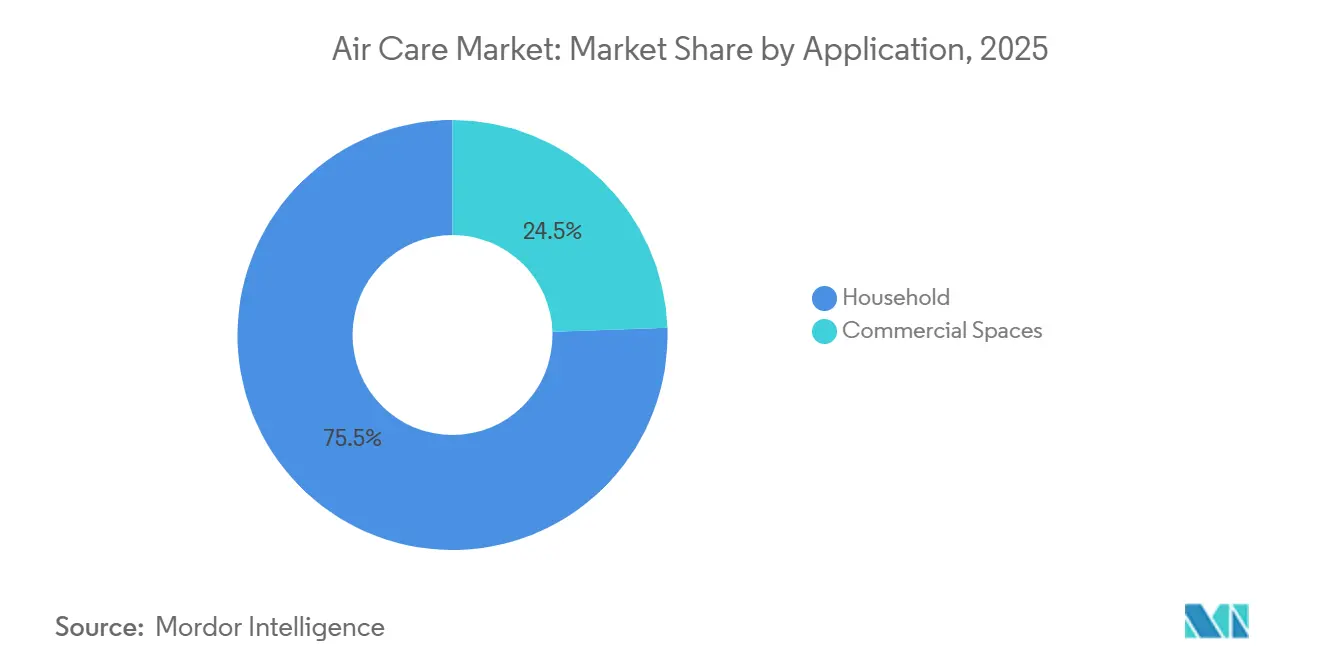
- By application, households accounted for 75.53% of the air care market size in 2025 and will advance at a 6.48% CAGR through 2031.
- By geography, North America commanded 46.01% of the air care market share in 2025, while Asia-Pacific is expected to expand at a 7.85% CAGR through 2031.
Note: Market size and forecast figures in this report are generated using Mordor Intelligence’s proprietary estimation framework, updated with the latest available data and insights as of January 2026.
Global Air Care Market Trends and Insights
Driver Impact Analysis*
| Driver | (~) % Impact on CAGR Forecast | Geographic Relevance | Impact Timeline |
|---|---|---|---|
| Increasing awareness of indoor air quality | +1.8% | Global, with concentration in North America and Europe | Medium term (2-4 years) |
| Product innovation and novel designs | +1.2% | Global, led by Asia-Pacific manufacturing hubs | Long term (≥ 4 years) |
| Rising consumer preference for natural and botanical ingredients | +0.9% | North America and Europe, expanding to Asia-Pacific | Medium term (2-4 years) |
| Impact of social media on home fragrance purchasing trends | +1.4% | North America and Europe core, spill-over to urban Asia-Pacific | Long term (≥ 4 years) |
| Growth of the tourism and hospitality industry | +1.1% | Global, most acute in Asia-Pacific urban centers | Short term (≤ 2 years) |
| E-commerce expansion improving product accessibility and direct-to-consumer sales | +0.7% | Global, recovery-driven in North America and Europe | Short term (≤ 2 years) |
| Source: Mordor Intelligence | |||
Increasing awareness of indoor air quality
Growing awareness of indoor air quality (IAQ) and its impact on health is driving the air care market. Studies and public health campaigns show that people spend most of their time indoors, where pollution levels are often higher than outdoors. This increases the risk to respiratory, heart, and brain health, especially for vulnerable groups. As a result, consumers and workplaces are focusing more on creating cleaner indoor spaces. This has boosted demand for various air care products, including air fresheners, diffusers, advanced filters, and smart air-quality devices. IAQ has become a key factor influencing product choices, innovation, and investments in the market. According to the British Heart Foundation, in 2022/23, over almost 1.78 million people in the United Kingdom were diagnosed with circulatory system diseases, an increase from the previous year[2]Source: British Heart Foundation, "Number of inpatient episodes with a main diagnosis of circulatory system disease in the United Kingdom", www.bhf.org.uk.
Product innovation and novel designs
Innovation and unique designs are driving growth in the global air care and air freshener market. Consumers now prefer products that do more than just mask odors, pushing manufacturers to add advanced features, attractive designs, and wellness benefits. New products like humidifier-diffuser hybrids, odor-neutralizing technologies, smart dispensers, refillable options, and allergen-reducing formulas are changing customers' expectations, especially in developed and urban areas. High-quality finishes, luxury scents, eco-friendly designs, and health-focused features are turning air care into a lifestyle product. This shift encourages brands to compete by offering better technology, personalized options, and enhanced sensory experiences.
Rising consumer preference for natural and botanical ingredients
Consumers are increasingly choosing natural, plant-based, and sustainable air care products, which is driving growth in the global air care market. They prefer products that not only control odors effectively but also promote wellness, using essential oils, botanical ingredients, and eco-friendly materials to improve indoor air quality and ensure safety. The removal of California's 2% Fragrance Exemption now requires full ingredient disclosure, pushing companies to use natural ingredients instead of synthetic ones[3]Source: California Air Resources Board, "Fragrance Use in Consumer Products", ww2.arb.ca.gov. This shift, supported by the California Air Resources Board, reflects the growing demand for clean-label and natural air care products. As people focus more on wellness and sustainability, there is a growing interest in toxin-free products, bio-based odor-control technologies, and aromatherapy-inspired solutions that enhance mood while performing well. In response, manufacturers are focusing on transparency, natural ingredients, and eco-friendly innovations in air fresheners and diffusers.
Impact of social media on home fragrance purchasing trends
Social media plays a significant role in driving growth in the global air care market by influencing how consumers discover, evaluate, and purchase products, especially among younger audiences. Platforms like Instagram, TikTok, and Facebook allow brands to visually showcase their products, highlighting features such as usage, design, and wellness benefits. Through influencer collaborations and user-generated reviews, brands can build trust and engage potential customers, even when consumers cannot experience the fragrance in person. These platforms also enable brands to run targeted advertisements and encourage impulse purchases, which is particularly effective in reaching specific demographics. Social media lowers entry barriers for smaller and emerging brands, enabling them to compete with established players by leveraging creative content and direct consumer interaction.
Restraints Impact Analysis*
| Restraint | (~) % Impact on CAGR Forecast | Geographic Relevance | Impact Timeline |
|---|---|---|---|
| Strict VOC regulations limiting product formulations | -0.8% | Global, most pronounced in price-sensitive emerging markets | Medium term (2-4 years) |
| Competition from alternative air quality solutions | -1.1% | North America & Europe, expanding to urban Asia-Pacific | Long term (≥ 4 years) |
| Proliferation of counterfeit products | -0.6% | Global, accelerated in technology-forward markets | Short term (≤ 2 years) |
| Health concerns over chemical Ingredients | -0.9% | North America & Europe regulatory focus, spreading globally | Medium term (2-4 years) |
| Source: Mordor Intelligence | |||
Proliferation of counterfeit products
The rise of counterfeit products is a significant challenge for the global air care market. This issue stems from the ease with which counterfeiters can replicate standardized packaging, fragrance-based products, and refill formats, making it hard for consumers to distinguish between fake and genuine items. Counterfeit products are particularly prevalent in regions such as the European Union and other major import markets, where they divert revenue from legitimate manufacturers and damage brand reputations. Premium and luxury air care brands are especially vulnerable, as counterfeit goods often target higher-priced segments. The problem is further exacerbated by the growth of e-commerce platforms, which give counterfeiters a wider reach to sell their products. Consumers purchasing these fake items face potential safety risks, as counterfeit products often fail to meet fragrance and volatile organic compound (VOC) standards.
Competition from alternative air quality solutions
The air care market is facing challenges due to the growing popularity of alternative indoor air quality solutions that are seen as safer, longer-lasting, and more effective. Many consumers are now opting for products like air purifiers, humidifiers, and natural odor absorbers. These alternatives work by actively removing pollutants, allergens, and odors from the air rather than simply masking them with fragrances. Public health recommendations also support filtration-based solutions to improve indoor air quality. The increasing use of air purifiers in households, rising online interest in these products, and a growing preference for non-chemical options like activated carbon and charcoal deodorizers are driving this shift. This trend is particularly noticeable among health-conscious families, especially those with children or pets, who prioritize safer and more natural solutions. As these purification-based products continue to improve through innovation and gain trust with certifications, they are becoming more appealing to consumers.
*Our forecasts treat driver/restraint impacts as directional, not additive. The impact forecasts reflect baseline growth, mix effects, and variable interactions.
Segment Analysis
By Product Type: Convenience Sustains Aerosol Dominance While Premium Liquid Formats Drive Growth
Spray and aerosol air fresheners are expected to dominate the global air care market in 2025, accounting for 26.25% of total revenue. These products are popular because they provide quick odor elimination, are easy to use, and are widely available for both residential and commercial purposes. They are a staple in daily cleaning routines, especially in homes, hotels, and public restrooms. Their affordability, strong brand recognition, and extensive presence in retail stores have helped them maintain their leading position, even as other formats gain traction.
Liquid air fresheners are projected to be the fastest-growing segment, with an expected CAGR of 8.16%. This growth is driven by increasing consumer preference for products that offer longer-lasting fragrances, refillable options, and a more premium experience. Liquid formats, such as plug-ins, diffusers, and automated dispensers, are gaining popularity due to their consistent performance and stylish designs. Additionally, advancements in fragrance options, adjustable scent intensity, and visually appealing devices are encouraging their use in both homes and commercial spaces, further boosting their demand in the market.




By Application: Household Usage Anchors Market Leadership and Drives Future Growth
Household applications account for the largest share of the global air care market, contributing 75.53% of total revenue. This dominance is largely due to the frequent use of air care products in homes, particularly in spaces like living rooms, bedrooms, kitchens, and bathrooms. Consumers rely on these products to maintain a fresh and pleasant environment while eliminating odors. The wide availability of various formats, such as sprays, plug-ins, diffusers, and gels, ensures that these products are easily accessible. Additionally, the regular need to replace these items and the growing focus on creating a comfortable and inviting indoor atmosphere further strengthen the household segment's leading position in the market.
The household segment is also the fastest-growing application, with a projected CAGR of 6.48%. This growth is fueled by increasing urbanization, more time spent indoors, and a rising interest in wellness and home aesthetics. Consumers are increasingly drawn to innovative products that offer unique fragrance options, refillable designs, and advanced dispensing systems. The convenience of online shopping and the trend toward premium air care products are also driving higher adoption rates. These factors are contributing to the segment's expansion across both developed and emerging markets, as more households prioritize air care as part of their daily routines.
Geography Analysis
North America is expected to hold the largest share of the global air care market, accounting for 46.01% in 2025. This dominance is driven by strict regulatory standards, heightened consumer awareness of indoor air quality, and the widespread adoption of smart, connected home fragrance solutions. Regulations limiting volatile organic compounds (VOCs) and requiring chemical transparency are pushing manufacturers to develop safer, eco-friendly air care products, including fresheners, diffusers, sprays, and refills. Additionally, the recovery of the hospitality sector, the expansion of corporate wellness programs, and increased residential usage driven by climate-related concerns are further strengthening the region's leadership in the market.
Asia-Pacific is projected to be the fastest-growing region in the global air care market, with an estimated CAGR of 7.85%. Factors such as rapid urbanization, worsening outdoor air quality, rising disposable incomes, and a growing preference for affordable yet advanced air care products are fueling this growth. Governments in the region are implementing stricter chemical safety and environmental regulations, encouraging the adoption of compliant and sustainable formulations. The expanding middle-class population, growth in tourism and hospitality, and the increasing availability of modern retail and e-commerce platforms are also contributing to the rising demand for air care products in both residential and commercial spaces.
Europe and other emerging regions are witnessing steady growth in the air care market, driven by high environmental awareness and a strong demand for natural and sustainable products. Consumers in these regions prefer air care solutions made with botanical ingredients, essential oils, and water-based systems. Regulatory leadership on chemical safety continues to influence global product standards, encouraging the development of eco-friendly formulations. Additionally, the presence of mature infrastructure, premium product positioning, and a growing focus on wellness-oriented hospitality and lifestyle consumption are supporting consistent market expansion in these areas.


Competitive Landscape
The air care market is moderately consolidated, dominated by major multinational companies such as The Procter & Gamble Co., Reckitt Benckiser Group Plc, and SC Johnson & Son Inc. These companies hold a strong position due to their well-established brands, widespread retail availability, and significant marketing efforts. They offer a wide range of products, including air fresheners, diffusers, aerosols, gels, and refills. However, competition is intensifying as these leading players adjust their product portfolios to focus on high-margin air care and home fragrance categories. At the same time, they face challenges from smaller, innovative brands that are gaining attention with unique designs and faster product launches.
Innovation is playing a key role in shaping the market, as companies compete by introducing new product formats, enhancing fragrance quality, and focusing on sustainability and personalization. Instead of just masking odors, brands are now offering more sophisticated and eco-friendly solutions. For example, Estée Lauder’s Soliqaire showcases how companies are expanding into premium, customizable scent products. Smaller and regional brands are also gaining popularity by offering refillable systems, non-aerosol options, and products that align with wellness trends. Additionally, meeting regulatory requirements, such as limits on VOC emissions and chemical disclosures, has become a critical factor for success. Companies that can quickly adapt their formulations to comply with these regulations are gaining an edge in the market.
Partnerships, mergers, and acquisitions are further shaping the competitive landscape. These strategies allow companies to enhance their fragrance offerings, improve supply chains, and reach new customer segments. For instance, deals involving companies like Reckitt, Advent International, First Quality, and Henkel highlight the ongoing consolidation in the air care industry. Such activities are helping businesses realign their portfolios and strengthen their market presence. Ultimately, success in this market depends on strong branding, the ability to navigate regulatory challenges, rapid innovation, and delivering unique sensory experiences to consumers in a highly regulated environment.
Air Care Industry Leaders
-
SC Johnson & Son Inc
-
Reckitt Benckiser Group Plc
-
The Procter & Gamble Co.
-
Bath & Body Works Inc
-
Newell Brands Inc.
- *Disclaimer: Major Players sorted in no particular order

Recent Industry Developments
- September 2025: Godrej Aer expanded its air care portfolio with the introduction of the Godrej Aer Plug. This product was promoted as India’s most affordable electric room freshener, aimed at a wider audience seeking cost-effective solutions to maintain a fresh, pleasant indoor environment.
- January 2025: Yankee Candles unveiled its latest offering, the Hello, Italy! Collection. This new spring line drew inspiration from Italy's enchanting charm, vibrant culture, and stunning landscapes.
- March 2024: Reckitt launched Lysol Air Sanitizers in the United States, which were asserted to be the first antimicrobial air care products approved by the US EPA that kill 99.9% of airborne viruses and bacteria while eliminating odors. This product line pioneers air sanitization in the air care segment, targeting hygiene-conscious consumers post-pandemic.
- February 2024: Yankee Candle introduced a wellness-inspired range of scented candles and melts designed to uplift mood and promote rejuvenation. The product line featured nature-inspired fragrances combined with sustainable packaging, catering to consumer trends emphasizing wellness and environmentally friendly products.


Global Air Care Market Report Scope
The air care market is segmented into product type, application, and geography. Based on product type, the market is classified into candle air fresheners, car air fresheners, electric air fresheners, gel air fresheners, liquid air fresheners, spray/aerosol air fresheners, carpet fresheners, odor neutralizers, refrigerator fresheners, and others. Based on application, the market is classified into commercial and household spaces. Based on geography, the market is classified into North America, Europe, Asia-Pacific, South America, and the Middle East and Africa. The market forecasts are provided in terms of value (USD).
| Candle Air Fresheners |
| Car Air Freshener |
| Electric Air Fresheners |
| Gel Air Fresheners |
| Liquid Air Fresheners |
| Spray/Aerosol Air Fresheners |
| Carpet Fresheners |
| Odor Neutralizers |
| Refrigerator Fresheners |
| Others |
| Household |
| Commercial Spaces |
| North America | United States |
| Canada | |
| Mexico | |
| Rest of North America | |
| South America | Brazil |
| Argentina | |
| Colombia | |
| Chile | |
| Rest of South America | |
| Europe | United Kingdom |
| Germany | |
| France | |
| Italy | |
| Spain | |
| Russia | |
| Sweden | |
| Belgium | |
| Poland | |
| Netherlands | |
| Rest of Europe | |
| Asia-Pacific | China |
| Japan | |
| India | |
| Thailand | |
| Singapore | |
| Indonesia | |
| South Korea | |
| Australia | |
| New Zealand | |
| Rest of Asia-Pacific | |
| Middle East and Africa | United Arab Emirates |
| South Africa | |
| Saudi Arabia | |
| Nigeria | |
| Egypt | |
| Morocco | |
| Turkey | |
| Rest of Middle East and Africa |
| By Product Type | Candle Air Fresheners | |
| Car Air Freshener | ||
| Electric Air Fresheners | ||
| Gel Air Fresheners | ||
| Liquid Air Fresheners | ||
| Spray/Aerosol Air Fresheners | ||
| Carpet Fresheners | ||
| Odor Neutralizers | ||
| Refrigerator Fresheners | ||
| Others | ||
| By Application | Household | |
| Commercial Spaces | ||
| By Geography | North America | United States |
| Canada | ||
| Mexico | ||
| Rest of North America | ||
| South America | Brazil | |
| Argentina | ||
| Colombia | ||
| Chile | ||
| Rest of South America | ||
| Europe | United Kingdom | |
| Germany | ||
| France | ||
| Italy | ||
| Spain | ||
| Russia | ||
| Sweden | ||
| Belgium | ||
| Poland | ||
| Netherlands | ||
| Rest of Europe | ||
| Asia-Pacific | China | |
| Japan | ||
| India | ||
| Thailand | ||
| Singapore | ||
| Indonesia | ||
| South Korea | ||
| Australia | ||
| New Zealand | ||
| Rest of Asia-Pacific | ||
| Middle East and Africa | United Arab Emirates | |
| South Africa | ||
| Saudi Arabia | ||
| Nigeria | ||
| Egypt | ||
| Morocco | ||
| Turkey | ||
| Rest of Middle East and Africa | ||


Key Questions Answered in the Report
What is the projected value of the air care market in 2031?
It is forecast to reach USD 27.90 billion, reflecting a 6.14% CAGR over 2026-2031.
Which product category leads revenue in the air care market?
Spray/aerosol air fresheners contribute the biggest share at 26.25% in 2025.
Why is Asia-Pacific vital for air care suppliers?
The region will grow at a 7.85% CAGR due to urban pollution, rising incomes, and regulatory drivers.
How are hotels influencing commercial demand?
Hotels invest in advanced air quality systems because 50% of guests are willing to pay higher room rates for strict hygiene protocols.
What regulation most affects product reformulation?
California’s VOC limits and upcoming PFAS rules compel brands to shift to natural ingredients and disclose full fragrance contents.
Are new technologies reducing filter-replacement costs?
Yes, filter-free electrostatic systems deployed in Korea remove over 90% of particles and cut maintenance expense, achieving payback within three years.
Page last updated on:






