
Car Air Freshener Market Size and Share
Market Overview
| Study Period | 2021 - 2031 |
|---|---|
| Market Size (2026) | USD 2.71 Billion |
| Market Size (2031) | USD 3.55 Billion |
| Growth Rate (2026 - 2031) | 5.53 % |
| Fastest Growing Market | Asia-Pacific |
| Largest Market | North America |
| Market Concentration | Medium |
Major Players *Disclaimer: Major Players sorted in no particular order Image © Mordor Intelligence. Reuse requires attribution under CC BY 4.0. | |
Car Air Freshener Market Analysis by Mordor Intelligence
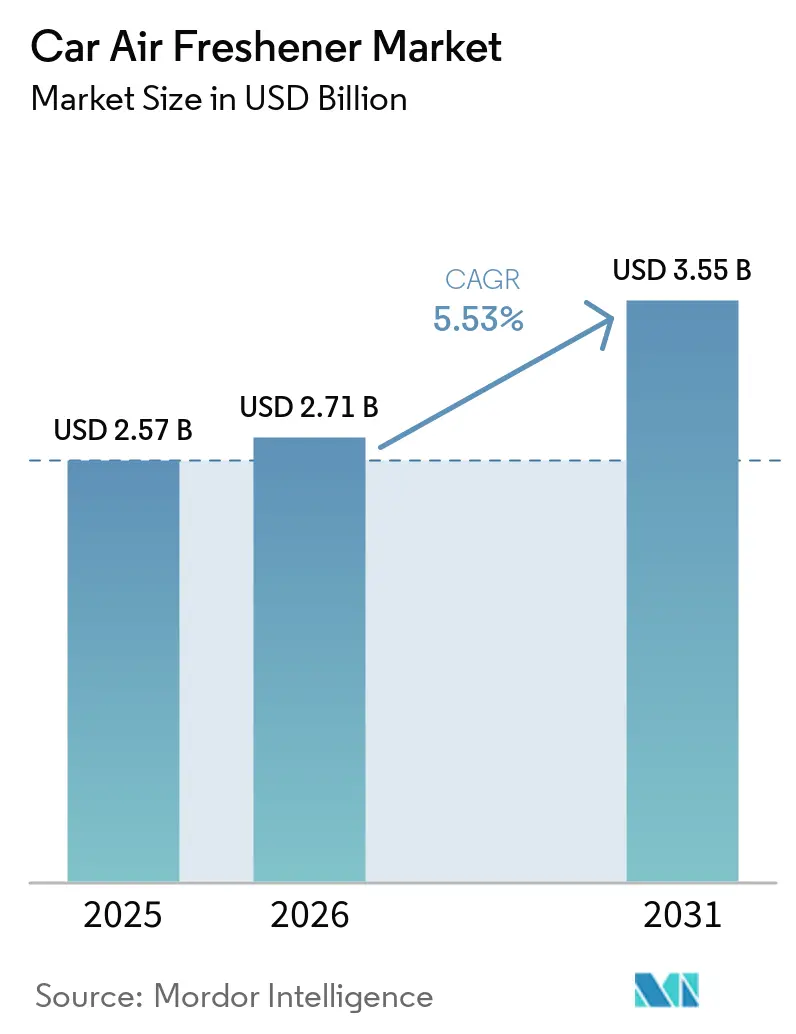
The air fresheners market size is expected to increase from USD 2.57 billion in 2025 to USD 2.71 billion in 2026 and reach USD 3.55 billion by 2031, growing at a CAGR of 5.53% over 2026-2031. As ride-share fleets and premium-vehicle owners increasingly demand programmable, longer-lasting options, plug-in and electric formats are challenging the historical dominance of paper trees. In 2024, China sold approximately 22.61 million passenger cars, as reported by the China Association of Automobile Manufacturers (CAAM)[1]Source: China Association of Automobile Manufacturers, “China’s Retail Sales of Passenger Cars Grow in 2024,” caam.org.cn. Heightened expectations for cabin fragrances, AI-driven scent personalization, and stricter VOC regulations are pushing suppliers to revamp legacy formulations while simultaneously driving a trend towards premiumization. In the Asia-Pacific region, brisk vehicle ownership growth in China and India fuels a surge in volume expansion. Meanwhile, North America, despite facing challenges such as nine U.S. states imposing fines on drivers for rear-view-mirror obstructions, continues to be the largest revenue pool. On the competitive front, global consumer-goods giants find themselves in a moderate tussle with niche fragrance challengers. These challengers, emphasizing sustainability, introduce innovations like bio-polymer substrates, bamboo charcoal, and solar-rechargeable inserts.
Key Report Takeaways
- By product type, Hanging air fresheners led with 43.87% of Hanging air fresheners market share in 2025, while Plug-in/Electric formats are forecast to post the fastest 6.24% CAGR through 2031.
- By category, the Mass segment commanded 71.46% share of the Hanging air fresheners market size in 2025, but Premium offerings are projected to advance at a 7.13% CAGR between 2026-2031.
- By distribution channel, Offline stores accounted for 67.28% of the Hanging air fresheners market share in 2025; Online channels are on track for a 6.91% CAGR to 2031.
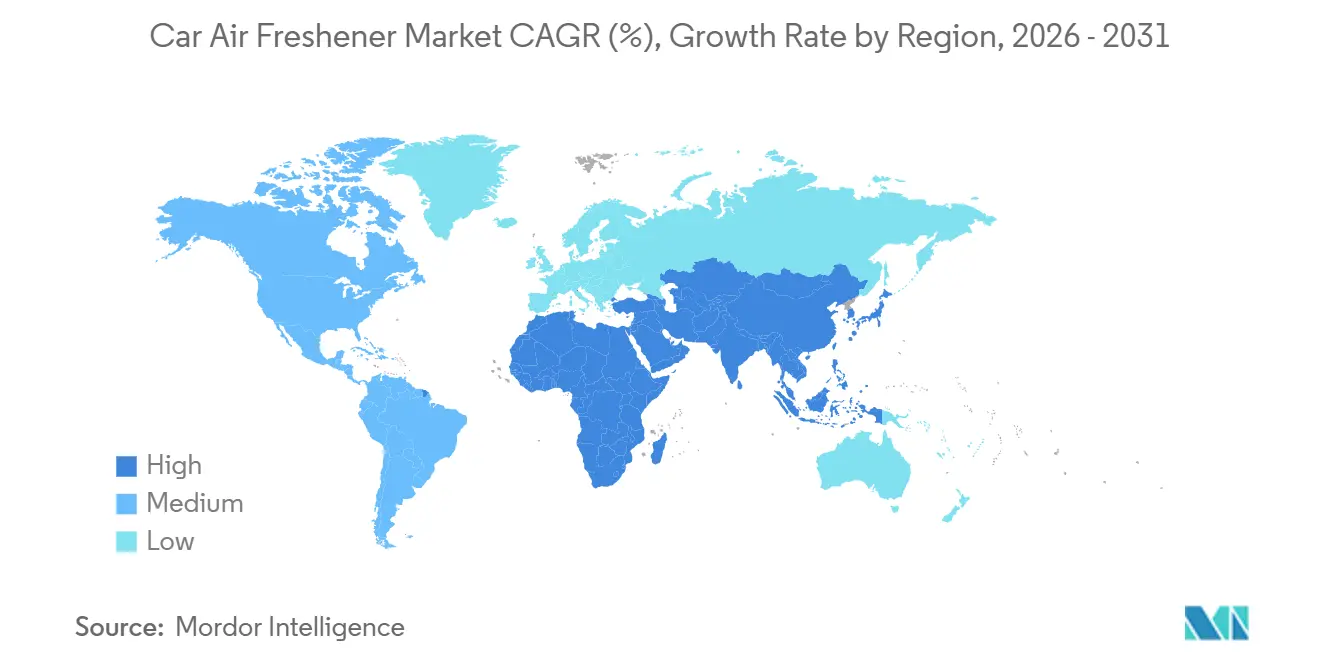
- By geography, North America retained 41.52% share of the Hanging air fresheners market in 2025, whereas Asia-Pacific is set to expand at the quickest 6.58% CAGR over 2026-2031.
Note: Market size and forecast figures in this report are generated using Mordor Intelligence’s proprietary estimation framework, updated with the latest available data and insights as of January 2026.
Global Car Air Freshener Market Trends and Insights
Drivers Impact Analysis*
| Driver | (~) % Impact on CAGR Forecast | Geographic Relevance | Impact Timeline |
|---|---|---|---|
| Continuous fragrance-format innovation | +0.7% | Global, premium uptake in North America and Europe | Medium term (2-4 years) |
| Preference for long-lasting, intense scents | +0.6% | Asia-Pacific and Middle East markets | Short term (≤ 2 years) |
| Shift toward natural and eco-friendly inputs | +0.5% | Core in Europe and North America, spreading to APAC urban centers | Medium term (2-4 years) |
| Growth in premium and designer offerings | +0.8% | North America, Europe, affluent APAC metro areas | Long term (≥ 4 years) |
| AI-driven scent personalization | +0.4% | Early adoption in North America and Europe, OEM pilots in APAC | Long term (≥ 4 years) |
| Solid-state, refill-free substrates | +0.3% | Environmentally conscious markets in EU, Japan, South Korea | Medium term (2-4 years) |
| Source: Mordor Intelligence | |||
Continuous fragrance-format innovation
Adjustable dial vent clips, motion-activated gel pods, and time-releasing spray aerosols are reshaping consumer expectations in the hanging air fresheners market. Procter & Gamble's Febreze CAR vent clip, set for a 2024 release, boasts a 40-day lifespan and a 20% reduction in plastic use. This innovation highlights how modular designs not only enhance product sustainability but also drive recurring refill sales without increasing initial costs, making it appealing to environmentally conscious consumers. Yankee Candle's Sidekick cartridge is versatile, fitting vent, visor, and pendant holders, enabling users to change forms without discarding the base. This adaptability caters to diverse consumer preferences, offering convenience and reducing waste. Additionally, cross-brand compatibility, like Glade refills in Air Wick dispensers, lowers the barriers for consumers by providing flexibility and cost savings. This "razor-and-blade" strategy is now being adopted by ride-share fleets, which need quick scent changes between passengers to maintain a fresh and pleasant environment. Brands that separate devices from their consumables can enhance their lifetime value, improve customer retention, and significantly reduce their environmental impact.
Preference for Long-Lasting, Intense Fragrances
Commuters and ride-share drivers are gravitating towards high “throw” fragrances, ones that linger for over a month. This trend has led suppliers to highlight performance benchmarks of 60 or even 365 days in the Hanging air fresheners market. PURGGO, with its bamboo-charcoal absorber, claims a year-long efficacy and boasts solar rechargeability, positioning itself as a sustainable alternative to products that require frequent refills. This product not only appeals to environmentally conscious consumers but also addresses the growing demand for low-maintenance, long-lasting solutions. Regional preferences are evident: customers in the Middle East are drawn to oud notes, which are rich and woody, while those in North America favor a zesty citrus touch, offering a fresh and clean aroma. A 2024 study on cabin air quality found total VOC levels spiking to 364.3 µg/m³ after 15 sprays. Additionally, it observed a 25.3% rise in nanoparticle fractions at 25 °C, highlighting the health considerations suppliers must address. These findings emphasize the need for manufacturers to balance fragrance performance with safety standards. Today's consumers are increasingly evaluating the cost per day, showing a preference for products that balance intensity with lasting power, ensuring both value and satisfaction.
Shift toward natural and eco-friendly ingredients
Under Europe's REACH and California's stringent 18% VOC cap, the hanging air fresheners market is witnessing a swift shift. In line with sustainability mandates, government agencies are prioritizing environmentally responsible custodial supplies, including air fresheners, as noted by the U.S. General Services Administration[2]Source: U.S. General Services Administration, “Green Procurement – Air Fresheners and Deodorizers,” gsa.gov. Manufacturers are reformulating their products, leaning towards essential oils, biodegradable carriers, and phthalate-free chemistry to comply with these regulations and meet consumer demand for safer alternatives. However, the term "natural" can be misleading. A 2020 peer-reviewed audit revealed no significant difference in VOC toxicity between products labeled as green and their conventional counterparts, raising concerns about greenwashing practices in the market. To bolster their transparency claims and justify premium pricing, suppliers are increasingly turning to third-party endorsements. Badges like EPA Safer Choice, MADE SAFE, and Cradle to Cradle hold particular weight, especially in environmentally-conscious regions like the EU and coastal states of the U.S., where consumers are more likely to pay a premium for verified eco-friendly products. Meanwhile, bamboo charcoal and activated-carbon absorbers, which sidestep VOC thresholds entirely, are gaining traction in markets like Japan, South Korea, and Germany due to their effectiveness in odor absorption and compliance with strict environmental standards.
Growth in premium and designer offerings
Luxury automakers are taking control of the scent market, introducing proprietary scent modules that run parallel to traditional hanging air fresheners. Platforms like Lincoln’s Digital Scents and BMW’s Atmosphere are dispensing curated fragrances directly through the vehicle's HVAC system, effectively locking owners into their branded cartridge ecosystems. These systems not only enhance the in-car experience but also create a recurring revenue stream for automakers through the sale of branded refills. Jo Malone’s special automotive editions, priced between USD 15-30 for a 60-day refill, highlight consumers' willingness to invest in high-end fragrances for their cars, reflecting a shift in consumer preferences toward premium and personalized in-car environments. With the premium segment projected to grow at a 7.13% CAGR through 2031, this trend underscores the merging worlds of automotive electronics and luxury perfumery. However, it also tightens the aftermarket space, as fragrance choices increasingly shift to the vehicle sale point, reducing opportunities for third-party suppliers.
Restraints Impact Analysis*
| Restraint | (~) % Impact on CAGR Forecast | Geographic Relevance | Impact Timeline |
|---|---|---|---|
| Health concerns over VOCs and allergens | -0.6% | Global, with heightened regulatory scrutiny in North America and Europe | Short term (≤ 2 years) |
| Cabin-air purifiers cannibalising fragrance sales | -0.4% | Premium vehicle segments in North America, Europe, and APAC luxury markets | Medium term (2-4 years) |
| Lower odour emissions in EV interiors | -0.3% | Markets with high EV penetration (Norway, China, California, Netherlands) | Long term (≥ 4 years) |
| Regional rear-view-mirror hanging bans and distracted-driver regulations | -0.2% | U.S. (9+ states), UK, and select European jurisdictions | Short term (≤ 2 years) |
| Source: Mordor Intelligence | |||
Health concerns over VOCs and Allergens
A study identified 546 volatile organic compounds (VOCs) in a dozen car air fresheners, including 30 hazardous ones like acetaldehyde and beta-myrcene, all without any label disclosures. This revelation has sown seeds of distrust among consumers in the Hanging air fresheners market, as they become increasingly aware of potential health risks. The U.S. EPA has highlighted that during product use, cabin VOC levels can spike by as much as 1,000 times, and such exposure is linked to respiratory and neurological problems, raising significant safety concerns. In response, regulatory bodies like CARB and IFRA are tightening the reins on permissible fragrance allergens, leading to expensive reformulations for brands. Federal standards set VOC content limits for a range of products: single-phase air fresheners are allowed up to 70% VOCs, double-phase can have up to 30%, liquids and pump sprays are restricted to 18%, while solids and gels are limited to a mere 3%[3]Source: U.S. Environmental Protection Agency, “40 CFR Part 59 Subpart C – National VOC Emission Standards for Consumer Products,” epa.gov.These regulatory changes aim to mitigate health risks but pose challenges for manufacturers in maintaining product appeal. Those unable to strike a balance between scent performance and emission safety may swiftly lose market share to hypoallergenic or fragrance-free alternatives, which are gaining traction among health-conscious consumers.
Cabin-air purifiers cannibalizing fragrance sales
HEPA-grade filtration systems in vehicles from Tesla, Mercedes, Honda, BMW, and Volvo effectively eliminate odors at the particulate level. This advancement has led to a diminished demand for masking scents, particularly in the air freshener market, as these systems address the root cause of odors rather than covering them up. Portable purifiers, priced between USD 50-200, provide a one-time solution for odor control, offering consumers a cost-effective alternative that challenges the recurring expenses associated with monthly refills. Procter & Gamble’s Febreze-branded Pureflow cabin filters, now being introduced through Premium Guard, signal a strategic shift towards a combination of filtration and fragrance. These hybrid solutions aim to enhance the consumer experience by integrating odor elimination with pleasant scents. In the U.S., with 230 million vehicles equipped with cabin filters but only 60 million annual replacements, there's a significant USD 1 billion opportunity in the filtration market. This potential can be unlocked if scent-infused cartridges succeed in encouraging more frequent replacements, thereby driving higher engagement and revenue within the channel.
*Our forecasts treat driver/restraint impacts as directional, not additive. The impact forecasts reflect baseline growth, mix effects, and variable interactions.
Segment Analysis
By Product Type: Electric Formats Outpace Traditional Hanging Designs
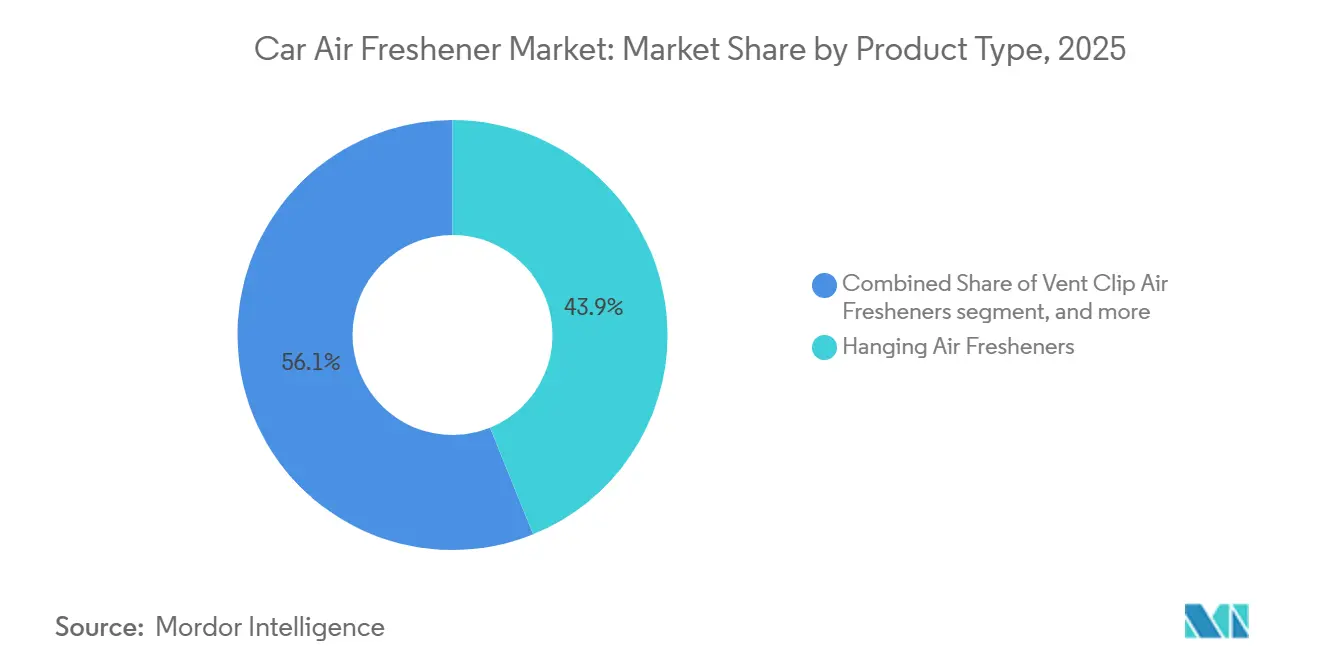
In 2025, hanging air fresheners dominated the market, capturing 43.87% share. This stronghold is attributed to their established brand equity, widespread retail presence, and decades of consumer familiarity. Traditional paper-based air fresheners, priced under USD 3, spurred impulse buys in convenience and automotive sectors. Yet, these face challenges: their scent longevity and intensity lag behind newer alternatives. Meanwhile, vent-mounted clips and gel pots, with their practical designs, cater to distracted-driver regulations and offer a passive scent release over 30 days, solidifying their place in the mid-price category. Despite rising competition from electric and programmable options, hanging air fresheners maintain their dominance.
Plug-in and electric air fresheners are on a rapid ascent, with projections indicating a 6.24% CAGR through 2031. This surge is driven by innovations like battery-powered vent clips boasting 40–70 day scent cycles, USB-charged diffusers, and solar-assisted models. The latter are particularly favored by ride-share drivers for their adjustable intervals. As aerosol sprays, which raised cabin VOCs to 364.3 µg/m³ in 2024, see a decline in preference, the shift towards these cleaner, longer-lasting alternatives accelerates. Premium products, such as Inhalio’s app-controlled LIN/CAN-bus units and PURGGO’s bamboo-charcoal bags, stand out in the market, commanding 3–5× price multiples among niche customers. With a growing emphasis on sustainability and health, these electric air fresheners are poised for an expanded market presence.



By Category: Premium Acceleration Amid Mass Dominance
In 2025, mass-market brands are set to dominate the hanging air fresheners segment, seizing 71.46% of the total market share. Their success is largely attributed to robust distribution networks spanning grocery stores, drugstores, and automotive retail chains. Leveraging their scale, these brands not only offer competitive pricing but also roll out incremental upgrades, including metallic finishes, minimalist packaging, and adjustable intensity features. Yet, even with these enhancements, price sensitivity prevails, with the majority of products priced below USD 5. Complicating matters, private-label competitors consistently challenge the segment, undercutting national brands by 20–30%. While mass brands continue to lead in volume, distinguishing themselves is becoming a formidable challenge as feature disparities diminish.
On the other hand, premium products are emerging as the segment with the most rapid growth. Forecasted to expand at a CAGR of 7.13% from 2026 to 2031, this surge is fueled by innovative strategies and brand elevation. Trends bolstering this growth include OEM-integrated scent systems, collaborations with celebrities, and third-party certifications. These endorsements not only validate the premium price tags of designer fragrances but also help suppliers rebrand air fresheners. No longer seen merely as functional items, they're increasingly viewed as lifestyle accessories and integral components of the in-car experience. As the allure of premium products grows, the divide between mass and premium segments is anticipated to shrink. Furthermore, the future may witness market segmentation evolving from mere price distinctions to advanced features, spotlighting connectivity and AI-driven scent personalization.
By Distribution Channel: Digital Transformation Accelerates
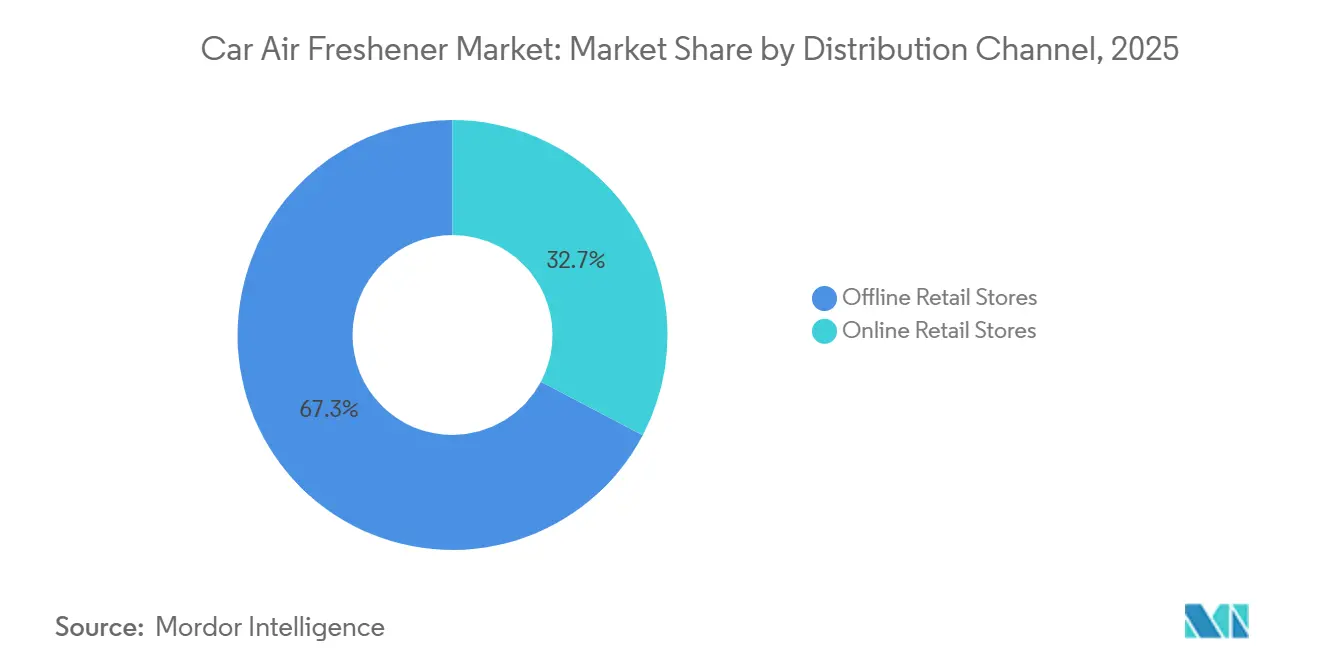
In 2025, offline channels are set to dominate the hanging air fresheners market, capturing 67.28% of the market share. This stronghold is bolstered by consumers' impulse buying tendencies and the immediate availability of products. Retail outlets, including supermarkets, automotive stores, and drugstores, play a pivotal role in ensuring high visibility and easy access for shoppers. Even with the growing allure of digital platforms, brick-and-mortar retailers are evolving. They're embracing omnichannel tactics, such as 'buy-online-pickup-in-store' and QR-enabled kiosks for quick replenishments. These strategies seamlessly meld the physical shopping experience with the digital realm, all while drawing consistent foot traffic. Consequently, offline channels remain the cornerstone of market distribution, adapting to the shifting sands of consumer buying behaviors.
Online channels are on a rapid ascent, with projections indicating a CAGR of 6.91% through 2031. This surge is largely attributed to the growing embrace of e-commerce and subscription models. Platforms like Amazon, along with brand-specific websites, are reshaping the purchasing landscape. Their autoship programs, which offer enticing 10–15% discounts, are turning sporadic buys into habitual orders, especially among the younger, tech-savvy demographic. Furthermore, the increasing trend of long-tail ingredient searches and a focus on SEO are paving the way for new direct-to-consumer brands. Yet, the journey isn't without its bumps. Challenges like hazmat shipping restrictions for aerosol products and the imperative for leak-proof packaging pose significant hurdles. Nevertheless, as convenience and personalization take center stage in consumer preferences, digital channels are poised for a steady rise in market share.
Geography Analysis
In 2025, North America accounted for 41.52% of the revenue in the hanging air fresheners market. In the U.S., consumers spent between USD 8-12 annually per vehicle. As regulatory complexities mount, with California imposing an 18% VOC cap and nine states banning rear-view-mirror hangers, consumers are increasingly gravitating towards vent clips. Procter & Gamble, eyeing the under-penetrated 170 million replacement gap, is set to launch Febreze-branded cabin filters in 2026, hinting at a strategic blend of filtration and fragrance. While Canada and Mexico contribute to demand through OEM accessory packs in new vehicles, their per-capita spending lags behind that of the U.S.
Asia-Pacific is poised for the swiftest growth at a 6.58% CAGR, driven by China's expansive vehicle base of over 300 million and India's brisk motorization. Chinese regulations mandate ingredient disclosures in the local language, giving an edge to domestic players who can certify their formulations. Cultural nuances shape preferences: Japan and South Korea favor bamboo-charcoal absorbers and subtle scents, prioritizing odor neutralization over pronounced fragrances. In India, metropolitan areas are leaning towards premium diffusers, while rural locales stick to budget-friendly paper trees, highlighting the market's diverse landscape.
Europe experiences steady growth, navigating challenges like REACH allergen warnings and IFRA sensitizer restrictions. Premium brands like BMW Atmosphere and Mercedes scent systems find a foothold in Germany and the UK, while Nordic nations show a preference for fragrance-free alternatives. As OEM-embedded modules gain traction, they're drawing affluent consumers away from aftermarket refills, shifting the market's focus towards mid-tier and value offerings. Brazil leads in South America, but its momentum is tempered by economic fluctuations. Meanwhile, in the Middle East, markets like Saudi Arabia and the UAE maintain robust per-vehicle fragrance expenditures, with a distinct preference for premium-priced oud-based notes.
Mordor Intelligence provides coverage of the car air freshener market across other key regional markets, including North America, each with their regulatory frameworks and demand patterns.

Competitive Landscape
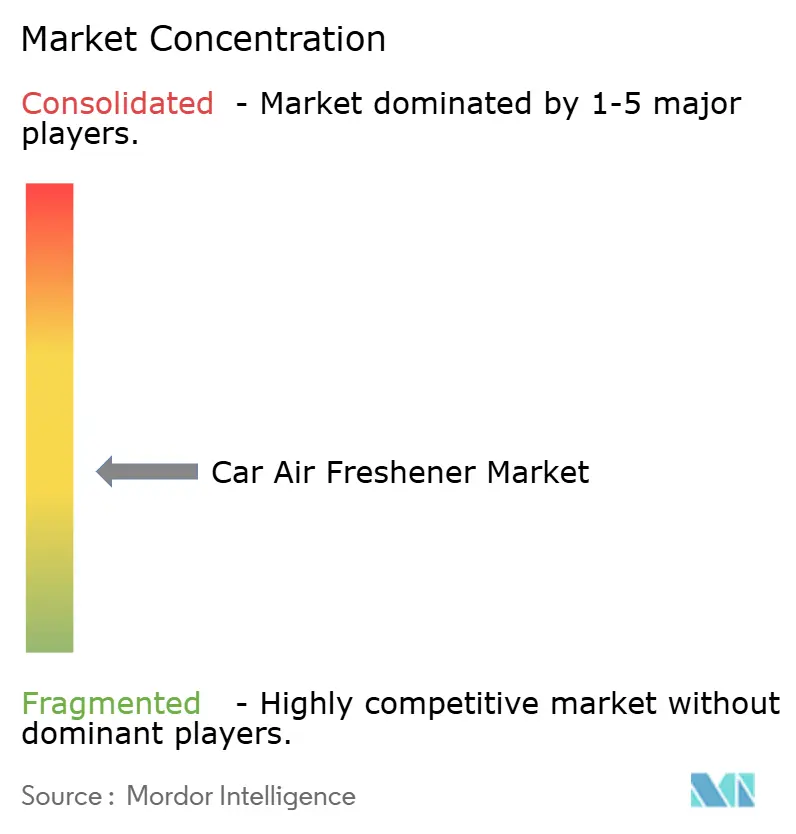
The car air freshener market exhibits moderate fragmentation. While Procter & Gamble, Reckitt Benckiser, and SC Johnson leverage their global advertising prowess, they contend with agile competitors like Car-Freshner Corporation and Bullsone, who adeptly tailor scent profiles. The focus of innovation has shifted towards adjustable-intensity vent clips, AI-ready cartridges, and refill ecosystems aimed at reducing plastic waste. P&G’s redesign of Febreze CAR showcases the blend of sustainability and performance by established players, and its partnership with Pureflow cabin-filter underscores a transition towards hybrid odor-control technology. The market is evolving rapidly, driven by both established players and emerging challengers.
Niche disruptors are carving out their own spaces: PURGGO promotes a zero-waste bamboo charcoal solution for environmentally-conscious drivers, while Inhalio provides LIN/CAN-bus cartridges that seamlessly integrate with vehicle infotainment systems. While regulatory costs tend to benefit larger players, certifications such as EPA Safer Choice allow smaller brands to command premium pricing. Notable private-equity moves, like Energizer’s acquisition of HandStands in 2016 and Niteo’s purchase of Ozium in 2018, suggest a trend towards consolidation, as fragmented portfolios are strategically bundled for enhanced channel leverage. These developments highlight the dynamic interplay between innovation and consolidation in the market.
OEM integration emerges as a pivotal strategy. Major players like BMW, Lincoln, and Philips are now embedding fragrance modules directly on the factory line, ensuring they capture cartridge sales throughout the vehicle's lifespan. Suppliers without IATF-16949 certifications might find it challenging to navigate OEM procurement processes, pushing them to either enhance their retail and e-commerce strategies or collaborate with Tier-1 integrators for smoother entry. The push for OEM integration underscores the importance of aligning with industry standards to secure long-term growth opportunities.
Car Air Freshener Industry Leaders
Procter and Gamble
Car-Freshner Corp.
Reckitt Benckiser
SC Johnson
California Scents
- *Disclaimer: Major Players sorted in no particular order

Recent Industry Developments
- December 2025: HEM Fragrances has unveiled a fresh lineup of air and car fresheners, targeting everyday spaces for a cleaner, more pleasant aroma. Designed for homes, vehicles, and tight quarters, these fresheners boast long-lasting scents that uplift moods on the move. The debut underscores a commitment to convenience, effective odor control, and a touch of luxury in daily fragrance experiences.
- March 2025: Elix launched AROMATONE, a new fragrance product line. The collection features premium perfume compositions designed to provide distinctive scent experiences. AROMATONE products incorporate fragrance elements inspired by classic perfumes, offering consumers access to high-end perfumery for daily use.
- December 2024: Southeast Asia's Vanzo Holdings Bhd has unveiled the Vanzo Smart Car Diffuser, merging cutting-edge technology with elegant fragrance design. This innovative car diffuser promises to deliver captivating scents for an impressive duration of up to 100 days, elevating the overall driving experience.


Global Car Air Freshener Market Report Scope
| Hanging Air Freshners |
| Vent Clip Air Freshners |
| Spray/Aerosol Air Freshners |
| Gel-based Air Freshners |
| Plug-in/Electric Air Freshners |
| Paper Air Fresheners |
| Others |
| Mass |
| Premium |
| Offline Retail Stores |
| Online Retail Stores |
| North America | United States |
| Canada | |
| Mexico | |
| Rest of North America | |
| Europe | Germany |
| United Kingdom | |
| Italy | |
| France | |
| Spain | |
| Netherlands | |
| Poland | |
| Belgium | |
| Sweden | |
| Rest of Europe | |
| Asia-Pacific | China |
| India | |
| Japan | |
| Australia | |
| Indonesia | |
| South Korea | |
| Thailand | |
| Singapore | |
| Rest of Asia-Pacific | |
| South America | Brazil |
| Argentina | |
| Colombia | |
| Chile | |
| Peru | |
| Rest of South America | |
| Middle East and Africa | South Africa |
| Saudi Arabia | |
| United Arab Emirates | |
| Nigeria | |
| Egypt | |
| Morocco | |
| Turkey | |
| Rest of Middle East and Africa |
| By Product Type | Hanging Air Freshners | |
| Vent Clip Air Freshners | ||
| Spray/Aerosol Air Freshners | ||
| Gel-based Air Freshners | ||
| Plug-in/Electric Air Freshners | ||
| Paper Air Fresheners | ||
| Others | ||
| By Category | Mass | |
| Premium | ||
| By Distribution Channel | Offline Retail Stores | |
| Online Retail Stores | ||
| By Geography | North America | United States |
| Canada | ||
| Mexico | ||
| Rest of North America | ||
| Europe | Germany | |
| United Kingdom | ||
| Italy | ||
| France | ||
| Spain | ||
| Netherlands | ||
| Poland | ||
| Belgium | ||
| Sweden | ||
| Rest of Europe | ||
| Asia-Pacific | China | |
| India | ||
| Japan | ||
| Australia | ||
| Indonesia | ||
| South Korea | ||
| Thailand | ||
| Singapore | ||
| Rest of Asia-Pacific | ||
| South America | Brazil | |
| Argentina | ||
| Colombia | ||
| Chile | ||
| Peru | ||
| Rest of South America | ||
| Middle East and Africa | South Africa | |
| Saudi Arabia | ||
| United Arab Emirates | ||
| Nigeria | ||
| Egypt | ||
| Morocco | ||
| Turkey | ||
| Rest of Middle East and Africa | ||


Key Questions Answered in the Report
How large is the global car air freshener market in 2025?
The car air freshener market size is valued at USD 2.57 billion in 2025 and is projected to reach USD 3.36 billion by 2030 at a 5.53% CAGR.
Which product format leads sales worldwide?
Hanging air fresheners dominate with 43.87% of 2024 revenue, reflecting broad consumer familiarity and low unit cost.
What region is growing fastest through 2030?
Asia-Pacific is forecast to record a 6.58% CAGR as rising vehicle ownership and higher disposable incomes boost demand for cabin fragrances.
Why are premium car air fresheners gaining traction?
Consumers view the vehicle cabin as a wellness space; designer collaborations, natural oils, and smart diffusers deliver upscale experiences that command higher margins.
Page last updated on:





