
Waterproof Laminate Flooring Market Size and Share
Market Overview
| Study Period | 2020 - 2031 |
|---|---|
| Market Size (2026) | USD 1.69 Billion |
| Market Size (2031) | USD 2.57 Billion |
| Growth Rate (2026 - 2031) | 8.72 % |
| Fastest Growing Market | Asia-Pacific |
| Largest Market | North America |
| Market Concentration | Medium |
Major Players *Disclaimer: Major Players sorted in no particular order Image © Mordor Intelligence. Reuse requires attribution under CC BY 4.0. | |
Waterproof Laminate Flooring Market Analysis by Mordor Intelligence
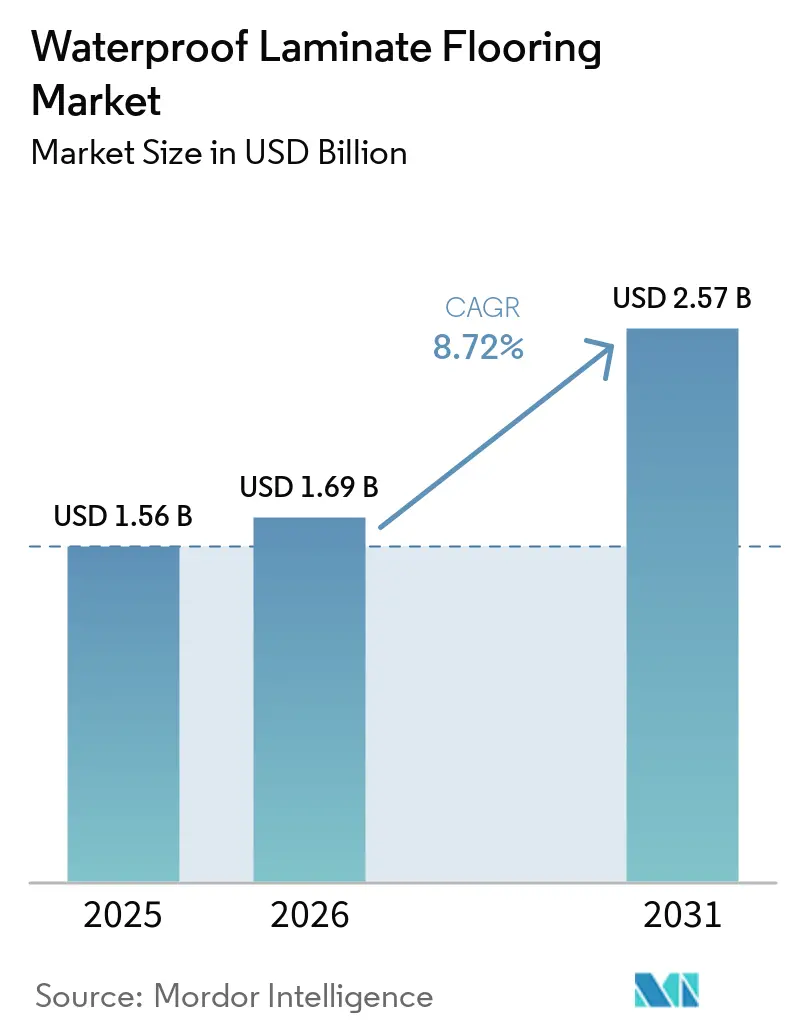
The waterproof laminate flooring market size was valued at USD 1.56 billion in 2025 and is estimated to grow from USD 1.69 billion in 2026 to USD 1.257 billion by 2031, at a CAGR of 8.72% during the forecast period 2026-2031. Cost-focused remodeling demand and product innovation in dual-barrier waterproofing continue to shift project specifications from traditional options toward laminate, particularly in retrofit bathrooms and kitchens, where installers value a rigid feel and simplified floating-floor installs. Leading manufacturers emphasize PVC-free hybrid lines and structured margin improvement, with Mohawk aligning its portfolio mix toward PureTech and delivering USD 365 million in annualized restructuring savings that support a disciplined channel strategy amid regulatory momentum around formaldehyde emissions in the United States. TSCA Title VI, including the EPA’s 2026 proposal to add ISO 12460-2 as a quality-control option, is reshaping compliance programs and cost structures while reinforcing the positions of integrated producers with in-house testing capabilities. Capacity additions and localization moves, such as Unilin’s investment in a Latin American plant, point to a tighter link between regional DIY channels and nearby production, shortening lead times and supporting broader SKU availability at retail. Visual realism through high-definition printing and embossed-in-register textures continues to reduce the perceived gap versus engineered hardwood, strengthening the competitive stance of the waterproof laminate flooring market in premium residential projects where design fidelity is decisive.
Key Report Takeaways
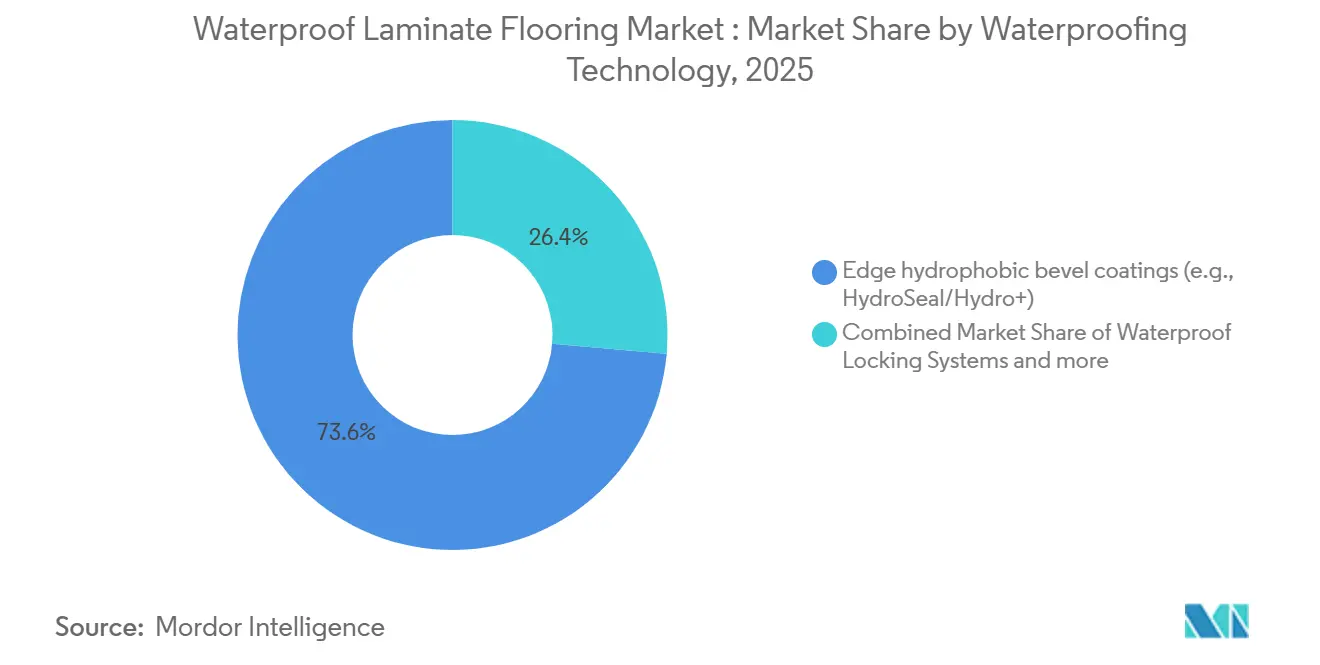
- By waterproofing technology, edge hydrophobic bevel coatings captured 73.61% of the category in 2025 for the waterproof laminate flooring market. Warranty rating bands are projected to grow at 8.84% CAGR between 2026 and 2031.
- By thickness, the 6-8 mm band captured 32.56% share in 2025 for the waterproof laminate flooring market. The 8-10 mm band is projected to grow at 8.93 % CAGR between 2026 and 2031.
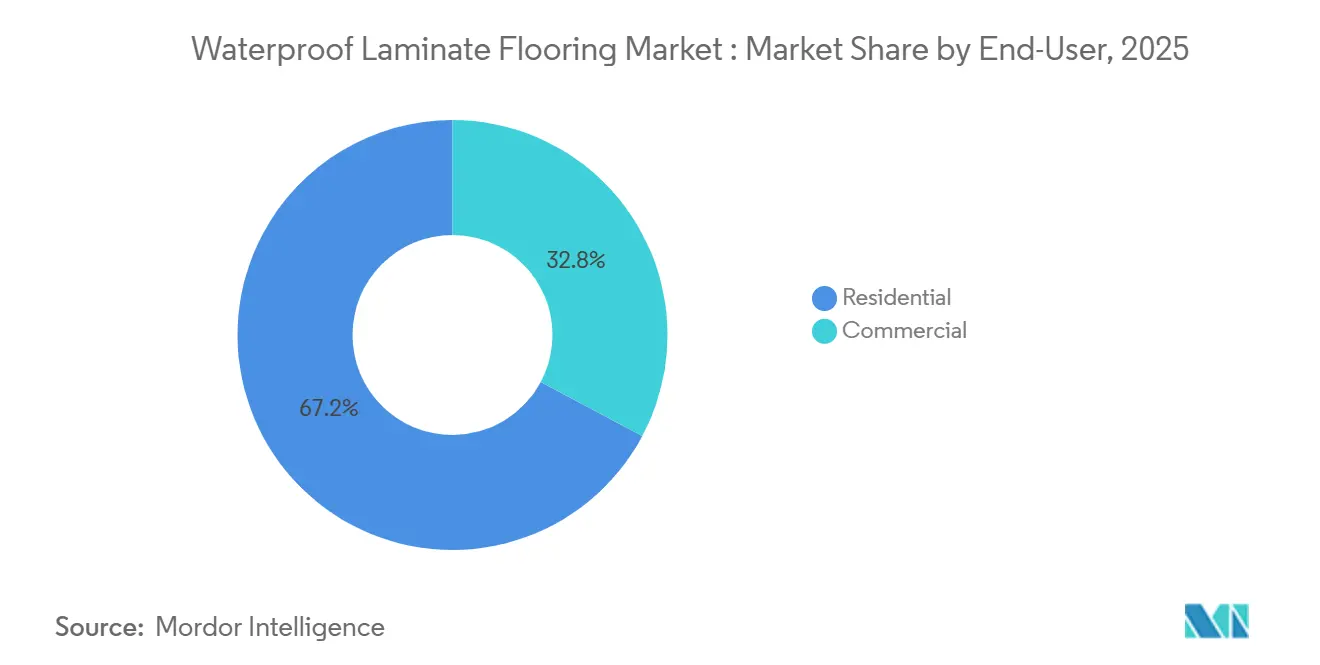
- By end user, residential captured 64.47% of the market share in 2025 for the waterproof laminate flooring market. Commercial is projected to grow at 8.76% CAGR between 2026 and 2031.
- By distribution channel, indirect sales accounted for 68.56% of the market share in 2025 for the waterproof laminate flooring market. Direct sales are projected to grow at 9.15% CAGR between 2026 and 2031.
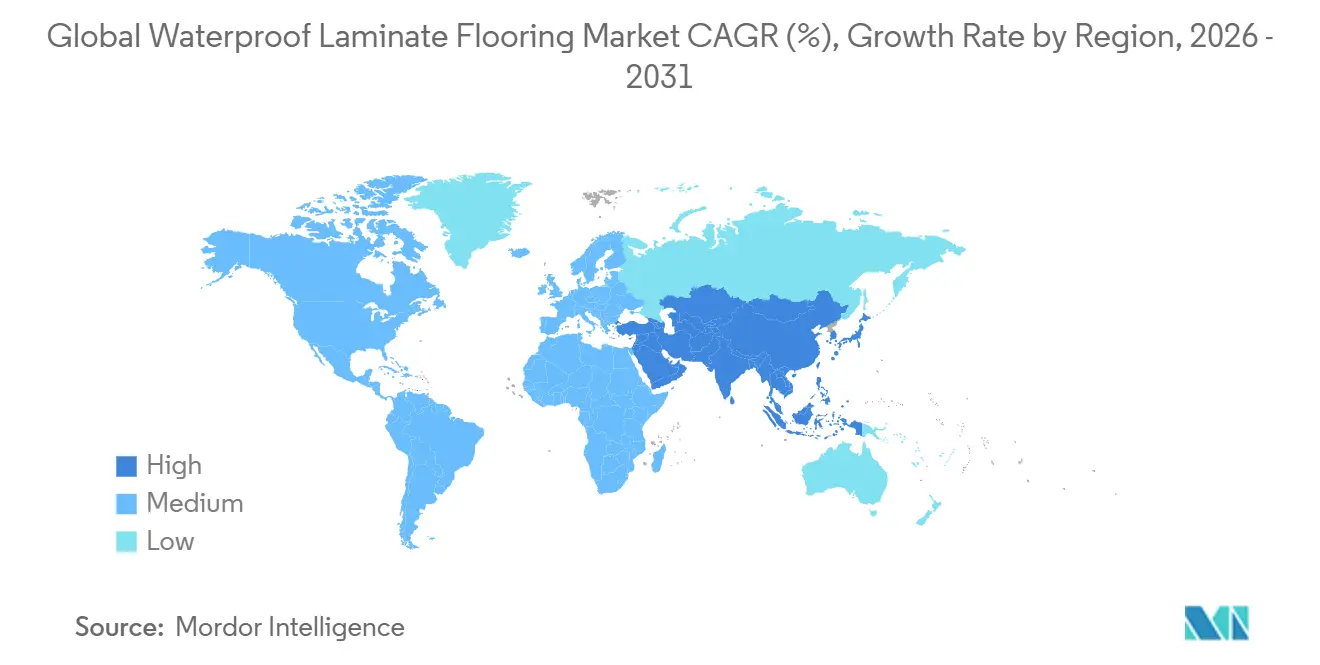
- By geography, North America accounted for 32.36% of the waterproof laminate flooring market in 2025. Asia-Pacific is projected to grow at 9.52% CAGR between 2026-2031.
Note: Market size and forecast figures in this report are generated using Mordor Intelligence’s proprietary estimation framework, updated with the latest available data and insights as of January 2026.
Market Trends and Insights
Drivers Impact Analysis of Waterproof Laminate Flooring Market*
| Driver | (~) % Impact on CAGR Forecast | Geographic Relevance | Impact Timeline |
|---|---|---|---|
| Rapid shift to waterproof hard surfaces, laminate moisture-performance advances re-open wet rooms | +1.8% | Global, with early gains in North America DIY retrofit and European multifamily | Medium term (2-4 years) |
| Value and DIY-friendly click systems expand replace-and-remodel demand | +1.5% | North America core, spillover to Latin America and Asia-Pacific | Short term (≤ 2 years) |
| High-definition digital printing and embossed-in-register realism narrow the aesthetic gap | +0.9% | Global, strongest in Europe and North American premium residential | Medium term (2-4 years) |
| Sustainable laminate, low-VOC cores, recycled fibers, EU Ecolabel/E1/E05 and TSCA compliance | +0.7% | Europe and California regulatory frontrunners, expanding post-2026 EPA updates in United States. | Long term (≥ 4 years) |
| Hydrophobic HDF core plus edge sealing enable 24–72-hour warranties | +0.6% | Global, with North America and Europe leading commercial specs | Medium term (2-4 years) |
| Next-gen locking geometries and gaskets reduce leak pathways, improving channel acceptance | +0.5% | North America and Europe installer and contractor segments | Short term (≤ 2 years) |
| Source: Mordor Intelligence | |||
High-Definition Digital Printing and Embossed-in-Register Realism Narrow the Aesthetic Gap
Advances in aligned texture and print resolution have strengthened the waterproof laminate flooring market by creating a closer visual match to engineered wood, especially at scale, where repeated patterns reveal product origins under direct light. Adjacent innovation in LVT printing is also raising the bar, with direct digital technologies underscoring how realism and structural depth now define category benchmarks in residential and light commercial spaces[1]ENGINEEREDFLOORS.COM https://www.engineeredfloors.com/technology/puregrain-hd/. Unilin’s AI-driven Lux 21 press line enables two-design production with higher cadence, allowing distributors to carry deeper decor libraries that cut stock-outs and address regional preferences with faster response times. Retail feedback highlights growing designer interest in embossed-in-register finishes for open-plan environments, making it easier to consolidate choices across wet and dry zones while preserving a consistent wood look. These dynamics support premium positioning within the waterproof laminate flooring market by aligning tactile depth and print fidelity with homeowner expectations for authenticity.
Sustainable Laminate, Low-VOC Cores, Recycled Wood Fibers, EU Ecolabel/E1/E05 and TSCA Compliance
Tighter emission standards and broader testing protocols are reorienting production processes and documentation requirements in the United States. EPA proposed the ISO 12460-2 small-scale chamber method as an additional quality-control option under TSCA Title VI in 2026[2]EPA.GOV EPA Proposes Updates to Formaldehyde Emission Standards, Adding New Quality Control Test Method for Composite Wood Products | US EPA. California’s CARB Phase 2 requirements reinforce low-emitting substrates and third-party verification, a direction mirrored in Europe through E1 and E05 thresholds that push the waterproof laminate flooring market toward cleaner chemistries and stronger compliance records. Product-level sustainability credentials give brands an entry advantage into commercial tenders, with Pergo’s Cradle to Cradle Material Health Certificate an example of documentation that helps secure projects sensitive to indoor environmental quality. EGGER’s broader ecolabel portfolio across Blue Angel and EU Ecolabel also aligns with public-sector procurement rules in schools and healthcare facilities, where independently validated environmental standards help reduce supplier risk. Increasingly, circularity and low-VOC profiles are differentiators for the waterproof laminate flooring market as buyers seek predictable compliance, auditable supply chains, and credible third-party validations that reduce long-term liability on building certifications and health claims.
Hydrophobic HDF Core + Edge Sealing Systems Enable 24–72h Warranties
Two-layer moisture defense, combining hydrophobic cores and sealed or treated edges, is central to the repositioning of the waterproof laminate flooring market in wet-adjacent zones, where project owners want time-limited protection rather than full submersion ratings. Performance claims are increasingly validated through recognized test methods, with manufacturers and distributors highlighting third-party standards to reduce callbacks and clarify expected use profiles for kitchens and half baths. Edge-sealed locking systems that incorporate repellents at plank perimeters slow ingress at joints, which is where earlier generations of laminate most often failed in household spill events. Kaindl’s AQUA PRO approach and associated product specs distributed through channel partners illustrate this evolution toward sealing at the profile level, an approach that supports warranty windows of 24 to 72 hours in daily-use areas. As portfolios migrate toward longer warranty-hour bands backed by standardized testing, installer confidence improves, and the waterproof laminate flooring market gains share in retrofit bathrooms and laundry spaces that were previously default choices for other hard surfaces.
Next-Gen Locking Geometries/Gaskets Reduce Leak Pathways, Improving Channel Acceptance
Precision locking profiles and integrated gaskets help minimize micro-gaps that previously allowed water to linger at edges, which was the most common failure point in legacy floating installations. Systems such as Classen’s Megaloc Aqua Protect use moisture barriers within the joint to maintain integrity under pooled water exposures often seen at entries during adverse weather conditions. Multi-method installation flexibility with angle-click, flat-tap, and fold-down options, as provided by Uniclic, allows crews to navigate around doorframes and fixed millwork without compromising joint engagement, which is a practical driver of professional acceptance[3]DGFLOORS.COM Uniclic Flooring: Everything You Need to Know About This Click-Lock System - D and G Flooring. This design evolution reduces labor risk, clarifies warranty terms, and expands the use cases for waterproof laminate flooring in risk-sensitive applications, such as mudrooms and busy household corridors. As gasketed profiles become more widespread in mid-tier price points through global licensing, channel partners gain confidence in merchandising “wet-zone ready” assortments anchored in testable claims and reliable lock performance.
Restraints Impact Analysis of Waterproof Laminate Flooring Market*
| Restraint | (~) % Impact on CAGR Forecast | Geographic Relevance | Impact Timeline |
|---|---|---|---|
| Substitution by rigid LVT/SPC in multifamily and wet-prone segments | -1.4% | North America multifamily, Asia-Pacific commercial, Middle East hospitality | Short term (≤ 2 years) |
| Warranty caveats and standing-water or steam exclusions limit real-world waterproofing | -0.6% | Global consumer segments, strongest negative sentiment in North America DIY | Medium term (2-4 years) |
| Perimeter sealing and wet-room installation requirements raise install risk and costs | -0.4% | Europe under DIN 18534, North America commercial retrofits | Medium term (2-4 years) |
| Tight formaldehyde and EUDR-style traceability raise HDF or resin costs and QA burden | -0.3% | Global, with Europe and California bearing highest compliance costs | Long term (≥ 4 years) |
| Source: Mordor Intelligence | |||
Substitution by Rigid LVT/SPC in Multifamily and Wet-Prone Segments
Rigid LVT and SPC maintain an inherent advantage in fully wet and high-wheeled-load environments, leading many property managers to specify these formats where operating risk tolerance is low. Procurement guidance often highlights that glue-down resilient formats remain the standard for the highest duty classes, which frames specification choices in busy healthcare corridors or retail spaces away from floating waterproof laminate systems[4]ECOFLORS.COM SPC vs LVT Flooring: The B2B Procurement Decision Guide | Ecoflors. At similar material cost ranges per square meter, the decision tends to be driven by exposure risk, long-term maintenance, and the absence of time-limited warranty language in resilient flooring claims. When specifiers use “100% waterproof” language, time-bound warranties often exclude laminate from consideration, even when installers have positive field experience with newer edge-sealed systems. This dynamic constrains the immediate upside for the waterproof laminate flooring market in institutional use cases where risk mitigation takes priority over first-cost savings.
Warranty Caveats and Standing-Water or Steam Exclusions Limit Real-World Waterproofing
Warranty texts frequently exclude continuous water exposure, appliance leaks, and steam cleaning, which shapes consumer and contractor expectations once they review the details post-purchase. Brand documentation that narrows protection windows to ordinary spills cleaned within set time frames can create friction in areas like dishwashers and pet bowl stations, where water may linger longer than intended. Products marketed with extended-hour claims sometimes carry installation prerequisites, such as vapor barriers or limits on heavy fixtures installed on top of the floor, which complicate their use in kitchens with fixed cabinetry. Retailers address these frictions with point-of-sale signage and clearer packaging, yet the perception gap around the word “waterproof” still creates hesitancy for use in fully wet rooms. This caution moderates near-term expansion in bathrooms for the waterproof laminate flooring market, even as warranties and edge-sealing improve.
*Our forecasts treat driver/restraint impacts as directional, not additive. The impact forecasts reflect baseline growth, mix effects, and variable interactions.
Waterproof Laminate Flooring Market Segment Analysis
By Waterproofing Technology:
Warranty Hours Emerge as New Specification ShorthandThe category mix shows that edge hydrophobic bevel coatings led with a 73.61% share in 2025, while warranty rating bands recorded the fastest growth at an 8.84% CAGR through 2031, as time-bounded protection became the preferred way to position wet-zone fitness in the waterproof laminate flooring market. Installers point to clearer warranty-hour messaging as a practical basis to engage homeowners on kitchen and bath use without shifting to fully submersible alternatives, which has improved attachment for premium edge-sealed lines. Sealing chemistries at joints and hydrophobic core treatments form two complementary defenses that together extend tolerance to incidental household spills and cleaning regimes. Retail displays now prioritize warranty hours, AC rating, and thickness in a simplified hierarchy that makes it easier for cash-and-carry remodel buyers to decide at the shelf. As third-party validation under NALFA or ISO frameworks becomes standard in merchandising, risk perceptions around the waterproof laminate flooring market decline in DIY-heavy channels.
Time-windowed warranty bands are gaining momentum because they align with how homeowners handle routine spills, helping maintain the installed-cost advantage over other hard surfaces. Systems that combine joint sealing with repellents support cleaner edges after exposure, reducing visible swelling that previously undermined confidence in wet-capable laminate. Selected European lines emphasize published performance data in their technical sheets, which reinforces channel trust and smooths professional specification in home and light-commercial retrofits. The waterproof laminate flooring market size narrative also benefits from a standardized testing vocabulary that allows contractors to compare options across brands while staying inside warranty guardrails. With more installers trained in sealing protocols and acclimation practices, field results align more closely with lab data, reducing callbacks and supporting repeat use by specifiers.


By Thickness:
Acoustic Performance Drives 8-10mm Adoption in European MultifamilyThe volume leader in 2025 was the 6-8 mm class at 32.56% share, while the 8-10 mm class posted the highest growth at an 8.93% CAGR, driven by acoustic and perceived-quality advantages relevant to the segment-level waterproof laminate flooring market size. European multifamily codes and project practices often target impact-sound reductions that thicker laminates can meet with integrated or matched underlays, which simplifies bid comparisons for general contractors. Premium 10 mm offerings help address surface flatness variation and reduce flex under concentrated loads, making them well-suited for common areas and heavy-traffic residential spaces where durability matters. Producers connecting thickness to accessory ecosystems, such as approved underlayments or matched stair covers, create a bundled-value story that plays well with trade buyers and installers. Thicker profiles also align with consumer expectations for a “solid” feel, which assists premium positioning inside the waterproof laminate flooring market.
Channel merchandising often groups 8-10 mm selections as “quieter” and “sturdier,” which reflects the combined acoustic and tactile effects that matter in multi-level homes and apartments. Spec sheets for wet-capable ranges commonly document sound performance under recognized test methods to speed acceptance in code-conscious regions. In retrofit projects, thicker planks help meet transitions to adjacent surfaces like tile without custom thresholds, reducing small-scope carpentry and flattening install timelines. The steady shift toward 8-10 mm also reflects retailer mix decisions, as higher-margin SKUs and differentiated decors drive stronger category performance. Together, these forces lift the segment within the waterproof laminate flooring market while leaving entry-price 6-8 mm planks as a high-volume base for budget-sensitive refreshes.
By End-User:
Commercial Hospitality and Healthcare Drive Premium SpecificationsResidential remained the larger end-user cohort at 64.47% share in 2025, while commercial is on track to expand at a 8.76% CAGR into 2031 as healthcare and hospitality leverage sealed, non-porous surfaces for hygiene and lifecycle gains. Commercial operators weigh downtime and maintenance in total-cost models and often prefer floating installations that minimize disruption during off-hours, which supports the waterproof laminate flooring market in guest rooms, offices, and light-care spaces. Manufacturers that certify low-emission and sustainability credentials improve their competitiveness in public tenders that specify both performance and health criteria. Product innovation in lock design and edge resistance has reduced installer concerns about swelling at joints, helping commercial pilots scale across portfolios after successful field trials. In residential, refreshed designs and shorter lead times sustain repeat purchases and referrals, which drive momentum in the waterproof laminate flooring market.
Commercial bid cycles run longer than homeowner-driven remodels, yet once a system is proven across a facility, it tends to standardize and repeat, which favors brands with broad assortments and stable supply. Corporate buyers increasingly require documentation that aligns with indoor environmental priorities and formaldehyde standards, reinforcing the role of integrated producers that can furnish complete QA files under TSCA Title VI or European norms. As more commercial lines show credible wear ratings and wet tolerance under time-limited warranties, specifiers gain flexibility to use a single wood-look platform across larger zones. These gains compound through accessory programs that keep trims and profiles aligned with the main line, reducing aesthetic breaks across a project. The net effect is a steady rise in commercial demand that complements the residential base of the waterproof laminate flooring market.
By Distribution Channel:
Specialty Retailers Exploit DIY Convenience PositioningIn the waterproof laminate flooring market, indirect sales accounted for 68.56% of market share in 2025. Direct sales are projected to grow at 9.15% CAGR between 2026 and 2031. Retailers enhance conversion by presenting warranty hours, AC class, and thickness in a simple panel that shortens the path from browsing to purchase for DIY renovators. Supplier-led clinics that demonstrate click systems and perimeter sealing techniques increase confidence for complex room shapes and transitions, which benefits the waterproof laminate flooring market in cash-and-carry categories. E-commerce and omnichannel practices allow shoppers to order samples and schedule delivery, while showrooms retain an edge with tactile evaluation of texture and gloss. The combined effect is a distribution mix where informed retail engagement and reliable fulfillment lift the indirect totals in the waterproof laminate flooring market.
Wholesalers and regional distributors support stock depth and service levels that smaller retailers and contractors rely on for short-notice projects. Accessory and underlayment attachment rates are higher when sales staff lead with complete system pitches, which boost both performance and ticket size. Direct-to-project flows remain important for volume efficiency in multifamily and chain hospitality work, where standardized SKUs and predictable lead times drive repeat buys. Licensing of locking systems and emphasis on certified emissions labeling at point-of-sale enable retailers to present clear compliance evidence, which reduces friction in quality-sensitive customer segments. As this service-led retail model matures, it reinforces confidence in the waterproof laminate flooring market across both DIY and pro-install pathways.
Geography Analysis
North America Waterproof Laminate Flooring Market
North America held 32.36% in 2025, reflecting an established DIY base and a contractor network familiar with floating installations for remodel work inside the waterproof laminate flooring market. Category momentum connects to better product messaging around time-bounded wet tolerance and improvements in locking geometry that reduce edge risks. Producers with regional footprints and efficient logistics keep stock flowing to retail and trade, which reduces wait times for premium decor. Corporate restructuring and portfolio refocus among leading brands support tighter cost control and faster innovation cycles aligned to channel feedback. Taken together, these shifts keep North America central to the waterproof laminate flooring market despite competition from fully submersible formats.
Europe Waterproof Laminate Flooring Market
Europe maintained mature demand at a stable baseline and remains an anchor for high-spec products with low-emission certifications in public and private projects. Strong enforcement of emission norms and clear wet-room guidance support professional adoption of approved products that document performance through recognized tests. Installed-cost advantages versus ceramic tile in some retrofit settings, coupled with warm wood visuals, keep laminate in the consideration set for kitchens and hallways. Flexible installation methods and accessories for stair and transition solutions help complete multi-surface projects without visual mismatches. As these practices consolidate, Europe sustains an influential role in product design and technical direction for the waterproof laminate flooring market.
APAC Waterproof Laminate Flooring Market
Asia-Pacific is projected to expand the fastest at 9.52% CAGR through 2031 based on household formation, urban infill, and contractor familiarity with floating floors that speed turnover in new and refresh projects within the waterproof laminate flooring market. As global brands localize production in the Americas and invest in technology hubs in Europe, they also scale assortments that suit Asian retail formats and preference sets. Merchandising that compresses the learning curve for DIY and pro buyers with clear warranty bands and performance icons assists conversion in stores. Emission standards and formaldehyde frameworks adopted by import markets increasingly align with international norms, which supports consistent quality expectations across regions. These dynamics translate to broader acceptance as testable claims and consistent lock quality reduce perceived installation risk across the region.

Competitive Landscape
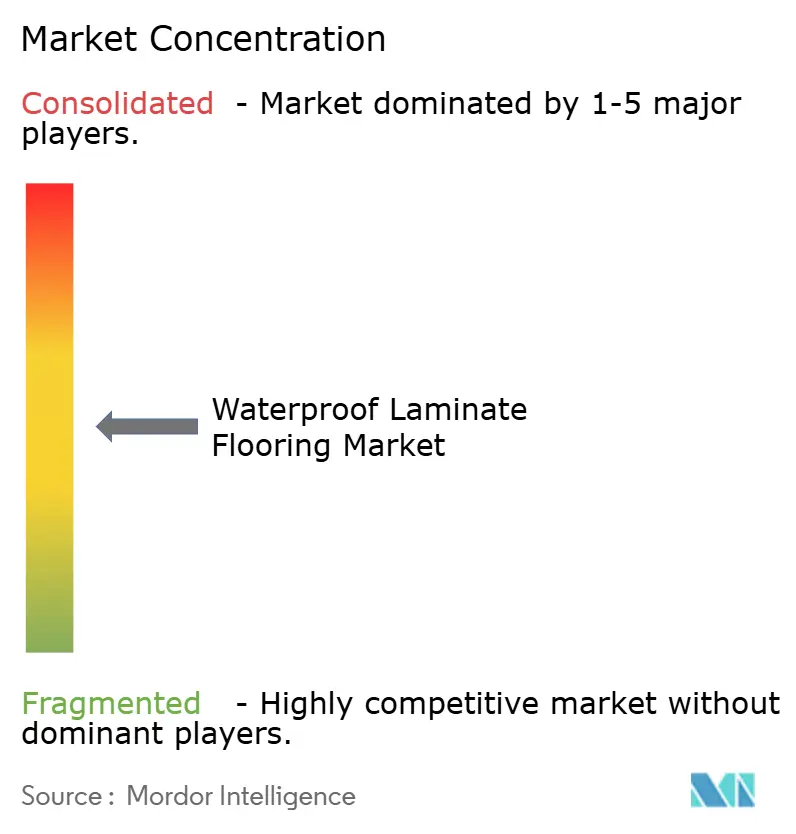
The waterproof laminate flooring market exhibits moderate concentration anchored by European and North American specialists that combine scale manufacturing, in-house compliance testing, and licensed click technologies. Leading players have invested in restructuring and automation to defend margins and reduce lead times, which supports channel relationships in a category where on-time availability matters for project schedules. Press-line modernization, such as Unilin’s AI-enabled upgrades, increases decor variety and throughput while sustaining tactile depth in premium ranges. Locked-in IP around joint systems and gasket innovations narrows credible entry routes for new producers that lack licensing access or cannot prove performance under recognized tests. These combined factors reinforce the positions of integrated producers within the waterproof laminate flooring market.
Strategic moves continue to center on capacity alignment, technology upgrades, and portfolio shifts toward PVC-free hybrids that align with environmental priorities. Brands that pair strong compliance documentation under TSCA Title VI and EU norms with verified indoor air quality credentials stand out in public-sector and healthcare tenders. Unilin’s investments demonstrate a strategy to collapse design-to-shelf timelines, which supports curated retail programs and seasonal decor rotations. Corporate reorganization and cost discipline at large United States-listed players remain focused on sustaining profitability through cyclical demand without retreating on product R&D. Collectively, these moves support a healthy mix of premium and mid-tier price points in the waterproof laminate flooring market.
On the demand side, installer training and distributor programs are decisive in expanding wet-capable assortments anchored in realistic wood visuals and documented performance. Retailers invest in education and clarity around warranties at the shelf, reducing confusion and supporting repeat purchases. Accessory ecosystems that integrate trims, stair solutions, and compatible underlays help contractors deliver finished looks in fewer trips. As lock technologies and edge sealing mature, the long-term risk profile improves, increasing confidence among specifiers considering use in corridors, guest rooms, and busy family zones. These practical improvements help the waterproof laminate flooring market sustain share gains against alternative surfaces in defined use cases.
Waterproof Laminate Flooring Industry Leaders
Mohawk Industries
Kronospan (KronoOriginal)
SWISS KRONO Group
EGGER Group
CLASSEN Group
- *Disclaimer: Major Players sorted in no particular order
Waterproof Laminate Flooring Market Companies Covered in this Report
- Mohawk Industries
- Kronospan
- SWISS KRONO Group
- EGGER Group
- Classen Group
- Beaulieu International Group (BerryAlloc)
- Tarkett
- Shaw Industries
- Mannington Mills
- Kaindl Flooring
- Kastamonu Entegre
- Parador GmbH
- HARO (Hamberger Flooring)
- CFL Flooring (AtroGuard)
- Power Dekor
- Nature Home
- Unilin (Quick-Step)
- Kronotex (brand of SWISS KRONO)
- Balterio (brand of B.I.G.)

Recent Industry Developments in Waterproof Laminate Flooring Market
- April 2026: Hallmark Floors launched the Crescendo Collection waterproof laminate flooring, featuring 10 mm AC5-rated planks with a Dry Guard locking system, targeting DIY residential renovations with an estimated total installed cost of USD 7.50-14.50 per square foot and 7-10 day project timelines for 1,000 square feet.
- February 2026: The United States Environmental Protection Agency proposed updates to formaldehyde emission standards for composite wood products, adding the ISO 12460-2 small-scale chamber method as a new quality-control test option under TSCA Title VI, with a 30-day public comment period.
- March 2025: Unilin inaugurated approximately USD 30 million Lux 21 laminate press line in Wielsbeke, Belgium, featuring AI-driven dual-press robotics enabling 15 million square meters annual capacity, 30% faster production versus legacy lines, and doubled structure depth for Quick-Step premium collections
- January 2025: Unilin laid the foundation stone for an approximately USD 11 million laminate flooring plant in Piên, Brazil, targeting an annual capacity of 10 million square meters by January 2026 to serve Latin American markets with localized Quick-Step production.


Global Waterproof Laminate Flooring Market Report Scope
| Edge Hydrophobic Level Coatings (e.g., HydroSeal/Hydro+) |
| Waterproof Locking Systems with Gaskets/Fold-down (e.g., Aqua CLIC it!, Megaloc Aqua Protect) |
| Coreboard Treatment/Impregnation and Waxed Edges |
| Perimeter Sealing Kits/Ancillaries (underlays, skirtings, sealants) |
| Warranty Rating Bands (24h • 48h • 72h+) |
| 6–8 mm |
| 8–10 mm |
| 10–12 mm |
| ≥12 mm |
| Residential |
| Commercial |
| Direct Sales | Offline Direct to Projects/Contractors |
| Online D2C | |
| Indirect/Dealers | Distributors/Wholesalers |
| Specialty Retail & Home Improvement | |
| E-commerce/B2B Marketplaces |
| North America | Canada |
| United States | |
| Mexico | |
| South America | Brazil |
| Peru | |
| Chile | |
| Argentina | |
| Rest of South America | |
| Europe | United Kingdom |
| Germany | |
| France | |
| Spain | |
| Italy | |
| BENELUX (Belgium, Netherlands, Luxembourg) | |
| NORDICS (Denmark, Finland, Iceland, Norway, Sweden) | |
| Rest of Europe | |
| Asia-Pacific | India |
| China | |
| Japan | |
| Australia | |
| South Korea | |
| South-East Asia | |
| Rest of Asia-Pacific | |
| Middle East & Africa | United Arab Emirates |
| Saudi Arabia | |
| South Africa | |
| Rest of Middle East & Africa |
| By Waterproofing Technology | Edge Hydrophobic Level Coatings (e.g., HydroSeal/Hydro+) | |
| Waterproof Locking Systems with Gaskets/Fold-down (e.g., Aqua CLIC it!, Megaloc Aqua Protect) | ||
| Coreboard Treatment/Impregnation and Waxed Edges | ||
| Perimeter Sealing Kits/Ancillaries (underlays, skirtings, sealants) | ||
| Warranty Rating Bands (24h • 48h • 72h+) | ||
| By Thickness | 6–8 mm | |
| 8–10 mm | ||
| 10–12 mm | ||
| ≥12 mm | ||
| By End User | Residential | |
| Commercial | ||
| By Distribution Channel | Direct Sales | Offline Direct to Projects/Contractors |
| Online D2C | ||
| Indirect/Dealers | Distributors/Wholesalers | |
| Specialty Retail & Home Improvement | ||
| E-commerce/B2B Marketplaces | ||
| By Geography | North America | Canada |
| United States | ||
| Mexico | ||
| South America | Brazil | |
| Peru | ||
| Chile | ||
| Argentina | ||
| Rest of South America | ||
| Europe | United Kingdom | |
| Germany | ||
| France | ||
| Spain | ||
| Italy | ||
| BENELUX (Belgium, Netherlands, Luxembourg) | ||
| NORDICS (Denmark, Finland, Iceland, Norway, Sweden) | ||
| Rest of Europe | ||
| Asia-Pacific | India | |
| China | ||
| Japan | ||
| Australia | ||
| South Korea | ||
| South-East Asia | ||
| Rest of Asia-Pacific | ||
| Middle East & Africa | United Arab Emirates | |
| Saudi Arabia | ||
| South Africa | ||
| Rest of Middle East & Africa | ||


Key Questions Answered in the Report
What is the current size and growth outlook for the waterproof laminate flooring market?
The waterproof laminate flooring market size was USD 1.56 billion in 2025 and is projected to reach USD 2.57 billion by 2031 at a 8.72% CAGR over 2026-2031.
Which regions lead and which are growing the fastest in waterproof laminate flooring?
North America led with 32.36% share in 2025, while Asia-Pacific is projected to grow the fastest at 9.52% CAGR through 2031 based on household formation and rapid adoption in remodels.
What technologies are driving performance gains in waterproof laminate floors?
Dual-barrier designs that combine hydrophobic cores and sealed edges, along with precision locking geometries and gaskets, are improving joint integrity and extending 24–72-hour warranty windows.
Which product formats within waterproof laminate are expanding most quickly?
Warranty rating bands are the fastest-growing specification shorthand, and 8-10 mm thickness products are projected to advance at 8.93% CAGR due to acoustic and perceived-quality advantages.
How are sustainability and emissions standards influencing purchasing?
Compliance with TSCA Title VI and European E1/E05 thresholds, along with ecolabels like Blue Angel and Cradle to Cradle, is shaping specifications in public-sector and healthcare projects.
Where do waterproof laminates face the toughest competition?
Rigid LVT and SPC gain preference in fully wet or high-wheeled-load environments, where specifiers often require “100% waterproof” performance and choose glue-down resilient by default.
Page last updated on:





