
Vitamin Drinks Market Size and Share
Market Overview
| Study Period | 2022 - 2032 |
|---|---|
| Market Size (2027) | USD 7.51 Billion |
| Market Size (2032) | USD 10.21 Billion |
| Growth Rate (2027 - 2032) | 7.24 % |
| Fastest Growing Market | Asia-Pacific |
| Largest Market | North America |
| Market Concentration | Medium |
Major Players *Disclaimer: Major Players sorted in no particular order Image © Mordor Intelligence. Reuse requires attribution under CC BY 4.0. | |
Vitamin Drinks Market Analysis by Mordor Intelligence
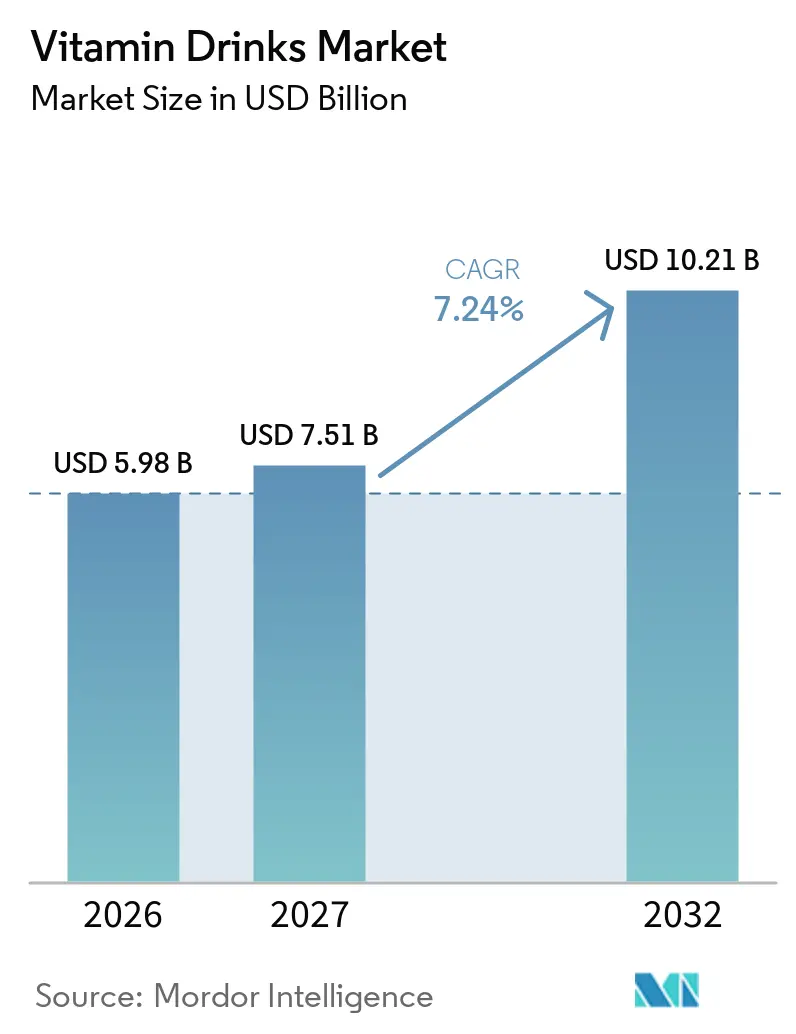
The vitamin drinks market size is expected to grow from USD 5.98 billion in 2026 to USD 7.51 billion in 2027 and is forecast to reach USD 10.21 billion by 2032 at a 7.24% CAGR over 2027-2032. The vitamin drinks market is shifting from tablet-based supplements toward drinkable formats that combine hydration with micronutrient intake. Consumer demand for lower-sugar alternatives to conventional carbonated beverages and sustained interest in preventive health support this shift. Companies are expanding their portfolios with zero-sugar waters, powders, and products tailored to specific daily consumption occasions. The vitamin drinks market also benefits from wider availability through supermarkets, online stores, pharmacies, and convenience stores. Clear product claims and nutrient stability create opportunities for companies to build consumer confidence by demonstrating that products deliver the benefits stated on their labels.
Key Report Takeaways
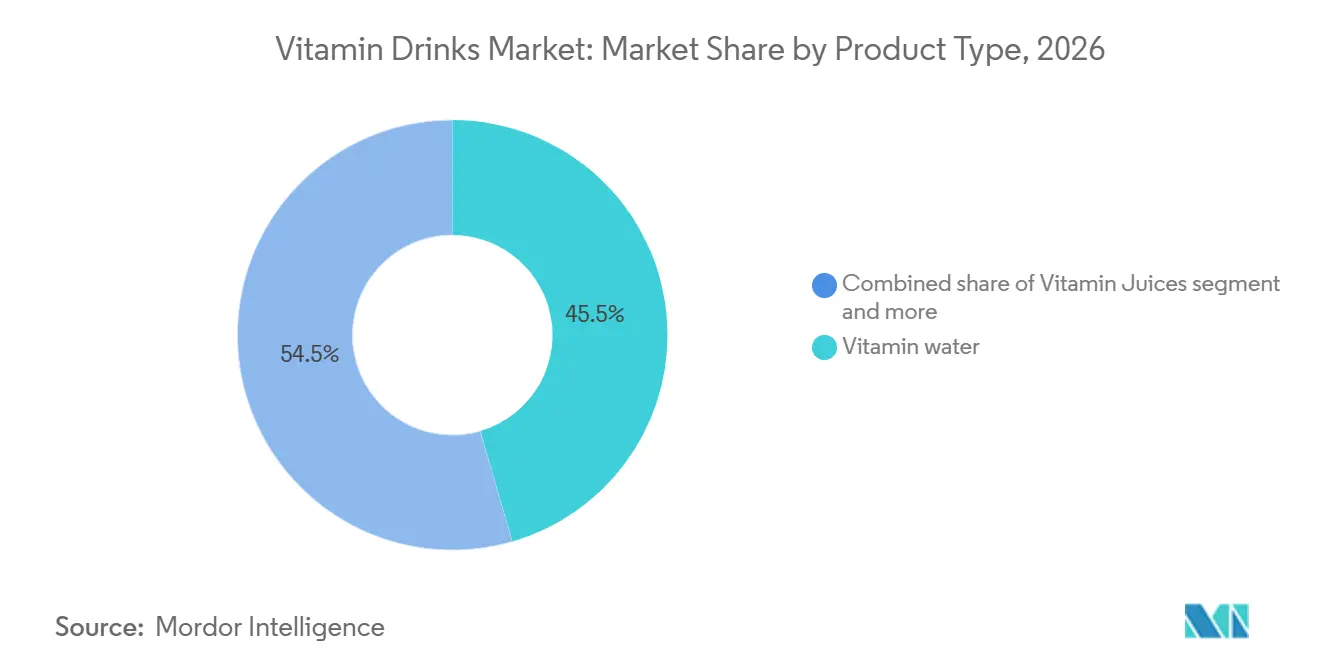
- By product type, vitamin water held 45.51% of the vitamin drinks market share in 2026, while vitamin juices are forecast to expand at a CAGR of 8.20% through 2032.
- By vitamin type, vitamin C held 34.45% of the vitamin drinks market share in 2026, while vitamin B-complex is forecast to expand at a CAGR of 8.22% through 2032.
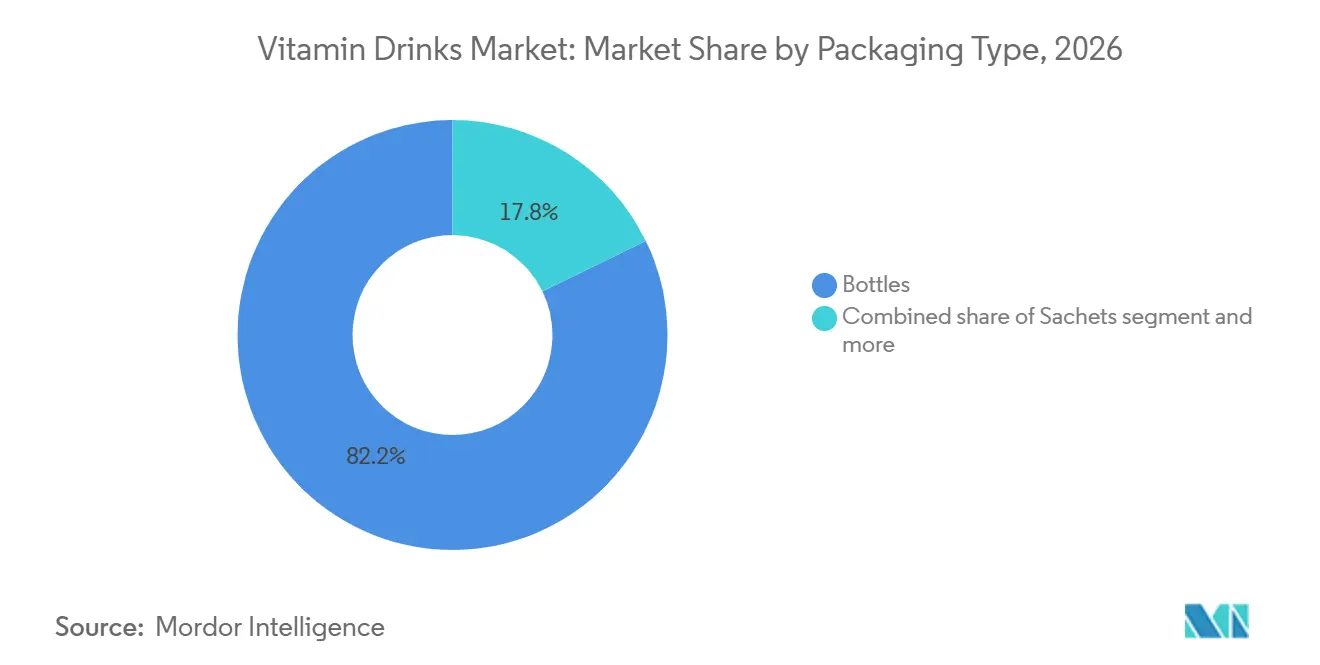
- By packaging type, bottles held 82.21% of the vitamin drinks market share in 2026, while sachets are forecast to expand at a CAGR of 8.23% through 2032.
- By distribution channel, supermarkets and hypermarkets held 45.13% of the vitamin drinks market share in 2026, while online retail stores are forecast to expand at a CAGR of 10.21% through 2032.
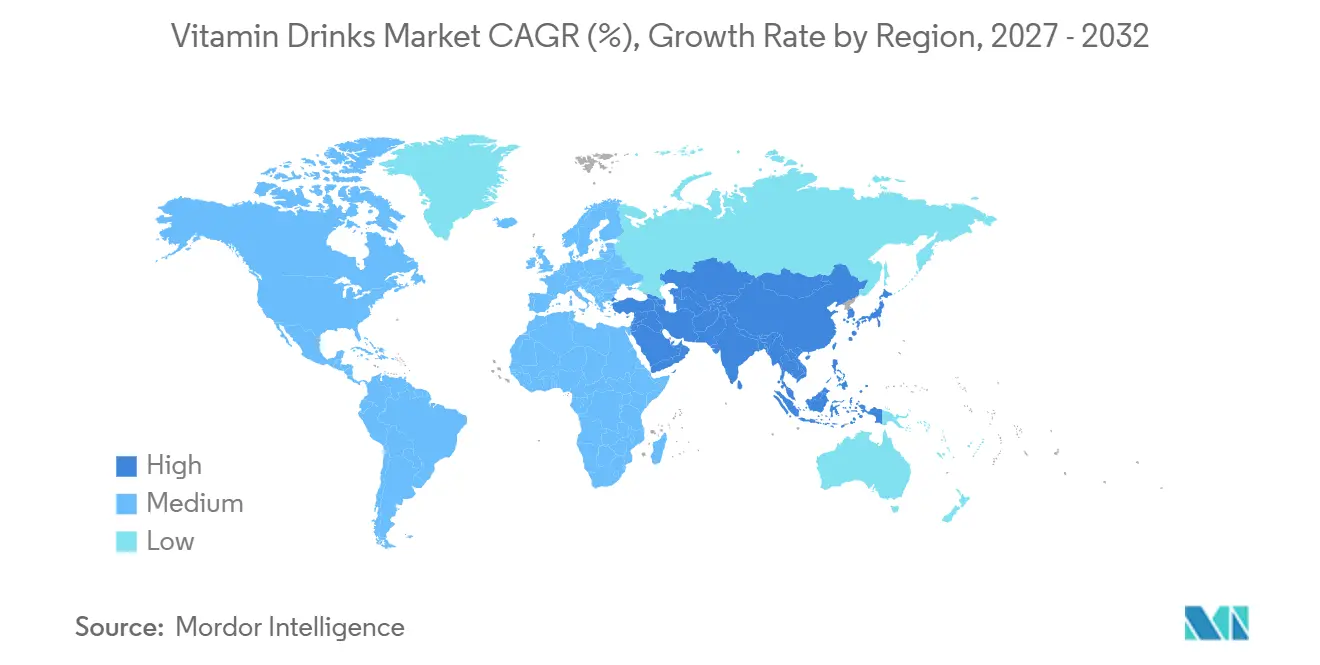
- By geography, North America held 35.81% of the vitamin drinks market share in 2026, while Asia-Pacific is forecast to expand at a CAGR of 9.12% through 2032.
Note: Market numbers in this report are based on Mordor Intelligence's proprietary estimation framework, which combines nine months of actuals with Q4 projections for base year 2026.
Market Trends and Insights
Drivers Impact Analysis of Vitamin Drinks Market of Vitamin Drinks Market*
| Driver | (~) % Impact on CAGR Forecast | Geographic Relevance | Impact Timeline |
|---|---|---|---|
| Rising demand for convenient micronutrient delivery | +2.0% | Global, strongest in North America and Asia-Pacific | Short term (≤ 2 years) |
| Increasing preference for low-sugar and zero-sugar vitamin drinks | +1.8% | Global, accelerated in Asia-Pacific and North America | Medium term (2–4 years) |
| Growing consumer focus on preventive health and immunity support | +1.5% | Global, strongest in North America and Europe | Medium term (2–4 years) |
| Increasing participation in sports, fitness, and active lifestyles | +1.2% | North America, Europe, and Asia-Pacific urban centers | Medium term (2–4 years) |
| Shift from conventional soft drinks to vitamin-fortified alternatives | +1.0% | Global, particularly North America, Europe, and Asia-Pacific | Medium term (2–4 years) |
| Innovation in vitamin-fortified beverage formulations and product offerings | +0.8% | Global, particularly North America and Asia-Pacific | Short to medium term (1–4 years) |
| Source: Mordor Intelligence | |||
Rising Demand for Convenient Micronutrient Delivery
Consumers increasingly seek beverages that offer nutritional benefits and convenient consumption, supporting demand for ready-to-drink vitamin products. For instance, in July 2026, according to the Food Industry Association’s (FMI) Power of Beverage report, consumers placed greater importance on functional beverage benefits, including hydration, energy, protein, and digestive health. Additionally, in August 2026, the National Restaurant Association’s Beverage Trends Report found that 83% of delivery customers would order beverages more frequently if providers improved packaging [1]. The report also highlighted the growing influence of Gen Z and millennials in driving beverage-only consumption occasions, particularly during the mid-afternoon.
Increasing Preference for Low-Sugar and Zero-Sugar Vitamin Drinks
Consumers are increasingly monitoring their sugar intake and choosing beverages with reduced or no added sugar, creating opportunities for low-sugar and zero-sugar vitamin drinks. This shift reflects growing consumer awareness of the potential health implications of excessive sugar consumption and a preference for healthier beverage alternatives. For instance, in December 2025, according to the International Food Information Council (IFIC), 75% of Americans were actively trying to limit or avoid sugar. This included 61% who were trying to limit their sugar intake and 14% who were attempting to avoid sugar entirely. Among consumers managing their sugar consumption, 63% specifically targeted added sugars, while 27% selected products labeled as reduced sugar [2].
Growing Consumer Focus on Preventive Health and Immunity Support
Consumers increasingly seek beverages that deliver targeted nutritional and wellness benefits, driving demand for vitamin drinks positioned to support everyday health and immunity. For instance, in September 2026, according to the Food Industry Association’s (FMI) research, 16% of Gen Z consumers sought immune support when selecting beverages, compared with 13% of adults overall. In addition, 24% of Gen Z consumers looked for B vitamins in beverages, versus 17% of adults [3]. These findings underscore growing consumer interest in beverages that offer nutritional benefits beyond basic refreshment, particularly among younger demographics, creating opportunities for vitamin drink manufacturers to develop convenient products fortified with vitamins C and D, B-complex vitamins, and minerals such as zinc to support consumers’ everyday nutritional needs.
Increasing Participation in Sports, Fitness, and Active Lifestyles
Fitness routines and active lifestyles are driving recurring consumption of electrolyte- and vitamin-C-rich vitamin drinks. Consumers increasingly drink these beverages before or after exercise and during physical activity as convenient options for hydration and nutritional support. Consumption is also expanding beyond gyms to everyday settings, including workplaces, commuting, and other on-the-go occasions, thereby broadening the potential customer base. This shift encourages manufacturers to offer portable, resealable packaging formats and develop products tailored to different activity levels and consumption occasions. By clearly communicating hydration and nutritional benefits, vitamin drink brands can strengthen their appeal among fitness-conscious consumers and encourage more frequent consumption.
Restraints Impact Analysis of Vitamin Drinks Market of Vitamin Drinks Market*
| Restraint | (~) % Impact on CAGR Forecast | Geographic Relevance | Impact Timeline |
|---|---|---|---|
| High formulation and quality-control costs | -0.5% | Global, most acute in emerging markets with limited production infrastructure | Medium term (2–4 years) |
| Consumer skepticism toward unsubstantiated health claims | -0.4% | North America, Europe, and urbanizing Asia-Pacific markets | Medium term (2–4 years) |
| Nutrient stability and flavor degradation challenges throughout shelf life | -0.4% | Global, particularly regions with high temperatures and limited cold-chain infrastructure | Medium to long term (2–5 years) |
| Fragmented regulatory frameworks for vitamins, botanicals, and novel ingredients | -0.3% | Global, particularly across Asia-Pacific, North America and Europe due to differences in regulatory requirements | Medium to long term (2–5 years) |
| Source: Mordor Intelligence | |||
High Formulation and Quality-Control Costs
Vitamin drinks require more complex manufacturing processes than conventional beverages because vitamins can lose potency when exposed to heat, light, and pH changes. Manufacturers must use appropriate protective systems, specialized processing methods, and regular quality testing to maintain nutrient levels throughout the product’s shelf life. Certification requirements for functional foods also emphasize ensuring that nutritional information accurately reflects fortified nutrient content. These requirements can increase production costs, particularly for smaller manufacturers with limited production volumes and restricted access to specialized technologies. The addition of multiple vitamins, minerals, and other functional ingredients further increases formulation and testing requirements.
Consumer Skepticism Toward Unsubstantiated Health Claims
Health claims play a critical role in the vitamin drinks market; however, unsupported or unclear benefit statements can erode consumer trust. Regulatory requirements for nutrition and health claims vary across markets, requiring manufacturers to substantiate product messaging with appropriate evidence and comply with applicable standards. These requirements increase the need for clear labeling, transparent ingredient information, and robust quality control practices. While independent certifications and accurate product communication can strengthen consumer confidence, they also increase product development time and costs. These challenges are particularly significant for new and smaller brands that have not yet established a reputation for consistent product quality or earned the trust of retailers and consumers.
*Our forecasts treat driver/restraint impacts as directional, not additive. The impact forecasts reflect baseline growth, mix effects, and variable interactions.
Vitamin Drinks Market Segment Analysis
By Product Type:
Vitamin Water Leads Volume While Vitamin Juices Expand FasterVitamin water accounted for 45.51% of the vitamin drinks market share in 2026. Vitamin water holds a leading position due to its familiarity as an everyday hydration option and its ability to provide vitamins in a convenient beverage format. Its ready-to-drink format and similarity to conventional bottled water make it easy for consumers to incorporate into their daily routines. The category benefits from established bottled water distribution networks, broad retail availability, and strong consumer recognition. Ongoing product innovation, including diverse flavor profiles, reduced-sugar formulations, and targeted nutritional benefits, further enhances its appeal across consumer preferences and consumption occasions.
Vitamin juices are forecast to expand at a CAGR of 8.20% through 2032. Vitamin juices support market growth by combining familiar fruit flavors with nutritional benefits. They enable premium positioning and appeal to consumers seeking convenient ways to incorporate vitamins into their diets. Vitamin teas and infusions present additional growth opportunities by leveraging established tea-drinking habits and adding variety to everyday beverage consumption. Other formats, including effervescent powders, wellness shots, and concentrates, further expand consumer choice through convenient serving options and diverse distribution channels. These formats enable manufacturers to develop targeted products for specific consumption occasions, including energy, immunity, recovery, and hydration, while addressing varied lifestyle preferences.

By Vitamin Type:
Vitamin C Holds the Largest Share While B-Complex Gains MomentumVitamin C accounted for 34.45% of the vitamin drinks market share in 2026. Vitamin C holds a strong position in the vitamin drinks market due to its widespread consumer recognition and established association with immune system function. Its familiarity makes it easier for manufacturers to communicate its nutritional benefits and incorporate it into beverages designed for everyday consumption. Continued consumer interest in maintaining overall wellness further supports demand for vitamin C-enriched drinks across different retail channels. Its versatility allows manufacturers to combine vitamin C with other vitamins, minerals, and hydration ingredients, creating diverse formulations that cater to a broad range of nutritional preferences.
Vitamin B-Complex is forecast to expand at a CAGR of 8.22% through 2032. Vitamin B-complex drinks are gaining traction due to consumer interest in energy metabolism and nutritional support for everyday activities. Their versatility allows manufacturers to develop formulations that address different nutritional preferences and consumption occasions. Other vitamin types, including vitamins D, E, and K, along with multivitamin blends, further expand the category by offering a wider range of nutrients in a single serving. This variety enables brands to cater to diverse consumer needs through targeted and combined formulations. Regional preferences, nutritional priorities, and regulatory requirements also encourage manufacturers to adapt vitamin combinations and product positioning to individual markets.
By Packaging Type:
Bottles Remain Established While Sachets Gain RelevanceBottles accounted for 82.21% of the vitamin drinks market share in 2026. Bottles remain a preferred packaging format for vitamin drinks due to their convenience, portability, and resealable design. Their compatibility with refrigerated retail displays and established beverage distribution infrastructure supports wide market availability. Bottles allow consumers to combine hydration and nutrient intake in a single purchase while offering flexibility across different consumption occasions. Their suitability for both everyday beverages and premium functional formulations enables manufacturers to serve diverse consumer preferences and strengthen product accessibility. The resealable nature of bottles also reduces waste by allowing consumers to consume the product in multiple sittings, making them practical for on-the-go lifestyles.
Sachets are forecast to expand at a CAGR of 8.23% through 2032. Sachets and pouches expand packaging options in the vitamin drinks market by offering convenient portion sizes, lightweight handling, and easy portability. Their compact design supports online subscriptions and on-the-go consumption, making them suitable for consumers seeking practical single-serve formats. Pouches provide additional flexibility for children's beverages and institutional applications, while cans offer manufacturers another option for product differentiation. Packaging selection requires manufacturers to balance convenience, product protection, and clear nutritional labeling, supporting consumer confidence and broader market accessibility.
By Distribution Channel:
Supermarkets Lead Sales While Online Retail Gains SpeedSupermarkets and hypermarkets accounted for 45.13% of the vitamin drinks market share in 2026. Supermarkets and hypermarkets play an important role in the distribution of vitamin drinks due to their high customer footfall, wide product selection, and refrigerated displays. These stores provide strong product visibility by placing vitamin drinks alongside bottled water, sports drinks, and other functional beverages, allowing consumers to compare options. Promotional displays, product sampling, and multipack offerings further support product discovery and repeat purchases. Their broad reach also enables established brands to strengthen consumer recognition and maintain regular household demand.
Online retail stores are forecast to expand at a CAGR of 10.21% through 2032. Online retail stores are expanding access to vitamin drinks by enabling convenient product discovery, direct ordering, and subscription-based purchasing. Digital platforms also allow manufacturers to offer a wider range of flavors, formulations, and packaging options, including products that are otherwise limited in physical stores. Convenience stores, fitness outlets, and travel retail further strengthen market accessibility by catering to consumers seeking ready-to-drink beverages away from home. These channels help brands connect with commuters, office workers, and fitness-conscious consumers while creating additional opportunities to reach different customer segments and consumption occasions.
Geography Analysis
North America
North America held 35.81% of the vitamin drinks market share in 2026. North America benefits from an established functional beverage culture, extensive refrigerated retail networks, and a strong brand presence across physical and digital distribution channels. Growing consumer attention to nutritional quality and product transparency is encouraging manufacturers to develop beverages with balanced nutrient profiles and reduced added sugar. Vitamin drinks are gaining relevance across a wider range of everyday consumption occasions, including workplaces, commuting, and general hydration, as well as traditional sports and fitness settings. This creates opportunities for established brands to expand their portfolios with specialized formulations and reach consumers beyond the athletic and sports nutrition segments.
Asia-Pacific
Asia-Pacific is forecast to expand at a CAGR of 9.12% through 2032, making it the fastest-growing regional market. Asia-Pacific is expected to record the fastest growth in the vitamin drinks market, supported by large urban populations, rising disposable incomes, and expanding digital retail networks. Increasing access to functional beverages is creating opportunities for manufacturers to reach a wider consumer base through varied price points and convenient packaging formats. Markets such as China and India offer opportunities to expand product availability, while established beverage consumption habits in Japan support demand for convenient premium offerings suited to workplace and commuting routines. Manufacturers are increasingly focusing on appealing flavors, accessible pricing, portable packaging, and formulations tailored to everyday nutritional needs, thereby supporting broader adoption across the region.
Europe, South America, and Middle East and Africa
Europe offers opportunities for vitamin drink manufacturers through its established functional beverage market and well-defined regulatory framework, which encourages transparent labeling, scientifically supported claims, and consistent product quality. South America presents growth potential as consumer interest in sports nutrition and active lifestyles drives demand for vitamin-enriched beverages, particularly those featuring locally preferred flavors. The Middle East and Africa offer opportunities through urbanization, the expansion of modern retail networks, and growing interest in wellness-oriented products. Across these regions, manufacturers can strengthen market access by adapting formulations, packaging sizes, pricing, and distribution strategies to local consumer preferences and regulatory requirements, allowing brands to address diverse market needs and expand their consumer reach.
Competitive Landscape
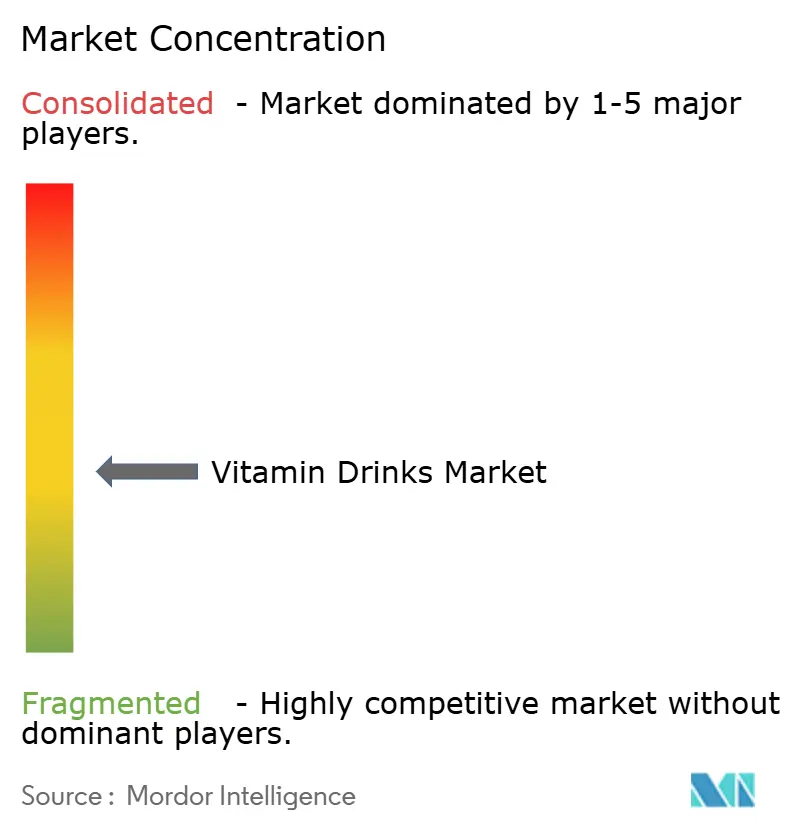
The vitamin drinks market has a moderately fragmented competitive structure, with established beverage manufacturers, regional specialists and emerging brands serving different consumer preferences and consumption occasions. Large companies benefit from strong brand recognition, established retail relationships, extensive distribution networks, and manufacturing capabilities. These strengths support wider product availability and enable manufacturers to expand their portfolios across vitamin water, fortified juices, hydration beverages, and other functional formats.
Competition is increasingly encouraging manufacturers to focus on product innovation, reduced-sugar formulations, convenient packaging, and combinations of vitamins, minerals, electrolytes, and other functional ingredients. This allows brands to address multiple nutritional preferences while creating differentiated product offerings. Established beverage companies can leverage their existing portfolios and distribution capabilities to strengthen their market presence, while specialized brands can build recognition through focused product positioning and targeted consumer segments.
Regional manufacturers also contribute to market diversity by developing products that reflect local tastes, purchasing preferences and consumption habits. Their understanding of domestic markets allows them to offer relevant flavors, accessible pricing and convenient packaging formats. Opportunities also exist for specialized formulations targeting specific nutritional needs, including women's wellness, immunity and everyday energy support. Overall, competition is shaped by a combination of manufacturing scale, brand recognition, product differentiation and the ability to adapt to regional consumer preferences.
Vitamin Drinks Industry Leaders
-
The Coca-Cola Company (vitaminwater)
-
PepsiCo, Inc. (Propel)
-
Danone S.A. (Mizone)
-
Suntory Holdings Limited (C.C. Lemon)
-
Otsuka Holdings Co., Ltd. (Oronamin C)
- *Disclaimer: Major Players sorted in no particular order
Vitamin Drinks Market Companies Covered in this Report
- The Coca-Cola Company (vitaminwater)
- PepsiCo, Inc. (Propel)
- Danone S.A. (Mizone)
- Suntory Holdings Limited (C.C. Lemon)
- Otsuka Holdings Co., Ltd. (Oronamin C)
- Nestlé S.A. (MILO)
- Vitamin Well Group AB (Vitamin Well)
- Red Bull GmbH (Red Bull Energy Drink)
- Celsius Holdings, Inc. (CELSIUS)
- Monster Beverage Corporation (Monster Energy)
- Talking Rain Beverage Company (Sparkling Ice)
- Karma Culture LLC (Karma)
- Nichols plc (VITHIT)
- Carlsberg A/S (Purdey’s)
- Kwangdong Pharmaceutical Co., Ltd. (Vita500)
- Vital Products PLC (Vitavite)
- Vitabiotics Ltd. (Wellman)
- Taisho Pharmaceutical Co., Ltd. (Lipovitan)
- The Vida World Sdn. Bhd. (VIDA C)
- PT Djojonegoro C-1000 (YOU.C1000)
- Satopradhan
Recent Industry Developments in Vitamin Drinks Market
- May 2026: PepsiCo introduced Propel Clear Protein, a ready-to-mix powdered beverage that provides 20 g of whey protein, 3 g of fiber, and electrolytes per serving. Available in Peach Ginger, Apple Pear, and Watermelon flavors, the product supports muscle health, digestive health, and hydration. The launch expands Propel’s functional hydration portfolio, which also includes vitamin-enriched Propel Fitness Water and Propel Immune Support.
- February 2026: Nestlé launched Nestlé Vital, a science-backed range of nutritional drinks designed to support healthy aging, energy, strength, sleep, and recovery. The initial portfolio includes eight powdered shake products in four flavors, formulated with protein, fiber, vitamins, minerals, and patented bioactive blends. Nestlé initially launched the range in Latin America and plans to expand into Europe and Asia.
- February 2026: Capri-Sun launched +Electrolytes, its first functional beverage containing added electrolytes and vitamins. Available in Mango-Peach and Blackberry-Raspberry flavors, the 330 mL resealable pouch provides magnesium and vitamins C, B1, and B6 to support electrolyte balance, immune function, and energy metabolism. This launch expands the company’s portfolio into the functional beverages market, targeting health-conscious consumers.
Global Vitamin Drinks Market Report Scope
The vitamin drinks market comprises non-alcoholic beverages fortified with vitamins to provide convenient hydration and nutritional benefits. The market is segmented by Product Type, Vitamin Type, Packaging Type, Distribution Channel, and Geography. Based on Product Type, it includes Vitamin Water, Vitamin Juices, Vitamin Tea and Infusions, and Other Vitamin Drinks. Based on Vitamin Type, it includes Vitamin A, Vitamin B-Complex, Vitamin C, and Other Vitamin Types. Based on Packaging Type, it includes Bottles, Sachets, Pouches, and Other Packaging Types. Based on Distribution Channel, the categories include Supermarkets and Hypermarkets, Pharmacies & Health Stores, Online Retail Stores, and Other Distribution Channels. Geographically, the market covers North America, Europe, Asia-Pacific, South America, and the Middle East and Africa. Market forecasts are provided in terms of value (USD).
Segmentation Overview
| Vitamin Water |
| Vitamin Juices |
| Vitamin Tea and Infusions |
| Other Vitamin Drinks |
| Vitamin A |
| Vitamin B-Complex |
| Vitamin C |
| Other Vitamin Types |
| Bottles |
| Sachets |
| Pouches |
| Other Packaging Type |
| Supermarkets and Hypermarkets |
| Pharmacies and Health Stores |
| Online Retail Stores |
| Other Distribution Channels |
| North America | United States |
| Canada | |
| Mexico | |
| Rest of North America | |
| Europe | United Kingdom |
| Germany | |
| France | |
| Italy | |
| Spain | |
| Netherlands | |
| Poland | |
| Belgium | |
| Sweden | |
| Rest of Europe | |
| Asia-Pacific | China |
| Japan | |
| India | |
| Australia | |
| Indonesia | |
| South Korea | |
| Thailand | |
| Singapore | |
| Rest of Asia-Pacific | |
| South America | Brazil |
| Argentina | |
| Colombia | |
| Chile | |
| Peru | |
| Rest of South America | |
| Middle East and Africa | South Africa |
| Saudi Arabia | |
| United Arab Emirates | |
| Nigeria | |
| Egypt | |
| Morocco | |
| Turkey | |
| Rest of Middle East and Africa |
| By Product Type | Vitamin Water | |
| Vitamin Juices | ||
| Vitamin Tea and Infusions | ||
| Other Vitamin Drinks | ||
| By Vitamin Type | Vitamin A | |
| Vitamin B-Complex | ||
| Vitamin C | ||
| Other Vitamin Types | ||
| By Packaging Type | Bottles | |
| Sachets | ||
| Pouches | ||
| Other Packaging Type | ||
| By Distribution Channel | Supermarkets and Hypermarkets | |
| Pharmacies and Health Stores | ||
| Online Retail Stores | ||
| Other Distribution Channels | ||
| By Geography | North America | United States |
| Canada | ||
| Mexico | ||
| Rest of North America | ||
| Europe | United Kingdom | |
| Germany | ||
| France | ||
| Italy | ||
| Spain | ||
| Netherlands | ||
| Poland | ||
| Belgium | ||
| Sweden | ||
| Rest of Europe | ||
| Asia-Pacific | China | |
| Japan | ||
| India | ||
| Australia | ||
| Indonesia | ||
| South Korea | ||
| Thailand | ||
| Singapore | ||
| Rest of Asia-Pacific | ||
| South America | Brazil | |
| Argentina | ||
| Colombia | ||
| Chile | ||
| Peru | ||
| Rest of South America | ||
| Middle East and Africa | South Africa | |
| Saudi Arabia | ||
| United Arab Emirates | ||
| Nigeria | ||
| Egypt | ||
| Morocco | ||
| Turkey | ||
| Rest of Middle East and Africa | ||
Key Questions Answered in the Report
What is the projected value of vitamin drinks by 2032?
The market is forecast to reach USD 10.21 billion by 2032, growing at a 7.24% CAGR over 2027-2032.
Which product type leads vitamin drink sales?
Vitamin water led with 45.51% share in 2026, supported by its familiar hydration format and broad retail distribution.
Why are zero-sugar vitamin drinks gaining attention?
Consumers are seeking reduced-sugar products, and companies are responding with products that retain functional benefits and familiar taste.
Which sales channel is expanding fastest for vitamin drinks?
Online retail stores are forecast to expand at a CAGR of 10.21% through 2032 as they support discovery, subscriptions, and direct ordering.