
Veterinary Surgical Procedures Market Size and Share
Market Overview
| Study Period | 2021 - 2032 |
|---|---|
| Market Size (2027) | USD 54.86 Billion |
| Market Size (2032) | USD 79.27 Billion |
| Growth Rate (2026 - 2032) | 7.64 % |
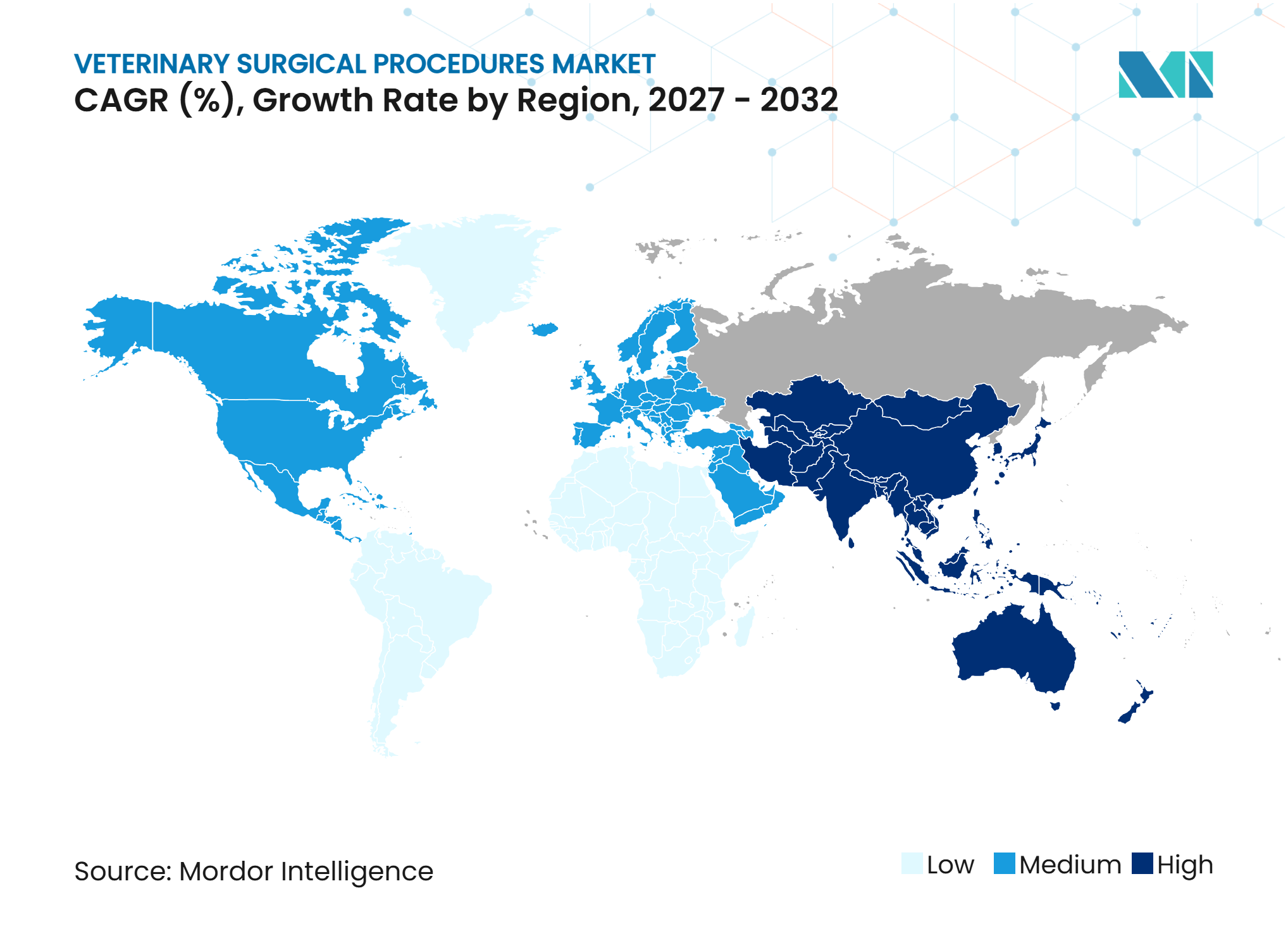
| Fastest Growing Market | Asia-Pacific |
| Largest Market | North America |
| Market Concentration | Medium |
Major Players *Disclaimer: Major Players sorted in no particular order Image © Mordor Intelligence. Reuse requires attribution under CC BY 4.0. | |
Veterinary Surgical Procedures Market Analysis by Mordor Intelligence
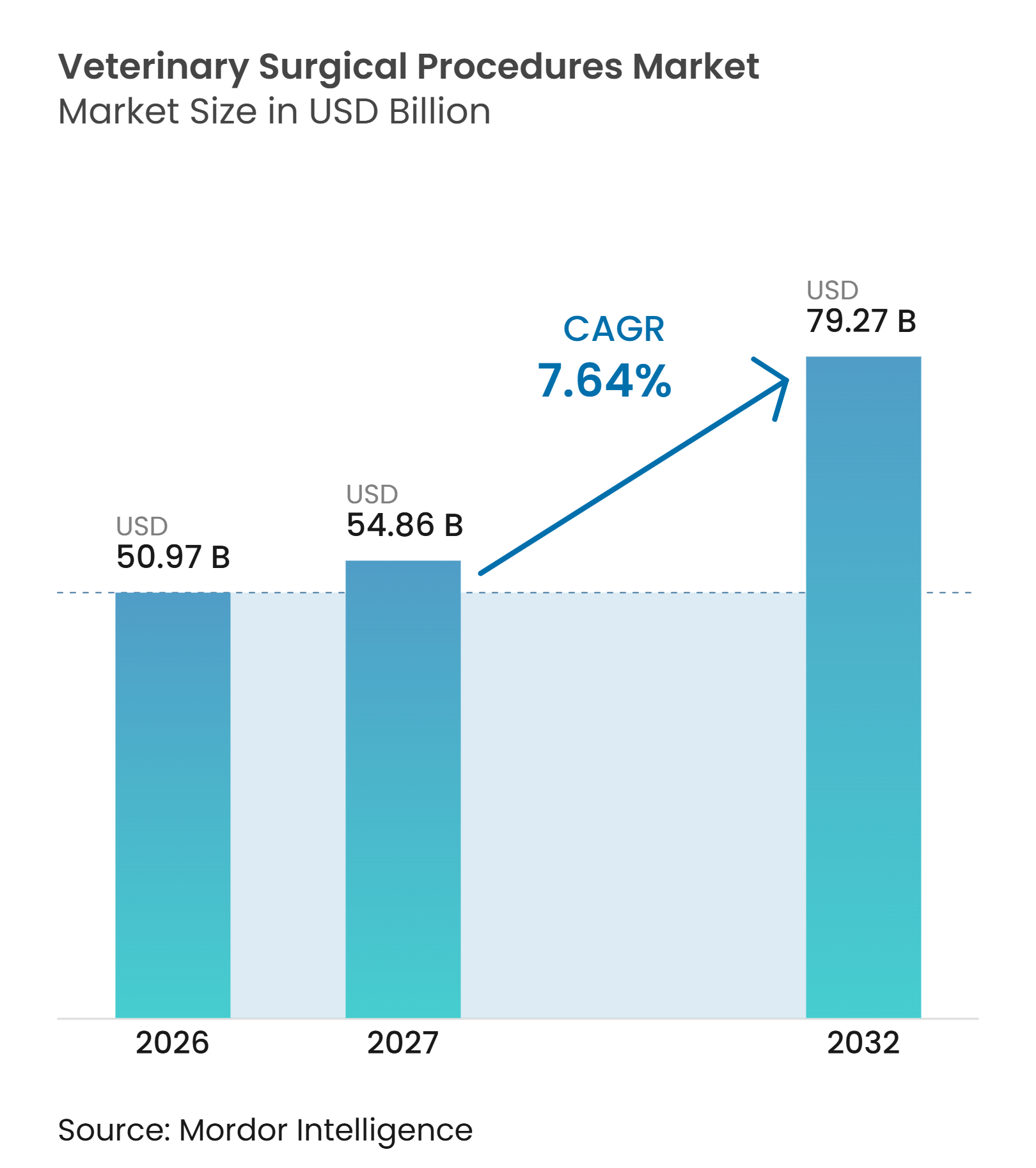
The Veterinary Surgical Procedures Market size is projected to be USD 50.97 billion in 2026, USD 54.86 billion in 2027, and reach USD 79.27 billion by 2032, growing at a CAGR of 7.64% from 2027 to 2032.
Rising companion-animal ownership, stronger owner expectations for clinical care, and broader insurance use are increasing the number of cases that can move from diagnosis to surgery. In North America, pet health insurance gross written premiums reached USD 5.7 billion in 2025, while the insured pet population reached 7 million, which supported approvals for expensive emergency and elective care. The veterinary surgical procedures market is also benefiting from more referral hospitals, corporate clinic networks, and general-practice investment in surgical suites. However, procedure affordability, uneven specialist availability, and higher distribution costs can limit access, especially outside large urban centers. The veterinary surgical procedures market therefore has room to expand where financing, training, and lower-cost technology improve the ability of routine clinics to provide safe surgical care.
Key Report Takeaways
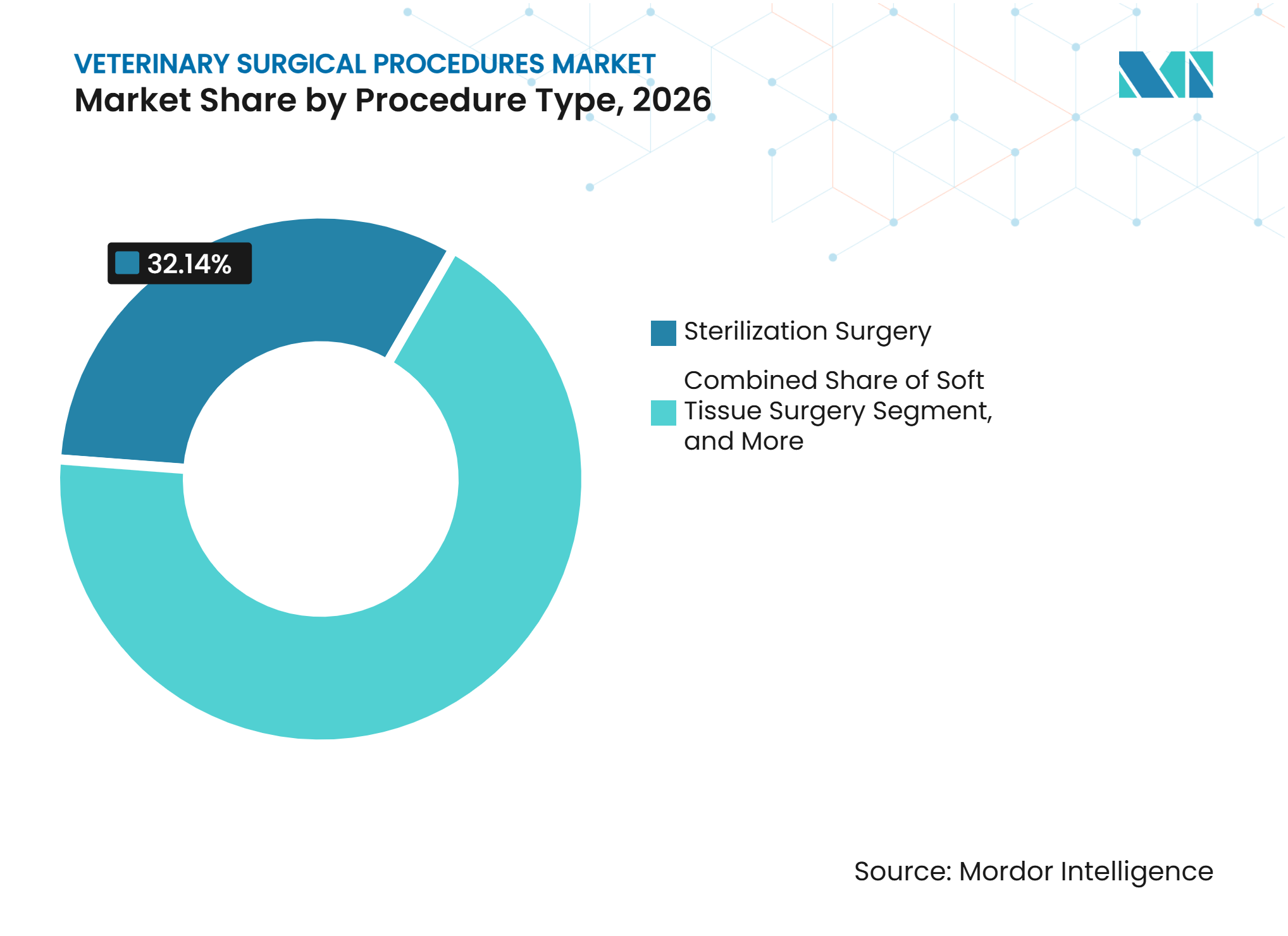
- By procedure type, sterilization surgery held 32.14% of the veterinary surgical procedures segment share in 2026, while soft tissue surgery is forecast to grow at an 8.25% CAGR through 2032.
- By animal type, companion animals held 68.45% of the veterinary surgical procedures segment share in 2026, while livestock and poultry is forecast to grow at an 8.68% CAGR through 2032.
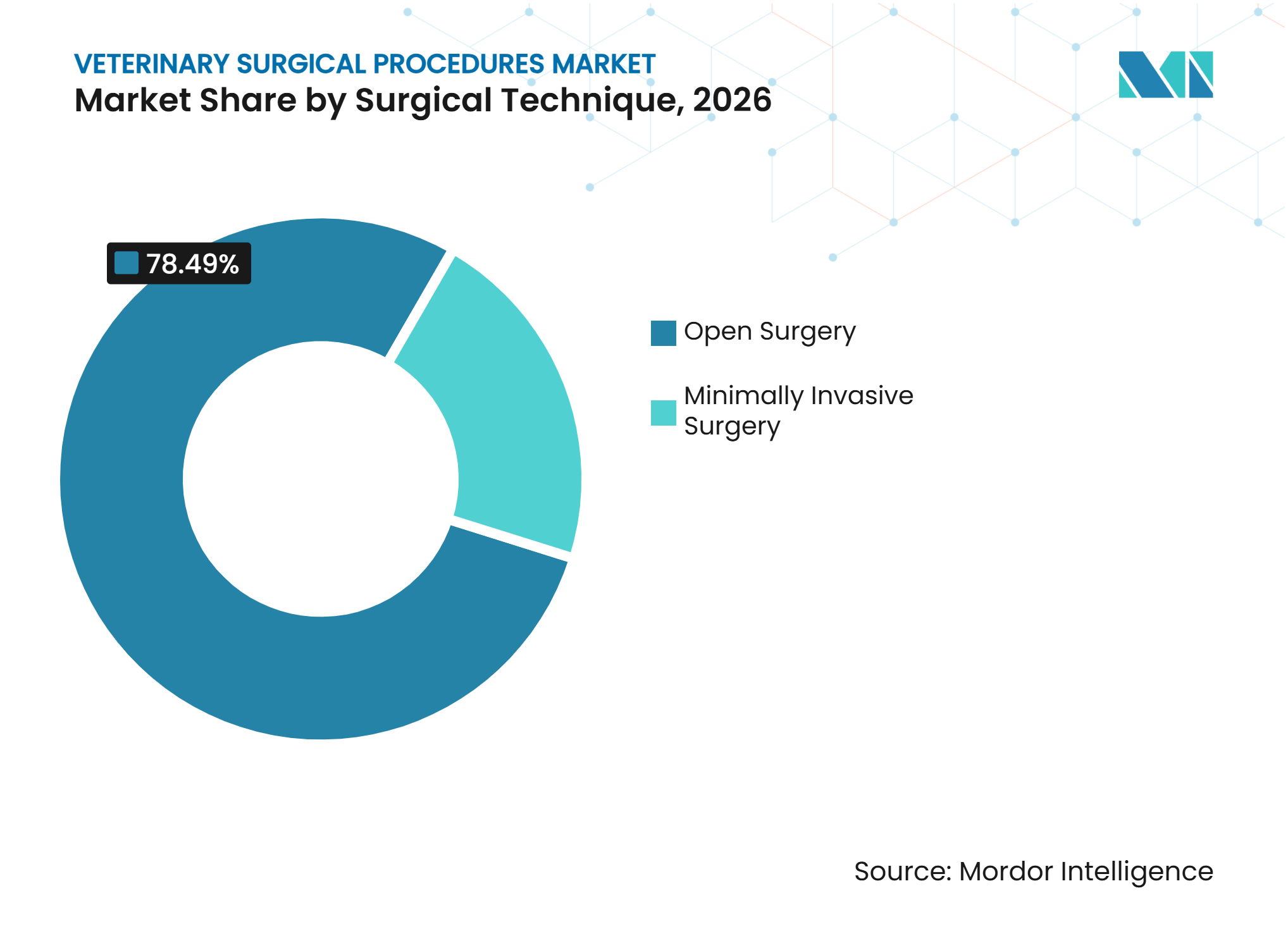
- By surgical technique, open surgery held 78.49% of the veterinary surgical procedures segment share in 2026, while minimally invasive surgery is forecast to grow at a 9.31% CAGR through 2032.
- By end user, veterinary hospitals held 56.32% of the veterinary surgical procedures segment share in 2026, while veterinary clinics are forecast to grow at a 9.79% CAGR through 2032.
- By geography, North America held 39.58% of the veterinary surgical procedures segment share in 2026, while Asia-Pacific is forecast to grow at a 10.43% CAGR through 2032.
Note: Market numbers in this report are based on Mordor Intelligence's proprietary estimation framework, which combines nine months of actuals with Q4 projections for base year 2026.
Market Trends and Insights
Drivers Impact Analysis of Veterinary Surgical Procedures Market*
| Driver | (~) % Impact on CAGR Forecast | Geographic Relevance | Impact Timeline |
|---|---|---|---|
| Rising Pet Ownership, Pet Humanization, and Insurance Penetration | +1.8% | Global, most pronounced in North America and Europe | Long term (≥ 4 years) |
| Adoption of Minimally Invasive and Precision Veterinary Surgery | +1.5% | North America, Europe, and emerging Asia-Pacific | Medium term (2-4 years) |
| Expansion of Referral Hospitals and Corporate Veterinary Networks | +1.2% | North America, Europe, and core Asia-Pacific markets | Medium term (2-4 years) |
| Growth in Preventive, Dental, and Sterilization Procedures | +1.0% | Global, led by North America and Western Europe | Short term (≤ 2 years) |
| Patient-Specific Implants and 3D-Enabled Orthopedic Planning | +0.6% | North America and Europe, with spillover to Asia-Pacific | Long term (≥ 4 years) |
| Procedure-Linked Training and Education Ecosystems | +0.5% | Global, with early gains in North America, Europe, and Southeast Asia | Medium term (2-4 years) |
| Source: Mordor Intelligence | |||
Rising Pet Ownership, Pet Humanization, and Insurance Penetration
Pet ownership is becoming more closely tied to spending on preventive, specialty, and emergency veterinary care. FEDIAF reported 299 million pets in European households in 2025, while the European pet food market reached EUR 29.3 billion, showing continued household commitment to pet care. In North America, 7 million insured pets and USD 5.7 billion in gross written premiums in 2025 widened the financial base for covered procedures. This financing can reduce the immediate budget barrier that often prevents owners from approving surgery. It also supports the veterinary surgical procedures market by moving more elective and complex cases into clinic schedules. The effect is strongest where insurance products, referral systems, and specialist care are already established.
Adoption of Minimally Invasive and Precision Veterinary Surgery
Minimally invasive surgery is becoming more practical for general practices as equipment access and procedural training improve. A 2025 comparative study in 60 dogs found that laparoscopic ovariectomy was associated with lower inflammatory and oxidative-stress markers than open surgery, alongside faster recovery.[1] A 2025 review also found that laparoscopy is expanding in companion-animal oncology, including abdominal tumor management.[2] These clinical results support investment in laparoscopy beyond routine sterilization. KARL STORZ unified its United States, Canada, and veterinary operations in 2025 to strengthen commercial growth, innovation, and customer service across North America. The veterinary surgical procedures market is growing as procedures that once required referral become possible in better-equipped local clinics.
Expansion of Referral Hospitals and Corporate Veterinary Networks
Corporate veterinary networks are adding referral capacity and concentrating complex care in facilities designed for high-acuity cases. In 2025, Veritas Veterinary Partners opened a 10,000-square-foot surgical facility in Tustin, California, with 5 surgical suites and a 128-slice CT scanner, and a 28,000-square-foot referral hospital in San Rafael, California. MedVet also opened 2 emergency and specialty hospitals in central Ohio in 2025, each providing around-the-clock surgical, neurology, and critical-care services. These investments place surgeons, advanced imaging, anesthesia support, and intensive-care capacity in the same care pathway. They help the veterinary surgical procedures market handle more orthopedic, neurological, oncological, and emergency cases. The hub-and-spoke model also enables primary clinics to retain routine care while sending complex procedures to specialist hospitals.
Growth in Preventive, Dental, and Sterilization Procedures
Preventive care is raising surgical demand through earlier diagnosis, dental intervention, and routine sterilization. Trupanion reported that dog dental claims increased 34% in volume and 38% in average claim amount between 2020 and 2024, while cat dental claims increased 20% in volume and 37% in average claim amount. Its reported dental claim payouts increased from USD 3.1 million in 2020 to USD 11.5 million in 2024.[3] AAHA dental guidance continues to frame professional cleaning and intraoral radiography as elements of appropriate dental care. Sterilization maintains a dependable procedure base across companion-animal care and many population-management programs. This supports the veterinary surgical procedures market even when spending on advanced procedures becomes more selective.
Restraints Impact Analysis of Veterinary Surgical Procedures Market*
| Restraint | (~) % Impact on CAGR Forecast | Geographic Relevance | Impact Timeline |
|---|---|---|---|
| High Cost of Advanced Procedures and Equipment | -1.5% | Global, most acute in emerging markets and rural North America | Short term (≤ 2 years) |
| Shortage of Skilled Veterinary Surgeons and Anesthesia Teams | -1.0% | Global, with highest severity in rural North America, Asia-Pacific, and Africa | Long term (≥ 4 years) |
| Limited Sterilization, Recovery, and Monitoring Capacity in Smaller Clinics | -0.7% | Primarily Asia-Pacific emerging markets, rural North America, and South America | Medium term (2-4 years) |
| Fragmented Payment, Financing, and Referral Pathways | -0.5% | Global, with greatest severity where pet insurance is limited | Medium term (2-4 years) |
| Source: Mordor Intelligence | |||
High Cost of Advanced Procedures and Equipment
The cost of care remains a direct constraint on procedure approval and advanced-equipment investment. A 2025 survey by PetSmart Charities and Gallup found that 52% of United States pet owners had skipped or declined recommended veterinary care in the preceding year. Among owners who skipped care, 71% identified cost as the reason, and 7% reported declining lifesaving surgery. AAHA found that 16% of owners experienced cost anxiety when specialty-care bills were below USD 500, and 50% did so below USD 1,000. High acquisition costs for laparoscopic towers, navigation systems, and 3D-printing capability reinforce the gap between referral hospitals and smaller clinics. The veterinary surgical procedures market may therefore expand more slowly where insurance, lending, and lower-cost equipment options remain limited.
Shortage of Skilled Veterinary Surgeons and Anesthesia Teams
The shortage of veterinarians and surgical support staff limits service coverage in rural and food-animal settings. The USDA identified 243 rural veterinary shortage areas across 46 United States states in 2025 and introduced measures intended to strengthen food-animal veterinary capacity.[4] AVMA reported that the shortage program is intended to improve recruitment and retention in rural and federal practice. Complex orthopedic, neurological, and minimally invasive procedures need teams with specialized surgical and anesthesia capability. Limited access to those teams can force owners to travel, defer care, or select lower-intensity treatment. Workforce distribution and retention therefore matter as much as graduate supply for the veterinary surgical procedures market. This pressure remains especially material where large geographic catchment areas are served by a small number of referral facilities.
*Our forecasts treat driver/restraint impacts as directional, not additive. The impact forecasts reflect baseline growth, mix effects, and variable interactions.
Veterinary Surgical Procedures Market Segment Analysis
By Procedure Type:
Sterilization Anchors Volume, Soft Tissue Care AdvancesSterilization surgery held 32.14% of the veterinary surgical procedures segment share in 2026 because it remains a frequent elective procedure for companion animals and many animal population programs. Its high volume gives clinics a predictable flow of procedures and supports routine investment in surgical rooms, anesthesia, and recovery processes. The 2025 canine study found that laparoscopic ovariectomy produced lower inflammatory and oxidative-stress markers than open surgery. This evidence gives clinics a clinical reason to use minimally invasive methods where equipment and training are available. Orthopedic procedures continue to require specialized implants, imaging, and surgeon expertise. Arthrex launched the OrthoLine MPL locking plate system for small animals in January 2025, with features designed for canine and feline bone anatomy. That product development reflects demand for veterinary-specific tools rather than adapted human devices. Ophthalmic and neurological procedures remain lower-volume services that are concentrated in referral hospitals. Their availability depends on specialist staffing, advanced diagnostics, and clear referral arrangements.
Soft tissue surgery has the highest projected growth rate among procedure types, with an 8.25% CAGR through 2032. The veterinary surgical procedures market size for this procedure group is supported by oncology-related operations and a broader range of abdominal, wound, and emergency cases. A 2025 review described expanding use of laparoscopy in companion-animal oncology, including applications for abdominal tumor management. The clinical value of lower-trauma techniques can make surgery more acceptable to owners when recovery time is a concern. Dental surgery is also gaining attention as insurers record higher claim volume and higher claim values. Routine dental services connect preventive care to surgical intervention when disease requires extraction or other procedures. The remaining procedure categories include exotic-animal and large-animal work. These cases form a smaller share of activity but require distinct training, equipment, and care settings.



By Animal Type:
Companion Animals Sustain Scale, Livestock Gains Surgical InvestmentCompanion animals held 68.45% of the veterinary surgical procedures market share in 2026, reflecting the depth of care delivered to dogs and cats. The segment covers sterilization, dental procedures, orthopedic repair, tumor removal, neurological care, and other specialty interventions. North American insurance coverage reached 7 million pets in 2025, offering a financing route for a larger share of those treatments. The veterinary surgical procedures market for companion animals is strengthened when owners can choose treatment based on clinical need rather than immediate cost alone. Breed-related health needs can also influence the mix of surgical procedures. A 2025 study of a United Kingdom teaching hospital examined changing soft-tissue referral patterns in cats and dogs between 2008 and 2018. Referral centers can use these changing case patterns to shape training, equipment, and specialty staffing. Companion-animal care will continue to depend on access to insurance, skilled teams, and emergency capacity. Smaller practices remain important because they identify cases and determine whether referral occurs.
Livestock and poultry are the fastest-growing animal category, with a projected 8.68% CAGR through 2032. Food security, herd productivity, and expanding food-animal capacity contribute to the demand for reproductive, digestive, and musculoskeletal procedures. The USDA Rural Veterinary Action Plan, launched in 2025, includes efforts to improve food-animal veterinary workforce capacity. This policy direction addresses a service gap that restricts access to veterinary interventions in rural communities. AVMA has emphasized the need to address recruitment and retention in shortage areas. Equine procedures are a specialized category with high individual case values. Colic surgery, reproductive intervention, and orthopedic treatment require facilities able to manage anesthesia and post-operative recovery. Livestock, poultry, and equine care each depend on mobile capacity, farm proximity, and a workforce prepared for species-specific procedures. Greater capacity in those areas can broaden the veterinary surgical procedures market beyond companion-animal settings.
By Surgical Technique:
Open Surgery Retains Access, Minimally Invasive Surgery Gains GroundOpen surgery held 78.49% of the veterinary surgical procedures segment share in 2026 because it is the core technique across species, procedure types, and clinic levels. It requires less capital equipment than laparoscopic or other minimally invasive approaches. This makes open surgery practical for rural providers, lower-tier clinics, emergency care, and large-animal operations. It remains essential for orthopedic fixation, trauma, many soft-tissue emergencies, and cases where wide exposure is clinically necessary. AAHA guidance and accreditation practices support consistent standards for surgical environments and patient care. These requirements encourage investment in basic surgical infrastructure even when advanced platforms are not feasible. Open procedures also have a broad base of surgeon familiarity and established consumable supply. The technique will remain central to the veterinary surgical procedures market as clinics balance clinical need with capital discipline. Its position illustrates that advanced methods supplement, rather than immediately replace, established surgical practice.
Minimally invasive surgery is projected to grow at a 9.31% CAGR through 2032, the fastest rate among surgical techniques. The veterinary surgical procedures market size for minimally invasive surgery is expanding as more clinics consider laparoscopy for sterilization, oncology, and other procedures. In the 2025 study of 60 dogs, laparoscopic ovariectomy was associated with less inflammatory and oxidative response and quicker recovery than open surgery. A 2025 oncology review similarly described growing laparoscopic use in abdominal tumor management. These findings can encourage both clinician adoption and owner acceptance of the technique. KARL STORZ’s 2025 North American organizational change aligned its veterinary business with broader regional operations. Supplier training and service support can lower the practical barriers facing clinics that are new to laparoscopy. The pace of adoption will still vary because equipment, training, and case volume must be sufficient to justify investment. Referral hospitals are likely to remain the principal location for more complex minimally invasive procedures.

By End User:
Veterinary Hospitals Lead, Clinics Build Surgical CapabilityVeterinary hospitals held 56.32% of the veterinary surgical procedures segment share in 2026 because they manage complex, emergency, and multi-specialty cases. These hospitals combine surgical teams with diagnostic imaging, critical care, anesthesia, and inpatient recovery. MedVet opened 2 emergency and specialty facilities in central Ohio in 2025, both with 24/7 surgical, neurology, and critical-care services. Veritas Veterinary Partners also expanded surgical and referral infrastructure in California during 2025. Such facilities can address high-acuity cases that ordinary clinics cannot safely retain. Their equipment base supports CT imaging, specialized monitoring, oncology care, and post-operative observation. The hospital model is also strengthened by referral relationships with primary-care practices. However, access remains uneven in rural areas because specialist capacity is concentrated in selected metropolitan locations. Hospital investment will continue to influence where high-value procedures are completed.
Veterinary clinics are projected to grow at a 9.79% CAGR through 2032 as they add capability for routine surgical care. Clinics are focusing on sterilization, dental procedures, and routine soft-tissue interventions that once required more frequent referral. Covetrus reported that its VetSuite network served 1 in 10 companion-animal veterinarians in the United States by September 2025 and had delivered more than USD 30 million in operational savings since 2024. Purchasing and practice-management support can help smaller providers manage the cost of surgical supplies and workflows. The veterinary surgical procedures industry benefits when local clinics can perform appropriate routine procedures without compromising patient safety. Diagnostic laboratories remain important to the care pathway because they support pre-surgical assessment, histopathology, and post-operative monitoring. Mobile providers and university teaching hospitals form additional end-user groups. Their role is especially relevant where geographic coverage or clinical training needs are not met by corporate hospital networks. Clinics will need appropriate referral systems for cases that exceed their surgical and recovery capability.
Geography Analysis
North America
North America held 39.58% of the veterinary surgical procedures market share in 2026. The region has a comparatively deep base of specialty hospitals, insurance participation, and corporate veterinary networks. NAPHIA reported USD 5.7 billion in pet health insurance gross written premiums and 7 million insured pets in 2025. This funding base can support the approval of elective and emergency surgery when coverage applies. New specialty capacity is visible in the 2025 MedVet openings in Ohio and Veritas facilities in California. Regulatory influence is also shaping distribution conditions. In November 2026, the New York Attorney General and 13 state attorneys general challenged the proposed Covetrus and MWI Animal Health merger, alleging that the combined firm would control more than 50% of United States veterinary-clinic distribution markets. The action may affect the competitive pressure on prices for surgical supplies. At the same time, the USDA identified 243 rural veterinary shortage areas in 46 states in 2025. This gap limits the reach of specialist surgery outside larger population centers. The North American veterinary surgical procedures market size is therefore supported by strong urban infrastructure but tempered by rural workforce constraints.
Asia-Pacific
Asia-Pacific is projected to expand at a 10.43% CAGR through 2032. The region’s growth is linked to a broader companion-animal base, urban demand for formal veterinary care, and a developing referral model. Surgical access remains uneven because equipment availability and specialist density differ widely between markets and cities. The region also has a need for more consistent training in anesthesia, minimally invasive techniques, and post-operative monitoring. KARL STORZ’s North American alignment shows the importance suppliers place on integrated commercial support, a model that can inform training and service expansion in developing veterinary systems. The veterinary surgical procedures segment share of advanced techniques is likely to grow first in major urban referral centers. Smaller clinics can expand routine surgery as purchasing support and basic infrastructure improve. Professional standards and facility protocols will become more important as providers add surgical capacity. The main opportunity lies in matching equipment sales with clinical training and reliable aftercare processes. That approach can reduce the gap between demand for higher-quality care and the ability of clinics to deliver it safely. The region’s rate of expansion reflects the potential for infrastructure growth rather than uniform maturity across all countries.
Europe, South America, and Middle East & Africa
Europe has a substantial companion-animal base, with FEDIAF reporting 299 million pets in European households in 2025. The established presence of pet-care spending supports preventive, dental, and referral-based surgical care. IVC Evidensia expanded its White Cross Vets network with 2 new United Kingdom clinics in late 2025, each with dental suites and 2 surgical theaters. This reflects ongoing investment in local clinical capacity. South America and the Middle East & Africa are at earlier stages of specialty surgical development. In South Africa, the South African Veterinary Council has called for increased training capacity and reduced administrative barriers to address veterinary workforce needs. Workforce constraints limit the availability of specialized surgery in parts of the region. Premium companion-animal care can create concentrated opportunities in higher-income urban markets. Across these mixed regions, the veterinary surgical procedures market depends on the pace of clinic investment, the supply of trained veterinarians, and owners' ability to fund care. Corporate network expansion and better referral pathways can improve access where formal specialty infrastructure is still limited.
Competitive Landscape
Market Concentration

The veterinary surgical procedures market remains moderately fragmented across equipment, implants, instruments, service providers, and distributors. No single participant controls the full range of procedure types, animal groups, and geographic markets. Leading companies are using veterinary-specific product development, training programs, and workflow platforms to strengthen their position. Arthrex introduced the OrthoLine MPL locking plate system for small animals in January 2025, offering veterinary-focused design features for canine and feline anatomy. A 2025 JAVMA study also evaluated the NanoScope system in canine cystotomy and reported complete urolith removal in 12 of 13 dogs. These examples show a move away from adapting human devices for veterinary procedures. Supplier support is increasingly important because new equipment requires clinical training, maintenance, and procedure protocols. KARL STORZ unified its United States, Canada, and veterinary businesses in 2025 to accelerate growth, innovation, and customer service. This type of organizational alignment can make specialized systems easier to commercialize across a broader provider base.
Service providers are expanding through specialty hospitals, emergency capacity, and referral networks. MedVet’s 2025 openings in Ohio added purpose-built facilities with round-the-clock surgical and critical-care services. Veritas Veterinary Partners added surgical suites, advanced imaging, oncology, and referral capacity in California during the same year. These investments improve access to complex procedures but also concentrate activity in larger facilities. Covetrus has focused on practice software, purchasing support, and workflow tools for veterinary clinics. Its 2025 workflow release included ambient-listening SOAP note generation and AI-driven treatment-board capabilities. Those tools can help practices organize clinical documentation and treatment discussions. The competitive picture includes both specialized device suppliers and operators that control referrals, purchasing, or practice infrastructure. Companies with integrated offerings may be able to deepen recurring relationships with clinics. However, affordability and the availability of trained teams will determine how quickly those offerings translate into procedure volume.
Distribution is becoming an important competitive issue because surgical services depend on reliable access to consumables, devices, and pharmaceutical products. In February 2026, Covetrus and MWI Animal Health announced a proposed transaction with a USD 3.5 billion enterprise value for MWI. In November 2026, the New York Attorney General and 13 state attorneys general challenged the transaction, alleging that the combined company would control more than 50% of United States veterinary-clinic distribution markets. The case highlights the risk that supplier concentration could affect purchasing conditions for providers. Independent clinics may look to group purchasing and management platforms to control procurement costs. Covetrus stated that its VetSuite network had generated more than USD 30 million in savings since 2024 for participating clinics. Competition will therefore center on product performance, training, facility capacity, and the economics of supply access.
Veterinary Surgical Procedures Industry Leaders
-
Arthrex Inc.
-
B. Braun SE
-
Becton, Dickinson and Company
-
Johnson & Johnson Inc. (Ethicon Inc.)
-
KARL STORZ SE and Co. KG
- *Disclaimer: Major Players sorted in no particular order
Veterinary Surgical Procedures Market Companies Covered in this Report
- Arthrex
- Avante Health Solutions
- B. Braun
- Beckton Dickinson
- Covetrus
- DRE Veterinary
- GerVetUSA Inc.
- iM3 Pty Ltd
- Integra LifeSciences
- Johnson & Johnson Inc. (Ethicon Inc.)
- Jørgen Kruuse A/S
- Jorgensen Laboratories LLC
- Karl Storz
- Medtronic
- Midmark
- Patterson Companies
- STERIS
- Surgical Holdings
- Teleflex
- World Precision Instruments Inc.
Recent Industry Developments in Veterinary Surgical Procedures Market
- November 2026: The FTC and attorneys general from 13 states, including New York, California, Texas, and Michigan, filed a joint lawsuit challenging the proposed USD 3.5 billion merger between Covetrus and MWI Animal Health, alleging that the combined entity would control over 50% of US veterinary-clinic distribution markets and reduce competitive pressure on surgical supply pricing. A temporary restraining order barred deal completion before December 4, 2026.
- July 2025: KARL STORZ unified its US, Canada, and Veterinary business units into a single North America region under President Sonal Matai, effective July 1, with the stated aim of accelerating commercial growth, innovation, and customer service velocity across the continent.
- June 2025: Veritas Veterinary Partners opened two major purpose-built facilities, a 10,000-square-foot surgery-focused hospital in Tustin, California, with 5 surgical suites and a 128-slice CT scanner, and a 28,000-square-foot referral hospital in San Rafael, California, with specialist intensive-care and oncology capabilities.
Global Veterinary Surgical Procedures Market Report Scope
As per the scope of the report, veterinary surgical procedures refer to medical operations performed on animals to diagnose, treat, or manage diseases, injuries, congenital disorders, and other health conditions. These procedures include sterilization, orthopedic, dental, soft tissue, ophthalmic, and emergency surgeries. Veterinary surgical interventions help restore function, improve animal health, enhance quality of life, and support disease prevention in companion and livestock animals.
The veterinary surgical procedures market is segmented by procedure type, animal type, surgical technique, end user, and geography. By procedure type, the market is segmented into sterilization surgery, orthopedic surgery, dental procedures, ophthalmic surgery, soft tissue surgery, neurological surgery, and others. By animal type, the market is segmented into companion animals, equine animals, and livestock & poultry. By surgical technique, the market is segmented into minimally invasive surgery and open surgery. By end user, the market is segmented into veterinary hospitals, veterinary clinics, veterinary diagnostic laboratories, and others. By geography, the market is segmented into North America, Europe, Asia-Pacific, the Middle East and Africa, and South America. The market report also covers estimated market sizes and market trends for 17 countries across major regions worldwide. The report offers market value (in USD) for the above segments.
Segmentation Overview
| Sterilization Surgery |
| Orthopedic Surgery |
| Dental Procedures |
| Ophthalmic Surgery |
| Soft Tissue Surgery |
| Neurological Surgery |
| Others |
| Companion Animals |
| Equine Animals |
| Livestock and Poultry |
| Minimally Invasive Surgery |
| Open Surgery |
| Veterinary Hospitals |
| Veterinary Clinics |
| Veterinary Diagnostic Laboratories |
| Others |
| North America | United States |
| Canada | |
| Mexico | |
| Europe | Germany |
| United Kingdom | |
| France | |
| Italy | |
| Spain | |
| Rest of Europe | |
| Asia-Pacific | China |
| India | |
| Japan | |
| Australia | |
| South Korea | |
| Rest of Asia-Pacific | |
| Middle East and Africa | GCC |
| South Africa | |
| Rest of Middle East and Africa | |
| South America | Brazil |
| Argentina | |
| Rest of South America |
| By Procedure Type | Sterilization Surgery | |
| Orthopedic Surgery | ||
| Dental Procedures | ||
| Ophthalmic Surgery | ||
| Soft Tissue Surgery | ||
| Neurological Surgery | ||
| Others | ||
| By Animal Type | Companion Animals | |
| Equine Animals | ||
| Livestock and Poultry | ||
| By Surgical Technique | Minimally Invasive Surgery | |
| Open Surgery | ||
| By End User | Veterinary Hospitals | |
| Veterinary Clinics | ||
| Veterinary Diagnostic Laboratories | ||
| Others | ||
| By Geography | North America | United States |
| Canada | ||
| Mexico | ||
| Europe | Germany | |
| United Kingdom | ||
| France | ||
| Italy | ||
| Spain | ||
| Rest of Europe | ||
| Asia-Pacific | China | |
| India | ||
| Japan | ||
| Australia | ||
| South Korea | ||
| Rest of Asia-Pacific | ||
| Middle East and Africa | GCC | |
| South Africa | ||
| Rest of Middle East and Africa | ||
| South America | Brazil | |
| Argentina | ||
| Rest of South America | ||
Key Questions Answered in the Report
What is the projected size of the veterinary surgical procedures sector by 2032?
The veterinary surgical procedures market is forecast to reach USD 79.27 billion by 2032, expanding at a 7.64% CAGR from 2027.
Which veterinary procedure type is growing fastest?
Soft tissue surgery is projected to grow at an 8.25% CAGR through 2032, supported by oncology-related and other soft-tissue interventions.
Why is minimally invasive veterinary surgery expanding?
Minimally invasive surgery is forecast to grow at a 9.31% CAGR. A 2025 study in dogs linked laparoscopic ovariectomy with lower inflammatory and oxidative-stress markers and faster recovery.
Which animal group accounts for the largest share of veterinary surgical care?
Companion animals accounted for 68.45% in 2026, supported by broader use of preventive, specialty, and emergency care.
What limits access to advanced animal surgery?
Cost and specialist availability are major constraints. In 2025, 52% of United States pet owners reported skipping or declining recommended veterinary care.
Which region is growing fastest for veterinary procedures?
Asia-Pacific is projected to grow at a 10.43% CAGR through 2032 as companion-animal care and formal veterinary infrastructure expand.