
Vertebral Compression Fracture Devices Market Size and Share
Market Overview
| Study Period | 2020 - 2031 |
|---|---|
| Market Size (2026) | USD 1.44 Billion |
| Market Size (2031) | USD 2.11 Billion |
| Growth Rate (2026 - 2031) | 7.99 % |
| Fastest Growing Market | Asia-Pacific |
| Largest Market | North America |
| Market Concentration | Medium |
Major Players *Disclaimer: Major Players sorted in no particular order Image © Mordor Intelligence. Reuse requires attribution under CC BY 4.0. | |
Vertebral Compression Fracture Devices Market Analysis by Mordor Intelligence
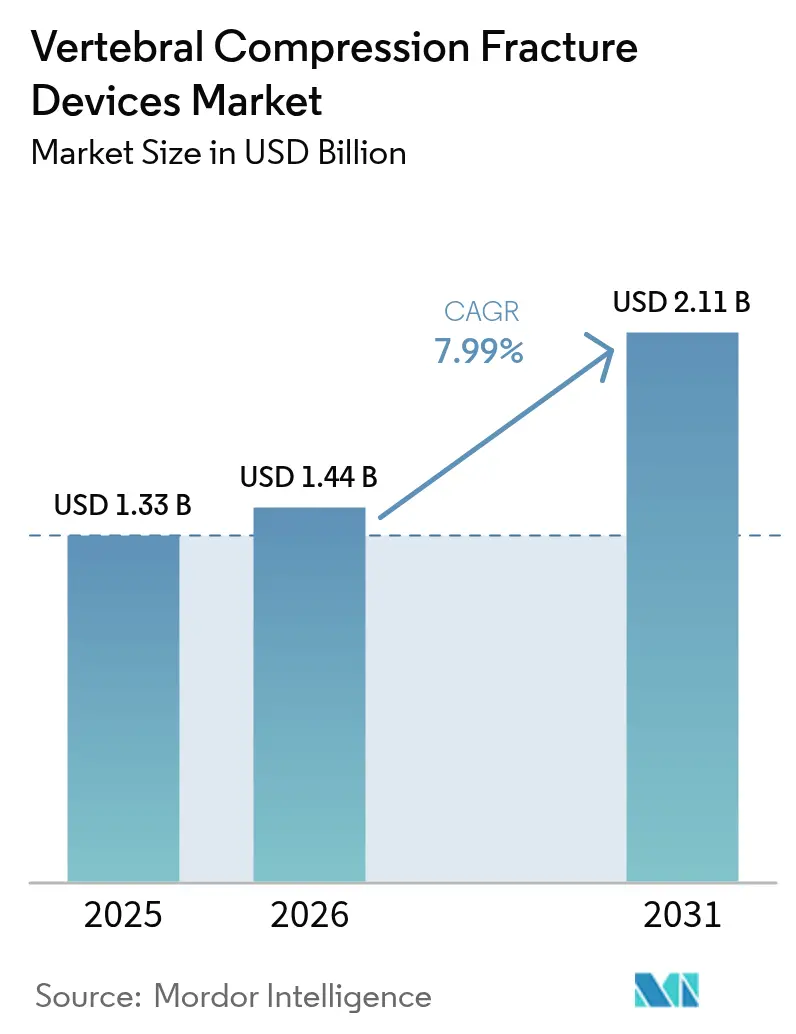
Vertebral compression fracture devices market size in 2026 is estimated at USD 1.44 billion, growing from 2025 value of USD 1.33 billion with 2031 projections showing USD 2.11 billion, growing at 7.99% CAGR over 2026-2031. Population aging, rapid uptake of minimally invasive spinal interventions and a decisive industry shift toward outpatient venues are the primary engines behind this growth trajectory. Demand is further amplified by robust clinical data validating balloon kyphoplasty, AI-assisted navigation that lowers cement-leak risk, and wider reimbursement for ambulatory surgical centers (ASCs) under evolving value-based care mandates.[1]Food and Drug Administration, “Medical Devices; Quality System Regulation Amendments,” federalregister.govCompetitive activity remains intense: market leaders are consolidating portfolios, as evidenced by Globus Medical’s move into pain management through its Nevro acquisition, while regulators streamline approvals via harmonized Quality System Regulation amendments at the FDA.
Key Report Takeaways
- By product type, balloon kyphoplasty devices held 44.02% of vertebral compression fracture devices market share in 2025; expandable intravertebral implants are poised for the fastest 11.19% CAGR to 2031.
- By material, PMMA bone cement accounted for 55.98% share of the vertebral compression fracture devices market size in 2025, whereas bio-active and bioresorbable cements are tracking a 12.49% CAGR.
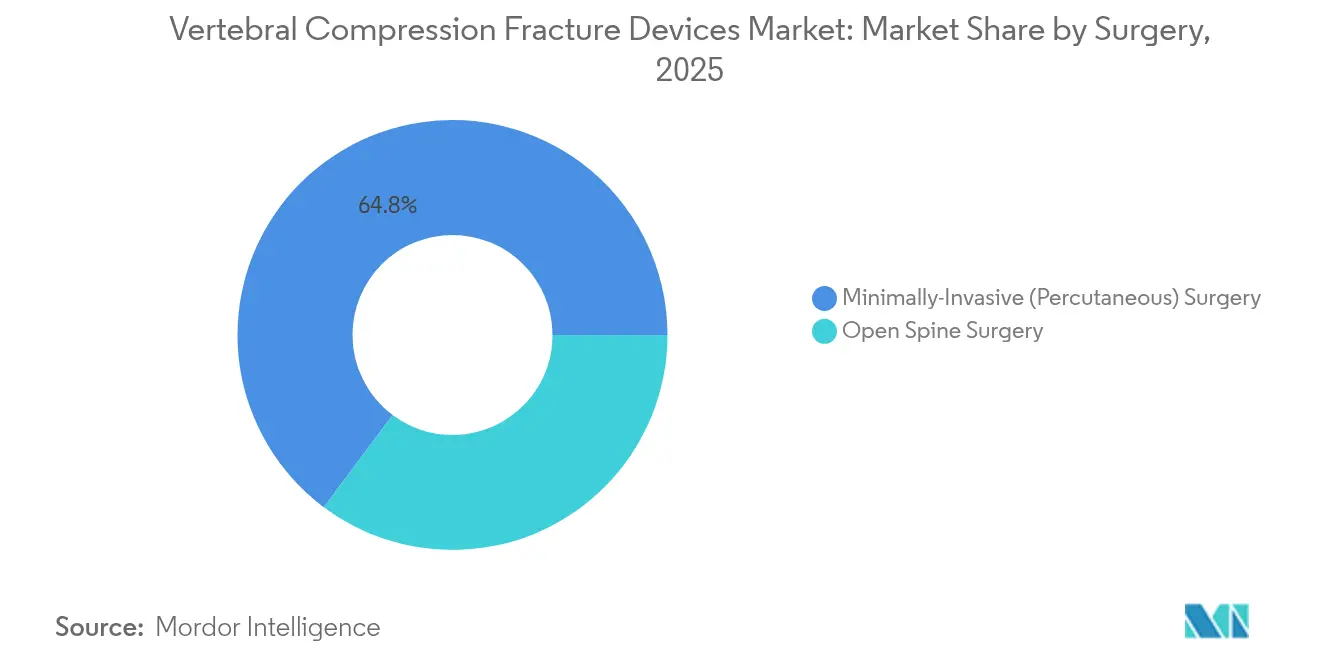
- By surgery, minimally invasive percutaneous procedures captured 64.78% revenue share in 2025 and are projected to advance at a 12.54% CAGR through 2031.
- By end user, hospitals led with 52.45% of vertebral compression fracture devices market size in 2025, but ambulatory surgical centers are the fastest riser at 11.03% CAGR.
- By geography, North America commanded 38.90% vertebral compression fracture devices market share in 2025; Asia-Pacific is expanding quickest at a 10.31% CAGR.
Note: Market size and forecast figures in this report are generated using Mordor Intelligence’s proprietary estimation framework, updated with the latest available data and insights as of 2026.
Global Vertebral Compression Fracture Devices Market Trends and Insights
Drivers Impact Analysis*
| Driver | (~) % Impact on CAGR Forecast | Geographic Relevance | Impact Timeline |
|---|---|---|---|
| Rising prevalence of osteoporosis-linked VCFs | +2.1% | Global, aging clusters | Long term (≥ 4 years) |
| Growing adoption of minimally invasive surgery | +1.8% | North America & EU lead, APAC follows | Medium term (2-4 years) |
| Increasing healthcare spend in emerging markets | +1.4% | Asia-Pacific core, MEA spill-over | Long term (≥ 4 years) |
| Robust clinical evidence for balloon kyphoplasty | +1.2% | Global | Short term (≤ 2 years) |
| Reimbursement shift toward ASC venues | +0.9% | Primarily North America, selective EU | Medium term (2-4 years) |
| AI-guided navigation lowering cement leakage | +0.6% | High-income regions first | Medium term (2-4 years) |
| Source: Mordor Intelligence | |||
Rising prevalence of osteoporosis-linked VCFs
Global osteoporosis is forecast to affect 263.2 million people by 2034, exposing a much larger cohort to vertebral compression fractures. National studies echo the trend—12.2% fracture prevalence in urban Vietnam and heightened risk among Korean postmenopausal women.[2]Hoa T. Nguyen, “Prevalence, Incidence of and Risk Factors for Vertebral Fracture in the Community: The Vietnam Osteoporosis Study,” Nature, nature.com Even as age-standardized rates ease, absolute fracture counts climb because populations are aging, a pattern confirmed by international burden analyses. Screening gaps exacerbate the issue: only 25.7% of elderly Japanese spinal patients receive pre-operative bone mineral density tests, indicating untapped need for devices that stabilize fragile vertebrae.[3]Kenta Yamamoto, “Survey on Actual Management of Osteoporosis With the Japanese Medical Data Vision Database in Elderly Patients Undergoing Spinal Fusion,” Journal of Clinical Medicine, mdpi.comThese factors ensure sustained demand for the vertebral compression fracture devices market.
Growing adoption of minimally invasive spinal procedures
Medicare data show ASC procedures cost less than hospital outpatient departments while delivering equivalent safety, a clear incentive for providers. Vertebral augmentation reduces median stays to 2.4 days compared with 10.8 days for conservative management, trimming direct costs to USD 4,737 versus USD 7,250. Same-day discharge protocols, stress-tested during COVID-19, achieved 100% success across 164 minimally invasive cases Precision keeps improving: a novel 2D navigation system reached 0.54 mm accuracy in spine models. Together these data points underline why clinicians increasingly prefer minimally invasive options, accelerating the vertebral compression fracture devices market.
Increasing healthcare expenditure in emerging markets
Asia-Pacific nations allocate larger portions of GDP to health services, widening access to spinal technologies. In India, patients aged ≥ 70 realized substantial quality-of-life gains after vertebral procedures. Thai cost-utility models favor minimally invasive lumbar fusion over posterior methods on lifetime costs. Latin America explores value-based frameworks as clinicians study the feasibility of minimally invasive spine surgery in low-income settings. These spending patterns fuel future uptake across the vertebral compression fracture devices market.
Robust clinical evidence validating balloon kyphoplasty
Ten-year longitudinal research showed pain scores dropping from 7.9 to 2.2 and ODI disability plunging from 30.4 to 10.7 after balloon kyphoplasty. The multicenter EVOLVE study on 354 Medicare-eligible patients delivered comparable three-month improvements. Timing matters: interventions within four weeks of fracture yield stronger pain relief and kyphotic angle correction. Cement ratios optimized at 0.4-0.6 further reduce leakage. These outcomes reinforce physician confidence and expand the vertebral compression fracture devices market.
Restraints Impact Analysis*
| Restraint | (~) % Impact on CAGR Forecast | Geographic Relevance | Impact Timeline |
|---|---|---|---|
| Post-surgical complications (cement leakage, embolism) | -1.3% | Global, higher in low-volume centers | Short term (≤ 2 years) |
| Stringent regulatory & reimbursement hurdles | -1.1% | Region dependent | Medium term (2-4 years) |
| Price erosion of commoditized PMMA cements | -0.8% | More pronounced in emerging markets | Long term (≥ 4 years) |
| Limited long-term proof for bio-active cements | -0.6% | Premium segment worldwide | Medium term (2-4 years) |
| Source: Mordor Intelligence | |||
Post-surgical complications (cement leakage, embolism)
Meta-analysis shows leakage in 46.2% of kyphoplasty cases, despite being the safest among augmentation options. Rare but severe sequelae include right-atrial perforation with pericardial tamponade and pulmonary cement embolism presenting as acute dyspnea. PMMA polymerization temperatures exceeding 70 °C can induce thermal necrosis at the bone interface. Modified cements and aspiration techniques drop leakage to 13% but require training and capital. These risks may curb near-term growth in the vertebral compression fracture devices market.
Stringent regulatory & reimbursement hurdles
The FDA’s 2026 Quality System Regulation integrates ISO 13485 standards, representing a compliance lift for resource-constrained manufacturers. Local Coverage Determinations demand granular functional-outcome documentation, and spinal spheres now fall under Class III PMA oversight. Global market entry is slowed by disparate approval paths, collectively tempering momentum in the vertebral compression fracture devices market.
*Our forecasts treat driver/restraint impacts as directional, not additive. The impact forecasts reflect baseline growth, mix effects, and variable interactions.
Segment Analysis
By Product Type: Expandable Implants Drive Innovation
Balloon kyphoplasty secured 44.02% of vertebral compression fracture devices market share in 2025 due to payer familiarity, straightforward workflows, and ample clinical proof. Expandable intravertebral implants, however, are growing at an 11.19% CAGR and challenge the incumbent modality by restoring vertebral height more effectively, as demonstrated in randomized trials of the SpineJack system. Conventional vertebroplasty retains market presence because of its lower cost and quick learning curve in resource-limited settings. Niche segments such as radio-frequency augmentation and vesselplasty solve complex anatomic challenges, expanding surgeon toolkits within the vertebral compression fracture devices market.
Engineering advances in expandable implants distribute endplate loads evenly, improving long-term biomechanics. The SPICO study confirmed shorter hospital stays and faster work resumption despite higher upfront device costs. Ancillary bone-cement delivery systems are also proliferating as surgeons prioritize precision; the Tripod-Fix device’s retractable arms nearly eliminated leakage in early clinical use. New entrants must now pair hardware with integrated navigation software to gain traction in the vertebral compression fracture devices market.




By Material: Bio-Active Cements Challenge PMMA Dominance
PMMA continues to dominate with 55.98% share of vertebral compression fracture devices market size due to cost advantages and decades-long surgical familiarity. Yet bio-active and bioresorbable cements are accelerating at 12.49% CAGR because clinicians aim for osteointegration and reduced long-term foreign-body presence. Calcium-phosphate fillers and ceramic hybrids provide intermediate mechanical performance and resorb naturally, while enhanced PMMA variants integrate nano-tantalum carbide for higher radiopacity and osteogenic potential.
Three-year follow-up on calcium-phosphate cement shows volume reduction without loss of stability. Hydroxyapatite/collagen composites deliver fusion rates comparable to iliac crest grafts but with less surgical trauma, hinting at broader spinal application. Material R&D will be a decisive lever for differentiation across the vertebral compression fracture devices industry, especially as payers scrutinize long-term outcomes.
By Surgery: Minimally Invasive Dominance Accelerates
Minimally invasive percutaneous procedures captured 64.78% of the vertebral compression fracture devices market size in 2025 and are forecast to compound at 12.54% CAGR. Open spine surgery remains essential for multi-level deformities but is ceding routine fracture care to percutaneous techniques. Single-session multilevel kyphoplasty cut pain scores from 8.38 to 2.15 with minimal complications, confirming efficacy in broader indications.
Navigation-guided methods reduce radiation exposure while sharpening screw accuracy. Balloon-assisted endplate reduction now treats severe thoracolumbar fractures that once required open fixation. Such procedural expansion cements minimally invasive care as the default within the vertebral compression fracture devices market.
By End User: ASCs Reshape Care Delivery
Hospitals retained a 52.45% revenue share in 2025, yet ASCs are scaling at 11.03% CAGR as payers capitalize on lower procedural costs. Trauma centers remain vital for acute fracture stabilization, whereas specialty spine clinics attract elective vertebral augmentation cases, building high-volume expertise that reinforces outcomes.
Medicare’s 2024 policy expanded ASC-eligible primary codes and simplified prior authorization. Comparative studies confirm equivalent safety between ASCs and hospital outpatient departments, strengthening payer confidence. The COVID-19 experience underscored ASC adaptability, further accelerating the vertebral compression fracture devices market shift toward decentralized care.
Geography Analysis
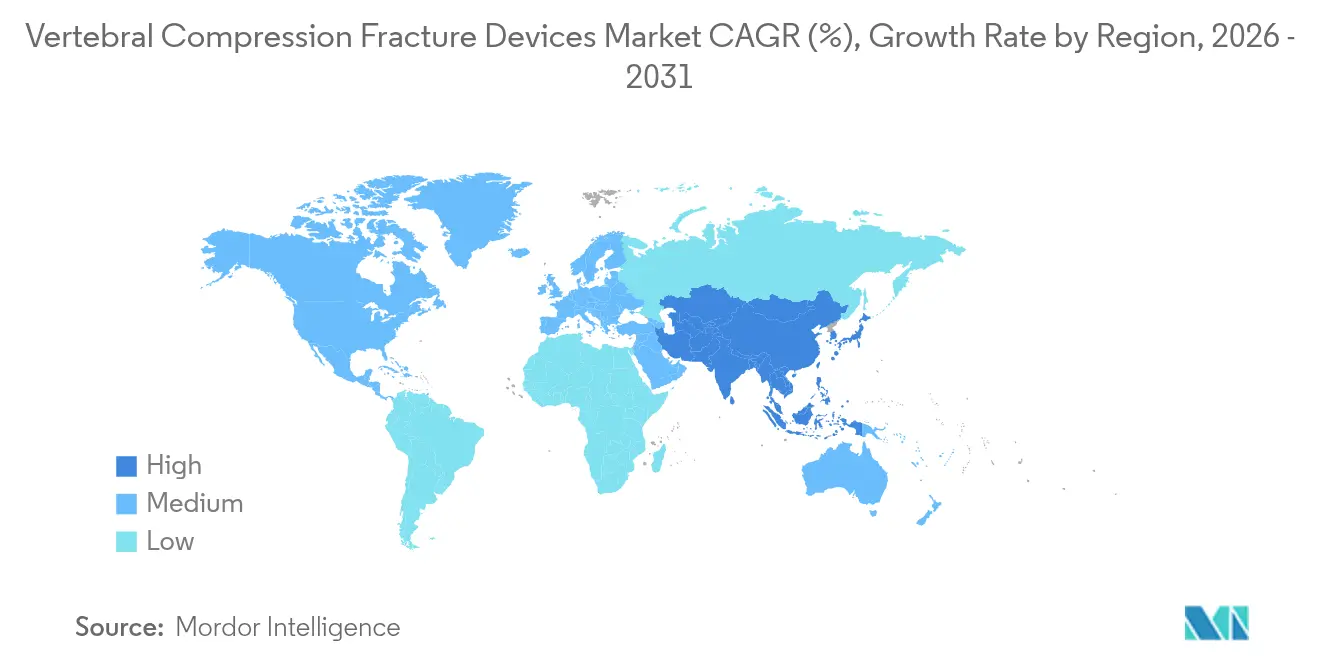
North America led with 38.90% share in 2025, leveraging mature reimbursement systems and sophisticated spine-care infrastructure. Medicare compares vertebral augmentation at USD 4,737 against USD 7,250 for conservative therapy, validating cost-effectiveness. ASC reimbursement reform shortened approval timelines, encouraging providers to transfer cases out of hospital outpatient departments. Canada’s universal model and Mexico’s episodic payment pilots also expand demand, each supported by regional training and NIH-sponsored clinical trials that power innovation in the vertebral compression fracture devices market.
Asia-Pacific is the fastest-growing theater at 10.31% CAGR through 2031, propelled by demographic shifts and healthcare modernization. Japan’s osteoporosis screening deficit—only 25.7% of elderly fusion patients receive pre-operative scans—underscores latent demand. China speeds device approvals through its National Medical Products Administration fast-track, while India’s elder cohorts benefit from proven post-surgical functional gains. Australia and South Korea pioneer early adoption of AI navigation, and Southeast Asian nations introduce bundled payments for minimally invasive spine surgery, collectively widening the vertebral compression fracture devices market footprint.
Europe advances steadily on the back of evidence-based medicine and pan-EU regulatory harmonization. Economic modeling projects EUR 2.8 billion in potential savings by 2040 if osteoporosis diagnosis rates improve. Germany, the United Kingdom, and France spearhead multicenter trials, while Southern Europe accelerates adoption through public-private partnership initiatives. Russia modernizes rural spine centers, tapping into EU research networks to upgrade procedural standards. South America and the Middle East & Africa lag but display growing interest in cost-optimized percutaneous approaches, indicating long-term contribution to the vertebral compression fracture devices market.

Regulatory Landscape
In the United States, many vertebral augmentation systems and related accessories are regulated as Class II devices and commonly use the FDA 510(k) pathway. Manufacturers also follow FDA guidance specific to clinical trial considerations for vertebral augmentation devices used to treat spinal insufficiency fractures. A key compliance change for the base/forecast window is the FDA Quality System Regulation update taking effect in 2026, aligning quality requirements more closely with ISO 13485 expectations and increasing documentation and audit readiness requirements across manufacturers and key suppliers.
In Europe, the EU Medical Device Regulation (MDR) continues to tighten clinical evidence and post-market surveillance requirements for implantable devices. Legacy device transition timelines are extended under Regulation (EU) 2023/607, notably extending certain transition dates into 2027 and 2028. Across regions, consensus standards and test methods, including ISO 5833 and ASTM F451 for acrylic resin bone cements, plus risk management aligned to ISO 14971, remain central in demonstrating performance and safety for cement and delivery system updates. This shapes how incremental product changes are brought to market.
Value Chain Analysis
The value chain spans specialty chemical inputs, notably methyl methacrylate feedstocks used for PMMA bone cement, precision components such as needles, cannulae, and delivery systems, implant and instrument manufacturing, sterilization and packaging, regulatory and quality documentation, and multi-channel distribution to hospitals and the rapidly scaling ambulatory surgical center (ASC) setting. Upstream dependencies concentrate around petrochemical feedstocks for MMA and specialized suppliers for precision needle assemblies and composite materials, so continuity of supply and consistent material specifications are important to maintain validated manufacturing processes and consistent cement handling characteristics in the operating room.
Midstream, device OEMs and contract manufacturers work to tight machining tolerances and sterilization validations. Any supplier change often triggers re-validation and corresponding regulatory documentation updates, which raises switching costs and reinforces the advantage of established, audited supplier networks. Downstream, go-to-market execution splits between direct contracting with high-volume hospital systems and distributor coverage for smaller hospitals, specialty spine clinics, and ASCs, where consistent procedure kits, training, and inventory availability help support throughput for minimally invasive percutaneous workflows.
Competitive Landscape
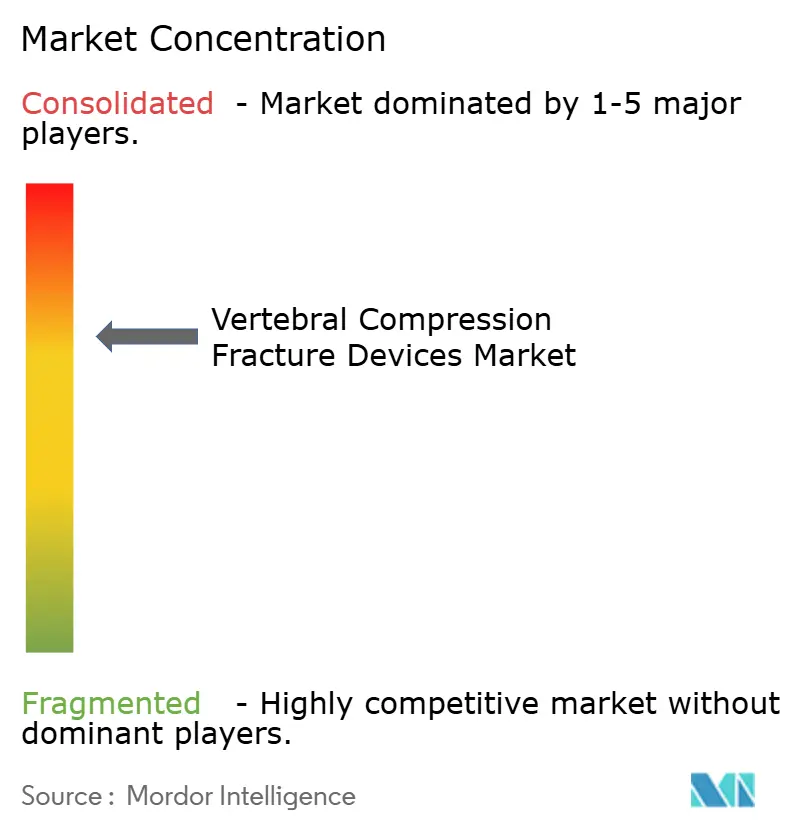
The vertebral compression fracture devices market is moderately concentrated. Medtronic posted a 7.1% neuroscience revenue upturn anchored by the AiBLE ecosystem and expandable implant launches. Stryker divested U.S. spinal implants to VB Spine LLC so it can channel resources into interventional spine and robotics. Johnson & Johnson, via DePuy Synthes, leverages double-digit R&D investment, while Globus Medical’s USD 250 million Nevro acquisition integrates spinal cord stimulation with fracture repair.
Market rivalry pivots on evidence generation and digital workflow integration. Companies couple implants, bio-active cement and AI navigation systems into turnkey packages that match value-based reimbursement criteria. Regulatory heft is a differentiator: larger firms absorb the cost of FDA’s ISO-aligned Quality System Regulation, whereas smaller entrants may prioritize CE-first strategies to maintain burn rates. White-space fosters innovation in biodegradable cements and low-radiation imaging, creating opportunities for nimble players aiming at the vertebral compression fracture devices industry.
Strategic collaborations also proliferate. Medtronic joined forces with Merit Medical in 2024 to co-develop next-generation augmentation technology that combines the former’s spine heritage with the latter’s interventional toolkit. Elsewhere, regional OEMs in Asia-Pacific partner with academic centers to localize implant designs, addressing unique anthropometric requirements and improving penetration of the vertebral compression fracture devices market.
Vertebral Compression Fracture Devices Industry Leaders
IZI Medical Products
Stryker Corporation
Merit Medical Systems Inc.
Globus Medical, Inc.
Johnson & Johnson (DePuy Synthes)
- *Disclaimer: Major Players sorted in no particular order

Market Opportunities and Future Outlook
White space is building around differentiated vertebral augmentation platforms that address cement leakage and streamline percutaneous workflows for outpatient settings, where same-day and short-stay pathways are increasingly operationalized. A concrete proof point of new-product momentum is Amber Implants securing FDA 510(k) clearance (September 2025) for the VCFix Spinal System, which supports entry opportunities for next-generation augmentation systems targeting stabilization and cement delivery in vertebral compression fracture care.
Adjacent enabling technologies also widen procedural bundles and create partnering and cross-selling opportunities for established spine players. In January 2026, Cerapedics received FDA approval for expanded labeling of PearlMatrix P-15 Peptide Enhanced Bone Graft across major lumbar interbody fusion approaches, reinforcing the commercial push toward biologics-enabled solutions that sit alongside spine fixation and vertebral procedures within hospital and ASC purchasing. In parallel, ongoing FDA 510(k) activity in 2026 for spine fixation systems, including patient-specific components, points to an outlook focused on integrated procedural ecosystems that combine implants, cement, and navigation-ready workflows while meeting tighter quality and post-market requirements.
Recent Industry Developments
- March 2026: Medtronic and Merit Medical Systems entered into a distribution agreement to offer the FDA-cleared ViaVerte system for basivertebral nerve ablation used in chronic vertebrogenic lower back pain. The agreement broadens Medtronic's interventional spine portfolio around vertebral body pathology and adds Merit Medical to its commercial channel for procedure-based spine therapies.
- February 2025: Globus Medical agreed to acquire Nevro Corp for USD 250 million to integrate spinal cord stimulation with its broader spine portfolio. The transaction supports bundled offerings linking pain management pathways with spine intervention platforms and affects competitive positioning across procedural spine care.
- June 2024: Medtronic partnered with Merit Medical to offer the Kyphon KyphoFlex unipedicular balloon catheter for treating vertebral compression fractures in the United States. Expanding access to a unipedicular balloon option supports procedural flexibility for kyphoplasty workflows and reinforces supply-chain alignment between a major spine OEM and a specialized interventional component manufacturer.


Research Methodology Framework and Report Scope
Market Definition and Coverage
This market covers medical devices and consumables used to treat vertebral compression fractures through vertebral augmentation procedures, including the core systems and accessories used in kyphoplasty and vertebroplasty care.
Scope exclusions: We exclude general spine implants and instruments not specifically used for VCF augmentation, as well as broader osteoporosis drugs and diagnostic imaging services.
Segmentation Overview
- By Product Type
- Balloon Kyphoplasty Devices
- Vertebroplasty Devices
- Expandable Intravertebral Implants
- Radio-frequency Augmentation Systems
- Vesselplasty & Mesh-containment Systems
- Bone-cement Delivery Systems & Accessories
- By Material
- PMMA Bone Cement
- Bio-active / Bioresorbable Cement
- Calcium-phosphate & Ceramic Fillers
- Others
- By Surgery
- Open Spine Surgery
- Minimally-Invasive (Percutaneous) Surgery
- By End User
- Hospitals
- Ambulatory Surgical Centers
- Trauma Centers
- Specialty Spine Clinics
- Others
- By Geography
- North America
- United States
- Canada
- Mexico
- Europe
- Germany
- United Kingdom
- France
- Italy
- Spain
- Rest of Europe
- Asia-Pacific
- China
- Japan
- India
- Australia
- South Korea
- Rest of Asia-Pacific
- Middle East and Africa
- GCC
- South Africa
- Rest of Middle East and Africa
- South America
- Brazil
- Argentina
- Rest of South America
- North America
Data Sources, Market Sizing, and Validation
Desk Research
Desk work starts by building a checkable view of the treated VCF pool and the care setting where these devices are used. To do this, we rely on public sources such as the US Centers for Disease Control and Prevention, Medicare coverage and payment rules, the US Food and Drug Administration device databases, and peer-reviewed clinical literature indexed on PubMed.
To convert the clinical context into market inputs, we review hospital procedure statistics and health system publications, along with trade and customs releases where relevant. We also scan company filings and investor presentations that discuss spine and vertebral augmentation portfolios. A paid subscription for company financials and intelligence is used selectively to clean up revenue splits when public reporting is not detailed enough, and then the assumptions are rechecked with interview feedback. The desk sources named here are illustrative, and many other public documents were also used for data collection, validation, and research clarification.
Primary Interviews and Surveys
Primary work is used to pressure test how the device mix is shifting across kyphoplasty, vertebroplasty, and related augmentation approaches, and how pricing behaves by site of care. We spoke with surgeons, hospital procurement staff, ambulatory surgery center administrators, and distributor side experts across major regions so gaps from desk inputs could be closed and the final assumptions could be reconciled.
Distribution of primary research fieldwork respondents
| Company type | Respondent position | Region |
|---|---|---|
| Top tier: 25% | CXOs: 13% | APAC: 47% |
| Mid tier: 59% | Functional/Unit leaders: 27% | EMEA: 29% |
| Smaller Players: 16% | Managers: 60% | Americas: 24% |
Market-Sizing & Forecasting
Sizing starts with a top-down build where incidence signals for vertebral compression fractures are translated into a treated procedure pool, then filtered through augmentation eligibility and adoption by care setting. After the demand pool is framed, we apply procedure share splits across kyphoplasty and vertebroplasty, and then map each procedure to the device and consumable needs that typically travel with it.
The model is anchored on practical inputs, including the share of osteoporotic versus traumatic or neoplastic fractures treated with augmentation, percutaneous procedure volumes by region, average devices and cement kits used per case, reimbursement driven shifts toward ambulatory surgery centers, and average selling price bands by region and channel. Where public reporting is thin, selective bottom-up approximations are used to corroborate totals, including sampled ASP times volume checks and supplier and channel feedback on utilization and mix. Remaining gaps are handled by using conservative ranges for utilization and pricing, then rechecking against the implied procedure economics clinicians describe as realistic.
For forecasting, we use scenario analysis supported by expert views on procedure growth and setting shift, then apply measured changes to key variables rather than forcing a single straight line trend. Growth paths are adjusted when signals such as reimbursement updates, new device uptake, or changes in hospital and ASC capacity indicate a meaningful inflection.
Data Validation & Update Cycle
We validate outputs by comparing them with independent signals, such as implied procedures per 100,000 population, site of care splits, and whether pricing trends match what buyers and clinicians describe. Large variances are flagged, the assumption responsible is isolated, and the analyst then rechecks it against desk sources and follow up calls before sign off.
A second analyst review is completed to confirm that the logic is consistent across regions and that the inputs reconcile with the stated scope. Reports are refreshed annually, and interim updates are made when material events occur, including reimbursement changes or sharp procedure volume shifts. Before delivery, we run a fresh pass on key variables so clients receive the latest updated view.
Mordor Intelligence's Vertebral Compression Fracture Devices Market Sizing Compared With Other Published Estimates
Published market values for VCF devices can differ because firms do not always count the same procedures, the same accessory items, or the same pricing points across hospitals and ambulatory surgery centers. Differences also show up when one estimate leans more on shipment assumptions, while another anchors more tightly to treated patient volumes and procedure mixes.
The main gap comes from whether adjacent spine tools and broader osteoporosis care are rolled into the total. Devices and consumables are counted only when they are directly used in vertebral augmentation for compression fractures, and the totals are refreshed through procedure mix and site of care price checks, a discipline applied by Mordor Intelligence.
Benchmark comparison
| Source | Market Size | Gaps in Research Methodology |
|---|---|---|
| Mordor Intelligence | USD 1.44 B (2026) | |
| Global Consultancy A | USD 1.62 B (2026) | This figure appears higher because it likely includes a wider vertebral augmentation toolset and more ancillary spine accessories, and it may apply a uniform ASP uplift without separating hospital versus ASC pricing. |
| Trade Journal B | USD 1.18 B (2026) | This estimate looks lower because it tends to track a narrower procedure subset and may exclude newer implant based augmentation systems, and it often uses conservative procedure growth and currency timing that can compress USD totals. |
The spread across sources is mainly explained by what is counted around the procedure and how pricing is refreshed across sites of care. By keeping the model tied to a treated VCF procedure pool, checking device per case usage, and using repeatable pricing assumptions, the result stays traceable to clear steps that can be reviewed and updated.


Key Questions Answered in the Report
What is the current size of the vertebral compression fracture devices market?
The market generated USD 1.44 billion in 2026 and is projected to hit USD 2.11 billion by 2031 at a 7.99% CAGR.
Which product segment leads the vertebral compression fracture devices market?
Balloon kyphoplasty devices held 44.02% market share in 2025, supported by strong reimbursement and mature clinical evidence.
Why are ambulatory surgical centers important for market growth?
ASC procedures cost less than hospital outpatient equivalents and now qualify for broader Medicare coverage, driving faster 11.03% CAGR growth for this venue.
Which region is expanding fastest?
Asia-Pacific is expected to grow at a 10.31% CAGR to 2031, propelled by rapidly aging populations and expanding healthcare coverage.
What technologies are companies investing in to stay competitive?
Firms focus on AI-enabled navigation, expandable intravertebral implants, and bio-active cements that improve safety and long-term outcomes.
Page last updated on:





