
Vegan Drink Mix Market Size and Share
Market Overview
| Study Period | 2022 - 2032 |
|---|---|
| Market Size (2027) | USD 15.61 Billion |
| Market Size (2032) | USD 21.62 Billion |
| Growth Rate (2027 - 2032) | 6.73 % |
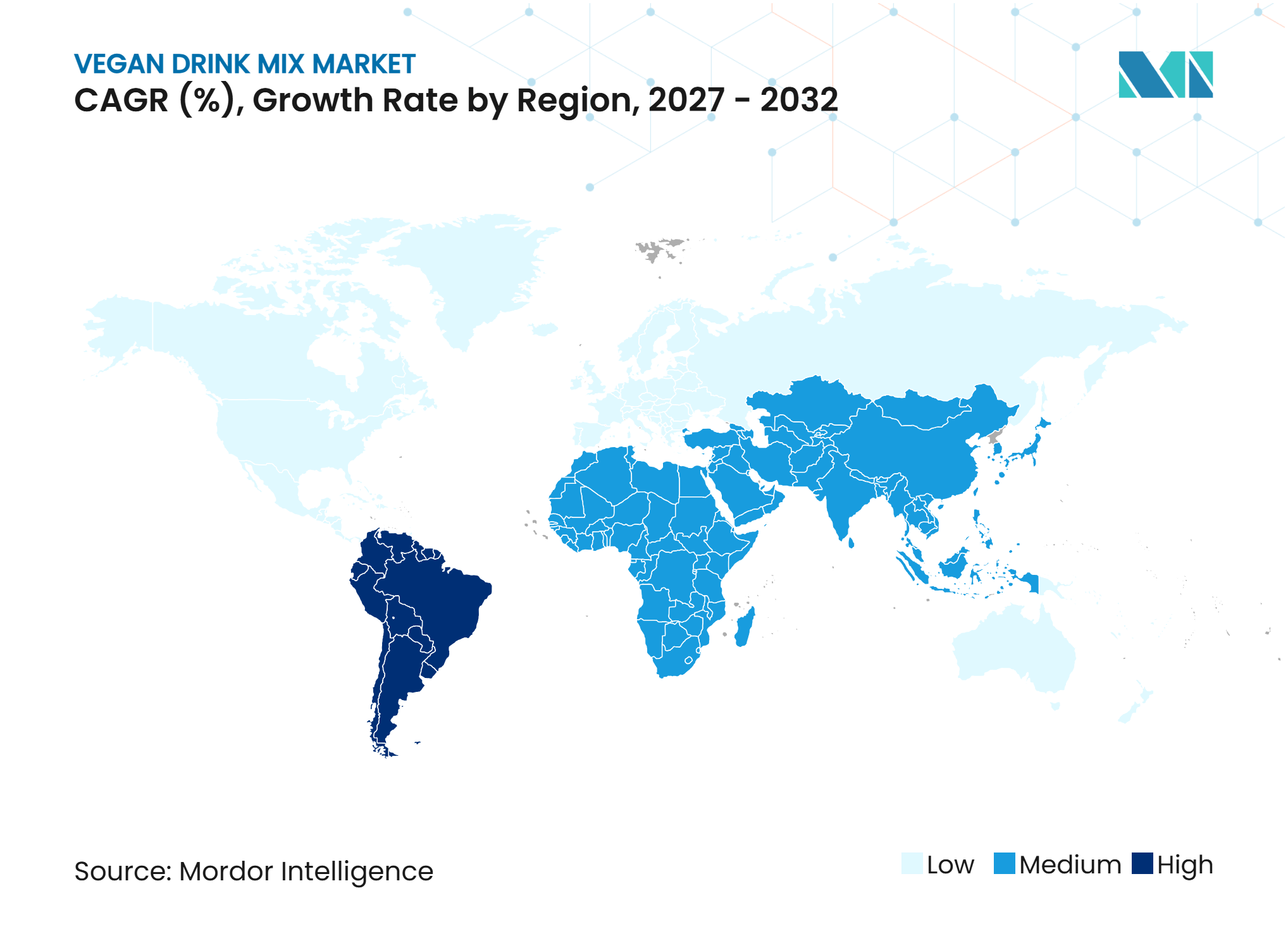
| Fastest Growing Market | Latin America |
| Largest Market | North America |
| Market Concentration | Low |
Major Players *Disclaimer: Major Players sorted in no particular order Image © Mordor Intelligence. Reuse requires attribution under CC BY 4.0. | |
Vegan Drink Mix Market Analysis by Mordor Intelligence
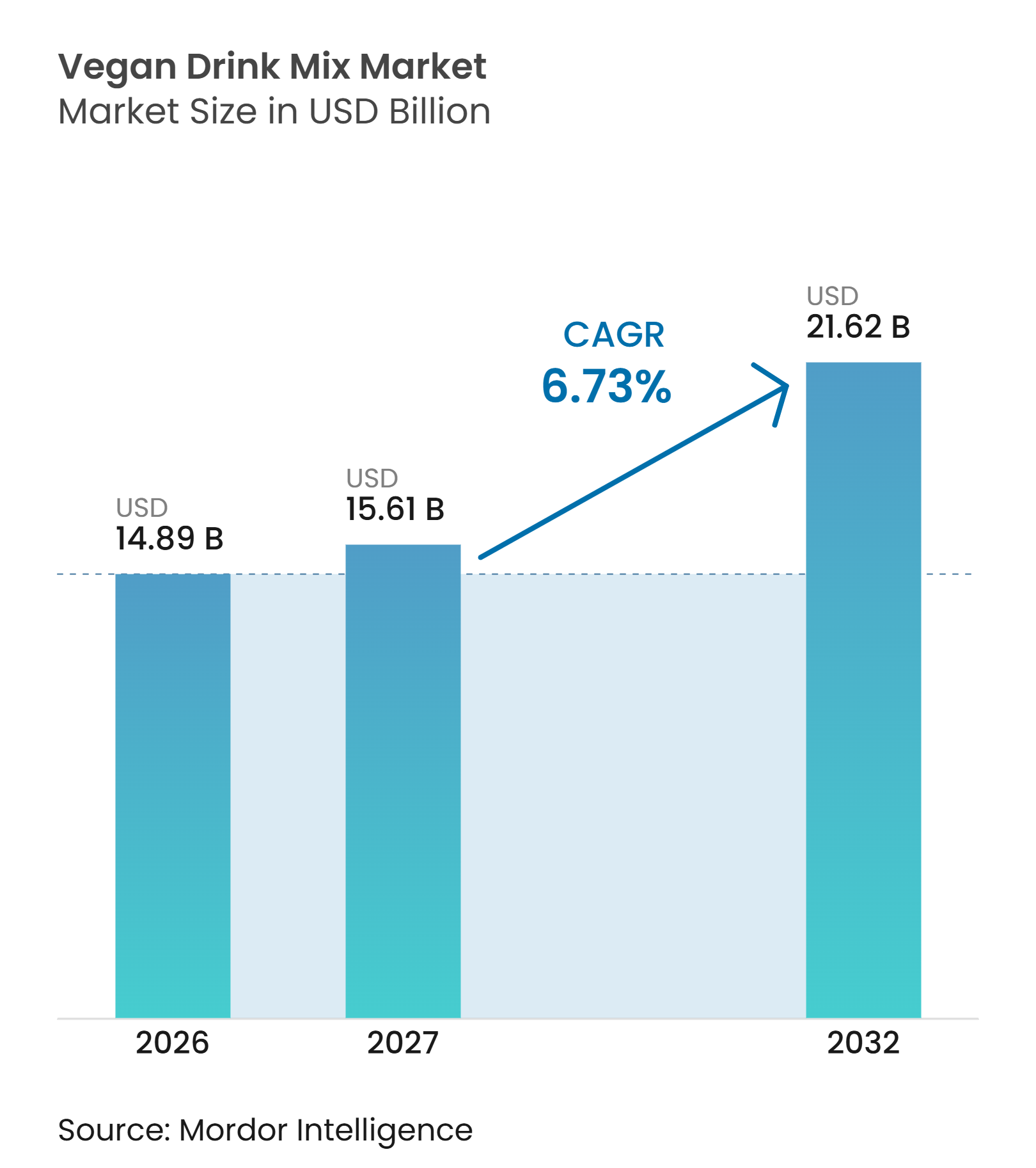
The vegan drink mix market size is expected to grow from USD 14.89 billion in 2026 to USD 15.61 billion in 2027 and is forecast to reach USD 21.62 billion by 2032 at a 6.73% CAGR over 2027-2032. The demand is growing beyond sports nutrition as consumers increasingly use powdered drinks for breakfast, between meals, and after exercise. The category benefits from the convenience of shelf-stable formats and their ability to deliver concentrated protein in small servings. Product development increasingly emphasizes improved taste, smoother texture, and formulations that support daily wellness rather than athletic performance alone. Brands with broad retail distribution, clear ingredient communication, and credible quality controls are better positioned to convert first-time buyers into repeat customers. The market also enables suppliers to address diverse consumer needs through unflavored and flavored products, as well as wellness-oriented drink mixes.
Key Report Takeaways
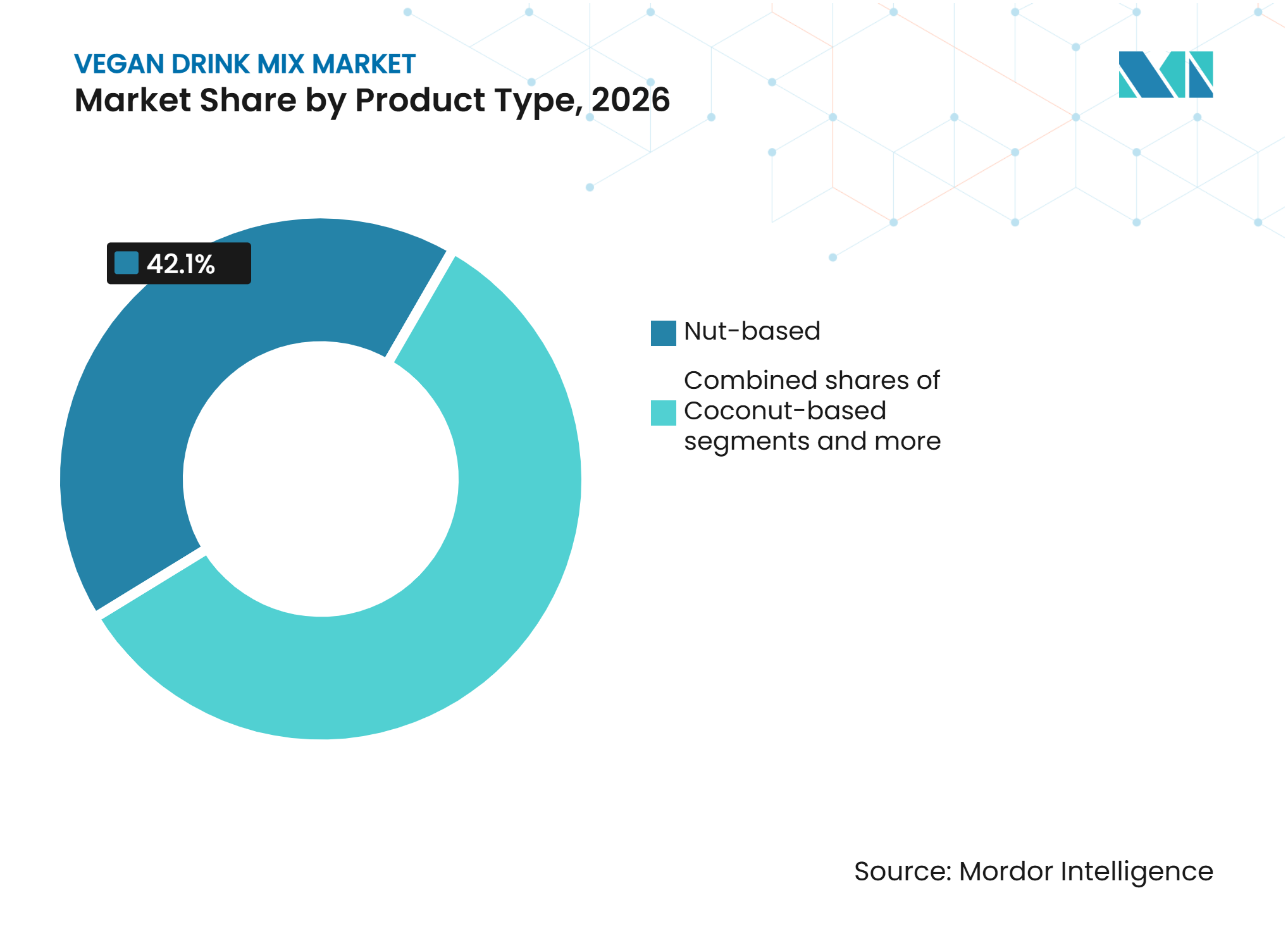
- By product type, nut-based held 42.11% of the vegan drink mix market share in 2026, while coconut-based are projected to expand at a CAGR of 7.14% through 2032.
- By category, conventional accounted for 87.21% of the vegan drink mix market size in 2026, while organic are forecast to expand at a CAGR of 7.23% through 2032.
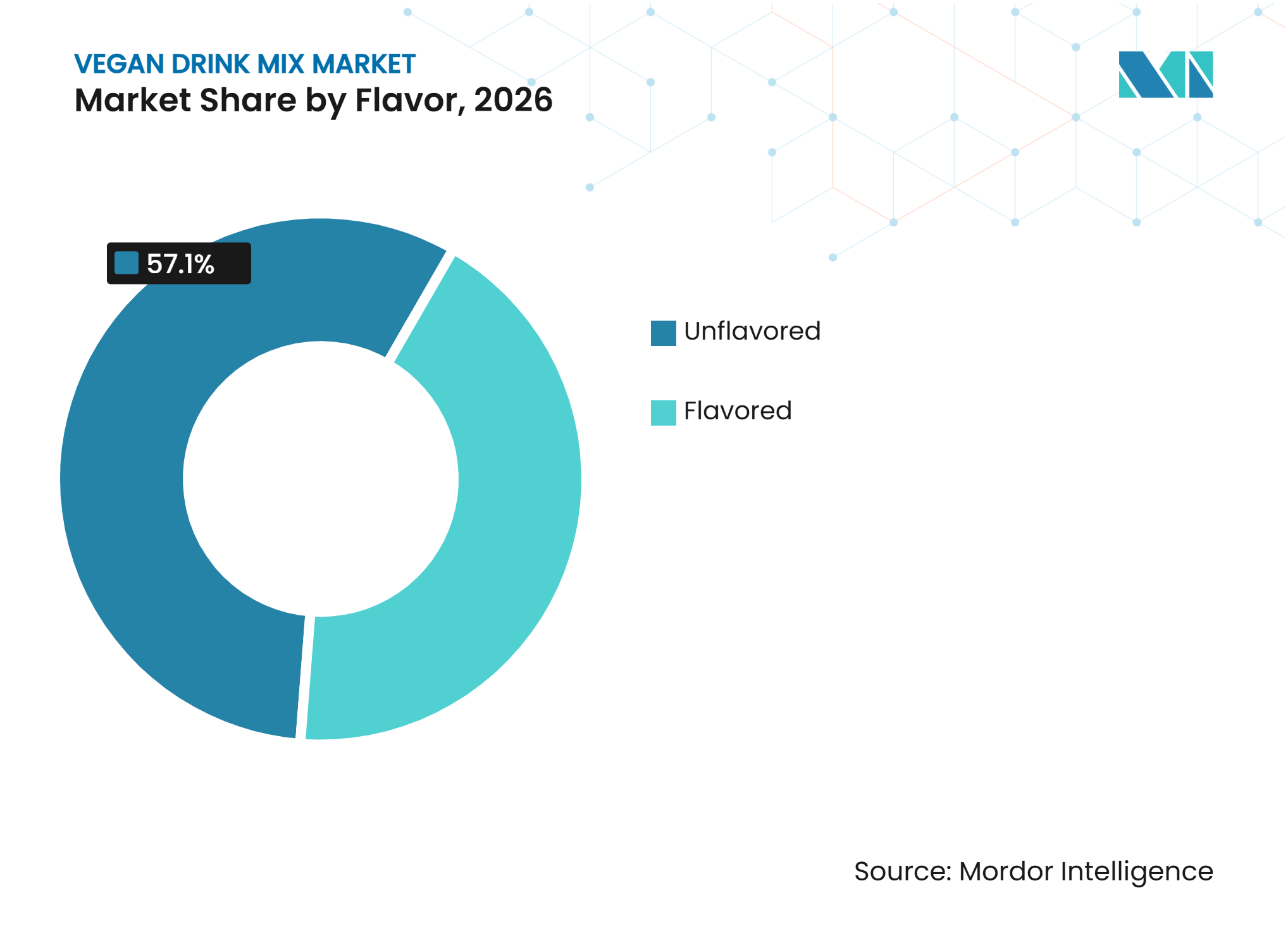
- By flavor, unflavored held 57.14% of the vegan drink mix market share in 2026, while flavored are projected to expand at a CAGR of 11.12% through 2032.
- By packaging type, sachets accounted for 44.14% of the vegan drink mix market in 2026, while pouches are forecast to expand at a CAGR of 7.17% through 2032.
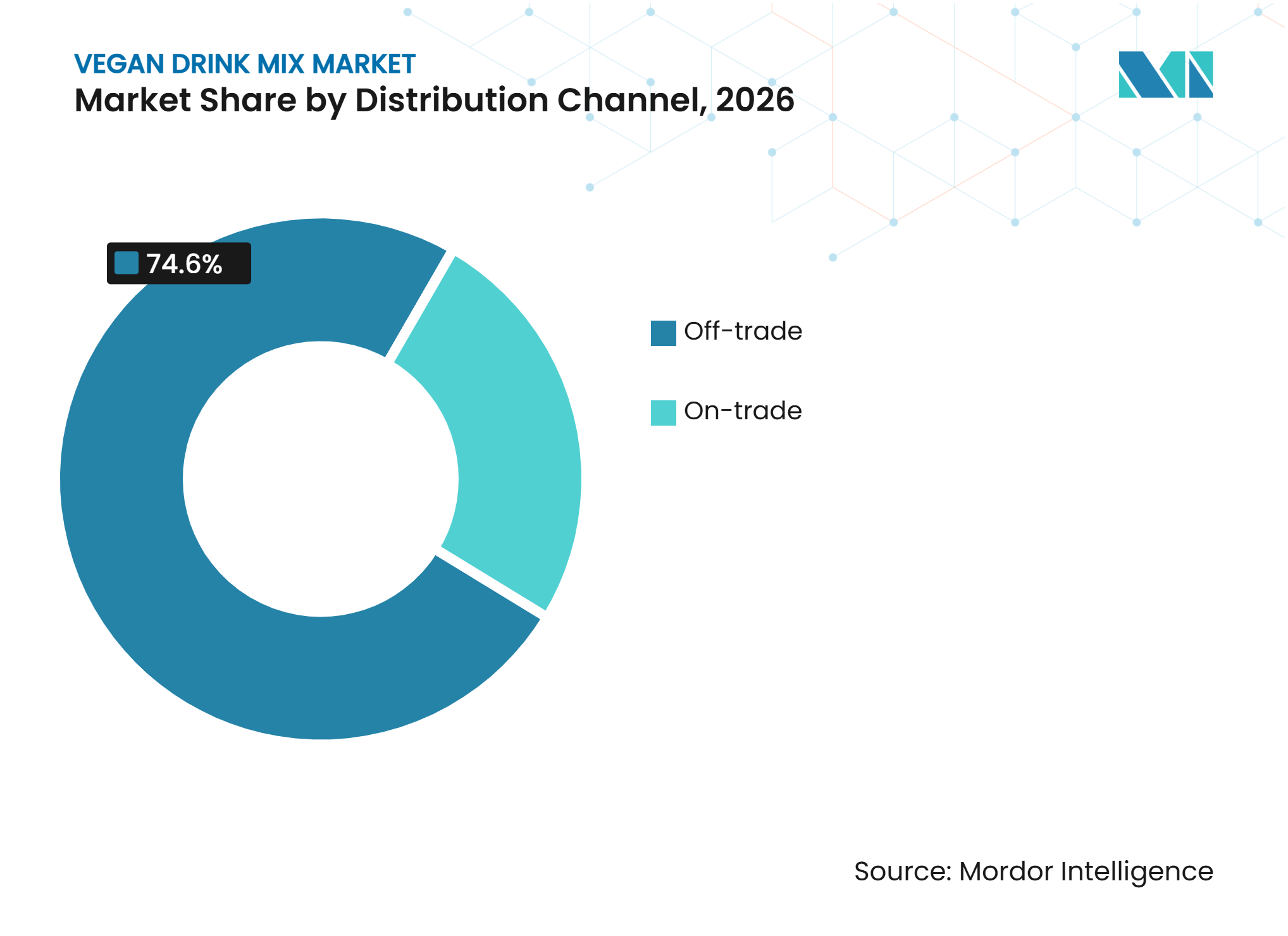
- By distribution channel, off-trade held 74.65% of the vegan drink mix market in 2026, while on-trade are projected to expand at a CAGR of 9.14% through 2032.
- By geography, North America held 38.12% of the vegan drink mix market in 2026, while South America is forecast to expand at a CAGR of 8.11% through 2032.
Note: Market numbers in this report are based on Mordor Intelligence's proprietary estimation framework, which combines nine months of actuals with Q4 projections for base year 2026.
Market Trends and Insights
Drivers Impact Analysis of Vegan Drink Mix Market*
| Driver | (~) % Impact on CAGR Forecast | Geographic Relevance | Impact Timeline | |
|---|---|---|---|---|
| Expansion of plant-based dietary preferences | +1.5% | Global | Long term (≥ 4 years) | |
| Demand for convenient protein and meal solutions | +1.2% | North America and Europe | Medium term (2-4 years) | |
| Growth of functional hydration and wellness formulations | +1.0% | Global, led by North America | Medium term (2-4 years) | |
| Expansion of plant-based Beverage offerings across foodservice | +0.9% | Europe, Asia-Pacific, spill-over to North America | Short term (≤ 2 years) | |
| Increasing variety of plant sources | +0.8% | Asia-Pacific and Global | Long term (≥ 4 years) | |
| Product innovation in flavors and beverage formats | +1.0% | North America and Global | Short term (≤ 2 years) | |
| Source: Mordor Intelligence | ||||
Expansion of Plant-based Dietary Preferences
The growing preference for vegan-based diets is driving demand as consumers increasingly seek alternatives to conventional dairy-based beverages. The rising adoption of vegan and flexitarian lifestyles is encouraging consumers to incorporate vegan-based products into their daily diets. Powdered drink mixes offer convenience through easy storage, preparation, and portion flexibility, supporting their use across various consumption occasions. In addition to beverage preparation, consumers can use these products in smoothies, coffee, meals, and snacks, expanding their functional applications. Increasing consumer focus on plant-based protein and nutritional value is further creating market opportunities. As competition intensifies, manufacturers are focusing on taste, nutritional transparency, and formulations tailored to specific dietary requirements to differentiate their products.
Demand for Convenient protein and Meal Solutions
Demand for convenient protein and meal solutions is driving market growth as consumers seek flexible nutrition options for busy lifestyles. For instance, in January 2026, the International Food Information Council's Food & Health Survey reported that 52% of Americans considered convenience an impactful factor in their food and beverage purchasing decisions, while 70% reported trying to consume protein[1]. Powdered formats enable quick preparation for breakfast, snacks, smoothies, and post-workout routines. Single-serve sachets and resealable pouches also improve portability, portion control, and storage convenience. Manufacturers are therefore focusing on practical pack sizes, appealing flavors, and easy-to-prepare formats to encourage regular consumption.
Growth of Functional Hydration and Wellness Formulations
Growing demand for functional hydration and wellness formulations is driving growth in the vegan drink mix market, as consumers increasingly seek vegan-based beverages that offer benefits beyond basic nutrition. For instance, in July 2025, according to the International Food Information Council's (IFIC) survey, 70% of Americans were trying to increase their protein intake, while 35% reported doing so over the previous year [2]. Consumers also associated protein with benefits such as energy, overall well-being, and digestive health. Reflecting this demand, Skratch Labs introduced its vegan Oat Milk Latte Recovery Sport Drink Mix in January 2025, combining carbohydrates, protein, electrolytes, amino acids, and probiotics to support post-exercise recovery and digestive health. Such product innovations highlight manufacturers' efforts to develop multifunctional vegan drink mixes that address nutritional, fitness, and wellness requirements
Expansion of Plant-based Beverage Offerings across Foodservice
The expansion of vegan beverage offerings across foodservice channels is creating market opportunities by increasing the availability of plant-based beverages in cafés, coffee shops, restaurants, hotels, workplaces, and other out-of-home settings. For instance, in 2025, according to the Good Food Institute, plant-based milk accounted for 13% of the U.S. foodservice milk category by volume, up from 12% in 2024, while dollar sales increased by 16%. Plant-based creamer accounted for 28% of the foodservice creamer category by volume, driven by demand in coffee and tea applications [3]. As foodservice demand expands, suppliers with consistent quality, reliable production, food safety compliance, and ingredient traceability are well-positioned to support the adoption of vegan beverages.
Restraints Impact Analysis of Vegan Drink Mix Market*
| Restraint | (~) % Impact on CAGR Forecast | Geographic Relevance | Impact Timeline |
|---|---|---|---|
| Challenges in achieving desired taste and texture | -0.8% | Global | Short term (≤ 2 years) |
| Higher formulation and certification costs | -0.6% | North America and Europe | Medium term (2-4 years) |
| Ingredient supply volatility and concentration | -0.5% | Core Asia-Pacific and Latin America | Long term (≥ 4 years) |
| Regulatory complexity around functional and nutrition claims | -0.4% | North America and the European Union | Medium term (2-4 years) |
| Source: Mordor Intelligence | |||
Challenges in Achieving Desired Taste and Texture
Challenges in achieving the desired taste and texture remain a key restraint in the vegan drink mix market, as undesirable sensory attributes can reduce consumer acceptance and repeat purchases. Vegan-based proteins, including pea, grain, and legume proteins, can impart earthy or bitter flavors and lead to grittiness, clumping, and sedimentation, particularly at higher protein concentrations. Addressing these challenges often requires formulation adjustments which increase product development complexity and costs. These reformulation efforts underscore the ongoing need for manufacturers to improve sensory performance while maintaining nutritional profiles. Companies that optimize flavor, texture and dispersibility through improved formulations can reduce consumer dissatisfaction and strengthen product acceptance.
Higher Formulation and Certification Costs
Higher formulation and certification costs can restrain market growth by increasing expenses for product development, testing, quality assurance and regulatory compliance. Manufacturers that offer clean-label, organic, allergen-free or other specialized products may require additional ingredient verification, batch testing, documentation and certification. These requirements increase operational complexity and create greater cost pressures for smaller manufacturers with limited resources. Regulatory developments also require companies to ensure that product names, nutrition information, ingredient claims and wellness positioning are accurate and transparent. Consequently manufacturers must continuously invest in formulation, testing, documentation and compliance activities increasing overall product costs and potentially affecting pricing competitiveness.
*Our forecasts treat driver/restraint impacts as directional, not additive. The impact forecasts reflect baseline growth, mix effects, and variable interactions.
Vegan Drink Mix Market Segment Analysis
By Product Type:
Nut-Based Products Lead While Coconut-Based Products Grow FastestNut-based held a 42.11% of the vegan drink mix market share in 2026. These ingredients offer versatility in product formulation and can be incorporated into a wide range of applications, including breakfast beverages, smoothies, protein shakes, bakery products, desserts, and other vegan-based recipes. Their creamy texture and compatibility with various ingredients enable manufacturers to develop products suited to diverse taste preferences and consumption occasions. Nut-based formulations also provide opportunities to incorporate additional ingredients, such as plant proteins, vitamins, minerals, and dietary fibers, to enhance the nutritional profile of finished products. Furthermore, their established presence in vegan-based milk and dairy-alternative categories supports consumer acceptance and encourages manufacturers to expand their nut-based vegan drink mix portfolios.
Coconut-based vegan drink mixes are projected to expand at a CAGR of 7.14% through 2032. They are expected to witness steady growth, supported by their creamy texture, mild flavor, and suitability for hydration-focused and dairy-alternative beverage formulations. Coconut ingredients provide natural richness and improve the mouthfeel of finished beverages, making them suitable for smoothies, breakfast drinks, shakes, and other vegan-based preparations. Their versatility also allows manufacturers to develop products with different flavor combinations and nutritional profiles, catering to varied consumer preferences. Additionally, coconut-based formulations offer opportunities for premium product development by incorporating plant proteins, vitamins, minerals, and other functional ingredients. Growing interest in dairy-free beverages and diverse vegan-based formulations is further supporting their adoption across retail and specialty beverage applications.



By Category:
Conventional Products Dominate While Organic Products Grow FasterConventional accounted for 87.11% of the vegan drink mix market in 2026, retaining its position as the dominant category. Broad retail availability, accessible pricing, and established use in daily protein and nutritional routines support their leading share. These products cater to various consumption occasions, including breakfast, post-exercise nutrition, and between-meal supplementation. Availability in familiar flavors, serving sizes, and packaging formats further drives widespread consumer adoption. Manufacturers primarily compete on taste, protein content, pricing, product variety, and consistent availability. Consequently, conventional products continue to form the core volume base of the vegan drink mix market.
Organic is projected to grow at a CAGR of 7.23% through 2032, driven by increasing consumer interest in certified ingredient sourcing, traceability, and recognizable formulations. Organic positioning enables manufacturers to differentiate their products and support premium pricing among consumers who prioritize organic and clean-label attributes. Organic products benefit from well-managed raw-material sourcing, quality testing, transparent documentation, and certification practices, while ongoing formulation improvements enable them to deliver appealing taste, texture, nutritional value, and convenient preparation. As manufacturers enhance certification, ingredient transparency, and product quality, organic drink powders are well-positioned to capture the growing demand for premium vegan-based nutrition products.
By Flavor:
Unflavored Formats Hold Volume While Flavored Products Drive ExpansionUnflavored held 57.14% in 2026, driven by its versatility across smoothies, oats, recipes, and prepared foods. Their neutral flavor profile allows consumers to customize sweetness, adjust taste preferences, and combine the powder with different ingredients without significantly altering the flavor of the final preparation. These products can also be incorporated into baking applications, desserts, protein shakes, and other homemade food and beverage preparations. Their flexibility makes them suitable for consumers seeking multipurpose ingredients that can be used across different meals and consumption occasions. Additionally, unflavored formulations enable manufacturers to develop products with added plant proteins, vitamins, minerals, and other functional ingredients while maintaining a neutral taste profile.
Flavored is projected to expand at a CAGR of 11.12% through 2032, as consumers seek more enjoyable and varied protein-consumption experiences. Flavored vegan drink mixes are expected to see strong growth, driven by rising consumer interest in more enjoyable and varied vegan-based beverage experiences. The availability of different flavor options, including chocolate, vanilla, berry, tropical fruit, and other popular profiles, allows manufacturers to cater to diverse taste preferences and consumption occasions. These formulations can be used in smoothies, protein shakes, breakfast beverages, and other prepared drinks, making them suitable for convenient everyday consumption. Flavor innovation also enables manufacturers to introduce differentiated product offerings, combine multiple ingredients, and develop formulations aligned with regional preferences and emerging consumer trends.

By Packaging Type:
Sachets Support Trial While Pouches Build Repeat PurchaseSachets held 44.14% of the vegan drink mix market share in 2026. Their compact packaging allows consumers to carry and prepare beverages at home, at work, at the gym, and while traveling, supporting consumption on a variety of occasions. Sachets also provide pre-measured portions, helping consumers control serving sizes and prepare beverages without additional measuring equipment. Their lightweight structure, easy handling, and space-efficient storage make them suitable for retail shelves, online distribution, and on-the-go consumption. Additionally, sachet packaging allows manufacturers to offer different flavors, formulations, and pack sizes at accessible price points, encouraging product trials and repeat purchases. These characteristics support the adoption of sachets among consumers seeking convenient and portion-controlled vegan-based beverage options.
Pouches are projected to register a 7.17% CAGR through 2032, positioning them as a key growth format. Unlike sachets, which primarily support single-serving use and product trials, pouches allow consumers to store and use the product across multiple occasions. Their resealable design helps maintain product freshness, simplifies storage, and allows convenient access between uses. Pouches are also suitable for home, workplace, and travel consumption, appealing to consumers who regularly incorporate vegan drink mixes into their diets. Additionally, their larger packaging space allows manufacturers to communicate ingredient details, nutritional information, certifications, preparation instructions, and flavor options more effectively. The availability of different pouch sizes and formats also enables manufacturers to cater to varied consumption requirements, from individual users to households.
By Distribution Channel:
Off-Trade Remains Larger While Online Retail Gains ReachOff-trade held 74.65% of the vegan drink mix market share in 2026. These channels allow consumers to compare different brands, ingredients, flavors, nutritional compositions, and packaging formats before making purchasing decisions. Supermarkets and hypermarkets provide product visibility through dedicated health-food and vegan sections, while specialty retailers cater to consumers seeking specific dietary and nutritional formulations. Online platforms further support market accessibility by offering a wider selection of products, convenient home delivery, subscription options, and access to niche brands. Additionally, the availability of vegan drink mixes in different pack sizes and price ranges across retail channels supports household purchases and repeat consumption.
On-trade is forecast to expand at a CAGR of 9.14% through 2032. These outlets provide consumers with convenient access to freshly prepared smoothies, shakes, and other beverages made using vegan drink mixes. The growing inclusion of vegan-based options on beverage menus also allows foodservice operators to cater to consumers seeking dairy-free alternatives and customized nutritional beverages. Additionally, on-trade channels provide opportunities for consumers to explore different flavors, ingredients, and product combinations before purchasing packaged products for home consumption. Partnerships between vegan drink mix manufacturers and foodservice operators can further support product visibility and encourage wider adoption across commercial beverage applications.
Geography Analysis
North America
North America held 38.12% of the vegan drink mix market share in 2026. The region benefits from a large base of supplement consumers, natural and specialty retailers, and direct-to-consumer brands. United States foodservice serves as an important channel for product exposure, while the removal of vegan-based beverage surcharges at coffee chains has improved price accessibility and encouraged repeat consumption. These developments support greater consumer familiarity with non-dairy and vegan-based beverage formats. Canada offers growth opportunities through club retailers and specialty grocers, while Mexico presents emerging opportunities supported by urbanization and increasing purchasing power. Additionally, United States Department of Agriculture organic enforcement requirements emphasize traceability and supply chain compliance, supporting the importance of transparent sourcing for organic formulations across the region.
South America
South America is forecast to expand at a CAGR of 8.11% through 2032. Brazil represents the largest regional market, supported by growing demand for vegan-based milk alternatives and expanding consumer interest in diverse ingredient options. The increasing popularity of non-soy formulations reflects consumer acceptance of nut, oat, and coconut-based alternatives alongside traditional soy products. Consumer interest in protein-enriched vegan-based beverages also creates opportunities for manufacturers to develop formulations that emphasize nutritional value, taste, and everyday consumption. Brands can strengthen market adoption by positioning fully vegan products around appealing flavors, nutritional benefits, and convenient beverage preparation. Argentina, Colombia, Chile, and Peru present emerging opportunities, supported by urban consumer demand and the expansion of modern retail channels.
Europe, Asia-Pacific, and Middle East and Africa
Europe represents a mature market for vegan drink mixes, supported by established adoption of vegan-based beverages across retail, cafés, and foodservice channels. Germany, the United Kingdom, France, and the Netherlands offer premium opportunities for organic and functional formulations, while growing consumer interest in coconut-based beverages supports product diversification. Asia-Pacific presents varied demand opportunities, with Japan supporting premium functional beverages and South Korea expanding vegan-based product adoption across café channels. India, Indonesia, and Thailand offer emerging growth potential among urban and health-conscious consumers. The Middle East and Africa present longer-term opportunities through halal-compliant formulations, premium health retail in the United Arab Emirates and Saudi Arabia, and a young consumer base. Manufacturers need to adapt product positioning, certifications, ingredient preferences, and foodservice formats to regional requirements to strengthen market adoption.
Competitive Landscape
Market Concentration
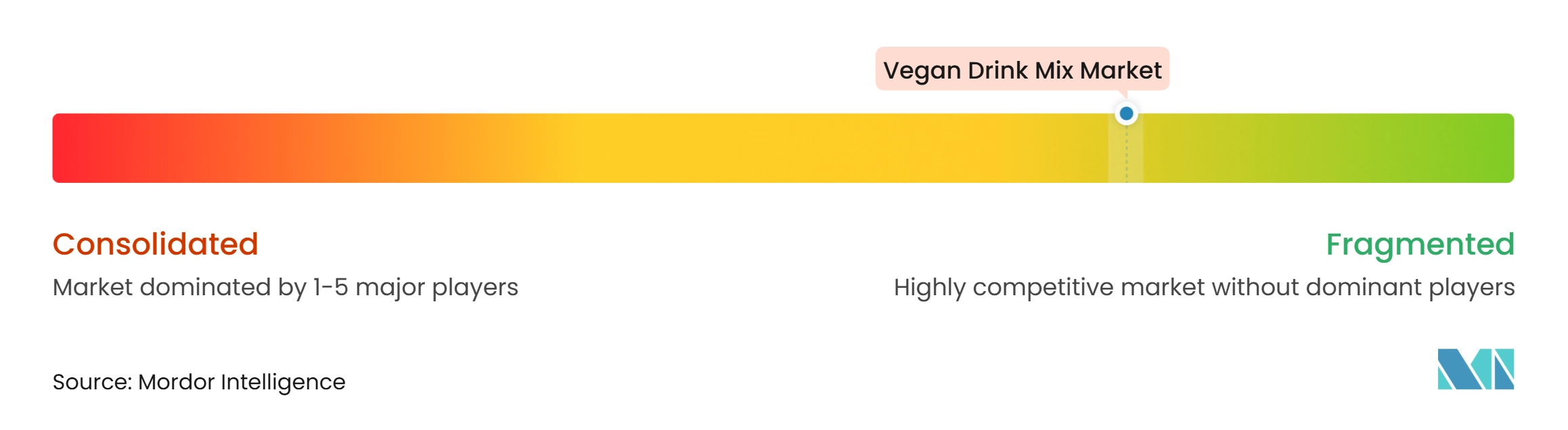
The vegan drink mix market is fragmented. The competitive landscape includes established companies with strong brand portfolios and smaller players competing through specialized formulations, direct-to-consumer channels, and targeted consumer positioning. Large companies benefit from manufacturing capabilities, established procurement networks, extensive distribution channels, and access to mass retail markets. These advantages support product development, brand visibility, and wider market reach. Independent brands compete through product innovation, focused nutritional offerings, flexible product development, and closer engagement with consumers.
Companies are strengthening their market positions through acquisitions, supply-chain investments, and expanded distribution strategies. These initiatives help broaden product portfolios, improve market access, and strengthen capabilities across organic, specialty, and functional beverage categories. A balanced presence across wholesale, retail, and direct-to-consumer channels also supports wider product availability and closer consumer engagement. Certification, traceability, and quality assurance are becoming important competitive considerations, encouraging companies to strengthen their manufacturing and sourcing practices.
Product innovation is another important strategy for differentiation. Manufacturers are expanding their portfolios with multifunctional formulations that combine vegan-based protein with ingredients that support energy, hydration, digestive health, and overall wellness. Companies are also developing products suited to different consumption occasions and foodservice applications, including convenient beverage formats and coffee-based preparations. These strategies reflect the growing importance of product differentiation, consistent formulation quality, credible product claims, reliable distribution, and adaptability across retail, online, and foodservice channels.
Vegan Drink Mix Industry Leaders
-
Ritual
-
Vega (WM Partners)
-
Garden of Life (Nestlé S.A.)
-
Sunwarrior (Growve Group)
-
PlantFusion
- *Disclaimer: Major Players sorted in no particular order
Vegan Drink Mix Market Companies Covered in this Report
- Ritual
- Vega (WM Partners)
- Garden of Life (Nestlé S.A.)
- Sunwarrior (Growve Group)
- PlantFusion
- Glanbia Nutritionals (Glanbia plc)
- Nuzest
- True Nutrition
- Huel
- Amazing Grass (Glanbia plc)
- Four Sigmatic
- KOS
- ALOHA
- OWYN (The Simply Good Foods Company)
- Nutiva
- Vegan Drink Company
- Strive
- EVOLVE (PepsiCo, Inc.)
- Mighty Drinks
- Silk Foods Ceylon (Pvt) Ltd
- Satopradhan
Recent Industry Developments in Vegan Drink Mix Market
- February 2026: Alpro launched its Meal To Go range of vegan meal-replacement drinks in Germany, offering 20g of plant-based protein per 500ml bottle along with 26 vitamins and minerals, fiber and omega-3. The soy-and-oat-based drinks are available in four flavors and are positioned as convenient, nutritionally complete meal options for consumers on the go.
- May 2025: Eat Just launched Just One a single-ingredient vegan protein powder made from mung beans at Whole Foods Market stores across the U.S. The product provides 30g of complete plant-based protein per serving supporting demand for high-protein, clean-label and convenient vegan protein products.
- March 2025: Superfood Powder introduced a vegan drink mix containing a blend of fruits, vegetables, berries, and plant-based vitamins. The product is available in convenient stick-pack formats and targets consumers seeking plant-based nutritional and wellness formulations
Global Vegan Drink Mix Market Report Scope
The vegan drink mix market comprises powdered or dry beverage formulations made from plant-based ingredients that consumers mix with water or other liquids to prepare ready-to-consume beverages. The market is segmented by product type, category, flavor, packaging type, distribution channel, and geography. By product type, the market includes nut-based, grain-based, coconut-based, root-based, and other plant-based formulations. By category, it is divided into conventional and organic products. By packaging type, the market includes sachets, pouches, and other formats. Distribution channels comprise on-trade and off-trade channels. Geographically, the market is segmented into North America, Europe, Asia-Pacific, South America, and the Middle East and Africa. The report provides market size estimates and forecasts for each segment in terms of value (USD).
Segmentation Overview
| Nut based |
| Grain based |
| Coconut based |
| Root based |
| Other Product Type |
| Conventional |
| Organic |
| Unflavored | |
| Flavored | Chocolate |
| Fruit | |
| Other Flavors |
| Sachets |
| Pouches |
| Other Packaging Type |
| On-trade | |
| Off-trade | Convenience Stores |
| Supermarkets and Hypermarkets | |
| Online Retail Stores | |
| Other Distribution Channels |
| North America | United States |
| Canada | |
| Mexico | |
| Rest of North America | |
| Europe | United Kingdom |
| Germany | |
| France | |
| Italy | |
| Spain | |
| Netherlands | |
| Poland | |
| Belgium | |
| Sweden | |
| Rest of Europe | |
| Asia-Pacific | China |
| Japan | |
| India | |
| Australia | |
| Indonesia | |
| South Korea | |
| Thailand | |
| Singapore | |
| Rest of Asia-Pacific | |
| South America | Brazil |
| Argentina | |
| Colombia | |
| Chile | |
| Peru | |
| Rest of South America | |
| Middle East and Africa | South Africa |
| Saudi Arabia | |
| United Arab Emirates | |
| Nigeria | |
| Egypt | |
| Morocco | |
| Turkey | |
| Rest of Middle East and Africa |
| By Product Type | Nut based | |
| Grain based | ||
| Coconut based | ||
| Root based | ||
| Other Product Type | ||
| By Category | Conventional | |
| Organic | ||
| By Flavor | Unflavored | |
| Flavored | Chocolate | |
| Fruit | ||
| Other Flavors | ||
| By Packaging Type | Sachets | |
| Pouches | ||
| Other Packaging Type | ||
| By Distribution Channel | On-trade | |
| Off-trade | Convenience Stores | |
| Supermarkets and Hypermarkets | ||
| Online Retail Stores | ||
| Other Distribution Channels | ||
| By Geography | North America | United States |
| Canada | ||
| Mexico | ||
| Rest of North America | ||
| Europe | United Kingdom | |
| Germany | ||
| France | ||
| Italy | ||
| Spain | ||
| Netherlands | ||
| Poland | ||
| Belgium | ||
| Sweden | ||
| Rest of Europe | ||
| Asia-Pacific | China | |
| Japan | ||
| India | ||
| Australia | ||
| Indonesia | ||
| South Korea | ||
| Thailand | ||
| Singapore | ||
| Rest of Asia-Pacific | ||
| South America | Brazil | |
| Argentina | ||
| Colombia | ||
| Chile | ||
| Peru | ||
| Rest of South America | ||
| Middle East and Africa | South Africa | |
| Saudi Arabia | ||
| United Arab Emirates | ||
| Nigeria | ||
| Egypt | ||
| Morocco | ||
| Turkey | ||
| Rest of Middle East and Africa | ||
Key Questions Answered in the Report
How big is the vegan drink mix market?
The vegan drink mix market is estimated at USD 14.89 billion in 2026 and is projected to reach USD 15.61 billion in 2027. The market is expected to reach USD 21.62 billion by 2032, registering a CAGR of 6.73% during 2027–2032.
Why are flavored vegan drink mixes growing quickly?
Flavored are projected to grow at a CAGR of 11.12% through 2032. Localized flavors, improved masking of plant-protein notes and product discovery support this growth.
Which sales channel is growing fastest for vegan drink mix market?
On-trade are forecasted to expand at a CAGR of 9.14% through 2032. The channel supports subscriptions, direct feedback and broader access for smaller brands.
What are the main barriers for vegan drink mix suppliers?
Taste and texture issues, certification costs, supply volatility, careful management of nutrition and vegan product claims remain important barriers. Reliable testing, clear labels, stable ingredient sourcing and consumer-friendly recipe design can help reduce these risks.