
Urology Surgical Instruments Market Size and Share
Market Overview
| Study Period | 2022 - 2032 |
|---|---|
| Market Size (2027) | USD 17.49 Billion |
| Market Size (2032) | USD 27.87 Billion |
| Growth Rate (2027 - 2032) | 9.76 % |
| Fastest Growing Market | Asia-Pacific |
| Largest Market | North America |
| Market Concentration | Medium |
Major Players *Disclaimer: Major Players sorted in no particular order Image © Mordor Intelligence. Reuse requires attribution under CC BY 4.0. | |
Urology Surgical Instruments Market Analysis by Mordor Intelligence
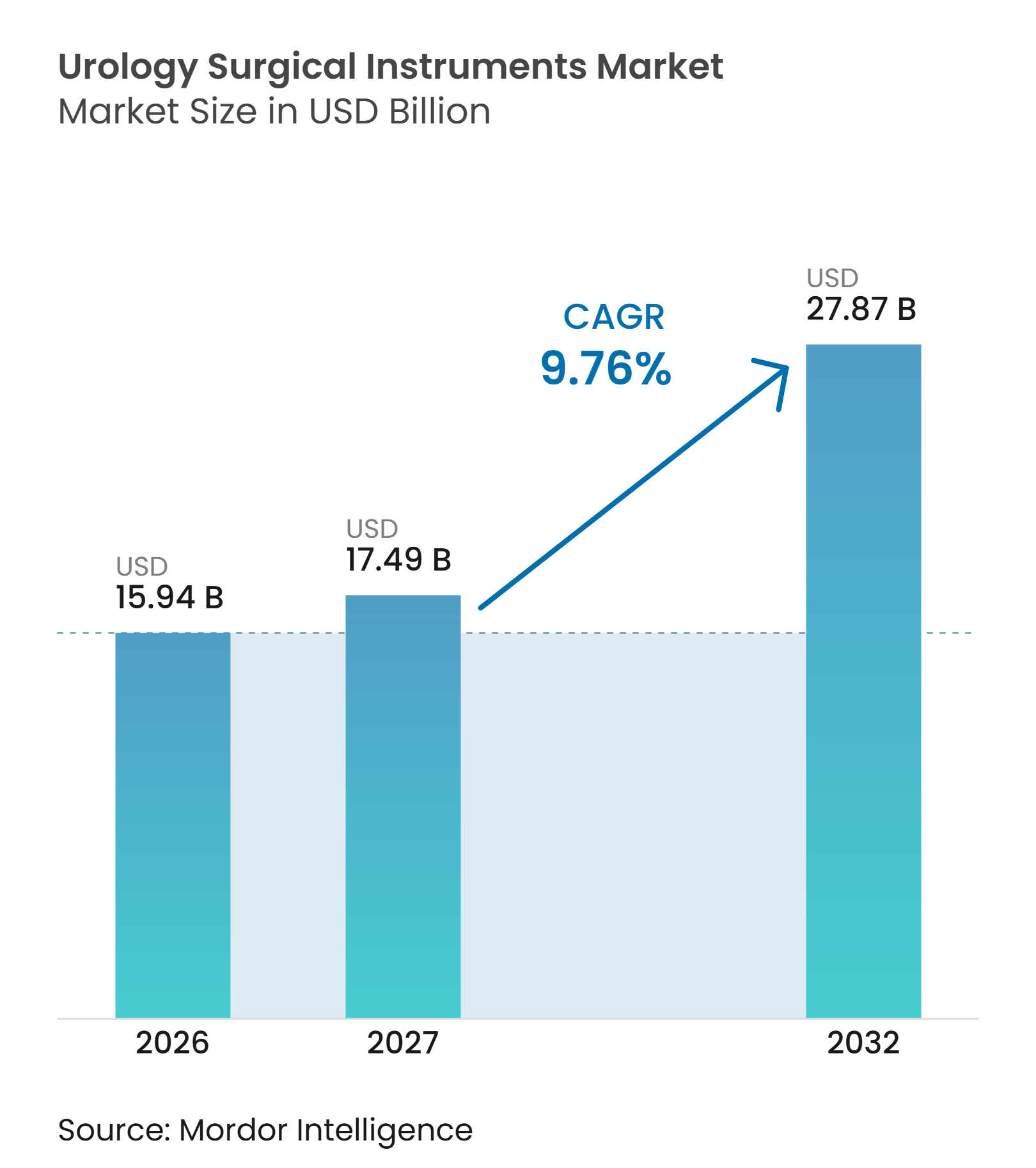
The Urology Surgical Instruments Market size is projected to expand from USD 15.94 billion in 2026 and USD 17.49 billion in 2027 to USD 27.87 billion by 2032, registering a CAGR of 9.76% between 2027 and 2032.
The urology surgical instruments market is supported by a larger patient base requiring stone, kidney, prostate, and oncology interventions. Demand is also moving toward procedures that can be completed in outpatient settings with shorter recovery times and less reliance on reusable equipment. Providers are weighing capital purchases against recurring spending on disposable scopes, laser fibers, baskets, and fluid-management tools. The urology surgical instruments market therefore rewards suppliers that can link imaging, instruments, and clinical workflow support in one offering. Price controls in China and uneven reimbursement for some minimally invasive treatments remain important constraints on unit revenue and equipment replacement.
Key Report Takeaways
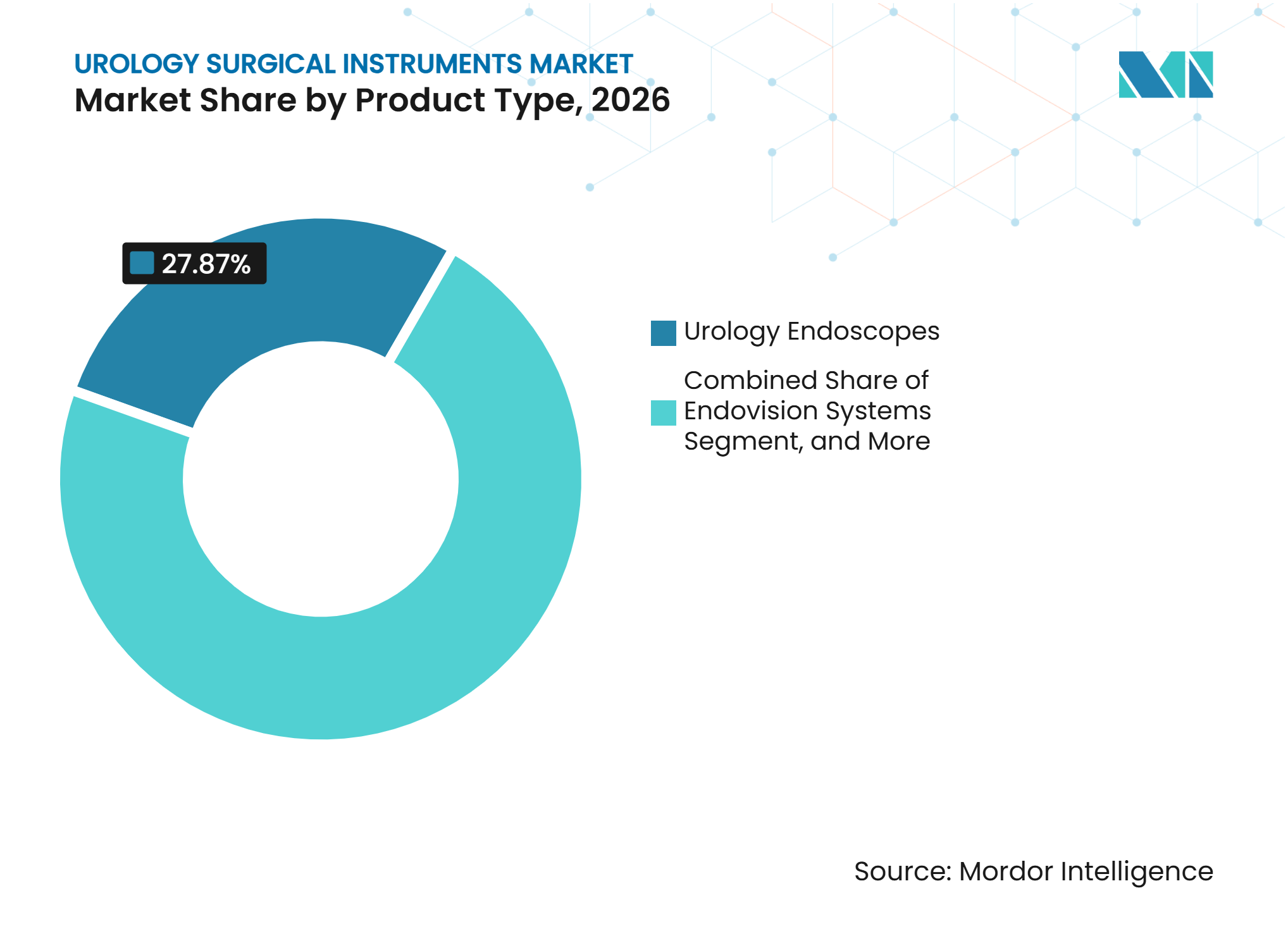
- By product type, urology endoscopes held 27.87% of the Urology surgical instruments market share in 2026, while endovision systems are forecast to grow at an 11.65% CAGR through 2032.
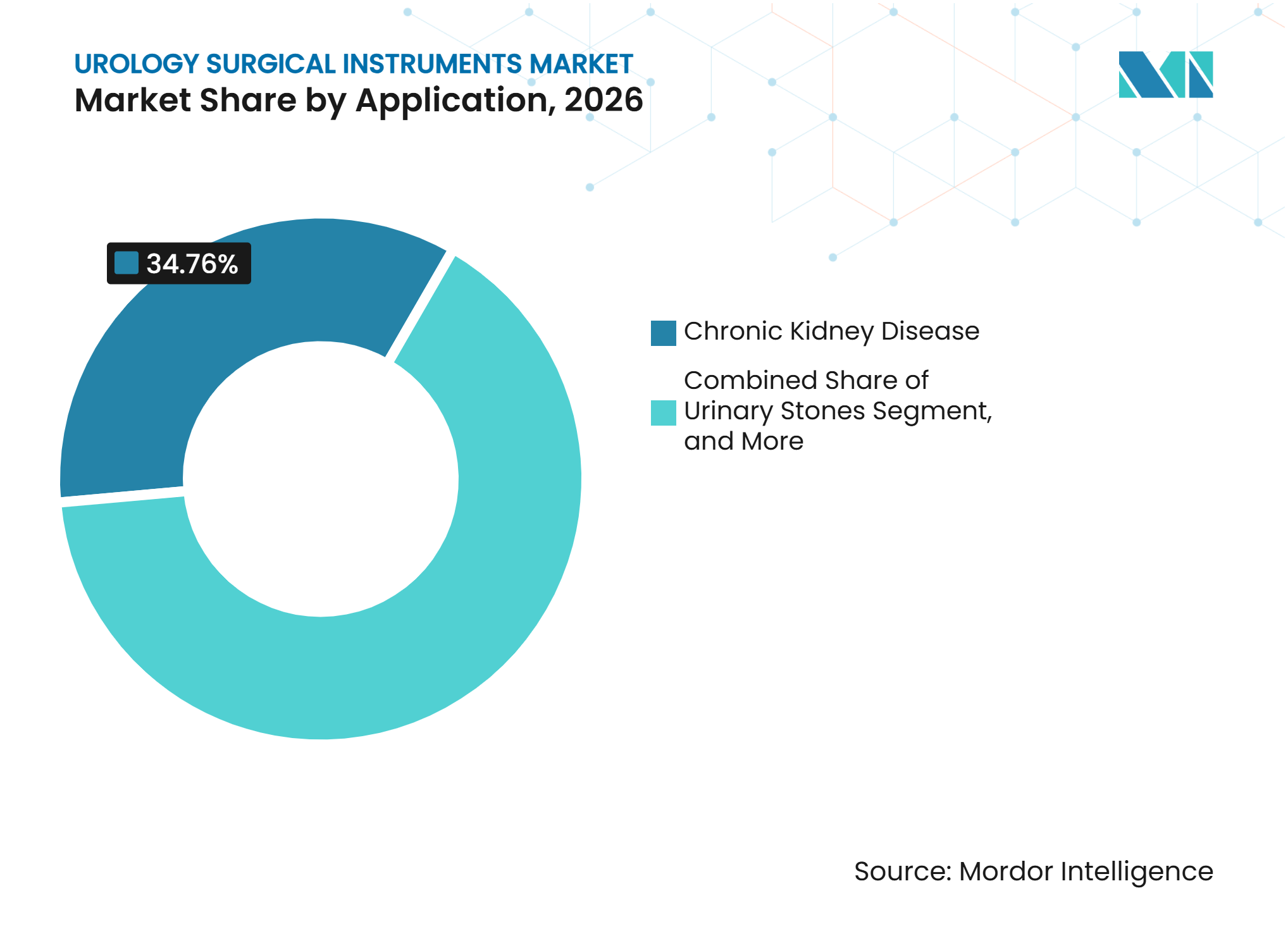
- By application, chronic kidney disease accounted for 34.76% of the Urology surgical instruments market share in 2026, while benign prostatic hyperplasia is projected to advance at an 11.87% CAGR through 2032.
- By end user, hospitals and clinics accounted for 61.43% in 2026, while ambulatory surgical centers are forecast to grow at a 12.43% CAGR through 2032.
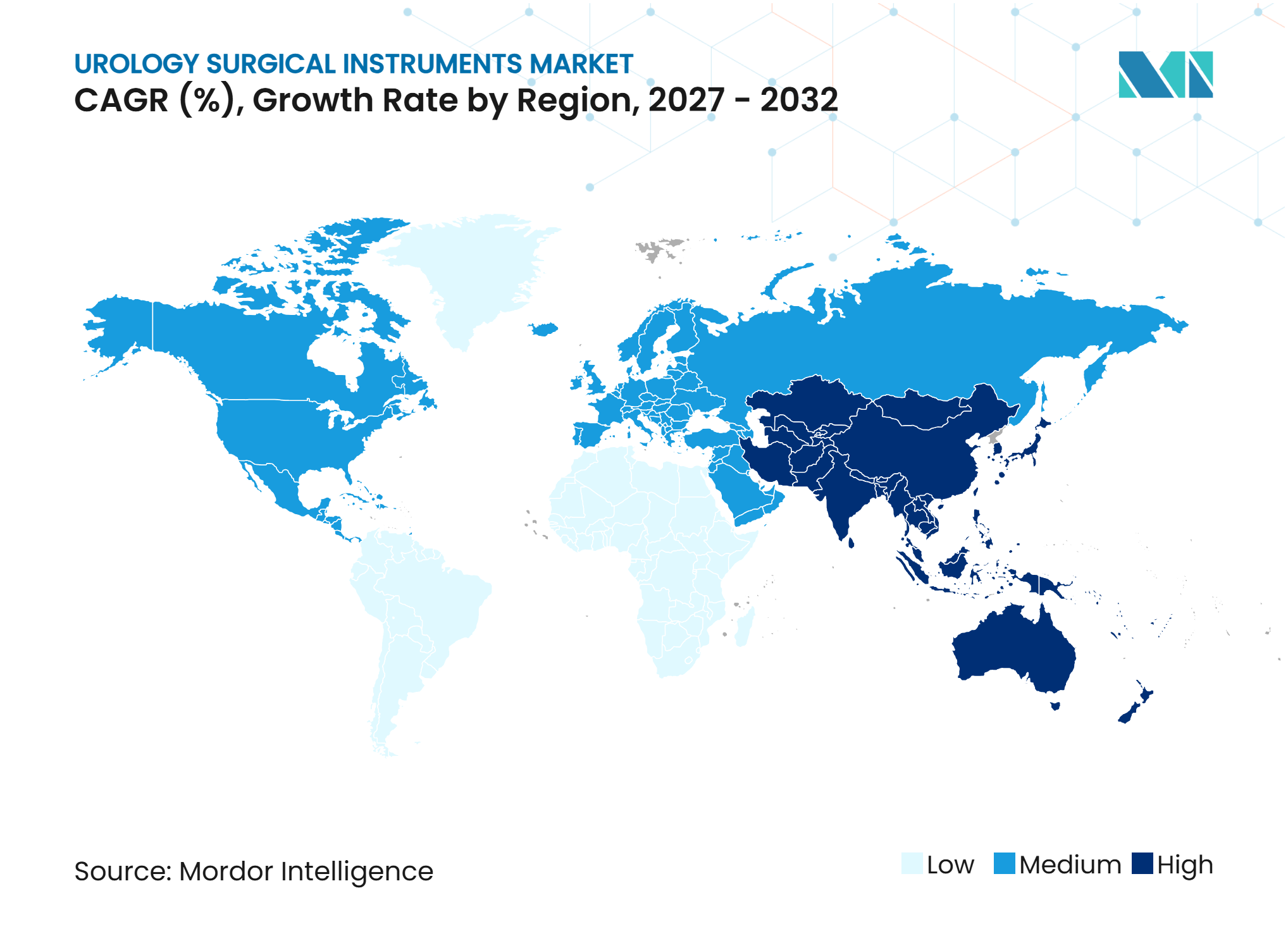
- By geography, North America held 42.56% in 2026, while Asia-Pacific is projected to expand at a 10.54% CAGR through 2032.
Note: Market numbers in this report are based on Mordor Intelligence's proprietary estimation framework, which combines nine months of actuals with Q4 projections for base year 2026.
Market Trends and Insights
Drivers Impact Analysis of Urology Surgical Instruments Market*
| Driver | (~) % Impact on CAGR Forecast | Geographic Relevance | Impact Timeline |
|---|---|---|---|
| Rising Prevalence and Recurrence of Urolithiasis | +2.00% | Global, highest in EMRO, Asia, and Africa | Medium term (2-4 years) |
| Expansion of Minimally Invasive and Ambulatory Urology | +2.20% | North America and Europe, with accelerating adoption in Asia-Pacific and emerging use in South America | Short term (≤ 2 years) |
| Growth of Single-Use Endoscopy for Infection Control and Workflow Reliability | +1.50% | Global, led by North America, the United Kingdom, and Germany, with expansion in Asia-Pacific | Short term (≤ 2 years) |
| Integration of Laser, Irrigation, Suction, and Intrarenal Pressure Management | +1.40% | North America and Western Europe, with growing adoption in Asia-Pacific | Medium term (2-4 years) |
| Rising Urological Oncology and BPH Procedure Load in Aging Populations | +1.80% | Global, with high concentration in Japan, South Korea, Germany, and Italy | Long term (≥ 4 years) |
| Climate-Linked Dehydration and Stone Recurrence Risk | +0.40% | EMRO, South and Southeast Asia, the United States Sun Belt, and Sub-Saharan Africa | Long term (≥ 4 years) |
| Source: Mordor Intelligence | |||
Rising Prevalence and Recurrence of Urolithiasis
Urolithiasis supports recurring demand for ureteroscopes, guidewires, baskets, and laser fibers in the urology surgical instruments market. A 2025 systematic analysis established the substantial global burden of stone disease. A 2025 review found a pooled adult prevalence of 14.17% in the Eastern Mediterranean region, showing the concentration of need in areas with high heat exposure and limited specialist capacity. Patients can return to treatment after recurrent stone events, which extends demand beyond an initial intervention. A 2025 review of outpatient percutaneous nephrolithotomy reported a 93% stone-free rate in selected patients and supported use in lower-acuity settings[1]. Rising temperatures and dehydration may further increase stone risk in vulnerable areas, reinforcing the need for efficient stone-management pathways.
Expansion of Minimally Invasive and Ambulatory Urology
The shift from inpatient operating rooms to office and ambulatory settings changes how the urology surgical instruments market is supplied. A 2025 prospective study found savings of USD 5,309 to USD 6,009 per office-based endoscopic procedure compared with operating room or general-anesthesia settings. The same study reported that 77.8% of patients in its ureteroscopy cohort preferred the office setting. A separate 2025 study found no same-day emergency inpatient transfer among selected higher-risk ureteroscopy patients treated at freestanding ambulatory surgical centers. These settings favor instruments that enable rapid turnover, predictable availability, and a lower reprocessing burden. PROCEPT BioRobotics also reported completion of WATER IV trial procedures at an ambulatory surgical center in 2025, indicating that outpatient sites can support more advanced urologic procedures.
Growth of Single-Use Endoscopy for Infection Control and Workflow Reliability
Single-use ureteroscopes are becoming a more visible purchasing option in the urology surgical instruments market. A 2026 micro-cost analysis found that reusable ureteroscopes needed repair after 20 procedures and that single-use devices could be more economical for centers completing fewer than 83 to 130 annual cases. Disposable instruments avoid reprocessing delays and provide a sterile instrument for each case. Cost and environmental impact remain barriers to wider adoption. Regulatory influence also matters because FDA 510(k) review and EU Medical Device Regulation requirements shape the clearance and compliance timetable for reusable and single-use endoscopic products.
Integration of Laser, Irrigation, Suction, and Intrarenal Pressure Management
Hospitals are adopting integrated procedure systems that connect visualization, energy delivery, irrigation, suction, and pressure control. Boston Scientific received FDA clearance in March 2026 for the Asurys Fluid Management System, which automatically regulates intrarenal pressure during several endourologic procedures when used with the LithoVue Elite ureteroscope. This approach addresses clinical concerns around elevated intrarenal pressure during stone and related procedures. Olympus introduced its SOLTIVE Gemini 60W thulium fiber laser platform in the United States in November 2026, adding StoneSense technology that stops laser emission when the fiber is not directed at a stone. Suppliers that combine these tools can offer a more coordinated workflow than suppliers selling separate components. The approach also strengthens recurring revenue through compatible single-use accessories and procedure-specific consumables.
Restraints Impact Analysis of Urology Surgical Instruments Market*
| Restraint | (~) % Impact on CAGR Forecast | Geographic Relevance | Impact Timeline |
|---|---|---|---|
| High Total Cost of Ownership for Advanced Platforms | -1.4% | Global, most acute in lower-middle-income countries and community hospitals | Long term (≥ 4 years) |
| Disposable Per-Procedure Cost and Environmental Burden | -0.8% | High-income markets in Europe and North America, with growing relevance in Asia-Pacific | Medium term (2-4 years) |
| Shortage of Endourology Specialists and Operating-Room Technicians | -0.6% | Asia-Pacific, Africa, and South America | Medium term (2-4 years) |
| Variable Reimbursement and Delayed Replacement Cycles in Lower-Resource Facilities | -0.9% | South America, Africa, Southeast Asia, and Central and Eastern Europe | Long term (≥ 4 years) |
| Source: Mordor Intelligence | |||
High Total Cost of Ownership for Advanced Platforms
Robotic systems, advanced laser platforms, and integrated endovision towers require significant upfront capital. This limits adoption in community hospitals and lower-resource facilities within the urology surgical instruments market. Medtronic received FDA clearance for Hugo RAS in urologic procedures in December 2025 after its Expand URO study met primary safety and effectiveness endpoints. The clinical progress does not remove the cost of acquisition, training, service, and compatible instruments. Transitioning from holmium systems to thulium fiber laser platforms can also require a deferred replacement decision for mid-tier facilities. A complete endourology suite can exceed USD 500,000 in capital costs before consumables, which can widen the gap between flagship hospitals and smaller sites.
Variable Reimbursement and Delayed Replacement Cycles in Lower-Resource Facilities
Reimbursement uncertainty can delay treatment adoption and equipment purchasing in the urology surgical instruments market. Teleflex cited reimbursement pressure among the factors behind its December 2025 decision to sell its Acute Care, Interventional Urology, and OEM businesses for USD 2.03 billion. Public-hospital budgets in South America and Africa can extend replacement cycles and increase reliance on repairable reusable instruments. Specialist and operating-room technician shortages add another practical limit on deployment in parts of Asia-Pacific, Africa, and South America. China’s January 2026 centralized procurement results covered urology interventional consumables and lock contracted pricing through December 2028[2]. These conditions can favor service revenue and lower-cost products while reducing the price realized on standard consumables.
*Our forecasts treat driver/restraint impacts as directional, not additive. The impact forecasts reflect baseline growth, mix effects, and variable interactions.
Urology Surgical Instruments Market Segment Analysis
By Product Type:
Optical Innovation Extends Endoscope DominanceUrology endoscopes held 27.87% of the urology surgical instruments market in 2026. Their role spans flexible ureteroscopy for stone disease and rigid cystoscopy for diagnostic and surveillance procedures. Flexible digital ureteroscopes are gaining attention because they can improve access to intrarenal anatomy. Japan’s reimbursement recognition of retrograde intrarenal surgery supports use of flexible ureteroscope-intensive pathways in a broader group of hospitals. Boston Scientific received FDA clearance for LithoVue Elite in September 2025, describing it as the first ureteroscope with integrated intrarenal pressure monitoring. Stryker launched its F88 flexible reusable ureteroscope in February 2026 with 270° bidirectional deflection for complex renal access.
Endovision systems are projected to grow at an 11.65% CAGR through 2032, the highest rate among product types. The Urology surgical instruments market size for endovision systems is supported by replacement of legacy camera-head configurations with digital imaging platforms. Olympus launched the VISERA S imaging platform for U.S. ENT and urological applications in September 2025, adding built-in narrow-band imaging technology. Karl Storz acquired Diaspective Vision intellectual property and talent in April 2025 to advance hyperspectral and multispectral imaging capabilities. Peripheral systems, consumables, and accessories remain important because they complete the procedural setup and generate repeat purchasing. Suppliers are increasingly positioning imaging, scopes, pressure management, and retrieval tools as linked systems rather than isolated products.



By Application:
Kidney Disease Anchors Volumes as BPH AcceleratesChronic kidney disease held 34.76% of the urology surgical instruments market in 2026. This application generates demand for diagnostic cystoscopy, stenting, nephroureteroscopy, and procedures for obstruction or stone complications. A 2025 Lancet analysis confirmed that chronic kidney disease remains a major global clinical burden, with China and India carrying the largest absolute patient populations. Chronic kidney disease can be associated with repeated urinary obstruction and infection-related management needs. Urinary stones form the next major procedural area because of their clinical link with renal disease and dehydration. Published 2025 evidence also linked climate-related heat exposure and behavioral dehydration with a higher risk of stone disease.
Benign prostatic hyperplasia is expected to grow at an 11.87% CAGR through 2032. The Urology surgical instruments market size for BPH benefits from the growing use of aquablation, laser enucleation, and other less invasive alternatives to transurethral resection. A 2025 study projected further growth in global BPH incidence through 2035, with the 65-79 age group accounting for the fastest absolute increase. Oncology and urinary incontinence or pelvic organ prolapse remain smaller applications. Coloplast completed the Uromedica acquisition in 2026, adding implantable balloon therapies for stress urinary incontinence to its U.S. Men’s Health business.

By End User:
Hospital Volumes Drive Scale, ASCs Reshape Care DeliveryHospitals and clinics accounted for 61.43% of the urology surgical instruments market in 2026. They manage oncology resections, robotic prostatectomies, nephrectomies, and higher-risk stone cases that need inpatient support and multidisciplinary teams. Their purchasing decisions often involve visualization equipment that can serve multiple specialties. Karl Storz’s IMAGE1 S video platform was used at the University of Virginia Riverside Surgery Center to reduce its visualization inventory from 3 towers to 2 while serving several specialties. The hospital channel remains essential for premium capital platforms and complex procedures. It also offers manufacturers a route for long-term service agreements and standardized consumable purchasing.
Ambulatory surgical centers are forecast to grow at a 12.43% CAGR through 2032. The urology surgical instruments market is adapting to their need for compact equipment, predictable inventory, and rapid case turnover. A 2025 Journal of Endourology study found a clear cost advantage for selected office-based endoscopic procedures. Evidence from a 2025 World Journal of Urology study indicates that selected high-risk ureteroscopy patients can be treated at freestanding centers without same-day emergency transfer. Standalone urology clinics and office practices add demand for portable cystoscopes, single-use tools, and compact imaging systems. Their growth depends on specialist access, payer policy, and the local capacity to manage complications.
Geography Analysis
North America
North America held 42.56% of the urology surgical instruments market in 2026. The region combines high robotic surgery use, an established base of endourology specialists, and FDA pathways for capital and single-use devices. Medtronic received clearance for Hugo RAS in urological procedures in December 2025. The first U.S. commercial Hugo case followed at Cleveland Clinic in February 2026. This activity shows how robotic competition is extending beyond a single established platform. Single-use scopes and pressure-management systems are also gaining attention because providers seek reliable workflow and infection-control options. Canada and Mexico contribute to demand through specialized centers and growing private hospital capacity.
Asia-Pacific
Asia-Pacific is forecast to expand at a 10.54% CAGR through 2032. The region’s position is supported by large chronic kidney disease and stone disease populations, as well as healthcare infrastructure investment. A 2025 Global Burden of Disease analysis identified China and India as the countries with the largest absolute chronic kidney disease populations. China’s national procurement program included stents, guidewires, and stone baskets in its sixth batch of high-value medical consumables procurement in January 2026. The contracted pricing period runs through December 2028, encouraging suppliers to differentiate through service and integrated systems. Japan’s aging population and outpatient center network support demand for flexible ureteroscopes and laser lithotripsy systems. India adds a widening specialist base and a substantial stone-disease caseload, although access to premium equipment remains uneven.
Europe, Middle East and Africa, and South America
Europe benefits from tertiary hospital networks, medical technology manufacturing, and a mature regulatory environment under the EU Medical Device Regulation. Olympus launched OES Elite rigid cystoscopes across EMEA in December 2025, with a reported 25% improvement in instrument passage over its preceding OES Pro line. Middle East and Africa demand is concentrated in Gulf hospital investments, while the Eastern Mediterranean also has a high urolithiasis burden. South America remains dependent on imports for premium systems but has expanding distributor networks and demand for entry-level consumables. Budget constraints and tender-led purchasing shape replacement cycles in several markets. These mixed regions create opportunities for suppliers that can balance regulatory compliance, training support, and lower-cost product configurations.
Competitive Landscape
Market Concentration

The urology surgical instruments market is moderately consolidated in premium capital equipment and high-value single-use consumables. The wider landscape for guidewires, catheters, stents, and drainage products remains fragmented across regional suppliers and domestic manufacturers. Suppliers are using connected product portfolios to protect recurring procedure revenue. Boston Scientific has built its StoneSmart Solutions offering around LithoVue Elite, Asurys fluid management, and related stone-management accessories. Karl Storz is expanding its imaging capabilities through the Diaspective Vision acquisition and through work on AI-based surgical quality analysis.
Portfolio changes show how reimbursement and market access affect company strategy. Teleflex agreed in December 2025 to sell its Interventional Urology business, including UroLift and Barrigel, within a broader transaction. Coloplast reported 7% organic growth in Interventional Urology for FY2025/26 and continued preparations for a phased launch of its next-generation penile prosthetic system. Medtronic has expanded Hugo RAS capabilities with FDA clearance for its LigaSure RAS Maryland instrument in September 2026. These moves deepen the competition for equipment placements and compatible instrument use.
The urology surgical instruments market also has room for suppliers serving ambulatory centers and lower-resource facilities. The opportunity is strongest in practical systems that reduce reprocessing time and avoid the capital demands of full premium platforms. Affordable single-use nephroscopes and digital guidance tools remain areas of development, especially where hospitals need more predictable workflow. Regulatory credentials under FDA and CE mark frameworks can help Asian manufacturers compete in export markets.
Urology Surgical Instruments Industry Leaders
-
Boston Scientific Corporation
-
Becton, Dickinson and Company
-
Olympus Corporation
-
KARL STORZ SE and Co. KG
-
Cook Medical LLC
- *Disclaimer: Major Players sorted in no particular order
Urology Surgical Instruments Market Companies Covered in this Report
- B. Braun
- Beckton Dickinson
- Boston Scientific
- Coloplast
- Cook Group
- Dornier MedTech
- Intuitive Surgical, Inc.
- Johnson & Johnson MedTech (Ethicon)
- Karl Storz
- Medtronic
- Olympus
- PROCEPT BioRobotics
- Richard Wolf
- Stryker
- Teleflex
Recent Industry Developments in Urology Surgical Instruments Market
- November 2026: Olympus Corporation announced the US commercial launch of the SOLTIVE Gemini 60W Thulium Fiber Laser System, featuring StoneSense technology that automatically halts laser emission when the surgical fiber is not directed at a stone, reducing the risk of mucosal damage during endoscopic stone fragmentation. The launch expands Olympus's energy platform portfolio at a time when thulium fiber laser is displacing holmium as the preferred lithotripsy modality in high-volume centers.
- September 2026: Medtronic received FDA 510(k) clearance for the LigaSure RAS Maryland jaw device for use with the Hugo RAS system, bringing Medtronic's vessel-sealing technology, used in over 45 million procedures across 65+ countries, to US robotic urology surgeons performing minimally invasive prostatectomy, nephrectomy, and cystectomy. The clearance expands the Hugo instrument portfolio and reinforces Medtronic's commercial momentum in the US robotic urology space less than 12 months after the system's initial FDA clearance for urology.
- June 2026: PROCEPT BioRobotics announced completion of enrollment in the WATER IV randomized clinical study comparing aquablation therapy to radical prostatectomy for localized prostate cancer, and secured FDA IDE approval for a second WATER IV protocol comparing aquablation to active surveillance in 333 patients globally.
- March 2026: Boston Scientific received FDA 510(k) clearance for the Asurys Fluid Management System, the first system designed to automatically regulate intrarenal pressure in real time during ureteroscopy, cystoscopy, PCNL, and BPH procedures, when paired with the LithoVue Elite ureteroscope. The clearance addresses a recognized clinical unmet need because elevated intrarenal pressure is associated with postoperative SIRS, sepsis, and renal damage.
Global Urology Surgical Instruments Market Report Scope
According to the report’s scope, Urology surgical instruments are specialized tools used to diagnose and treat conditions affecting the urinary tract and male reproductive system. They support procedures such as endoscopy, stone removal, tissue resection, and catheterization.
The urology surgical instruments market is segmented into product type, application, reusability, end user, and geography. By product type, the market is segmented into endoscopes, endovision systems, peripheral systems, and consumables and accessories. By application, the market is segmented into CKD, urinary stones, BPH, urinary incontinence/POP, and oncology. By end user, the market is segmented into hospitals and clinics, ASCs, and others. By geography, the market is segmented into North America, Europe, Asia-Pacific, the Middle East and Africa, and South America. The report also covers the estimated market sizes and trends for 17 countries across major regions globally. The report offers values (USD) for all the above segments.
Segmentation Overview
| Urology Endoscopes | Laproscopes |
| Ureteroscopes | |
| Nephroscopes | |
| Resectoscopes | |
| Cystoscopes | |
| Endovision Systems | Endoscopic Light Sources |
| Endoscopic Cameras | |
| Wireless Monitors and Displays | |
| Camera Heads | |
| Peripheral Systems | Insufflators |
| Endoscopic Fluid Management Systems | |
| Consumables and Accessories | Guidewires |
| Stone Baskets/Retrieval Devices, And Extractors | |
| Catheters | |
| Stents | |
| Biopsy Devices | |
| Fluid Flushing Devices, Connecting Tubes, Clamps, Overtubes, And Distal Attachments | |
| Dilator Sets, And Ureteral Access Sheaths | |
| Drainage Bags | |
| Others |
| Chronic Kidney Disease |
| Urinary Stones |
| Benign Prostatic Hyperplasia |
| Urinary Incontinence and Pelvic Organ Prolapse |
| Oncology |
| Other Applications |
| Hospitals and Clinics |
| Ambulatory Surgical Centers |
| Other End Users |
| North America | United States |
| Canada | |
| Mexico | |
| Europe | Germany |
| United Kingdom | |
| France | |
| Italy | |
| Spain | |
| Rest of Europe | |
| Asia-Pacific | China |
| Japan | |
| India | |
| Australia | |
| South Korea | |
| Rest of Asia-Pacific | |
| Middle East and Africa | GCC |
| South Africa | |
| Rest of Middle East and Africa | |
| South America | Brazil |
| Argentina | |
| Rest of South America |
| By Product Type | Urology Endoscopes | Laproscopes |
| Ureteroscopes | ||
| Nephroscopes | ||
| Resectoscopes | ||
| Cystoscopes | ||
| Endovision Systems | Endoscopic Light Sources | |
| Endoscopic Cameras | ||
| Wireless Monitors and Displays | ||
| Camera Heads | ||
| Peripheral Systems | Insufflators | |
| Endoscopic Fluid Management Systems | ||
| Consumables and Accessories | Guidewires | |
| Stone Baskets/Retrieval Devices, And Extractors | ||
| Catheters | ||
| Stents | ||
| Biopsy Devices | ||
| Fluid Flushing Devices, Connecting Tubes, Clamps, Overtubes, And Distal Attachments | ||
| Dilator Sets, And Ureteral Access Sheaths | ||
| Drainage Bags | ||
| Others | ||
| By Application | Chronic Kidney Disease | |
| Urinary Stones | ||
| Benign Prostatic Hyperplasia | ||
| Urinary Incontinence and Pelvic Organ Prolapse | ||
| Oncology | ||
| Other Applications | ||
| By End User | Hospitals and Clinics | |
| Ambulatory Surgical Centers | ||
| Other End Users | ||
| Geography | North America | United States |
| Canada | ||
| Mexico | ||
| Europe | Germany | |
| United Kingdom | ||
| France | ||
| Italy | ||
| Spain | ||
| Rest of Europe | ||
| Asia-Pacific | China | |
| Japan | ||
| India | ||
| Australia | ||
| South Korea | ||
| Rest of Asia-Pacific | ||
| Middle East and Africa | GCC | |
| South Africa | ||
| Rest of Middle East and Africa | ||
| South America | Brazil | |
| Argentina | ||
| Rest of South America | ||
Key Questions Answered in the Report
What is driving demand for urology surgical instruments?
Rising stone disease, chronic kidney disease, BPH procedures, and the move toward outpatient care are supporting demand for scopes, imaging, laser, and disposable tools.
How large is the Urology Surgical Instruments Market?
The Urology Surgical Instruments Market is valued at USD 17.49 billion in 2027 and is projected to reach USD 27.87 billion by 2032 at a 9.76% CAGR.
Which product category is growing fastest?
Endovision Systems are the fastest-growing product category, with an expected 11.65% CAGR through 2032.
Why are single-use ureteroscopes gaining adoption?
They can reduce reprocessing requirements and improve workflow reliability, particularly in lower-volume centers, although cost and environmental concerns remain.
Which care setting is growing fastest for urologic procedures?
Ambulatory Surgical Centers are forecast to grow at a 12.43% CAGR through 2032 as selected procedures move from inpatient operating rooms to outpatient settings.
Which region is expected to grow fastest?
Asia-Pacific is projected to grow at a 10.54% CAGR through 2032, supported by a large disease burden and healthcare infrastructure investment.