
Urology Surgery Supplies Market Size and Share
Market Overview
| Study Period | 2022 - 2032 |
|---|---|
| Market Size (2027) | USD 4.25 Billion |
| Market Size (2032) | USD 6.05 Billion |
| Growth Rate (2027 - 2032) | 7.32 % |
| Fastest Growing Market | Asia-Pacific |
| Largest Market | North America |
| Market Concentration | Medium |
Major Players *Disclaimer: Major Players sorted in no particular order Image © Mordor Intelligence. Reuse requires attribution under CC BY 4.0. | |
Urology Surgery Supplies Market Analysis by Mordor Intelligence
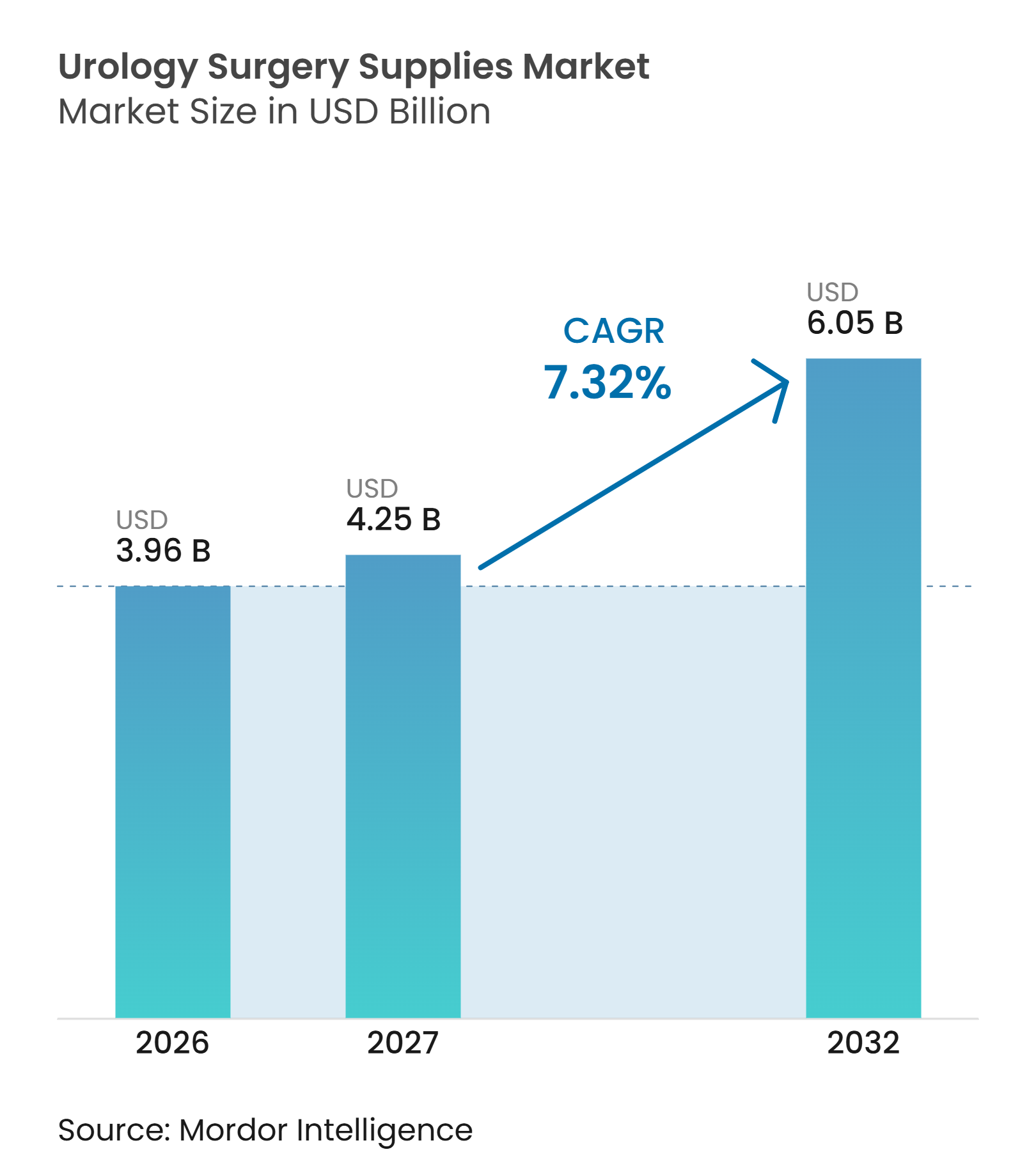
The Urology Surgery Supplies Market size is projected to expand from USD 3.96 billion in 2026 and USD 4.25 billion in 2027 to USD 6.05 billion by 2032, registering a CAGR of 7.32% between 2027 and 2032.
Procedure demand is expanding across stone disease, cancer surgery, and benign prostatic hyperplasia care, where minimally invasive techniques require specialized instruments and recurring supplies. A 2025 meta-analysis reported global urolithiasis prevalence of 10.85%, which supports continued demand for treatment equipment and procedure consumables. The movement of procedures from inpatient facilities to ambulatory surgery centers and office settings is changing purchasing toward ready-to-use, single-use supplies. Suppliers are responding through integrated platforms that combine visualization, laser treatment, irrigation, and pressure monitoring. Competitive opportunities are expanding where manufacturers can demonstrate clinical outcomes, efficient workflows, and regulatory compliance.
Key Report Takeaways
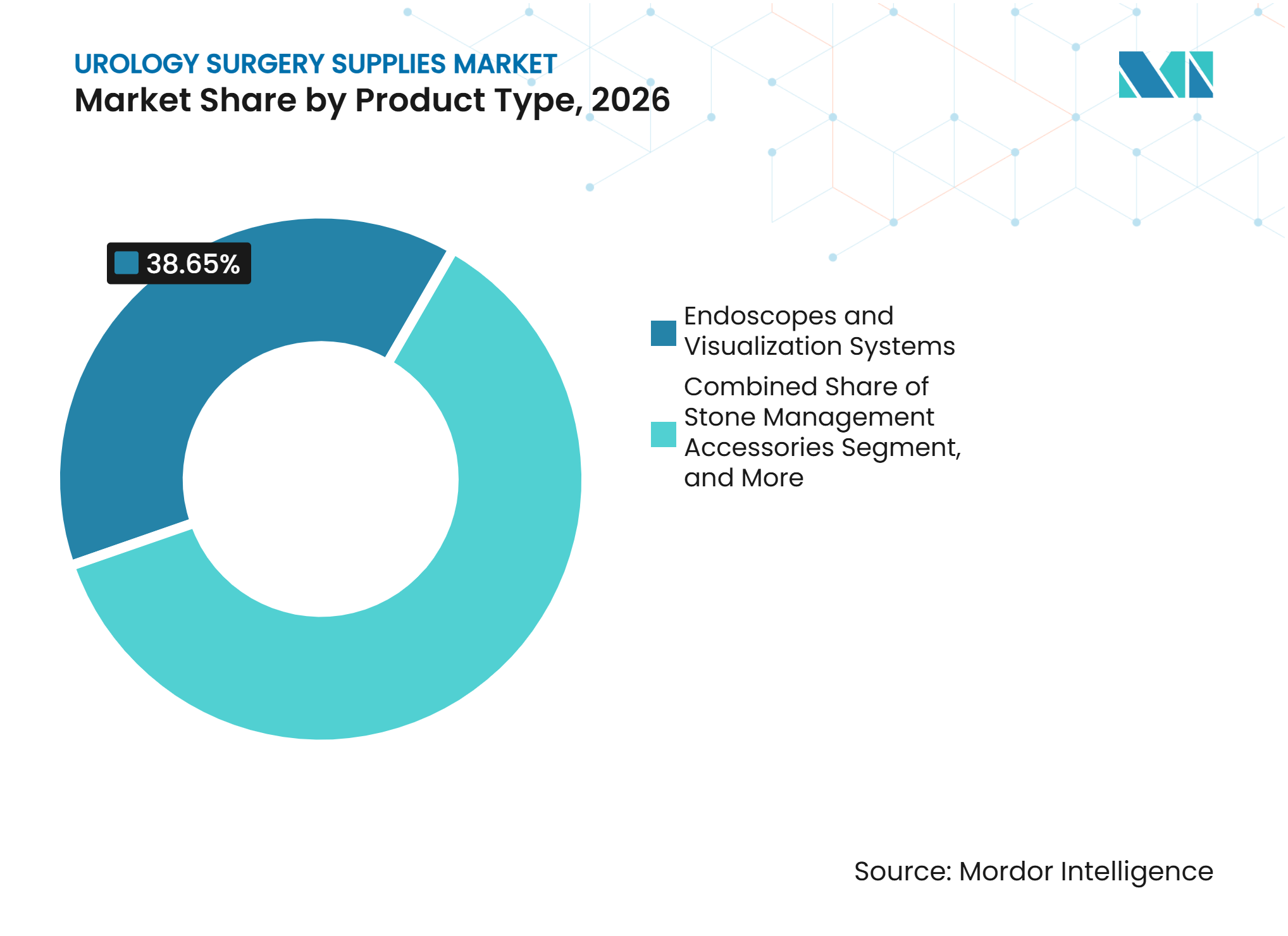
- By product type, endoscopes and visualization systems held 38.65% of the urology surgical supplies market share in 2026, while Stone Management accessories are forecast to grow at a 9.64% CAGR through 2032.
- By technology, minimally invasive technology accounted for 47.65% of the urology surgical supplies market share in 2026, while laser-based solutions are forecast to grow at a 9.99% CAGR through 2032.
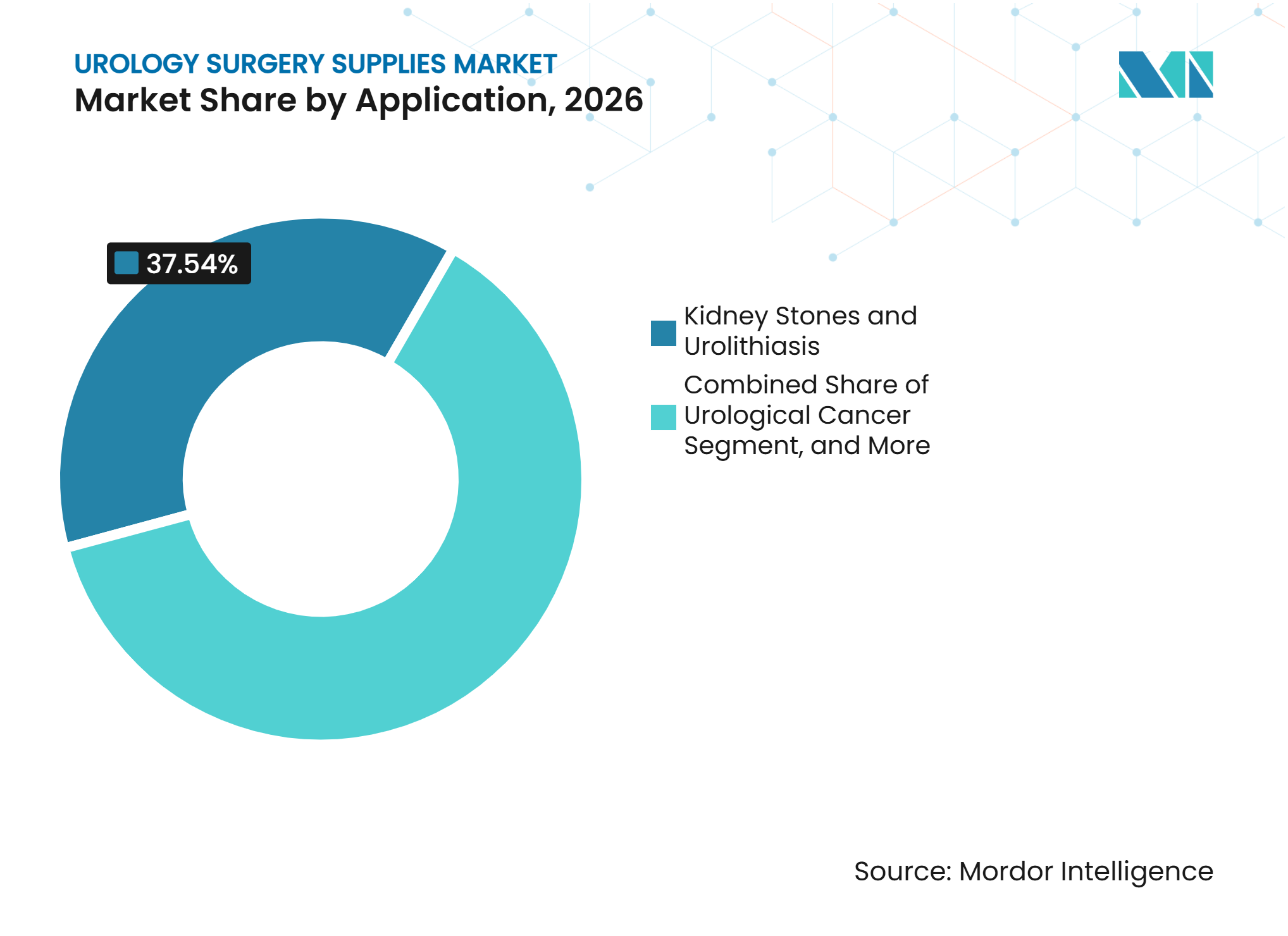
- By application, kidney stones and urolithiasis held 37.54% of the urology surgical supplies market share in 2026, while urological cancer is forecast to grow at a 10.55% CAGR through 2032.
- By end user, hospitals accounted for 43.54% of the urology surgical supplies market share in 2026, while specialty urology clinics are forecast to grow at a 10.67% CAGR through 2032.
- By geography, North America held 42.76% of the urology surgical supplies market share in 2026, while Asia-Pacific is forecast to grow at an 8.54% CAGR through 2032.
Note: Market numbers in this report are based on Mordor Intelligence's proprietary estimation framework, which combines nine months of actuals with Q4 projections for base year 2026.
Market Trends and Insights
Drivers Impact Analysis of Urology Surgery Supplies Market*
| Driver | (~) % Impact on CAGR Forecast | Geographic Relevance | Impact Timeline |
|---|---|---|---|
| Rising Prevalence and Recurrence of Urolithiasis | +2.10% | Global, most acute in Asia, MEA, and Southern Europe | Medium term (2-4 years) |
| Shift Toward Minimally Invasive Urologic Procedures | +1.70% | Global, fastest adoption in North America and Western Europe | Long term (≥ 4 years) |
| Expansion of Ambulatory and Office-Based Urology | +1.20% | North America and EU, with spillover to core APAC markets | Medium term (2-4 years) |
| Single-Use Endoscopy and Infection-Control Economics | +0.90% | Global, with early gains in North America, Australia, and Germany | Short term (≤ 2 years) |
| Integrated Laser, Irrigation, and Intrarenal Pressure Management | +0.50% | North America, Western Europe, and Japan | Medium term (2-4 years) |
| Climate-Linked Dehydration and Stone Recurrence Risk | +0.30% | MEA, South Asia, APAC, with spillover to South America | Long term (≥ 4 years) |
| Source: Mordor Intelligence | |||
Rising Prevalence and Recurrence of Urolithiasis
Urolithiasis creates recurring demand because stone disease can return in 50% of patients within 10 years without active metabolic management. A December 2025 meta-analysis placed global point prevalence at 10.85%. The source reported a pooled prevalence of 11.8% in Asian populations and 14.17% in Eastern Mediterranean populations. These patterns point to a broad treatment burden in regions with different healthcare capacity. Flexible ureteroscopy increasingly requires retrieval baskets, access sheaths, and guidewires during each procedure. A growing share of procedures also use single-use ureteroscopes, which increases recurring supply demand.
The European Association of Urology states that stone prevalence exceeds 10% in Sweden, Canada, and the United States. Its 2025 guideline update also cited a 37% prevalence increase across earlier decades. The urology surgical supplies market therefore benefits from clinical demand that is recurrent rather than limited to a single episode of care. Higher treatment volume supports demand for visualization, laser, irrigation, and stone retrieval products. In warmer regions, dehydration risk can add to the disease burden and reinforce the need for treatment capacity. Manufacturers that offer compatible procedure sets can address this repeated supply requirement.
Shift Toward Minimally Invasive Urologic Procedures
Minimally invasive procedures have become central to treatment for stone disease, benign prostatic hyperplasia, and many urological cancers. Robotic prostatectomy, nephrectomy, and cystectomy require specialized instruments, energy devices, and imaging systems. Medtronic received U.S. FDA clearance for the Hugo robotic-assisted surgery system for urologic procedures in December 2025. The regulatory decision introduced an additional commercial robotic platform for urology in the United States. A wider installed base can increase demand for compatible instruments and accessories. It can also reduce reliance on one platform provider.
The National Health Service recorded 36,209 robotic procedures in 2024, and urology represented 43.2% of that total. The same study found that total robotic procedure volume increased tenfold between 2014 and 2024. This growth supports continued purchases of robotic-compatible supplies. Laser treatment is progressing in parallel with robotic adoption. A 2026 meta-analysis found that thulium fiber laser treatment achieved a higher stone-free rate and shorter operative time than holmium:YAG without higher complication rates. The urology surgical supplies market is therefore being shaped by capital platforms that pull through recurring instruments and accessories.
Expansion of Ambulatory and Office-Based Urology
More urological procedures are moving to ambulatory surgery centers and office-based settings. A 2025 study reported that over 50% of U.S. radical prostatectomies were ambulatory or same-day discharge encounters by 2020, compared with 4.8% in 2016. This shift changes both the location of care and the supply mix used per case. Smaller sites often have limited reprocessing capacity. They may therefore favor devices that offer predictable per-procedure use and simpler workflow. The transition also creates new procurement relationships outside large hospital systems.
The Centers for Medicare & Medicaid Services began phasing out the inpatient-only procedure list in 2026, supporting migration of higher-acuity cases into outpatient settings. United Surgical Partners International reported same-facility revenue growth of 7.5% in 2025, while identifying urology as a growth area. This environment supports volume growth for disposable scopes, catheters, guidewires, and fluid-management supplies. Dedicated specialty sites can also standardize their procedure trays more quickly than large hospital networks. The urology surgical supplies market gains from this change because each new outpatient location needs a dependable stock of procedure supplies. Suppliers with flexible contracts and service support are positioned to address decentralized buyers.
Single-Use Endoscopy and Infection-Control Economics
Single-use endoscopy is gaining attention because infection control and reprocessing requirements affect clinical and operating costs. The FDA has identified concerns with reprocessing instructions for certain reusable urological endoscopes. A 2025 meta-analysis across 15 studies and 8,178 patients found higher overall complication risk and higher fever incidence with reusable endoscopes than with disposable devices. This evidence supports purchasing decisions that consider safety alongside device price. Disposable products can also reduce the handling burden on nursing teams. The benefit is particularly relevant for sites without extensive reprocessing infrastructure.
A September 2025 study found that a single-use ureteroscope with intrarenal pressure monitoring had 8.2% 30-day postoperative infection, compared with 15.4% for other single-use devices. The result shows that clinical differentiation is developing within the disposable category. A 2026 German study found that reusable cystoscopes were cost-effective above 67 annual procedures, while workflow advantages favored single-use devices at lower volume. Australia’s AS 5369:2023 infection-prevention standard also keeps attention on endoscope processing requirements. The urology surgical supplies market is balancing infection prevention, staffing needs, procedure volume, and sustainability. Suppliers must demonstrate where disposable and reusable approaches best fit a facility’s case load.
Restraints Impact Analysis of Urology Surgery Supplies Market*
| Restraint | (~) % Impact on CAGR Forecast | Geographic Relevance | Impact Timeline |
|---|---|---|---|
| High Capital and Procedure Costs for Advanced Platforms | -0.8% | Global, most acute in emerging markets and rural North America | Long term (≥ 4 years) |
| Shortage of Endourology Specialists and Operating-Room Technicians | -0.5% | North America, Western Europe, and parts of APAC | Long term (≥ 4 years) |
| Reprocessing, Waste, and Sustainability Burden | -0.4% | Western Europe, North America, and Australia | Medium term (2-4 years) |
| Low Utilization and Replacement Delays for Capital-Intensive ESWL Systems | -0.3% | APAC, MEA, and South America | Medium term (2-4 years) |
| Source: Mordor Intelligence | |||
High Capital and Procedure Costs for Advanced Platforms
Thulium fiber laser systems cost USD 220,000 to USD 450,000 per unit, according to a 2026 clinical review. Costs rise when a facility also needs robotic systems, disposable scopes, and pressure-management equipment. The combined investment can exceed the annual capital budget of a mid-sized regional hospital. This barrier is particularly relevant in India, Southeast Asia, and sub-Saharan Africa. These regions may have substantial unmet need but limited equipment budgets. Procurement delays can slow upgrades and reduce use of advanced procedure supplies.
The cost challenge is more pronounced where reimbursement does not support high-value technology. Manufacturers are using per-procedure pricing and outcome-based contracts to reduce upfront financial pressure. These approaches remain more available to large integrated delivery networks. Smaller providers and underserved geographies may not have the scale required for these agreements. Low utilization also delays replacement of capital-intensive ESWL systems. The urology surgical supplies market will remain constrained where financing and reimbursement do not match clinical need.
Shortage of Endourology Specialists and Operating-Room Technicians
Workforce availability limits procedure capacity even where equipment is available. The American Urological Association reported in 2026 that 62% of U.S. counties have no practicing urologist[1]. Fewer than 10% of specialists maintain primary practices outside metropolitan areas. This distribution limits timely care in rural communities. A 2025 geographic study also identified hospitals located more than 50 km from the nearest urologist-served ZIP code. Device adoption cannot generate procedure volume without trained users.
A simulation presented at the 2026 AUA Annual Meeting projected U.S. urologist supply falling from 13,400 in 2025 to 11,700 by 2035, while demand rises 10.9%. The scenario implies a shortage of 2,500 practicing urologists. Training platforms may help reduce learning curves for community surgeons. Digital systems can support planning, tele-proctoring, and case review. They do not replace the need for surgeons and operating-room personnel. Workforce pressure is therefore a long-term operational restraint for the urology surgical supplies market.
*Our forecasts treat driver/restraint impacts as directional, not additive. The impact forecasts reflect baseline growth, mix effects, and variable interactions.
Urology Surgery Supplies Market Segment Analysis
By Product Type:
Visualization Platforms Anchor Spending, Accessories Drive GrowthEndoscopes and visualization systems held 38.65% of the urology surgical supplies market share in 2026. Their position reflects the importance of flexible cystoscopes and digital ureteroscopes in diagnostic and therapeutic procedures. These systems are supported by a large installed base and recurring replacement needs. Olympus launched the VISERA S OTV-S500 imaging platform in the United States in September 2025. The platform includes Narrow Band Imaging for urology applications. Procurement decisions increasingly weigh imaging capabilities against downstream clinical and workflow outcomes. Visualization remains a core spending category across hospitals, ambulatory centers, and specialty clinics.
Stone management accessories are forecast to grow at a 9.64% CAGR through 2032. Each flexible ureteroscopy case can require a retrieval basket, access sheath, and guidewire. This creates recurring demand that is less dependent on capital replacement cycles. Catheters and tubes remain high-volume products but face price pressure from group purchasing organizations. China’s sixth national procurement cycle included ureteral stents and stone retrieval accessories in January 2026. Stents and implants are becoming more differentiated through long-dwell alloy designs, while standard polymer devices face greater pricing pressure. ISO 13485:2016 and FDA 21 CFR Part 820 requirements remain important compliance factors for sterility and quality management.



By Technology:
Minimally Invasive Care Establishes the Baseline, Lasers Redefine the CeilingMinimally invasive technology accounted for 47.65% of the urology surgical supplies market share in 2026. It is now the established approach for stone disease, benign prostatic hyperplasia, and many early-stage urological cancers. Open surgery remains relevant for complex multi-organ resections, but it has a narrower role in routine procedures. Intuitive Surgical reported 20% year-over-year global da Vinci procedure growth in the third quarter of 2025. Urology accounted for 43.2% of NHS robotic procedures in 2024. Medtronic’s FDA clearance for Hugo increases platform competition and adds potential demand for compatible instruments.
Laser-based solutions are forecast to grow at a 9.99% CAGR through 2032. Thulium fiber laser technology has shown a higher stone-free rate and shorter operative time than holmium:YAG in randomized trial evidence. High acquisition costs remain a barrier for low-volume centers. Olympus launched the SOLTIVE Gemini 60W Thulium Fiber Laser System in the United States in November 2026. The system includes StoneSense technology, which stops emission when the fiber is not aimed at a stone. This reflects a shift toward technology that links treatment performance with safety features. EU MDR 2017/745 post-market surveillance requirements influence documentation and product design for European laser suppliers.
By Application:
Kidney Stones Lead the Volume, Oncology Leads the GrowthKidney stones and urolithiasis held 37.54% of the urology surgical supplies market share in 2026. The category is supported by disease prevalence above 10% worldwide. Asia and the Middle East and North Africa have particularly high pooled prevalence. Stone procedures require endoscopic visualization, lithotripsy, baskets, guidewires, access sheaths, and stents. Benign prostatic hyperplasia remains a high-volume use case. Treatment is shifting toward minimally invasive surgical therapies, including UroLift, water vapor ablation, and prostatic artery embolization. Ureteral stricture and obstruction treatment also relies on guidewires, dilators, and stents that overlap with stone-care supply needs.
Urological cancer is forecast to grow at a 10.55% CAGR through 2032. Robotic prostatectomy, nephrectomy, and cystectomy are supporting demand for advanced surgical platforms and instruments. In May 2026, Virtuoso Surgical received FDA De Novo authorization for a robotic system designed for transurethral en bloc bladder lesion excision. The FDA also proposed moving blue-light cystoscopy systems from Class III to Class II in August 2026. If finalized, the change could reduce barriers to entry in fluorescence-guided bladder cancer detection. Other applications include urinary incontinence management through neuromodulation devices. Boston Scientific’s acquisition of Valencia Technologies added the eCoin implantable tibial nerve stimulation system to its pelvic health portfolio.

By End User:
Hospitals Anchor the Core, Outpatient Clinics Accelerate the FrontierHospitals accounted for 43.54% of the urology surgical supplies market share in 2026. They remain the primary sites for capital-intensive robotics, complex cancer surgery, and high-acuity stone treatment. General anesthesia capacity and integrated imaging support these cases. Hospital value analysis committees increasingly compare clinical outcomes, infection metrics, and total procedure costs. This favors suppliers with peer-reviewed evidence and robust service support. Higher-acuity procedures also require a broader range of disposable and reusable supplies. Hospitals therefore remain central to platform adoption and procedure-based demand.
Specialty urology clinics are forecast to grow at a 10.67% CAGR through 2032. Their growth reflects more dedicated outpatient infrastructure in North America, Western Europe, and parts of Asia-Pacific. These settings often benefit from single-use products because they lack large central sterilization departments. U.S. News evaluated 708 urology-focused ambulatory surgery centers in its 2025 ranking process. The recognition of high-performing centers shows that outpatient urology has become an important care setting. Ambulatory centers are also gaining procedural complexity as policy supports site-of-care migration. Diagnostic centers and long-term care facilities continue to create steady demand for catheter and continence management supplies.
Geography Analysis
North America: Installed-Base Depth Meets Regulatory Momentum
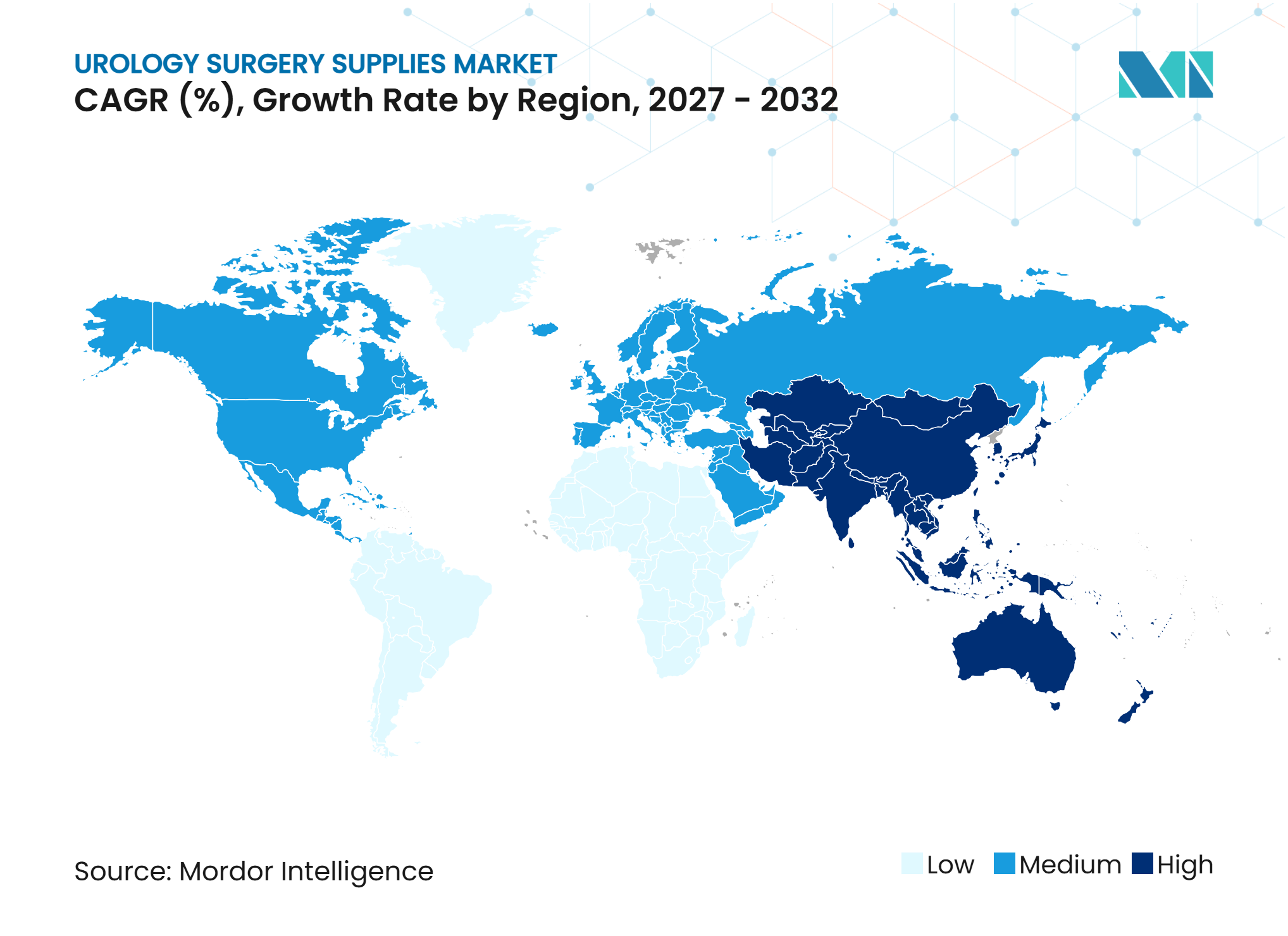
North America held 42.76% of the urology surgical supplies market share in 2026. The urology surgical supplies market in the region benefits from high robotic procedure volume, broad single-use adoption, and rapid product launches. CMS policy changes in 2026 support the movement of selected procedures into outpatient settings. Medtronic completed the first U.S. commercial Hugo procedure at Cleveland Clinic in February 2026 after the platform’s earlier clearance. The entry expands robotic options for hospitals. The FDA also cleared Boston Scientific’s Asurys Fluid Management System in March 2026. Canada is adding robotic capacity through provincial hospitals, while Mexico’s private networks are adopting flexible ureteroscopy and laser lithotripsy. Budget limits remain important in public procurement systems.
Asia-Pacific: Demographic Demand Meets Manufacturing Ambition
Asia-Pacific is forecast to grow at an 8.54% CAGR through 2032. The urology surgical supplies market in Asia-Pacific is supported by China and India’s expanding care infrastructure, while Japan’s aging population supports demand for treatment of benign prostatic hyperplasia and urological malignancies. China’s national procurement system is reshaping prices for stents and stone-management accessories. The sixth national procurement cycle selected 440 products from 170 companies in January 2026. Domestic manufacturers are also expanding their export ambitions in single-use ureteroscopes. Japan has a substantial installed base of da Vinci systems and approved domestic robotic alternatives. South Korea supports premium technology adoption, while India’s tier-2 city hospitals are increasing procedure capacity. Regulatory influence from the PMDA and national procurement rules will shape product access and pricing across the region.
Europe, MEA, and South America: Structural Diversity Shapes Device Strategies
Europe has advanced urology services, but reimbursement differences create varied device demand. A German micro-costing study found reusable cystoscopes cost EUR 27.25 per procedure, compared with EUR 179.00 for single-use devices, with reusable systems becoming cost-effective above 67 annual procedures. The EAU’s 2025 urolithiasis guideline provides a common clinical reference for flexible ureteroscopy and laser treatment. MEA has high stone disease prevalence, but advanced device penetration remains concentrated in GCC countries. South America’s private hospital networks in Brazil and Argentina are using single-use endoscopes and laser lithotripsy. Public systems in the region remain more reliant on reusable instruments and ESWL. This difference requires suppliers to offer both premium platforms and value-based product lines. EU MDR requirements add further compliance obligations for device manufacturers serving Europe.
Competitive Landscape
Market Concentration

The urology surgical supplies market is moderately concentrated at the platform level and more fragmented in consumables. Boston Scientific, Olympus, Intuitive Surgical, Medtronic, and KARL STORZ hold significant positions across major categories. Cook Medical, Coloplast, Dornier MedTech, Ambu, Richard Wolf, and Stryker also compete in selected product areas. Intuitive Surgical maintains a leading robotic position through the da Vinci platform. Olympus and KARL STORZ compete in visualization through imaging and fluorescence technologies. Boston Scientific combines stone management, endoscopy, continence, and pelvic health products. Product portfolios are increasingly built around complete procedure pathways rather than individual devices.
Teleflex announced in December 2025 that it would sell its Acute Care, Interventional Urology, and OEM businesses to Intersurgical for USD 2.03 billion[2]. The transaction reshapes competition in catheter management and benign prostatic hyperplasia products. Boston Scientific completed its acquisition of Valencia Technologies in April 2026, adding eCoin therapy for urge urinary incontinence. Olympus launched an AI-powered surgical planning tool with Ziosoft in March 2025 for kidney procedure planning. These moves show a focus on portfolio breadth, procedural data, and clinical workflow support. Medtronic’s Hugo platform similarly combines robotic hardware with the Touch Surgery digital ecosystem.
Chinese manufacturers are increasing participation in single-use ureteroscope development and FDA filing activity. This can create value-segment competition in Western markets. Incumbents are differentiating through pressure monitoring, suction, connectivity, imaging, and training support. The proposed FDA reclassification of blue-light cystoscopy could lower entry barriers if it is finalized. ISO 13485 and EU MDR 2017/745 keep quality management and post-market surveillance demanding for new entrants. These requirements can limit entry by smaller companies despite easier pathways in some categories.
Urology Surgery Supplies Industry Leaders
-
Boston Scientific Corporation
-
Olympus Corporation
-
Medtronic plc
-
Becton, Dickinson and Company
-
Fresenius Medical Care AG and Co. KGaA
- *Disclaimer: Major Players sorted in no particular order
Urology Surgery Supplies Market Companies Covered in this Report
- B. Braun
- Baxter
- Beckton Dickinson
- Boston Scientific
- Coloplast
- Conmed
- Convatec Group plc
- Cook Group
- Dornier MedTech
- Intuitive Surgical, Inc.
- Karl Storz
- Laborie
- Medtronic
- Olympus
- Richard Wolf
- Siemens Healthineers
- Stryker
- Teleflex
- Urotech GmbH
Recent Industry Developments in Urology Surgery Supplies Market
- November 2026: Olympus launched the SOLTIVE Gemini 60W Thulium Fiber Laser System in the United States, featuring StoneSense technology that automatically stops laser emission when the surgical fiber is not aimed at a stone. The platform offers 6 pulse modes for stone and soft tissue procedures, positioning it broadly across stone-to-oncology applications.
- May 2026: Verathon launched CFlex, an FDA 510(k)-cleared single-use flexible cystoscope, in the United States, entering the urology visualization segment.
- April 2026: Boston Scientific completed its acquisition of Valencia Technologies, adding the FDA-approved eCoin implantable tibial nerve stimulation system for urge urinary incontinence.
- March 2026: Boston Scientific received FDA 510(k) clearance for the Asurys Fluid Management System, which regulates irrigation inflow during ureteroscopy using intrarenal pressure data when paired with the LithoVue Elite ureteroscope.
Global Urology Surgery Supplies Market Report Scope
According to the report’s scope, urology surgery supplies are medical devices and consumables used to diagnose and treat conditions affecting the urinary tract and male reproductive system. They include instruments, catheters, scopes, stents, guidewires, and surgical accessories used in open, endoscopic, and minimally invasive procedures.
The urology surgery supplies market is segmented into product type, technology, application, end user, and geography. By product type, the market is segmented into Endoscopes, Energy/Lithotripsy, Stone Management, Catheters, Stents, and Biopsy. By technology, the market is segmented into Minimally Invasive, Robotic Surgery, and Laser-Based. By application, the market is segmented into kidney stones, BPH, cancer, ureteral strictures, and other. By end user, the market is segmented into hospitals, ASCs, specialty clinics, and others. By geography, the market is segmented into North America, Europe, Asia-Pacific, the Middle East and Africa, and South America. The report also covers the estimated market sizes and trends for 17 countries across major regions globally. The report offers values (USD) for all the above segments.
Segmentation Overview
| Endoscopes and Visualization Systems |
| Energy and Lithotripsy Systems |
| Stone Management Accessories |
| Catheters and Tubes |
| Stents and Implants |
| Biopsy and Diagnostic Supplies |
| Minimally invasive technology |
| Robotic surgery systems |
| Laser-based solutions |
| Kidney Stones and Urolithiasis |
| Benign Prostatic Hyperplasia |
| Urological Cancer |
| Ureteral Strictures and Obstruction |
| Other Application |
| Hospitals |
| Ambulatory Surgery Centers |
| Specialty Urology Clinics |
| Other End User |
| North America | United States |
| Canada | |
| Mexico | |
| Europe | Germany |
| United Kingdom | |
| France | |
| Italy | |
| Spain | |
| Rest of Europe | |
| Asia-Pacific | China |
| Japan | |
| India | |
| Australia | |
| South Korea | |
| Rest of Asia-Pacific | |
| Middle East and Africa | GCC |
| South Africa | |
| Rest of Middle East and Africa | |
| South America | Brazil |
| Argentina | |
| Rest of South America |
| By Product Type | Endoscopes and Visualization Systems | |
| Energy and Lithotripsy Systems | ||
| Stone Management Accessories | ||
| Catheters and Tubes | ||
| Stents and Implants | ||
| Biopsy and Diagnostic Supplies | ||
| By Technology | Minimally invasive technology | |
| Robotic surgery systems | ||
| Laser-based solutions | ||
| By Application | Kidney Stones and Urolithiasis | |
| Benign Prostatic Hyperplasia | ||
| Urological Cancer | ||
| Ureteral Strictures and Obstruction | ||
| Other Application | ||
| By End User | Hospitals | |
| Ambulatory Surgery Centers | ||
| Specialty Urology Clinics | ||
| Other End User | ||
| Geography | North America | United States |
| Canada | ||
| Mexico | ||
| Europe | Germany | |
| United Kingdom | ||
| France | ||
| Italy | ||
| Spain | ||
| Rest of Europe | ||
| Asia-Pacific | China | |
| Japan | ||
| India | ||
| Australia | ||
| South Korea | ||
| Rest of Asia-Pacific | ||
| Middle East and Africa | GCC | |
| South Africa | ||
| Rest of Middle East and Africa | ||
| South America | Brazil | |
| Argentina | ||
| Rest of South America | ||
Key Questions Answered in the Report
What is driving growth in urology surgical supplies?
Growing stone disease prevalence, more minimally invasive procedures, and the move to outpatient care are supporting demand. The report projects a 7.32% CAGR through 2032.
Which product category has the largest share?
Endoscopes and Visualization Systems held 38.65% share in 2026, supported by their role in diagnostic and therapeutic procedures.
Which technology is growing fastest in urology procedures?
Laser-Based Solutions are forecast to grow at a 9.99% CAGR through 2032, supported by thulium fiber laser adoption.
Why are single-use ureteroscopes gaining adoption?
Infection-control requirements, simpler workflows, and reduced reprocessing needs are increasing their use, especially in outpatient settings.
Which end-user setting is growing fastest?
Specialty Urology Clinics are projected to expand at a 10.67% CAGR through 2032 as outpatient infrastructure develops.
Which region is projected to grow fastest?
Asia-Pacific is forecast to grow at an 8.54% CAGR through 2032, supported by infrastructure investment, aging populations, and domestic manufacturing.