
Urolithiasis Management Devices Market Size and Share
Market Overview
| Study Period | 2022 - 2032 |
|---|---|
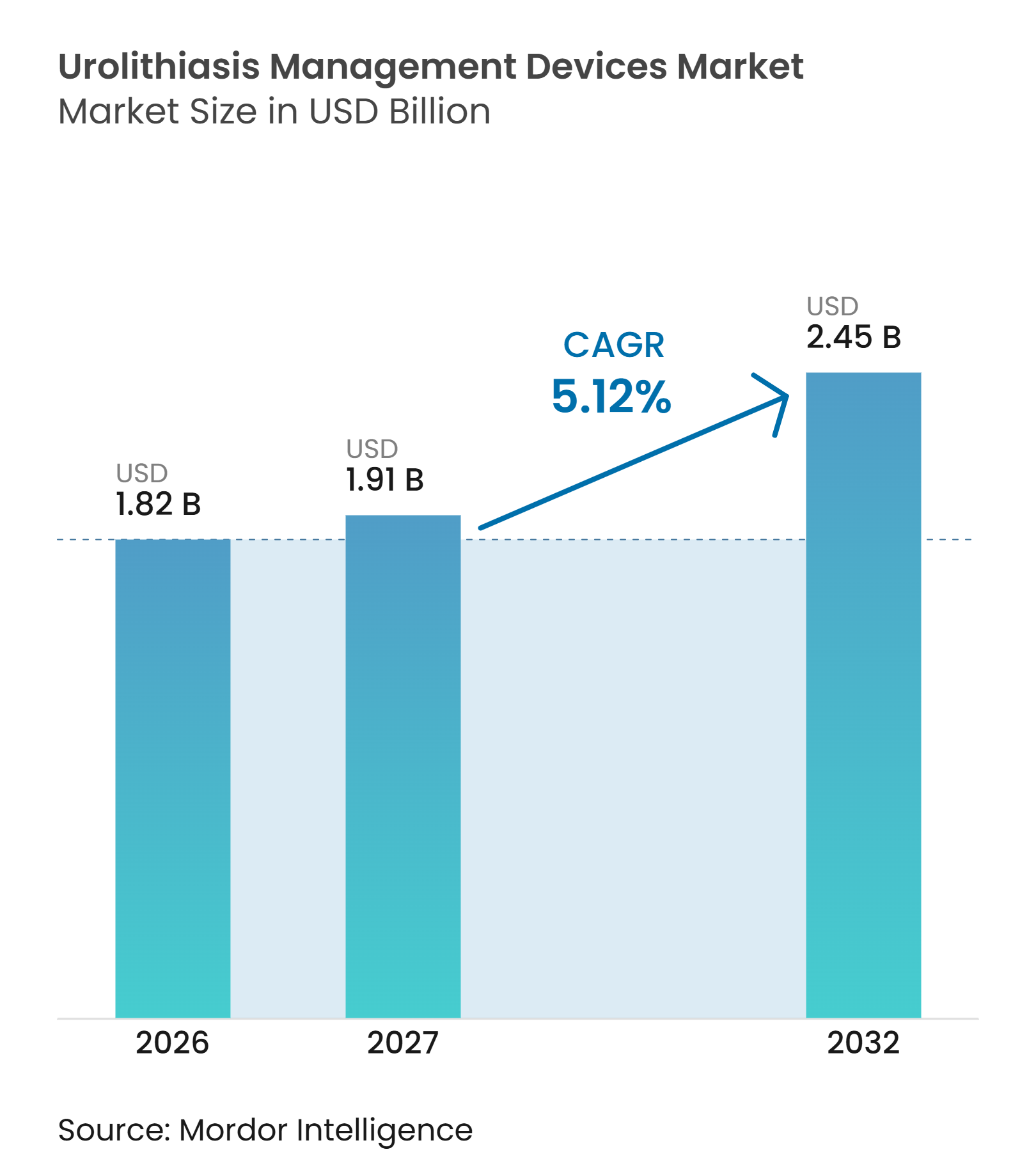
| Market Size (2027) | USD 1.91 Billion |
| Market Size (2032) | USD 2.45 Billion |
| Growth Rate (2027 - 2032) | 5.12 % |
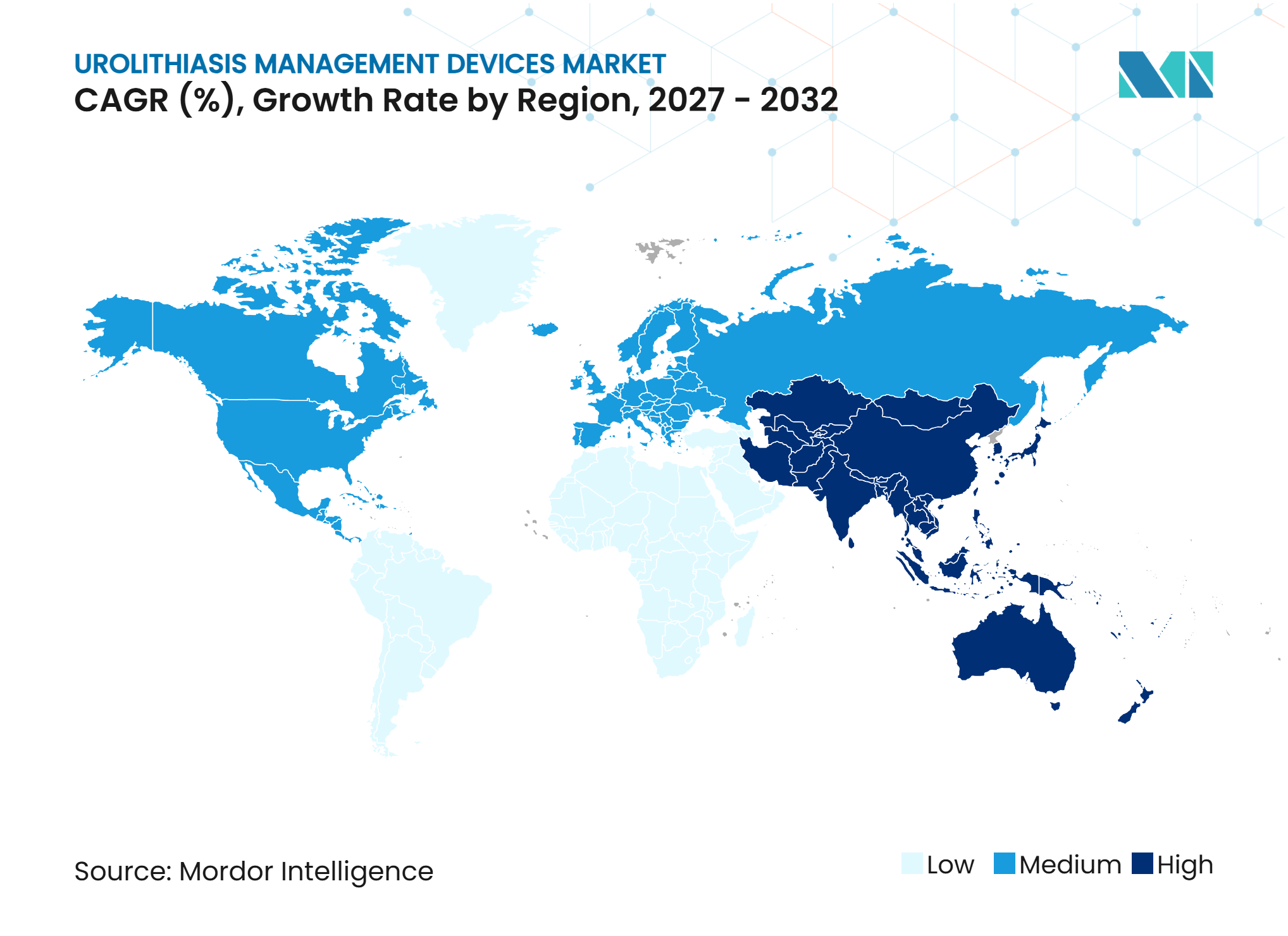
| Fastest Growing Market | Asia-Pacific |
| Largest Market | North America |
| Market Concentration | Medium |
Major Players *Disclaimer: Major Players sorted in no particular order Image © Mordor Intelligence. Reuse requires attribution under CC BY 4.0. | |
Urolithiasis Management Devices Market Analysis by Mordor Intelligence
The Urolithiasis Management Devices Market size is expected to grow from USD 1.82 billion in 2026 to USD 1.91 billion in 2027 and is forecast to reach USD 2.45 billion by 2032 at 5.12% CAGR over 2027-2032.
The rising burden of kidney and urinary stones creates recurring demand because many patients require care beyond an initial procedure. Endoscopic treatment and laser lithotripsy are taking volume from extracorporeal shockwave lithotripsy, increasing demand for capital equipment, scopes, access tools, and procedure consumables. Hospitals are balancing reusable-device economics against the infection-control and workflow advantages of single-use systems. Outpatient reimbursement, improved irrigation control, and real-time intrarenal pressure monitoring are supporting investment in ambulatory settings. Climate-related dehydration may broaden the geographic distribution of stone disease and create new demand centers over the longer term.
Key Report Takeaways
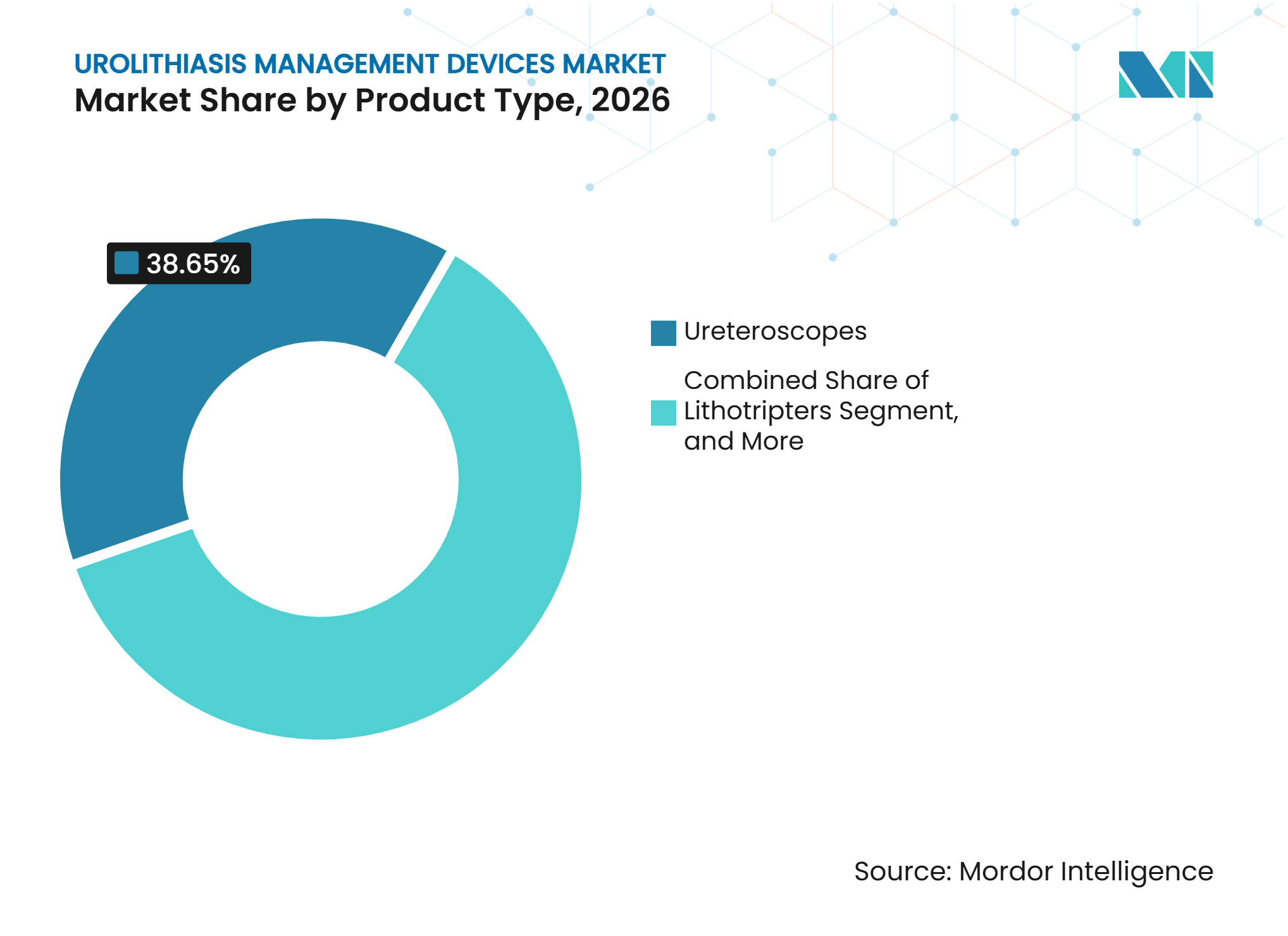
- By product type, ureteroscopes held 38.65% of the the segment's revenue share in 2026, while lithotripters are forecast to grow at a 7.54% CAGR through 2032. Ureteroscopes therefore represented 38.65% of Urolithiasis Management Devices Market share in 2026.
- By treatment type, intracorporeal lithotripsy accounted for 42.76% of the Urolithiasis Management Devices Market size in 2026, while PCNL is forecast to expand at a 7.99% CAGR through 2032. Intracorporeal lithotripsy therefore represented 42.76% of Urolithiasis Management Devices Market share in 2026.
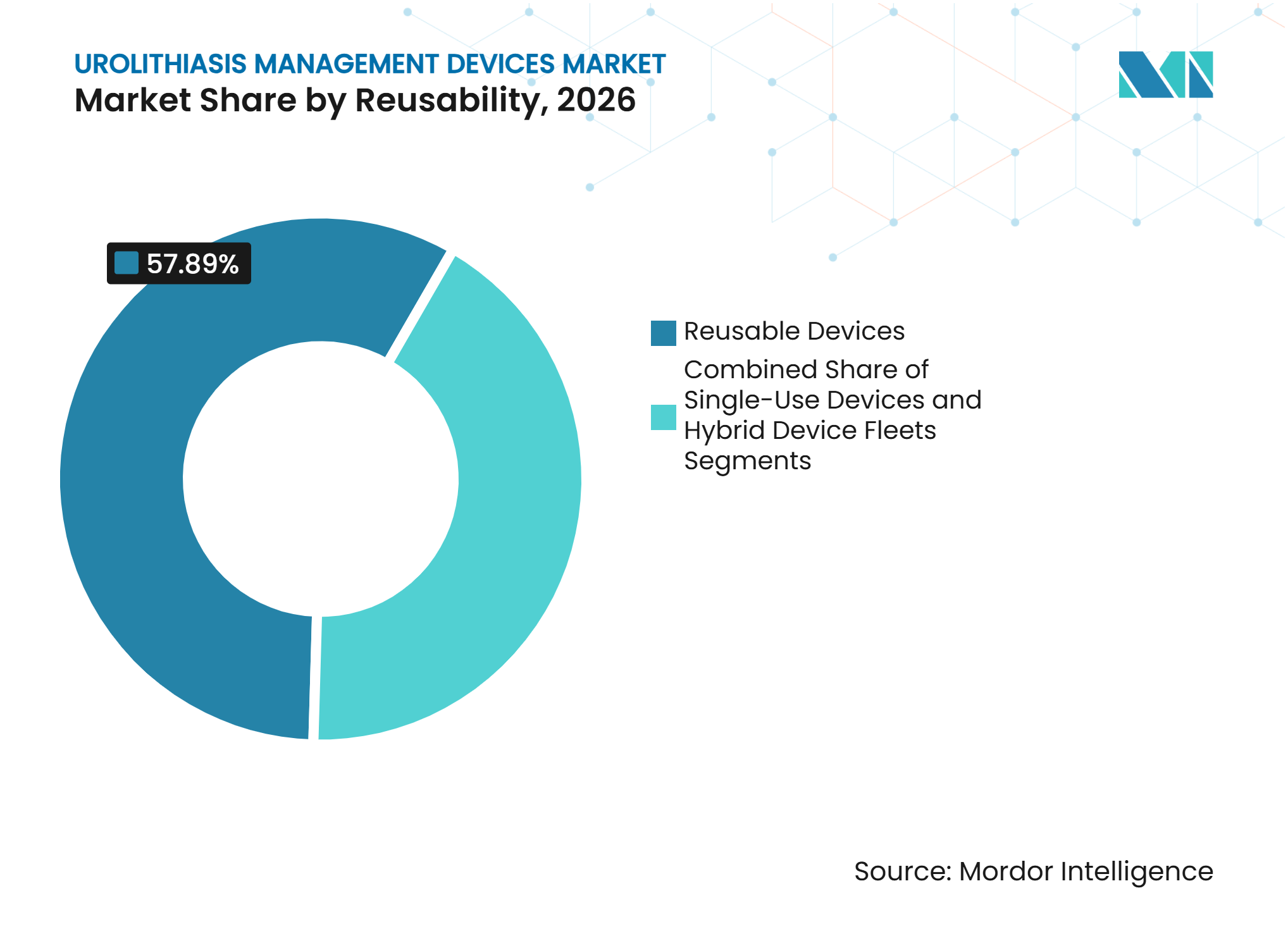
- By reusability, reusable devices held 57.89% revenue share in 2026, while single-use devices are forecast to grow at an 8.87% CAGR through 2032.
- By end user, hospitals accounted for 52.86% revenue share in 2026, while ambulatory surgical centers are forecast to expand at an 8.54% CAGR through 2032.
- By geography, North America accounted for 42.76% revenue share in 2026, while Asia-Pacific is forecast to grow at a 6.76% CAGR through 2032.
Note: Market numbers in this report are based on Mordor Intelligence's proprietary estimation framework, which combines nine months of actuals with Q4 projections for base year 2026.
Market Trends and Insights
Drivers Impact Analysis of Urolithiasis Management Devices Market*
| Driver | (~) % Impact on CAGR Forecast | Geographic Relevance | Impact Timeline |
|---|---|---|---|
| Rising Prevalence and Recurrence of Kidney and Urinary Stones | +1.30% | Global | Long term (≥ 4 years) |
| Increasing Preference for Minimally Invasive Stone Management | +1.00% | North America and Europe, with spillover to Asia-Pacific | Long term (≥ 4 years) |
| Advancements in Laser Lithotripsy and Flexible Ureteroscopy | +0.90% | North America and Europe, with early gains in Asia-Pacific | Medium term (2-4 years) |
| Expansion of Ambulatory Surgical Centers and Outpatient Urology | +0.60% | North America, with early adoption in Europe and Asia-Pacific | Medium term (2-4 years) |
| Adoption of Connected Irrigation and Intrarenal Pressure Management | +0.30% | North America and Europe | Medium term (2-4 years) |
| Climate-Linked Dehydration and Stone Recurrence Risk | +0.20% | Asia-Pacific, Middle East and Africa, South America, with spillover to North America | Long term (≥ 4 years) |
| Source: Mordor Intelligence | |||
Rising Stone Burden and Recurrence Support Repeat Treatment Demand
Kidney stone disease often recurs, and the supplied evidence indicates that the 5-year recurrence rate can approach 50% without metabolic evaluation. This pattern extends demand beyond the initial episode because recurrent patients may need repeat imaging, intervention, drainage, or follow-up procedures. A 2025 meta-analysis covering 1,276,826 participants estimated global urolithiasis prevalence at 10.85%, including 12.93% among males and 8.91% among females. A U.S. analysis published in 2025 reported nephrolithiasis prevalence of 9.8% and annual incidence of 1.8%. The same analysis associated obesity with an odds ratio of 1.40 and hypertension with an odds ratio of 1.64 for stone prevalence. These clinical relationships support sustained procedure volumes for the urolithiasis management devices market as metabolic risk factors remain relevant in many health systems.
Minimally Invasive Care and Outpatient Capacity Shift Procedure Mix
The move toward minimally invasive stone management is changing the treatment mix rather than simply reflecting patient preference. Flexible ureteroscopy and related intracorporeal approaches require dedicated visualization, access, irrigation, lithotripsy, and retrieval tools during a procedure. The supplied draft reports that an international survey found 61.8% of endourologists perceived declining extracorporeal shockwave lithotripsy use, while nearly 17% had stopped using it. EDAP TMS rebranded as FocalTherics in May 2026 and classified its ESWL and distribution segments as discontinued operations, a company decision consistent with the shift away from its legacy ESWL business. Ambulatory surgical centers can benefit when procedures shift from inpatient environments to outpatient care. The urolithiasis management devices market therefore gains from a broader outpatient workflow that favors compact laser, scope, and disposable-device platforms.
Laser Platforms and Pressure Management Encourage Equipment Renewal
Thulium fiber laser systems are creating replacement demand as hospitals assess higher performance against installed holmium:YAG equipment. A 2026 meta-analysis of 5 randomized controlled trials and 441 patients found higher stone-free rates, shorter laser time, and less severe retropulsion with thulium fiber laser treatment than with holmium:YAG treatment[1]. A separate randomized trial for 10-20 mm stones reported total stone-free rates of 94.4% with thulium fiber laser treatment and 86.0% with holmium:YAG treatment. Real-time intrarenal pressure monitoring adds a safety and workflow element to equipment selection. Boston Scientific received FDA clearance in March 2026 for the Asurys Fluid Management System, which automatically regulates irrigation inflow using intrarenal pressure data. These advances give the urolithiasis management devices market a technology-led reason for facilities to reassess capital purchases and supporting consumables.
Climate-Linked Dehydration Broadens the Future Treatment Base
Higher temperatures can raise stone risk through dehydration and may alter where stone disease is most common. A 2025 review projected that the share of Americans living in high stone-risk zones could rise from 40% to 56% by 2050 under moderate warming, with 1.6-2.2 million additional lifetime nephrolithiasis cases. A 2025 study in southern China found that dry-heat weather increased urolithiasis hospitalization risk by 17%, with the strongest effect among males aged 21-40 years. Temperature-related hospitalization research also identified kidney disease as a major pathway through which heat affects health. These patterns may create procedure demand in Central Europe, Canada, and parts of South America that have historically had lower stone prevalence. The urolithiasis management devices market can benefit where manufacturers align distribution capacity and physician training with these changing care needs.
Restraints Impact Analysis of Urolithiasis Management Devices Market*
| Restraint | (~) % Impact on CAGR Forecast | Geographic Relevance | Impact Timeline |
|---|---|---|---|
| High Cost of Advanced Devices and Procedures | -0.70% | Global, most acute in Asia-Pacific and Middle East and Africa | Long term (≥ 4 years) |
| Procedure-Related Complications and Specialist Dependence | -0.50% | Global | Long term (≥ 4 years) |
| Reprocessing, Infection-Control, and Single-Use Device Waste Burden | -0.30% | Europe and North America, with spillover to Asia-Pacific | Medium term (2-4 years) |
| Low Utilization and Logistics Constraints for Capital-Intensive ESWL Systems | -0.20% | Asia-Pacific, Middle East and Africa, and South America | Medium term (2-4 years) |
| Source: Mordor Intelligence | |||
Advanced-Device Cost and Low Capital Utilization Limit Access
Advanced laser, scope, and access systems can create a cost barrier for providers serving price-sensitive populations. The supplied 40-country evidence reported per-procedure equipment costs for single-use flexible ureteroscopes from EUR 92 in Brazil to EUR 1,343 in Ireland. This large range reflects differences in procurement and health-system design rather than a difference in the clinical objective. The same source material noted that thulium fiber laser and high-power systems require greater capital investment than lower-power alternatives. Low utilization can further weaken the financial case for capital-intensive ESWL equipment in parts of Asia-Pacific, the Middle East and Africa, and South America. These constraints can slow the urolithiasis management devices market where hospitals remain dependent on older holmium:YAG or ESWL equipment cycles.
Specialist Capacity, Infection Control, and Waste Requirements Remain Barriers
Ureteroscopy and miniaturized PCNL require clinician experience, and a shortage of trained endourologists can constrain adoption in underserved settings. The supplied study of U.S. electronic health records reported a 30-day post-operative infection rate of 15.4% with standard single-use ureteroscopes. The rate was 8.2% when a single-use scope with real-time intrarenal pressure monitoring was used. These outcomes make pressure management relevant, but they also show why facilities must invest in clinical protocols and staff training. Reprocessing obligations, infection-control procedures, and waste generated by disposable devices add to the operational burden. FDA 510(k) requirements, the European Union Medical Device Regulation 2017/745, ISO 11135 sterilization standards, and ISO 10993 biocompatibility standards affect entry costs and compliance work in regulated settings.
*Our forecasts treat driver/restraint impacts as directional, not additive. The impact forecasts reflect baseline growth, mix effects, and variable interactions.
Urolithiasis Management Devices Market Segment Analysis
By Product Type:
Ureteroscopes Lead While Lithotripters Gain From Laser RenewalUreteroscopes held 38.65% of the segment's revenue share in 2026, reflecting their central role in flexible ureteroscopy. The product category includes reusable fiber-optic systems, reusable digital systems, and single-use digital scopes. Single-use configurations are gaining use where infection prevention, rapid availability, or reduced reprocessing requirements are priorities. Lithotripters are projected to grow at 7.54% CAGR through 2032, the fastest rate within the product groups. This growth is linked to hospital replacement cycles for thulium fiber laser platforms. Comparative clinical evidence has supported their use through better stone-free performance, shorter laser time, and lower retropulsion versus holmium:YAG in the supplied meta-analysis. Olympus launched the SOLTIVE Gemini 60W thulium fiber laser in the United States in November 2026 with StoneSense technology that suppresses laser emission when the fiber is not aimed at stone tissue. BD also launched its Elyra thulium fiber laser system in the United States during May 2026. The urolithiasis management devices market is therefore supported by the continued use of ureteroscopes as the core visualization platform.
Stone retrieval and access devices are high-volume consumables because they are used with each ureteroscopy and PCNL procedure. Suction-enabled ureteral access sheaths have become more relevant as providers seek better visibility and immediate fragment removal. Well Lead Medical's ClearPetra suction access sheath reached the U.S. market through a distribution partnership with KARL STORZ in May 2024, although this development falls outside the report's recent-development period. Drainage devices such as ureteral stents and nephrostomy tubes benefit from rising procedure volume because many interventions require postoperative drainage. The urolithiasis management devices market size for these supporting products grows with procedure frequency rather than with laser placement alone. Regulatory entry remains important because access products must meet FDA clearance requirements and material biocompatibility standards. Suppliers that pair scopes, access tools, lithotripsy systems, and retrieval devices can offer a more complete procedure workflow. That model may reduce purchasing complexity for hospitals and ambulatory surgical centers.



By Treatment Type:
Intracorporeal Lithotripsy Leads as PCNL Becomes Less InvasiveIntracorporeal lithotripsy held 42.76% of the segment's revenue share in 2026. Its position reflects the use of laser ureteroscopy for many ureteral and renal stones. The method combines visual access with fragmentation, irrigation, and retrieval within one treatment pathway. A 2025 multicenter randomized controlled trial with 720 patients found flexible ureteroscopy with a suction access sheath non-inferior to mini-PCNL for 2-3 cm renal stones. The study also reported shorter hospital stays with flexible ureteroscopy[2]. These results can expand the range of cases considered for intracorporeal procedures. The segment benefits when providers seek shorter stays and a procedure design suited to outpatient workflows. It also supports demand for lasers, flexible scopes, access sheaths, and pressure-control devices. The urolithiasis management devices market benefits when flexible procedures can serve a broader clinical range.
PCNL is projected to grow at 7.99% CAGR through 2032, making it the fastest-growing treatment type in the urolithiasis management devices market. Growth is tied to miniaturized access variants that seek to reduce treatment burden while maintaining stone clearance. An International Alliance of Urolithiasis consensus paper supported tract sizes below 18 Fr for miniaturized PCNL and cited lower bleeding, lower pain scores, and shorter stays compared with standard PCNL. A 2025 EDGE Consortium randomized trial reported comparable stone-free rates of 77% with mini-PCNL and 71% with standard PCNL, with lower postoperative pain for the miniaturized approach. Mendaera announced the first procedures using its Focalist handheld robotic PCNL access system at Mayo Clinic Arizona in September 2025. Robotic ultrasound-guided access may address technical barriers in PCNL, though broad use will depend on clinical adoption and provider training. This pathway gives providers another option for complex stones that are not suited to simpler outpatient ureteroscopy.
By Reusability:
Single-Use Growth Reflects Infection Economics and Workflow NeedsReusable devices commanded 57.89% of the segment's revenue share in 2026. Their position is supported by lower cost per case in high-volume settings. A 2025 study reported per-case costs of USD 1,499 for reusable ureteroscopes and USD 840 for single-use scopes, with a break-even point of 156 cases. The finding shows that utilization volume can determine which model is more economical. Reusable systems require investment in reprocessing capacity, repair management, and scope availability. They remain attractive where procedure volumes are steady and providers can sustain a controlled sterilization workflow. Hybrid fleets may allow facilities to use reusable scopes for routine high-volume work and single-use devices for specific infection-sensitive cases. This flexibility can help the urolithiasis management devices market serve hospitals with different case volumes and risk profiles. The urolithiasis management devices market can therefore accommodate both high-volume reusable programs and targeted single-use adoption.
Single-use devices are forecast to grow at 8.87% CAGR through 2032. Their growth is associated with infection control, immediate availability, and the avoidance of scope reprocessing between cases. The supplied clinical evidence reported 8.2% 30-day postoperative infections with a single-use scope that included intrarenal pressure monitoring, compared with 15.4% for standard single-use scopes. Boston Scientific received CE mark approval for the LithoVue Elite system in December 2024, supporting its availability in Europe. The 40-country cost study in the source draft also found that reuse practices for nominally single-use scopes reduced equipment-related cost in some countries. The operational choice is therefore not simply reusable versus disposable. It depends on local infection-control requirements, procedure volume, repair risk, supply access, and environmental waste management. Chinese manufacturers accounted for 47% of FDA 510(k) clearances for single-use ureteroscopes between 2022 and April 2026 in the supplied draft, increasing price and product competition in this category.

By End User:
Hospitals Retain Complex Cases While ASCs Expand FasterHospitals accounted for 52.86% of the segment's revenue share in 2026. They remain the primary setting for complex stone cases, including large-burden PCNL and patients who require greater anesthesia and postoperative support. Hospitals can deploy a broader equipment base, including high-power laser systems, flexible ureteroscopes, and specialized irrigation platforms. They can also support robotic PCNL systems that require institutional infrastructure. This environment favors integrated product portfolios that link visualization, laser therapy, fluid management, and drainage. Boston Scientific's StoneSmart Solutions combines the LithoVue Elite ureteroscope, Asurys Fluid Management System, and Lumenis laser portfolio within this care pathway. Hospitals will continue to provide referral capacity for higher-acuity patients even as some routine procedures move to outpatient care. Their purchasing decisions can also influence standards for the wider urolithiasis management devices market. The urolithiasis management devices market retains hospital demand even as suitable procedures shift to ambulatory care.
Ambulatory surgical centers are projected to grow at 8.54% CAGR through 2032. The shift reflects increasing use of outpatient pathways for suitable urologic procedures. The supplied draft states that more than 90% of Chesapeake Urology Associates' procedures are suitable for outpatient care and identifies urology among the specialties driving ASC volume growth in 2025. ASC demand favors compact equipment, reliable scope supply, and procedures that limit recovery needs. Suction-assisted ureteroscopy can support this direction by combining stone fragmentation with fragment evacuation in a single workflow. SonoMotion's Break Wave system also presents a potential care-site shift because it uses low-pressure focused ultrasound without anesthesia under real-time ultrasound guidance. That model could extend treatment to outpatient clinics and emergency departments if adopted. The urolithiasis management devices market gains when reimbursement and provider protocols support safe migration of appropriate cases outside inpatient hospitals.
Geography Analysis
North America
North America accounted for 42.76% of the urolithiasis management devices market size in 2026. The region benefits from high procedure density, established specialist networks, and strong adoption of capital-intensive urology technologies. Olympus stated in its November 2026 launch announcement that kidney stone attacks generate more than 600,000 emergency room visits annually in the United States. U.S. nephrolithiasis prevalence was 9.8% in a 2025 analysis, providing a large base of potential treatment episodes. Providers are adding systems that link digital visualization, laser fragmentation, irrigation management, and disposable access products. FDA 510(k) clearance remains a central regulatory influence for new devices. The region is also an early setting for intrarenal pressure monitoring and outpatient adoption. These factors support sales of premium systems alongside recurring revenue from scope, access sheath, and retrieval-device use.
Asia-Pacific
Asia-Pacific is forecast to expand at a 6.76% CAGR through 2032, making it the fastest-growing geography in the urolithiasis management devices market. Hot and humid conditions across parts of India, Southeast Asia, southern China, and the Gulf contribute to a large stone-care need. The source draft cites stone prevalence of 22%-45% in southern China, compared with the 10.85% global prevalence estimated in a 2025 meta-analysis. Growth in secondary-care capacity and private hospital networks can expand access to ureteroscopy and laser lithotripsy in Indian Tier-2 and Tier-3 cities. The region also has a growing base of device manufacturers. The supplied draft reports that Chinese manufacturers accumulated 47% of FDA 510(k) clearances for single-use ureteroscopes by April 2026. This manufacturing presence can increase price competition while improving product availability. Regulatory quality requirements and clinician training remain important for safe adoption across diverse health systems.
Europe, Middle East and Africa, and South America
Europe is the second-largest regional block in the supplied draft, with Germany, the United Kingdom, and France identified as procedure-volume leaders. The European Union Medical Device Regulation 2017/745 adds post-market surveillance and compliance requirements that can raise entry costs. Boston Scientific received CE mark approval for LithoVue Elite in December 2024 and demonstrated the system at the 2025 European Association of Urology Congress. A 2025 Polish study cited in the draft reported a 12.85% lifetime urolithiasis rate, indicating a need for capacity in parts of Central and Eastern Europe. Middle East and Africa demand differs sharply between high-spending Gulf states and lower-resource sub-Saharan settings where device cost, logistics, and specialist scarcity restrict penetration. South America is led by Brazil in procedure volume, while the Brazilian Society of Nephrology has stated that nephrolithiasis affects 10%-15% of the population. Huons Meditech announced a local assembly partnership with India's Vasu Group for ESWL production in November 2025, illustrating how localization may improve access in emerging settings.
Competitive Landscape
Market Concentration
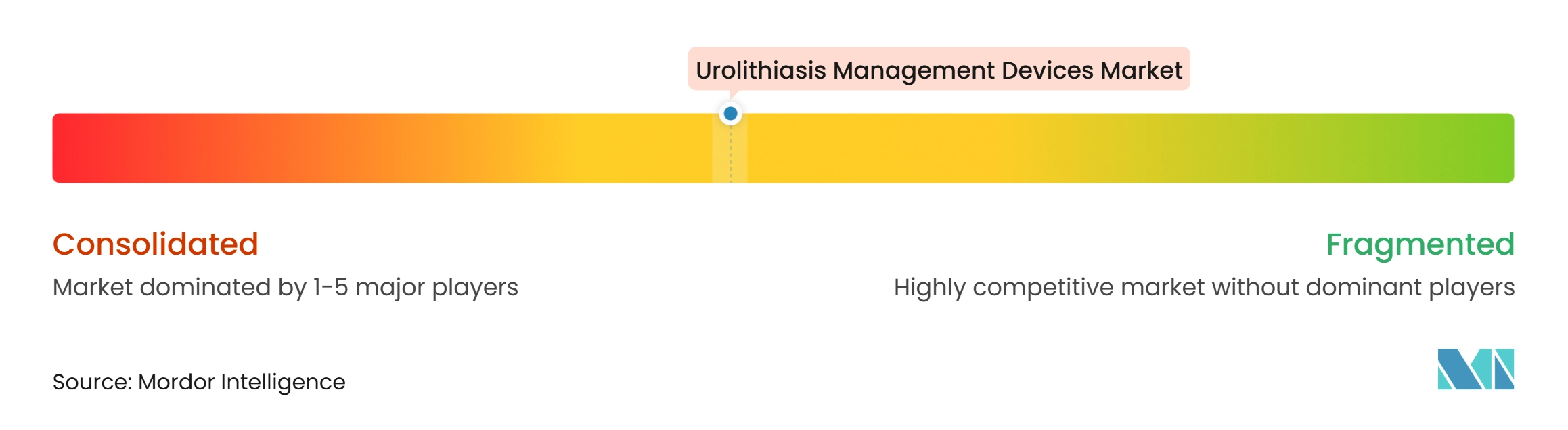
The urolithiasis management devices market has moderate consolidation in premium procedure-related revenue, alongside a fragmented mid-tier and value tier. Boston Scientific has a broad position through its StoneSmart Solutions platform, which combines LithoVue Elite, Lumenis thulium fiber laser systems, and Asurys fluid management. This portfolio approach can create workflow links across visualization, pressure control, and lithotripsy. Boston Scientific reported FDA clearance for Asurys in March 2026, positioning the system as an automated irrigation-control option during ureteroscopy. Olympus responded with the U.S. launch of SOLTIVE Gemini 60W in November 2026. Its StoneSense feature is designed to stop laser emission when the fiber is not directed at stone tissue. BD entered the stone laser segment with the Elyra platform in May 2026. ISO 13485 certification is a common quality-management expectation for suppliers targeting the premium North American and European device segments.
KARL STORZ and Richard Wolf retain positions in rigid and semi-rigid endoscopy, while newer suppliers are seeking growth in flexible and disposable products. Competitive intensity is rising in single-use ureteroscopes as manufacturers compete on image quality, scope dimensions, pressure monitoring, and per-case cost. The draft identifies Chinese manufacturers as an increasingly important source of FDA-cleared single-use scopes. This can increase the availability of value-oriented options and place pressure on established premium suppliers. Well Lead Medical's ClearPetra access sheath distribution relationship with KARL STORZ is an example of established companies using partnerships to add specialized procedure tools. Dornier launched the Hoover suction ureteral access sheath and Axis II Slim single-use ureteroscope in the United States in September 2025. Pairing these products with its Thulio laser system gives Dornier an integrated flexible ureteroscopy offering. Competition therefore spans both individual device performance and the ability to supply a coordinated procedure platform.
White-space opportunities are concentrated in anesthesia-free noninvasive lithotripsy and robotic PCNL access. SonoMotion received FDA clearance for its Break Wave lithotripsy device in January 2026 and reported a second clearance in May 2026 for a smaller-footprint version. The company reported 70% stone-free status and no serious safety events in its SOUND pivotal trial presentation. Avvio Medical received FDA Breakthrough Device Designation for its Enhanced Lithotripsy System in October 2025. Mendaera's Focalist system demonstrated robotic ultrasound-guided PCNL access procedures in 2025. These products seek to address anesthesia requirements, access accuracy, and specialist dependence. No top-player combined share is provided in the source material, so concentration cannot be calculated from the available evidence.
Urolithiasis Management Devices Industry Leaders
-
Boston Scientific Corporation
-
Olympus Corporation
-
Dornier MedTech GmbH
-
Cook Medical
-
KARL STORZ SE & Co. KG
- *Disclaimer: Major Players sorted in no particular order
Urolithiasis Management Devices Market Companies Covered in this Report
- Allengers
- Applaud Medical, Inc.
- Beckton Dickinson
- Boston Scientific
- Coloplast
- Cook Group
- DirexGroup
- Dornier MedTech
- EDAP TMS
- EMS Electro Medical Systems
- HealthTronics
- Karl Storz
- Lumenis, a Boston Scientific company
- Medtronic
- Olympus
- Quanta System S.p.A.
- Richard Wolf
- Rocamed SAM
- Shenzhen Huikang Medical Apparatus Co., Ltd.
- Storz Medical
- Well Lead Medical Co., Ltd.
Recent Industry Developments in Urolithiasis Management Devices Market
- November 2026: Olympus Corporation launched the SOLTIVE Gemini® 60W Thulium Fiber Laser System in the United States, featuring StoneSense technology for automatic laser suppression when the fiber is not aimed at stone tissue, and six clinical pulse modes. The launch intensifies competition at the premium TFL tier against BD's Elyra system introduced six months prior.
- May 2026: SonoMotion received a second FDA 510(k) clearance for a next-generation Break Wave device featuring a 31% smaller probe footprint, with commercialization planned for the second half of 2026. SOUND pivotal trial data presented at AUA 2026 confirmed non-inferiority to ESWL for ureteral stones (70% stone-free, 0% serious safety events), establishing the first FDA-cleared anesthesia-free non-invasive stone fragmentation modality.
- May 2026: BD (Becton, Dickinson and Company) introduced the Elyra Thulium Fiber Laser System in the United States in two configurations, Elyra and Elyra Plus, completing its kidney stone care portfolio with an air-cooled, smaller-footprint TFL design. The launch marks BD's first full commitment to the stone laser segment.
- March 2026: Boston Scientific received FDA 510(k) clearance for the Asurys Fluid Management System, the first device capable of automatically regulating irrigation inflow in real-time response to IRP data during ureteroscopy. When paired with the LithoVue Elite ureteroscope, it creates a closed-loop IRP management workflow designed to reduce post-operative sepsis risk and cognitive burden on endourologists.
Global Urolithiasis Management Devices Market Report Scope
According to the report’s scope, urolithiasis management devices are medical tools used to detect, break up, remove, or manage stones in the kidneys, ureters, and bladder. They include devices such as lithotripters, ureteroscopes, retrieval baskets, and related instruments.
The urolithiasis management devices market is segmented into product type, treatment type, reusability, end user, and geography. By product type, the market is segmented into lithotripters, ureteroscopes, stone retrieval devices, and drainage devices. By treatment type, the market is segmented into ESWL, intracorporeal lithotripsy, PCNL, and other. By reusability, the market is segmented into reusable, single-use, and hybrid. By end user, the market is segmented into hospitals, specialty clinics, ASCs, and others. By geography, the market is segmented into North America, Europe, Asia-Pacific, the Middle East and Africa, and South America. The report also covers the estimated market sizes and trends for 17 countries across major regions globally. The report offers values (USD) for all the above segments.
Segmentation Overview
| Lithotripters |
| Ureteroscopes |
| Stone Retrieval and Access Devices |
| Drainage Devices |
| Extracorporeal Shock Wave Lithotripsy (ESWL) |
| Intracorporeal Lithotripsy |
| Percutaneous Nephrolithotomy |
| Other Treatments |
| Reusable Devices |
| Single-Use Devices |
| Hybrid Device Fleets |
| Hospitals |
| Specialty Clinics |
| Ambulatory Surgical Centers |
| Other End Users |
| North America | United States |
| Canada | |
| Mexico | |
| Europe | Germany |
| United Kingdom | |
| France | |
| Italy | |
| Spain | |
| Rest of Europe | |
| Asia-Pacific | China |
| Japan | |
| India | |
| Australia | |
| South Korea | |
| Rest of Asia-Pacific | |
| Middle East and Africa | GCC |
| South Africa | |
| Rest of Middle East and Africa | |
| South America | Brazil |
| Argentina | |
| Rest of South America |
| By Product Type | Lithotripters | |
| Ureteroscopes | ||
| Stone Retrieval and Access Devices | ||
| Drainage Devices | ||
| By Treatment Type | Extracorporeal Shock Wave Lithotripsy (ESWL) | |
| Intracorporeal Lithotripsy | ||
| Percutaneous Nephrolithotomy | ||
| Other Treatments | ||
| By Reusability | Reusable Devices | |
| Single-Use Devices | ||
| Hybrid Device Fleets | ||
| By End User | Hospitals | |
| Specialty Clinics | ||
| Ambulatory Surgical Centers | ||
| Other End Users | ||
| Geography | North America | United States |
| Canada | ||
| Mexico | ||
| Europe | Germany | |
| United Kingdom | ||
| France | ||
| Italy | ||
| Spain | ||
| Rest of Europe | ||
| Asia-Pacific | China | |
| Japan | ||
| India | ||
| Australia | ||
| South Korea | ||
| Rest of Asia-Pacific | ||
| Middle East and Africa | GCC | |
| South Africa | ||
| Rest of Middle East and Africa | ||
| South America | Brazil | |
| Argentina | ||
| Rest of South America | ||
Key Questions Answered in the Report
What is driving demand for urolithiasis management devices?
Rising stone prevalence, repeat treatment needs, and the shift toward endoscopic and laser-based procedures support demand. The global prevalence estimate was 10.85% in a 2025 meta-analysis .
What is the forecast growth rate for urolithiasis management devices?
The sector is forecast to grow at a 5.12% CAGR from 2027 to 2032, reaching USD 2.45 billion in 2032.
Which product category leads urolithiasis device sales?
Ureteroscopes lead the product categories with 38.65% share in 2026. Lithotripters are forecast to record the fastest product-level growth at 7.54% CAGR through 2032.
Why are single-use ureteroscopes growing faster than reusable scopes?
Single-use devices are forecast to grow at 8.87% CAGR because of infection-control and workflow advantages. A cited study reported lower 30-day infection rates with real-time intrarenal pressure monitoring.
Which region offers the fastest growth opportunity for urolithiasis devices?
Asia-Pacific is forecast to grow at a 6.76% CAGR through 2032, supported by a high stone burden, healthcare investment, and a growing manufacturing base.
How are ambulatory surgical centers changing stone treatment?
Ambulatory surgical centers are forecast to grow at 8.54% CAGR through 2032 as appropriate procedures move to outpatient settings. Compact laser systems, reliable scopes, and disposable access tools are important for this setting.