
Transarterial Chemoembolization Market Size and Share
Market Overview
| Study Period | 2021 - 2032 |
|---|---|
| Market Size (2027) | USD 1.5 Billion |
| Market Size (2032) | USD 1.97 Billion |
| Growth Rate (2027 - 2032) | 5.60 % |
| Fastest Growing Market | Asia-Pacific |
| Largest Market | North America |
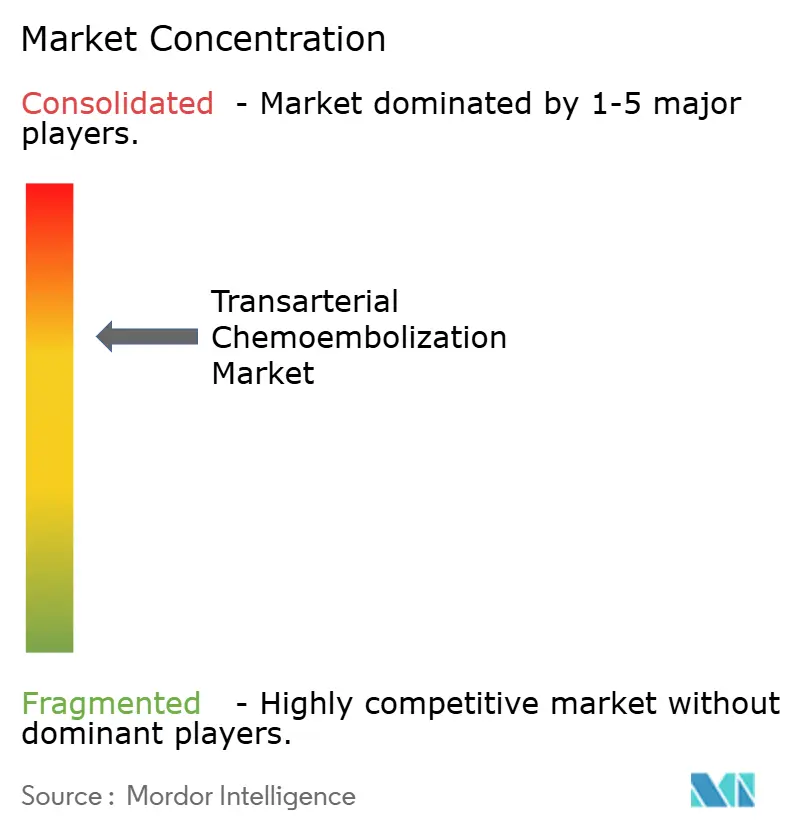
| Market Concentration | Medium |
Major Players *Disclaimer: Major Players sorted in no particular order Image © Mordor Intelligence. Reuse requires attribution under CC BY 4.0. | |
Transarterial Chemoembolization Market Analysis by Mordor Intelligence
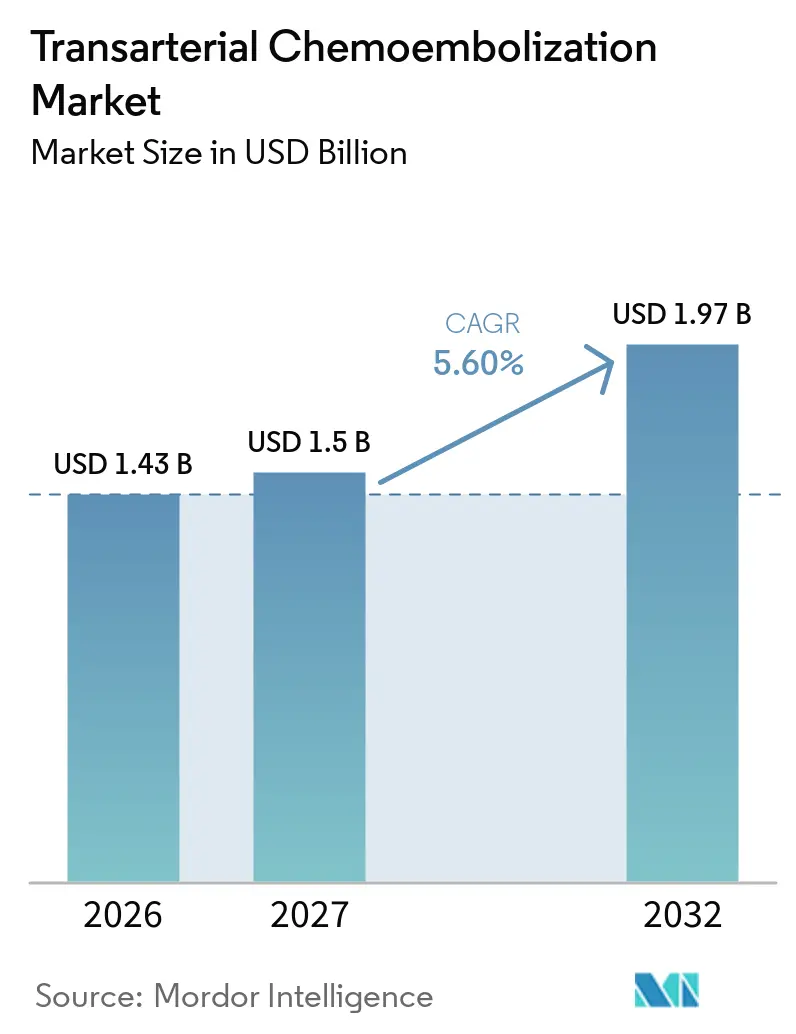
The Transarterial Chemoembolization Market size was valued at USD 1.43 billion in 2026 and is estimated to grow from USD 1.5 billion in 2027 to reach USD 1.97 billion by 2032, at a CAGR of 5.60% during the forecast period (2027-2032).
Demand is supported by the growing use of locoregional treatment as a first-line or bridging option for intermediate-stage liver malignancies. Liver and intrahepatic bile duct cancer caused 732,489 deaths worldwide in 2024, while 843,045 new cases were recorded, maintaining a substantial treatment need in regions with high viral hepatitis prevalence. The transarterial chemoembolization market is also changing as drug-eluting products, image-guided delivery, and combination protocols raise the importance of procedure quality. Reimbursement support in North America and expanding interventional oncology capacity in Asia-Pacific create different growth paths across the transarterial chemoembolization market. Competition increasingly depends on clinical evidence, imaging assurance, and the ability to support more precise treatment protocols.
Key Report Takeaways
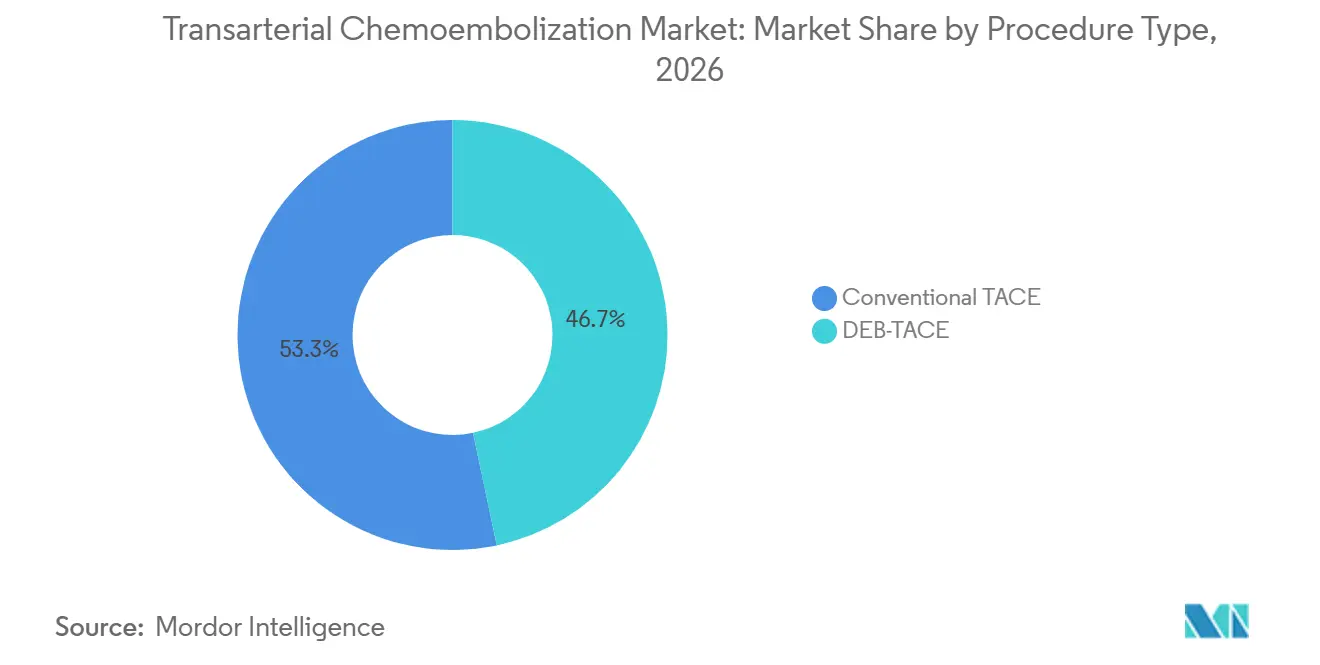
- By procedure type, conventional TACE led with a 53.32% revenue share in 2026, while DEB-TACE is expected to grow at a 6.22% CAGR through 2032.
- By product type, chemotherapeutic agents held 43.35% of the transarterial chemoembolization market share in 2026, while drug-eluting particles are forecast to grow at a 6.71% CAGR through 2032.
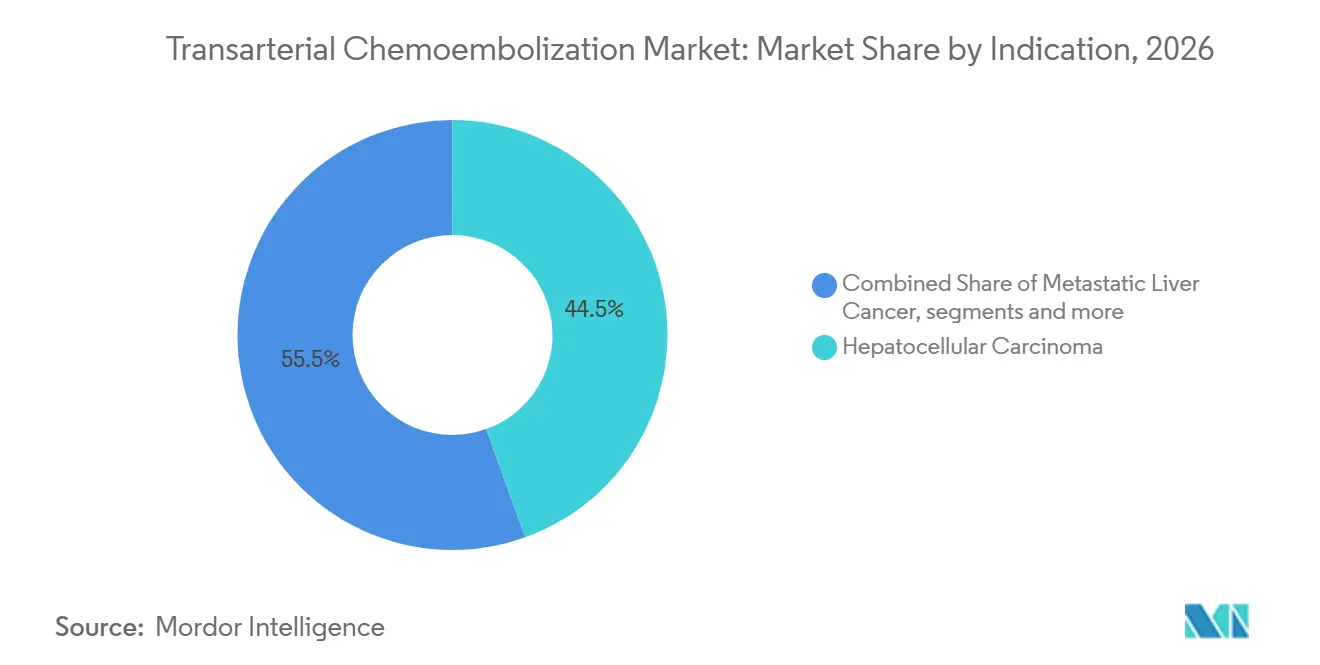
- By indication, hepatocellular carcinoma accounted for 44.53% of the transarterial chemoembolization market in 2026, while metastatic liver cancer is projected to expand at a 7.11% CAGR through 2032.
- By end-user, hospitals held a 45.13% revenue share in 2026, while cancer research centers are anticipated to grow at a 5.77% CAGR through 2032.
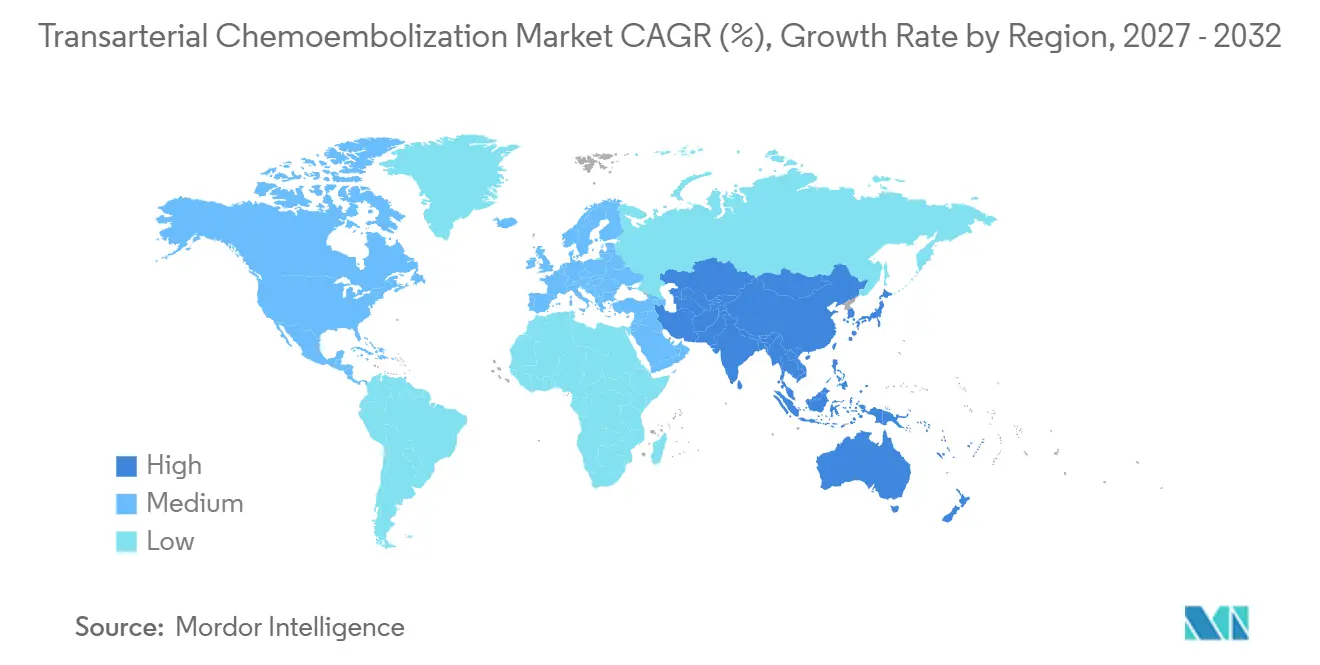
- By geography, North America accounted for 47.26% of revenue share in 2026, while Asia-Pacific is projected to grow at an 8.12% CAGR through 2032.
Note: Market numbers in this report are based on Mordor Intelligence's proprietary estimation framework, which combines nine months of actuals with Q4 projections for base year 2026.
Market Trends and Insights
Drivers Impact Analysis of Transarterial Chemoembolization Market*
| Driver | (~) % Impact on CAGR Forecast | Geographic Relevance | Impact Timeline |
|---|---|---|---|
| Rising Hepatocellular Carcinoma Incidence | +1.5% | Global, highest in Eastern Asia, Northern Africa, and South-Eastern Asia | Short term (≤ 2 years) |
| Shift Toward Minimally Invasive and Locoregional Therapy | +0.9% | North America and Europe, with spillover to core Asia-Pacific markets | Short term (≤ 2 years) |
| Drug-Eluting Bead and Image-Guided Technology Adoption | +0.8% | North America, Europe, Japan, and South Korea | Medium term (2-4 years) |
| Expansion of Interventional Oncology Capacity and Reimbursement | +0.7% | North America, Europe, and core Asia-Pacific markets | Short term (≤ 2 years) |
| TACE and Immunotherapy Combination Regimen Adoption | +0.6% | Asia-Pacific, especially China and Japan, and North America | Medium term (2-4 years) |
| Predictive Imaging and Retreatment Optimization | +0.5% | North America and Europe, with early adoption in Japan | Medium term (2-4 years) |
| Source: Mordor Intelligence | |||
Rising Hepatocellular Carcinoma Incidence
Liver cancer incidence provides the demand base for the transarterial chemoembolization market. GLOBOCAN recorded 843,045 new liver and intrahepatic bile duct cancer cases in 2024, and the disease ranked third in cancer mortality with 732,489 deaths.[1] Hepatocellular carcinoma represents 75% to 85% of these cases, linking the burden directly to TACE procedure demand. Chronic HBV and HCV infection remain important precursors, while low treatment coverage leaves many patients at continued risk. Global liver cancer incidence could reach 1.52 million new cases annually by 2050 if current viral hepatitis control trends continue.[2] MASLD is also widening the future patient pool in North America and Western Europe beyond the historical hepatitis B population.
Shift Toward Minimally Invasive and Locoregional Therapy
Resection and transplantation are curative options for fewer than 20% of patients at diagnosis, leaving many intermediate-stage cases dependent on locoregional treatment. TACE is established in BCLC and AASLD treatment pathways for BCLC-B unresectable hepatocellular carcinoma. This supports the transarterial chemoembolization market because catheter-based care can serve patients who are not eligible for surgery. The movement toward outpatient oncology care also favors procedures that avoid inpatient surgical admissions. The 2026 Medicare Physician Fee Schedule created a net 2% increase for interventional radiology and a 7% increase in non-facility settings.[3] This reimbursement mechanics support outpatient volume while increasing the difference in access between facility-based and community providers.
Drug-Eluting Bead and Image-Guided Technology Adoption
Drug-eluting bead TACE combines arterial occlusion with controlled local drug release through calibrated microspheres. This approach can reduce peak plasma chemotherapy exposure and systemic toxicity compared with lipiodol-based procedures. A 2024 review found lower rates of grade 3 or higher systemic adverse events with DEB-TACE than with conventional TACE in hepatocellular carcinoma. A randomized phase 4 study also found superior efficacy for idarubicin over epirubicin in the DEB-TACE setting. A multicenter study reported that an MRI and clinical-variable model predicted TACE response with AUC values of 0.91 in training and 0.84 in validation cohorts. The transarterial chemoembolization market is therefore placing more value on imaging compatibility and workflow support, not only bead drug-loading performance.
TACE and Immunotherapy Combination Regimen Adoption
TACE is being used more often alongside systemic immunotherapy in intermediate-stage hepatocellular carcinoma. Tumor ischemia and necrosis after TACE can release neoantigens and activate dendritic-cell activity, which may strengthen the effect of checkpoint inhibitors. A phase 2 study reported improved tumor control with TACE, atezolizumab, and bevacizumab in intermediate-stage disease. The TALENTACE phase 3 trial reported a positive primary endpoint for atezolizumab plus bevacizumab combined with TACE. China approved lenvatinib plus pembrolizumab with TACE for unresectable non-metastatic hepatocellular carcinoma in July 2025. This places greater importance on microcatheter technique and embolic loading, since treatment quality affects the local conditions for combination care.
Restraints Impact Analysis of Transarterial Chemoembolization Market*
| Restraint | (~) % Impact on CAGR Forecast | Geographic Relevance | Impact Timeline |
|---|---|---|---|
| Procedure-Related Complications and Liver Decompensation | -0.8% | Global | Short term (≤ 2 years) |
| High Equipment, Procedure, and Training Costs | -0.5% | Emerging Asia-Pacific markets, South America, and the Middle East and Africa | Medium term (2-4 years) |
| TACE-Refractory Disease and Stage Migration to Systemic Therapy | -0.4% | Global, especially North America and Europe | Medium term (2-4 years) |
| Inconsistent Bead, Drug-Loading, and Treatment Protocols | -0.3% | Global | Long term (≥ 4 years) |
| Source: Mordor Intelligence | |||
Procedure-Related Complications and Liver Decompensation
Post-procedure liver dysfunction limits repeat treatment and remains a central restraint on the transarterial chemoembolization market. A retrospective study of 549 patients found liver function impairment in 61.9% of patients after TACE and post-embolization syndrome in 27.0%. The study identified Child-Pugh class, neutrophil count, and baseline ECOG score as independent predictors of hepatic dysfunction. More severe decompensation can include ascites, encephalopathy, coagulopathy, and variceal bleeding. Patients with cirrhosis and limited hepatic reserve are especially exposed to this risk. Different monitoring intervals and escalation thresholds across treatment centers can also create uneven treatment decisions and lower procedure volumes at more cautious institutions.
High Equipment, Procedure, and Training Costs
A TACE program requires angiography equipment, contrast agents, microcatheters, guidewires, and embolic products. These requirements restrict adoption in smaller hospitals and lower-income health systems. Interventional radiologists also need experience in hepatic arterial mapping, selective catheterization, and embolic endpoint assessment. This training is difficult to provide where procedure volumes and structured mentorship are limited. The Society of Interventional Radiology opposed the WISeR model, which began in 6 U.S. states in 2026, because prior authorization and prepayment review could restrict access to selected image-guided services. Administrative review can be particularly difficult when the clinical decision requires procedural judgment that is not fully captured in automated evaluation.
*Our forecasts treat driver/restraint impacts as directional, not additive. The impact forecasts reflect baseline growth, mix effects, and variable interactions.
Transarterial Chemoembolization Market Segment Analysis
By Procedure Type:
Conventional TACE Anchors Volume While DEB-TACE Builds Precision CapabilityConventional TACE held 53.32% of the transarterial chemoembolization market share in 2026. Its position rests on extensive clinical experience, practitioner familiarity, and compatibility with cisplatin, doxorubicin, and epirubicin regimens. Conventional TACE is projected to grow at a 6.22% CAGR from 2027 to 2032 because emerging liver cancer programs can adopt lipiodol-based methods before investing in DEB-TACE platforms. Guerbet Lipiodol supply chains and flexible drug selection support use in European and Asian health systems with generic chemotherapy formularies.
DEB-TACE is gaining use in centers with dedicated microsphere platforms, including Boston Scientific’s LC Bead LUMI and Merit Medical’s HepaSphere. Conventional TACE was used in 59.3% of patients in the combination arm, while DEB-TACE was used in 40.7%. The result indicates that TACE’s immune-priming role is not limited to one procedure type. DEB-TACE offers local drug-delivery and imaging-related benefits that influence purchasing decisions.
By Product Type:
Chemotherapeutic Agents Lead Volume While Drug-Eluting Particles ExpandChemotherapeutic agents accounted for 43.35% of the transarterial chemoembolization market share in 2026. The category includes doxorubicin, cisplatin, mitomycin C, and epirubicin delivered in lipiodol emulsions or through intra-arterial infusion. Its scale reflects the continued global importance of conventional TACE and generic chemotherapy availability in emerging markets. Radiotherapeutic and adjacent intra-arterial agents serve patients whose liver reserve or contraindications limit conventional drug delivery.
Drug-eluting particles are expected to be the fastest-growing product type, with a 6.71% CAGR forecasted through 2032. Boston Scientific, Merit Medical, and Terumo hold important positions, while ABK Biomedical completed ROUTE90 phase 3 pivotal-study enrollment for Eye90 in February 2026. ABK Biomedical and COR Development announced commercial manufacturing in Ashland, Missouri, in April 2026, showing the movement of imaging-enabled embolics toward commercial supply.
By Indication:
Hepatocellular Carcinoma Leads While Metastatic Liver Cancer Grows FasterHepatocellular carcinoma accounted for 44.53% of the transarterial chemoembolization market in 2026. BCLC guidance supports TACE for Stage B unresectable disease, making HCC the primary source of procedure volume. The 843,045 liver and intrahepatic bile duct cancer cases recorded in 2024 support continued HCC-directed care, and HCC makes up 75% to 85% of this disease group. Centers are assessing procedure selection and embolization quality more closely when planning checkpoint inhibitor co-administration.
Metastatic liver cancer is anticipated to grow at a 7.11% CAGR through 2032. Rising liver metastases from colorectal and breast cancer in aging Western populations are expanding use beyond HCC. A multicenter cohort study found better disease control with DEB-TACE, systemic chemotherapy, and immune checkpoint inhibitors than with systemic therapy alone in unresectable intrahepatic cholangiocarcinoma. Metastatic neuroendocrine tumors and hepatoblastoma provide smaller but stable procedure volumes across hypervascular liver tumor types.

By End-User:
Hospitals Sustain Volume While Cancer Research Centers Advance ProtocolsHospitals held 45.13% of the transarterial chemoembolization market share in 2026. They can provide biplane angiography, post-procedure liver monitoring, and multidisciplinary tumor board support. Large academic medical centers in the United States, Germany, and Japan combine high procedure volumes with clinical research activity that shapes treatment protocols. Hospital capacity remains important where patients need close assessment of liver function after treatment.
Cancer research centers are projected to grow at a 5.77% CAGR through 2032. They are central to phase 2 and phase 3 protocols combining TACE with PD-1 or PD-L1 inhibitors, tyrosine kinase inhibitors, and anti-VEGF agents. Ambulatory surgical centers are emerging for appropriate outpatient procedures because the 2026 Medicare schedule supports non-facility interventional radiology care. Specialized hepatology clinics and imaging centers with catheterization capability serve residual volume in high-income settings.
Geography Analysis
North America
North America held 47.26% of the transarterial chemoembolization market share in 2026. Medicare and commercial reimbursement, dense interventional radiology networks, and specialized liver tumor boards support this position. The 2026 Medicare fee schedule increased interventional radiology payment by 2% overall and by 7% in non-facility settings. The United States leads regional procedure volume, Canada adds demand through provincial cancer care networks, and Mexico is growing as tertiary infrastructure expands.
Asia-Pacific
Asia-Pacific is projected to grow at an 8.12% CAGR from 2027 to 2032, the highest regional rate in the transarterial chemoembolization market. The region has the largest absolute HCC burden and is expanding interventional oncology capacity. China’s 2025 combination approval has encouraged investment in more precise TACE delivery. Japan maintains high volumes through universal health coverage and favorable reimbursement, although Y-90 reimbursement has increased radioembolization competition.
Europe, Middle East and Africa
Europe follows North America, with Germany, the United Kingdom, France, Italy, and Spain as core markets. The transarterial chemoembolization market in the Middle East and Africa has varied conditions. Saudi Arabia, the UAE, and Qatar combine high healthcare spending, available interventional infrastructure, and expanding cancer center capacity. South Africa and much of sub-Saharan Africa face equipment and specialist shortages despite unmet need linked to HBV-related disease and aflatoxin B1 exposure. Brazil and Argentina are expanding training and professional registries, while Brazil’s SUS system provides partial reimbursement for locoregional liver cancer procedures.
Competitive Landscape
The transarterial chemoembolization market is moderately consolidated across embolic-agent manufacturers, chemotherapy suppliers, imaging providers, contrast-media suppliers, and pharmaceutical companies that support combination treatment. Boston Scientific, Merit Medical Systems, Terumo Corporation, and Cook Medical compete in embolic products. Hikma Pharmaceuticals and Nippon Kayaku supply chemotherapy, while Siemens Healthineers and Guerbet provide imaging-guided and contrast-related products. Bayer, F. Hoffmann-La Roche, Merck & Co., Johnson & Johnson, Pfizer, and Novartis are relevant when systemic treatments are used alongside TACE. Boston Scientific’s LC Bead LUMI uses radiopaque bismuth markers to confirm bead distribution during treatment.
Boston Scientific announced an agreement to acquire Penumbra in a USD 14.5 billion enterprise-value transaction in January 2026. The transaction may support distribution or catheter compatibility across related procedures. Jiangsu Hengrui Medicine has advanced camrelizumab and apatinib combinations with TACE in China. Sirtex’s SIR-Spheres Y-90 platform adds pressure from a liver-directed therapy outside the traditional embolic-agent category. Sirtex also reported FDA approval for SIR-Spheres for unresectable HCC in July 2025. Response assessment and timely retreatment decisions remain an open commercial opportunity. MRI-based predictive tools may help centers use catheterization capacity more efficiently and identify patients who need a change in care.
Transarterial Chemoembolization Industry Leaders
-
Boston Scientific Corporation
-
Merit Medical Systems, Inc.
-
Terumo Corporation
-
Guerbet
-
Cook Medical
- *Disclaimer: Major Players sorted in no particular order
Transarterial Chemoembolization Market Companies Covered in this Report
- ABK Biomedical Inc.
- Bayer
- Boston Scientific
- Cook Group
- Delcath Systems, Inc.
- Roche
- Guerbet
- Hikma Pharmaceuticals
- Jiangsu Hengrui Medicine Co., Ltd.
- Johnson & Johnson
- Medtronic
- Merck
- Merit Medical Systems
- Nippon Kayaku Co., Ltd.
- Novartis
- Pfizer
- Siemens Healthineers
- Sirtex Medical Limited
- Stryker
- Terumo
Recent Industry Developments in Transarterial Chemoembolization Market
- May 2026: Delcath Systems presented new retrospective data on percutaneous hepatic perfusion with melphalan using the CHEMOSAT Hepatic Delivery System in liver-dominant metastatic breast cancer at the ESMO Breast Cancer Congress 2026, broadening the clinical evidence base for liver-directed therapy in a high-prevalence secondary hepatic malignancy adjacent to TACE's competitive space.
- April 2026: ABK Biomedical and COR Development announced a strategic partnership to establish a dedicated GMP commercial manufacturing facility in Ashland, Missouri for Eye90 microspheres, an FDA Breakthrough Device designated Y-90 radioembolization agent for HCC treatment, with proximity to MURR, the sole US producer of Y-90, providing supply chain security as ABK approaches PMA filing.
Global Transarterial Chemoembolization Market Report Scope
According to the report’s scope, the transarterial chemoembolization market refers to interventional oncology procedures where chemotherapy drugs are delivered directly into a tumor’s blood supply, followed by embolic agents to block circulation. This targeted therapy is primarily used for unresectable liver cancers, aiming to maximize local drug concentration while minimizing systemic side effects.
The transarterial chemoembolization market is segmented into procedure type, product type, indication, end-user, and geography. By procedure type, the market is segmented into conventional TACE and DEB-TACE. By product type, the market is segmented into chemotherapeutic agents, radiotherapeutic agents and adjacent intra-arterial agents, drug-eluting particles, and non-drug-loaded embolic agents. By indication, the market is segmented into hepatocellular carcinoma, metastatic liver cancer, intrahepatic cholangiocarcinoma, and other indications. By end-user, the market is segmented into hospitals, cancer research centers, ambulatory surgical centers, and other end-users. By geography, the market is segmented into North America, Europe, Asia-Pacific, the Middle East and Africa, and South America. The report also covers the estimated market sizes and trends for 17 countries across major regions globally. The report offers values (USD) for all the above segments.
Segmentation Overview
| Conventional TACE |
| DEB-TACE |
| Chemotherapeutic Agents |
| Radiotherapeutic Agents and Adjacent Intra-Arterial Agents |
| Drug-Eluting Particles |
| Non-Drug-Loaded Embolic Agents |
| Hepatocellular Carcinoma |
| Metastatic Liver Cancer |
| Intrahepatic Cholangiocarcinoma |
| Other Indications |
| Hospitals |
| Cancer Research Centers |
| Ambulatory Surgical Centers |
| Other End-Users |
| North America | United States |
| Canada | |
| Mexico | |
| Europe | Germany |
| United Kingdom | |
| France | |
| Italy | |
| Spain | |
| Rest of Europe | |
| Asia-Pacific | China |
| Japan | |
| India | |
| Australia | |
| South Korea | |
| Rest of Asia-Pacific | |
| Middle East and Africa | GCC |
| South Africa | |
| Rest of Middle East and Africa | |
| South America | Brazil |
| Argentina | |
| Rest of South America |
| By Procedure Type | Conventional TACE | |
| DEB-TACE | ||
| By Product Type | Chemotherapeutic Agents | |
| Radiotherapeutic Agents and Adjacent Intra-Arterial Agents | ||
| Drug-Eluting Particles | ||
| Non-Drug-Loaded Embolic Agents | ||
| By Indication | Hepatocellular Carcinoma | |
| Metastatic Liver Cancer | ||
| Intrahepatic Cholangiocarcinoma | ||
| Other Indications | ||
| By End-User | Hospitals | |
| Cancer Research Centers | ||
| Ambulatory Surgical Centers | ||
| Other End-Users | ||
| By Geography | North America | United States |
| Canada | ||
| Mexico | ||
| Europe | Germany | |
| United Kingdom | ||
| France | ||
| Italy | ||
| Spain | ||
| Rest of Europe | ||
| Asia-Pacific | China | |
| Japan | ||
| India | ||
| Australia | ||
| South Korea | ||
| Rest of Asia-Pacific | ||
| Middle East and Africa | GCC | |
| South Africa | ||
| Rest of Middle East and Africa | ||
| South America | Brazil | |
| Argentina | ||
| Rest of South America | ||
Key Questions Answered in the Report
What is the projected value of the transarterial chemoembolization market by 2032?
The market is projected to reach USD 1.97 billion by 2032, from USD 1.43 billion in 2026 to reach USD 1.50 billion in 2027, at a 5.60% CAGR.
Which procedure type held the leading revenue share in 2026?
Conventional TACE led with 53.32% revenue share in 2026 because of its clinical familiarity, flexible drug selection, and broader access across resource settings.
Which indication is expected to grow fastest through 2032?
Metastatic liver cancer is projected to expand at 7.11% CAGR, supported by rising liver metastases from colorectal and breast cancer.
Which region is forecasted to expand fastest?
Asia-Pacific is projected to grow at an 8.12% CAGR through 2032, supported by its high HCC burden and expanding interventional oncology capacity.