
Tissue Contact Probe Ablators Market Size and Share
Market Overview
| Study Period | 2021 - 2032 |
|---|---|
| Market Size (2027) | USD 1.66 Billion |
| Market Size (2032) | USD 2.54 Billion |
| Growth Rate (2027 - 2032) | 8.88 % |
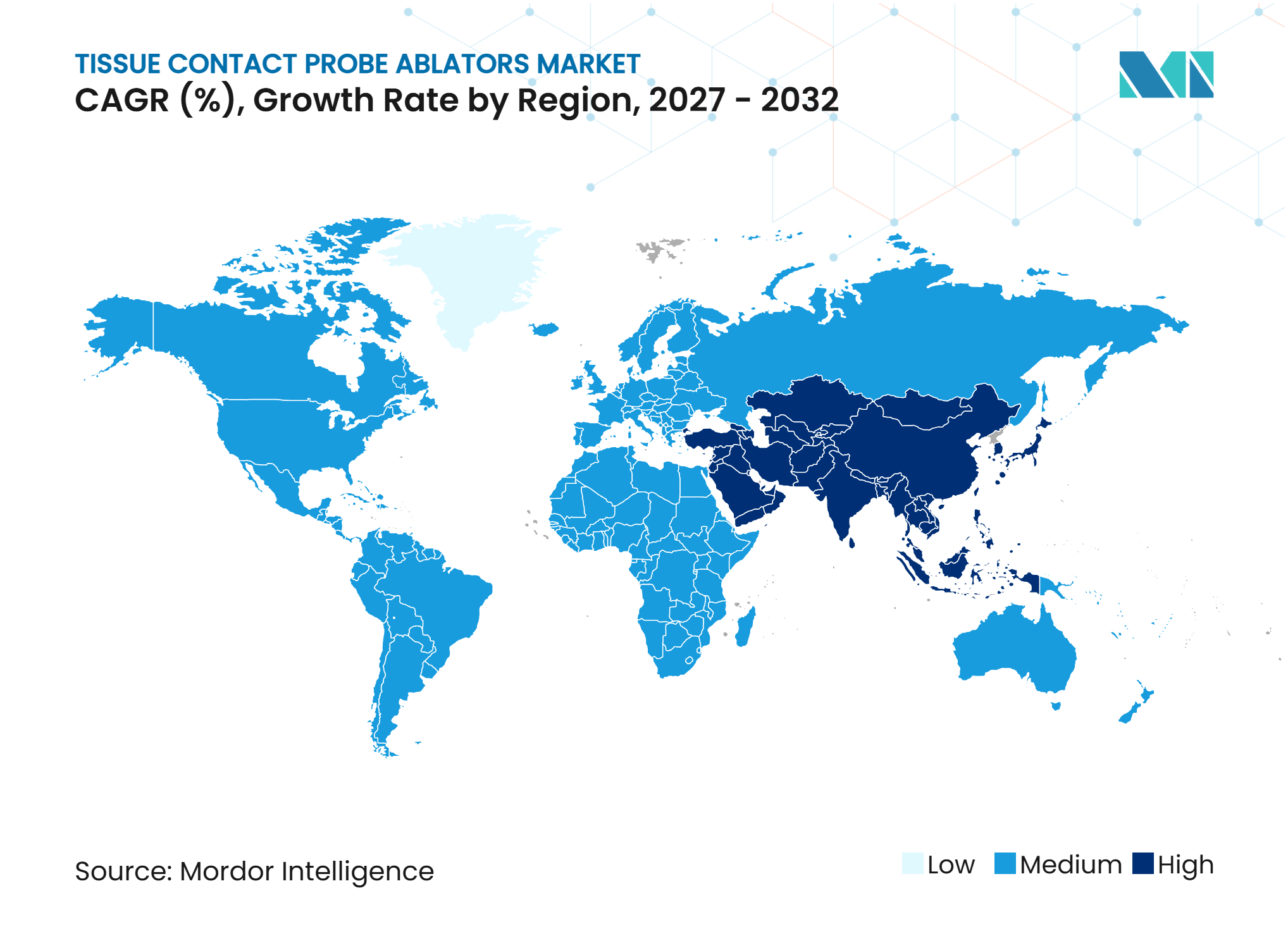
| Fastest Growing Market | Asia-Pacific |
| Largest Market | North America |
| Market Concentration | Medium |
Major Players *Disclaimer: Major Players sorted in no particular order Image © Mordor Intelligence. Reuse requires attribution under CC BY 4.0. | |
Tissue Contact Probe Ablators Market Analysis by Mordor Intelligence
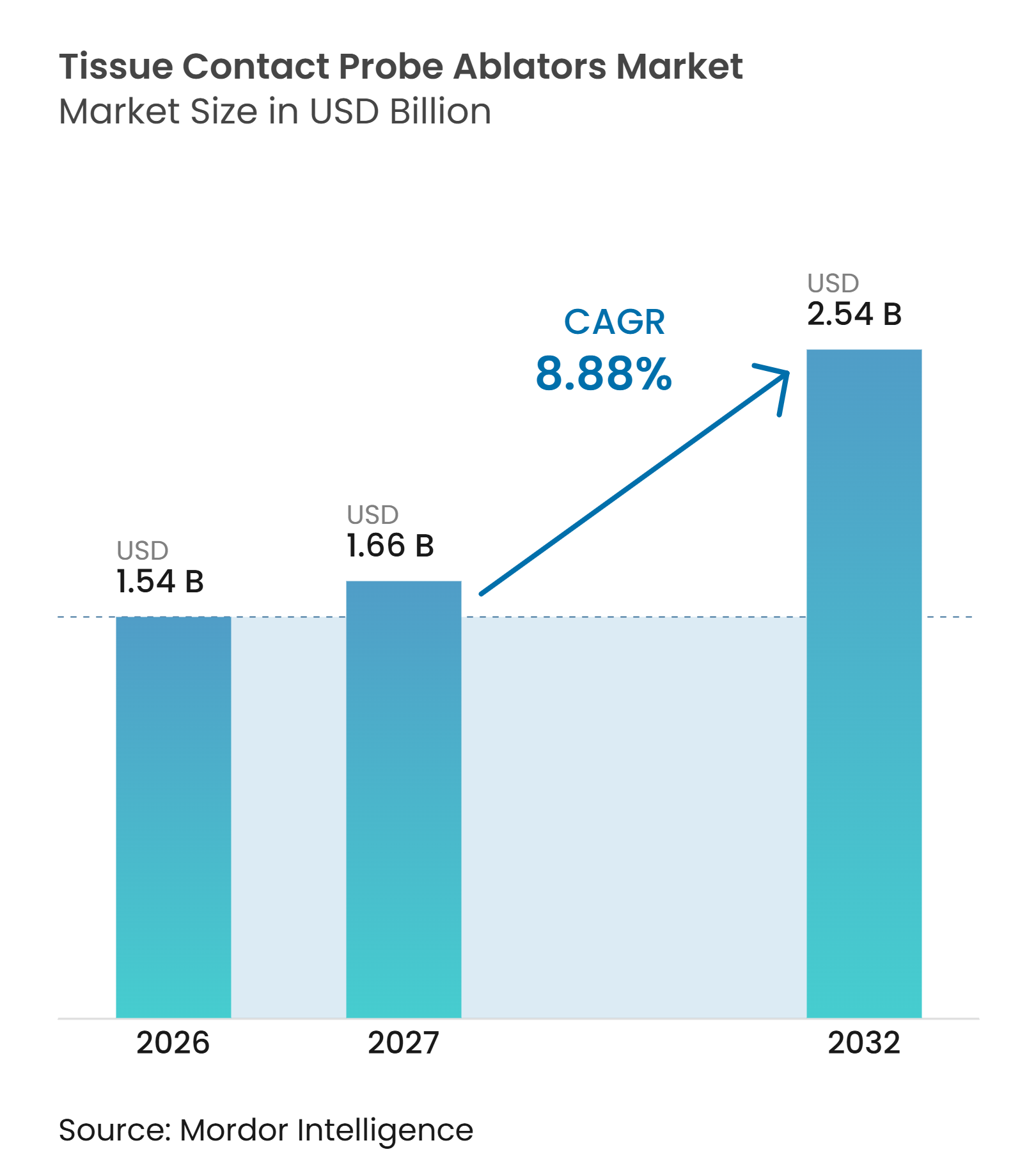
The Tissue Contact Probe Ablators Market size is expected to increase from USD 1.54 billion in 2026 to USD 1.66 billion in 2027 and reach USD 2.54 billion by 2032, growing at a CAGR of 8.88% over 2027-2032.
The tissue contact probe ablators market is supported by a large and expanding patient base for atrial fibrillation, wider use of image-guided ablation in oncology, and the continuing clinical role of contact-based systems in established treatment pathways, where clinicians place weight on reproducible lesion formation, imaging support, and reliable energy delivery. Cardiac electrophysiology is changing as providers move eligible procedures to ambulatory surgical centers.
At the same time, hospitals continue to invest in integrated mapping, sensing, and ablation systems that help clinicians assess tissue contact, reduce unnecessary device exchanges, manage complex cases, and meet the safety and quality controls expected for invasive cardiac procedures. In oncology, clinical evidence and recent regulatory actions are widening the use of cryoablation and other probe-based techniques in selected liver, lung, kidney, breast, and prostate indications, particularly where less invasive treatment can offer a practical option for carefully selected patients and support a shorter recovery than a more extensive surgical approach. The tissue contact probe ablators market therefore depends on clinical outcomes, reimbursement rules, equipment compatibility, procedure settings, provider training, and the pace at which vendors introduce pulsed-field or dual-energy platforms without weakening the role of their established radiofrequency and cryo portfolios. At the same time, suppliers must also respond to greater demand for disposable components, compact workflows, and system-level data that guide clinical decision-making.
Key Report Takeaways
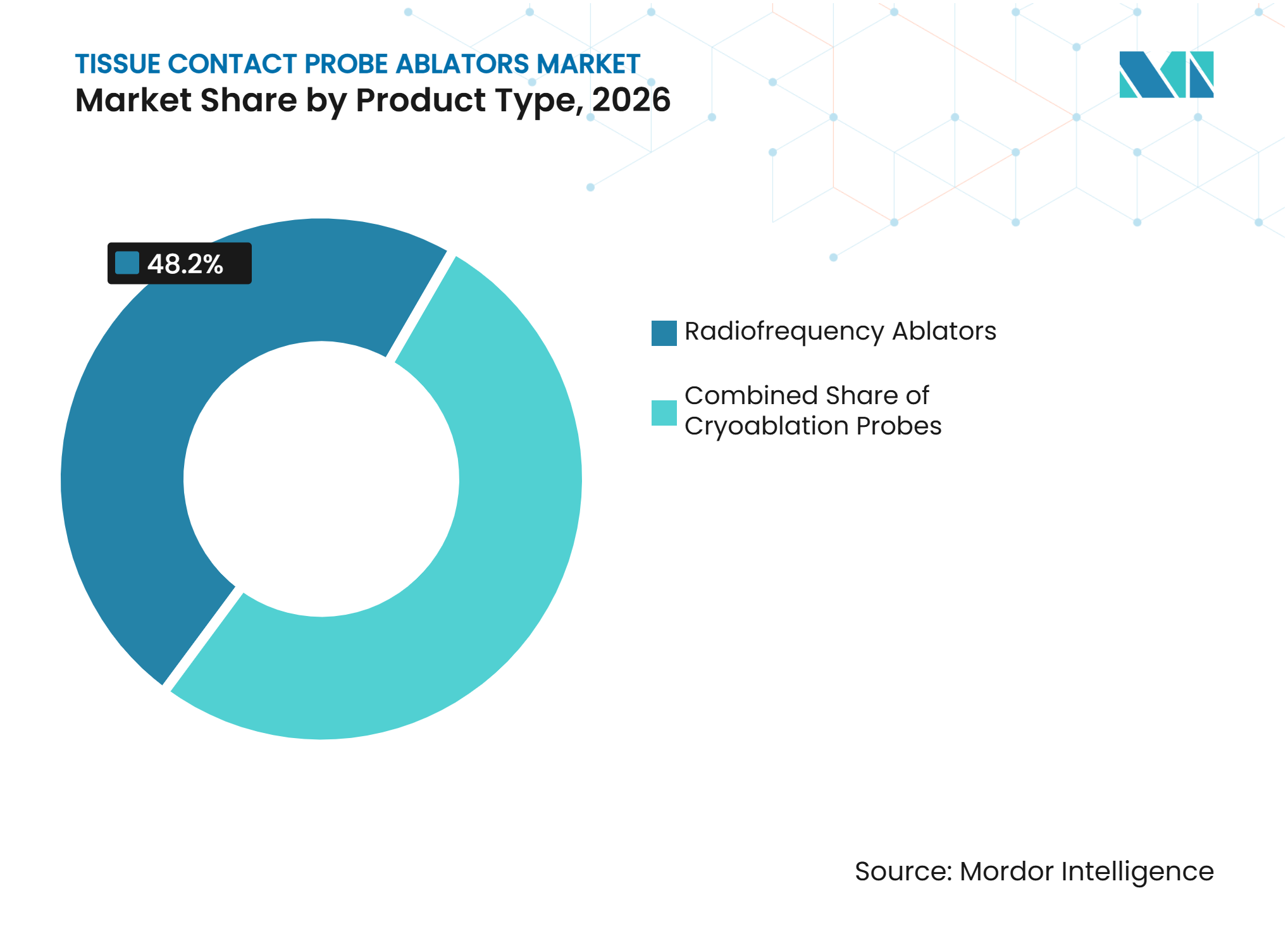
- By product type, radiofrequency ablators held 48.16% of the tissue contact probe ablators market share in 2026, while cryoablation probes is projected to grow at a 9.41% CAGR through 2032.
- By probe architecture, multipolar and multi-electrode probes held 48.14% of the tissue contact probe ablators market share in 2026, while flexible-tip probes are forecast to expand at an 8.91% CAGR through 2032.
- By application, cardiology accounted for 45.34% of the tissue contact probe ablators market size in 2026 and is advancing at a 9.54% CAGR through 2032.
- By energy delivery, bipolar systems held 46.90% market share in 2026, while multipolar systems are forecast to grow at a 9.02% CAGR through 2032.
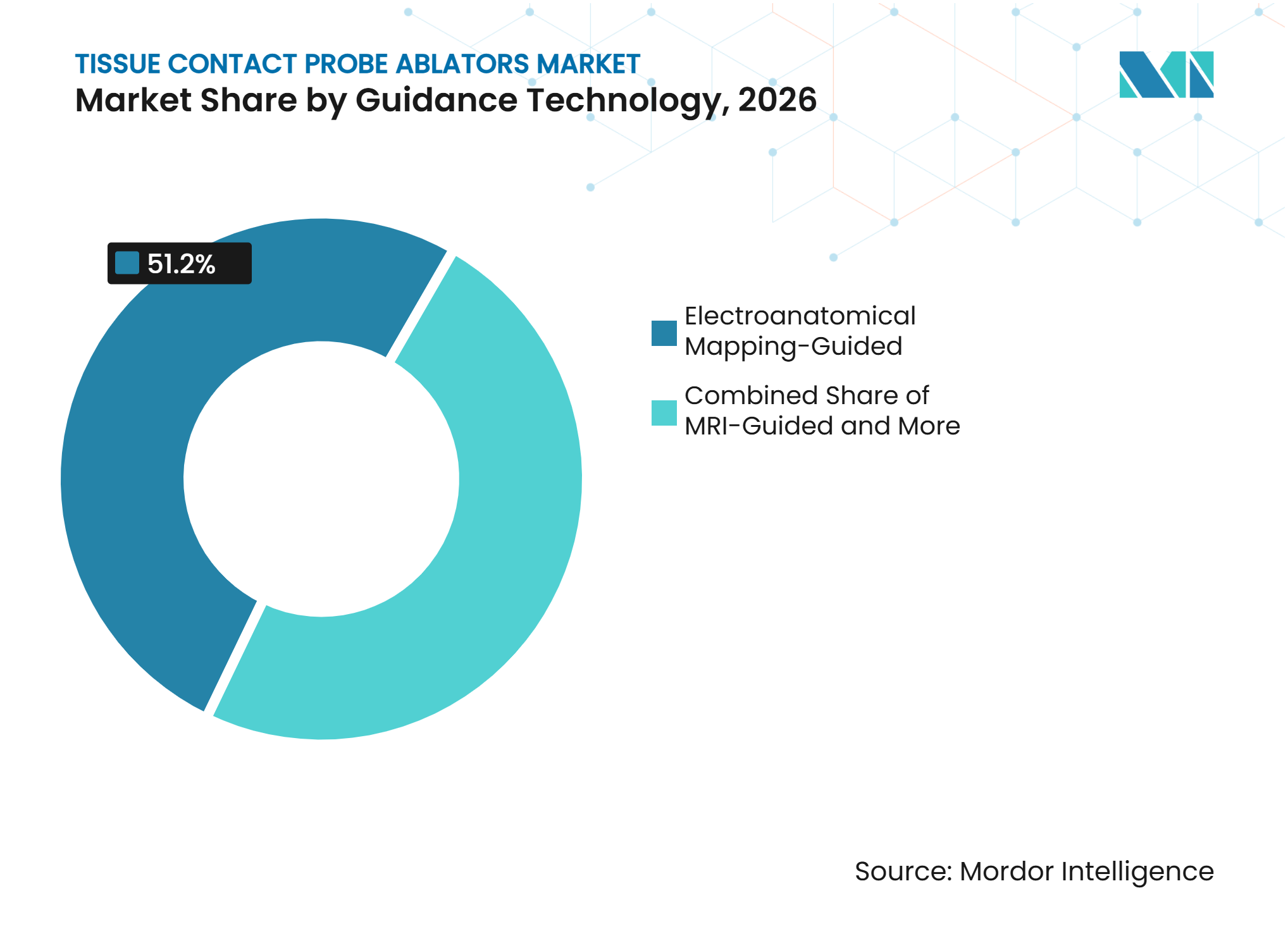
- By guidance technology, electroanatomical mapping-guided procedures accounted for 51.23% market share in 2026 and are projected to expand at a 10.23% CAGR through 2032.
- By end user, hospitals held 55.34% market share in 2026, while ambulatory surgical centers are forecast to grow at a 10.13% CAGR through 2032.
- By geography, North America held 43.89% market share in 2026, while Asia-Pacific is projected to expand at a 9.45% CAGR through 2032.
Note: Market numbers in this report are based on Mordor Intelligence's proprietary estimation framework, which combines nine months of actuals with Q4 projections for base year 2026.
Market Trends and Insights
Drivers Impact Analysis of Tissue Contact Probe Ablators Market*
| Driver | (~) % Impact on CAGR Forecast | Geographic Relevance | Impact Timeline |
|---|---|---|---|
| Rising Atrial Fibrillation and Solid-Tumor Treatment Demand | +2.1% | Global, with strong demand in North America, Western Europe, and East Asia | Long term (≥ 4 years) |
| Shift Toward Minimally Invasive and Outpatient Procedures | +1.9% | North America and Europe, with expansion into Asia-Pacific | Short term (≤ 2 years) |
| Real-Time Sensing and Mapping Integration | +1.5% | North America and Europe, with growing use in Asia-Pacific and GCC countries | Medium term (2-4 years) |
| Flexible-Tip and Multi-Electrode Probe Innovation | +1.1% | Global, led by North America and Western Europe | Medium term (2-4 years) |
| Increasing use of procedure-linked disposable probes | +0.9% | Global; volume gains sharpest in APAC and South America | Medium term (2–5 years) |
| Installed-base pull-through from generator-compatible consumables | +0.7% | North America & EU (high installed base); early gains in APAC | Short term (≤ 4 years) |
| Source: Mordor Intelligence | |||
Rising Atrial Fibrillation and Solid-Tumor Treatment Demand
Atrial fibrillation and solid tumors create two durable sources of procedure demand for the tissue contact probe ablators market. North America recorded an age-standardized atrial fibrillation incidence of 88.23 per 100,000, which was higher than the average reported for Asia-Pacific[1]. In renal cell carcinoma, a 2025 review of 133 studies covering 8,910 patients found 1-year local control above 95% for radiofrequency, microwave, and cryoablation, with lower complication rates than partial nephrectomy. These clinical needs sustain demand for contact-based systems across cardiac and oncology settings, where decisions depend on lesion control, safety, imaging access, patient eligibility, and the ability to avoid a more invasive intervention.
Shift Toward Minimally Invasive and Outpatient Procedures
The move toward outpatient care is changing the procedural setting for the tissue contact probe ablators market. The Centers for Medicare and Medicaid Services added several cardiac catheter ablation procedures to the ambulatory surgical center covered procedures list under the 2026 payment rule, allowing qualified centers to build programs around a clearer payment pathway. The HRS and ACC published guidance on patient selection, emergency transfer arrangements, and quality assurance for intracardiac ablation in these centers. A 2026 analysis described major adverse-event rates below 1% in more than 4,000 ambulatory surgical center ablation cases and same-day discharge above 90% for atrial fibrillation ablation at experienced sites. The HRS and ACC statement also projected 14% annual growth in catheter ablation volume between 2025 and 2030. Providers are therefore seeking portable workflows, reliable disposable probes, and systems that work in lower-acuity settings without compromising clinical oversight, emergency readiness, procedure documentation, or post-procedure follow-up.
Real-Time Sensing and Mapping Integration
Real-time confirmation of catheter contact is becoming a key purchasing consideration in the tissue contact probe ablators market. A multicenter prospective study published in 2025 found that intracardiac echocardiography-guided pulsed-field ablation had a 12.6% arrhythmia recurrence rate, compared with 22.3% with fluoroscopy guidance. The study also reported less reconnection at repeat procedures when tissue contact had been confirmed, linking procedural visualization to durable lesion formation. These findings support investments in platforms that combine mapping, contact information, and energy delivery. A single-catheter workflow can reduce catheter exchanges and may reduce fluoroscopy exposure during complex procedures, while also helping operators manage a repeatable procedure sequence. This favors vendors with connected generator, mapping, and probe portfolios rather than standalone devices, because clinical teams can use a common data environment from mapping through ablation.
Flexible-Tip and Multi-Electrode Probe Innovation
Flexible-tip and multi-electrode designs are expanding the clinical and operational options available in the Tissue Contact Probe Ablators Market. A 2025 retrospective study from NYU Langone found that a flexible-tip catheter reduced mean excursion distance by 18% and improved 1-year atrial fibrillation freedom to 81.3%, compared with 75% for a conventional-tip device. Abbott introduced the TactiFlex Sensor Enabled ablation catheter in India in May 2025, combining a flexible tip with contact-force sensing. Multi-electrode systems can create lesions across several points in one application, which can support time-sensitive electrophysiology workflows and improve room utilization where demand exceeds staffed capacity. The design trend also supports increasing use of procedure-linked disposable probes and generator-compatible consumables. For suppliers, product development now centers on stable contact, reliable lesion delivery, simpler procedure steps, and architectures that can be adapted for radiofrequency, cryo, or pulsed-field treatment.
Restraints Impact Analysis of Tissue Contact Probe Ablators Market*
| Restraint | (~) % Impact on CAGR Forecast | Geographic Relevance | Impact Timeline |
|---|---|---|---|
| High Generator, Probe, and Accessory Cost | -2% | Global, with greater pressure in Asia-Pacific, South America, and Europe | Long term (≥ 4 years) |
| Competition from Pulsed-Field Ablation and Alternative Energy Modalities | -2.2% | North America and Europe, with expansion into Asia-Pacific | Short term (≤ 2 years) |
| Limited training and multidisciplinary workflow capacity | -0.8% | APAC, MEA, South America; emerging ASCs globally | Medium term (2–4 years) |
| Inconsistent reimbursement coding for cross-specialty ablation procedures | -1.1% | National; early gains concentrated in high-reimbursement markets | Medium term (2–5 years) |
| Source: Mordor Intelligence | |||
High Generator, Probe, and Accessory Cost
High equipment and consumable costs limit access to the Tissue Contact Probe Ablators Market in price-sensitive health systems. A 2025 Japanese analysis of 315,818 atrial fibrillation ablation procedures found mean in-hospital costs of USD 17,181 for radiofrequency ablation and USD 19,460 for cryothermal ablation. The report attributed much of the difference to material cost rather than staffing, showing why device selection has direct relevance for hospital budgets. Dual-energy systems can require new generator investments, which can postpone adoption by community hospitals and ambulatory centers. Price controls can reduce revenue per device even when procedure volumes rise. Limited training capacity and inconsistent reimbursement for cross-specialty procedures add further pressure in emerging settings and new care sites, where providers must balance capital planning, physician experience, service coverage, and patient access.
Competition from Pulsed-Field Ablation and Alternative Energy Modalities
Pulsed-field ablation is a material competitive constraint for thermal contact probes used in cardiac electrophysiology. In the BEAT-PAROX-AF trial, 12-month single-procedure success was 77.2% for pulsed-field ablation and 77.6% for radiofrequency ablation. Pulsed-field ablation reduced mean procedure time by 39 minutes and recorded fewer serious adverse events in that study, which makes it attractive to centers seeking greater throughput and a nonthermal approach. The workflow advantage can reduce radiofrequency catheter use per case at sites that move to nonthermal protocols. Suppliers that rely only on radiofrequency or cryo products face greater exposure in electrophysiology. Demand in oncology, pain management, and dual-energy systems can partly offset this risk, but it does not remove the need for portfolio renewal, clinical evidence, and meaningful system integration.
*Our forecasts treat driver/restraint impacts as directional, not additive. The impact forecasts reflect baseline growth, mix effects, and variable interactions.
Tissue Contact Probe Ablators Market Segment Analysis
By Product Type:
Radiofrequency Ablator Retains Its Broad Clinical BaseRadiofrequency ablators captured 48.16% market share in 2026. Its position in the Tissue Contact Probe Ablators Market rests on broad clinical experience across cardiac rhythm management, tumor ablation, and pain procedures. Hospitals have established generator fleets, physician training, and treatment pathways around radiofrequency technology. These installed-base relationships also support demand for compatible disposable probes. Microwave systems remain useful for larger liver and lung tumors, where wider ablation zones can be clinically relevant. Laser systems serve more specialized interstitial and neurosurgical procedures.
Cryoablation probes are forecast to grow at a 9.41% CAGR through 2032. A 2025 review of 19 studies reported a pooled 1-year local tumor control rate of 90.5% for lung cryoablation. IceCure received FDA marketing authorization in October 2025 for ProSense in local treatment of selected low-risk breast cancer in women aged 70 and above. These developments expand the addressable use of cryo probes beyond established cardiac procedures and provide clinical teams with an option for patients who may not be suitable for conventional surgery. Ultrasound remains investigational in many contact-probe uses. Vendors with radiofrequency, cryo, and dual-energy product lines can serve more than one clinical pathway, align their offerings with evolving site-specific needs, and reduce their exposure to a single modality.



By Probe Architecture:
Multipolar Platforms Support Faster WorkflowsMultipolar and multi-electrode probes held 48.14% market share in 2026. Their value in the Tissue Contact Probe Ablators Market is most evident in pulmonary vein isolation, where multiple electrodes can support a circumferential lesion pattern. Shorter treatment sequences are important as cardiac ablation shifts toward ambulatory care. Single-electrode probes remain important for focal oncology and pain applications that need precise energy placement. Balloon catheters retain an established role in cryoablation, although they face competition from pulsed-field systems with similar single-shot workflows.
Flexible-tip probes are projected to expand at an 8.91% CAGR through 2032. The NYU Langone study reported a reduction in lesions per patient from 222.7 to 132.0 when the flexible-tip design was used. The same research linked the device to contact force and fewer microembolic signals. Abbott’s clinical development program positions flexible-tip design for use in dual-source radiofrequency and pulsed-field catheters. This approach could make flexible tips a core mechanical element in newer platforms. Hospitals that adopt these probes may also advance generator upgrades, creating a broader platform opportunity for suppliers while allowing clinicians to use stable contact information during increasingly complex lesion sets.
By Application:
Cardiology Anchors Demand While Oncology ExpandsCardiology accounted for 45.34% of the Tissue Contact Probe Ablators Market size in 2026 and is forecast to grow at a 9.54% CAGR through 2032. Atrial fibrillation remains the leading indication because catheter ablation has a defined role in rhythm control pathways. Ventricular tachycardia procedures are lower in volume but can require complex mapping, multiple lesions, and specialized probes. This raises device spending per procedure in many electrophysiology labs. The application’s scale means that a change in cardiac probe preference has an outsized effect on supplier revenue. It also explains the intense focus on mapping-integrated and dual-energy products.
Oncology broadens the revenue base beyond cardiac electrophysiology. Ablation is gaining a wider role in breast, prostate, kidney, liver, and lung indications where patients may need a less invasive option. The American Society of Breast Surgeons updated its 2026 guidance to include cryoablation for selected biologically low-risk early-stage breast cancers. AngioDynamics reported FDA 510(k) clearance for NanoKnife for prostate tissue ablation and said its PRESERVE study achieved 84% freedom from in-field clinically significant disease at 12 months. Pain and neurology procedures provide another distinct demand base that is less affected by pulsed-field adoption in cardiac care. This clinical diversity supports a wider long-term role for contact probe systems and gives suppliers a reason to maintain differentiated product, training, and evidence strategies across several specialties.
By Energy Delivery:
Bipolar Systems Remain EstablishedBipolar energy delivery held 46.90% of market share in 2026. It is used in many pain management procedures because it creates a contained lesion pattern and can reduce dependence on a patient return pad. Bipolar configurations are also familiar in standard cardiac radiofrequency workflows. Monopolar systems remain relevant in interventional oncology, where a single active electrode can simplify CT-guided liver and lung procedures. The selection between the two approaches reflects anatomy, treatment target, guidance approach, and existing generator capability. These practical factors slow abrupt technology replacement in established facilities.
Multipolar energy delivery is forecast to grow at a 9.02% CAGR through 2032. Simultaneous energy delivery can reduce procedure time in cardiac ablation and may help cover larger target volumes in oncology. Multi-probe arrays can also extend controlled ablation beyond the limits of a single electrode. Newer generator designs can support different circuit configurations and may combine radiofrequency with pulsed-field therapy. This creates a pathway for a shared platform to address more than one procedure type. The resulting flexibility is useful for hospitals seeking to improve asset utilization across specialties, especially when capital budgets require the same equipment to support different physicians, procedural rooms, and treatment priorities.
By Guidance Technology:
Electroanatomical Mapping Sets the Platform DirectionElectroanatomical mapping-guided procedures held 51.23% market share in 2026. This approach also records the fastest forecast growth at 10.23% CAGR through 2032. The lead reflects established use in complex electrophysiology as well as a shift toward integrated systems across the Tissue Contact Probe Ablators Market. Mapping and energy delivery can now occur through the same catheter in selected platforms. This can remove a separate diagnostic catheter step and simplify the procedure sequence. Demand for this approach benefits from hospitals’ ongoing need for detailed cardiac visualization and reproducible lesion placement.
Medtronic received PMDA approval in June 2025 for the Affera Mapping and Ablation System and Sphere-9 catheter in Japan. The system combines high-density three-dimensional mapping with radiofrequency and pulsed-field ablation in one catheter. Boston Scientific also completed first-in-human procedures using a next-generation Faraflex pulsed-field and mapping catheter in February 2025[2]. ISO 14971 risk-management expectations and FDA device requirements can extend development and validation timelines. These compliance factors favor firms that can document integrated performance across mapping, sensing, and ablation functions, because providers and regulators need clear evidence that the combined functions operate consistently through the full procedure.

By End User:
Hospitals Lead While Ambulatory Centers Gain GroundHospitals accounted for 55.34% of market share in 2026. They retain the largest share because complex electrophysiology procedures rely on dedicated labs, fluoroscopy, intracardiac echocardiography, and emergency care capabilities. Academic centers and high-volume community hospitals can also support a wide range of cardiac and oncology procedures. A multicenter study of 3,758 atrial fibrillation ablations reported comparable outcomes between hospital outpatient departments and ambulatory surgical centers. Specialty clinics remain relevant for pain procedures and selected image-guided oncology care. Narrower procedure portfolios and uneven reimbursement support limit their growth.
Ambulatory surgical centers are projected to expand at a 10.13% CAGR through 2032. The 2026 CMS coverage change provides a direct policy basis for cardiac ablation in this setting. The HRS and ACC framework identifies patient selection, transfer planning, and quality systems needed to support safe expansion. These centers favor predictable case duration, same-day discharge, and disposable products that reduce setup complexity. They may also prefer compact systems with limited dependence on capital-intensive infrastructure. For device suppliers, the care-site shift creates an opportunity to design simpler packages while preserving the data and safety controls needed for cardiac procedures, and this can influence choices around probe design, workflow support, and service models.
Geography Analysis
North America
North America held 43.89% market share in 2026. The Tissue Contact Probe Ablators Market in the region combines high atrial fibrillation incidence, established electrophysiology infrastructure, and reimbursement support for procedural care. The reported age-standardized atrial fibrillation incidence was 88.23 per 100,000, the highest among the regions discussed in the supplied evidence. CMS coverage for selected cardiac ablation procedures in ambulatory surgical centers takes effect in 2026, and this policy change supports greater use of lower-acuity care settings for appropriate patients. The HRS and ACC guidance requires careful patient selection, emergency transfer arrangements, and quality assurance as centers introduce these procedures.
Asia-Pacific
Asia-Pacific is forecast to grow at a 9.45% CAGR through 2032. Japan is an important early-adoption country for mapping-integrated and dual-energy systems, as demonstrated by the June 2025 PMDA approval for Medtronic’s Affera and Sphere-9 system. Johnson & Johnson launched the VARIPULSE platform across Asia-Pacific in 2025, while Abbott brought flexible-tip contact-force sensing to India through the TactiFlex launch (Johnson & Johnson; Abbott). In China, procurement policies place pressure on suppliers to compete through clinical differentiation and system integration rather than price alone. The region’s growth reflects both rising demand for atrial fibrillation care and widening access to more advanced systems.
Europe, the Middle East and Africa, and South America
Europe remains an important adoption region for the Tissue Contact Probe Ablators Market, supported by experienced electrophysiology centers in Germany, the United Kingdom, France, Italy, and Spain, where clinical studies and regulatory clearances continue to influence adoption decisions. Boston Scientific received CE Mark for the FARAPOINT pulsed-field ablation catheter in November 2025, and Medtronic announced CE Mark for Sphere-360 in January 2026. The BEAT-PAROX-AF study, which drew on high-volume centers in several European countries, continues to inform clinical choices between radiofrequency and pulsed-field approaches. GCC countries are investing in electrophysiology capacity, while South American adoption remains concentrated in major private hospital networks because device cost and reimbursement limit broader public-system access.
Competitive Landscape
Market Concentration
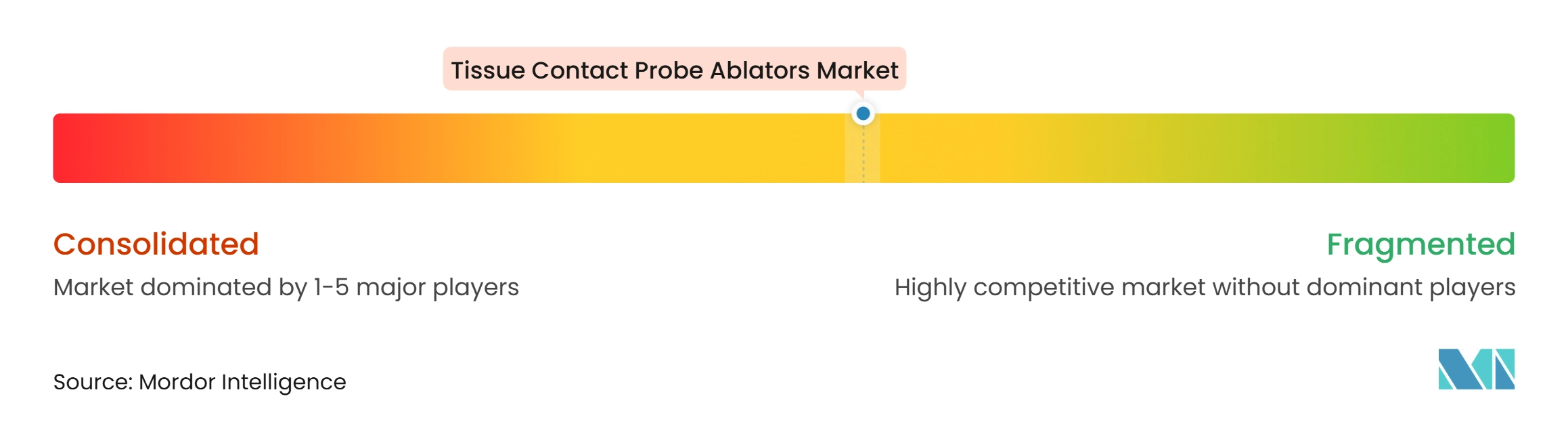
The Tissue Contact Probe Ablators Market is moderately consolidated at the system level and more fragmented at the probe level. Abbott, Boston Scientific, Medtronic, and Johnson & Johnson compete through proprietary mapping relationships and growing pulsed-field portfolios. AtriCure, AngioDynamics, IceCure Medical, Merit Medical Systems, and Olympus serve oncology, surgical, and pain applications with differentiated clinical relationships. The leading cardiac suppliers increasingly compete through connected platforms rather than a single probe. This favors firms that offer sensing, mapping, energy delivery, and compatible disposable accessories together.
Boston Scientific obtained CE Mark for FARAPOINT in November 2025 for right atrial flutter treatment, extending the FARAPULSE platform to a new indication. The company also advanced a mapping-integrated Faraflex program, reinforcing its effort to provide a single-catheter workflow. Medtronic announced CE Mark in January 2026 for Sphere-360 and first United States IDE cases under the Horizon 360 pivotal trial. Abbott received CE Mark in January 2026 for TactiFlex Duo, which delivers radiofrequency and pulsed-field energy through a flexible-tip catheter with contact-force sensing. These programs show how competitive strategies are moving toward dual-energy capability, procedural integration, and contact information.
AtriCure completed first-in-human use of its dual-energy platform with the EnCompass clamp in December 2025. IceCure’s FDA authorization for selected breast cancer treatment creates a defined commercial route for a cryoablation system. Opportunities remain in dual-energy contact probes, lower-complexity oncology workflows, and cryoprobes with more consistent calibration, while domestic suppliers in China add pressure in pulsed-field ablation. The supplied evidence does not state combined top-player shares, so it does not support a quantified concentration score under the required method.
Tissue Contact Probe Ablators Industry Leaders
-
Abbott
-
Biosense Webster, Inc.
-
Boston Scientific Corporation
-
IceCure Medical Ltd
-
Medtronic plc
- *Disclaimer: Major Players sorted in no particular order
Tissue Contact Probe Ablators Market Companies Covered in this Report
- Abbott Laboratories
- AngioDynamics
- AtriCure
- Avanos Medical
- Baylis Medical Company Inc.
- Biosense Webster, Inc.
- Boston Scientific
- Conmed
- The Cooper Companies
- Erbe Elektromedizin
- IceCure Medical Ltd
- Medtronic
- Medwaves, Inc.
- Merit Medical Systems
- MicroPort
- NeuroOne Medical Technologies Corporation
- Olympus
- Stereotaxis, Inc.
- Stryker
Recent Industry Developments in Tissue Contact Probe Ablators Market
- September 2026: IceCure Medical received NMPA approval for its ProSense cryoablation system and associated cryoprobes in China, enabling commercialization in the world's second-largest ablation market. The approval followed an earlier Class III amendment application to Health Canada submitted in March 2026, while Terumo Corporation, IceCure's Japan distributor, was expected to file for PMDA approval in the first half of 2026.
- January 2026: Medtronic announced CE Mark in Europe for its Sphere-360 PFA catheter and completed first IDE cases in the United States under the Horizon 360 pivotal trial. The Sphere-360's conformable adjustable-lattice design accommodates pulmonary vein anatomical variability without catheter rotation, targeting a simplified single-catheter AF ablation workflow fully integrated with the Affera mapping system.
Global Tissue Contact Probe Ablators Market Report Scope
As per the report's scope, the tissue contact probe ablators market covers medical ablation systems that deliver controlled energy through probes or catheters placed in direct contact with target tissue. These systems are used across oncology, cardiology, neurology, and pain management, and other clinical applications to create therapeutic lesions, with defined product types, probe architectures, energy delivery methods, guidance technologies, and end-user settings.
The market is segmented by product type, probe architecture, application, energy delivery, guidance technology, and end user. By product type, the market is segmented into radiofrequency ablators, cryoablation probes, microwave ablators, laser ablators, and ultrasound ablators. By probe architecture, the market is segmented into single-electrode probes, multipolar and multi-electrode probes, balloon-based ablation catheters, and flexible-tip probes. By application, the market is segmented into oncology, cardiology, neurology and pain management, and other applications. The oncology segment includes lung cancer, liver cancer, breast cancer, kidney cancer, and prostate cancer. The cardiology segment includes atrial fibrillation, ventricular tachycardia, and other cardiac arrhythmias. The neurology and pain management segment includes trigeminal neuralgia, facet-joint and sacroiliac pain, and peripheral nerve pain. By energy delivery, the market is segmented into monopolar, bipolar, and multipolar. By guidance technology, the market is segmented into ultrasound-guided, CT-guided, MRI-guided, and electroanatomical mapping-guided. By end user, the market is segmented into hospitals, ambulatory surgical centers, specialty clinics, and other end users. By geography, the market is segmented into North America, Europe, Asia-Pacific, the Middle East and Africa, and South America. The market report also covers estimated market sizes and trends for 17 countries across major regions worldwide. The report offers market size and forecasts in value (USD) for the above segments.
Segmentation Overview
| Radiofrequency Ablators |
| Cryoablation Probes |
| Microwave Ablators |
| Laser Ablators |
| Ultrasound Ablators |
| Single-electrode probes |
| Multipolar and multi-electrode probes |
| Balloon-based ablation catheters |
| Flexible-tip probes |
| Oncology | Lung cancer |
| Liver cancer | |
| Breast cancer | |
| Kidney cancer | |
| Prostate cancer | |
| Cardiology | Atrial fibrillation |
| Ventricular tachycardia | |
| Other cardiac arrhythmias | |
| Neurology and Pain Management | Trigeminal neuralgia |
| Facet-joint and sacroiliac pain | |
| Peripheral nerve pain | |
| Other Applications |
| Monopolar |
| Bipolar |
| Multipolar |
| Ultrasound-Guided |
| CT-Guided |
| MRI-Guided |
| Electroanatomical Mapping-Guided |
| Hospitals |
| Ambulatory Surgical Centers |
| Specialty Clinics |
| Other End Users |
| North America | United States |
| Canada | |
| Mexico | |
| Europe | Germany |
| United Kingdom | |
| France | |
| Italy | |
| Spain | |
| Rest of Europe | |
| Asia-Pacific | China |
| Japan | |
| India | |
| Australia | |
| South Korea | |
| Rest of Asia-Pacific | |
| Middle East and Africa | GCC |
| South Africa | |
| Rest of Middle East and Africa | |
| South America | Brazil |
| Argentina | |
| Rest of South America |
| By Product Type | Radiofrequency Ablators | |
| Cryoablation Probes | ||
| Microwave Ablators | ||
| Laser Ablators | ||
| Ultrasound Ablators | ||
| By Probe Architecture | Single-electrode probes | |
| Multipolar and multi-electrode probes | ||
| Balloon-based ablation catheters | ||
| Flexible-tip probes | ||
| By Application | Oncology | Lung cancer |
| Liver cancer | ||
| Breast cancer | ||
| Kidney cancer | ||
| Prostate cancer | ||
| Cardiology | Atrial fibrillation | |
| Ventricular tachycardia | ||
| Other cardiac arrhythmias | ||
| Neurology and Pain Management | Trigeminal neuralgia | |
| Facet-joint and sacroiliac pain | ||
| Peripheral nerve pain | ||
| Other Applications | ||
| By Energy Delivery | Monopolar | |
| Bipolar | ||
| Multipolar | ||
| By Guidance Technology | Ultrasound-Guided | |
| CT-Guided | ||
| MRI-Guided | ||
| Electroanatomical Mapping-Guided | ||
| By End User | Hospitals | |
| Ambulatory Surgical Centers | ||
| Specialty Clinics | ||
| Other End Users | ||
| By Geography | North America | United States |
| Canada | ||
| Mexico | ||
| Europe | Germany | |
| United Kingdom | ||
| France | ||
| Italy | ||
| Spain | ||
| Rest of Europe | ||
| Asia-Pacific | China | |
| Japan | ||
| India | ||
| Australia | ||
| South Korea | ||
| Rest of Asia-Pacific | ||
| Middle East and Africa | GCC | |
| South Africa | ||
| Rest of Middle East and Africa | ||
| South America | Brazil | |
| Argentina | ||
| Rest of South America | ||
Key Questions Answered in the Report
What is driving demand for tissue contact probe ablators?
The Tissue Contact Probe Ablators Market is driven by rising atrial fibrillation prevalence, broader use of minimally invasive cancer treatment, and a shift toward outpatient cardiac ablation. The need for reliable contact, mapping support, and compatible disposable probes also influences hospital purchasing decisions.
How large is the tissue contact probe ablators market?
The Tissue Contact Probe Ablators Market is valued at USD 1.54 billion in 2026 and is forecast to reach USD 2.54 billion by 2032 at an 8.88% CAGR. Growth reflects cardiac electrophysiology demand, expanded oncology applications, and changing site-of-care policies.
Which product type holds the largest share?
Radiofrequency ablators lead with a 48.16% share in 2026 because they have established use in cardiology, oncology, and pain procedures. Its installed base, physician familiarity, and compatibility with existing hospital generators reinforce its current position.
Which application is growing fastest for tissue contact probe systems?
Cardiology is forecast to grow at a 9.54% CAGR through 2032 and accounts for 45.34% of 2026 revenue. Atrial fibrillation care, advanced mapping use, and the continuing move toward ambulatory treatment support this result.
Why are ambulatory surgical centers important for ablation suppliers?
Ambulatory surgical centers are forecast to grow at a 10.13% CAGR, supported by the CMS decision to cover selected cardiac ablation procedures in 2026. Suppliers can address this setting through compact systems, straightforward workflows, disposable components, and appropriate safety support.
How does pulsed-field ablation affect radiofrequency probe demand?
Pulsed-field ablation offers a shorter procedure time, which can reduce radiofrequency probe use in cardiac electrophysiology and increase demand for dual-energy portfolios. The Tissue Contact Probe Ablators Market remains supported by oncology and pain applications where other contact-based systems retain clinical roles.