
Thoracic Catheters Market Size and Share
Market Overview
| Study Period | 2021 - 2032 |
|---|---|
| Market Size (2027) | USD 1.19 Billion |
| Market Size (2032) | USD 1.75 Billion |
| Growth Rate (2027 - 2032) | 8.08 % |
| Fastest Growing Market | Asia-Pacific |
| Largest Market | North America |
| Market Concentration | Medium |
Major Players *Disclaimer: Major Players sorted in no particular order Image © Mordor Intelligence. Reuse requires attribution under CC BY 4.0. | |
Thoracic Catheters Market Analysis by Mordor Intelligence
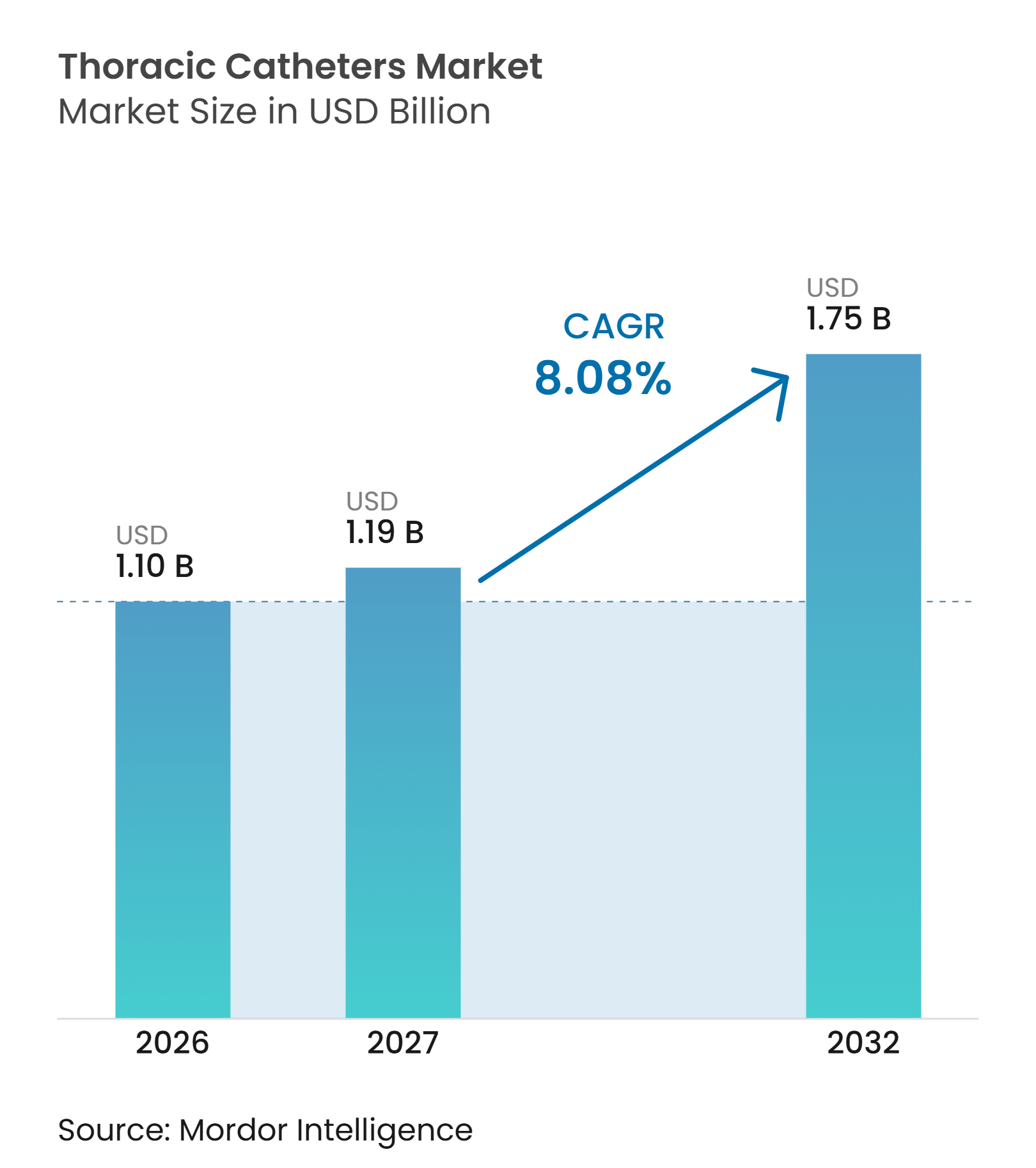
The Thoracic Catheters Market size is expected to grow from USD 1.10 billion in 2026 to USD 1.19 billion in 2027 and is forecast to reach USD 1.75 billion by 2032 at 8.08% CAGR over 2027-2032.
The thoracic catheters market serves 2 distinct care settings: acute drainage after trauma or surgery and recurring pleural management for patients with malignancy or organ failure. This distinction affects purchasing because routine chest tubes address immediate drainage needs, while tunneled catheters and digital systems support longer treatment pathways. Premium products are gaining value as hospitals focus on postoperative mobility, earlier discharge, and reliable outpatient care. The thoracic catheters market is also moving toward solutions that combine a catheter, drainage equipment, and workflow support rather than a single disposable tube. Manufacturers that can document fewer complications and a lower total cost of care have a stronger position when hospitals evaluate premium products.
Key Report Takeaways
- By product type, pleural drainage catheters held 35.84% of revenue in 2026, while thoracostomy procedure kits and trays are forecast to grow at a 10.23% CAGR through 2032.
- By material, silicone held 40.27% of revenue in 2026, while polyurethane is forecast to grow at a 10.96% CAGR through 2032.
- By procedure and access technique, surgical thoracostomy placement held 43.68% of revenue in 2026, while tunneled indwelling pleural catheter placement is forecast to grow at a 10.82% CAGR through 2032.
- By application, pleural effusion held 39.76% of revenue in 2026 and is forecast to grow at a 9.21% CAGR through 2032.
- By end user, hospitals held 55.45% of revenue in 2026, while ambulatory surgical centers are forecast to grow at a 9.47% CAGR through 2032.
- By geography, North America captured a 38.24% share in 2026, while Asia-Pacific is poised for the fastest 10.04% CAGR through 2032.
Note: Market numbers in this report are based on Mordor Intelligence's proprietary estimation framework, which combines nine months of actuals with Q4 projections for base year 2026.
Market Trends and Insights
Drivers Impact Analysis of Thoracic Catheters Market of Thoracic Catheters Market*
| Driver | (~) % Impact on CAGR Forecast | Geographic Relevance | Impact Timeline |
|---|---|---|---|
| Rising Pleural Effusion and Pneumothorax Burden | +2.5% | Global | Medium term (2-4 years) |
| Higher Thoracic and Cardiothoracic Surgery Volumes | +2.0% | North America and Europe, with spillover to Asia-Pacific | Medium term (2-4 years) |
| Shift Toward Minimally Invasive Small-Bore Drainage | +1.5% | Global, with growing relevance in Asia-Pacific | Short term (≤ 2 years) |
| Digital Drainage and Enhanced Recovery Workflow Adoption | +1.3% | North America and Europe | Medium term (2-4 years) |
| Outpatient and Home-Based Pleural Management | +0.8% | North America and Western Europe | Short term (≤ 2 years) |
| Polymer, Coating, and Kink-Resistance Innovation | +0.5% | Global | Long term (≥ 4 years) |
| Source: Mordor Intelligence | |||
Rising Pleural Effusion and Pneumothorax Burden
Non-malignant pleural effusion has an estimated global incidence of 252 cases per 100,000 people. It accounted for 63.5% of adult pleural disease hospitalizations in the United States and generated USD 10.1 billion in annual health care costs in the cited analysis [1]. Japan recorded 14,719 pneumothorax procedures and 5,143 empyema procedures in its 2024 national surgical database. The same national dataset reported that 70% of spontaneous pneumothorax cases needed intervention beyond initial drainage. Cardiac, renal, and hepatic dysfunction can cause recurring effusions, and these patients had a 1-year mortality of up to 50%. This clinical burden broadens thoracic catheter market demand beyond postoperative procedures because many patients require repeated drainage during chronic care.
Higher Thoracic and Cardiothoracic Surgery Volumes
Japan performed 94,961 general thoracic procedures in 2024, which was 2.2 times the volume reported in 2000. Its 2024 volume was also 9.4% above the 2020 pandemic low point, and video-assisted thoracoscopic surgery represented 90% of procedures. Germany’s registry reported 181,988 cardiac and vascular procedures across 78 departments in 2025. Baylor Scott & White reported 13% growth in thoracic procedures from fiscal 2024 to fiscal 2025, with 315 of 386 procedures performed robotically. Each procedure can require catheter placement during surgery or for postoperative drainage. The growing use of video-assisted and robotic techniques also favors smaller, less traumatic devices that work with minimally invasive recovery pathways in the Thoracic catheters market.
Minimally Invasive Drainage, Outpatient Care, and Materials Innovation
A 2025 study of 134 ultrasound-guided pigtail drainage procedures reported clinical improvement in 86.6% of patients and procedure-related complications in 3.7% of patients. Half of the patients in that study were discharged directly from the emergency department, which supports use of small-bore drainage for appropriate cases. Published guidance described small-bore catheters of 14 Fr or less as comparable with larger tubes for selected pneumothorax and free-flowing effusion cases. Outpatient tunneled catheter care and home drainage are therefore becoming more relevant to product design, training, and supply arrangements. New hydrophilic coatings, anti-clog valve designs, and stronger polymer formulations aim to preserve patency in thicker fluid collections. These changes support the Thoracic catheters market by making small-bore products more suitable for care settings outside the operating room.
Digital Drainage and Enhanced Recovery Workflows
Five randomized trials involving more than 1,400 patients compared digital and conventional chest drainage after thoracic surgery. All 5 studies reported shorter hospital stays with digital systems, with a mean reduction of 1 day, although only 2 trials reached statistical significance. Cedars-Sinai reported that digital drainage reduced mean stay by 1.5 days after pulmonary resection. The same program estimated annual savings of USD 800,000 without an increase in readmissions. A 2025 expert consensus supported digital systems to reduce observer variation and improve patient mobility after pulmonary lobectomy. Digital units can also create recurring sales of proprietary consumables, which gives suppliers a different commercial model from standard chest tube sales in the Thoracic catheters market.
Restraints Impact Analysis of Thoracic Catheters Market of Thoracic Catheters Market*
| Restraint | (~) % Impact on CAGR Forecast | Geographic Relevance | Impact Timeline |
|---|---|---|---|
| Catheter Blockage, Infection, Malposition, and Dislodgement Risk | -0.8% | Global | Short term (≤ 2 years) |
| Group Purchasing Organization-Led Commoditization and Premium Pricing Pressure | -1.0% | North America, with spillover to Europe | Short term (≤ 2 years) |
| Placement Training Variability and Specialist Shortages | -0.4% | Asia-Pacific, Middle East and Africa, and South America | Medium term (2-4 years) |
| Sustainability and Revalidation Burden for Single-Use Devices | -0.3% | Europe and North America | Long term (≥ 4 years) |
| Source: Mordor Intelligence | |||
Catheter Complications and Placement Capability
A systematic review covering 4,973 small-bore chest drain insertions reported an overall failure rate of 19.4%. Tube dislodgement occurred in 5.9% of cases, blockage in 5.4%, kinking in 3.7%, and misplacement in 3.3%. A pooled analysis of 41 studies on indwelling pleural catheters found a 20.3% overall complication rate, including a 5.7% infection rate and a 1.5% blockage rate. These events may lead to reinsertion, readmission, or surgical drainage, increasing the cost of the care episode. Training availability is especially important for ultrasound-guided placement and tunneled catheter programs, and shortages can slow adoption in settings with fewer specialists. The Thoracic catheters market will reward suppliers that pair a device with clinical education and evidence that shows dependable drainage performance.
Pricing Pressure and Single-Use Device Requirements
Standard chest tubes and basic drainage kits face cost pressure when hospitals purchase through centralized contracts. Hospitals often require clinical outcomes evidence and total-procedure-cost support before approving products that fall outside contracted purchasing arrangements. This makes it harder for mid-tier companies to secure formulary adoption of premium systems. Digitally integrated products and tunneled catheter platforms can retain higher prices when they show patient or workflow value. Environmental requirements also affect material decisions, particularly for PVC products that use phthalate plasticizers. The Thoracic catheters market must therefore balance performance, evidence generation, sustainable material choices, and unit cost.
*Our forecasts treat driver/restraint impacts as directional, not additive. The impact forecasts reflect baseline growth, mix effects, and variable interactions.
Thoracic Catheters Market Segment Analysis
By Product Type:
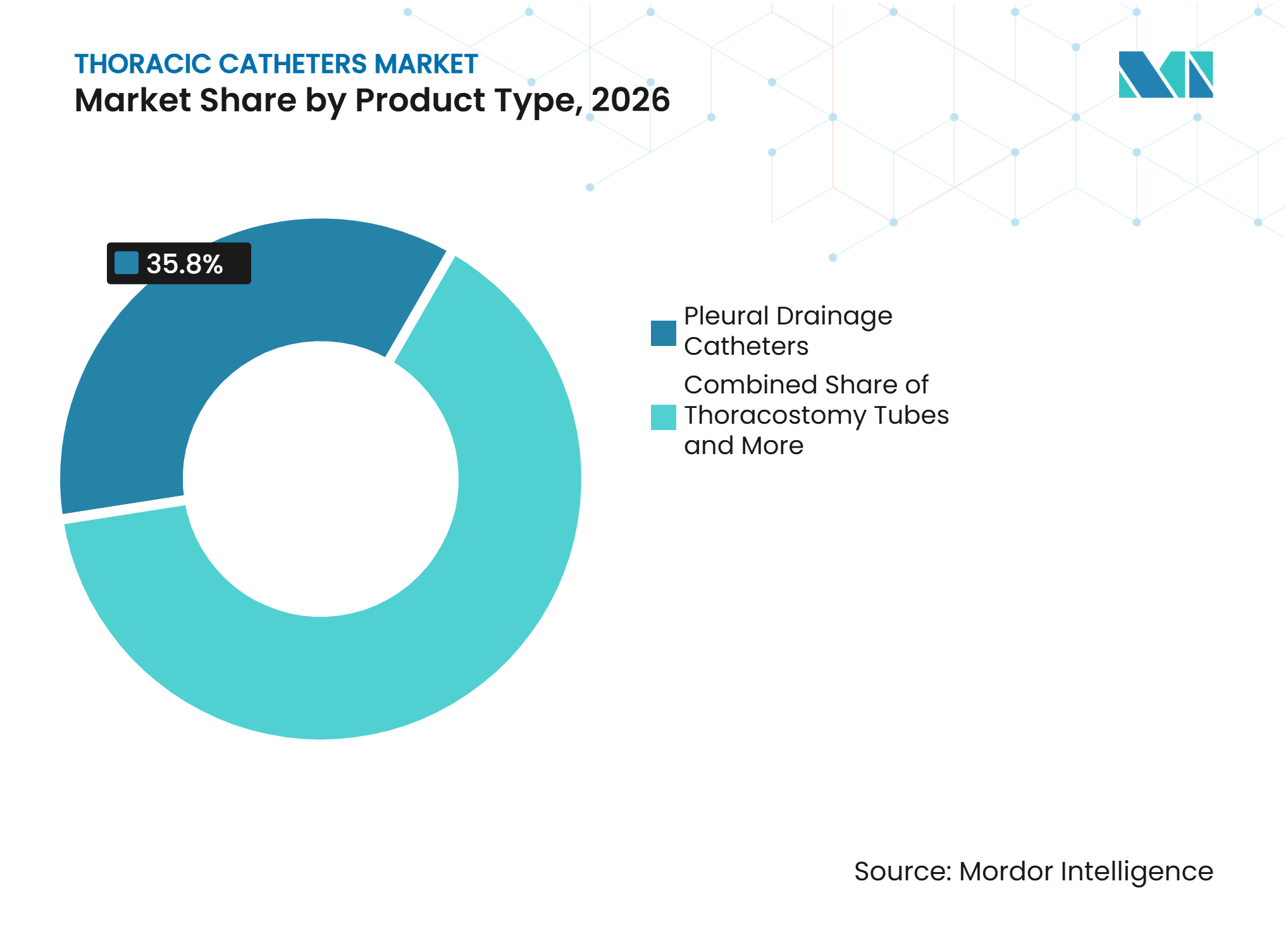
Procedure Kits Gain Momentum Alongside Pleural Drainage CathetersPleural drainage catheters held 35.84% of 2026 product revenue, accounting for the largest product position in the Thoracic catheters market. Their use is supported by frequent treatment of malignant and non-malignant pleural effusions. Indwelling tunneled catheters also support outpatient pathways for patients who need ongoing drainage. Thoracostomy tubes remain important after cardiac surgery and in emergency care. Their larger diameter remains useful for viscous, hemorrhagic, or coagulating collections. The systematic review reported a 45.6% failure rate for small-bore drains in empyema and complicated parapneumonic effusions.
Thoracostomy procedure kits and trays are forecast to grow at a 10.23% CAGR through 2032. The kits bring catheters, sterile components, and related items into a single purchasing unit. This format can standardize setup and reduce variation across inpatient and ambulatory surgical center settings. Thoracic suction catheters continue to address specialized cardiac surgery and postoperative uses. Trocar catheters are also used in palliative pleural care and have reported procedure times 5 to 8 minutes shorter than conventional large-bore intercostal drain placement and technical success above 96% in selected patients. Accessories such as connectors, water-seal chambers, and digital canisters remain important because digital platforms use dedicated single-use supplies. The Thoracic catheters industry is therefore moving from component purchasing toward a procedure-kit model that can support adoption of improved materials and coatings.



By Material:
Silicone Retains Its Lead While Polyurethane ExpandsSilicone held 40.27% of 2026 material revenue, making it the largest material category. It is valued for biocompatibility, a hypoallergenic profile, and suitability for longer indwelling periods. These features matter for tunneled pleural catheters that remain in place for weeks or months. Silicone is consequently well suited to recurring effusion management and outpatient care. Its established clinical role provides a stable base for premium catheter systems. The material remains particularly relevant when patient comfort and tissue tolerance are priorities.
Polyurethane is forecast to grow at a 10.96% CAGR through 2032. The category benefits from antimicrobial coatings, multi-durometer construction, improved radiopacity, kink resistance, and thinner walls. Avient presented thermoplastic polyurethane options for health care devices in 2025, including radiopaque formulations that can support catheter development [2]. A 2025 study found that polycaprolactone-coated polyurethane catheters loaded with ampicillin maintained antibacterial activity for 40 days and reduced bacterial counts by more than 99.9% compared with uncoated controls. PVC faces pressure from environmental concerns related to phthalate plasticizers, while latex use continues to decline because of sensitization risk and latex-free purchasing policies. Bioabsorbable materials and thermoplastic elastomers remain early-stage options for drug-eluting drainage systems in the thoracic catheters market.
By Procedure and Access Technique:
Tunneled Catheters Support Outpatient CareSurgical thoracostomy placement held 43.68% of 2026 procedure revenue. It remains central to acute trauma, post-cardiac surgery, and hemothorax care. These settings often require rapid intervention and dependable large-bore access. Surgical placement is therefore likely to remain essential even as outpatient approaches expand. Its leading position reflects the continued clinical need for drainage in severe and time-sensitive cases. The procedure remains closely tied to hospital operating rooms, intensive care units, and emergency departments.
Tunneled indwelling pleural catheter placement is forecast to grow at a 10.82% CAGR through 2032. It shifts recurrent malignant effusion care from inpatient wards toward procedure suites and home management. The American Association for Bronchology and Interventional Pulmonology reported that 81.8% of tunneled catheters were placed in procedure suites, while 51.6% were placed with local anesthesia. Advanced practice providers were involved in management at 44.4% of the surveyed programs. Seldinger-guided small-bore placement achieved a 90.3% success rate for pleural effusions, but its performance was weaker in empyema. Portability, simple use, and patient tolerability will remain important design features as the Thoracic catheters market expands into ambulatory and home-based care.
By Application:
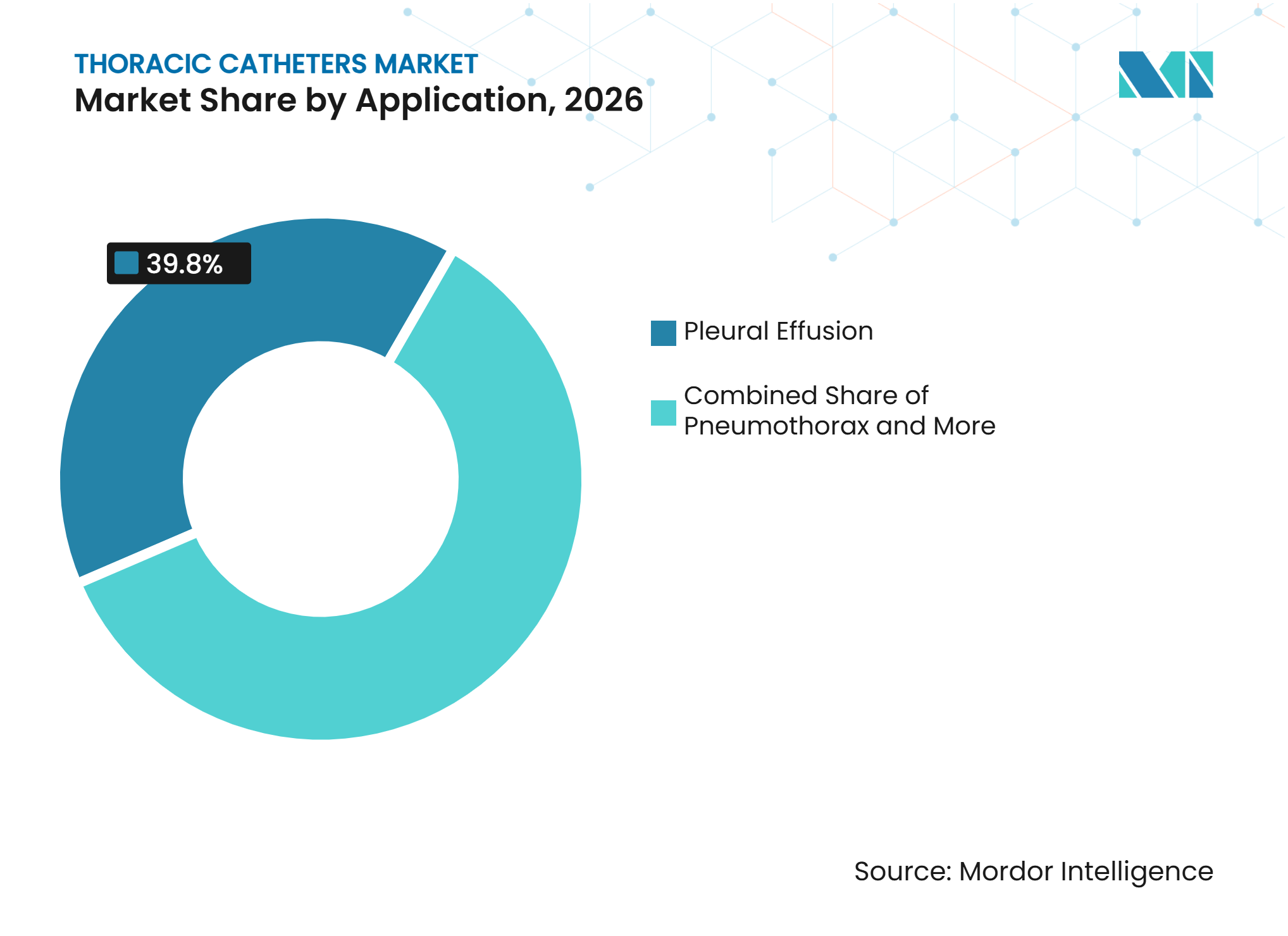
Pleural Effusion Supports Both Volume and GrowthPleural effusion accounted for 39.76% of 2026 application revenue and is forecast to grow at a 9.21% CAGR through 2032. The category covers malignant effusion, heart failure-related fluid buildup, and hepatic hydrothorax. Its broad clinical base creates both initial and repeat demand for drainage devices. Pleural effusion also accounted for the largest application position because management can continue beyond a first hospital visit. The thoracic catheters market share held by this application reflects the need for both acute and longer-term drainage solutions.
It was found that 50% of malignant pleural effusion patients needed a second pleural procedure after initial treatment. It also found that 58% of repeat procedures occurred within 2 weeks of diagnosis. Pneumothorax produces high-acuity, but often single-event demand, and Japan recorded 14,719 procedures in 2024. Hemothorax remains a setting where large-bore tubes are preferred, while empyema has high small-bore failure rates and may require escalation. Post-lobectomy drainage and trauma-associated pneumothorax create additional demand that follows thoracic surgery and emergency department activity. These clinical differences require manufacturers to retain both standard and specialized products within the thoracic catheters market.

By End User:
Hospitals Lead as Ambulatory Surgical Centers Grow FasterHospitals held 55.45% of 2026 end-user revenue. Their leading position reflects the concentration of cardiothoracic programs, intensive care units, emergency departments, and operating rooms. They manage the highest-acuity applications across the product range. Hospital systems also purchase equipment for acute care, postoperative recovery, and more complex drainage cases. This breadth makes hospitals the central customer group for the thoracic catheters market. Their purchasing decisions can also shape adoption of digital drainage platforms and procedure kits.
Ambulatory surgical centers are forecast to grow at a 9.47% CAGR through 2032. Enhanced recovery protocols are enabling selected pleural and thoracic procedures to move out of inpatient settings. Baylor Scott & White reported that 81.6% of its 386 thoracic procedures in fiscal 2025 were robotic. Specialty clinics are also developing pleural disease programs that can manage recurring tunneled catheter care. The association survey found that advanced practice providers mainly supported troubleshooting in 87.8% of programs and patient education in 78% of programs. Home health agencies and research centers represent smaller revenue pools, but they can test remote monitoring, home drainage, and direct supply models. This broadening end-user mix supports more distributed demand in the thoracic catheters market.
Geography Analysis
North America
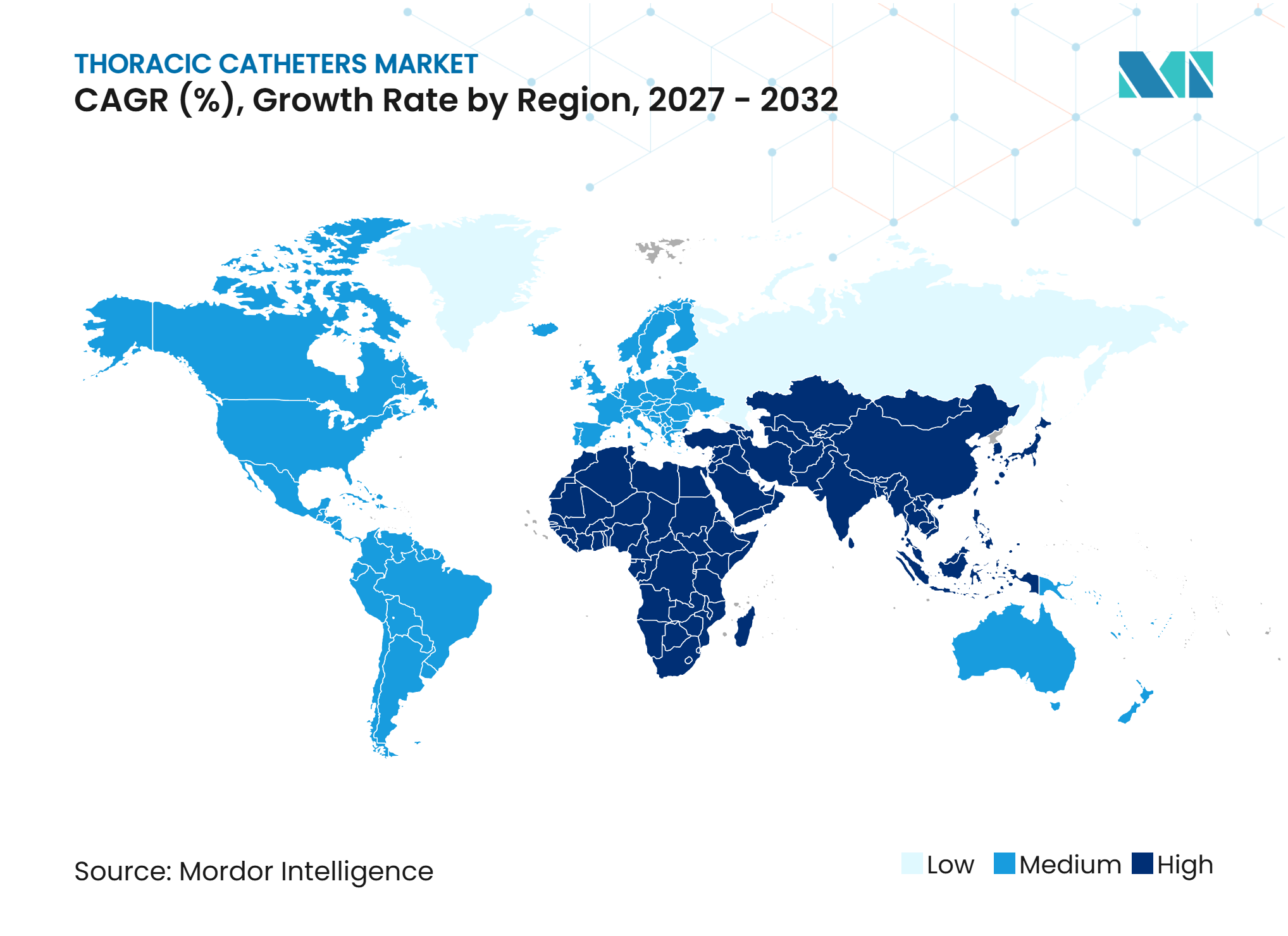
North America held 38.24% of 2026 revenue, giving the region the largest position in the Thoracic catheters market. The region has high cardiothoracic procedure volumes, payer support for hospital and outpatient drainage, and mature interventional pulmonology services. New Jersey reported 10,931 open-heart and transcatheter aortic valve replacement procedures in 2025. Cedars-Sinai reported a 1.5-day reduction in mean hospital stay after it adopted digital chest drainage for pulmonary resection. The same program reported estimated annual savings of USD 800,000, which supports procurement decisions based on care-pathway value rather than product price alone. Provincial cancer centers in Canada are expanding outpatient tunneled catheter programs for palliative malignant pleural effusion management. Credentialing needs for ultrasound-guided and tunneled placement remain a limiting factor in some community hospitals.
Asia-Pacific
Asia-Pacific is forecast to grow at a 10.04% CAGR through 2032, the highest regional growth rate in the Thoracic catheters market. Japan completed 94,961 general thoracic surgeries in 2024, with video-assisted thoracoscopic surgery representing 90% of the total. This procedure base supports early use of small-bore and digital drainage solutions. China and India are building tertiary thoracic surgery capacity, which expands demand for basic kits and specialty catheters. Higher tuberculosis and parapneumonic infection burdens in parts of these countries also sustain demand for large-bore drainage. South Korea and Australia are moving toward digital drainage through enhanced recovery protocols and procurement standards that value documented patient outcomes. Japan, South Korea, and Australia are likely to favor premium systems sooner, while China and India may retain a larger acute-care large-bore mix for longer. This split requires Thoracic catheters market participants to match product portfolios to local treatment patterns and purchasing capacity.
Europe, South America, Middle East, and Africa
Germany recorded 181,988 cardiac and vascular procedures in 2025, supporting continued drainage demand across its academic and community centers. The European Union Medical Device Regulation sets the compliance framework for medical devices, and its Health Technology Assessment Regulation began coordinated implementation in January 2025. These compliance factors raise evidence requirements and can lengthen entry timelines for new drainage systems. The United Kingdom, France, Italy, and Spain retain significant thoracic surgery activity, while German and United Kingdom academic programs support early use of coaxial drains and digital monitoring. Brazil and Argentina are widening thoracic care capacity, although tariff exposure and price sensitivity favor locally assembled or cost-engineered products. Gulf Cooperation Council countries with tertiary facilities import premium products, while many sub-Saharan systems primarily use standard chest tubes distributed through regional supply networks. The Thoracic catheters market size across these mixed geographies will depend on the balance between infrastructure investment, regulatory readiness, and access to trained clinical teams.
Competitive Landscape
Market Concentration
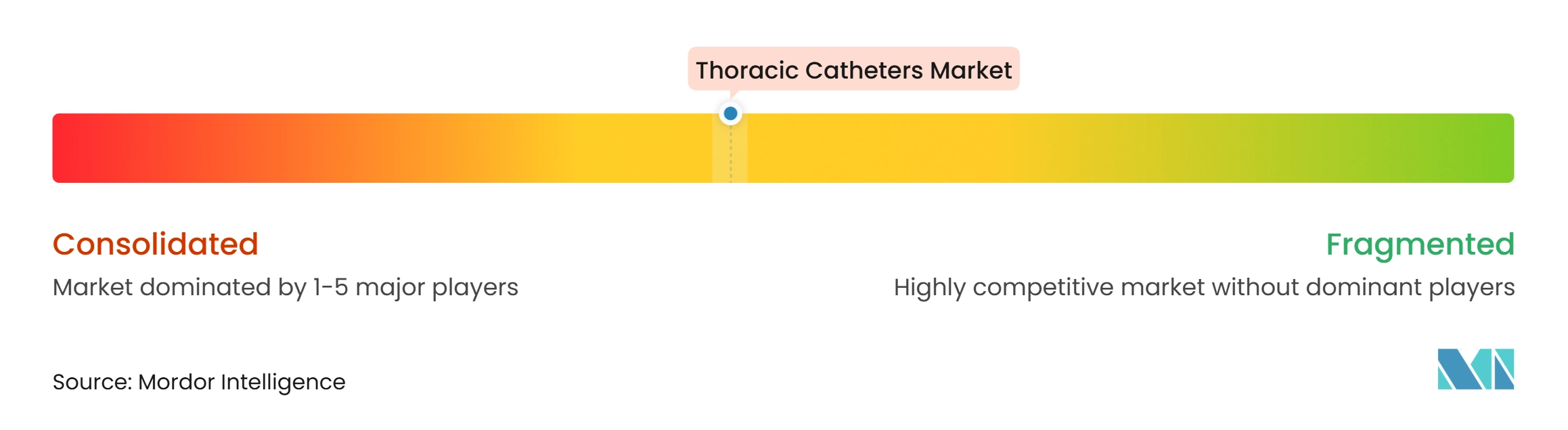
The thoracic catheters market is moderately concentrated in premium products, while the mid-market includes specialty suppliers and regional manufacturers. Larger suppliers use broader surgical consumable contracts to maintain hospital access in price-sensitive accounts. Procedure-focused companies compete through clinician education and procedure-kit development. Digital-first suppliers use capital drainage systems to establish recurring sales of proprietary disposable components. The Thoracic catheters market also has openings in outpatient and home-based tunneled catheter maintenance, ambulatory drainage after selected video-assisted procedures, and cost-adapted products for Asia-Pacific and Middle Eastern settings. These openings favor companies that can adapt products to local practice and document clinical or operational value.
Materials innovation is a separate route to differentiation. A 2025 FDA and USPTO product lifecycle record describes a thoracic catheter with a capillary-active anesthetic delivery layer on the intercostal surface of the shaft. The design aims to address post-insertion pain and may improve patient tolerance and early mobility. A 2025 research study also demonstrated prolonged antibacterial activity from ampicillin-loaded polycaprolactone-coated polyurethane catheters. These approaches focus on complications that can limit use of small-bore devices in higher-acuity cases. Suppliers that can validate better blockage or infection outcomes may have a stronger case at hospital formulary reviews. Clinical evidence is therefore as important as engineering features in the Thoracic catheters market.
Medela highlighted digital chest drainage outcomes from Cedars-Sinai at the 2025 Society of Thoracic Surgeons meeting. Teleflex maintained its Pleur-evac portfolio across straight, right-angled, and trocar configurations from 12 Fr to 40 Fr. Avient expanded its health care thermoplastic polyurethane portfolio to support catheter manufacturers seeking flexibility, radiopacity, and in-vivo durability. Argon enrolled the first patient in its CLEAN-PE study for the Cleaner Pro thrombectomy system, extending its clinical presence in catheter-based thoracic-adjacent procedures. Argon also acquired the SeQure and DraKon microcatheters, adding to its oncology catheter portfolio. These moves show that established firms are using product updates, clinical evidence, material development, and adjacent catheter portfolios to defend their positions.
Thoracic Catheters Industry Leaders
-
Teleflex Incorporated
-
Getinge AB
-
Becton, Dickinson and Company
-
Medela AG
-
Cardinal Health, Inc.
- *Disclaimer: Major Players sorted in no particular order
Thoracic Catheters Market Companies Covered in this Report
- Angiplast Private Limited
- Argon Medical Devices
- ATMOS MedizinTechnik
- B. Braun
- Beckton Dickinson
- Cardinal Health
- Cook Group
- Getinge
- ICU Medical
- Medela
- Medtronic
- Merit Medical Systems
- Poly Medicure
- Redax S.p.A.
- Rocket Medical plc
- Sinapi Biomedical
- Sterimed Group
- Teleflex
- Utah Medical Products
- Vygon
Recent Industry Developments in Thoracic Catheters Market
- August 2026: The U.S. FDA initiated a Class II device recall for Getinge PVC Thoracic Catheters (Soft PVC Right Angle) in 24FR, 28FR, 32FR, and 36FR sizes, manufactured by Atrium Medical Corporation. The recall was prompted by an out-of-specification bacterial endotoxin testing result identified in a single catheter lot. The affected lot numbers include specific units of models 8124, 8128, 8132, and 8136. Getinge advised customers to inspect inventory, quarantine affected products, and contact Getinge customer support to obtain return authorization.
- January 2025: Argon Medical Devices acquired the SeQure and DraKon microcatheters from Accurate Medical Therapeutics, a Guerbet SA asset, extending its oncology catheter portfolio. Manufacturing is being transitioned to Argon’s Athens, Texas facility, with commercialization planned for existing and new markets following the transition.
- January 2025: Medela presented Cedars-Sinai Medical Center’s digital chest drainage outcomes at the 61st Society of Thoracic Surgeons Annual Meeting in Los Angeles. Results showed a 1.5-day reduction in mean postoperative stay per pulmonary resection and estimated annual cost savings of USD 800,000.
Global Thoracic Catheters Market Report Scope
As per the report's scope, a thoracic catheter, commonly known as a chest tube, intercostal catheter, or Bülau drain, is a flexible medical tube inserted through the chest wall into the pleural space, the cavity between the lungs and the chest wall.
The Thoracic Catheters Market is segmented by product type, material, procedure and access technique, application, end user, and geography. By product type, the market is segmented into thoracostomy tubes, pleural drainage catheters, thoracic suction catheters, trocar catheters, thoracostomy procedure kits and trays, and thoracic drainage accessories. By material, the market is segmented into silicone, polyurethane, polyvinyl chloride (PVC), latex, and other advanced polymers. By procedure and access technique, the market is segmented into Seldinger-guided small-bore placement, surgical thoracostomy placement, trocar-assisted placement, and tunneled indwelling pleural catheter placement. By application, the market is segmented into pleural effusion, pneumothorax, hemothorax, empyema and complicated pleural infection, and other indications. By end user, the market is segmented into hospitals, specialty clinics, ambulatory surgical centers, and other end users. By geography, the market is segmented into North America, Europe, Asia-Pacific, the Middle East and Africa, and South America. The market report also covers estimated market sizes and trends for 17 countries across major regions worldwide. The report offers market size and forecasts in value (USD) for the above segments.
Segmentation Overview
| Thoracostomy Tubes |
| Pleural Drainage Catheters |
| Thoracic Suction Catheters |
| Trocar Catheters |
| Thoracostomy Procedure Kits and Trays |
| Thoracic Drainage Accessories |
| Silicone |
| Polyurethane |
| Polyvinyl Chloride |
| Latex |
| Other Advanced Polymers |
| Seldinger-Guided Small-Bore Placement |
| Surgical Thoracostomy Placement |
| Trocar-Assisted Placement |
| Tunneled Indwelling Pleural Catheter Placement |
| Pleural Effusion |
| Pneumothorax |
| Hemothorax |
| Empyema and Complicated Pleural Infection |
| Other Indications |
| Hospitals |
| Specialty Clinics |
| Ambulatory Surgical Centers |
| Other End Users |
| North America | United States |
| Canada | |
| Mexico | |
| Europe | Germany |
| United Kingdom | |
| France | |
| Italy | |
| Spain | |
| Rest of Europe | |
| Asia-Pacific | China |
| Japan | |
| India | |
| Australia | |
| South Korea | |
| Rest of Asia-Pacific | |
| Middle East and Africa | GCC |
| South Africa | |
| Rest of Middle East and Africa | |
| South America | Brazil |
| Argentina | |
| Rest of South America |
| By Product Type | Thoracostomy Tubes | |
| Pleural Drainage Catheters | ||
| Thoracic Suction Catheters | ||
| Trocar Catheters | ||
| Thoracostomy Procedure Kits and Trays | ||
| Thoracic Drainage Accessories | ||
| By Material | Silicone | |
| Polyurethane | ||
| Polyvinyl Chloride | ||
| Latex | ||
| Other Advanced Polymers | ||
| By Procedure and Access Technique | Seldinger-Guided Small-Bore Placement | |
| Surgical Thoracostomy Placement | ||
| Trocar-Assisted Placement | ||
| Tunneled Indwelling Pleural Catheter Placement | ||
| By Application | Pleural Effusion | |
| Pneumothorax | ||
| Hemothorax | ||
| Empyema and Complicated Pleural Infection | ||
| Other Indications | ||
| By End User | Hospitals | |
| Specialty Clinics | ||
| Ambulatory Surgical Centers | ||
| Other End Users | ||
| By Geography | North America | United States |
| Canada | ||
| Mexico | ||
| Europe | Germany | |
| United Kingdom | ||
| France | ||
| Italy | ||
| Spain | ||
| Rest of Europe | ||
| Asia-Pacific | China | |
| Japan | ||
| India | ||
| Australia | ||
| South Korea | ||
| Rest of Asia-Pacific | ||
| Middle East and Africa | GCC | |
| South Africa | ||
| Rest of Middle East and Africa | ||
| South America | Brazil | |
| Argentina | ||
| Rest of South America | ||
Key Questions Answered in the Report
What is the projected growth rate for thoracic catheters through 2032?
The Thoracic catheters market is projected to grow at an 8.08% CAGR from 2027 to 2032, rising from USD 1.19 billion in 2027 to USD 1.75 billion in 2032. This reflects expanding use in acute postoperative drainage and recurring pleural management.
Which thoracic catheter product category holds the largest share?
Pleural drainage catheters lead product revenue with a 35.84% share in 2026. Their role in treating malignant and non-malignant pleural effusions gives the category demand from both hospital-based procedures and longer outpatient care pathways.
Why are tunneled pleural catheters growing quickly?
Tunneled indwelling pleural catheter placement is forecast to grow at a 10.82% CAGR through 2032. Recurrent pleural effusion care is shifting toward procedure suites, local anesthesia, specialty clinics, and home-based drainage, which supports this treatment model.
Which material is expected to grow fastest for thoracic catheters?
Polyurethane is forecast to grow at a 10.96% CAGR through 2032. The material can support thin-wall construction, kink resistance, radiopacity, antimicrobial coatings, and formulations intended to improve drainage performance in selected clinical settings.
Which region is expected to expand fastest for thoracic drainage devices?
Asia-Pacific is forecast to grow at a 10.04% CAGR through 2032. Japan’s large thoracic surgery base supports premium adoption, while capacity development in China and India widens demand for standard and specialty drainage products.
How do digital drainage systems affect thoracic surgery care?
The randomized trials and hospital program reported shorter postoperative stays with digital drainage. These systems also support consistent removal decisions and patient mobility, while proprietary canisters can create recurring consumable demand for suppliers.