
Thermoplastic Prepreg Market Size and Share
Market Overview
| Study Period | 2022 - 2032 |
|---|---|
| Market Size (2027) | USD 1.36 Billion |
| Market Size (2032) | USD 1.93 Billion |
| Growth Rate (2027 - 2032) | 7.24 % |
| Fastest Growing Market | Asia-Pacific |
| Largest Market | Europe |
| Market Concentration | High |
Major Players *Disclaimer: Major Players sorted in no particular order Image © Mordor Intelligence. Reuse requires attribution under CC BY 4.0. | |
Thermoplastic Prepreg Market Analysis by Mordor Intelligence
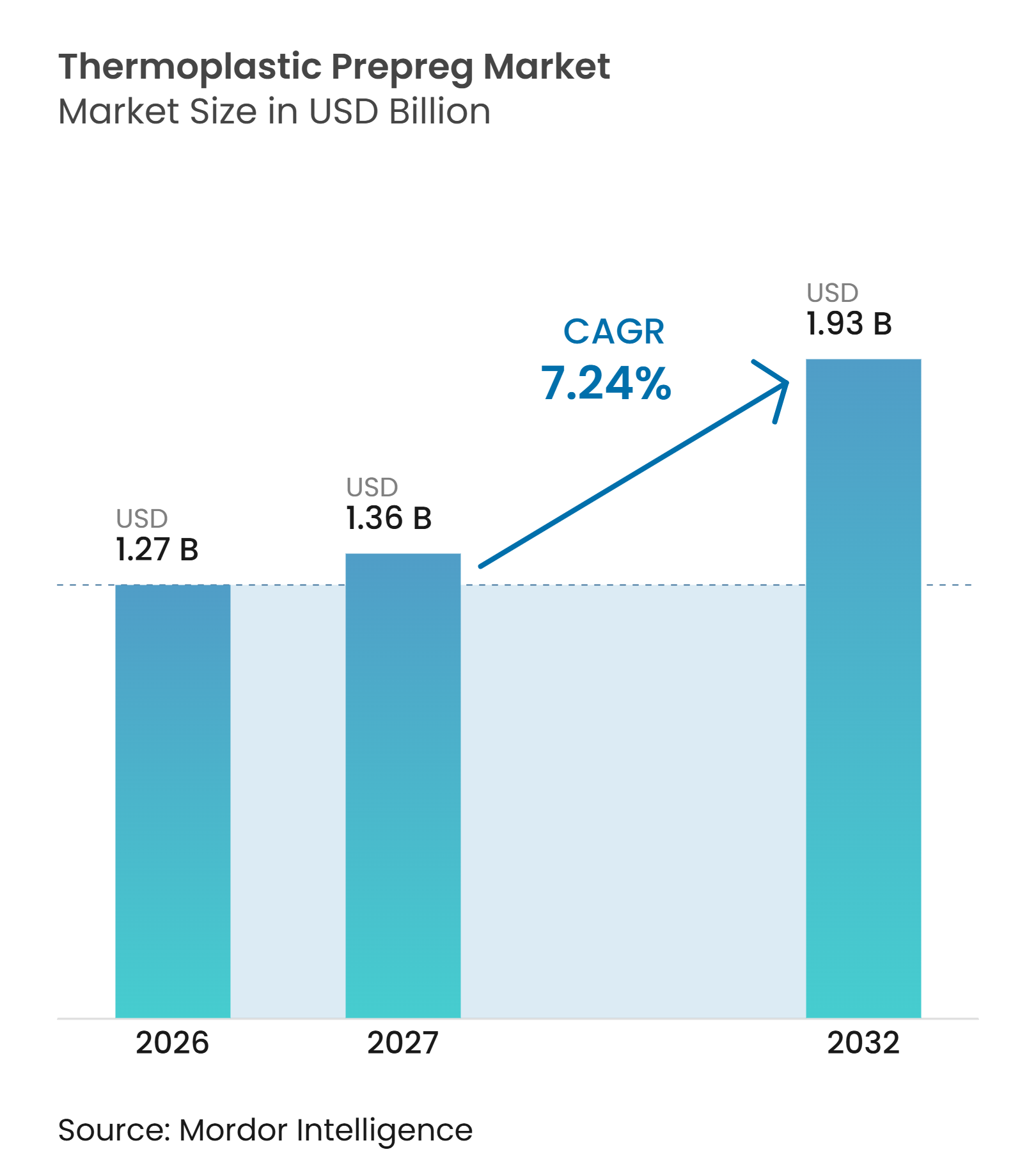
The Thermoplastic Prepreg Market size was valued at USD 1.27 billion in 2026 and is estimated to grow from USD 1.36 billion in 2027 to reach USD 1.93 billion by 2032, at a CAGR of 7.24% during the forecast period (2027-2032). Demand is moving from thermoset composites toward materials that support shorter processing cycles, welding, and recovery at end of life. Aerospace programs still set demanding structural and certification requirements, while automotive, energy, and industrial users seek faster production and lower downstream assembly costs. The commercial opportunity increasingly depends on suppliers that can qualify a material system and the associated manufacturing process together. Carbon fiber and high-performance resin systems remain central to the thermoplastic prepreg market because they address applications where weight, fatigue performance, and thermal stability are decisive. Production delays in commercial aircraft remain a near-term constraint, but certified material platforms can retain customers over long program cycles once adopted.
Key Report Takeaways
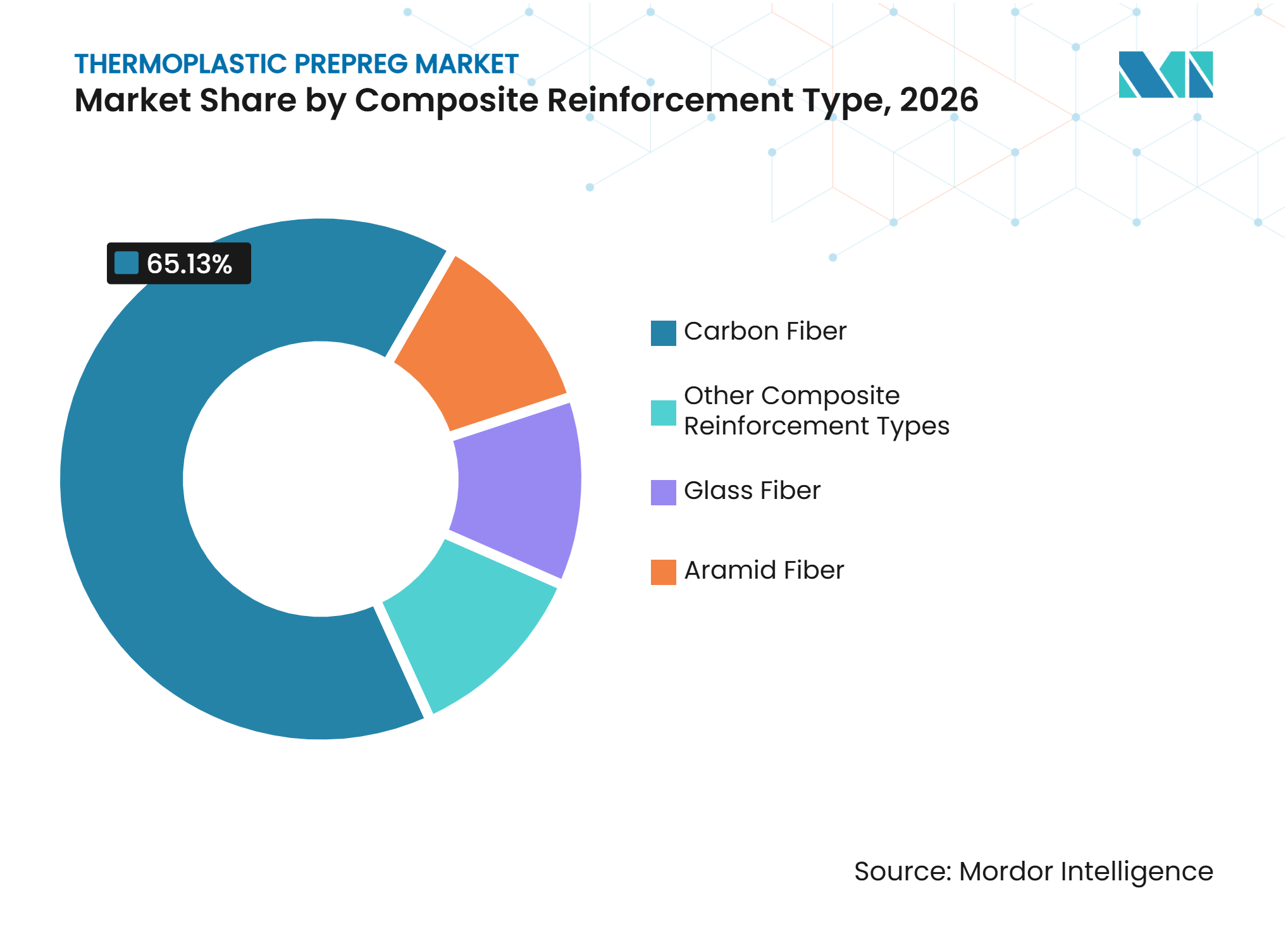
- By composite reinforcement type, carbon fiber held 65.13% of the thermoplastic prepreg market share in 2026 and is projected to advance at an 8.13% CAGR through 2032.
- By resin type, polyether ether ketone (PEEK) accounted for 34.45% of the thermoplastic prepreg market in 2026 and is projected to advance at an 8.34% CAGR through 2032.
- By form, unidirectional tapes accounted for 44.71% of the thermoplastic prepreg market in 2026 and are projected to advance at an 8.51% CAGR through 2032.
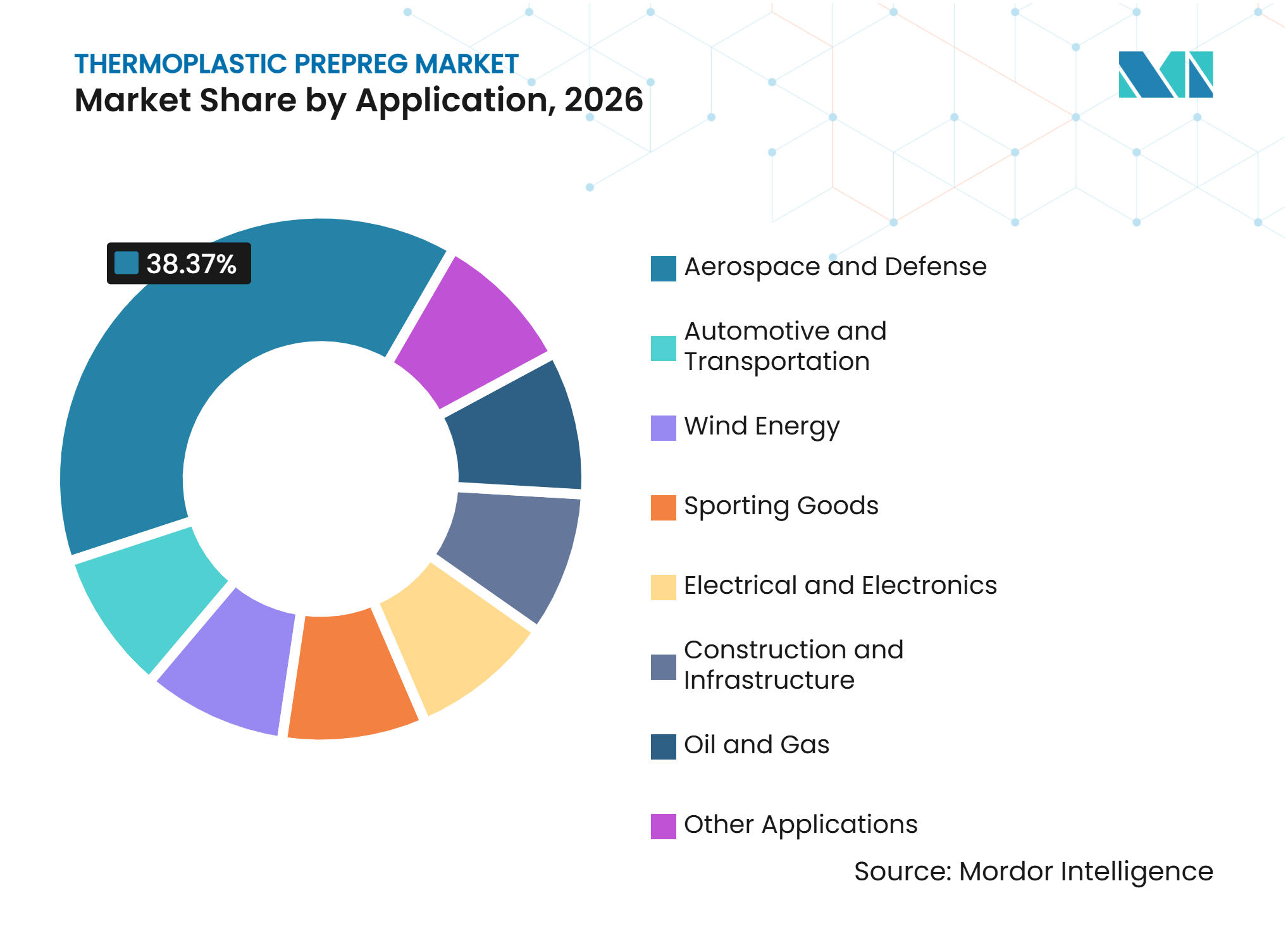
- By application, aerospace and defense accounted for 38.37% of the thermoplastic prepreg market in 2026, while automotive and transportation are projected to advance at an 8.95% CAGR through 2032.
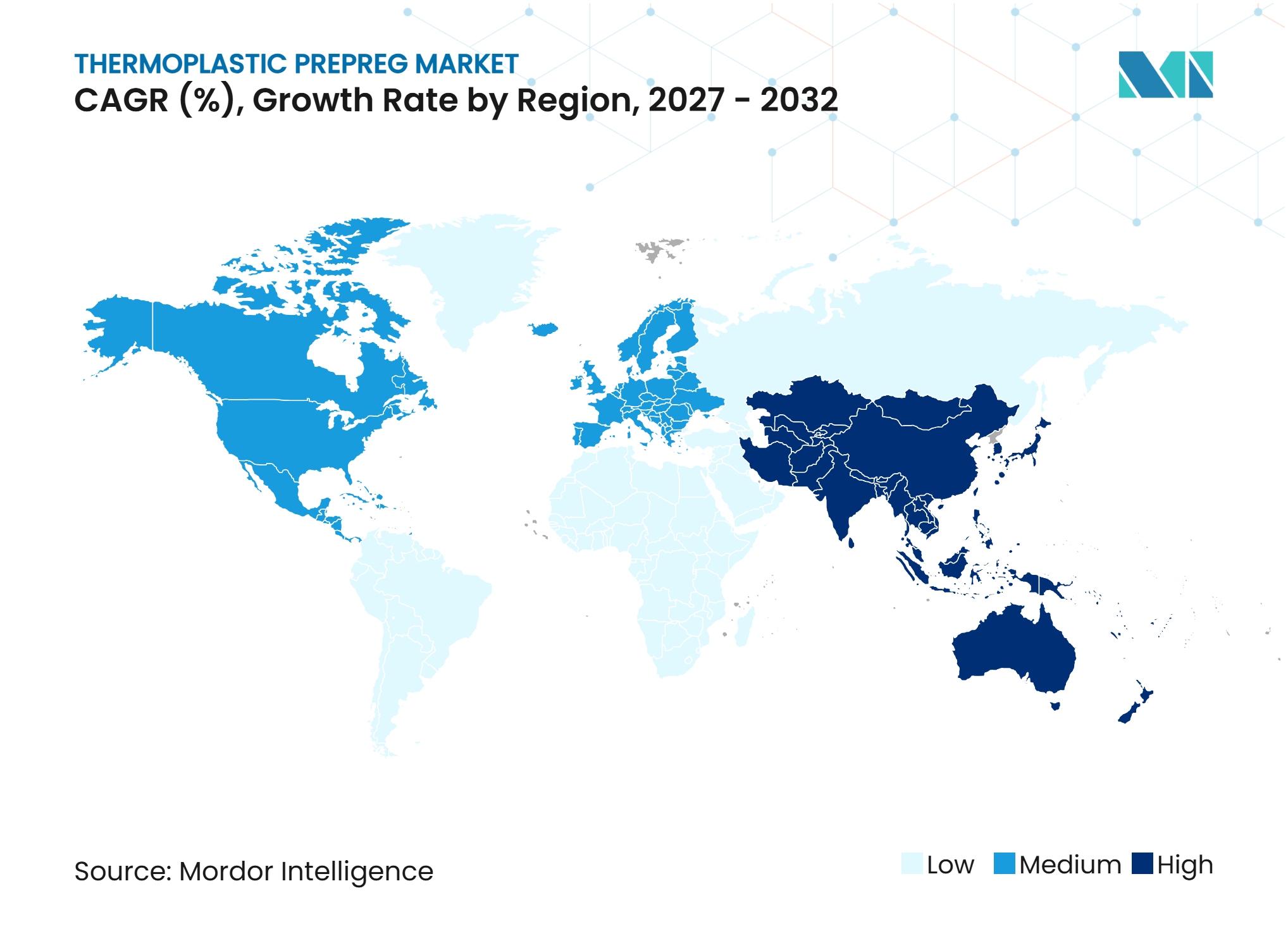
- By geography, Europe accounted for 40.06% of the thermoplastic prepreg market in 2026, while Asia-Pacific is projected to advance at an 8.77% CAGR through 2032.
Note: Market numbers in this report are based on Mordor Intelligence's proprietary estimation framework, which combines nine months of actuals with Q4 projections for base year 2026.
Market Trends and Insights
Drivers Impact Analysis of Thermoplastic Prepreg Market*
| Driver | (~) % Impact on CAGR Forecast | Geographic Relevance | Impact Timeline |
|---|---|---|---|
| Aerospace and Defense Production Ramp-Up | +2.5% | Global, with early gains in Europe (Airbus) and North America (Boeing, U.S. DoD) | Medium term (2–4 years) |
| Automotive Lightweighting and Electric Vehicle Integration | +1.8% | APAC core (China, Japan, South Korea), spillover to Europe and North America | Medium term (2–4 years) |
| Short-Cycle Thermoforming, Compression Molding, and Overmolding | +1.2% | Global, with manufacturing concentration in Germany, France, and Japan | Short term (≤ 2 years) |
| Recyclability, Weldability, and Circular-Materials Requirements | +0.8% | EU-led, with early gains in Germany and France; spillover to North America | Long term (≥ 4 years) |
| Wind-Turbine Blade Scale-Up and Fatigue-Resistance Requirements | +0.6% | Europe (offshore), China, India, and Rest of Asia-Pacific | Medium term (2–4 years) |
| Source: Mordor Intelligence | |||
Aerospace and Defense Production Ramp-Up
Thermoplastic prepregs support welded assembly methods that can reduce the use of mechanical fasteners in next-generation airframe structures. This approach addresses production-rate constraints because it can simplify the assembly of qualified parts. Toray Advanced Composites expanded the National Center for Advanced Materials Performance (NCAMP) qualifications for a low-melt Polyaryletherketone (PAEK) system in 2025, making process data available for automated fiber placement and vacuum-bag-only consolidation. The U.S. Economic Development Administration awarded USD 48 million to the American Aerospace Materials Manufacturing Center in January 2025 to support aerospace-material manufacturing capability and supply-chain development[1]. Defense programs can provide demand while commercial aircraft output remains uneven, particularly where unmanned systems and advanced aircraft require lightweight structural components. These conditions favor suppliers with established material data and manufacturing support rather than suppliers selling fiber and resin alone.
Automotive Lightweighting and Electric Vehicle Integration
Battery enclosures have become an important application for thermoplastic composite systems because the parts must combine structural performance, electrical protection, and manufacturing speed. A 2025 Society for the Advancement of Materials and Process Engineering (SAMPE) paper documented a one-shot overmolding process for a battery cover measuring 1.3 m by 1.8 m with a cycle time below 90 seconds and a component-cost reduction of up to 28% against multi-piece metal systems. Research from the University of Delaware Center for Composite Materials showed that a carbon fiber-reinforced thermoplastic B-pillar demonstrator achieved 60% lower mass than steel while meeting Federal Motor Vehicle Safety Standard 214 requirements. The American Composites Manufacturers Association reported that growing battery-electric vehicle penetration is supporting composite demand because lower vehicle weight can extend driving range. Common vehicle platforms can extend the use of a qualified composite part across electric and internal-combustion variants.
Short-Cycle Thermoforming, Compression Molding, and Overmolding
Processing speed remains a deciding factor for the thermoplastic prepreg market because it determines whether high-performance composites can fit industrial production schedules. The National Institute for Aviation Research demonstrated an overmolded electric vertical takeoff and landing structural component in February 2025 that reduced production time from 100 hours for metal machining to less than 2 minutes for forming. Arkema and Hexcel presented the HELUES process in June 2025, combining stamp forming and injection overmolding of Polyetherketoneketone (PEKK) unidirectional tape in less than 2 minutes. A 2025 Journal of Manufacturing Processes study found that an integrated stamp-forming and overmolding process reduced cycle time while retaining 95% tensile strength. These developments support manufacturing routes that do not rely on autoclaves. Lower energy use and reduced equipment dependence can help offset the price premium of prepreg materials.
Recyclability, Weldability, and Circular-Materials Requirements
Circular-material requirements are changing thermoplastic prepreg selection because recyclability and traceability increasingly affect customer and regulatory decisions. The European Commission opened consultation on the forthcoming Circular Economy Act in August 2025[2]. The European Union Ecodesign for Sustainable Products Regulation is also directing attention toward product life cycles and material information. Syensqo and Vartega established a commercial collaboration in March 2025 to convert prepreg manufacturing waste into recycled carbon fiber bundles for specialty polymer applications. Suppliers that can document material origin and manage production scrap can improve their standing with aerospace and automotive customers facing more detailed sustainability requirements. The thermoplastic prepreg market is therefore placing greater value on traceability alongside structural performance.
Restraints Impact Analysis of Thermoplastic Prepreg Market*
| Restraint | (~) % Impact on CAGR Forecast | Geographic Relevance | Impact Timeline |
|---|---|---|---|
| High Cost of High-Performance Resin and Carbon-Fiber Systems | -0.9% | Global; most acute in price-sensitive markets (South America, MEA, emerging APAC) | Long term (≥ 4 years) |
| Aerospace Qualification and Supplier-Validation Lead Times | -0.7% | North America and Europe (FAA/EASA regulated supply chains) | Medium term (2–4 years) |
| Limited Continuous-Fiber Composite Recycling Infrastructure | -0.4% | Global; most constrained in South America, MEA, and non-core APAC | Long term (≥ 4 years) |
| Source: Mordor Intelligence | |||
High Cost of High-Performance Resin and Carbon-Fiber Systems
Polyether Ether Ketone (PEEK) and Polyetherketoneketone (PEKK) systems are costly relative to standard engineering thermoplastics, which limits their use in applications with strict price targets. A 2025 SAMPE paper identified material pricing in production quantities as a constraint in selecting thermoplastic composite materials for aircraft structures. Hexcel Corporation reported that it internally produced 60% to 65% of its carbon fiber requirement, reducing its exposure to outside fiber supply. Processing PEEK and PEKK also requires specialized equipment because their melting temperatures exceed 340 °C. These cost conditions preserve a gap between technically attractive applications and commercially viable programs.
Aerospace Qualification and Supplier-Validation Lead Times
Aerospace qualification is a lengthy process because it covers resin approval, the fiber-resin interface, laminate design data, and customer-specific manufacturing requirements. A new prepreg system can require 3 to 7 years of validation before it produces recurring revenue on a certified aircraft program. Park Aerospace Corp. stated in its 2025 annual report that qualification costs can make it impractical to develop multiple sources of supply. NCAMP qualification can reduce the burden of generating shared material data, but original equipment manufacturers still require process-equivalency evidence for each platform. The Federal Aviation Administration and the European Union Aviation Safety Agency creates essential compliance pathways, yet the resulting validation periods slow commercialization. This structure protects qualified suppliers but can limit investment by companies without a long certification record.
*Our forecasts treat driver/restraint impacts as directional, not additive. The impact forecasts reflect baseline growth, mix effects, and variable interactions.
Thermoplastic Prepreg Market Segment Analysis
By Composite Reinforcement Type:
Carbon Fiber Supports High-Performance StructuresCarbon fiber held 65.13% of the thermoplastic prepreg market share in 2026 and is projected to advance at an 8.13% CAGR through 2032. Its high specific stiffness and fatigue resistance fit aerospace structures, motorsports, and high-performance automotive components. TORAY INDUSTRIES, INC. expanded carbon fiber capacity at Toray Composite Materials America through its fiscal 2025 investment program. Qualification data and consistent fiber quality remain essential for structural programs. Carbon fiber therefore remains the performance benchmark in the thermoplastic prepreg market.
Glass fiber remains relevant where manufacturers seek lower material costs and competitive processing times. These applications include wind blade spar caps, automotive underbody panels, construction products, and industrial parts. Avient Corporation introduced a 50-inch-wide continuous fiber-reinforced thermoplastic unidirectional tape in August 2025 for larger-scale industrial and construction manufacturing. Aramid and natural-fiber systems address specialized security, sports, and leisure applications. The breadth of reinforcement options enables suppliers to serve applications beyond premium aerospace structures.



By Resin Type:
PEEK Anchors High-Performance ApplicationsPolyether Ether Ketone (PEEK) accounted for 34.45% of the thermoplastic prepreg market share in 2026 and is projected to advance at an 8.34% CAGR through 2032. Its melting temperature of 343 °C and chemical resistance support aircraft panels, certified structures, medical applications, and semiconductor tooling. PEEK can meet fire, smoke, and toxicity expectations under Federal Aviation Regulations 25.853. Its established qualification position supports continued use in demanding end markets. The high processing and material costs remain a consideration for customers.
Polyetherketoneketone (PEKK) can ease some processing challenges associated with high-temperature PEEK systems while retaining a high-performance profile. Teijin Carbon and A&P Technology launched a PAEK braided fabric in October 2025 for aerospace, space, and defense parts that use vacuum-bag-only consolidation. Polyphenylene Sulfide (PPS), polyamide, and polypropylene support applications with lower service-temperature or cost requirements. Registration, Evaluation, Authorisation and Restriction of Chemicals (REACH) and end-use standards influence resin selection. This portfolio gives producers options across the thermoplastic prepreg market.
By Form:
Unidirectional Tapes Enable Automated ProductionUnidirectional tapes accounted for 44.71% of the thermoplastic prepreg market share in 2026 and are projected to advance at an 8.51% CAGR through 2032. Their directional fiber structure provides stiffness along defined load paths in wing stringers, fuselage frames, and pressure-vessel cylinders. The Multi-Functional Fuselage Demonstrator received the JEC (Journées Européennes des Composites) Composites Innovation Award in January 2025 after demonstrating thermoplastic fuselage assembly using automated processes. The demonstrator reported 10% lower weight and 10% lower production cost than comparable metallic structures. These results show why automated tape processes are central to aerospace production planning.
Woven fabric prepregs suit components with multi-directional loads and shapes that require greater drapability. Multiaxial and non-crimp fabric formats support quasi-isotropic laminates and can improve layup speed for selected structures. Wide-format tape can reduce overlap complexity and material waste in construction and industrial production. Form choice depends on load direction, part geometry, automation requirements, and acceptable scrap rates. Suppliers with several form factors can serve a broader range of customers in the thermoplastic prepreg market.
By Application:
Aerospace and Defense Lead, While Automotive and Transportation ExpandAerospace and defense accounted for 38.37% of the thermoplastic prepreg market share in 2026. This position reflects established material databases, long qualification cycles, and the high value placed on structural performance. Toray Advanced Composites completed NCAMP qualification for Cetex TC1225 LMPAEK fabric-based materials in December 2025, providing publicly available, Federal Aviation Administration-accepted material-property data. Syensqo signed a supply agreement with Vertical Aerospace in December 2025 to support the VX4 electric aircraft program. The segment benefits from established aircraft programs and newer air-mobility platforms.
Automotive and transportation are projected to advance at an 8.95% CAGR through 2032, supported by battery-enclosure programs and pressure to reduce vehicle mass. Wind energy demand is shaped by the need for validated material properties under International Electrotechnical Commission blade requirements. Sporting goods and electrical and electronics use lower-cost carbon-glass hybrid and glass-fiber systems where performance is sufficient. Avient Corporation worked with ReForm Composites Engineering in 2025 on a carbon fiber-reinforced thermoplastic dowel for concrete infrastructure. Oil and gas and other users value corrosion resistance and weldability in specific components.

Geography Analysis
Europe
Europe accounted for 40.06% of the thermoplastic prepreg market share in 2026. Airbus programs, offshore wind investment, and established prepreg manufacturing capacity support regional demand. Fraunhofer IFAM’s Multi-Functional Fuselage Demonstrator validated automated thermoplastic fuselage assembly and received a 2025 JEC award. Germany, France, and the Netherlands host important carbon fiber and prepreg operations. The European Commission’s Circular Economy Act consultation and the Ecodesign for Sustainable Products Regulation are strengthening lifecycle and traceability considerations in material selection.
Asia-Pacific
Asia-Pacific is projected to advance at an 8.77% CAGR through 2032. China’s Commercial Aircraft Corporation of China (COMAC) aircraft programs, hydrogen-pressure-vessel development in South Korea, and Japan’s mature carbon fiber sector support regional demand. Mitsubishi Chemical Group Corporation began sample delivery for a plant-derived resin prepreg series in February 2025 after it received International Sustainability and Carbon Certification (ISCC) PLUS certification. Japan’s Ministry of Economy, Trade and Industry identified carbon fiber among materials affected by export-control compliance measures in 2025. The designation underscores carbon fiber’s strategic role in aerospace, defense, and advanced industrial supply chains.
North America, South America, and Middle East and Africa
North America benefits from defense spending and public support for aerospace-material manufacturing. The U.S. Economic Development Administration’s USD 48 million Tech Hubs grant supports prototyping and supply-chain development for thermoplastic composite aerostructures. South America and Middle East and Africa have earlier-stage demand, constrained by imported-material exposure, developing compliance infrastructure, and fewer recycling facilities. These conditions continue to moderate near-term adoption across the thermoplastic prepreg market.
Competitive Landscape
Market Concentration
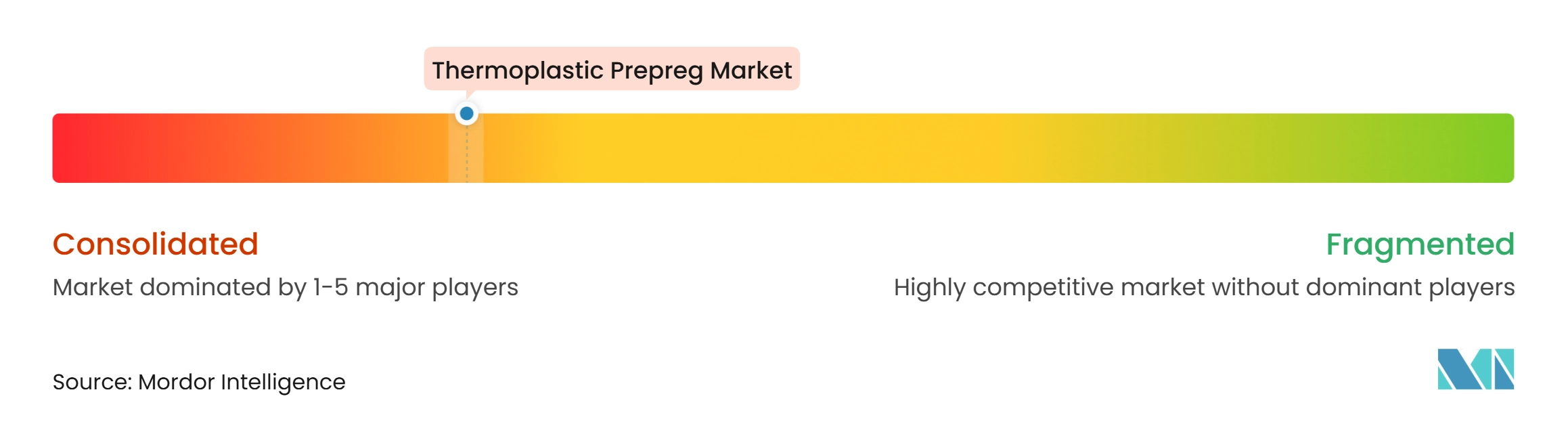
The thermoplastic prepreg market is consolidated, with top players including TORAY INDUSTRIES, INC., Teijin Limited, Hexcel Corporation, Syensqo, and Mitsubishi Chemical Group Corporation. Their integrated capabilities can shorten development cycles and give customers access to material qualification data. Hexcel Corporation’s 2025 annual report noted that aircraft-production-rate delays, including on the Airbus A350 program, affected near-term aerospace demand. This environment increases the value of long-term customer relationships and program qualifications. Smaller suppliers can compete through tailored fabrics, regional production, and manufacturing-process support.
Syensqo signed an industrialization agreement with Bell Textron in November 2025 that combined its manufacturing process with CYCOM EP2750 prepreg for high-rate aerospace part production. Kordsa Teknik Tekstil A.Ş. completed the acquisition of the remaining 39% interest in Microtex Composites S.r.l. in May 2025, strengthening its carbon fiber weaving and prepreg production capabilities. SGL Carbon continues to produce prepregs across carbon, aramid, glass, and natural fiber at its Willich site. These moves demonstrate how material breadth and vertical integration support competitive positioning.
Avient Corporation, Ensinger, PORCHER INDUSTRIES, SABIC, and Plastic Reinforcement Fabrics Ltd. add competitive depth across tapes, engineered thermoplastics, technical fabrics, and composite parts. Avient Corporation introduced wide-format unidirectional tape in 2025 for industrial and construction production. Ensinger launched engineering particle foams based on PEEK and polyethersulfone (PESU) in November 2025 for aerospace, electronics, and medical uses. Compliance with Federal Aviation Administration and European Union Aviation Safety Agency requirements favors established suppliers that can provide traceability and qualification support. The thermoplastic prepreg market is therefore competing on production support and certification depth, not only material performance.
Thermoplastic Prepreg Industry Leaders
-
TORAY INDUSTRIES, INC.
-
Teijin Limited
-
Hexcel Corporation
-
Syensqo
-
Mitsubishi Chemical Group Corporation
- *Disclaimer: Major Players sorted in no particular order
Thermoplastic Prepreg Market Companies Covered in this Report
- Avient Corporation
- Axiom Materials
- Ensinger
- Hexcel Corporation
- Kordsa Teknik Tekstil A.Ş.
- Mitsubishi Chemical Group Corporation
- Park Aerospace Corp.
- Plastic Reinforcement Fabrics Ltd.
- PORCHER INDUSTRIES
- SABIC
- SGL Carbon
- Solvay
- Syensqo
- Teijin Limited
- TORAY INDUSTRIES, INC.
Recent Industry Developments in Thermoplastic Prepreg Market
- May 2026: Toray Advanced Composites expanded the NCAMP qualification of its Toray Cetex TC1225 low-melt PAEK thermoplastic composite system to include unidirectional carbon-fiber tape prepreg reinforced with TORAYCA T700 fiber. The qualification supported the use of thermoplastic prepregs in automated tape laying and automated fiber placement processes, expanding their applicability in aerospace manufacturing.
- February 2026: SHD Composites commissioned new 1,500-mm-wide unidirectional prepreg and advanced film-coating production lines to expand its manufacturing capabilities. The investment increased its ability to supply high-performance prepreg materials in wider formats and greater production volumes, supporting aerospace, automotive, and industrial composite applications.
Global Thermoplastic Prepreg Market Report Scope
Thermoplastic prepregs are composite materials made by reinforcing thermoplastic polymer resins with fibers such as carbon, glass, or aramid. They are supplied in pre-impregnated forms, including unidirectional tapes and woven fabrics, and can be heated and consolidated into components with high strength-to-weight ratios, impact resistance, and recyclability. These materials are used in aerospace, automotive, wind energy, sporting goods, electronics, construction, and other industrial applications.
The Thermoplastic Prepreg Market is segmented by composite reinforcement type, resin type, form, application, and geography. By composite reinforcement type, the market is segmented into carbon fiber, glass fiber, aramid fiber, and other composite reinforcement types. By resin type, the market is segmented into polyether ether ketone (PEEK), polyetherketoneketone (PEKK), polyphenylene sulfide (PPS), polyamide (PA), polypropylene (PP), and other resin types. By form, the market is segmented into unidirectional tapes, woven fabric prepregs, multiaxial and non-crimp fabric prepregs, and other forms. By application, the market is segmented into aerospace and defense, automotive and transportation, wind energy, sporting goods, electrical and electronics, construction and infrastructure, oil and gas, and other applications. The report also covers the market size and forecasts for thermoplastic prepreg in 16 countries across major regions. For each segment, the market sizing and forecasts have been done on the basis of value (USD).
Segmentation Overview
| Carbon Fiber |
| Glass Fiber |
| Aramid Fiber |
| Other Composite Reinforcement Types |
| Polyether Ether Ketone (PEEK) |
| Polyetherketoneketone (PEKK) |
| Polyphenylene Sulfide (PPS) |
| Polyamide (PA) |
| Polypropylene (PP) |
| Other Resin Types |
| Unidirectional Tapes |
| Woven Fabric Prepregs |
| Multiaxial and Non-Crimp Fabric Prepregs |
| Other Forms |
| Aerospace and Defense |
| Automotive and Transportation |
| Wind Energy |
| Sporting Goods |
| Electrical and Electronics |
| Construction and Infrastructure |
| Oil and Gas |
| Other Applications |
| Asia-Pacific | China |
| India | |
| Japan | |
| South Korea | |
| ASEAN Countries | |
| Rest of Asia-Pacific | |
| North America | United States |
| Canada | |
| Mexico | |
| Europe | Germany |
| United Kingdom | |
| France | |
| Italy | |
| NORDIC Countries | |
| Russia | |
| Rest of Europe | |
| South America | Brazil |
| Argentina | |
| Rest of South America | |
| Middle East and Africa | Saudi Arabia |
| South Africa | |
| Rest of Middle East and Africa |
| By Composite Reinforcement Type | Carbon Fiber | |
| Glass Fiber | ||
| Aramid Fiber | ||
| Other Composite Reinforcement Types | ||
| By Resin Type | Polyether Ether Ketone (PEEK) | |
| Polyetherketoneketone (PEKK) | ||
| Polyphenylene Sulfide (PPS) | ||
| Polyamide (PA) | ||
| Polypropylene (PP) | ||
| Other Resin Types | ||
| By Form | Unidirectional Tapes | |
| Woven Fabric Prepregs | ||
| Multiaxial and Non-Crimp Fabric Prepregs | ||
| Other Forms | ||
| By Application | Aerospace and Defense | |
| Automotive and Transportation | ||
| Wind Energy | ||
| Sporting Goods | ||
| Electrical and Electronics | ||
| Construction and Infrastructure | ||
| Oil and Gas | ||
| Other Applications | ||
| By Geography | Asia-Pacific | China |
| India | ||
| Japan | ||
| South Korea | ||
| ASEAN Countries | ||
| Rest of Asia-Pacific | ||
| North America | United States | |
| Canada | ||
| Mexico | ||
| Europe | Germany | |
| United Kingdom | ||
| France | ||
| Italy | ||
| NORDIC Countries | ||
| Russia | ||
| Rest of Europe | ||
| South America | Brazil | |
| Argentina | ||
| Rest of South America | ||
| Middle East and Africa | Saudi Arabia | |
| South Africa | ||
| Rest of Middle East and Africa | ||
Key Questions Answered in the Report
What is the size of the thermoplastic prepreg market?
The thermoplastic prepreg market size was valued at USD 1.27 billion in 2026 and is estimated to grow from USD 1.36 billion in 2027 to reach USD 1.93 billion by 2032, at a CAGR of 7.24% during the forecast period (2027-2032).
Which composite reinforcement type held the largest share in 2026?
Carbon fiber held a 65.13% share in 2026.
Why are thermoplastic prepregs used in aerospace manufacturing?
They support welding, automated production, and lighter structures. Qualified data and certification pathways also support use in aircraft programs.
Which application is projected to advance fastest through 2032?
Automotive and transportation are projected to advance at an 8.95% CAGR through 2032, supported by battery-enclosure and lightweighting programs.