
Tapentadol Market Size and Share
Market Overview
| Study Period | 2021 - 2032 |
|---|---|
| Market Size (2027) | USD 1.43 Billion |
| Market Size (2032) | USD 1.78 Billion |
| Growth Rate (2027 - 2032) | 4.51 % |
| Fastest Growing Market | Asia-Pacific |
| Largest Market | North America |
| Market Concentration | Medium |
Major Players *Disclaimer: Major Players sorted in no particular order Image © Mordor Intelligence. Reuse requires attribution under CC BY 4.0. | |
Tapentadol Market Analysis by Mordor Intelligence
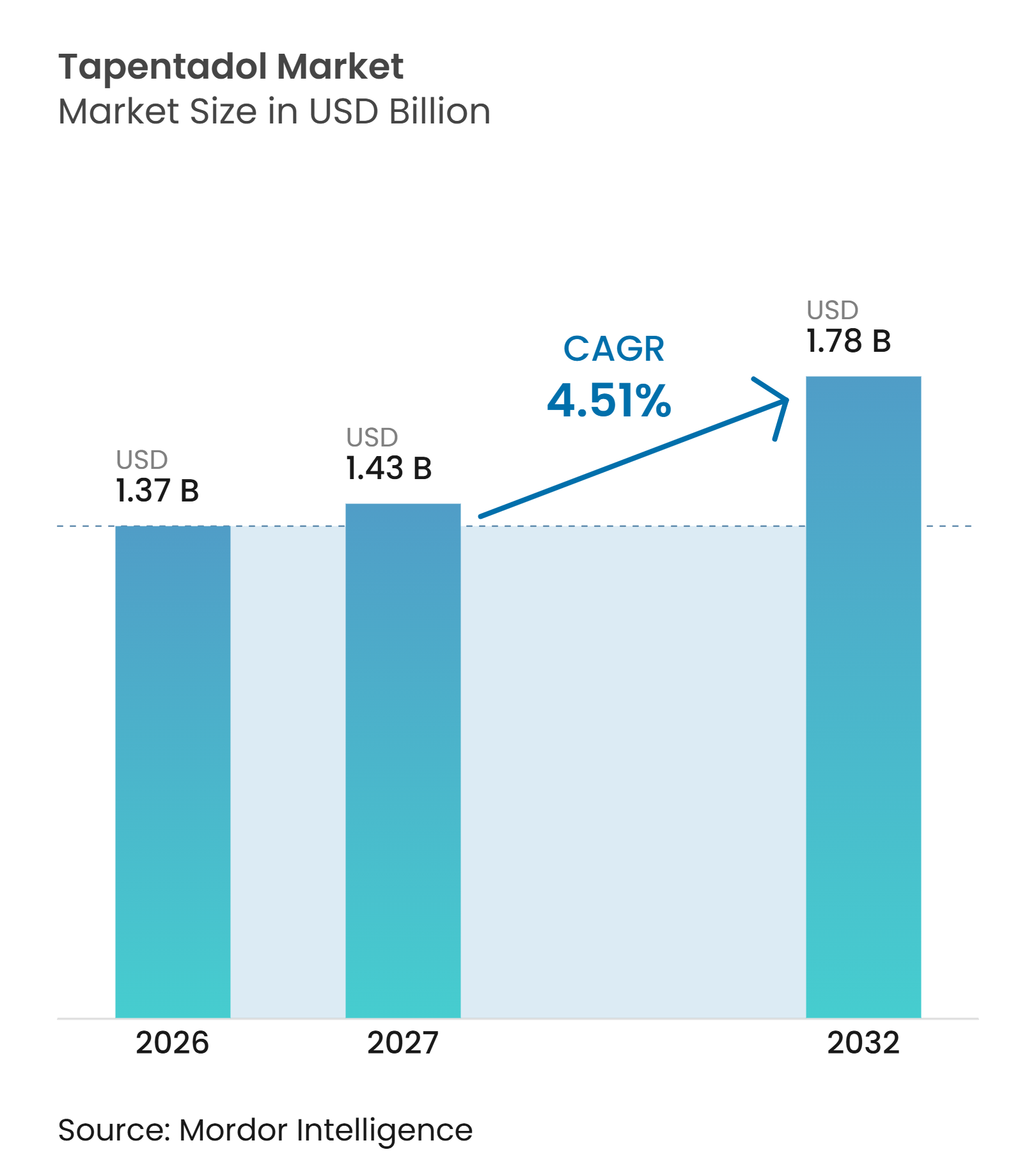
The Tapentadol Market size is projected to expand from USD 1.37 billion in 2026 and USD 1.43 billion in 2027 to USD 1.78 billion by 2032, registering a CAGR of 4.51% between 2027 and 2032.
The tapentadol market is supported by the medicine’s dual action as a mu-opioid receptor agonist and norepinephrine reuptake inhibitor, which gives clinicians an option for patients with nociceptive and neuropathic pain components. That clinical position remains relevant as regulators apply tighter controls to opioid prescribing. Generic availability is changing the commercial balance, particularly after authorized generic launches in the United States. Specialty pain services and outpatient care are becoming more important access points for patients receiving longer-term treatment. The tapentadol market also faces limits from opioid safety requirements, payer restrictions, and regulatory uncertainty around the supply chain in India.
Key Report Takeaways
- By product type, branded products held 57.9% of the tapentadol market share in 2026, while generic products are forecast to grow at a CAGR of 6.8% through 2032.
- By formulation, extended-release tablets accounted for 47.7% of the tapentadol market size in 2026 and are forecast to expand at a CAGR of 7.0% through 2032.
- By application, acute pain management held 37.9% of the tapentadol market share in 2026, while diabetic peripheral neuropathy is projected to grow at a CAGR of 6.5% through 2032.
- By distribution channel, hospital pharmacies held 39.8% share in 2026, while online pharmacies are forecast to grow at a CAGR of 8.0% through 2032.
- By end user, hospitals accounted for 49.8% share in 2026, while clinics and ambulatory care settings are forecast to grow at a CAGR of 7.9% through 2032.
- By geography, North America held 42.9% share in 2026, while Asia-Pacific is forecast to grow at a CAGR of 5.7% through 2032.
Note: Market numbers in this report are based on Mordor Intelligence's proprietary estimation framework, which combines nine months of actuals with Q4 projections for base year 2026.
Market Trends and Insights
Drivers Impact Analysis of Tapentadol Market*
| Driver | (~) % Impact on CAGR Forecast | Geographic Relevance | Impact Timeline |
|---|---|---|---|
| Aging Population and Chronic Pain Burden | +1.2% | Global, with concentrated impact in North America, Western Europe, Japan, and South Korea | Long term (≥ 4 years) |
| Extended-Release Use in Persistent and Neuropathic Pain | +0.8% | North America and Europe, with spillover to Japan and Australia | Medium term (2-4 years) |
| Generic and Authorized-Generic Product Availability | +0.7% | North America, followed by Europe and Asia-Pacific | Short term (≤ 2 years) |
| Specialist Pain-Service and Outpatient-Care Expansion | +0.5% | Asia-Pacific, with spillover to the Middle East, Africa, and South America | Medium term (2-4 years) |
| Territorial Launch Sequencing and First-Generic Availability | +0.4% | Asia-Pacific, Europe, and South America | Medium term (2-4 years) |
| Controlled-Substance Supply Redundancy and Inventory Resilience | +0.3% | Global, particularly North America and the Gulf Cooperation Council | Long term (≥ 4 years) |
| Source: Mordor Intelligence | |||
Aging Population and Chronic Pain Burden
The tapentadol market is supported by the relationship between aging, chronic pain, and multiple long-term conditions. A 2025 study across 22 countries reported unadjusted pain prevalence of 43.2% among adults aged 50 years and older. Pain prevalence increased between 2006 and 2016 in 15 of the countries included in that study. In the United States, 37.8% of older adults reported chronic pain in a 2025 review, and pain interference increased with age. A separate 2025 analysis found that aging was the largest contributor to new musculoskeletal disorder cases across 204 countries and territories. These conditions add to the need for pain management options that can be considered within complex medication regimens. Regional prescribing data also showed that tapentadol distribution was more than twice as high in southern United States states as in Pacific and New England states, aligning demand with areas of higher diabetes prevalence.
Extended-Release Use in Persistent and Neuropathic Pain
Extended-release treatment supports the tapentadol market because it serves persistent pain after other therapies have not provided adequate control. The CDC recommends immediate-release opioids instead of extended-release or long-acting products when opioid therapy is started, which limits early use of extended-release products. However, tapentadol extended-release is used in severe persistent neuropathic pain, including diabetic peripheral neuropathy, where clinical needs differ from initial opioid treatment. Pooled Phase III results reported a statistically significant reduction in pain intensity versus placebo in diabetic peripheral neuropathy patients. The European Medicines Agency completed a periodic safety assessment in September 2025 and required an update to product information, reflecting continued pharmacovigilance oversight. Swiss product information also extended Palexia retard use to children aged 6 years and older and adolescents with severe prolonged pain that is not controlled by non-opioid analgesics. The pediatric indication gives the branded extended-release product a differentiated position in a setting where generic competitors have limited pediatric evidence.
Generic and Authorized-Generic Product Availability
Generic availability is reshaping the tapentadol market through lower prices and wider payer access. Hikma launched an authorized generic of Nucynta immediate-release tablets in the United States on February 25, 2026. The company then launched the authorized generic of Nucynta ER on March 11, 2026, which was the first generic for that extended-release formulation in the United States. These launches create a transition from a branded setting to a market with authorized and independent generic participants. Subsequent approvals and filings by other manufacturers increase the likelihood of further price competition. The commercial effect is likely to be strongest in payer segments where branded prices previously limited access. The tapentadol market can therefore gain volume while branded revenue faces greater pressure. Manufacturing capacity in India remains relevant to this transition, although the supplied trade-based estimate of India’s export contribution is excluded because it does not meet the requested source standard.
Specialist Pain-Service and Outpatient-Care Expansion
Specialist pain services support the tapentadol market as chronic pain management moves beyond inpatient care. A 2025 clinical review described the growing role of multidisciplinary outpatient pain services that combine assessment, patient education, self-management, and pharmacotherapy. This setting is relevant to patients with diabetic peripheral neuropathy and chronic low-back pain who need ongoing monitoring. Clinics and ambulatory care settings are forecast to grow at a CAGR of 7.9% through 2032 in the supplied tapentadol market estimates. Online pharmacies are forecast to grow at a CAGR of 8.0% over the same period as established patients use remote refill and prescription-management services. Grünenthal and DKSH announced a September 2026 partnership to bring Palexia and other pain medicines to eight additional Asia-Pacific markets. The agreement focuses commercial access on specialist care settings in markets with controlled opioid prescribing.
Restraints Impact Analysis of Tapentadol Market*
| Restraint | (~) % Impact on CAGR Forecast | Geographic Relevance | Impact Timeline |
|---|---|---|---|
| Opioid Safety Scrutiny and Prescribing Restrictions | -1.10% | Global, most acute in North America and Western Europe | Short term (≤ 2 years) |
| Payer Controls and Formulary Management | -0.70% | North America and the European Union, spreading to Australia and the Gulf Cooperation Council | Medium term (2-4 years) |
| Formulation-Specific Regulatory and Territorial Fragmentation | -0.40% | Asia-Pacific, South America, and the Middle East and Africa | Medium term (2-4 years) |
| Pharmacovigilance Burden From Interactions and Long-Term Use | -0.30% | Global, most acute in the European Union and North America | Long term (≥ 4 years) |
| Source: Mordor Intelligence | |||
Opioid Safety Scrutiny and Prescribing Restrictions
Opioid safety requirements restrict the tapentadol market by adding clinical and administrative limits to prescribing. CDC guidance recommends the lowest effective opioid dose for the shortest appropriate duration and advises immediate-release treatment when starting opioid therapy. This approach constrains extended-release use in primary care while preserving a role for specialist treatment in selected patients. In December 2025, the FDA approved updated Nucynta labeling with safety information on toxic leukoencephalopathy, esophageal dysfunction, gabapentinoid interactions, long-term opioid risks, and overdose reversal agents[1]. The updated labeling raises the documentation and counseling burden for prescribers. The FDA requirements operate alongside broader Risk Evaluation and Mitigation Strategy obligations for opioid products. India’s potential change to its controlled-substance framework remains a material supply-chain concern, but the supplied news source does not meet the requested evidence standard and is not used as a cited factual basis here.
Payer Controls and Formulary Management
Payer rules can limit the tapentadol market even when a medicine is clinically available. Medicare Part D drug management programs apply to at-risk beneficiaries and can limit access to opioids through point-of-sale controls[2]. The same guidance notes that initial opioid prescriptions for new patients are generally limited to a 7-day supply. Generic entry can expand affordability, but it also enables payers to require a generic trial before branded treatment. This creates a second layer of control beyond opioid safety limits. In Europe, the 2025 EMA safety assessment required updates to nationally authorized product information across member states[3]. Centralized purchasing and formulary committees in Gulf healthcare systems can also delay new product access, although no external data have been added beyond the supplied draft.
*Our forecasts treat driver/restraint impacts as directional, not additive. The impact forecasts reflect baseline growth, mix effects, and variable interactions.
Tapentadol Market Segment Analysis
By Product Type:
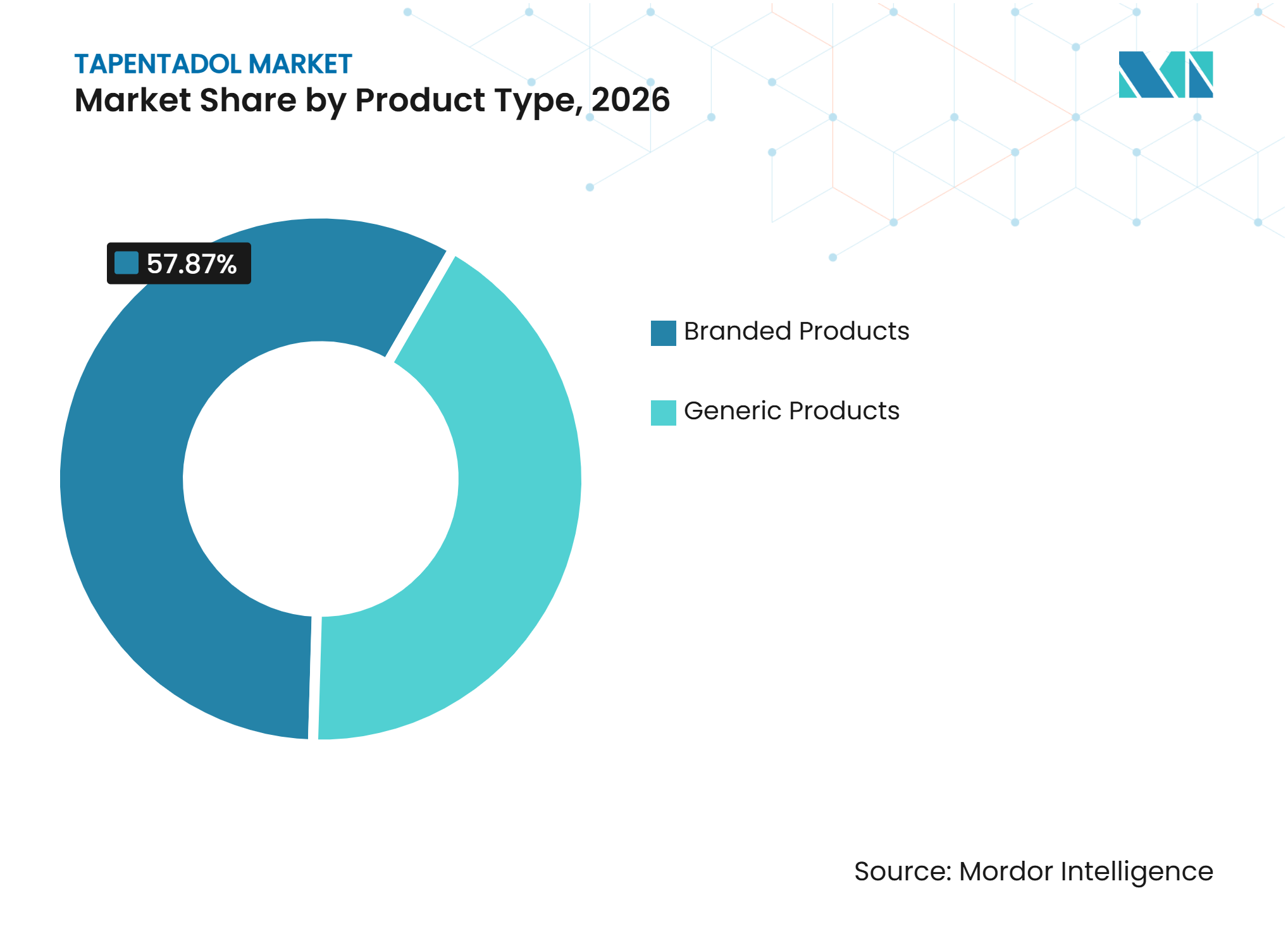
Generics Gain Ground as Branded Products Face Loss of ExclusivityBranded products held 57.9% of the tapentadol market share in 2026, while generic products are forecast to grow at a CAGR of 6.8% through 2032. The faster generic rate reflects the arrival of authorized and independent competitors in markets with clear approval routes. Hikma began the United States transition with its February 2026 authorized generic launch for Nucynta immediate-release tablets. It followed with an authorized generic Nucynta ER launch in March 2026. This sequence gives payers and pharmacies a lower-cost option while preserving a route for the existing brand holder to participate in generic volume. The tapentadol industry is therefore moving from a primarily branded model toward a broader price-based market structure.
Grünenthal retains a global branded position through Palexia, and Collegium holds the United States marketing authorization for Nucynta. Grünenthal’s supplied corporate results described loss of exclusivity for Palexia as an ongoing headwind, although the original link was not a direct company publication and is omitted from citations. Brand retention is likely to remain stronger in countries where generic pathways are less mature, or procurement is closely controlled. That pattern includes parts of the Gulf region, South America, and Asia-Pacific in the supplied draft. Generic competition will be more immediate in countries with established substitution rules and payer incentives. The branded segment consequently remains important to value, while the generic segment increasingly supports volume.



By Formulation:
Extended-Release Tablets Retain a Central Role in Persistent Pain CareExtended-release tablets accounted for 47.7% of the tapentadol market size in 2026 and are forecast to grow at a CAGR of 7.0% through 2032. Their position reflects the need for around-the-clock pain control in persistent conditions. Clinical evidence reported that tapentadol extended-release reduced pain intensity versus placebo in diabetic peripheral neuropathy patients. Generic extended-release availability is now adding a commercial factor to this clinical demand. Hikma’s March 2026 launch was the first United States generic for Nucynta ER. The combination of persistent-pain treatment and lower-cost access helps explain why this formulation leads both in share and forecast growth.
Immediate-release tablets remain the first entry point for many generic suppliers because they address acute use and have simpler established prescribing patterns. The CDC preference for immediate-release products at treatment initiation supports that role. Oral solution has a smaller commercial role but remains relevant for pediatric acute pain and patients who have difficulty swallowing tablets. Palexia retard gained Swiss pediatric labeling for patients aged 6 years and older in 2025 and 2026 product information. A 2025 United Kingdom recall of a Palexia oral solution batch in the supplied draft illustrates the quality demands of liquid opioid formulations, but it is not retained as a cited fact because no permitted primary source was provided. Good Manufacturing Practice requirements remain a core qualification factor for both brand and generic products. The tapentadol market therefore requires formulation-specific evidence, manufacturing controls, and distribution practices.
By Application:
Acute Pain Leads Current Demand While Diabetic Peripheral Neuropathy ExpandsAcute pain management held 37.9% of the tapentadol market share in 2026, while diabetic peripheral neuropathy is forecast to grow at a CAGR of 6.5% through 2032. Immediate-release tapentadol is used in acute musculoskeletal, post-surgical, and emergency pain management in the supplied draft. Diabetic peripheral neuropathy is becoming more important because diabetes creates a persistent patient base for neuropathic pain treatment. A 2025 meta-analysis of 155 studies found that diabetes-related neuropathy affected 36% of people with diabetes. The same analysis reported a higher prevalence in developing countries, which supports the significance of Asia-Pacific and the Middle East and Africa for future patient demand. A second 2025 review estimated painful diabetic peripheral neuropathy prevalence at 33.9% among patients with diabetic peripheral neuropathy.
Chronic pain management remains a separate application area and is more exposed to restrictions on long-term opioid therapy. The CDC advises clinicians to reassess benefits and risks when opioid therapy continues, particularly where functional improvement is not documented. Post-surgical pain remains a stable use case as ambulatory surgery expands in the supplied draft. Tapentadol’s tolerability profile in opioid-naive patients was cited in the supplied text, but no qualifying direct source was supplied for that statement. Vertex’s suzetrigine was identified in the draft as a potential non-opioid competitor for diabetic peripheral neuropathy, but the source material did not include a permitted company or trial citation. This prospective competitive point is therefore excluded as an externally supported factual claim. The application mix continues to reflect a balance between acute-care use and longer-duration neuropathic pain management.
By Distribution Channel:
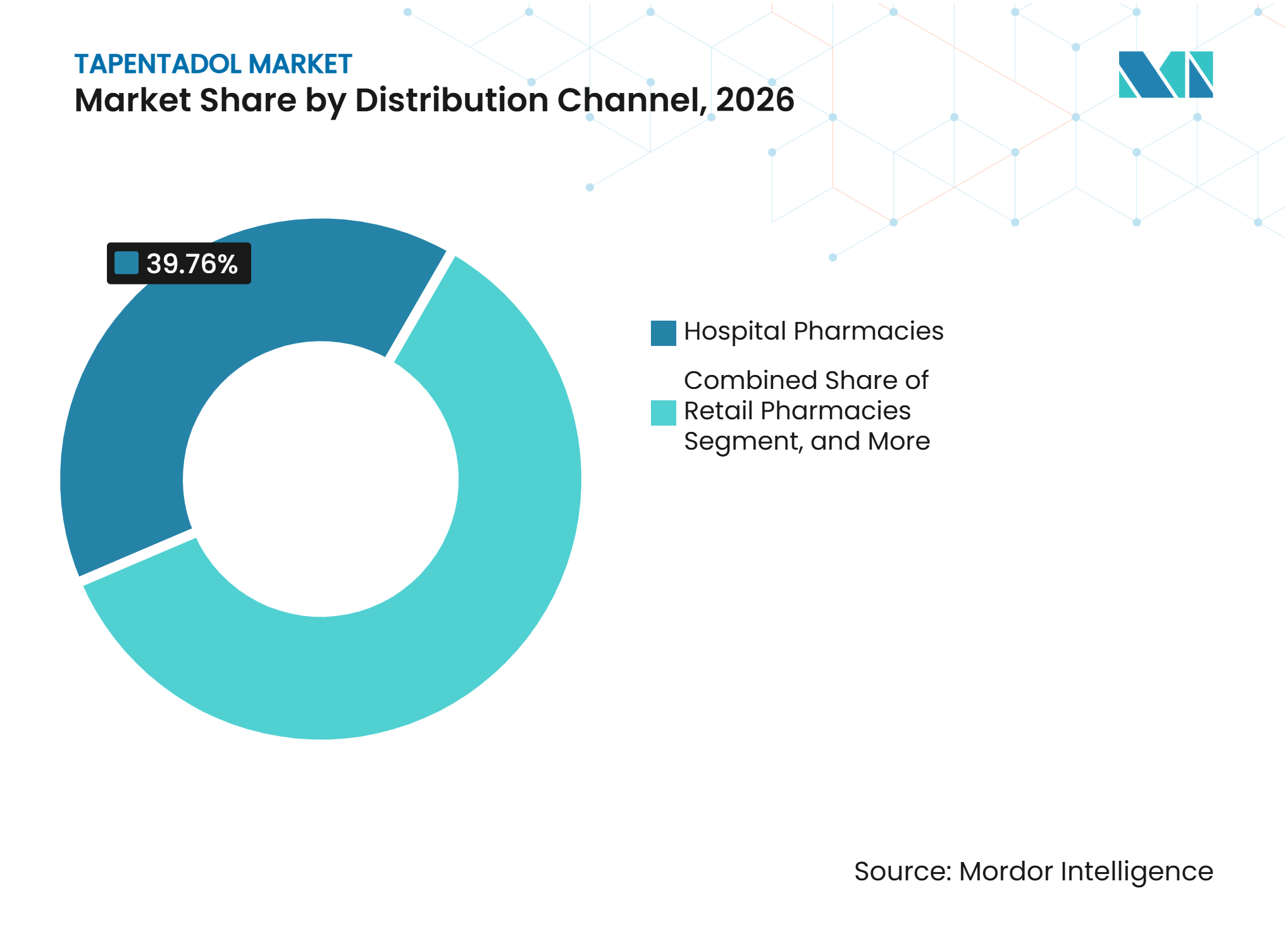
Hospital Pharmacies Lead While Online Services GrowHospital pharmacies held 39.8% of the tapentadol market share in 2026, while online pharmacies are forecast to grow at a CAGR of 8.0% through 2032. Hospitals manage acute pain, oncology pain services, and surgical recovery under direct clinical supervision. That setting aligns with the recordkeeping and controlled dispensing required for Schedule II medicines. Online channels are growing as established chronic-pain patients use telehealth-enabled refill management. The DEA issued telemedicine rules in January 2025 that continued access to telehealth treatment while retaining safeguards for controlled substances. These rules shape the framework within which practitioners can manage controlled-substance prescriptions remotely.
Online controlled-substance dispensing requires regulatory capabilities that limit participation by small operators. Federal law requires online pharmacies to comply with registration and disclosure requirements, including a valid DEA registration. State board licensure and pharmacist oversight add further operational requirements, as described in the supplied draft. These obligations favor established pharmacy chains and specialist mail-order providers. Retail pharmacies remain important for patients moving from hospital treatment to community-based care. The boundary between retail and online channels may narrow as pharmacy chains develop telepharmacy capabilities. The tapentadol market will therefore depend on both physical dispensing capacity and compliant digital prescription-management systems.

By End User:
Hospitals Remain the Main Care Setting While Clinics ExpandHospitals accounted for 49.8% of the tapentadol market share in 2026, while clinics and ambulatory care settings are forecast to grow at a CAGR of 7.9% through 2032. Hospital use is tied to acute pain, post-surgical care, and the controlled dispensing processes required for Schedule II medicines. Larger institutions can manage prescribing documentation and medication security more consistently than smaller settings. Clinics are gaining relevance as specialist physicians monitor persistent pain in outpatient settings. This model is particularly relevant to diabetic peripheral neuropathy and chronic low-back pain. The tapentadol market benefits when patients who are stable on treatment can receive regular specialist review without hospital admission.
A 2025 review of outpatient pain services emphasized assessment, education, self-management, and pharmacotherapy as linked components of care. This approach supports the movement of suitable chronic-pain patients into ambulatory care. Home care has a smaller share but remains relevant for patients on stable extended-release regimens. Specialty pharmacy delivery may help support continuity for those patients, as noted in the supplied draft. Telepharmacy can also improve access in rural areas where specialist care is limited. DEA telemedicine rules provide a federal framework, but providers must continue to meet applicable controlled-substance requirements. End-user growth is therefore linked to the ability of outpatient providers to maintain compliant monitoring and follow-up.
Geography Analysis
North America: Generic Entry Changes a Mature Prescribing Environment
North America held 42.9% of the tapentadol market share in 2026. The United States remains central to regional demand through Nucynta prescribing and its established Schedule II distribution system. Hikma introduced authorized generic immediate-release and extended-release Nucynta products in February and March 2026. These launches broaden the competitive set and increase the role of price in payer decisions. The FDA’s December 2025 labeling update adds safety language on long-term opioid risks, toxic leukoencephalopathy, esophageal dysfunction, and gabapentinoid interactions. CDC prescribing guidance and FDA labeling influence use in primary care, while specialist settings remain important for selected patients. The tapentadol market in the region is therefore shaped by generic substitution, rigorous documentation, and established hospital and specialty-pharmacy networks. Canada follows cautious opioid stewardship practices in the supplied draft, although no qualifying national source was provided for a further country-specific claim.
Asia-Pacific: Patient Demand Grows Alongside Regulatory and Access Differences
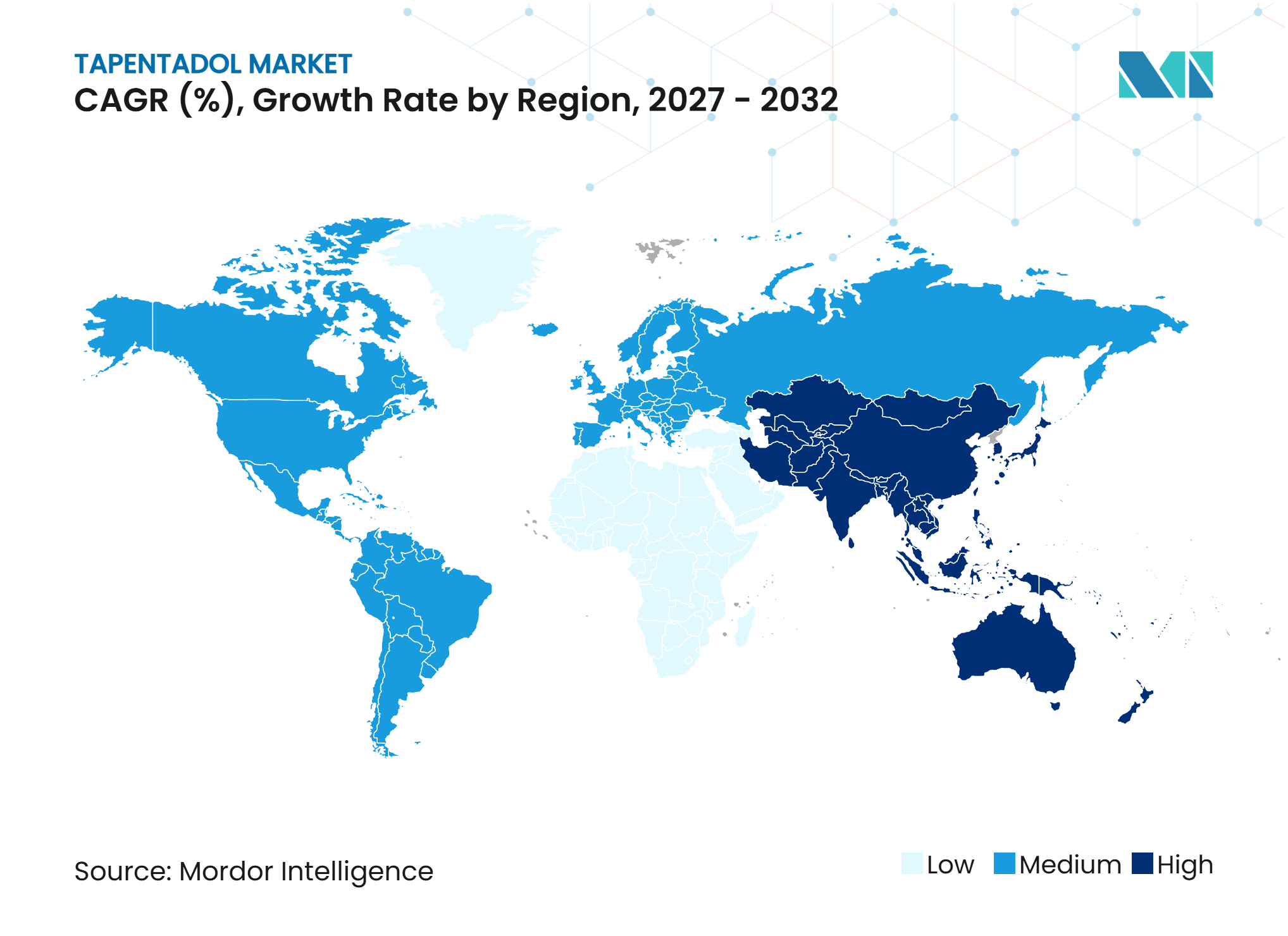
Asia-Pacific is forecast to grow at a CAGR of 5.7% through 2032, the highest regional rate in the tapentadol market. Japan and Australia have established specialist prescribing systems for oncology and musculoskeletal pain. Australia’s Therapeutic Goods Administration registered Lupin tapentadol hydrochloride 50 mg immediate-release tablets in September 2026. The registration expands generic competition within a controlled-medicine environment. China has a substantial chronic-pain population, and a 2025 study reported pain prevalence of 56.5% among Chinese adults aged 60 years and older. The study also identified a positive association between multimorbidity and pain. Grünenthal and DKSH announced a partnership in September 2026 to bring pain medicines to eight additional Asia-Pacific markets, with a focus on specialist care channels. The region combines higher patient need with country-specific controlled-substance, reimbursement, and pricing requirements.
Europe, South America, and the Middle East and Africa: Market Access Varies by Regulation and Infrastructure
Europe has an established tapentadol base, supported by national reimbursement pathways and Grünenthal’s broad Palexia presence in the supplied draft. The United Kingdom received its first generic immediate-release launch in August 2025, adding 50 mg, 75 mg, and 100 mg tablet options. The EMA’s 2025 periodic safety assessment required product-information updates across nationally authorized European Union products. These compliance factors require marketing authorization holders to coordinate national filings, even when the safety review does not indicate a new escalated risk. South America has growth potential in larger commercial markets such as Brazil and Argentina, but the supplied draft identifies uneven controlled-substance distribution and healthcare infrastructure as continuing limits. Gulf Cooperation Council markets rely heavily on government hospital procurement and formulary committees. West African access is affected by concerns over unauthorized exports described in the supplied text, though no permitted primary source was supplied to retain those details as cited claims. Across these mixed geographies, local procurement and regulatory capacity determine whether product availability translates into use.
Competitive Landscape
Market Concentration
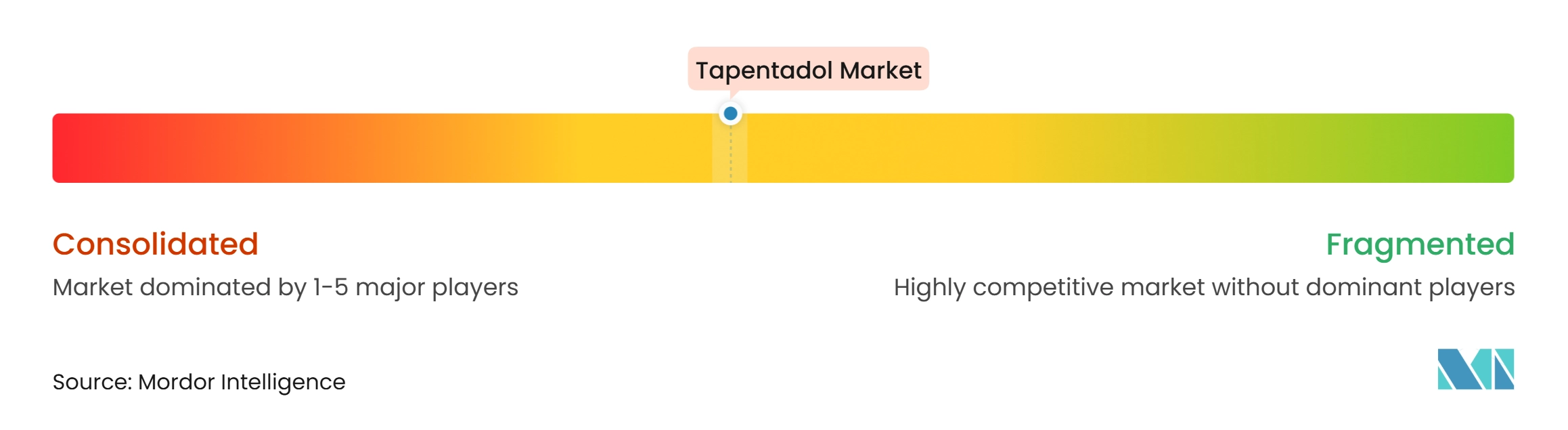
The tapentadol market combines a broad branded footprint with a growing group of generic suppliers. Grünenthal maintains the international Palexia franchise and has commercialized its pain portfolio through affiliates and partners in the supplied draft. Its September 2026 collaboration with DKSH expands access to eight Asia-Pacific markets. Collegium holds the United States Nucynta marketing authorization, while Hikma has introduced authorized generic alternatives. Hikma’s February 2026 immediate-release launch and March 2026 extended-release launch established the first generic products for these United States formulations. This model allows the product franchise to retain a role in generic volume while branded prices face pressure.
Independent generic manufacturers can create deeper price competition after initial authorized-generic entry. The supplied draft identifies Sun Pharmaceutical, Aurobindo Pharma, Lupin, Zydus Lifesciences, Teva, Epic Pharma, MSN, Novadoz, and Humanwell as relevant participants or potential participants. Individual product status should be assessed by country and formulation because approvals are territorial. Lupin’s Australian immediate-release registration is a confirmed example of this country-level expansion. Consilient Health’s 2025 United Kingdom launch is another confirmed example. Companies that can support quality, controlled distribution, and regulatory filings have an advantage as competition increases. The FDA and EMA safety frameworks also place a premium on established pharmacovigilance capabilities.
Product differentiation remains strongest in extended-release treatment, pediatric labeling, and specialist outpatient care. Swiss information for Palexia retard includes use in children aged 6 years and older and adolescents with severe prolonged pain not controlled by non-opioid analgesics. This type of evidence-backed labeling can be harder for generic suppliers to match quickly. The clinical evidence base for diabetic peripheral neuropathy also supports the extended-release franchise in specialist practice. At the same time, opioid safety concerns can favor non-opioid alternatives where appropriate. The supplied draft names a non-opioid development candidate as a potential future threat, but does not provide a qualifying company or trial source and it is therefore excluded from the factual comparison. Competitive positions will depend on price, formulation evidence, regulatory capability, and the ability to work with payer and controlled-substance requirements.
Tapentadol Industry Leaders
-
Collegium Pharmaceutical, Inc.
-
Grünenthal GmbH
-
Hikma Pharmaceuticals PLC
-
Teva Pharmaceutical Industries Ltd.
-
Sun Pharmaceutical Industries Limited
- *Disclaimer: Major Players sorted in no particular order
Tapentadol Market Companies Covered in this Report
- Amneal Pharmaceuticals
- Apotex
- Aristo Pharmaceuticals Pvt. Ltd.
- Aurobindo Pharma
- Centurion Laboratories Private Limited
- Collegium Pharmaceutical, Inc.
- Dr. Reddy’s Laboratories
- Eris Lifesciences Limited
- Grünenthal GmbH
- Hetero Drugs Limited
- Hikma Pharmaceuticals
- Intas Pharmaceutical
- Ipca Laboratories Limited
- Johnson & Johnson
- Lupin
- Macleods Pharmaceuticals Ltd.
- Sandoz Group
- Sun Pharmaceuticals Industries
- Teva Pharmaceutical Industries
- Torrent Pharmaceuticals
- Virupaksha Organics Pvt. Ltd.
- Zydus Lifesciences Limited
Recent Industry Developments in Tapentadol Market
- September 2026: Grünenthal GmbH announced a commercial partnership with DKSH to distribute Palexia (tapentadol) alongside three other Grünenthal pain medicines across eight new Asia-Pacific markets. The agreement extends Grünenthal's commercial infrastructure beyond its direct affiliate network, explicitly targeting specialist pain care settings in markets where regulatory frameworks constrain broad opioid access. This represents the company's largest Asia-Pacific commercial expansion for Palexia in the post-generic entry phase of its lifecycle.
- March 2026: Pharmaceuticals USA launched the authorized generic of Nucynta ER, tapentadol extended-release, in the United States on March 11, 2026. The company confirmed that it was the first generic for this formulation in the United States market.
- February 2026: Hikma Pharmaceuticals USA launched the authorized generic of Nucynta, tapentadol IR, in the United States on February 25, 2026.
Global Tapentadol Market Report Scope
According to the report’s scope, tapentadol is a prescription opioid pain reliever used to treat moderate to severe acute or chronic pain. It can cause dependence, respiratory depression, and other serious side effects, so it should be used only as prescribed.
The tapentadol market is segmented into product type, formulation, application, end user, distribution channel, and geography. By product type, the market is segmented into branded products and generic products. By formulation, the market is segmented into immediate-release tablets, extended-release tablets, and oral solution. By application, the market is segmented into acute pain management, chronic pain management, diabetic peripheral neuropathy, and post-surgical pain. By end user, the market is segmented into hospitals, clinics and ambulatory care, home care, and other end users. By distribution channel, the market is segmented into hospital pharmacies, retail pharmacies, and online pharmacies.
Segmentation Overview
| Branded Products |
| Generic Products |
| Immediate-Release Tablets |
| Extended-Release Tablets |
| Oral Solution |
| Acute Pain Management |
| Chronic Pain Management |
| Diabetic Peripheral Neuropathy |
| Post-Surgical Pain |
| Hospital Pharmacies |
| Retail Pharmacies |
| Online Pharmacies |
| Hospitals |
| Clinics and Ambulatory Care |
| Home Care |
| Other End Users |
| North America | United States |
| Canada | |
| Mexico | |
| Europe | Germany |
| United Kingdom | |
| France | |
| Italy | |
| Spain | |
| Rest of Europe | |
| Asia-Pacific | China |
| Japan | |
| India | |
| Australia | |
| South Korea | |
| Rest of Asia-Pacific | |
| Middle East and Africa | GCC |
| South Africa | |
| Rest of Middle East and Africa | |
| South America | Brazil |
| Argentina | |
| Rest of South America |
| By Product Type | Branded Products | |
| Generic Products | ||
| By Formulation | Immediate-Release Tablets | |
| Extended-Release Tablets | ||
| Oral Solution | ||
| By Application | Acute Pain Management | |
| Chronic Pain Management | ||
| Diabetic Peripheral Neuropathy | ||
| Post-Surgical Pain | ||
| By Distribution Channel | Hospital Pharmacies | |
| Retail Pharmacies | ||
| Online Pharmacies | ||
| By End User | Hospitals | |
| Clinics and Ambulatory Care | ||
| Home Care | ||
| Other End Users | ||
| Geography | North America | United States |
| Canada | ||
| Mexico | ||
| Europe | Germany | |
| United Kingdom | ||
| France | ||
| Italy | ||
| Spain | ||
| Rest of Europe | ||
| Asia-Pacific | China | |
| Japan | ||
| India | ||
| Australia | ||
| South Korea | ||
| Rest of Asia-Pacific | ||
| Middle East and Africa | GCC | |
| South Africa | ||
| Rest of Middle East and Africa | ||
| South America | Brazil | |
| Argentina | ||
| Rest of South America | ||
Key Questions Answered in the Report
What is driving demand for tapentadol through 2032?
The supplied forecast projects a 4.5% CAGR through 2032. Aging populations, chronic pain, diabetic peripheral neuropathy, generic availability, and outpatient pain care support demand.
Which tapentadol product type is growing fastest?
Generic products are forecast to grow at a CAGR of 6.8% through 2032, following authorized-generic and other generic product entries.
Why are extended-release tablets important in tapentadol treatment?
Extended-release tablets held 47.7% share in 2026 and are forecast to grow at a CAGR of 7.0% through 2032. They are used for persistent pain, including diabetic peripheral neuropathy.
Which application is expanding fastest for tapentadol?
Diabetic peripheral neuropathy is forecast to grow at a CAGR of 6.5% through 2032. A 2025 meta-analysis found diabetes-related neuropathy in 36% of people with diabetes.
Which region has the highest tapentadol growth outlook?
Asia-Pacific is forecast to grow at a CAGR of 5.7% through 2032, supported by chronic-pain needs, aging populations, and country-specific product expansion.
How do opioid regulations affect tapentadol access?
CDC guidance, FDA labeling, payer controls, and controlled-substance dispensing rules can limit initiation and add monitoring requirements, while specialist care maintains access for selected patients .