
Synthetic Natural Gas Market Size and Share
Market Overview
| Study Period | 2022 - 2032 |
|---|---|
| Market Size (2027) | USD 37.16 Billion |
| Market Size (2032) | USD 89.61 Billion |
| Growth Rate (2027 - 2032) | 19.25 % |
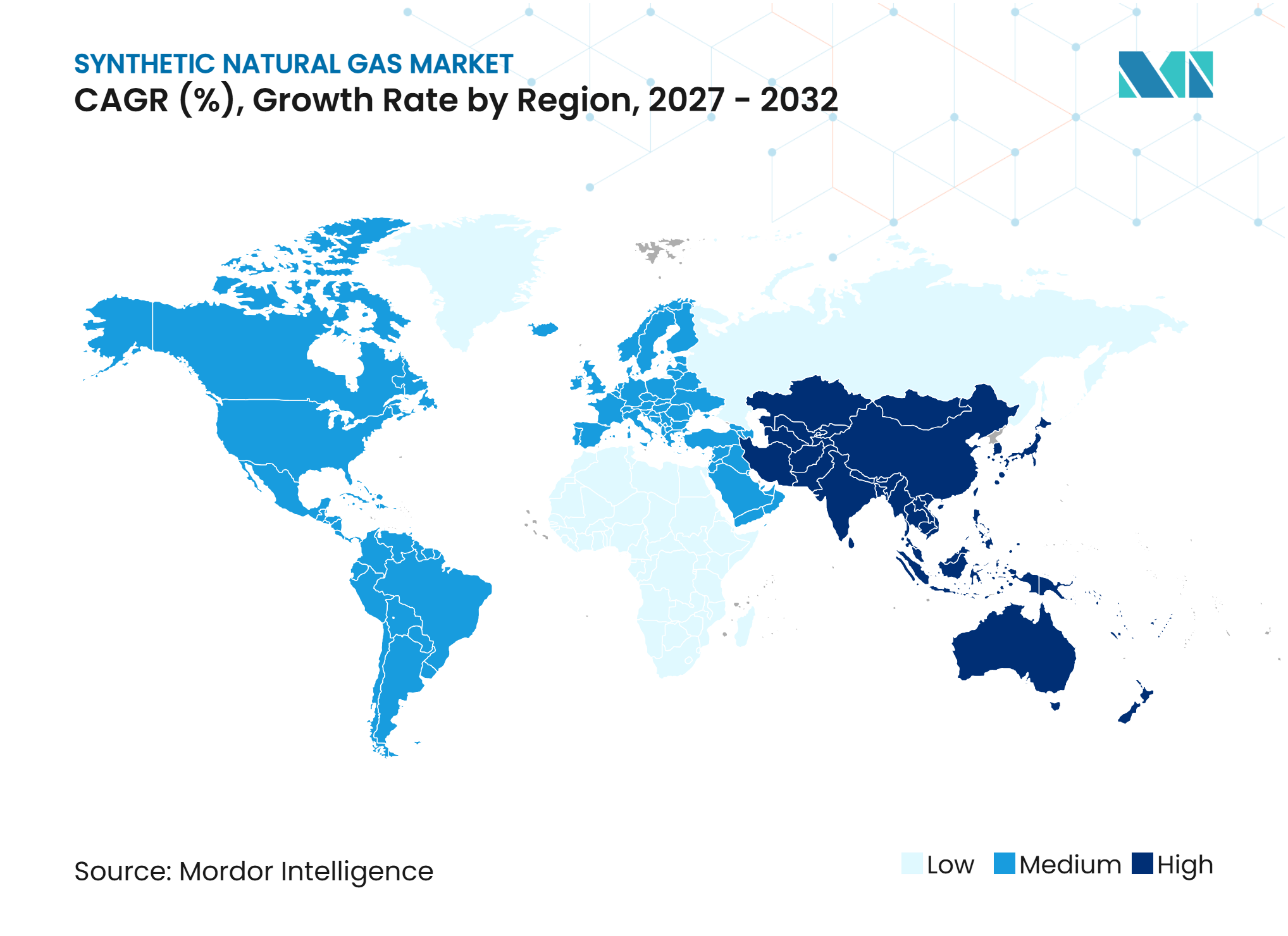
| Fastest Growing Market | Asia-Pacific |
| Largest Market | North America |
| Market Concentration | Medium |
Major Players *Disclaimer: Major Players sorted in no particular order Image © Mordor Intelligence. Reuse requires attribution under CC BY 4.0. | |
Synthetic Natural Gas Market Analysis by Mordor Intelligence
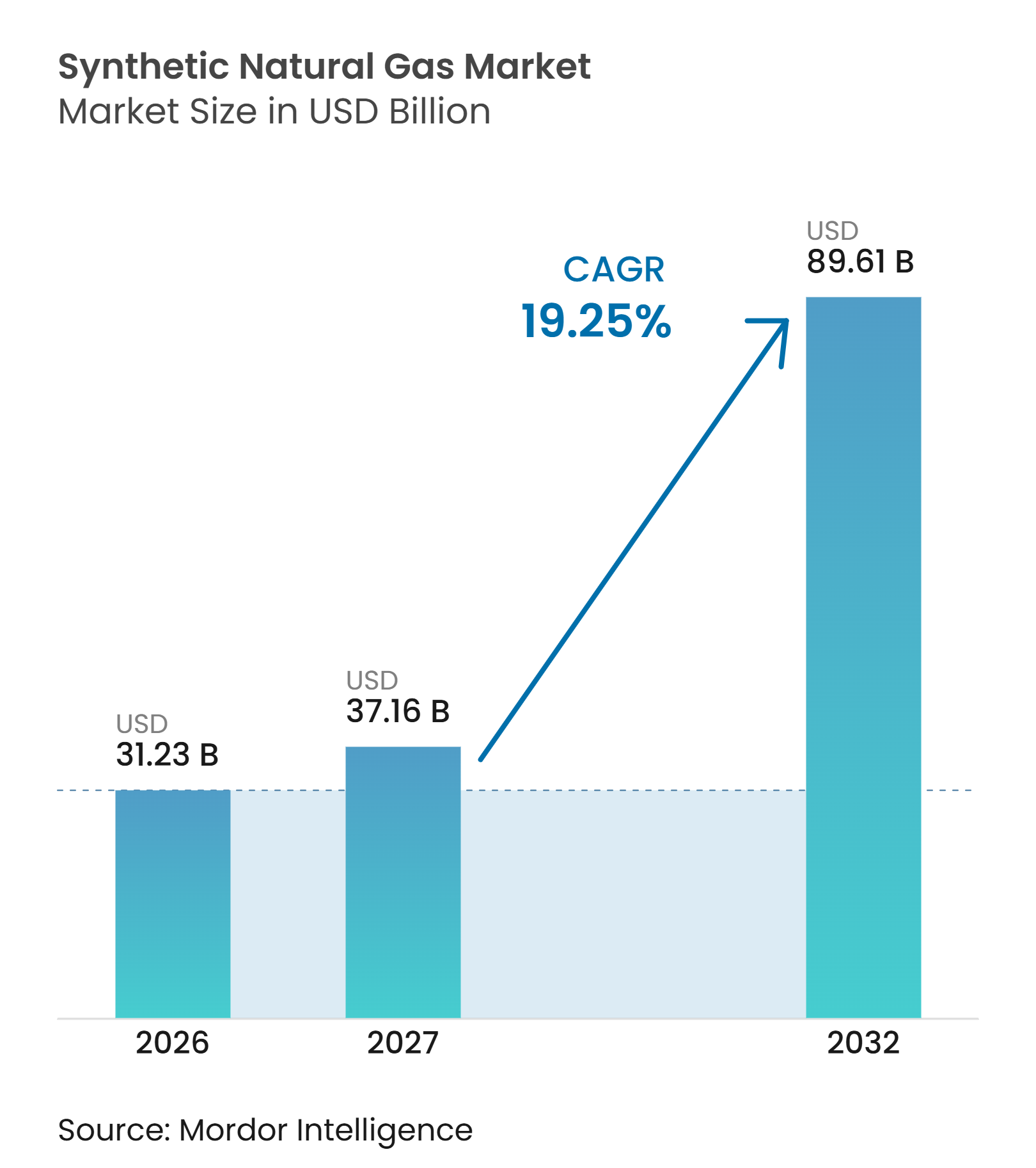
The Synthetic Natural Gas Market size is projected to expand from USD 31.23 billion in 2026 and USD 37.16 billion in 2027 to USD 89.61 billion by 2032, registering a CAGR of 19.25% between 2027 and 2032. The synthetic natural gas market is supported by two different demand patterns, with coal-to-gas projects advancing energy security in Asia while biomethane and power-to-gas projects support decarbonization in Europe and North America. China is accelerating coal-to-gas capacity, while Japan and Europe are creating policy frameworks for pipeline injection of renewable gas. Heavy-duty transport is also widening demand for renewable gas, particularly where fleet operators can use existing fueling and pipeline infrastructure. Technology suppliers and engineering firms are competing to serve projects across these pathways, although high hydrogen costs and slow permitting continue to limit some power-to-gas investments. The synthetic natural gas market is therefore likely to draw near-term volume from coal-based and biomethane supply, with e-methane becoming more material later in the forecast period.
Key Report Takeaways
- By production technology, catalytic methanation held 57.3% revenue share in 2026, while biological methanation is forecast to grow at a 23.2% CAGR through 2032.
- By feedstock, coal-based feedstock held 42.7% revenue share in 2026, while renewable hydrogen and captured carbon dioxide are forecast to grow at a 25.7% CAGR through 2032.
- By end-user industry, transportation and mobility held 25.4% revenue share in 2026 and are forecast to grow at a 22.4% CAGR through 2032.
- By geography, North America held 31.3% revenue share in 2026, while Asia-Pacific is forecast to grow at a 22.8% CAGR through 2032.
Note: Market numbers in this report are based on Mordor Intelligence's proprietary estimation framework, which combines nine months of actuals with Q4 projections for base year 2026.
Market Trends and Insights
Drivers Impact Analysis of Synthetic Natural Gas Market*
| Driver | (~) % Impact on CAGR Forecast | Geographic Relevance | Impact Timeline |
|---|---|---|---|
| Energy Security Mandates and Coal-to-Gas Expansion in Asia | +5.2% | Asia-Pacific core, with spillover to South America | Short term (≤ 2 years) |
| Pipeline-Injection Policy and Grid-Compatible SNG Infrastructure | +4.1% | Europe and Japan | Medium term (2-4 years) |
| Transportation Demand for CNG, LNG, and RNG Heavy-Duty Fleets | +4.8% | North America, Europe, and Asia-Pacific | Short term (≤ 2 years) to Medium term (2-4 years) |
| Biological and Catalytic Methanation Technology Scale-Up | +2.9% | Global, centered on Europe, North America, and Japan | Medium term (2-4 years) |
| Biomethane Feedstock Expansion and Biogas Asset Conversion | +1.7% | North America and Europe | Medium term (2-4 years) |
| Long-Duration Storage and Industrial Demand for Grid-Injected Gas | +1.3% | Global, with focus on Europe and North America | Long term (≥ 4 years) |
| Source: Mordor Intelligence | |||
Energy Security Mandates and Coal-to-Gas Expansion in Asia
China’s 15th Five-Year Plan for 2026 to 2030 places coal-to-gas within active industrial policy as the country seeks to reduce dependence on imported natural gas. The National Development and Reform Commission approved the Zhundong project in March 2025 for 2 billion cubic meters (bcm) per year of synthetic natural gas output using pressurized coal gasification in Xinjiang.[1] Changji projects then received environmental approvals in July 2025 for 4 bcm per year of combined capacity, with green hydrogen coupling and carbon capture and storage included in the project designs.[2] These projects create direct demand for gasification equipment, methanation catalysts, carbon-management systems, and related engineering services. The synthetic natural gas market benefits because project approvals convert an energy-security objective into a defined construction pipeline. The inclusion of hydrogen and carbon capture also indicates that developers are preparing coal-based assets for tighter future emissions requirements.
Pipeline-Injection Policy and Grid-Compatible Synthetic Natural Gas (SNG) Infrastructure
Japan’s Seventh Strategic Energy Plan set a 1% target for e-methane and biogas injection into pipelines by fiscal year 2030.[3] The plan allows higher costs to be recovered through network tariffs, which gives utilities a route to introduce lower-carbon gas without requiring end users to replace equipment. Japan’s methanation council confirmed in June 2025 that the policy direction supports gas-sector coordination around this target. In Europe, the Renewable Energy Directive III (RED III) requires member states to create the regulatory conditions for renewable fuels and biomethane access, while its transport provisions set a 5.5% combined target for advanced biofuels and renewable fuels of non-biological origin by 2030.[4] These rules favor grid-compatible gas because it can use existing pipelines, storage, and industrial connections. The synthetic natural gas market also gains from certification systems such as SURE, which support traceability and sustainability compliance for gaseous fuels across national markets.
Transportation Demand for CNG, LNG, and RNG Heavy-Duty Fleets
The 2025 launch of Cummins’ X15N natural gas engine broadened heavy-duty fleet options across Freightliner, Kenworth, and Peterbilt truck platforms. This provides an equipment base that can use renewable natural gas where fueling infrastructure is available. North American producers are increasingly directing renewable gas to transport applications, reinforcing demand for upgrading plants and fuel supply agreements. In Germany, bio-LNG represented 98% of LNG dispensed at fueling stations in the first half of 2025, showing the scale of renewable gas use within that fuel channel. Transportation and mobility therefore links gas production, upgrading, distribution, and vehicle deployment in a single commercial chain. The synthetic natural gas market benefits when fleet adoption raises the value of renewable gas certificates and encourages new feedstock investment.
Biological and Catalytic Methanation Technology Scale-Up
Catalytic methanation remains the most established route because it has been used in large gasification projects and legacy synthetic gas plants. Research published in 2026 by Johnson Matthey Technology Review examined single-atom alloy catalysts for carbon dioxide methanation and reported gains in activity and selectivity. Honeywell completed its acquisition of Johnson Matthey’s Catalyst Technologies business in July 2026, adding the KATALCO portfolio to its process technologies and automation offering. Biological methanation has a smaller installed base but can support projects that combine biogenic carbon dioxide and renewable hydrogen. Hitachi acquired Electrochaea’s worldwide biomethanation patent portfolio in August 2026 after the company’s insolvency, keeping the technology within a larger industrial group. The synthetic natural gas market may therefore see technology ownership consolidate around companies with the engineering capacity and capital needed for full-scale deployment.
Restraints Impact Analysis of Synthetic Natural Gas Market*
| Restraint | (~) % Impact on CAGR Forecast | Geographic Relevance | Impact Timeline |
|---|---|---|---|
| High E-Methane Production Costs From Green Hydrogen | -1.5% | Global, especially Europe and North America | Short term (≤ 2 years) to Medium term (2-4 years) |
| Regulatory Fragmentation, Permitting Delays, and Policy Uncertainty | -0.8% | Europe and North America | Medium term (2-4 years) |
| Early-Stage Technology Developer Financing Fragility | -1.1% | Global, especially Europe, North America, and Japan | Short term (≤ 2 years) to Medium term (2-4 years) |
| Carbon Dioxide Sourcing, Grid Connection, and Infrastructure Constraints | -0.9% | Europe and North America | Medium term (2-4 years) to Long term (≥ 4 years) |
| Source: Mordor Intelligence | |||
High E-Methane Production Costs from Green Hydrogen
E-methane costs remain tied closely to renewable electricity and electrolyzer economics because hydrogen represents a major input. A 2025 peer-reviewed techno-economic study reported levelized substitute natural gas costs of EUR 304 to EUR 376 per megawatt-hour for power-to-gas configurations. This cost position is above conventional gas prices in many markets, so projects need policy support, carbon pricing, contracted offtake, or low-cost electricity. Siemens Energy is expanding electrolyzer manufacturing capacity in Berlin, which may support lower equipment costs as deployments increase. Even so, developers must manage the cost and availability of electricity, carbon dioxide, hydrogen, and financing at the same time. The synthetic natural gas market is likely to see e-methane projects advance first where several of these conditions are available together.
Regulatory Fragmentation and Permitting Complexity Limiting Synthetic Natural Gas (SNG) Scale-Up
Renewable-gas policy is advancing, but implementation differs sharply between countries and jurisdictions. The European Commission began infringement proceedings against 26 of 27 European Union member states that had not transposed the Renewable Energy Directive III (RED III) by the May 2025 deadline. This uneven rollout can delay rules on certification, grid access, and support mechanisms that projects need before financing can close. Producers also face permitting requirements for renewable power, gas upgrading, pipeline interconnection, and carbon dioxide handling. In the United States, proposed measures for renewable natural gas transport support were still subject to the legislative process during 2025, leaving developers to rely mainly on existing incentive programs. The synthetic natural gas market faces slower project conversion when regulations are incomplete or when infrastructure approvals move on different timelines.
*Our forecasts treat driver/restraint impacts as directional, not additive. The impact forecasts reflect baseline growth, mix effects, and variable interactions.
Synthetic Natural Gas Market Segment Analysis
By Production Technology:
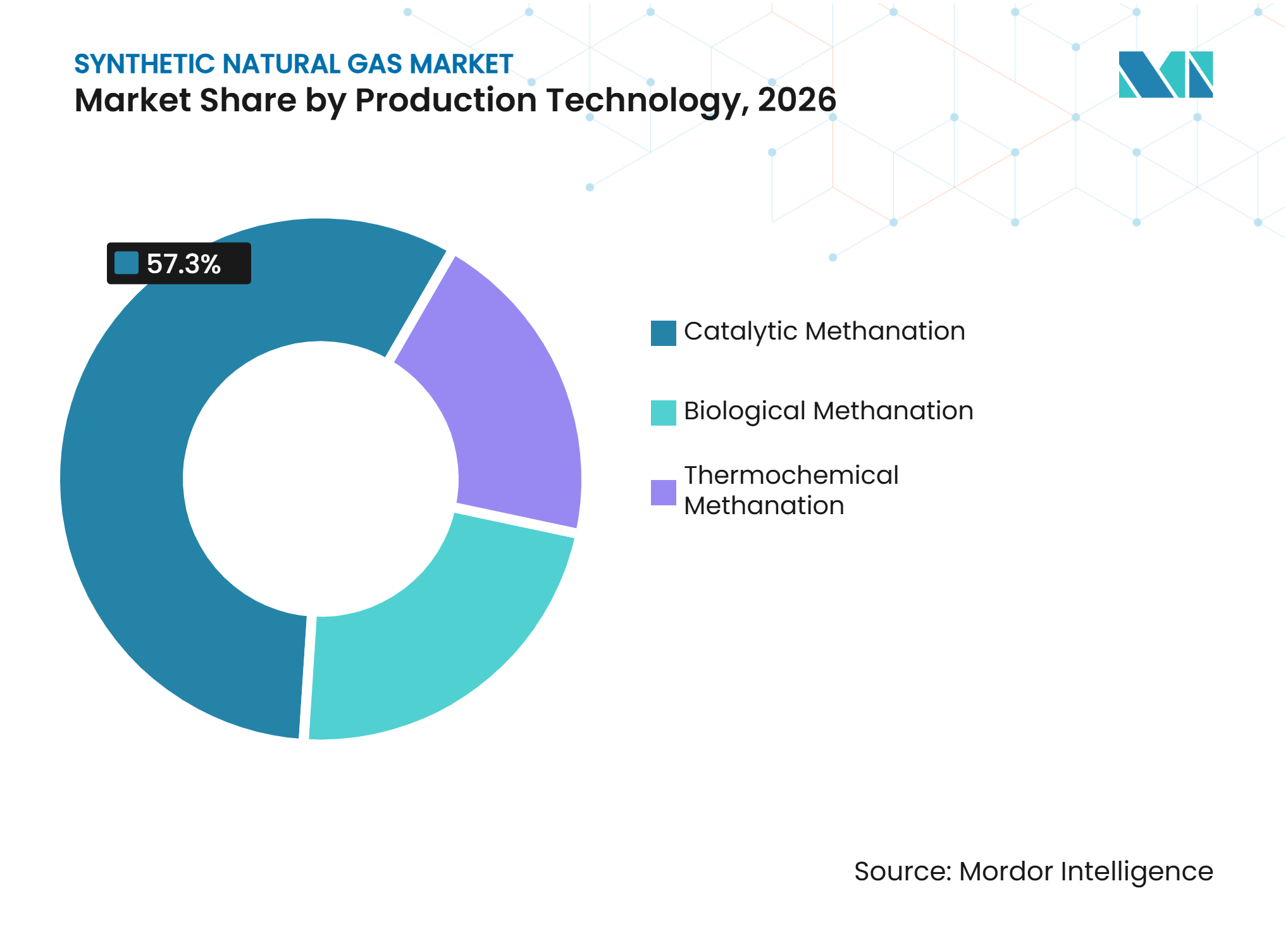
Catalytic Routes Retain Leadership While Biological Routes DevelopCatalytic methanation accounted for 57.3% of synthetic natural gas market share in 2026. The technology is widely used at the final conversion stage of coal-to-gas systems and benefits from established reactors, catalyst, and operating knowledge. Dakota Gasification’s Great Plains Synfuels Plant processes 18,000 metric tons of lignite per day and produces 170 million standard cubic feet of synthetic natural gas daily. This operating base gives catalytic solutions a practical advantage where projects need reliable large-volume conversion. Catalyst suppliers can also adapt established offerings for carbon dioxide methanation in renewable-gas projects.
Biological methanation is forecast to grow at a 23.2% CAGR through 2032, the fastest rate among production technologies. The pathway uses microorganisms to convert hydrogen and carbon dioxide to methane, which can fit projects built around biogenic carbon dioxide. Hitachi’s 2026 purchase of Electrochaea’s patents preserved access to the underlying technology after the developer entered insolvency. A 2025 study in Industrial & Engineering Chemistry Research evaluated power-to-gas methanation using a nickel-based catalyst, showing continued work on integrated conversion systems. The synthetic natural gas industry may see biological technology progress through partnerships with larger equipment suppliers and utilities rather than through independent specialist developers.



By Feedstock:
Coal Provides Volume While Renewable Hydrogen and Carbon Dioxide Gain MomentumCoal-based feedstock held 42.7% of synthetic natural gas market revenue in 2026. Its position reflects active coal gasification capacity in China and the continuing role of Sasol’s Secunda operations in South Africa. Sasol confirmed in November 2025 that it plans to supply methane-rich gas from Secunda to external industrial customers from July 2028 through June 2030. Coal-based projects can offer security of supply where local resources and pipeline demand are aligned. However, carbon capture, hydrogen integration, and environmental approval requirements are becoming more important to their long-term viability.
Renewable hydrogen and captured carbon dioxide are forecast to grow at a 25.7% CAGR through 2032, giving it the highest feedstock growth rate. KBR received a front-end engineering and design contract in August 2026 for the Live Oak project in Nebraska, which targets 250 MW of electrolysis and 75,000 tonnes per year of e-methane for export to Japan. The project plans to use biogenic carbon dioxide from ethanol plants, which can reduce reliance on direct air capture. VERBIO produced 1,410 GWh of biomethane in fiscal year 2025/26 as its North American and European assets expanded. These examples show how agricultural, ethanol, and waste-based supply chains can provide inputs for the synthetic natural gas market.
By End-User Industry:
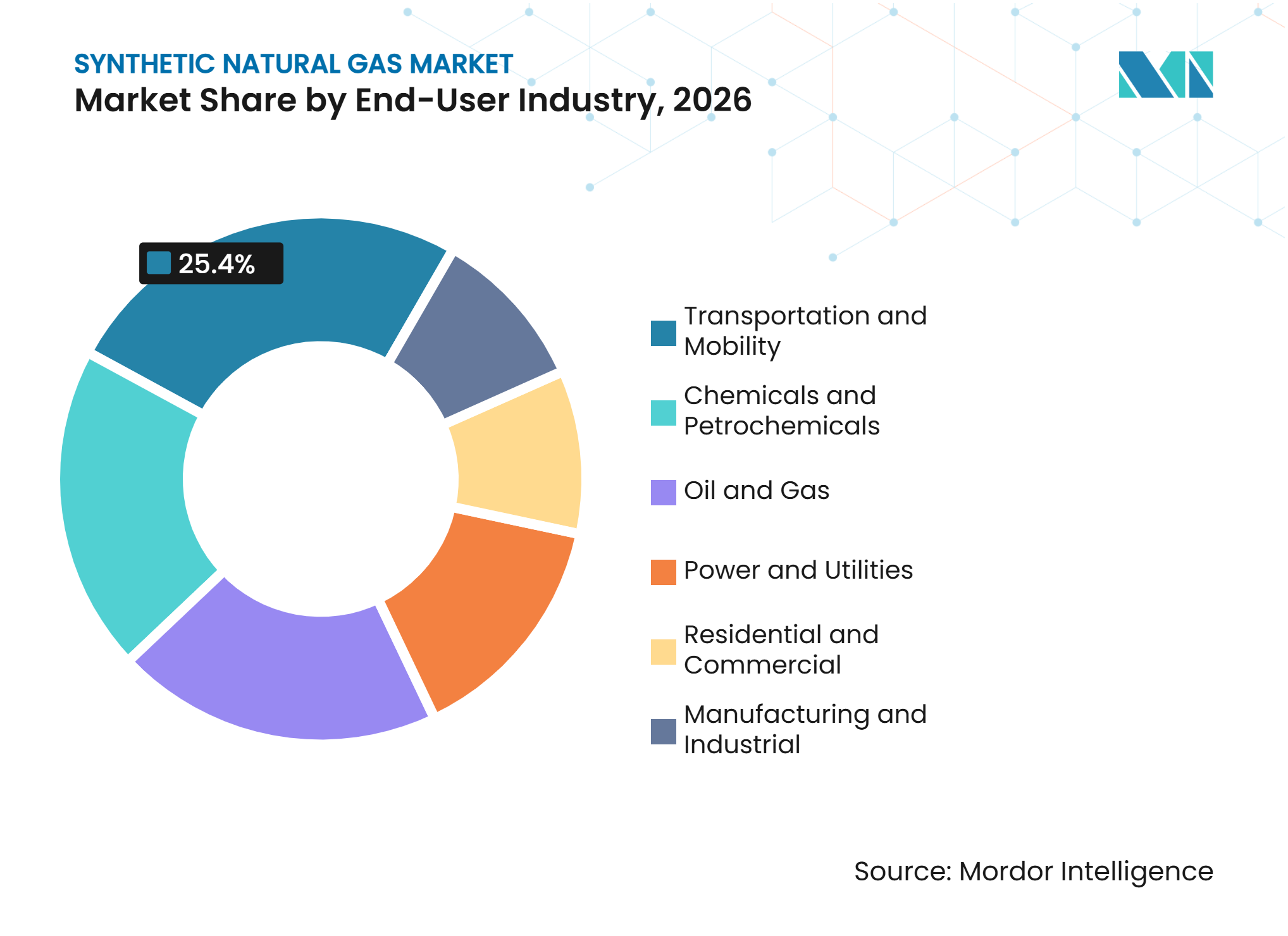
Transportation and Mobility Combines Scale with Faster GrowthTransportation and mobility accounted for 25.4% revenue share in 2026 and is forecast to expand at a 22.4% CAGR through 2032. The segment uses renewable natural gas, bio-liquefied natural gas (bio-LNG), and synthetic methane in heavy-duty road transport and, increasingly, in maritime fuel pathways. Cummins introduced the X15N natural gas engine in 2025 for Class 8 trucks, allowing fleets to choose a new engine designed for natural gas fuel. Fuel suppliers and station operators can build existing liquefied natural gas (LNG) and compressed natural gas (CNG) systems rather than create a wholly separate distribution network. European transport rules and renewable-fuel targets also support demand for lower-carbon gaseous fuels.
Power and utilities use synthetic gas for grid balancing and seasonal energy storage, especially where variable renewable electricity is increasing. Chemicals and petrochemicals use gas as a feedstock for products such as ammonia and methanol, which makes secure supply commercially important. BASF and Equinor signed a 10-year gas supply agreement in July 2025 for up to 23 TWh per year beginning in October 2025. Oil and gas, manufacturing, and commercial users can also use grid-injected biomethane without replacing all end-use equipment. These diverse uses reduce the synthetic natural gas market’s dependence on a single demand channel.

Geography Analysis
North America
North America held 31.3% of synthetic natural gas market share in 2026. The region has an established renewable natural gas ecosystem supported by landfill, agricultural, and waste feedstocks, together with transport fuel demand and pipeline connections. The American Biogas Council reported USD 2.1 billion in U.S. biogas investment during 2025 and 70 newly commissioned facilities. Dakota Gasification Company’s Great Plains facility continues to demonstrate the role of large-scale coal-based synthetic gas and carbon dioxide management in the region. The Live Oak development in Nebraska introduces an export-focused e-methane model that combines electrolytic hydrogen with biogenic carbon dioxide for Japanese customers. Low Carbon Fuel Standard programs and related clean-fuel rules continue to shape the economics of renewable gas used in transportation. These factors support a broad project base across production, upgrading, transport, and export.
Asia-Pacific
Asia-Pacific is forecast to grow at a 22.8% CAGR through 2032. China’s coal-to-gas program is a central source of regional volume, with recent approvals in Xinjiang covering projects that include carbon capture and green hydrogen integration. Local feedstock availability and the objective of reducing import exposure support project development in China. Japan follows a different route, focused on e-methane and biomethane injection into existing city-gas systems. The Seventh Strategic Energy Plan gives this effort a policy basis through its fiscal year 2030 injection objective. Hitachi’s acquisition of bio methanation intellectual property provides a domestic industrial platform for future deployment. Regulatory influence from METI and gas-network tariff mechanisms may help Japan turn early demonstrations into utility-led projects.
Europe, South America, and the Middle East and Africa
Europe’s synthetic natural gas market is shaped by renewable-gas targets, infrastructure standards, and the need to turn policy into operating projects. Renewable Energy Directive III (RED III) provides the wider renewable-fuel framework, while certification systems such as Sustainable and Renewable Energy (SURE) influence how gaseous fuels demonstrate sustainability compliance. EnviTec reached its 100th EnviThan gas-upgrading facility in 2025 and is investing in biomethane expansion, which illustrates continued activity in the region’s production base. Technip Energies received engineering contracts for the Ecoplanta waste-to-methanol project in Spain during 2025, reinforcing the role of waste conversion technology in Europe’s synthetic-fuel ecosystem. South America offers agricultural residues, and energy diversification needs that can support biomethane development. In the Middle East and Africa, industrial gas demand and established LNG infrastructure remain important, while Sasol’s planned methane-rich gas supply offers a temporary bridge for South African industrial customers. The synthetic natural gas market across these regions does not follow one development path, but each can create demand for feedstock conversion, gas treatment, and carbon-management capability.
Competitive Landscape
Market Concentration
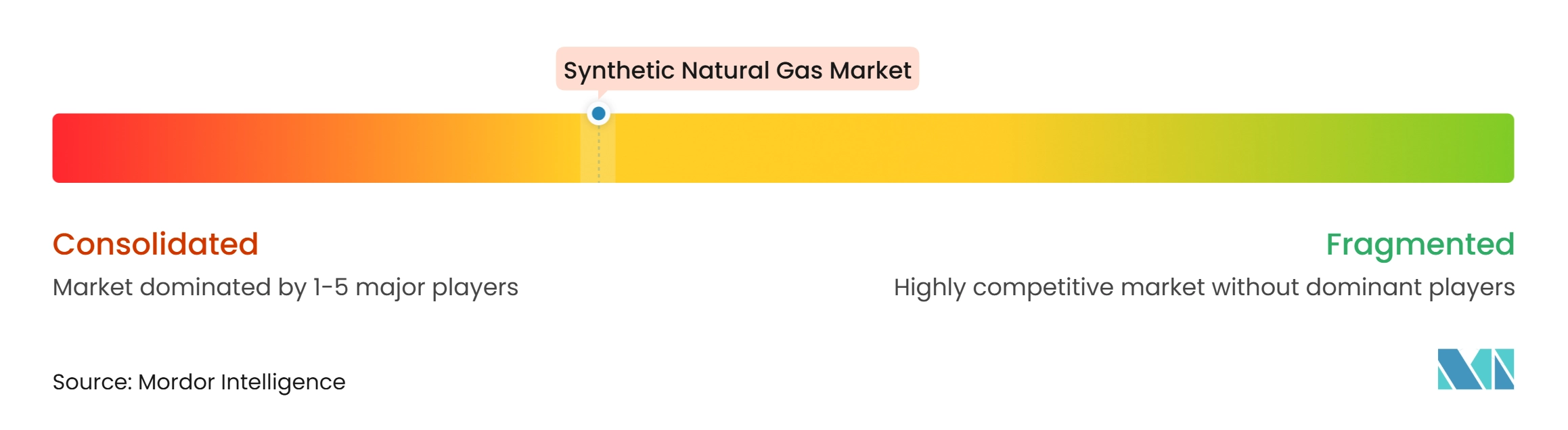
The synthetic natural gas market is moderately concentrated. It includes a state-supported coal-to-gas value chain and a separate technology-led biomethane and power-to-gas value chain. In the coal-based chain, feedstock access, gasification capacity, emissions management, and government approvals shape competition. In the renewable-gas chain, catalyst design, engineering delivery, carbon dioxide sourcing, certification, and long-term offtake have greater importance. Topsoe reported 2025 revenue of USD 1.22 billion (DKK 8,197 million), of which 20% came from e-fuels, low-carbon fuels, and renewable fuels technologies. This places process technology providers at the center of projects even when they do not own the final production asset. The synthetic natural gas market therefore rewards companies that can connect conversion technology with practical project execution.
Honeywell completed the purchase of Johnson Matthey’s Catalyst Technologies business for USD 1.76 billion (GBP 1.32 billion) in July 2026. The transaction placed the KATALCO methanation catalyst portfolio alongside Honeywell’s automation and process-technology capabilities. Hitachi made another significant move in August 2026 by acquiring Electrochaea’s worldwide biomethanation patents after the specialist developer became insolvent. KBR’s Live Oak engineering award shows how engineering contractors are competing for early control of large e-methane projects. These transactions and contracts indicate that intellectual property, engineering capacity, and balance-sheet strength are becoming more important in the synthetic natural gas market. They also reduce the ability of smaller technology developers to compete independently through the full project cycle.
Project developers are building positions through feedstock access and downstream channels as well as technology. TotalEnergies, Tree Energy Solutions, Osaka Gas, Toho Gas, and ITOCHU are developing the Live Oak project to serve Japanese demand with e-methane from Nebraska. EnviTec acquired LIQVIS in February 2025, adding LNG refueling stations in Germany and France to its biomethane value chain. Sasol is using its Secunda platform to offer methane-rich gas to external industrial customers during South Africa’s supply transition. ISO 20723 and EN 16726 gas-quality standards, together with sustainability certification, remain relevant for producers seeking grid-injection opportunities. Competition across the synthetic natural gas market is moderate because many companies serve different parts of the value chain rather than selling an identical finished gas product.
Synthetic Natural Gas Industry Leaders
-
Johnson Matthey Plc
-
Topsoe A/S
-
Air Liquide S.A.
-
VERBIO SE
-
Electrochaea GmbH
- *Disclaimer: Major Players sorted in no particular order
Synthetic Natural Gas Market Companies Covered in this Report
- Air Liquide S.A.
- Air Products and Chemicals, Inc.
- BASF SE
- Basin Electric Power Cooperative
- Chiyoda Corporation
- Dakota Gasification Company
- Electrochaea GmbH
- EnviTec Biogas AG
- Johnson Matthey Plc
- KBR, Inc.
- Linde plc
- Sasol Limited
- Shell plc
- Siemens Energy AG
- Technip Energies N.V.
- thyssenkrupp Uhde GmbH
- Topsoe A/S
- TotalEnergies SE
- VERBIO SE
- Waga Energy
Recent Industry Developments in Synthetic Natural Gas Market
- August 2026: KBR was awarded a Front End Engineering Design (FEED) contract by the Live Oak consortium for the Nebraska e-NG project in Norfolk, targeting 250 MW of electrolysis and 75,000 tons per year of synthetic methane for export to Japan, with a final investment decision expected in 2027 and commercial operations by 2030.
- August 2026: Hitachi, Ltd. acquired the worldwide patent portfolio of insolvent Electrochaea GmbH through the insolvency administrator, preserving the biomethanation technology within Hitachi’s carbon-neutral business and enabling Hitachi Power Solutions to continue advancing Japan’s first biomethanation plant targeting commissioning in 2027.
- July 2026: Honeywell completed the acquisition of Johnson Matthey’s Catalyst Technologies business for GBP 1.325 billion, or USD 1.76 billion, incorporating the KATALCO methanation catalyst portfolio into its process technology and automation offerings for refining, petrochemicals, and renewable fuels.
- July 2025: Two coal-to-gas projects in China’s Changji Autonomous Prefecture received national environmental approvals for 4 bcm per year of combined capacity in Xinjiang, integrating green hydrogen and carbon capture and storage technology with total investment exceeding CNY 34 billion, or USD 4.7 billion.
Global Synthetic Natural Gas Market Report Scope
Synthetic natural gas (SNG), also called substitute natural gas, is a manufactured fuel gas composed mostly of methane (CH4) that is chemically and physically interchangeable with conventional fossil natural gas.
The synthetic natural gas market is segmented into production technology, feedstock, end-user industry, and geography. By production technology, the market is segmented into catalytic methanation, biological methanation, and thermochemical methanation. By feedstock, the market is segmented into renewable hydrogen and captured carbon dioxide, biomass and biogenic waste, coal-based feedstock, natural gas-based feedstock, and other feedstock. By end user industry, the market is divided into power and utilities, chemicals and petrochemicals, oil and gas, transportation and mobility, residential and commercial, and manufacturing and industrial. The report also covers the market size and forecasts for the global synthetic natural gas market across 23 countries in key regions. For each segment, the market sizing and forecasts have been provided on the basis of value (USD).
Segmentation Overview
| Catalytic Methanation |
| Biological Methanation |
| Thermochemical Methanation |
| Renewable Hydrogen and Captured Carbon Dioxide |
| Biomass and Biogenic Waste |
| Coal-Based Feedstock |
| Natural Gas-Based Feedstock |
| Other Feedstocks |
| Power and Utilities |
| Chemicals and Petrochemicals |
| Oil and Gas |
| Transportation and Mobility |
| Residential and Commercial |
| Manufacturing and Industrial |
| North America | United States |
| Canada | |
| Mexico | |
| Europe | Germany |
| France | |
| United Kingdom | |
| Netherlands | |
| Denmark | |
| Italy | |
| Spain | |
| Austria | |
| Rest of Europe | |
| Asia-Pacific | China |
| India | |
| Australia | |
| Indonesia | |
| Japan | |
| South Korea | |
| Rest of Asia-Pacific | |
| South America | Brazil |
| Argentina | |
| Rest of South America | |
| Middle East and Africa | Saudi Arabia |
| United Arab Emirates | |
| South Africa | |
| Qatar | |
| Rest of Middle East and Africa |
| By Production Technology | Catalytic Methanation | |
| Biological Methanation | ||
| Thermochemical Methanation | ||
| By Feedstock | Renewable Hydrogen and Captured Carbon Dioxide | |
| Biomass and Biogenic Waste | ||
| Coal-Based Feedstock | ||
| Natural Gas-Based Feedstock | ||
| Other Feedstocks | ||
| By End-User Industry | Power and Utilities | |
| Chemicals and Petrochemicals | ||
| Oil and Gas | ||
| Transportation and Mobility | ||
| Residential and Commercial | ||
| Manufacturing and Industrial | ||
| By Geography | North America | United States |
| Canada | ||
| Mexico | ||
| Europe | Germany | |
| France | ||
| United Kingdom | ||
| Netherlands | ||
| Denmark | ||
| Italy | ||
| Spain | ||
| Austria | ||
| Rest of Europe | ||
| Asia-Pacific | China | |
| India | ||
| Australia | ||
| Indonesia | ||
| Japan | ||
| South Korea | ||
| Rest of Asia-Pacific | ||
| South America | Brazil | |
| Argentina | ||
| Rest of South America | ||
| Middle East and Africa | Saudi Arabia | |
| United Arab Emirates | ||
| South Africa | ||
| Qatar | ||
| Rest of Middle East and Africa | ||
Key Questions Answered in the Report
What is driving demand for synthetic natural gas?
Energy security programs, renewable gas targets, and heavy-duty transport demand are the main forces supporting deployment.
How large is the global synthetic natural gas market?
It is projected to increase from USD 31.23 billion in 2026 to USD 89.61 billion by 2032, at a 19.25% CAGR.
Which production technology currently leads?
Catalytic methanation led with 57.3% revenue share in 2026 because it is established in large coal-to-gas and synthetic gas facilities.
Which feedstock is growing fastest?
Renewable hydrogen and captured carbon dioxide is forecast to grow at a 25.7% CAGR through 2032.
Why is transportation important for synthetic gas demand?
Transportation and mobility held 25.4% revenue share in 2026 and is forecast to expand at a 22.4% CAGR through 2032, supported by heavy-duty natural gas vehicles.
Which region is growing fastest?
Asia-Pacific is forecast to grow at a 22.8% CAGR through 2032, led by Chinese coal-to-gas development and Japans e-methane policy.