
Synthetic Dyes Market Size and Share
Market Overview
| Study Period | 2022 - 2032 |
|---|---|
| Market Size (2027) | USD 8.55 Billion |
| Market Size (2032) | USD 11.55 Billion |
| Growth Rate (2027 - 2032) | 6.21 % |
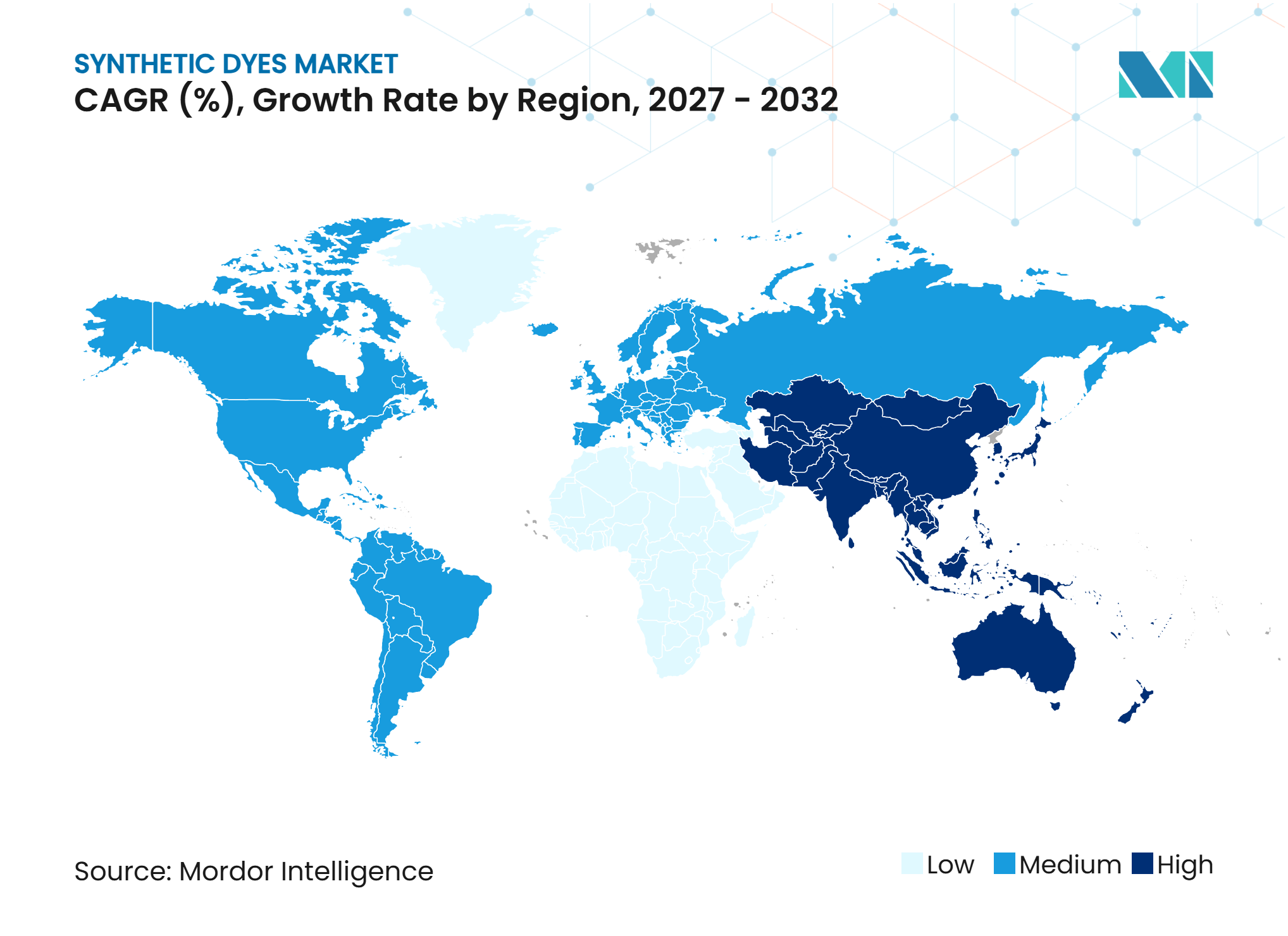
| Fastest Growing Market | Asia-Pacific |
| Largest Market | Asia-Pacific |
| Market Concentration | Low |
Major Players *Disclaimer: Major Players sorted in no particular order Image © Mordor Intelligence. Reuse requires attribution under CC BY 4.0. | |
Synthetic Dyes Market Analysis by Mordor Intelligence
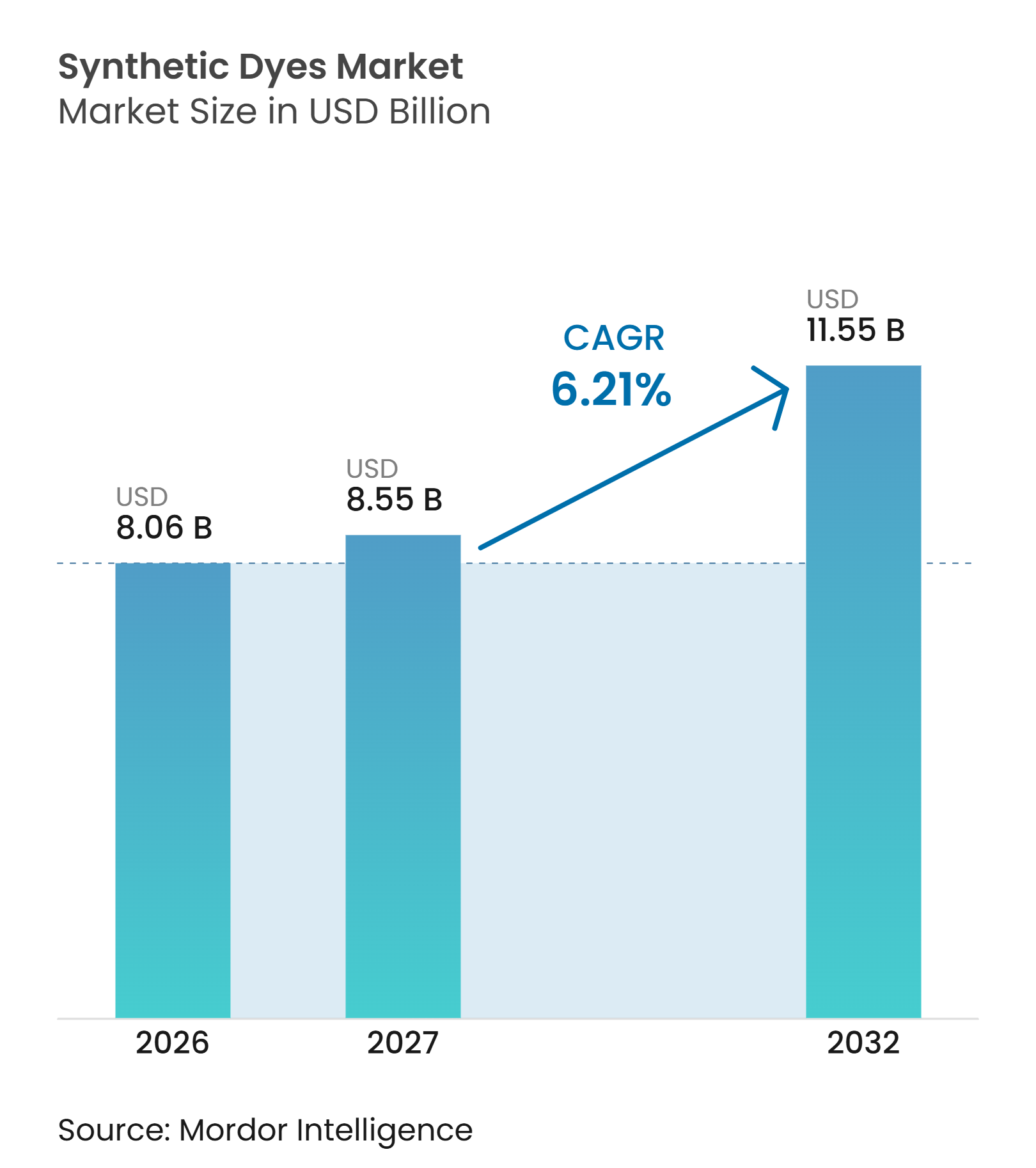
The Synthetic Dyes Market size was valued at USD 8.06 billion in 2026 and is estimated to grow from USD 8.55 billion in 2027 to reach USD 11.55 billion by 2032, at a CAGR of 6.21% during the forecast period (2027-2032). The synthetic dyes market remains closely tied to textile production, as apparel, home textiles, and technical fabrics require reliable color performance at industrial scale. Manufacturing activity shifting across South and Southeast Asia is broadening the base of mills sourcing reactive and disperse dyes. Growing requirements for color consistency, wash fastness, and regulatory compliance are driving demand toward technically differentiated products. Stricter environmental controls are increasing production costs and favoring suppliers that can support cleaner processes and provide adequate documentation. Beyond textiles, the synthetic dyes market has room to expand into coatings, printing inks, leather, and paper applications, where water-based systems and digital printing are creating demand for specialized colorants.
Key Report Takeaways
- By form, liquid dyes accounted for 55.12% of the segment in 2026, and the segment is forecast to expand at a 6.78% CAGR through 2032.
- By structure, non-ionic dyes held a 44.67% share in 2026 and are forecast to grow at a 6.91% CAGR through 2032.
- By dye type, reactive dyes held a 56.45% share in 2026, while disperse dyes are forecast to record the highest CAGR of 7.07% through 2032.
- By application, dyeing accounted for 60.11% of the market in 2026 and is forecast to grow at a 7.26% CAGR through 2032.
- By end-user industry, textiles accounted for a 63.35% share in 2026 and are forecast to grow at a 7.42% CAGR through 2032.
- By geography, Asia-Pacific held a 55.56% share in 2026 and is forecast to grow at a 7.33% CAGR through 2032.
Note: Market numbers in this report are based on Mordor Intelligence's proprietary estimation framework, which combines nine months of actuals with Q4 projections for base year 2026.
Market Trends and Insights
Drivers Impact Analysis of Synthetic Dyes Market*
| Drivers | (~) % Impact on CAGR Forecast | Geographic Relevance | Impact Timeline |
|---|---|---|---|
| Textile and Apparel Production Expansion in Asia-Pacific | +2.10% | Asia-Pacific core, with spillover to Bangladesh, Vietnam, and India | Short term (≤ 2 years) |
| Growth of Technical Textiles and Performance Fabrics | +1.20% | North America, Europe, and APAC | Medium term (2-4 years) |
| Digital Textile Printing and On-Demand Coloration | +1.00% | Global, with faster adoption in Europe and East Asia | Medium term (2-4 years) |
| Low-Temperature, High-Fixation Dyeing Technologies | +0.70% | APAC core, with spillover to South Asia | Medium term (2-4 years) |
| Specialty Color Demand in Packaging, Coatings, Leather, and Paper | +0.50% | Global, with early gains in Europe and North America | Long term (≥ 4 years) |
| Source: Mordor Intelligence | |||
Textile and Apparel Production Expansion in Asia-Pacific
The synthetic dyes market benefits as apparel manufacturing shifts from coastal China toward lower-cost production centers in South and Southeast Asia. This transition increases demand for locally supplied dyestuffs and reduces reliance on a single production base. India's textile and apparel exports reached USD 20,401.95 million from April through October 2025, despite a 1.80% year-on-year decline tied to external tariff pressures. This export figure reflects the scale of the regional textile supply chain and its ongoing demand for colorants.
The pace at which mills in Bangladesh, Vietnam, and India modernize dye houses and increase output directly affects the synthetic dyes market. Reactive dyes remain important in regions where cotton and other cellulosic materials dominate apparel production. Disperse dyes are gaining relevance as polyester use rises in sportswear, workwear, and lower-cost fashion categories. Diversified sourcing also gives regional producers more opportunities to build direct technical relationships with mills. These relationships are valuable when buyers require repeatable shades, shorter delivery periods, and documentation for chemical compliance. However, new capacity will not automatically translate into stable returns, as the same regions face intense price competition from established Chinese suppliers.
Growth of Technical Textiles and Performance Fabrics
Technical textiles support the synthetic dyes market by requiring higher standards than conventional apparel coloring. Protective workwear, automotive upholstery, filtration materials, and medical fabrics require color durability under washing, light, sweat, heat, or repeated physical use. Polyester-based products often rely on disperse dyes because the dye must diffuse into the fiber structure during processing. Performance requirements are commonly assessed through colorfastness methods under the ISO 105 series and through product requirements associated with OEKO-TEX STANDARD 100.
Archroma has positioned its TERASIL WW range for polyester, and its ERIOFAST products for polyamide and elastane blends around performance and compliance requirements. These products demonstrate how suppliers can compete on application performance rather than relying solely on standard-grade output. Mill approvals can take 12 to 18 months because fabric producers must validate shade, fastness, process behavior, and product safety. Once approved, a colorant supplier may retain the business through the fabric program's production cycle. This pattern can make demand for technical textiles more stable than for fashion, although qualification requirements remain stringent. The synthetic dyes market therefore gains value from innovation in product quality, compliance support, and process reliability.
Digital Textile Printing and On-Demand Coloration
Digital textile printing affects the synthetic dyes market by supporting shorter production runs, customized designs, and more controlled color placement. These systems can reduce the water and chemical load associated with some conventional batch processes. The format also requires high-purity colorants and formulations that perform consistently in inkjet equipment. Reactive and disperse chemistries remain relevant because printed cotton and polyester fabrics require different dye-fiber interactions. Digital printing can create a premium channel for salt-free reactive inks and specialized disperse inks used in sublimation applications.
DyStar's Econtrol continuous reactive dyeing process, developed with Monforts Textilmaschinen and used by Turkish mill Altoteks, shows that conventional dyeing lines can also adopt tighter process control. This approach can help established colorant suppliers serve both conventional mills and newer digitally oriented production systems. The shift does not eliminate the need for traditional dyeing, as large quantities of textiles still rely on dye baths. It does, however, increase the importance of color consistency, cleaner formulations, and application-specific technical service. Suppliers that support both production methods can reduce their dependence on a single demand channel. The synthetic dyes market is likely to see more product development focused on precision coloration and lower resource use.
Low-Temperature, High-Fixation Dyeing Technologies
Low-temperature dyeing reduces energy use, while high-fixation systems can reduce the amount of unfixed dye entering treatment systems. These technologies are important in mills facing rising energy costs, water constraints, and buyer expectations for cleaner processing. Archroma stated that its AVITERA SE reactive dyes, combined with Fibre52's low-temperature neutral-pH bleaching system, can reduce water use and carbon dioxide emissions by up to 50% compared with standard cotton processing benchmarks. This type of process improvement can increase the commercial value of dye products while enabling resource savings at the mill. It can also reduce the amount of colorant required per unit of fabric, placing greater emphasis on performance value than on output sold.
China's Ministry of Industry and Information Technology launched the 2025 program for printing and dyeing enterprises that meet the industry's requirements. The program requires the review of environmental materials, documentation, and on-site conditions, with provincial environmental authorities conducting checks on emissions and environmental violations[1]. Such compliance requirements favor mills that can demonstrate better control of energy, water, and effluent. They also encourage dye suppliers to provide products that work reliably at lower temperatures and under more efficient conditions. This regulatory influence does not eliminate standard dyeing methods, but it raises the value of cleaner process options. The synthetic dyes market increasingly depends on suppliers that can demonstrate practical benefits on the production line.
Restraints Impact Analysis of Synthetic Dyes Market*
| Restraints | (~) % Impact on CAGR Forecast | Geographic Relevance | Impact Timeline |
|---|---|---|---|
| Effluent Treatment and Restricted-Substance Compliance Costs | -1.40% | Global, with the greatest pressure in China and South Asia | Short term (≤ 2 years) |
| Volatile Petrochemical-Derived Intermediate Prices | -1.10% | Global, with the greatest pressure in China and India | Medium term (2-4 years) |
| Textile Export Slowdowns and Dyestuff Overcapacity | -0.80% | APAC, particularly China export markets | Short term (≤ 2 years) |
| Source: Mordor Intelligence | |||
Effluent Treatment and Restricted-Substance Compliance Costs
Effluent treatment and restricted-substance controls impose direct cost pressures on dye manufacturers and textile processors. Compliance spending includes treatment equipment, laboratory testing, documentation, audits, and the ongoing review of chemical formulations. Zero Discharge of Hazardous Chemicals (ZDHC) identifies chemical management as a critical issue, as synthetic dyes and heavy metals can affect waterways near major textile production centers. Its 2025 report includes facility-level cases in which targeted changes to chemicals or treatments reduced freshwater ecotoxicity[2]. These requirements tend to favor larger suppliers, as they can spread compliance costs across greater production output.
The synthetic dyes market also faces buyer-led restrictions that go beyond formal environmental enforcement. Textile and footwear brands often require suppliers to comply with their own chemical management programs before approval. Smaller producers may find it harder to fund testing, maintain documentation, and update formulations when restricted-substance lists change. This pressure can consolidate demand around manufacturers with established regulatory teams and traceability systems. It can also support the adoption of better-fixing colorants that reduce residual material in wastewater. This restraint remains relevant even as textile demand improves, as compliance is an ongoing operating requirement.
Volatile Petrochemical-Derived Intermediate Prices
Synthetic dye production depends on intermediates whose availability and price can shift quickly. H-acid is a critical intermediate in reactive dye synthesis, and supply disruptions can affect downstream product prices and production scheduling. H-acid prices reached CNY 41,700 per metric ton (USD 5,750 per metric ton) in 2025, after rising 16.00% from CNY 36,000 at the start of the year. Reactive dye prices were reported at CNY 23,000 per metric ton (USD 3,170 per metric ton), up 15.00%. These movements illustrate the cost exposure faced by non-integrated suppliers when a key input becomes scarce.
China's safety requirements for nitration processes add another layer of risk, as upgrades can limit production at older facilities. Integrated producers can offset part of this risk by controlling intermediates and related chemical operations. Independent producers have fewer options when raw material costs rise faster than contract prices. The synthetic dyes market therefore places a premium on supply-chain planning and raw-material flexibility. Price volatility can also cause mills to delay purchases when they anticipate further declines in dye prices. This restraint is particularly pronounced in product categories where excess capacity limits suppliers' ability to pass through higher costs.
*Our forecasts treat driver/restraint impacts as directional, not additive. The impact forecasts reflect baseline growth, mix effects, and variable interactions.
Synthetic Dyes Market Segment Analysis
By Form:
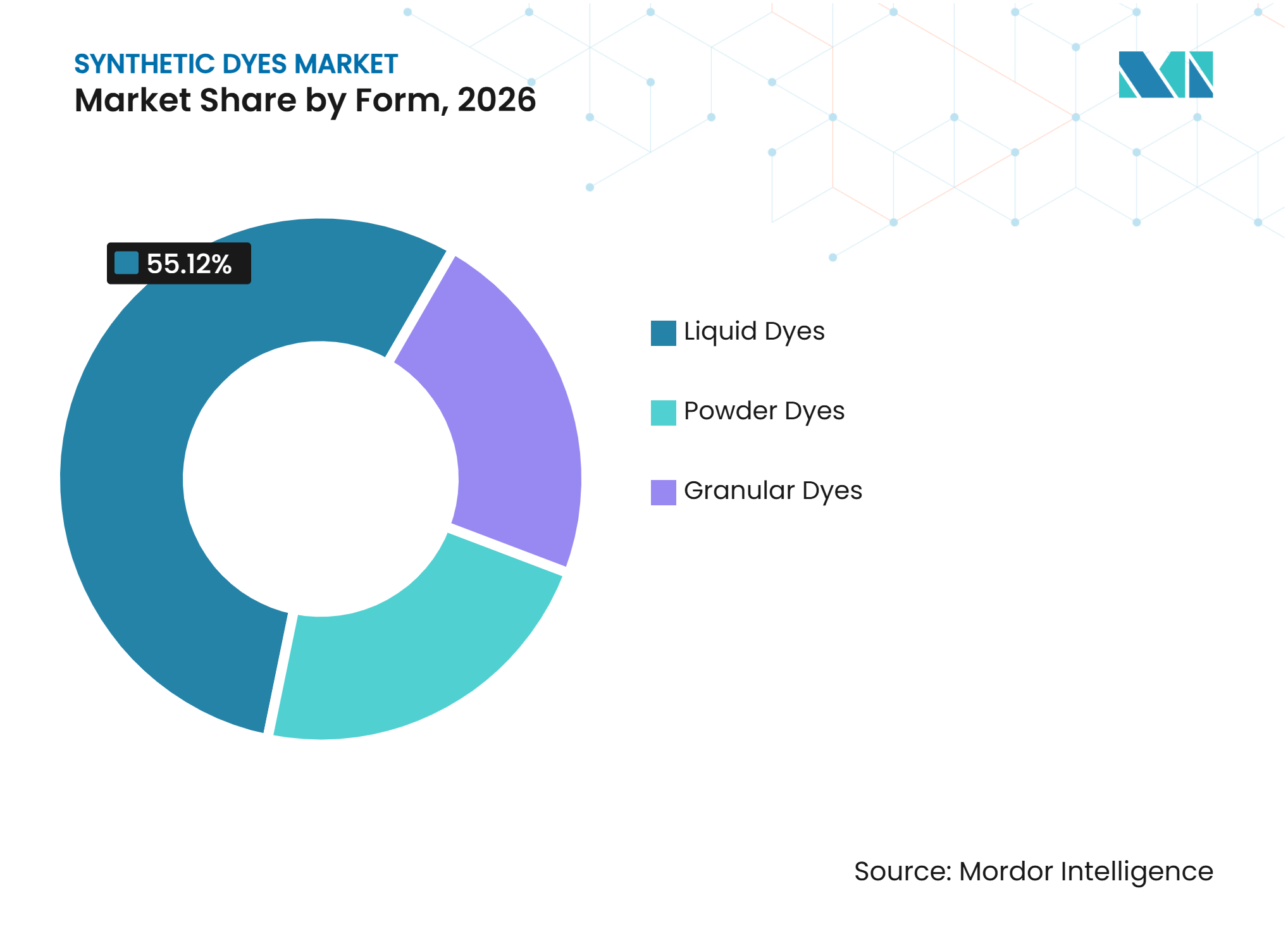
Liquid Formulations Lead as Powder Grades Lose GroundLiquid dyes held 55.12% of the segment in 2026 and are forecast to grow at a 6.78% CAGR through 2032. Their position reflects the growing use of automated dosing equipment in continuous and large-scale dyeing lines. Liquid products help mills improve lot-to-lot color consistency by enabling controlled measuring and delivery. They also reduce dust exposure that may occur during powder handling. These advantages are relevant for mills investing in automated dye kitchens and repeatable operating conditions. Liquid formats also provide clearer traceability when mills need to document batch records for customer audits. The synthetic dyes market size for liquid products benefits from modernization in textile production rather than from form preference alone.
Powder dyes remain relevant where mills have established handling systems and where transport economics support dry products. Granular dyes also retain a role in smaller operations with limited liquid storage and pumping infrastructure. However, these formats face pressure as automated plants increasingly prioritize closed transfer systems and controlled dosing. Zhejiang Runtu reported that sales volume for its liquid dye DY650 increased by more than 300.00% from initial production levels after technical upgrades. This supports the view that liquid formats can deliver process benefits that matter to industrial buyers. OEKO-TEX STANDARD 100 applies limits on harmful substances across formats, but liquid products can simplify batch documentation for certified production. Powder and granular products will remain necessary, yet their growth outlook is more closely tied to lower-automation facilities.



By Structure:
Non-Ionic Dyes Remain Tied to Polyester DemandNon-ionic dyes held a 44.67% share in 2026 and are forecast to expand at a 6.91% CAGR through 2032. Their use is closely connected to polyester, acetate, and polyamide materials that require dyes capable of diffusing into the fiber system. This technical requirement supports continued demand for disperse-dye chemistry in synthetic textiles. Polyester remains relevant in apparel, home textiles, sportswear, and industrial fabrics because producers value its durability and processing properties. Non-ionic dyes therefore serve a wide base of end uses within the synthetic dyes industry. The segment's growth outlook also reflects the greater use of performance fabrics and digital-printing applications that rely on polyester substrates.
Anionic dyes continue to serve cotton and other cellulosic fibers through reactive and direct dye categories. Cationic dyes retain specialized uses in acrylic and selected natural-fiber applications. These structural classes are not fully interchangeable because colorant selection depends on the fiber, processing conditions, and required fastness level. Suppliers must therefore maintain technical portfolios rather than rely on one chemistry for every fabric. Everlight Chemical's work on cationic auxiliaries illustrates how auxiliary chemistry can improve reactive dye fixation on cotton and enhance dyeing performance. The broader effect is a lower salt load and better fixation in selected cotton processes. These developments can narrow the environmental gap between different dyeing approaches without removing the need for fiber-specific colorant systems.
By Dye Type:
Reactive Dyes Lead While Disperse Dyes Grow FasterReactive dyes held a 56.45% share in 2026, while disperse dyes are projected to grow at a 7.07% CAGR through 2032. Reactive dyes remain central to the synthetic dyes market because cotton and cellulosic fabrics require wash-fast coloration. The chemistry creates a bond with fiber groups that helps maintain color during laundering. This makes reactive dyes important for woven apparel, knitwear, home textiles, and many cotton-based fashion products. Their large installed base gives suppliers recurring opportunities with textile mills. The synthetic dyes market share held by reactive products reflects the continuing scale of cotton and cellulosic processing.
Disperse dyes benefit from growth in polyester garments, sportswear, and dye-sublimation printing. They are also relevant for high-performance applications where color fastness under heat, light, and physical stress matters. High-fixation reactive dyes can reduce the kilograms of product needed per kilogram of fabric, which may slow volume growth even when product value rises. Acid dyes continue to serve protein fibers and polyamide, particularly in footwear and hosiery. Direct dyes remain useful for selected cellulosic processes where simpler exhaustion methods are sufficient. Specialty vat, sulfur, and azoic products support denim and technical applications. China's ongoing focus on compliant printing and dyeing production underscores the importance of color strength, testing, and product documentation across all dye categories.
By Application:
Dyeing Keeps the Largest Role as Printing Inks AdvanceDyeing accounted for 60.11% of consumption in 2026 and is projected to record a 7.26% CAGR through 2032. Traditional dyeing remains the main application because large volumes of fabric are colored in batch and continuous operations before garment assembly. Reactive, disperse, acid, and direct dyes each support different combinations of materials and processes. This scale gives conventional dyeing a central role even as alternative coloration methods expand. Mills continue to invest in improved dosing, wash-off, and wastewater treatment systems rather than abandon dye-bath production. The synthetic dyes market size associated with dyeing is therefore supported by the broad base of textile manufacturing.
Tanning remains an important outlet because leather finishing uses color correction and wet-finishing steps. Paints and coatings provide exposure to less cyclical construction and industrial activity, especially as water-based systems grow. Printing inks represent a specialized opportunity because inkjet systems require consistent color dispersion and performance. BASF commissioned a high-performance dispersant production line in Nanjing in 2025, using controlled free-radical polymerization technology. BASF stated that the products are used in coatings, inks, and composites to improve pigment dispersion, color performance, and system stability. The announcement relates to dispersants and pigments rather than dyes, but it illustrates broader supply-chain investment in high-performance color applications. These applications can reward suppliers able to meet exact formulation requirements.
By End-User Industry:
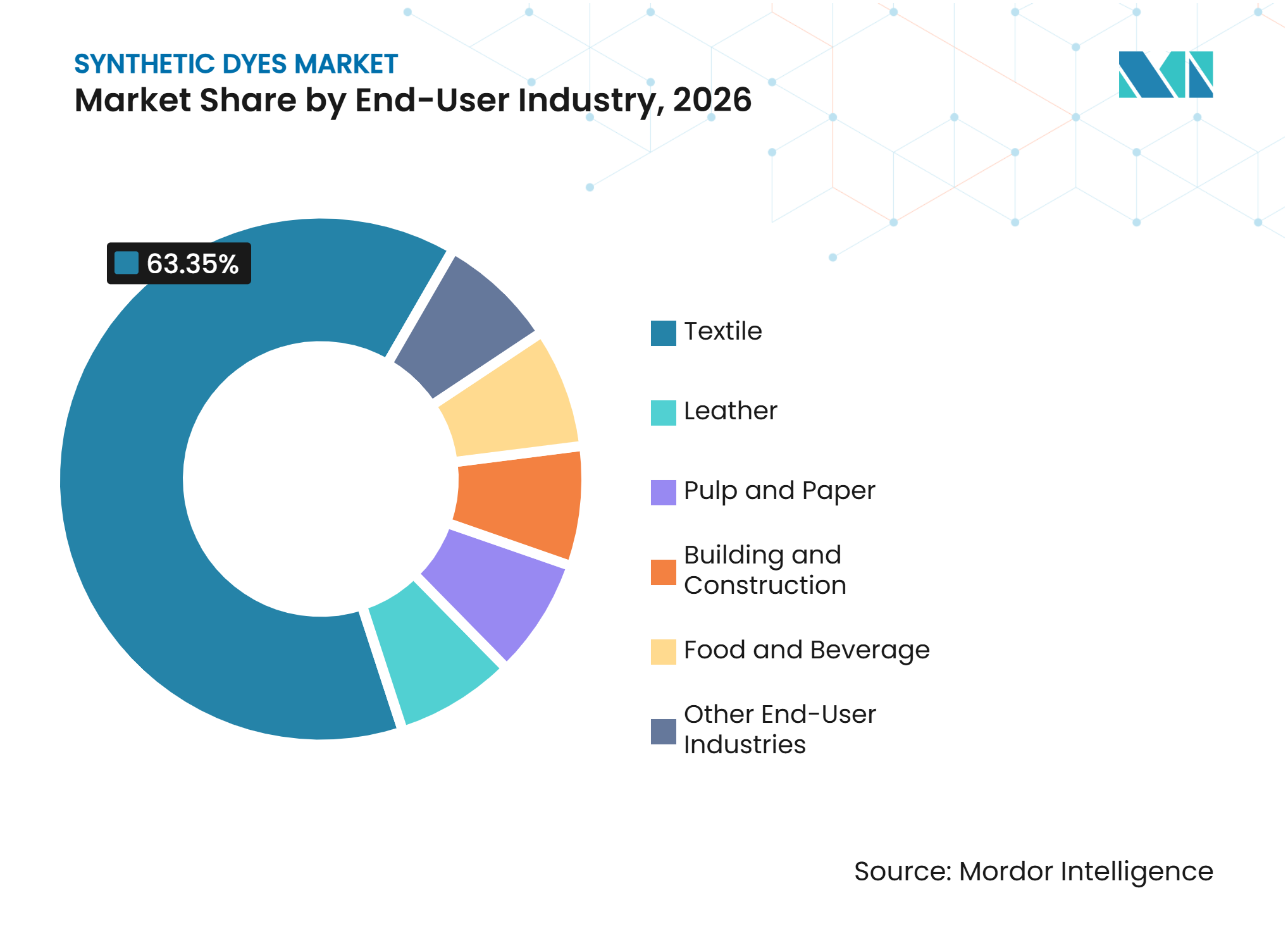
Textile Demand Dominates While Other Uses Add BalanceTextiles accounted for a 63.35% share of end-user demand in 2026 and are forecast to grow at a 7.42% CAGR through 2032. Apparel, home textiles, and technical fabrics together create the broadest demand base for synthetic colorants. The segment also benefits from production growth in Asian manufacturing centers and from mills upgrading process controls. Textile buyers increasingly expect quality, consistency, and chemical compliance alongside competitive prices. This combination encourages suppliers to offer technical support rather than simply ship standard dyes. The synthetic dyes market remains sensitive to apparel production cycles because textiles are its largest end-use channel.
Leather is another significant user of acid and direct dyes in finishing and color-correction applications. Pulp and paper use direct dyes for specialty paper, packaging liners, tissue, and decorative products. Construction-related uses include liquid colorants for coatings and concrete-related applications. Food and beverage uses remain limited because only approved colorants may be used in these highly regulated products. DyStar's 2025 manufacturing consolidation included the partial integration of Food, Drug & Cosmetic (FD&C) and Drug & Cosmetic (D&C) dye production into its Reidsville, North Carolina, facility, while it continued to supply from its wider network. Atul's Colors business received recognition from the Dyes and Pigments Manufacturers Association of India in October 2025 for the indigenous development of Vat Blue 18 and water-conservation work. These examples show ongoing investment in products and processes across end uses.

Geography Analysis
Asia-Pacific
Asia-Pacific accounted for 55.56% of the synthetic dyes market share in 2026 and is projected to grow at a 7.33% CAGR through 2032. The region combines major textile manufacturing centers with large local consumption of apparel, home textiles, and polyester-based products. China remains a leading production base, while India is an important supplier to neighboring textile markets. Vietnam and Bangladesh add demand as apparel sourcing shifts toward South and Southeast Asia. The region benefits from integrated textile ecosystems that connect fiber, fabric, dyeing, garment production, and export logistics. This structure supports steady demand for reactive and disperse dyes, as well as for auxiliaries that improve dyeing efficiency.
Fujian's 2025 guidance on the dyeing and finishing sector sets out a policy direction toward industrial-park concentration, cleaner production, automation, and digital inkjet printing. The guidance aims for at least 25 enterprises to meet national printing and dyeing industry standards by 2027 and for a mid- and high-end product share of at least 65.00%. These targets indicate that compliant and better-equipped facilities are expected to gain greater influence in the regional supply chain. Mills in the region also face stronger expectations around wastewater controls, energy efficiency, and chemical traceability. This regulatory direction supports low-temperature dyeing, automated chemical delivery, and digital processing. The synthetic dyes market in Asia-Pacific is likely to favor suppliers that combine competitive pricing with consistent compliance support.
North America
North American demand centers on technical fabrics, specialty coatings, and regulated colorant applications rather than mass textile dyeing. Automotive, filtration, defense, medical, and performance textile products require specific standards for colorfastness and material performance. Such applications support specialty suppliers that offer formulation assistance and documentation. ISO and American Association of Textile Chemists and Colorists (AATCC) testing frameworks remain relevant in buyer decisions because product quality must be verified for end-use conditions. The region's more limited conventional textile base makes it less exposed to apparel dyeing than Asia-Pacific. However, technical and specialized applications support higher-value demand.
DyStar announced in April 2025 that it would stop manufacturing at its Hilton Davis facility and partially integrate production into its Reidsville, North Carolina, operation. The company stated that FD&C dyes, D&C dyes, lakes, technical dyes, and pigment dispersions would continue to be supplied from other locations in its network. The move indicates a more focused manufacturing footprint for regulated and specialty colorant products. It also reflects the importance of operating efficiency where traditional categories are less attractive. North American customers are likely to continue to value technical support, evidence of product safety, and supply reliability. This makes the region an important market for differentiated dye products even without large-scale commodity production.
Europe, South America, Middle East and Africa
Europe is shaped by chemical compliance requirements and by buyer interest in products with clearer environmental and material-health credentials. Archroma reported that its dye portfolio achieved Cradle to Cradle Certified Material Health Gold status across reactive, acid, disperse, indigo, and sulfur products. This positioning is relevant as European brands raise expectations for restricted substances and chemical documentation. Europe also remains important for specialty textiles, denim finishing, coatings, and premium fashion applications. Archroma's DENIM HALO process received the 2025 International Textile Manufacturers Federation (ITMF) Sustainability and Innovation Award, with company-reported water savings of 40% to 56% and carbon dioxide reductions of 33% to 34% compared with selected standard processes.
South America remains linked to apparel and leather demand, while local users rely substantially on imported supply. This dependence makes delivery times, foreign-exchange exposure, and landed cost important purchasing considerations. Demand in the Middle East and Africa is still developing, but textile investment and industrial diversification are creating new needs for colorants and compliance support. Export-oriented mills in these regions may need to align with buyers' chemical management programs to serve European and North American brands. ZDHC's 2025 report underscores the importance of water and chemical management in textile value chains. These regions offer selective opportunities for suppliers capable of combining product supply with process expertise and documentation.
Competitive Landscape
Market Concentration
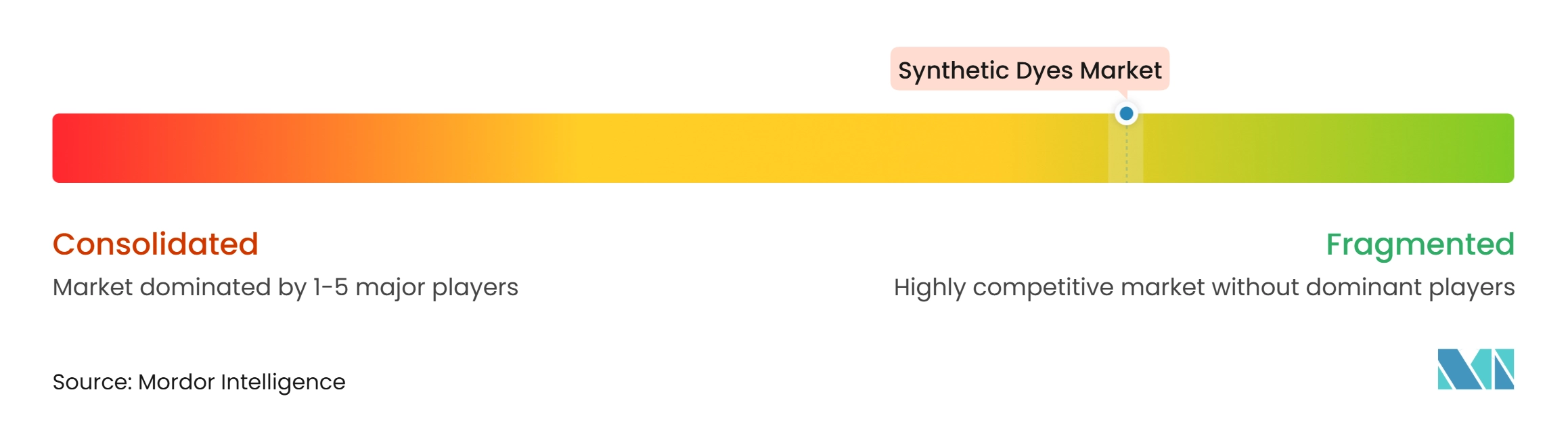
The synthetic dyes market is fragmented. Zhejiang Runtu, Zhejiang Jihua Group, Kiri Industries, Bodal Chemicals, Jay Chemical Industries, Atul, Archroma, and DyStar compete across output capacity, technical capability, and customer specifications. China's domestic capacity gives established producers a scale advantage in standard-grade chemistry. Smaller producers remain active in local and lower-cost categories, but compliance costs, access to intermediates, and customer approvals limit their entry into premium applications. This structure explains why scale, quality assurance, and the ability to support customers in production remain important competitive factors.
Archroma competes through specialty dye ranges, process technologies, and material-health credentials, including its DENIM HALO system, which combines a patented pretreatment with reduced-indigo, sulfur, and biosynthetic dye options. The company reported that the system can reduce water, energy, and carbon dioxide use compared with selected conventional denim processes, making process-led offerings relevant for customers with formal sustainability commitments. Indian producers are seeking opportunities in salt-free dyes and other products that address wastewater and regulatory pressures. At the same time, Chinese suppliers retain advantages from scale, regional textile links, and integrated chemical operations. European and global specialty players rely more heavily on application knowledge, certifications, process innovation, and evidence from mill-scale use. Buyers can use multiple suppliers to balance price, compliance, product performance, and continuity of supply.
DyStar became a wholly owned subsidiary of Zhejiang Longsheng Group after its shareholder dispute was resolved, with the transaction completed on December 30, 2025, removing a governance issue and giving the business a single parent. DyStar also restructured its Americas manufacturing footprint around Reidsville, North Carolina, and Cheyenne, Wyoming, reflecting a focus on specialized and regulated colorant products. Sudarshan Chemical completed its acquisition of Heubach Group in March 2025 through Sudarshan Europe B.V., adding 19 international sites and broadening its pigment and specialty-colorant position. However, pigments and dyes remain distinct product categories. DyStar has reported a 51% lower emissions intensity relative to its 2011 baseline, an 81% lower water-consumption intensity, and a 58% lower wastewater intensity, illustrating how resource performance reporting is becoming part of supplier positioning.
Synthetic Dyes Industry Leaders
-
Heubach GmbH
-
BASF
-
DyStar Singapore Pte Ltd
-
Chromascape
-
Zhejiang Jihua Group
- *Disclaimer: Major Players sorted in no particular order
Synthetic Dyes Market Companies Covered in this Report
- Archroma
- Atul Ltd
- BASF
- Bodal Chemicals Ltd.
- Chromascape
- DyStar Singapore Pte Ltd
- Everlight Chemical Industrial Co.
- Heubach GmbH
- Jay Chemical Industries Pvt. Ltd.
- Kiri Industries Ltd.
- LANXESS
- Milliken
- Sumitomo Chemical Co., Ltd.
- Zhejiang Jihua Group
- Zhejiang Runtu Co.,Ltd.
Recent Industry Developments in Synthetic Dyes Market
- January 2026: Zhejiang Longsheng Group completed the acquisition of the remaining 37.57% stake in DyStar Global Holdings, a synthetic dyes manufacturer, from Kiri Industries Ltd. for USD 689 million. The transaction was completed on December 30, 2025, making DyStar a wholly owned subsidiary of Zhejiang Longsheng Group.
- March 2025: Sudarshan Chemical Industries Limited, through its wholly owned subsidiary Sudarshan Europe B.V., completed the acquisition of Heubach Group, a producer of synthetic dyes and pigments. The combined organization operates across 19 international sites with a portfolio spanning pigments, liquid dispersions, and specialty colorants.
Global Synthetic Dyes Market Report Scope
Synthetic dyes are man-made colored organic compounds used to impart permanent color to materials such as textiles, leather, paper, cosmetics, and food. These compounds are produced through chemical synthesis, primarily from petroleum-based raw materials, and are designed to bond with substrates at the molecular level to deliver consistent, durable coloration. Synthetic dyes are available in a wide range of hues and are formulated to meet specific performance requirements such as resistance to light, heat, and washing.
The synthetic dyes market is segmented by form, structure, dye type, application, end-user industry, and geography. By form, the market is segmented into liquid dyes, powder dyes, and granular dyes. By structure, the market is segmented into anionic, cationic, and non-ionic. By dye type, the market is segmented into reactive dyes, disperse dyes, acid dyes, direct dyes, and others. By application, the market is segmented into dyeing, tanning, paints and coatings, printing inks, and other applications. By end-user industry, the market is segmented into textile, leather, pulp and paper, building and construction, food and beverage, and other end-user industries. The report also covers market sizes and forecasts for synthetic dyes across 15 countries in major regions. The market sizes and forecasts are provided in terms of value (USD).
Segmentation Overview
| Liquid Dyes |
| Powder Dyes |
| Granular Dyes |
| Anionic |
| Cationic |
| Non-Ionic |
| Reactive Dyes |
| Disperse Dyes |
| Acid Dyes |
| Direct Dyes |
| Others |
| Dyeing |
| Tanning |
| Paints and Coatings |
| Printing Inks |
| Other Applications |
| Textile |
| Leather |
| Pulp and Paper |
| Building and Construction |
| Food and Beverage |
| Other End-User Industries |
| Asia-Pacific | China |
| India | |
| Japan | |
| South Korea | |
| ASEAN Countries | |
| Rest of Asia-Pacific | |
| North America | United States |
| Canada | |
| Mexico | |
| Europe | Germany |
| United Kingdom | |
| France | |
| Italy | |
| NORDIC Countries | |
| Rest of Europe | |
| South America | Brazil |
| Argentina | |
| Rest of South America | |
| Middle East and Africa | Saudi Arabia |
| South Africa | |
| Rest of Middle East and Africa |
| By Form | Liquid Dyes | |
| Powder Dyes | ||
| Granular Dyes | ||
| By Structure | Anionic | |
| Cationic | ||
| Non-Ionic | ||
| By Dye Type | Reactive Dyes | |
| Disperse Dyes | ||
| Acid Dyes | ||
| Direct Dyes | ||
| Others | ||
| By Application | Dyeing | |
| Tanning | ||
| Paints and Coatings | ||
| Printing Inks | ||
| Other Applications | ||
| By End-User Industry | Textile | |
| Leather | ||
| Pulp and Paper | ||
| Building and Construction | ||
| Food and Beverage | ||
| Other End-User Industries | ||
| By Geography | Asia-Pacific | China |
| India | ||
| Japan | ||
| South Korea | ||
| ASEAN Countries | ||
| Rest of Asia-Pacific | ||
| North America | United States | |
| Canada | ||
| Mexico | ||
| Europe | Germany | |
| United Kingdom | ||
| France | ||
| Italy | ||
| NORDIC Countries | ||
| Rest of Europe | ||
| South America | Brazil | |
| Argentina | ||
| Rest of South America | ||
| Middle East and Africa | Saudi Arabia | |
| South Africa | ||
| Rest of Middle East and Africa | ||
Key Questions Answered in the Report
What is current market size of Synthetic Dyes Market?
The Synthetic Dyes Market size was valued at USD 8.06 billion in 2026 and is estimated to grow from USD 8.55 billion in 2027 to reach USD 11.55 billion by 2032, at a CAGR of 6.21% during the forecast period (2027-2032).
Which dye type holds the largest share?
Reactive dyes held the largest share at 56.45% in 2026, supported by demand for cotton and other cellulosic fibers. Their wash-fast performance keeps them important in woven apparel, knitwear, home textiles, and other cotton-based production.
Which dye type is projected to grow the fastest?
Disperse dyes are projected to grow at a 7.07% CAGR through 2032, supported by polyester textiles and dye-sublimation applications. Their importance rises with demand for sportswear, performance fabrics, and polyester-based digital textile printing.
Why are liquid dyes gaining use in textile mills?
Liquid dyes held a 55.12% share in 2026 because automated dosing can improve color consistency, traceability, and dust control. These benefits are particularly relevant for large mills that operate continuous dyeing lines and maintain detailed batch records.