
Status Epilepticus Market Size and Share
Market Overview
| Study Period | 2021 - 2032 |
|---|---|
| Market Size (2027) | USD 1.42 Billion |
| Market Size (2032) | USD 2.12 Billion |
| Growth Rate (2027 - 2032) | 8.32 % |
| Fastest Growing Market | Asia-Pacific |
| Largest Market | North America |
| Market Concentration | Medium |
Major Players *Disclaimer: Major Players sorted in no particular order Image © Mordor Intelligence. Reuse requires attribution under CC BY 4.0. | |
Status Epilepticus Market Analysis by Mordor Intelligence
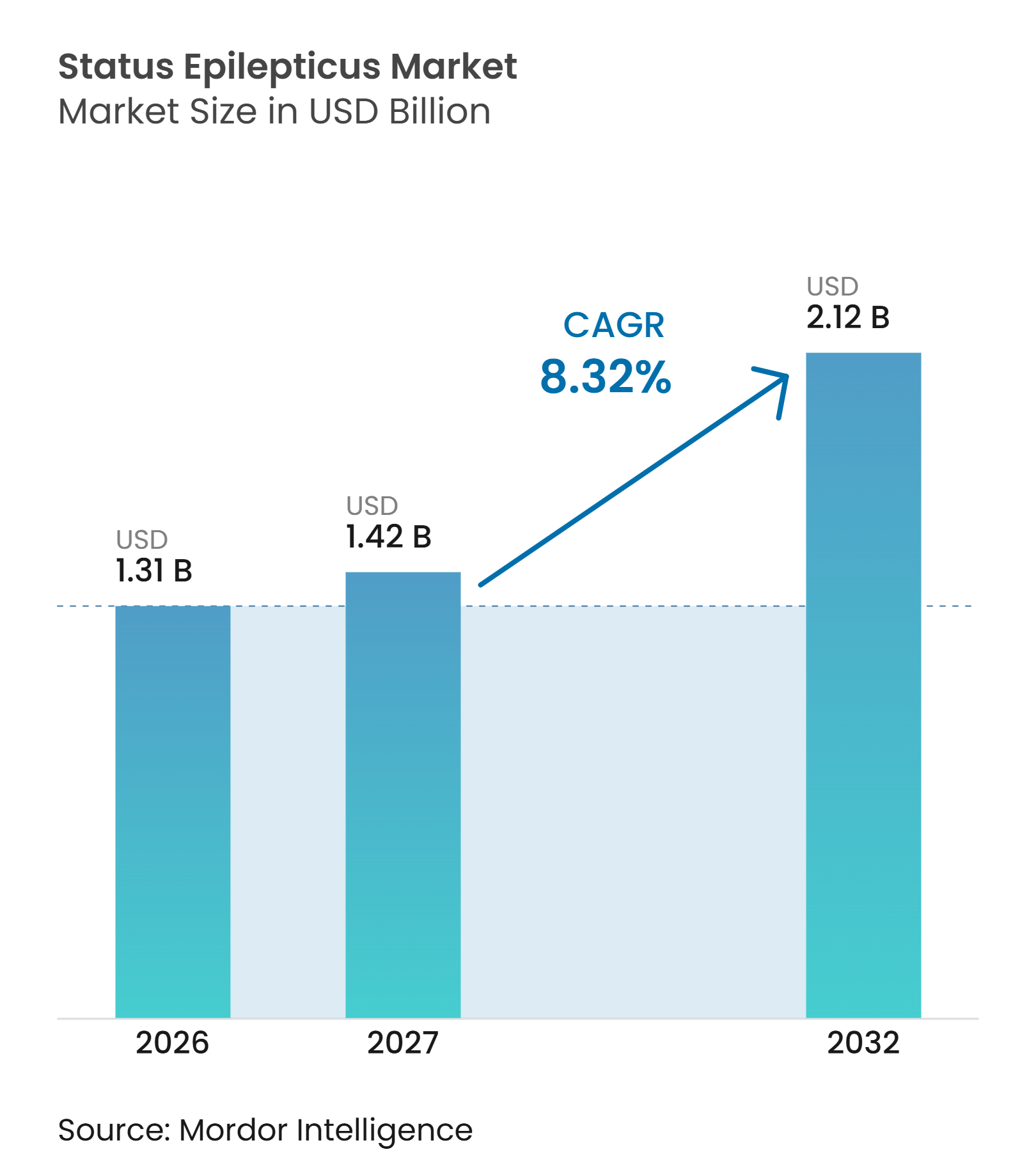
The Status Epilepticus Market size was valued at USD 1.31 billion in 2026 and is estimated to grow from USD 1.42 billion in 2027 to reach USD 2.12 billion by 2032, at a CAGR of 8.32% during the forecast period (2027-2032).
Status epilepticus is a major neurological emergency, and treatment priorities center on rapid seizure control, safe escalation, and earlier identification of non-convulsive cases. The International League Against Epilepsy operational threshold of 5 minutes for generalized convulsive seizures has shortened the window for intervention and strengthened demand for emergency treatment pathways. Hospital systems are expanding continuous EEG use in emergency and critical care settings, while drug developers are pursuing options for refractory and super-refractory disease. The status epilepticus market is also shaped by differences in protocol maturity, monitoring access, and reimbursement across regions. Point-of-care EEG supports earlier diagnosis of patients with altered consciousness and can increase treatment activity for cases that were previously missed.
Key Report Takeaways
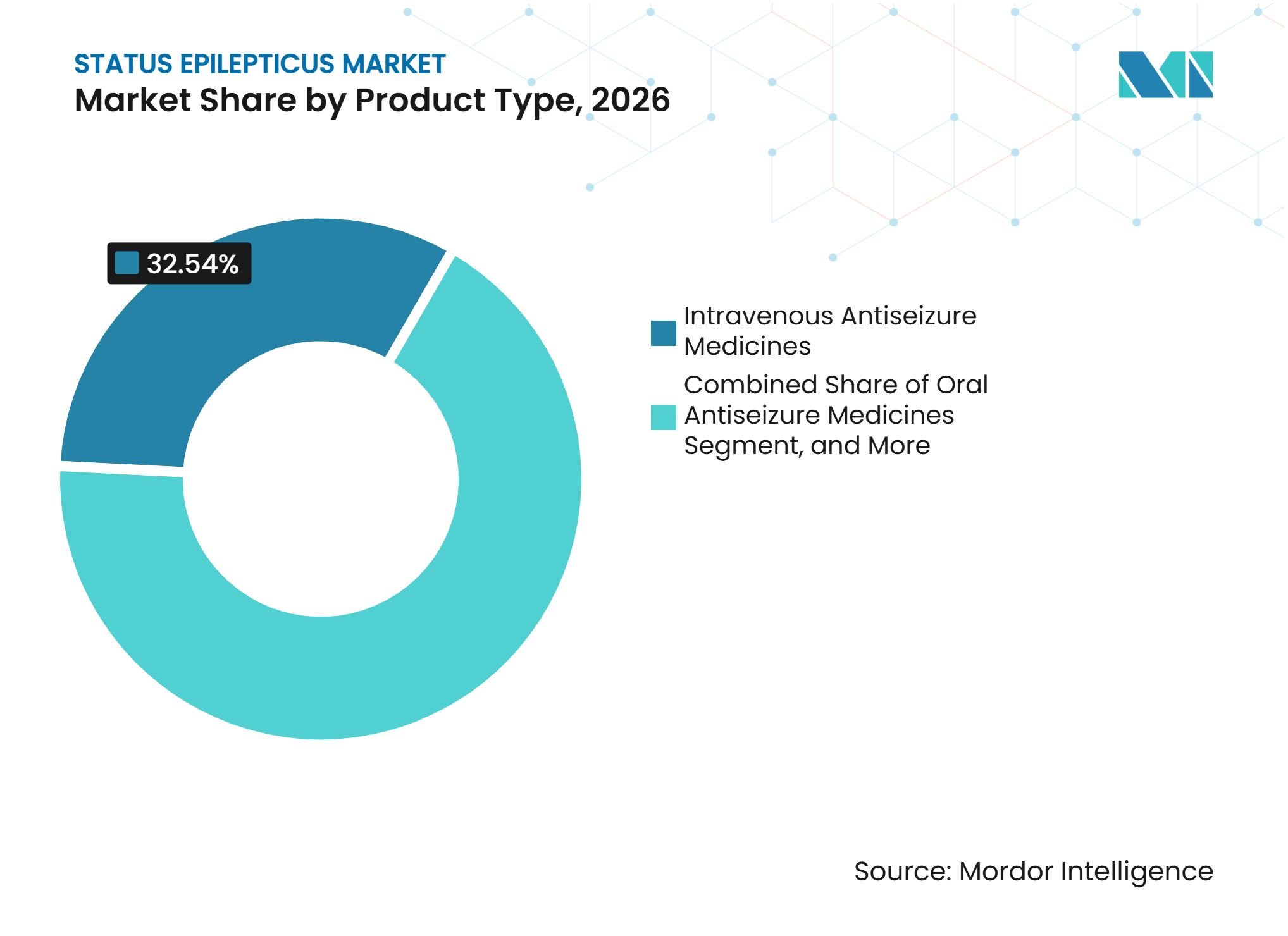
- By product type, intravenous antiseizure medicines held a 32.5% revenue share in 2026, while EEG and seizure-monitoring equipment is projected to expand at a 10.4% CAGR through 2032.
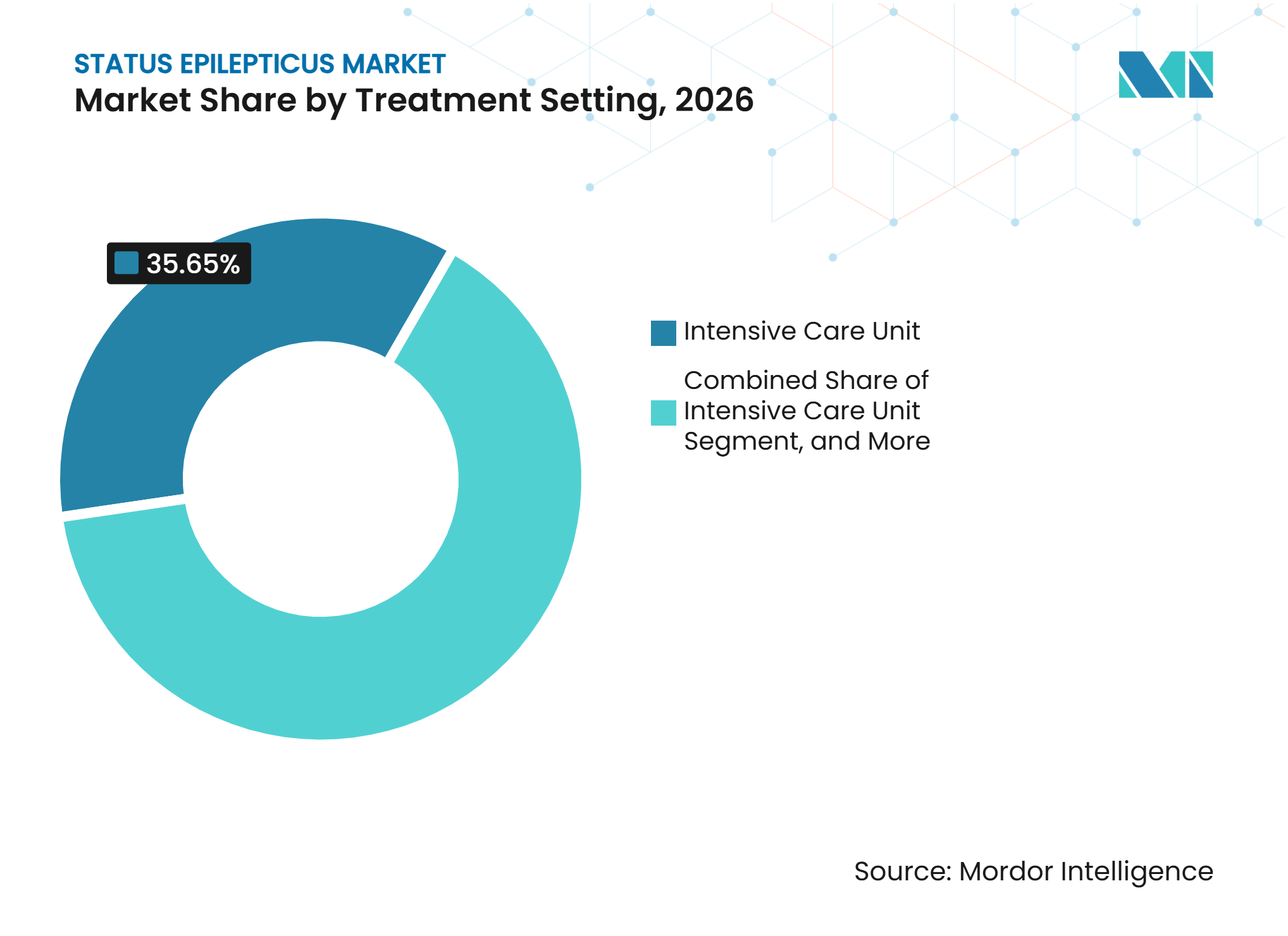
- By treatment setting, the ICU held a 35.7% revenue share in 2026, while the emergency department is forecast to grow at a 10.7% CAGR through 2032.
- By application, convulsive status epilepticus accounted for a 37.7% revenue share in 2026, while refractory status epilepticus is projected to grow at an 11.5% CAGR through 2032.
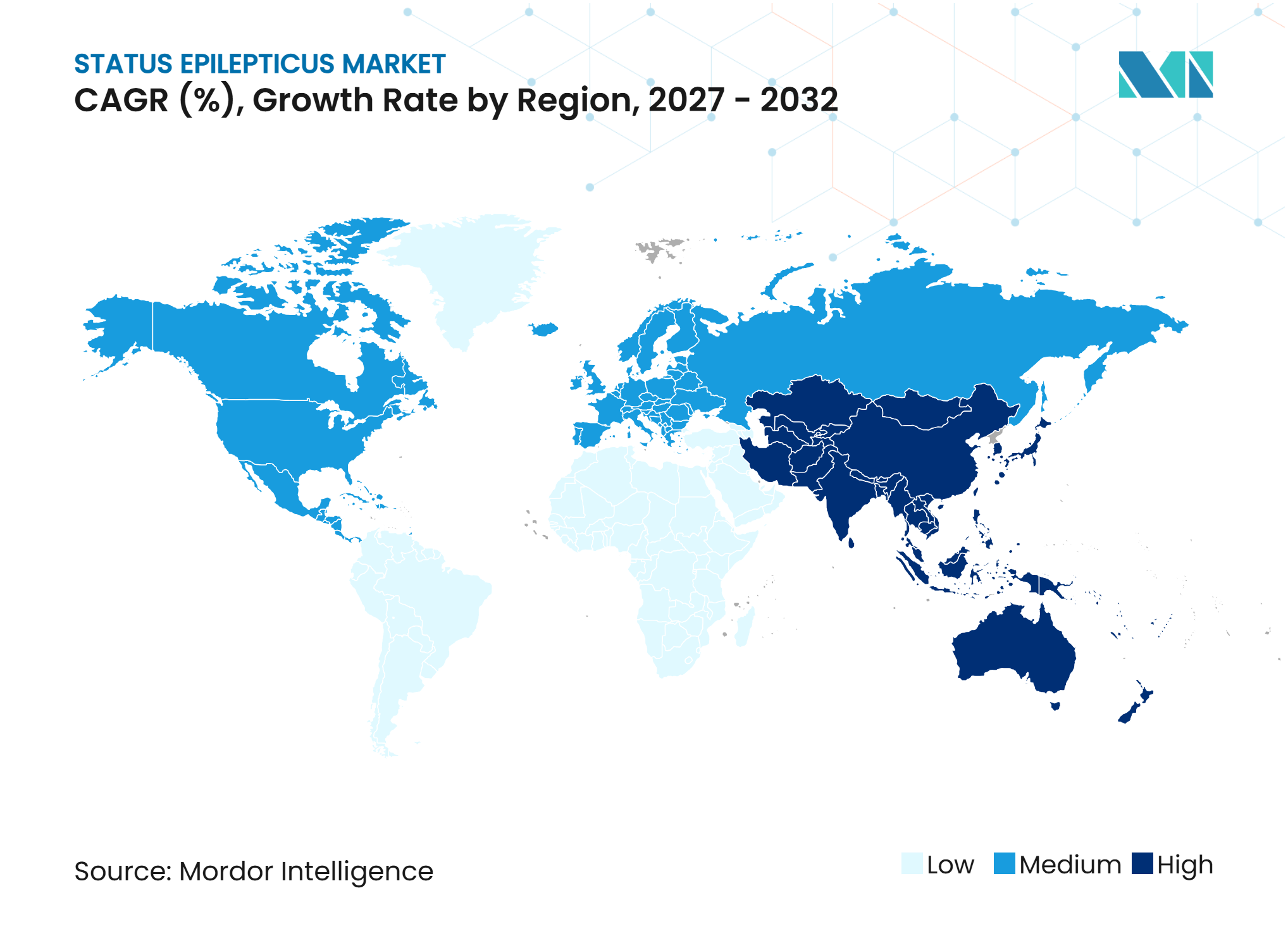
- By geography, North America accounted for the highest share of 42.76% in 2026, whereas Asia-Pacific is projected to grow at a CAGR of 9.54% over the forecast period.
Note: Market numbers in this report are based on Mordor Intelligence's proprietary estimation framework, which combines nine months of actuals with Q4 projections for base year 2026.
Market Trends and Insights
Drivers Impact Analysis of Status Epilepticus Market*
| Driver | (~) % Impact on CAGR Forecast | Geographic Relevance | Impact Timeline |
|---|---|---|---|
| Earlier Intervention and Rapid Seizure Termination | +1.50% | Global, with accelerating implementation in North America & EU | Short term (≤ 2 years) |
| Expansion of Critical-Care and Neurocritical-Care Capacity | +1.40% | APAC core, spill-over to MEA and South America | Medium term (2–4 years) |
| Growth of Point-of-Care EEG and Automated Seizure Detection | +1.30% | North America & EU, early gains in Japan and South Korea | Short term (≤ 2 years) |
| Increasing Use of Second- and Third-Generation Antiseizure Medicines | +1.20% | Global | Medium term (2–4 years) |
| Adoption of Non-Intravenous Rescue Formulations in Pre-Hospital Care | +0.90% | North America, EU, Japan | Short term (≤ 2 years) |
| Development of Targeted Therapies for Refractory and Super-Refractory SE | +0.80% | North America & EU | Long term (≥ 4 years) |
| Source: Mordor Intelligence | |||
Earlier Intervention and Rapid Seizure Termination
Time to treatment remains a modifiable factor in status epilepticus care, and emergency protocols are placing greater focus on reducing the interval between seizure onset and medicine delivery. A 2025 Malaysian consensus study found that 89.1% of surveyed health professionals recognized rescue medicines, but only 35.7% reported that prehospital personnel could administer intramuscular midazolam for status epilepticus. The most common barriers were unfamiliarity with the approach, reported by 64.2% of respondents, and the absence of protocols, reported by 62.1%[1]. This gap can lead to escalation after inadequate first-line care rather than true treatment resistance. Standardized emergency protocols can therefore support demand for rescue formulations by improving the timing and consistency of use. The status epilepticus market benefits when emergency medical services training and formulary decisions make these medicines available before hospital arrival.
Expansion of Critical-Care and Neurocritical-Care Capacity
Neurocritical-care capacity increases the ability of hospitals to manage refractory cases that need intensive monitoring and repeat treatment. These facilities require intravenous medicines first, while investment in continuous EEG and decision-support tools can follow as services mature. A 2025 report on a remote tele-intensivist program described the coordination of antiseizure treatment and monitoring for status epilepticus in a safety-net community hospital. Remote specialist support can extend clinical oversight to hospitals that do not have an on-site neurology team. Mount Sinai reported a collaborative approach to establishing continuous EEG programs in Nepalese intensive care units in 2025[2]. The status epilepticus market can develop in stages in such settings, with drug procurement, clinical pathways, and monitoring infrastructure advancing over different timeframes.
Growth of Point-of-Care EEG and Automated Seizure Detection
Non-convulsive status epilepticus requires EEG for diagnosis, yet conventional EEG may not be available quickly in emergency and intensive care settings. Ceribell received FDA 510(k) clearance in April 2025 for its Clarity algorithm for electrographic seizure detection in patients aged 1 year and older. The company stated that the pediatric clearance relied on a validation dataset of more than 1,700 patients. The clearance supports use in a broader patient population and gives hospitals another point-of-care option. An American Epilepsy Society abstract in 2025 described Clarity-based protocols in the ICU and emergency department that directed lower-risk patients away from conventional EEG while preserving resources for higher-acuity cases. As point-of-care systems spread, they can identify patients whose altered consciousness might otherwise be attributed to another cause. This diagnostic effect supports both the monitoring category and the use of antiseizure medicines.
Increasing Use of Second- and Third-Generation Antiseizure Medicines
Treatment practice is shifting beyond the established benzodiazepine core as clinicians evaluate newer intravenous agents for second-line care. A 2026 multicenter retrospective study reported that lacosamide had better results than levetiracetam when used as the first second-line intravenous therapy, with an odds ratio of 3.29 and a 95% confidence interval of 1.06 to 10.19. This evidence may influence guideline discussions and hospital purchasing for established status epilepticus. PCORI funded a 2025 study comparing anakinra and tocilizumab in 438 patients with new-onset refractory status epilepticus. The study reflects continued interest in immunotherapy for patients with inflammatory or autoimmune mechanisms. The status epilepticus market may gain value from these newer therapies where conventional escalation does not provide adequate control.
Restraints Impact Analysis of Status Epilepticus Market*
| Restraint | (~) % Impact on CAGR Forecast | Geographic Relevance | Impact Timeline |
|---|---|---|---|
| Delayed Recognition and Underuse of Adequately Dosed First-Line Therapy | -1.1% | Global, most acute in APAC and MEA | Short to Medium term (≤ 4 years) |
| Respiratory, Cardiovascular, Hepatic, and Sedation-Related Safety Risks | -0.9% | Global | Short term (≤ 2 years) |
| Limited Comparative Evidence for Refractory and Super-Refractory SE | -0.8% | Global | Long term (≥ 4 years) |
| Uneven Access to Continuous EEG, Trained Personnel, and Emergency Protocols | -0.9% | APAC, MEA, South America | Medium term (2–4 years) |
| Source: Mordor Intelligence | |||
Delayed Recognition and Underuse of Adequately Dosed First-Line Therapy
Delayed medicine delivery and inadequate benzodiazepine dosing reduce the effectiveness of emergency care in both prehospital and emergency department settings. A 2026 Neurology review of resource-limited settings described routine first-line underdosing across studies from Asia and reported mortality as high as 42.6% in the underlying literature[3]. Older and lower-cost second-line medicines were used more frequently where access to newer options was limited. This pattern can make established medicines appear less effective when the core issue is timing or dose rather than pharmacologic failure. The Neurocritical Care Society Emergency Neurological Life Support framework provides a model for standardized emergency care, but implementation differs across local systems. The status epilepticus market remains constrained where emergency teams lack training, authorized protocols, or reliable access to preferred first-line formulations.
Respiratory, Cardiovascular, Hepatic, and Sedation-Related Safety Risks
Treatment intensity can be limited by safety risks, especially when patients progress to refractory status epilepticus and require anesthetic infusions. Benzodiazepines can cause respiratory depression at higher doses, lacosamide requires attention in patients with cardiac conduction risks, and valproic acid can raise hepatic safety concerns in pediatric care. A 2026 systematic review of ketamine included 491 patients across 12 studies and reported seizure reduction rates from 43% to 100%. The review also found that ketamine’s independent effect on sustained seizure control and survival remained uncertain because of concomitant treatments. The American Epilepsy Society reported FDA label changes in 2025 for lamotrigine, ganaxolone, and carbamazepine, including the addition of HLA-B*15:02 as a lamotrigine risk factor for Stevens-Johnson syndrome. Safety requirements continue to affect physician confidence, product labeling, and the design of differentiated therapies.
*Our forecasts treat driver/restraint impacts as directional, not additive. The impact forecasts reflect baseline growth, mix effects, and variable interactions.
Status Epilepticus Market Segment Analysis
By Product Type:
Intravenous Medicines Lead While Monitoring Technology AcceleratesIntravenous antiseizure medicines held 32.5% of the status epilepticus market share in 2026 because intravenous access is essential in many emergency, ICU, and specialist neurology settings. Their use is closely linked to the need for rapid administration once a seizure does not resolve. A 2025 survey across Germany, Austria, and Switzerland found that 35.4% of clinicians preferred levetiracetam as the first choice for established status epilepticus. Lacosamide also has growing clinical support in second-line intravenous care. Rescue formulations, including intranasal and buccal diazepam and midazolam, address the need for treatment before or during transfer to hospital. Their commercial role depends on protocol authorization, caregiver education, and practical access in emergency settings.
EEG and seizure-monitoring equipment is projected to grow at a 10.4% CAGR through 2032, the highest rate among product types in the status epilepticus market. Suspected non-convulsive cases need EEG confirmation, but conventional systems can take hours to arrange and interpret. Point-of-care EEG reduces this delay and can enable earlier clinical decisions in the ICU and emergency department. Ceribell’s 2025 pediatric clearance showed how AI-assisted seizure detection is moving into younger age groups. Natus also announced FDA 510(k) clearance in 2025 for an electrographic status epilepticus diagnostic indication in its BrainWatch point-of-care EEG solution. Neurostimulation and clinical decision-support software remain longer-term categories, but they benefit from the same shift toward continuous detection and more structured neurological care.



By Treatment Setting:
ICU Retains Scale While the Emergency Department ExpandsThe ICU accounted for 35.7% of revenue in 2026, reflecting the requirements of refractory and super-refractory care. These patients can need continuous anesthetic infusions, invasive monitoring, extended EEG observation, and management of respiratory or cardiovascular complications. The ICU also creates demand beyond medicines because hospitals may require continuous EEG, clinical decision support, and access to neurostimulation services. Specialty neurology and epilepsy centers influence product adoption because they establish protocols that other hospitals may use. Pediatric hospitals are also gaining importance as device and rescue-formulation approvals broaden options for younger children. Ceribell’s expanded clearance to patients aged 1 year and older is one example of this broader clinical reach.
The emergency department is expected to grow at a 10.7% CAGR through 2032 as hospitals prioritize early evaluation and treatment. Point-of-care EEG allows emergency clinicians to assess suspected non-convulsive seizures without waiting for conventional neurophysiology support. This can improve triage and help reserve full conventional EEG capacity for patients with greater acuity. Prehospital care remains an earlier-stage setting because permissions for paramedic-administered rescue therapy vary by system. Evidence from Malaysia showed that even when clinicians recognized rescue therapies, field access was limited by protocol and training barriers. Tele-neurology and remote monitoring can complement local teams, especially where neurology coverage is scarce. The status epilepticus market can therefore expand outside tertiary centers when remote expertise is paired with practical treatment pathways.

By Application:
Convulsive Cases Sustain Volume While Refractory Disease Raises Demand for New OptionsConvulsive status epilepticus accounted for 37.7% of revenue in 2026 and remains the largest application by episode volume. Many convulsive cases respond to standard benzodiazepine and levetiracetam-based regimens, making rapid recognition especially important. Non-convulsive cases have been less visible because their diagnosis requires EEG, and symptoms can resemble other causes of altered consciousness. Wider point-of-care EEG use can increase detection in both intensive care and emergency settings. This adds treated cases that might previously have been missed and supports the need for both monitoring and medicine access. The status epilepticus market also includes super-refractory disease, new-onset refractory status epilepticus, and febrile infection-related epilepsy syndrome, where clinical needs are more complex and treatment evidence remains limited.
Refractory status epilepticus is projected to grow at an 11.5% CAGR through 2032, making it the fastest-growing application. The category has a substantial unmet need because there is no therapy specifically approved for refractory status epilepticus. PCORI’s 2025 funding for a 438-patient comparison of anakinra and tocilizumab shows continuing interest in immune-based treatment options for new-onset refractory cases. Immedica announced in October 2026 that it plans to start a new Phase 3 study of intravenous ganaxolone for refractory status epilepticus in 2027 after FDA interactions. The company acquired global ganaxolone rights through its 2025 acquisition of Marinus Pharmaceuticals. Programs that address this group may alter treatment pathways if they generate clear comparative evidence and regulatory approval.
Geography Analysis
North America: Infrastructure and Innovation Support Adoption
North America held 42.8% of the status epilepticus market share in 2026, supported by developed neurocritical-care capacity, established payer coverage, and early access to new treatment and monitoring tools. The region has a large installed base of emergency and intensive care services that can use intravenous medicines and continuous EEG. Neurelis reported estimated 2025 net sales of USD 295 million to USD 300 million for VALTOCO after the FDA approved the product for children aged 2 to 5 in April 2025. The company stated that more than 12,000 patients in this age group had been prescribed the therapy within months of approval. Ceribell’s pediatric FDA clearance and Natus’s BrainWatch clearance also show the regulatory influence of the FDA on point-of-care EEG adoption. LivaNova said its VNS Therapy procedures received higher Medicare reimbursement for new patient implants from January 1, 2026. These conditions support adoption of therapies and devices, while reimbursement remains a key factor in hospital decisions.
Asia-Pacific: Capacity Growth and Access Gaps Create Different Demand Patterns
Asia-Pacific is forecast to grow at a 9.5% CAGR through 2032, the fastest regional rate in the status epilepticus market. Japan, China, South Korea, and India have different levels of specialist capacity and emergency-care readiness. Viatris completed its acquisition of Aculys Pharma in June 2026 and obtained exclusive rights to Spydia in Japan and certain Asia-Pacific markets. The company described Spydia as Japan’s first intranasal antiseizure medicine for status epilepticus and its first rescue medicine approved for adult out-of-hospital use. An Asia-Oceanian review published in 2025 found repeated underdosing of first-line benzodiazepines and limited reporting of continuous EEG access in tertiary centers. These access gaps create a clinical challenge, but they also show where emergency training, monitoring capacity, and newer formulations could expand. Mount Sinai’s 2025 report on continuous EEG programs in Nepal demonstrates a collaborative route for building capability in resource-constrained intensive care units.
Europe, the Middle East and Africa, and South America: Protocols and Access Shape Development
Europe has a strong base of specialist centers and uses lacosamide and levetiracetam in second-line care, but emergency protocols are not consistent across all services. In the 2025 Germany, Austria, and Switzerland survey, only 31.8% of emergency services had a standard operating procedure for status epilepticus. This finding suggests that professional societies and hospital networks still have work to do on protocol alignment. In the Middle East and Africa, access is affected by shortages of EEG, trained personnel, and essential antiseizure medicines. A 2025 Neurology report on a Zambian hospital documented these neurocritical-care resource constraints. South America has specialist infrastructure concentrated in major urban centers, while prehospital and community care remain more limited. Across these geographies, affordable point-of-care monitoring, local reimbursement decisions, and practical emergency protocols can have a greater influence on adoption than product availability alone. The status epilepticus market develops where monitoring access and clinician training are strengthened together.
Competitive Landscape
Market Concentration
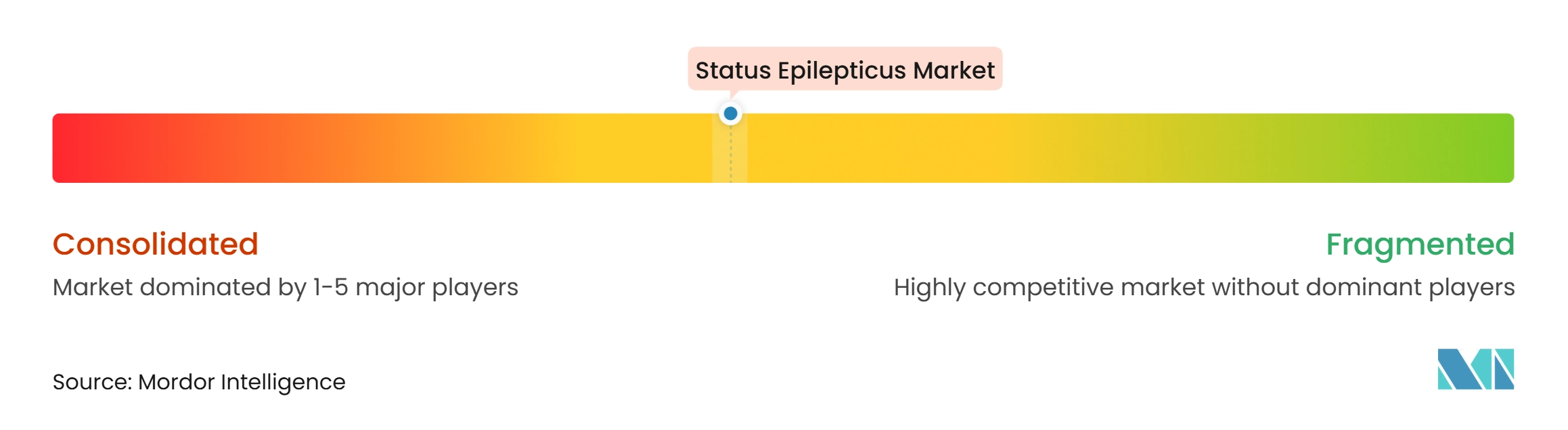
The status epilepticus market has intense generic competition in established intravenous medicines and a more concentrated field in newer monitoring technologies. Hikma, Sandoz, Teva, Lupin, Dr. Reddy’s, Sun Pharma, and Viatris compete through price, product availability, and geographic distribution for core benzodiazepine and levetiracetam use. These medicines are important in routine first-line and second-line protocols, but they offer limited room for product differentiation. Specialty companies are focusing on rescue formulations and therapies for patient groups with greater unmet need. Aquestive Therapeutics and Eton Pharmaceuticals announced an exclusive U.S. licensing agreement for LIBERVANT, a diazepam buccal film, in October 2026. The companies expect commercial launch in April 2027.
Ceribell has built a strong position in point-of-care EEG through its Clarity algorithm, hospital deployment, and growing clinical evidence base. Its April 2025 FDA clearance broadened access to patients as young as 1 year and reinforced the role of AI-assisted seizure detection. Natus has also entered the category with the 2025 clearance for BrainWatch’s electrographic status epilepticus diagnostic indication. Hospitals may value systems that combine bedside acquisition, automated interpretation, and remote neurologist collaboration. This creates switching costs once a system is integrated into ICU and emergency workflows. FDA oversight of AI-enabled medical devices is an important compliance factor because it affects validation requirements, labeling, and feature development. The device segment is likely to remain differentiated by workflow performance and clinical integration rather than hardware alone.
The clearest therapeutic opening remains refractory status epilepticus, where there is no approved treatment specific to the indication. Immedica’s plan for a new Phase 3 trial of intravenous ganaxolone in 2027 is a material strategic move because it targets this unmet need directly. LivaNova is also strengthening its position in epilepsy care through VNS Therapy and digital health development. The company reported that full 36-month CORE-VNS data across more than 800 patients at 61 international sites showed a 76% median reduction in seizure frequency, 16% complete seizure freedom, and a 73% reduction in seizure-related hospitalizations. These developments show that companies are competing across medicines, monitoring, and longer-term neuromodulation rather than through a single product category. Regulatory review, reimbursement, and clinical evidence will continue to determine which strategies gain hospital adoption.
Status Epilepticus Industry Leaders
-
UCB S.A.
-
Neurelis, Inc.
-
Hikma Pharmaceuticals PLC
-
Pfizer Inc.
-
Viatris Inc.
- *Disclaimer: Major Players sorted in no particular order
Status Epilepticus Market Companies Covered in this Report
- Abbvie
- AFT Pharmaceuticals Limited
- Aquestive Therapeutics
- B. Braun
- Bausch Health
- Ceribell, Inc.
- Crossject SA
- Dr. Reddy’s Laboratories
- Eisai
- Fresenius
- Hikma Pharmaceuticals
- Johnson & Johnson
- LivaNova
- Lupin
- Medtronic
- Neurelis
- Neuraxpharm Arzneimittel GmbH
- Pfizer
- Sandoz Group AG
- Sun Pharmaceuticals Industries
- Teva Pharmaceutical Industries
- Torrent Pharmaceuticals
- UCB
- Viatris
Recent Industry Developments in Status Epilepticus Market
- October 2026: Immedica announces plans for a new Phase 3 study of IV ganaxolone for refractory SE, to initiate in 2027. The decision follows productive FDA interactions confirming a clear regulatory path. Immedica acquired global ganaxolone rights through its 2025 acquisition of Marinus Pharmaceuticals, targeting the first potential RSE-specific approval candidate.
- October 2026: Eton Pharmaceuticals and Aquestive Therapeutics announce exclusive U.S. licensing agreement for LIBERVANT, a diazepam buccal film, with commercial launch anticipated in April 2027.
- June 2026: Viatris completes acquisition of Aculys Pharma and gains exclusive rights to Spydia in Japan and certain Asia-Pacific markets.
- April 2025: Ceribell receives FDA 510(k) clearance for its next-generation Clarity algorithm for electrographic seizure detection in patients aged 1 year and older.
Global Status Epilepticus Market Report Scope
According to the report’s scope, status epilepticus is a life-threatening seizure lasting 5 minutes or longer, or repeated seizures without regaining consciousness between them. It requires immediate emergency medical treatment to stop the seizure and prevent complications.
The status epilepticus market is segmented into product type, treatment setting, application, and geography. By product type, the market is segmented into intravenous antiseizure medicines, oral antiseizure medicines, emergency rescue formulations, EEG and seizure-monitoring equipment, EEG analysis and clinical decision-support software, and neurostimulation and adjunctive devices. By treatment setting, the market is segmented into emergency department, intensive care unit, pre-hospital and emergency medical services, neurology and epilepsy specialty centers, pediatric hospitals, ambulatory and community care, and tele-neurology and remote monitoring. By application, the market is segmented into convulsive status epilepticus, non-convulsive status epilepticus, refractory status epilepticus, super-refractory status epilepticus, new-onset refractory status epilepticus, and febrile infection-related epilepsy syndrome. By geography, the market is segmented into North America, Europe, Asia-Pacific, the Middle East and Africa, and South America. The report also covers the estimated market sizes and trends for 17 countries across major regions globally. The report offers values (USD) for all the above segments.
Segmentation Overview
| Intravenous Antiseizure Medicines |
| Oral Antiseizure Medicines |
| Emergency Rescue Formulations |
| EEG and Seizure-Monitoring Equipment |
| EEG Analysis and Clinical Decision-Support Software |
| Neurostimulation and Adjunctive Devices |
| Emergency Department |
| Intensive Care Unit |
| Pre-Hospital and Emergency Medical Services |
| Neurology and Epilepsy Specialty Centers |
| Pediatric Hospitals |
| Ambulatory and Community Care |
| Tele-Neurology and Remote Monitoring |
| Convulsive Status Epilepticus |
| Non-Convulsive Status Epilepticus |
| Refractory Status Epilepticus |
| Super-Refractory Status Epilepticus |
| New-Onset Refractory Status Epilepticus |
| Febrile Infection-Related Epilepsy Syndrome |
| North America | United States |
| Canada | |
| Mexico | |
| Europe | Germany |
| United Kingdom | |
| France | |
| Italy | |
| Spain | |
| Rest of Europe | |
| Asia-Pacific | China |
| Japan | |
| India | |
| Australia | |
| South Korea | |
| Rest of Asia-Pacific | |
| Middle East and Africa | GCC |
| South Africa | |
| Rest of Middle East and Africa | |
| South America | Brazil |
| Argentina | |
| Rest of South America |
| By Product Type | Intravenous Antiseizure Medicines | |
| Oral Antiseizure Medicines | ||
| Emergency Rescue Formulations | ||
| EEG and Seizure-Monitoring Equipment | ||
| EEG Analysis and Clinical Decision-Support Software | ||
| Neurostimulation and Adjunctive Devices | ||
| By Treatment Setting | Emergency Department | |
| Intensive Care Unit | ||
| Pre-Hospital and Emergency Medical Services | ||
| Neurology and Epilepsy Specialty Centers | ||
| Pediatric Hospitals | ||
| Ambulatory and Community Care | ||
| Tele-Neurology and Remote Monitoring | ||
| By Application | Convulsive Status Epilepticus | |
| Non-Convulsive Status Epilepticus | ||
| Refractory Status Epilepticus | ||
| Super-Refractory Status Epilepticus | ||
| New-Onset Refractory Status Epilepticus | ||
| Febrile Infection-Related Epilepsy Syndrome | ||
| Geography | North America | United States |
| Canada | ||
| Mexico | ||
| Europe | Germany | |
| United Kingdom | ||
| France | ||
| Italy | ||
| Spain | ||
| Rest of Europe | ||
| Asia-Pacific | China | |
| Japan | ||
| India | ||
| Australia | ||
| South Korea | ||
| Rest of Asia-Pacific | ||
| Middle East and Africa | GCC | |
| South Africa | ||
| Rest of Middle East and Africa | ||
| South America | Brazil | |
| Argentina | ||
| Rest of South America | ||
Key Questions Answered in the Report
What is driving growth in status epilepticus care?
Growth is supported by faster intervention protocols, wider point-of-care EEG use, expanded critical-care capacity, and newer treatment approaches for refractory cases. These changes improve the ability to diagnose seizures and act within a shorter treatment window, especially in acute hospital care.
What is the projected value of the Status Epilepticus Market by 2032?
The Status Epilepticus Market is forecast to reach USD 2.12 billion by 2032, growing at an 8.3% CAGR from 2027. The forecast reflects increasing treatment activity across medicines and monitoring in established and developing care settings.
Which product category is growing fastest in status epilepticus care?
EEG and seizure-monitoring equipment is projected to grow at a 10.4% CAGR through 2032 as hospitals seek faster detection of non-convulsive seizures. Point-of-care systems are especially relevant in the ICU and emergency department, where diagnostic delays can affect treatment decisions.
Why is point-of-care EEG important for status epilepticus?
It can help clinicians identify electrographic seizures earlier in emergency and intensive care settings when conventional EEG is not available quickly. Earlier confirmation can support more timely treatment decisions for suspected non-convulsive cases and can assist with appropriate use of conventional EEG resources.
Which treatment setting is expanding fastest?
The emergency department is forecast to grow at a 10.7% CAGR through 2032 because earlier assessment and point-of-care monitoring are becoming more important. It is also where prehospital handoff, rapid triage, and early treatment protocols converge in the care pathway.
What area has the greatest unmet treatment need?
Refractory status epilepticus has no therapy approved specifically for the indication and is projected to grow at an 11.5% CAGR through 2032. Ongoing clinical development is focused on patients who do not respond to standard escalation and need further treatment options, including approaches that address mechanisms not adequately controlled by conventional antiseizure medicines in severe, persistent episodes in practice.