
Specialty Cheese Market Size and Share
Market Overview
| Study Period | 2021 - 2031 |
|---|---|
| Market Size (2026) | USD 31.24 Billion |
| Market Size (2031) | USD 39.81 Billion |
| Growth Rate (2026 - 2031) | 5.14 % |
| Fastest Growing Market | Asia-Pacific |
| Largest Market | Europe |
| Market Concentration | Low |
Major Players *Disclaimer: Major Players sorted in no particular order Image © Mordor Intelligence. Reuse requires attribution under CC BY 4.0. | |
Specialty Cheese Market Analysis by Mordor Intelligence
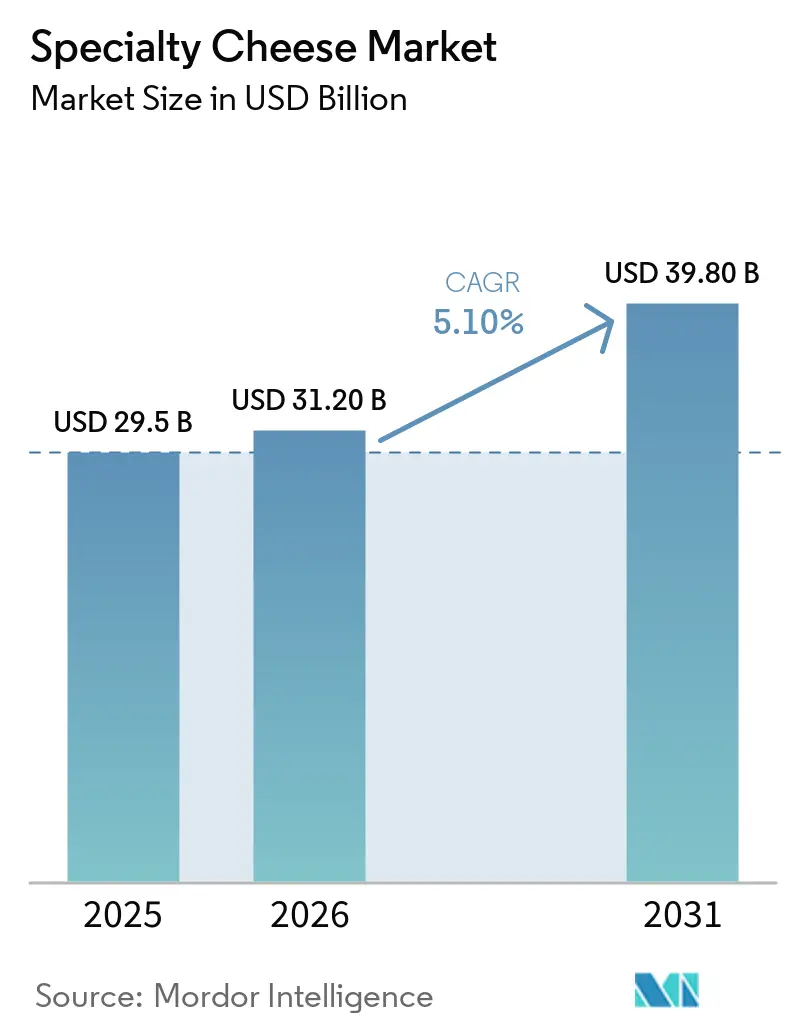
The specialty cheese market size was valued at USD 29.5 billion in 2025 and is estimated to grow from USD 31.2 billion in 2026 to reach USD 39.8 billion by 2031, at a CAGR of 5.14% during the forecast period from 2026 to 2031. Europe remained the largest regional base in 2025, supported by protected origin varieties, established consumption habits, and export infrastructure. Asia-Pacific is expected to deliver the highest regional growth as urban consumers encounter premium cheese through foodservice, retail, and home cooking. Aged products, retail channels, cow milk, and block formats continue to provide the volume base for the specialty cheese market. Fresh products, shredded formats, goat milk, and on-trade channels are set to expand faster as convenience, premium dining, and functional positioning broaden consumption occasions. Producers are balancing investment in brands, cold-chain capacity, traceability, and compliant production while acquisitions reshape access to regional manufacturing and distribution.
Key Report Takeaways
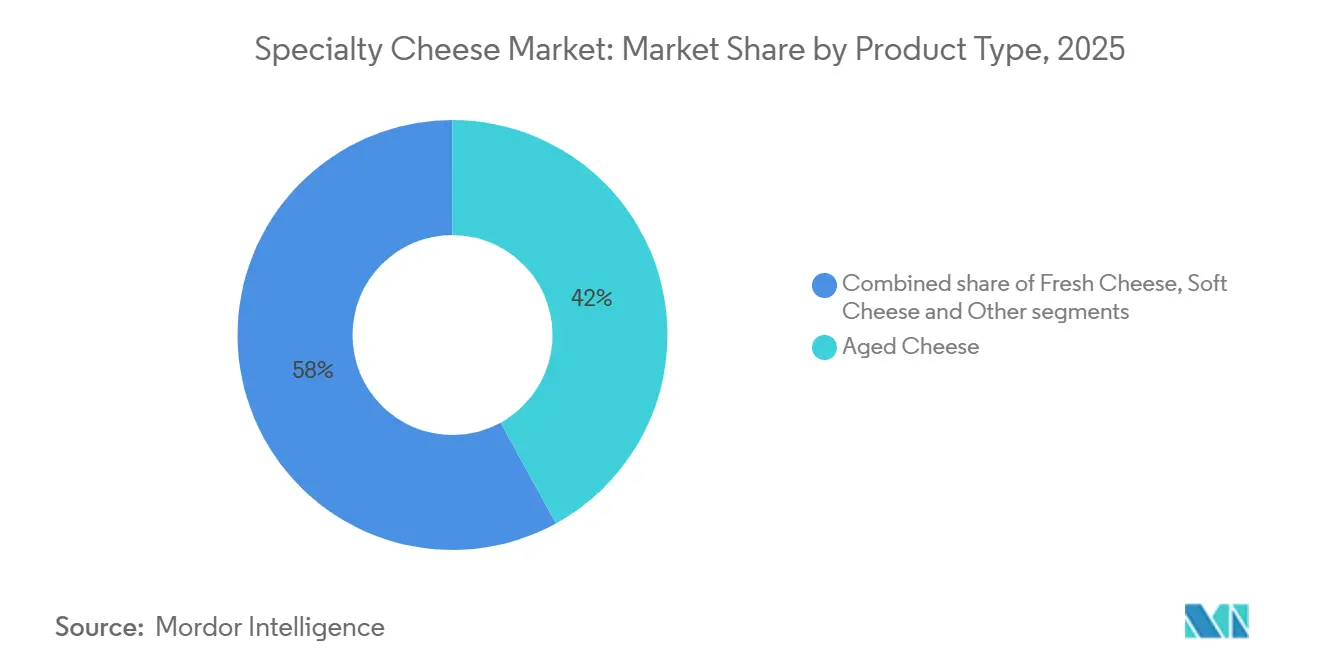
- By product type, aged cheese held 42% of the specialty cheese market share in 2025, while fresh cheese is forecast to grow at a 5.8% CAGR through 2031.
- By form, blocks held 55% of value in 2025, while shredded formats are forecast to grow at a 5.9% CAGR through 2031.
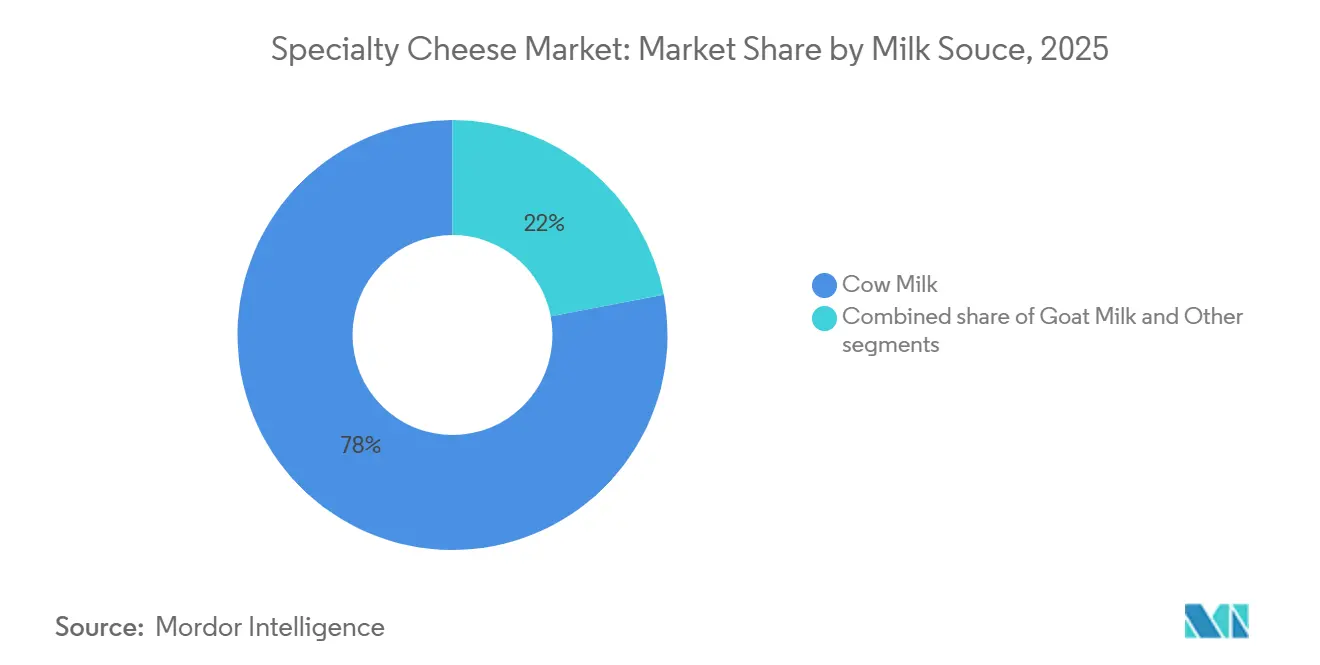
- By milk source, cow milk held 78% of value in 2025, while goat milk is forecast to grow at a 6.2% CAGR through 2031.
- By distribution channel, retail held 72% of the specialty cheese market share in 2025, while on-trade channels are forecast to grow at a 6% CAGR through 2031.
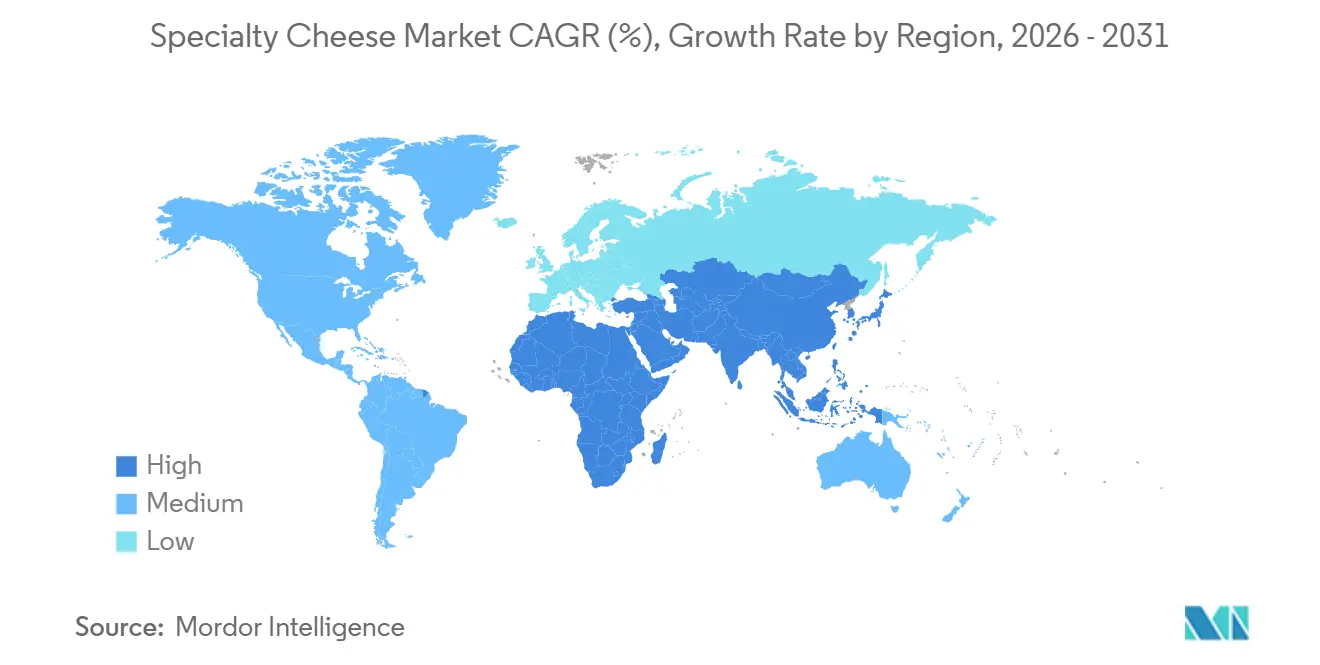
- By geography, Europe held 39% of value in 2025, while Asia-Pacific is forecast to grow at a 6.5% CAGR through 2031.
Note: Market size and forecast figures in this report are generated using Mordor Intelligence’s proprietary estimation framework, updated with the latest available data and insights as of January 2026.
Market Trends and Insights
Drivers Impact Analysis of Specialty Cheese Market*
| Driver | (~) % Impact on CAGR Forecast | Geographic Relevance | Impact Timeline |
|---|---|---|---|
| Premiumization and demand for artisanal cheese | +1.5% | Global, with greater intensity in Western Europe and North America | Medium term (2-4 years) |
| Expansion of gourmet foodservice and culinary tourism | +0.8% | Europe, with spillover to Asia-Pacific and the Middle East | Medium term (2-4 years) |
| E-commerce and direct-to-consumer discovery | +0.7% | North America, the European Union, and urban Asia-Pacific | Short term (≤ 2 years) |
| Clean-label, high-protein and functional positioning | +0.9% | Global, with early concentration in North America and the European Union | Short term (≤ 2 years) |
| Digital traceability enabling origin-based premiums | +0.4% | European Union Protected Designation of Origin (PDO) and Protected Geographical Indication (PGI) markets, with spillover effects in North America. | Long term (≥ 4 years) |
| Precision fermentation and controlled aging innovation | +0.5% | North America, selected Asia-Pacific markets, and the European Union subject to regulation | Long term (≥ 4 years) |
| Source: Mordor Intelligence | |||
Premiumization and Demand for Artisanal Cheese
Consumer demand for authenticated and craft-produced products continues to shape the specialty cheese market. A University of Wisconsin DBIA survey in 2024, found that 42% of at-shelf purchase decisions are driven by taste preference, with quality cited by 16%, together outweighing price as a primary consideration. The non-obvious dynamic is that the "Gourmet Connoisseur" consumer cohort (30% of buyers, highest income, average age 42) continued increasing purchases through inflationary periods because they associate specialty cheese with emotional indulgence and occasion-based identity rather than a nutritional commodity[1]. The expansion of this category indicates growing consumer interest in aged hard cheeses, which are typically associated with more developed flavor profiles, longer maturation periods, and premium-quality perceptions. Growth in aged hard formats also suggests that retail and foodservice channels are investing simultaneously in these products, broadening their availability.
Expansion of Gourmet Foodservice and Culinary Tourism
The convergence of premium dining culture and curated travel experiences is creating a commercially significant, recurring on-trade demand pull for specialty cheeses that retail alone cannot replicate. The strategically underappreciated dynamic is that culinary tourism generates a retail halo effect: travelers returning home from cheese-producing regions actively seek those specific varieties in local specialty retail, driving trial-to-loyalty conversion that conventional advertising rarely achieves. This is particularly impactful in Asia-Pacific: IFF's 2026 Dairy Trends Report found that 45% of Chinese consumers report eating cheese to improve their mood[2], confirming that foodservice encounters serve as the primary trial mechanism in markets where cheese is not a dietary staple. United States cheese exports to Southeast Asia's foodservice sector surged 43% in volume to USD 106 million in the 12 months through April 2026[3], validating that gourmet foodservice is the fastest commercial bridge between producer countries and new consumer markets.
Clean-label, High-Protein and Functional Positioning
Specialty cheese occupies a unique structural position at the intersection of clean-label simplicity and functional protein density, two of the most durable consumer demand trends of the current period, giving it a pricing and placement advantage that most other premium food categories lack. Lactalis' Lindahls brand launched high-protein cheese in the United Kingdom in July 2025, a move that signals leading multinationals are formalizing functional positioning at commercial scale. Fonterra's 2026 internal category insights confirm that non-dairy alternative New Product Development (NPD) is declining, while high-protein dairy categories continue to accelerate. GLP-1 drug users, now a commercially measurable consumer cohort, are actively seeking compact, nutrient-dense options, where specialty cheese holds a structural advantage. Products with short ingredient lists and protein positioning can be considered for wellness-oriented occasions as well as indulgence.
Digital Traceability Enabling Origin-based Premiums
Blockchain-enabled traceability is evolving from pilot infrastructure into a commercial requirement for Protected Designation of Origin (PDO)-certified specialty cheese. This shift directly affects price premiums, counterfeit prevention, and consumer trust. The European Union (EU)-funded ALLIANCE project is validating distributed ledger technologies, supported by Internet of Things (IoT) sensors and in-situ authenticity testing, across Protected Designation of Origin (PDO), Protected Geographical Indication (PGI), and organic food supply chains, including cheese. These initiatives are creating an emerging expectation for verifiable digital provenance. The University of Zurich’s CheeseChain project has implemented a blockchain-backed audit trail combined with in-product Deoxyribonucleic Acid (DNA) certification for Tête-de-Moine Protected Designation of Origin (PDO) cheese. The system enables automated fraud detection that is technically difficult to replicate outside the designated value chain.
Restraints Impact Analysis of Specialty Cheese Market*
| Restraint | (~) % Impact on CAGR Forecast | Geographic Relevance | Impact Timeline |
|---|---|---|---|
| Premium price sensitivity and substitution | -1.5% | Global, with greater exposure in Asia-Pacific and South America | Short term (≤ 2 years) |
| Food-safety, labeling and origin-protection compliance | -0.7% | European Union and North America, with effects on export-facing producers globally | Medium term (2-4 years) |
| Cold-chain fragility and short freshness windows | -0.9% | Asia-Pacific, South America, the Middle East, and Africa | Medium term (2-4 years) |
| Raw-milk variability, climate exposure and phage risk | -0.6% | Global, with higher exposure in European and North American producing regions | Long term (≥ 4 years) |
| Source: Mordor Intelligence | |||
Premium Price Sensitivity and Substitution
Price remains the single most structurally significant barrier to incremental specialty cheese consumption, even among engaged category buyers who express strong affinity for the product. A University of Wisconsin DBIA study (October 2024) identified 22% of specialty cheese buyers who cite cost as the primary barrier to purchasing more, while a full 30% of the buyer population, the "Budget Cheese Considerers" segment, reports that 53% strongly or very strongly agree that cost governs their purchase decision. The substitution risk extends beyond commodity cheese to encompass precision-fermented dairy proteins and plant-based cheese analogs, both of which are improving on functional performance while narrowing the price gap. A counter-intuitive finding from the same DBIA research is that approximately one-third of all incremental consumption is promotion-dependent, meaning volume growth in the category is partially promotion-driven rather than structural, which creates margin risk for premium producers that attempt to hold or raise prices during inflationary episodes.
Food-safety, Labeling and Origin-Protection Compliance
Evolving regulatory requirements across the major producing regions are compressing specialty cheese producers' margins through compliance investment demands that fall disproportionately on artisanal-scale operations. EU Commission Regulation (EU) 2024/2895 (November 2024) amended the microbiological criteria under Regulation (EC) 2073/2005, extending Listeria monocytogenes monitoring obligations from primary manufacturers to all relevant operators across the ready-to-eat food supply chain, adding monitoring, documentation, and potentially reformulation costs for small and mid-tier producers. In the United States, Food and Drug Adminstration's July 2025 proposal to revoke 18 obsolete standards of cheese identity introduces labeling uncertainty for producers holding established market positions under affected definitions, while Food Safety Modernization Act (FSMA) preventive controls under 21 CFR Part 117 continue to impose a learning and resource burden on independent creameries without dedicated food-safety personnel, as documented in the American Cheese Society's Best Practices Guide for Cheesemakers 2025.
*Our forecasts treat driver/restraint impacts as directional, not additive. The impact forecasts reflect baseline growth, mix effects, and variable interactions.
Specialty Cheese Market Segment Analysis
By Product Type:
Aged Formats Anchor Value and Fresh Cheese Drives GrowthAged cheese held 42% of the specialty cheese market size in 2025, making it the largest product type. Aged cheese remains the leading product type in the specialty cheese market, driven by strong consumer associations with aging, provenance, premium quality, and traditional craftsmanship, particularly in Europe and North America. Sharp, aged, and smoked cheddar, Asiago, Parmesan, and Parmigiano Reggiano benefit from established consumer familiarity and premium positioning. Meanwhile, soft, blue, and flavored cheeses expand portfolio variety and appeal to consumers seeking distinctive flavors and specialty formats. Highly specialized varieties, such as blue cheese, require greater retail and foodservice support to maintain consumer visibility and demand.
Fresh cheese is forecast to grow at a 5.8% CAGR through 2031, the highest rate among product types. It fits clean-label, functional, and foodservice use cases. Fresh cheese is a high-growth product category, driven by consumer preferences for clean-label, fresh, versatile, and functional foods. Fresh mozzarella benefits from its established use in Italian cuisine, pizza, cafés, and casual dining, while the expansion of foodservice formats across Southeast Asia creates additional growth opportunities. Rising demand for cream cheese and other fresh cheese formats also encourages producers to expand production capacity and strengthen their product portfolios

By Form:
Blocks Lead Distribution and Shredded Formats Gain at Foodservice ScaleBlocks held 55% of the specialty cheese market size in 2025, making them the leading form. They support flexible portioning for both retail and foodservice customers. Block and wheel presentations also suit quality preservation and export distribution. Their role aligns with the large aged cheese and cow milk categories, which commonly use these forms. Sliced cheese serves convenience-oriented retail in North America and Northern Europe. Spreads, snack portions, and crumbles provide a smaller innovation space for snacking and functional nutrition.
Shredded cheese is forecast to grow at a 5.9% CAGR through 2031, the fastest rate by form. Convenience in home cooking and efficiency in foodservice support this demand. Meal-kit and frozen-meal manufacturers can use shredded products to offer premium cheese credentials without additional preparation. Clean-label shredded products without anti-caking agents or artificial preservatives can support premium shelf positioning. EUR-LEX Operational capability in food safety and cold-chain management will shape the pace of expansion. This makes convenience benefits and compliance requirements closely linked for this segment.
By Milk Source:
Cow Milk Anchors Scale and Goat Milk Leads Category GrowthCow milk held 78% of category value in 2025. Consistent supply, production scale, and broad consumer familiarity underpin this leading position. U.S. cheddar production increased 5.8% in 2025. Parmesan-style varieties increased 17.9% during the same year, as per USDA National Agricultural Statistics Service Information. This pattern indicates that premium value growth can develop within the large cow milk base. Sheep milk retains an important place in protected European categories such as Roquefort, Manchego, and Pecorino Romano. Buffalo and mixed-herd products serve smaller regional premium niches. These sources face greater exposure to supply variability and herd-management conditions.
Goat milk is forecast to grow at a 6.2% CAGR through 2031, the highest rate among milk sources. Its appeal rests on artisanal traditions, distinctive flavor, and perceived digestibility. French chèvre traditions continue to give the segment a strong cultural position in Europe. Lighter and fresher goat formats can also offer an entry point in markets where cheese consumption is still emerging. In urban India, goat cheese is being adopted as a premium alternative to paneer. In China, mood-oriented cheese consumption offers another potential occasion for fresh goat cheese.
By Distribution Channel:
Retail Commands Volume and On-Trade Leads GrowthRetail held 72% of category value in 2025 for specialty cheese, supported by the wide availability of products across supermarkets, hypermarkets, specialty stores, and online platforms. Supermarkets and hypermarkets offer extensive consumer reach, while specialty and gourmet stores reinforce premium positioning, facilitate product discovery, and provide differentiated cheese offerings. Online platforms are gaining importance as improvements in cold-chain logistics, product assortment, convenience, and home delivery make specialty cheese more accessible. Meanwhile, the expansion of private-label specialty cheese can support category volumes while increasing pricing and margin pressure on branded premium products.
On-trade channels are forecast to grow at a 6% CAGR through 2031, the highest rate among distribution channels. Restaurants, casual dining cheese boards, and culinary tourism support this expansion. The channel is also a practical route to introduce specialty cheese in countries where consumption habits are still forming. Japan's Awaji Island Cheese Factory expanded dinner service in August 2026 to combine foodservice and culinary tourism. Foodservice operators in India are also facing pressure for cleaner and shorter ingredient lists in processed dairy products. Natural specialty cheese can benefit where operators seek to respond to that requirement.
Geography Analysis
Europe Specialty Cheese Market
Europe holds 39% of the global specialty cheese market value in 2025, the largest regional share, and the structural foundations for its leadership position remain intact through the forecast period. With high tourist culture and an expanding foodservice industry, Europe's specialty cheese sector generates economic value that extends well beyond direct product sales. Germany, France, Italy, Spain, and the United Kingdom together dominate production, with consolidation reshaping the competitive landscape: EU Commission Regulation (EU) 2024/2895 (November 2024), which extends Listeria monitoring to all operators in the ready-to-eat dairy supply chain, raises the compliance cost baseline for European artisanal producers while simultaneously elevating the quality floor that reinforces regional export credibility globally.
APAC Specialty Cheese Market
Asia-Pacific is the fastest-growing region at a 6.50% CAGR (2026-2031), with China functioning as the commercial anchor of regional growth. China's imported cheese market growth, with premium French AOP brie, camembert, comté, and Italian DOP Parmigiano Reggiano across urban premium stores, supported by 2–6°C dairy sections with 2-hour home delivery, is driving the market growth. India's specialty cheese market is expected to grow as urban consumers graduate from processed formats to artisanal varieties. Japan and South Korea are mature sub-markets within the region, with demand increasingly oriented toward premium imported varieties and fusion applications that blend specialty cheese with traditional local ingredients.
The Americas, MEA and APAC Specialty Cheese Market
North America is a high-consumption, innovation-active market that provides both commercial scale and the most advanced direct-to-consumer distribution infrastructure in the specialty cheese segment. The United States leads with Wisconsin producing a record 1.03 billion pounds of specialty cheese in 2025, representing 28% of the state's total cheese output. Merger and Acquisition activity is reshaping mid-tier competition: Sartori Cheese's June 2025 acquisition of organic specialist Rumiano Cheese Company expanded artisan portfolio breadth, while Schuman Cheese's January 2026 exclusive distribution agreement with Wyke Farms extended premium British cheddar access across United States retail. South America presents a growing opportunity, with Brazil emerging as an active consolidation zone. The Middle East and Africa, while currently a smaller share of global value, is experiencing foodservice-driven demand growth in the United Arab Emirates and Saudi Arabia, with Lactalis' Mainland Group acquisition extending production access to Saudi Arabia and Southeast Asia simultaneously.
Competitive Landscape
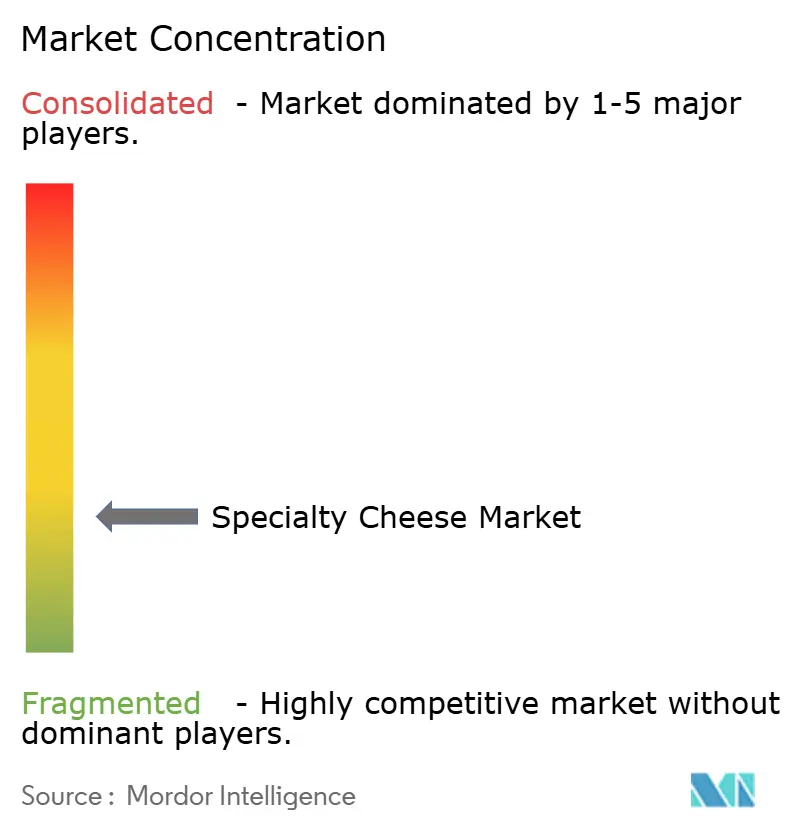
The specialty cheese market is fragmented, with no single company able to set category pricing or innovation direction. The dominant strategic theme of 2025-2026 is acquisition-led geographic consolidation: Groupe Lactalis completed the NZD 5.6 billion Fonterra Mainland Group transaction in April 2026, expanding from 34 to 50 production sites across Oceania, Southeast Asia, and the Middle East, while simultaneously agreeing to acquire Saputo's United Kingdom operations and Agropur Canada's fine cheese division (OKA, Monsieur Gustav, L'Extra) within the same three-month window. Arla Foods is pursuing a parallel but organically focused strategy: its EUR 300 million commitment to a new Swedish cheese dairy, the largest single investment in Swedish food production on record.
Innovation-led disruption is concentrating in two vectors: functional premium positioning and precision fermentation. On the functional side, the mainstreaming of protein and clean-label claims documented in Glanbia Nutrition's 2026 global cheese trends analysis and IFF's 2026 Dairy Trends Report is creating a sub-segment where incumbents with scale in formulation and labeling compliance hold a temporary advantage over artisan producers. On precision fermentation, patent and regulatory activity is disproportionately held by early-stage innovators: AuX Labs obtained self-affirmed GRAS status in April 2025 for its precision-fermented casein biologically identical to animal-derived protein and closed a USD 4 million seed round in April 2026.
This model enables rapid portfolio expansion without requiring capital-intensive manufacturing investments, as companies can add products and brands through sourcing, distribution, licensing, or acquisition rather than building and operating production facilities. It is particularly well suited to a fragmented market, where numerous regional and specialty producers may lack the scale, brand reach, and distribution capabilities required to access premium retail channels. Compliance with EU Protected Designation of Origin (PDO) and Protected Geographical Indication (PGI) regulations under Regulation (EU) No 1151/2012 continues to serve as a credible competitive moat for origin-certified European producers. As a result, compliant producers can differentiate their offerings through verified provenance, authenticity, and quality standards. This protection strengthens incumbent positions in premium retail by limiting the ability of private-label and generic competitors to replicate protected names, origin claims, and associated product attributes.
Specialty Cheese Industry Leaders
-
Groupe Lactalis
-
Saputo Inc.
-
Arla Foods amba
-
Fonterra Co-operative Group Limited
-
Bel Group
- *Disclaimer: Major Players sorted in no particular order
Specialty Cheese Market Companies Covered in this Report
- Groupe Lactalis
- Saputo Inc.
- Arla Foods amba
- Fonterra Co-operative Group Limited
- Bel Group
- Emmi AG
- Groupe Savencia Fromage and Dairy
- Sargento Foods Inc.
- Dairy Farmers of America, Inc.
- The Kraft Heinz Company
- FrieslandCampina
- Zanetti S.p.A.
- Murray’s Cheese
- Dairy Farmers of America
- Cabot Creamery Cooperative
- Tillamook County Creamery Association
- Rogue Creamery
- Vermont Creamery
- Ornua Co-operative Limited
- Hochland SE
- Glanbia plc
Recent Industry Developments in Specialty Cheese Market
- August 2026: Lactalis entered a definitive agreement to acquire Saputo's United Kingdom business, including Cathedral City, Davidstow, and Wensleydale Creamery brands, along with five production facilities. The deal represents Lactalis' fourth acquisition in under two months and consolidates its position as the dominant force in United Kingdom premium cheddar.
- July 2026: Lactalis Canada reached a definitive agreement to acquire Agropur Cooperative's fine cheese division, including OKA, Monsieur Gustav, and L'Extra brands, two Quebec production facilities in Oka and Saint-Hyacinthe, and approximately 400 employees subject to Competition Bureau Canada approval.
- July 2026: Tropical Cheese Industries acquired Pineland Farms Dairy Company in Bangor, Maine, the largest cheese producer in Maine, with plans to establish the facility as its second core specialty cheese manufacturing location and expand production capacity over time.
Global Specialty Cheese Market Report Scope
Specialty cheese refers to premium or differentiated cheese produced using distinctive ingredients, traditional or artisanal processes, specific aging techniques, unique flavors or textures, or geographically defined production methods. It is marketed primarily based on attributes such as quality, origin, craftsmanship, authenticity, and uniqueness, rather than price alone. The scope of the report includes segmentation by product type, form, distribution channel, and geography. By product type, the market is segmented into fresh cheese, aged cheese, soft cheese, blue cheese, and flavored cheese. By form, the market is segmented into blocks, sliced, shredded, and other forms. By milk source, the market is segmented into cow milk, goat milk, sheep milk, and other milk sources. By distribution channel, the market is segmented into on-trade and retail. The retail segment is further bifurcated into supermarkets and hypermarkets, specialty stores, online retail stores, and others. By geography, the market is segmented into North America, Europe, Asia-Pacific, South America, the Middle East, and Africa. The market sizing has been done in value terms in USD for all the abovementioned segments.
| Fresh Cheese |
| Aged Cheese |
| Soft Cheese |
| Blue Cheese |
| Flavored Cheese |
| Blocks |
| Sliced |
| Shredded |
| Other Forms |
| Cow Milk |
| Goat Milk |
| Sheep Milk |
| Other Milk Sources |
| On-Trade | |
| Retail | Supermarkets and Hypermarkets |
| Specialty Stores | |
| Online Retail Stores | |
| Others |
| North America | United States |
| Canada | |
| Mexico | |
| Rest of North America | |
| Europe | Germany |
| United Kingdom | |
| France | |
| Italy | |
| Spain | |
| Russia | |
| Rest of Europe | |
| Asia-Pacific | China |
| Japan | |
| India | |
| Australia | |
| South Korea | |
| Rest of Asia-Pacific | |
| South America | Brazil |
| Argentina | |
| Rest of South America | |
| Middle East and Africa | Saudi Arabia |
| United Arab Emirates | |
| Turkey | |
| South Africa | |
| Egypt | |
| Rest of Middle East and Africa |
| By Product Type | Fresh Cheese | |
| Aged Cheese | ||
| Soft Cheese | ||
| Blue Cheese | ||
| Flavored Cheese | ||
| By Form | Blocks | |
| Sliced | ||
| Shredded | ||
| Other Forms | ||
| By Milk Source | Cow Milk | |
| Goat Milk | ||
| Sheep Milk | ||
| Other Milk Sources | ||
| By Distribution Channel | On-Trade | |
| Retail | Supermarkets and Hypermarkets | |
| Specialty Stores | ||
| Online Retail Stores | ||
| Others | ||
| By Geography | North America | United States |
| Canada | ||
| Mexico | ||
| Rest of North America | ||
| Europe | Germany | |
| United Kingdom | ||
| France | ||
| Italy | ||
| Spain | ||
| Russia | ||
| Rest of Europe | ||
| Asia-Pacific | China | |
| Japan | ||
| India | ||
| Australia | ||
| South Korea | ||
| Rest of Asia-Pacific | ||
| South America | Brazil | |
| Argentina | ||
| Rest of South America | ||
| Middle East and Africa | Saudi Arabia | |
| United Arab Emirates | ||
| Turkey | ||
| South Africa | ||
| Egypt | ||
| Rest of Middle East and Africa | ||
Key Questions Answered in the Report
What is the current value of specialty cheese sales worldwide?
The specialty cheese market was valued at USD 31.2 billion in 2026 and is forecast to reach USD 39.8 billion by 2031. Its projected 5.1% CAGR reflects continued premium retail, foodservice, and fresh-format demand.
Which region leads specialty cheese consumption and production?
Europe held 39% of global value in 2025, supported by protected origin varieties, established consumption, and export capacity. The region also benefits from recognized cheese traditions and formal product protection.
Where is demand expanding most quickly?
Asia-Pacific is forecast to grow at a 6.5% CAGR through 2031, led by urban foodservice, premium retail, and home cooking adoption.
Which cheese type has the largest share?
Aged cheese held 42% of value in 2025, while fresh cheese is forecast to grow fastest at a 5.8% CAGR through 2031.