
Special Purpose Needles Market Size and Share
Market Overview
| Study Period | 2021 - 2032 |
|---|---|
| Market Size (2027) | USD 2.66 Billion |
| Market Size (2032) | USD 3.94 Billion |
| Growth Rate (2027 - 2032) | 8.21 % |
| Fastest Growing Market | Asia-Pacific |
| Largest Market | North America |
| Market Concentration | Medium |
Major Players *Disclaimer: Major Players sorted in no particular order Image © Mordor Intelligence. Reuse requires attribution under CC BY 4.0. | |
Special Purpose Needles Market Analysis by Mordor Intelligence
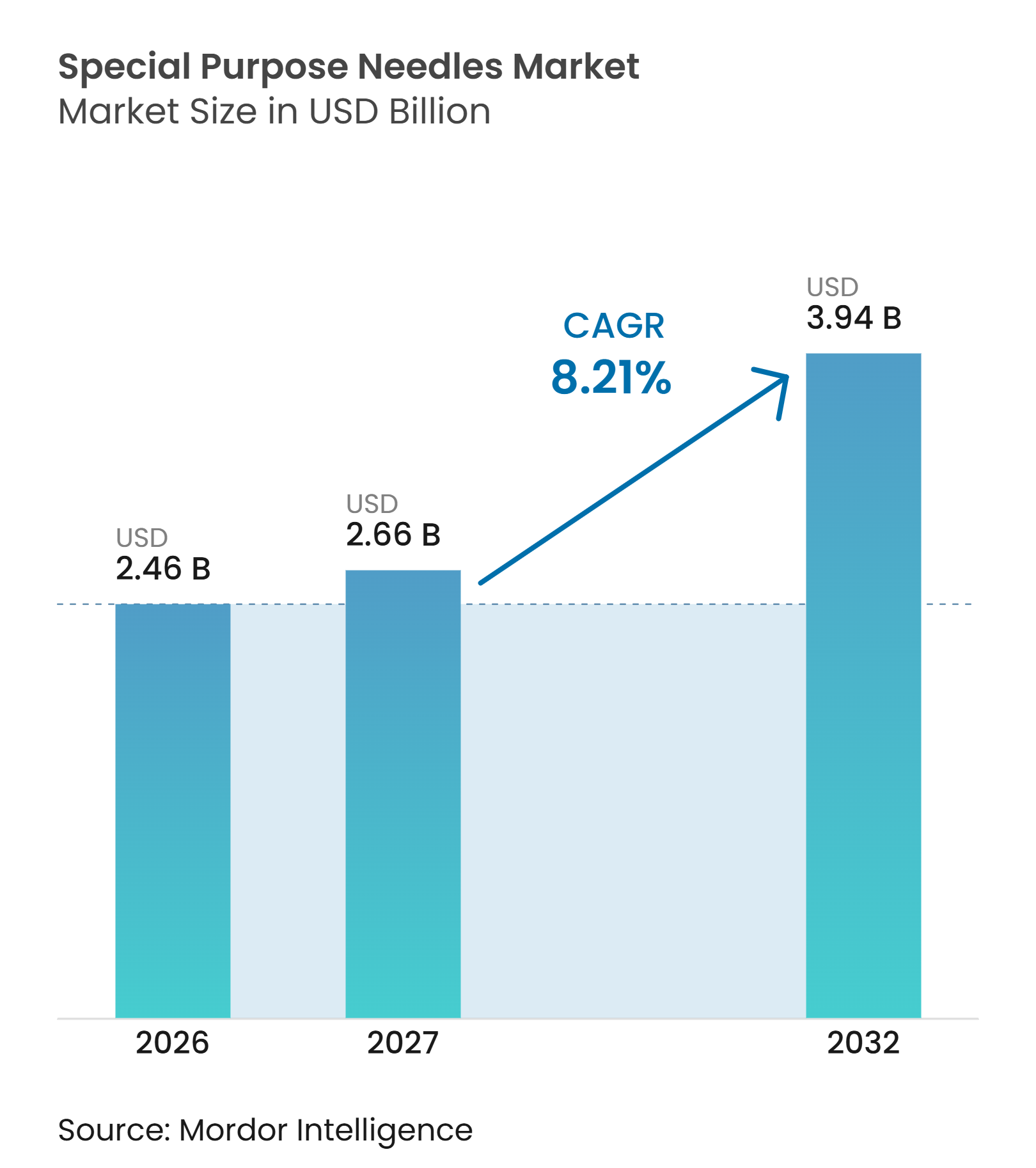
The Special Purpose Needles Market size is expected to grow from USD 2.46 billion in 2026 to USD 2.66 billion in 2027 and is forecast to reach USD 3.94 billion by 2032 at 8.21% CAGR over 2027-2032.
The special purpose needles market is moving toward procedure-specific products that support cancer diagnosis, chronic disease treatment, and minimally invasive care. Demand is shifting toward designs that work with ultrasound, CT, robotic systems, and molecular testing workflows. Safety features and single-use formats are also raising the value of purchases beyond conventional consumable needles. Health systems are giving greater weight to supply reliability after recent biopsy needle shortages exposed the limits of single-source purchasing. Manufacturers can compete through product compatibility, clinical performance, and dependable supply rather than price alone.
Key Report Takeaways
- By product type, biopsy needles held 17.5% of the special purpose needles market share in 2026, while IV catheter needles are forecast to grow at a 10.5% CAGR through 2032.
- By application, sample collection accounted for 58.8% of the special purpose needles market size in 2026, while drug delivery is forecast to advance at an 11.7% CAGR through 2032.
- By end user, hospitals and surgical centers held 38.7% of the special purpose needles market share in 2026, while diagnostic imaging centers and pathology laboratories are forecast to expand at an 11.5% CAGR through 2032.
- By distribution channel, direct institutional procurement accounted for 32.8% of the special purpose needles market size in 2026, while medical device distributors are forecast to grow at an 11.8% CAGR through 2032.
- By geography, North America held 43.2% of the special purpose needles market share in 2026, while Asia-Pacific is forecast to grow at a 9.5% CAGR through 2032.
Note: Market numbers in this report are based on Mordor Intelligence's proprietary estimation framework, which combines nine months of actuals with Q4 projections for base year 2026.
Market Trends and Insights
Drivers Impact Analysis of Special Purpose Needles Market*
| Driver | (~) % Impact on CAGR Forecast | Geographic Relevance | Impact Timeline |
|---|---|---|---|
| Rising Cancer Screening and Image-Guided Biopsy Volumes | +2.50% | North America & Europe core, spill-over to APAC | Medium term (2-4 years) |
| Increasing Preference for Minimally Invasive Procedures | +2.00% | Global | Short term (≤ 2 years) |
| Expansion of Chronic-Disease and Injectable Drug Management | +1.50% | APAC core, spill-over to MEA and South America | Long term (≥ 4 years) |
| Growth of Safety-Engineered and Single-Use Needle Adoption | +1.20% | Global, with early gains in North America and EU | Short term (≤ 2 years) |
| Rising Demand for Repeatable Molecular Sampling in Precision Oncology | +0.80% | North America, Western Europe, Japan | Medium term (2-4 years) |
| Integration of Echogenic Tips, Advanced Tip Geometry, and Smart Needle Features | +0.60% | North America, Germany, France | Long term (≥ 4 years) |
| Source: Mordor Intelligence | |||
Rising Cancer Screening and Image-Guided Biopsy Volumes
Cancer screening programs are increasing the number of procedures that require reliable tissue collection. The special purpose needles market benefits as CT and ultrasound guidance extend biopsies to targets that are difficult to access. A 2025 DeGIR registry analysis of 27,559 image-guided lung biopsies across 212 centers reported a 97.7% technical success rate and a 94.3% diagnostic yield. Outpatient diagnosis is also becoming more common as image-guided procedures are used more widely. This environment favors disposable CT-compatible core biopsy products and thin-wall aspiration needles that support specimen quality. It also supports product designs that can deliver adequate tissue for molecular testing in a single procedure.
Increasing Preference for Minimally Invasive Procedures
Fine-needle aspiration and core biopsy systems are replacing open surgical biopsy in a wider set of clinical settings. This change supports demand for sterile, single-use products that can provide access through a smaller tract. A 2025 article in the Journal of Vascular and Interventional Radiology linked the increased use of image-guided biopsies to genomic profiling, clinical trial needs, and low adverse-event rates relative to surgical alternatives[1]. Providers also need needles that obtain adequate tissue in a single pass and reduce repeat procedures. Cook Medical and Mendaera began a 2025 collaboration to combine EchoTip technology with a handheld robotic platform for percutaneous urological procedures. The arrangement shows how manufacturers can become part of a robotic procedure workflow rather than remain suppliers of a standalone needle.
Expansion of Chronic-Disease and Injectable Drug Management
Injectable treatment for diabetes, obesity, and autoimmune conditions is changing demand for pen needles and prefillable syringe components. The American Diabetes Association stated in its 2025 standards that insulin pens are preferred for multiple daily injection therapy in most cases. The standards also recommend connected insulin pens for patients on intensive insulin regimens[2]. BD and Ypsomed expanded their partnership in January 2026 to develop a 5.5 mL BD Neopak XtraFlow Glass Prefillable Syringe with an 8-millimeter needle and thinner-wall cannulas for high-viscosity biologics. The special purpose needles market therefore contains both high-volume products for established insulin regimens and specialized products for newer biologic therapies. This split supports higher-value formats where drug viscosity, dose volume, and self-injection ease require a different design.
Growth of Safety-Engineered and Single-Use Needle Adoption
Safety-engineered formats are replacing conventional needles across a large installed base. The change is especially important where passive safety mechanisms are preferred because they do not rely on user activation. Facilities are increasingly evaluating safety features during purchasing decisions for high-volume needle categories. BD expanded domestic manufacturing capacity for safety-engineered injection devices, including investment in IV line manufacturing in Utah during 2025. Once a facility adopts a safety-engineered format, clinical and reputational concerns make a return to conventional products less likely. The resulting replacement cycle supports single-use formats in hospitals and other regulated care settings.
Restraints Impact Analysis of Special Purpose Needles Market*
| Restraint | (~) % Impact on CAGR Forecast | Geographic Relevance | Impact Timeline |
|---|---|---|---|
| Needlestick Injuries, Infection Exposure, and Sharps-Disposal Liability | –0.5% | Global, highest burden in South and Southeast Asia | Short term (≤ 2 years) |
| Shortage of Skilled Operators and Uneven Access to Image Guidance | –0.4% | MEA, South America, rural APAC | Medium term (2-4 years) |
| High Cost of Advanced Guidance-Compatible Needles | –0.5% | MEA, South America, rural India | Long term (≥ 4 years) |
| Sampling Inadequacy and Limited Tissue Yield for Downstream Molecular Testing | –0.3% | Global | Medium term (2-4 years) |
| Source: Mordor Intelligence | |||
Needlestick Injuries, Infection Exposure, and Sharps-Disposal Liability
Needlestick injuries can slow adoption when facilities lack sufficient safety-validation evidence or face high disposal costs. The special purpose needles market also gains from the need for safer products, but risk concerns can limit premium purchases in resource-constrained settings. A 2025 review reported that the World Health Organization estimated a 43% average needlestick injury rate across 113 countries, with Africa reporting the highest regional incidence at 51%. Spending on basic disposal compliance can leave fewer funds for advanced specialty products. This pressure is stronger where safety budgets are directed toward basic sharps handling and disposal processes. Incomplete injury reporting can also obscure the full liability that institutions need to manage.
Shortage of Skilled Operators and Uneven Access to Image Guidance
Advanced echogenic, vacuum-assisted, and robotic-compatible products require trained operators and real-time imaging. This requirement constrains uptake where interventional specialists and image-guidance systems are unevenly available. The 2025 Journal of Vascular and Interventional Radiology article reported nondiagnostic biopsy rates of 20% to 50%, depending on the procedure and setting. Off-target sampling, limited histological methods, and weak needle-tissue interaction can all contribute to this result. The gap is most visible in rural and lower-income settings, although high-volume centers can also face training capacity constraints. Simulation training and remote proctoring may reduce the gap, but manufacturers cannot resolve it through needle design alone.
*Our forecasts treat driver/restraint impacts as directional, not additive. The impact forecasts reflect baseline growth, mix effects, and variable interactions.
Special Purpose Needles Market Segment Analysis
By Product Type:
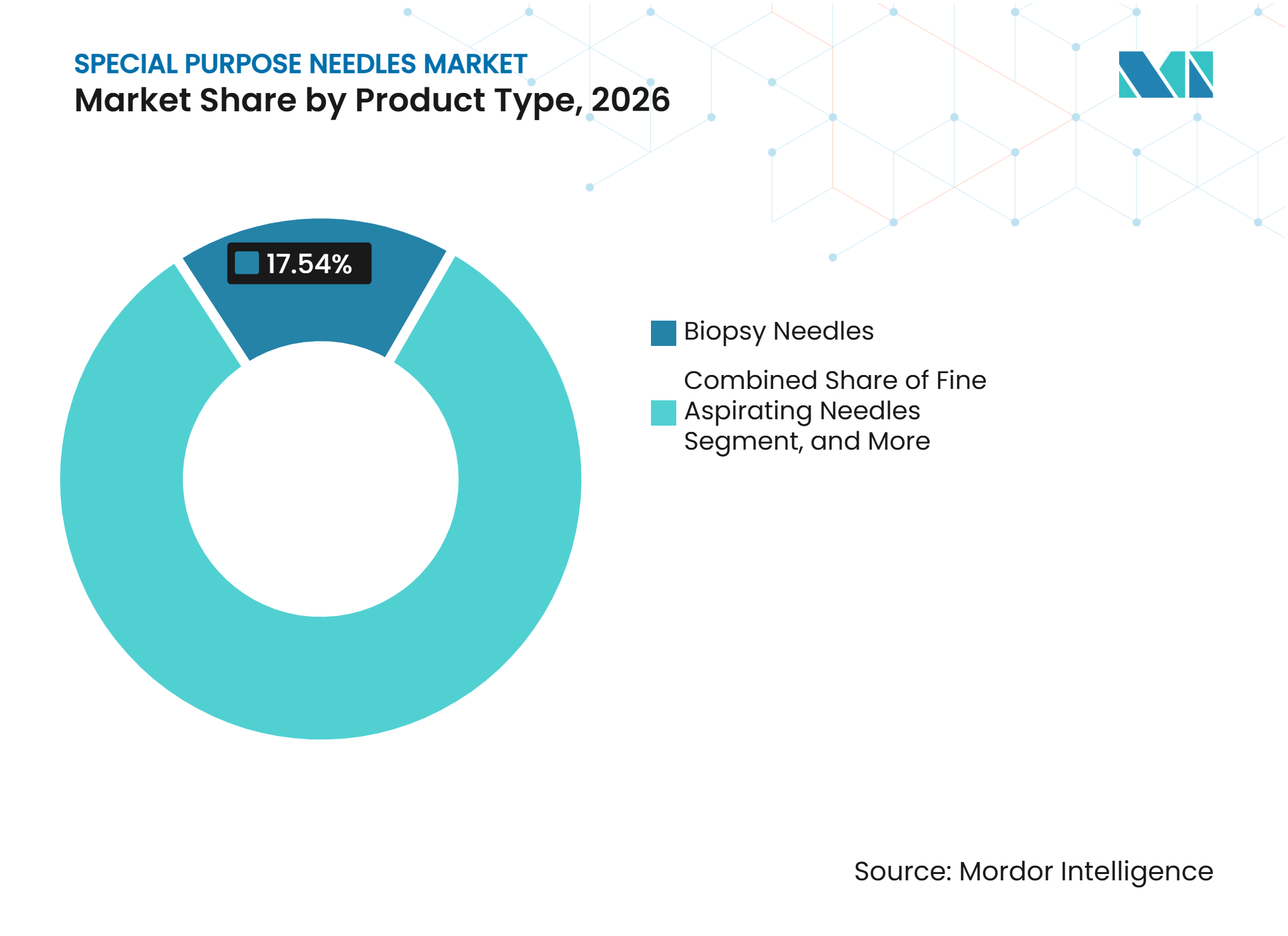
Biopsy Needles Lead While IV Catheter Needles Gain MomentumBiopsy needles accounted for 17.5% of the special purpose needles market share in 2026, making them the largest product category. Their position reflects greater oncology diagnostic activity and wider use of vacuum-assisted and core needle systems. The movement from excisional surgery toward percutaneous tissue acquisition supports recurring demand for these products. Vacuum-assisted formats can retrieve larger tissue cores in a single insertion and preserve their orientation for assessment. This characteristic is important where genomic profiling requires sufficient material for testing. The special-purpose needles market also includes fine aspirating and implantation needles for specialized procedures, while suture needles remain a stable and volume-led category. Cost remains the main purchasing consideration for suture products, unlike biopsy systems where performance and compatibility carry greater weight.
IV catheter needles are forecast to grow at a 10.5% CAGR from 2027 to 2032, the highest rate in the product segmentation. Growth comes from the shift from open-hub products toward closed systems that limit blood exposure in acute care settings. BD’s peripheral IV catheter portfolio has helped establish blood-control features at the hub level in North American and European facilities. Hypodermic and pen needles remain high-volume products, but demand is being differentiated by GLP-1 formulations. FITTER Forward recommendations published in 2025 reaffirmed 4 mm as the preferred pen needle length for adult patients, supporting shorter and thinner-wall formats. Core needle biopsy products are separately used in interventional oncology workflows, and implantation needles serve radiation oncology seed placement and drug-eluting implant procedures.



By Application:
Sample Collection Holds Scale While Drug Delivery Expands FasterSample collection accounted for 58.8% of the special purpose needles market size in 2026. Its scale is supported by oncology biopsy programs and clinical pathology work involving blood, tissue, and cytology samples. Hospitals, outpatient facilities, and reference laboratories all contribute to this demand. The commercial requirement is shifting from routine histomorphology toward tissue adequacy for genomic profiling. The 2025 Journal of Vascular and Interventional Radiology article noted that multiplexed testing raises minimum expectations for specimen cell count and DNA yield. Needles that collect sufficient material in 1 pass through optimized bevel geometry, coaxial systems, or vacuum-assisted retrieval can therefore command a performance premium. Blood collection needles remain more dependent on throughput, standardized gauge selection, and safety compliance.
Drug delivery is forecast to grow at an 11.7% CAGR through 2032, the fastest rate across applications. Pen needles for insulin and GLP-1 therapy, IV catheter systems for infusions, and implantation needles for local depots support this trajectory. The American Diabetes Association’s 2025 guidance on insulin pens and connected pens links diabetes care practices to ongoing needle use. Cook Regentec introduced its ProFusion Therapeutic Infusion Needle during 2025, using a spiral sideport configuration and high ultrasound visibility for targeted intramuscular or subdermal delivery. This product illustrates how regenerative medicine and cell therapy can create more specific requirements than standard intravenous and subcutaneous delivery. The special purpose needles industry is consequently serving a broader range of drug routes and treatment settings.
By End User:
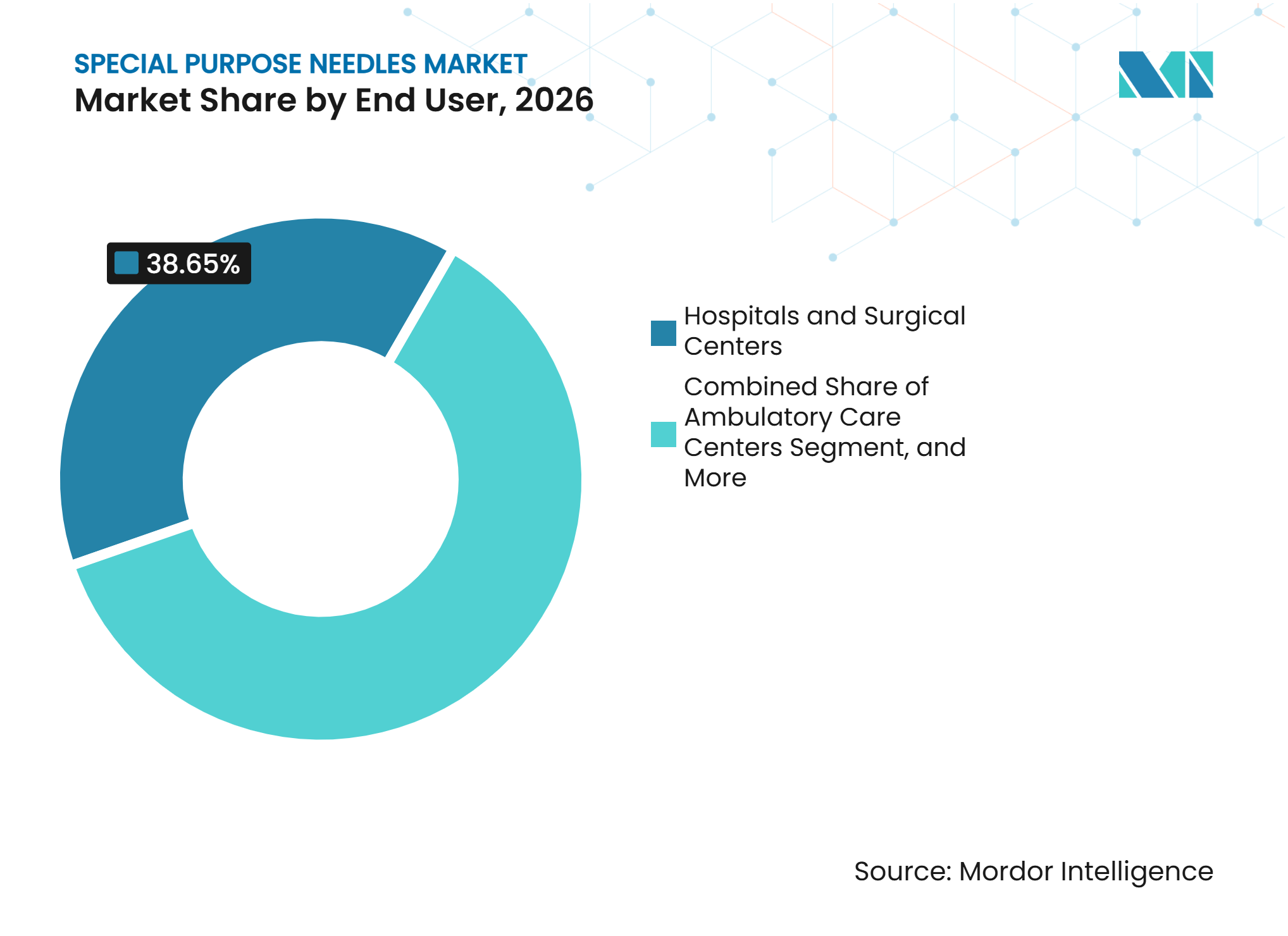
Hospitals Retain the Broadest Base While Diagnostic Facilities Grow FasterHospitals and surgical centers held 38.7% of the special purpose needles market share in 2026. They use the widest range of products across oncology, interventional radiology, intensive care, general wards, operating rooms, pharmacy dispensing, and outpatient infusion. Biopsy needles support tissue acquisition, while IV catheter needles are used for vascular access and hypodermic products are used across care delivery. System-level purchasing through group purchasing organizations can compress unit margins. It can also speed adoption of closed-system IV catheter formats when a health system changes its standard product. Ambulatory care centers, specialty clinics, and dental clinics represent the adjacent base of end users. Dental practices maintain demand for aspirating needles, while primary care and specialty clinics use more pen and hypodermic products as GLP-1 prescribing becomes more widespread.
Diagnostic imaging centers and pathology laboratories are forecast to advance at an 11.5% CAGR from 2027 to 2032. Their growth reflects the movement of image-guided tissue acquisition from inpatient radiology suites to dedicated outpatient sites. Payers in North America and Western Europe favor outpatient biopsy settings for cost management. Precision oncology protocols also concentrate molecular pathology review within specialized laboratory networks. Breast, thyroid, and musculoskeletal procedures are well suited to freestanding imaging centers when surgical backup is not required. Tissue biopsy remains important even as liquid biopsy progresses, according to a 2026 European Society of Pathology expert opinion paper. This supports the continued role of ultrasound-guided fine aspiration, core biopsy, and vacuum-assisted systems in outpatient care.

By Distribution Channel:
Direct Contracts Lead While Distributors Address Complex DemandDirect institutional procurement accounted for 32.8% of the special purpose needles market size in 2026. Large hospital systems and integrated delivery networks use direct contracts to establish pricing and product standards. The channel is particularly important in the United States, where group purchasing organization contracts shape adoption across member facilities. Becton Dickinson, Cardinal Health, and B. Braun benefit from relationships that support compliance-led product transitions. The weakness of a direct, single-source structure is its reliance on predictable supply. The Hologic Brevera shortage showed that a disruption can force health systems to identify alternatives and revise biopsy protocols. Manufacturers therefore need supply resilience alongside direct contracting capability.
Medical device distributors are forecast to grow at an 11.8% CAGR through 2032. Mid-sized hospitals, ambulatory centers, and facilities in emerging markets rely on distributors to manage product variety and replenishment. These organizations can also help facilities navigate regional compliance requirements for specialty products. Hospital pharmacies remain important for pen needles and prefilled syringe-compatible formats. Retail pharmacies support self-managed insulin treatment, and e-commerce is developing where digital diabetes platforms connect product purchasing with care management. Rules for open-channel medical device sales limit the pace of e-commerce relative to consumer products. The special purpose needles market will continue to require separate approaches for direct contracts in acute care and distributors serving broader mid-market demand.
Geography Analysis
North America
North America held 43.2% of the special purpose needles market share in 2026. The United States supports this position through cancer screening, interventional radiology infrastructure, and safety rules for healthcare sharps. OSHA’s Bloodborne Pathogens Standard drives replacement of conventional devices with safer formats, supporting safety-engineered needles and closed-system IV products in regulated care settings[3]. BD’s 2025 investment in Utah IV line manufacturing and its expansion of safety-engineered syringe capacity in Nebraska and Connecticut show continued manufacturer commitment to domestic supply. Canada and Mexico also contribute through cancer screening and insulin therapy, although their per-unit pricing is lower.
Asia-Pacific
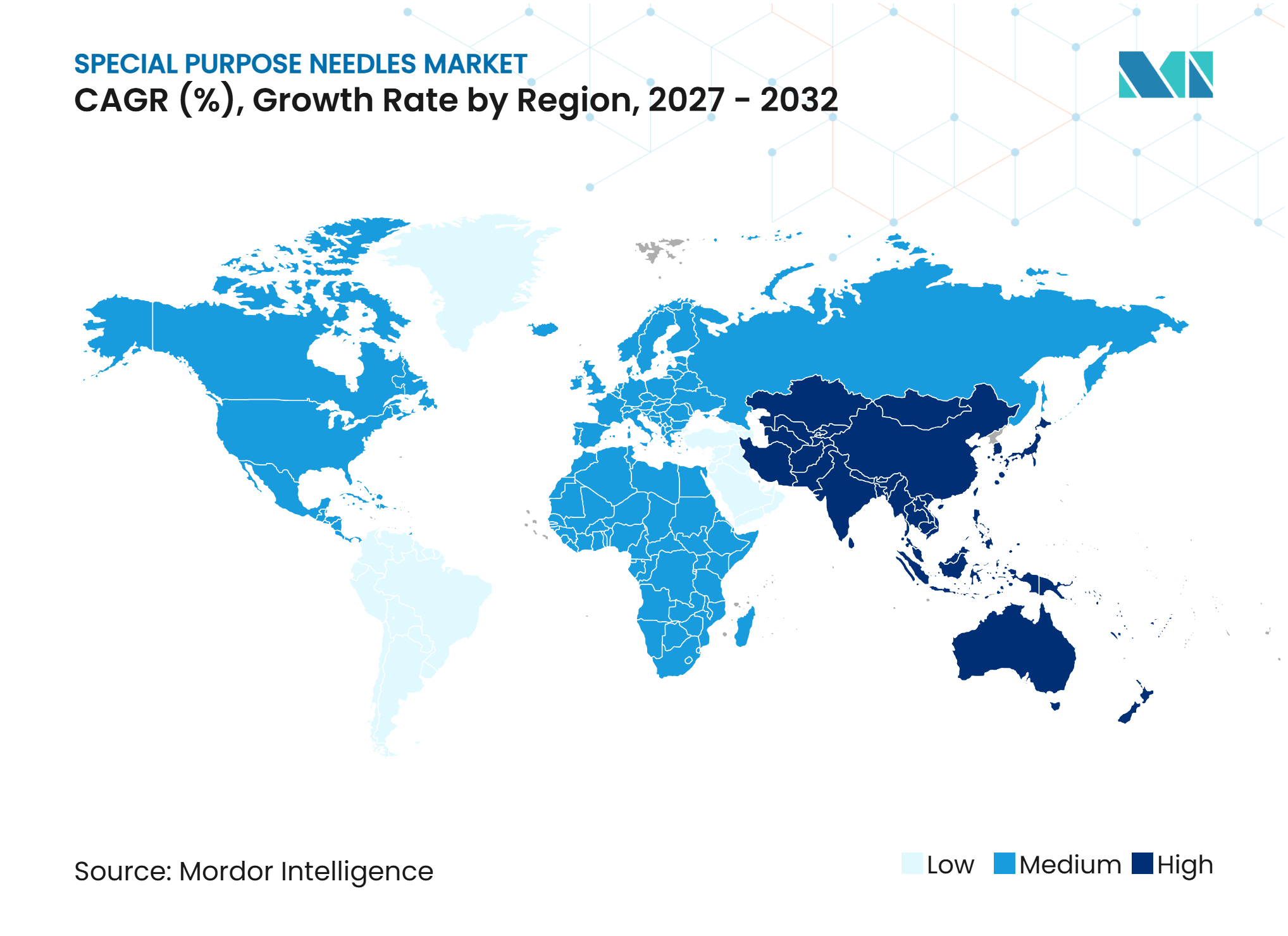
Asia-Pacific is forecast to grow at a 9.5% CAGR from 2027 to 2032. Aging populations, chronic disease treatment, and expanding hospital infrastructure are increasing demand across China, India, Japan, South Korea, and Southeast Asia. BD expanded manufacturing capacity for advanced injection devices in Asia during January 2026 to support regional vaccination programs and demand for safety-engineered formats. Japan and South Korea have high spending per procedure and hospital accreditation practices that support single-use, traceable specialty products, while the special purpose needles market size in Asia-Pacific is shaped by increasing hospital capability, local registration requirements, and distribution partnerships.
Europe, Middle East and Africa, and South America
Europe remains a major regional base for advanced biopsy and IV catheter procurement, especially in Germany, the United Kingdom, and France. A 2025 DeGIR registry report covering 17,397 diagnostic image-guided bone biopsies across 214 centers in Germany, Austria, and Switzerland recorded a 98.9% technical success rate. The 2026 European Society of Pathology paper reaffirmed that percutaneous tissue biopsy remains central to cancer diagnosis as liquid biopsy develops. GCC countries support premium formats through private healthcare networks and high health spending, while other Middle East and African markets favor lower-cost products because of budget and image-guidance limits. Brazil and Argentina support demand for oncology biopsy products and pen needles, but reimbursement variation and import costs limit rapid uptake of advanced designs.
Competitive Landscape
Market Concentration
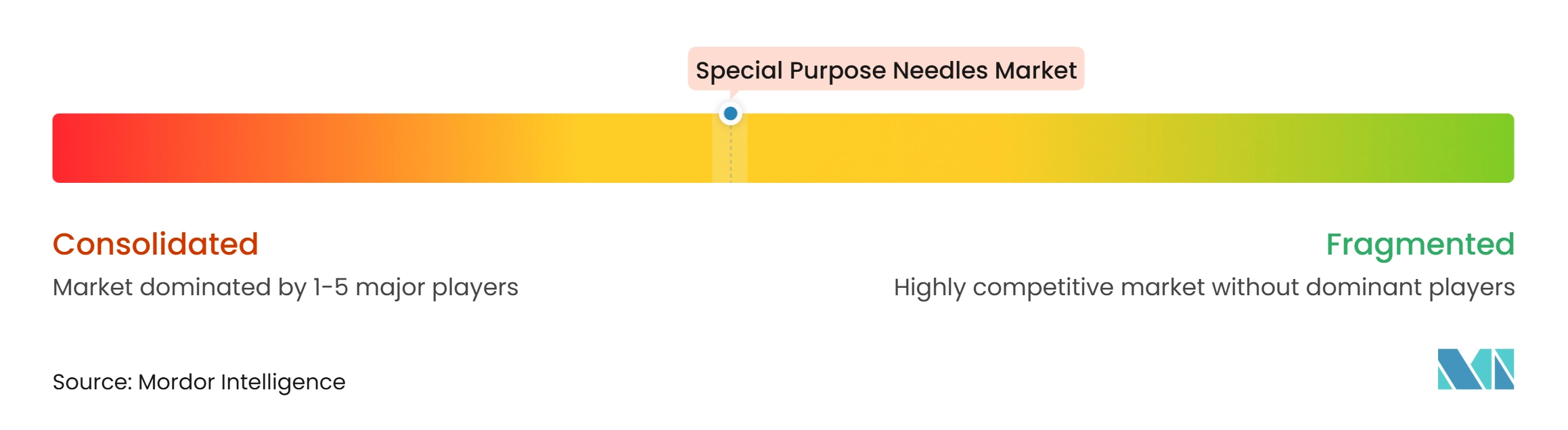
Becton, Dickinson and Company, B. Braun Melsungen AG, Medtronic, Cook Medical, Boston Scientific, and Hologic occupy leading positions in the special purpose needles market. Their strengths include manufacturing scale, regulatory credentials, and access to system-level contracts. These advantages are strongest in biopsy needles and IV catheter products, where clinical qualifications and reliable supply matter. ISO 10555 and ISO 23908 create a baseline for IV catheter and sharps safety compliance in regulated purchasing environments. This combination raises the entry barrier for suppliers that lack comparable quality systems and contract access.
Cook Medical’s 2025 collaboration with Mendaera connects its EchoTip technology with handheld robotic guidance for urological intervention. Boston Scientific identified the Rivos EUS Needle as a pipeline product for its endoscopy segment at its 2025 Investor Day. Hologic increased alternative Eviva needle supply during the Brevera disruption, showing that manufacturing continuity can influence competitive position. The special purpose needles market is moderately consolidated among large suppliers, but procurement teams remain open to alternatives when supply risk becomes clear. This gives capable specialty suppliers an opportunity to win business in focused applications.
PAJUNK’s SonoPlex II nerve block needles use 360-degree reflector graduations to improve shaft and tip visibility during ultrasound-guided procedures. Argon Medical Devices, BPB MEDICA, Somatex Medical Technologies, and Merit Medical Systems also participate in specialty categories. Virchow Medical raised USD 4 million in 2025 to advance its Crow’s Nest Biopsy Catchment System for recovery of residual tumor cells from discarded biopsy needles.
Special Purpose Needles Industry Leaders
-
Becton, Dickinson and Company
-
B. Braun Melsungen AG
-
Boston Scientific Corporation
-
Medtronic plc
-
Argon Medical Devices
- *Disclaimer: Major Players sorted in no particular order
Special Purpose Needles Market Companies Covered in this Report
- Argon Medical Devices
- Beckton Dickinson
- B. Braun
- Boston Scientific
- Medtronic
- Cook Group
- Merit Medical Systems
- Hologic
- Conmed
- Olympus
- Cardinal Health
- Stryker
- PAJUNK GmbH Medizintechnologie
- BPB MEDICA - Biopsybell
- INRAD
- Ranfac
- Medax S.r.l.
- Mermaid Medical
- Somatex Medical Technologies GmbH
- DTR Medical Ltd
Recent Industry Developments in Special Purpose Needles Market
- November 2026: Hologic received FDA 510(k) clearance for the Brevera 9G needle, an important milestone toward the full return to market of the Brevera Breast Biopsy System. The FDA had in June 2026 warned that the shortage triggered by Hologic's January 2026 recall of all Brevera 9-gauge disposable needles over metallic and plastic particle contamination risk would persist through March 2027. In the interim, Hologic significantly increased supply of its Eviva biopsy needles through major manufacturing investments, additional staffing, and expanded production shifts.
- October 2026: Argon Medical Devices' biopsy needle lines, including 16G full-core instruments with and without co-axial configurations and product codes FIB157, FIB158, FIB162, and FIB163, were temporarily delisted from the NHS Supply Chain online catalogue in the United Kingdom, with anticipated partial restoration in November 2026. The supply disruption prompted procurement teams across the United Kingdom to identify secondary alternatives, highlighting supply-chain concentration risks in the European specialty biopsy needle segment.
- March 2026: Cook Medical launched 2 new Urology single-use products in the United States and Canada, the Syfonix Suction Ureteral Access Sheath and the 7.5 Fr Ascend Single-Use Flexible Ureteroscope, expanding its portfolio of disposable urological instruments that support needle-based access in kidney stone management procedures.
- July 2025: The FDA granted 510(k) clearance to BD's Vacutainer Eclipse Blood Collection Needle, K243207, a sterile, single-use blood collection needle with an integrated safety shield designed for manual activation after venipuncture to prevent accidental needlestick injuries during multiple venous blood sample collection.
Global Special Purpose Needles Market Report Scope
According to the report’s scope, special-purpose needles are needles designed for specific medical procedures or applications, such as biopsy, aspiration, spinal anesthesia, or drug delivery. They often have specialized shapes, lengths, gauges, or tips to improve precision and safety.
The special purpose needles market is segmented into product type, application, end user, distribution channel, and geography. By product type, the market is segmented into fine aspirating needles, biopsy needles, core needle biopsy needles, vacuum-assisted biopsy needles, hypodermic needles, pen needles, suture needles, IV catheter needles, implantation needles, and other product types. By application, the market is segmented into sample collection and drug delivery. By end user, the market is segmented into hospitals and surgical centers, diagnostic imaging centers and pathology laboratories, ambulatory care centers, specialty clinics and dental clinics, and other end users. By distribution channel, the market is segmented into direct institutional procurement, medical device distributors, hospital pharmacies, retail pharmacies and drug stores, and E-commerce. By geography, the market is segmented into North America, Europe, Asia-Pacific, the Middle East and Africa, and South America. The report also covers the estimated market sizes and trends for 17 countries across major regions globally. The report offers values (USD) for all the above segments.
Segmentation Overview
| Fine Aspirating Needles |
| Biopsy Needles |
| Core Needle Biopsy Needles |
| Vacuum-Assisted Biopsy Needles |
| Hypodermic Needles |
| Pen Needles |
| Suture Needles |
| IV Catheter Needles |
| Implantation Needles |
| Other Product Types |
| Sample Collection |
| Drug Delivery |
| Hospitals and Surgical Centers |
| Diagnostic Imaging Centers and Pathology Laboratories |
| Ambulatory Care Centers |
| Specialty Clinics and Dental Clinics |
| Other End Users |
| Direct Institutional Procurement |
| Medical Device Distributors |
| Hospital Pharmacies |
| Retail Pharmacies and Drug Stores |
| E-Commerce |
| North America | United States |
| Canada | |
| Mexico | |
| Europe | Germany |
| United Kingdom | |
| France | |
| Italy | |
| Spain | |
| Rest of Europe | |
| Asia-Pacific | China |
| Japan | |
| India | |
| Australia | |
| South Korea | |
| Rest of Asia-Pacific | |
| Middle East and Africa | GCC |
| South Africa | |
| Rest of Middle East and Africa | |
| South America | Brazil |
| Argentina | |
| Rest of South America |
| By Product Type | Fine Aspirating Needles | |
| Biopsy Needles | ||
| Core Needle Biopsy Needles | ||
| Vacuum-Assisted Biopsy Needles | ||
| Hypodermic Needles | ||
| Pen Needles | ||
| Suture Needles | ||
| IV Catheter Needles | ||
| Implantation Needles | ||
| Other Product Types | ||
| By Application | Sample Collection | |
| Drug Delivery | ||
| By End User | Hospitals and Surgical Centers | |
| Diagnostic Imaging Centers and Pathology Laboratories | ||
| Ambulatory Care Centers | ||
| Specialty Clinics and Dental Clinics | ||
| Other End Users | ||
| By Distribution Channel | Direct Institutional Procurement | |
| Medical Device Distributors | ||
| Hospital Pharmacies | ||
| Retail Pharmacies and Drug Stores | ||
| E-Commerce | ||
| Geography | North America | United States |
| Canada | ||
| Mexico | ||
| Europe | Germany | |
| United Kingdom | ||
| France | ||
| Italy | ||
| Spain | ||
| Rest of Europe | ||
| Asia-Pacific | China | |
| Japan | ||
| India | ||
| Australia | ||
| South Korea | ||
| Rest of Asia-Pacific | ||
| Middle East and Africa | GCC | |
| South Africa | ||
| Rest of Middle East and Africa | ||
| South America | Brazil | |
| Argentina | ||
| Rest of South America | ||
Key Questions Answered in the Report
What is the projected value of the special purpose needles market by 2032?
The special purpose needles market is projected to reach USD 3.94 billion by 2032, expanding at an 8.2% CAGR from 2027.
Which product category leads special purpose needle demand?
Biopsy needles lead the product segmentation with 17.5% share in 2026, supported by image-guided oncology diagnostics.
What application is growing fastest for special purpose needles?
Drug delivery is forecast to grow at an 11.7% CAGR through 2032, supported by pen needles, IV systems, and new biologic therapies.
Why are safety-engineered needles becoming more important?
Safety rules and demand for lower exposure risk support adoption, while BD expanded U.S. safety-engineered injection device capacity during 2025 .
Which region has the largest special purpose needles market share?
North America held 43.2% share in 2026, supported by cancer screening, image-guided care, and occupational safety compliance.
How are diagnostic imaging centers affecting needle demand?
Diagnostic imaging centers and pathology laboratories are forecast to expand at an 11.5% CAGR as more image-guided tissue acquisition moves to outpatient settings.