
Spain Plastic Packaging Films Market Size and Share
| Study Period | 2019 - 2030 |
| Forecast Data Period | 2025 - 2030 |
| Historical Data Period | 2019 - 2023 |
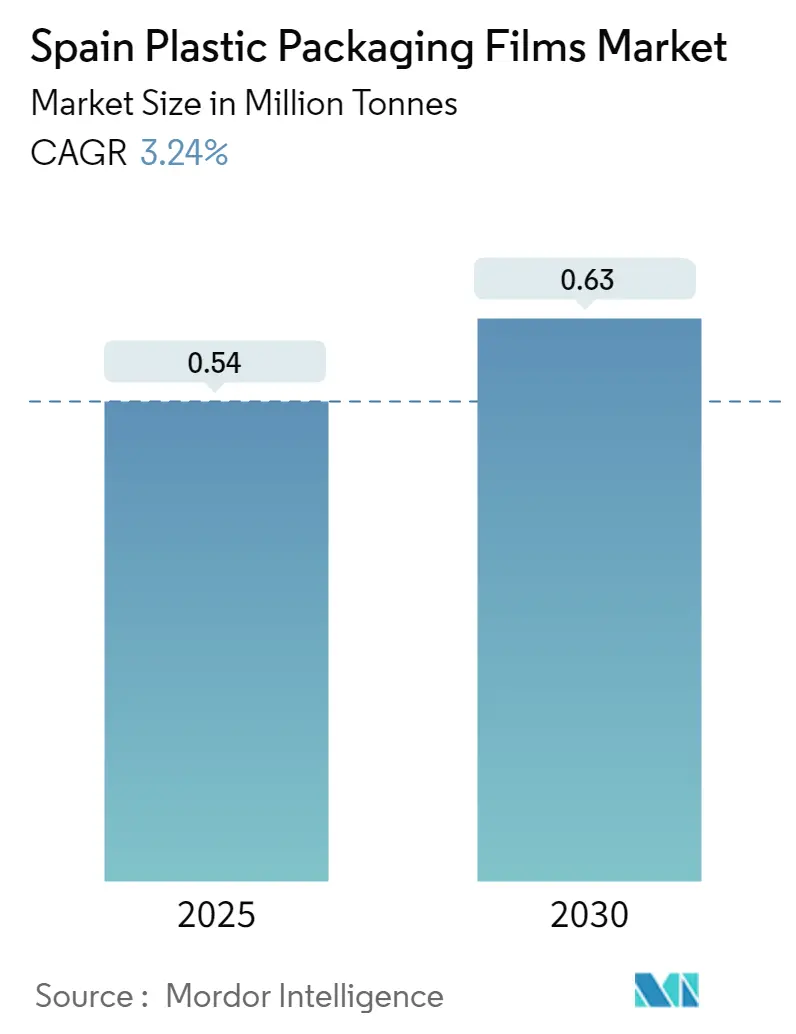
| Market Volume (2025) | 0.54 Million tonnes |
| Market Volume (2030) | 0.63 Million tonnes |
| CAGR (2025 - 2030) | 3.24% |
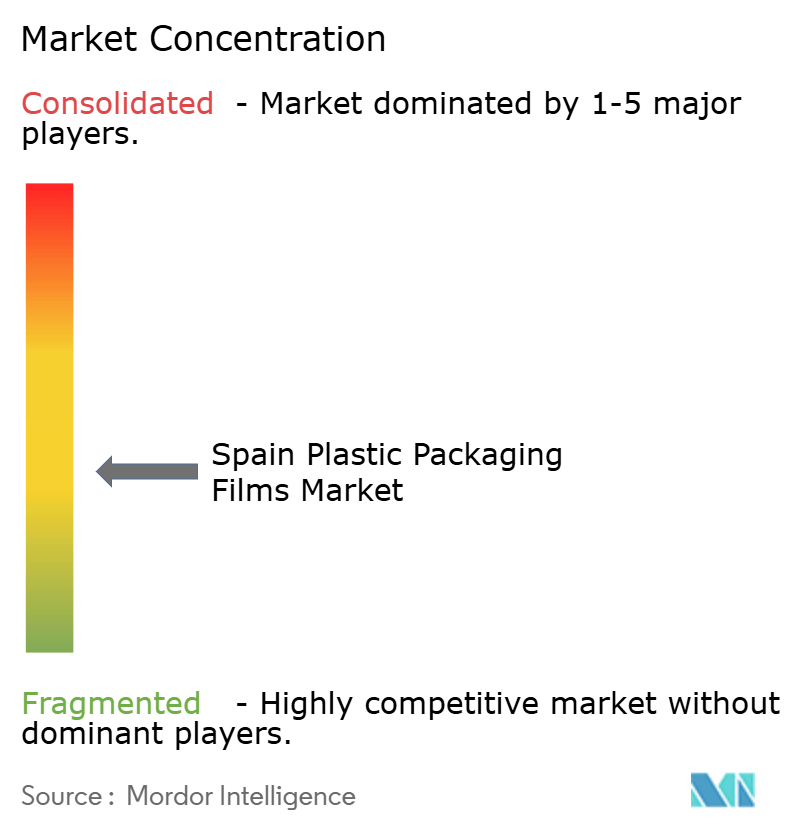
| Market Concentration | Medium |
Major Players.webp "Spain Plastic Packaging Films Market Major Players") *Disclaimer: Major Players sorted in no particular order |
Spain Plastic Packaging Films Market Analysis by Mordor Intelligence
The Spain Plastic Packaging Films Market size is estimated at 0.54 million tonnes in 2025, and is expected to reach 0.63 million tonnes by 2030, at a CAGR of 3.24% during the forecast period (2025-2030).
- Spain's urban lifestyle is driving a notable uptick in the demand for convenient packaging. Consumers increasingly opt for lightweight, user-friendly options, compelling vendors to adapt their designs to cater to the growing organized retail sector. By transitioning to lighter materials, such as flexible pouches, vendors meet these changing demands and enjoy significant energy-saving benefits. Moreover, the industry's move toward sustainable packaging solutions resonates with the rising consumer consciousness for eco-friendly products. This alignment is poised to spur heightened innovation and competition within the packaging landscape.
- Spain's packaging industry is witnessing robust growth, driven by a strong economy that's empowering consumers to opt for premium products, often showcased in innovative packaging. Moreover, there's a notable uptick in the demand for compact, on-the-go packaging, especially in pouch formats, driven by the country's busy professionals. This trend isn't confined to a single sector; industries ranging from food, FMCG, and groceries to cosmetics are all set to increase their usage of pouch packaging. As a result, solution providers are intensifying their innovation efforts to enhance their market presence and offer more appealing products.
- Consumers increasingly favor products with longer shelf lives, motivated by convenience and a heightened awareness of food waste. Plastic film packaging boasts superior barrier properties and safeguards items from moisture, oxygen, light, and other factors that could compromise their quality and freshness. This makes it a crucial tool in extending the shelf life of perishable goods, ranging from food and beverages to pharmaceuticals and personal care items. France is actively addressing its reliance on single-use plastics, especially in the fresh produce retail sector. In response, a recent law has been enacted banning the use of plastic film and netting.
- As part of Europe's economic recovery and policy development, a "plastic levy" law has been introduced, linking fees to the non-recycled plastic packaging waste generated by each EU Member State. Spain responded by enacting the Special Tax on Non-Reusable Plastic Packaging (Law 7/2022), effective from January 2023. This tax was designed to enhance waste management, combat soil contamination, and promote a circular economy. Applicable across Spain, the law requires manufacturers, importers, and transporters of single-use plastic containers to reassess their material choices. These stringent measures present a notable challenge to Spain's plastics industry, aligning with the EU's broader goal of reducing environmental impact and advancing a circular economy, ultimately driving innovation and sustainability in packaging.
- Spain is actively combatting the widespread use of single-use plastics, particularly in the fresh produce retail sector. A recent law has been enacted, specifically targeting plastic film and netting, with the primary goal of slashing plastic waste and fostering the adoption of sustainable packaging. As a result, this legislation is set to tighten the market for plastic packaging films in Spain, directly impacting manufacturers and suppliers entrenched in this segment. Aligned with a broader push toward a circular economy, the law champions the shift to biodegradable and reusable materials. This transition is anticipated to fuel innovation within the packaging realm as businesses strive to craft eco-conscious solutions that align with the updated mandates.
Spain Plastic Packaging Films Market Trends and Insights
Meat, Poultry, And Seafood segment to Hold Significant Market Share
- Plastic film packaging, available in pouches, bags, films, and wraps, offers versatility in accommodating diverse cuts, portion sizes, and packaging formats in the meat, poultry, and fish industries. This versatility ensures efficient packaging, spanning from whole cuts to processed items like sausages and fillets. In addition, plastic film packaging provides benefits such as extended shelf life, improved product visibility, and enhanced protection against contamination and spoilage, making it a preferred choice for manufacturers and consumers.
- Spain has witnessed a notable surge in beef, pork, poultry, and seafood consumption and production in recent years. This uptick is fueled by a rising demand for packaging that is both consumer-friendly and enhances product protection. Consequently, meat, poultry, and seafood packaging has emerged as a cost-effective and practical solution. Forecasts suggest a rise in plastic packaging sales in the coming years. This uptick is primarily attributed to heightened hygiene awareness and the necessity for packaging solutions that prolong shelf life and maintain the inherent qualities of meat and poultry, which are crucial for both domestic consumption and export markets.
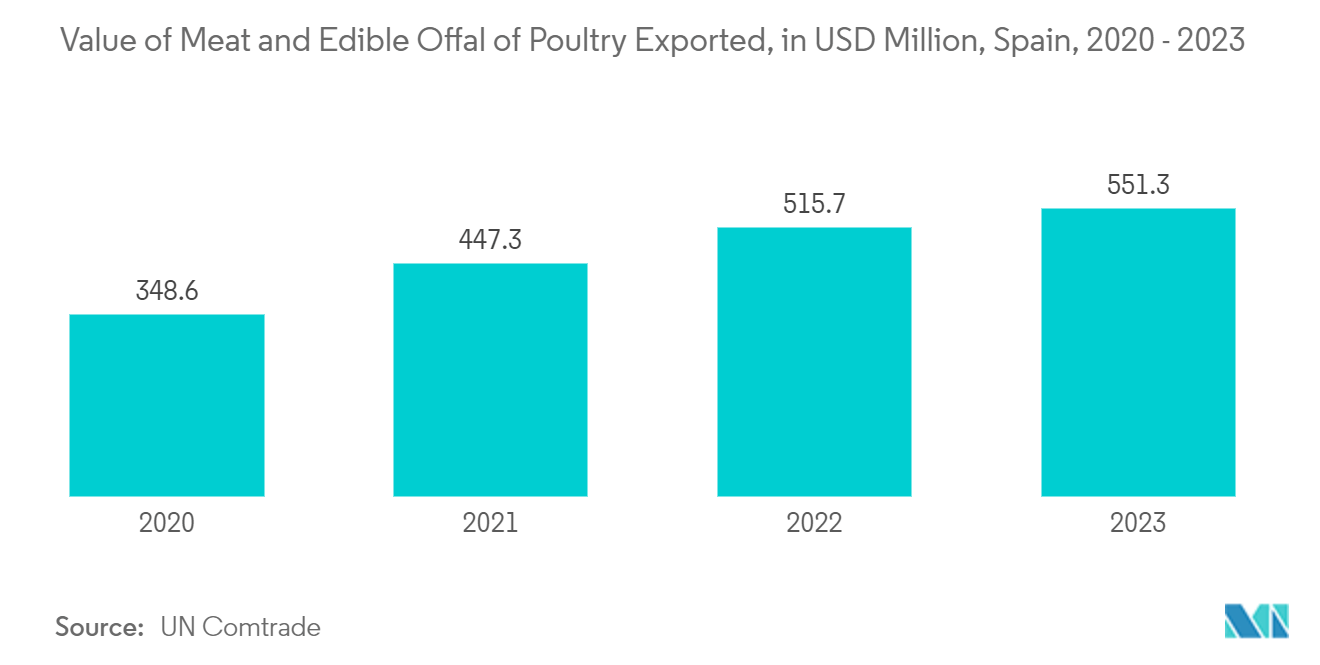
- In 2023, Spain saw a notable rise in the export value of poultry meat and edible offal, increasing from USD 515.7 million to USD 551.3 million. This surge in demand is driving a trend toward utilizing specialized plastic films for meat packaging, ensuring freshness during transit. These plastic films are designed to provide a barrier against contaminants and extend the shelf life of the meat, making them essential for maintaining quality during transportation and storage. In addition, the increased export value reflects a growing global appetite for Spanish poultry products, which in turn necessitates advancements in packaging technology to meet international standards and consumer expectations.
- Spain ranks third in Europe in terms of fish and meat consumption, trailing only Portugal and Norway. A Seafood Council survey reveals that 70% of Spaniards enjoy fish twice weekly, with 90% having it at least once. Hake, salmon, cod, sole, sea bass, tuna, and swordfish are favored fish. On the meat front, Spain's Ministry of Agriculture reports an average per capita meat consumption of 1349 grams daily. Poultry leads the meat choices, with an average daily consumption of 38 grams per person, closely followed by pork and beef. In addition, Spaniards consume an average of 32 grams of processed meat daily, with cooked or cured ham being the favorite. This rising consumption trend presents opportunities for manufacturers to invest in innovative plastic film packaging that complies with government regulations.
Polyethylene Segment Expected to Hold Significant Share in the Market
- Polyethylene, renowned for its flexibility, high moisture barrier, and durability, also boasts exceptional performance in low temperatures. Its standout feature lies in its innate ability to seal without needing extra coatings. Whether utilized independently or in conjunction with other materials, polyethylene creates a formidable barrier. Furthermore, its eco-friendly attributes garner heightened interest among packaging film manufacturers, effectively addressing sustainability concerns.
- Polyethylene (PE) emerged as the leading plastic material in Spain, valued for its versatile physical properties. Its popularity stems from its cost-effective production, distinguishing it from its plastic counterparts. Polyethylene has the lowest softening point among primary packaging plastics, reducing energy consumption. Complementing PE, LDPE, and LLDPE are prominent in the flexible packaging. Primarily used in crafting plastic bags, films, and geomembranes, polyethylene is favored for its lightweight composition, partial crystallinity, and standout attributes like chemical resistance, minimal moisture absorption, and sound insulation.
- Product Visibility in Transparent Packaging Drives Demand for Polythene Films. Transparent packaging is a pivotal factor in consumer purchasing decisions. It attracts buyers across diverse industries, fosters trust, and boosts sales. Consumers who can view the product before purchase are more inclined to make a purchase. Consequently, manufacturers of polyethylene barrier films are now emphasizing transparency to secure a more significant market share.
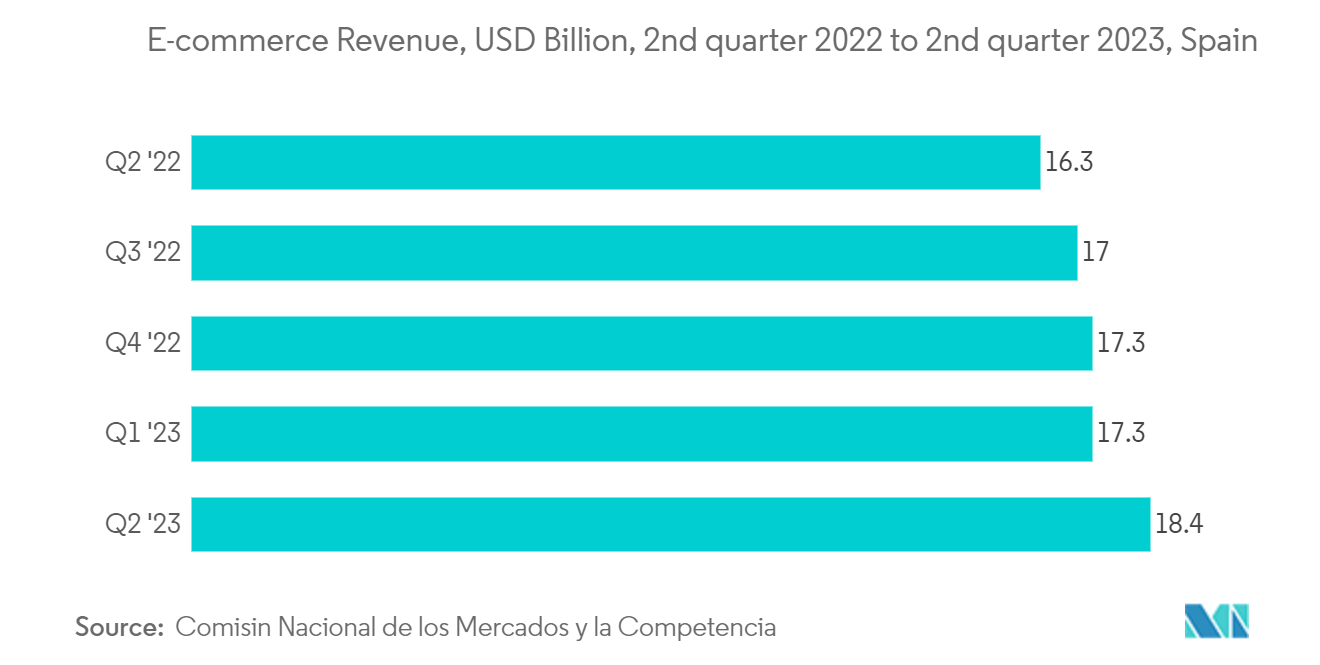
- Polyethylene packaging, in the form of wraps, pouches, and bags, has emerged as a significant choice for preserving food freshness, especially with the rise of e-commerce in Spain. This type of packaging helps keep food fresh for extended periods without spoilage, which is crucial for maintaining quality during transportation and delivery. The country's e-commerce revenue surged from USD 16.3 billion in Q2 2022 to USD 18.4 billion in Q2 2023. This trend underscores a burgeoning market for plastic film packaging, which plays a vital role in ensuring that food products remain fresh and intact during deliveries. As e-commerce continues to grow, the demand for effective packaging solutions like polyethylene wraps, pouches, and bags is expected to increase, driving further innovation and development in the packaging industry.
Competitive Landscape
The Spain plastic packaging films market is semi consolidated with limited global and regional players, such as Berry Global Inc., Klöckner Pentaplast, Luigi Bandera SpA, and others vying for attention in a contested market space characterized by low product differentiation, growing product penetration, and high competition.
- January 2024 -Berry Global unveiled an enhanced iteration of its Omni Xtra polyethylene cling film, positioning it as a certified recyclable substitute for conventional PVC options. Initially tailored for fruits, vegetables, meats, poultry, and deli items, the new Omni Xtra+ film boasts heightened impact resistance, enhanced elasticity, and a more consistent stretching profile.
- July 2023 - Dow and Klöckner Pentaplast have jointly introduced KP Flexivac, a multi-layer vacuum film. This innovative product has achieved a notable milestone: It has been certified as 100% recyclable PE by both the recycling center CyclosHTP and the recycling alliance Interseroh. KP Flexivac is designed explicitly to package bone-in fresh meat and poultry cuts. Its hermetical seal and robust film ensure optimal food protection and safety, maintaining quality across the entire supply chain.
Spain Plastic Packaging Films Industry Leaders
-
Berry Global Inc.
-
Klöckner Pentaplast
-
Taghleef Industries
-
Luigi Bandera SpA
-
COMPLEJOS DE VINILO, SA
- *Disclaimer: Major Players sorted in no particular order
Recent Industry Developments
- July 2024: SGS has expanded its EN15343 plastic recycling traceability and conformity assessment certification scheme to India, Bangladesh, and Sri Lanka, building on its accreditation from ENAC in Spain. This accreditation, specifically for the UNE-EN-15343 certification, significantly strides in Spain's sustainability and regulatory adherence efforts. Notably, this certification is mandated by Spain's Law 7/2022, focusing on Excise Tax on Non-reusable plastic packaging, making it a pivotal requirement for plastic producers and packagers. The EN15343 certification covers a broad spectrum of consumer and industrial plastic products crafted from mechanically recycled plastics. These include PET sheets, PVC films, thermoforming products, electronics, automotive components, textiles, and single-use plastic (SUP) packaging. Beyond Spain, this certification holds value for other European nations, especially for those seeking proof of recycled content in imported plastic goods, aiming to mitigate tax obligations.
- :
Spain Plastic Packaging Films Market Report Scope
Plastic Films are versatile, serving to wrap products, overwrap various packaging types (from individual packs to palletized loads), create sachets, bags, and pouches, and are often part of laminates, where they are combined with other plastics and materials for packaging. The report also delves into the demand for these converted packaging films, analyzing them across essential resin and application categories. This broad scope mirrors the diverse needs of the market and the shifting preferences of consumers and businesses.
The Spanish plastic packaging films market is segmented by type (polypropylene (biaxially oriented polypropylene (bopp), cast polypropylene (cpp)), polyethylene (low-density polyethylene (LDPE), linear low-density polyethylene (LDPE)), polyethylene terephthalate (biaxially oriented polyethylene terephthalate (pet)), polystyrene, bio-based, and PVC, EVOH, PETG, and other film types), by end-user industry (food [candy and confectionery, frozen foods, fresh produce, dairy products, dry foods, meat, poultry, and seafood, pet food, and other food products (seasonings and spices, spreadable, sauces, condiments, etc.), healthcare, personal care and home care, industrial packaging, other end-use industry applications). The report offers market forecasts and volume (tonnes) size for all the above segments.
| Polypropylene(PP) (Biaxially Oriented Polypropylene (BOPP),Cast polypropylene (CPP)) |
| Polyethylene (Low-Density Polyethylene (LDPE), Linear low-density polyethylene (LLDPE)) |
| Polyethylene Terephthalate (Biaxially Oriented Polyethylene Terephthalate (BOPET)) |
| Polystyrene |
| Bio-Based |
| PVC, EVOH, PETG, and Other Film Types |
| Food | Candy & Confectionery |
| Frozen Foods | |
| Fresh Produce | |
| Dairy Products | |
| Dry Foods | |
| Meat, Poultry, And Seafood | |
| Pet Food | |
| Other Food Products (Seasonings & Spices, Spreadables, Sauces, Condiments, etc.) | |
| Healthcare | |
| Personal Care & Home Care | |
| Industrial Packaging | |
| Other End-use Industry Applications (Agricultural, Chemical, Etc) |
| By Type | Polypropylene(PP) (Biaxially Oriented Polypropylene (BOPP),Cast polypropylene (CPP)) | |
| Polyethylene (Low-Density Polyethylene (LDPE), Linear low-density polyethylene (LLDPE)) | ||
| Polyethylene Terephthalate (Biaxially Oriented Polyethylene Terephthalate (BOPET)) | ||
| Polystyrene | ||
| Bio-Based | ||
| PVC, EVOH, PETG, and Other Film Types | ||
| By End-User Industry | Food | Candy & Confectionery |
| Frozen Foods | ||
| Fresh Produce | ||
| Dairy Products | ||
| Dry Foods | ||
| Meat, Poultry, And Seafood | ||
| Pet Food | ||
| Other Food Products (Seasonings & Spices, Spreadables, Sauces, Condiments, etc.) | ||
| Healthcare | ||
| Personal Care & Home Care | ||
| Industrial Packaging | ||
| Other End-use Industry Applications (Agricultural, Chemical, Etc) | ||
Key Questions Answered in the Report
How big is the Spain Plastic Packaging Films Market?
The Spain Plastic Packaging Films Market size is expected to reach 0.54 million tonnes in 2025 and grow at a CAGR of 3.24% to reach 0.63 million tonnes by 2030.
What is the current Spain Plastic Packaging Films Market size?
In 2025, the Spain Plastic Packaging Films Market size is expected to reach 0.54 million tonnes.
Who are the key players in Spain Plastic Packaging Films Market?
Berry Global Inc., Klöckner Pentaplast, Taghleef Industries, Luigi Bandera SpA and COMPLEJOS DE VINILO, SA are the major companies operating in the Spain Plastic Packaging Films Market.
What years does this Spain Plastic Packaging Films Market cover, and what was the market size in 2024?
In 2024, the Spain Plastic Packaging Films Market size was estimated at 0.52 million tonnes. The report covers the Spain Plastic Packaging Films Market historical market size for years: 2019, 2020, 2021, 2022, 2023 and 2024. The report also forecasts the Spain Plastic Packaging Films Market size for years: 2025, 2026, 2027, 2028, 2029 and 2030.
Spain Plastic Packaging Films Market Report
Statistics for the 2025 Spain Plastic Packaging Films market share, size and revenue growth rate, created by Mordor Intelligence™ Industry Reports. Spain Plastic Packaging Films analysis includes a market forecast outlook for 2025 to 2030 and historical overview. Get a sample of this industry analysis as a free report PDF download.