
South America Soil Monitoring Market Size and Share
Market Overview
| Study Period | 2021 - 2031 |
|---|---|
| Forecast Data Period | 2026 - 2031 |
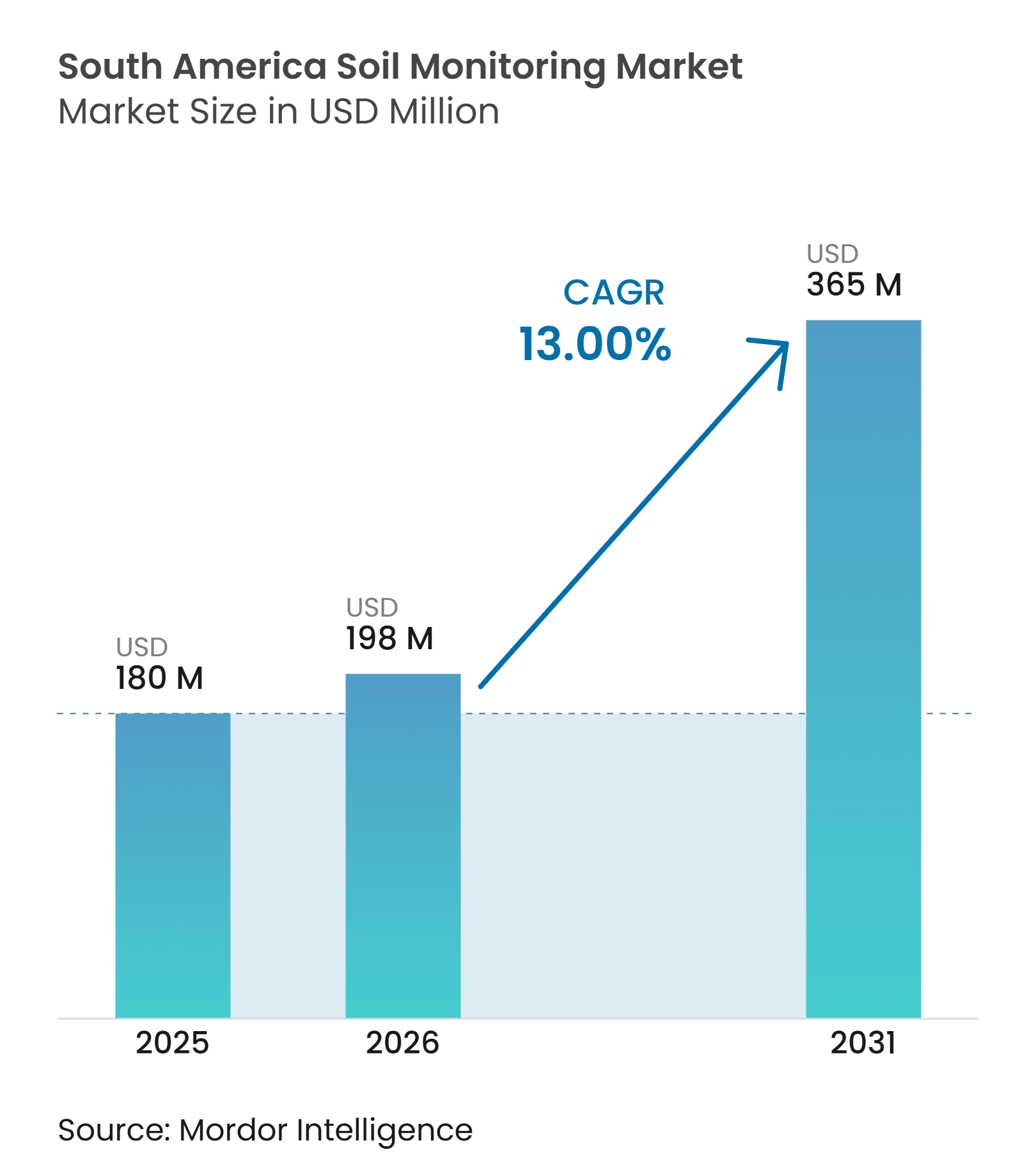
| Base Year Market Size (2025) | USD 180 Million |
| Market Size (2026) | USD 198 Million |
| Market Size (2031) | USD 365 Million |
| Growth Rate (2026 - 2031) | 13.00 % |
| Market Concentration | Low |
Major Players *Disclaimer: Major Players sorted in no particular order Image © Mordor Intelligence. Reuse requires attribution under CC BY 4.0. | |
South America Soil Monitoring Market Analysis by Mordor Intelligence
The South America soil monitoring market size was valued at USD 180 million in 2025 and estimated to grow from USD 198 million in 2026 to reach USD 365 million by 2031, at a CAGR of 13% during the forecast period (2026-2031). The South America soil monitoring market is supported by commercial farms that need timely measurements of moisture, salinity, temperature, and nutrient conditions to manage yields and irrigation. Brazil remains the main source of regional demand because large farms require systems that work across extensive open-field operations. Export supply chains are also increasing the value of field-level records for buyers that need traceable production information. Connected platforms are changing the offer from a sensor purchase into an ongoing data and advisory relationship. Suppliers that combine reliable measurement, compatible software, and connectivity for remote sites are better placed to address this requirement.
Key Report Takeaways
- By component, hardware held 58% of the South America soil monitoring market share in 2025, while services are projected to record the highest CAGR of 15.2% through 2031.
- By product type, in-situ sensors held 52% of the market share in 2025, while remote sensing platforms are forecast to expand at a 16.4% CAGR through 2031.
- By connectivity technology, wireless connectivity held 73% of the revenue share in 2025 and is forecast to advance at a 14.7% CAGR through 2031.
- By application, open field held 78% of the market share in 2025, while protected cultivation is forecast to expand at a 17.1% CAGR through 2031.
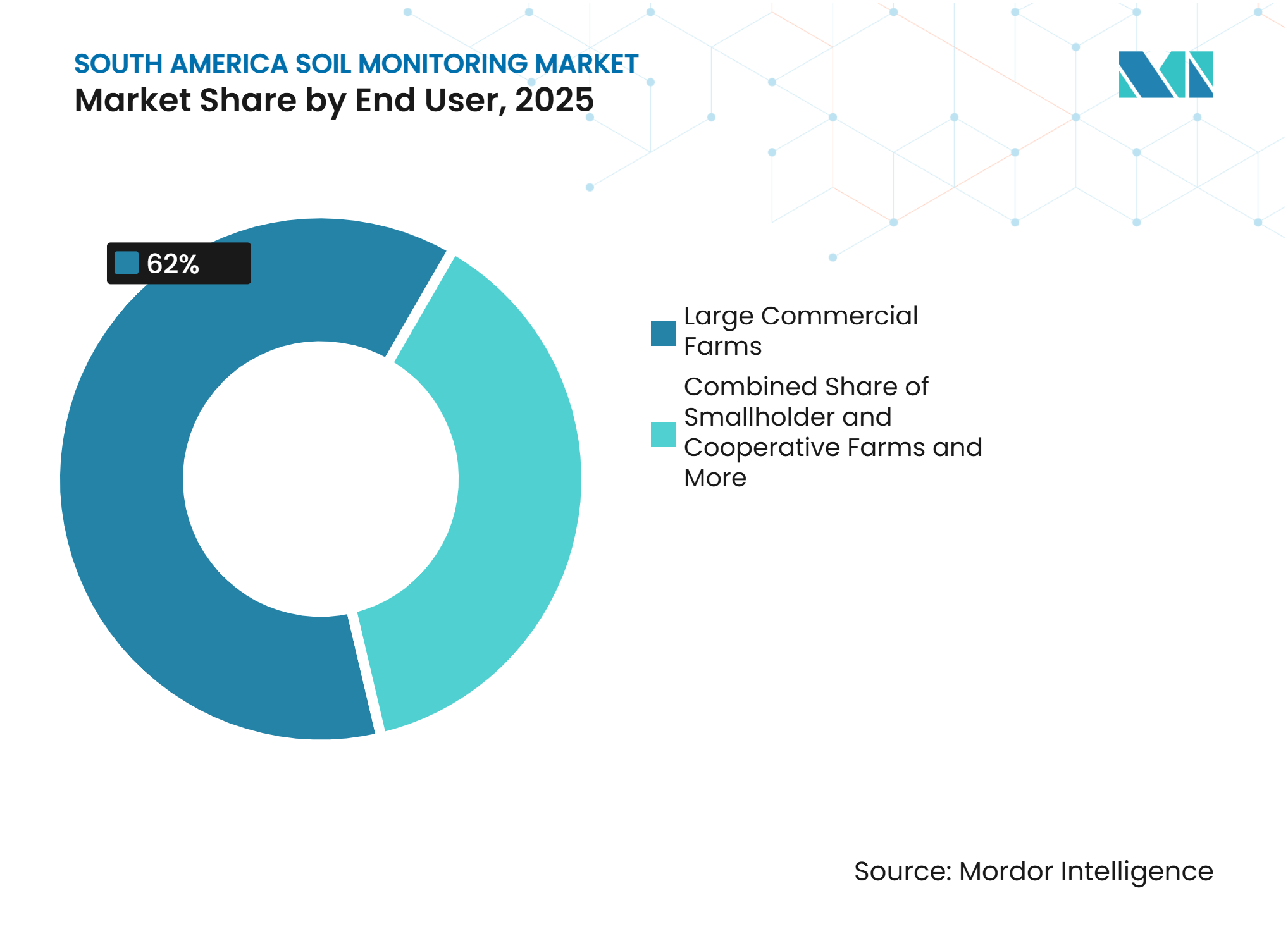
- By end user, large commercial farms held 62% of the market in 2025, while smallholder and cooperative farms are forecast to expand at a 16.3% CAGR through 2031.
- By geography, Brazil held 64% of the South America soil monitoring market size in 2025, while Chile is forecast to expand at a 16.2% CAGR through 2031.
Note: Market size and forecast figures in this report are generated using Mordor Intelligence’s proprietary estimation framework, updated with the latest available data and insights as of January 2026.
Market Trends and Insights
Drivers Impact Analysis of South America Soil Monitoring Market*
| Driver | (~) % Impact on CAGR Forecast | Geographic Relevance | Impact Timeline |
|---|---|---|---|
| Growth of soil moisture and salinity monitoring | +3.2% | Brazil, Argentina | Medium term (2-4 years) |
| Water scarcity and rainfall variability | +2.8% | Brazil, Chile | Short term (≤ 2 years) |
| Adoption of connected soil monitoring platforms | +2.5% | Brazil, Argentina | Medium term (2-4 years) |
| Export-oriented traceability requirements | +2.2% | Brazil, Rest of South America | Short term (≤ 2 years) |
| Demand for localized soil calibration | +1.4% | Argentina, Rest of South America | Long term (≥ 4 years) |
| Expansion of satellite and LPWAN connectivity | +2.0% | Brazil, Chile, Rest of South America | Medium term (2-4 years) |
| Source: Mordor Intelligence | |||
Growth of Soil Moisture and Salinity Monitoring
The Food and Agriculture Organization of the United Nations (FAO) reported in its Global Status of Salt-Affected Soils report (2024) that salt-affected soils covered 1,381 million hectares, or 10.7% of the total global land area, and named Argentina among the 10 countries accounting for 70% of the world's salt-affected soils[1]. The same report estimated that 10% of irrigated cropland and 10% of rainfed cropland were affected by salinity, although uncertainty remained high due to limited data availability, a gap that directly supports demand for field-level salinity monitoring. Moisture stress added to this demand, as the National Aeronautics and Space Administration (NASA) reported in October 2024 that Brazil's National Center for Monitoring and Early Warning of Natural Disasters (Cemaden) called the drought the most intense and widespread Brazil had experienced, with the number of municipalities facing extreme drought expected to rise from 216 in September to 293 by the end of October. A field study by São Paulo State University (UNESP), published in Smart Agricultural Technology (2025), found that low-cost capacitive soil moisture sensors achieved higher water use productivity than tensiometers (10.95 g/L versus 9.82 g/L) and concluded that they offered a viable, accessible option for smallholder farmers. Together, high salinity exposure, severe drought conditions, and proven low-cost sensing options are increasing the intensity of this driver across South America.
Water Scarcity and Rainfall Variability
Water stress is making continuous soil moisture information more important for commercial farm management in the South America soil monitoring market. In 2024, Brazil’s National Water and Basic Sanitation Agency (ANA) issued water-scarcity declarations across five major hydrographic areas, including the Paraguay, Madeira, Purus, Tapajós, and Xingu systems, increasing the need for closer monitoring of local water conditions and supporting demand for water-management technologies. The Food and Agriculture Organization of the United Nations (FAO) uses satellite monitoring in Brazil and Argentina to track crop water stress using its Agricultural Stress Index [2]. This operating environment narrows the acceptable interval between field checks where planting, irrigation, and harvest schedules are sensitive to moisture conditions. Chilean fruit and viticulture growers also require more reliable soil data where rainfall patterns have placed pressure on irrigation planning. Soil monitoring systems help turn water management from an occasional field observation into a regular operating process.
Adoption of Connected Soil Monitoring Platforms
The South America soil monitoring market is increasingly shaped by sensors connected to cloud-based tools that support remote field management. In 2025, CropX Technologies, Inc. operated in Brazil through its exclusive distributor, OXYcrop, linking sensor readings to irrigation scheduling and nutrient management. Lacuna Space Ltd. and Wyld Networks AB, in collaboration with The Brazilian Agricultural Research Corporation (EMBRAPA), expanded their work with EMBRAPA's Agnest initiative in Jaguariúna, São Paulo, during May 2025 to provide direct sensor-to-satellite connectivity. Connected systems retain historical readings, calibration data, and field decision records in a single environment. That arrangement can make a supplier relationship more durable because switching platforms requires data transfer and recalibration. It also supports service revenue because growers need continuing interpretation, maintenance, and connectivity support.
Export-Oriented Traceability Requirements
Traceability needs are adding a compliance role to the South America soil monitoring market alongside its agronomic role. In 2025, the World Resources Institute highlighted Brazil’s efforts to strengthen farm-level traceability for soy and beef through platforms that integrate government and supply-chain data, including the Agro Brasil + Sustentável Platform. Soil data support records of water management, inputs, and field conditions where buyers request stronger production documentation. This requirement can bring mid-sized export producers into the addressable customer base even when they did not previously treat monitoring as a priority purchase. Commercial suppliers can therefore position compatible field data systems as part of a wider recordkeeping process.
Restraints Impact Analysis of South America Soil Monitoring Market*
| Restraint | (~) % Impact on CAGR Forecast | Geographic Relevance | Impact Timeline |
|---|---|---|---|
| High installation and service costs | -0.80% | Brazil, Argentina | Short term (≤ 2 years) |
| Rural connectivity and power gaps | -0.60% | Rest of South America, Brazil interior | Medium term (2-4 years) |
| Soil variability and calibration complexity | -0.30% | Argentina, Rest of South America | Long term (≥ 4 years) |
| Import dependence and currency volatility | -0.40% | Brazil, Argentina | Medium term (2-4 years) |
| Source: Mordor Intelligence | |||
High Installation and Service Costs
Installation and ongoing support costs limit the adoption of soil monitoring in the South American market outside large commercial farms. The Food and Agriculture Organization of the United Nations (FAO) identified the cost of sensors, gateways, drones, and network connections as a barrier for smallholder precision farming in Chile. A commercial system can also require calibration, subscription access, technician visits, and periodic replacement of field hardware. These requirements make the purchasing decision more difficult for farms with uneven cash flow or modest acreage. Cooperative procurement can reduce the burden by spreading equipment and service costs across members. Suppliers that offer scalable packages and local support are more likely to reach this customer group without compromising measurement quality.
Soil Variability and Calibration Complexity
Soil variability and calibration complexity can reduce confidence in readings when systems are deployed without local adjustment. Argentina, Brazil, Chile, Peru, and other regional markets have soil conditions that differ sharply in texture, salinity, elevation, and cropping patterns. Multi-depth systems also require careful placement to ensure that readings represent the root zone that matters for a crop. The National Institute of Agricultural Technology Argentina (INTA) 2025 open design for a 3-depth capacitive sensor highlights the importance of depth-specific measurement in practical farm use[3]. Users may delay adoption if they cannot access technicians or agronomists who can validate readings against local conditions. This favors suppliers with calibration services, but it can lengthen the sales process and increase implementation costs.
*Our forecasts treat driver/restraint impacts as directional, not additive. The impact forecasts reflect baseline growth, mix effects, and variable interactions.
South America Soil Monitoring Market Segment Analysis
By Component:
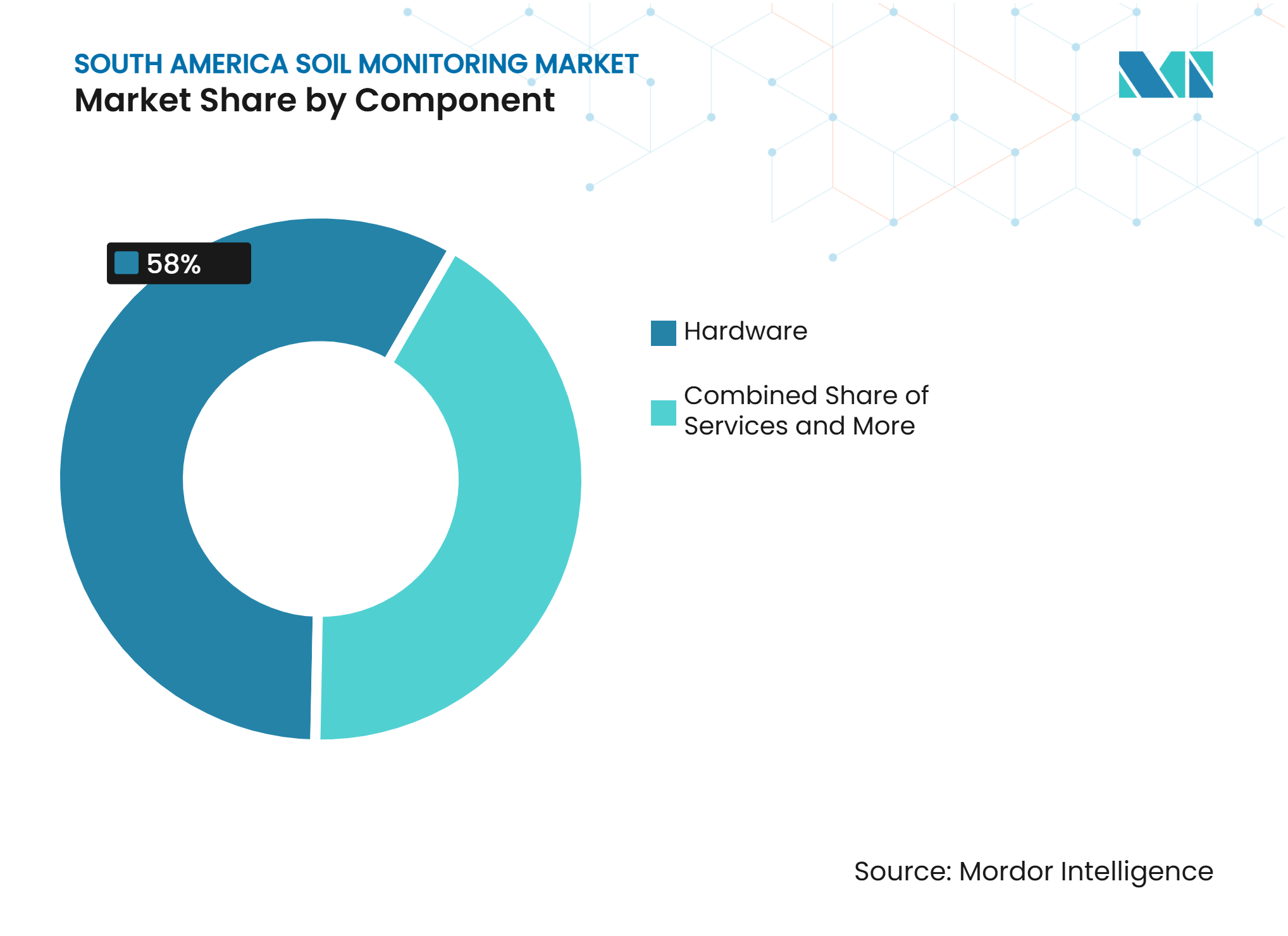
Hardware Leads Initial Deployment While Services ExpandHardware held 58% of the South America soil monitoring market in 2025 because physical sensors, gateways, and field installation are required before software and advisory services can operate. Hardware purchases are particularly important across large open-field farms that need multiple sensing points. In-situ devices measure conditions such as moisture, salinity, temperature, and bulk density at depths relevant to crop management. The initial capital requirement concentrates revenue in the hardware layer at the start of a deployment. Software remains strategically important because analytics, interface design, and compatibility can distinguish similar sensing equipment.
Services are forecast to expand at a 15.2% CAGR during 2026-2031, driven by demand for installation, calibration, data interpretation, and support. The Brazilian Agricultural Research Corporation (EMBRAPA)'s Semear Digital work in 2025 combined Internet of Things research with agricultural automation and remote sensing activity. The program reflects the technical assistance needed to convert raw sensing data into useful farm actions. Subscription models can also link monitoring data, agronomic interpretation, and customer service over the life of a system. This model gives suppliers more predictable recurring revenue than a one-time hardware sale. It also makes the South America soil monitoring industry more dependent on local technical capacity.



By Product Type:
In-Situ Sensors Lead While Remote Platforms Grow FastestIn-situ sensors held 52% of the South America soil monitoring market size in 2025, as they provide direct measurements at the root zone. Unlike satellite imagery, which cannot provide depth-specific readings, in-situ sensors capture moisture, salinity, temperature, and bulk density at the depths where crops draw water and nutrients. This measurement capability supports the leading position of field sensors across commercial farms and research settings. Portable probes and test kits also serve consultants, institutes, and smallholder groups that prioritize mobility and lower initial cost.
Remote sensing platforms are forecast to grow at a 16.4% CAGR during 2026-2031 as they combine broad-area observation with ground data. In April 2026, Embrapa Territorial, a unit of the Brazilian Agricultural Research Corporation (Embrapa), developed a satellite- and artificial-intelligence-based method to map irrigated areas using soil moisture indices across five agricultural poles in Goiás and Mato Grosso. The method shows how remote data can complement rather than replace in-field sensing. Large properties can use these platforms to prioritize field visits and identify areas that require closer review. Commercial demand is strongest when suppliers integrate imagery with verified sensor readings and usable farm recommendations. This combination can reduce the cost of monitoring extensive farms while retaining field-level accuracy where it is needed.
By Connectivity Technology:
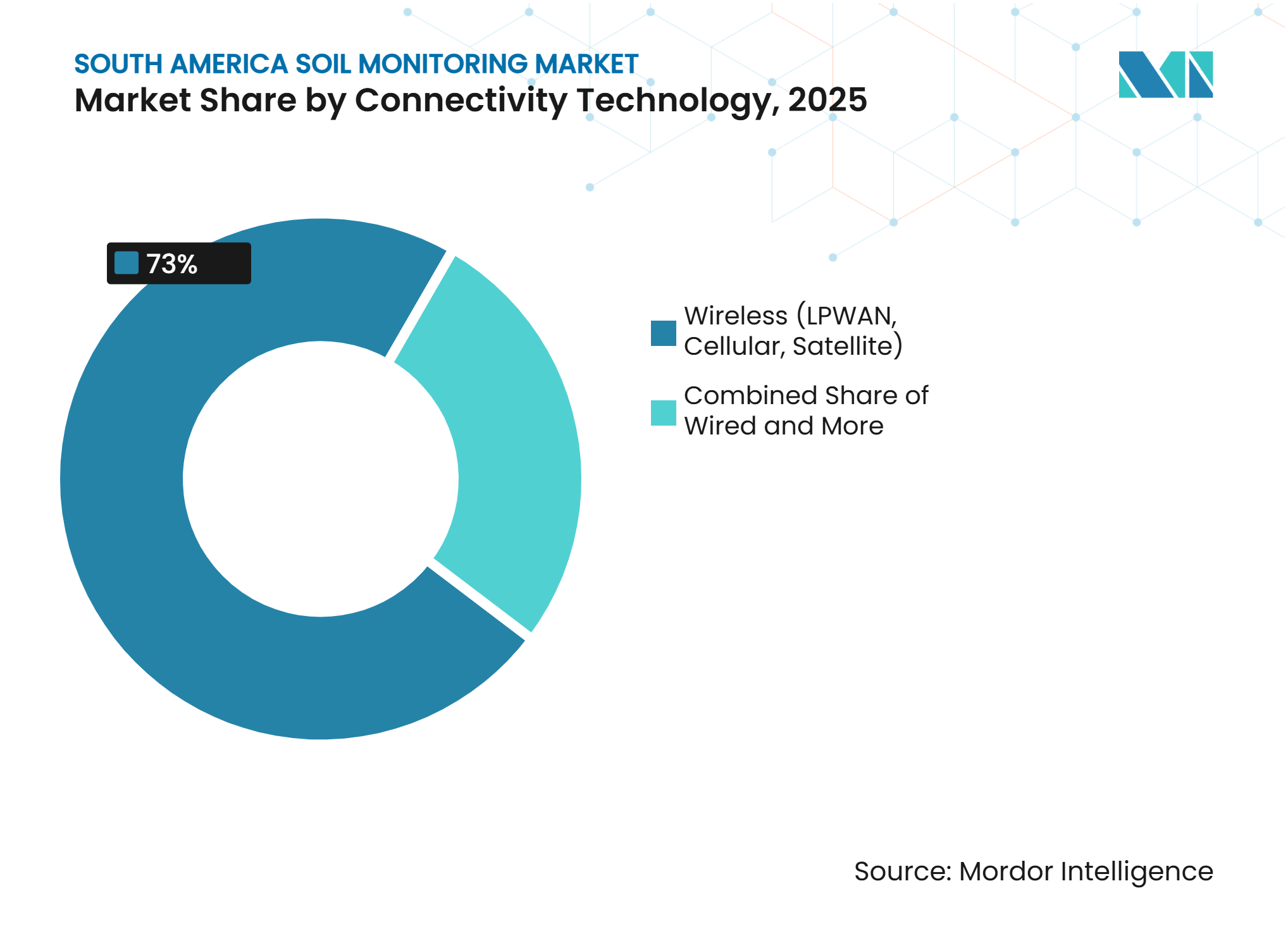
Wireless Systems Support Broad Farm CoverageWireless connectivity held 73% of the South America soil monitoring market in 2025 and is forecast to expand at a 14.7% CAGR during 2026-2031. The category includes low-power wide-area networks, cellular connections, and satellite links. Wireless systems avoid the cost and disruption of running cables across broad agricultural areas. They are useful for locations where farm managers need field data to flow to a central platform. The relative importance of each protocol varies with farm size, topography, available power, and distance from cellular networks.
Satellite links are increasingly relevant to remote interior areas where terrestrial coverage remains limited. The 150-sensor deployment reported by Lacuna Space Ltd. in 2025 showed a commercial use case for satellite-connected soil moisture monitoring in Brazil. Long Range Wide Area Network (LoRaWAN) can be suitable for concentrated farm clusters where operators can build local network coverage. Wired systems continue to play a role in research facilities, protected cultivation, and reference sites where data reliability requirements are high. A 2025 study in Smart Agricultural Technology demonstrated LoRaWAN-based agricultural monitoring at altitudes of up to 4,000 meters in Peru’s high-Andean region, achieving reliable communication over distances of up to 10 km and demonstrating the viability of low-power networks in remote, connectivity-constrained agricultural areas. Connectivity choice, therefore, remains a commercial design decision rather than a single technology standard.

By Application:
Open Field Holds the Largest Share While Protected Cultivation GrowsOpen field held 78% of the South America soil monitoring market share in 2025, supported by soybean, sugarcane, corn, and grain systems across the region. Large farm footprints require monitoring across variable conditions and multiple soil depths. Soil sensors can guide irrigation timing and support more consistent assessment of field conditions than periodic manual checks. A 2025 study by researchers from the Federal University of São Carlos and the Brazilian Agricultural Research Corporation (Embrapa), based on data from 148 soybean farmers in São Paulo, found that adoption of precision agriculture technologies was influenced by farm size, access to information, consultancy, and farmers' education. The technologies assessed included grid soil sampling and variable-rate application. This supports the role of open-field production as the largest application
Protected cultivation is forecast to expand at a 17.1% CAGR during 2026-2031 as horticulture systems require precise control of moisture, electrical conductivity, and pH. These systems are relevant to greenhouse production in Chile, southern Brazil, and Argentina. The application has a smaller installed base than open fields, but controlled conditions increase the value of frequent and accurate readings. Forestry is a smaller use case that supports replanting decisions and soil-condition assessment in plantation systems. Each application requires different sensor placement, connectivity, and service arrangements.
By End User:
Large Farms Lead While Cooperative Purchasing Broadens AccessLarge commercial farms held 62% of the South America soil monitoring market in 2025 because they can fund multi-year deployments and recurring data services. Their scale allows the cost of gateways, calibration, and technician visits to be distributed across more hectares. Brazilian agribusinesses in Mato Grosso and Goiás have experience with precision tools and can treat soil monitoring as part of capital planning. Large grain and oilseed operations in Argentina are also a core target for multi-parameter systems. These farms require equipment that can operate reliably across large fields and connect to existing operating workflows.
Smallholder and cooperative farms are forecast to grow at a 16.3% CAGR during 2026-2031, supported by pooled procurement and shared technical support. Cooperatives standardize purchasing and make training available to members who cannot fund independent deployments. Research institutes and universities remain important early adopters because they validate equipment and develop local calibration expertise. Government bodies and nongovernmental organizations also procure systems through watershed, soil health, and low-carbon agriculture programs. These customer groups expand demand but often use procurement processes that differ from those of commercial farms.
Geography Analysis
Brazil held 64% of the South America soil monitoring market in 2025, reflecting the scale of its commercial crop systems and the need for monitoring across extensive agricultural land. the Brazilian Agricultural Research Corporation (Embrapa) launched Plataforma Saúde do Solo BR in November 2025 with data from 56,000 samples across 1,502 municipalities. This national reference base gives farms and suppliers a stronger framework for assessing soil conditions. Brazil's ABC+ Low Carbon Agriculture Plan also supports sensor-based farming through credit and technical assistance, as described in the supplied draft. Water scarcity declarations in 2024 further increased the value of reliable moisture data for farm management. Brazil is therefore the largest commercial setting for sensor, platform, and connectivity suppliers in the region.
Chile is forecast to expand at a 16.2% CAGR during 2026-2031, making it the fastest-growing geography in the South America soil monitoring market. Export-oriented fruit, wine, and horticulture production gives growers a direct incentive to document water and soil management. The 2025 Sateliot and LemSystem partnership introduced satellite Internet of Things connectivity for remote agricultural sensing locations in Chile. INIA and Corfo also conducted a 2025 sensor demonstration for table grape producers in the country's central zone. These activities support adoption among growers that need clear evidence before making a first investment.
Argentina has meaningful regional demand because grain and oilseed farms in the Pampas already use precision agriculture practices. The Pampas produced more than 70% of national grain output according to the supplied draft, which makes the region important for commercial sales. Import controls and currency restrictions can limit formal purchases of specialized hardware. The National Institute of Agricultural Technology Argentina (INTA)'s 2025 open-source sensor design and its SEPA satellite platform build technical awareness among producers. The rest of South America includes Peru, Colombia, Ecuador, and Bolivia, where smaller farms and uneven infrastructure support use cases for low-power networks and satellite links. IICA technology-transfer activity provides a basis for testing and adapting solutions across these varied operating environments.
Competitive Landscape
Market Concentration
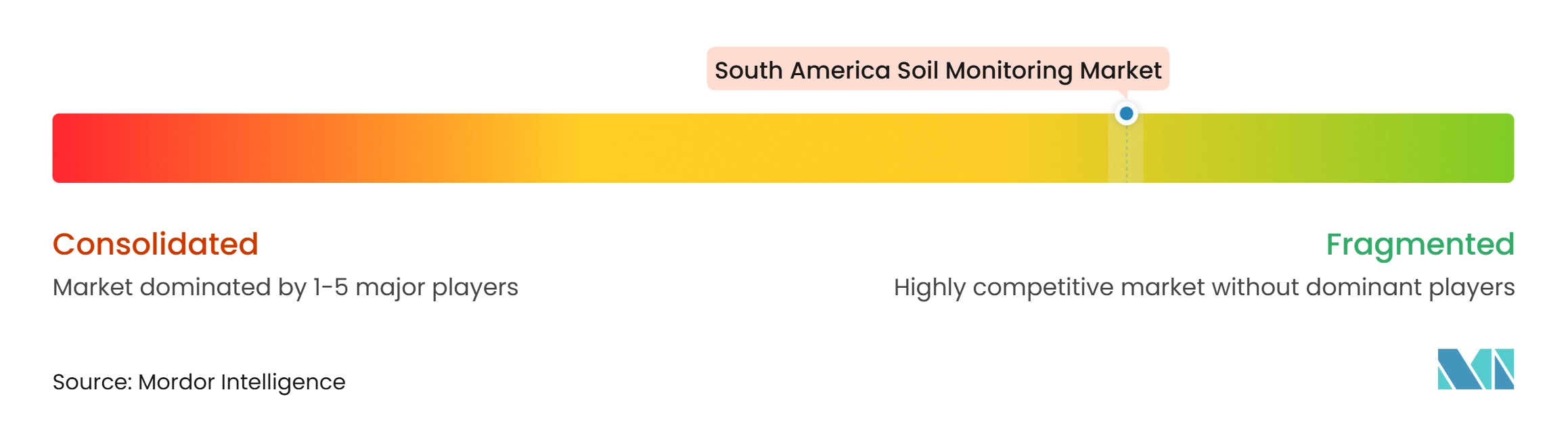
The South America soil monitoring market is fragmented and includes global sensor specialists, platform providers, connectivity partners, and locally embedded distributors. METER Group, Inc. and Campbell Scientific, Inc. compete on sensor accuracy, calibration, and breadth of measurement equipment. CropX Technologies, Inc. and Pessl Instruments GmbH combine field devices with data platforms and advisory functions. The regional commercial model varies because some suppliers sell through distributors while others partner with connectivity companies or irrigation providers. This structure gives growers several choices, but also makes local installation support and compatible software important in purchasing decisions. The South America soil monitoring market has no single integrated provider that controls pricing or distribution across the region.
Lindsay Corporation completed a 49.9% minority investment in Pessl Instruments GmbH in January 2025, combining Pessl Instruments GmbH's METOS monitoring tools with Lindsay's remote irrigation management offering. The transaction connects soil data with an established irrigation management customer base. METER Group, Inc. released the SOLYX 14 sensor in February 2026 with CDX technology designed to separate moisture measurements from salinity and temperature interference. This addresses a measurement issue that can affect use in saline irrigated soils. These moves show that competition depends on measurement performance and on the ability to combine data with a practical farm workflow. They do not change the fragmented nature of the regional supplier base.
White space remains in satellite-connected monitoring for remote farms and in lower-cost offerings for cooperative and smallholder customers. OXYcrop gives CropX Technologies, Inc. a local route to Brazilian customers and provides field-level sales and support. Lacuna Space Ltd. and Wyld Networks AB Embrapa established a commercial reference through the Olho No Solo deployment during 2025. Pessl Instruments GmbH announced a July 2026 partnership with 1NCE to connect METOS stations and field sensors through a unified global Internet of Things platform. The South America soil monitoring market therefore rewards suppliers that can make connectivity, hardware, and analysis work together under local operating conditions.
South America Soil Monitoring Industry Leaders
-
METER Group, Inc.
-
Pessl Instruments GmbH
-
Campbell Scientific, Inc.
-
CropX Technologies, Inc.
-
Stenon GmbH
- *Disclaimer: Major Players sorted in no particular order
South America Soil Monitoring Market Companies Covered in this Report
- CropX Technologies, Inc.
- Pessl Instruments GmbH
- METER Group, Inc.
- Campbell Scientific, Inc.
- The Toro Company
- Irrometer Company, Inc.
- Acclima, Inc.
- Sentek Pty Ltd
- Stevens Water Monitoring Systems, Inc.
- Delta-T Devices Ltd.
- Spectrum Technologies, Inc.
- Stenon GmbH
- Hortau Inc.
- Soil Scout Ltd.
- ICT International Pty Ltd
Recent Industry Developments in South America Soil Monitoring Market
- February 2026: METER Group, Inc. released the SOLYX 14 soil moisture sensor, featuring patented CDX technology that delivers consistent volumetric water content measurements across a wider range of soil types, including high-salinity and high-clay soils prevalent in irrigated agricultural zones across Argentina and northeastern Brazil. The SOLYX 14 addresses sensor drift in saline conditions, a long-standing accuracy limitation that has undermined confidence in commercial sensor data in these regions.
- November 2025: Pessl Instruments GmbH officially launched METOS 5, the newest generation of its weather and field monitoring station range, at Agritechnica 2025. METOS 5 offers modular connectivity, integrates with the FieldClimate cloud platform for soil moisture and irrigation management, and is designed to retrofit existing METOS installations, lowering upgrade costs for established South American dealer networks.
- October 2025: Pessl Instruments GmbH and FarmBlick GmbH announced a data integration partnership that enables METOS Internet of Things sensor data, including soil moisture readings, to flow directly into FarmBlick's operational farm data ecosystem. A prototype is planned for 2026, with pilot farm deployments for operational testing. The integration consolidates soil, weather, and agronomy data into a single platform interface, reducing system fragmentation in commercial farm operations.
South America Soil Monitoring Market Report Scope
Soil Monitoring Involves Measuring and Tracking Soil Conditions to Optimize Agricultural Productivity and Sustainability. The South America Soil Monitoring Market Report is Segmented by Component (Hardware, and More), by Product Type (In-Situ Sensors, and More), by Connectivity Technology (Wired and Wireless), by Application (Open Field, and More), by End-User (Large Commercial Farms, and More), and by Geography (Brazil, Argentina, and Rest of South America). The Market Forecasts are Provided in Terms of Value.
Segmentation Overview
| Hardware |
| Software |
| Services |
| In-situ Sensors |
| Remote Sensing Platforms |
| Portable Probes and Test Kits |
| Wired |
| Wireless (LPWAN, Cellular, Satellite) |
| Open Field |
| Protected Cultivation |
| Forestry |
| Large Commercial Farms |
| Smallholder and Cooperative Farms |
| Research Institutes and Universities |
| Government and NGOs |
| South America | Brazil |
| Argentina | |
| Rest of South America |
| By Component | Hardware | |
| Software | ||
| Services | ||
| By Product Type | In-situ Sensors | |
| Remote Sensing Platforms | ||
| Portable Probes and Test Kits | ||
| By Connectivity Technology | Wired | |
| Wireless (LPWAN, Cellular, Satellite) | ||
| By Application | Open Field | |
| Protected Cultivation | ||
| Forestry | ||
| By End-User | Large Commercial Farms | |
| Smallholder and Cooperative Farms | ||
| Research Institutes and Universities | ||
| Government and NGOs | ||
| By Geography | South America | Brazil |
| Argentina | ||
| Rest of South America | ||
Key Questions Answered in the Report
What is the forecast for South America soil monitoring solutions?
The sector is forecast to grow from USD 198 million in 2026 to USD 365 million by 2031 at a 13% CAGR.
Which component has the largest role in South America soil monitoring?
Hardware held the largest share at 58% in 2025 because sensors, gateways, and field installation are required for system deployment.
Which agricultural application is growing fastest?
Protected cultivation is forecast to grow at a 17.1% CAGR through 2031 as growers use frequent measurements for greenhouse irrigation and fertigation.
What limits adoption by smaller farms?
Installation, calibration, subscription, and connectivity costs remain material barriers, while cooperative purchasing can help spread these costs.