
Market Overview
| Study Period | 2020 - 2031 |
|---|---|
| Forecast Data Period | 2026 - 2031 |
| Base Year Market Size (2025) | USD 1.62 Billion |
| Market Size (2026) | USD 1.73 Billion |
| Market Size (2031) | USD 2.58 Billion |
| Growth Rate (2026 - 2031) | 8.34 % |
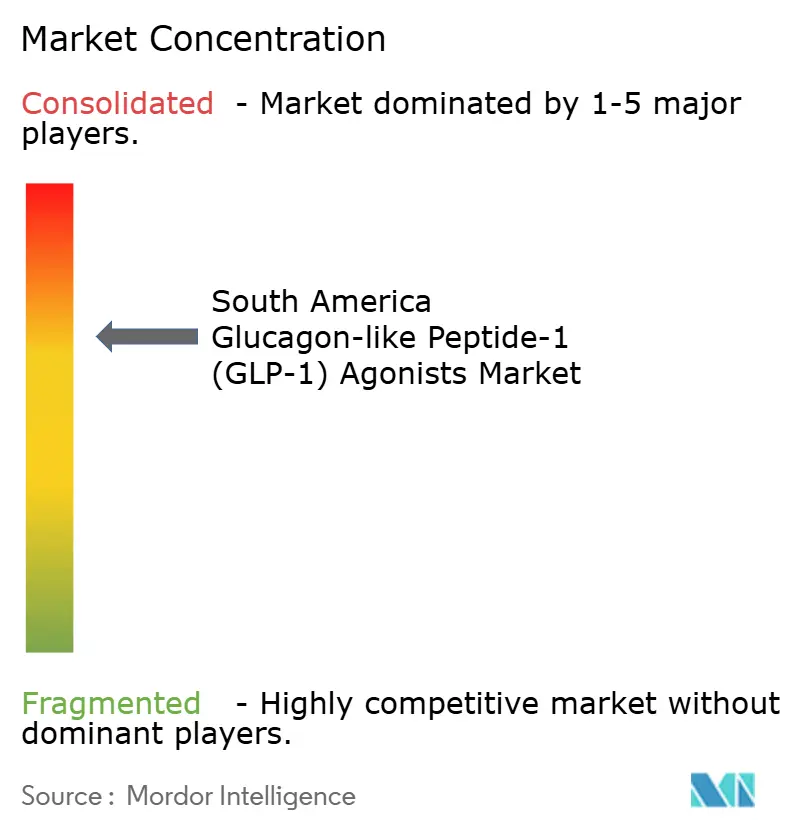
| Market Concentration | Medium |
Major Players *Disclaimer: Major Players sorted in no particular order Image © Mordor Intelligence. Reuse requires attribution under CC BY 4.0. | |
South America Glucagon-like Peptide-1 (GLP-1) Agonists Market Analysis by Mordor Intelligence
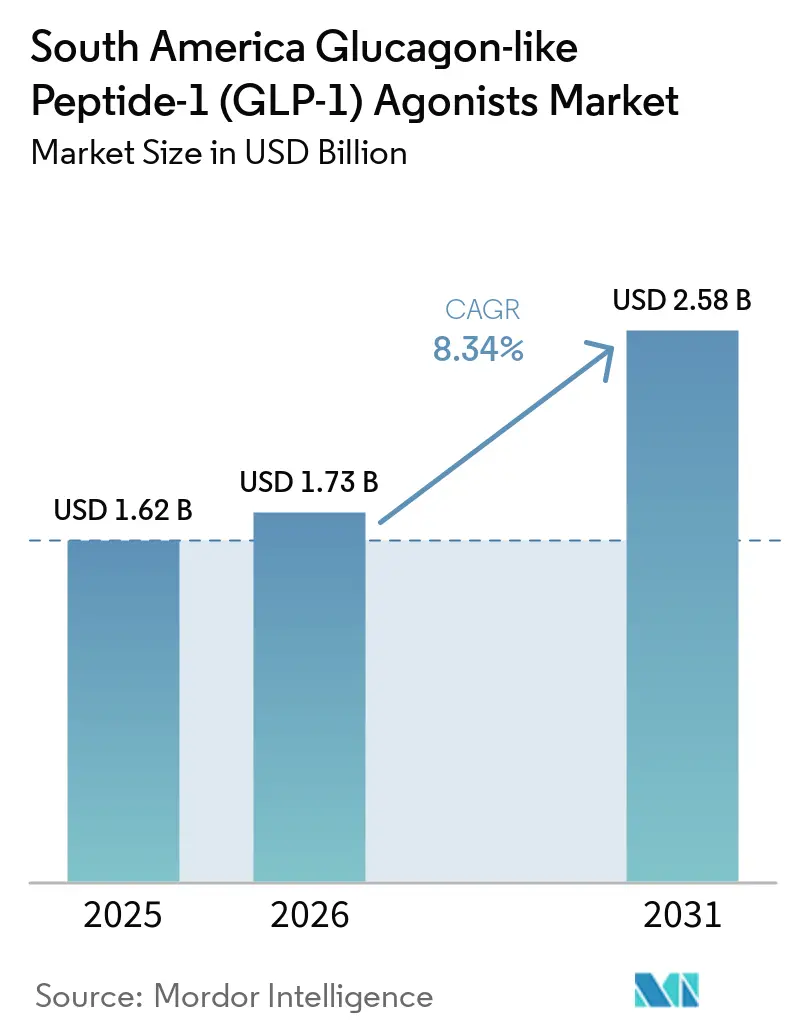
The South America glucagon-like peptide-1 (GLP-1) agonists market is projected to expand from USD 1.62 billion in 2025 and USD 1.73 billion in 2026 to USD 2.58 billion by 2031, registering a CAGR of 8.34% between 2026 and 2031. The region’s diabetes and obesity burden supports demand for therapies that address metabolic disease. South and Central America had 35.4 million adults living with diabetes in 2024, and 30.4% of cases were undiagnosed. Obesity in the Americas increased 67.5% from 2000 through 2025, increasing the potential need for weight-management care. The South American GLP-1 agonists market also depends on affordable access, reliable supply, and reimbursement decisions. Local production and digital dispensing can widen access, while approval-to-availability gaps continue to restrict treatment use.
Key Report Takeaways
- By molecule, semaglutide held 51.35% of the South American GLP-1 agonists market share in 2025, while tirzepatide is forecast to grow at a 9.22% CAGR through 2031.
- By route of administration, injectable pens accounted for 87.42% of the South American GLP-1 agonists market in 2025, while oral tablets are projected to grow at an 8.74% CAGR through 2031.
- By indication, type-2 diabetes held 78.13% revenue share in 2025, while obesity/weight management is expected to advance at a 10.17% CAGR through 2031.
- By distribution channel, hospital pharmacies held 47.42% revenue share in 2025, while online pharmacies are forecast to grow at a 9.65% CAGR through 2031.
- By country, Brazil held 59.82% revenue share in 2025, while Argentina is projected to expand at an 11.16% CAGR through 2031.
Note: Market size and forecast figures in this report are generated using Mordor Intelligence’s proprietary estimation framework, updated with the latest available data and insights as of January 2026.
Market Trends and Insights
Drivers Impact Analysis of South America Glucagon-like Peptide-1 (GLP-1) Agonists Market*
| Driver | (~) % Impact on CAGR Forecast | Geographic Relevance | Impact Timeline |
|---|---|---|---|
| Rising Type 2 Diabetes and Obesity Treatment Demand | +3.5% | Global, concentrated in Brazil and Argentina | Long term (≥ 4 years) |
| Expansion of Specialist-Led Weight-Management Prescribing | +1.8% | Brazil, Colombia, Chile urban centers | Medium term (2-4 years) |
| Increasing Availability of Weekly Injectable Pens | +1.2% | Brazil, Argentina, Peru | Short term (≤ 2 years) |
| Local Manufacturing and Post-Patent Competition | +0.9% | Brazil, with spillover to Argentina and Colombia | Short term (≤ 2 years) |
| Digital Diabetes Care and Tele-pharmacy Enablement | +0.6% | Brazil and Argentina | Medium term (2-4 years) |
| Patient Preference for Oral and Lower-Burden Formulations | +0.5% | Brazil, Argentina, and Colombia | Medium term (2-4 years) |
| Source: Mordor Intelligence | |||
Rising Type 2 Diabetes and Obesity Treatment Demand
Diabetes and obesity create the basic demand base for the South American GLP-1 agonists market. The IDF projects diabetes cases in South and Central America will reach 52 million by 2050. This projection represents a 46% increase from the 2024 level.[1] Regional diabetes expenditure reached USD 81 billion in 2024. That amount represented 8% of global diabetes expenditure.
The clinical role of these medicines also extends beyond glucose control. A 2025 SELECT analysis reported a 20% reduction in major adverse cardiovascular events with semaglutide. The study covered patients with obesity and established cardiovascular disease.[2] The South American GLP-1 agonists market, therefore, has a broader clinical base than diabetes treatment alone. Treatment adoption will still depend on physician capacity and payer coverage.
Expansion of Specialist-Led Weight-Management Prescribing
Specialist prescribing is making obesity care more structured in major South American cities. Endocrinologists and obesity specialists can identify patients who need long-term therapy. They can also monitor treatment response and side effects. This care model supports continued use rather than intermittent purchases. It is especially relevant where medicines are largely paid for privately. The South American GLP-1 agonists market benefits when care pathways combine diagnosis, prescription, and follow-up.
Continuous glucose monitoring can support this approach for patients with diabetes. It gives clinicians more information when they adjust treatment plans. Novo Nordisk announced a Brazilian public-system pilot involving 1,000 patients at 3 health units in 2026.[3] Future evaluation of public treatment models could affect the accessible patient population. The South American GLP-1 agonists market will remain tied to the availability of qualified prescribers and covered treatment pathways.
Increasing Availability of Weekly Injectable Pens
Weekly injectable pens remain the leading delivery format in the South American GLP-1 agonists market. Their clinical evidence base is extensive across diabetes and obesity. Less frequent dosing can reduce the treatment burden compared with daily injections. Device design also affects the practical use of chronic therapy. Multidose devices can reduce the number of separate pen purchases. Supply reliability remains necessary for these benefits to reach patients.
ANVISA approved a multidose Mounjaro pen in March 2026. The authorization covered 6 concentration formats in 1 device. This format may lower the per-application cost for some patients. Temperature requirements remain important outside large urban areas. Providers need appropriate storage and dispensing systems. These conditions can limit the South American GLP-1 agonists market in areas with weak cold-chain capacity.
Local Manufacturing and Post-Patent Competition
Local manufacturing has become more important for access and supply in Brazil. It can reduce dependence on imported finished products and drug substances. It can also shorten some supply chains. ANVISA approved the first synthetic semaglutide pen, Ozivy, in May 2026. The approval established a regulated pathway for domestic competition. It also created greater price pressure on branded injectable semaglutide. The South American GLP-1 agonists market may gain volume as lower-priced choices become available.
Novo Nordisk announced an 8 billion DKK (~USD 1.26 billion) production investment in Montes Claros, Brazil, in 2025. The project is intended to increase production capacity in Brazil. Competition will not remove the need for quality controls. Regulatory review remains important for synthetic and biosimilar products. Price competition is most likely to shape the injectable semaglutide part of the South American GLP-1 agonists market.
Restraints Impact Analysis of South America Glucagon-like Peptide-1 (GLP-1) Agonists Market*
| Restraint | (~) % Impact on CAGR Forecast | Geographic Relevance | Impact Timeline |
|---|---|---|---|
| High Out-of-Pocket Treatment Cost | -2.0% | All South America, most acute in Peru, Bolivia, and Ecuador | Long term (≥ 4 years) |
| Restricted Reimbursement and Uneven Public-Sector Access | -1.7% | Chile, Colombia, Argentina, and Brazil’s SUS | Medium term (2-4 years) |
| Counterfeit, Compounded, and Irregular-Import Risk | -0.8% | Brazil and Argentina | Short term (≤ 2 years) |
| Cold-Chain, Supply Allocation, and Pen-Component Constraints | -0.5% | Peru, Chile, and Rest of South America | Medium term (2-4 years) |
| Source: Mordor Intelligence | |||
High Out-of-Pocket Treatment Cost
Out-of-pocket costs remain a major obstacle across the South American GLP-1 agonists market. Branded tirzepatide and high-dose semaglutide can exceed the budgets of many middle-income households. Cost pressure can lead patients to delay treatment or discontinue it. Lower-priced semaglutide can help in Brazil, but availability will differ across countries.
ANVISA cited manufacturing noncompliance and illegal sales without prescriptions. This intervention highlights the relationship between affordability and product safety. Patients need consistent access to regulated products. Countries without near-term semaglutide competition may face stronger affordability constraints. The South American GLP-1 agonists market will need both lower prices and reliable pharmacy oversight.
Restricted Reimbursement and Uneven Public-Sector Access
Reimbursement policies limit the conversion of regulatory approvals into routine patient use. The 2026 FIFARMA WAIT Indicator reported 23% extended availability for innovative cardiometabolic medicines across 10 South American countries. It reported availability delays of 22 to 43 months after approval. These delays were pronounced in Chile, Brazil, and Panama. The result is a smaller treated population than regulatory eligibility suggests. The South American GLP-1 agonists market remains concentrated in private-pay channels where public coverage is narrow.
Chile excludes GLP-1 medicines from its public system. Colombia uses multistep prior authorization for liraglutide. Argentina restricts certain reimbursement for patients with documented cardiovascular events. These rules prioritize limited public budgets and clinically defined groups. The South American GLP-1 agonists market needs evidence that links treatment access with health-system value.
*Our forecasts treat driver/restraint impacts as directional, not additive. The impact forecasts reflect baseline growth, mix effects, and variable interactions.
South America Glucagon-like Peptide-1 (GLP-1) Agonists Market Segment Analysis
By Molecule:
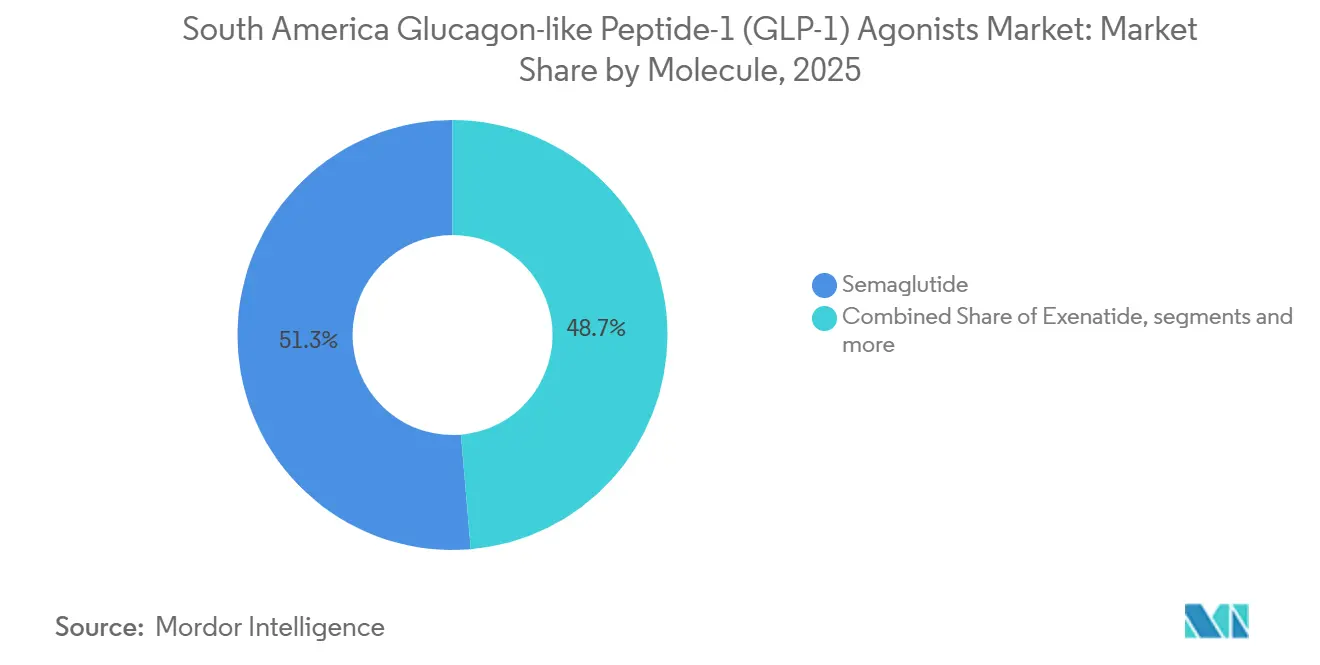
Semaglutide Led Revenue While Tirzepatide Grew FasterSemaglutide held 51.35% of the South American GLP-1 agonists market share in 2025. Its position reflected established use through Ozempic for Type-2 Diabetes and Wegovy for obesity. The molecule has a long prescribing history across the region. Brazilian competition increased after the semaglutide patent expiry in March 2026. ANVISA approved Ozivy as the first synthetic semaglutide pen in May 2026. This approval introduced a regulated domestic alternative. More product options can increase use among price-sensitive patients.
Tirzepatide is forecast to expand at a 9.22% CAGR through 2031. Its dual GLP-1 and GIP mechanism supports its differentiated clinical position. Tirzepatide remains insulated from the Brazilian semaglutide price cycle. Liraglutide, dulaglutide, and exenatide retain roles in legacy prescribing and cost-focused procurement. Dulaglutide retains value through its auto-injector format. The other category can broaden as approved products enter the South American GLP-1 agonists market.

By Route of Administration:
Injectable Pens Retained Scale, While Oral Tablets Offered Future ChoiceInjectable pens accounted for 87.42% of the South American GLP-1 agonists market size in 2025. They had the largest clinical evidence base and commercial availability. Injectable products also fit established pharmacy storage and dispensing practices. Weekly dosing supports ongoing treatment for patients who accept self-injection. However, device access can be difficult in remote locations. Cold-chain conditions can also limit distribution outside major cities.
Oral tablets are expected to grow at an 8.74% CAGR through 2031. Eli Lilly reported successful results from a third Phase 3 trial for orforglipron in August 2025. Oral products could appeal to patients who do not want injections. They could also reduce dependence on specialized device logistics. Regulatory approval is still required before these products affect regional sales. The South American GLP-1 agonists market could gain a broader delivery mix after approvals.
By Indication:
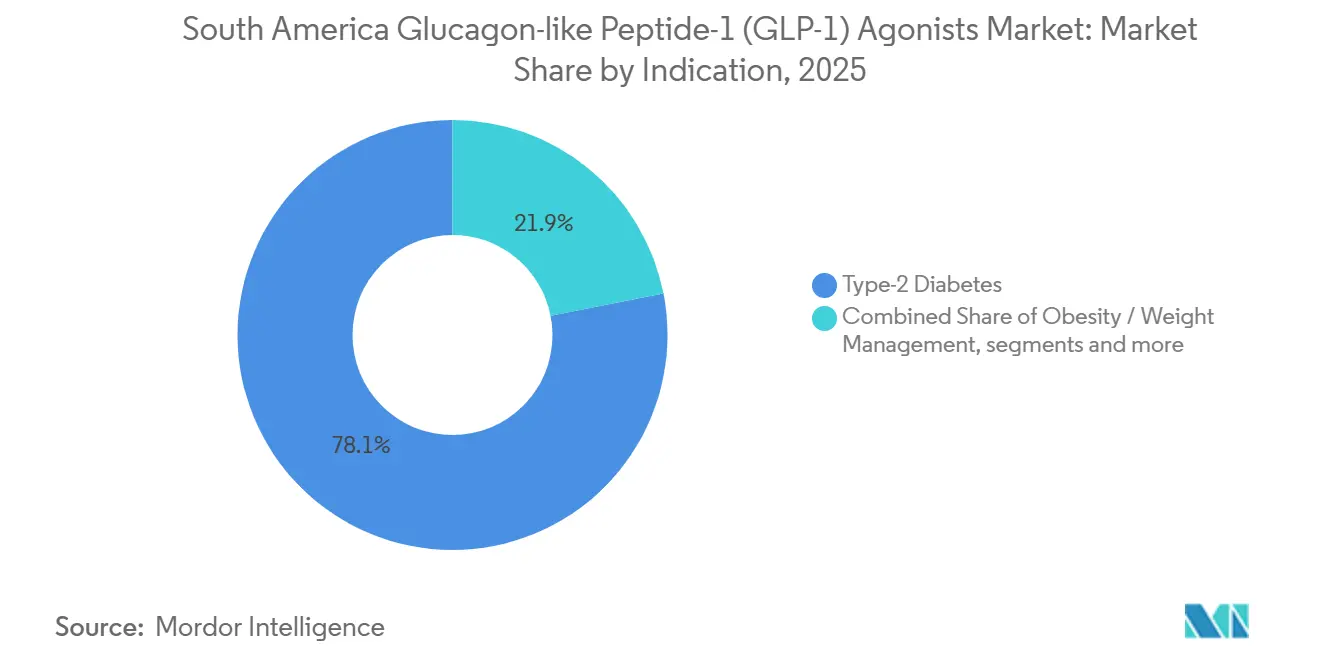
Type-2 Diabetes Was the Core Use, While Obesity Advanced FasterType-2 Diabetes accounted for 78.13% revenue share in 2025. The indication has established protocols and a large diagnosed patient population. Diabetes also has a substantial unmet detection need across the region. The disease burden supports continuing demand for glucose-lowering medicines. GLP-1 treatment has clinical relevance for patients with cardiometabolic risks. The South American GLP-1 agonists market remains anchored in diabetes care. Broader screening could increase the treated population over time.
Obesity/weight management is projected to grow at a 10.17% CAGR through 2031. Obesity has become a more formal treatment focus for health systems and specialists. Semaglutide also has cardiovascular evidence for defined high-risk patients. Emerging uses such as MASH can diversify clinical demand. Payer coverage will determine whether those uses become broadly accessible in the South American GLP-1 agonists market.
By Distribution Channel:
Hospital Pharmacies Led While Online Pharmacies ExpandedHospital pharmacies held 47.42% revenue share in 2025. They benefit from institutional cold-chain infrastructure and specialist-adjacent care. They also participate in insurance-negotiated sales and public tenders. These capabilities support the handling of temperature-sensitive injectable medicines. Retail pharmacies serve patients paying directly for treatment. Channel choice depends on availability, price, and prescription requirements.
Online pharmacies are projected to expand at 9.65% CAGR through 2031. Brazil’s prescription-retention rules for GLP-1 medicines took effect in June 2025. The rules require a retained prescription at dispensing. They support more formal controls over medicine sales. Online dispensing can be convenient for patients on stable weekly regimens. The South American GLP-1 agonists market can benefit from digital channels when compliance systems are robust.
Geography Analysis
Brazil Glucagon-like Peptide-1 (GLP-1) Agonists Market
Brazil accounted for 59.82% of the South American GLP-1 agonists market share in 2025. It has the region’s most active GLP-1 regulatory environment. It also has a large private healthcare and pharmacy base. Domestic manufacturing adds another source of strength. Novo Nordisk’s Montes Claros investment supports expanded local production capacity.
Brazilian Market
ANVISA approved the first synthetic semaglutide pen in 2026. This can increase unit availability and pressure branded injectable prices. Brazil’s prescription-retention framework took effect in June 2025. It strengthens dispensing controls and pharmacovigilance. Formal pharmacy operators may benefit from these requirements.
South America Glucagon-like Peptide-1 (GLP-1) Agonists Market
The public system still has limited access to GLP-1 treatment. Most demand, therefore, remains within private channels. Local production may improve supply, but does not ensure public reimbursement. Argentina is projected to grow at an 11.2% CAGR through 2031. ANMAT updated its commercialization authorization framework for synthetic medicinal products in June 2025. Colombia, Chile, Peru, and other countries face reimbursement, cold-chain, and healthcare-spending constraints.
Competitive Landscape
The South American GLP-1 agonists market is concentrated in branded medicines, but is fragmenting in synthetic semaglutide. Novo Nordisk and Eli Lilly remain the main branded competitors. Novo Nordisk has pursued local production capacity in Brazil. Its 8 billion DKK (~USD 1.26 billion) Montes Claros investment was announced in 2025. The company also submitted oral Wegovy for ANVISA review in 2026.
These moves support local supply and new delivery formats. Eli Lilly’s tirzepatide has a differentiated mechanism and a protected position in Brazil. The patent protection through 2032. Eli Lilly reported positive Phase 3 results for oral orforglipron in 2025. This creates a future pathway beyond injectable treatment.
Domestic and partner-led entrants are increasing competition in Brazil. ANVISA’s May 2026 authorization of Ozivy was a key regulatory development. ANVISA approved 2 additional diabetes pens in August 2026. Companies must maintain quality, traceability, compliant dispensing, cold-chain capabilities, and competitive pricing.
South America Glucagon-like Peptide-1 (GLP-1) Agonists Industry Leaders
-
Novo Nordisk A/S
-
Eli Lilly and Company
-
Sanofi
-
Boehringer Ingelheim
-
EMS
- *Disclaimer: Major Players sorted in no particular order
South America Glucagon-like Peptide-1 (GLP-1) Agonists Market Companies Covered in this Report
- Adalvo
- Amgen
- AstraZeneca
- Biocon
- Biomm S.A.
- Boehringer Ingelheim
- Bristol-Myers Squibb
- Eli Lilly and Company
- EMS
- Eurofarma Laboratorios S.A.
- Glenmark Pharmaceuticals
- Hypera S.A.
- Novo Nordisk
- Pfizer
- Sandoz Group
- Sanofi
- Sun Pharmaceuticals Industries
- Takeda Pharmaceuticals
- Teva Pharmaceutical Industries
- Torrent Pharmaceuticals
Recent Industry Developments in South America Glucagon-like Peptide-1 (GLP-1) Agonists Market
- August 2026: ANVISA approved two additional synthetic semaglutide pens, an EMS generic for generic substitution and Germed’s Semaclique, as interchangeable substitutes for Ozivy, bringing the total of post-patent semaglutide registrations in Brazil to at least 7 competing products within 5 months of patent expiry.
- July 2026: Sun Pharmaceutical Industries received ANVISA approval for semaglutide injection for Type-2 Diabetes in Brazil. Sun Pharma announced an immediate launch in partnership with Hypera Pharma, offering 2 mg/1.5 mL and 4 mg/3 mL pre-filled multidose injectable pens.
- June 2026: ANVISA ordered the seizure of all lots of unregistered tirzepatide products, including Rapha, Zemax, and compounded formulations, across Brazilian distribution channels, citing manufacturing noncompliance and illegal sale without prescription.
South America Glucagon-like Peptide-1 (GLP-1) Agonists Market Report Scope
According to the report’s scope, the South American glucagon-like peptide-1 (GLP-1) agonists market refers to the regional pharmaceutical segment focused on therapies that mimic the GLP-1 hormone to regulate blood sugar and support weight management. These drugs, including agents like semaglutide, liraglutide, and dulaglutide, are primarily used in the treatment of type 2 diabetes and obesity.
The South American glucagon-like peptide-1 (GLP-1) agonists market is segmented into molecule, route of administration, indication, distribution channel, and country. By molecule, the market is segmented into exenatide, liraglutide, dulaglutide, lixisenatide, semaglutide, tirzepatide, and others. By route of administration, the market is segmented into injectable pens and oral tablets. By indication, the market is segmented into type-2 diabetes, obesity/weight management, cardiovascular risk reduction, and other emerging indications. By distribution channel, the market is segmented into hospital pharmacies, retail pharmacies, online pharmacies, and other distribution channels. By country, the market is segmented into Brazil, Argentina, Colombia, Chile, Peru, and the rest of South America. The report offers values (USD) for all the above segments.
Segmentation Overview
By Molecule
| Exenatide |
| Liraglutide |
| Dulaglutide |
| Lixisenatide |
| Semaglutide |
| Tirzepatide |
| Others |
By Route of Administration
| Injectable Pens |
| Oral Tablets |
By Indication
| Type-2 Diabetes |
| Obesity / Weight Management |
| Cardiovascular Risk Reduction |
| Other Emerging Indications |
By Distribution Channel
| Hospital Pharmacies |
| Retail Pharmacies |
| Online Pharmacies |
| Other Distribution Channels |
By Country
| Brazil |
| Argentina |
| Colombia |
| Chile |
| Peru |
| Rest of South America |
| By Molecule | Exenatide |
| Liraglutide | |
| Dulaglutide | |
| Lixisenatide | |
| Semaglutide | |
| Tirzepatide | |
| Others | |
| By Route of Administration | Injectable Pens |
| Oral Tablets | |
| By Indication | Type-2 Diabetes |
| Obesity / Weight Management | |
| Cardiovascular Risk Reduction | |
| Other Emerging Indications | |
| By Distribution Channel | Hospital Pharmacies |
| Retail Pharmacies | |
| Online Pharmacies | |
| Other Distribution Channels | |
| By Country | Brazil |
| Argentina | |
| Colombia | |
| Chile | |
| Peru | |
| Rest of South America |
Key Questions Answered in the Report
What is the projected value of the South American GLP-1 agonists market in 2031?
The market is forecast to reach USD 2.58 billion by 2031, from USD 1.62 billion in 2025 to USD 1.73 billion in 2026, at an 8.34% CAGR.
Which GLP-1 molecule led regional revenue in 2025?
Semaglutide led revenue with 51.35% share in 2025, while tirzepatide is forecast to grow at a 9.22% CAGR.
Why does Brazil lead the regional demand for GLP-1 medicines?
Brazil held 59.82% revenue share in 2025, supported by regulation, private care, local manufacturing investment, and product approvals.
How are oral GLP-1 medicines changing future competition?
Oral tablets are forecast to grow at 8.74% CAGR, while Novo Nordisk has submitted oral Wegovy for ANVISA review.