
| Study Period | 2019 - 2030 |
| Forecast Data Period | 2025 - 2030 |
| Historical Data Period | 2019 - 2023 |
| Market Size (2025) | USD 2.67 Billion |
| Market Size (2030) | USD 3.78 Billion |
| CAGR (2025 - 2030) | 7.23% |
| Market Concentration | Low |
Major Players *Disclaimer: Major Players sorted in no particular order |
South America Feed Minerals Market Analysis by Mordor Intelligence
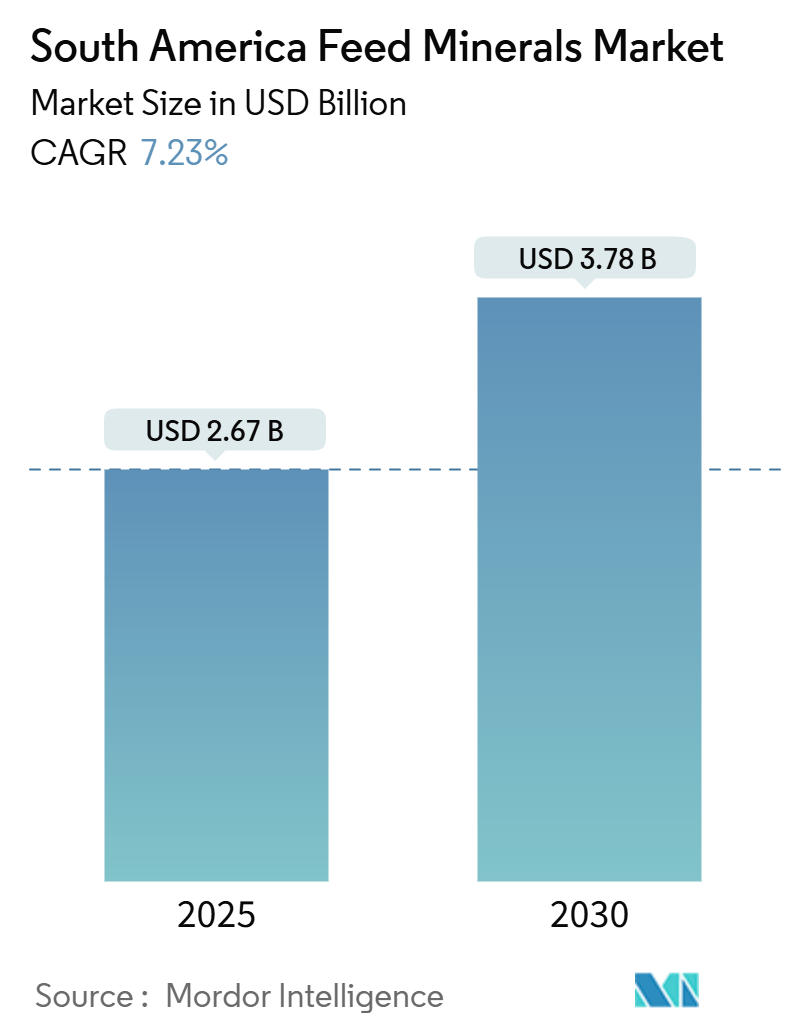
The South America Feed Minerals Market size is estimated at USD 2.67 billion in 2025, and is expected to reach USD 3.78 billion by 2030, at a CAGR of 7.23% during the forecast period (2025-2030).
The South American feed minerals market is a significant segment of the broader animal feed industry, driven by increasing demand for high-quality animal products, the expansion of livestock farming, and rising awareness of animal health and productivity. The market includes various mineral additives such as macro and trace minerals, which are essential for animal growth, reproduction, and overall health.
With a growing population and an increasing middle class in South America, there is a rising consumption of animal-based products such as meat, milk, and eggs. For instance, according to the OECD, the consumption of poultry meat in Argentina was 2,128.9 thousand metric tons in 2022, which increased by 2,157.2 thousand metric tons in 2023. This pushes livestock farmers to enhance productivity, and feed minerals play a critical role in achieving this. Increasing awareness about the importance of proper nutrition for livestock health, growth, and productivity is driving demand for feed minerals. These minerals support immune function, improve feed conversion ratios, and ensure overall well-being.
Countries like Brazil, Argentina, and Chile are major producers of livestock products in South America, and the expansion of poultry, swine, and cattle farming boosts the demand for specialized animal feed, including feed minerals. For instance, according to FAOSTAT, meat production in Chile was 1,534,531.1 metric tons in 2019, which increased by 1,559,920.1 metric tons in 2022. Further, the adoption of advanced feed formulation technologies, along with improvements in mineral supplementation, has led to the creation of more efficient and effective mineral feed products, stimulating market growth.
South America Feed Minerals Market Trends and Insights
Poultry is the Significant Segment by Animal Type
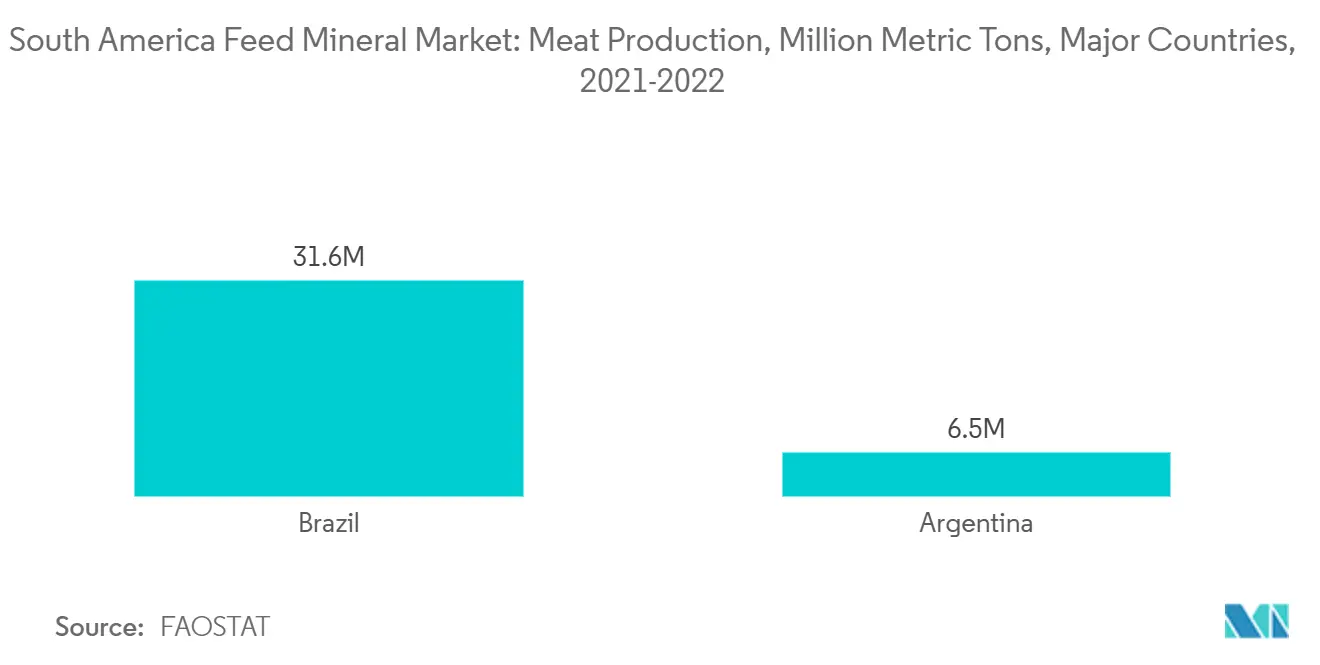
Poultry, especially chicken, is one of the most consumed sources of animal protein in South America. As incomes rise and consumer preferences shift towards affordable, protein-rich diets, the demand for poultry products—both meat and eggs—continues to grow. Countries like Brazil and Argentina are major players in poultry production and exports, and poultry farming in these countries has expanded significantly to meet both domestic and international demand. For instance, according to FAOSTAT, meat production in Brazil was 29.3 million metric tons in 2021, which increased by 30.4 million metric tons in 2022.
Poultry farming, particularly for broilers (meat chickens) and layers (egg-producing chickens), requires specific mineral supplements to optimize growth, feed efficiency, and overall health. Minerals like calcium and phosphorus are crucial for bone development and egg production, while other trace minerals like zinc, copper, and selenium are essential for immune function, growth, and disease resistance. Minerals like calcium are particularly important for eggshell formation in laying hens. This is a key reason why poultry farmers in South America, especially in countries with high egg production, use mineral supplements to maintain optimal egg quality and production levels. For instance, according to FAOSTAT, Hen eggs in shell production in Argentina was 830,000 metric tons in 2021, which increased by 841,037.9 metric tons in 2022.
Brazil Dominates the Market
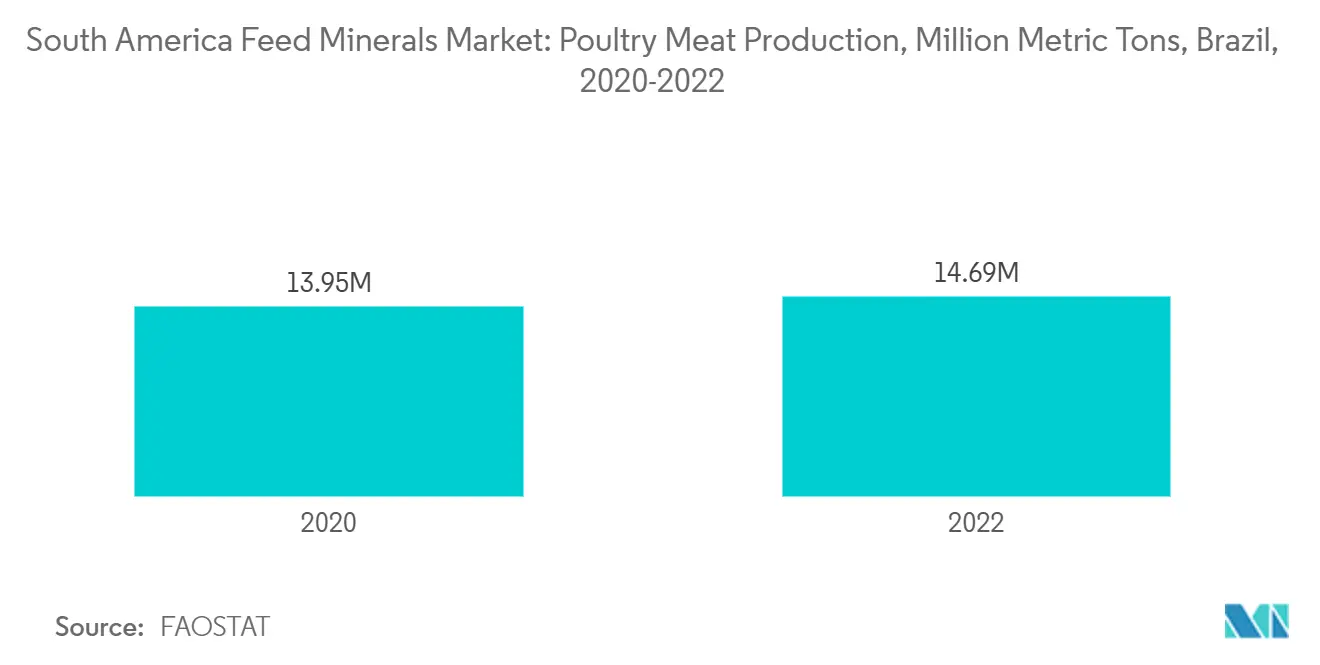
Brazil is the largest poultry producer and exporter in South America and one of the top producers globally. It is the world’s largest exporter of chicken meat, which drives significant demand for feed minerals. The country’s vast poultry farming sector requires high-quality feed minerals for optimal health, growth, and productivity of its birds. Brazil also has a massive cattle industry and is one of the leading beef exporters in the world. The swine industry is also significant in Brazil, contributing to the overall demand for feed minerals to ensure optimal livestock health and production. For instance, according to FAOSTAT, poultry meat production in Brazil was 13.95 million metric tons in 2020, which increased by 14.69 million metric tons in 2022.
Brazil has a well-established feed industry that produces customized and advanced feed formulations, incorporating essential minerals to support livestock health and productivity. The country has adopted innovative feed technologies that improve feed conversion ratios (FCR), reduce costs, and enhance animal health, which fuels the demand for feed minerals. The use of specialized mineral premixes in animal feed is widespread in Brazil. These premixes contain a precise blend of essential minerals like calcium, phosphorus, zinc, copper, and selenium to support various stages of livestock growth and production.
The Brazilian government has invested heavily in agricultural development, including subsidies, research, and policies that support livestock and poultry farming. This has contributed to Brazil’s dominant position in animal feed production and, by extension, the demand for feed minerals for instance, in 2022, the Ministry of Agriculture, Livestock and Farming of Brazil increased the annual budget of the National Programme for Strengthening Agriculture including livestock and poultry farming credit scheme from BRL 17.6 billion (USD 3.4 billion) to BRL 22.6 billion (USD 4.3 billion).
Competitive Landscape
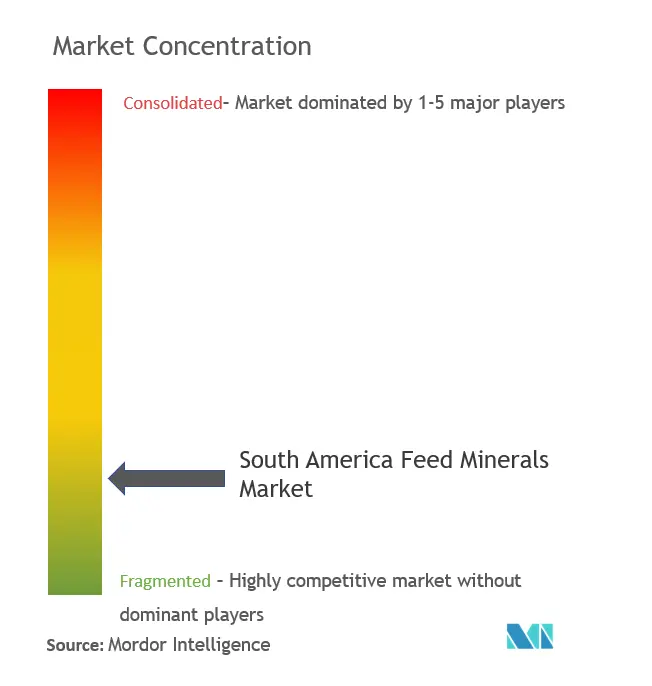
The South American feed minerals market is fragmented, with players ADM, Cargill, Inc., Nutreco NV, BASF SE, and Kemin Industries. These companies focus on quality through extensive investment in product research and development was the most adopted strategy of the leading players, worldwide. The major investments are directed to product line expansions and innovating new products to retain the existing customer base.
South America Feed Minerals Industry Leaders
-
Cargill Inc.
-
BASF SE
-
Nutreco NV
-
ADM
-
Kemin Industries
- *Disclaimer: Major Players sorted in no particular order
Recent Industry Developments
- February 2024: The American multinational Cargill is expanding its animal nutrition operation in Brazil, the third-largest market for the division, behind only the United States and China. The company has partnered with Bom Negócio, from Patrocínio (Minas Gerais), to expand the production of its line of mineral supplements (Probeef) for pasture-finished beef cattle.
- October 2024: DSM-Firmenich has opened a new animal nutrition factory in Minas Gerais, Brazil’s largest state in the Southeast. The company stated that the plant will produce 100,000 metric tons of supplements annually for the health and nutrition of beef and dairy cattle.
South America Feed Minerals Market Report Scope
Feed minerals, vital inorganic elements, play a crucial role in an animal's metabolic processes and physiological functions. As integral components of a balanced diet, these minerals are incorporated into feed supplements, ensuring animals receive their essential nutrients. The South America Feed Minerals Market Report is Segmented by Type (Micro Minerals and Macro Minerals) and Animal Type (Ruminants, Swine, Poultry, Aquaculture, and Other Animal Types), and Geography (Argentina, Brazil and the Rest of South America). The Report Offers Market Size and Forecast in Terms of Value in (USD) for all the Segments Mentioned Above.
Type
| Micro minerals |
| Macro minerals |
Animal Type
| Ruminants |
| Swine |
| Poultry |
| Aquaculture |
| Other Animal Types |
Geography
| Argentina |
| Brazil |
| Rest of South America |
| Type | Micro minerals |
| Macro minerals | |
| Animal Type | Ruminants |
| Swine | |
| Poultry | |
| Aquaculture | |
| Other Animal Types | |
| Geography | Argentina |
| Brazil | |
| Rest of South America |
Key Questions Answered in the Report
How big is the South America Feed Minerals Market?
The South America Feed Minerals Market size is expected to reach USD 2.67 billion in 2025 and grow at a CAGR of 7.23% to reach USD 3.78 billion by 2030.
What is the current South America Feed Minerals Market size?
In 2025, the South America Feed Minerals Market size is expected to reach USD 2.67 billion.
Who are the key players in South America Feed Minerals Market?
Cargill Inc., BASF SE, Nutreco NV, ADM and Kemin Industries are the major companies operating in the South America Feed Minerals Market.
What years does this South America Feed Minerals Market cover, and what was the market size in 2024?
In 2024, the South America Feed Minerals Market size was estimated at USD 2.48 billion. The report covers the South America Feed Minerals Market historical market size for years: 2019, 2020, 2021, 2022, 2023 and 2024. The report also forecasts the South America Feed Minerals Market size for years: 2025, 2026, 2027, 2028, 2029 and 2030.
South America Feed Minerals Market Report
Statistics for the 2025 South America Feed Minerals market share, size and revenue growth rate, created by Mordor Intelligence™ Industry Reports. South America Feed Minerals analysis includes a market forecast outlook for 2025 to 2030 and historical overview. Get a sample of this industry analysis as a free report PDF download.