
South America Chemical Processing Pumps Market Size and Share
Market Overview
| Study Period | 2022 - 2032 |
|---|---|
| Forecast Data Period | 2027 - 2032 |
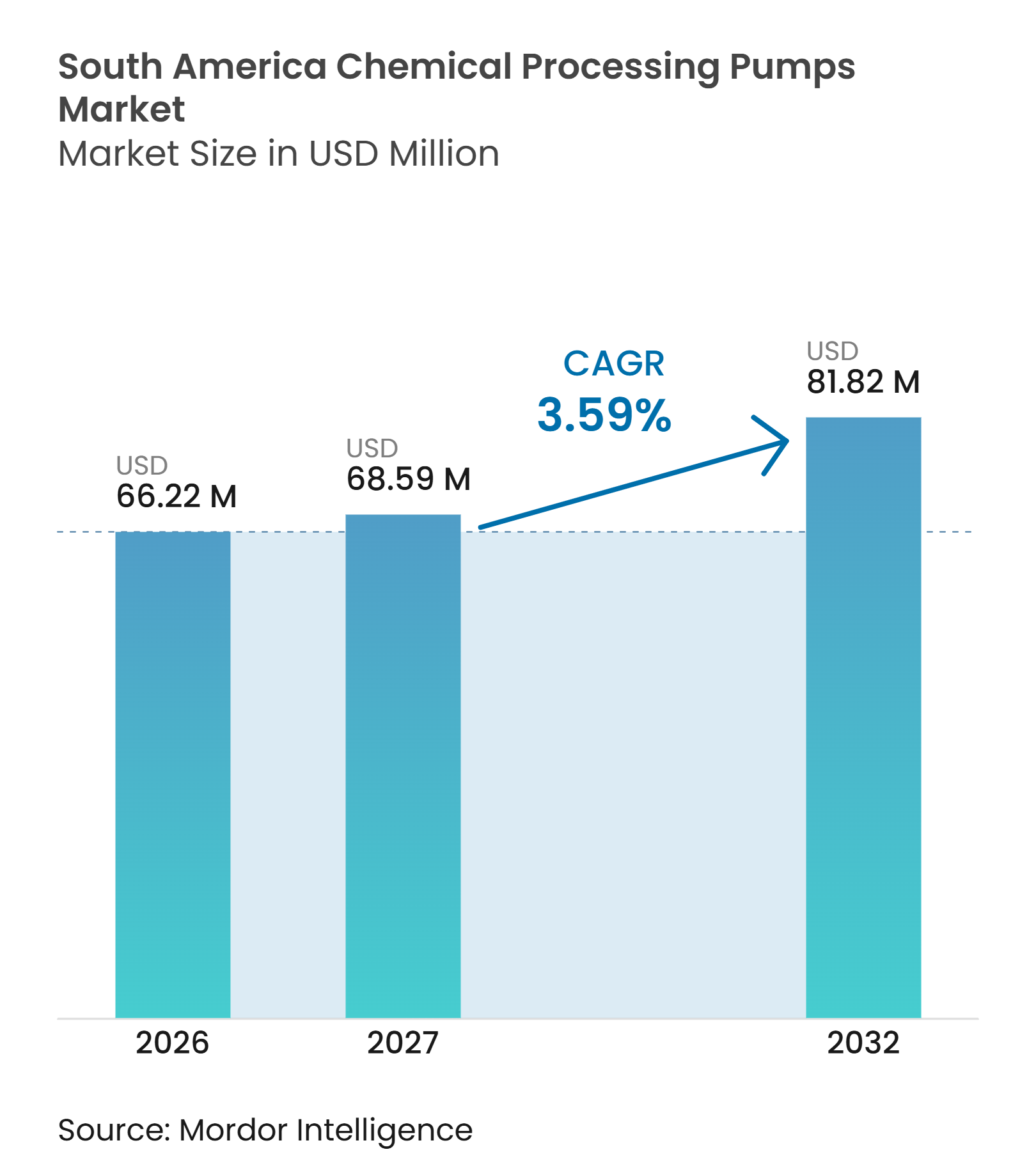
| Base Year Market Size (2026) | USD 66.22 Million |
| Market Size (2027) | USD 68.59 Million |
| Market Size (2032) | USD 81.82 Million |
| Growth Rate (2027 - 2032) | 3.59 % |
| Market Concentration | Low |
Major Players *Disclaimer: Major Players sorted in no particular order Image © Mordor Intelligence. Reuse requires attribution under CC BY 4.0. | |
South America Chemical Processing Pumps Market Analysis by Mordor Intelligence
The South America Chemical Processing Pumps Market size is projected to be USD 66.22 million in 2026, USD 68.59 million in 2027, and reach USD 81.82 million by 2032, growing at a CAGR of 3.59% from 2027 to 2032. Petrochemical and refining investment remains the central source of demand because projects require equipment that can handle corrosive fluids, high temperatures, and continuous operating cycles. Brazil provides the largest installed base, while Chile adds a faster-growing requirement for pumps that manage mining chemicals and abrasive process streams. The South America Chemical Processing Pumps market also benefits from greater attention to containment, equipment traceability, and service availability near industrial sites. Local manufacturing, approved supplier status, and field-service coverage influence purchasing decisions as strongly as initial equipment price. Currency exposure and lengthy qualification cycles remain material constraints because advanced materials and specialized sealing components often enter the region through imported supply chains.
Key Report Takeaways
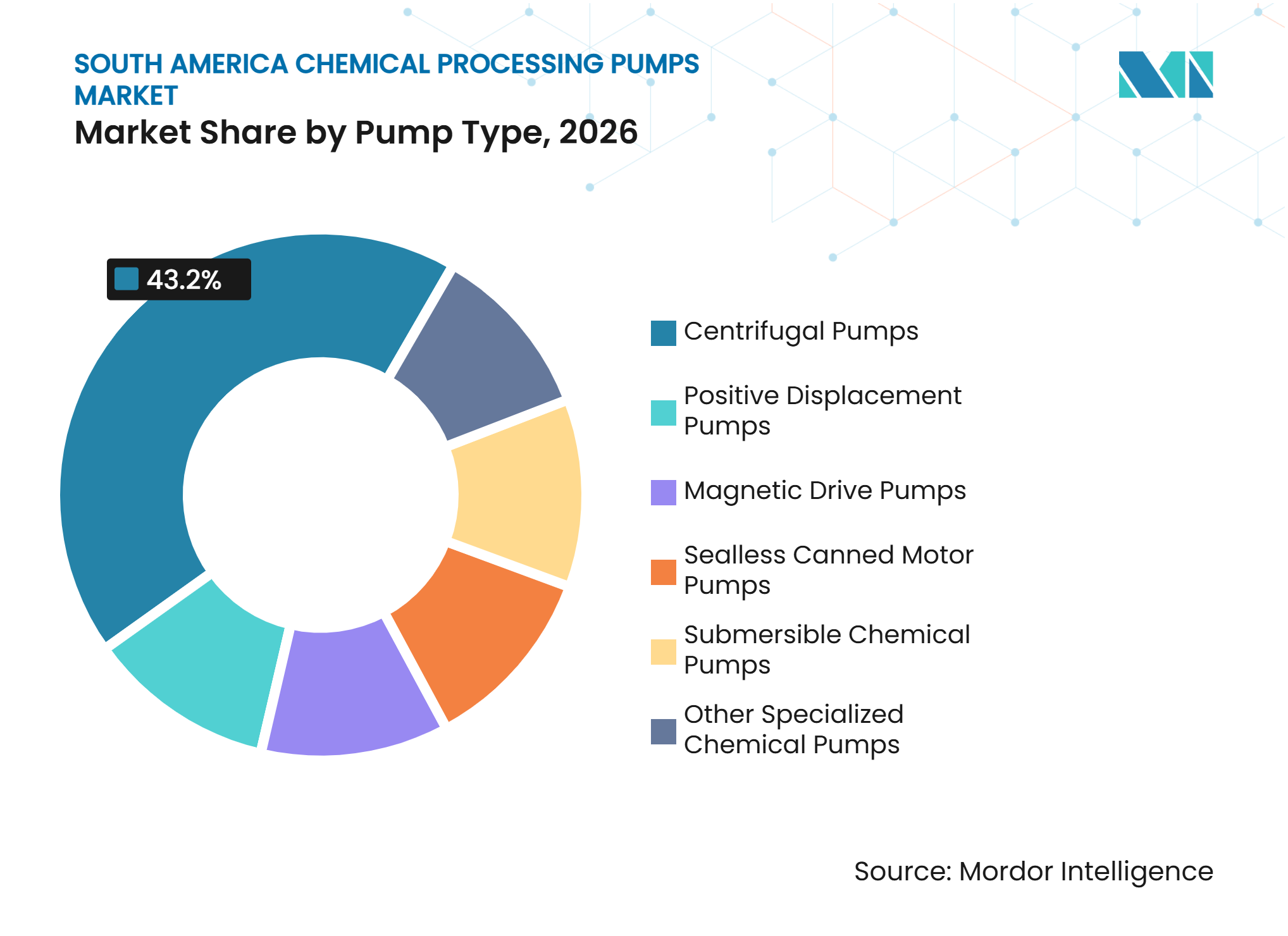
- By pump type, centrifugal pumps held 43.2% of regional market share in 2026, while sealless canned motor pumps are forecast to expand at a 3.9% CAGR through 2032.
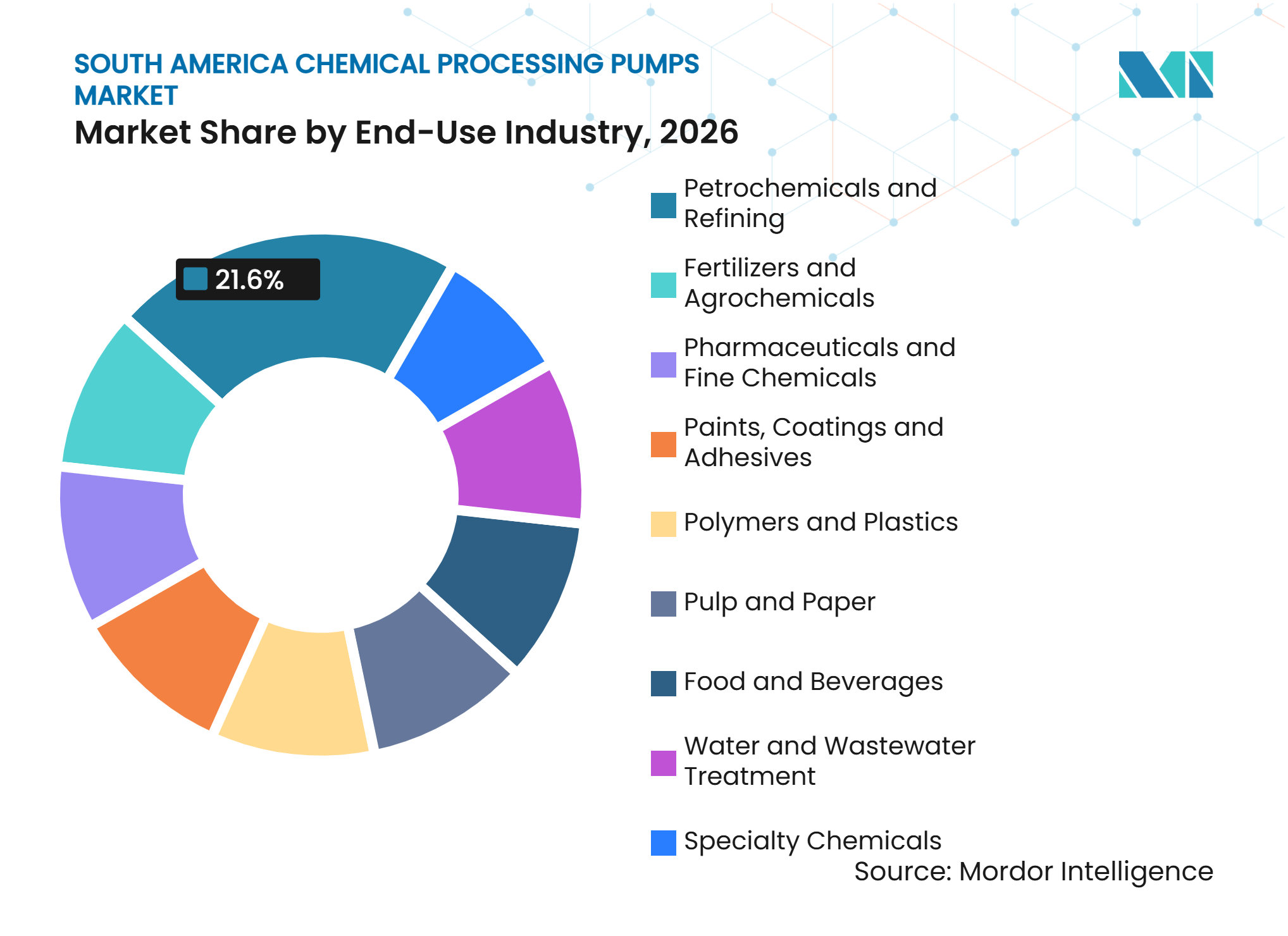
- By end-use industry, petrochemicals and refining held 21.6% of market share in 2026, while pharmaceuticals and fine chemicals are forecast to expand at a 4.1% CAGR through 2032.
- By geography, Brazil held 46.7% of market share in 2026, while Chile is forecast to expand at a 3.8% CAGR through 2032.
Note: Market numbers in this report are based on Mordor Intelligence's proprietary estimation framework, which combines nine months of actuals with Q4 projections for base year 2026.
Market Trends and Insights
Drivers Impact Analysis of South America Chemical Processing Pumps Market*
| Driver | (~) % Impact on CAGR Forecast | Geographic Relevance | Impact Timeline |
|---|---|---|---|
| Petrochemical and Refining Capacity Expansion | +1.3% | Brazil, Argentina | Medium term (2-4 years) |
| Zero-Emission Regulations Driving Sealless Pump Adoption | +0.6% | Brazil, Chile, Global | Short term (≤ 2 years) |
| Pharmaceutical and Specialty Chemical Sector Growth | +0.7% | Brazil, Argentina | Medium term (2-4 years) |
| Mining-Linked Chemical Process Infrastructure Expansion | +0.5% | Chile, Rest of South America | Medium term (2-4 years) |
| Biofuels and Pulp Process Investment | +0.4% | Brazil | Medium term (2-4 years) |
| Water and Wastewater Treatment Chemical-Dosing Demand | +0.3% | Brazil, Rest of South America | Short term (≤ 2 years) |
| Source: Mordor Intelligence | |||
Petrochemical and Refining Investments Drive High-Specification Pump Demand
Petrochemicals and refining represent 21.6% of the South America Chemical Processing Pumps market in 2026, making this end use the largest current demand base. Petrobras is advancing procurement linked to the second refining train at the RNEST Abreu e Lima facility in Pernambuco, with the research values at USD 1.2 billion, and this work will require process equipment across new operating units. Such projects require API 610 process pumps in BB1, BB2, and BB3 configurations for hydrocarbons, chemicals, cooling streams, and other fluids that cannot be handled by general-purpose equipment. Argentina adds another source of demand through Vaca Muerta, which accounted for 66% of the country's crude volumes processed in mid-2025 according to the Secretaría de Energía, and this production base supports downstream petrochemical development. Unipar is evaluating investment of more than USD 200 million in polyvinyl chloride (PVC) production at Bahía Blanca, while Compañía MEGA and Unipar are planning further ethane and propylene export capacity that would need reliable chemical handling systems. Petrobras supplier qualification also narrows the available vendor pool, as Ruhrpumpen do Brasil reported a 100% Supplier Quality Indicator audit score in 2025, creating a meaningful advantage for suppliers that have already completed its technical and quality reviews.[1]
Zero-Emission Standards Accelerate the Shift to Sealless Pump Technology
Process safety requirements are increasing the relevance of sealless technology across chemical facilities, particularly where hazardous fluids raise the consequence of a seal failure. Brazil's National Agency of Petroleum approved precedent statements on integrity management for exploration and production units in May 2025, with hazardous-fluid systems requiring documented inspection and integrity practices. The proposed changes to Inmetro Ordinance No. 115 also seek current International Electrotechnical Commission (IEC) alignment for equipment used in explosive atmospheres, even before all standards areincorporated into Associação Brasileira de Normas Técnicas (ABNT) practice. These requirements raise the operating burden associated with seal maintenance, leak monitoring, inspection records, and incident management across both electrical and mechanical systems. Sealless canned motor and magnetic-drive pumps carry a higher initial cost, that their lifecycle case improves where leakage prevention, seal replacement, environmental monitoring, and liability are considered together.ANSI/HI (American National Standards Institute/Hydraulic Institute) 4.1-4.6 provides a recognized technical framework for sealless rotodynamic pumps, while ISO 2858 and ISO 5199 remain central specifications for chemical centrifugal equipment. KSB documented a 2025 chemical-park service case in which high-frequency pressure measurements identified reactor cooling circuit surges that conventional monitoring had not revealed, demonstrating the technical attention now applied to classified areas.[2]
Pharmaceutical and Specialty Chemical Manufacturing Builds Precision-Dosing Demand
Pharmaceuticals and fine chemicals are projected to grow at a 4.1% CAGR through 2032, the highest rate among the end-use categories in the South America Chemical Processing Pumps market. Producers in this setting need pumping systems for biological media, aggressive solvents, highly active pharmaceutical ingredients, and batch processes where contamination control is essential. Material compatibility, clean-in-place capability, accurate dosing, and limited hold-up volume therefore become practical purchasing requirements rather than optional product features. The research links this requirement to demand for biosimilar and active pharmaceutical ingredient capacity in South America, as manufacturers supply domestic and export markets. Brazil's ANVISA and Argentina's ANMAT pharmaceutical manufacturing requirements support the use of validated, hygienic equipment in this environment. LEWA upgraded its ecoflow LDG process pump in March 2025 to deliver 15% more hydraulic power within the same footprint, which is relevant to demanding dosing tasks in chemical, pharmaceutical, and energy applications.[3]
Chile’s Mining Expansion Creates a Chemical Process Infrastructure Corridor
Chile's mining investment pipeline supports a durable need for chemical-process equipment because copper and lithium operations rely on complex chemical circuits. Cochilco raised the country's mining investment forecast to USD 104.5 billion through 2034 in December 2025, which represented a 26% increase from the prior-year portfolio estimate.[4] The portfolio includes copper concentrator work and lithium process capacity, where sulfuric acid, sodium cyanide, flotation reagents, and electrolyte streams require specialized pumping in corrosive or abrasive service. The research also identifies BHP Escondida's USD 2 billion concentrator optimization and SQM's USD 2.7 billion 2025-2027 capital program as notable project examples. ENAMI's Hernán Videla Lira modernization received environmental approval in 2025 and is expected to add electrolytic refinery capacity for concentrated copper sulfate streams that require chemical-process pump installations. Ruhrpumpen opened an ISO 9001:2015-certified service center in Antofagasta in July 2025, with facilities for testing and servicing pumps up to 15 metric tons, strengthening local support for Chilean mining customers.
Restraints Impact Analysis of South America Chemical Processing Pumps Market*
| Restraint | (~) % Impact on CAGR Forecast | Geographic Relevance | Impact Timeline |
|---|---|---|---|
| Currency Volatility and Import-Intensive Supply Chains | -0.4% | Region-wide | Short term (≤ 2 years) |
| Extended Qualification and Procurement Cycles for Critical-Service Pumps | -0.3% | Brazil, Chile | Long term (≥ 4 years) |
| Petrochemical Commodity Oversupply and Margin Pressure | -0.3% | Region-wide | Short term (≤ 2 years) |
| Import Duties, ICMS, and Local-Content Exposure | -0.2% | Brazil | Long term (≥ 4 years) |
| Source: Mordor Intelligence | |||
Currency Depreciation Inflates the Cost of Specialized Pump Procurement
The region's multi-currency environment raises the cost of specialized chemical-process equipment. Duplex stainless steel, Hastelloy C-276, Polytetrafluoroethylene (PTFE) linings, and fluoropolymer components are commonly priced through global USD-based supply chains. A local currency decline therefore raises the capital cost of imported components and assembled equipment, including materials required for corrosion resistance or reliable containment. Latin American petrochemical producers also faced global commodity oversupply conditions in 2025, which tightened margins and encouraged project owners to defer, reduce, or rescope some upgrades. Brazil adds Imposto sobre Circulação de Mercadorias e Serviços (ICMS), indirect-tax, and import-duty exposure for imported equipment and parts. This supports local suppliers in standard centrifugal applications, although high-pressure, exotic-alloy, and sealless designs may still require imported subassemblies and can leave buyers exposed to currency movements.
Prolonged Qualification Cycles Constrain Market Entry and Project Velocity
Critical-service applications often operate under vendor qualification processes that extend commercial lead times. Petrobras evaluates welding, assembly, testing, painting, calibration, documentation, and traceability through its Supplier Quality Indicator process. Ruhrpumpen do Brasil's 2025 result demonstrates the depth of facility investment and process discipline required to secure and maintain approval. SQM, Codelco, and ENAMI use comparable approval requirements for critical rotating equipment in Chile. New equipment and new entrants consequently require extensive technical validation before receiving volume orders, and the process may take 12-24 months for a supplier to establish its credentials. These processes protect plant reliability but limit rapid switching between vendors across major project cycles. Smaller chemical operators may remain dependent on approved suppliers because conducting separate qualification programs is costly and time-consuming.
*Our forecasts treat driver/restraint impacts as directional, not additive. The impact forecasts reflect baseline growth, mix effects, and variable interactions.
South America Chemical Processing Pumps Market Segment Analysis
By Pump Type:
Centrifugal Volumes Anchor the Market While Sealless Designs Change SpecificationsCentrifugal pumps held 43.2% of South America Chemical Processing Pumps market share in 2026. They cover chemical transfer, cooling water, reactor feed, product handling, and other continuous-flow services across a wide range of facilities. Their acceptance follows their suitability for high-volume duties, cost-effective operation, and established technical specifications. ISO 2858 defines key dimensional parameters for chemical centrifugal pumps. ISO 5199 provides technical requirements for chemical-process designs, including the more demanding services encountered in petrochemical and mining plants. These standards make centrifugal pumps familiar to project engineers and maintenance teams and help support interchangeability within approved project specifications. Positive displacement pumps serve viscous, shear-sensitive, and metering-intensive duties in specialty chemical, food, and oil and gas applications. Submersible chemical pumps support sump and pit services at fertilizer and wastewater treatment facilities. Magnetic-drive and other specialized chemical pumps address applications where trace leakage would create process, environmental, or compliance concerns. The breadth of these applications explains why centrifugal designs remain the starting point for many South American projects, even when specialized alternatives are required for selected duties.
Sealless canned motor pumps are projected to expand at a 3.9% CAGR through 2032. This South America Chemical Processing Pumps market growth reflects a broader reassessment of leak-related maintenance, monitoring, compliance exposure, and the cost of managing conventional seals. Chemical plants are considering lifecycle costs rather than comparing equipment only on purchase price. Sealless designs eliminate several failure paths associated with conventional gland seals and can reduce the need for repeated seal replacement. The higher capital cost is therefore more acceptable where fugitive emissions, hazardous-fluid containment, or costly production interruptions are significant concerns. KSB's 2025 reactor-cooling case showed the value of detailed diagnostics in a Zone 1 classified area. The case supports a wider move toward equipment designs that reduce the need to manage containment failures after installation. The South America Chemical Processing Pumps industry is thus seeing specification standards become a more important purchasing factor. Demand in the South America Chemical Processing Pumps market remains strongest where regulatory oversight and process-safety practices are most stringent, including refinery, chemical, and mining-related facilities.



By End-Use Industry:
Petrochemicals Lead Value While Pharmaceutical Requirements Raise Technical ExpectationsPetrochemicals and refining accounted for 21.6% of the regional market share in 2026. Refinery upgrades and Vaca Muerta-related chemical investments support this position. Process pumps in these installations must handle hydrocarbons, chemicals, high temperatures, and demanding reliability requirements over continuous operating cycles. Petrobras-related work in Brazil creates a large pool of approved-vendor opportunities. Argentina's Bahía Blanca petrochemical cluster and the Vaca Muerta basin provide a second concentration of demand. Unipar’s planned polyvinyl chloride (PVC) investment and Compañía MEGA's production expansion as important activity in Argentina. Pulp and paper is also strategically relevant because Arauco's Sucuriú project is expected to require equipment for bleaching chemicals, black liquor, and process water. The project is presented as a USD 4.6 billion investment with planned operations by 2028. Sulzer's role in process equipment supply for Inpasa's biofuels expansion further shows how agroindustrial projects add demand for chemical-grade pumps. Water and wastewater treatment is an additional demand layer because corrosion-resistant dosing and transfer equipment is used in expanded treatment facilities.
Pharmaceuticals and fine chemicals are forecast to expand at a 4.1% CAGR through 2032. This segment values hygienic construction, material traceability, accurate dosing, cleanability, and the ability to work with aggressive process media. The research associates the opportunity with biosimilar and glucagon-like peptide-1 (GLP-1)-related manufacturing requirements. Equipment specifications must also accommodate aggressive, toxic, and flammable fluids, including applications that need very limited hold-up volume. LEWA's sandwich diaphragm pumps, ProMinent dosing equipment, and IDEX brands such as LEWA and Viking Pump address several of these duties. Brazil and Argentina use Agência Nacional de Vigilância Sanitária (ANVISA) and ANMAT requirements to govern pharmaceutical manufacturing practices. Specialty chemicals, fertilizers and agrochemicals, polymers and plastics, and paints, coatings, and adhesives form other demand pools. Their requirements vary, yet each depends on reliable fluid transfer, contamination control, and controlled dosing. The South America Chemical Processing Pumps industry has opportunities in these end uses where suppliers can demonstrate validated performance, appropriate material selection, and responsive support.

Geography Analysis
Brazil: Industrial Scale and Local Content Rules Define the Competitive Terrain
Brazil held 46.7% of South America Chemical Processing Pumps market share in 2026. Its position rests on a large chemical base connected to energy, agriculture, refining, sanitation, pulp production, and broader manufacturing activity. Production centers in Camaçari, São Paulo, and Rio de Janeiro support recurring requirements for chemical transfer, cooling, dosing, and process equipment. KSB reported that Brazil generated half of its South American revenue in a July 2025 interview. The same interview described local sourcing of 70-80% as a commercial necessity in Brazil, rather than an optional way to lower costs. This arrangement favors companies with local manufacturing, inventory, machining, and service capacity. IMBIL's Itapira facility supports its role in domestic centrifugal-pump supply, while KSB Brasil operates manufacturing and assembly capacity in the country. The IMBIL as the country's largest national centrifugal pump manufacturer, with a 120,000 m² plant and capacity for up to 15,000 pumps annually. Sulzer expanded its local service network with a third service center in Jundiaí in 2025. Petrobras qualification requirements also reward vendors that can maintain documented quality systems, local technical support, and traceability across the equipment lifecycle.
Chile: Mining Chemistry Creates the Region's Most Dynamic Procurement Environment
Chile is projected to expand at a 3.8% CAGR through 2032, the fastest geographic rate in the South America Chemical Processing Pumps market. This South America Chemical Processing Pumps market growth reflects a major pipeline of copper, lithium, iodine, and related mineral-processing investments. Cochilco's USD 104.5 billion investment outlook through 2034 provides the structural context for this demand. Copper concentrate, lithium brine, iodine-bearing caliche, sulfuric acid, sodium cyanide, and flotation reagents place demanding requirements on pump materials, seals, and hydraulic design. Codelco's Talabre tailings expansion illustrates the scale of large procurement packages in the country. The USD 52.87 million (GBP 40 million) Weir contract combining GEHO positive displacement and WARMAN centrifugal pump systems. It also identifies BHP's Escondida concentrator optimization and new Collahuasi concentrators as projects that strengthen the pipeline for mining process equipment. Mining operators require nearby overhaul and repair capacity because lengthy returns to an original manufacturer can disrupt production. Ruhrpumpen's ISO 9001:2015-certified Antofagasta service center reflects this requirement, with a test room and reverse-engineering capability for heavy-duty pumps. Chilean procurement is likely to continue favoring suppliers that pair technical compliance with local field-service capability.
Argentina and the Rest of South America: Resource Investment Extends Regional Demand
Argentina's demand is concentrated in Bahía Blanca and Neuquén, where petrochemicals and unconventional oil and gas development support chemical-pump purchasing. More than half of Argentina's petrochemical capacity is located around Bahía Blanca. Planned investment by Unipar, Dow's participation in Compañía MEGA's USD 400 million production increase, and Pampa Energía's integrated styrene, polystyrene, and elastomer complex point to continued project activity. ITT received an approximately USD 15 million BB3 pump order for a Vaca Muerta project in 2025. The project demonstrates how single upstream developments can generate equipment demand that is significant for the country's chemical-process supply base. Ruhrpumpen maintains service centers in Buenos Aires, Neuquén, and Jujuy to serve energy and mining customers. Peru, Colombia, and Ecuador form smaller individual markets across the rest of the region. Mining in Peru and oil and gas infrastructure in Colombia provide steady requirements for chemical-transfer, dosing, and process equipment. These markets are commonly reached through distributor networks and regional sales organizations rather than dedicated manufacturing plants. This mixed regional group provides incremental volume but does not match the scale of Brazil or the investment intensity of Chile.
Competitive Landscape
Market Concentration
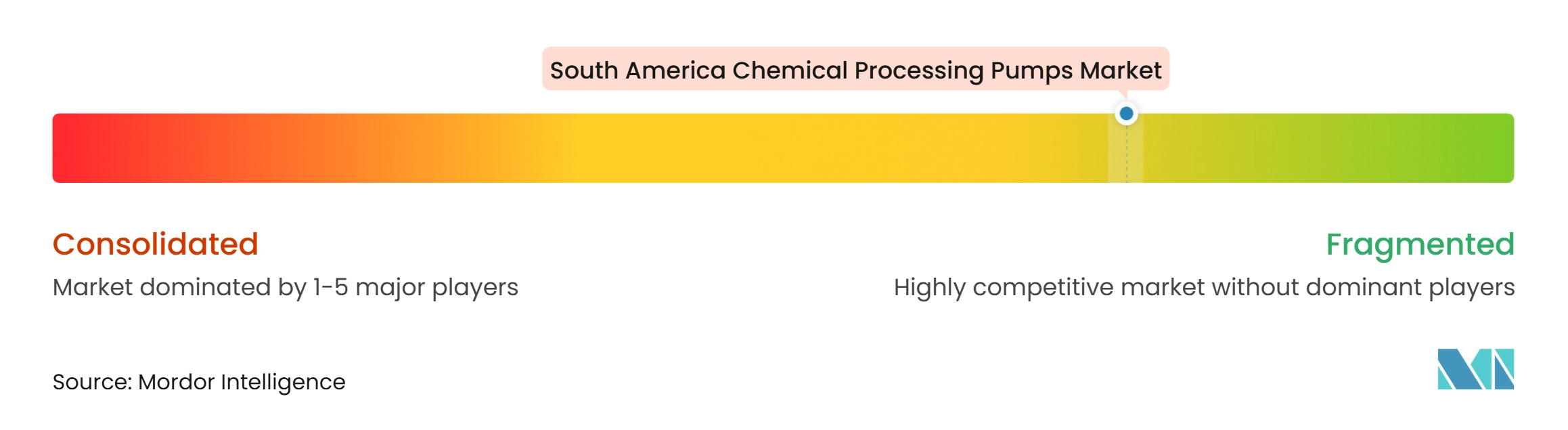
The South America Chemical Processing Pumps market is fragmented. Global OEMs lead the high-specification portion of the South America Chemical Processing Pumps market, while local and regional suppliers remain important in standard-duty applications. KSB, Sulzer, Flowserve, ITT Goulds Pumps, and EBARA compete through hydraulic design, materials expertise, service response, and installed base. IMBIL, OMEL, Ruhrpumpen, and Neptuno Pumps bring local manufacturing, regional support, or specialized application knowledge. Buyers in refining, mining, and pharmaceutical work typically give significant weight to qualification status, operating reliability, and the supplier's ability to provide spare parts over long equipment lifecycles. The South America Chemical Processing Pumps market therefore has higher barriers than a standard industrial-pump category. API 610 and ISO 5199 requirements favor suppliers that can provide evidence of suitable design, materials, testing, and documentation. Service centers near major sites can be decisive because customers seek to avoid extended equipment downtime. Certification, documentation, and dependable access to spare parts strengthen supplier relationships. These factors can make a technically qualified incumbent more attractive than a lower-cost vendor without local support.
Local presence has become a key competitive tool in Brazil and Chile. KSB Brasil joined the Brazilian Mining Institute in March 2025, widening its engagement with the mining value chain. Ruhrpumpen opened its Antofagasta service center in July 2025, providing repair, test, and reverse-engineering capability for large pumps. NETZSCH added the Nova Odessa assembly center in September 2025, placing progressive cavity and rotary lobe assembly closer to São Paulo industrial demand. These actions show that suppliers are investing in responsive regional service, assembly, repair, and testing instead of relying only on imported equipment and remote technical assistance. Regional manufacturers also gain an advantage where import duties, local-content expectations, and delivery times are important. Specialized product categories offer another competitive path. Sealless pumps, positive displacement pumps, and pumps designed for aggressive mining chemicals permit technical differentiation. Suppliers that can meet ISO, API, or site-specific requirements are better placed to enter approved-vendor lists. Their service footprint also allows them to respond to unplanned shutdowns and scheduled maintenance with shorter lead times.
Acquisition activity also reflects the value of local capability. EBARA announced an agreement in November 2025 to acquire Germek, a Brazilian pump-unit manufacturer, through its local subsidiary. The transaction was expected to broaden EBARA's ability to provide customized pump units in Brazil and complement its standalone pump portfolio. LEWA expanded its product range with new micro-metering pump models in October 2025, supporting gas odorization and precision-dosing applications. Neptuno Pumps is also building technical capability for heavy-duty mining applications in Chile, including the ability to service large equipment used at copper operations. Future opportunities include integrated pump systems for Chilean green hydrogen and ammonia projects and validated equipment for Brazilian biosimilar production. Competition in the South America Chemical Processing Pumps market will remain tied to service proximity, specialized materials, technical qualification, and the ability to support customers throughout the equipment lifecycle. The South America Chemical Processing Pumps market is not controlled by a single supplier, yet approved-vendor status and local capabilities can concentrate individual project awards among a limited set of original equipment manufacturers (OEMs). This structure leaves room for specialists but makes it difficult for unqualified newcomers to win critical-service orders.
South America Chemical Processing Pumps Industry Leaders
-
Grundfos Holding A/S
-
Flowserve Corporation
-
Sulzer Ltd.
-
Xylem Inc.
-
KSB SE & Co. KGaA
- *Disclaimer: Major Players sorted in no particular order
South America Chemical Processing Pumps Market Companies Covered in this Report
- Bombas Geremia Ltda.
- EBARA Corporation
- Flowserve Corporation
- Grundfos Holding A/S
- IDEX Corporation
- IMBIL – Indústria e Manutenção de Bombas ITA Ltda.
- ITT Inc.
- KSB SE & Co. KGaA
- LEWA GmbH
- Neptuno Pumps S.A.
- NETZSCH Pumpen & Systeme GmbH
- OMEL Bombas e Compressores Ltda.
- ProMinent GmbH
- Ruhrpumpen GmbH
- Schneider Motobombas Ltda.
- SEEPEX GmbH
- Sulzer Ltd.
- Tapflo AB
- The Weir Group PLC
- Xylem Inc.
Recent Industry Developments in South America Chemical Processing Pumps Market
- July 2026: EBARA Corporation and Ebara Elliott Energy (EEE) achieved the world's first Type Approval certification for a liquid hydrogen cargo pump designed for maritime liquefied hydrogen carriers. ClassNK granted the certification following full-scale performance and durability testing using liquid hydrogen at −253°C, supporting the development of hydrogen transportation infrastructure.
- January 2026: EBARA Corporation signed an equity transfer agreement through its Brazilian subsidiary EBARA BOMBAS AMÉRICA DO SUL LTDA. to acquire 100% of GEMINI GERMEK HIDROMECÂNICA LTDA., a São Paulo-based manufacturer of pump units for the fire fighting and agricultural sectors in Brazil.
- October 2025: LEWA GmbH added 2 new micro-metering pump models, MAH4 and MBH6, to its range, expanding coverage for gas odorization and precision-dosing applications.
- March 2025: LEWA GmbH upgraded the ecoflow LDG process pump to deliver 15% more hydraulic power within the same footprint, targeting chemical processing, pharmaceutical, and energy-sector dosing applications served by LEWA Brasil's South American network.
South America Chemical Processing Pumps Market Report Scope
A chemical processing pump is a specialized mechanical device designed to transfer corrosive, toxic, abrasive, high-temperature, or high-purity fluids within chemical, petrochemical, pharmaceutical, and wastewater treatment plants.
South America chemical processing pumps market is divided among pump type, end-use industry, and geography. By pump type, the market is segmented into centrifugal pumps, positive displacement pumps, magnetic drive pumps, sealless canned motor pumps, submersible chemical pumps, and other specialized chemical pumps. By end-use industry, the market is segmented into specialty chemicals, petrochemicals and refining, fertilizers and agrochemicals, pharmaceuticals and fine chemicals, paints, coatings and adhesives, polymers and plastics, pulp and paper, food and beverages, and water and wastewater treatment. The report also covers the market size and forecasts for the South America chemical processing pumps market across 3 key countries. For each segment, the market sizing and forecasts have been provided on the basis of value (USD).
Segmentation Overview
| Centrifugal Pumps |
| Positive Displacement Pumps |
| Magnetic Drive Pumps |
| Sealless Canned Motor Pumps |
| Submersible Chemical Pumps |
| Other Specialized Chemical Pumps |
| Specialty Chemicals |
| Petrochemicals and Refining |
| Fertilizers and Agrochemicals |
| Pharmaceuticals and Fine Chemicals |
| Paints, Coatings and Adhesives |
| Polymers and Plastics |
| Pulp and Paper |
| Food and Beverages |
| Water and Wastewater Treatment |
| Brazil |
| Argentina |
| Chile |
| Rest of South America |
| By Pump Type | Centrifugal Pumps |
| Positive Displacement Pumps | |
| Magnetic Drive Pumps | |
| Sealless Canned Motor Pumps | |
| Submersible Chemical Pumps | |
| Other Specialized Chemical Pumps | |
| By End-Use Industry | Specialty Chemicals |
| Petrochemicals and Refining | |
| Fertilizers and Agrochemicals | |
| Pharmaceuticals and Fine Chemicals | |
| Paints, Coatings and Adhesives | |
| Polymers and Plastics | |
| Pulp and Paper | |
| Food and Beverages | |
| Water and Wastewater Treatment | |
| By Geography | Brazil |
| Argentina | |
| Chile | |
| Rest of South America |
Key Questions Answered in the Report
What is the projected value of the South America chemical processing pumps sector by 2032?
The sector is projected to reach USD 81.82 million by 2032, expanding at a 3.59% CAGR from 2027. The forecast reflects demand from refining, mining chemistry, pharmaceutical manufacturing, and other process applications.
Which pump type has the largest share in South America?
Centrifugal pumps lead with 43.2% share in 2026 because they serve high-volume chemical transfer, cooling, reactor feed, and product-handling duties. ISO 2858 and ISO 5199 also support their use in established project specifications.
Which end-use application is growing fastest for chemical processing pumps?
Pharmaceuticals and fine chemicals are projected to grow at a 4.1% CAGR through 2032. This growth is linked to precision dosing, hygienic construction, clean-in-place capability, and material compatibility requirements.
Why is Chile a growth area for chemical processing pumps?
Chile is forecast to grow at a 3.8% CAGR through 2032, supported by copper and lithium investment that needs pumps for corrosive chemical streams. Mining operators also require local testing, repair, and service support for large equipment.
How do Brazilian local-content conditions affect pump suppliers?
Local sourcing, manufacturing, and nearby service capability can strengthen suppliers' access to projects and reduce exposure to imports. These capabilities also support quality documentation, parts availability, and technical response during equipment operation.
What constrains new pump suppliers in the region?
Long qualification processes, approved-vendor requirements, and imported-material costs can slow entry and project procurement. Suppliers may need substantial validation of welding, assembly, testing, documentation, and traceability before securing critical-service orders.