
Sodium Hydrosulfite Market Size and Share
Market Overview
| Study Period | 2022 - 2032 |
|---|---|
| Market Size (2027) | USD 1.75 Billion |
| Market Size (2032) | USD 2.14 Billion |
| Growth Rate (2027 - 2032) | 4.13 % |
| Fastest Growing Market | Asia-Pacific |
| Largest Market | Asia-Pacific |
| Market Concentration | Medium |
Major Players *Disclaimer: Major Players sorted in no particular order Image © Mordor Intelligence. Reuse requires attribution under CC BY 4.0. | |
Sodium Hydrosulfite Market Analysis by Mordor Intelligence
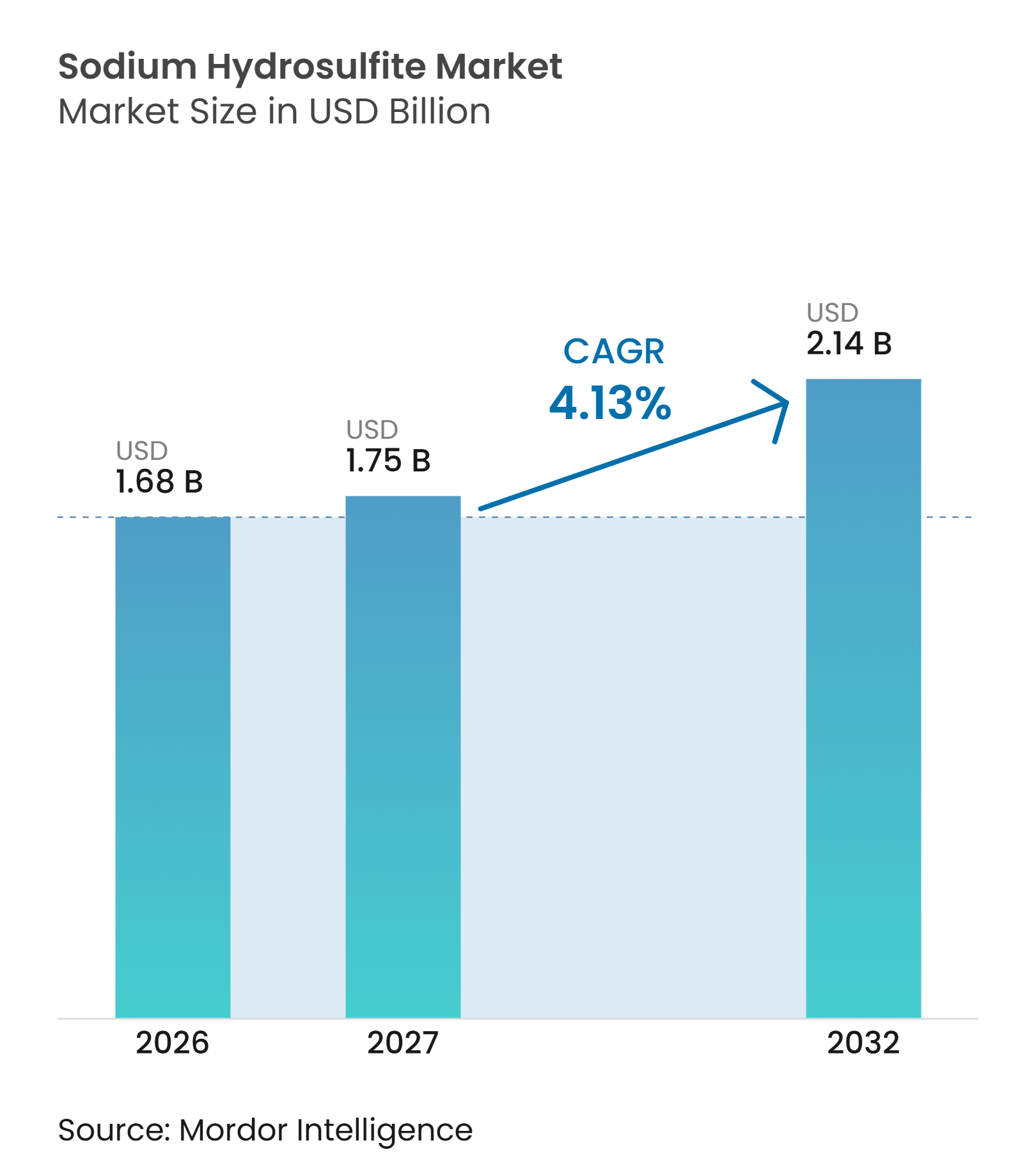
The Sodium hydrosulfite market size was valued at USD 1.68 billion in 2026 and is estimated to grow from USD 1.75 billion in 2027 to USD 2.14 billion by 2032, at a CAGR of 4.13% during the forecast period (2027-2032). Sodium hydrosulfite, also known as sodium dithionite, is used in textile dyeing, pulp brightening, kaolin processing, and water treatment, supporting demand across established industrial applications. Production capacity of 380,000 tons, compared with demand of approximately 400,000 tons, indicates a close supply-demand balance in the sodium hydrosulfite market. Producers focus on scale, supply reliability, purity control, and logistics rather than price alone. The sodium hydrosulfite market incurs higher handling costs because the compound is moisture- and oxygen-sensitive. Alternative reduction methods are also available for selected textile applications.
Key Report Takeaways
- By production process, the zinc process held a 55.67% share in 2026, while the sodium formate process is forecast to grow at a 4.67% CAGR through 2032.
- By form, powder held a 71.34% share in 2026, while liquid is forecast to grow at a 4.81% CAGR through 2032.
- By grade, technical grade held an 88.12% share in 2026, while reagent grade is forecast to grow at a 4.95% CAGR through 2032.
- By end-user industry, textiles and leather held a 41.05% share in 2026, while water and wastewater treatment is forecast to grow at a 5.17% CAGR through 2032.
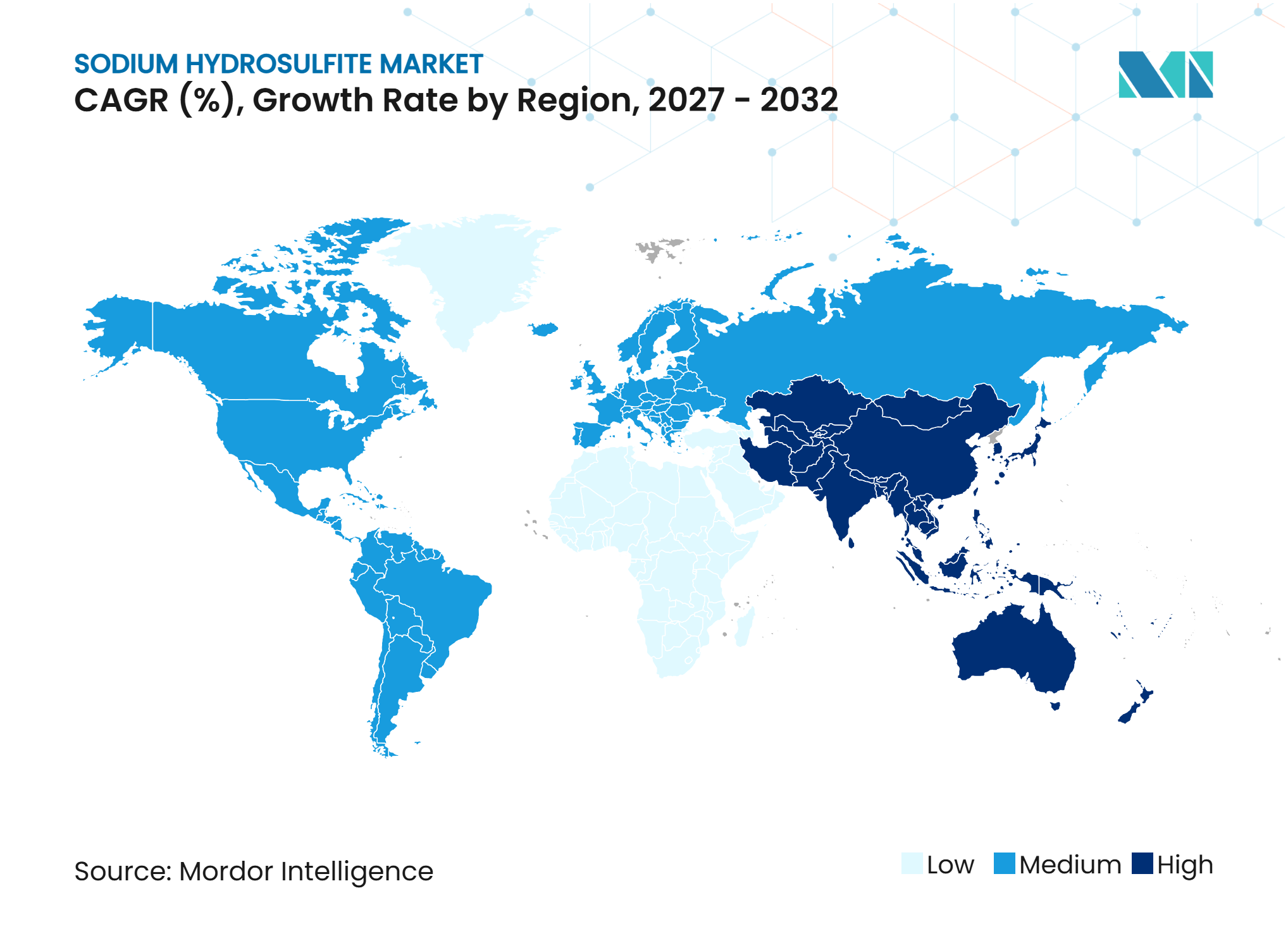
- By geography, Asia-Pacific held a 44.73% share in 2026 and is forecast to grow at a 5.03% CAGR through 2032.
Note: Market numbers in this report are based on Mordor Intelligence's proprietary estimation framework, which combines nine months of actuals with Q4 projections for base year 2026.
Market Trends and Insights
Drivers Impact Analysis of Sodium Hydrosulfite Market*
| Drivers | (~) % Impact on CAGR Forecast | Geographic Relevance | Impact Timeline |
|---|---|---|---|
| Expansion of Textile Dyeing and Denim Production | +1.6% | APAC core, with spillover to MEA and South America | Medium term (2-4 years) |
| Recycled Paper De-Inking and Mechanical Pulp Brightening | +0.8% | North America, Nordics, Germany, Japan | Medium term (2-4 years) |
| Growth of Mineral and Kaolin Processing | +0.5% | Global, concentrated in China, India, United States, and Brazil | Long term (≥ 4 years) |
| Formulation Shift Toward Stable, Low-Emission Hydrosulfites | +0.4% | European Union, North America, Japan, South Korea | Medium term (2-4 years) |
| Electronics-Grade Purity Requirements for Surface Treatment | +0.3% | APAC (China, Japan, South Korea), North America | Long term (≥ 4 years) |
| Source: Mordor Intelligence | |||
Expansion of Textile Dyeing and Denim Production
Global denim fabric production exceeds 6 billion meters annually, supporting the recurring use of sodium hydrosulfite in indigo dyeing. The compound converts insoluble indigo into its soluble leuco form before the dye is fixed to the fiber. This role links the sodium hydrosulfite market to large-scale denim production and textile finishing. Apparel consumption in Sub-Saharan Africa, South and Southeast Asia, and Latin America also supports demand. Rising dye costs and restricted operating rates at some Chinese facilities have increased the importance of stable supply for textile processors. Larger, compliant suppliers may gain opportunities as buyers place greater emphasis on consistent purity and delivery reliability.
Textile mills use sodium hydrosulfite for vat dyeing, indigo reduction, discharge printing, and polyester reduction clearing. The material is particularly important in dyehouses that use established processes and would require substantial redesign to change their reduction chemistry. Environmental restrictions on chemical production can constrain the availability of related dye intermediates and increase purchasing uncertainty. Consequently, mills may favor suppliers that offer consistent product specifications and established logistics capabilities. Sodium hydrosulfite producers serving export-oriented garment centers must also carefully manage storage conditions. These requirements are increasing the relevance of service quality in the sodium hydrosulfite market, alongside product pricing.
Recycled Paper De-Inking and Mechanical Pulp Brightening
Mechanical pulp and de-inked recycled paper are key applications for sodium hydrosulfite because it reduces color-forming compounds without causing the same fiber effects associated with some alternative systems. Chemtrade states that sodium hydrosulfite whitens pulp with high wood-fiber content and decolorizes recycled pulp used in newsprint. The company also identifies kaolin processing for high-gloss magazine applications as an end use for the product. These applications provide a stable demand base for the sodium hydrosulfite market in mature paper-producing regions. However, declining demand for mechanical-grade newsprint in Europe limits growth across part of the paper value chain. Specialty-coated papers and packaging containing recycled content provide partial support for consumption.
BASF announced in September 2025 that it would exit the hydrosulfites business and close its Ludwigshafen production facility. In March 2026, Silox acquired selected BASF hydrosulfite-related assets, including intellectual property, specialized containers, selected production equipment, technical expertise, and related trademarks. As a result, European paper processors face changes in their supplier base. Some buyers may turn to Asian exporters, while others may rely on Silox for regional supply. This transition can increase the importance of supplier qualification, delivery planning, and supply agreements. It can also increase the relevance of suppliers that meet quality and transportation requirements consistently.
Growth of Mineral and Kaolin Processing
Sodium hydrosulfite is used in kaolin beneficiation to reduce iron oxides and improve the whiteness of processed minerals. Kaolin is used in high-gloss paper, coatings, cosmetics, and specialty ceramics. Growth in these downstream sectors can support broader consumption of reductive bleaching agents. China, India, the United States, and Brazil remain important centers for mineral processing activities. The sodium hydrosulfite market is supported where kaolin processors require consistent whiteness and low impurity levels. Buyers in these applications often assess both chemical performance and trace-metal control.
The purity requirements for kaolin brightening may overlap with those for higher-purity electronic applications. Producers that meet low-iron and controlled heavy-metal requirements for one application may be positioned to serve other specialized applications. This capability can reduce the development burden for producers pursuing differentiated grades and support a shift away from competition based solely on commodity output. Specialty applications often require consistency across each delivery and stronger technical service. These conditions support producers that can demonstrate quality control and consistent operations in the sodium hydrosulfite market.
Formulation Shift Toward Stable, Low-Emission Hydrosulfites
Producers are developing stabilized products as customers and regulators place greater emphasis on sulfur dioxide emissions, worker safety, and hazardous-goods handling. Silox India describes Hydros D as a stabilized sodium hydrosulfite product for denim applications. The product reflects a broader industry effort to improve use efficiency and reduce fugitive emissions during textile processing. Stable formulations can help customers manage handling risks and improve consumption control. As a result, formulation capabilities are increasingly relevant in the sodium hydrosulfite market, particularly among regulated industrial buyers. Suppliers that validate product performance under actual operating conditions can strengthen customer relationships.
China's 2025 Dangerous Chemicals Catalog lists sodium dithionite as a controlled dangerous good[1]. Such regulations can increase the need for compliant chemical parks, closed production systems, and suitable packaging. Nitrogen-blanketed packaging can help manage the material's sensitivity during storage and transportation. These requirements increase the barriers to entry for smaller producers that lack established compliance systems. Larger integrated companies can distribute safety investment costs across higher production output. Consequently, product stability and regulatory readiness are becoming important factors in supplier selection.
Restraints Impact Analysis of Sodium Hydrosulfite Market*
| Restraints | (~) % Impact on CAGR Forecast | Geographic Relevance | Impact Timeline |
|---|---|---|---|
| Moisture and Oxygen Sensitivity | -0.5% | Global, most acute in tropical high-humidity markets | Short term (≤ 2 years) |
| Environmental and Hazardous-Goods Compliance Costs | -0.6% | European Union (EU), North America, China domestic sites | Medium term (2-4 years) |
| Substitution by Glucose-Based and Electrochemical Reducing Systems | -0.4% | EU, North America, Japan, South Korea | Long term (≥ 4 years) |
| Source: Mordor Intelligence | |||
Moisture and Oxygen Sensitivity
Sodium hydrosulfite decomposes when exposed to atmospheric moisture or oxygen, producing sulfur dioxide and sulfate by-products. This sensitivity increases delivered costs, as suppliers require specialized packaging, controlled logistics, and short inventory cycles. The sodium hydrosulfite market is influenced by how effectively distributors and industrial users manage storage conditions. High-humidity locations across ASEAN, South Asia, and the Middle East and Africa present operational challenges. Without appropriate handling and refrigerated-container arrangements, product quality can fall below specification. This can lead to delivery disputes and reduce buyer confidence.
Liquid sodium hydrosulfite has a shelf life of 7 to 14 days, making proximity to customers important. Chemtrade identifies the short shelf life and high shipping costs of liquid sodium hydrosulfite as constraints. These limitations make liquid supply suitable for local pulp mills and kaolin processors with predictable demand. The conditions support suppliers with production facilities near customer sites and established distribution networks. Smaller users may face challenges in maintaining the temperature-controlled storage required to preserve product quality. As a result, demand is concentrated among medium-sized and large industrial facilities with established warehousing capabilities.
Environmental and Hazardous-Goods Compliance Costs
Hazardous-goods regulations require suppliers to manage documentation, packaging, and transportation procedures for international shipments. The United Nations Model Regulations, the European Union’s REACH framework, and U.S. transportation requirements create recurring compliance obligations. Small-scale facilities and exporters may face challenges in absorbing these costs. BASF announced its exit from hydrosulfites in 2025 as part of a portfolio review focused on long-term value creation[2]. The decision reflects the operating environment for European production sites facing high energy and compliance costs. The sodium hydrosulfite market may become more concentrated as compliance requirements favor large, certified suppliers.
Environmental inspections in China can affect chemical plant operating rates and increase input-cost uncertainty. These factors can create volatility for producers that depend on integrated supply chains for sulfur and dyes. Facilities located in certified chemical parks may have established waste-management and hazardous-material-control systems. Consequently, compliance considerations can influence location decisions and capital expenditure. Customers may place value on suppliers that provide clear documentation and maintain established environmental management systems. This trend contributes to a more concentrated sodium hydrosulfite market among companies that combine scale with reliable regulatory practices.
*Our forecasts treat driver/restraint impacts as directional, not additive. The impact forecasts reflect baseline growth, mix effects, and variable interactions.
Sodium Hydrosulfite Market Segment Analysis
By Production Process:
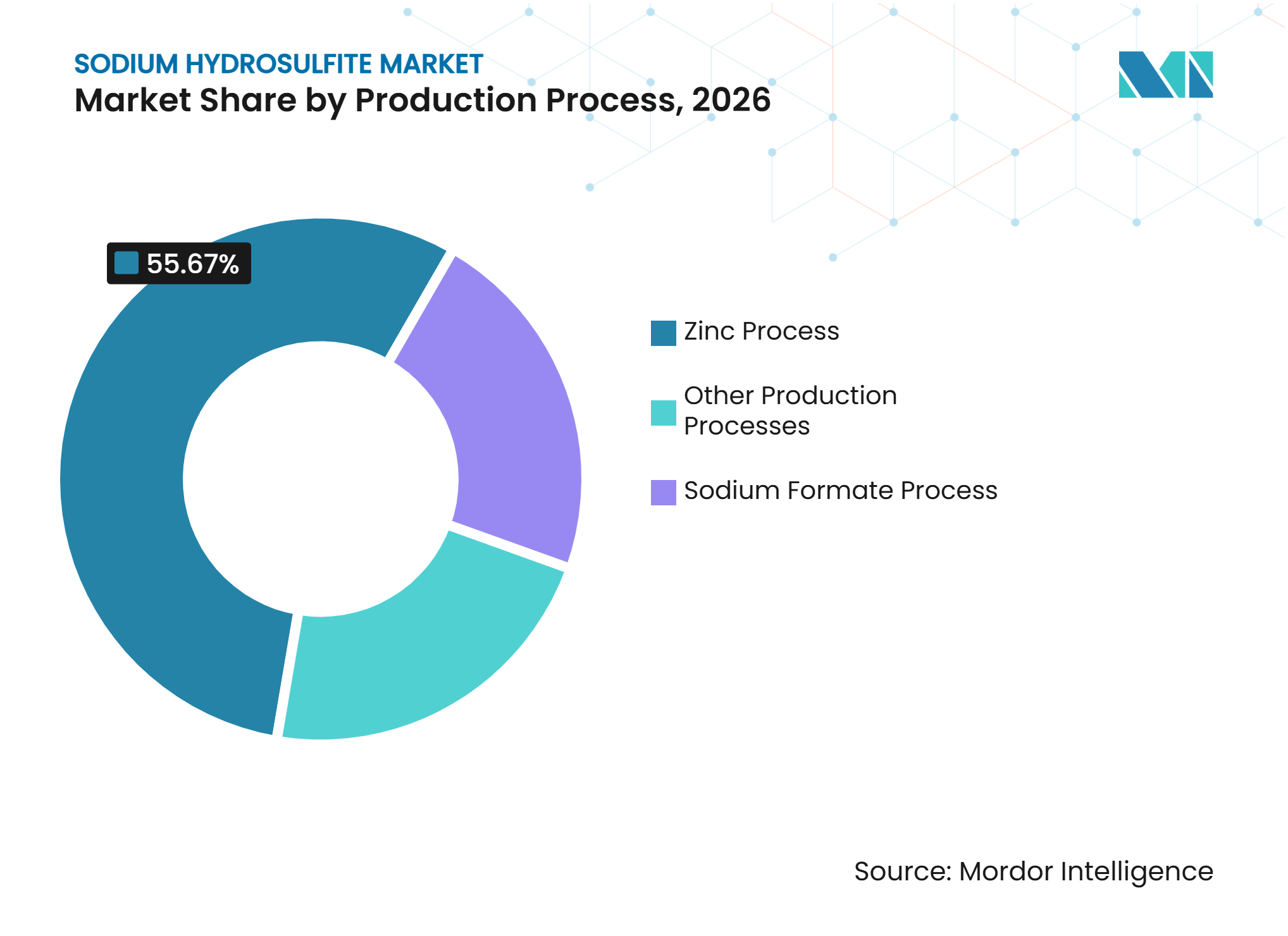
Zinc Process Holds the Largest Share, Sodium Formate ExpandsThe zinc process accounts for 55.67% of the sodium hydrosulfite market share in 2026. It is established in facilities across China, North America, and India that integrate supplies of zinc powder, caustic soda, and liquid sulfur dioxide. Chemtrade states that it produces liquid sodium hydrosulfite using zinc powder, caustic soda, and liquid sulfur dioxide. The company also imports powder from overseas to support its supply network. These practices support the continued commercial use of the zinc route in regions with established feedstock availability and logistics infrastructure. Producers can also benefit where zinc oxide co-products have established value channels. Other processes retain a limited role in smaller-scale or specialty operations.
The sodium formate process is projected to register a CAGR of 4.67% through 2032, the highest among production processes. This route can avoid zinc-laden wastewater and is suitable for locations with stricter discharge requirements. Consequently, it is likely to play a larger role in incremental capacity additions rather than immediately replacing existing zinc-based facilities. Sodium formate capacity may expand in regions where producers face challenges in obtaining new permits for zinc discharge. A dual-process production base can help companies manage changes in feedstock costs and customer purity requirements. Process selection will remain linked to local environmental regulations, raw material availability, and customer specifications. The sodium hydrosulfite industry is likely to retain both routes because they address different supply conditions.



By Form:
Powder Leads, Liquid AcceleratesPowder accounts for a 71.34% share in 2026. Its position reflects its longer shelf life, shipping flexibility, and compatibility with textile and paper supply chains across Asia, Latin America, and Africa. Powder is suitable for long-distance trade because it does not require immediate consumption after delivery. China’s export supply is centered on powder grades, supporting its role in global trade flows. Textile and paper mills can store powder more easily than liquid material when their handling systems meet safety requirements. These characteristics support demand for powder in import-dependent markets. Powder will remain important where customers operate far from production facilities.
Liquid sodium hydrosulfite is forecast to grow at a CAGR of 4.81% through 2032. Its growth is linked to localized supply arrangements in North America and Europe, where pulp mills and kaolin processors can consume regular quantities near production sites. Local producers can compete through delivery speed, product freshness, and supply reliability. Chemtrade states that proximity to customers is an advantage for liquid sodium hydrosulfite because of its high shipping costs and short shelf life. This creates a distinction between global powder trade and regional liquid supply. Liquid producers can establish customer positions when their facilities are located near large end users. The sodium hydrosulfite market size for liquid applications is shaped more by local industrial clusters than by broad export flows.
By Grade:
Technical Grade Dominates, Reagent Grade AcceleratesTechnical grade accounts for 88.12% in 2026. Textile dyeing, paper brightening, and kaolin bleaching require large quantities and generally do not demand the most stringent trace-metal limits. This gives technical grade a major role in overall demand. Its large base can create price pressure for producers that lack scale or local logistics advantages. However, buyers still require consistent performance, particularly in dyehouses and paper mills, where product variation can affect output quality. Technical grades will continue to account for most of the sodium hydrosulfite market’s physical demand. Their importance reflects established industrial applications rather than a shift toward premium uses.
Reagent grade is forecast to grow at a CAGR of 4.95% through 2032. Electronics surface treatment, electroless plating, printed circuit board cleaning, and semiconductor wafer treatment require tighter impurity control. These applications can command higher prices for products with traceability and low heavy-metal content. The higher value of reagent-grade products can improve margins for qualified suppliers. Food grade remains a smaller certified application because approvals vary by jurisdiction. Producers that invest in cleaner synthesis processes and stronger quality systems can pursue these differentiated grades. The sodium hydrosulfite industry, therefore, has scope to improve value through purity rather than quantity alone.
By End-User Industry:
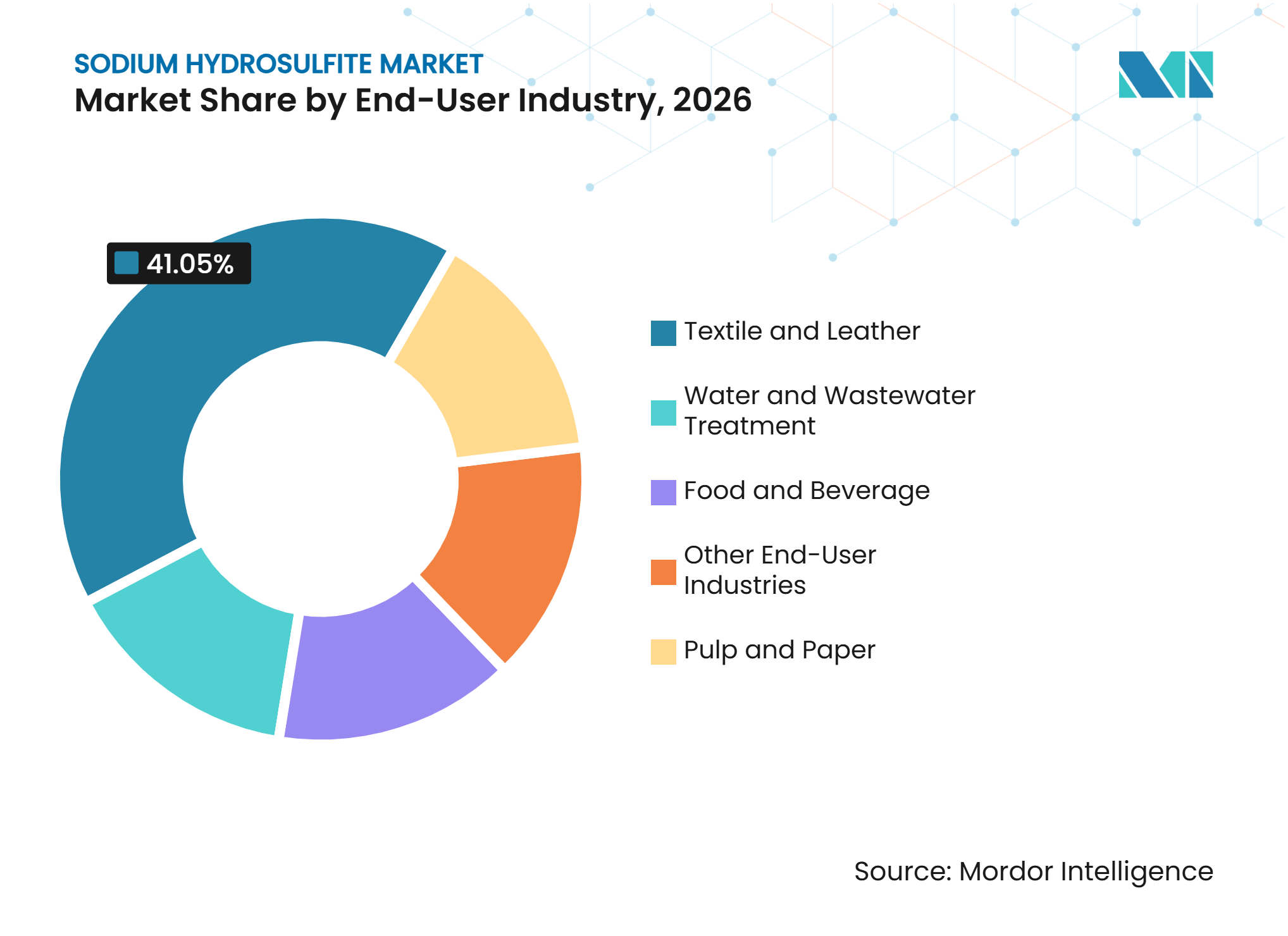
Textile Anchors Demand, Water Treatment AcceleratesTextiles and leather account for 41.05% in 2026. VAT dyeing, indigo reduction, discharge printing, and polyester reduction clearing generate recurring demand from this end-user industry. Denim is the largest textile sub-application because indigo dyeing relies on reduction chemistry prior to dye fixation. Annual fabric output exceeding 6 billion meters provides a substantial underlying demand base. Textile demand is distributed across major garment-producing countries, although supply reliability remains important in each location. The segment’s scale makes it central to the sodium hydrosulfite market. It also exposes producers to changes in apparel production, trade activity, and dyehouse practices.
Water and wastewater treatment is projected to grow at a CAGR of 5.17% through 2032. Sodium hydrosulfite is used for dechlorination and chromium reduction in industrial effluent systems. It also serves as an oxygen scavenger in industrial boiler systems. Industrial discharge requirements in developing markets support these applications. The segment can provide a broader demand base beyond textiles and paper. However, alternative reduction systems are being tested in selected textile applications. Research published in 2025 found that glucose-based approaches achieved comparable stripping performance in polyester reduction clearing, although fastness results remained lower for certain applications. Water treatment demand, therefore, offers a source of diversification for suppliers.

Geography Analysis
Asia-Pacific: Dominant Market Driving Global Growth
Asia-Pacific accounts for 44.73% of the sodium hydrosulfite market in 2026 and is forecast to grow at a CAGR of 5.03% through 2032. China is the region’s primary production and consumption hub, supported by its textile, paper, and chemical manufacturing industries. In March 2025, Hubei Yihua participated in the Sri Lanka Dyes and Chemicals Exhibition and held more than 30 bilateral discussions with five potential customers. This activity reflects the company’s focus on South Asian customers. India is an important secondary market, as its textile and leather clusters require consistent chemical supplies. Bangladesh, Vietnam, Indonesia, and Thailand further contribute to regional demand through garment manufacturing and export activities.
Trade policy is increasingly influencing the regional market. South Korea imposed anti-dumping duties on Chinese sodium hydrosulfite in December 2025. This measure may affect procurement decisions among Korean users and create opportunities for Indian or European suppliers. China’s dangerous-goods controls also increase the importance of compliant domestic production and safe packaging practices. These regulatory factors favor companies that maintain product quality, documentation, and stable logistics. Asia-Pacific remains central to the sodium hydrosulfite market because it combines supply capacity with downstream manufacturing growth.
North America: Pulp, Paper, and Water Treatment Sustain Mature Demand
North America is a mature market where product quality, local logistics, and regulatory compliance shape the competitive landscape. Chemtrade supplies sodium hydrosulfite to pulp mills, kaolin processors, and textile finishers. Its liquid supply model addresses short shelf-life requirements and favors local production over long-distance imports. This model limits the substitution of locally supplied liquid products with lower-cost imported powder. Pulp and paper manufacturers across the region rely on chemical supplies to support routine production, while water treatment applications provide an additional source of demand.
U.S. Environmental Protection Agency requirements under the Toxic Substances Control Act (TSCA), along with Department of Transportation hazardous materials regulations, impose procedural and transportation requirements. These compliance factors favor suppliers with established documentation, safety systems, and distribution networks. Local producers can differentiate themselves through service capabilities rather than competing solely on delivered price. Regional customers also have the storage and handling capabilities required for liquid products, supporting plant-to-customer proximity as a commercial advantage. Therefore, supply integration and specialized customer requirements, in addition to overall demand, shape the North American sodium hydrosulfite market.
Europe, South America, and Middle East and Africa: Divergent Trajectories
Europe is undergoing a supplier transition following BASF’s exit from hydrosulfite production in 2025 and Silox’s acquisition of selected related assets in March 2026. Germany’s specialty textile and high-performance paper industries require a consistent supply of high-purity products. Nordic paper producers also use sodium hydrosulfite to brighten mechanical pulp. Changes in the European supply base may increase the need for customer qualification processes and supply chain planning. Registration, Evaluation, Authorization and Restriction of Chemicals (REACH) obligations remain an important compliance consideration for regional suppliers and importers. European buyers may place greater emphasis on certified handling practices and documented product quality.
South America generates demand from water treatment applications and its developing textile industry, led by countries such as Brazil and Argentina. Powder imports are better suited to the region’s longer transportation routes than liquid products. In the Middle East and Africa, industrial diversification, mining, textiles, and water treatment create opportunities for applications. High temperatures and limited cold-chain infrastructure can restrict the use of liquid products and favor powder imports. While these regions have distinct demand drivers, storage conditions and import logistics remain common considerations.
Competitive Landscape
Market Concentration
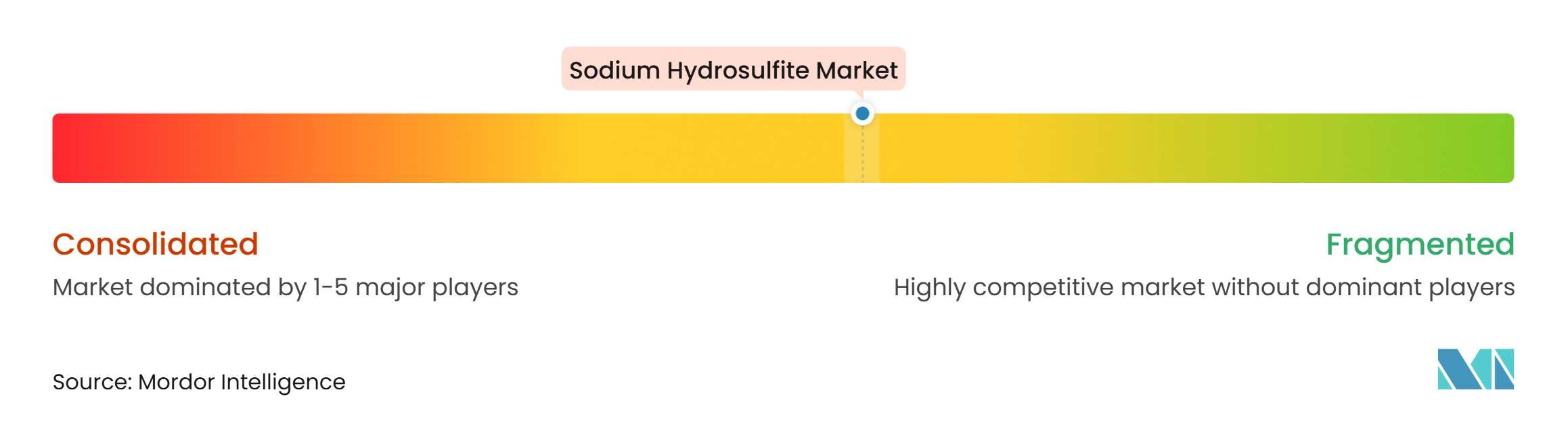
The sodium hydrosulfite market is moderately fragmented. The top five producers account for 50% of revenue, while Chinese suppliers represent 75% of global production capacity. This structure creates export-led pricing pressure, although trade actions can restrict access to selected markets. Chinese producers emphasize production scale and export diversification. Hubei Yihua’s operations in Sri Lanka illustrate supplier efforts to build customer relationships in South Asia. South Korea’s anti-dumping duties also require affected Chinese suppliers to redirect output toward markets without similar restrictions.
Western producers focus on consolidation, regional supply, and differentiated products. BASF’s exit from the business in 2025 altered the European competitive landscape. In March 2026, Silox acquired selected BASF assets, expanding its access to intellectual property, equipment, containers, expertise, and trademarks related to hydrosulfite. The transaction expanded Silox’s position among European textile and paper customers. Silox India also developed a stabilized product for denim processing. These developments indicate that supply reliability, product formulation, and local service are important competitive factors.
Higher-purity grades serve electronics applications, which require tighter trace-metal specifications than textile and paper applications. Producers serving these applications require traceability, controlled production processes, and consistent product quality. Research on copper-doped molybdenum disulfide electrocatalysts reported an indigo conversion efficiency of 85.56%, energy consumption 33.08% lower than conventional sodium dithionite-based processing, and operating costs 21.59% lower. However, the technology remains limited by the challenge of scaling electrochemical reduction beyond pilot installations. It does not directly compete with established industrial-scale sodium hydrosulfite production. Nevertheless, it requires incumbent suppliers to improve environmental performance and customer value.
Sodium Hydrosulfite Industry Leaders
-
Guangdong Zhongcheng Chemicals Inc., Ltd.
-
Yantai Jinhe Sodium Hydrosulfite Factory Co., Ltd.
-
Hubei Yihua Chemical Industry Co., Ltd.
-
Silox India Pvt Ltd
-
Chemtrade Logistics
- *Disclaimer: Major Players sorted in no particular order
Sodium Hydrosulfite Market Companies Covered in this Report
- Anhui Chlor-Alkali Chemical Industry Group Co., Ltd.
- Bruggemann Chemical
- Chemtrade Logistics
- Guangdi Chemical Co., Ltd.
- Guangdong Zhongcheng Chemicals Inc., Ltd.
- Hubei Yihua Chemical Industry Co., Ltd.
- Hunan Maunsell Chemical New Technology Co., Ltd.
- JinHe Group
- Kingboard Holdings Limited
- Shandong Shuangqiao Chemical Industry Co., Ltd.
- Silox India Pvt Ltd
- Transpek Industry Limited
- Wuxi Dongtai Chemical Co., Ltd.
- Yantai Jinhe Sodium Hydrosulfite Factory Co., Ltd.
- Zhejiang Jiacheng Chemical Co., Ltd.
Recent Industry Developments in Sodium Hydrosulfite Market
- March 2026: Through its Belgian subsidiary, Silox Group completed the acquisition of selected hydrosulfite-related assets from BASF. The acquisition included intellectual property rights, specialized containers, selected production equipment, technical expertise, and related trademarks for hydrosulfite products used in textile and pulp-and-paper applications. The transaction expanded Silox Group's hydrosulfite operations in Europe following BASF's exit from the business.
- September 2025: BASF announced its decision to exit the hydrosulfites business and close its production facility in Ludwigshafen. The company planned to phase out the supply of Hydrosulfite F, HydroBlue 90, HydroBlue 92, Hydrosulfite Evo, Adlite, and Blankit. BASF supported approximately 65 employees in finding alternative roles within the company. The decision formed part of BASF's “Winning Ways” portfolio-sharpening strategy.
Global Sodium Hydrosulfite Market Report Scope
Sodium hydrosulfite is a white, crystalline, water-soluble powder with a sulfurous odor. It functions as a reducing and bleaching agent in industrial applications, including textile processing, pulp and paper production, chemical manufacturing, and dyeing operations.
The sodium hydrosulfite market is segmented by production process, form, grade, end-user industry, and geography. By production process, the market is segmented into zinc process, sodium formate process, and other production processes. By form, the market is segmented into powder and liquid. By grade, the market is segmented into technical grade, reagent grade, and food grade. By end-user industry, the market is segmented into pulp and paper, textile and leather, water and wastewater treatment, food and beverage, and other end-user industries. The report also covers market sizes and forecasts for sodium hydrosulfite across 15 countries in major regions. The market sizes and forecasts are provided in terms of value (USD).
Segmentation Overview
| Zinc Process |
| Sodium Formate Process |
| Other Production Processes |
| Powder |
| Liquid |
| Technical Grade |
| Reagent Grade |
| Food Grade |
| Pulp and Paper |
| Textile and Leather |
| Water and Wastewater Treatment |
| Food and Beverage |
| Other End-User Industries |
| Asia-Pacific | China |
| India | |
| Japan | |
| South Korea | |
| ASEAN Countries | |
| Rest of Asia-Pacific | |
| North America | United States |
| Canada | |
| Mexico | |
| Europe | Germany |
| United Kingdom | |
| France | |
| Italy | |
| NORDIC Countries | |
| Rest of Europe | |
| South America | Brazil |
| Argentina | |
| Rest of South America | |
| Middle East and Africa | Saudi Arabia |
| South Africa | |
| Rest of Middle East and Africa |
| By Production Process | Zinc Process | |
| Sodium Formate Process | ||
| Other Production Processes | ||
| By Form | Powder | |
| Liquid | ||
| By Grade | Technical Grade | |
| Reagent Grade | ||
| Food Grade | ||
| By End-User Industry | Pulp and Paper | |
| Textile and Leather | ||
| Water and Wastewater Treatment | ||
| Food and Beverage | ||
| Other End-User Industries | ||
| By Geography | Asia-Pacific | China |
| India | ||
| Japan | ||
| South Korea | ||
| ASEAN Countries | ||
| Rest of Asia-Pacific | ||
| North America | United States | |
| Canada | ||
| Mexico | ||
| Europe | Germany | |
| United Kingdom | ||
| France | ||
| Italy | ||
| NORDIC Countries | ||
| Rest of Europe | ||
| South America | Brazil | |
| Argentina | ||
| Rest of South America | ||
| Middle East and Africa | Saudi Arabia | |
| South Africa | ||
| Rest of Middle East and Africa | ||
Key Questions Answered in the Report
What is current market size of Sodium Hydrosulfite Market?
The Sodium hydrosulfite market size was valued at USD 1.68 billion in 2026 and is estimated to grow from USD 1.75 billion in 2027 to USD 2.14 billion by 2032, at a CAGR of 4.13% during the forecast period (2027-2032).
Which production process leads sodium hydrosulfite supply?
The zinc process led with a 55.67% share in 2026. The sodium formate process is the fastest-growing, with a 4.67% CAGR.
Why does powder dominate sodium hydrosulfite sales?
Powder held a 71.34% share in 2026 because it has a longer shelf life and is more suitable for long-distance distribution.
Which region has the strongest growth outlook for sodium hydrosulfite?
Asia-Pacific led with a 44.73% share in 2026 and is forecast to grow at a 5.03% CAGR through 2032.