
Self-Healing Flooring Materials Market Size and Share
Market Overview
| Study Period | 2022 - 2032 |
|---|---|
| Market Size (2027) | USD 2.18 Billion |
| Market Size (2032) | USD 5.19 Billion |
| Growth Rate (2027 - 2032) | 18.91 % |
| Fastest Growing Market | Europe |
| Largest Market | North America |
| Market Concentration | Medium |
Major Players *Disclaimer: Major Players sorted in no particular order Image © Mordor Intelligence. Reuse requires attribution under CC BY 4.0. | |
Self-Healing Flooring Materials Market Analysis by Mordor Intelligence
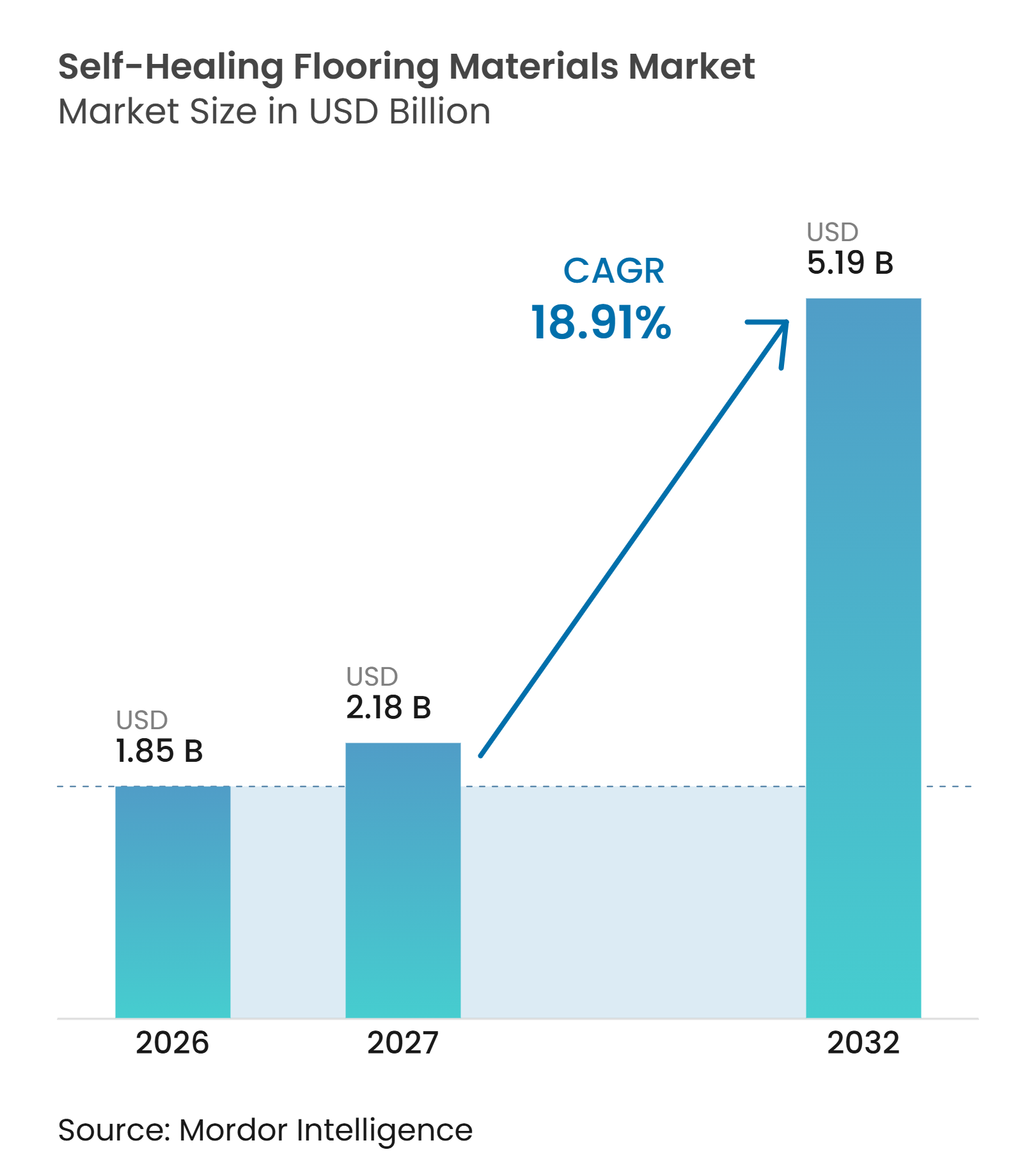
The self-healing flooring materials market size was valued at USD 1.85 billion in 2026 and is estimated to grow from USD 2.18 billion in 2027 to USD 5.19 billion by 2032, at a CAGR of 18.91% during the forecast period (2027-2032). The self-healing flooring materials market is shifting from periodic replacement to lifecycle management, as facility owners place greater value on uninterrupted operations. Advances in polymer science and cementitious chemistry are making these systems more practical for commercial and industrial installations. Buyers increasingly evaluate floor durability as a continuity issue rather than solely as a maintenance cost. This shift creates opportunities for suppliers that can demonstrate repeatable performance, lower remediation needs, and acceptable installation practices.
Key Report Takeaways
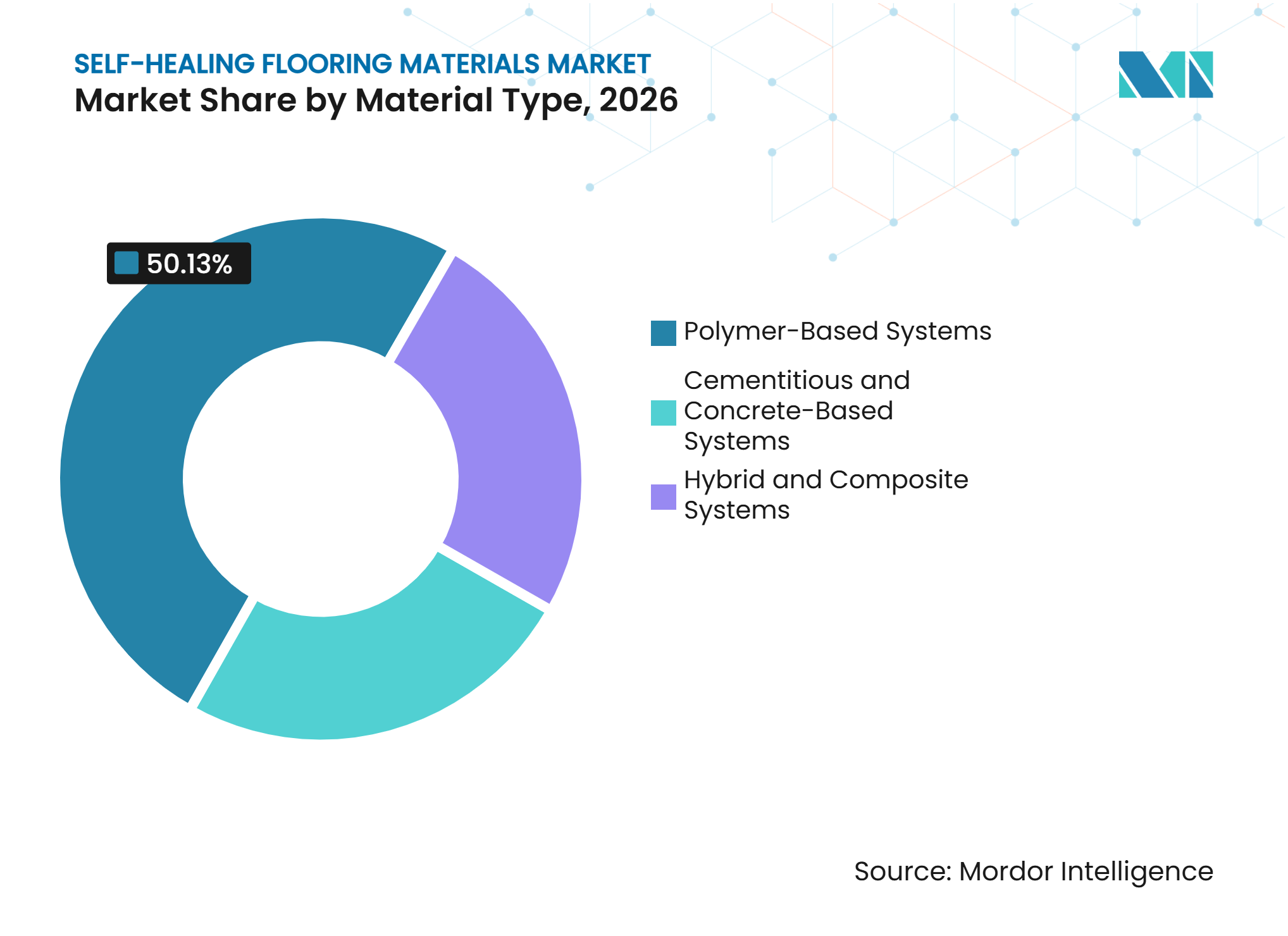
- By material type, polymer-based systems held 50.13% of the self-healing flooring materials market share in 2026 and are forecast to grow at a 19.32% CAGR through 2032.
- By flooring type, epoxy flooring accounted for 32.27% of the self-healing flooring materials market share in 2026, while polyurethane flooring is projected to expand at a 20.16% CAGR through 2032.
- By self-healing technology, extrinsic systems held 59.46% of the self-healing flooring materials market share in 2026, while intrinsic systems are forecast to advance at a 20.67% CAGR through 2032.
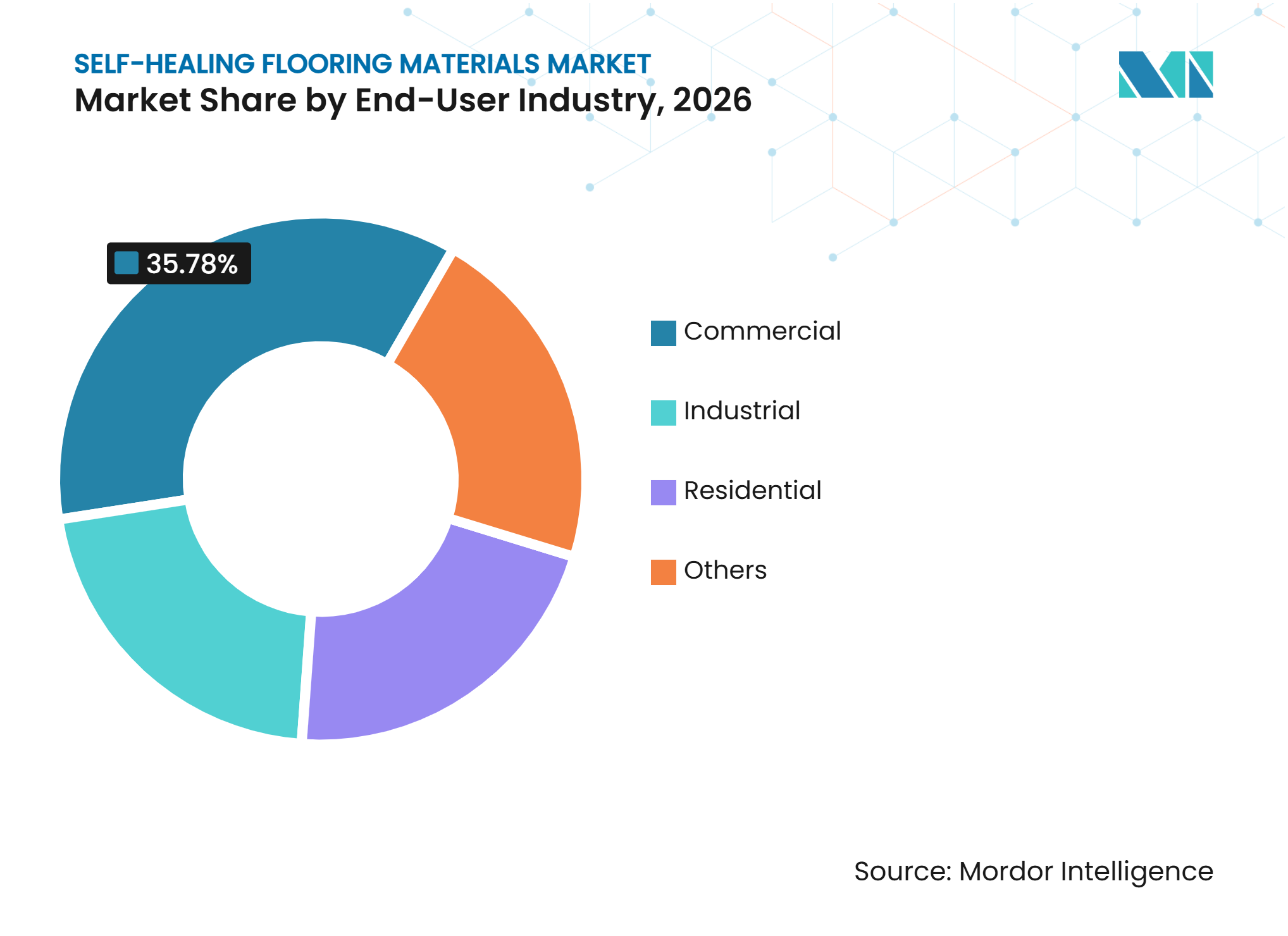
- By end-user industry, commercial applications captured 35.78% of the self-healing flooring materials market share in 2026 and are projected to grow at a 21.34% CAGR through 2032.
- By geography, North America held 41.54% of the self-healing flooring materials market share in 2026, while Europe is forecast to grow at a 20.63% CAGR through 2032.
Note: Market numbers in this report are based on Mordor Intelligence's proprietary estimation framework, which combines nine months of actuals with Q4 projections for base year 2026.
Market Trends and Insights
Drivers Impact Analysis of Self-Healing Flooring Materials Market*
| Drivers | (~) % Impact on CAGR Forecast | Geographic Relevance | Impact Timeline |
|---|---|---|---|
| Lifecycle Maintenance and Downtime Avoidance | +5.0% | Global | Short term (≤ 2 years) |
| Healthcare and Food-Processing Hygiene Requirements | +3.5% | North America, Europe | Medium term (2-4 years) |
| Infrastructure Modernization and Resilience Spending | +3.5% | North America, Asia-Pacific | Medium term (2-4 years) |
| Carbon Reduction Through Longer Asset Life | +3.0% | Europe, Global spillover | Long term (≥ 4 years) |
| Embedded Healing Networks Compatible with Conventional Construction Sequences | +2.0% | North America, Europe, APAC core | Medium term (2-4 years) |
| Source: Mordor Intelligence | |||
Lifecycle Maintenance and Downtime Avoidance
Floor failure in pharmaceutical plants, logistics centers, and automated warehouses can generate costs beyond material replacement. Unplanned stoppages caused by damaged floors can disrupt production, deliveries, and safety procedures. The American Society of Civil Engineers reported in 2025 that USD 9.1 trillion in investment is needed to bring U.S. infrastructure across 18 categories into good repair. This spending requirement reinforces durability-focused asset strategies in public works and private facilities. Self-healing flooring materials can close micro-cracks without requiring a shutdown, which strengthens the lifecycle case as floor remediation labor costs rise. A 2025 Journal of Building Engineering review reported self-healing ratios exceeding 90% in some cementitious capillary-crystalline waterproofing materials exposed to moisture and freeze-thaw damage.
Healthcare and Food-Processing Hygiene Requirements
Food manufacturing and healthcare facilities require floor surfaces that can withstand repeated wash cycles, chemical exposure, and mechanical traffic. U.S. food regulations require floors in covered facilities to be smooth, hard, and easily cleanable, making persistent cracks a compliance concern. Standard coatings can degrade over time, leading to recurring remediation work when their surfaces no longer remain seamless. Self-healing flooring materials address this risk by restoring small cracks that could otherwise retain moisture or contaminants. This effect is most pronounced in North America and Western Europe, where food safety controls and inspection requirements shape capital spending. The cost of a contamination-related recall can make a more durable floor a risk-management decision rather than a discretionary upgrade.
Infrastructure Modernization and Resilience Spending
Infrastructure renewal is opening a second demand channel for self-healing flooring materials in industrial and civic facilities. The U.S. Department of Transportation announced USD 488 million in 2025 funding for 30 infrastructure projects under its Better Utilizing Investments to Leverage Development (BUILD) program. These projects support construction activities in which flooring is part of a broader durability and maintenance plan. China has updated GB/T 18445 to include self-healing capacity as a defined property for cementitious capillary crystalline waterproofing materials, placing self-healing performance closer to formal technical specifications in a major construction economy. India and Southeast Asia are also driving demand for industrial parks, logistics corridors, and processing facilities, where floor downtime can disrupt operations.
Carbon Reduction Through Longer Asset Life and Embedded Healing Networks
Longer floor life can reduce the embodied carbon associated with repeated removal and replacement. In December 2025, the European Commission adopted a common method for calculating the life-cycle global warming potential of new buildings, with disclosure requirements for large new buildings beginning in 2028. This approach gives buyers a reason to examine the service life of flooring alongside its initial material profile. Heidelberg Materials reported the commercial delivery of evoZero carbon-captured near-zero cement in Europe and a 3% reduction in specific net CO2 emissions in 2025[1]. Embedded healing networks also support adoption because they can be incorporated into familiar construction sequences rather than requiring an entirely new installation process. Compatibility with existing contractor practices is important for polymer and cementitious systems intended for mainstream construction projects.
Restraints Impact Analysis of Self-Healing Flooring Materials Market*
| Restraints | (~) % Impact on CAGR Forecast | Geographic Relevance | Impact Timeline |
|---|---|---|---|
| High Upfront Cost and Uncertain Payback for Flooring Owners | -3.0% | Global | Short term (≤ 2 years) |
| Limited Long-Term Field Validation Under Variable Site Conditions | -2.5% | North America, Europe, APAC core | Medium term (2-4 years) |
| Healing-Performance Dependence on Moisture, Temperature, Crack Width, and Matrix Formulation | -2.0% | Global | Long term (≥ 4 years) |
| Source: Mordor Intelligence | |||
High Upfront Cost and Uncertain Payback for Flooring Owners
Self-healing flooring systems carry a material and installation premium of 2x to 4x compared with conventional coatings, with the size of that gap depending on the healing mechanism and substrate requirements. The total-cost calculation can favor self-healing systems over a 10- to 20-year building horizon, but many facility budgets operate on shorter cycles, making it difficult for facility managers to secure capital approval without senior review. This barrier is most visible in small and medium-sized facilities that cannot spread installation costs across large floor areas. The self-healing flooring materials market therefore requires financing tools and procurement criteria that account for durability benefits alongside installed cost.
Limited Long-Term Field Validation Under Variable Site Conditions
Institutional buyers often require long-term in situ data before approving a new material for large floor areas. A 2025 Materials study reported self-healing ratios of 88.9% and 92.7% for cementitious capillary-crystalline waterproofing materials under controlled moisture and freeze-thaw conditions. However, laboratory performance does not fully represent the range of substrates, thermal cycles, chemicals, and high loads found in operating facilities. The International Union of Laboratories and Experts in Construction Materials, Systems and Structures (RILEM) Technical Committee 221-SHC identified long-term field validation and standardized testing as priorities in its November 2025 update[2]. Healing performance also depends on moisture, temperature, crack width, and matrix formulation, making it difficult to apply a single result across all sites. Until longitudinal datasets and consistent benchmarks become more widely available, buyers will continue to require project-specific engineering justification within the self-healing flooring materials market.
*Our forecasts treat driver/restraint impacts as directional, not additive. The impact forecasts reflect baseline growth, mix effects, and variable interactions.
Self-Healing Flooring Materials Market Segment Analysis
By Material Type:
Polymer-Based Systems Combine Scale with Continued DevelopmentPolymer-based systems held 50.13% of the self-healing flooring materials market share in 2026 and are forecast to grow at a 19.32% CAGR through 2032. Their position reflects flexibility in formulation and the ability to incorporate intrinsic networks or extrinsic microcapsules into installation methods contractors already use. Epoxy, polyurethane, and advanced blends remain the primary chemistries in this segment. Vitrimers and ionomer-based systems are gaining attention because they enable repeated healing following multiple crack events, addressing a key limitation of capsule-based products, in which the local healing agent can be depleted after activation.
Wacker Chemie AG began commercial production of hybrid polymers at its Nünchritz site in 2025 following a double-digit-million-EUR investment that created 50 jobs, according to the company. The expansion reflects upstream investment in binders used in adhesives, sealants, and liquid waterproofing systems. Suppliers compete on healing speed, repeatability, mechanical flexibility, and compliance with volatile organic compound regulations. Cementitious and concrete-based systems rank second due to their cost competitiveness and compatibility with poured concrete floors in heavy industry and infrastructure. Crystalline waterproofing admixtures form mineral deposits in cracks when moisture is present, supporting their use where waterproofing and structural durability are priorities. Hybrid systems combine polymer resilience with cementitious durability for sites that experience variable temperature or chemical conditions.



By Flooring Type:
Epoxy Leads in Share While Polyurethane Records Faster GrowthEpoxy flooring accounted for 32.27% of the self-healing flooring materials market share in 2026. Its installed base reflects long-term use in commercial and industrial settings and a broad contractor base familiar with 2-component applications. Epoxy provides a seamless, chemical-resistant surface that meets food facility sanitation requirements under 21 Code of Federal Regulations (CFR) Part 117. These properties keep epoxy relevant in food processing and other hygiene-sensitive applications. Vinyl flooring remains relevant in light commercial and healthcare spaces that prioritize acoustic and walking comfort.
Polyurethane flooring is projected to expand at a 20.16% CAGR through 2032, as its elasticity supports dynamic healing systems in areas exposed to chemical washdowns. The polymer backbone can incorporate reversible crosslinks while retaining flexibility during traffic and thermal movement. Concrete-based systems are used for heavy industrial slabs where structural integrity and waterproofing are central requirements. Rubber and composite flooring address safety flooring and sports facilities, where slip resistance and impact management are important. Large construction-chemicals suppliers are treating self-healing technologies as a defined product category within their broader construction portfolios. This product mix gives the self-healing flooring materials market multiple routes into new construction and renovation projects.
By Self-Healing Technology:
Extrinsic Systems Lead While Intrinsic Systems ProgressExtrinsic systems held 59.46% of the self-healing flooring materials market share in 2026. Their position reflects the predictable behavior of microcapsules that release epoxy, polyurethane, or mineral healing compounds when cracks form. This approach gives specifiers a clearer performance concept and a larger body of test data compared to newer alternatives. Glass, ceramic, and polymer capsules can each serve as carriers, depending on the material architecture. The main limitation is that local capsule reserves can be consumed after a healing event.
Intrinsic systems are forecast to grow at a 20.67% CAGR through 2032. Their repair mechanism is built into the polymer network through reversible covalent bonds, hydrogen-bonding arrays, or ionomeric structures, enabling repeated healing without exhausting a stored agent. RILEM identified intrinsic systems as a research priority because of their potential to function across varying moisture and temperature conditions. Bio-based healing, including Basilisk bacterial spore technology for concrete, falls within the other technology category and remains an early commercial option for infrastructure and large-structure projects. The self-healing flooring materials market is therefore balancing the current reliability of extrinsic products with the longer-term potential of repeated intrinsic healing.
By End-User Industry:
Commercial Applications Lead in Scale and GrowthCommercial applications captured 35.78% of the self-healing flooring materials market share in 2026 and are projected to grow at a 21.34% CAGR through 2032. Retail, hospitality, mixed-use logistics, and corporate office assets require surfaces that maintain their appearance and integrity during cleaning, wheeled traffic, and frequent footfall. Floor damage in these settings can disrupt operations and affect site presentation. Renovation activity in retail and office properties supports demand as owners reposition assets to meet changing tenant and visitor requirements. Wider availability of polymer coating systems increases the opportunity in this segment.
Residential use remains smaller, but premium housing customers are adopting self-healing flooring in scratch-resistant vinyl plank and ceramic-style formats. Industrial users in food processing, pharmaceuticals, automotive, and logistics focus on avoiding downtime and controlling hygiene. Food manufacturing operators must maintain cleanable floors under U.S. food regulations, making surface integrity an operating requirement rather than an optional feature. Transport infrastructure, public buildings, and educational facilities make up the other end-user category. These buyers are beginning to incorporate lifecycle carbon and durability considerations into specifications, particularly where public procurement frameworks place greater weight on asset life. This range of end users reduces the market's dependence on a single construction cycle.

Geography Analysis
North America
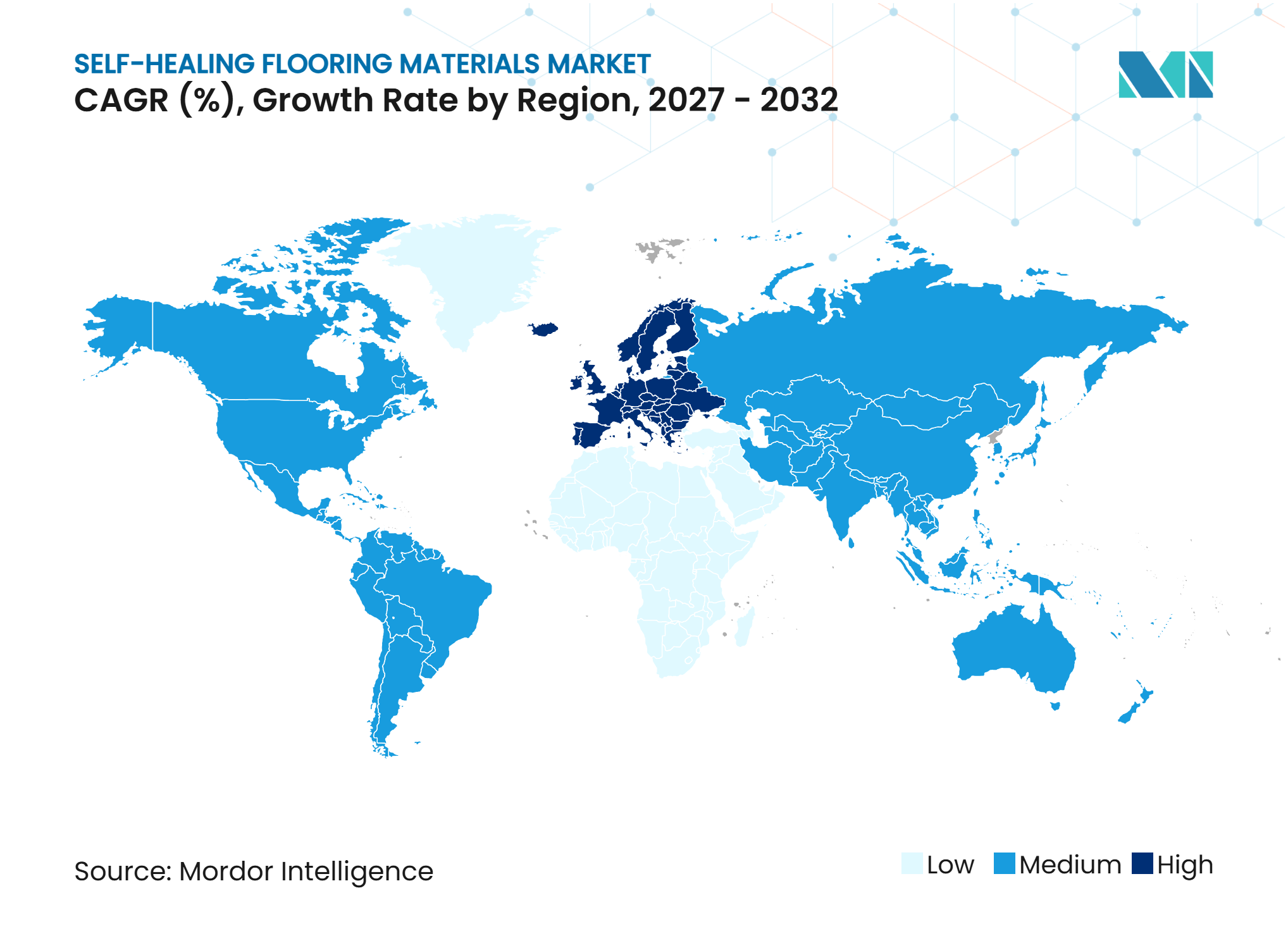
North America held 41.54% of the self-healing flooring materials market share in 2026. The region has a large base of industrial, commercial, and healthcare facilities that undergo regular renovation through established procurement channels. The US Department of Transportation announced USD 488 million for 30 infrastructure projects in 2025, supporting capital activity that can include facility-grade flooring. Food processing facilities must meet 21 CFR Part 117 requirements for smooth, easily cleanable floors, while pharmaceutical expansion attracts buyers focused on contamination control and downtime costs.
Europe
Europe is projected to grow at a 20.63% CAGR from 2027 to 2032. The European Commission's life-cycle global warming potential calculation framework supports materials that reduce replacement-related embodied carbon. Large new buildings will need to disclose life-cycle global warming potential from 2028, while Germany supports demand through automotive, pharmaceutical, and chemical manufacturing. The European self-healing flooring materials market benefits from greater attention to environmental declarations, documented durability, and evidence of compliance.
Emerging Markets Add Geographic Breadth
Asia-Pacific contributes to market growth through construction activity, manufacturing expansion, and formal recognition of self-healing capacity in Chinese cementitious waterproofing standards. India and Southeast Asia generate demand through logistics corridors, pharmaceutical facilities in special economic zones, and hospitality projects. Giatec used digital concrete monitoring technology in Southeast Asian construction, including the Marc 88 development in Hanoi during Q3 2025. This digital approach can increase attention to material performance and site-level quality control. The Middle East represents an additional market for imported systems, as Saudi Arabia and the UAE develop commercial, pharmaceutical, and hospitality facilities. Brazil and Argentina offer further potential through food processing and industrial applications, widening the self-healing flooring materials market beyond North America and Europe.
Competitive Landscape
Market Concentration
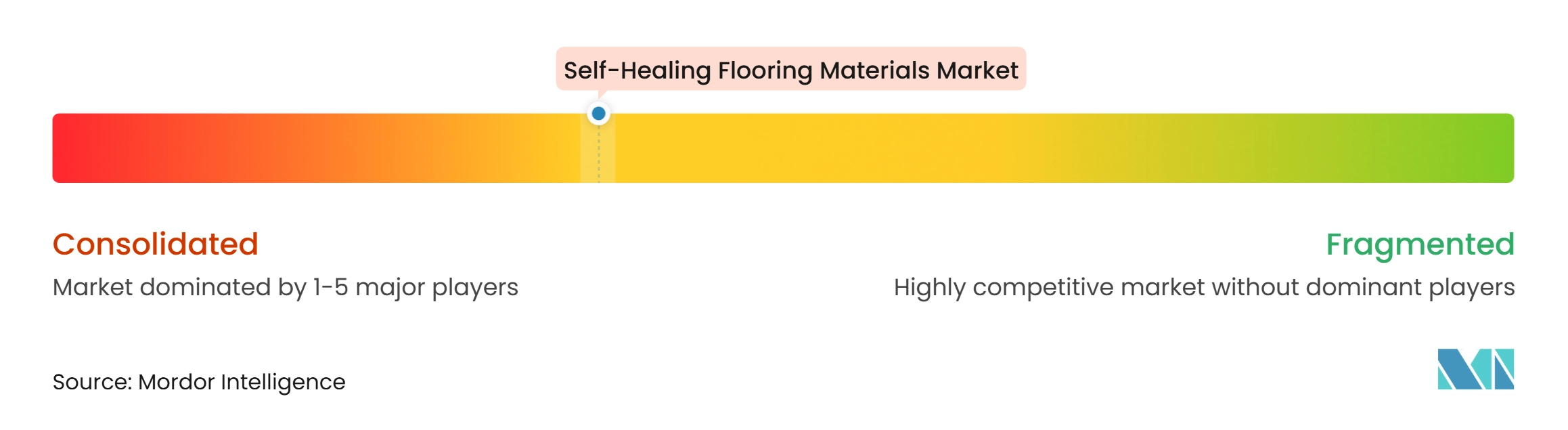
The self-healing flooring materials market is moderately consolidated. Sika AG, Heidelberg Materials AG, Wacker Chemie AG, and Saint-Gobain compete with specialists such as PENETRON, Kryton International, and Xypex Chemical Corporation, as well as biomaterials firms including Basilisk. Competitors operate across construction chemicals, waterproofing admixtures, coatings, and emerging biological approaches. In 2025, Sika announced a strategic investment in Giatec Scientific to connect digital concrete monitoring with admixture optimization and construction lifecycle outcomes. This links material performance data with project data and provides buyers with a means to assess in-use performance.
Oscrete acquired Pudlo Products Ltd in 2025, expanding its waterproofing admixture portfolio in the UK. Wacker's 2025 hybrid polymer production start at Nünchritz supports binder availability for construction formulations. In May 2025, Saint-Gobain integrated GCP Applied Technologies operations into Chryso France, strengthening its position in construction chemicals in France. Portfolio breadth, formulation capability, digital support, application engineering, and local installation networks are important competitive factors.
Suppliers that can provide long-term monitoring and evidence of healing performance may hold an advantage as buyers place greater scrutiny on lifecycle claims. This capability is particularly important for intrinsic systems, where repeat healing is central to the value proposition. Standardized testing work associated with RILEM can help move products from project-by-project approval toward broader specification inclusion.
Self-Healing Flooring Materials Industry Leaders
-
Xypex Chemical Corporation
-
Wacker Chemie AG
-
GCP Applied Technologies Inc.
-
Basilisk
-
Sika AG
- *Disclaimer: Major Players sorted in no particular order
Self-Healing Flooring Materials Market Companies Covered in this Report
- ACCIONA Energía
- Akzo Nobel N.V.
- Basilisk
- Corbion N.V.
- Fescon Oy
- GCP Applied Technologies Inc.
- Giatec Scientific Inc.
- Heidelberg Materials AG
- Kryton International Inc.
- Oscrete
- PENETRON
- Polycoat Products
- Saint-Gobain
- Schomburg
- Sika AG
- Wacker Chemie AG
- Xypex Chemical Corporation
Recent Industry Developments in Self-Healing Flooring Materials Market
- October 2026: eidelberg Materials Australia completed the acquisition of Maas Group Holdings' construction materials business for AUD 1.61 billion. The acquisition integrates 40 quarries, 22 concrete plants, 2 asphalt operations, and a recycling site across Queensland, New South Wales, and Victoria, expanding its low-carbon building materials portfolio in Asia-Pacific and relevant to self-healing flooring materials production.
- June 2025: Sika AG announced a strategic investment in Giatec Scientific Inc., a Canada-based company specializing in AI-driven digital concrete technology platforms. The partnership integrates IoT sensor data with admixture optimization to reduce cement use, CO₂ emissions, and construction lifecycle costs, supporting the digital transformation of the concrete construction industry, including applications in self-healing flooring materials.
Global Self-Healing Flooring Materials Market Report Scope
Self-healing flooring materials are engineered surfaces that automatically repair minor scratches, dents, or micro-cracks without manual intervention. These materials incorporate specialized polymers, microcapsules, or shape-memory compounds that respond to external stimuli such as heat, light, or pressure, restoring the surface to its original condition.
The self-healing flooring materials market is segmented by material type, flooring type, self-healing technology, end-user industry, and geography. By material type, the market is segmented into polymer-based systems, cementitious and concrete-based systems, and hybrid and composite systems. By flooring type, the market is segmented into epoxy flooring, polyurethane flooring, concrete flooring, vinyl flooring, rubber and composite flooring, and others. By self-healing technology, the market is segmented into extrinsic healing systems, intrinsic healing systems, and others. By end-user industry, the market is segmented into residential, commercial, industrial, and others. The report also covers market sizes and forecasts for self-healing flooring materials across 15 countries in major regions. The market sizes and forecasts are provided in terms of value (USD).
Segmentation Overview
| Polymer-Based Systems |
| Cementitious and Concrete-Based Systems |
| Hybrid and Composite Systems |
| Epoxy Flooring |
| Polyurethane Flooring |
| Concrete Flooring |
| Vinyl Flooring |
| Rubber and Composite Flooring |
| Others |
| Extrinsic Healing Systems |
| Intrinsic Healing Systems |
| Others |
| Residential |
| Commercial |
| Industrial |
| Others |
| Asia-Pacific | China |
| India | |
| Japan | |
| South Korea | |
| ASEAN Countries | |
| Rest of Asia-Pacific | |
| North America | United States |
| Canada | |
| Mexico | |
| Europe | Germany |
| United Kingdom | |
| France | |
| Italy | |
| NORDIC Countries | |
| Rest of Europe | |
| South America | Brazil |
| Argentina | |
| Rest of South America | |
| Middle East and Africa | Saudi Arabia |
| South Africa | |
| Rest of Middle East and Africa |
| By Material Type | Polymer-Based Systems | |
| Cementitious and Concrete-Based Systems | ||
| Hybrid and Composite Systems | ||
| By Flooring Type | Epoxy Flooring | |
| Polyurethane Flooring | ||
| Concrete Flooring | ||
| Vinyl Flooring | ||
| Rubber and Composite Flooring | ||
| Others | ||
| By Self-Healing Technology | Extrinsic Healing Systems | |
| Intrinsic Healing Systems | ||
| Others | ||
| By End-User Industry | Residential | |
| Commercial | ||
| Industrial | ||
| Others | ||
| By Geography | Asia-Pacific | China |
| India | ||
| Japan | ||
| South Korea | ||
| ASEAN Countries | ||
| Rest of Asia-Pacific | ||
| North America | United States | |
| Canada | ||
| Mexico | ||
| Europe | Germany | |
| United Kingdom | ||
| France | ||
| Italy | ||
| NORDIC Countries | ||
| Rest of Europe | ||
| South America | Brazil | |
| Argentina | ||
| Rest of South America | ||
| Middle East and Africa | Saudi Arabia | |
| South Africa | ||
| Rest of Middle East and Africa | ||
Key Questions Answered in the Report
What is current market size of Self-Healing Flooring Materials Market?
The self-healing flooring materials market size was valued at USD 1.85 billion in 2026 and is estimated to grow from USD 2.18 billion in 2027 to USD 5.19 billion by 2032, at a CAGR of 18.91% during the forecast period (2027-2032).
Which flooring type is growing fastest?
Polyurethane flooring is forecast to grow at a 20.16% CAGR through 2032 because it combines elasticity with chemical resistance and compatibility with dynamic healing.
Which self-healing technology has the largest share?
Extrinsic systems held a 59.46% share in 2026 because their microcapsule-based repair mechanism had a more established performance profile.
Which region leads in demand for self-healing flooring materials?
North America held a 41.54% share in 2026, supported by its industrial, commercial, healthcare, and infrastructure facility base.