
Seed Technologies Market Size and Share
Market Overview
| Study Period | 2021 - 2031 |
|---|---|
| Market Size (2026) | USD 9.90 Billion |
| Market Size (2031) | USD 12.18 Billion |
| Growth Rate (2026 - 2031) | 4.23 % |
| Fastest Growing Market | North America |
| Largest Market | South America |
| Market Concentration | Medium |
Major Players *Disclaimer: Major Players sorted in no particular order Image © Mordor Intelligence. Reuse requires attribution under CC BY 4.0. | |
Seed Technologies Market Analysis by Mordor Intelligence
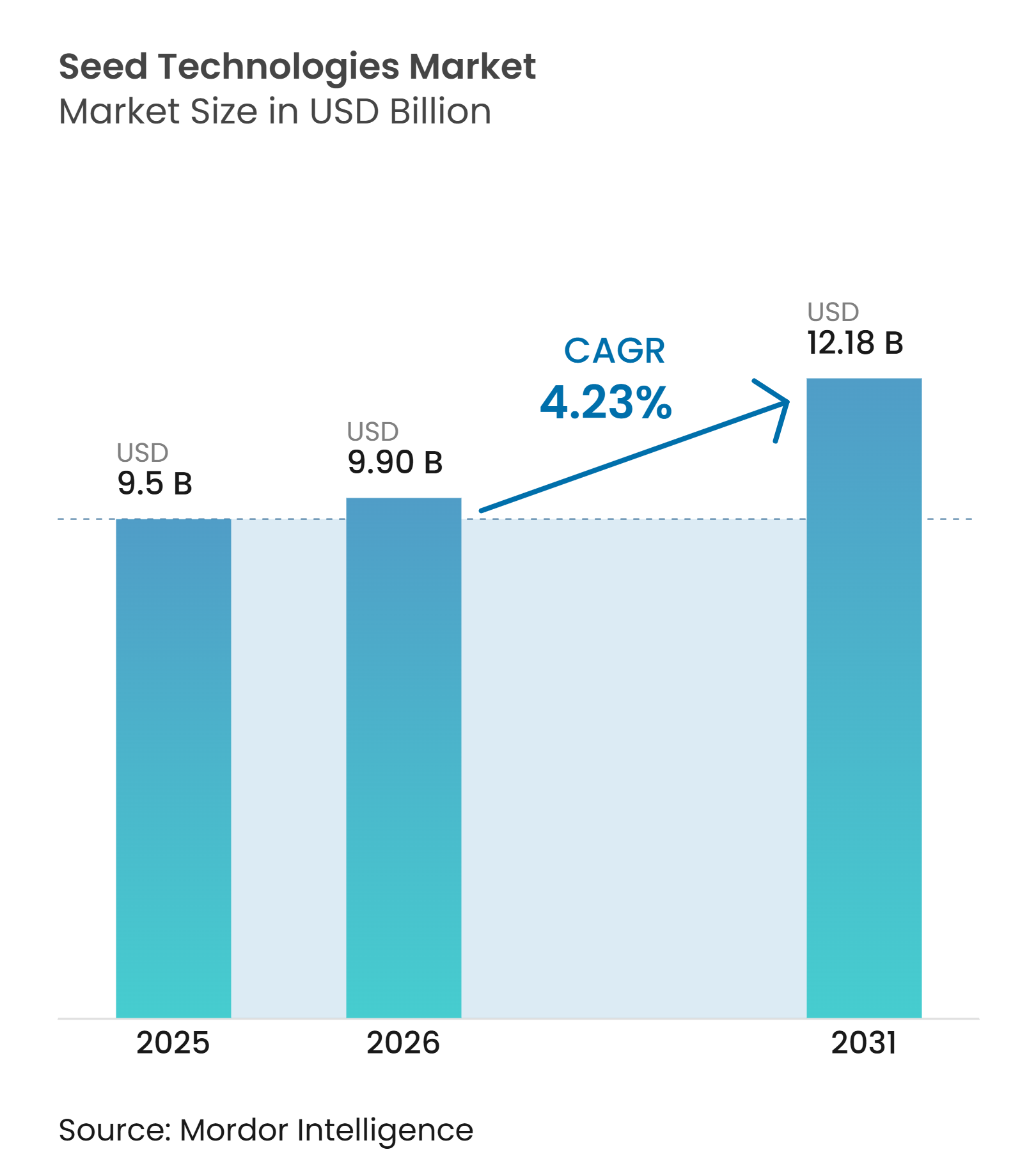
The seed technologies market was valued at USD 9.50 billion in 2025 and is projected to grow from USD 9.90 billion in 2026 to USD 12.18 billion by 2031, registering a CAGR of 4.23% during the forecast period from 2026 to 2031. Demand is driven by the need to increase output per hectare, as seed-applied products protect crops during establishment, when soil-borne disease, early insect pressure, and weather stress reduce plant populations. The Food and Agriculture Organization of the United Nations (FAO) forecast world cereal utilization in 2026/27 at 2,965 million metric tons, above the previous season, with consumption growth outpacing the growth in available arable land. This pressure sustains demand for treatment, coating, and enhancement products that protect early growth and improve realized yield. Suppliers are combining chemical actives, biological inputs, nutrients, and coating materials in single applications, while registration requirements and microbial shelf-life limits continue to shape adoption.
Key Report Takeaways
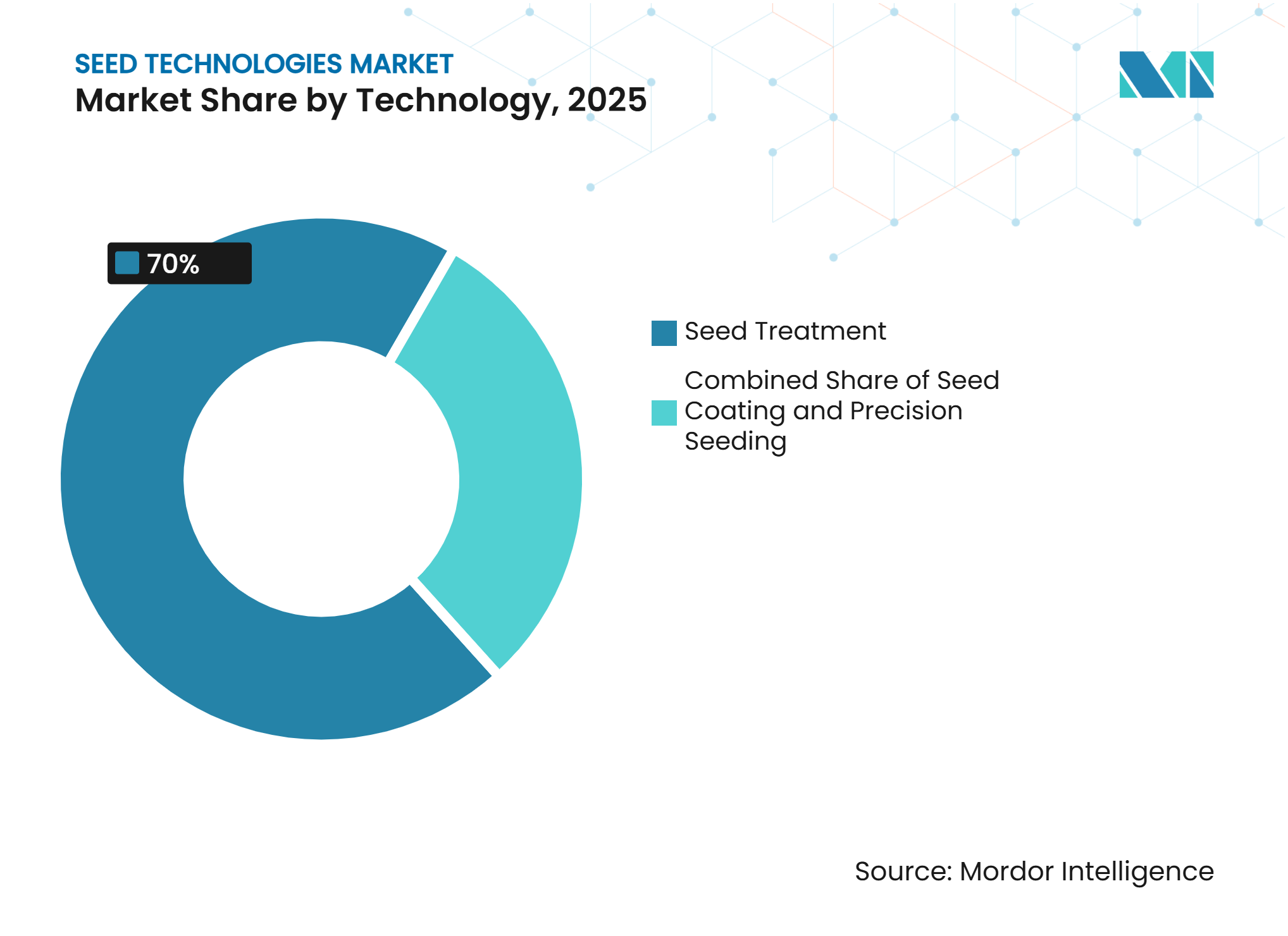
- By technology, seed treatment accounted for the largest 70.0% of the seed technologies market share in 2025, while seed coating is projected to grow at the fastest CAGR of 8.2% from 2026 to 2031.
- By function, seed protection accounted for the largest share at 67.7% in 2025, while the seed technologies market size for seed enhancement is projected to grow at the fastest CAGR of 10.9% from 2026 to 2031.
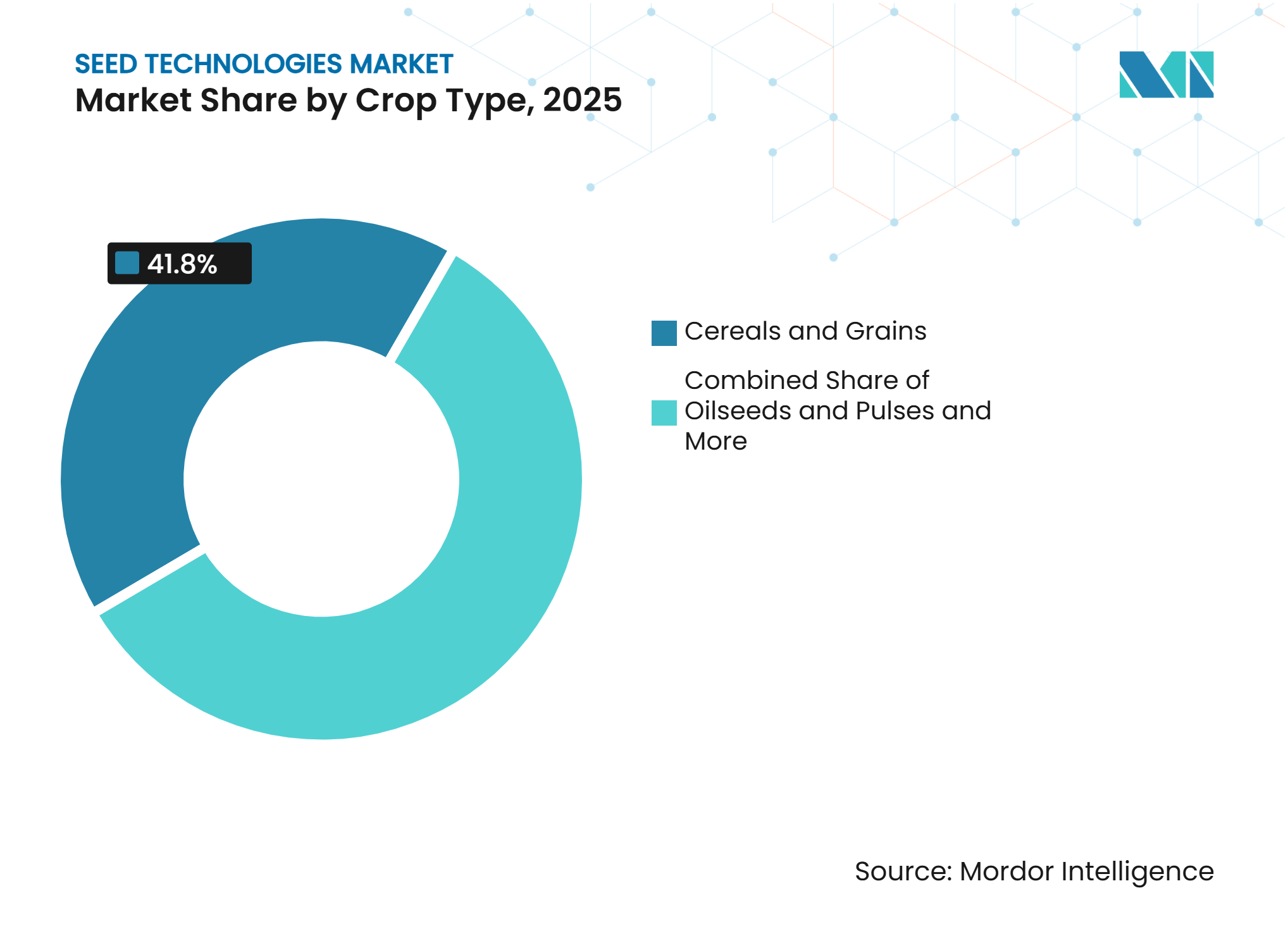
- By crop type, cereals and grains accounted for the largest share at 41.8% in 2025, while fruits and vegetables are projected to grow at the fastest CAGR of 11.1% from 2026 to 2031.
- By seed class, hybrid seeds accounted for the largest share at 58.0% in 2025, while organic seeds are projected to grow at the fastest CAGR of 7.0% from 2026 to 2031.
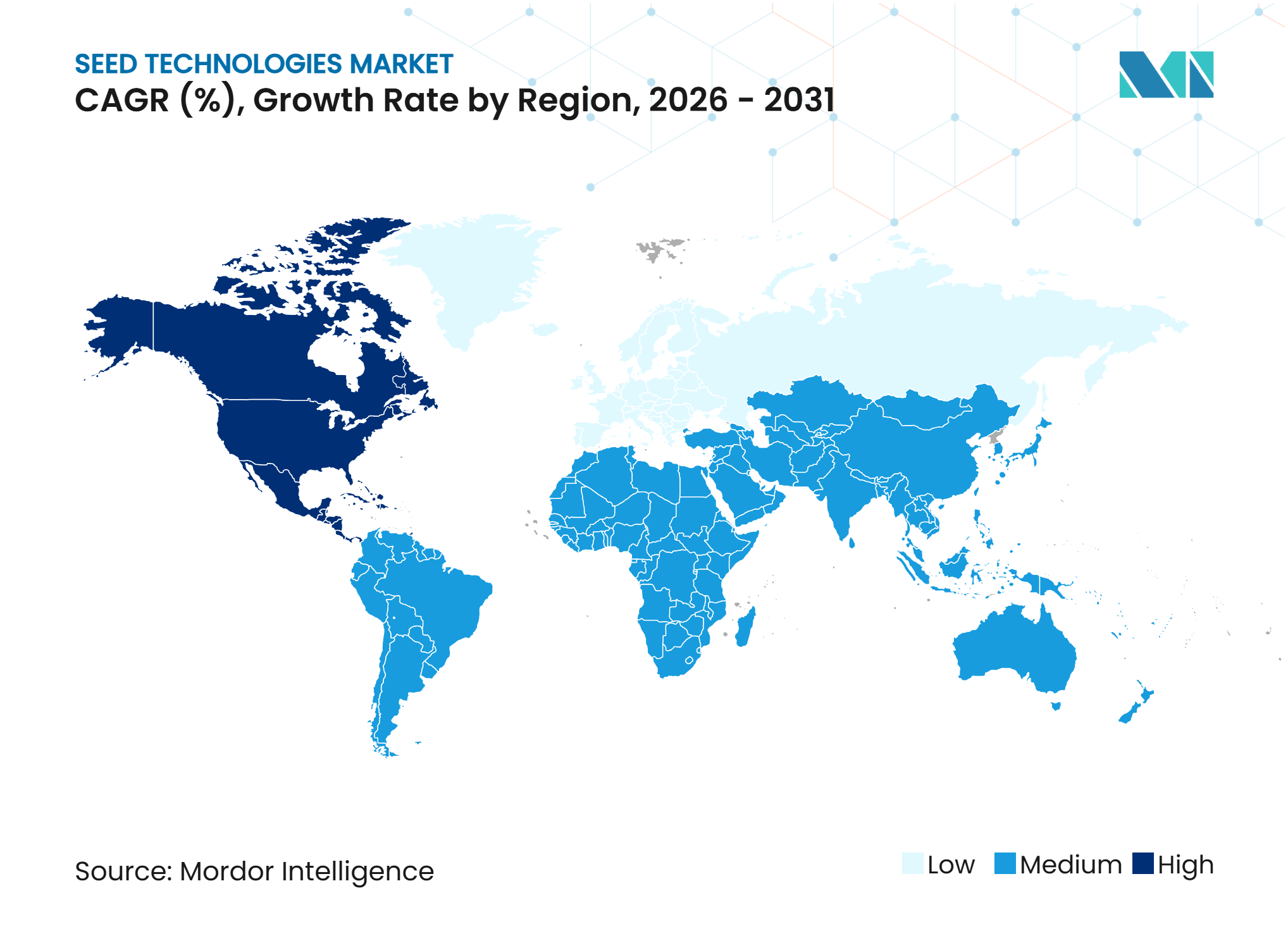
- By geography, South America accounted for the largest share at 44.1% in 2025, while North America is projected to grow at the fastest CAGR of 4.7% from 2026 to 2031.
Note: Market size and forecast figures in this report are generated using Mordor Intelligence’s proprietary estimation framework, updated with the latest available data and insights as of January 2026.
Market Trends and Insights
Drivers Impact Analysis of Seed Technologies Market*
| Driver | (~) % Impact on CAGR Forecast | Geographic Relevance | Impact Timeline |
|---|---|---|---|
| Demand for higher yield and early-season crop protection | +1.2% | Global, with high relevance in South America and North America | Short term (≤ 2 years) |
| Rising pest, disease, and climate stress pressure | +0.9% | Global, especially Asia-Pacific and South America | Medium term (2-4 years) |
| Expansion of high-value hybrid and genetically modified seeds | +0.8% | South America, North America, and Asia-Pacific | Medium term (2-4 years) |
| Precision agriculture and efficient input utilization | +0.6% | Global, particularly South America, North America, and Europe | Medium term (2-4 years) |
| Multi-function seed coatings that combine protection, nutrition, and biologicals | +0.5% | North America and Europe, with growing use in Asia-Pacific | Long term (≥ 4 years) |
| Seed-applied data traceability and treatment-recipe standardization | +0.3% | North America and Europe | Long term (≥ 4 years) |
| Source: Mordor Intelligence | |||
Demand for Higher Yield and Early-Season Crop Protection
Early-season crop protection supports the adoption of seed technology by preserving yield potential during crop establishment. In November 2025, Syngenta Group Co., Ltd. reported that its Victrato seed treatment delivered a 3.3 bushels-per-acre yield increase over the base treatment across more than eight years of nematode trials. This evidence supports the value of seed-applied protection where early pest and disease pressure threatens crop establishment. Demonstrated yield protection strengthens grower willingness to adopt seed treatment technologies and supports demand for integrated early-season protection solutions.
Rising Pest, Disease, and Climate Stress Pressure
Rising pest and disease pressures and climate stress are increasing the demand for seed technologies that protect crops during early establishment. In 2025, the Food and Agriculture Organization of the United Nations (FAO) reported that pests, weeds, and diseases cause USD 220 billion in annual losses to the global agri-food sector, with climate change identified as a factor that worsens pest problems[1]. This pressure increases the value of seed-applied fungicides, insecticides, nematicides, and biological treatments that provide targeted protection from the time of planting. As a result, intensifying crop health risks are driving broader adoption of integrated seed technologies.
Expansion of High-Value Hybrid and Genetically Modified Seeds
The expansion of hybrid and genetically modified seeds supports demand for seed technology, as growers increasingly invest in advanced genetics that require protection and performance-enhancing inputs. In 2025, the United States Department of Agriculture (USDA) reported that 94% of all corn acres planted in the United States were biotech varieties[2]. The widespread use of genetically modified seeds creates a substantial installed base for compatible seed treatment, coating, and enhancement technologies that help protect genetic potential during establishment. Therefore, continued adoption of advanced seed genetics expands the addressable base for complementary seed technologies and supports market growth.
Multi-Function Seed Coatings That Combine Protection, Nutrition, and Biologicals
Multi-function seed coatings are driving adoption by enabling the simultaneous delivery of pesticides, nutrients, and biological inputs at planting. A 2026 review published by Springer Nature screened more than 250 documents when evaluating seed-coating technologies, reflecting substantial research activity around multifunctional formulations. The review identifies biodegradable polymers, microbial inoculants, and localized delivery of growth-promoting agents as key areas for development. These capabilities allow coating technologies to address protection, nutrition, germination, and stress resilience simultaneously, strengthening their value to growers and supporting broader adoption of multifunctional seed-coating solutions.
Restraints Impact Analysis of Seed Technologies Market*
| Restraint | (~) % Impact on CAGR Forecast | Geographic Relevance | Impact Timeline |
|---|---|---|---|
| Regulatory restrictions and registration costs for synthetic chemistry | -0.3% | North America, Europe, Australia, and South America | Medium term (2-4 years) |
| Limited smallholder awareness, access, and treatment infrastructure | -0.2% | South and Southeast Asia, Sub-Saharan Africa, and parts of South America | Long term (≥ 4 years) |
| Microbial viability loss during storage and distribution | -0.1% | Global, especially tropical and subtropical distribution routes | Medium term (2-4 years) |
| Coating-thickness trade-offs between dust-off control and germination | -0.1% | Global | Short term (≤ 2 years) |
| Source: Mordor Intelligence | |||
Regulatory Restrictions and Registration Costs for Synthetic Chemistry
Regulatory requirements for synthetic seed-treatment products can increase compliance obligations and slow commercialization, particularly when jurisdiction-specific conditions apply. In May 2026, the California Department of Pesticide Regulation (DPR) proposed requiring pesticide-treated seeds to comply with California-specific conditions governing manufacture, import, sale, and use[3]. The proposal also introduces reporting requirements for treated seeds. These additional regulatory steps can increase documentation, compliance, and registration workloads for suppliers operating in the state, potentially extending commercialization timelines and limiting the pace at which new synthetic seed-treatment technologies reach growers.
Limited Smallholder Awareness, Access, and Treatment Infrastructure
Limited smallholder awareness, access, and treatment infrastructure constrain seed technology adoption, as treatment equipment and services are difficult to obtain at the farm scale. A 2026 review published by Springer Nature reported that cooperative-level rotary coaters in developing regions cost INR 30,000–50,000 (USD 360–600). This equipment cost creates an entry barrier for smallholders and limits access to decentralized seed-coating services, particularly where treatment volumes are modest. Gaps in affordable equipment, local service networks, and treatment infrastructure can therefore constrain adoption and limit the expansion of seed technologies across fragmented smallholder farming systems.
*Our forecasts treat driver/restraint impacts as directional, not additive. The impact forecasts reflect baseline growth, mix effects, and variable interactions.
Seed Technologies Market Segment Analysis
By Technology:
Seed Treatment Leads Demand While Seed Coating Grows FastestSeed treatment accounted for the largest 70.0% of the seed technologies market share in 2025, reflecting its established role in protecting seeds and seedlings against soil-borne pathogens, insects, and nematodes during crop establishment. Chemical treatments remain widely used as they provide targeted protection before planting and reduce reliance on later field applications. Biological treatments are gaining relevance as growers seek microbial and lower-residue options, while physical methods support specialized production systems. The range of treatment approaches drives adoption across row crops and specialty crops, sustaining seed treatment as the largest technology category.
Seed coating is projected to grow at the fastest CAGR of 8.2% from 2026 to 2031, supported by its ability to combine protection, biological inputs, nutrients, colorants, and planting-performance benefits on the seed surface. Film coating provides a platform for delivering active ingredients without altering seed dimensions. Encrusting and pelleting support applications requiring higher coating loads and improved handling characteristics. Coating technologies also complement precision planting by improving seed flow and placement consistency. These capabilities broaden the functional role of coatings and support adoption across vegetables, field crops, and commercial seed applications.



By Function:
Seed Protection Holds the Largest Position While Seed Enhancement Expands RapidlySeed protection accounted for the largest share at 67.7% in 2025, reflecting the importance of controlling pathogens, insects, and nematodes during the earliest stages of crop development. Fungicides remain important for managing seed and soil-borne diseases, while insecticides protect emerging plants from early pest pressure. Nematicide applications address root-zone threats that can reduce stand establishment and crop performance. Protection products can also reduce the need for corrective interventions after emergence by addressing risks directly on or around the seed. This protective function supports sustained demand across cereals, oilseeds, pulses, and specialty crops.
Seed enhancement is projected to grow at the fastest CAGR of 10.9% from 2026 to 2031, supported by technologies designed to improve germination, emergence, nutrient availability, and tolerance to environmental stress. Coatings can deliver micronutrients and biological inputs directly around the seed, while biostimulant formulations can support early root and shoot development. These approaches are relevant where growers seek consistent establishment under variable soil and weather conditions. Seed enhancement also complements protection technologies by addressing performance beyond pest control. Its broader agronomic role supports expanding adoption across high-value crops and production systems.
By Crop Type:
Cereals and Grains Sustain Volume While Fruits and Vegetables Deliver Faster GrowthCereals and grains accounted for the largest share at 41.8% in 2025, supported by extensive cultivation of corn, wheat, rice, and barley across major agricultural regions. The large production base creates recurring demand for seed protection, coating, and enhancement technologies that support uniform establishment and early crop health. Corn and wheat commonly use treatment programs targeting fungal and soil-borne threats, while rice production uses treatments and coatings suited to intensive planting systems. The diversity of cereal production environments supports multiple technology applications, maintaining cereals and grains as the largest crop-type category.
Fruits and vegetables are projected to grow at the fastest CAGR of 11.1% from 2026 to 2031, supported by increasing use of specialized seed technologies for precise planting, uniform emergence, and crop establishment. Vegetable seeds are frequently pelleted and encrusted to improve handling and placement, particularly where small seed size creates planting challenges. Coatings can also incorporate biological or nutritional inputs that support early development. Higher production requirements for consistent plant stands increase the relevance of these technologies in horticulture, broadening the role of seed technologies beyond conventional row-crop treatment programs.

By Seed Class:
Hybrid Seeds Lead Demand While Organic Seeds Set the Fastest PaceHybrid seeds accounted for the largest share, at 58.0% in 2025, supported by their widespread use in commercial crop production, where growers prioritize uniform emergence, stand establishment, and consistent performance. Hybrid corn, soybean, canola, vegetables, and other crops create demand for technologies that protect valuable planting material during early development. Seed treatments can address pathogens, insects, and nematodes, while coatings can improve handling and planting performance. Enhancement technologies can further support germination and early vigor. Integrating these functions with commercial hybrid seed programs reinforces demand for complementary seed technologies across major production regions.
Organic seeds are projected to grow at the fastest CAGR of 7.0% from 2026 to 2031, supported by production systems that emphasize permitted inputs and biological approaches to crop establishment. Seed technologies used in organic systems can include microbial treatments, physical protection methods, and coatings based on compatible materials. These solutions can help address disease pressure, nutrient availability, and emergence challenges while remaining aligned with organic production requirements. Demand also benefits from growing interest in soil health, input stewardship, and biological crop management. This combination supports the development of seed technologies suited to organic production systems.
Geography Analysis
South America accounted for the largest share, at 44.1% in 2025, supported by extensive soybean and corn cultivation and the use of seed treatments. Brazil represents a major demand base, as commercial row-crop production relies on treated seed to manage disease, insect, and nematode pressure during crop establishment. Biological inputs are gaining relevance alongside established chemical treatments, with national programs promoting them. Argentina contributes additional demand for soybeans and other field crops that require protection and establishment technologies. Crop intensity, treatment practices, and the expansion of biological solutions reinforce the region's strong market position.
North America is projected to grow at the fastest CAGR of 4.7% from 2026 to 2031, supported by advanced commercial farming systems, precision planting, and established use of seed treatment technologies. Corn, soybean, and cotton producers use seed-applied products to protect crop establishment and manage early-season pest and disease risks. Precision equipment supports accurate placement and treatment integration across large-scale operations. Canada is strengthening its seed technology portfolio through registrations covering chemical and biological treatment products. These conditions support continued technology adoption and product development across North American field-crop production systems.
Asia-Pacific presents strong potential for seed technology adoption, supported by government and research institution efforts to expand improved seed systems and develop climate-resilient crops. In July 2026, the Government of India reported that 2,996 climate-resilient field crop varieties had been released and notified through the National Agricultural Research and Education System. This growing base of improved genetics creates opportunities for complementary seed treatment, coating, and enhancement technologies that support crop establishment and stress tolerance. Greater public-private collaboration, improved seed infrastructure, and broader technology dissemination can further strengthen adoption across the region's diverse agricultural systems.
Competitive Landscape
Market Concentration
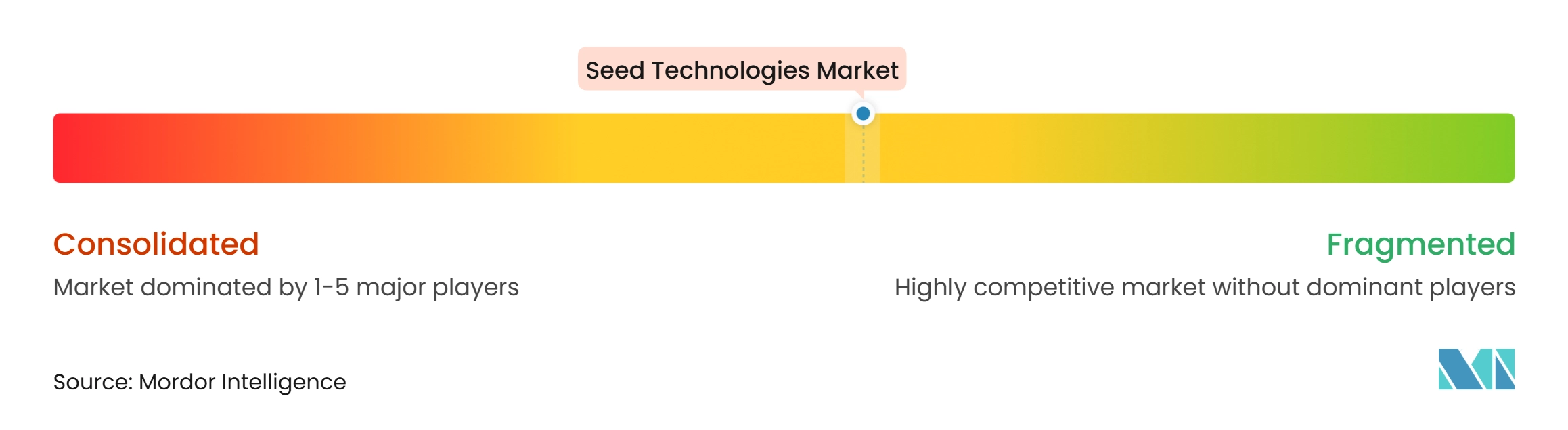
The market was moderately fragmented in 2025, with major participants including Syngenta Group Co., Ltd. (Sinochem Holdings Corporation Ltd.), Bayer AG, BASF SE, Corteva, Inc., and UPL Limited. These companies compete through broad portfolios spanning seed treatment, seed coating, crop protection, biological inputs, and related agronomic solutions. Their competitive positioning is supported by product development capabilities, regulatory expertise, established distribution networks, and relationships with commercial growers and seed businesses. Competition centers on treatment efficacy, formulation compatibility, biological integration, application convenience, technical support, and portfolio breadth across diverse crops and production environments.
Seed coating is becoming an important competitive area as suppliers develop materials that improve plantability, reduce dust, and support the delivery of biological or chemical inputs. Competition also extends to coating formulations compatible with modern planting equipment and different seed sizes. Biological treatment providers are strengthening their position through partnerships, distribution agreements, and agronomic support that connect microbial products with crop-specific recommendations. These strategies broaden competition beyond individual products and place greater emphasis on formulation performance, field support, distribution reach, and compatibility with existing seed-treatment operations across commercial production systems.
Competitive differentiation is increasingly focused on biological seed treatments that combine crop protection with plant-performance benefits. In April 2025, Bayer AG introduced three biological seed-treatment solutions Ibisio, Yoalo, and Susteed expanding its SeedGrowth portfolio across bird protection, nutrient availability, disease suppression, and plant stimulation. Yoalo contains Bacillus velezensis and is designed to improve nutrient availability, while Susteed combines disease suppression, root colonization, and plant-defense activation. These developments reflect how major suppliers are broadening seed-treatment functionality beyond conventional protection, strengthening competition around biological innovation and multifunctional seed-applied technologies.
Seed Technologies Industry Leaders
-
Syngenta Group Co., Ltd. (Sinochem Holdings Corporation Ltd.)
-
Bayer AG
-
BASF SE
-
Corteva, Inc.
-
UPL Limited
- *Disclaimer: Major Players sorted in no particular order
Seed Technologies Market Companies Covered in this Report
- Syngenta Group Co., Ltd. (Sinochem Holdings Corporation Ltd.)
- Bayer AG
- BASF SE
- Corteva, Inc.
- UPL Limited
- FMC Corporation
- Nufarm Limited
- Sumitomo Chemical Co., Ltd.
- Novonesis A/S (Novo Holdings A/S)
- Croda International Plc
- Syensqo SA/NV
- Germains Seed Technology Limited (Associated British Foods plc)
- Verdesian LifeSciences, LLC
- Koppert Biological Systems B.V. (Koppert Group B.V.)
- Andermatt Group AG
Recent Industry Developments in Seed Technologies Market
- September 2026: Bayer AG announced the commercialization of the Preceon Smart Corn System across key agricultural regions, combining short-stature corn genetics with digital agronomic support and crop management capabilities. This development supports the adoption of precision seeding and advanced seed technologies by integrating improved genetics with field-level management tools.
- April 2026: Corteva, Inc. launched Lumiscend LUXE in Canada, a four-active fungicide seed treatment for wheat, durum, barley, and oats. The product targets Fusarium and Rhizoctonia while supporting seedling emergence and root development, driving demand for advanced chemical seed-treatment technologies within cereal production.
- November 2025: Syngenta Group Co., Ltd. (Sinochem Holdings Corporation Ltd.) introduced Victrato seed treatment following United States Environmental Protection Agency registration for soybean and cotton. The technology provides broad-spectrum nematode and disease protection through seed-applied delivery, supporting growth in the seed treatment segment through integrated protection against multiple early-season crop-health risks.
Global Seed Technologies Market Report Scope
Seed technologies include methods and products used to improve seed quality, protection, germination, and establishment. These include seed treatment, coating, enhancement, and precision seeding technologies, which help farmers protect seeds from pests, improve emergence, optimize input use, and increase crop productivity.
The seed technologies market report is segmented by technology (seed treatment, seed coating, and precision seeding), by function (seed protection and seed enhancement), by crop type (cereals and grains, oilseeds and pulses, fruits and vegetables, and commercial and specialty crops), by seed class (hybrid seeds, open-pollinated seeds, genetically modified seeds, and organic seeds), and by geography (North America, South America, Europe, Asia-Pacific, Middle East, and Africa). The market forecasts are provided in terms of value (USD).
Segmentation Overview
| Seed Treatment | Chemical Seed Treatment |
| Biological Seed Treatment | |
| Physical Seed Treatment | |
| Seed Coating | Film Coating |
| Encrusting | |
| Pelleting | |
| Precision Seeding | Variable-Rate Seeding |
| GPS-Guided Seeding | |
| Sensors and Data Analytics |
| Seed Protection | Fungicides |
| Insecticides | |
| Nematicides | |
| Seed Enhancement | Germination and Emergence Enhancement |
| Nutrient Delivery | |
| Abiotic Stress Tolerance |
| Cereals and Grains | Corn |
| Wheat | |
| Rice | |
| Barley | |
| Oilseeds and Pulses | Soybean |
| Canola | |
| Sunflower | |
| Chickpea | |
| Fruits and Vegetables | Tomato |
| Pepper | |
| Onion | |
| Leafy Vegetables | |
| Commercial and Specialty Crops | Cotton |
| Sugar Beet | |
| Turfgrass | |
| Forage Crops |
| Hybrid Seeds |
| Open-Pollinated Seeds |
| Genetically Modified Seeds |
| Organic Seeds |
| North America | United States |
| Canada | |
| Mexico | |
| Rest of North America | |
| South America | Brazil |
| Argentina | |
| Rest of South America | |
| Europe | Germany |
| France | |
| United Kingdom | |
| Italy | |
| Russia | |
| Rest of Europe | |
| Asia-Pacific | China |
| India | |
| Japan | |
| Australia | |
| Rest of Asia-Pacific | |
| Middle East | Turkey |
| Saudi Arabia | |
| United Arab Emirates | |
| Rest of Middle East | |
| Africa | South Africa |
| Egypt | |
| Rest of Africa |
| By Technology | Seed Treatment | Chemical Seed Treatment |
| Biological Seed Treatment | ||
| Physical Seed Treatment | ||
| Seed Coating | Film Coating | |
| Encrusting | ||
| Pelleting | ||
| Precision Seeding | Variable-Rate Seeding | |
| GPS-Guided Seeding | ||
| Sensors and Data Analytics | ||
| By Function | Seed Protection | Fungicides |
| Insecticides | ||
| Nematicides | ||
| Seed Enhancement | Germination and Emergence Enhancement | |
| Nutrient Delivery | ||
| Abiotic Stress Tolerance | ||
| By Crop Type | Cereals and Grains | Corn |
| Wheat | ||
| Rice | ||
| Barley | ||
| Oilseeds and Pulses | Soybean | |
| Canola | ||
| Sunflower | ||
| Chickpea | ||
| Fruits and Vegetables | Tomato | |
| Pepper | ||
| Onion | ||
| Leafy Vegetables | ||
| Commercial and Specialty Crops | Cotton | |
| Sugar Beet | ||
| Turfgrass | ||
| Forage Crops | ||
| By Seed Class | Hybrid Seeds | |
| Open-Pollinated Seeds | ||
| Genetically Modified Seeds | ||
| Organic Seeds | ||
| By Geography | North America | United States |
| Canada | ||
| Mexico | ||
| Rest of North America | ||
| South America | Brazil | |
| Argentina | ||
| Rest of South America | ||
| Europe | Germany | |
| France | ||
| United Kingdom | ||
| Italy | ||
| Russia | ||
| Rest of Europe | ||
| Asia-Pacific | China | |
| India | ||
| Japan | ||
| Australia | ||
| Rest of Asia-Pacific | ||
| Middle East | Turkey | |
| Saudi Arabia | ||
| United Arab Emirates | ||
| Rest of Middle East | ||
| Africa | South Africa | |
| Egypt | ||
| Rest of Africa | ||
Key Questions Answered in the Report
What is the current size and projected growth of the Seed Technologies Market?
The seed technologies market is valued at USD 9.90 billion in 2026 and is forecast to reach USD 12.18 billion by 2031.
Which technology is growing fastest?
Seed coating is forecast to expand at the fastest CAGR of 8.2%from 2026 to 2031.
Which crop category has the fastest growth rate?
Fruits and vegetables are projected to grow at the fastest CAGR of 11.1% from 2026 to 2031.
Which region leads demand?
South America held the largest share of 44.1% in 2025 because of intensive soybean and corn production and established seed-treatment practices.