
Sauna and Spa Market Size and Share
Market Overview
| Study Period | 2020 - 2031 |
|---|---|
| Market Size (2026) | USD 155.63 Billion |
| Market Size (2031) | USD 194.90 Billion |
| Growth Rate (2026 - 2031) | 4.60 % |
| Fastest Growing Market | Europe |
| Largest Market | Asia Pacific |
| Market Concentration | Low |
Major Players *Disclaimer: Major Players sorted in no particular order Image © Mordor Intelligence. Reuse requires attribution under CC BY 4.0. | |
Sauna and Spa Market Analysis by Mordor Intelligence
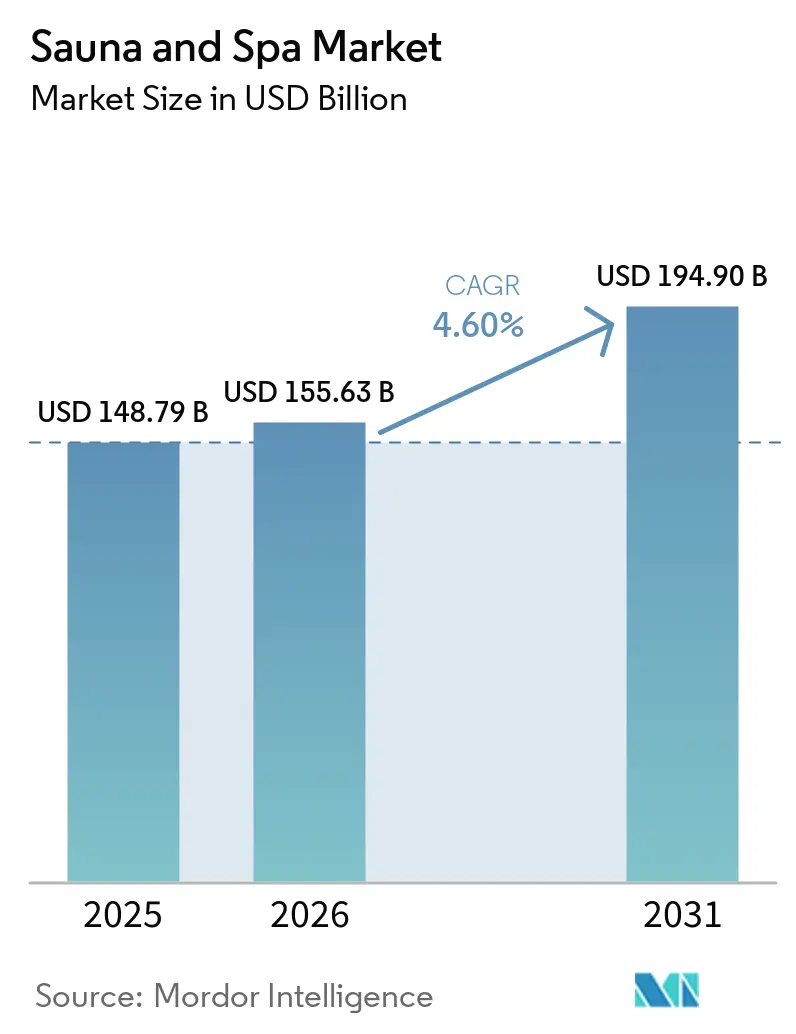
The sauna and spa market size in 2026 is estimated at USD 155.63 billion, growing from 2025 value of USD 148.79 billion with 2031 projections showing USD 194.9 billion, growing at 4.6% CAGR over 2026-2031. Post-pandemic demand for preventive health routines, surging wellness tourism spend, and ongoing corporate wellness investments are steering this steady expansion. Operators now view thermal suites as resilient dual-purpose assets producing high-margin hospitality revenues while doubling as therapeutic health infrastructure. Energy-efficient infrared cabins, mobile pop-ups, and smart-connected controls are widening access, while renovation activity is accelerating as facility owners retrofit older rooms to meet stricter sustainability mandates. Fragmented competitive dynamics further stimulate product innovation, regional specialization, and price differentiation.
Key Report Takeaways
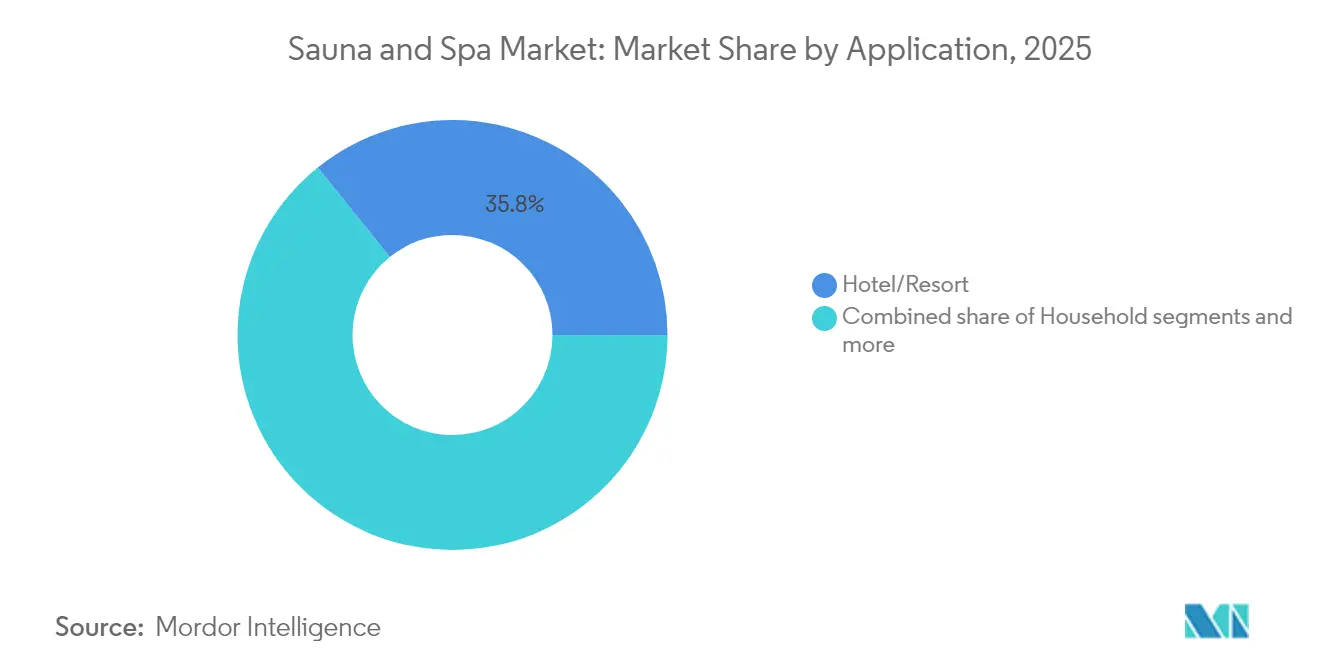
- By application, hotel and resort facilities led with 35.78% of the sauna and spa market share in 2025; household installations are forecast to expand at an 8.61% CAGR through 2031.
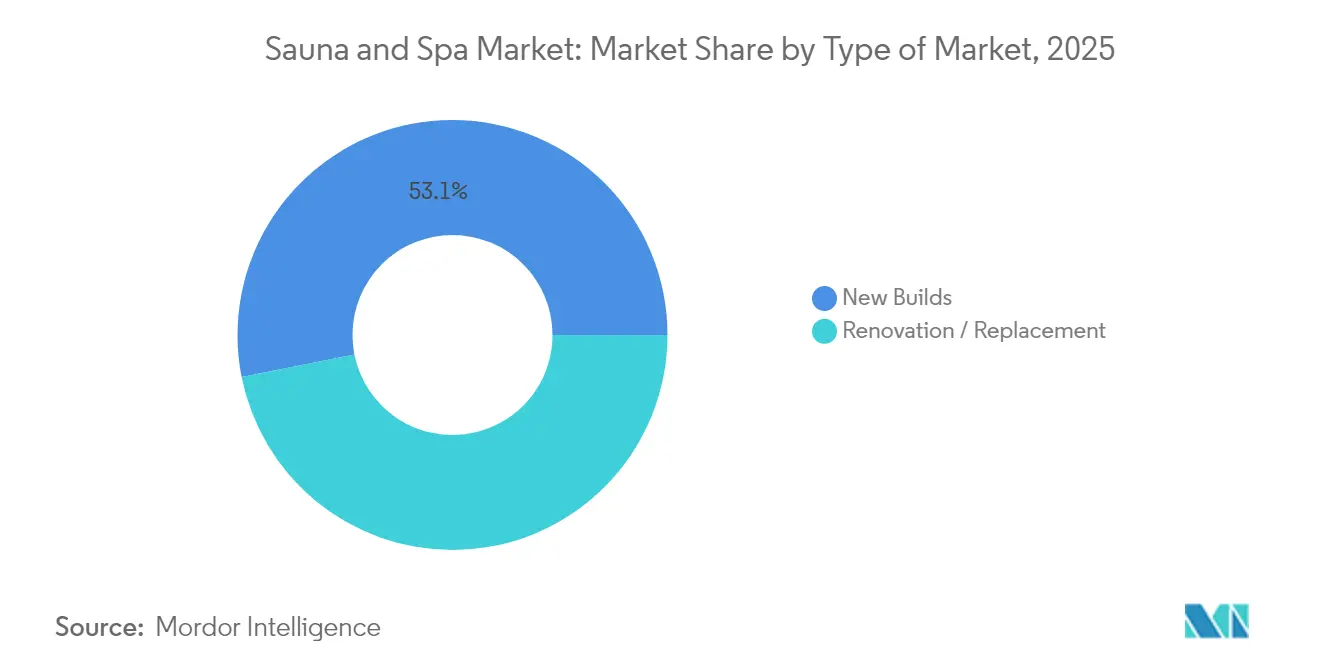
- By type of market, new construction commanded 53.12% share of the sauna and spa market size in 2025; renovation and replacement installations are projected to grow at a 7.12% CAGR to 2031.
- By product type, traditional Finnish units held 41.72% of the sauna and spa market size in 2025; infrared cabins are advancing at a 9.98% CAGR through 2031.
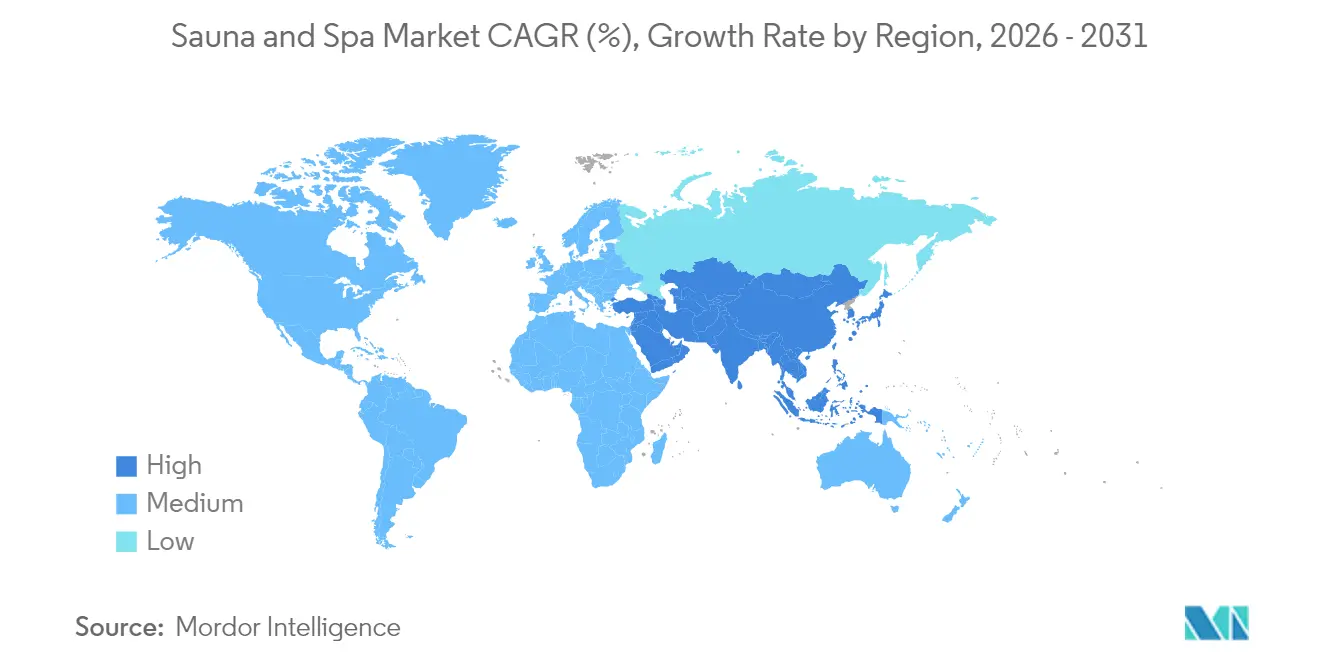
- By geography, Europe accounted for 31.88% of the sauna and spa market share in 2025; Asia-Pacific is set to register the hottest 9.05% CAGR between 2026 and 2031.
Note: Market size and forecast figures in this report are generated using Mordor Intelligence’s proprietary estimation framework, updated with the latest available data and insights as of 2026.
Market Trends and Insights
Drivers Impact Analysis of Sauna and Spa Market*
| Driver | (~) % Impact on CAGR Forecast | Geographic Relevance | Impact Timeline |
|---|---|---|---|
| Growth of wellness tourism & hotel-led spa investments | +1.2% | Global, strongest in Europe & APAC | Medium term (2-4 years) |
| Rising consumer focus on longevity, sleep & immunity benefits | +0.9% | North America & Europe core, expanding to APAC | Long term (≥ 4 years) |
| Expansion of luxury real-estate wellness amenities | +0.8% | North America & Europe, emerging in APAC urban centers | Medium term (2-4 years) |
| Technology-enabled infrared & smart-sauna adoption | +0.7% | Global, led by North America tech integration | Short term (≤ 2 years) |
| Corporate wellness programmes funding on-site thermal suites | +0.5% | North America & Nordic countries, expanding globally | Medium term (2-4 years) |
| Urban pop-up / mobile saunas creating experiential demand | +0.3% | Europe & North America urban centers | Short term (≤ 2 years) |
| Source: Mordor Intelligence | |||
Growth of Wellness Tourism & Hotel-Led Spa Investments
Wellness tourism expenditure reached USD 651 billion globally, with thermal experiences commanding premium pricing that exceeds standard accommodation rates by 53%[1]CBI, “European Market Potential for Wellness Tourism,” cbi.eu. . Hotels increasingly position spa and sauna facilities as revenue centers rather than amenity costs, generating direct treatment income and extending average guest stays by 1.2 nights per visit. The integration of thermal circuits with dining and event programming creates compound revenue opportunities, particularly in destination resorts where spa services achieve 40-60% profit margins. European operators leverage established thermal traditions to attract international wellness tourists, while Asian markets develop hybrid concepts combining traditional bathing rituals with modern sauna technology. This trend accelerates as hospitality groups recognize thermal wellness as a key differentiator in competitive markets, driving systematic investments in facility upgrades and staff training programs.
Rising Consumer Focus on Longevity, Sleep & Immunity Benefits
Clinical research demonstrating sauna therapy's impact on cardiovascular health, sleep quality, and immune function drives mainstream adoption beyond traditional relaxation benefits. Regular sauna use correlates with a 27% reduction in cardiovascular disease risk and improved sleep efficiency scores, creating medical validation that supports consumer investment decisions[2]Global Wellness Summit, “The Future of Wellness 2023,” globalwellnesssummit.com. . Healthcare providers increasingly recommend thermal therapy as an adjunct treatment for chronic conditions, legitimizing sauna purchases as medical expenses eligible for health savings account reimbursement. The longevity economy, valued at USD 27 trillion globally, positions thermal wellness as a preventive healthcare infrastructure rather than a luxury amenity. Consumer behaviour shifts from occasional spa visits to routine home-based thermal therapy, supported by wearable technology that tracks physiological responses and optimizes session parameters. This medicalization of thermal wellness expands addressable markets to include health-conscious consumers who previously viewed saunas as indulgent rather than therapeutic.
Expansion of Luxury Real-Estate Wellness Amenities
Wellness real estate grew from USD 225.2 billion in 2019 to USD 438.2 billion in 2023, with thermal amenities becoming standard features in luxury residential developments[3]Spa Business, “Wellness Real-Estate Market Booming,” spabusiness.com. . High-net-worth individuals prioritize home wellness infrastructure that eliminates dependency on commercial facilities, particularly following pandemic-driven preferences for private health amenities. Property developers integrate sauna installations as value-add features that command 8-12% price premiums and reduce time-to-sale by 15-20% in competitive markets. The trend extends beyond individual residences to multi-family developments, corporate campuses, and senior living communities that position thermal wellness as lifestyle differentiators. Smart home integration enables remote monitoring and energy optimization, addressing operational concerns that previously limited residential adoption. This residential expansion creates sustained demand for compact, energy-efficient units that maintain commercial-grade performance standards while meeting residential building codes and homeowner association requirements.
Technology-Enabled Infrared & Smart-Sauna Adoption
Smart sauna technology integration reaches 35% of new installations, driven by energy management capabilities that reduce operational costs by 20-30% compared to traditional systems. IoT connectivity enables predictive maintenance, remote diagnostics, and usage optimization that appeals to commercial operators managing multiple facilities and homeowners seeking convenience features. Infrared technology achieves faster heat-up times and lower energy consumption, addressing sustainability concerns while maintaining therapeutic benefits through targeted tissue heating. Mobile applications provide session customization, health tracking integration, and social sharing features that enhance user engagement and support routine usage patterns. The convergence of thermal therapy with digital health platforms creates data-driven wellness experiences that justify premium pricing and support subscription-based service models. Manufacturers differentiate through proprietary heating technologies, advanced materials, and seamless smart home ecosystem integration that positions saunas as connected health devices rather than passive amenities.
Restraints Impact Analysis of Sauna and Spa Market*
| Restraint | (~) % Impact on CAGR Forecast | Geographic Relevance | Impact Timeline |
|---|---|---|---|
| High upfront capex & OPEX for commercial facilities | -0.8% | Global; acute in emerging markets | Short term (≤ 2 years) |
| Energy-cost volatility & sustainability scrutiny | -0.6% | Europe & North America; expanding globally | Medium term (2-4 years) |
| Retrofit compliance hurdles (HVAC / fire / ventilation codes) | -0.5% | North America & Europe; tightening in APAC | Medium term (2–4 years) |
| Shortage of skilled thermal-spa technicians | -0.4% | Global; especially critical in resort regions | Short to Medium term (1–3 years) |
| Source: Mordor Intelligence | |||
High Upfront Capex & OPEX for Commercial Facilities
Commercial sauna installations require a USD 15,000-50,000 initial investment plus ongoing energy costs averaging USD 2,000-8,000 annually, creating barriers for small operators and independent facilities. Installation complexity increases in retrofit applications where HVAC modifications, electrical upgrades, and structural reinforcements add 30-50% to base equipment costs[4]International Code Council, “Building Codes and Standards,” iccsafe.org.. Operating expenses include energy consumption, maintenance contracts, and specialized technician services that strain profit margins for facilities with limited utilization rates. Insurance and liability considerations add recurring costs, particularly for commercial operators serving diverse customer populations with varying health conditions. Small spa operators increasingly partner with equipment manufacturers offering lease-to-own financing and maintenance packages that reduce upfront barriers while ensuring operational support. This capital intensity favors established operators with access to commercial financing and creates consolidation pressure among independent facilities lacking scale economies.
Energy-Cost Volatility & Sustainability Scrutiny
Rising energy costs and environmental regulations increasingly influence facility design and operational decisions, with traditional saunas consuming 4.5-6 kW per session compared to 1.5-2 kW for infrared alternatives. Sustainability-focused consumers and corporate wellness programs prioritize energy-efficient solutions that demonstrate measurable environmental impact reductions. Regulatory frameworks in Europe and California mandate energy efficiency standards for commercial thermal facilities, requiring operators to invest in upgraded systems or face compliance penalties. Carbon footprint concerns drive demand for renewable energy integration, heat recovery systems, and smart controls that optimize energy consumption based on usage patterns. Operators respond by implementing solar heating systems, thermal storage solutions, and demand-response programs that reduce peak energy costs while maintaining service quality. This transition creates opportunities for technology providers offering integrated energy management solutions while challenging traditional manufacturers to develop more efficient heating systems.
*Our forecasts treat driver/restraint impacts as directional, not additive. The impact forecasts reflect baseline growth, mix effects, and variable interactions.
Sauna and Spa Market Segment Analysis
By Application:
Hotels Sustain Revenue While Homes Accelerate GrowthThe hotel segment captured 35.78% of the sauna and spa market share in 2025, banking on premium room-rate uplifts and bundled wellness itineraries that encourage longer stays. Resorts leverage thermal circuits, cold plunges, and aromatherapy lounges to lift ancillary revenues per occupied room, strengthening demand across the spa market. Conversely, household installations are projected to post an 8.61% CAGR, underpinned by e-commerce availability, smart-home compatibility, and deferred tax benefits in certain countries. Corporate campuses and medical centers collectively form a mid-sized niche, where therapeutic protocols and employee-wellness KPIs justify the capital outlay.
Corporate wellness programs increasingly fund on-site thermal facilities as employee retention tools, with companies reporting 15-20% reduction in healthcare costs among regular sauna users. The International Swimming Pool and Spa Code provides standardized safety requirements that facilitate commercial installations while ensuring consistent operational standards across applications. Home installations benefit from simplified permitting processes and energy-efficient designs that reduce operational barriers, while commercial applications require specialized ventilation systems and accessibility compliance that increase complexity and costs.



By Type of Market:
Renovation Gains Momentum Against New ConstructionNew construction projects dominated with 53.12% market share in 2025, benefiting from integrated design opportunities that optimize space utilization and energy systems from project inception. Renovation and replacement installations accelerate at 7.12% CAGR, driven by facility modernization needs and energy efficiency upgrades that reduce operational costs while improving user experiences. The renovation segment reflects market maturation where existing facilities upgrade aging equipment to meet contemporary performance and sustainability standards. New construction benefits from streamlined permitting and installation processes, while renovation projects face complexity from building code compliance and structural modifications.
Smart technology integration favors renovation projects where operators upgrade traditional systems with IoT connectivity and energy management features without complete facility reconstruction. Building codes increasingly mandate energy efficiency standards that drive renovation activity as operators comply with updated regulations. The renovation trend creates opportunities for modular systems and prefabricated components that simplify installation in existing structures while maintaining commercial-grade performance standards.
By Product Type:
Infrared Innovation Challenges Traditional DominanceTraditional Finnish saunas maintained 41.72% market share in 2025, supported by established consumer preferences and proven therapeutic benefits associated with high-temperature dry heat experiences. Infrared technology surges at 9.98% CAGR, driven by energy efficiency advantages, faster heat-up times, and lower installation complexity that appeals to residential and commercial operators. Steam and hybrid systems serve niche applications where humidity control and aromatherapy integration create differentiated experiences. Traditional saunas require 4.5 kW heating systems and 30-40 minute preheat times, while infrared alternatives operate on 1.5-2 kW systems with immediate usability.
The product type competition reflects broader market trends toward energy efficiency and convenience features that reduce operational barriers. Infrared technology enables compact installations suitable for residential applications where space and energy constraints limit traditional sauna viability. Hybrid systems combining traditional and infrared heating methods emerge as compromise solutions that provide temperature flexibility while maintaining authentic sauna experiences. Smart controls and mobile connectivity become standard features across product types, with manufacturers differentiating through proprietary heating technologies and integrated health monitoring capabilities.
Geography Analysis
Europe Sauna and Spa Market
Europe commands 31.88% market share in 2025, leveraging centuries-old thermal wellness traditions and supportive regulatory frameworks that facilitate commercial sauna operations. Nordic countries drive regional leadership through established sauna culture and government wellness initiatives, including Sweden's wellness allowance program that subsidizes employee thermal therapy expenses. The European market benefits from standardized building codes and safety regulations that streamline installation processes while ensuring consistent operational standards across member countries. Germany and Finland anchor regional manufacturing capabilities, with companies like KLAFS and Harvia maintaining global market positions through technological innovation and quality engineering.
APAC Sauna and Spa Market
Asia-Pacific emerges as the fastest-growing region at 9.05% CAGR through 2031, driven by rising disposable incomes and cultural integration of thermal wellness practices in hospitality and residential developments. Japan leads regional adoption through traditional onsen culture that translates to modern sauna acceptance, while China's expanding middle class creates substantial demand for luxury wellness amenities. The region's growth reflects urbanization trends where space-constrained environments favor compact infrared systems over traditional installations requiring larger footprints. South Korea and Singapore drive commercial adoption through corporate wellness programs and luxury hotel developments that position thermal amenities as competitive differentiators.
The Americas and MEA Sauna and Spa Market
North America maintains steady growth through corporate wellness investments and luxury residential developments that integrate thermal amenities as standard features. The region's emphasis on energy efficiency and smart home technology drives demand for connected sauna systems with advanced monitoring and control capabilities. Middle East and Africa represent emerging opportunities where luxury hospitality developments and wellness tourism initiatives create demand for premium thermal installations. South America shows modest growth potential, primarily concentrated in Brazil's spa tourism sector and Argentina's thermal resort developments, though economic volatility limits large-scale commercial investments.

Regulatory Landscape
Regulation for saunas and spas is a patchwork of building, health, and safety requirements, with greater formalization through standards referenced by designers, insurers, and authorities having jurisdiction. In Europe, the European Committee for Standardization (CEN) published EN 18164:2026 (February 2026) for climated rooms in public wellness facilities, tightening the reference baseline for items such as ventilation and air-exchange approaches and heater protection features in public-use installations.
Adjacent aquatic and wellness infrastructure standards also shape mixed-use spa projects. CEN issued the EN 15288-1:2018+A1:2024 amendment (August 2024) for public swimming-pool design safety, while ISO 17679:2016 continues to serve as a cross-border reference for wellness spa service requirements. In North America, sauna-level requirements can be less consistently codified, increasing reliance on local building, fire, and HVAC codes and on operator risk management, particularly for retrofit-heavy commercial facilities.
Value Chain Analysis
The value chain starts with raw materials and components (wood, insulation, glass, heaters, controls, steam generators, stones, and ventilation/HVAC interfaces), then moves through design and specification, manufacturing and assembly (cabins and rooms, heaters, steam systems, smart controls). Distribution follows through dealers, e-commerce, and project channels, followed by installation and commissioning and longer-tail services. For commercial buyers such as hotels, resorts, gyms, and destination spas, architects and MEP consultants, along with specialist installers, influence equipment selection disproportionately, since ventilation, electrical loads, fire protection, and accessibility requirements affect both performance and total installed cost.
Recent disclosures from Harvia indicate how suppliers manage upstream capability and downstream availability: modernization at the Luvia stone factory and investments in US logistics and manufacturing capacity (including a logistics center near Lewisburg, West Virginia, and factory expansion actions in 2025) support shorter lead times and regional fulfillment for North America. Trade policy volatility has also become a material procurement variable, with US tariff actions in 2025 reported by spa-industry trade coverage as contributing to cost increases and supply-chain strategy changes. This is reinforcing multi-sourcing, localization, and modular retrofitting approaches to reduce project risk.
Competitive Landscape
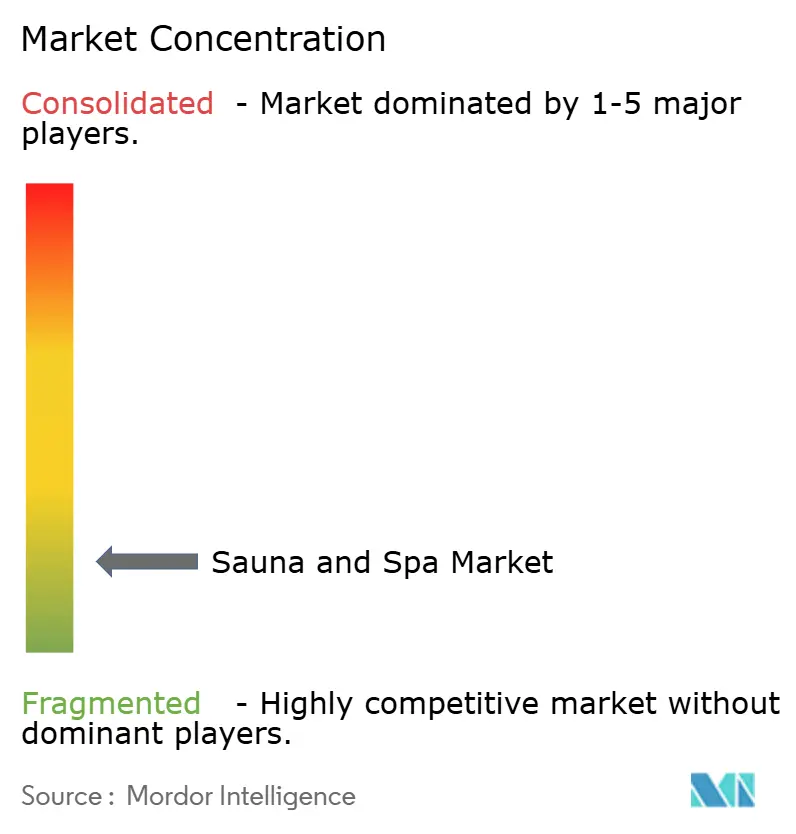
The sauna and spa market is characterized by high fragmentation, with the top five players capturing only a small share of the overall market. This indicates a competitive landscape with low entry barriers, creating significant opportunities for regional specialists and tech-driven startups. The diversity of consumer preferences across price points, applications, and geographies makes large-scale consolidation challenging. Differentiated offerings ranging from personalized wellness experiences to eco-conscious designs and smart features have become key growth drivers. Market leaders like Harvia and KLAFS maintain their edge through vertical integration, brand recognition, and manufacturing efficiency, while smaller players thrive by focusing on niche applications and innovation.
Strategic trends in the market increasingly center on technology adoption, energy efficiency, and customizable solutions that cater to modern consumer expectations. Customers are demanding more sustainable operations and smart connectivity in their wellness experiences, prompting suppliers to invest in intelligent systems and digital platforms. There are white-space opportunities in areas such as modular retrofitting solutions, AI-enabled thermal circuits, and comprehensive wellness platforms that incorporate health monitoring alongside traditional thermal therapies. Emerging business models are shifting toward direct-to-consumer channels, flexible subscription services, and mobile spa concepts that allow for greater accessibility. These trends are redefining market dynamics and expanding the customer base beyond traditional spa installations.
Regulatory frameworks like the International Swimming Pool and Spa Code are helping level the playing field, ensuring smaller manufacturers can compete on safety and quality with established players. These standardized guidelines also support global market harmonization, fostering trust among consumers and commercial buyers alike. At the same time, the evolution of wellness as a lifestyle choice, rather than a luxury, is opening new avenues in hospitality, residential, and corporate wellness sectors. Smaller firms leveraging localized expertise and agile production processes are well-positioned to meet this demand. As the market continues to evolve, success will depend on balancing operational excellence with innovation and consumer-centric design.
Sauna and Spa Industry Leaders
Harvia Plc
KLAFS GmbH
Sauna360 Group Oy (TyloHelo)
Sunlighten Inc.
ThermaSol Steam Bath LLC
- *Disclaimer: Major Players sorted in no particular order
Sauna and Spa Market Companies Covered in this Report
- Harvia Plc
- KLAFS GmbH
- Sauna360 Group Oy
- Sunlighten Inc.
- Almost Heaven Saunas
- Salus Saunas
- Health Mate Sauna
- Bsaunas Inc.
- Superior Sauna & Steam
- ThermaSol Steam Bath LLC
- Cedarbrook Sauna & Steam
- Golden Design (Dynamic Saunas)
- Rocky Mountain Saunas
- Great Bay Spa & Sauna
- Amerec (TyloHelo brand)
- Marriott International (Spa Division)
- Hyatt Hotels Corp. (Spa)
- Hilton Worldwide (Eforea & Waldorf Astoria Spa)
- Six Senses Hotels Resorts Spas
- Massage Envy Franchising LLC

Market Opportunities and Future Outlook
Hospitality groups and destinations are shifting wellness into packaged, bookable programming rather than treating it as a general amenity. This creates room for standardized thermal suites that can be retrofitted more easily into existing hotels. Examples include the Oberoi Group launching its Asmi by Oberoi wellness program across its resort portfolio (October 2025), and Hyatt Hotels Corp. announcing the Secrets St. Lucia Resort and Spa (June 2025), both of which place integrated spa and thermal experiences at the center of brand positioning and capex planning.
A second opportunity is destination-led thermal tourism activation, alongside digital distribution of wellness experiences. Tourism Authority of Thailand (TAT) partnered with Traveloka on a wellness heritage campaign in Northern Thailand (April 2026), spotlighting mineral springs and onsen baths, which points to demand for standardized hydrothermal offerings that can be marketed across travel platforms. On the supply side, energy management, smart-connected controls, and compact infrared formats align with renovation needs and space-constrained installations, supporting modular product offerings and service models (design, installation, maintenance) that reduce downtime while meeting stricter ventilation and safety specifications referenced by evolving standards.
Recent Industry Developments in Sauna and Spa Market
- March 2026: KLAFS launched the S1 retractable sauna in the United States, expanding its premium portfolio with a space-saving format positioned for design-led residential projects and urban hospitality suites. The launch strengthens differentiation in a fragmented market where footprint and installation flexibility are key purchase drivers.
- February 2025: KLAFS expanded its US offering with the launch of the TARAS outdoor sauna, extending product coverage into backyard and outdoor-lifestyle installations. Broadening the outdoor range supports channel expansion and helps pull through complementary accessories and installation services.
- July 2024: Harvia completed the acquisition of ThermaSol Steam Bath LLC for USD 30.4 million, adding a US-based steam solutions platform to its portfolio. The transaction increases Harvia's ability to supply full hydrothermal circuits (sauna plus steam) to North American hospitality and residential buyers while improving local availability and support.


Sauna and Spa Market Report Scope and Research Methodology
Market Definition and Coverage
For this methodology, the sauna and spa market is defined as the value generated from sauna equipment and related installations, plus spa service activity delivered through hospitality, fitness, dedicated spa outlets, and home settings, tracked in USD across major regions.
Scope exclusions: We exclude adjacent at-home wellness devices and general beauty services that are not delivered through a spa setting.
Segments Covered in This Report
- By Application
- Hotel / Hospitality
- Gym / Fitness & Spas
- Household
- Other Applications
- By Type of Market
- New
- Renovation / Replacement
- By Product Type
- Traditional (Finnish)
- Infrared
- Steam / Hybrid
- By Geography
- North America
- Canada
- United States
- Mexico
- South America
- Brazil
- Peru
- Chile
- Argentina
- Rest of South America
- Europe
- United Kingdom
- Germany
- France
- Spain
- Italy
- BENELUX (Belgium, Netherlands, Luxembourg)
- NORDICS (Denmark, Finland, Iceland, Norway, Sweden)
- Rest of Europe
- Asia-Pacific
- India
- China
- Japan
- Australia
- South Korea
- South-East Asia (Singapore, Malaysia, Thailand, Indonesia, Vietnam, Philippines)
- Rest of Asia-Pacific
- Middle East and Africa
- United Arab Emirates
- Saudi Arabia
- South Africa
- Nigeria
- Rest of Middle East and Africa
- North America
Data Sources, Market Sizing, and Validation
Desk Research
Desk work started with building a clean demand and supply picture using public statistics and sector references, and then aligning them to the market boundary used in this report. We mainly looked for signals that can be checked year over year, such as travel and hospitality activity, consumer spending patterns, health and wellness participation, and construction or renovation indicators tied to leisure properties.
Examples of the public sources reviewed include government tourism and services statistics (such as national statistical offices), UNWTO tourism indicators, World Bank macro series for income and inflation, and trade data portals that show flows of relevant equipment categories. We also used filings and investor presentations where available, plus trade association pages and reputable press for capacity additions, new openings, and pricing direction. In a few places, we referenced paid subscriptions for company financials, news and financials, and patent databases to fill private company gaps and corroborate technology adoption signals. This desk source list is not exhaustive, and other references were used for data collection, validation, and research clarification.
Primary Interviews and Surveys
Primary work focused on checking how much demand comes from new builds versus renovation, what pricing and utilization look like in practice, and how demand shifts across hotel, fitness, and household use. We spoke with operators, distributors, installers, and industry specialists across major regions so the assumptions from desk research could be corrected, gaps could be filled, and the final sizing logic could be stress-tested before sign-off.
Distribution of primary research fieldwork respondents
| Company type | Respondent position | Region |
|---|---|---|
| Top tier: 28% | CXOs: 22% | APAC: 43% |
| Mid tier: 50% | Functional/Unit leaders: 30% | EMEA: 35% |
| Smaller Players: 22% | Managers: 48% | Americas: 22% |
Market-Sizing & Forecasting
Sizing was built using top-down and bottom-up checks so the total stays tied to observable activity, and not just a single assumption. On the top-down side, hospitality and wellness participation indicators were converted into an addressable demand pool, then filtered through adoption of sauna and spa offerings by venue type, typical service mix, and price levels. Once those totals were obtained, they were corroborated with selective bottom-up approximations using sampled average selling prices for equipment, installation intensity for new and replacement demand, and channel checks from distributors and service operators.
Key inputs used in the model (illustrative) included: the number of operating venues by major geography, average visit or utilization trends for spa services, equipment replacement cycles, share of renovation activity in leisure properties, and price movement linked to energy and labor costs. Where bottom-up pieces had missing coverage, we used conservative fill rates by country and application, and then rechecked them with interview feedback.
Forecasts were developed using scenario analysis, where base drivers like travel recovery, consumer discretionary spend, and venue expansion were varied within realistic bands. Final growth paths were then aligned to the consensus view from primary conversations on pricing, utilization, and the pace of new openings.
Data Validation & Update Cycle
Validation was done through a series of cross-checks, starting with internal consistency tests across applications, regions, and new versus renovation splits. We compared outputs with independent signals such as tourism volumes, wellness service pricing direction, and reported expansion activity, then investigated any large variances before finalizing.
Before publication, the model and assumptions go through multiple analyst reviews, and re-contacts are triggered when a key variable moves outside expected ranges. Reports are refreshed annually, with interim updates for material events that can shift demand or pricing, and a final pre-delivery review is completed so clients receive the most up-to-date view.
Mordor Intelligence's Sauna and Spa Market Size Compared With Other Published Estimates
Published market sizes for sauna and spa can differ widely because the boundary is not always the same, even when the title looks identical. The biggest changes usually come from whether the estimate mixes spa services with equipment sales, how household demand is treated, and which geographies are fully counted versus lightly modeled.
By tracking utilization and venue counts, and then refreshing price and replacement-cycle assumptions through interviews, Mordor Intelligence keeps the 2026 value anchored to a clear demand pool, instead of blending in broader beauty services or general wellness spending. Differences also show up when a source reports an aggressive outlook with faster price expansion, or when currency conversion timing and inflation treatment are not explained.
Benchmark comparison
| Source | Market Size | Gaps in Research Methodology |
|---|---|---|
| Mordor Intelligence | USD 155.63 B (2026) | |
| Industry Publisher A | USD 3.97 B (2024) | Uses a narrower equipment-led definition and tends to exclude spa service revenue, which compresses the total compared with a combined sauna and spa value model. |
| Market Report B | USD 4.30 B (2024) | Blends product sales with limited channel coverage and unclear geographic weighting, and it does not clearly reconcile venue-based demand with replacement and renovation cycles. |
The spread in the table mainly reflects what is being counted, and how tightly the inputs are tied to measurable activity. When scope is separated cleanly between equipment and service value, and assumptions are checked against venue counts, utilization, and price reality, the resulting market size becomes easier to follow and repeat year to year.


Key Questions Answered in the Report
How large is the global sauna and spa market in 2026?
It stands at USD 155.63 billion, with value projected to reach USD 194.9 billion by 2031.
What CAGR is forecast for the sector through 2031?
The market is expected to expand at a steady 4.60% CAGR over the 2026-2031 horizon.
Which application captures the highest revenue?
Hotel and resort facilities hold the top slot, commanding 35.78% of 2025 revenue.
Which region will grow fastest by 2031?
Asia-Pacific is slated to post the strongest 9.05% CAGR, fueled by rising disposable income and robust hotel construction.
Why are infrared cabins gaining popularity?
They cut energy use by two-thirds, heat up faster, and integrate easily into smart-home ecosystems.
What is the main barrier for small commercial spa owners?
High upfront equipment costs and recurring energy bills often extend payback periods beyond five years.
Page last updated on:


 Your data is secure and never sold or shared.


