
Residue-Free Crop Protection Market Size and Share
Market Overview
| Study Period | 2022 - 2032 |
|---|---|
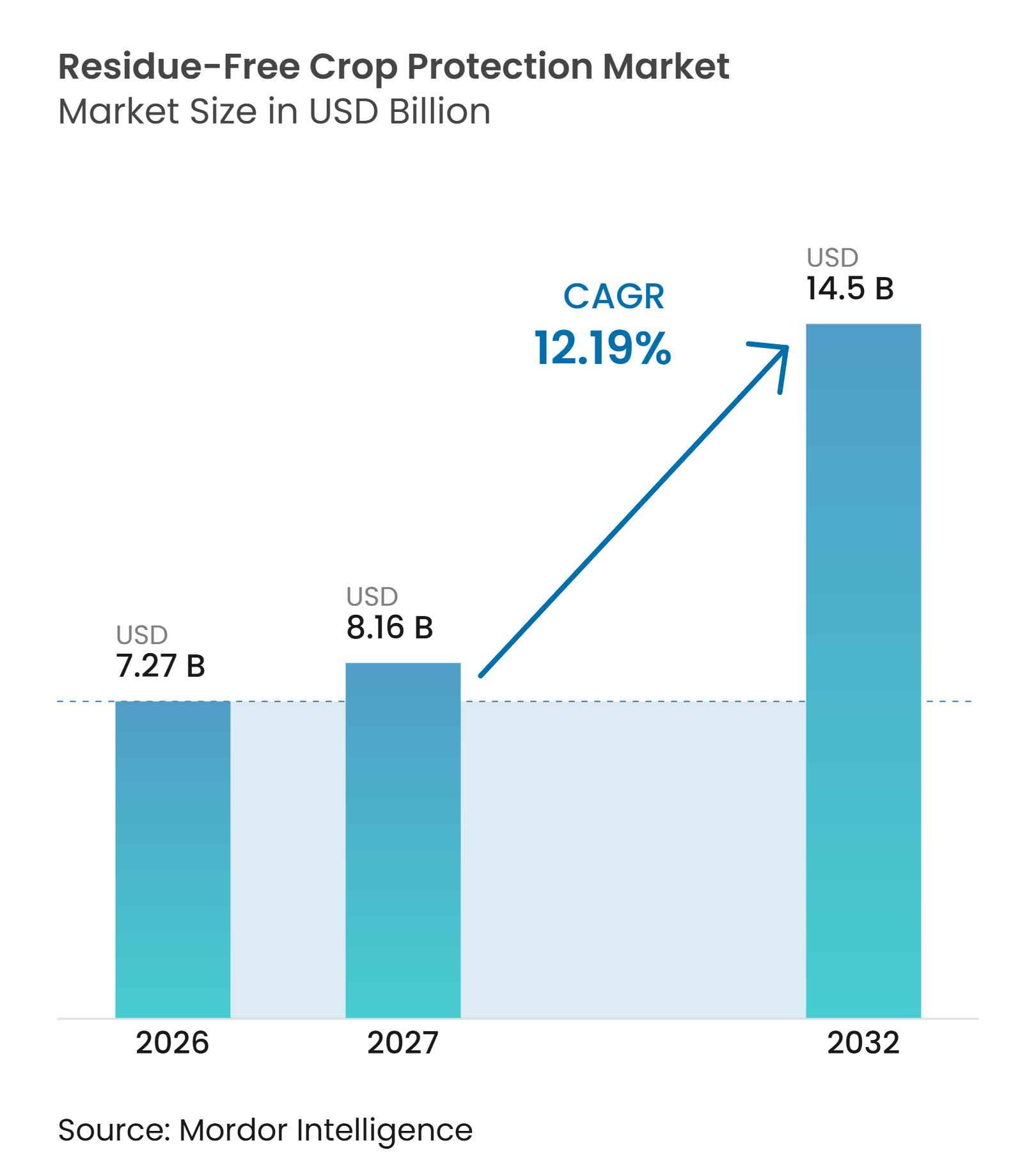
| Market Size (2027) | USD 8.16 Billion |
| Market Size (2032) | USD 14.5 Billion |
| Growth Rate (2027 - 2032) | 12.19 % |
| Fastest Growing Market | Asia-Pacific |
| Largest Market | Asia-Pacific |
| Market Concentration | Low |
Major Players *Disclaimer: Major Players sorted in no particular order Image © Mordor Intelligence. Reuse requires attribution under CC BY 4.0. | |
Residue-Free Crop Protection Market Analysis by Mordor Intelligence
The residue-free crop protection market size was valued at USD 7.27 billion in 2026 and is projected to grow from USD 8.16 billion in 2027 to USD 14.50 billion by 2032, at a CAGR of 12.19% during the forecast period 2027 to 2032. The market covers biological and biochemical inputs that reduce harvestable synthetic residues, including biofungicides, bioinsecticides, bioherbicides, bionematicides, semiochemicals, and beneficial organisms. These products are used in programs that seek pest and disease control without leaving conventional synthetic residues on marketed crops. Tighter residue controls are strengthening demand as exporters must meet both legal maximum residue limits and buyer protocols across production, packing, and shipment stages. The European Union (EU) coordinated pesticide-residue monitoring program for 2026-2028 indicates continued scrutiny across supply chains. Product developers are pairing biological research with distributor partnerships as technical performance, agronomy support, and shelf-life management remain central to adoption.
Key Report Takeaways
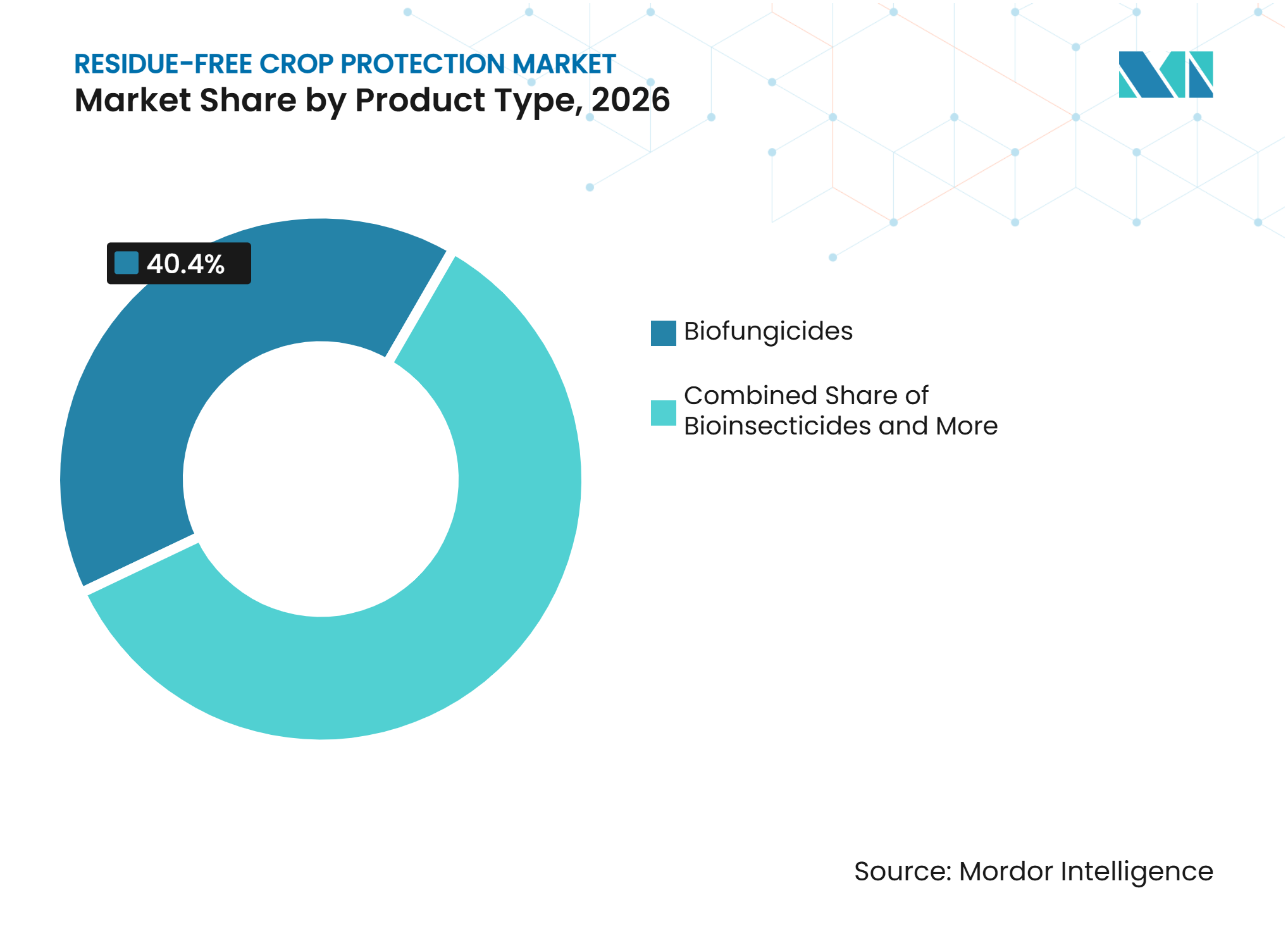
- By product, biofungicides were the largest segment and held 40.4% of the residue-free crop protection market share in 2026, while bioherbicides are the fastest-growing segment and are forecast to expand at a 17.4% CAGR between 2027 and 2032.
- By source, microbial products were the largest segment and held 52.3% of the residue-free crop protection market size in 2026, while semiochemicals are the fastest-growing segment and are forecast to expand at a 15.4% CAGR between 2027 and 2032.
- By application, foliar spray was the largest segment and held 50.1% of the market share in 2026, and it is also the fastest-growing segment and is forecast to expand at a 16.5% CAGR between 2027 and 2032.
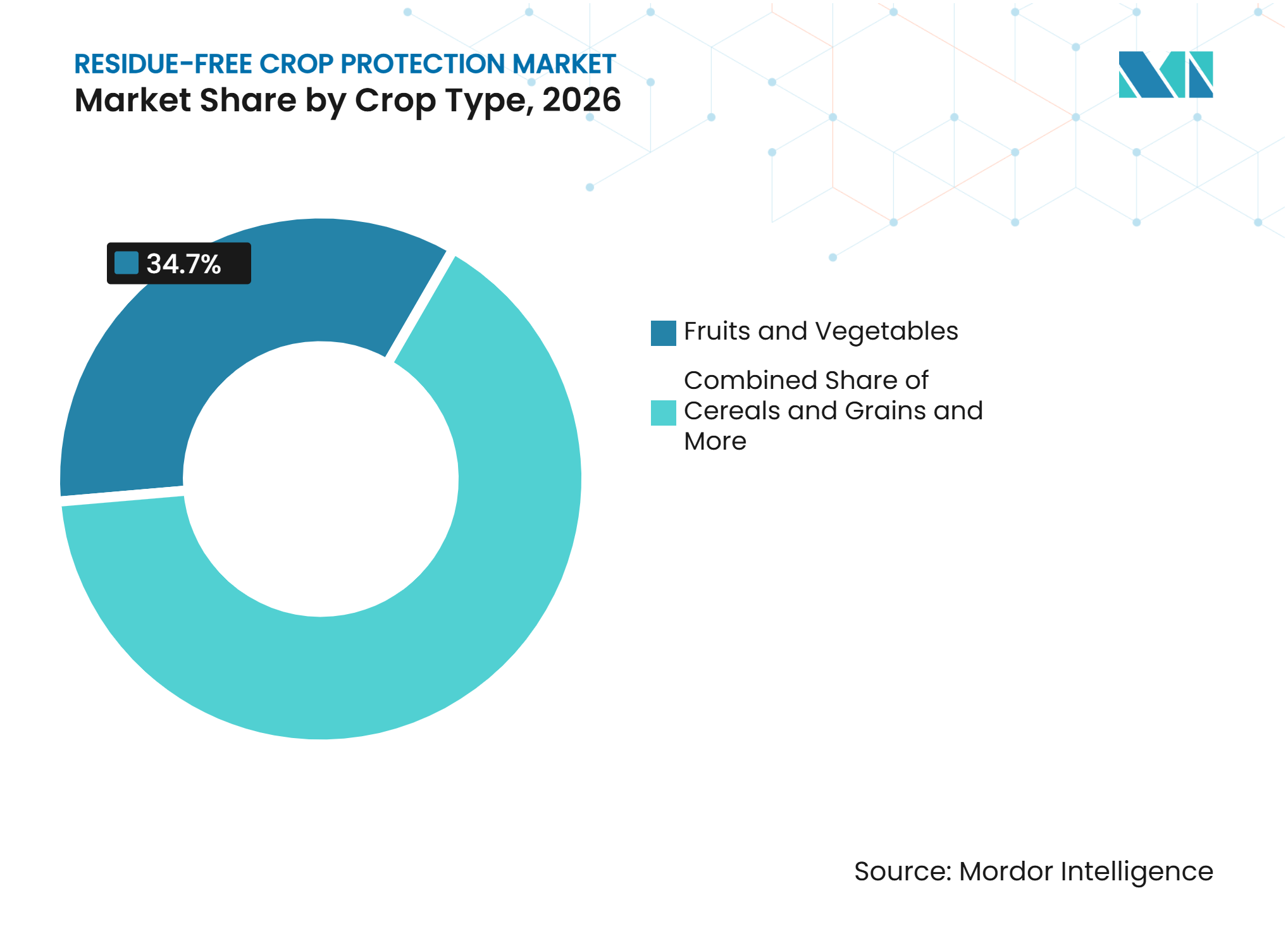
- By crop type, fruits and vegetables were the largest segment and held 34.7% of the market share in 2026, and they are also the fastest-growing segment and are forecast to expand at a 14.4% CAGR between 2027 and 2032.
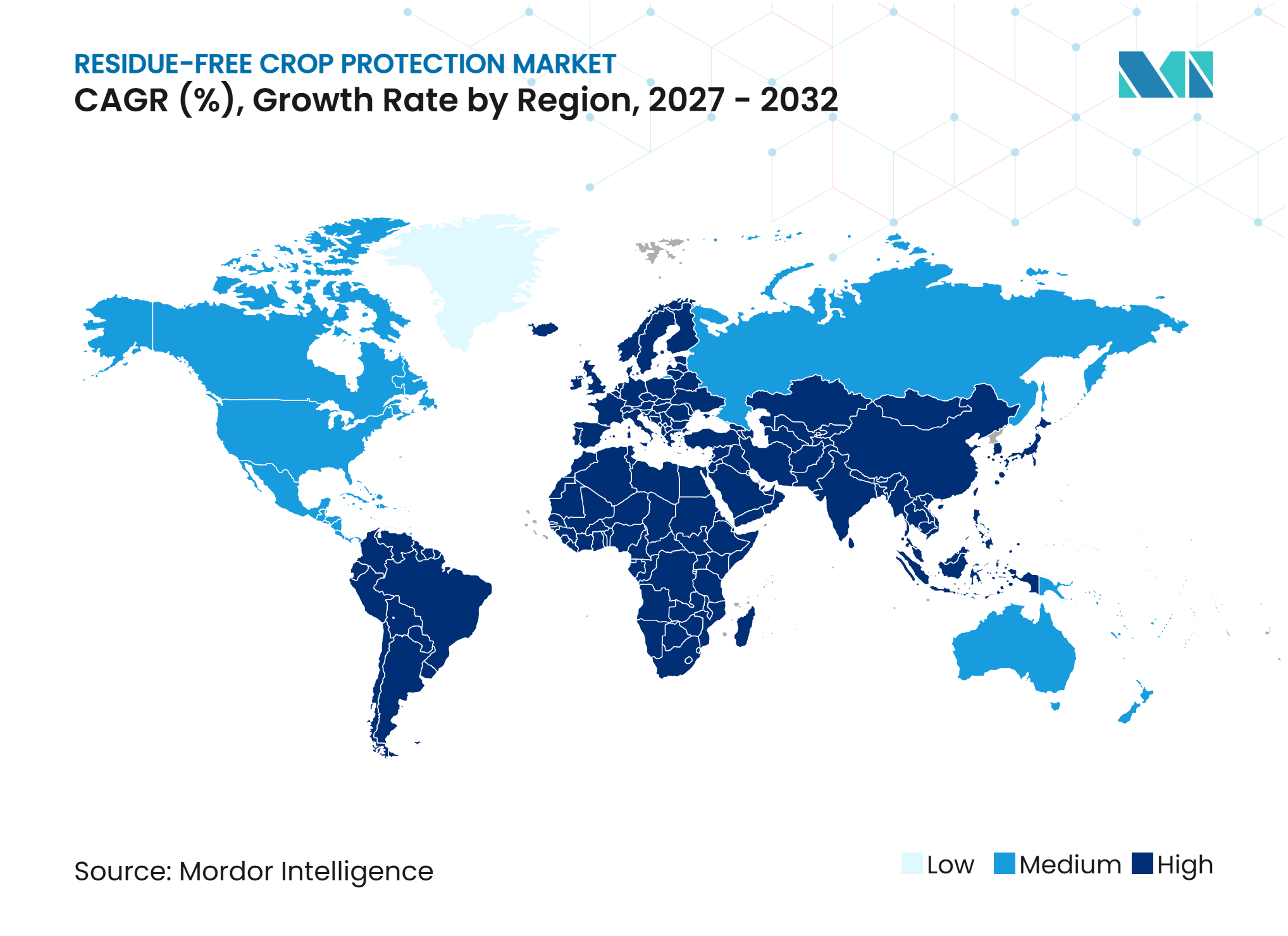
- By geography, Asia-Pacific was the largest segment and held 36.2% of the market share in 2026, while it is also the fastest-growing geography and is forecast to expand at a 12.2% CAGR between 2027 and 2032.
Note: Market numbers in this report are based on Mordor Intelligence's proprietary estimation framework, which combines nine months of actuals with Q4 projections for base year 2026.
Market Trends and Insights
Drivers Impact Analysis of Residue-Free Crop Protection Market*
| Driver | (~) % Impact on CAGR Forecast | Geographic Relevance | Impact Timeline |
|---|---|---|---|
| Stricter Maximum Residue Limits and Retailer Protocols | +3.5% | Global, with highest intensity in European Union, Japan, United Kingdom, and China | Short term (≤ 2 years) |
| Expansion of Organic and Integrated Pest Management Programs | +2.5% | United States, Germany, France, India, and Netherlands | Medium term (2-4 years) |
| Pest Resistance to Conventional Chemistry | +2.2% | Brazil, United States, China, India, and Australia | Medium term (2-4 years) |
| Biological Formulation and Delivery Advances | +2.0% | United States, Germany, Japan, and Brazil | Long term (≥ 4 years) |
| Export-Crop Traceability and Premium Market Access | +1.8% | Brazil, Mexico, Spain, Vietnam, South Africa, and Egypt | Short term (≤ 2 years) |
| Localized Biological Control in High-Value Horticulture | +1.5% | Netherlands, Spain, Mexico, China, and Israel | Medium term (2-4 years) |
| Source: Mordor Intelligence | |||
Stricter Maximum Residue Limits and Retailer Protocols
Evolving maximum residue limit (MRL) requirements and stricter buyer specifications are increasing the importance of residue management in fresh-produce supply chains. Exporters must account for destination-specific residue limits when selecting crop-protection products, determining application rates and pre-harvest intervals, and maintaining treatment records. In June 2025, the United States Department of Agriculture’s Foreign Agricultural Service introduced MRL Quick Reference Sheets covering pesticide-residue requirements in major export markets for fruits, vegetables, nuts, pulses, and other horticultural commodities. The resource helps the United States producers and shippers identify market-specific requirements and supports compliance planning for international trade. The European Union also periodically amends pesticide MRLs under Regulation (EC) No. 396/2005, requiring supply-chain participants to monitor applicable regulatory changes. In addition, private retailer and certification protocols may impose residue thresholds or testing requirements that are stricter than statutory limits. These requirements can encourage growers and exporters to adopt crop-protection solutions designed to minimize detectable residues while maintaining pest and disease control. Consequently, demand can increase for biological crop-protection products, lower-residue formulations, and integrated pest management solutions that help growers meet buyer specifications and preserve access to export and premium retail channels.
Expansion of Organic and Integrated Pest Management Programs
The expansion of organic farming and integrated pest management (IPM) programs is supporting demand for biological crop-protection products that help growers manage pests and diseases while reducing reliance on conventional synthetic pesticides. According to the German Federal Ministry of Agriculture’s organic market information portal, Germany’s organic food and beverage sales reached EUR 18.23 billion (USD 19.14 billion) in 2025, increasing 6.7% year over year[1]. This indicates continued consumer demand for organically produced food and creates an incentive for growers to maintain production systems that comply with organic standards and retailer requirements. In France, the government’s Strategic Plan for the Development of Alternatives to Phytopharmaceutical Products (PARSADA) supports research and development of alternatives to conventional crop-protection products, including solutions for uses where effective substitutes remain limited. Such initiatives can strengthen the development and adoption of biological control agents, biopesticides, and other lower-residue crop protection technologies. Organic production standards restrict the use of many synthetic pesticides, while IPM programs encourage growers to combine biological controls, pest monitoring, cultural practices, and selective treatments according to pest pressure. In protected cultivation, controlled growing conditions can further support the integration of beneficial insects, microbial products, and targeted applications into planned crop-management programs. These trends support the residue-free crop-protection market by increasing the need for effective solutions that help growers manage pest pressure, meet production standards, and maintain market access.
Pest Resistance to Conventional Chemistry
Increasing pest resistance to conventional crop-protection chemicals is encouraging growers to diversify pest-management strategies and consider alternative modes of action. According to the European and Mediterranean Plant Protection Organization (EPPO), 249 new resistance cases had been validated since its October 2025 expert working group meeting, with herbicide resistance accounting for 74% and fungicide resistance for 16% of these cases[2]. EPPO also reported that Botrytis cinerea, a major fungal pathogen affecting high-value crops, had documented resistance across six different fungicide mode-of-action groups in its database. Furthermore, a review published in Toxics in August 2025 reported that more than 600 arthropod species had developed resistance to insecticides, including organophosphates, pyrethroids, and neonicotinoids. These findings highlight the limitations of relying repeatedly on the same chemical classes and reinforce the importance of resistance-management strategies. Biological crop-protection products, including microbial biopesticides and biological control agents, can provide alternative modes of action within integrated pest management programs, helping growers diversify treatments and reduce dependence on conventional chemistries. Consequently, resistance concerns can support demand for residue-conscious crop-protection solutions, particularly in high-value horticulture and export-oriented production, where effective pest control must be balanced with residue requirements and market-access standards.
Biological Formulation and Delivery Advances
Advances in biological formulation and delivery technologies are improving product stability, storage life, and application consistency, helping address some of the operational challenges associated with biological crop-protection products. In November 2025, Corteva announced Goltrevo, a microbial bioinsecticide based on the fungus Beauveria bassiana 203, with a formulation designed to offer a longer shelf life and lower potential for resistance development[3]. Commercial sales were anticipated to begin in Latin America as early as 2027, subject to regulatory approvals. This development illustrates efforts to make biological insecticides more practical for commercial farming systems. In December 2025, the European Commission also proposed measures to accelerate market access for biocontrol products, citing regulatory delays, limited prioritization, and fragmented availability as barriers to adoption. Alongside these developments, technologies such as fermentation scale-up, microencapsulation, and improved delivery systems can help manufacturers enhance microbial viability, protect active ingredients from environmental degradation, and improve application performance. Such advances can broaden the potential use of biological crop-protection products across horticultural and broad-acre crops. For the residue-free crop protection market, more stable formulations and reliable field performance can improve grower confidence in biological alternatives and support their integration into crop-protection programs designed to meet residue requirements.
Restraints Impact Analysis of Residue-Free Crop Protection Market*
| Restraint | (~) % Impact on CAGR Forecast | Geographic Relevance | Impact Timeline |
|---|---|---|---|
| Inconsistent Field Performance Across Environments | -2.0% | Global, most acute in tropical and semi-arid climates | Short term (≤ 2 years) |
| Short Shelf Life and Cold-Chain Dependency | -1.5% | India, Brazil, South Africa, Australia, and Southeast Asia | Medium term (2-4 years) |
| Registration Delays and Non-Harmonized Definitions | -1.8% | European Union member states, United States, China, and India | Long term (≥ 4 years) |
| Higher Upfront Cost and Limited Technical Support | -1.3% | India, China, Brazil, South Africa, and global smallholder markets | Medium term (2-4 years) |
| Source: Mordor Intelligence | |||
Inconsistent Field Performance Across Environments
Inconsistent field performance across environmental conditions can constrain the adoption of residue-free crop protection products, particularly biological formulations containing living microorganisms or environmentally sensitive active ingredients. Ultraviolet radiation, temperature fluctuations, humidity, rainfall, and soil conditions can affect microbial survival, persistence, and efficacy, making application timing, storage, and crop-stage management important to achieving reliable results. Unlike some conventional chemical treatments, biological products may require more precise application conditions, repeated treatments, or integration with other pest-management measures to maintain adequate control. A 2025 assessment published by the French National Research Institute for Agriculture, Food and Environment (INRAE) examined pesticide-free agricultural systems and highlighted the importance of production context and market access in determining economic outcomes. Although such systems can offer environmental benefits, their commercial viability may vary with growing conditions and access to premium markets. These challenges can be more pronounced for smallholders who have limited access to agronomic advisers, suitable storage facilities, and routine pest monitoring. Consequently, uncertainty over field efficacy, additional monitoring requirements, and the potential cost of repeat applications can slow adoption of residue-free crop protection solutions, especially when biological products are used as stand-alone substitutes rather than as components of integrated pest management programs.
Registration Delays and Non-Harmonized Definitions
Lengthy registration procedures and differences in the regulatory treatment of biological crop-protection products can delay commercialization and increase development costs for manufacturers. Although the European Union has a common framework for plant-protection products under Regulation (EC) No. 1107/2009, approval timelines can be affected by the allocation of assessment responsibilities, national regulatory capacity, and the requirements applicable to individual products. In December 2025, the European Commission identified lengthy assessment procedures, insufficient resources in Member State authorities, and limited incentives for low-risk and biological solutions as weaknesses in the existing regulatory framework. The Commission proposed measures to accelerate market access for biocontrol products and reduce administrative burdens, particularly for innovative developers and smaller companies. Regulatory uncertainty and extended assessment timelines can increase compliance costs, postpone product launches, and limit the speed at which new biological active substances reach growers. These barriers may disproportionately affect smaller developers with limited regulatory resources and reduce the availability of alternative crop-protection products across markets. Consequently, registration delays can constrain the expansion of the residue-free crop protection chemicals market by slowing the commercialization of new biological solutions and creating uneven product availability between countries.
*Our forecasts treat driver/restraint impacts as directional, not additive. The impact forecasts reflect baseline growth, mix effects, and variable interactions.
Residue-Free Crop Protection Market Segment Analysis
By Product Type:
Biofungicides Lead, While Bioherbicides AccelerateBiofungicides held 40.4% of the residue-free crop protection chemicals market share in 2026, making them the largest product-type segment. Their leading position reflects demand for biological disease management in high-value crops such as grapes, vegetables, and tree fruits, where growers must balance disease control with residue requirements and market-access standards. Biofungicides can complement integrated pest management programs by providing alternative modes of action and reducing reliance on conventional fungicides. In June 2025, Koppert and Amoéba signed a five-year exclusive distribution agreement for a biofungicide based on the lysate of Willaertia magna C2c Maky, targeting vine and vegetable crops across 18 European countries and the United States. The agreement followed EU approval of the active substance, with the product launch initially anticipated in early 2026. Bioinsecticides and bionematicides also contribute to the market by addressing insect pests and soil-borne nematodes through biological or biologically derived mechanisms. In October 2025, Albaugh received US Environmental Protection Agency approval for BIOST 2G, a biological nematicide and insecticide seed treatment designed to control or suppress plant-parasitic nematodes and early-season soil-dwelling pests. These developments illustrate continued investment in biological crop-protection solutions across disease, insect, and nematode management.
Bioherbicides are forecast to be the fastest-growing product-type segment, expanding at a CAGR of 17.4% from 2027 to 2032. Growth prospects are supported by the need for additional weed-management options as herbicide resistance increases and growers seek to diversify conventional chemical programs. However, commercial adoption will depend on weed-control efficacy, crop selectivity, application timing, and cost competitiveness compared with established herbicides. Other emerging approaches, including biochemical pesticides derived from natural substances and RNA interference-based technologies, may broaden the range of alternatives available to growers as products progress through development and registration. In the United States, certain qualifying minimum-risk pesticide products can be exempt from federal registration under FIFRA Section 25(b), provided they meet the applicable ingredient, labeling, and other requirements; this exemption does not apply automatically to all biological or botanical products. Beneficial organisms, microbial preparations, and plant-derived products also support pest-management programs in protected cultivation and organic production. As formulation technology, field validation, and regulatory pathways advance, bioherbicides could capture a larger share of the market.



By Source:
Microbial Products Lead, While Semiochemicals Gain SpeedMicrobial products held 52.3% of the market share in 2026, reflecting established adoption within the residue-free crop protection chemicals market. Bacterial formulations, including Bacillus species, are used alongside entomopathogenic fungi such as Beauveria bassiana and Metarhizium anisopliae, as well as Trichoderma-based biofungicides. Their applications cover disease suppression, insect control, and root-zone management, giving microbial products a broad role across crop types and application formats. Established field use and well-defined registration data requirements support this leading position, particularly relative to newer product categories. Botanical and plant extracts are used in post-harvest treatment, organic foliar programs, and resistance-induction programs.
Semiochemicals are forecast to expand at a 15.4% CAGR between 2027 and 2032. Pheromone mating disruption and mass trapping are moving from tree fruit to row crops, vineyards, and vegetable production as growers seek selective pest management options. In 2025, Bayer signed a development and distribution agreement with M2i Group for pheromone gels in Asia-Pacific, Latin America, and the United States. Fermentation-based synthesis is reducing production costs and improving the economics of wider-area deployment, where previously high program costs restricted use to high-value crops. These tools can be integrated within monitoring-based IPM programs in the residue-free crop protection chemicals market, expanding their role beyond traditional horticulture.
By Application:
Foliar Spray Combines Scale and GrowthFoliar spray held 50.1% of market share in 2026 and is forecast to grow at a 16.5% CAGR between 2027 and 2032. Existing spray equipment and established farm calendars lower the operational barrier to biological adoption, as growers can incorporate many products into familiar treatment routines. Foliar treatments can fit into disease and insect-management programs without major changes in field operations, while enabling growers to respond to pest pressure during the season. The format is particularly relevant to fruits and vegetables affected by foliar diseases and sucking pests, where timely coverage is important. Product registrations that define crops and target pests can strengthen confidence in the residue-free crop protection chemicals market.
Seed treatment is growing, especially for biological nematicides and biofungicides that protect the root zone before early pest and disease pressure develops. Post-harvest treatment is attractive because residue status is visible during supply-chain inspection and directly affects commercial acceptance of perishable produce. Biotalys and AgroFresh Solutions announced a May 2025 partnership to develop biological post-harvest protection using the AGROBODY platform. Soil treatment serves nematode and soil-borne fungal management in vegetables and orchards, where pest damage can reduce quality and marketable yield. Trunk injection and related targeted approaches support perennial crops, including olives, citrus, and stone fruit, by placing active ingredients within plant systems.
By Crop Type:
Fruits and Vegetables Drive DemandFruits and vegetables held 34.7% of the market share in 2026 and are forecast to grow at a 14.4% CAGR between 2027 and 2032. Fresh-produce exporters face importing-country MRLs and buyer residue protocols that favor biological input integration and documented treatment choices. Brazil, Mexico, Spain, Egypt, and India are exposed to these requirements in key export categories, where crop condition and residue status influence buyer decisions. India's GrapeNet system connects farm spray records, laboratory results, and phytosanitary documents for export shipments, demonstrating how traceability can shape on-farm input selection. Cash crops, including coffee, cocoa, cotton, and sugarcane, also face buyer scrutiny through sustainability certifications and export audits.
Cereals and grains are also prominent, although biological input penetration remains lower than in horticulture because performance and treatment economics must work at a larger field scale. Syngenta and Amoéba signed a memorandum of understanding in November 2025 to develop an amoeba-based biofungicide for wheat in the European Union and the United Kingdom. According to the companies' 2025 announcement, Septoria tritici blotch and yellow rust affect 9–12 million hectares annually in the EU and the United Kingdom. Oilseeds and pulses, particularly soybeans in Brazil, are adopting biological seed treatments and foliar biocontrols as producers seek more diverse crop-protection programs. The residue-free crop protection chemicals market can also extend into fiber crops, turf, and ornamentals, where synthetic active substances face restrictions in confined or urban settings.

Geography Analysis
Asia-Pacific held 36.2% of the residue-free crop protection chemicals market share in 2026, supported by expanding horticultural production, export-oriented agriculture, and growing interest in biological alternatives to conventional pesticides. Exporters must comply with destination-specific maximum residue limits (MRLs), making crop-protection selection, application timing, and residue monitoring important parts of production planning. Japan’s Positive List System applies a default limit of 0.01 milligrams per kilogram to agricultural chemical residues where specific MRLs or applicable exemptions do not exist. These requirements increase the importance of traceable crop-protection programs for exporters supplying international markets. Biological products can help growers diversify pest-management strategies, although adoption depends on product registration, field efficacy, crop suitability, and affordability.
Asia-Pacific is also forecast to be the fastest-growing regional market, expanding at a CAGR of 12.2% from 2027 to 2032. Growth prospects are supported by expanding export horticulture, increasing attention to residue requirements, and the adoption of biological products and integrated pest management programs. China’s agricultural innovation initiatives and India’s growing fruit and vegetable export sector create opportunities for solutions that help growers manage pests while meeting buyer specifications. As exporters face stricter residue requirements across destination markets, demand for biological crop-protection products that complement conventional pest-management programs can increase, provided these products deliver reliable field performance and remain commercially viable.
Europe benefits from organic farming, research into alternatives to conventional pesticides, and regulatory attention to pesticide residues. France’s Strategic Plan for the Development of Alternatives to Phytopharmaceutical Products (PARSADA) program supports research into alternative crop-protection methods, while European Union monitoring programs track pesticide residues in food. North America is supported by established biopesticide registration pathways and demand for residue-conscious production practices. In October 2025, Albaugh received United States Environmental Protection Agency approval for BIOST 2G, a biological nematicide and insecticide seed treatment, illustrating continued commercial development in biological crop protection. South America offers opportunities through biological crop-protection applications in major agricultural markets such as Brazil, while the Middle East and Africa present potential in protected cultivation and export horticulture. Across these regions, market development will depend on product registration, effective pest control, technical support, and growers’ ability to integrate biological solutions into commercially viable production programs.
Competitive Landscape
Market Concentration
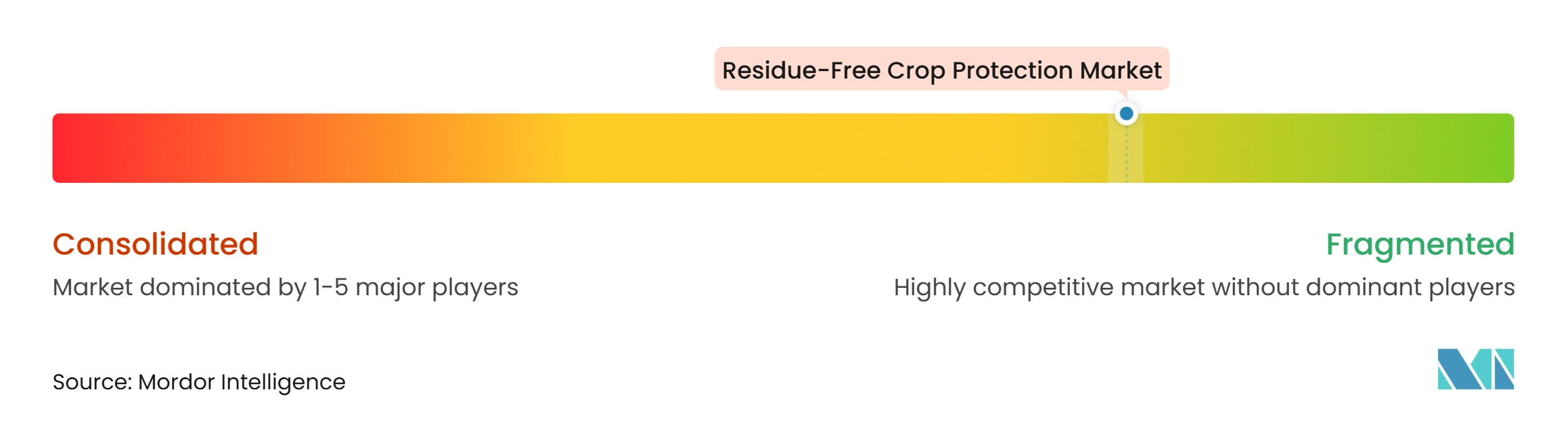
The residue-free crop protection chemicals market was fragmented in 2026, with Koppert B.V., Syngenta AG, UPL Limited, BASF SE, and Corteva Agriscience LLC identified among the major players. Competitive positions are shaped by biological product portfolios, research capabilities, regulatory expertise, distribution networks, and agronomic support. Unlike conventional crop-protection products, biological solutions can require specific storage conditions, application timing, and crop-management practices, making technical assistance and local market knowledge important factors in commercial adoption. Companies therefore compete through product efficacy, formulation stability, crop-specific applications, registration coverage, and their ability to help growers integrate biological products into existing pest-management programs.
Strategic partnerships and technology development are shaping competitive differentiation. In 2025, Corteva collaborated with Micropep Technologies to access its Krisalix peptide discovery library for potential biocontrol and biofungicide applications. In June 2025, Koppert and Amoéba signed a five-year exclusive distribution agreement for an Amoéba biofungicide across 18 European countries and the United States. In November 2025, Syngenta and Amoéba announced a collaboration focused on developing a biological fungicide solution for cereals and field crops. These developments illustrate how established crop-protection companies and specialized biological innovators are combining research capabilities with distribution and commercialization expertise. Such partnerships can expand product pipelines and improve access to biological solutions.
Long-term competitive positioning depends on the ability to deliver consistent field performance, maintain product stability, secure regulatory approvals, and provide reliable technical support across different crops and growing environments. Opportunities remain in cereal disease management, biological weed control, post-harvest protection, and resistance-management programs where additional effective solutions are needed. Advances in microbial formulations, fermentation, and emerging technologies such as RNA interference may broaden product portfolios. Established companies can leverage their research infrastructure and distribution networks, while specialized developers can compete through differentiated technologies and crop-specific expertise. The market is therefore likely to remain fragmented as multinational crop-protection companies expand biological capabilities through research and partnerships, while specialist innovators continue to address unmet pest-management needs.
Residue-Free Crop Protection Industry Leaders
-
Koppert B.V.
-
UPL Limited
-
BASF SE
-
Syngenta AG
-
Corteva Agriscience LLC
- *Disclaimer: Major Players sorted in no particular order
Residue-Free Crop Protection Market Companies Covered in this Report
- BASF SE
- Bayer AG
- Syngenta AG (Syngenta Group)
- Corteva Agriscience LLC (Corteva, Inc.)
- UPL Limited
- FMC Corporation
- Koppert B.V.
- Valent BioSciences LLC (Sumitomo Chemical Company, Limited)
- Certis U.S.A. L.L.C. (Mitsui & Co., Ltd.)
- Andermatt Group AG
- Novozymes A/S (Novonesis Group)
- Lallemand Inc.
- Biobest Group NV (Floridienne SA/NV)
- Bioline AgroSciences Ltd. (Eurazeo-backed)
- Provivi, Inc.
- Suterra LLC (The Wonderful Company LLC)
- Seipasa, S.A.
- PI Industries Limited
- Coromandel International Limited
Recent Industry Developments in Residue-Free Crop Protection Market
- September 2026: Koppert B.V. launched Macan, a biological foliar fungicide in Brazil. Based on Bacillus velezensis strain CECT 8237, Macan is intended to suppress rusts, leaf spot, target spot, and other foliar diseases in soybean, corn, and sugarcane.
- May 2026: BioWorks launched TotalNema Ax, a botanical nematicide for specialty crops. The product uses a blend of botanical oils to manage plant-parasitic nematodes and is intended for crops including potatoes, onions, strawberries, and leafy greens. The company describes it as a minimum-risk pesticide under the United States EPA's FIFRA Section 25(b) framework.
- March 2026: BASF completed its acquisition of AgBiTech, expanding its biological insect-control portfolio. AgBiTech's established presence in Brazil and its biological insect-control technologies are anticipated to help BASF scale biological solutions across additional markets.
- November 2025: Corteva announced Goltrevo, its first bioinsecticide in its Biologicals portfolio. Goltrevo is based on Beauveria bassiana strain 203 and is designed to control selected sap-feeding and chewing insects, including whiteflies, aphids, and corn leafhoppers.
Global Residue-Free Crop Protection Market Report Scope
Residue-free crop protection chemicals are crop protection products designed to control pests, diseases, and weeds while minimizing or eliminating detectable chemical residues on harvested crops when used according to recommended application practices. They include biological pesticides, botanical extracts, biochemical pesticides, microbial agents, and other low-residue or residue-exempt crop protection solutions that support food safety, sustainable agriculture, and compliance with maximum residue limits (MRLs).
The Residue-Free Crop Protection Market is Segmented by Product Type (Biofungicides, Bioinsecticides, Bioherbicides, Bionematicides, Biochemical Pesticides, Beneficial Insects and Nematodes, RNAi-Based Pesticides, and Other Product Types), by Source (Microbial, Botanical and Plant Extracts, Biochemical, Macrobial, Semiochemical, and Plant-Incorporated Protectants), by Application (Foliar Spray, Seed Treatment, Soil Treatment, Post-Harvest Treatment, and Trunk Injection and Other Targeted Applications), by Crop Type (Fruits and Vegetables, Cereals and Grains, Oilseeds and Pulses, Fiber Crops, Cash Crops, Turf and Ornamentals, and Other Crop Types), and by Geography (North America, South America, Europe, Asia-Pacific, Africa, and the Middle East). The Market Forecasts are Provided in Terms of Value (USD).
Segmentation Overview
| Biofungicides |
| Bioinsecticides |
| Bioherbicides |
| Bionematicides |
| Biochemical Pesticides |
| Beneficial Insects and Nematodes |
| RNAi-Based Pesticides |
| Other Product Types |
| Microbial |
| Botanical and Plant Extracts |
| Biochemical |
| Macrobial |
| Semiochemical |
| Plant-Incorporated Protectants |
| Foliar Spray |
| Seed Treatment |
| Soil Treatment |
| Post-Harvest Treatment |
| Trunk Injection and Other Targeted Application |
| Fruits and Vegetables |
| Cereals and Grains |
| Oilseeds and Pulses |
| Fiber Crops |
| Cash Crops |
| Turf and Ornamentals |
| Other Crop Types |
| North America | United States |
| Canada | |
| Mexico | |
| Rest of North America | |
| South America | Brazil |
| Argentina | |
| Rest of South America | |
| Europe | Germany |
| France | |
| United Kingdom | |
| Italy | |
| Spain | |
| Russia | |
| Rest of Europe | |
| Asia-Pacific | China |
| India | |
| Japan | |
| South Korea | |
| Australia | |
| Vietnam | |
| Rest of Asia-Pacific | |
| Middle East | Turkey |
| Saudi Arabia | |
| United Arab Emirates | |
| Rest of Middle East | |
| Africa | South Africa |
| Egypt | |
| Rest of Africa |
| By Product Type | Biofungicides | |
| Bioinsecticides | ||
| Bioherbicides | ||
| Bionematicides | ||
| Biochemical Pesticides | ||
| Beneficial Insects and Nematodes | ||
| RNAi-Based Pesticides | ||
| Other Product Types | ||
| By Source | Microbial | |
| Botanical and Plant Extracts | ||
| Biochemical | ||
| Macrobial | ||
| Semiochemical | ||
| Plant-Incorporated Protectants | ||
| By Application | Foliar Spray | |
| Seed Treatment | ||
| Soil Treatment | ||
| Post-Harvest Treatment | ||
| Trunk Injection and Other Targeted Application | ||
| By Crop Type | Fruits and Vegetables | |
| Cereals and Grains | ||
| Oilseeds and Pulses | ||
| Fiber Crops | ||
| Cash Crops | ||
| Turf and Ornamentals | ||
| Other Crop Types | ||
| By Geography | North America | United States |
| Canada | ||
| Mexico | ||
| Rest of North America | ||
| South America | Brazil | |
| Argentina | ||
| Rest of South America | ||
| Europe | Germany | |
| France | ||
| United Kingdom | ||
| Italy | ||
| Spain | ||
| Russia | ||
| Rest of Europe | ||
| Asia-Pacific | China | |
| India | ||
| Japan | ||
| South Korea | ||
| Australia | ||
| Vietnam | ||
| Rest of Asia-Pacific | ||
| Middle East | Turkey | |
| Saudi Arabia | ||
| United Arab Emirates | ||
| Rest of Middle East | ||
| Africa | South Africa | |
| Egypt | ||
| Rest of Africa | ||
Key Questions Answered in the Report
What is the size of the residue-free crop protection chemicals market?
The residue-free crop protection chemicals market was valued at USD 7.27 billion in 2026 and is projected to grow from USD 8.16 billion in 2027 to USD 14.50 billion by 2032, at a CAGR of 12.19% during the forecast period 2027 to 2032.
Which product type leads residue-free crop protection chemicals?
Biofungicides led with 40.4% market share in 2026, while bioherbicides are forecast to expand at a 17.4% CAGR between 2027 and 2032. Biofungicides are established in vines, tree fruit, and vegetable production, while bioherbicides address an unmet need for weed-control rotation where conventional herbicide resistance has reduced field options.
What is driving adoption of residue-free crop protection chemicals?
Tighter MRLs, organic and IPM programs, pest resistance, and improved delivery methods are supporting adoption. Export-oriented fresh produce programs also need documented treatment choices, reliable residue compliance, and access to buyer-approved crop protection tools. These drivers are strongest when regulatory requirements, retailer protocols, and agronomic support operate together across the supply chain. They also increase the value of products that align with existing grower routines, crop-specific management needs, and documented export procedures.
Why are biological crop protection products harder to scale?
Field performance can vary with weather and application conditions, while shelf life, cold-chain needs, technical support, and regulatory approvals can limit rollout. These requirements are especially difficult for smaller growers and newer developers without technical or distribution infrastructure. The residue-free crop protection chemicals market therefore depends on practical formulation, local advice, and reliable distribution.