
Ranitidine Market Size and Share
Market Overview
| Study Period | 2020 - 2031 |
|---|---|
| Market Size (2026) | USD 613.13 Million |
| Market Size (2031) | USD 762.99 Million |
| Growth Rate (2026 - 2031) | 4.47 % |
| Fastest Growing Market | Asia-Pacific |
| Largest Market | North America |
| Market Concentration | Medium |
Major Players *Disclaimer: Major Players sorted in no particular order Image © Mordor Intelligence. Reuse requires attribution under CC BY 4.0. | |
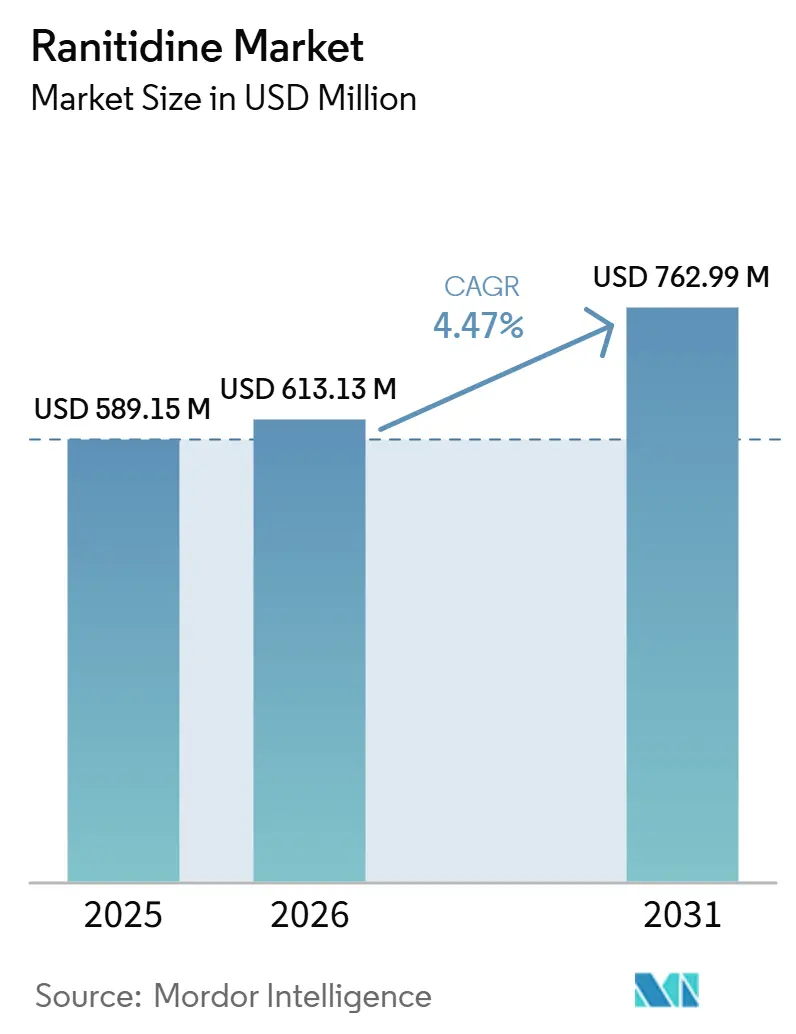
Ranitidine Market Analysis by Mordor Intelligence
The Ranitidine Market size is expected to grow from USD 589.15 million in 2025 to USD 613.13 million in 2026 and is forecast to reach USD 762.99 million by 2031 at 4.47% CAGR over 2026-2031.
The ranitidine market is returning to selected U.S. prescription channels after the Food and Drug Administration approved VKT Pharma’s reformulated tablets in November 2025. Manufacturing controls that reduce nitrosamine formation have become a central requirement for suppliers seeking renewed access. Demand remains shaped by the treatment needs of people with gastroesophageal reflux disease, peptic ulcer disease, and selected hospital indications. The Ranitidine market also faces cautious prescribing because many patients and clinicians shifted to famotidine or proton pump inhibitors after the 2020 recall.
Key Report Takeaways
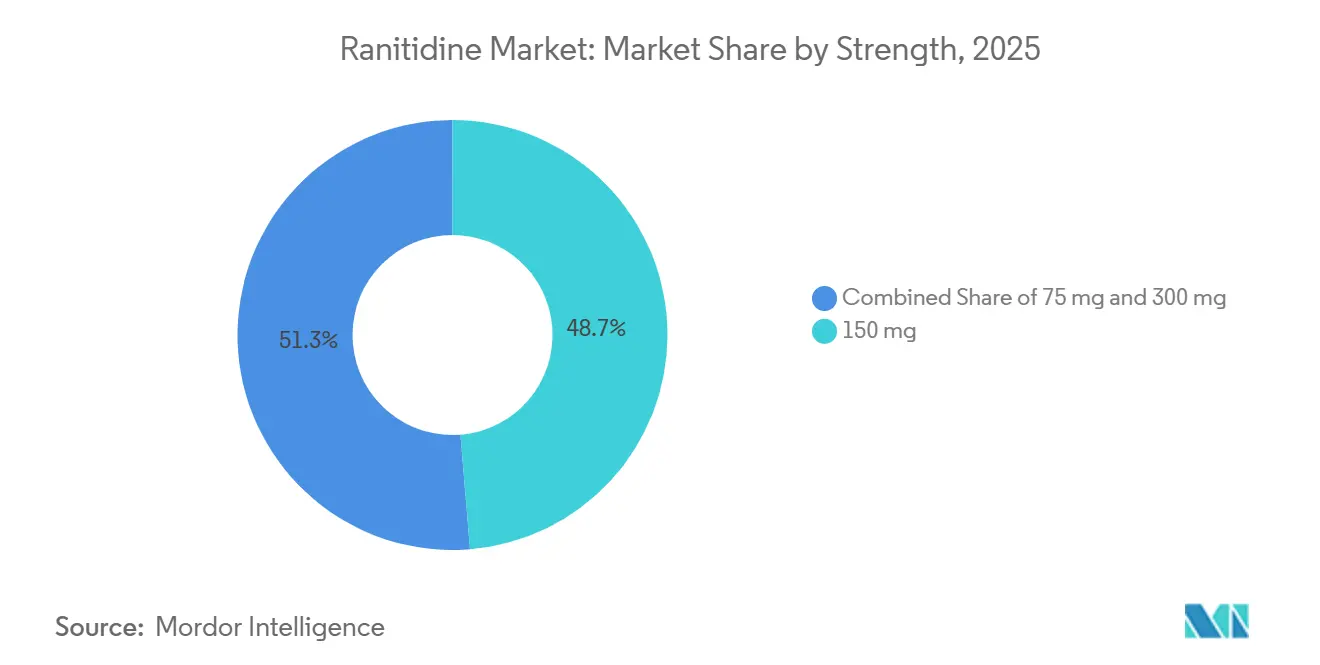
- By strength, 150 mg held 48.71% of the ranitidine market share in 2025, while 300 mg is forecast to grow at a 6.16% CAGR through 2031.
- By form, tablets accounted for 61.82% of the ranitidine market share in 2025, while injections are expected to expand at a 4.82% CAGR through 2031.
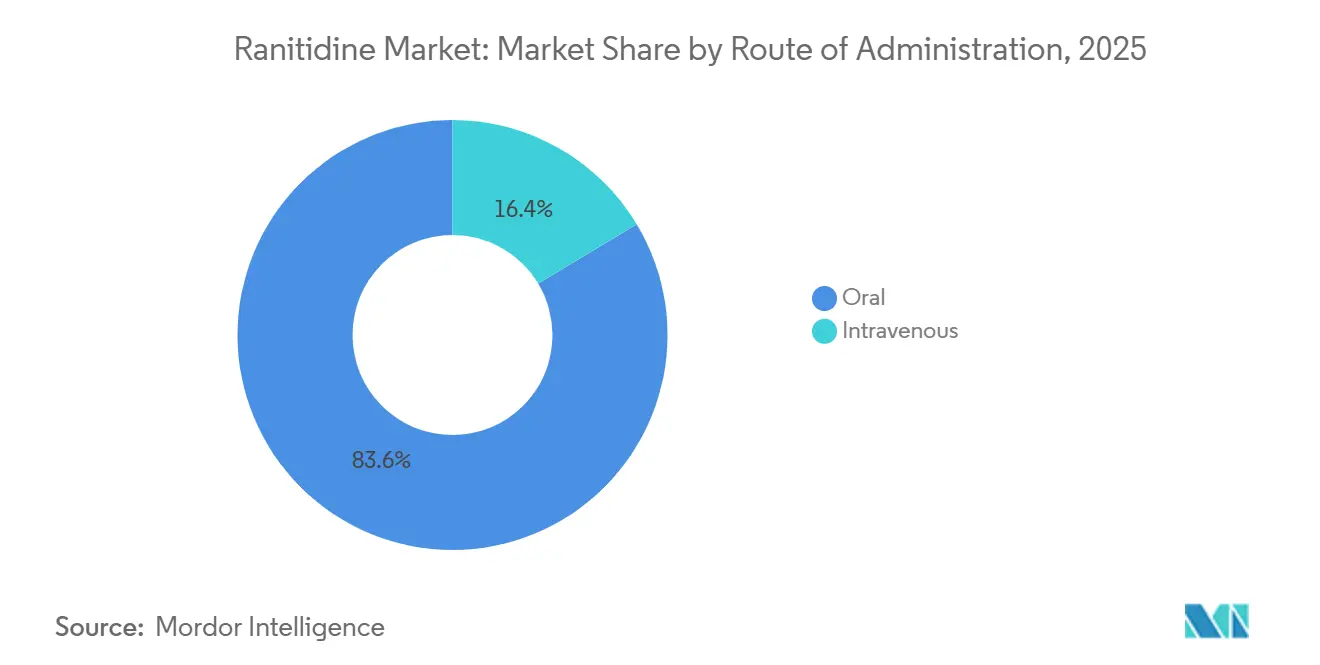
- By route of administration, oral products held 83.61% of the market in 2025, while intravenous products are forecast to grow at a 6.52% CAGR through 2031.
- By application, GERD accounted for 38.78% of the ranitidine market size in 2025 and is forecast to advance at a 5.98% CAGR through 2031.
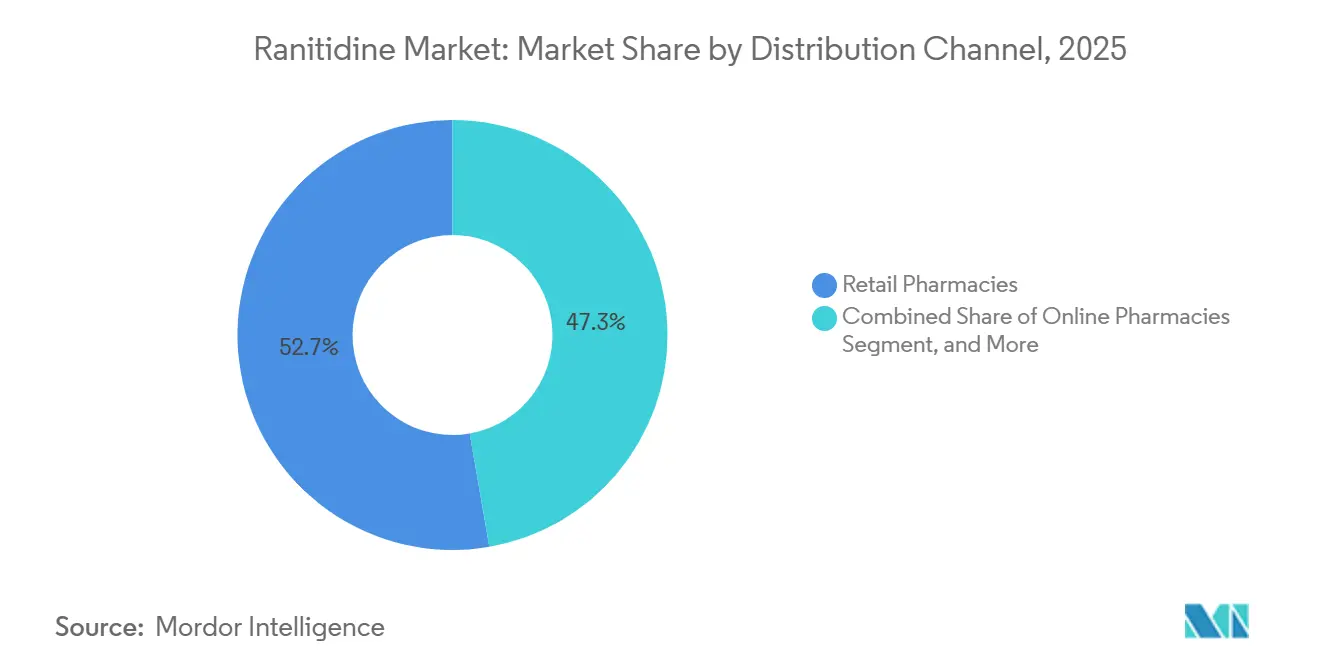
- By distribution channel, retail pharmacies held 52.74% of the market in 2025, while online pharmacies are projected to grow at a 5.44% CAGR through 2031.
- By end user, hospitals accounted for 46.23% of the market in 2025, while home care is forecast to expand at a 6.06% CAGR through 2031.
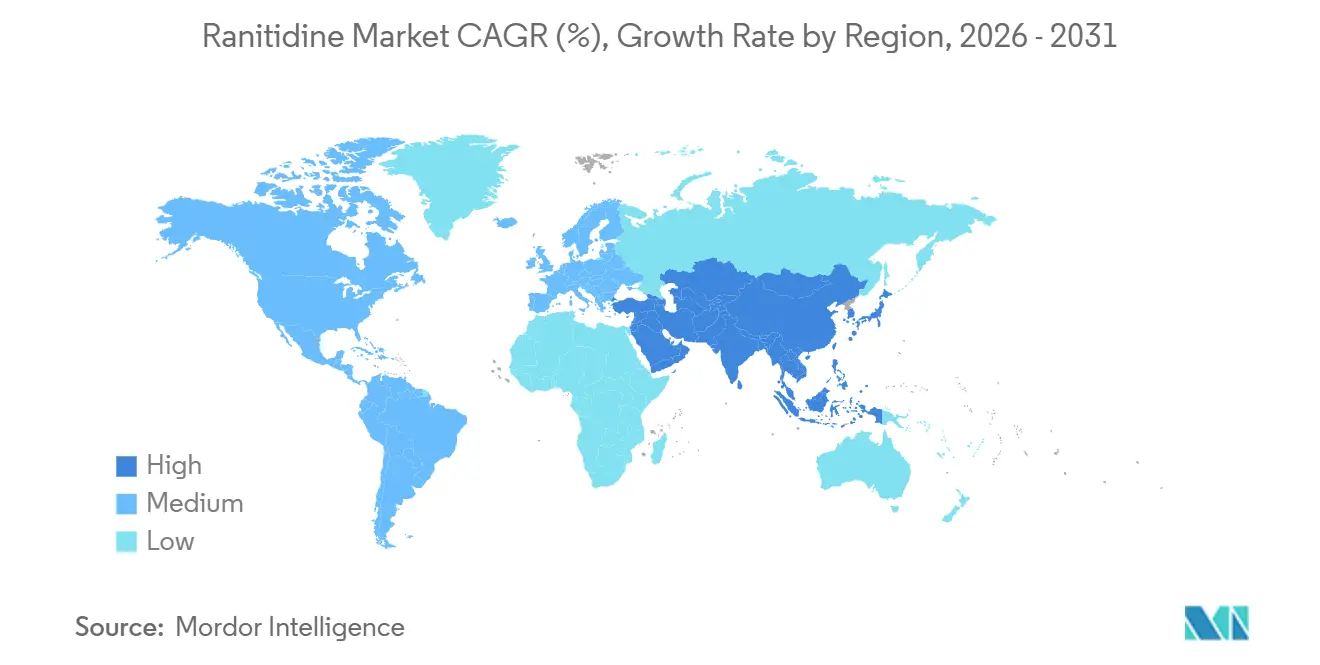
- By geography, North America held 38.23% of global revenue in 2025, while Asia-Pacific is projected to record the fastest regional CAGR at 5.29% through 2031.
Note: Market size and forecast figures in this report are generated using Mordor Intelligence’s proprietary estimation framework, updated with the latest available data and insights as of January 2026.
Market Trends and Insights
Drivers Impact Analysis of Ranitidine Market*
| Driver | (~) % Impact on CAGR Forecast | Geographic Relevance | Impact Timeline |
|---|---|---|---|
| Rising GERD And Peptic Ulcer Burden | +1.2% | Global, strongest in South and East Asia, North Africa, and the Middle East and Africa | Long term (≥ 4 years) |
| Low-Cost Acid Suppression In Price-Sensitive Markets | +0.9% | India, China, Southeast Asia, South America, and the Middle East and Africa | Medium term (2-4 years) |
| Established Oral Formulary Familiarity | +0.7% | Global, particularly South Asia, Latin America, and Africa | Long term (≥ 4 years) |
| Reformulation And Impurity Control Reopening Demand Pools | +0.8% | North America, with a secondary signal in Europe | Short term (≤ 2 years) |
| Pediatric And Geriatric Liquid-Dosing Needs | +0.5% | North America, Europe, Japan, Australia, and South Korea | Medium term (2-4 years) |
| Short-Course Acute Care Procurement And Buffer Stocks | +0.3% | North America, Europe, the Gulf Cooperation Council, and South Africa | Short term (≤ 2 years) |
| Source: Mordor Intelligence | |||
Rising GERD and Peptic Ulcer Burden Structurally Widens the Addressable Patient Pool
Global GERD prevalence grew at an average annual rate of 3.4% from 1990 and reached 825.6 million prevalent cases in 2021.[1]L. Chen et al., “Global, Regional and National Burdens of Gastroesophageal Reflux Disease from 1990 to 2021 and Projections to 2050,” BMC Public Health, link.springer.com India recorded 36.6 million incident cases in 2021, while China recorded 20.9 million cases. These countries are important to the ranitidine market because cost remains a major consideration in acid suppression therapy. The increasing case load broadens the group of patients who may need treatment for reflux symptoms or ulcer-related conditions. Food patterns and limited reimbursement can make lower-cost therapies more relevant in parts of Southeast Asia and Sub-Saharan Africa. The ranitidine market therefore, retains demand potential where a patient cannot easily move to a higher-cost treatment.
Preference for Low-Cost Acid Suppression in Price-Sensitive Markets Sustains Generic Volume
In out-of-pocket treatment settings, ranitidine remains a lower-cost option rather than a direct substitute for every proton pump inhibitor prescription. The ranitidine market benefits where generic proton pump inhibitors still cost more than an H2 blocker for uninsured patients. Indian manufacturing clusters in Hyderabad and Ahmedabad support the supply of active pharmaceutical ingredients and finished doses to domestic and export markets. Government incentives introduced in 2025 to support domestic production of essential pharmaceutical ingredients reinforce this supply position. Lower-cost production can help Indian suppliers serve Southeast Asia, Africa, and South America without leaving these markets. The ranitidine market remains exposed to price competition, but limited insurance coverage can preserve demand for established generic therapies.
Reformulated Products and Impurity-Control Capabilities Reopening Selected Demand Pools
The FDA approved VKT Pharma’s reformulated 150 mg and 300 mg ranitidine tablets on November 24, 2025. The approval returned a prescription formulation to the U.S. after the molecule had been absent from that market for 5 years.[2]U.S. Food and Drug Administration, “FDA Approves Reformulated Ranitidine Following Comprehensive Safety Review,” U.S. Food and Drug Administration, fda.gov Research published in 2025 linked crystal defects in ranitidine hydrochloride with greater nitrosamine formation under accelerated storage conditions. The ranitidine market can benefit when compliant suppliers demonstrate reliable impurity control and storage performance. Prescription-only status and a 90-day post-opening discard requirement limit the opportunity compared with the former over-the-counter business. Institutional prescribing may still support measured demand where clinicians need an approved formulation.
Established Oral Dosage Familiarity in Hospital and Retail Formularies
Ranitidine has a long history in hospital and retail formularies in many emerging economies. This history supports familiarity with tablet dosing among prescribers, pharmacists, and nursing staff. The ranitidine market benefits from flexible dosing practices that are already understood in facilities using twice-daily regimens. Retail pharmacies in Africa and Southeast Asia continue to view familiar acid-reducing products as regular turnover items. Maintaining inventory can support access even when hospitals use more proton pump inhibitors for some patients. The ranitidine market thus draws on existing dispensing routines where alternative therapies are not consistently affordable or available.
Restraints Impact Analysis of Ranitidine Market*
| Restraint | (~) % Impact on CAGR Forecast | Geographic Relevance | Impact Timeline |
|---|---|---|---|
| NDMA Recall Legacy And Trust Deficit | -1.5% | North America and Europe, with effects in Australia, Japan, and South Korea | Long term (≥ 4 years) |
| Substitution By PPIs And Famotidine Alternatives | -1.3% | Global, especially North America, Western Europe, and high-income Asia-Pacific | Long term (≥ 4 years) |
| Compliance, Testing, And Batch-Release Cost | -0.5% | Global export corridors, especially India to the United States and Europe | Medium term (2-4 years) |
| Stability, Packaging, And Storage Sensitivity | -0.4% | North America and tropical Asia-Pacific markets | Short term (≤ 2 years) |
| Source: Mordor Intelligence | |||
NDMA Recall Legacy and Persistent Trust Deficit Constrain Re-Adoption Rates
The 2020 withdrawal of ranitidine from the United States created a trust barrier that remains relevant after the 2025 approval. The ranitidine market must regain confidence among prescribers and patients who moved to other acid-suppression therapies. The American Gastroenterological Association stated in December 2025 that reformulated ranitidine is unlikely to provide a greater clinical benefit than famotidine.[3]American Gastroenterological Association, “Ranitidine’s Return Unlikely to Provide Greater Clinical Benefit,” American Gastroenterological Association, gastro.org This position reduces the reason to change treatment for patients who are already stable on an alternative. Testing, batch release, and storage controls add cost and complexity for manufacturers serving regulated export markets. The ranitidine market will depend on consistent evidence that new products can manage the impurity risk throughout their shelf life.
Substitution by PPIs and Famotidine-Based Alternatives Restructures the Long-Term Ceiling
Proton pump inhibitors are commonly used for erosive GERD, while famotidine remains a leading H2 blocker alternative. The ranitidine market faces a narrow path in countries where clinicians already prefer these therapies. Both ranitidine and famotidine can lose effectiveness after 6 to 8 weeks of continuous treatment because of tachyphylaxis. Famotidine has a longer half-life and does not have the same cytochrome P450 interaction concern identified for ranitidine. The ranitidine market remains more relevant where price, known dosing protocols, or access limits the use of alternatives. Its position is therefore likely to differ significantly across countries and care settings.
*Our forecasts treat driver/restraint impacts as directional, not additive. The impact forecasts reflect baseline growth, mix effects, and variable interactions.
Ranitidine Market Segment Analysis
By Strength:
150 mg Formulations Anchor Value While High-Dose Demand AcceleratesThe 150 mg strength commanded 48.71% of the ranitidine market in 2025 and remained the standard dose for many outpatient GERD and maintenance prescriptions. Its use reflects established twice-daily treatment routines for reflux symptoms and peptic ulcer disease. Retail pharmacies and hospitals commonly list this strength as a core dispensing option. The 75 mg strength has a smaller role in selected European and Asian countries where lower-dose products remain available. Its contribution is limited in the European Union because the suspension of ranitidine medicines remains in effect. The Ranitidine industry continues to rely on strength-specific availability in each national market.
The 300 mg segment is forecast to grow at a 6.16% CAGR between 2026 and 2031. This dose supports single bedtime dosing protocols used for some duodenal ulcer patients. Fewer doses may improve adherence in institutional care where medication administration is closely scheduled. VKT Pharma’s approval covered both 150 mg and 300 mg reformulated tablets in the United States. That approval gives the U.S. relaunch access to both commercially important strengths. The Ranitidine industry may therefore see more high-dose demand where approved supply reaches hospital and prescription channels.


By Form:
Tablets Dominate Dispensing Value, Injections Grow Fastest in Clinical SettingsTablets accounted for 61.82% of the ranitidine market in 2025 because oral solids remain practical for outpatient and hospital dispensing. Their established use supports broad availability in retail and institutional pharmacies. Syrup serves a separate role for children and older patients who cannot comfortably use tablets. Ranitidine oral solution is labeled at 15 mg/mL in the U.S. drug information. Weight-based dosing and swallowing problems help maintain this liquid niche. The ranitidine market retains a need for several dosage forms rather than a tablet-only supply model.
Injections are forecast to expand at a 4.82% CAGR from 2026 to 2031. Intravenous use supports stress ulcer prophylaxis, aspiration-risk management before anesthesia, and selected intensive care needs. These patients may not be able to take medicines through the digestive tract. A 2025 study described continued use of parenteral acid suppression protocols for high-risk surgical populations. Hospitals must still apply current guidance on appropriate use and avoid unnecessary prophylaxis. The Ranitidine industry uses this hospital setting as a more specialized source of demand.
By Route of Administration:
Oral Routes Dominate as Intravenous Use Finds Institutional GroundOral products held 83.61% of the ranitidine market in 2025 because most GERD and peptic ulcer patients receive treatment outside acute care. Tablets and syrups are designed for routine outpatient use. The high share reflects the role of ranitidine as a maintenance or symptom-management medicine. Oral dispensing also fits established retail pharmacy supply chains. The ranitidine market continues to depend primarily on patient access to tablets and liquid products. Compliance with packaging and shelf-life requirements is particularly important for this route.
The intravenous route is forecast to grow at a 6.52% CAGR through 2031. Critical care units, perioperative services, and ambulatory surgery centers use parenteral therapy when oral treatment is unsuitable. This demand is concentrated in hospitals with defined surgical and intensive care protocols. The current FDA approval applies to reformulated oral tablets rather than injectable products. Injectable suppliers must therefore maintain their own compliant manufacturing and release processes. The ranitidine market has a smaller but durable institutional pathway through this route.
By Application:
GERD Underpins Both Share and Growth, Niche Indications Offer Pricing FlexibilityGERD accounted for 38.78% of the ranitidine market size in 2025 and is expected to grow at a 5.98% CAGR through 2031. Global GERD cases reached 825.6 million in 2021, supporting a large potential treatment population. The condition is the main value indication for H2 blocker therapies. Cost-sensitive care systems may continue to use ranitidine where it is available and appropriate. The ranitidine market is closely tied to access to safe, compliant products for these patients. Clinician preference for proton pump inhibitors remains a constraint for more severe disease.
Peptic ulcer disease and erosive esophagitis provide steadier institutional demand in countries with limited Helicobacter pylori eradication infrastructure. Ranitidine may be used as monotherapy or as an adjunct in these settings. Zollinger-Ellison syndrome represents a smaller, high-acuity indication with established dose-titration practice. Stress ulcer prophylaxis supports injectable demand in intensive care units, although guidance has become more cautious about overuse. These indications protect a limited role within hospital formularies. The ranitidine market has less flexibility, where therapeutic alternatives are readily available.
By Distribution Channel:
Retail Leads but Digital Dispensing Is Reshaping Access GeographiesRetail pharmacies held 52.74% of the ranitidine market in 2025 and remained the main access point for outpatient dispensing. In many Asian and African markets, pharmacists are an early point of contact for uncomplicated reflux and heartburn symptoms. This history supports regular retail inventory for familiar acid-reducing medicines. Prescription and over-the-counter rules vary by country and shape the range sold in stores. The ranitidine market relies on retail access, where patients pay directly for treatment. Retail channels also serve home-care users who need repeat supplies.
Online pharmacies are forecast to grow at a 5.44% CAGR from 2026 to 2031. E-prescriptions, home delivery systems, and chronic outpatient demand support this channel in urban India, China, and Southeast Asia. Digital dispensing can reduce access barriers for patients in peri-urban and rural areas. It can also make quality control more difficult if products originate from suppliers with uneven nitrosamine testing practices. Hospital pharmacies remain essential for injectable procurement and formulary-gated use. The ranitidine market needs stronger monitoring as online medicine supply expands.

By End User:
Hospitals Anchor Institutional Demand While Home Care Rises on AffordabilityHospitals held 46.23% of the ranitidine market in 2025, supported by inpatient and emergency care needs. Stress ulcer prophylaxis, erosive esophagitis treatment, and Zollinger-Ellison management contribute to this institutional use. Hospitals also set the formulary conditions for injectable products. Acute care buyers increasingly use short procurement cycles and maintain buffer inventories. These practices raise order frequency without necessarily increasing consumption per patient. The ranitidine market remains dependent on hospital compliance requirements and careful use protocols.
Home care is forecast to grow at a 6.06% CAGR from 2026 to 2031. Expansion of home-based chronic disease management in Asia-Pacific and South America supports this shift. Lower-cost H2 blocker therapy can be relevant for uninsured and underinsured patients. Home dispensing requires retail packs or multidose formats that can preserve stability during normal use. Reformulated products place greater attention on this packaging and shelf-life requirement. The ranitidine market can gain from home care only when safe supply is easy to obtain and maintain.
Geography Analysis
North America Ranitidine Market
North America held 38.23% of the ranitidine market in 2025 and retained the largest regional position in 2026. FDA approval of VKT Pharma’s reformulated tablets reopened U.S. prescription access after the 2020 withdrawal. Recovery is likely to remain measured because the product is prescription-only and has a 90-day post-opening discard requirement. Many prescribers are also familiar with famotidine, which is used in over-the-counter Zantac 360. Canada and Mexico maintain a generic supply, while price-sensitive hospital purchasing supports use in Mexico.
Europe Ranitidine Market
Europe operates under a divided regulatory setting because the European Union suspension of ranitidine medicines remains in place. This framework has directed much acid suppression care toward proton pump inhibitors and famotidine. Germany resolved supply shortfalls for Ranitidin AbZ 150 mg tablets and Ranitidin-ratiopharm 300 mg tablets in December 2025. The ranitidine market has only limited activity in Spain and other smaller European markets. The United Kingdom, France, and Italy retain residual prescription supply for specific patient populations under national programs. European demand remains constrained by compliance requirements and national authorization pathways.
APAC, MEA and South America Ranitidine Market
Asia-Pacific is forecast to grow at a 5.29% CAGR through 2031, making it the fastest-growing region in the ranitidine market. India and China had the largest incident GERD burdens reported in the supplied evidence base. Indian bulk-drug clusters supply active pharmaceutical ingredients to global formulation markets. Domestic production incentives introduced in 2025 reinforce this manufacturing base. South Korea and Japan retain prescription demand in hospital pharmacy channels, while physician familiarity with proton pump inhibitors limits broader uptake. Australia follows a suspended ranitidine framework similar to the European Union. The Middle East and Africa source cost-competitive generic supply largely from Indian manufacturers, while Brazil and Argentina sustain public-formulary demand under tighter nitrosamine monitoring.

Competitive Landscape
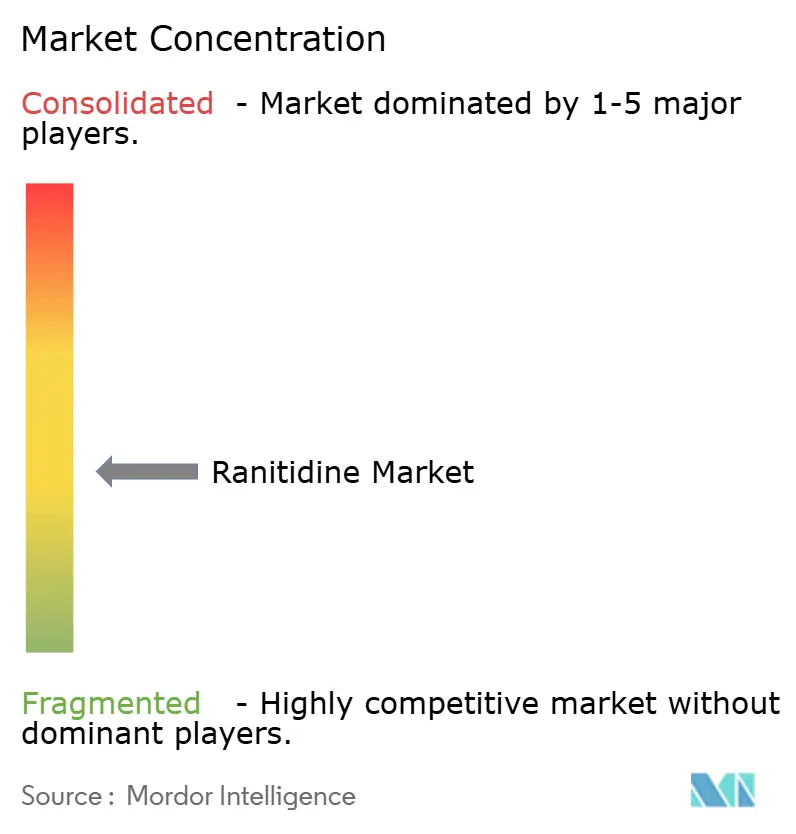
The ranitidine market is moderately fragmented, with more than 20 generic manufacturers active across global markets and no single supplier holding a dominant position. Competition rests on compliant nitrosamine control, national regulatory reach, and price. Indian manufacturers, including Aurobindo Pharma, Granules India, Cipla, Dr. Reddy’s Laboratories, and Zydus Lifesciences, supply active ingredients and finished doses across several regions. Their manufacturing presence in Hyderabad and Ahmedabad supports lower-cost production. Teva, Sandoz, Viatris, and Sanofi have broader distribution capabilities in Europe and North America. Their current ranitidine activity is mainly oriented toward generic supply rather than former branded exposure.
VKT Pharma made the most important recent product move when it received FDA approval for reformulated 150 mg and 300 mg tablets. Suppliers that can validate impurity control may have better access to hospital and retail formularies in regulated markets. Published work on crystal defects gives manufacturers a scientific basis for improving storage stability and manufacturing controls. GlaxoSmithKline agreed in October 2024 to settle up to 80,000 U.S. state-court Zantac cases for up to USD 2.2 billion, without admitting liability. The settlement reduced a litigation uncertainty that had discouraged potential entrants. Rising Pharma serves as the U.S. distributor for VKT Pharma’s approved product.
Reformulated products offer a narrower opportunity for suppliers that can meet stricter quality standards. Smaller manufacturers may use external analytical and development services rather than build all testing capability internally. This approach can help them meet batch-release requirements, but it does not remove the need for reliable manufacturing control. The ranitidine market still has different economics in India and China than in the United States.
Ranitidine Industry Leaders
Cipla Limited
Dr. Reddy’s Laboratories Ltd.
GlaxoSmithKline plc
Sanofi
Teva Pharmaceutical Industries Ltd.
- *Disclaimer: Major Players sorted in no particular order
Ranitidine Market Companies Covered in this Report
- Apotex
- Aurobindo Pharma
- Boehringer Ingelheim
- Cipla
- Dr. Reddy’s Laboratories Ltd.
- GlaxoSmithKline
- Glenmark Pharmaceuticals
- Granules India
- Hikma Pharmaceuticals
- J B Chemicals and Pharmaceuticals Limited
- Lupin
- Merck
- Sanofi
- Sandoz Group AG
- Strides Pharma Science
- Sun Pharmaceuticals Industries
- Teva Pharmaceutical Industries
- Tocris Bioscience
- Viatris
- Zydus Lifesciences Limited

Recent Industry Developments in Ranitidine Market
- July 2026: The Maharashtra Food and Drugs Administration (FDA) seized stock of Cadila Pharma's 'Aciloc' valued at INR 2.45 crore (approximately USD 294,000) and ordered an immediate market recall. The regulatory action was initiated following allegations of "deceptive" branding practices associated with the product. This development highlights the intensifying regulatory scrutiny by Indian state authorities on pharmaceutical labeling, packaging accuracy, and marketing compliance.
- November 2025: The US FDA approved VKT Pharma Private Limited's (an associate company of SMS Pharmaceuticals Limited) reformulated ranitidine tablets in 150 mg and 300 mg strengths, marking the molecule's return to the US market after a five-year absence following the 2020 NDMA recall. The approval was contingent on manufacturing controls demonstrated to prevent NDMA impurity formation during shelf life, and the product carries prescription-only status with a mandatory 90-day post-opening discard protocol.


Global Ranitidine Market Report Scope
The ranitidine market is defined as the historical and transitional global sector focused on the H2-receptor antagonist previously utilized to reduce stomach acid production for conditions such as gastroesophageal reflux disease (GERD), peptic ulcers, Zollinger-Ellison syndrome, and stress ulcer prophylaxis.
The ranitidine market is segmented by strength into 75 mg, 150 mg, and 300 mg options, and by form into tablets, syrups, and injections. Based on the route of administration, the market is categorized into oral and intravenous delivery. In terms of application, the market addresses gastroesophageal reflux disease, peptic ulcer disease, Zollinger-Ellison syndrome, erosive esophagitis, and stress ulcer prophylaxis. The distribution channel segment comprises hospital pharmacies, retail pharmacies, and online pharmacies, while the end-user segment includes hospitals, clinics, ambulatory surgical centers, and home care settings. Geographically, the market is analyzed across North America (the United States, Canada, and Mexico), Europe (Germany, the United Kingdom, France, Italy, Spain, and the rest of Europe), Asia-Pacific (China, Japan, India, Australia, South Korea, and the rest of Asia-Pacific), the Middle East & Africa (the GCC, South Africa, and the rest of the Middle East & Africa), and South America (Brazil, Argentina, and the rest of South America).
| 75 mg |
| 150 mg |
| 300 mg |
| Tablet |
| Syrup |
| Injection |
| Oral |
| Intravenous |
| Gastroesophageal Reflux Disease |
| Peptic Ulcer Disease |
| Zollinger-Ellison Syndrome |
| Erosive Esophagitis |
| Stress Ulcer Prophylaxis |
| Hospital Pharmacies |
| Retail Pharmacies |
| Online Pharmacies |
| Hospitals |
| Clinics |
| Ambulatory Surgical Centers |
| Home Care Settings |
| North America | United States |
| Canada | |
| Mexico | |
| Europe | Germany |
| United Kingdom | |
| France | |
| Italy | |
| Spain | |
| Rest of Europe | |
| Asia-Pacific | China |
| Japan | |
| India | |
| Australia | |
| South Korea | |
| Rest of Asia-Pacific | |
| Middle East & Africa | GCC |
| South Africa | |
| Rest of Middle East & Africa | |
| South America | Brazil |
| Argentina | |
| Rest of South America |
| By Strength | 75 mg | |
| 150 mg | ||
| 300 mg | ||
| By Form | Tablet | |
| Syrup | ||
| Injection | ||
| By Route of Administration | Oral | |
| Intravenous | ||
| By Application | Gastroesophageal Reflux Disease | |
| Peptic Ulcer Disease | ||
| Zollinger-Ellison Syndrome | ||
| Erosive Esophagitis | ||
| Stress Ulcer Prophylaxis | ||
| By Distribution Channel | Hospital Pharmacies | |
| Retail Pharmacies | ||
| Online Pharmacies | ||
| By End User | Hospitals | |
| Clinics | ||
| Ambulatory Surgical Centers | ||
| Home Care Settings | ||
| By Geography | North America | United States |
| Canada | ||
| Mexico | ||
| Europe | Germany | |
| United Kingdom | ||
| France | ||
| Italy | ||
| Spain | ||
| Rest of Europe | ||
| Asia-Pacific | China | |
| Japan | ||
| India | ||
| Australia | ||
| South Korea | ||
| Rest of Asia-Pacific | ||
| Middle East & Africa | GCC | |
| South Africa | ||
| Rest of Middle East & Africa | ||
| South America | Brazil | |
| Argentina | ||
| Rest of South America | ||


Key Questions Answered in the Report
What is the projected value of the ranitidine market by 2031?
The ranitidine market is projected to reach USD 762.99 million by 2031, growing at a 4.47% CAGR from 2026.
Why is ranitidine returning to the United States?
The FDA approved VKT Pharma’s reformulated 150 mg and 300 mg prescription tablets in November 2025 after review of controls intended to prevent NDMA formation.
Which dosage strength leads ranitidine sales?
The 150 mg strength led with 48.71% of sales in 2025, while the 300 mg strength is forecast to grow fastest at a 6.16% CAGR.
Which region will grow fastest through 2031?
Asia-Pacific is forecast to grow at a 5.29% CAGR, supported by cost-sensitive demand and large GERD case burdens in India and China.
What is the main challenge for suppliers?
Suppliers must meet stronger nitrosamine control, testing, packaging, and storage requirements while rebuilding prescriber and patient confidence.
Page last updated on:





