
Radiation-Induced Myelosuppression Treatment Market Size and Share
Market Overview
| Study Period | 2021 - 2032 |
|---|---|
| Market Size (2027) | USD 2.02 Billion |
| Market Size (2032) | USD 2.75 Billion |
| Growth Rate (2027 - 2032) | 6.43 % |
| Fastest Growing Market | Asia-Pacific |
| Largest Market | North America |
| Market Concentration | High |
Major Players *Disclaimer: Major Players sorted in no particular order Image © Mordor Intelligence. Reuse requires attribution under CC BY 4.0. | |
Radiation-Induced Myelosuppression Treatment Market Analysis by Mordor Intelligence
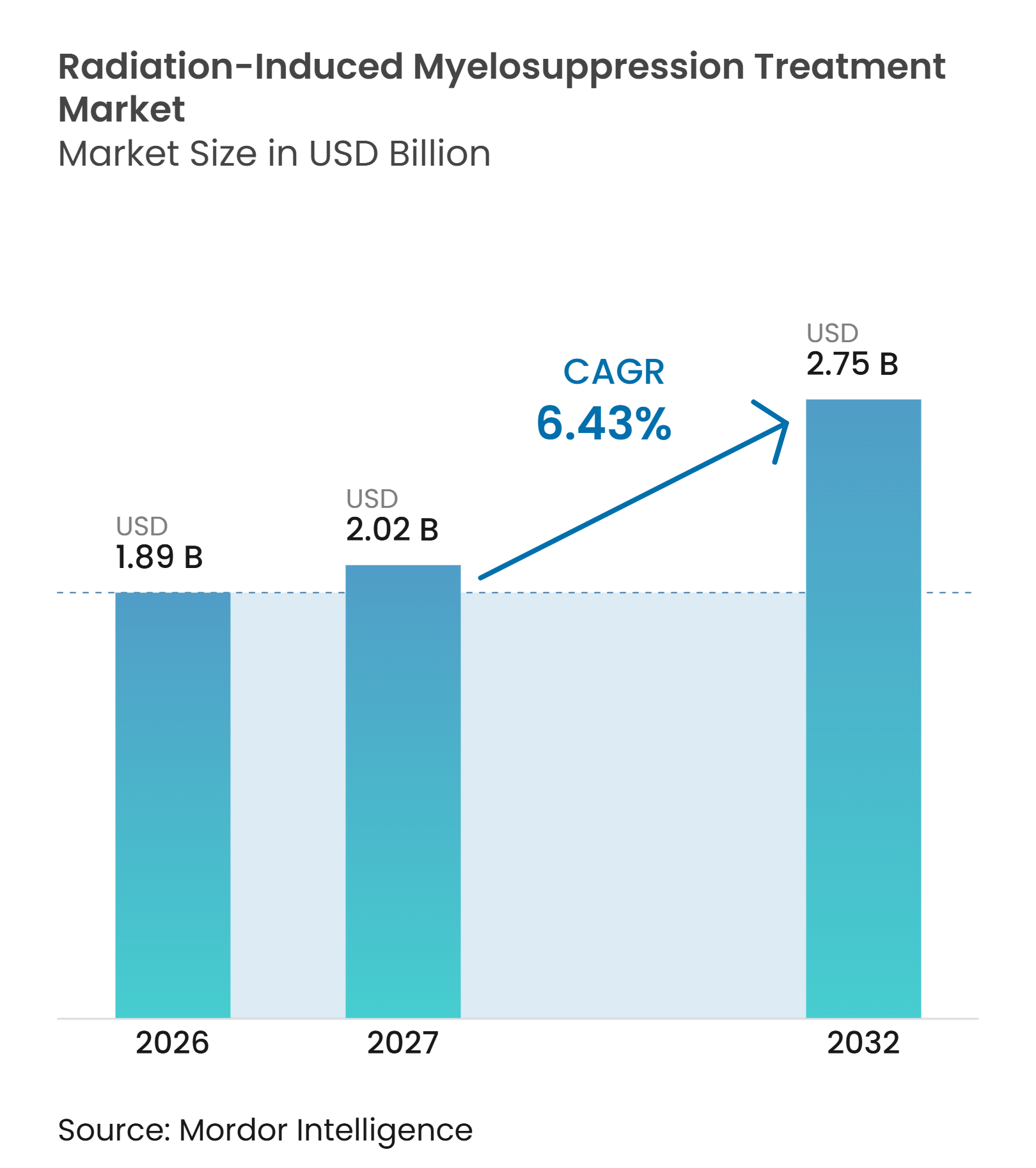
The radiation-induced myelosuppression treatment market is estimated to be valued at USD 1.89 billion in 2026 and is projected to reach USD 2.75 billion by 2032, growing at a CAGR of 6.43% during the forecast period (2027-2032). The radiation-induced myelosuppression treatment market covers therapies for neutropenia, anemia, thrombocytopenia, and pancytopenia caused by ionizing radiation in routine radiotherapy and radiological emergency settings. Wider radiotherapy access in low- and middle-income countries is increasing the treated population, while public investment in preparedness is creating demand outside conventional oncology purchasing cycles. Biosimilar growth factors are improving treatment access but are also reducing the price advantage held by originator products. Treatment protocols are also moving beyond neutrophil recovery toward recovery across several blood cell lineages, which brings thrombopoietic and multilineage therapies into clinical consideration. These conditions leave the radiation-induced myelosuppression treatment market shaped by both recurring oncology care and irregular government stockpiling decisions.
Key Report Takeaways
- By indication, neutropenia held 46.32% of the radiation-induced myelosuppression treatment market share in 2026, while thrombocytopenia is forecast to grow at a 6.89% CAGR through 2032 in the radiation-induced myelosuppression treatment market.
- By drug class, growth factors held 42.75% of the radiation-induced myelosuppression treatment market share in 2026, while thrombopoietic agents are forecast to grow at a 7.27% CAGR through 2032.
- By route of administration, injectable formulations held an 80.19% share in 2026, while oral formulations are forecast to grow at a 7.81% CAGR through 2032 in the radiation-induced myelosuppression treatment market.
- By distribution channel, hospital pharmacies held a 60.33% share in 2026, while online pharmacies are forecast to grow at an 8.16% CAGR through 2032.
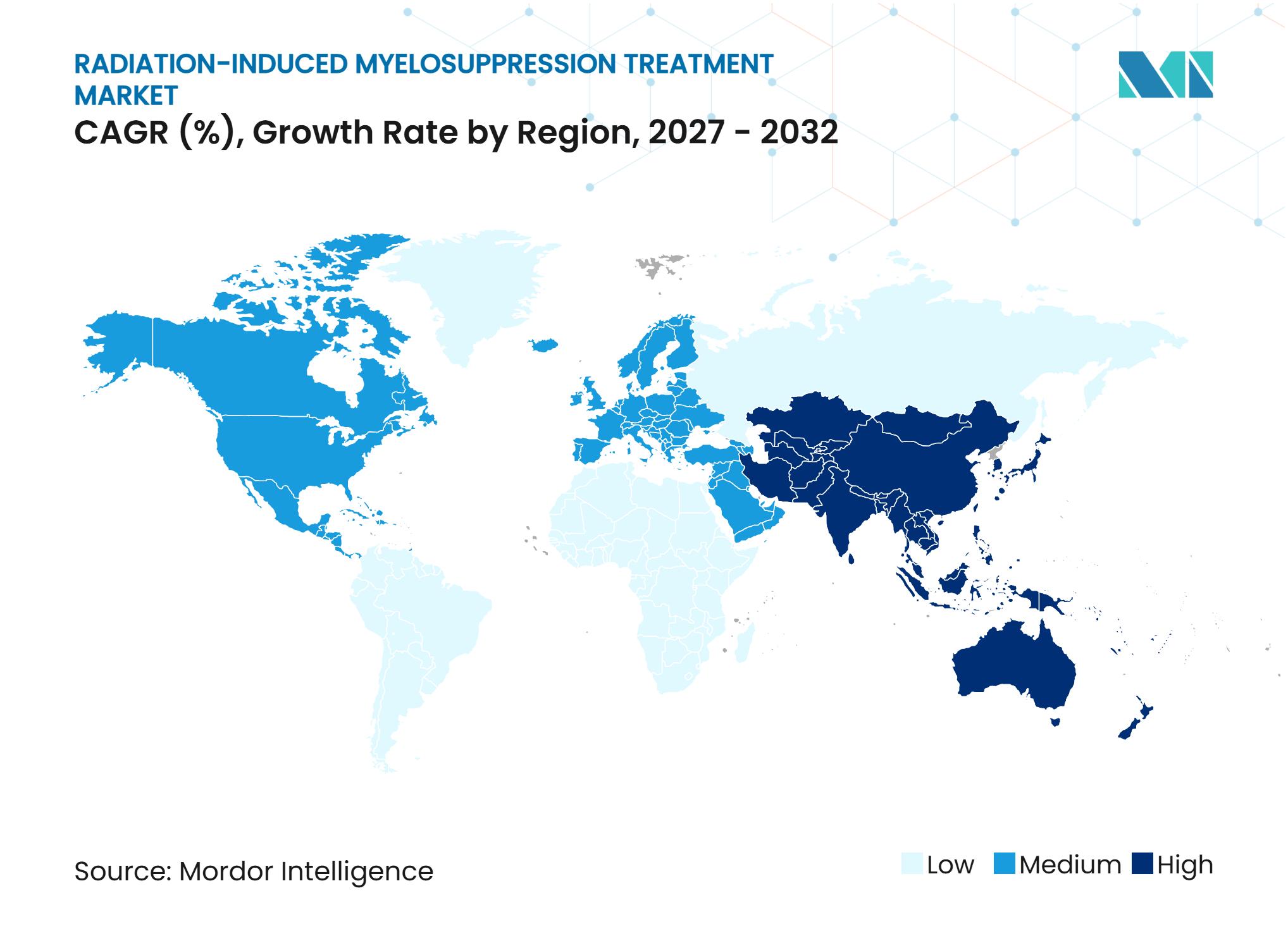
- By geography, North America held a 38.54% share in 2026, while Asia-Pacific is forecast to grow at an 8.58% CAGR through 2032 in the radiation-induced myelosuppression treatment market.
Note: Market numbers in this report are based on Mordor Intelligence's proprietary estimation framework, which combines nine months of actuals with Q4 projections for base year 2026.
Market Trends and Insights
Drivers Impact Analysis of Radiation-Induced Myelosuppression Treatment Market*
| Driver | (~) % Impact on CAGR Forecast | Geographic Relevance | Impact Timeline |
|---|---|---|---|
| Rising Cancer Radiotherapy Utilization and Treatment Intensity | +2.1% | Global, with largest gains in Asia-Pacific and South America | Medium term (2-4 years) |
| Government Stockpiling and Radiological Emergency Preparedness | +1.4% | North America and EU, with spillover to MEA and Asia-Pacific | Short term (≤ 2 years) |
| Expansion of Oncology and Hematology Supportive-Care Infrastructure | +1.2% | Asia-Pacific core, North America, Europe | Medium term (2-4 years) |
| Multilineage Recovery Demand Beyond Neutrophil Support | +0.8% | Global | Medium term (2-4 years) |
| Long-Acting and Device-Enabled Administration for Resource-Limited Response | +0.6% | North America and EU, with Asia-Pacific and MEA emerging | Long term (≥ 4 years) |
| Improved Biodosimetry and Radiation-Triage Protocols | +0.4% | North America, EU, South Korea, Japan | Long term (≥ 4 years) |
| Source: Mordor Intelligence | |||
Rising Cancer Radiotherapy Utilization and Treatment Intensity
Radiotherapy access is expanding, which increases the number of patients who may need management for treatment-related myelosuppression. The International Atomic Energy Agency supported Mongolia in preparing a EUR 61 million investment proposal in 2025 to expand and decentralize cancer services. The agency reported that 40% of newly diagnosed patients there received radiotherapy even though 50% to 60% required it, showing the remaining access gap.[1] IHH Healthcare invested in TibaRay in January 2026 to gain access to FLASH radiotherapy technology for its Asian hospital network. Higher-precision treatment methods, including stereotactic body radiotherapy and FLASH radiotherapy, do not eliminate radiation exposure to hematopoietic tissue. The radiation-induced myelosuppression treatment market therefore remains linked to the growing use of advanced radiation services, especially as particle beam and proton therapy capacity expands in Asia-Pacific.
Government Stockpiling and Radiological Emergency Preparedness
Government procurement of radiation countermeasures follows preparedness priorities rather than normal oncology purchasing patterns. BARDA invested USD 1.04 billion in chemical, biological, radiological, and nuclear medical countermeasures during fiscal year 2025.[2] ASPR's multiyear budget released in July 2026 allocated USD 37.1 billion to BARDA for fiscal years 2025 through 2029.[3] The European Commission authorized IMREPLYS, a sargramostim product from Partner Therapeutics, for treatment of hematopoietic acute radiation syndrome in September 2025. That authorization allows procurement for stockpiling across EU and EEA markets covered by the approval. ASPR expects up to 11 additional medical countermeasure products to transition into the Strategic National Stockpile by fiscal year 2029, supporting a larger procurement pathway for products that meet government requirements.
Expansion of Oncology and Hematology Supportive-Care Infrastructure
More cancer centers using advanced radiation methods are expanding the clinical base for supportive care. The IAEA increased its Rays of Hope Anchor Center network to 12 centers across 4 regions in August 2025, more than double the initial network of 5 centers. This infrastructure supports cancer services in locations that have historically had limited radiotherapy capacity. As services move into lower-resource health systems, buyers may favor therapies that are lower cost, stockpilable, and easier to distribute. That shift supports biosimilar G-CSFs and oral candidates more directly than high-priced, first-generation biologics. For suppliers in the radiation-induced myelosuppression treatment market, the change raises the importance of portfolio breadth and access strategies over premium device pricing alone.
Multilineage Recovery Demand Beyond Neutrophil Support
Care is shifting from a narrow focus on neutrophil recovery toward support across neutrophil, platelet, and red blood cell lineages. In Amgen's Phase III RECITE study, romiplostim prevented chemotherapy dose modifications in 84% of patients compared with 36% of patients receiving placebo across 165 participants in 14 countries. The study also reported a higher platelet nadir of 87×10⁹/L compared with 58×10⁹/L and a shorter time to first platelet response of 1.1 weeks compared with 2.1 weeks. Sargramostim acts on myelomonocytic, megakaryocytic, and erythroid progenitors, which can be relevant where recovery needs extend across several lineages.[4] The radiation-induced myelosuppression treatment market is consequently widening the clinical role for combination approaches and agents with broader recovery profiles. Academic oncology centers and emergency protocols are increasingly relevant settings for this shift because they manage complex cases and evaluate products beyond neutrophil-only support.
Restraints Impact Analysis of Radiation-Induced Myelosuppression Treatment Market*
| Restraint | (~) % Impact on CAGR Forecast | Geographic Relevance | Impact Timeline |
|---|---|---|---|
| High Cost and Biosimilar Price Erosion | -1.5% | North America and EU | Short term (≤ 2 years) |
| Limited Routine Patient Volume and Irregular Emergency Demand | -1.0% | Global | Long term (≥ 4 years) |
| Animal-Rule Evidence and Regionally Variable Approval Requirements | -0.6% | Global, with primary impact in non-US markets | Medium term (2-4 years) |
| Pediatric Dose Accuracy and Device-Use Constraints | -0.3% | Global | Long term (≥ 4 years) |
| Source: Mordor Intelligence | |||
High Cost and Biosimilar Price Erosion
Biosimilar competition is reducing selling prices in the G-CSF category without a matching increase in volume. In the United States, the commercial setting for pegfilgrastim has become increasingly price-sensitive as several biosimilars compete for formulary placement. This pressure affects originators and biosimilar suppliers because the treatment choice is often driven by reimbursement, contracting, and hospital purchasing decisions. The resulting revenue base depends more on adoption in new indications and geographies than on higher prices. For the radiation-induced myelosuppression treatment market, this makes a broad regulatory portfolio more valuable than a premium profile based only on brand recognition. It also limits revenue predictability for suppliers whose portfolios are concentrated in mature injectable growth factors.
Animal-Rule Evidence and Regionally Variable Approval Requirements
The FDA Animal Rule can restrict product development for hematopoietic acute radiation syndrome because candidates must show efficacy in appropriate animal models. A 2025 review reported that eltrombopag cannot be validated through this route because its binding mechanism is specific to humans and chimpanzees. A 2026 minipig study of Myelo001 reported no statistically significant treatment-related differences in survival, gene expression, or clinical progression between treated and untreated animals. These findings show why oral and small-molecule candidates can face a difficult path even when their clinical rationale is strong. Regulatory requirements also differ outside the United States, and the EMA uses its own frameworks for radiological emergency products. This variation raises development costs and is particularly difficult for smaller biotechnology companies pursuing approvals in several regions.
*Our forecasts treat driver/restraint impacts as directional, not additive. The impact forecasts reflect baseline growth, mix effects, and variable interactions.
Radiation-Induced Myelosuppression Treatment Market Segment Analysis
By Indication:
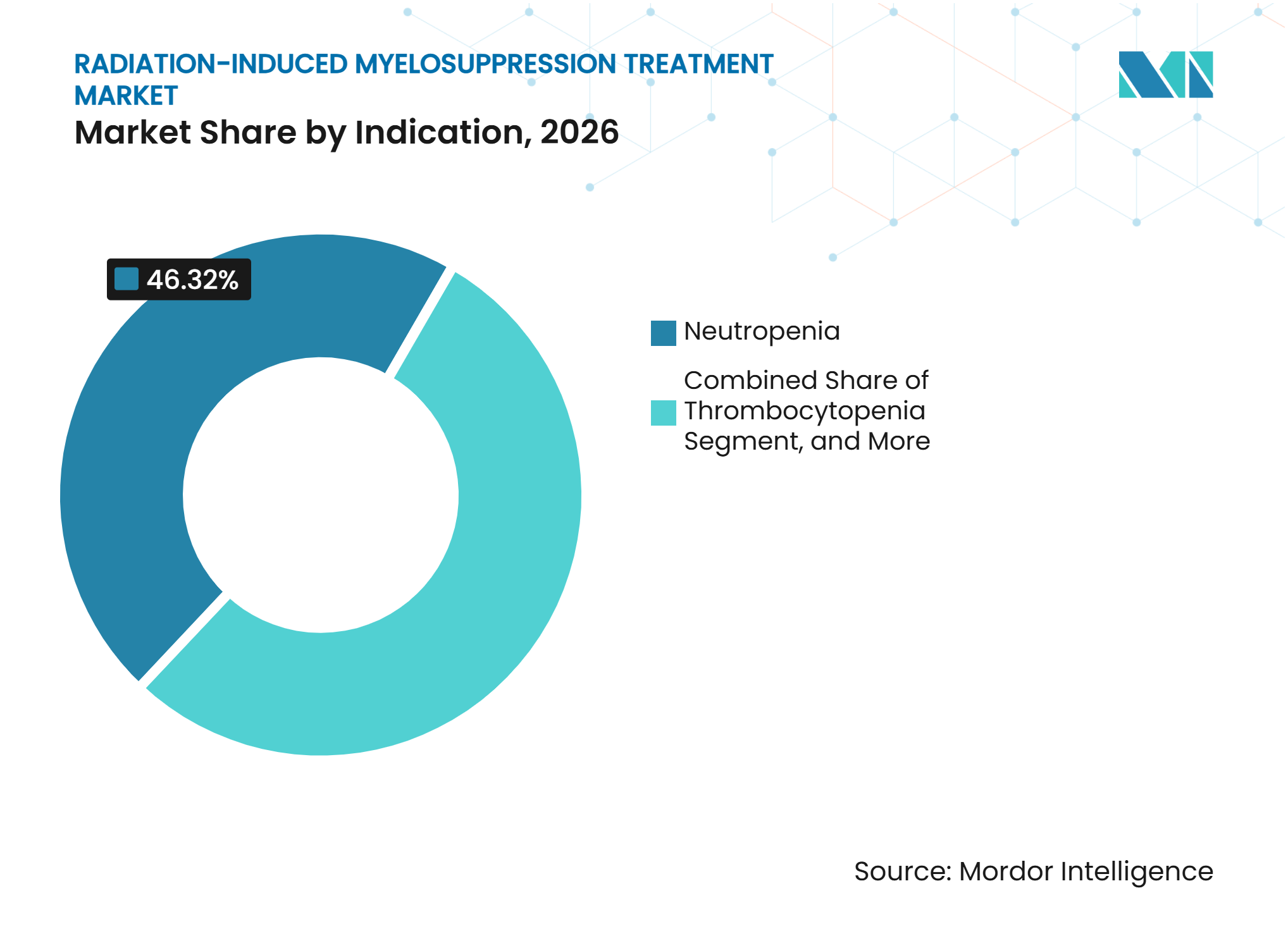
Neutropenia Anchors Revenue, Thrombocytopenia Accelerates FastestNeutropenia accounted for 46.32% of revenue in 2026, making it the largest indication within the radiation-induced myelosuppression treatment market. Its position reflects its high incidence in clinical radiotherapy and hematopoietic acute radiation syndrome settings. G-CSF treatment remains embedded in prophylactic care practices for patients at risk of neutrophil depletion. The HHS Radiation Emergency Medical Management resource listed 13 myeloid cytokine products with approval for acute exposure to myelosuppressive radiation as of May 2026. This broad group gives hospital pharmacies several product options and reinforces the established role of growth factors in emergency readiness. Anemia is generally managed with erythropoiesis-stimulating agents and iron supplementation, but slower response kinetics limit the use of erythropoiesis-stimulating agents in immediate emergency care. Pancytopenia creates a more complex need because patients may require support for neutrophils, platelets, and red blood cells at the same time. Sargramostim is relevant in this setting because of its multilineage activity.
Thrombocytopenia is forecast to record a 6.89% CAGR through 2032, the fastest rate among indications in the radiation-induced myelosuppression treatment market. Its growth depends on more evidence for romiplostim and other thrombopoietin receptor agonists in cancer therapy and radiation-related settings. A Phase II study of romiplostim N01 in leukemia patients with cancer treatment-induced thrombocytopenia enrolled 97 patients after beginning in February 2025. Interim findings showed that 46.9% of enrolled patients achieved platelet counts above 50×10⁹/L within 2 weeks. The evidence is important because radiation-induced thrombocytopenia is not the same as immune thrombocytopenia, the primary approved use for thrombopoietin receptor agonists. Results from immune thrombocytopenia studies cannot simply be applied to radiation-related disease. Manufacturers that fund studies in radiation-specific and cancer therapy-specific populations may be better positioned as clinical evidence develops. The need for this evidence also limits how quickly the indication can move into standard treatment protocols.



By Drug Class:
Growth Factors Dominate, Thrombopoietic Agents Set the Growth PaceGrowth factors held 42.75% of revenue in 2026 and remain the largest drug class in the radiation-induced myelosuppression treatment industry. Their leading role comes from routine prophylactic use in oncology care and the established place of myeloid cytokines in emergency response. The class includes short-acting and long-acting products that are familiar to cancer centers and stockpiling programs. As biosimilar choices expand, lower acquisition costs can extend access in health systems that would otherwise have limited use of supportive biologics. The class also benefits from a well-developed distribution base across hospital pharmacies, infusion centers, and government supply systems. However, its market position does not prevent margin pressure because products with similar mechanisms often compete through pricing and contracting. The availability of several FDA-approved H-ARS products keeps the class important, while also increasing choice among suppliers.
Thrombopoietic agents are forecast to grow at a 7.27% CAGR through 2032, making them the fastest-growing drug class in the radiation-induced myelosuppression treatment market. Their growth is supported by the clinical need to prevent or shorten platelet depletion, which can lead to treatment delays and transfusions. In the RECITE Phase III study, romiplostim produced a platelet nadir of 87×10⁹/L compared with 58×10⁹/L for placebo and reduced the time to first platelet response from 2.1 weeks to 1.1 weeks. Erythropoiesis-stimulating agents serve radiation-induced anemia but generally require weeks before meaningful hemoglobin improvement. Iron supplements have a complementary role where iron deficiency complicates anemia during extended radiotherapy courses. The other category includes oral small molecules, cell-based therapies such as PLX-R18, and CDK4/6 inhibitors at preclinical or early clinical stages. New drug classes still require evidence that meets the FDA Animal Rule for H-ARS entry, which shapes the timing and scope of competitive entry.
By Route of Administration:
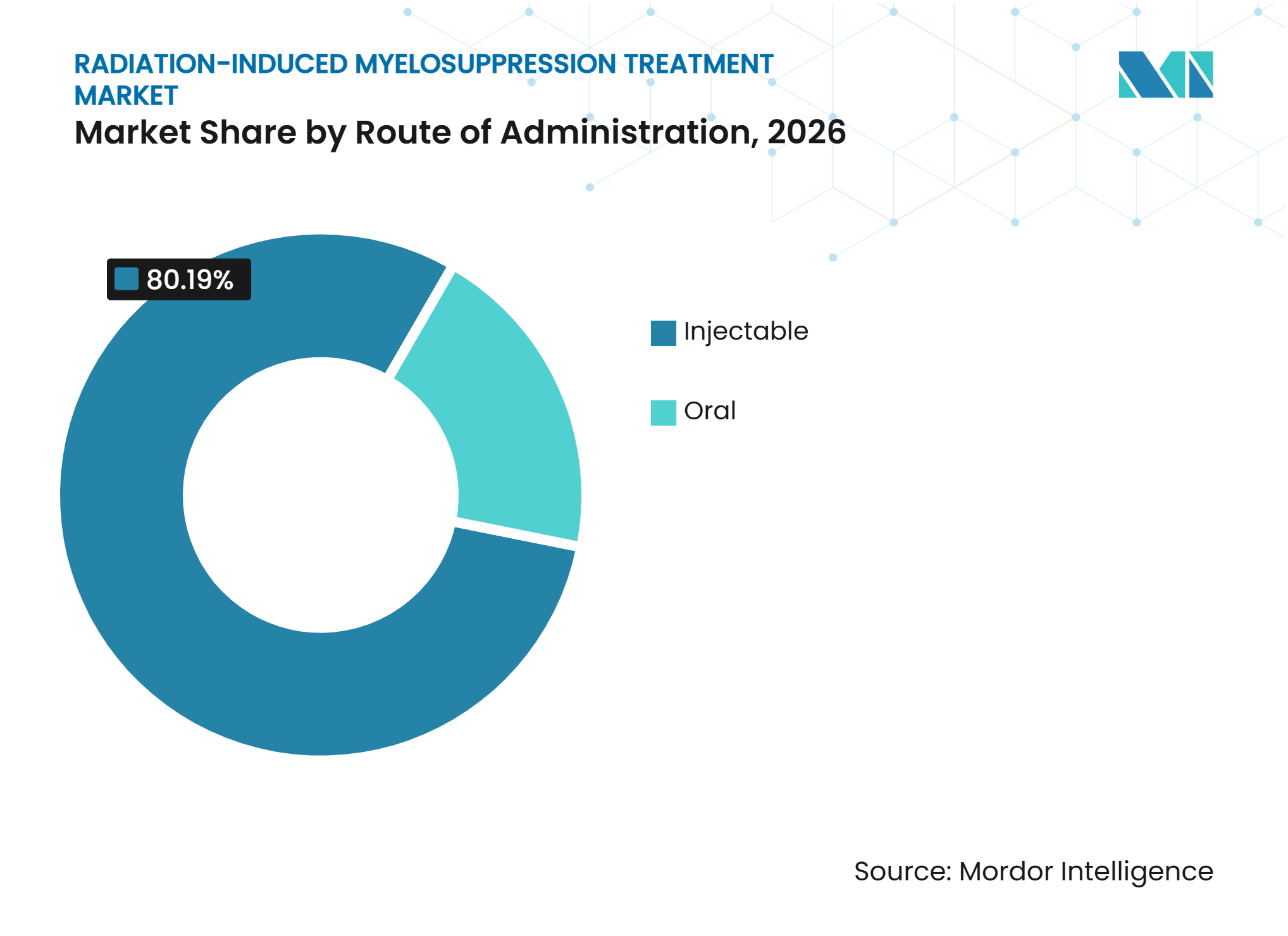
Injectable Leads With Precision, Oral Gains Strategic MomentumInjectable formulations held 80.19% of revenue in 2026 because all FDA-approved H-ARS products use subcutaneous delivery. HHS guidance recommends administering myeloid cytokines as soon as possible after confirmed radiation exposure, which favors established injectable products. These products are familiar to oncology clinicians and can be integrated into existing hospital and infusion workflows. They are also the practical foundation for current stockpile programs, where reliability and clear administration instructions are essential. Delivery devices can add commercial value when they allow dosing without an additional clinic visit. The route therefore remains dominant in the radiation-induced myelosuppression treatment market, even as pricing competition lowers the value of the active ingredient alone. It also has a critical limitation in a mass-casualty setting because administration requires trained people, product availability, and an organized care environment.
Oral formulations are forecast to grow at a 7.81% CAGR through 2032 as planners seek products that could be deployed in field conditions. Oral candidates are attractive for scenarios where injection capacity and clinical infrastructure are limited. A 2025 murine study found that imidazolyl ethanamide pentandioic acid, also known as Myelo001, improved hematopoietic stem and progenitor cell recovery after sublethal total body irradiation. Ambient-temperature stability and oral bioavailability could support stockpiling and distribution if subsequent evidence supports approval. However, oral candidates still face the Animal Rule challenge, including the need for a suitable and responsive animal model. Their potential does not remove the role of injectables in oncology or emergency protocols. Instead, oral products could give the radiation-induced myelosuppression treatment market an additional route for settings where rapid, decentralized administration is required.

By Distribution Channel:
Hospital Pharmacies Anchor Volume, Online Channels AccelerateHospital pharmacies held 60.33% of revenue in 2026, reflecting the clinical intensity of cancer patients receiving concurrent chemotherapy and radiotherapy. The channel is central to buy-and-bill reimbursement, where providers purchase and administer many supportive biologics. Hospital and infusion settings also manage the monitoring needs associated with complex cancer care. In a radiological incident, government-procured countermeasures are distributed through organized health-system channels rather than through ordinary consumer purchase patterns. Retail pharmacies support outpatients who self-administer long-acting products in prefilled syringes between treatment cycles. Specialty pharmacy and government logistics also form part of the broader channel structure. The concentration of care in hospitals means the radiation-induced myelosuppression treatment market continues to rely on institutional purchasing and clinical formulary decisions.
Online pharmacies are forecast to grow at an 8.16% CAGR through 2032 as outpatient oncology care shifts toward home administration where clinically appropriate. On-body devices and autoinjectors can support treatment after chemotherapy without requiring a separate return visit. This channel is relevant to routine clinical supportive care, especially for long-acting G-CSF products. Its role is different in H-ARS response, where online pharmacy distribution has no primary emergency function. Emergency demand instead depends on stockpile release, public health coordination, and hospital distribution. The different role of the channel means its performance can diverge from emergency countermeasure demand. Suppliers in the radiation-induced myelosuppression treatment market need to maintain separate commercial approaches for outpatient oncology and public-sector preparedness.
Geography Analysis
North America
North America held 38.54% of revenue in 2026, the largest regional position in the radiation-induced myelosuppression treatment market. The region benefits from the United States Strategic National Stockpile, broad oncology supportive-care use, and mature reimbursement pathways for biosimilars. The stockpile includes Neupogen, Neulasta, Leukine, and Nplate through vendor-managed inventory arrangements that rotate products into commercial channels before expiration. BARDA's fiscal year 2025 investment of USD 1.04 billion in CBRN medical countermeasures supports continuing government demand for eligible products. The PHEMCE multiyear budget also provided USD 37.1 billion to BARDA for fiscal years 2025 through 2029. The FDA is the central regulatory influence for H-ARS approvals, while its Animal Rule directly affects candidates that cannot be tested in conventional human efficacy studies. Canada is advancing nuclear emergency preparedness, and Mexico has a more commercial pharmaceutical distribution model. The concentration of approved products brings ready access, but it also makes biosimilar price competition more visible than in other regions.
Asia-Pacific
Asia-Pacific is forecast to grow at an 8.58% CAGR through 2032 as cancer infrastructure and radiation capacity expand across major health systems. Guangzhou Concord Cancer Hospital began full-scale proton therapy operations in late 2024 and treated its 1,000th proton patient in July 2026. Domestic Chinese patients represented 85% of that total, indicating the increasing local use of advanced radiation services. IHH Healthcare expanded its work with Leo Cancer Care in September 2025 for upright radiotherapy linacs and compact proton solutions across its regional network. The region's large population and rising treatment capacity provide a wider base for cytopenia management. South Korea's KIRAMS continues work on automated biological dose assessment, which can shorten triage times after a radiation incident. Japan and Australia have established supportive-care markets and biosimilar reimbursement systems. India and Southeast Asia are adding hospital oncology capacity and contributing to the regional increase in patient volume.
Europe, Middle East and Africa, and South America
Europe is the second-largest revenue region, with Germany, the United Kingdom, and France forming its primary markets. The European Commission's September 2025 authorization of IMREPLYS was the first approval for an H-ARS treatment in Europe and provides a basis for procurement across countries covered by the authorization. The EMA's regulatory influence differs from the FDA pathway, which makes regional evidence planning important for developers. In the Middle East and Africa, GCC countries are investing in cancer treatment capacity while South Africa remains an important commercial center in sub-Saharan Africa. The IAEA's 12-center Rays of Hope Anchor Center network includes sites in African and Asia-Pacific locations, expanding the infrastructure required for radiotherapy access. Brazil leads South American demand, while Argentina is a secondary treatment center. A 2025 systematic review found that stockpiling recommendations for radiological and nuclear emergencies are less mature outside the United States. This gap limits current demand in some countries but leaves room for future preparedness policies and organized procurement.
Competitive Landscape
Market Concentration
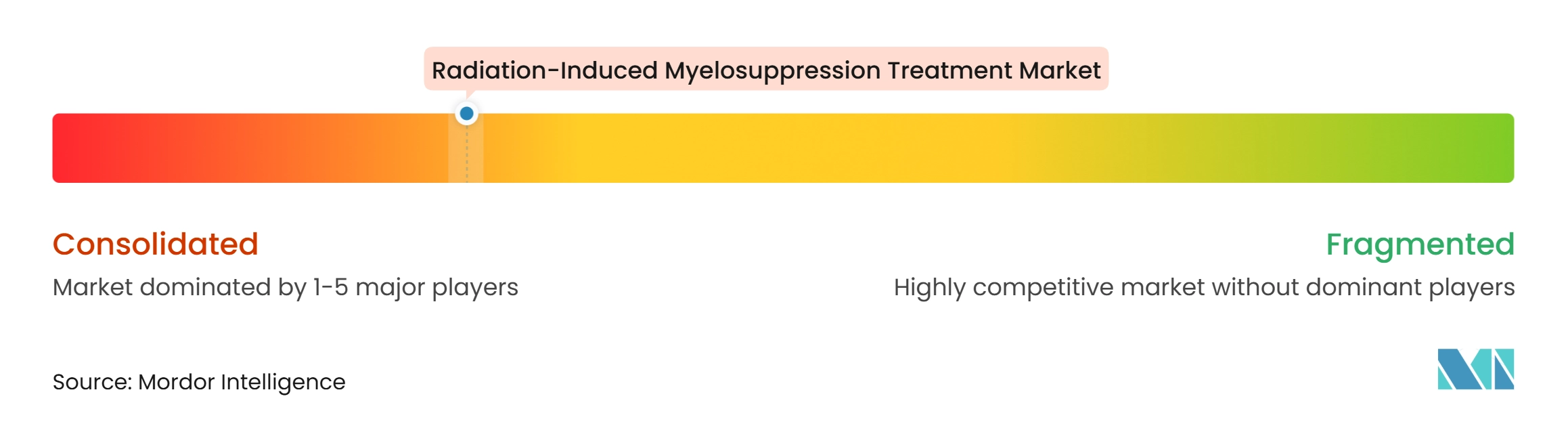
The radiation-induced myelosuppression treatment market has 2 distinct competitive groups. One group includes biosimilar G-CSF suppliers that compete in a crowded category with falling prices. The other includes specialized emergency countermeasure suppliers that depend more on product mechanism, formulation, and public procurement relationships. HHS listed 13 myeloid cytokine products approved for H-ARS across 5 manufacturer groups as of May 2026. This group includes Amgen, Accord BioPharma, Fresenius Kabi, Kashiv and Lupin, and Sandoz. The large number of comparable cytokine products increases the importance of contracting, product availability, and device features. It also keeps the competitive setting fragmented rather than controlled by a single supplier.
Accord BioPharma completed its acquisition of the UDENYCA franchise from Coherus BioSciences in April 2025 for up to USD 558.4 million. The transaction gave Accord 2 distinct pegfilgrastim biosimilars in the United States. That broader portfolio can strengthen contracting and formulary discussions where buyers prefer fewer suppliers. UDENYCA's on-body injector remains a product feature that differentiates it from standard prefilled formats. The competitive space has room for additional biosimilar on-body injector options, but suppliers must balance device investment against continued price pressure. The result is a market where administration format can matter as much as the active ingredient for outpatient oncology use.
Specialized developers use different strategies from large biosimilar suppliers. Pluri's PLX-R18 cell therapy has FDA investigational status for H-ARS, and Pluri formed a collaboration with Hemafund in March 2025 to support 12,000-dose infrastructure in Ukraine. Myelo Therapeutics is advancing Myelo001 with non-human primate pharmacokinetic work toward a potential Animal Rule submission. Automated biodosimetry can improve the connection between exposure assessment and treatment selection. A 2026 study validated an automated dicentric chromosome analysis workflow that produced accurate dose estimates in 12 of 13 test samples. Such tools are more likely to strengthen the distribution position of approved products already embedded in response protocols than to replace therapeutic products. Competitive advantage in this tier therefore rests on regulatory readiness, deployable supply, and integration with government emergency systems.
Radiation-Induced Myelosuppression Treatment Industry Leaders
-
Accord BioPharma Inc.
-
Amgen Inc.
-
Fresenius Kabi AG
-
Lupin Limited
-
Sandoz AG
- *Disclaimer: Major Players sorted in no particular order
Radiation-Induced Myelosuppression Treatment Market Companies Covered in this Report
- Accord BioPharma Inc.
- Amgen
- Coherus Biosciences
- Fresenius
- G1 Therapeutics Inc.
- Johnson & Johnson
- Kashiv BioSciences
- Lupin
- Novartis
- Partner Therapeutics, Inc.
- Pluri Inc.
- Sandoz Group
- Spectrum Pharmaceuticals
- Swedish Orphan Biovitrum
- Tanvex BioPharma, Inc.
- Teva Pharmaceutical Industries
Recent Industry Developments in Radiation-Induced Myelosuppression Treatment Market
- May 2026: FDA approved ENNUMO (pegfilgrastim-pccg) for Accord BioPharma with the H-ARS indication, making Accord the only US company holding two distinct pegfilgrastim biosimilars and adding the 8th competitor to the US pegfilgrastim landscape. The approval intensifies pricing pressure in hospital pharmacy channels and expands G-CSF access for resource-constrained oncology programs.
- January 2026: Accord BioPharma's Filkri (filgrastim-laha) received FDA approval with the H-ARS indication, becoming the 12th myeloid cytokine product approved for radiation exposure in the United States and completing Accord's G-CSF portfolio across short-acting and long-acting formulations.
- January 2026: IHH Healthcare announced an investment in TibaRay to access FLASH radiotherapy technology for deployment across its Asian hospital network, directly expanding the patient population at risk of radiation-induced cytopenias requiring supportive care.
Global Radiation-Induced Myelosuppression Treatment Market Report Scope
As per the scope of the report, radiation-induced myelosuppression treatment refers to the medical management of bone marrow suppression caused by radiation therapy, which reduces the production of blood cells, including white blood cells, red blood cells, and platelets. Treatment aims to prevent or manage complications such as neutropenia, anemia, and thrombocytopenia through the use of growth factors, supportive care therapies, blood transfusions, and other hematopoietic recovery treatments. These interventions help maintain treatment continuity, reduce infection risks, and improve patient outcomes during cancer therapy.
The radiation-induced myelosuppression treatment market is segmented by indication, drug class, route of administration, distribution channel, and geography. By indication, the market is segmented into neutropenia, anemia, thrombocytopenia, and pancytopenia. By drug class, the market is segmented into growth factors, erythropoiesis-stimulating agents, thrombopoietic agents, iron supplements, and others. By route of administration, the market is segmented into injectable and oral. By distribution channel, the market is segmented into hospital pharmacies, retail pharmacies, online pharmacies, and others. The geography segment is further divided into North America, Europe, Asia-Pacific, the Middle East and Africa, and South America. The report also covers the estimated market sizes and trends for 17 countries across major regions globally. The report offers the market size and forecasts in value (USD) for the above segments.
Segmentation Overview
| Neutropenia |
| Anemia |
| Thrombocytopenia |
| Pancytopenia |
| Growth Factors |
| Erythropoiesis-Stimulating Agents |
| Thrombopoietic Agents |
| Iron Supplements |
| Others |
| Injectable |
| Oral |
| Hospital Pharmacies |
| Retail Pharmacies |
| Online Pharmacies |
| Others |
| North America | United States |
| Canada | |
| Mexico | |
| Europe | Germany |
| United Kingdom | |
| France | |
| Italy | |
| Spain | |
| Rest of Europe | |
| Asia-Pacific | China |
| India | |
| Japan | |
| Australia | |
| South Korea | |
| Rest of Asia-Pacific | |
| Middle East and Africa | GCC |
| South Africa | |
| Rest of Middle East and Africa | |
| South America | Brazil |
| Argentina | |
| Rest of South America |
| By Indication | Neutropenia | |
| Anemia | ||
| Thrombocytopenia | ||
| Pancytopenia | ||
| By Drug Class | Growth Factors | |
| Erythropoiesis-Stimulating Agents | ||
| Thrombopoietic Agents | ||
| Iron Supplements | ||
| Others | ||
| By Route of Administration | Injectable | |
| Oral | ||
| By Distribution Channel | Hospital Pharmacies | |
| Retail Pharmacies | ||
| Online Pharmacies | ||
| Others | ||
| By Geography | North America | United States |
| Canada | ||
| Mexico | ||
| Europe | Germany | |
| United Kingdom | ||
| France | ||
| Italy | ||
| Spain | ||
| Rest of Europe | ||
| Asia-Pacific | China | |
| India | ||
| Japan | ||
| Australia | ||
| South Korea | ||
| Rest of Asia-Pacific | ||
| Middle East and Africa | GCC | |
| South Africa | ||
| Rest of Middle East and Africa | ||
| South America | Brazil | |
| Argentina | ||
| Rest of South America | ||
Key Questions Answered in the Report
What is the projected size of the radiation-induced myelosuppression treatment market?
The radiation-induced myelosuppression treatment market is valued at USD 1.89 billion in 2026 and is projected to reach USD 2.75 billion by 2032 at a 6.43% CAGR.
Which treatment indication holds the largest revenue position?
Neutropenia leads with 46.32% of revenue in 2026, supported by established G-CSF use in oncology and radiation emergency care.
Which drug class is expected to grow fastest through 2032?
Thrombopoietic agents are expected to grow at a 7.27% CAGR through 2032 as clinical evidence for platelet recovery expands.
Why do injectable formulations remain the main delivery route?
Injectable formulations hold 80.19% of 2026 revenue because FDA-approved H-ARS products use subcutaneous delivery and can be given quickly after confirmed exposure.
Which region has the largest share and which region is growing fastest?
North America holds 38.54% of revenue in 2026, while Asia-Pacific is expected to record the fastest growth at a 8.58% CAGR through 2032.
How do government stockpiles affect demand for these treatments?
Government preparedness programs create purchasing demand that is separate from normal oncology cycles, with BARDA investing USD 1.04 billion in CBRN countermeasures in fiscal year 2025.