
Pulmonary Edema Therapeutics Market Size and Share
Market Overview
| Study Period | 2021 - 2032 |
|---|---|
| Market Size (2027) | USD 3.92 Billion |
| Market Size (2032) | USD 4.70 Billion |
| Growth Rate (2027 - 2032) | 3.67 % |
| Fastest Growing Market | Asia-Pacific |
| Largest Market | North America |
| Market Concentration | Medium |
Major Players *Disclaimer: Major Players sorted in no particular order Image © Mordor Intelligence. Reuse requires attribution under CC BY 4.0. | |
Pulmonary Edema Therapeutics Market Analysis by Mordor Intelligence
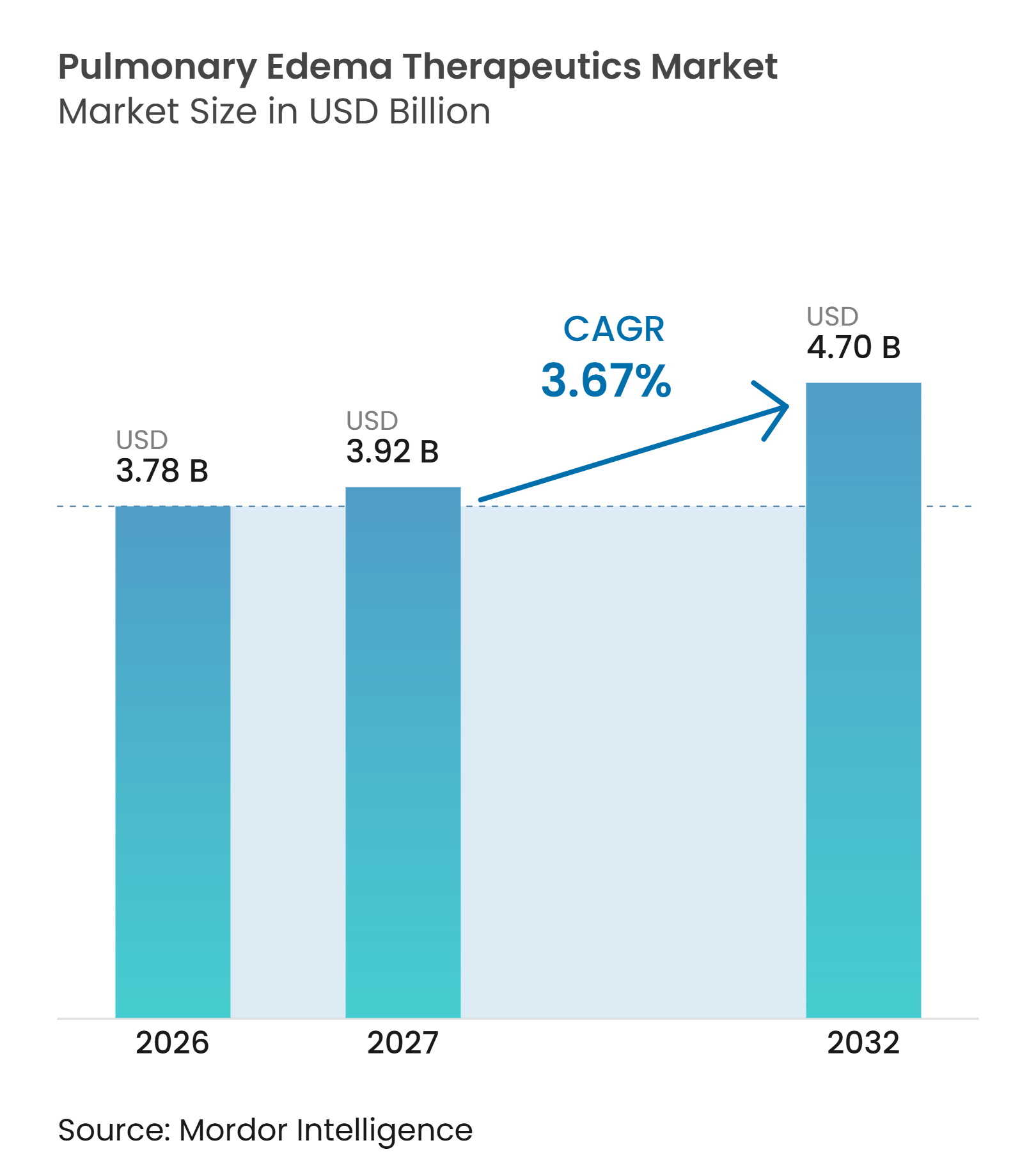
The Pulmonary Edema Therapeutics Market size is projected to be USD 3.78 billion in 2026, USD 3.92 billion in 2027, and reach USD 4.70 billion by 2032, growing at a CAGR of 3.67% from 2027 to 2032.
Growth is being shaped by earlier intervention for fluid congestion, rather than treatment only after a hospital admission. Heart failure, kidney disease, and acute respiratory conditions continue to expand the treated population, while newer delivery systems can move IV-equivalent decongestion into outpatient and home settings. Point-of-care imaging and remote monitoring are also helping clinicians recognize residual congestion earlier and adjust therapy with more clinical evidence. Companies are responding through device-enabled formulations, targeted disease-modifying treatments, and evidence packages that show fewer hospitalizations. These shifts create opportunities for therapies that are practical for clinicians, reimbursable for providers, and manageable for patients outside the hospital.
Key Report Takeaways
- By disease type, cardiogenic pulmonary edema held 61.43% of the pulmonary edema therapeutics market share in 2026, while non-cardiogenic pulmonary edema is forecast to expand at a 5.76% CAGR through 2032.
- By drug class, diuretics accounted for 42.56% of the pulmonary edema therapeutics market share in 2026, while inotropes and vasopressors recorded the highest projected CAGR at 5.99% through 2032.
- By route of administration, intravenous therapies held 71.43% of revenue in 2026 and are projected to grow at a 6.43% CAGR through 2032.
- By distribution channel, hospital pharmacies accounted for 53.45% of revenue in 2026, while online pharmacies are forecast to grow at a 6.98% CAGR through 2032.
- By end user, hospitals held 46.78% of revenue in 2026, while ambulatory surgical centers are forecast to grow at a 6.76% CAGR through 2032.
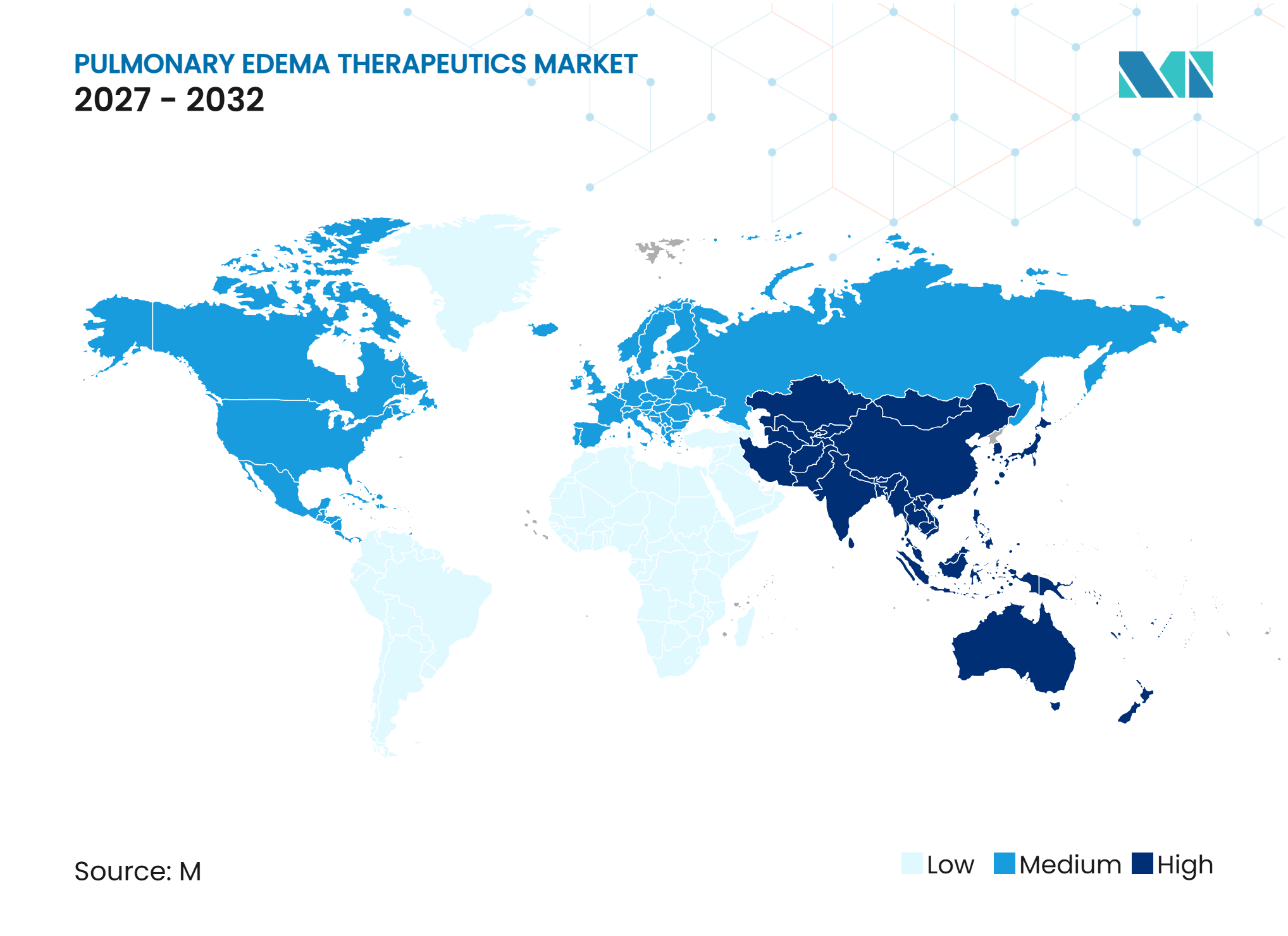
- By geography, North America accounted for 42.56% of revenue in 2026, while Asia-Pacific is projected to expand at a 4.65% CAGR through 2032.
Note: Market numbers in this report are based on Mordor Intelligence's proprietary estimation framework, which combines nine months of actuals with Q4 projections for base year 2026.
Market Trends and Insights
Drivers Impact Analysis of Pulmonary Edema Therapeutics Market*
| Driver | (~) % Impact on CAGR Forecast | Geographic Relevance | Impact Timeline |
|---|---|---|---|
| Rising Heart Failure and Cardiorenal Disease Burden | +1.50% | Global, strongest in North America and Asia-Pacific | Long term (≥ 4 years) |
| Expansion of Non-Invasive Ventilation in Acute Care | +0.60% | North America and Europe, with expansion into Asia-Pacific | Medium term (2-4 years) |
| Point-of-Care Pulmonary Congestion Assessment | +0.50% | North America and Europe, with early urban adoption in Asia-Pacific | Medium term (2-4 years) |
| Growth of Home-Based Subcutaneous Diuretic Delivery | +0.40% | North America, with emerging use in Western Europe | Short term (≤ 2 years) |
| Biomarker-Guided and Remote Fluid Management | +0.40% | Global, with early use in North America and Europe | Long term (≥ 4 years) |
| Lung-Targeted Therapies for Permeability Edema | +0.30% | Global, especially ARDS-focused intensive care markets | Long term (≥ 4 years) |
| Source: Mordor Intelligence | |||
Rising Heart Failure and Cardiorenal Disease Burden
Heart failure and chronic kidney disease are widening the need for pulmonary edema treatment across acute and outpatient settings. The draft estimates that 6.7 million U.S. adults live with heart failure and that this number will reach 8.5 million by 2030, alongside 1.2 million annual hospitalizations related to fluid overload. Many patients also have kidney dysfunction, which can make diuretic treatment less predictable and increase the need for close dosing decisions. The U.S. Food and Drug Administration expanded the FUROSCIX label to include edema associated with chronic kidney disease in 2025, and scPharmaceuticals launched the expanded indication soon afterward. Bayer also received U.S. authorization for finerenone in adults with heart failure and an ejection fraction of 40% or more, expanding disease-modifying treatment in a group with limited earlier options. The pulmonary edema therapeutics market therefore faces a larger and more clinically complex patient base, with treatment spending increasingly linked to prevention, decongestion, and kidney monitoring.
Expansion of Non-Invasive Ventilation in Acute Care
Non-invasive ventilation is now central to the early care pathway for many patients with acute cardiogenic pulmonary edema. A 2025 review described its established role in acute respiratory failure and the growing use of high-flow nasal oxygen when face-mask interfaces are not tolerated. Treatment protocols increasingly pair ventilation with IV vasodilators and diuretics during stabilization, which supports the continued need for acute pharmacotherapy. Evidence also suggests that response is not uniform across all patients, especially older patients with different acid-base profiles. This makes patient assessment important when choosing the combination and intensity of therapy. The pulmonary edema therapeutics market benefits when acute-care protocols identify patients who need both respiratory support and rapid fluid removal.
Point-of-Care Congestion Assessment and Remote Fluid Management
Lung ultrasound is gaining importance as a practical way to assess pulmonary congestion at the bedside. A 2025 study of hospitalized patients found that cardiopulmonary point-of-care ultrasonography was associated with shorter expected stays and changes in clinical management. Automated B-line detection may improve access to this approach, although the systems still require clinician oversight because performance can differ between platforms. Residual B-lines at discharge have also been associated with subsequent heart failure events, giving clinicians a clearer basis for follow-up intensity and diuretic adjustment. Biomarker-guided and remote fluid management can complement ultrasound by identifying deterioration before emergency care is needed. These tools support more individualized decongestion and may increase use of therapies in the pulmonary edema therapeutics market when monitoring frameworks are clear.
Growth of Home-Based Subcutaneous Diuretic Delivery
Home-based subcutaneous delivery is changing how clinicians approach worsening edema after discharge. A 2025 propensity-matched analysis reported lower 1-year hospitalization rates with subcutaneous furosemide than with IV furosemide in the evaluated heart failure population[1]. A clinical pharmacology study found that a concentrated subcutaneous furosemide formulation achieved bioavailability comparable with IV administration and produced prompt diuresis and natriuresis. FUROSCIX sales and filled doses rose sharply during 2025, showing early commercial acceptance among cardiology and nephrology prescribers.MannKind completed its acquisition of scPharmaceuticals in October 2025 and later reported continued growth in FUROSCIX sales. This model gives the pulmonary edema therapeutics market a route to shift appropriate treatment from prolonged hospital care toward supervised outpatient use.
Restraints Impact Analysis of Pulmonary Edema Therapeutics Market*
| Restraint | (~) % Impact on CAGR Forecast | Geographic Relevance | Impact Timeline |
|---|---|---|---|
| Renal and Hemodynamic Risks of Aggressive Decongestion | -0.50% | Global, with greater pressure in markets with high CKD and heart failure comorbidity | Long term (≥ 4 years) |
| High Acute-Care and Hospitalization Costs | -0.40% | Global, with strongest limits in the Middle East, Africa, and South America | Medium term (2-4 years) |
| Diagnostic Overlap Across Cardiac, Pulmonary, and Infectious Causes | -0.30% | Global, especially in low-resource and primary-care-focused systems | Medium term (2-4 years) |
| Limited Disease-Specific Therapy for Non-Cardiogenic Edema | -0.40% | Global, with pipeline activity concentrated in North America and Europe | Long term (≥ 4 years) |
| Source: Mordor Intelligence | |||
Renal and Hemodynamic Risks of Aggressive Decongestion
Loop diuretics remain the core treatment for fluid removal, but aggressive decongestion can worsen renal function and complicate hemodynamic management. This risk is especially relevant for patients who have heart failure and chronic kidney disease at the same time. A 2025 review of decongestion therapies noted that many device-based approaches have shown limited clinical benefit, leaving drug development and clinical monitoring as central areas for improvement[2]. Ultrasound-guided management can support better dosing decisions, but it does not remove renal risk for every patient. Clinicians are therefore likely to require standardized monitoring before they expand home-based diuresis to patients with moderate or severe kidney impairment. This constraint can slow adoption within the pulmonary edema therapeutics market even when outpatient formulations are clinically effective.
High Acute-Care Costs and Diagnostic Complexity
Hospital treatment remains expensive, while generic furosemide creates price pressure on branded formulations. The reported 27% gross-to-net discount for FUROSCIX in the second quarter of 2025 reflects the payer negotiation required for a premium formulation. Cost constraints are more pronounced where hospital budgets and payer coverage are limited, including parts of the Middle East, Africa, and South America. Diagnostic overlap also slows appropriate treatment because cardiac, pulmonary, and infectious conditions can present with similar signs of respiratory distress. Point-of-care imaging may improve clinical sorting, but uneven access to trained staff and equipment remains a practical barrier. Non-cardiogenic edema has an additional limitation because it lacks a widely established disease-specific pharmacological standard of care.
*Our forecasts treat driver/restraint impacts as directional, not additive. The impact forecasts reflect baseline growth, mix effects, and variable interactions.
Pulmonary Edema Therapeutics Market Segment Analysis
By Disease Type:
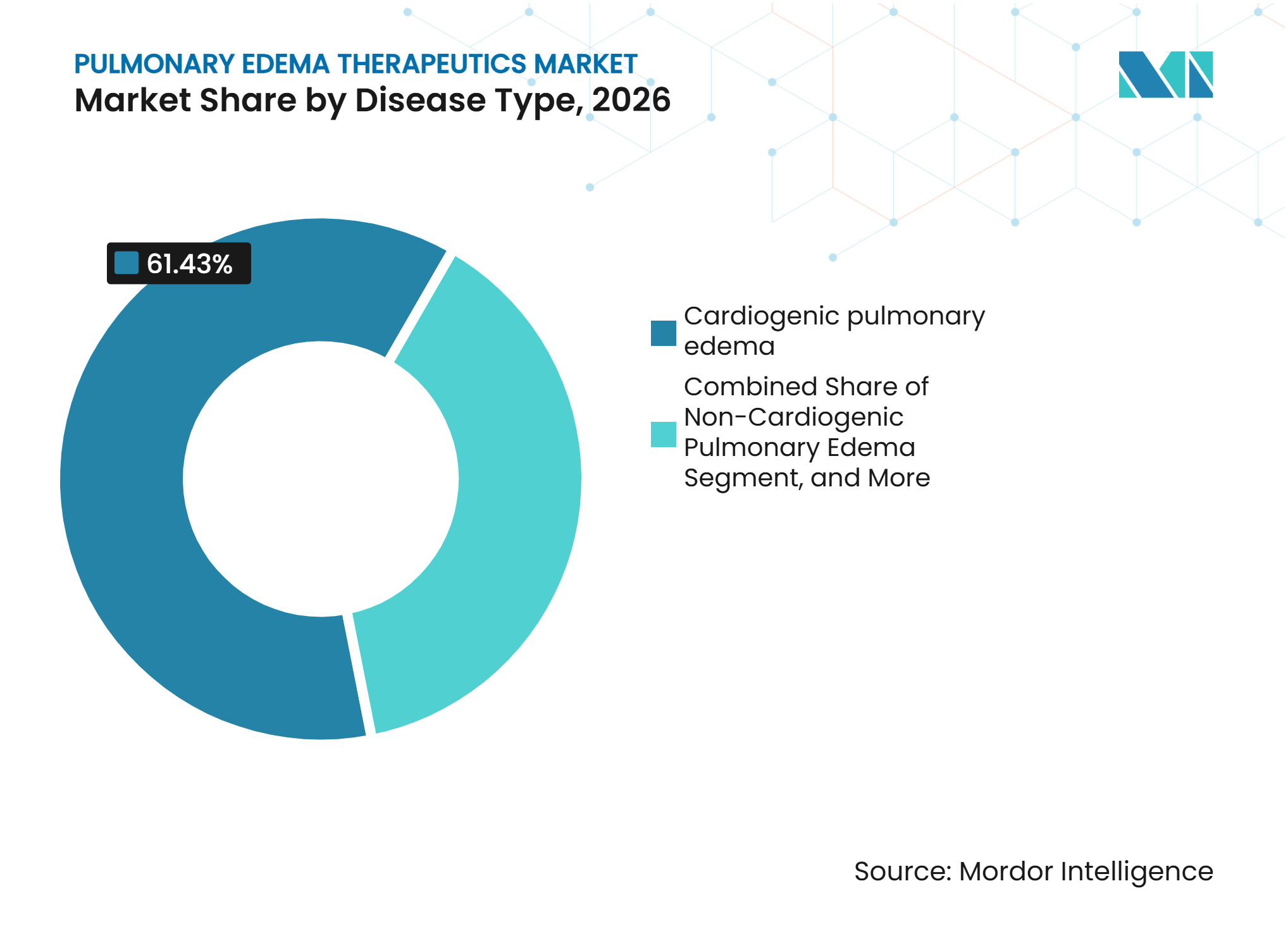
Cardiogenic Care Remains the Core of Treatment DemandCardiogenic pulmonary edema held 61.43% of pulmonary edema therapeutics market revenue in 2026. This position reflects the broad population with left ventricular dysfunction, hypertensive emergencies, and valvular disease. These conditions have established treatment pathways and reimbursement support in many health systems. Sacubitril and valsartan continues to shape treatment for reduced ejection fraction heart failure, despite U.S. patent pressure. Finerenone adds a disease-modifying option for patients with mildly reduced or preserved ejection fraction after its U.S. and European authorizations. Infection-induced edema remains a smaller segment, but it draws treatment demand through ARDS management, vasopressor support, and respiratory interventions. High-altitude pulmonary edema remains specialized and is mainly managed with prevention-oriented approaches such as nifedipine and dexamethasone.
Non-cardiogenic pulmonary edema is forecast to grow at a 5.76% CAGR through 2032. ARDS creates a need for therapies that address endothelial injury and alveolar fluid accumulation, rather than supportive ventilation alone. A 2025 scientific review highlighted the lack of an approved disease-specific pharmacological standard for this condition. Edesa reported positive Phase 3 results for paridiprubart in mechanically ventilated ARDS patients during 2025. Vasomune is studying a Tie2 receptor agonist designed to stabilize the vascular barrier and limit fluid leakage. Approval of a successful late-stage candidate would materially change the treatment options for this portion of the pulmonary edema therapeutics market.



By Drug Class:
Diuretic Leadership Continues as Specialized Therapies ExpandDiuretics accounted for 42.56% of pulmonary edema therapeutics market share in 2026. Generic oral and IV furosemide still support a large share of routine care, especially in hospitals and outpatient maintenance. Value is shifting toward pH-neutral subcutaneous and intranasal formulations that enable use outside traditional infusion settings. Vasodilators, including IV nitroglycerin, remain important for hypertensive acute pulmonary edema and are often used with diuretics and respiratory support. Opioids such as morphine are receiving less emphasis because of hemodynamic safety concerns. SGLT2 inhibitors, sacubitril and valsartan, and nonsteroidal mineralocorticoid receptor antagonists are also broadening the role of upstream heart failure management.
Inotropes and vasopressors are forecast to grow at a 5.99% CAGR through 2032. These treatments are important for complex presentations that combine circulatory instability, shock, and respiratory failure. AstraZeneca continues to develop cardiovascular therapies, including dapagliflozin and the investigational oral RXFP1 agonist pexerelgon. Lung-targeted therapies remain small in revenue terms, but their research activity is notable because they may address edema at the site of alveolar injury. A 2025 ATS abstract reported improved oxygenation and lower ventilator need with intratracheal tri-iodothyronine in an early study. The pulmonary edema therapeutics market could see a wider mix of acute therapies if these programs establish meaningful clinical benefit.
By Route of Administration:
IV Care Retains Its Role While Alternative Routes AdvanceIntravenous therapies represented 71.43% of revenue in 2026 and are forecast to expand at a 6.43% CAGR through 2032. IV administration remains the clinical benchmark for rapid and predictable decongestion during acute episodes. The segment also benefits from subcutaneous products designed to deliver IV-equivalent exposure in a less resource-intensive format. A randomized crossover study found that subcutaneous furosemide achieved 107.3% bioavailability relative to IV administration, with diuresis and natriuresis beginning within 1 hour. SQ Innovation received FDA approval for Lasix ONYU in October 2025, adding another subcutaneous delivery platform. MannKind also received FDA approval for Furoscix ReadyFlow in July 2026.
Oral therapy remains important for long-term outpatient maintenance, including furosemide, torsemide, and bumetanide. Gut edema can reduce oral absorption during decompensation, which reinforces the use of IV or subcutaneous administration when rapid action is needed. Intranasal delivery has become a new option following FDA approval of ENBUMYST in September 2025. Inhaled diuretics remain investigational, while inhaled pulmonary vascular therapies show that the route can be viable in related clinical settings. MannKind is assessing a dry-powder bumetanide program in preclinical development. Alternative routes may help the pulmonary edema therapeutics market address patients who cannot use an infusion or prefer not to self-inject.
By Distribution Channel:
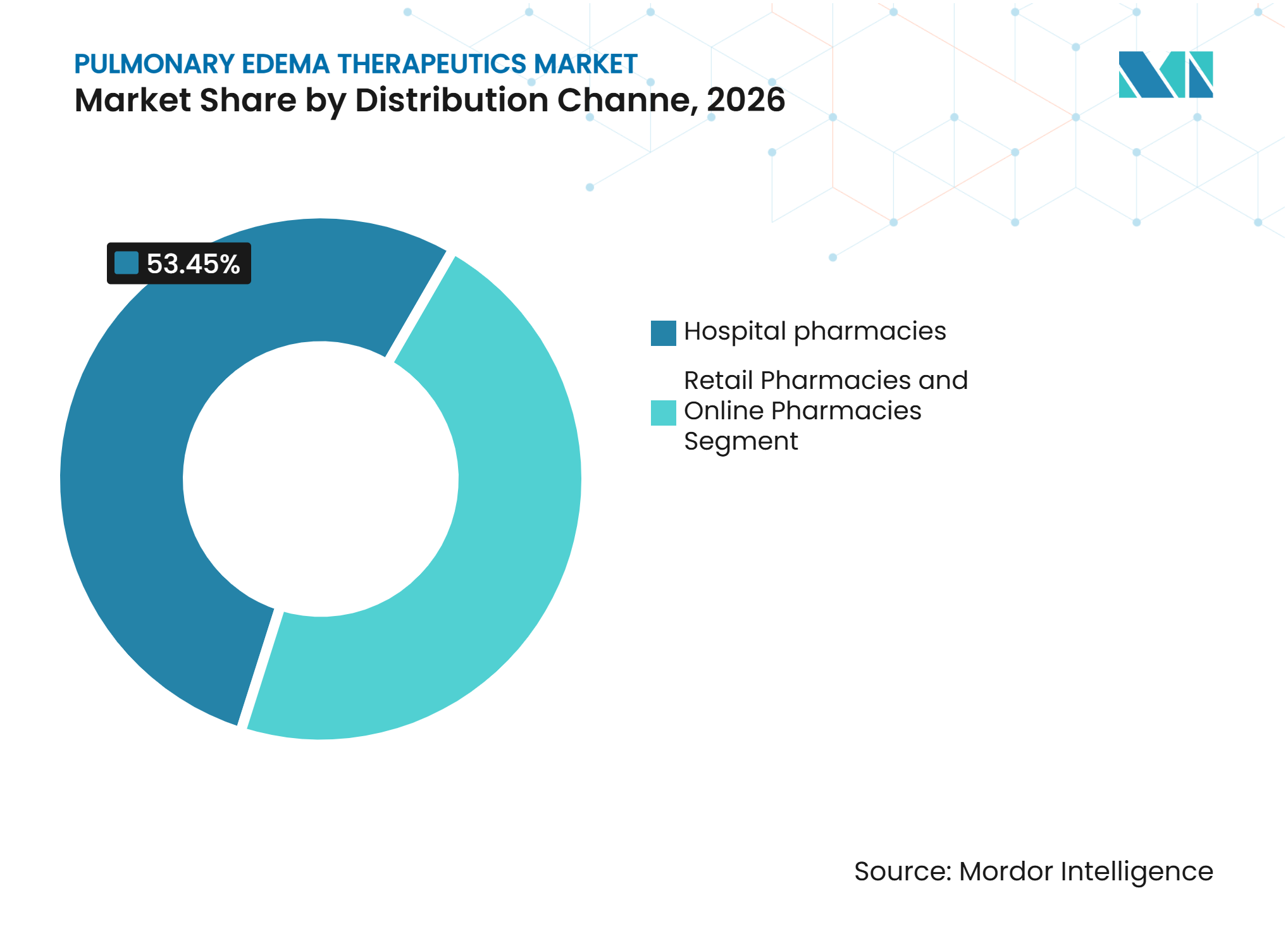
Hospital Pharmacies Remain Central as Digital Fulfillment GrowsHospital pharmacies held 53.45% of distribution channel revenue in 2026. Acute episodes often require sterile preparation, rapid dose adjustment, and trained nursing support, which keeps IV diuretics, inotropes, and vasodilators closely tied to institutional care. This channel remains important for patients with severe respiratory distress or unstable hemodynamics. Retail pharmacies continue to provide oral maintenance therapy, but generic furosemide offers limited scope for product differentiation. The mature nature of the generic category also limits the incentive to build specialized services around it. Hospital channels will therefore retain a central role in the pulmonary edema therapeutics market even as outpatient care expands.
Online pharmacies are forecast to grow at a 6.98% CAGR through 2032. An ASOP Foundation survey found that 38% of U.S. adults had purchased prescription drugs online, with many users beginning this behavior during the preceding 3 years. Digital fulfillment is suited to maintenance therapies and home-dispensed subcutaneous kits when patients have clinical oversight. Amgen’s 2025 launch of the AmgenNow direct-to-consumer platform shows how cardiovascular drug makers are building direct patient access models. Policy proposals that make clinicians more accountable for avoidable heart failure admissions may strengthen demand for home-dispensable therapies. The channel’s expansion will depend on reimbursement, safe prescribing processes, and patient education.

By End User:
Hospitals Lead Acute Treatment While ASCs Add New DemandHospitals accounted for 46.78% of end-user revenue in 2026. Most pulmonary edema episodes need rapid assessment, oxygen support, fluid management, and monitoring that are available in emergency and inpatient settings. Emergency medical services also have a role in early care through prehospital respiratory support and selected pharmacologic interventions. Heart failure clinics are becoming more important as patients transition earlier from hospital care to supervised outpatient follow-up. These clinics can combine medication adjustment with kidney function and congestion monitoring. Hospitals will remain the main treatment setting for severe episodes in the pulmonary edema therapeutics market.
Ambulatory surgical centers are forecast to grow at a 6.76% CAGR through 2032. Their relevance comes from the continuing movement of cardiovascular procedures into outpatient settings and the need to manage fluid status after some interventions. A 2025 JACC analysis examined the outpatient migration of cardiovascular procedures in the United States and its implications for care delivery. Postprocedural discharge plans may increasingly include monitoring and home-based diuresis for suitable patients. Home health settings are another developing end-user group, especially for patients with heart failure and kidney disease who can be monitored closely. A 2025 quality-improvement project showed the logistical feasibility of home subcutaneous furosemide in a small CKD and heart failure cohort.
Geography Analysis
North America
North America held 42.56% of the pulmonary edema therapeutics market share in 2026. The region combines a large heart failure population, advanced emergency and inpatient infrastructure, and rapid uptake of new drug-device combinations. The FDA has supported several new delivery options, including Lasix ONYU, ENBUMYST, and Furoscix ReadyFlow. This approval activity encourages clinicians to consider treatment after discharge when patients can be monitored. The Centers for Medicare and Medicaid Services is also reshaping incentives through proposed models that focus on avoidable heart failure admissions. Canada supports stable access to loop diuretics through its public health system, while Mexico offers growth for generic IV medicines as hospital capacity improves. Regulatory influence from the FDA and reimbursement policy remain important to regional adoption.
Asia-Pacific
Asia-Pacific is forecast to grow at a 4.65% CAGR through 2032. Hospital investment across China, India, and Southeast Asia is expanding access to intensive care beds, IV drugs, and emergency treatment capabilities. Growing awareness of acute decompensated heart failure is also improving the route from diagnosis to treatment. Lung ultrasound and AI-assisted radiology may be useful where cardiology capacity is limited and emergency imaging expertise is still developing. A review and meta-analysis reported that lung-ultrasound-guided therapy reduced major adverse cardiovascular events, supporting wider evaluation of this approach. Japan and South Korea are adopting more disease-modifying heart failure therapies, which may reduce severe admissions while expanding chronic care. Health-system investment and clinician training will decide how quickly new delivery technologies reach the broader pulmonary edema therapeutics market in the region.
Europe, the Middle East and Africa, and South America
Europe has established heart failure pathways, clinical evidence networks, and biomarker-led emergency care, while the Middle East, Africa, and South America show more uneven access. Bayer received European Commission and UK authorization for finerenone in March 2026 for adults with heart failure and left ventricular ejection fraction of 40% or more. Germany, the United Kingdom, and France have active specialist networks that can adopt subcutaneous diuretics as outpatient programs formalize discharge goals. Gulf Cooperation Council countries are increasing intensive care capacity and specialist access, but branded therapies remain less accessible beyond major cities. Brazil and Argentina are improving acute respiratory care infrastructure, although treatment costs and coverage gaps still limit spending per episode. European regulatory decisions, national reimbursement rules, and hospital procurement systems will influence adoption across these mixed geography segments. The pulmonary edema therapeutics market will therefore grow at different speeds across mature specialist centers and resource-constrained systems.
Competitive Landscape
Market Concentration
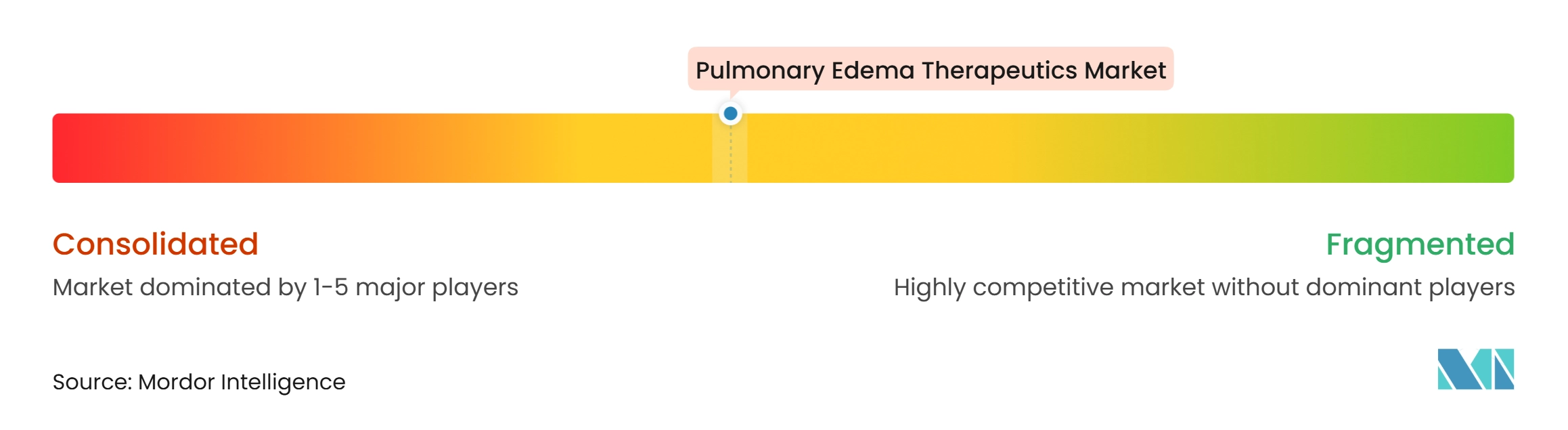
The pulmonary edema therapeutics market is moderately fragmented. Large pharmaceutical companies compete in disease-modifying heart failure therapies, while generic manufacturers compete on IV formulation quality and hospital contract pricing. AstraZeneca supports a broad cardiovascular portfolio that includes dapagliflozin and ongoing clinical programs. Bayer established a differentiated position in heart failure with its 2025 U.S. and 2026 European approvals for finerenone. Hikma, Teva, B. Braun, Baxter, and Fresenius compete in the generic injectable setting where purchasing decisions focus on reliability and price. This structure supports continued competition between lower-cost acute treatments and higher-value formulations that target care outside the hospital.
MannKind’s acquisition of scPharmaceuticals in October 2025 was a clear strategic move toward home-based decongestion. The company followed this with the ReadyFlow autoinjector, which offers an IV-equivalent subcutaneous furosemide dose in a brief administration time. SQ Innovation and Corstasis also entered the field with subcutaneous and intranasal loop diuretic products. These launches show that delivery technology is becoming an important basis for differentiation. Real-world evidence on hospital avoidance and ease of use will be important in payer discussions.
The clearest unmet need is non-cardiogenic edema and ARDS, where disease-specific pharmacological treatment remains limited. Edesa, Vasomune, and BioAegis have development programs aimed at inflammatory and vascular-barrier pathways. A further opportunity lies in linking congestion monitoring with home diuresis, rather than selling diagnostics and treatments as separate products. Novartis continues to invest in cardiovascular assets as it manages patent erosion for Entresto. Competition will remain divided between disease-modifying therapies, acute generic products, and proprietary delivery platforms.
Pulmonary Edema Therapeutics Industry Leaders
-
Sanofi
-
Pfizer Inc.
-
Novartis AG
-
AstraZeneca PLC
-
Viatris Inc.
- *Disclaimer: Major Players sorted in no particular order
Pulmonary Edema Therapeutics Market Companies Covered in this Report
- AstraZeneca
- B. Braun
- Baxter
- Bayer
- Boehringer Ingelheim
- Cipla
- Dr. Reddy’s Laboratories
- Fresenius
- Hikma Pharmaceuticals
- Johnson & Johnson
- Lupin
- MannKind
- Merck
- Novartis
- Pfizer
- Sanofi
- Sun Pharmaceuticals Industries
- Teva Pharmaceutical Industries
- Viatris
Recent Industry Developments in Pulmonary Edema Therapeutics Market
- July 2026: The U.S. FDA approved Furoscix ReadyFlow from MannKind Corporation, a subcutaneous furosemide autoinjector designed to deliver an 80 mg IV-equivalent dose in under 10 seconds.
- March 2026: Bayer received European Commission approval and UK authorization for finerenone in adults with heart failure and left ventricular ejection fraction of 40% or more.
- October 2025: MannKind Corporation completed its acquisition of scPharmaceuticals Inc., integrating FUROSCIX into its cardiometabolic portfolio.
- October 2025: SQ Innovation received U.S. FDA approval for Lasix ONYU, a drug-device combination that delivers 80 mg of subcutaneous furosemide through an abdominal infusor over 5 hours.
Global Pulmonary Edema Therapeutics Market Report Scope
According to the report’s scope, pulmonary edema therapeutics are medicines and treatments used to reduce fluid buildup in the lungs and ease breathing. They target underlying causes, such as heart failure or infection, and may include diuretics, oxygen, and other supportive care.
The pulmonary edema therapeutics market is segmented into disease type, drug class, route of administration, distribution channel, end user, and geography. By disease type, the market is segmented into cardiogenic pulmonary edema, non-cardiogenic pulmonary edema, high-altitude pulmonary edema, infection-induced pulmonary edema. By drug class, the market is segmented into diuretics, vasodilators, inotropes and vasopressors, opioid analgesics, heart-failure disease-modifying therapies, and lung-targeted and investigational therapies. By route of administration, the market is segmented into intravenous, oral, subcutaneous, sublingual and intranasal, and inhaled and aerosolized. By distribution channel, the market is segmented into hospital pharmacies, retail pharmacies, and online pharmacies. By end user, the market is segmented into hospitals, emergency medical services, specialty clinics, ambulatory surgical centers, and home healthcare settings. By geography, the market is segmented into North America, Europe, Asia-Pacific, the Middle East and Africa, and South America. The report also covers the estimated market sizes and trends for 17 countries across major regions globally. The report offers values (USD) for all the above segments.
Segmentation Overview
| Cardiogenic Pulmonary Edema |
| Non-Cardiogenic Pulmonary Edema |
| High-Altitude Pulmonary Edema |
| Infection-Induced Pulmonary Edema |
| Diuretics |
| Vasodilators |
| Inotropes and Vasopressors |
| Opioid Analgesics |
| Heart-Failure Disease-Modifying Therapies |
| Lung-Targeted and Investigational Therapies |
| Intravenous |
| Oral |
| Subcutaneous |
| Sublingual and Intranasal |
| Inhaled and Aerosolized |
| Hospital Pharmacies |
| Retail Pharmacies |
| Online Pharmacies |
| Hospitals |
| Emergency Medical Services |
| Specialty Clinics |
| Ambulatory Surgical Centers |
| Home Healthcare Settings |
| North America | United States |
| Canada | |
| Mexico | |
| Europe | Germany |
| United Kingdom | |
| France | |
| Italy | |
| Spain | |
| Rest of Europe | |
| Asia-Pacific | China |
| Japan | |
| India | |
| Australia | |
| South Korea | |
| Rest of Asia-Pacific | |
| Middle East and Africa | GCC |
| South Africa | |
| Rest of Middle East and Africa | |
| South America | Brazil |
| Argentina | |
| Rest of South America |
| By Disease Type | Cardiogenic Pulmonary Edema | |
| Non-Cardiogenic Pulmonary Edema | ||
| High-Altitude Pulmonary Edema | ||
| Infection-Induced Pulmonary Edema | ||
| By Drug Class | Diuretics | |
| Vasodilators | ||
| Inotropes and Vasopressors | ||
| Opioid Analgesics | ||
| Heart-Failure Disease-Modifying Therapies | ||
| Lung-Targeted and Investigational Therapies | ||
| By Route of Administration | Intravenous | |
| Oral | ||
| Subcutaneous | ||
| Sublingual and Intranasal | ||
| Inhaled and Aerosolized | ||
| By Distribution Channel | Hospital Pharmacies | |
| Retail Pharmacies | ||
| Online Pharmacies | ||
| By End User | Hospitals | |
| Emergency Medical Services | ||
| Specialty Clinics | ||
| Ambulatory Surgical Centers | ||
| Home Healthcare Settings | ||
| Geography | North America | United States |
| Canada | ||
| Mexico | ||
| Europe | Germany | |
| United Kingdom | ||
| France | ||
| Italy | ||
| Spain | ||
| Rest of Europe | ||
| Asia-Pacific | China | |
| Japan | ||
| India | ||
| Australia | ||
| South Korea | ||
| Rest of Asia-Pacific | ||
| Middle East and Africa | GCC | |
| South Africa | ||
| Rest of Middle East and Africa | ||
| South America | Brazil | |
| Argentina | ||
| Rest of South America | ||
Key Questions Answered in the Report
What is driving demand for pulmonary edema therapeutics?
Growth is linked to the expanding burden of heart failure and kidney disease, alongside earlier treatment of fluid congestion outside hospital settings.
Which pulmonary edema type has the highest revenue share?
Cardiogenic pulmonary edema held 61.43% of revenue in 2026.
Which drug class is growing fastest for pulmonary edema treatment?
Inotropes and vasopressors are forecast to grow at a 5.99% CAGR through 2032.
Why are subcutaneous diuretics becoming more important?
They can offer IV-equivalent decongestion in outpatient or home settings for appropriately monitored patients.
Which region is expanding fastest for pulmonary edema treatments?
Asia-Pacific is forecast to grow at a 4.65% CAGR through 2032 as acute-care infrastructure and diagnostic access improve.
Why do hospitals remain important for pulmonary edema care?
Hospitals held 46.78% of end-user revenue in 2026 because severe episodes often require rapid monitoring, respiratory support, and IV treatment.