
Predictive Diagnostic Software Market Size and Share
Market Overview
| Study Period | 2020 - 2031 |
|---|---|
| Market Size (2026) | USD 1.66 Billion |
| Market Size (2031) | USD 3.79 Billion |
| Growth Rate (2026 - 2031) | 18.00 % |
| Fastest Growing Market | Asia-Pacific |
| Largest Market | North America |
| Market Concentration | Medium |
Major Players *Disclaimer: Major Players sorted in no particular order Image © Mordor Intelligence. Reuse requires attribution under CC BY 4.0. | |
Predictive Diagnostic Software Market Analysis by Mordor Intelligence
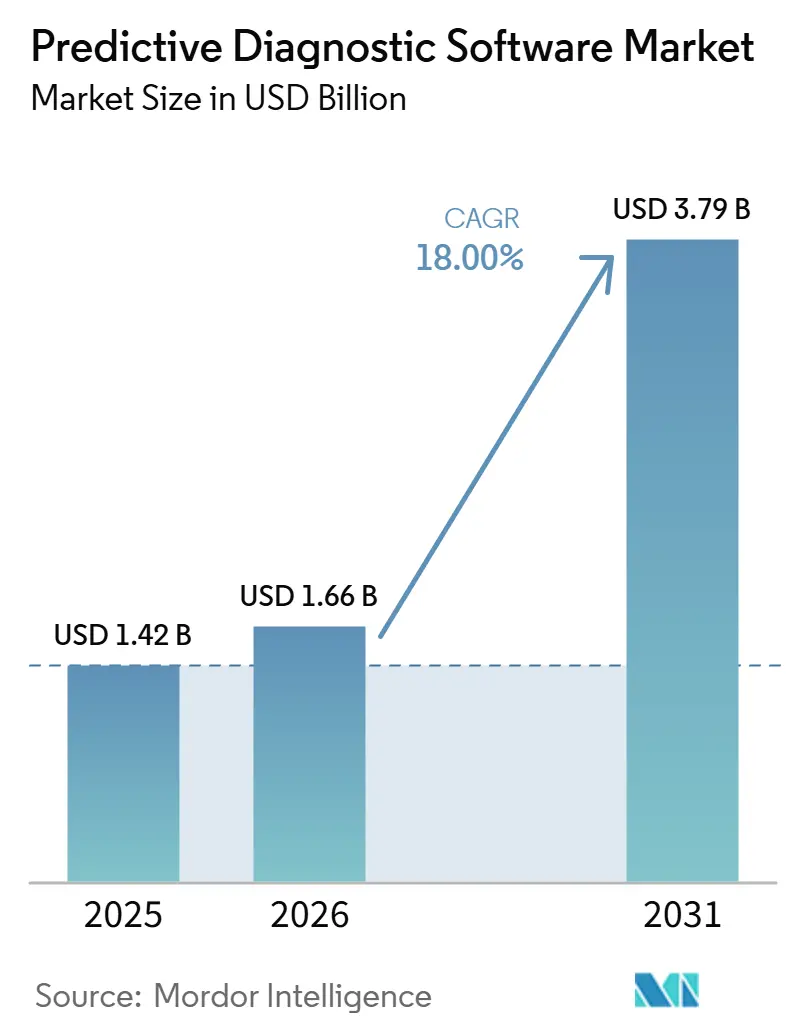
The Predictive Diagnostic Software Market size is expected to grow from USD 1.42 billion in 2025 to USD 1.66 billion in 2026 and is forecast to reach USD 3.79 billion by 2031 at 18% CAGR over 2026-2031.
The predictive diagnostic software market is moving from reactive diagnostic work toward earlier risk identification across clinical settings. Connected electronic records, genomic information, medical images, and device data are making more patient information available for model development. Cloud infrastructure and newer artificial intelligence tools are reducing some deployment barriers, although data quality and workflow integration remain important constraints. Demand is also widening beyond hospitals because pharmaceutical and biotechnology companies use predictive data for clinical trial design and patient stratification. Vendors are therefore pursuing deeper electronic health record integrations, broader data coverage, and regulated clinical applications in the predictive diagnostic software market.
Key Report Takeaways
By product and offering, platforms held 34.5% of the predictive diagnostic software market share in 2025, while predictive monitoring and early-warning applications are forecast to grow at an 18.6% CAGR through 2031.
By analytics function, predictive analytics accounted for 31.8% of revenue in 2025, while cognitive analytics is forecast to expand at an 18.4% CAGR through 2031.
By data source, electronic health records and clinical notes held 38.2% of revenue in 2025, while genomic and multi-omic data is projected to grow at an 18.4% CAGR through 2031.
By deployment, cloud-based systems accounted for 48.6% of revenue in 2025, while edge and embedded deployment is forecast to advance at a 19.3% CAGR through 2031.
By application, clinical diagnostics held 29.7% of revenue in 2025, while remote patient monitoring and home-based care is forecast to grow at a 19.1% CAGR through 2031.
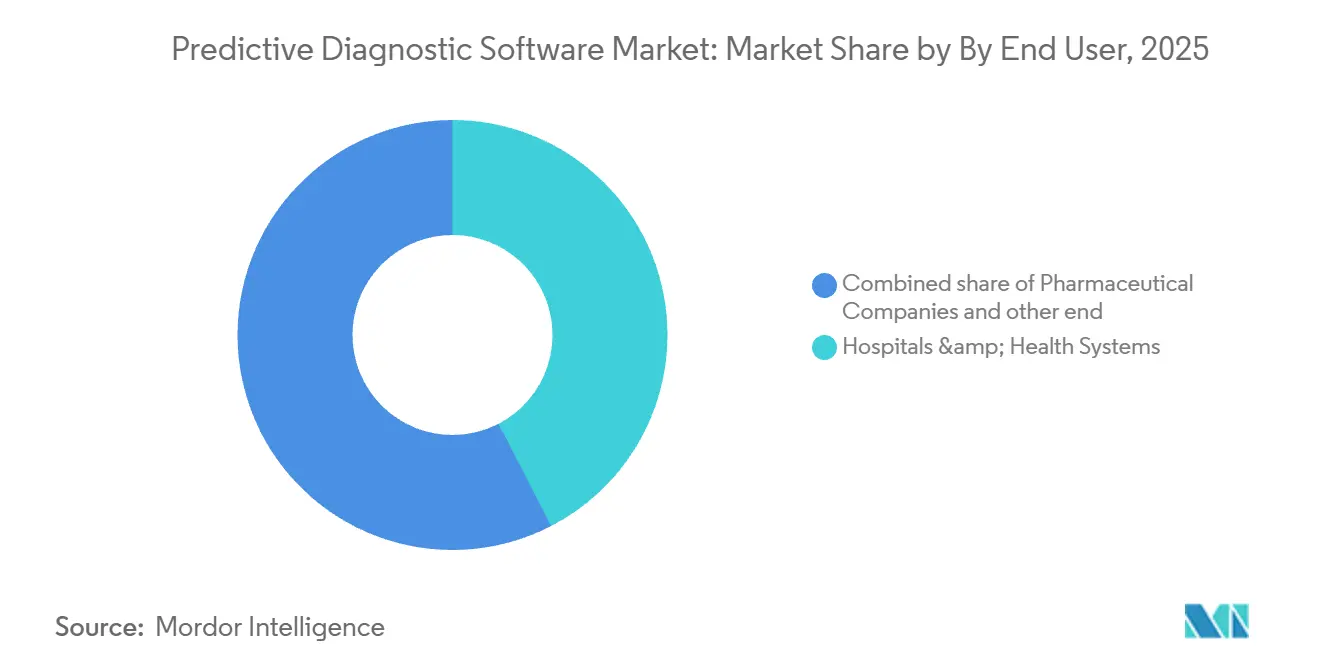
By end user, hospitals and health systems held 42.4% of revenue in 2025, while pharmaceutical and biotechnology companies are forecast to expand at a 19.6% CAGR through 2031.
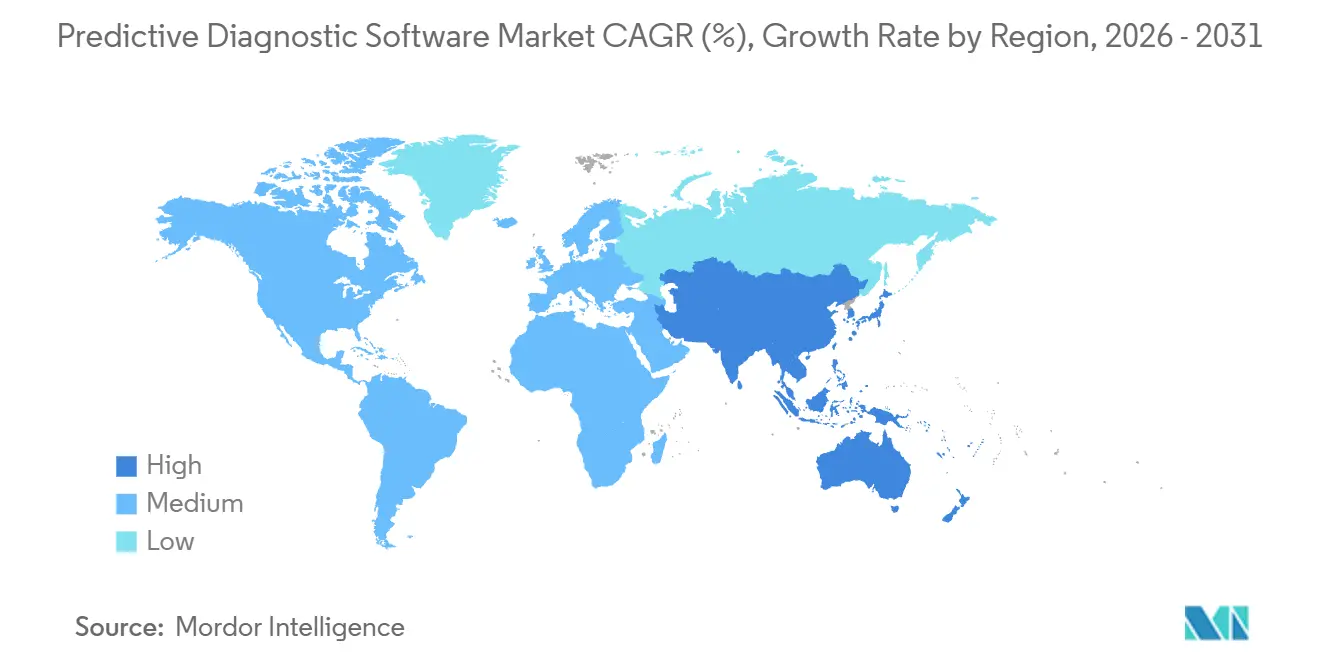
By geography, North America held 41.1% of revenue in 2025, while Asia-Pacific is forecast to grow at a 19.5% CAGR through 2031.
Note: Market size and forecast figures in this report are generated using Mordor Intelligence’s proprietary estimation framework, updated with the latest available data and insights as of January 2026.
Market Trends and Insights
Drivers Impact Analysis of Predictive Diagnostic Software Market*
| Driver | (~) % Impact on CAGR Forecast | Geographic Relevance | Impact Timeline |
|---|---|---|---|
| Expanding Multimodal Clinical Data Availability | +3.5% | Global, led by North America and Asia-Pacific | Medium term (2-4 years) |
| Shift Toward Proactive and Value-Based Care | +3.2% | North America and Europe | Short term (≤ 2 years) |
| Integration of Predictive Models Into EHR Workflows | +2.8% | North America, with growing adoption in Europe | Short term (≤ 2 years) |
| Earlier Detection of High-Cost Conditions | +2.4% | Global | Medium term (2-4 years) |
| Cloud and AI Infrastructure Lowering Deployment Barriers | +2.1% | Global, with early gains in Asia-Pacific and the Middle East and Africa | Medium term (2-4 years) |
| Underdiagnosed Disease Pathways Creating Risk-Stratification White Space | +1.7% | Global, with acute need in South America and the Middle East and Africa | Long term (≥ 4 years) |
| Source: Mordor Intelligence | |||
Expanding Multimodal Clinical Data Availability Accelerates Prediction Accuracy
The predictive diagnostic software market benefits from a rising volume of clinical data from electronic health records, genomic sequencing, wearables, and medical imaging archives. These sources can be assembled into longitudinal datasets that provide a fuller view of patient health than isolated encounters. Researchers at Dana-Farber Cancer Institute and Massachusetts General Hospital reported in July 2026 that an artificial intelligence tool trained on 683,000 electronic health record records predicted the likelihood of 348 diseases and outperformed established cardiovascular risk calculators. The finding supports the use of diagnosis sequences and clinical narratives that are not easily reviewed in routine care. SOPHiA GENETICS[1]SOPHiA GENETICS, “SOPHiA GENETICS Reports First Quarter 2026 Results,” SOPHiA GENETICS Newsroom processed a record 108,000 genomic analyses on its SOPHiA DDM platform in the first quarter of 2026 and reported 22% year-over-year revenue growth. This growing volume can support models that combine genomic and clinical context, provided health systems can maintain data quality and appropriate access controls.
Shift Toward Proactive and Value-Based Care Reshapes Demand Economics
The predictive diagnostic software market is supported by health systems and payers that carry financial responsibility for patient outcomes. Earlier identification of deterioration or chronic disease risk can help these organizations prevent avoidable care episodes. Intermountain Health [2]Intermountain Health, “Intermountain Study Finds AI Technology Is a Game Changer for Treatment of Two Common Chronic Pulmonary Conditions,” Intermountain Health Newsroom reported that continuous artificial intelligence-based remote monitoring across 5 hospitals reduced total cost of care by 57%, hospitalizations by 50%, and emergency department visits by 20% for 1,200 chronic pulmonary patients over 2 years. Such evidence makes predictive tools easier to assess against clinical and financial targets. Risk-bearing contracts also shift interest from occasional diagnostic use to continuous population surveillance. This expands the role of vendors that can connect predictions to clinical outreach, care management, and documented outcomes.
Integration of Predictive Models Into EHR Workflows Converts Pilots Into Enterprise Deployments
Embedding models in electronic health record workflows can reduce the practical burden of using separate dashboards. The Office of the National Coordinator’s proposed HTI-5 rule supports FHIR-based application programming interfaces and an artificial intelligence-enabled health information environment. Elation Health integrated the American Heart Association PREVENT cardiovascular risk calculator into its Clinical Insights AI tool in March 2026. Tempus AI reported that its ALERT trial with Medtronic increased life-saving heart valve procedures by 40% among patients with significant disease. These examples show why providers are more likely to adopt alerts that arrive within existing clinical processes. The approach also gives electronic health record platform owners influence over which predictive applications become part of enterprise care delivery.
Rising Demand for Earlier Detection of High-Cost Conditions Expands the Reimbursable Use Case
Earlier detection is gaining attention in oncology, cardiovascular care, and chronic disease management because delayed intervention can result in more intensive treatment. The Centers for Medicare and Medicaid Services issued preliminary gapfill payment rates of USD 350 for Epi+Gen CHD and USD 684.8 for PrecisionCHD for dates of service beginning January 1, 2025. These rates provide a reimbursement reference for artificial intelligence-driven molecular diagnostic tools. Tempus AI also reported that its pan-cancer homologous recombination deficiency algorithm identified actionable findings in 12% of patients missed by standard DNA testing. The predictive diagnostic software market can benefit when evidence demonstrates that a model identifies patients whose needs are not addressed by established pathways. Adoption will still depend on clinical validation, payment, and responsibility for the resulting care decision.
Restraints Impact Analysis of Predictive Diagnostic Software Market*
| Restraint | (~) % Impact on CAGR Forecast | Geographic Relevance | Impact Timeline |
|---|---|---|---|
| Data Interoperability and Longitudinal Record Fragmentation | -1.3% | Global, most acute in fragmented United States provider markets and emerging economies | Medium term (2-4 years) |
| Clinical Liability and Trust in False Positives or False Negatives | -0.9% | North America and Europe | Short term (≤ 2 years) |
| Shortage of Clinical AI Validation and Implementation Skills | -0.8% | Global, most acute in Asia-Pacific and South America | Long term (≥ 4 years) |
| Model Drift, Bias, and Post-Deployment Monitoring Burden | -0.7% | Global | Long term (≥ 4 years) |
| Source: Mordor Intelligence | |||
Data Interoperability and Longitudinal Record Fragmentation Caps Model Quality
The predictive diagnostic software market requires longitudinal information that follows patients across institutions and care settings. Many organizations still keep data in departmental systems with inconsistent formats, coding practices, and consent processes. A 2025 systematic review identified semantic misalignment across HL7 FHIR and SNOMED CT, limited cross-system exchange, and weak patient engagement features as recurring barriers to integrated health data ecosystems. The proposed HTI-5 rule recognizes the burden of fragmented access and estimates USD 1.5 billion in total savings from reduced administrative burden. However, organizations may delay software procurement until their data architecture can reliably supply the required records. HIPAA, GDPR, and data-residency requirements can further limit cross-institution aggregation, especially when patient consent and governance processes differ.
Clinical Liability and Trust Challenges Create Adoption Friction in High-Stakes Settings
False-positive and false-negative outputs create concerns for clinicians and purchasing teams in high-stakes diagnostic uses. A 2026 policy review described fragmentation across Food and Drug Administration oversight, HIPAA, and state licensing requirements as a barrier to clear accountability for artificial intelligence recommendations. The Food and Drug Administration has also considered postmarket monitoring approaches for health artificial intelligence tools, including methods to follow safety and accuracy over time. Hospitals may limit use to advisory applications when contracts and regulatory guidance do not clearly allocate responsibility. Model drift, bias, and the need to monitor performance after deployment add continuing operational work. A shortage of staff with clinical, data, and implementation skills can slow validation, local adaptation, and safe scaling in the predictive diagnostic software market.
*Our forecasts treat driver/restraint impacts as directional, not additive. The impact forecasts reflect baseline growth, mix effects, and variable interactions.
Predictive Diagnostic Software Market Segment Analysis
By Product & Offering:
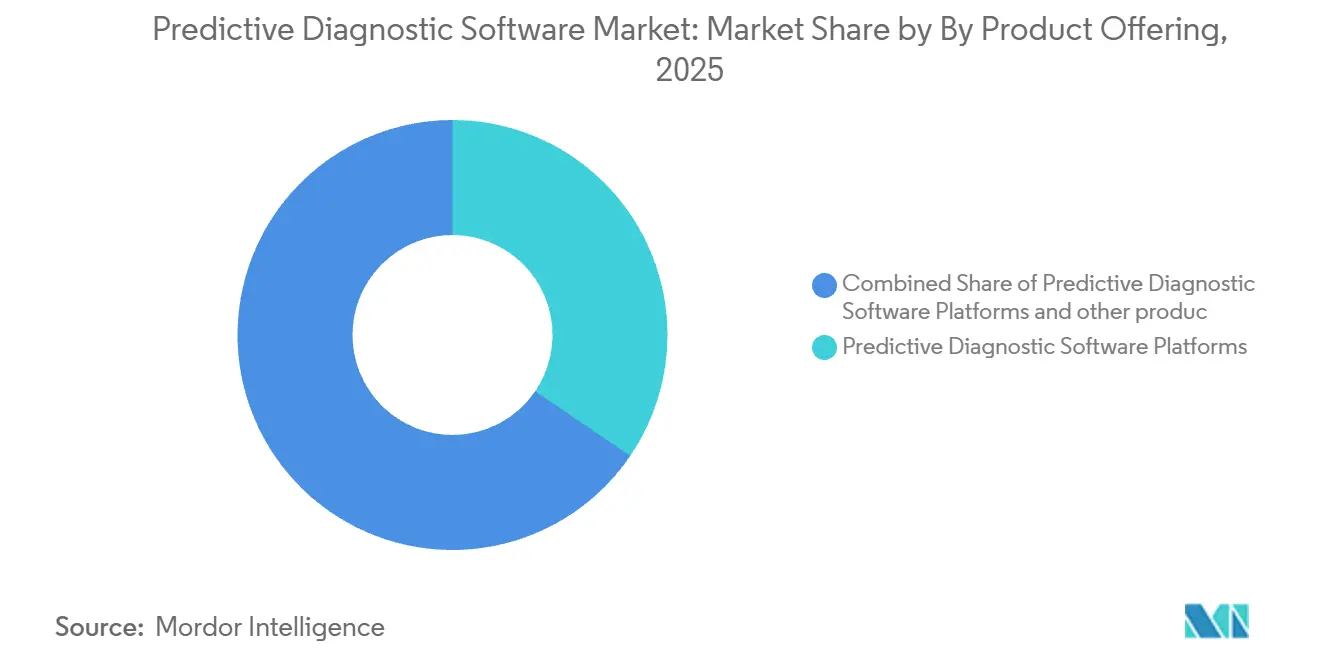
Platforms Anchor Enterprise DeploymentsPlatforms held 34.5% of the predictive diagnostic software market share in 2025, reflecting hospitals’ preference for integrated suites rather than multiple disconnected tools. These platforms bring together data ingestion, model governance, and clinical workflow outputs. Their broad role can reduce internal integration work for provider organizations. They can also create recurring revenue because switching to another platform requires changes to workflows and technical connections. Clinical decision support modules and diagnostic risk-stratification engines serve narrower use cases within the same environment. They are often added to existing electronic health record infrastructure. Services include implementation, integration, maintenance, validation, and governance work. Demand for these services rises as health systems move from a limited deployment to wider use across clinical departments.
Predictive monitoring and early-warning applications are forecast to grow at an 18.6% CAGR through 2031, the fastest rate within product and offering. Their growth is connected to wearable devices and Internet of Medical Things tools that produce continuous physiological information. Continuous data requires interpretation that can identify changes before a clinician sees a patient. University Hospital Schleswig-Holstein implemented MAIA[3]Tiplu GmbH, “CDSS MAIA als Medizinprodukt der Klasse IIa zugelassen,” Tiplu GmbH in January 2025 for alerts related to sepsis, fall risk, and renal failure. MAIA was certified as a Class IIa medical device under the European Union Medical Device Regulation. This type of deployment illustrates how monitoring tools can be incorporated into routine patient safety processes. The predictive diagnostic software market therefore includes both enterprise platforms and focused applications that perform real-time surveillance. Service providers remain important because monitoring tools need reliable integration and post-deployment review.


By Analytics Function:
Cognitive Analytics Redefines the Diagnostic Reasoning LayerPredictive analytics held 31.8% of revenue in 2025 and remained the largest analytics function in the predictive diagnostic software market. Established risk scores support applications in oncology, cardiology, and sepsis prediction. Diagnostic analytics characterizes the patient’s disease state from available information. Prescriptive analytics focuses on possible clinical actions after a risk or diagnosis is identified. Risk scoring and stratification support population management across defined patient groups. Anomaly detection and early warning are designed for emerging changes in a patient’s condition. These functions can coexist within one clinical deployment because they address different points in the care process. Their value depends on whether the output is understandable and available in the workflow where a decision is made.
Cognitive analytics is forecast to grow at an 18.4% CAGR through 2031, the fastest rate among analytics functions. It includes language-model-based systems that combine multi-step reasoning with patient context. Microsoft described its MAI-DxO system as resolving more than 80% of complex diagnostic cases drawn from New England Journal of Medicine case studies. Germany’s IDMedizin developed ARGO, a clinical large language model trained on more than 7 million German patient records. These systems may extend the role of predictive software from risk scoring to diagnostic reasoning. They also need careful validation because a plausible explanation is not by itself a reliable clinical recommendation. Vendors seek to combine cognitive and prescriptive functions so that a prediction can be connected to an appropriate care pathway.
By Data Source:
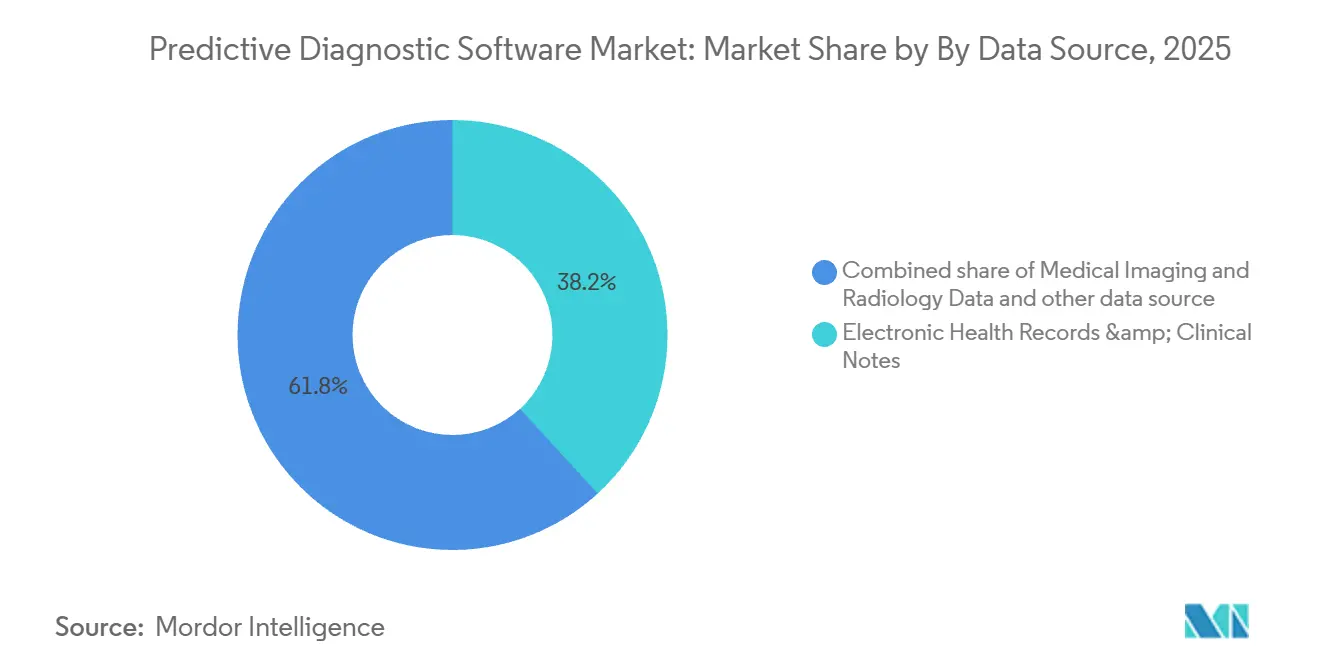
EHR Primacy Coexists with Genomic Data’s Disruptive TrajectoryElectronic health records and clinical notes accounted for 38.2% of revenue in 2025, the largest data-source share in the predictive diagnostic software market. Their position reflects widespread availability in institutional care and the longitudinal information recorded during treatment. Clinical notes add context that may not appear in structured fields. Medical imaging and radiology data support detection within imaging workflows. Laboratory and pathology information can support biochemical risk assessment and diagnostic interpretation. Claims and billing data remain useful for population-level payer analytics. Wearable, remote-monitoring, and Internet of Medical Things information is gaining relevance as hospital-at-home programs expand. Social, behavioral, and environmental data is less established because standardization and consent requirements remain difficult.
Genomic and multi-omic data is forecast to grow at an 18.4% CAGR through 2031, supported by lower sequencing costs and improved methods for combining molecular and clinical information. Tempus AI reported approximately 6,500 minimal residual disease tests in the first quarter of 2026, an increase of nearly 500% year over year. A 2026 Nature Genetics commentary described artificial intelligence integration of genomics, imaging, and electronic health record information as a developing route to clinical implementation. The information is particularly relevant to oncology and treatment-response assessment. It can help match patients to more specific testing or therapeutic pathways. Vendors must still make complex multi-omic workflows usable at the point of care. The predictive diagnostic software market is likely to favor platforms that can handle molecular data without isolating it from clinical records.
By Deployment:
Cloud Dominance Coexists with Edge AI’s Disruptive GrowthCloud-based deployment accounted for 48.6% of revenue in 2025 and represented the leading deployment model. Cloud systems offer scalable computing capacity and allow vendors to manage model updates. They can also connect efficiently with software-as-a-service electronic health record environments. On-premises deployment remains relevant where hospitals require close control of data and systems. Hybrid architectures combine local processing for sensitive information with cloud resources for model training or wider analytics. The predictive diagnostic software industry benefits from this flexibility because provider requirements vary by regulation and operating model. Cloud control of computing and update cycles can strengthen the position of large platform vendors. It can also place pressure on smaller integration specialists that depend on the same technical environment.
Edge and embedded deployment is forecast to grow at a 19.3% CAGR through 2031, the fastest deployment rate in the predictive diagnostic software market. It supports local inference where connectivity, latency, or privacy requirements make centralized processing less suitable. Axiomtek launched the mBOX603 medical edge platform in January 2026 for artificial intelligence-assisted CT and MRI reconstruction and real-time electronic medical record processing. Ambiq and CardioMedive also announced a cardiac monitoring solution using on-device inferencing for anomaly detection and predictive cardiovascular alerts. Local processing can be useful in imaging, monitoring, and other time-sensitive care settings. It also introduces semiconductor and device companies as possible participants in the predictive diagnostic software market. Vendors centered on cloud delivery need to adapt their products for environments where local processing is required.
By Application:
Remote Monitoring Challenges Clinical Diagnostics’ Volume DominanceClinical diagnostics accounted for 29.7% of revenue in 2025 and was the largest application segment. It includes oncology, cardiology, neurology, infectious disease, chronic and metabolic disease, and rare and genetic conditions. This concentration reflects the large amount of development and regulatory work directed toward diagnostic applications. Patient deterioration and sepsis prediction support hospital operations and acute care decisions. Readmission and length-of-stay prediction addresses capacity, discharge planning, and resource use. Preventive and population risk management supports outreach to patients with a heightened likelihood of future care needs. Treatment response and therapy optimization is becoming more relevant in oncology as biomarker-based patient stratification is used in clinical trials. Diagnostic utilization and stewardship also supports evidence-based test ordering for health systems under financial pressure.
Remote patient monitoring and home-based care is forecast to grow at a 19.1% CAGR through 2031 in the predictive diagnostic software market. Health systems are extending surveillance beyond hospital walls for post-discharge and chronic disease management. A 2026 systematic review found that machine learning applied to remote-monitoring information improved prediction of disease outcomes among patients with chronic conditions. This evidence supports the clinical use of data collected outside conventional care settings. It also reinforces the need for systems that can distinguish an actionable change from normal variation. Remote monitoring can connect predictive alerts with nurses, physicians, and care managers before an acute event occurs. Clinical trial and real-world evidence analytics form another application area because they can help identify suitable patients and track outcomes. The predictive diagnostic software market is therefore reaching into both direct care delivery and the information needs of life sciences organizations.
By End User:
Pharma and Biotech Redefine the Buyer ProfileHospitals and health systems held 42.4% of revenue in 2025, the largest end-user share in the predictive diagnostic software market. Their position is based on scale, inpatient monitoring needs, and access to regulatory-cleared clinical tools. Physician groups and clinics are a growing secondary group as ambulatory settings take on more chronic disease management. Diagnostic laboratories and pathology networks use predictive models for test ordering and result interpretation. Payers and accountable care organizations use population-level stratification to identify members at risk of costly acute episodes. Research institutes and academic medical centers contribute to clinical validation and methodological development. Public health agencies are an early-stage group that may use predictive tools in infectious disease surveillance. The range of users means vendors need different integration approaches, evidence standards, and commercial models.
Pharmaceutical and biotechnology companies are forecast to grow at a 19.6% CAGR through 2031, the fastest end-user rate. These organizations use predictive information to support biomarker discovery, patient stratification, and clinical development. Daiichi Sankyo announced a collaboration with Tempus AI in March 2026 to use the PRISM2 multimodal foundation model in an antibody drug conjugate oncology program. The work combines clinical trial information with Tempus’s real-world oncology database to create patient-selection models. This shows that life sciences buyers increasingly view predictive software as a clinical-development asset. Their demand is linked to the need to reduce uncertainty in trials rather than only to operational compliance. The predictive diagnostic software market can gain from this buyer group because its use cases extend from provider care to drug development. Research organizations remain relevant as they test models and develop evidence for new disease areas.
Geography Analysis
North America Predictive Diagnostic Software Market
North America accounted for 41.1% of revenue in 2025, supported by high electronic health record adoption, risk-based contracting, and a large clinical artificial intelligence ecosystem. The region has a substantial base of acute-care hospitals with digital records that can support predictive workflows. The proposed HTI-5 rule advances FHIR-based access and is expected to reduce fragmentation-related burden by USD 1.5 billion in total. Health systems and payers have a financial reason to identify high-cost conditions earlier when they operate under risk-bearing contracts. The region also contains large technology, health services, and life sciences firms that can fund clinical validation and integration. Optum announced a USD 3 billion artificial intelligence program for 2026 and 2027 that includes clinical decision support and a clinician-in-the-loop approach. Canada’s federated health-data initiatives and Mexico’s hospital digitization efforts add breadth beyond the United States.
Europe Predictive Diagnostic Software Market
Europe has no reported regional share or growth figure in the supplied material, but the predictive diagnostic software market is developing through regulated clinical applications and validation programs. Germany has become an important location for device certification and clinical artificial intelligence deployment. University Hospital Schleswig-Holstein’s implementation of MAIA provides an example of an EU MDR-certified patient-risk alerting tool. IKK Südwest became the first European health insurer to offer artificial intelligence-driven lung cancer diagnostics as a covered service through its work with contextflow. Europe also has large datasets that can support validation. Delphi-2M was validated on 1.93 million Danish patient records to predict the risk of more than 1,000 diagnoses. The European Union Artificial Intelligence Act and medical device rules add time and documentation requirements, while also setting standards that can favor well-validated products.
APAC, MEA and South America Predictive Diagnostic Software Market
Asia-Pacific is forecast to expand at a 19.5% CAGR through 2031, making it the fastest-growing regional part of the predictive diagnostic software market. China, India, Japan, South Korea, and Australia have different adoption paths but are broadening regional demand. China’s National Health Commission reported in 2025 that more than 1,200 Tier-3A hospitals used artificial intelligence-assisted radiology or pathology systems, and county-level remote imaging services had processed more than 68 million cases. China’s 15th Five-Year Plan for 2026 to 2030 prioritizes artificial intelligence in assisted diagnosis and precision medicine. Shanghai Jiao Tong University’s Xinhua Hospital introduced DeepRare in July 2025 and reported registrations from more than 600 hospitals and laboratories. South Korea’s hospital procurement programs and India’s telemedicine expansion add to regional coverage. The Middle East and Africa remains early stage, while Siemens Healthineers and Mediot AI announced a 2025 partnership for artificial intelligence healthcare infrastructure in Africa. South America is also at an earlier stage, with Brazil leading private hospital investment and other countries gaining access as cloud infrastructure costs decline.

Competitive Landscape
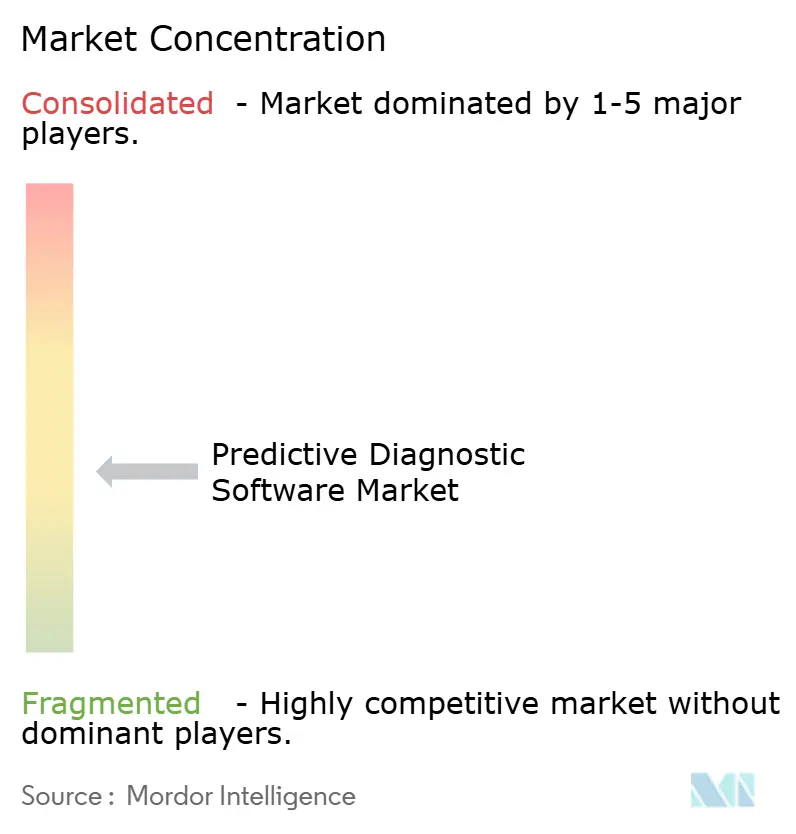
The predictive diagnostic software market is moderately fragmented. Analytics-focused companies including Tempus AI, Health Catalyst, IQVIA, Komodo Health, and MedeAnalytics compete with healthcare artificial intelligence units at Microsoft, Oracle, IBM, GE HealthCare, Siemens Healthineers, and Philips. The large technology and life sciences platforms bring broader infrastructure and existing customer relationships. Specialist vendors often differentiate through clinical data assets, disease-area knowledge, and focused applications. A leading strategy is to link models directly to electronic health record workflows rather than sell a separate analytics interface. Vendors also need model governance, regulatory capability, and evidence from clinical deployments. These requirements can make it difficult for a new supplier to enter a regulated care setting with only a technical model. The market structure still leaves room for firms that address specialized clinical problems or underserved provider groups.
Tempus AI acquired Paige in 2025 and launched Paige Predict in January 2026. The product uses H&E whole-slide images to predict the presence or absence of 123 biomarkers and oncogenic pathways across 16 cancer types. This move broadened the company’s digital pathology capability and strengthened its position in oncology-focused predictive work. IQVIA launched IQVIA.ai in March 2026, a unified agentic artificial intelligence platform built with NVIDIA technology. IQVIA reported that more than 150 intelligent agents had been deployed and that 19 of the top 20 pharmaceutical companies used its agents in their workflows. The company also has a patent filing for an unbiased extract, transform, and load approach to timed medical event prediction, which addresses temporal bias in risk modeling. These actions show competition around proprietary data, broader platform functions, and life sciences use cases.
The predictive diagnostic software market also has open opportunities in rare disease diagnosis, pediatric oncology risk modeling, and multi-omic treatment-response prediction. These areas have less established platform coverage than common clinical workflows. Veradigm, Inovalon, and CitiusTech are targeting ambulatory and physician-group settings that larger vendors may not prioritize. Tempus AI forecast 2026 revenue of USD 1.6 billion, representing year-over-year growth of approximately 25%, which supports the commercial relevance of proprietary multimodal data and model strategies. FDA Software as a Medical Device guidance and EU MDR certification can act as barriers to entry because vendors need evidence, documentation, and ongoing oversight. At the same time, those requirements can provide a quality signal to provider buyers. Consolidation and capability acquisition are likely to remain important where vendors seek faster access to data, pathology, genomics, or workflow capabilities.
Predictive Diagnostic Software Industry Leaders
IQVIA Holdings Inc.
Epic Systems Corporation
GE HealthCare Technologies Inc.
Koninklijke Philips N.V.
Veradigm LLC
- *Disclaimer: Major Players sorted in no particular order
Predictive Diagnostic Software Market Companies Covered in this Report
- CitiusTech
- Cotiviti, Inc.
- Datavant
- Epic Systems
- GE HealthCare Technologies Inc.
- Health Catalyst, Inc.
- IBM
- Inovalon, Inc.
- IQVIA
- Komodo Health, Inc.
- Mckesson
- MedeAnalytics
- Merative
- Microsoft
- Optum
- Oracle
- Koninklijke Philips
- SAS Institute
- Siemens Healthineers
- Tempus AI, Inc.
- Veradigm

Recent Industry Developments in Predictive Diagnostic Software Market
- July 2026: Dana-Farber and Massachusetts General Hospital published an artificial intelligence disease-prediction tool in Nature. Researchers trained the model on 683,000 patient electronic health record records to predict risk for 348 diseases.
- April 2026: Siemens Healthineers joined the Global Alzheimer’s Platform Foundation’s Bio-Hermes-002 study. The collaboration integrates blood-based and digital biomarker platforms with observational data across MRI, PET, and diverse populations.
- March 2026: IQVIA launched IQVIA.ai, a unified agentic artificial intelligence platform that uses NVIDIA Nemotron, NeMo Agent Toolkit, and Dynamo.
- January 2026: Tempus AI launched Paige Predict for digital pathology. The solution predicts 123 biomarkers and oncogenic molecular pathways across 16 cancer types from a single H&E whole-slide image.


Global Predictive Diagnostic Software Market Report Scope
| Predictive Diagnostic Software Platforms |
| Clinical Decision Support Modules |
| Diagnostic Risk-Stratification Engines |
| Predictive Monitoring and Early-Warning Applications |
| Implementation, Integration, and Managed Services |
| Maintenance, Validation, and Model-Governance Services |
| Predictive Analytics |
| Diagnostic Analytics |
| Prescriptive Analytics |
| Cognitive Analytics |
| Risk Scoring and Stratification |
| Anomaly Detection and Early Warning |
| Electronic Health Records and Clinical Notes |
| Medical Imaging and Radiology Data |
| Laboratory and Pathology Data |
| Genomic and Multi-Omic Data |
| Claims and Billing Data |
| Wearable, Remote Monitoring, and Internet of Medical Things Data |
| Social, Behavioral, and Environmental Data |
| On-Premises |
| Cloud-Based |
| Hybrid |
| Edge and Embedded Deployment |
| Clinical Diagnostics | Oncology |
| Cardiology | |
| Neurology | |
| Infectious Diseases | |
| Chronic and Metabolic Diseases | |
| Rare and Genetic Diseases | |
| Patient Deterioration and Sepsis Prediction | |
| Readmission, Length-of-Stay, and Mortality Prediction | |
| Preventive and Population Risk Management | |
| Treatment Response and Therapy Optimization | |
| Remote Patient Monitoring and Home-Based Care | |
| Clinical Trial and Real-World Evidence Analytics | |
| Diagnostic Utilization and Stewardship |
| Hospitals and Health Systems |
| Physician Groups and Clinics |
| Diagnostic Laboratories and Pathology Networks |
| Payers and Accountable Care Organizations |
| Pharmaceutical and Biotechnology Companies |
| Research Institutes and Academic Medical Centers |
| Public Health Agencies |
| North America | United States |
| Canada | |
| Mexico | |
| Europe | Germany |
| United Kingdom | |
| France | |
| Italy | |
| Spain | |
| Rest of Europe | |
| Asia-Pacific | China |
| Japan | |
| India | |
| South Korea | |
| Australia | |
| Rest of Asia-Pacific | |
| Middle East and Africa | GCC |
| South Africa | |
| Rest of Middle East and Africa | |
| South America | Brazil |
| Argentina | |
| Rest of South America |
| Product and Offering | Predictive Diagnostic Software Platforms | |
| Clinical Decision Support Modules | ||
| Diagnostic Risk-Stratification Engines | ||
| Predictive Monitoring and Early-Warning Applications | ||
| Implementation, Integration, and Managed Services | ||
| Maintenance, Validation, and Model-Governance Services | ||
| Analytics Function | Predictive Analytics | |
| Diagnostic Analytics | ||
| Prescriptive Analytics | ||
| Cognitive Analytics | ||
| Risk Scoring and Stratification | ||
| Anomaly Detection and Early Warning | ||
| Data Source | Electronic Health Records and Clinical Notes | |
| Medical Imaging and Radiology Data | ||
| Laboratory and Pathology Data | ||
| Genomic and Multi-Omic Data | ||
| Claims and Billing Data | ||
| Wearable, Remote Monitoring, and Internet of Medical Things Data | ||
| Social, Behavioral, and Environmental Data | ||
| Deployment | On-Premises | |
| Cloud-Based | ||
| Hybrid | ||
| Edge and Embedded Deployment | ||
| Application | Clinical Diagnostics | Oncology |
| Cardiology | ||
| Neurology | ||
| Infectious Diseases | ||
| Chronic and Metabolic Diseases | ||
| Rare and Genetic Diseases | ||
| Patient Deterioration and Sepsis Prediction | ||
| Readmission, Length-of-Stay, and Mortality Prediction | ||
| Preventive and Population Risk Management | ||
| Treatment Response and Therapy Optimization | ||
| Remote Patient Monitoring and Home-Based Care | ||
| Clinical Trial and Real-World Evidence Analytics | ||
| Diagnostic Utilization and Stewardship | ||
| Segmentation by End User | Hospitals and Health Systems | |
| Physician Groups and Clinics | ||
| Diagnostic Laboratories and Pathology Networks | ||
| Payers and Accountable Care Organizations | ||
| Pharmaceutical and Biotechnology Companies | ||
| Research Institutes and Academic Medical Centers | ||
| Public Health Agencies | ||
| Segmentation by Geography | North America | United States |
| Canada | ||
| Mexico | ||
| Europe | Germany | |
| United Kingdom | ||
| France | ||
| Italy | ||
| Spain | ||
| Rest of Europe | ||
| Asia-Pacific | China | |
| Japan | ||
| India | ||
| South Korea | ||
| Australia | ||
| Rest of Asia-Pacific | ||
| Middle East and Africa | GCC | |
| South Africa | ||
| Rest of Middle East and Africa | ||
| South America | Brazil | |
| Argentina | ||
| Rest of South America | ||


Key Questions Answered in the Report
What is driving demand for predictive diagnostic software?
Demand is supported by wider clinical data availability, value-based care, electronic health record integration, and the need for earlier detection of high-cost conditions. Continuous data from records, imaging, genomic testing, and connected devices gives providers more opportunities to identify risk before an acute episode occurs.
How large is predictive diagnostic software in 2026?
The supplied estimate places the sector at USD 1.7 billion in 2026, with a forecast of USD 3.8 billion by 2031 at an 18% CAGR. The forecast reflects expected use across provider organizations and life sciences organizations, rather than one clinical workflow alone.
Which deployment model leads adoption?
Cloud-based deployment led with 48.6% revenue in 2025, while edge and embedded systems are forecast to grow at a 19.3% CAGR through 2031. Cloud supports scalable updates, while edge processing is useful when real-time response, connectivity, or privacy requires local inference.
Which organizations are adopting these tools most quickly?
Hospitals and health systems were the largest users with 42.4% revenue in 2025, while pharmaceutical and biotechnology companies are forecast to grow at a 19.6% CAGR. Hospital demand centers on monitoring and clinical workflows, while life sciences demand centers on biomarker discovery and patient selection.
Why are electronic health record integrations important?
Integrations place risk alerts inside routine clinical workflows and can reduce reliance on separate dashboards or manual data review. This matters because a prediction must reach the appropriate clinician or care team in time to support a practical response.
What limits adoption of predictive diagnostic platforms?
Fragmented patient records, liability concerns, limited implementation skills, and ongoing model monitoring requirements can delay wider deployment. Provider organizations also need consent, data governance, and validation processes that support reliable use across their own patient populations. They must decide how alerts are reviewed, how performance is checked after updates, and when a clinician should override a recommendation. These operating requirements affect procurement timelines, staffing needs, and the scope of each deployment.
Page last updated on:





