
Polyglycerol Ester Market Size and Share
Market Overview
| Study Period | 2021 - 2031 |
|---|---|
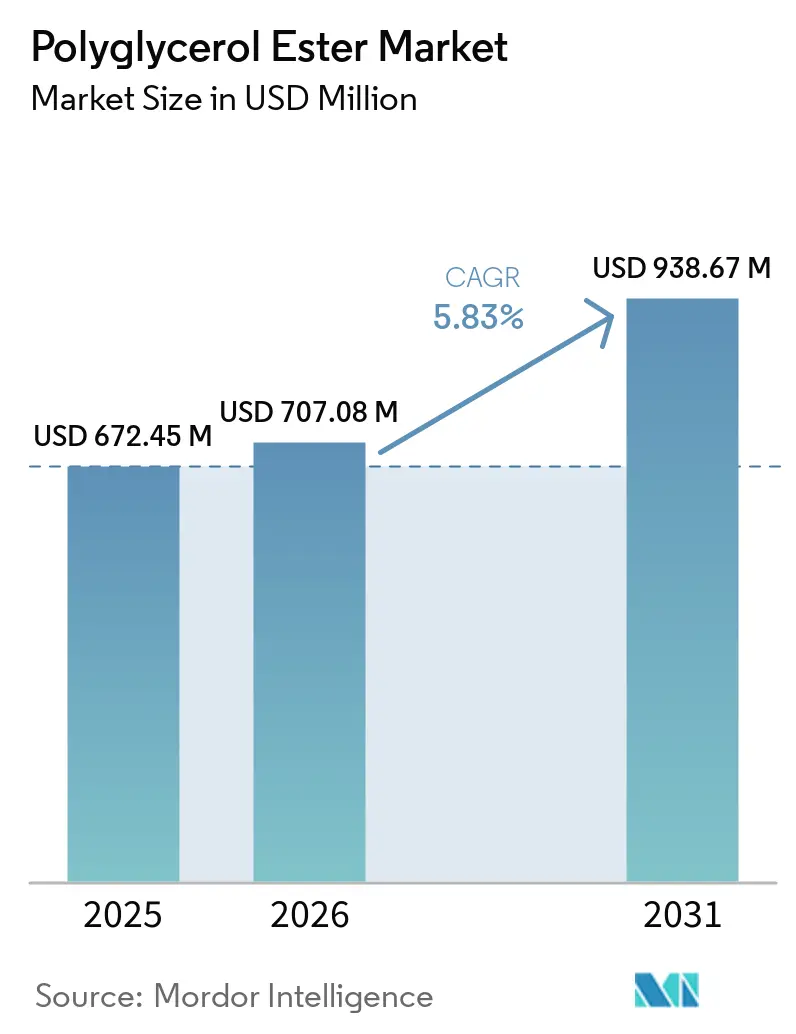
| Market Size (2026) | USD 707.08 Million |
| Market Size (2031) | USD 938.67 Million |
| Growth Rate (2026 - 2031) | 5.83 % |
| Fastest Growing Market | Asia-Pacific |
| Largest Market | Asia-Pacific |
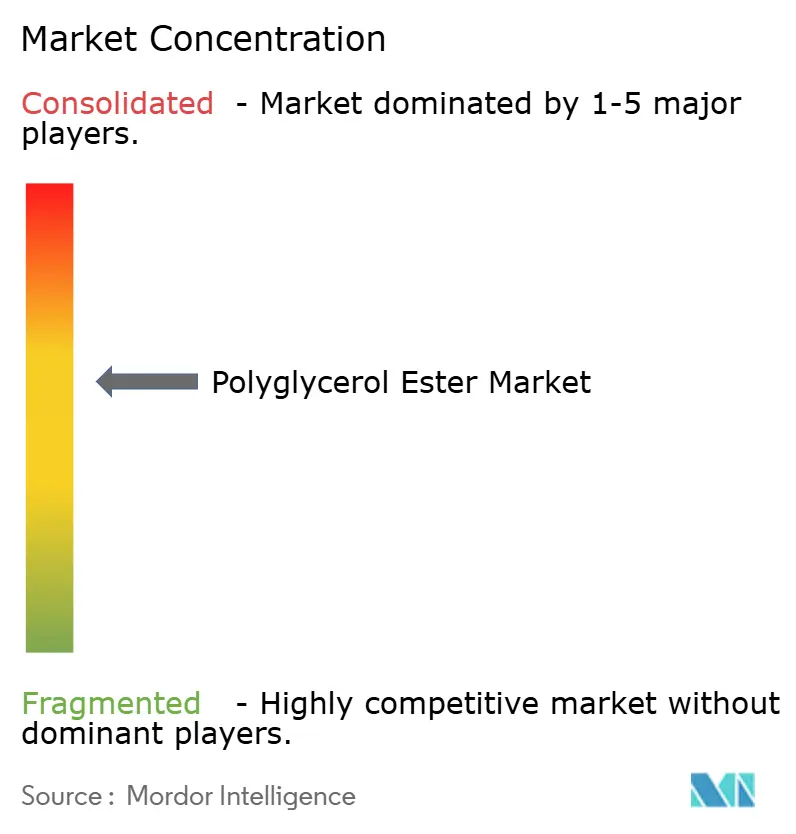
| Market Concentration | Medium |
Major Players *Disclaimer: Major Players sorted in no particular order Image © Mordor Intelligence. Reuse requires attribution under CC BY 4.0. | |
Polyglycerol Ester Market Analysis by Mordor Intelligence
The Polyglycerol Ester Market size was valued at USD 672.45 million in 2025 and is estimated to grow from USD 707.08 million in 2026 to USD 938.67 million by 2031, at a CAGR of 5.83% during the forecast period (2026-2031). Food, pharmaceutical, and personal care applications drive demand as formulators require emulsifiers capable of performing multiple functions within a single system. The polyglycerol ester market benefits from growing interest in biodegradable, non-ethoxylated ingredients, particularly as manufacturers reconsider synthetic emulsifiers. Polyglycerol esters provide a hydrophile-lipophile balance range of 1.4 to 19.0 within a single chemical family, supporting their use across varied formulations. The absence of 1,4-dioxane associated with ethoxylation positions the polyglycerol ester market in reformulation programs seeking alternatives to polyethylene glycol (PEG)-based surfactants. Competition centers on purity, application support, sustainable sourcing, and the ability to supply specialty grades, while vegetable oil costs continue to affect margins across the polyglycerol ester market.
Key Report Takeaways
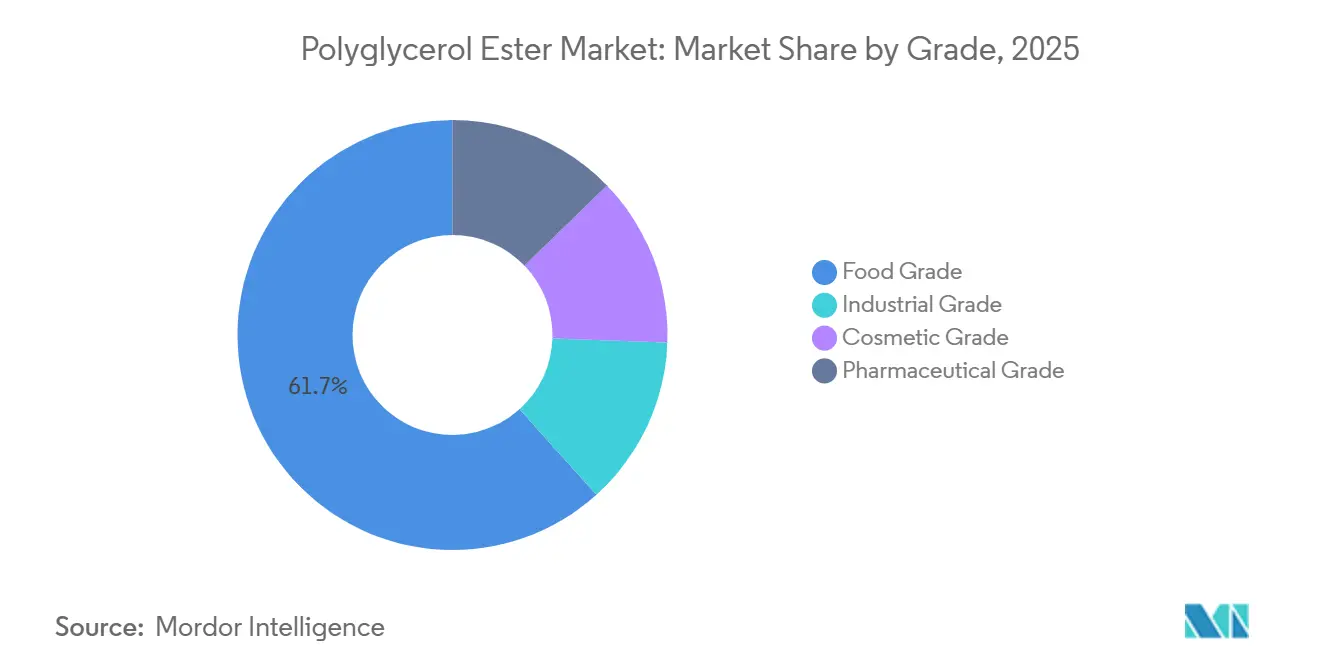
- By grade, food grade held 61.67% of the Polyglycerol Ester Market share in 2025, while pharmaceutical grade is forecast to grow at a CAGR of 6.43% through 2031.
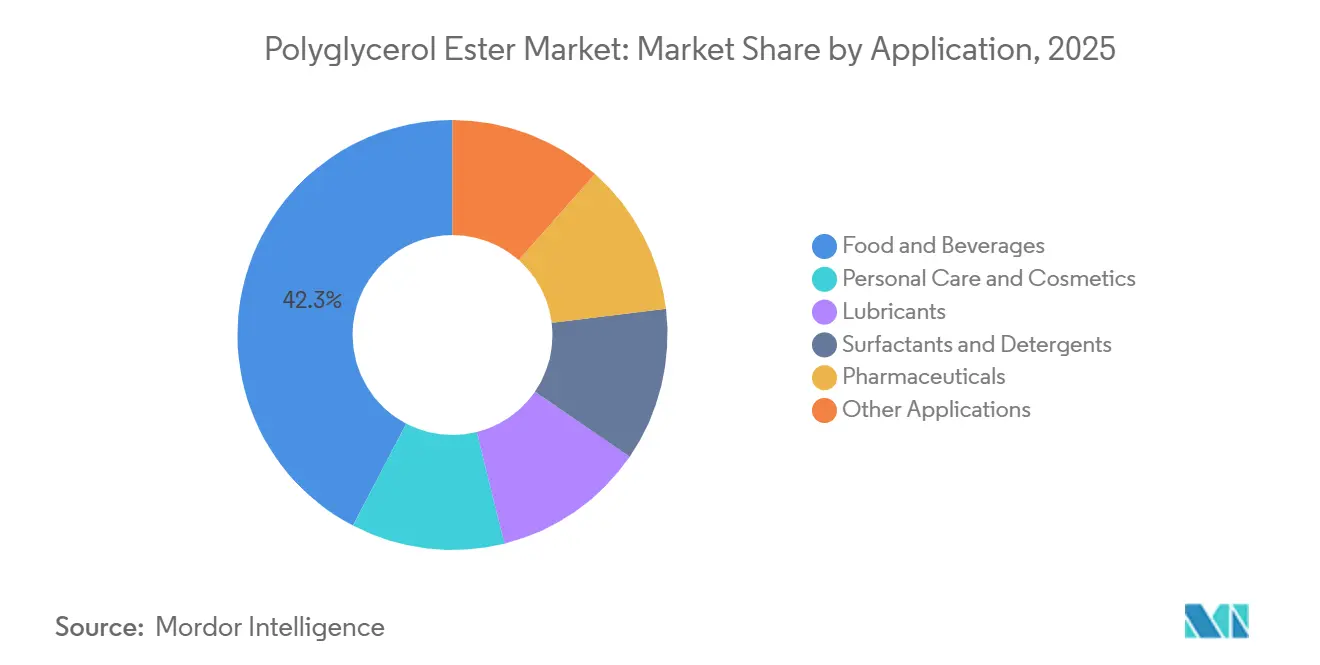
- By application, food and beverages accounted for 42.34% of the Polyglycerol Ester Market share in 2025, while personal care and cosmetics are forecast to grow at a CAGR of 6.67% through 2031.
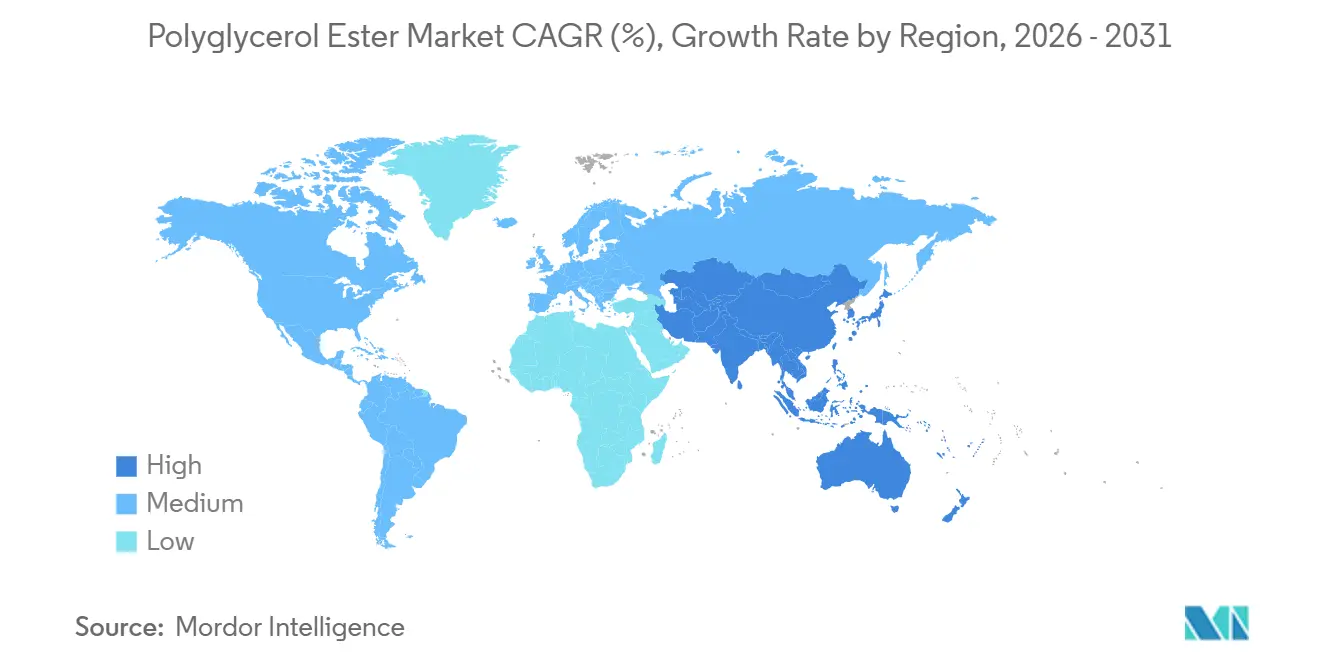
- By geography, Asia-Pacific held 40.86% of the Polyglycerol Ester Market share in 2025 and is forecast to grow at a CAGR of 6.51% through 2031.
Note: Market size and forecast figures in this report are generated using Mordor Intelligence’s proprietary estimation framework, updated with the latest available data and insights as of January 2026.
Global Polyglycerol Ester Market Trends and Insights
Drivers Impact Analysis*
| Drivers | (~) % Impact on CAGR Forecast | Geographic Relevance | Impact Timeline |
|---|---|---|---|
| Rising Demand for Clean-Label and Naturally Derived Emulsifiers | +1.5% | Global, with the highest intensity in North America and Western Europe, with spillover to the Asia-Pacific modern retail | Medium term (2-4 years) |
| Expansion of Processed, Convenience, and Plant-Based Foods | +1.4% | Asia-Pacific core, including China, India, and ASEAN, with secondary gains in North America and the Middle East | Short term (≤ 2 years) |
| Growth of Pharmaceutical and Nutraceutical Formulation Applications | +0.9% | North America and Europe, with Asia-Pacific emerging | Long term (≥ 4 years) |
| Increasing Adoption of Polyethylene Glycol (PEG)-Free and Biodegradable Personal Care Ingredients | +1.0% | Global, led by the European Union, South Korea, and North America | Medium term (2-4 years) |
| Enzymatic and Low-Temperature Esterification for Specialty Grades | +0.7% | Europe, with technology transfer to Asia-Pacific and North America | Long term (≥ 4 years) |
| Source: Mordor Intelligence | |||
Rising Demand for Clean-Label and Naturally Derived Emulsifiers
Consumer product manufacturers are reformulating ingredient lists to reduce the use of synthetic additives, supporting demand in the polyglycerol ester market. Polyglycerol esters are derived from glycerol and fatty acids sourced from vegetable oils, allowing them to meet requirements for both recognizable ingredients and reliable emulsification. Unlike PEG-based alternatives, which can generate 1,4-dioxane during ethoxylation, polyglycerol ester (PGE) synthesis does not involve this process. California Assembly Bill 1264, enacted in October 2025, established a statutory definition of ultra-processed food and identified emulsifiers and emulsifier salts as substances relevant to school-meal requirements beginning in July 2029[1]“Assembly Bill 1264,” California Legislative Information, ca.gov.. This legislation has drawn greater attention to ingredient selection among food manufacturers and has increased interest in plant-derived emulsifiers within the polyglycerol ester market.
Expansion of Processed, Convenience, and Plant-Based Foods
Growth in packaged and convenience food consumption across Asia-Pacific and the Middle East is sustaining demand for food-grade emulsifiers. Plant-based dairy alternatives require systems that replicate the stability and mouthfeel associated with fat globules. Higher hydrophilic-lipophilic balance (HLB) grades of polyglycerol esters can form stable oil-in-water emulsions to meet this need. Research has shown that at a concentration of 0.1%, PGEs reduced interfacial tension between corn oil and water from 23.9 mN/m to 1.7 mN/m, enabling formulators to maintain stability with a lower total emulsifier load. Food-grade PGEs can also support fat-reduction objectives while preserving texture, which is relevant to reformulation activity among bakery producers in India.
Increasing Adoption of PEG-Free and Biodegradable Personal Care Ingredients
Personal care buyers are seeking alternatives to polyethylene glycol-derived surfactants. In October 2024, BASF introduced Emulgade Verde 10 OL and Emulgade Verde 10 MS, which are Polyglyceryl-10 Oleate and Polyglyceryl-10 Stearate products made from 100% renewable feedstocks. BASF stated that these products carry COSMOS and NATRUE approvals and have an ISO 16128 Natural Origin Index of 1. The products also passed dermatological occlusive patch testing on sensitive skin and were classified as non-comedogenic, helping manufacturers address sensitive-skin formulation requirements. In June 2026, BASF introduced Emulgade Verde PE in Asia-Pacific at in-cosmetics Korea, extending its platform to niosome-based active delivery. These launches indicate that the polyglycerol ester market is moving beyond basic emulsification toward active delivery and specialty skincare applications.
Growth of Pharmaceutical and Nutraceutical Formulation Applications
More than 75% of new chemical entities in pharmaceutical development are poorly water-soluble, creating a continuing need for excipients that can improve oral bioavailability without relying on synthetic polymers. PGE-based lipid excipients support lipid-based drug delivery and are relevant to the polyglycerol ester market. IOI Oleo developed its LipoGalen series for hot-melt extrusion at lower processing temperatures, helping stabilize amorphous drug dispersions that could otherwise crystallize. In vitro studies reported that polyglycerol fatty ester (PGFE)-based nanostructured lipid carriers had a non-cytotoxic threshold of 0.5% in Caco-2 cells, compared with 0.25% for PEG-ester analogs. Polyglyceryl-10 monostearate (PG-10)-coated liposomes demonstrated longer circulation and a lower tendency to induce anti-PEG IgM antibodies than PEGylated liposomes, while PGFEs stabilized curcumin dispersions and limited lycopene isomerization during storage.
Restraints Impact Analysis*
| Restraints | (~) % Impact on CAGR Forecast | Geographic Relevance | Impact Timeline |
|---|---|---|---|
| Feedstock Price Volatility and Vegetable-Oil Dependence | -1.2% | Global, with the greatest exposure in Asia-Pacific and Europe, where palm and rapeseed drive raw-material costs | Short term (≤ 2 years) |
| Regulatory Divergence Across End Uses | -0.8% | European Union, North America, and Asia-Pacific | Medium term (2-4 years) |
| Batch-to-Batch Performance Variation | -0.6% | Global, particularly in industrial-grade and pharmaceutical-grade applications | Long term (≥ 4 years) |
| Source: Mordor Intelligence | |||
Feedstock Price Volatility and Dependence on Vegetable Oils
Polyglycerol ester production depends mainly on palm, rapeseed, and sunflower oil feedstocks, exposing the polyglycerol ester market to changes in vegetable oil availability and prices. The Food and Agriculture Organization (FAO) Vegetable Oil Price Index averaged 166.8 points in July 2025, a 3-year high linked to demand from biofuel programs and weaker rapeseed and sunflower growing conditions[2]“FAO Food Price Index,” Food and Agriculture Organization of the United Nations, fao.org.. A USD 1,000-per-ton increase in palm oil raises finished polyglycerol ester (PGE) costs by USD 75 to USD 90 per ton under the cited cost model. Quarterly pricing practices can pass these movements through to finished products after a 1- to 2-quarter lag. Producers with integrated feedstock positions or long-term supply arrangements with Roundtable on Sustainable Palm Oil (RSPO)-certified mills are better placed to manage this pressure than smaller regional suppliers.
Regulatory Divergence Across Food, Cosmetic, and Pharmaceutical Applications
Polyglycerol esters are subject to different regulatory requirements depending on their application in food, cosmetics, pharmaceuticals, or industry. The European Commission adopted Regulation 2023/1329, which amended technical specifications for E475 and E476. Its food-additive re-evaluation program can result in revised or withdrawn authorizations when technical information is insufficient. As of February 2026, 71 additives remained under active re-evaluation by the European Food Safety Authority (EFSA), creating planning uncertainty for formulators using E475. In the United States, the FDA proposed a rule on August 10, 2026, to strengthen oversight of substances claimed as generally recognized as safe. New pharmaceutical-grade products must also meet separate drug-master-file or excipient-master-file requirements by jurisdiction, which can add 18 to 36 months to commercialization schedules.
*Our forecasts treat driver/restraint impacts as directional, not additive. The impact forecasts reflect baseline growth, mix effects, and variable interactions.
Segment Analysis
By Grade: Food Grade Dominates, Pharmaceutical Grade Outpaces
Food grade held 61.67% of the Polyglycerol Ester Market share in 2025. This position reflects long-standing use in bakery, confectionery, dairy, margarine, and edible oil processing. Food-grade polyglycerol esters (PGEs) modify crystallization behavior, a key functional requirement across these applications. Palsgaard PGE 1105 and PGE 1117 accelerate palm-olein crystallization, while PGE 1155 delays crystallization in margarines and spreads. This ability to support different crystallization outcomes makes substitution with alternative ingredients difficult at a comparable cost.
Food-grade also benefits from established regulatory frameworks in the United States and Europe. U.S. food-use listings include polyglycerol esters of fatty acids, and the European framework identifies E475 for polyglycerol esters of fatty acids. Cosmetic grade occupies a middle position between pharmaceutical and industrial grades, as brands require International Nomenclature of Cosmetic Ingredients (INCI)-listed emulsifiers that meet applicable cosmetic regulations. Pharmaceutical grade is forecast to grow at a CAGR of 6.43% through 2031, making it the fastest-growing grade in the Polyglycerol Ester Market. This growth is driven by demand for solubilization strategies for Biopharmaceutics Classification System (BCS) Class II and IV compounds. Industrial grade remains the smallest grade by value, though it is used in lubricants and agrochemical applications where biodegradable materials are increasingly specified.



By Application: Food and Beverages Leads by Output While Personal Care Records Fastest Growth
Food and beverages accounted for 42.34% of the Polyglycerol Ester Market size in 2025. Bakery, confectionery, and dairy alternatives account for much of this segment's output. Ready-to-eat meal and plant-based meat producers are adopting PGEs as texture-building ingredients in place of more complex emulsifier combinations. A single-component PGE system can reduce label complexity while supporting stability in chilled and frozen products. PG-2, PG-3, and PG-6 monolaurates have demonstrated antibacterial activity against Gram-positive organisms, including S. aureus and B. subtilis.
Personal care and cosmetics are forecast to grow at a CAGR of 6.67% through 2031. Brands are removing polyethylene glycols (PEGs) from cleansers, rinse-off products, and sun-care formulations, and polyglyceryl esters can provide comparable hydrophilic-lipophilic balance (HLB) performance. The Polyglycerol Ester Market also serves pharmaceutical applications as pharmaceutical-grade production expands. PGEs are used in lubricants, where environmental requirements favor biodegradable ingredients, particularly in offshore and marine equipment. Surfactants and detergents remain in the early stages, as PGE biodegradability can support green-chemistry-certified formulations. Oleon filed a 2025 patent application for Polyglycerol-10 fatty acid ester compositions used in tight-oil recovery, indicating that industrial uses extend beyond established applications.
Geography Analysis
Asia-Pacific held 40.86% of the Polyglycerol Ester Market share in 2025 and is forecast to expand at a CAGR of 6.51% through 2031. China serves as a regional manufacturing base, combining glycerol from biodiesel byproducts with soybean and palm feedstocks. This supply position supports competitive production of food-grade and cosmetic-grade PGEs. India represents a high-growth market, driven by rising demand for packaged food through modern retail channels. Food labeling requirements are also directing attention toward identifiable and functional ingredients in packaged foods.
Japan and South Korea support demand for higher-purity grades. Riken Vitamin, Nisshin Oilio, Sakamoto Yakuhin Kogyo, and Taiyo Kagaku supply precision-specified emulsifiers to confectionery and cosmetic supply chains in Japan. South Korea's cosmetics producers use Polyglyceryl-10 grades in microbiome-friendly and sensitive-skin product lines. ASEAN countries offer further potential as modern retail becomes more widely available and processed-food consumption rises with urbanization. These conditions keep the Asia-Pacific central to the Polyglycerol Ester Market.
North America and Europe are mature regions with active reformulation activity and regulatory requirements. North American demand is driven by clean-label packaged foods and pharmaceutical excipient needs, while the FDA's August 2026 Generally Recognized as Safe (GRAS) proposal adds regulatory complexity. Europe applies the strictest regional requirements through the E475 review process and Regulation 2023/1329. BASF, Evonik, Stéarinerie Dubois, and Oleon operate production facilities in Germany, France, and the Netherlands. South America is emerging as a production base through Oleon's presence in Brazil. At the same time, the Middle East and Africa remain the smallest region, with Gulf countries expanding processed-food manufacturing and Saudi Arabia and South Africa emerging as demand centers.

Competitive Landscape
The polyglycerol ester market is moderately consolidated. BASF, Evonik, Croda, and Oleon compete with Japanese suppliers, including Riken Vitamin, Sakamoto Yakuhin Kogyo, and Nisshin Oilio. European suppliers differentiate through application engineering, sustainability certifications, and pharmaceutical-grade manufacturing capacity. Japanese companies have established relationships in the bakery and confectionery supply chains. Chinese producers, including Foodchem International, compete primarily on cost in food-grade and industrial-grade products.
Sustainability credentials, pharmaceutical-grade capability, and proximity to Asia-Pacific customers shape competitive strategies in the polyglycerol ester market. Croda's Cithrol PGE series uses Roundtable on Sustainable Palm Oil (RSPO)-certified palm derivatives, addressing the sourcing requirements of customers seeking certified materials. IOI Oleo's LipoGalen portfolio focuses on pharmaceutical-grade applications and lower-temperature hot-melt extrusion uses. In September 2024, Evonik opened an enzymatic esterification plant in Steinau, Germany, stating that the facility can reduce the climate footprint of ester production by more than 60%.
In February 2025, thyssenkrupp Uhde and Novonesis introduced enzymatic processes that can be retrofitted to existing chemical processes. The technology can reduce reaction by-products by up to 60%, making specialty-grade production more accessible to mid-tier suppliers. BASF expanded its Verde platform in June 2026 with a niosome-based delivery system for skincare applications in the Asia-Pacific region. Palsgaard reported EUR 314 million in turnover in 2024 and stated that its global production was carbon-neutral, supporting its positioning with European food-brand procurement teams. The polyglycerol ester market remains competitive, as established suppliers retain technical and customer advantages while lower-cost suppliers continue to narrow the price gap.
Polyglycerol Ester Industry Leaders
Croda International Plc
BASF
Evonik Industries AG
Lonza
CLARIANT
- *Disclaimer: Major Players sorted in no particular order

Recent Industry Developments
- August 2026: The FDA proposed a new rule to strengthen oversight of substances claimed as Generally Recognized as Safe, including polyglycerol esters used as food additives. The proposed framework requires greater transparency and public accountability for GRAS self-determinations, with potential implications for specialty-grade polyglycerol ester producers operating under company-filed GRAS notices for novel applications.
- June 2026: BASF Personal Care unveiled Emulgade Verde PE at in-cosmetics Korea 2026 in Seoul, marking the first Asia-Pacific launch of a niosome-based polyglycerol ester delivery system designed to simplify hydrophilic active delivery in skincare formulations. The launch reflected BASF's efforts to expand its Verde platform beyond basic emulsification into active-delivery applications across Asia.


Global Polyglycerol Ester Market Report Scope
Polyglycerol esters are emulsifiers formed by reacting fats or fatty acids with polymerized glycerol. Regulated for food use, these compounds must contain no more than 10 polymeric glycerol units. They function by reducing the surface tension between immiscible substances, such as oil and water, thereby enabling uniform mixing and improving the texture, stability, and shelf life of food products.
The polyglycerol ester market is segmented by grade, application, and geography. By grade, the market is segmented into food grade, pharmaceutical grade, industrial grade, and cosmetic grade. By application, the market is segmented into food and beverages, personal care and cosmetics, lubricants, surfactants and detergents, pharmaceuticals, and other applications. The report also covers market size and forecasts for polyglycerol ester across 15 countries in major regions. The market sizes and forecasts are provided in terms of value (USD).
| Food Grade |
| Pharmaceutical Grade |
| Industrial Grade |
| Cosmetic Grade |
| Food and Beverages |
| Personal Care and Cosmetics |
| Lubricants |
| Surfactants and Detergents |
| Pharmaceuticals |
| Other Applications |
| Asia-Pacific | China |
| India | |
| Japan | |
| South Korea | |
| ASEAN Countries | |
| Rest of Asia-Pacific | |
| North America | United States |
| Canada | |
| Mexico | |
| Europe | Germany |
| United Kingdom | |
| France | |
| Italy | |
| NORDIC Countries | |
| Rest of Europe | |
| South America | Brazil |
| Argentina | |
| Rest of South America | |
| Middle East and Africa | Saudi Arabia |
| South Africa | |
| Rest of Middle East and Africa |
| By Grade | Food Grade | |
| Pharmaceutical Grade | ||
| Industrial Grade | ||
| Cosmetic Grade | ||
| By Application | Food and Beverages | |
| Personal Care and Cosmetics | ||
| Lubricants | ||
| Surfactants and Detergents | ||
| Pharmaceuticals | ||
| Other Applications | ||
| By Geography | Asia-Pacific | China |
| India | ||
| Japan | ||
| South Korea | ||
| ASEAN Countries | ||
| Rest of Asia-Pacific | ||
| North America | United States | |
| Canada | ||
| Mexico | ||
| Europe | Germany | |
| United Kingdom | ||
| France | ||
| Italy | ||
| NORDIC Countries | ||
| Rest of Europe | ||
| South America | Brazil | |
| Argentina | ||
| Rest of South America | ||
| Middle East and Africa | Saudi Arabia | |
| South Africa | ||
| Rest of Middle East and Africa | ||


Key Questions Answered in the Report
What is current market size of Polyglycerol Ester Market?
The Polyglycerol Ester Market size was valued at USD 672.45 million in 2025 and is estimated to grow from USD 707.08 million in 2026 to USD 938.67 million by 2031, at a CAGR of 5.83% during the forecast period (2026-2031).
Which grade has the largest share?
Food grade accounted for 61.67% of the value in 2025 due to its established use in bakery, confectionery, dairy, and edible oil processing.
Which application is growing fastest?
Personal care and cosmetics are forecast to grow at a CAGR of 6.67% through 2031 as brands replace PEG-based ingredients.
Which region leads in global demand?
Asia-Pacific held 40.86% of the value in 2025 and is forecast to grow at a CAGR of 6.51% through 2031.
Page last updated on:





