
Polycystic Ovary Syndrome (PCOS) Market Size and Share
Market Overview
| Study Period | 2021 - 2032 |
|---|---|
| Market Size (2027) | USD 9.72 Billion |
| Market Size (2032) | USD 14.06 Billion |
| Growth Rate (2027 - 2032) | 7.66 % |
| Fastest Growing Market | Asia-Pacific |
| Largest Market | North America |
| Market Concentration | Medium |
Major Players *Disclaimer: Major Players sorted in no particular order Image © Mordor Intelligence. Reuse requires attribution under CC BY 4.0. | |
Polycystic Ovary Syndrome (PCOS) Market Analysis by Mordor Intelligence
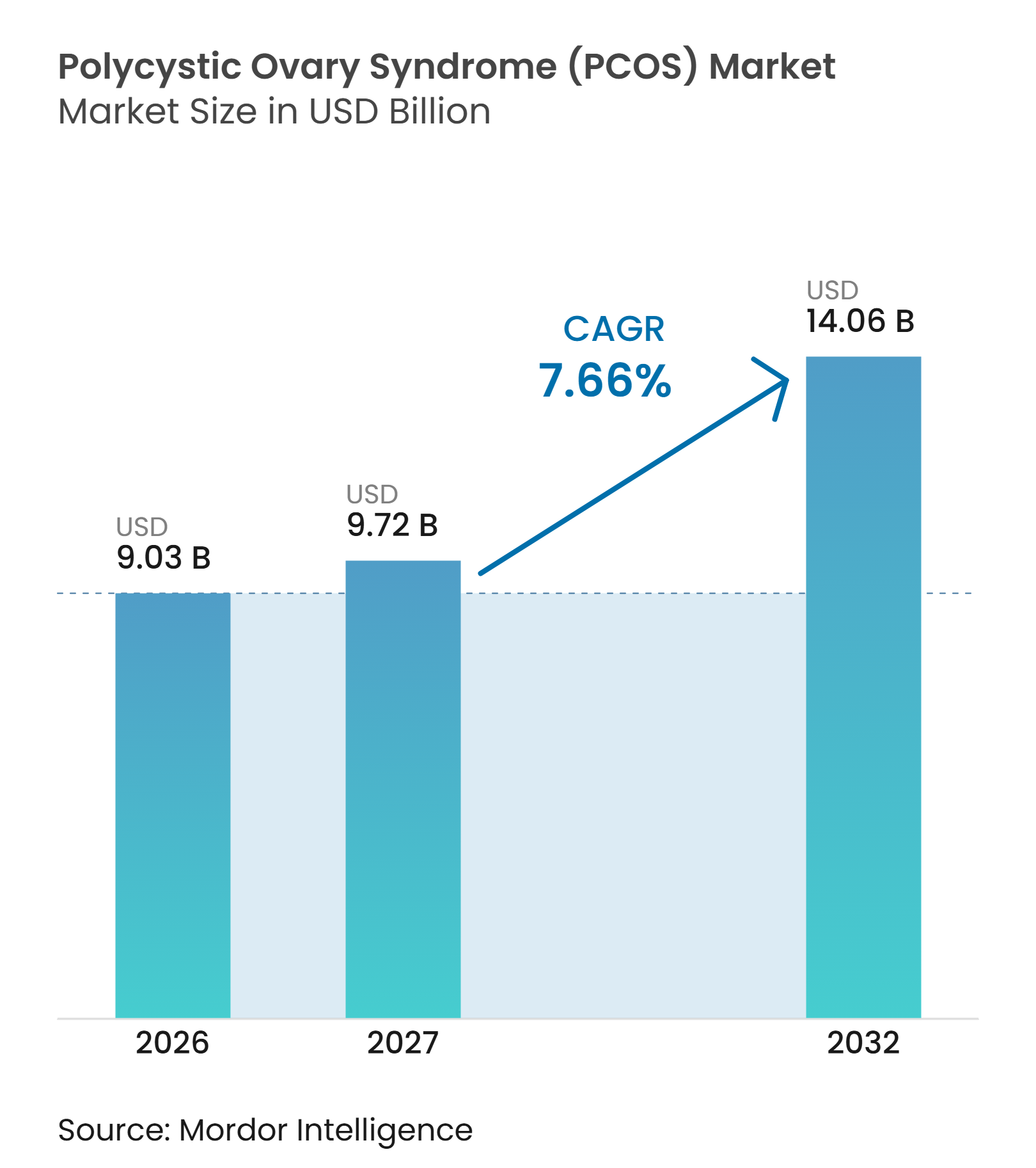
The Polycystic Ovary Syndrome Market size was valued at USD 9.03 billion in 2026 and is estimated to grow from USD 9.72 billion in 2027 to reach USD 14.06 billion by 2032, at a CAGR of 7.66% during the forecast period (2027-2032).
The polycystic ovary syndrome (PCOS) market is moving beyond a care model centered on symptom control toward a broader range of metabolic, reproductive, and diagnostic services. PCOS affects 8% to 13% of women of reproductive age worldwide, while a substantial share of cases has remained undiagnosed, leaving a large patient population outside structured care. The wider use of GLP-1 receptor agonists, blood-based anti-Müllerian hormone testing, and fertility care is increasing the integration of metabolic treatment and reproductive management. This shift creates opportunities for laboratory providers, fertility clinics, and treatment providers that can support patients throughout the care journey. However, the market remains dependent on off-label treatment use because no therapy has broad regulatory approval for the underlying PCOS disease process.
Key Report Takeaways
- By product type, treatment type held 77.56% of polycystic ovary syndrome market share in 2026, while diagnostic type is projected to expand at a 9.28% CAGR through 2032.
- By patient need, menstrual-cycle regulation held 44.93% of the polycystic ovary syndrome market share in 2026, while fertility and ovulation management is projected to expand at a 10.12% CAGR through 2032.
- By end user, hospitals and clinics held a 55.67% share of the PCOS category in 2026, while diagnostic laboratories are projected to expand at an 11.23% CAGR through 2032.
- By distribution channel, hospital pharmacies held a 56.89% share of the PCOS category in 2026, while online pharmacies and telehealth platforms are projected to expand at a 10.45% CAGR through 2032.
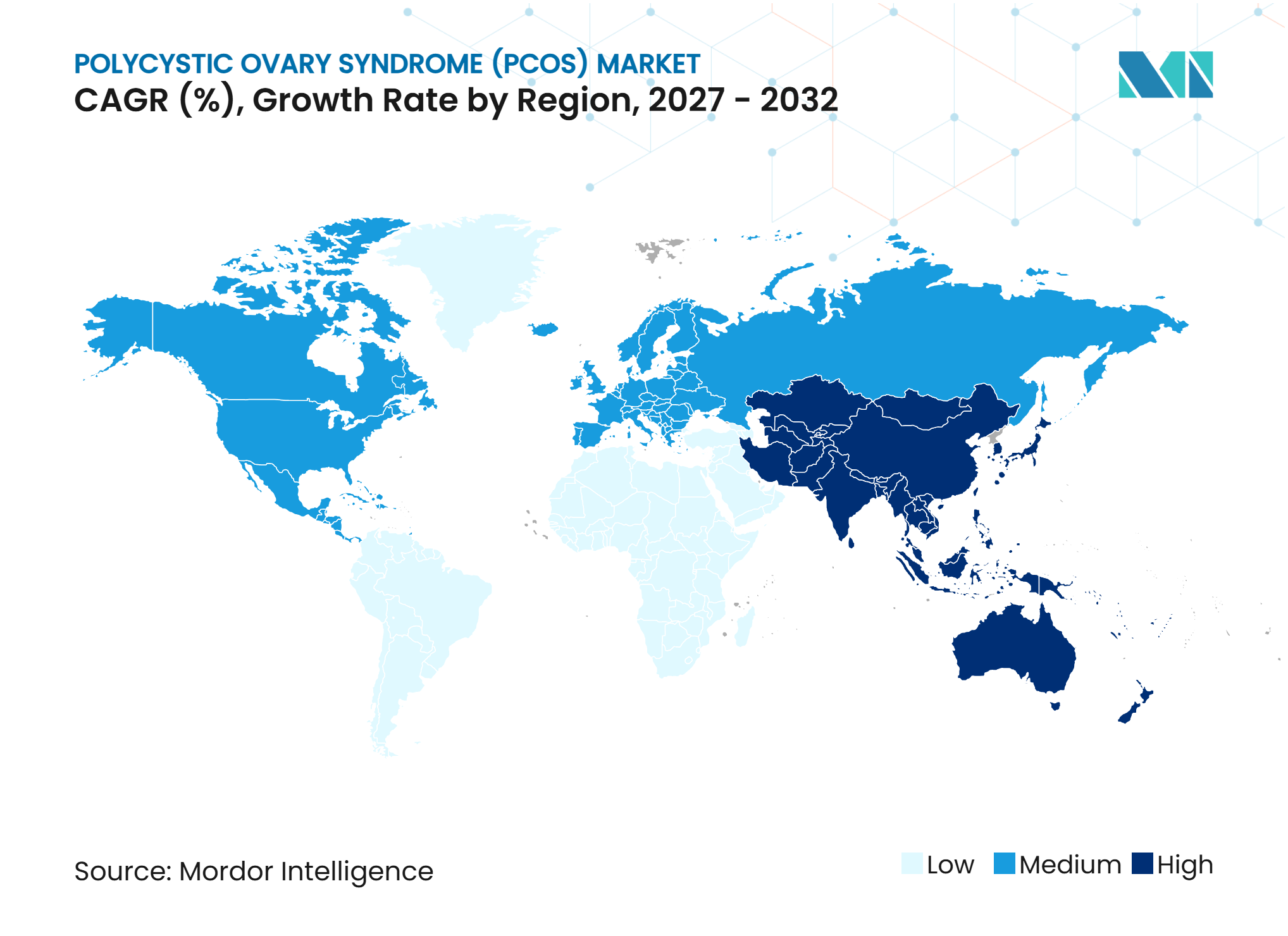
- By geography, North America held a 39.88% share of the PCOS category in 2026, while Asia-Pacific is forecast to expand at a 9.88% CAGR through 2032.
Note: Market numbers in this report are based on Mordor Intelligence's proprietary estimation framework, which combines nine months of actuals with Q4 projections for base year 2026.
Market Trends and Insights
Drivers Impact Analysis of Polycystic Ovary Syndrome (PCOS) Market*
| Driver | (~) % Impact on CAGR Forecast | Geographic Relevance | Impact Timeline |
|---|---|---|---|
| Rising PCOS prevalence and diagnosis-seeking | +1.8% | Global | Medium term (2-4 years) |
| Expansion of fertility services and ovulation-induction treatment | +1.3% | North America and Europe | Short term (≤ 2 years) |
| Adoption of AMH testing as an alternative to ultrasound in adults | +0.9% | Global, with early gains in the United Kingdom and Australia | Short term (≤ 2 years) |
| Integrated management of PCOS-related obesity and insulin resistance | +1.4% | Global, with the United States and European Union leading | Medium term (2-4 years) |
| Diagnostic-data bottlenecks creating demand for phenotype-aware testing | +0.7% | Global | Long term (≥ 4 years) |
| Increasing research and development activities for novel PCOS therapeutics | +0.6% | United States, Europe, and Asia-Pacific | Long term (≥ 4 years) |
| Source: Mordor Intelligence | |||
Rising PCOS Prevalence and Diagnosis-Seeking
PCOS affects 8% to 13% of women of reproductive age, while many patients remain undiagnosed or lack an integrated care plan. The 2023 international guideline recognizes serum AMH as an alternative to ultrasound for assessing polycystic ovarian morphology in adults, improving diagnostic access where imaging capacity is limited. This shift shortens the pathway from symptom presentation to laboratory testing and specialist referral. In China, the age-standardized PCOS prevalence ratio increased at an average annual rate of 2.01% from 1990 to 2021, with a further 27% increase projected by 2036. Expanding diagnosis also increases demand for long-term metabolic and reproductive monitoring.[1]
Expansion of Fertility Services and Ovulation-Induction Treatment
PCOS is a leading cause of anovulatory infertility, linking the polycystic ovary syndrome market to fertility consultations, ovulation induction, and assisted reproductive services. International clinical guidance recommends letrozole over clomiphene as the first-line ovulation-induction treatment for many patients. Gonadotropin protocols and IVF or ICSI cycles increase care value when oral treatments are insufficient. A 2025 randomized study reported a 35% natural pregnancy rate with weekly semaglutide 1 mg and metformin 1,000 mg twice daily, compared with 15% with metformin alone. Italian guidance also highlights AMH's role in assessing ovarian hyperstimulation risk before stimulation cycles.[2]
Adoption of AMH Testing as an Alternative to Ultrasound in Adults
The recognition of serum AMH is reshaping the diagnostic pathway in the polycystic ovary syndrome market, as blood testing is available across more care settings than transvaginal ultrasound. The HARMONIA study evaluated a 3.2 ng/mL cutoff using the Roche Elecsys AMH Plus assay and reported 94.0% diagnostic accuracy for identifying polycystic ovarian morphology. A 2025 United Kingdom National Health Service model estimated annual savings of GBP 284,029 when AMH testing replaced transvaginal ultrasound in the assessed PCOS diagnostic pathway.[3] Existing laboratory analyzer systems can process AMH alongside thyroid and metabolic tests, supporting broader adoption. However, variations by age, body mass index, and ethnicity continue to require validation.
Integrated Management of PCOS-Related Obesity and Insulin Resistance
Healthcare providers increasingly manage PCOS as a condition with reproductive and cardiometabolic implications, integrating endocrinology and preventive care with gynecology services. A 2025 review identified PCOS as a cardiovascular disease risk-enhancing condition, strengthening the rationale for metabolic screening. A 2025 meta-analysis found that GLP-1 receptor agonists reduced body mass index by a mean of 2.20 kg/m² and improved waist circumference and insulin resistance compared with metformin or placebo. Benefits were stronger at doses of 1.0 mg per week or higher and among patients with a baseline body mass index above 28 kg/m². These findings support integrated care pathways, although these treatments remain off-label for PCOS in many jurisdictions.[4]
Restraints Impact Analysis of Polycystic Ovary Syndrome (PCOS) Market*
| Restraint | (~) % Impact on CAGR Forecast | Geographic Relevance | Impact Timeline |
|---|---|---|---|
| Lack of PCOS-specific regulatory approvals | -1.2% | Global | Long term (≥ 4 years) |
| Diagnostic and treatment costs outside public reimbursement | -0.9% | Asia-Pacific, Middle East and Africa, and Latin America | Medium term (2-4 years) |
| Fragmented ownership of metabolic and reproductive care | -0.6% | Global | Medium term (2-4 years) |
| Side effects and long-term management challenges | -0.5% | Global | Long term (≥ 4 years) |
| Source: Mordor Intelligence | |||
Lack of PCOS-Specific Regulatory Approvals
The lack of broadly approved PCOS-specific therapies remains a structural constraint on the polycystic ovary syndrome market. Existing medicines primarily address individual symptoms, including ovulatory dysfunction, insulin resistance, menstrual irregularities, and androgen-related symptoms. This fragmented treatment landscape complicates indication-specific pricing and reimbursement while limiting clear regulatory pathways for therapies targeting the underlying disease process. Organon discontinued development of OG-7191, an HSD17β5 inhibitor for PCOS, on December 15, 2025, highlighting the limited late-stage pipeline and the need for regulatory clarity.
Diagnostic and Treatment Costs Outside Public Reimbursement
Diagnostic and treatment costs can limit sustained access to care, particularly where public reimbursement does not cover testing and treatment. Although GLP-1 receptor agonists have approvals for diabetes and obesity in many markets, these approvals do not automatically provide reimbursement coverage for PCOS care. Fertility services further increase out-of-pocket expenses through consultations, AMH testing, hormone panels, ovulation induction, and assisted reproductive procedures. This challenge is significant across Asia-Pacific, the Middle East and Africa, and Latin America, where diagnostic adoption may outpace reimbursement arrangements and specialist care remains concentrated in urban centers.
*Our forecasts treat driver/restraint impacts as directional, not additive. The impact forecasts reflect baseline growth, mix effects, and variable interactions.
Polycystic Ovary Syndrome (PCOS) Market Segment Analysis
By Product Type:
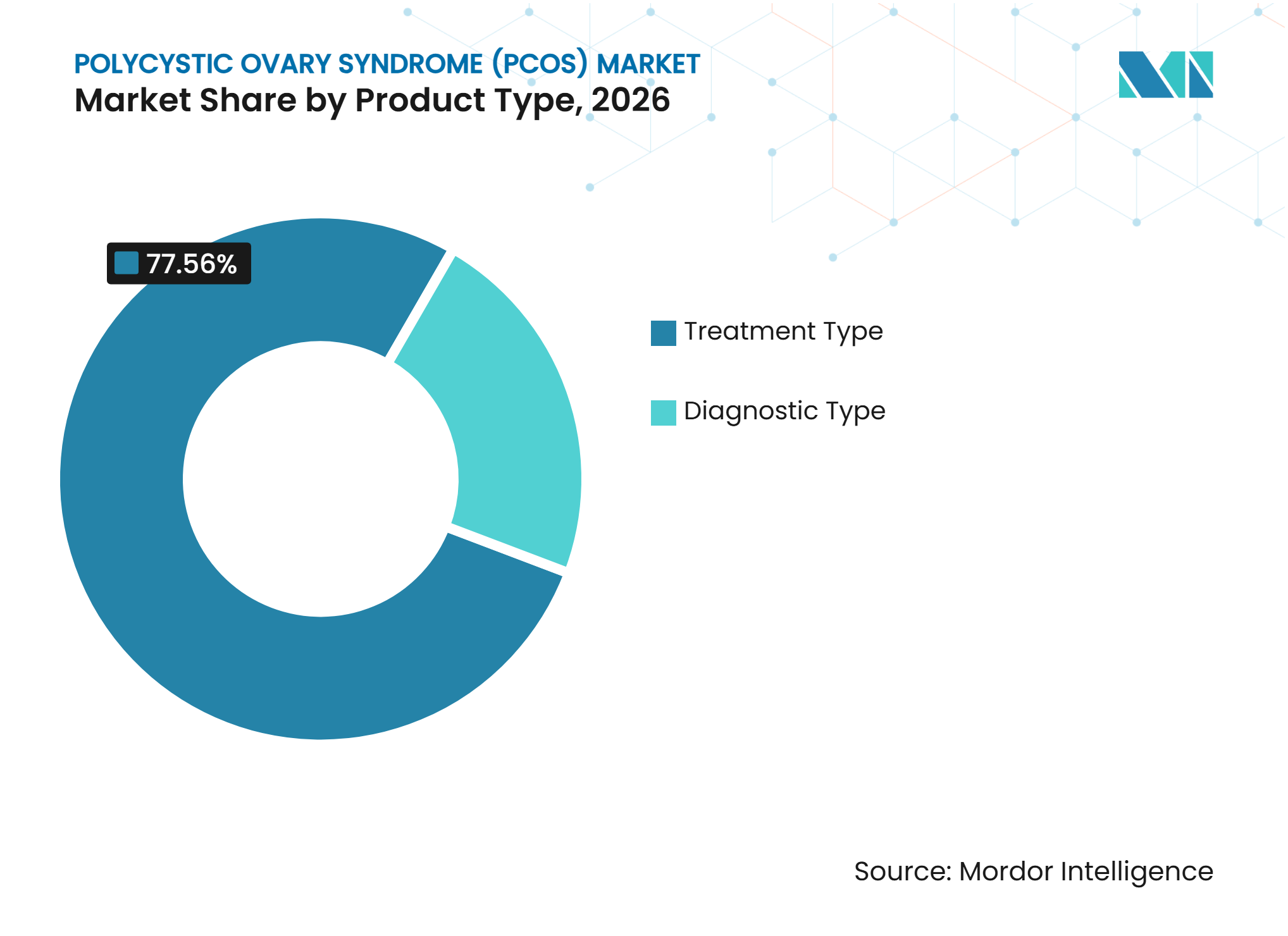
Treatment Leads Revenue While Diagnostics Expands FasterTreatment Type accounted for 77.56% of PCOS product revenue in 2026, supported by the established use of oral contraceptives, insulin sensitizers, and symptom-directed therapies. Pharmaceutical treatment remained the largest subcategory, addressing menstrual, metabolic, androgen-related, and fertility needs. A semaglutide-metformin study reported a 35% natural pregnancy rate for combination therapy, compared with 15% for metformin alone, alongside mean weight loss of 6.09 kg and 2.25 kg, respectively. Surgical options, such as laparoscopic ovarian drilling for clomiphene-resistant patients, remained limited, while assisted reproductive treatment expanded through IVF and ICSI cycles when induction therapies did not achieve pregnancy.
Diagnostic Type is projected to grow at a 9.28% CAGR during 2027-2032, making it the fastest-growing product category in the polycystic ovary syndrome market. Hormonal testing includes AMH, luteinizing hormone, follicle-stimulating hormone, and androgen panels, while metabolic testing identifies insulin resistance, dyslipidemia, and glucose dysregulation. A 2026 study reported that LC-MS/MS-based serum free testosterone achieved an AUC of 0.886 for PCOS diagnosis, compared with 0.856 for total testosterone and 0.864 for the free androgen index. Imaging remains relevant for complex cases, while AMH testing and artificial intelligence-based models increasingly support morphology assessment; a 2025 review reported 95%-99% accuracy for detecting polycystic ovarian morphology.



By Patient Need:
Fertility Care Expands Faster Than Symptom-Focused CareMenstrual-Cycle Regulation held 44.93% of the polycystic ovary syndrome market size in 2026. Combined oral contraceptives and progestin-only regimens remained widely used among patients not seeking immediate pregnancy, reflecting the continued focus on irregular-cycle management. Antiandrogenic contraceptives and spironolactone also supported the management of hyperandrogenism, hirsutism, and acne. The category continued to address a broad patient base, as visible symptoms often prompted initial consultations, even as metabolic care gained prominence.
Fertility and Ovulation Management is forecast to grow at a 10.12% CAGR through 2032, driven by the link between metabolic treatment and conception planning. Current international guidance identifies letrozole as the preferred ovulation-induction agent over clomiphene for many PCOS presentations. AMH testing supports individualized gonadotropin dosing and ovarian hyperstimulation risk assessment before IVF treatment. A 2025 study reported restored ovulatory cycles in 52.5% of previously anovulatory patients treated with semaglutide, supporting referrals from endocrine care to fertility services. Weight and insulin-resistance management is also gaining relevance due to the condition’s cardiovascular risk profile.
By End User:
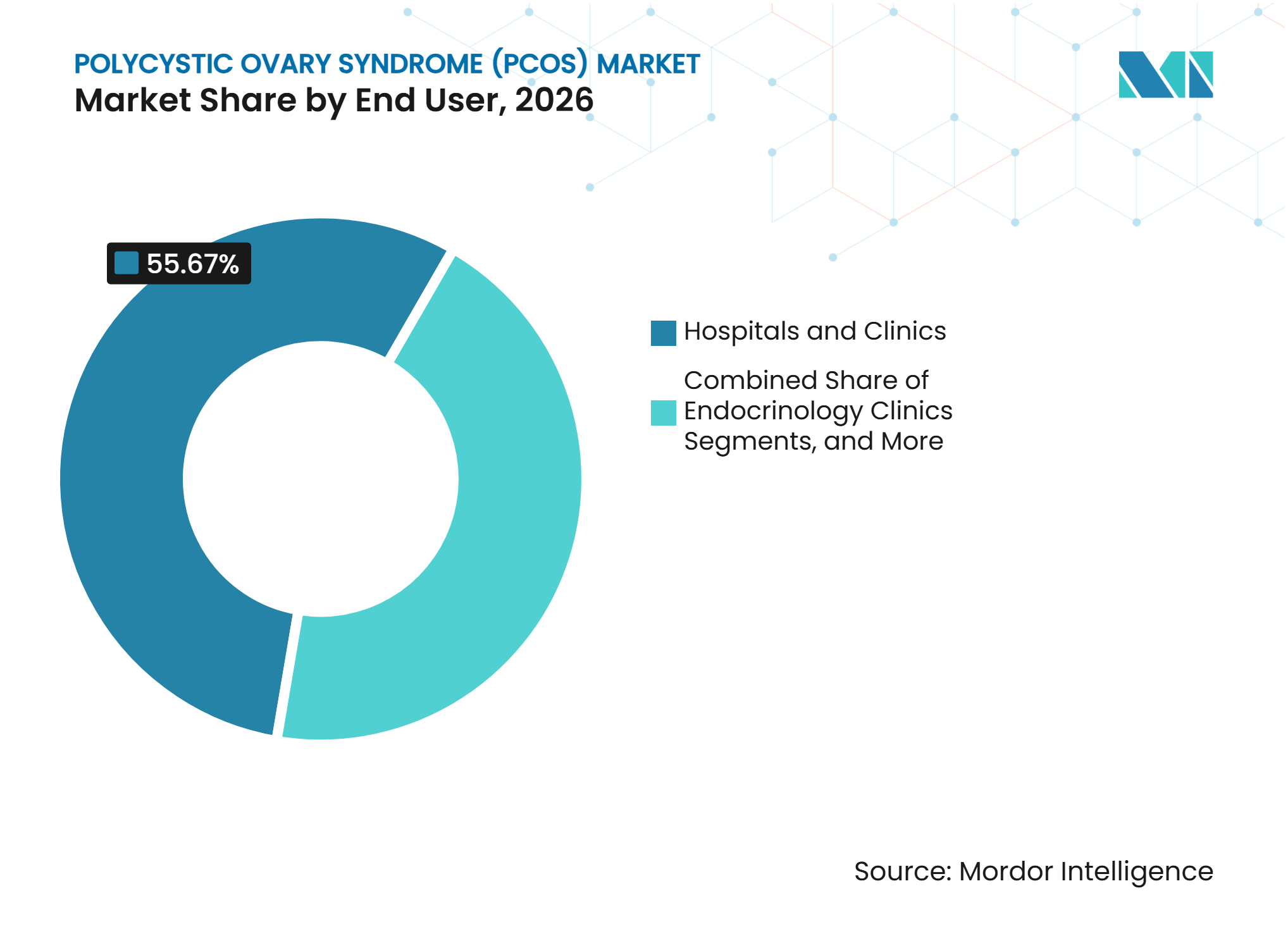
Hospitals Retain Volume While Laboratories Gain MomentumHospitals and Clinics held 55.67% of PCOS end-user spending in 2026, reflecting their role in complex fertility care, insulin-resistance assessment, and coordinated reproductive services. Hospital-based teams integrate gynecology, endocrinology, laboratory medicine, and assisted reproduction for patients requiring multidisciplinary care. This model remains relevant for complex symptoms and ART coordination. Academic and research institutions also support clinical trial enrollment and generate evidence for future PCOS-specific regulatory decisions, keeping hospitals central to the polycystic ovary syndrome market.
Diagnostic Laboratories are forecast to grow at an 11.23% CAGR during 2027-2032. AMH testing can shift parts of the diagnostic workup from imaging-dependent specialist settings to laboratories that already process endocrine tests. Roche’s Elecsys AMH Plus assay operates on existing clinical analyzers, reducing additional infrastructure requirements for equipped laboratories. A 2025 scoping review found that digital tools for menstrual tracking and PCOS risk prediction achieved diagnostic accuracy ranging from 72.1% to 90.4%. These tools may improve early referrals for laboratory testing and clinical care.

By Distribution Channel:
Hospital Pharmacies Lead While Digital Access GrowsHospital Pharmacies held 56.89% of PCOS distribution-channel spending in 2026. Their position reflects the institutional use of gonadotropins, gonadotropin-releasing hormone analogs in ART protocols, and injectable GLP-1 receptor agonists. These medicines often require specialist prescribing, supervised initiation, or dose adjustments, directing many prescriptions through hospital-connected pharmacies. Retail pharmacies remain important for high-volume products, including oral contraceptives, metformin, and oral antiandrogens, where branded-generic competition is more common.
Online Pharmacies and Telehealth Platforms are projected to grow at a 10.45% CAGR from 2027 to 2032. Digital providers can integrate physician consultations, laboratory referrals, and prescription coordination within a single patient pathway. This model can reduce travel requirements and shorten the time between symptom reporting, testing, and treatment discussions for patients with limited access to specialists. Growth depends on prescribing regulations, reliable laboratory partnerships, and follow-up safeguards. The channel does not replace hospitals for complex ART care or high-risk treatment initiation but provides an additional access point for underserved patients.
Geography Analysis
North America
North America held 39.88% of the polycystic ovary syndrome market size in 2026, supported by mature fertility infrastructure and broad access to diagnostic services. GLP-1 receptor agonist use among diagnosed patients remains high, with new use among U.S. women with PCOS rising from 0.07% in 2011 to 17.1% in 2025. Tirzepatide accounted for 37.5% of GLP-1 prescriptions in 2024, up from 17.7% in 2023. However, the lack of U.S. Food and Drug Administration approval for PCOS, prior authorization requirements, and out-of-pocket costs may restrict access. Telehealth expands rural specialist access, while provincial ART funding differences in Canada and expanding private insurance pathways in Mexico shape regional demand.
Asia-Pacific
Asia-Pacific is projected to expand at a 9.88% CAGR during 2027-2032, the fastest growth rate among geographic segments in the polycystic ovary syndrome market. China accounted for 28.69% of Asian PCOS cases and 14.56% of global cases in 2021, with prevalence projected to increase by 27% by 2036. India remains a major unmet-need market, with prevalence ranging from 3.7% to 22.5% among women of reproductive age, depending on diagnostic criteria. Japan and South Korea are strengthening diagnostic pathways through AMH testing and AI-supported ultrasound interpretation. Insurance disparities and limited access outside major cities continue to influence treatment conversion across the region.
Europe, Middle East and Africa, and South America
Europe benefits from universal health coverage, specialist networks, and guideline-aligned diagnostic systems. In the United Kingdom, the 2025 National Health Service model estimated annual savings of GBP 284,029 from replacing ultrasound with the assessed AMH pathway. Germany, France, and Italy support diagnosis, monitoring, and treatment through established fertility and endocrinology networks, while the SPIOMET4HEALTH program advances research into dedicated PCOS pharmacotherapy. The Middle East and Africa remain earlier-stage markets, with diagnostic activity concentrated in Gulf Cooperation Council countries and major cities. Brazil drives South American demand through fertility clinic capacity and expanding insurance coverage, while Argentina faces procurement challenges due to macroeconomic conditions.
Competitive Landscape
Market Concentration
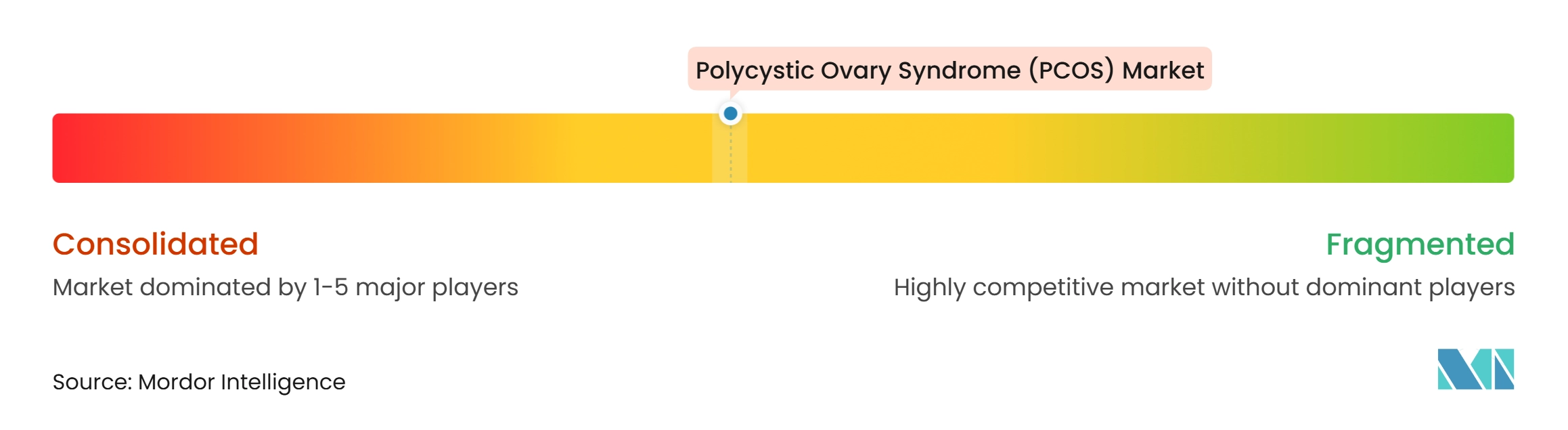
The polycystic ovary syndrome (PCOS) market is moderately fragmented, with diagnostic and treatment revenues distributed across different company types. Roche, Siemens Healthineers, and Danaher hold differentiated positions in anti-Müllerian hormone (AMH) assays and multiplex hormone platforms. Roche’s Elecsys AMH Plus assay demonstrated a 94.0% area under the curve for detecting polycystic ovarian morphology. Diagnostic providers compete through analytical performance, installed analyzer bases, and alignment with clinical guidelines.
Treatment revenue remains dispersed among suppliers of oral contraceptives, metformin, antiandrogens, fertility drugs, and off-label metabolic therapies. Thermo Fisher Scientific, Bio-Rad Laboratories, Hologic, and QuidelOrtho compete through assay sensitivity, workflow compatibility, and laboratory procurement relationships. Novo Nordisk benefits from increasing off-label GLP-1 prescribing, while generic manufacturers supply metformin and antiandrogens.
Organon’s planned discontinuation of OG-7191 in December 2025 removes a mechanism-specific program from the pipeline of a major pharmaceutical company. The decision highlights the challenges of developing dedicated PCOS therapies amid uncertain regulatory endpoints. It also reinforces the importance of clinical evidence generation and investigator-led programs in advancing the treatment landscape. The SPIOMET4HEALTH consortium is evaluating a fixed-dose combination of spironolactone, pioglitazone, and metformin across six European countries. Final results and regulatory feasibility assessments are expected by December 2026. Supportive clinical evidence could inform next-generation PCOS treatment protocols. Roche’s prospective AMH validation may also support the broader adoption of blood-based assessments for polycystic ovarian morphology.
Polycystic Ovary Syndrome (PCOS) Industry Leaders
-
Bayer AG
-
Sanofi
-
Pfizer Inc.
-
Merck & Co., Inc.
-
Novo Nordisk A/S
- *Disclaimer: Major Players sorted in no particular order
Polycystic Ovary Syndrome (PCOS) Market Companies Covered in this Report
- Abbott Laboratories
- Abbvie
- AstraZeneca
- Bayer
- bioMérieux
- Bio-Rad Laboratories
- Bristol-Myers Squibb
- Danaher
- Roche
- Hologic
- Merck
- Novo Nordisk
- Organon
- Pfizer
- QuidelOrtho
- Sanofi
- Siemens Healthineers
- Takeda Pharmaceuticals
- Teva Pharmaceutical Industries
- Thermo Fisher Scientific
Recent Industry Developments in Polycystic Ovary Syndrome (PCOS) Market
- January 2026: May Health received CE Mark certification for its Anavi System, a technology for treating PCOS-related infertility. The certification, granted under EU MDR 2017/745, enabled commercialization in the European Union.
- December 2025: Organon & Co. discontinued development of OG-7191, an HSD17β5 inhibitor for PCOS, as its profile was no longer suitable for advancement. The discontinuation removed the only company-sponsored, mechanism-specific PCOS program among major pharmaceutical companies.
Global Polycystic Ovary Syndrome (PCOS) Market Report Scope
As per the scope of the report, Polycystic Ovary Syndrome (PCOS) is a common hormonal disorder that affects individuals with ovaries, typically during their reproductive years. It is characterized by an imbalance of reproductive hormones, particularly elevated levels of androgens (often referred to as male hormones), which can disrupt the regular ovulation process. This hormonal imbalance frequently leads to irregular or prolonged menstrual periods and can cause the ovaries to develop numerous small, fluid-filled sacs (follicles) that fail to regularly release eggs.
The Polycystic Ovary Syndrome (PCOS) market is segmented by product type, patient need, end user, distribution channel, and geography. By product type, the market includes diagnostic type and treatment type. Diagnostic type includes hormonal testing, metabolic and blood testing, imaging and ultrasound, and others. Treatment type includes pharmaceutical treatment, surgical treatment, assisted reproductive treatment, lifestyle and nutritional management, and others. By patient need, the market is segmented into fertility and ovulation management, menstrual cycle regulation, hyperandrogenism, hirsutism, and acne management, weight and insulin resistance management, and others. By end user, the market is segmented into hospitals and clinics, endocrinology clinics, gynecology clinics, diagnostic laboratories, primary care clinics, academic and research institutions, and others. By distribution channel, the market is segmented into hospital pharmacies, retail pharmacies, and online pharmacies and telehealth platforms. By geography, the market is analyzed across North America, Europe, Asia-Pacific, the Middle East and Africa, and South America. The report also covers the estimated market sizes and trends for 17 countries across major regions globally. The report offers market sizes and forecasts in terms of value (USD) for the above segments.
Segmentation Overview
| Diagnostic Type | Harmonal Testing |
| Metabolic and Blood Testing | |
| Imaging and Ultrasound | |
| Others | |
| Treatment Type | Pharmacutical Treatment |
| Surgical Treatment | |
| Assisted Reproductive Treatment | |
| Lifestyle and Nutritional Management Market | |
| Others |
| Fertility and Ovulation Management |
| Menstrual-Cycle Regulation |
| Hyperandrogenism, Hirsutism, and Acne Management |
| Weight and Insulin-Resistance Management |
| Others |
| Hospitals and Clinics |
| Endocrinology Clinics |
| Gynecology Clinics |
| Diagnostic Laboratories |
| Primary-Care Clinics |
| Academic and Research Institutions |
| Others |
| Hospital Pharmacies |
| Retail Pharmacies |
| Online Pharmacies and Telehealth Platforms |
| North America | United States |
| Canada | |
| Mexico | |
| Europe | Germany |
| United Kingdom | |
| France | |
| Italy | |
| Spain | |
| Rest of Europe | |
| Asia-Pacific | China |
| India | |
| Japan | |
| Australia | |
| South Korea | |
| Rest of Asia-Pacific | |
| Middle East and Africa | GCC |
| South Africa | |
| Rest of Middle East and Africa | |
| South America | Brazil |
| Argentina | |
| Rest of South America |
| By Product Type | Diagnostic Type | Harmonal Testing |
| Metabolic and Blood Testing | ||
| Imaging and Ultrasound | ||
| Others | ||
| Treatment Type | Pharmacutical Treatment | |
| Surgical Treatment | ||
| Assisted Reproductive Treatment | ||
| Lifestyle and Nutritional Management Market | ||
| Others | ||
| By Patient Need | Fertility and Ovulation Management | |
| Menstrual-Cycle Regulation | ||
| Hyperandrogenism, Hirsutism, and Acne Management | ||
| Weight and Insulin-Resistance Management | ||
| Others | ||
| By End User | Hospitals and Clinics | |
| Endocrinology Clinics | ||
| Gynecology Clinics | ||
| Diagnostic Laboratories | ||
| Primary-Care Clinics | ||
| Academic and Research Institutions | ||
| Others | ||
| By Distribution Channel | Hospital Pharmacies | |
| Retail Pharmacies | ||
| Online Pharmacies and Telehealth Platforms | ||
| By Geography | North America | United States |
| Canada | ||
| Mexico | ||
| Europe | Germany | |
| United Kingdom | ||
| France | ||
| Italy | ||
| Spain | ||
| Rest of Europe | ||
| Asia-Pacific | China | |
| India | ||
| Japan | ||
| Australia | ||
| South Korea | ||
| Rest of Asia-Pacific | ||
| Middle East and Africa | GCC | |
| South Africa | ||
| Rest of Middle East and Africa | ||
| South America | Brazil | |
| Argentina | ||
| Rest of South America | ||
Key Questions Answered in the Report
What is the expected value of the polycystic ovary syndrome market by 2032?
The polycystic ovary syndrome market is projected to reach USD 14.06 billion by 2032, from USD 9.72 billion in 2027, at a 7.66% CAGR.
Which PCOS treatment area is growing fastest?
Fertility and Ovulation Management is projected to grow at a 10.12% CAGR through 2032, supported by ovulation induction, fertility services, and metabolic pre-treatment.
Why is AMH testing important in PCOS care?
International guidance recognizes serum AMH as an alternative to ultrasound for adult morphology assessment. The HARMONIA study reported a 94.0% AUC for the assessed AMH approach.
Which end users are driving PCOS diagnostic demand?
Diagnostic Laboratories are forecast to grow at an 11.23% CAGR through 2032 as AMH and hormone testing move into established laboratory workflows.
Which region has the largest share of PCOS spending?
North America held 39.88% share in 2026, supported by fertility infrastructure, diagnostic workups, and high GLP-1 use among diagnosed patients.
What limits the development of dedicated PCOS medicines?
The lack of a broad PCOS-specific regulatory pathway and reimbursement model leaves treatment dependent on symptom-focused and off-label medicines.