
Plant Biotechnology Market Size and Share
Market Overview
| Study Period | 2021 - 2031 |
|---|---|
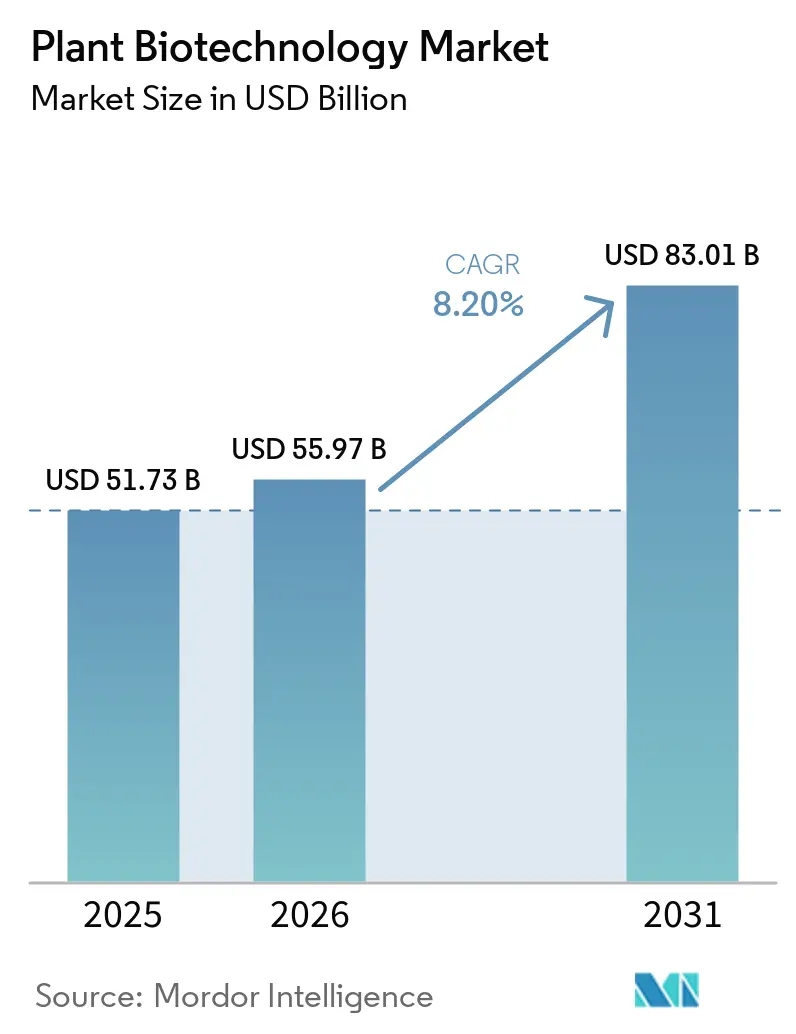
| Market Size (2026) | USD 55.97 Billion |
| Market Size (2031) | USD 83.01 Billion |
| Growth Rate (2026 - 2031) | 8.20 % |
| Fastest Growing Market | Africa |
| Largest Market | North America |
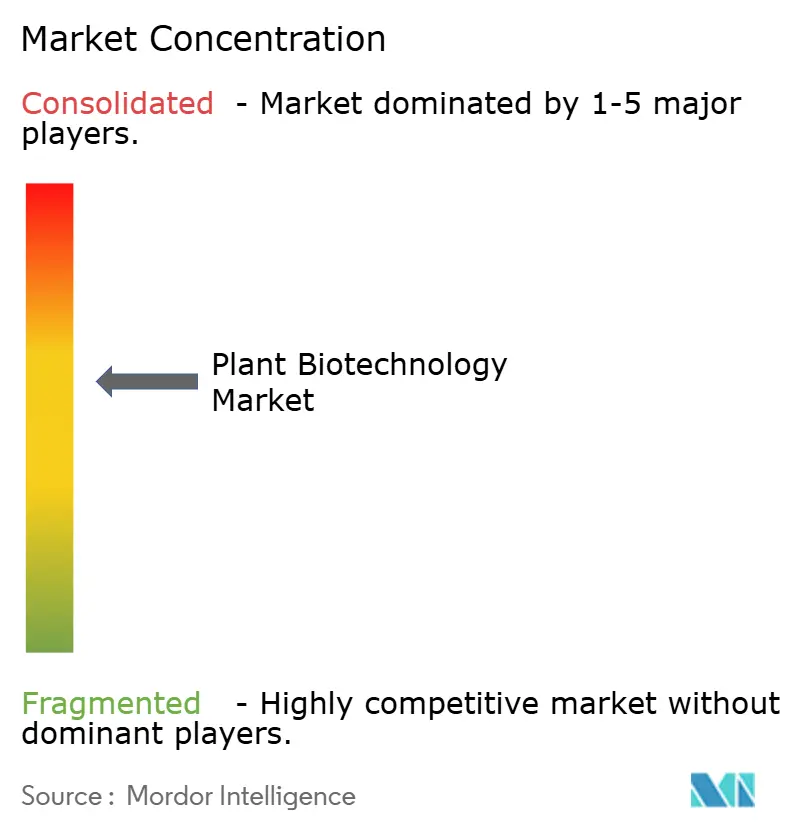
| Market Concentration | Medium |
Major Players *Disclaimer: Major Players sorted in no particular order Image © Mordor Intelligence. Reuse requires attribution under CC BY 4.0. | |
Plant Biotechnology Market Analysis by Mordor Intelligence
The plant biotechnology market size was valued at USD 51.73 billion in 2025 and is forecast to increase from USD 55.97 billion in 2026 to USD 83.01 billion by 2031. The market is forecast to grow at a CAGR of 8.20% from 2026 to 2031. Food security requirements, climate stress, and precision breeding tools drive demand across the market. The commercial base remains centered on major row crops, while new activity extends into biological inputs, specialty nutrition, industrial biochemicals, and plant-made pharmaceutical products. Regulatory changes can shorten the path to market for certain edited plants, although requirements differ significantly across countries. Established seed companies retain advantages from germplasm, regulatory records, and distribution networks, while specialist firms use licensing models to reach more crops. These conditions create opportunities for technologies that improve resilience, nutrition, and crop protection without displacing the established seed and traits business.
Key Report Takeaways
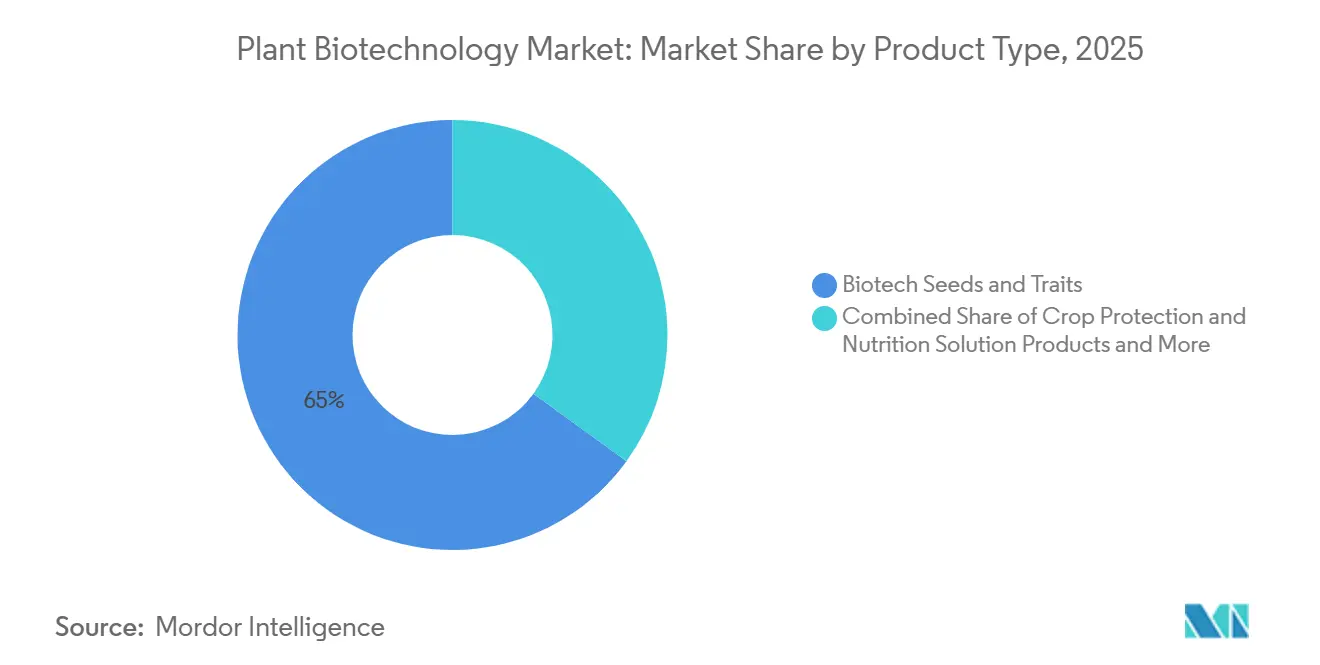
- By product type, biotech seeds and traits were the largest segment, accounting for 65.0% of the plant biotechnology market share in 2025, while crop protection and nutrition solution products are forecast to grow at a CAGR of 6.3% from 2026 to 2031.
- By technology, genetic engineering was the largest segment, accounting for 42.0% of the plant biotechnology market size in 2025, while genome editing is forecast to grow at a CAGR of 12.4% from 2026 to 2031.
- By crop type, cereals and grains were the largest segment, accounting for 48.0% share of the plant biotechnology market in 2025, while fruits and vegetables are forecast to grow at a CAGR of 10.4% from 2026 to 2031.
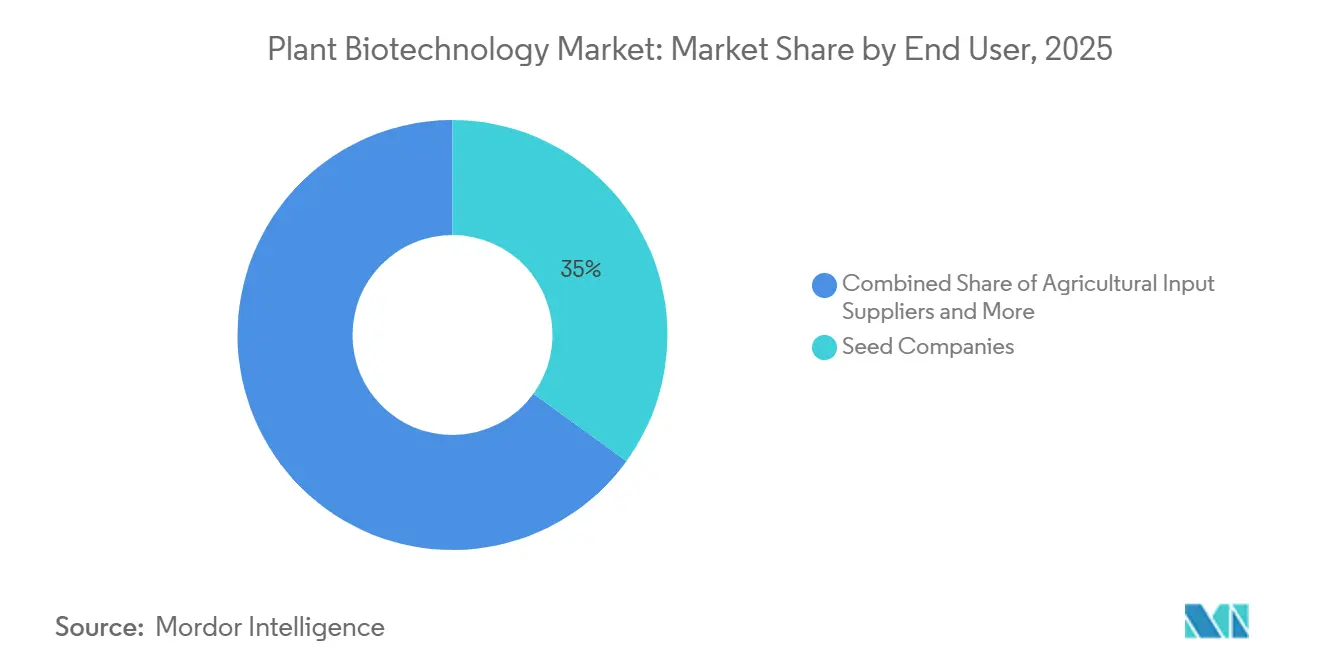
- By end user, seed companies were the largest segment, accounting for 38.0% share of the plant biotechnology market in 2025, while government and research institutes are forecast to grow at a CAGR of 10.1% from 2026 to 2031.
- By geography, North America was the largest regional market, accounting for 41.0% share of the market in 2025, while Africa is forecast to grow at a CAGR of 9.4% from 2026 to 2031.
Note: Market size and forecast figures in this report are generated using Mordor Intelligence’s proprietary estimation framework, updated with the latest available data and insights as of January 2026.
Market Trends and Insights
Drivers Impact Analysis of Plant Biotechnology Market*
| Driver | (~) % Impact on CAGR Forecast | Geographic Relevance | Impact Timeline |
|---|---|---|---|
| Global Food-security and Crop-productivity Requirements | +2.1% | Global, with greatest relevance in Sub-Saharan Africa, South Asia, and Southeast Asia | Long term (≥ 4 years) |
| Climate-resilient Crop Development | +1.8% | Global, with greatest urgency in Asia-Pacific, Africa, and South America | Long term (≥ 4 years) |
| Adoption of Biotech Seeds and Stacked Traits | +1.4% | North America and South America, with expansion into Asia-Pacific | Medium term (2-4 years) |
| CRISPR, Genome Editing and Advanced Breeding Adoption | +1.2% | North America and Asia-Pacific, with Europe | Medium term (2-4 years) |
| Expansion of Biological Crop-protection and Nutrition Products | +0.9% | Global, especially Europe and North America | Short term (≤ 2 years) |
| Regulatory Recognition of Product-based Gene-editing Pathways | +0.7% | North America, Europe, Japan, Australia, and India | Medium term (2-4 years) |
| Source: Mordor Intelligence | |||
Global Food-security and Crop-productivity Requirements
Food security and the need to improve crop productivity are driving demand for plant biotechnology solutions. The International Service for the Acquisition of Agri-biotech Applications (ISAAA) reported in February 2026 that 73 countries had adopted biotech crops through cultivation or imports. Developing countries accounted for 57% of global biotech crop hectares in 2024, highlighting the growing role of biotechnology in improving crop productivity and resilience. This is supporting demand for region-specific breeding programs and biotechnology solutions tailored to local food-security needs.
Climate-resilient Crop Development
Climate adaptation is increasing demand for plant biotechnology focused on drought, heat, and salinity tolerance. These traits are often more complex to develop than single-gene traits, increasing the need for advanced breeding and gene-editing technologies. Public-sector programs, including initiatives in India, are also advancing stress-tolerant crops such as wheat, rice, and pulses. These efforts are expanding the application of biotechnology to climate-resilient crop development, particularly in regions exposed to increasing climate-related agricultural pressures.
Adoption of Biotech Seeds and Stacked Traits
Biotech seeds and stacked traits remain important growth channels for the plant biotechnology market. The United States Department of Agriculture Economic Research Service (USDA ERS) reported that more than 90% of United States corn, upland cotton, and soybean acres used genetically engineered varieties[2]. High adoption is shifting demand toward seeds with multiple compatible traits, providing broader agronomic benefits. Stacked traits can combine herbicide tolerance and pest resistance in a single seed, supporting continued development and adoption of advanced biotech seed products.
Expansion of Biological Crop-protection and Nutrition Products
Biological crop-protection and nutrition products are expanding the commercial base of the plant biotechnology market. Regulatory pressure on certain synthetic crop-protection chemistries is creating opportunities for biological alternatives. Biofertilizers are gaining attention in Asia-Pacific and South America as farmers seek solutions that support nutrient management. Biofertilizer use in India and rhizobium-based nitrogen-fixation products in Brazilian soybean production illustrate the expanding application of biological solutions in agriculture.
Restraints Impact Analysis of Plant Biotechnology Market*
| Restraint | (~) % Impact on CAGR Forecast | Geographic Relevance | Impact Timeline |
|---|---|---|---|
| Lengthy Approval and Commercialization Timelines | -1.8% | Global, with greatest effect in Europe and markets without gene-editing rules | Long term (≥ 4 years) |
| High Research and Development, and Field-trial Costs | -1.3% | Global, with greater effect on specialty and minor-crop developers | Medium term (2-4 years) |
| Trait-delivery Bottlenecks in Complex and Under-researched Crops | -0.9% | Asia-Pacific and Africa | Long term (≥ 4 years) |
| Seed-system Concentration and Access Constraints | -0.7% | Global, especially African, South Asian, and Southeast Asian smallholder systems | Medium term (2-4 years) |
| Source: Mordor Intelligence | |||
Lengthy Approval and Commercialization Timelines
Approval timelines can constrain investment decisions across the plant biotechnology market. Conventional genetically modified organism (GMO) approvals may require biosafety, food safety, environmental, and import reviews across multiple jurisdictions. A 2025 peer-reviewed article in the Trends in Plant Science journal noted that non-transgenic edited crops can move through newer regulatory pathways more quickly than products assessed under legacy GMO systems. The European Union's new framework does not fully apply until July 2028, creating a transition period that can complicate product planning. Several African and Southeast Asian countries still use legacy systems where a specific regulatory pathway for gene-edited crops is unavailable. Separate dossiers for multiple countries add costs and can delay market access in regions where food security and climate-related needs are pressing.
High Research and Development, and Field-trial Costs
Research and field-trial costs limit the range of firms that can develop products for the plant biotechnology market. Trait discovery requires greenhouse work, multi-location trials, regulatory filings, stewardship plans, seed increases, and commercialization support. BASF's Agricultural Solutions division invested EUR 990 million (USD 1.06 billion) in research and development in 2025, illustrating the scale of resources required by major industry participants. Smaller gene-editing firms often respond by licensing traits to seed-company partners rather than bearing the full costs of commercialization. The World Intellectual Property Organization (WIPO) reported in 2026 that royalties represented more than half of the total markup on genetically engineered seeds. This structure increases the value of proven intellectual property but can make market entry difficult for developers with limited capital.
*Our forecasts treat driver/restraint impacts as directional, not additive. The impact forecasts reflect baseline growth, mix effects, and variable interactions.
Plant Biotechnology Market Segment Analysis
By Product Type:
Biotech Seeds and Traits Lead as Crop Protection and Nutrition Accelerate GrowthBiotech seeds and traits accounted for 65.0% of the plant biotechnology market share by product type in 2025. This position reflects decades of deployment in corn, soybean, cotton, and canola. Seed products capture value from established germplasm, regulatory approvals, and repeated planting cycles. Multi-trait seed offerings add value where farms require several weed, insect, or disease management functions. The plant biotechnology industry relies on these seed systems as its main commercial channel. Synthetic biology-enabled products remain at an earlier commercial stage, attracting investment for specialty flavors, industrial biochemicals, fermentation-derived crop inputs, and other applications outside conventional seed markets. Their longer-term role depends on manufacturing scale, product performance, and customer acceptance. These products offer a way to extend biotechnology into specialized value chains.
Crop protection and nutrition solution products are forecast to grow at a CAGR of 6.3% from 2026 to 2031. This growth reflects limits on some synthetic inputs and greater interest in biological alternatives. Biological insecticides, biofertilizers, and biostimulants support growers seeking broader input choices. BASF completed its acquisition of AgBiTech in March 2026, adding biological insect-control capabilities with manufacturing in the United States, Australia, and Brazil. This transaction indicates that biological products are becoming part of large agricultural portfolios. Product adoption still depends on field consistency, local advice, and reliable supply. The category complements rather than replaces the larger seed-and-traits base, and gives the plant biotechnology market a way to serve grower input needs outside the seed purchase cycle.

By Technology:
Genetic Engineering Holds Ground as Genome Editing Reshapes the PipelineGenetic engineering accounted for 42.0% of the plant biotechnology market size by technology in 2025. Its commercial role is supported by established transformation pipelines, event libraries, seed systems, and regulatory records. Marker-assisted breeding, tissue culture, synthetic biology, and speed breeding offer alternative or complementary approaches. Speed breeding can shorten plant generation cycles, helping breeders move traits through programs more quickly. Each method has different strengths in discovery, validation, and product development. Genetic engineering remains important for traits that require defined genetic changes. The existing knowledge base also supports stewardship and regulatory management for established crops. These advantages keep the technology central even as new tools gain attention. The plant biotechnology market retains this established technical base as developers evaluate newer methods.
Genome editing is forecast to grow at a CAGR of 12.4% from 2026 to 2031. It provides developers a way to make targeted changes that may be assessed differently from transgenic products in some jurisdictions. Japan's notification framework for plants without novel DNA insertions has supported the commercial introduction of gamma-aminobutyric acid (GABA)-enriched tomato. India's work on stress-tolerant staple crops broadens the potential application. The 2026 European framework may add another route for eligible products after July 2028. The plant biotechnology industry can use platform licensing to make editing capabilities available beyond major row crops. Scientific progress does not remove the need for crop-specific regeneration, field testing, and product stewardship. The technology's growth therefore depends on both technical delivery and clear country-level requirements.
By Crop Type:
Grain Crops Lead as Horticultural Biotechnology AcceleratesCereals and grains accounted for 48.0% share of the plant biotechnology market by crop type in 2025, making them the largest segment. Their leading position reflects the established adoption of genetically engineered traits in major cereal crops, particularly corn, across large agricultural markets. As adoption matures in established markets, product development increasingly emphasizes stacked traits that combine insect resistance, herbicide tolerance, and other agronomic benefits. China’s commercial cultivation of genetically modified maize also indicates expanding applications of biotechnology in grain production. Meanwhile, the limited commercialization of genetically modified wheat in major markets leaves scope for research into drought tolerance, yield stability, and input-use efficiency. Oilseeds and pulses remain established applications, while specialty and industrial crops offer additional opportunities for emerging biotechnology platforms.
Fruits and vegetables are forecast to grow at a CAGR of 10.4% from 2026 to 2031. Growth prospects are supported by research into disease resistance, environmental stress tolerance, delayed ripening, extended shelf life, and improved nutritional quality. A 2026 review published by Springer Nature identifies CRISPR-Cas9 gene editing as an important tool for developing these traits in horticultural crops. Tomatoes and potatoes are among the crops receiving attention in gene-editing research, particularly for disease resistance and improved production characteristics. These applications could help reduce post-harvest losses, improve crop resilience, and maintain produce quality. The segment’s growth outlook reflects the potential value of biotechnology in high-value horticultural crops, although commercial adoption will depend on regulatory approvals, consumer acceptance, and the successful transition of research outcomes into marketable varieties.
By End User:
Seed Companies Dominate While Government and Research Institutes Drive Emerging Market DemandSeed companies accounted for 38.0% share of the plant biotechnology market by end user in 2025. Seed companies remain the largest end-user group because they are the principal route from trait development to farm-scale use. They connect developers' intellectual property with commercial varieties and farm distribution networks. Agricultural input suppliers and producers have direct roles in product deployment and field performance. Food and beverage companies influence demand through ingredient specifications and sourcing requirements. Biofuel and biochemical companies seek feedstocks with suitable composition and processing characteristics. Pharmaceutical and biopharmaceutical companies use plant platforms where the production system fits their product requirements. The plant biotechnology industry serves commercial users across the agricultural and life sciences value chain. The plant biotechnology market depends on these channels to link innovations with growers.
Government and research institutes are forecast to grow at a CAGR of 10.1% from 2026 to 2031, supported by their role in advancing crops and regions. This role is reflected in collaborative research initiatives such as the arrangement between the International Crops Research Institute for the Semi-Arid Tropics (ICRISAT), Corteva, and the Broad Institute, which focuses on sorghum, pearl millet, chickpea, and pigeonpea for smallholder farmers in Asia and Africa. At the policy level, the Comprehensive Africa Agriculture Development Programme (CAADP) Strategy and Action Plan 2026–2035 identifies biotechnology as an intervention to help increase food production by 45% by 2035. These initiatives can strengthen research capacity and direct attention toward locally important crops. Research institutes also contribute plant material, field evaluation, and regulatory evidence, helping translate biotechnology advances into practical breeding outcomes. However, commercial seed systems remain essential for bringing successful innovations to market and ensuring broad farmer access.
Geography Analysis
North America accounted for 41.0% of the plant biotechnology market share by geography in 2025. The region benefits from high adoption of genetically engineered (GE) crops, established seed distribution networks, and mature regulatory institutions. The United States Department of Agriculture (USDA) Animal and Plant Health Inspection Service (APHIS) deregulated Bayer and Monsanto's MON 87429 corn in August 2026. The corn event is engineered for tolerance to dicamba, glufosinate, quizalofop, and 2,4-D, with tissue-specific glyphosate resistance. The regulatory action supports the development and potential commercialization of multi-herbicide-tolerant corn. Canada provides a complementary approval route for eligible gene-edited plants, while Mexico's regulatory environment remains closely linked to agricultural biotechnology policies across North America.
Africa is forecast to expand at a 9.4% CAGR between 2026 and 2031. The continent has biotech crop activity across 10 countries and 6 approved crop types, including cotton, maize, soybean, cowpea, cassava, and potato. ISAAA AfriCenter launched its Biotech Africa platform in June 2026 to improve regulatory transparency and country-level approval information. African crop systems create demand for solutions suited to cassava, millet, cowpea, and other locally important staples. Public research, capacity building, and seed distribution determine whether approved varieties can reach farmers. The region's growth depends on coordinated biosafety frameworks, local trials, and commercial multiplication capacity. These factors make Africa a significant opportunity for crop-specific biotechnology programs. Growth in the plant biotechnology market in the region depends on solutions designed for local crops and farm conditions.
Asia-Pacific has strong growth potential, supported by regulatory activity and large crop production systems. China planted 3 million hectares of genetically engineered corn in 2025, a fourfold increase from 2024, according to United States Department of Agriculture Foreign Agriculture Service[3]. Japan, India, South Korea, and Australia present a mix of active research programs and emerging commercialization routes. South America benefits from Brazil's large soybean production base. In August 2025, Brazil received a licensing agreement for a nematode-resistant soybean trait. In Europe, Regulation (EU) 2026/1388 begins implementation in July 2028 for most provisions. The Middle East combines Israel's genomics capabilities with broader food-security programs.
Competitive Landscape
The plant biotechnology market was moderately consolidated, with Bayer AG, Corteva, Syngenta Group, BASF SE, and KWS SAAT SE & Co. KGaA together holding a major share of the market in 2025. Their position is supported by proprietary germplasm, established event libraries, regulatory capability, and global distribution networks. This structure gives large companies an advantage in managing the costs of discovery, field trials, registration, and seed commercialization. BASF completed the acquisition of AgBiTech in March 2026, integrating a biological insect-control specialist into its agricultural solutions portfolio. The move reflects how biological products are being incorporated into broader crop technology portfolios. Corteva plans to separate its seed and genetics business as Vylor, Inc. on October 1, 2026. Its SEC filing reported more than 4,000 germplasm patents and more than 2,000 biotechnology patents.
Bayer signed an exclusive agreement with RAGT in July 2026 for hybrid wheat commercialization in Europe and North America, targeting annual revenue of up to EUR 1 billion (USD 1.07 billion) more than 10 years after launch. Syngenta and M.S. Technologies introduced the Enlist E3 Expance soybean trait stack in February 2026. The stack includes tolerance to mesotrione, bicyclopyrone, and isoxaflutole herbicide active ingredients, with broad commercial availability anticipated in 2029, subject to approvals. These actions indicate that incumbent strategies combine licensing, new seed platforms, and biological portfolio additions. Their commercial scale does not eliminate the need to address resistance management, regional regulation, and seed affordability. The leading companies remain dependent on their ability to introduce products that function within varied production systems.
Specialist companies such as Pairwise, Cibus, Inari Agriculture, and Evogene focus on technology platforms, data-driven research, and selected product opportunities. Pairwise’s licensing agreements enable partners to use its Fulcrum gene-editing platform across multiple crop-improvement programs, including ornamental plants and specialty crops. Cibus develops and licenses gene-edited traits to seed companies, using its Rapid Trait Development System to improve crop characteristics and support commercialization through established breeding programs. Evogene continues to advance its computational chemistry capabilities and crop-protection program targeting Septoria, with synthesized molecules undergoing biological testing ahead of greenhouse and field trials, according to its August 2026 update. Opportunities remain in polygenic stress traits, under-researched staple crops, and plant-based pharmaceutical production. These areas involve complex scientific and commercial requirements that can limit the pace of market entry. Developers that prepare regulatory-ready data and establish partnerships with seed companies, public institutions, and regional distributors can help address these barriers. The plant biotechnology market remains open to specialists that can connect technical platforms with commercial delivery.
Plant Biotechnology Industry Leaders
-
Bayer AG
-
Corteva, Inc.
-
Syngenta Group Co., Ltd.
-
BASF SE
-
KWS SAAT SE & Co. KGaA
- *Disclaimer: Major Players sorted in no particular order
Plant Biotechnology Market Companies Covered in this Report
- Bayer AG
- Corteva, Inc.
- Syngenta Group Co., Ltd. (Sinochem Holdings Corporation Ltd.)
- BASF SE
- KWS SAAT SE & Co. KGaA
- Sumitomo Chemical Co., Ltd.
- Nufarm Limited
- Groupe Limagrain Cooperative Agricole
- DLF Seeds A/S (Dansk Landbrugs Frøselskab AmbA)
- ProFarm Group Inc. (Bioceres Crop Solutions Corp.)
- Evogene Ltd.
- Inari Agriculture, Inc.
- Pairwise Plants, LLC
- Cibus, Inc.
- Indigo Ag, Inc.
Recent Industry Developments in Plant Biotechnology Market
- October 2026: Corteva completed the spin-off of its advanced seed and genetics business into Vylor, Inc., establishing it as an independent, publicly traded company. Vylor holds a portfolio of more than 4,000 germplasm patents and over 2,000 biotechnology patents, with capabilities spanning gene editing, molecular breeding, hybrid wheat, and next-generation licensing.
- July 2026: Bayer signed an exclusive licensing agreement with RAGT, advancing hybrid wheat commercialization across Europe and North America simultaneously by the early 2030s. Bayer targets annual revenues of up to EUR 1 billion (USD 1.07 billion) from hybrid wheat after over a decade post-launch, positioning the agreement as a cornerstone of its post-blockbuster growth portfolio.
- March 2026: BASF Agricultural Solutions completed the acquisition of AgBiTech. AgBiTech specializes in biological insect control solutions, with manufacturing operations in the United States, Australia, and Brazil, and the acquisition directly reinforces BASF's ability to scale biological crop protection products across three major agricultural regions.
Global Plant Biotechnology Market Report Scope
Plant biotechnology is the application of biological techniques, including genetic engineering, genome editing, tissue culture, and molecular breeding, to modify or improve plants’ genetic characteristics, growth, yield, quality, and resistance to pests, diseases, and environmental stresses.
The plant biotechnology market report is segmented by product type (crop protection and nutrition solution products, biotech seeds and traits, and synthetic biology-enabled products), by technology (genetic engineering, genome editing, marker-assisted breeding, tissue culture, synthetic biology, and speed breeding), by crop type (cereals and grains, oilseeds and pulses, fruits and vegetables, fiber, and sugar and specialty crops), by end user (seed companies, agricultural input suppliers, agricultural producers, food and beverage companies, biofuel and biochemical companies, pharmaceutical and biopharmaceutical companies, and government and research institutes), and by geography (North America, South America, Europe, Asia-Pacific, Africa, and the Middle East). The market sizes and forecasts are provided in terms of value (USD) for all the above segments.
Segmentation Overview
| Crop Protection and Nutrition Solution Products |
| Biotech Seeds and Traits |
| Synthetic Biology-Enabled Products |
| Genetic Engineering |
| Genome Editing |
| Marker-Assisted Breeding |
| Tissue Culture |
| Synthetic Biology |
| Speed Breeding |
| Cereals and Grains |
| Oilseeds and Pulses |
| Fruits and Vegetables |
| Fiber, Sugar and Specialty Crops |
| Seed Companies |
| Agricultural Input Suppliers |
| Agricultural Producers |
| Food and Beverage Companies |
| Biofuel and Biochemical Companies |
| Pharmaceutical and Biopharmaceutical Companies |
| Government and Research Institutes |
| North America | United States |
| Canada | |
| Mexico | |
| Rest of North America | |
| South America | Brazil |
| Argentina | |
| Rest of South America | |
| Europe | Germany |
| France | |
| United Kingdom | |
| Spain | |
| Russia | |
| Rest of Europe | |
| Asia-Pacific | China |
| India | |
| Japan | |
| Australia | |
| South Korea | |
| Rest of Asia-Pacific | |
| Middle East | Turkiye |
| Saudi Arabia | |
| United Arab Emirates | |
| Israel | |
| Rest of Middle East | |
| Africa | South Africa |
| Egypt | |
| Nigeria | |
| Kenya | |
| Rest of Africa |
| By Product Type | Crop Protection and Nutrition Solution Products | |
| Biotech Seeds and Traits | ||
| Synthetic Biology-Enabled Products | ||
| By Technology | Genetic Engineering | |
| Genome Editing | ||
| Marker-Assisted Breeding | ||
| Tissue Culture | ||
| Synthetic Biology | ||
| Speed Breeding | ||
| By Crop Type | Cereals and Grains | |
| Oilseeds and Pulses | ||
| Fruits and Vegetables | ||
| Fiber, Sugar and Specialty Crops | ||
| By End User | Seed Companies | |
| Agricultural Input Suppliers | ||
| Agricultural Producers | ||
| Food and Beverage Companies | ||
| Biofuel and Biochemical Companies | ||
| Pharmaceutical and Biopharmaceutical Companies | ||
| Government and Research Institutes | ||
| By Geography | North America | United States |
| Canada | ||
| Mexico | ||
| Rest of North America | ||
| South America | Brazil | |
| Argentina | ||
| Rest of South America | ||
| Europe | Germany | |
| France | ||
| United Kingdom | ||
| Spain | ||
| Russia | ||
| Rest of Europe | ||
| Asia-Pacific | China | |
| India | ||
| Japan | ||
| Australia | ||
| South Korea | ||
| Rest of Asia-Pacific | ||
| Middle East | Turkiye | |
| Saudi Arabia | ||
| United Arab Emirates | ||
| Israel | ||
| Rest of Middle East | ||
| Africa | South Africa | |
| Egypt | ||
| Nigeria | ||
| Kenya | ||
| Rest of Africa | ||
Key Questions Answered in the Report
What is the size of the plant biotechnology sector?
The plant biotechnology market is valued at USD 55.97 billion in 2026 and is forecast to reach USD 83.01 billion by 2031. The market is forecast to grow at a CAGR of 8.20% from 2026 to 2031.
Which product category leads plant biotechnology?
Biotech seeds and traits were the largest product segment, accounting for 65.0% of the plant biotechnology market share in 2025, supported by established germplasm, trait licensing, and seed distribution networks.
Which technology is growing fastest in plant biotechnology?
Genome editing is forecast to grow at a CAGR of 12.4% from 2026 to 2031, supported by targeted breeding tools and evolving regulatory pathways.
Why are biological crop products gaining adoption?
Biological insecticides, biofertilizers, and biostimulants can provide growers with additional crop-protection and nutrition options as rules for some synthetic chemistries change.