
Phacoemulsification Devices Market Size and Share
Market Overview
| Study Period | 2021 - 2032 |
|---|---|
| Market Size (2027) | USD 3.64 Billion |
| Market Size (2032) | USD 4.82 Billion |
| Growth Rate (2027 - 2032) | 5.79 % |
| Fastest Growing Market | Asia-Pacific |
| Largest Market | North America |
| Market Concentration | Medium |
Major Players *Disclaimer: Major Players sorted in no particular order Image © Mordor Intelligence. Reuse requires attribution under CC BY 4.0. | |
Phacoemulsification Devices Market Analysis by Mordor Intelligence
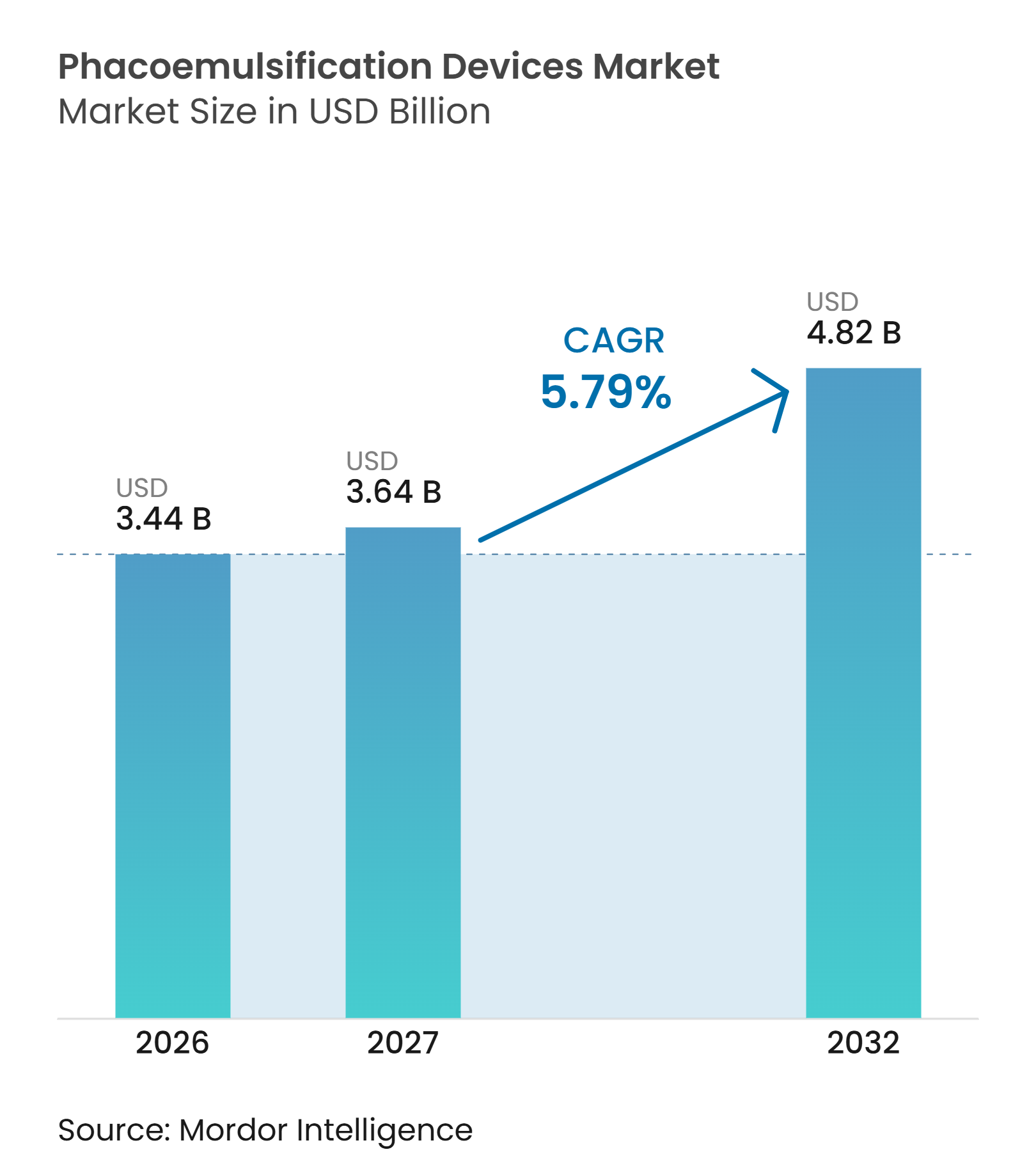
The Phacoemulsification Devices Market size is expected to grow from USD 3.44 billion in 2026 to USD 3.64 billion in 2027 and is forecast to reach USD 4.82 billion by 2032 at 5.79% CAGR over 2027-2032.
The phacoemulsification devices market is supported by the rising cataract burden among older adults, as population aging has been the main contributor to the global increase in cataract cases. Demand also benefits from the essential role of phacoemulsification in cataract procedures and the need for compatible single-use products with each procedure. Care delivery is moving toward ambulatory surgery centers, which favors compact systems that support high daily procedure volumes. Product competition is increasingly based on lower ultrasound energy, stable fluidics, workflow integration, and the ability to serve cataract and vitreoretinal procedures through one platform. The phacoemulsification devices market also faces limits from console costs, service requirements, and shortages of trained surgeons and technical support in lower-resource settings.
Key Report Takeaways
- By product type, consumables held 52.45% of the phacoemulsification devices market share in 2026, while systems are forecast to grow at a 7.54% CAGR through 2032.
- By technology, ultrasound phacoemulsification held 82.43% of revenue in 2026, while femtosecond laser-assisted phacoemulsification is forecast to grow at an 8.54% CAGR through 2032.
- By end user, hospitals held 64.65% of revenue in 2026, while ambulatory surgery centers are forecast to grow at a 9.32% CAGR through 2032.
- By application, cataract surgery held 84.65% of revenue in 2026, while refractive lens exchange is forecast to grow at an 8.65% CAGR through 2032.
- By geography, North America held 41.32% of revenue in 2026, while Asia-Pacific is forecast to grow at a 6.43% CAGR through 2032.
Note: Market numbers in this report are based on Mordor Intelligence's proprietary estimation framework, which combines nine months of actuals with Q4 projections for base year 2026.
Market Trends and Insights
Drivers Impact Analysis of Phacoemulsification Devices Market*
| Driver | (~) % Impact on CAGR Forecast | Geographic Relevance | Impact Timeline |
|---|---|---|---|
| Rising Cataract Surgery Volume From Population Aging | +1.80% | Global, with strong relevance in Asia-Pacific and North America | Long term (≥ 4 years) |
| Installed-Base-Linked Recurring Consumables Demand | +1.20% | Global, with mature markets driving procedure volume and emerging markets adding installations | Medium term (2-4 years) |
| Migration of Routine Cases to Ambulatory and Office-Based Settings | +0.80% | North America and Europe, with spillover to Asia-Pacific and Latin America | Medium term (2-4 years) |
| Lower-Energy Fluidics and Intelligent Phaco Platform Innovation | +0.90% | North America, Western Europe, Japan, Gulf Cooperation Council countries, and South Korea | Short term (≤ 2 years) |
| Government and Philanthropic Cataract-Access Programs in Underserved Markets | +0.70% | Asia-Pacific, Middle East and Africa, and South America | Medium term (2-4 years) |
| Platform Compatibility Lock-In and Replacement-Cycle Upgrades | +0.60% | Global, with stronger relevance in established installed-base markets | Medium term (2-4 years) |
| Source: Mordor Intelligence | |||
Rising Cataract Surgery Volume from Population Aging
The phacoemulsification devices market benefits from the sustained growth of the older population and the resulting need for cataract treatment. Global cataract prevalence among people aged 60 years and older reached 7,748.5 cases per 100,000 people in 2021. Population growth accounted for 87.4% of the increase in the cataract burden between 1990 and 2021. Japanese claims data showed that cataract surgery volumes rose above 2018 levels across age groups between fiscal 2018 and fiscal 2022, even where the population aged 65 to 74 declined. This pattern supports demand for systems and disposable procedure supplies in mature markets, while lower-resource settings require affordable systems and reliable supply chains. The phacoemulsification devices market therefore depends on both procedure access and providers’ ability to add surgical capacity.
Installed-Base-Linked Recurring Consumables Demand
A console installation creates continued demand for compatible cassettes, tubing, tips, sleeves, and procedure packs. These products are designed for the platform’s fluidics and handpiece configuration, which limits direct substitution in routine use. Consumables held 52.45% of revenue in 2026, reflecting this recurring procedural requirement. Alcon reported USD 769 million in surgical consumables revenue in the first quarter of 2026, with growth of 8% from the prior year. The phacoemulsification devices market gains resilience because each active installed system requires a fresh set of supplies for procedures. Manufacturers also have an incentive to support console upgrades because an upgrade can extend their compatible consumable relationship with the facility.
Migration of Routine Cataract Cases to Ambulatory and Office-Based Settings
Routine cataract procedures are increasingly delivered outside hospital operating rooms, particularly in the United States. Ambulatory surgery centers value compact equipment, dependable turnaround, and procedures that can be completed within high-volume daily schedules. MedPAC reported continued growth in Medicare-certified ambulatory surgery centers through 2024, showing the importance of outpatient capacity for procedural care[1]. The Centers for Medicare & Medicaid Services expanded its covered-procedures list for ambulatory surgery centers in 2025, broadening the outpatient case mix. The phacoemulsification devices market benefits when centers can use systems across more cataract procedures and spread service costs over higher case volumes. This care shift also increases demand for simple workflows and service models suited to independent physician-owned centers.
Lower-Energy Fluidics and Intelligent Phaco Platform Innovation
Device development is focused on reducing energy inside the eye and improving control of irrigation and aspiration. Alcon launched the UNITY systems in April 2025 and stated that UNITY 4D Phaco provides up to 2 times faster nucleus removal with 41% less energy than the earlier CENTURION platform. BVI Medical launched Virtuoso in Europe during September 2026 after receiving a CE Mark under the EU Medical Device Regulation in April 2026. Bench research has identified measurable differences among phaco systems in post-occlusion surge volume and intraocular pressure recovery. These results give surgeons a practical basis to compare platforms beyond general product specifications. The phacoemulsification devices market is consequently seeing replacement decisions shaped by clinical performance, workflow requirements, and available capital.
Restraints Impact Analysis of Phacoemulsification Devices Market*
| Restraint | (~) % Impact on CAGR Forecast | Geographic Relevance | Impact Timeline |
|---|---|---|---|
| Premium Console and Service-Contract Costs | -0.70% | Global, particularly lower-income countries and budget-constrained North American ambulatory surgery centers | Medium term (2-4 years) |
| Shortage of Trained Ophthalmic Surgeons and Biomedical Support | -0.50% | Emerging Asia-Pacific markets, Sub-Saharan Africa, and South America | Long term (≥ 4 years) |
| Uneven Reimbursement and Surgical Access in Lower-Income Markets | -0.60% | Asia-Pacific, Middle East and Africa, South America, and lower-income markets globally | Long term (≥ 4 years) |
| Sterility, Waste, and Feedstock Volatility for Single-Use Consumables | -0.40% | Global, with stronger relevance in import-dependent markets and regions with strict medical-waste requirements | Medium term (2-4 years) |
| Source: Mordor Intelligence | |||
Premium Console and Service-Contract Costs
Premium platforms require a sizable capital commitment, especially when they include active fluidics, laser compatibility, and digital surgical features. Their ongoing cost also includes authorized maintenance, proprietary components, and handpiece service. A 2026 review reported that femtosecond laser-assisted cataract surgery can face cost-effectiveness challenges in public health systems, even though it can offer advantages in complex cases. Independent ambulatory surgery centers must weigh these costs against the clinical value of upgrades in standard cases. The phacoemulsification devices market has responded with shared-access arrangements and systems designed for a smaller footprint. Higher procedure throughput may improve the economics of a console, but it does not remove the initial capital hurdle for every provider.
Shortage of Trained Ophthalmic Surgeons and Biomedical Support
Access to equipment does not by itself ensure that cataract treatment can be delivered at scale. A 2025 review identified workforce shortages, limited theater capacity, and equipment or consumable shortages as persistent barriers in low- and middle-income settings. Effective cataract surgical coverage remains limited in many countries, which shows that access and visual outcomes must improve together. Rural areas are affected more severely, where surgeons, trained support staff, maintenance capabilities, and consumable distribution are concentrated in large cities. Portable platforms can reduce some infrastructure needs, but they cannot replace surgical training. The phacoemulsification devices market depends on workforce development as well as equipment procurement in these settings.
*Our forecasts treat driver/restraint impacts as directional, not additive. The impact forecasts reflect baseline growth, mix effects, and variable interactions.
Phacoemulsification Devices Market Segment Analysis
By Product Type:
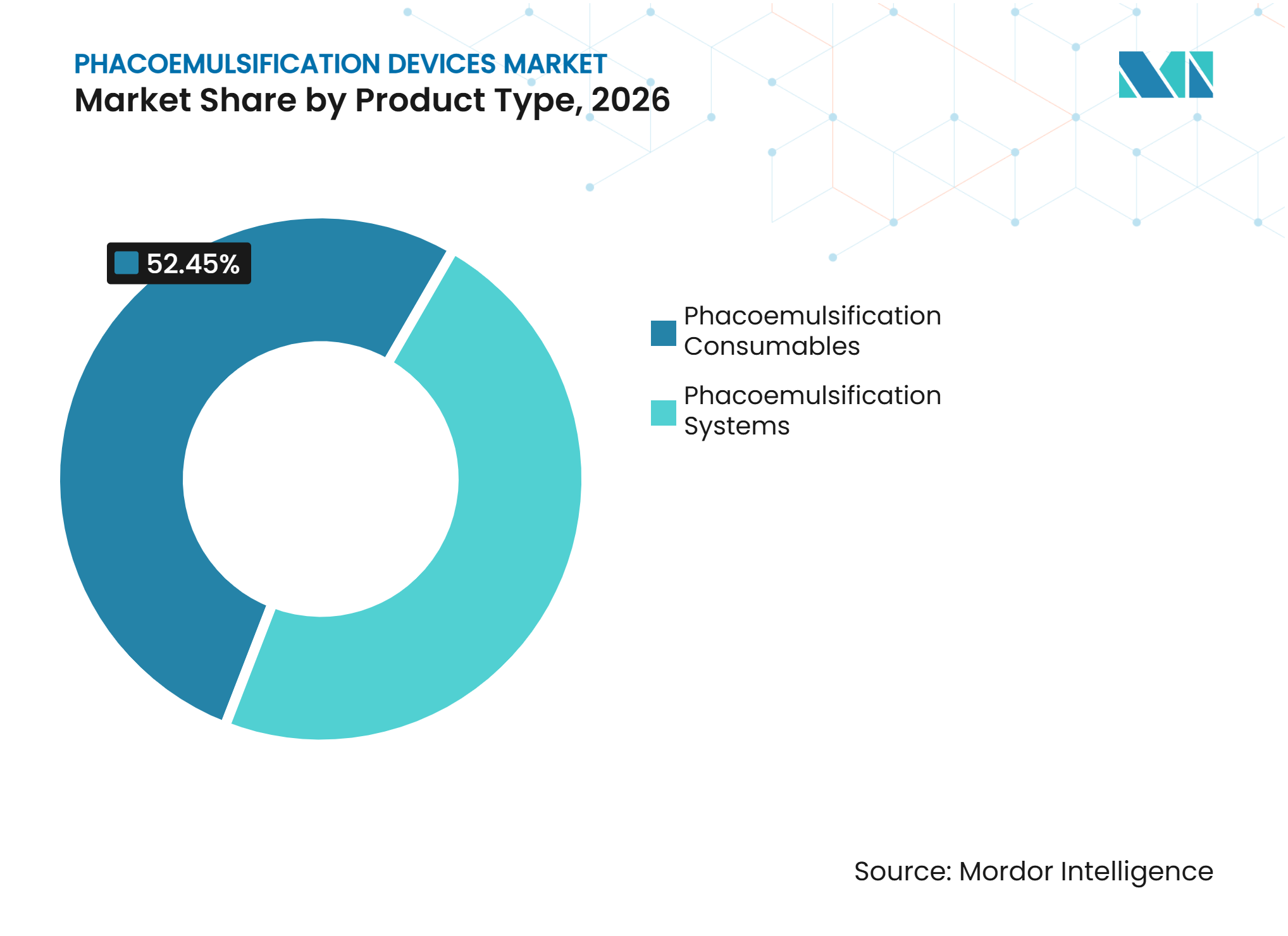
Recurring Consumables Support Procedure-Based DemandConsumables held 52.45% of revenue in 2026, giving them the largest phacoemulsification devices market share within the product category. Each cataract procedure requires products such as a cassette, tubing, irrigation and aspiration components, tips, sleeves, and procedure packs. Platform-specific design connects these purchases to the installed console base and gives suppliers recurring sales after an initial equipment placement. This model helps facilities standardize workflows and maintain familiar settings for surgical teams. It also encourages manufacturers to protect compatibility, supply reliability, and clinical support across their existing base. The phacoemulsification devices industry relies on this recurring demand because it stabilizes revenue between large equipment purchases.
Manufacturers are also updating disposable designs to reduce waste and improve handling. Johnson & Johnson Vision introduced SmartLOAD Delivery Technology in October 2026, pairing a reusable titanium inserter with a preloaded cartridge. The company stated that clinical evaluations showed 93% of surgeons expected fewer loading errors and 55-75% less packaging waste than competing preloaded systems. European procurement teams are also operating under the EU Medical Device Regulation, which raises the value of documented product quality and compliance. These factors make waste reduction, usability, and sterility relevant product requirements. The phacoemulsification devices market may see purchasing decisions increasingly consider the full procedure pack rather than only the unit cost of individual consumables.


By Technology:
Ultrasound Remains Established While Laser Assistance ExpandsUltrasound phacoemulsification held 82.43% of revenue in 2026 and remains the leading technology in the phacoemulsification devices market. It has an established clinical history, broad service support, and a lower cost base than laser-assisted alternatives. Comparative research published in 2025 found differences in ultrasound time and fluidics performance among leading phaco systems used in routine cataract procedures[2]. This means ultrasound remains a category with meaningful platform differentiation rather than a uniform equipment segment. In the United States, the Food and Drug Administration’s 510(k) pathway is a key clearance route for systems and modifications, while IEC 60601-2-5 addresses ultrasound safety requirements for equipment. These compliance factors can extend product development and commercialization timelines.
Femtosecond laser-assisted phacoemulsification is forecast to grow at an 8.54% CAGR through 2032, the highest rate in the technology segment. A 2026 network meta-analysis found that the five assessed laser platforms reduced cumulative dissipated energy compared with conventional phacoemulsification. The clinical case for this approach is stronger for hard nuclei, white cataracts, shallow anterior chambers, and posterior polar cataracts. Cost and access remain barriers to wider use in standard cases. The Federal Trade Commission’s intervention against Alcon’s proposed LENSAR acquisition preserved separate competition between major laser-assisted cataract surgery suppliers[3]. The phacoemulsification devices industry therefore continues to use clinical differentiation and product integration as major competitive tools.
By End User:
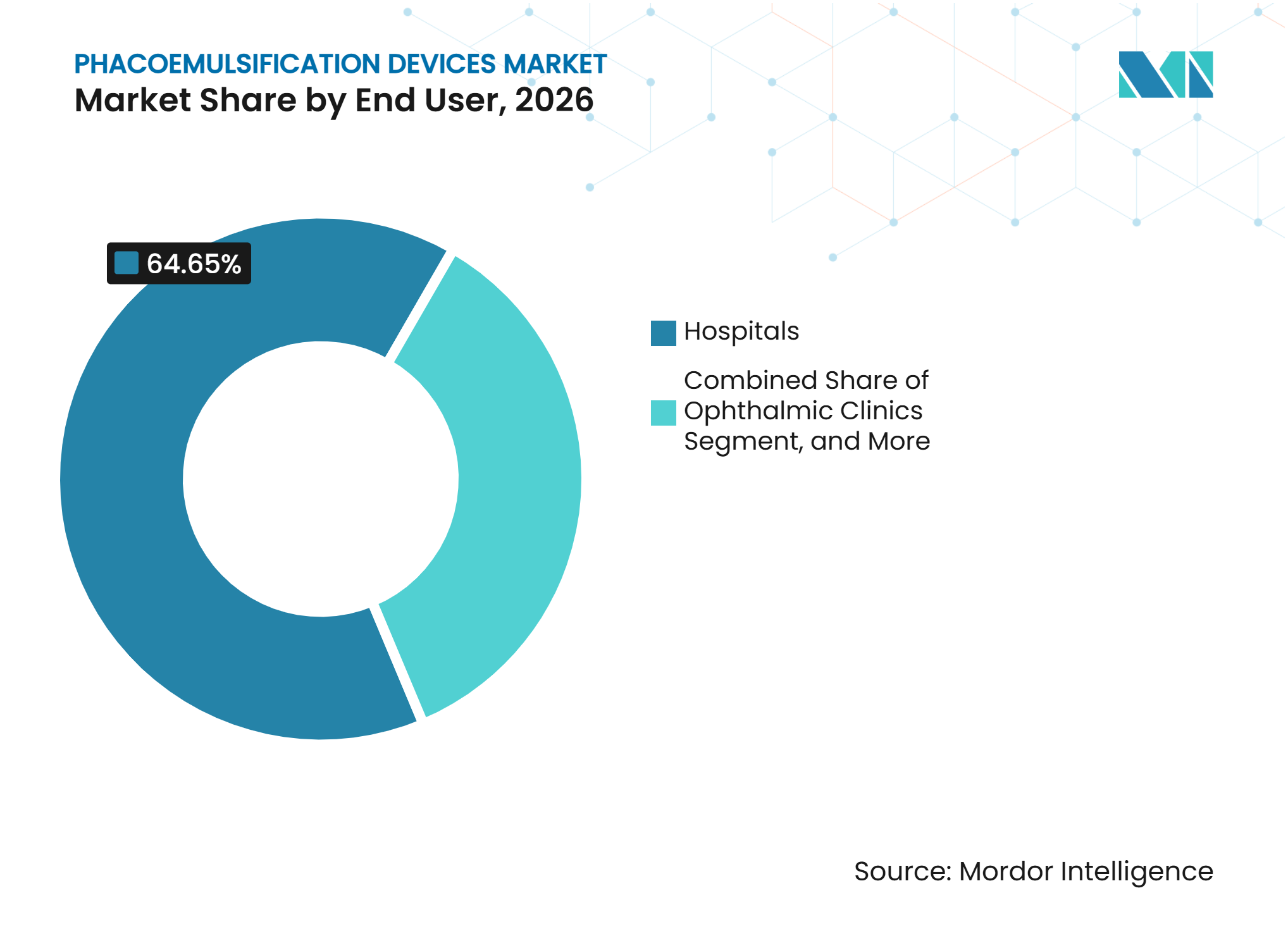
Hospitals Retain Revenue Leadership as Outpatient Centers GrowHospitals held 64.65% of revenue in 2026, the largest share among end users. They manage complex cataract cases, teaching programs, and combined phaco-vitrectomy procedures that may require higher-capability systems. Their procurement cycles are often formal and multiyear, which can make replacement demand predictable but slow. Hospital systems can also use combined platforms across cataract and retinal work, supporting higher average equipment values. Ophthalmic clinics occupy a middle position and often prefer standalone systems that support efficient cataract workflows. The phacoemulsification devices market continues to depend on hospitals for premium placements and complex procedure capability.
Ambulatory surgery centers are forecast to grow at a 9.32% CAGR through 2032, the strongest rate in the end-user segment. Their model places a premium on short setup times, simple service needs, and consistent results across high daily case loads. MedPAC has documented the ongoing role of ambulatory surgery centers in Medicare-funded procedural care. Coverage policy also supports the trend because the covered-procedures list has expanded for the outpatient setting. Manufacturers are responding with smaller systems and configurations that are easier to fit into ambulatory workflows. The phacoemulsification devices market can gain from this shift when systems offer sufficient capability without the cost and complexity of large hospital-focused consoles.


By Application:
Cataract Procedures Lead While Refractive Lens Exchange AdvancesCataract surgery accounted for 84.65% of revenue in 2026 and remains the central application for the phacoemulsification devices market. Cataract burden rises with age, which makes procedure demand more durable than demand tied to elective vision correction. Premium intraocular lens adoption is also changing the expectations surrounding cataract procedures. Surgeons increasingly require accurate fragmentation, stable fluidics, and data-supported planning for cases involving astigmatism or advanced lens options. Combined phacovitrectomy and secondary lens removal remain smaller applications that require specialized configurations. This breadth of applications supports demand for both dedicated cataract systems and dual-function platforms.
Refractive lens exchange is forecast to grow at an 8.65% CAGR through 2032. It serves patients seeking reduced dependence on glasses and may use advanced intraocular lenses and detailed planning tools. The procedure’s growth supports systems that can deliver careful lens fragmentation and integrate with imaging or guidance systems. It also links device demand more closely to premium surgical workflows, where patient expectations and surgeon preferences influence purchasing. Bausch + Lomb described premium intraocular lenses as an important contributor to surgical performance in its 2025 investor presentation. The phacoemulsification devices market may therefore see greater interest in platforms that support both standard cataract care and refractive-focused procedures.
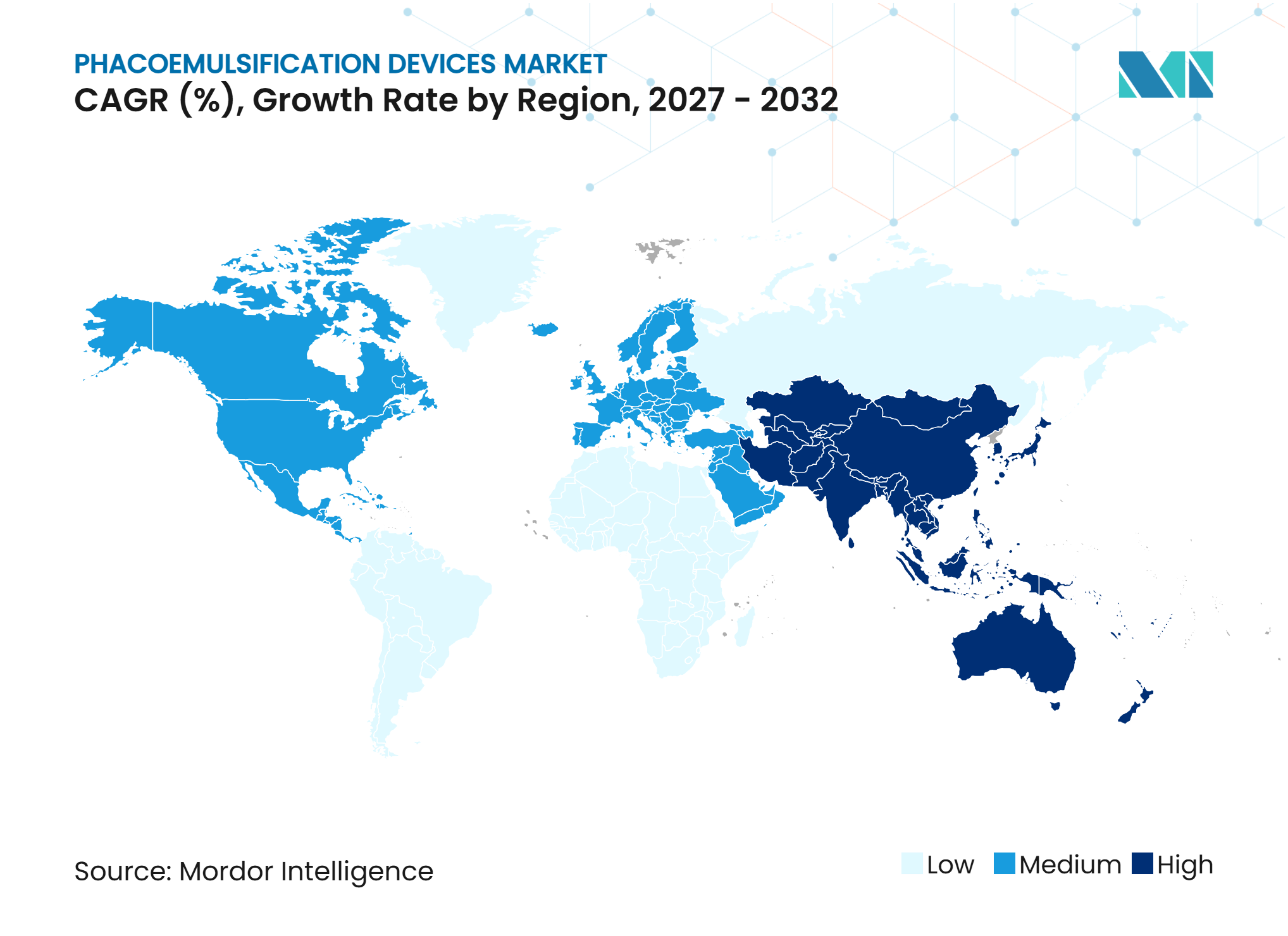
Geography Analysis
North America
North America held 41.32% of revenue in 2026, the largest regional share. The region has established reimbursement pathways, a large installed base of premium systems, and extensive ambulatory surgery center capacity. The United States remains important for premium cataract workflows and physician-owned outpatient centers. Medicare policy has a direct effect on facility economics and equipment replacement decisions. MedPAC continues to track ambulatory surgical center services, reflecting their place within the Medicare program. Alcon launched UNITY Cataract System in Canada during 2026 following Health Canada approval for UNITY VCS in 2025. These launches show that the region remains a key location for adoption of high-performance surgical platforms.
Asia-Pacific
Asia-Pacific is forecast to grow at a 6.43% CAGR through 2032, making it the fastest-growing regional segment. The region carries a high cataract burden, particularly in South Asia, where age-standardized prevalence is high among adults aged 60 years and older. Growth depends on wider access to trained surgeons, operating rooms, maintenance services, and consistent consumable supply. Government-supported eye care capacity can create demand for mid-tier systems that are suitable for high-volume settings. Workforce shortages and rural access gaps remain material constraints across several countries. Japan adds a mature demand profile, where claims data show sustained cataract surgery activity despite demographic changes.
Europe, Middle East and Africa, and South America
Europe has strong public-payer coverage and a dense network of ophthalmic hospitals and clinics, which supports demand for advanced systems and consumables. EU Medical Device Regulation requirements can raise documentation and compliance demands for smaller suppliers. BVI Medical received a CE Mark under the regulation for Virtuoso during 2026. Zeiss also launched the DORC EVA NEXUS cataract configuration in select European markets in 2026. Middle Eastern and African settings have large unmet needs, where the World Health Organization is supporting regional eye hospital networks to strengthen specialized capacity. South American demand is shaped by private ophthalmic clinics and the gradual spread of advanced cataract procedures in major urban centers. These mixed regions require different pricing, service, and training approaches rather than a single commercial model.
Competitive Landscape
Market Concentration
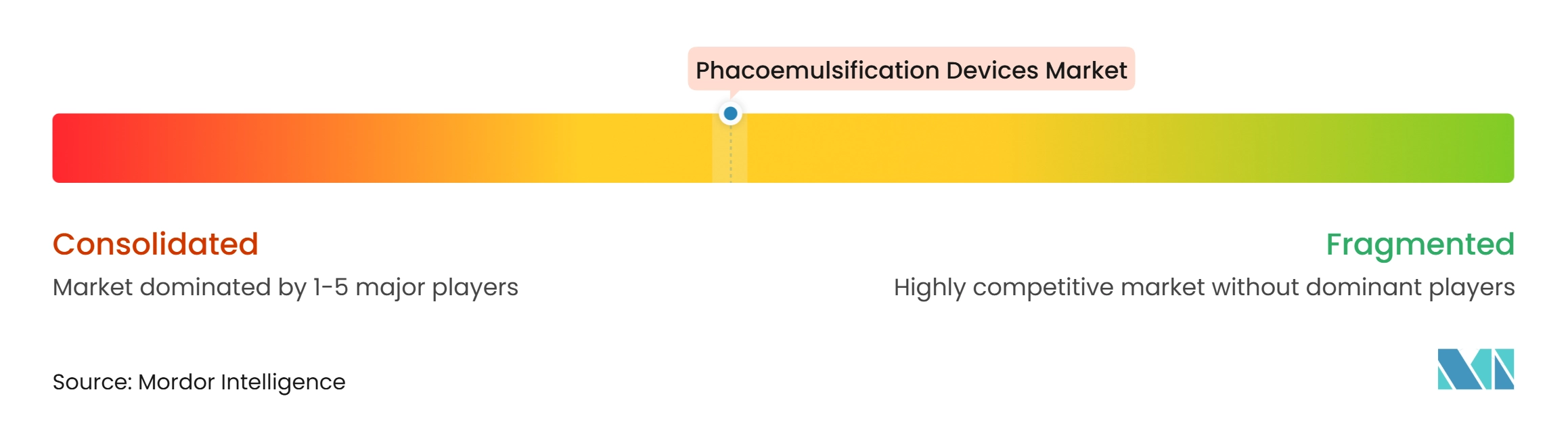
The phacoemulsification devices market is moderately concentrated in premium systems, where Alcon, Johnson & Johnson Vision, Bausch + Lomb, and Carl Zeiss Meditec compete with established product portfolios. Regional specialists also compete in consumables, accessories, and focused surgical applications. The leading companies rely on installed bases, service capability, clinical evidence, and procedure-specific product design. Alcon reported that its Surgical Equipment and Other revenue increased 27% year over year in the first quarter of 2026, supported by the UNITY rollout. The company had launched UNITY VCS and UNITY CS in 2025 with lower-energy and faster-removal claims. These product launches emphasize that performance improvements are central to competition in the phacoemulsification devices market.
Regulators are also influencing the competitive structure of laser-assisted cataract surgery. The Federal Trade Commission opposed Alcon’s proposed acquisition of LENSAR because it considered the firms leading competitors in the femtosecond laser-assisted cataract surgery segment. Alcon and LENSAR later terminated their merger agreement in March 2026. The decision keeps LENSAR independent and preserves an additional platform choice for surgeons. BVI Medical’s European launch of Virtuoso added a dual-function phaco-vitrectomy system to the premium segment. Zeiss followed with its DORC EVA NEXUS cataract configuration, adding another system for hospital and clinic placements.
Competition is also moving toward platforms that connect cataract surgery with imaging, lens planning, and data-led workflow management. Portable or lower-capital systems remain relevant where facilities have limited maintenance infrastructure or lower procedure volumes. Outpatient centers need systems that balance footprint, service cost, and procedure throughput. Companies that pair capital equipment with consumables can support longer commercial relationships after each placement. The phacoemulsification devices market is unlikely to be controlled by a single supplier because hospitals, outpatient centers, and lower-resource programs require different configurations.
Phacoemulsification Devices Industry Leaders
-
Alcon Inc.
-
Johnson & Johnson Vision
-
Bausch + Lomb Corporation
-
Carl Zeiss Meditec AG
-
NIDEK Co., Ltd.
- *Disclaimer: Major Players sorted in no particular order
Phacoemulsification Devices Market Companies Covered in this Report
- Alcon
- Appasamy Associates
- Bausch + Lomb Corporation
- Beaver-Visitec International, Inc.
- BVI Medical
- Carl Zeiss
- D.O.R.C. Dutch Ophthalmic Research Center
- GEUDER
- HOYA
- Johnson & Johnson
- LIGHTMED Corporation
- LUMed GmbH
- Medical Technical Products
- Nidek
- Optikon 2000 S.p.A.
- Oertli Instrumente AG
- Rayner
- SIFI S.p.A.
- Ziemer Group
Recent Industry Developments in Phacoemulsification Devices Market
- September 2026: BVI Medical commercially launched Virtuoso across European markets at the ESCRS 2026 Congress. The dual-function phaco-vitrectomy platform includes Equality Fluidics Control and Resolute Load-Sensing Energy Optimizer.
- August 2026: Zeiss introduced the DORC EVA NEXUS Cataract configuration in select European countries. The system has programmable settings for cataract grade-specific phaco, aspiration, and irrigation parameters.
- March 2026: Alcon and LENSAR terminated their merger agreement after the Federal Trade Commission indicated that it would seek to block the transaction.
Global Phacoemulsification Devices Market Report Scope
According to the report’s scope, phacoemulsification devices are surgical instruments that use ultrasonic energy to break up a cloudy eye lens during cataract surgery. The fragments are then gently suctioned out, allowing an artificial intraocular lens to be implanted.
The phacoemulsification devices market is segmented into product type, technology, end user, application, and geography. By product type, the market is segmented into phacoemulsification consumables and phacoemulsification systems. The phacoemulsification consumables segment is further bifurcated into Phaco packs and cassettes, irrigation and aspiration tubing, phaco tips, sleeves, and handpiece accessories, and foot pedals and other procedure accessories. The phacoemulsification systems segment is further bifurcated into standalone phacoemulsification systems, combined phaco-vitrectomy systems, and portable phacoemulsification systems. By technology, the market is segmented into ultrasound phacoemulsification, femtosecond laser-assisted phacoemulsification, and other phacoemulsification technologies. By end user, the market is segmented into hospitals, ophthalmic clinics, ambulatory surgery centers, and other end users. By application, the market is segmented into cataract surgery, refractive lens exchange, secondary lens removal procedures, and combined phaco-vitrectomy procedures. By geography, the market is segmented into North America, Europe, Asia-Pacific, the Middle East and Africa, and South America. The report also covers the estimated market sizes and trends for 17 countries across major regions globally. The report offers values (USD) for all the above segments.
Segmentation Overview
| Phacoemulsification Consumables | Phaco Packs and Cassettes |
| Irrigation and Aspiration Tubing | |
| Phaco Tips, Sleeves, and Handpiece Accessories | |
| Foot Pedals and Other Procedure Accessories | |
| Phacoemulsification Systems | Standalone Phacoemulsification Systems |
| Combined Phaco-Vitrectomy Systems | |
| Portable Phacoemulsification Systems |
| Ultrasound Phacoemulsification |
| Femtosecond Laser-Assisted Phacoemulsification |
| Other Phacoemulsification Technologies |
| Hospitals |
| Ophthalmic Clinics |
| Ambulatory Surgery Centers |
| Other End Users |
| Cataract Surgery |
| Refractive Lens Exchange |
| Secondary Lens Removal Procedures |
| Combined Phacovitrectomy Procedures |
| North America | United States |
| Canada | |
| Mexico | |
| Europe | Germany |
| United Kingdom | |
| France | |
| Italy | |
| Spain | |
| Rest of Europe | |
| Asia-Pacific | China |
| Japan | |
| India | |
| Australia | |
| South Korea | |
| Rest of Asia-Pacific | |
| Middle East and Africa | GCC |
| South Africa | |
| Rest of Middle East and Africa | |
| South America | Brazil |
| Argentina | |
| Rest of South America |
| By Product Type | Phacoemulsification Consumables | Phaco Packs and Cassettes |
| Irrigation and Aspiration Tubing | ||
| Phaco Tips, Sleeves, and Handpiece Accessories | ||
| Foot Pedals and Other Procedure Accessories | ||
| Phacoemulsification Systems | Standalone Phacoemulsification Systems | |
| Combined Phaco-Vitrectomy Systems | ||
| Portable Phacoemulsification Systems | ||
| By Technology | Ultrasound Phacoemulsification | |
| Femtosecond Laser-Assisted Phacoemulsification | ||
| Other Phacoemulsification Technologies | ||
| By End User | Hospitals | |
| Ophthalmic Clinics | ||
| Ambulatory Surgery Centers | ||
| Other End Users | ||
| By Application | Cataract Surgery | |
| Refractive Lens Exchange | ||
| Secondary Lens Removal Procedures | ||
| Combined Phacovitrectomy Procedures | ||
| Geography | North America | United States |
| Canada | ||
| Mexico | ||
| Europe | Germany | |
| United Kingdom | ||
| France | ||
| Italy | ||
| Spain | ||
| Rest of Europe | ||
| Asia-Pacific | China | |
| Japan | ||
| India | ||
| Australia | ||
| South Korea | ||
| Rest of Asia-Pacific | ||
| Middle East and Africa | GCC | |
| South Africa | ||
| Rest of Middle East and Africa | ||
| South America | Brazil | |
| Argentina | ||
| Rest of South America | ||
Key Questions Answered in the Report
What is the projected growth rate for phacoemulsification devices?
The phacoemulsification devices market is forecast to grow at a 5.79% CAGR from 2027 to 2032, increasing from USD 3.64 billion to USD 4.82 billion.
Which product category leads phacoemulsification device demand?
Consumables led with 52.45% of revenue in 2026 because each procedure requires compatible single-use packs, cassettes, tubing, tips, and sleeves.
Why are ambulatory surgery centers important for phacoemulsification equipment suppliers?
Ambulatory surgery centers are the fastest-growing end-user segment at a 9.32% CAGR through 2032 and need compact, efficient systems for high procedure throughput.
Which technology is growing fastest in cataract surgery equipment?
Femtosecond laser-assisted phacoemulsification is forecast to grow at an 8.54% CAGR through 2032, supported by its role in complex cataract cases.
Which region has the largest share of phacoemulsification device revenue?
North America held 41.32% of revenue in 2026, supported by established reimbursement systems, premium equipment installations, and outpatient surgery capacity.
What limits wider adoption of advanced phacoemulsification systems?
High capital and service costs, together with shortages of trained ophthalmic surgeons and technical support, can slow adoption, particularly in lower-resource settings.